

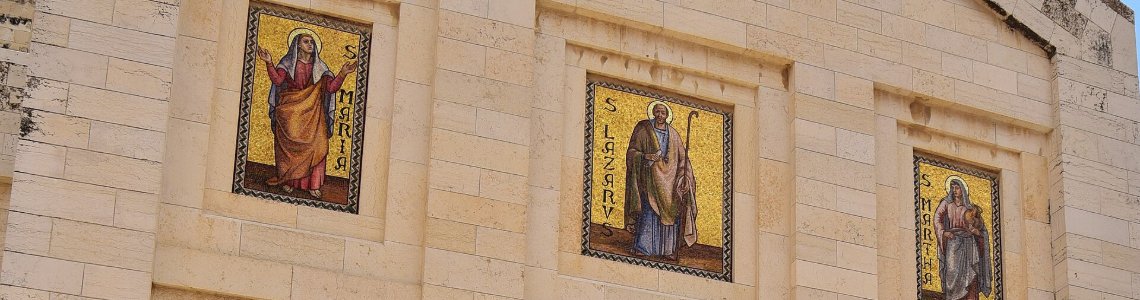
A short distance from Jerusalem, Bethany brings visitors into some of the most personal moments in the Gospel story. Here were friends Jesus loved, a meal filled with the fragrance of perfume, and a tomb from which Lazarus was called back to life. In today’s town of al-Eizariya, a visit to the traditional tomb and nearby church connects those familiar passages with a living place.
Biblical Bethany near Jerusalem is identified with al-Eizariya, a Palestinian town in the West Bank on the southeastern side of the Mount of Olives. Its Arabic name, also spelled al-Azariya, preserves the town’s association with Lazarus.
The place still exists, although the small village described in the New Testament is now part of a much larger built-up community. For Christian visitors, its principal landmarks are the traditional Tomb of Lazarus and the Franciscan Church of Saint Lazarus.
Nearby Bethphage, associated with Jesus’ entry into Jerusalem on Palm Sunday, is a different place. The two names often appear together in accounts of the final approach to Jerusalem, but they should not be treated as interchangeable.
John 11:18 places Bethany about fifteen stadia from Jerusalem, approximately two miles or three kilometers. The distance helps explain how mourners from Jerusalem could come to comfort Martha and Mary after their brother’s death.
That biblical distance is not a reliable estimate of today’s driving route. The separation barrier interrupts the former direct approach from Jerusalem, so reaching al-Eizariya requires a longer journey. Plan the route and timing around current access arrangements rather than the short distance shown on a map.
Bethany near Jerusalem is the village associated with Mary, Martha, and Lazarus. Bethany Beyond the Jordan is a separate place associated with John the Baptist and the baptism of Jesus; its principal pilgrimage site, Al-Maghtas, is in the Kingdom of Jordan.
For this visit, you are looking for al-Eizariya and Lazarus’ Tomb in the West Bank, not the Jordan River baptismal site. Making that distinction when discussing an itinerary avoids a very different journey.
Bethany is commonly written in Hebrew as בית עניה, or Beit Anya. Its ancient etymology is debated. Interpretations include a connection with poverty or affliction, while another proposal links the name with Beth Ananiah, meaning the house of Ananiah.
These are proposed explanations rather than a single certain translation. The modern Arabic name al-Eizariya offers a clearer connection for visitors: it derives from Lazarus, whose story has shaped the town’s identity and pilgrimage traditions for centuries.
Bethany matters because it is the setting for both intimate friendship and one of the Gospel of John’s most dramatic signs. Its importance is not simply that Jesus passed through. The accounts connect him with people who welcomed him, grieved in his presence, and shared meals with him.
John identifies Bethany as the village of Mary and her sister Martha, whose brother Lazarus becomes seriously ill. He states plainly that Jesus loved all three of them (John 11:5). That relationship provides the strongest biblical answer to why Bethany held such a personal place in Jesus’ ministry.
Luke 10:38–42 describes Martha welcoming Jesus and Mary sitting at his feet to listen. Christian tradition connects the episode with Bethany, although Luke does not name the village in that passage. Mary of Bethany should also be distinguished from Mary Magdalene; the Gospel of John does not identify them as the same woman.
In John 11, Jesus reaches the area after Lazarus has been in the tomb for four days. Martha comes out to meet him, and their conversation moves from grief toward the hope of resurrection.
“I am the resurrection, and the life”
John 11:25, KJV, excerpt
Jesus also meets Mary and weeps. At the tomb, he asks for the stone to be removed and calls Lazarus out. Lazarus emerges still wrapped in burial cloths. For Christians, the event is a sign of Jesus’ authority over death, and it explains the enduring significance of the tomb visited here today.
Yes, Jesus returned to Bethany before his Crucifixion. John 12:1–8 places him there six days before Passover, at a supper where Martha serves and Lazarus is among those at the table.
Mary anoints Jesus’ feet with costly perfume and wipes them with her hair. John describes its fragrance filling the house. When Judas objects to the expense, Jesus connects her action with his burial. The scene brings Bethany into the events leading toward the Passion, while retaining the personal setting of a meal among people close to him.
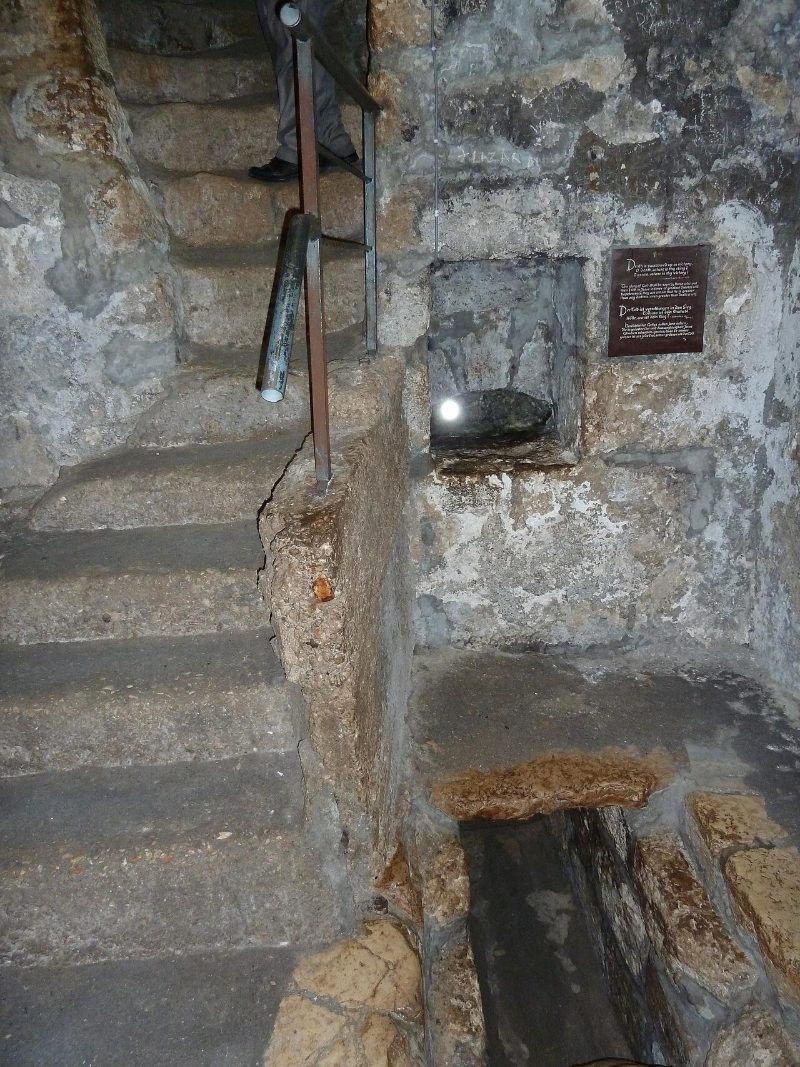
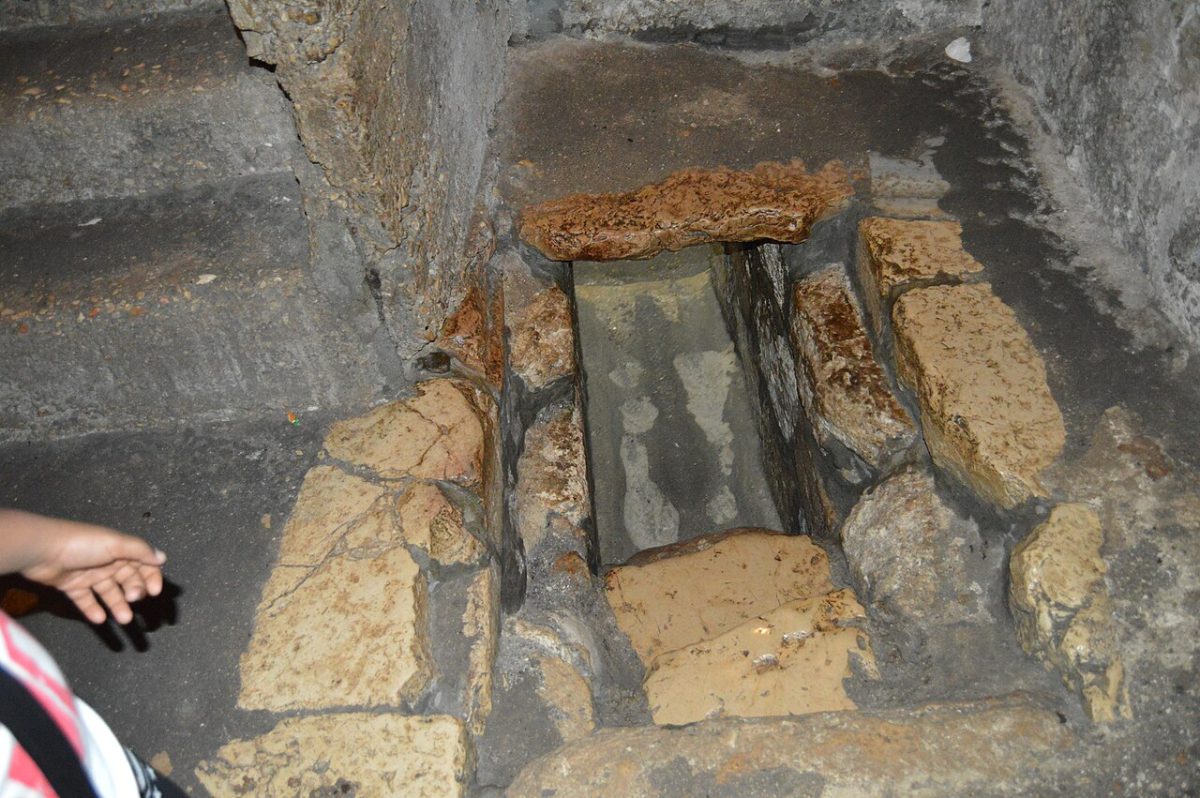
The traditional Tomb of Lazarus is Bethany’s best-known pilgrimage site. Its identification has a long history, with fourth-century accounts recording Christian interest in the place. That continuity of remembrance is significant, although it does not amount to archaeological proof of the occupant’s identity.
The tomb visitors enter has changed over the centuries. A stone staircase descends from the street to an antechamber, followed by a smaller opening and further steps into the burial chamber. The present entrance dates to the sixteenth century, so the route down is not an unchanged approach from the Gospel period.
Expect a confined underground space and a descent that requires care. Visitors with difficulty using stairs or bending through a low opening may prefer to remain above ground. The quiet scale of the tomb encourages a brief, reflective visit rather than a hurried flow of people in and out.
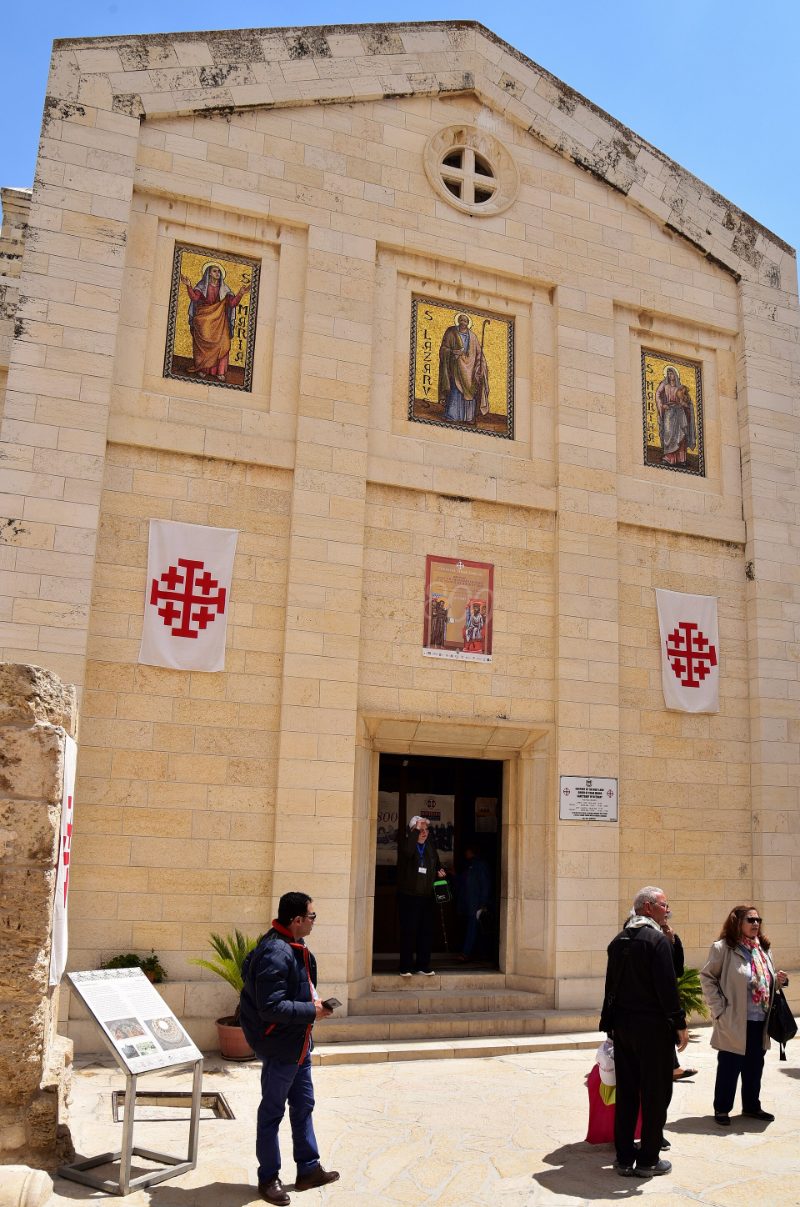
Near the tomb, the Franciscan Church of Saint Lazarus commemorates the Gospel events associated with the village. Designed by Antonio Barluzzi and consecrated in 1954, it stands over remains of earlier Byzantine and Crusader churches.
Fragments of ancient floor mosaics survive within the church complex. Inside the modern sanctuary, mosaics recall the biblical episodes of Bethany, while light entering from above gives the interior a distinctive atmosphere. The contrast between the enclosed space and the light suits the church’s themes of death, resurrection, and hope.
The church and tomb are separate stops. Visiting both gives a fuller picture: the tomb preserves a focus of pilgrimage, while the sanctuary brings together the stories and the layers of Christian worship that developed around it.
Allow roughly an hour for an unhurried visit to the tomb and church, plus travel time. This is a planning suggestion; prayer, group size, and access arrangements can change the pace. Confirm opening arrangements and any entry charges for the individual sites before setting out.
Wear shoes with a secure grip for the steps, and dress modestly for the church. If stairs or confined spaces are a concern, discuss them in advance so the visit can focus on the areas you can comfortably enjoy.
Because Bethany is in the West Bank, transport and guide arrangements need to suit the route. Its proximity to Jerusalem does not mean that every Jerusalem excursion can include it. Checking the practical details beforehand makes it easier to combine biblical interests with a realistic day’s itinerary.
Bethany can be an especially meaningful interest to discuss when planning a day around the Christian heritage of Jerusalem and its surroundings. Exploring the Gospel passages with a guide adds context to the tomb, the church, and their relationship with nearby biblical places.
Browse our Jerusalem private tours for inspiration, then tell us if Bethany is a priority. We can check whether a visit can be arranged for your dates and how it might fit with your other interests, walking pace, and available time.
Want to include the village of Mary, Martha, and Lazarus in your Holy Land journey? Contact us to discuss a private itinerary and the arrangements needed for a visit to Bethany.
Join Us
Keep in Touch


 Login / Register
 Contact
 Show On Map


 Certificate of Excellence
 Guaranteed Departure
 Low Prices Guaranteed
 24/7 Support


