Showing search results for ''

Classical Israel and Petra Tour Package, 12 Days

Take this classic 12 day tour package of Israel that includes a visit to Petra, Jordan, one of the Seven Wonders of the World. In Israel visit iconic landmarks like Masada and the Dead Sea. Tour top attractions in cities like Jerusalem and experience the beauty of the Galilee, Golan and Mediterranean coastline.

Christian Israel and Petra Tour Package, 12 Days

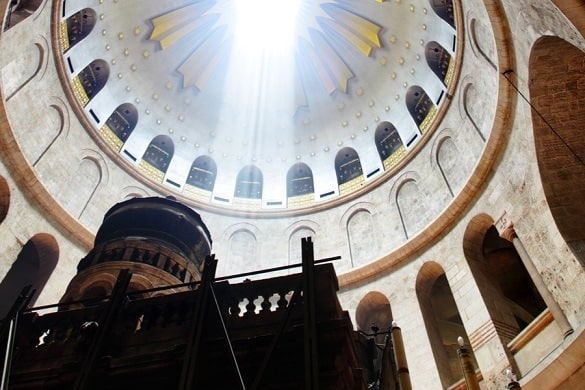
This 12-day tour package highlights Biblical sites and important Christian landmarks. Explore Nazareth, the hometown of Jesus, and travel through the Galilee to the River Jordan, where Jesus was baptized. Follow the path of Jesus in Jerusalem by walking the Via Dolorosa and visiting the Church of the Holy Sepulchre. The journey also includes iconic sites like the Dead Sea and Masada. Continue into Jordan to experience the stunning landscapes of Wadi Rum, relax in Aqaba, and discover Petra - a UNESCO World Heritage site and one of the Seven Wonders of the World.

Jewish Israel Tour Package, 4 Days

See the Jewish gems of Israel with this 4-day tour package. Visit Jewish heritage sites of the Old City of Jerusalem. Head south to Masada and the iconic Dead Sea. Travel up the Mediterranean coast to the Roman city of Caesarea; the sea caves of Rosh HaNikra; the port city of Haifa and the Crusader city of Acre. Get an overview of the ancient and modern history of Golan Heights.

Jewish Israel Tour Package, 8 Days

See the Jewish gems of Israel on this 8 day tour package. Travel the country from the Golan to Masada and the Dead Sea seeing incredible Jewish heritage sites and iconic landmarks. In Jerusalem visit sites like the Western Wall and go beneath ground level to discover the excavated City of David, Jerusalem’s original Jewish settlement. Visit Caesarea, Haifa, Acre and Rosh HaNikra.

Bethlehem and Jericho Tour

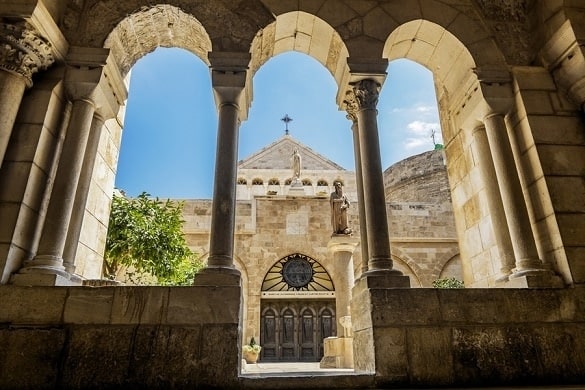
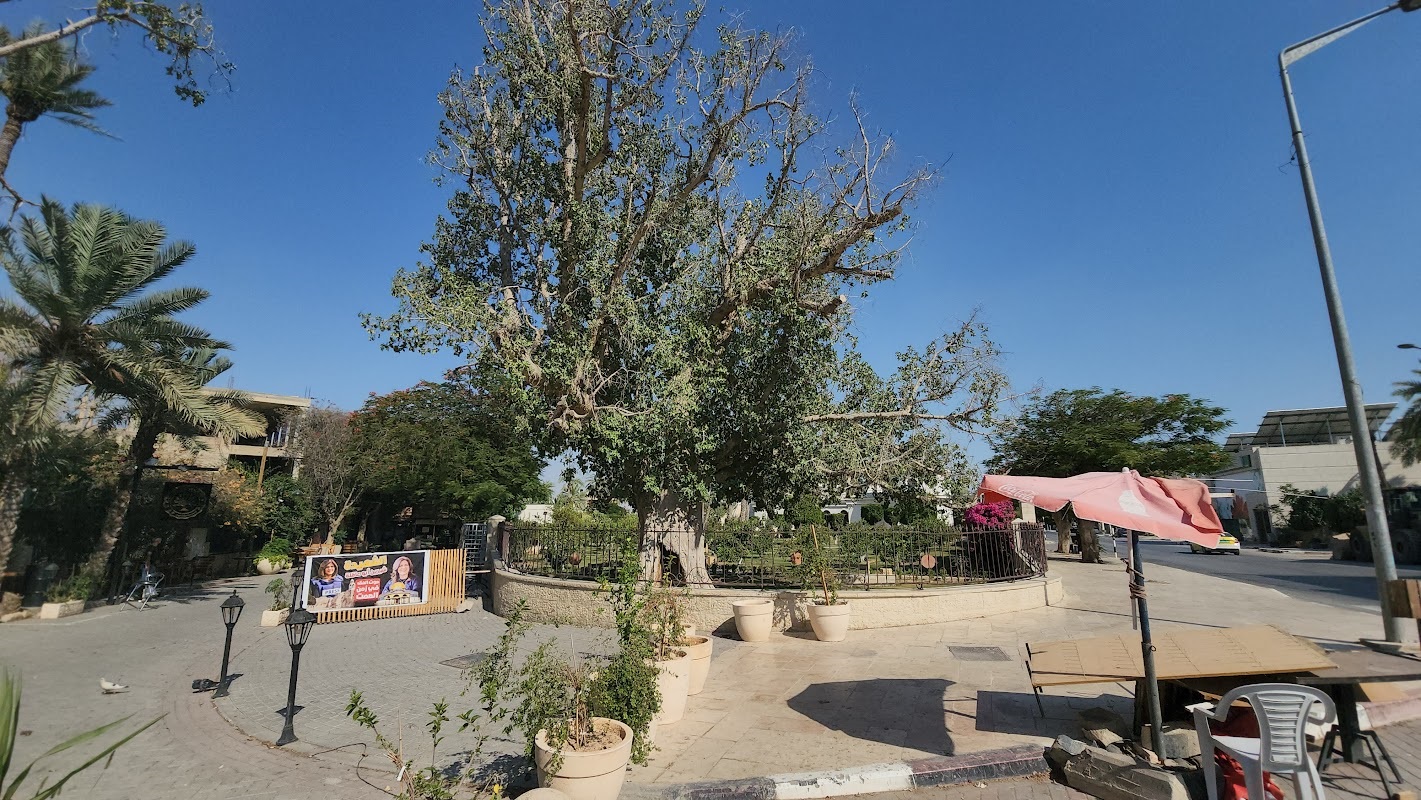
This tour of Bethlehem and Jericho heads past the Inn of the Good Samaritan; where Jesus set his famous parable. Driving through the Judean Desert past Wadi Kelt we see the 5th-century Monastery of St. George clinging to the cliffs and stop briefly at the sign indicating “sea level” before descending to Jericho.In the Old Testament, the walls of Jericho fell as Joshua marched his army around the perimeter in the name of God. In the New Testament Zacchaeus, the tax collector climbed a sycamore-fig tree to see Jesus entering Jericho. On our Jericho tour, we see the famed sycamore tree. We can spot Mount Temptation not far from Jericho. Here Jesus spent 40 days in the wilderness and the devil tried to tempt Him to forsake God.Leaving Jericho the tour continues to Bethlehem where Christ was born just over 2,000 years ago. The Bethlehem tour stops in Manger Square where we visit the Church of the Nativity, which holds the Grotto of the Nativity where Jesus was born and where the original excavated mosaic of the 4th century can be seen. Today the church is a treasure trove of exquisite features. In the Holy Grotto, a silver star indicates the exact place Christ was born.The next stop in Bethlehem is the Church of St. Catherine. We go beneath the church into an ancient cave where St. Jerome translated the Hebrew Bible into Latin. We leave Bethlehem on our return journey to Jerusalem and pass Shepherds Field. It was here that shepherds watched their sheep by night on Christmas Eve.This tour includes Qasr al-Yahud, the place on the Jordan River where John baptized Jesus. At Qasr al-Yahud, the Jordan River became accessible to visitors wishing to be baptized there. This is also where the Israelites may have crossed the Jordan into the Promised Land. After an exhilarating and spiritually-charged journey, the Bethlehem, Jericho, and Qasr al-Yahud tour comes to an end.

The Dead Sea Relaxation Experience

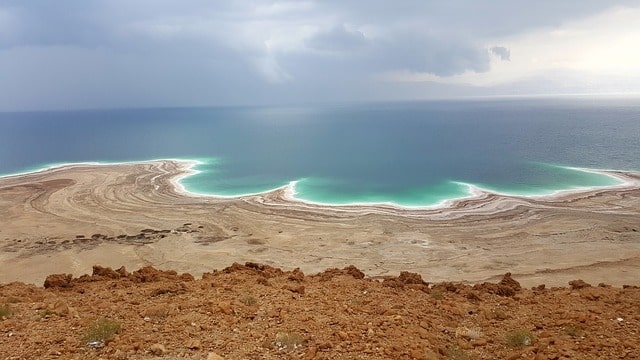
The Dead Sea Relaxation Experience starts as we leave Jerusalem and make our way through the Judean Hills heading south. Along the way, we pass the Inn of the Good Samaritan, the setting for Jesus’ famous parable. We stop briefly when a sign tells us we have reached sea level. From here there are magnificent views across the desert all the way to the ancient city of Jericho. The Dead Sea Experience continues further and further beneath sea level to the lowest place on Earth, 430m below sea level at the Dead Sea. The tour takes us to one of the best Dead Sea beaches where we can relax and enjoy all of the benefits of the sea’s natural environment.The Dead Sea’s unique location and mineral-rich hyper-saline water offers some unparalleled health and beauty benefits. With its low elevation fewer of the sun’s harmful UVB rays reach the Dead Sea. The dry Dead Sea air is allergen-free and rich in oxygen. People with respiratory problems find the Dead Sea air eases their condition. While on your Dead Sea day trip you can cover your skin with the mineral-rich Dead Sea mud for natural rejuvenating skin treatment. The salt and minerals of the Dead Sea water have been proven to relieve eczema, acne, psoriasis and other skin ailments. The Dead Sea water, salt, and mud are often used in spa and beauty treatments and the minerals are harvested and used for cosmetics, medicines and beauty products. After unwinding on the Dead Sea beach and enjoying floating in the salty water we return to Jerusalem.

Petra Tour & Leisure Day in Eilat, 2 Days

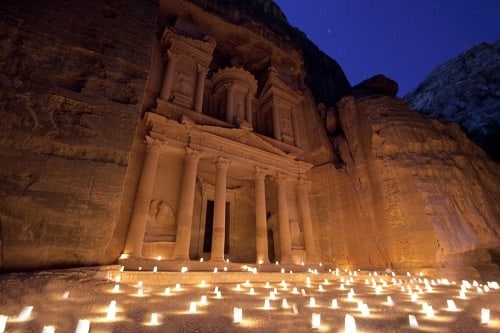
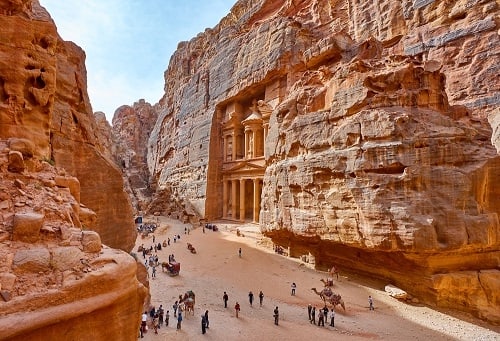
With this Petra tour from Eilat, you have a free day in Eilat -Israel's Best resort city. Enjoy water sports and explore the coral reefs. Eilat has an underwater observatory; an ice rink; camel rides; markets; and tax-free shopping! The next day will take you through breathtaking desert landscapes to Petra, Jordan. The Nabataean people carved their city out of red-hued mountain cliffs over 2,000 years ago. See the breathtaking Petra Treasury, Feel like Indiana Jonesas you explore the Royal tombs, visit the PetraTheater, and learn about the fascinating Nabatean kingdom.

Petra Tour & Leisure Day in Eilat from Tel Aviv, 2 Days

This Petra tour from Tel Aviv starts with a short flight southfrom Ben Gurion Airport to Ramon Airport in Eilat. In Eilat - Israel's Best Resort City - you'll discover the coral reefs of the Red Sea, enjoy water sports, go ice skating, and shop to your heart's content at the tax-free malls. Spend the night in a great Eilat hotel and the next day cross into Jordan. Travel along a Desert Highway with gorgeous views all the way to Petra, a city carved out of rock cliffs over 2,000 years ago. Enter through the narrow Siq - a colorful, smooth gorge between towering mountains. Stand in awe as the famous Petra Treasury appears behind the Siq wall and marvel at its splendor. Then continue to the Royal Tombsof ancient kings,and see the Nabatean Theater, in this wonderful Indiana-Johns-like experience.Return to Eilat and take your flight back to Tel Aviv.Note that a 1-Day Tour of Petrawon't leave you with enough timeto fully explore this wonderful archeological park. This is why most travelers recommend a2-Day Tour to Petra, in order to see Ad Deyr - the iconicPetra Monastery up on the ridgeand visitQasr Al-Bint Templeandthe Great Temple.

Classical Jordan, 3 Days: Petra, Madaba, Mount Nebo, Jerash and Amman (from Tel Aviv / Jerusalem)

This Jordan 3-Day Tour from Tel Aviv/Jerusalem will take you on an incredible adventure: You'll visit Jerash, one of ten Decapolis Roman frontier cities and the site of well-preserved ancient ruins. Travel to Amman for a panoramic tour and overnight stay in the capital. Day two is devoted to the unforgettablePetra, a 2,300-year-old city intricately carved out of red-colored cliffs. On your third day visit Madaba to see Byzantine and Umayyad mosaics. At Mount Nebo, you'll stand where Moses looked down on the Promised Land. Finally, you'll enjoy more breathtaking views on the way back to Israel after a fulfilling Middle Eastern adventure!

Classical Jordan, 4 Days: Petra, Wadi Rum, Madaba, Mount Nebo, Jerash and Amman (from Tel Aviv / Jerusalem)

This classical Jordan 4-Day Tour includes top attractions and an adventurous desert jeep safari! You'll swiftly cross into Jordan and tour the well-preserved Roman city of Jerash. Stand the Bible on Mt. Nebo and look down on the Promised Land as Moses did. You'll visit Petra, one of the Seven New Wonders of the World, and see rock-cut royal tombs and temples created 2,000 years ago. Next, you'll take an action-packed jeep safari in Wadi Rum and Lawrence Spring. Stop in Madaba to see a Byzantine-era mosaic depicting a map of the Holy Land - and finish a perfectJordan 4-day tour!

Golan Heights and Safed Tour, 2 Days

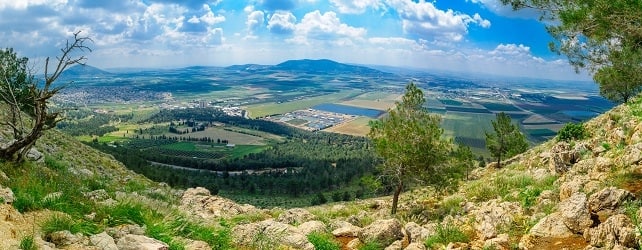
This Galilee and Golan 2-Day Tour heads north to the Galilee. We look down on the Sea of Galilee and see the Golan Heights creating a perfect backdrop. We cross the River Jordan to the foot of the Golan Heights; pass Hamat Gader and stop at the Shalom Observatory for brilliant views. We tour Katzrin’s excavated Mishnah and Talmud-era village and visit the Golan Antiquities Museum. On Mt. Bental we tour former Syrian fortifications and then stay overnight at a Kibbutz guesthouse. On day 2 we explore the Kibbutz then visit Mt. Hermon Stream Reserve and see the Hermon River and Banias. We tour the remains of a Roman city called Panias set among lush vegetation, waterfalls, and streams. We see the 13th-century Kal’at Nimrod fortress before continuing to our final stop is in the holy Jewish city of Safed.

Nazareth and the Sea of Galilee, 2 days

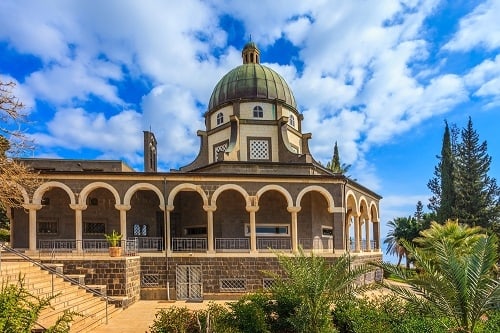
This 2 day Christian Galilee tour visits Jesus’ hometown and Biblical locations by the Sea of Galilee. In Nazareth tour the Church of Annunciation and the Church of St. Joseph. By the Sea of Galilee see the Mount of Beatitudes, Capernaum, Church of the Multiplication and stop at Yardenit where you can be baptized in the Jordan River. Visit Magdala; see the Jesus Boat and Cana where Jesus turned water into wine.

Petra 2-Day Tour from Eilat

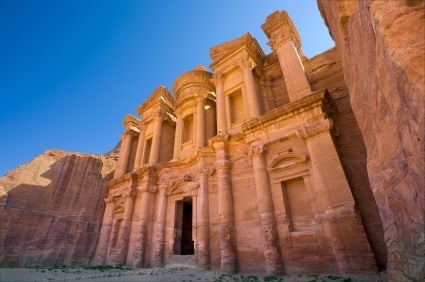
This 2-day Petra tour from Eilat includes exotic Middle Eastern landscapes, the famous city ofPetra - one of the 7 New Wonders of the World- which is bristling with captivating history, outstanding photo opportunities, and activities you won't soon forget.You’ll be picked up in Eilat and taken swiftly across the border into the Kingdom of Jordan. Travel to Petra -a whole city carved into the red-hued desert cliffs2,300 years ago. See every jaw drop in front of the marvelousPetra Treasury, thenfeel like Indiana Johnsin the nearby shrines and mausoleums - from the Royal Tombsto the Petra Theater. After an authentic, yet pampering night in an excellent hotel, you'll go back to the Archeology Park for a day of scouting, hiking, interesting local food, and much more.This is your chance to visit Ad Deyr - the Petra Monastery - a massive structure of rare magnificence,located at the end of a mountain trail with fabulous views.Don't miss the Qasr Al-Bint temple, the Great Temple, and the Petra Museum which shows just how unique was the ancient Nabatean culture.

Petra and Wadi Rum 2-Day Tour from Eilat

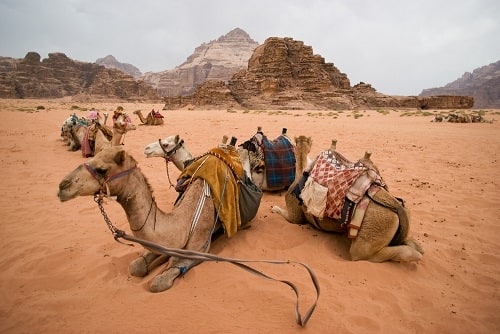
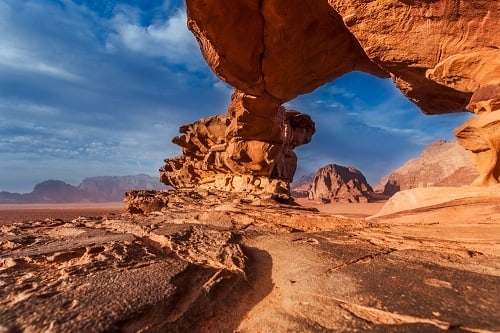
This Petra and Wadi Rum 2-day tour from Eilat combinesexotic Middle Eastern landscapes, the iconic city of Petra - one of the Seven New Wonders of the World - and an exhilarating jeep safari through Wadi Rum. You’ll be picked up in Eilat and taken swiftly across the border into the Kingdom of Jordan. Start with a visit to Mamluk Castle, a fort overlooking the border nexus of Aqaba Bay. Then enjoy free time to explore the seaside city of Aqaba, and enjoy beach activities such as boating+snorkeling, and fun on a private beach.Next, you'll take an exciting jeep tour of Wadi Rum, a distinctive desert wilderness with a moon-like landscape and an opportunity to snap some amazing photos.Several Star Wars movies were shot here, and you'll see why.After an authentic, yet pampering night in a real Bedouin camp, You'll head for Petra. This extraordinary city was carved out of the red-hued desert cliffs 2,300 years ago, and its temples and tombs await you - starting with the famous Petra Treasury. This intricately decorated structure is a sight to behold and locals still believe it holds a hidden treasure. See the mysterious Djinn Blocks and the unique Obelisk Tomb, Walk in the footsteps of kings to the Royal Tombs, and take awesome shots of the Nabatean Theater from between the impressive columns.

Tel Jericho

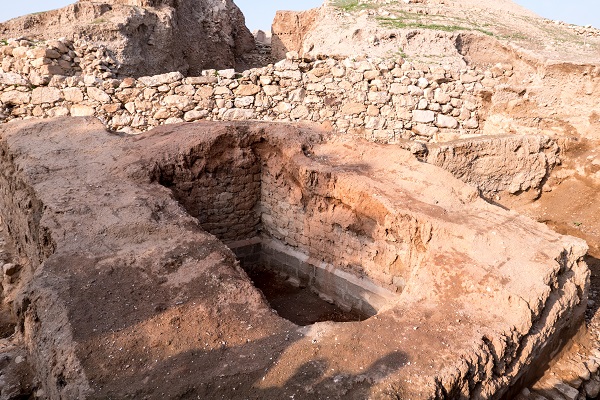
Tel Jericho or Tell es-Sultan, er-Riha or the Mound of Jericho is an archaeological site in the West Bank about 10 km north of the Dead Sea and 2 km north of modern-day Jericho. The archaeological excavation of Tel Jericho is on the site of the ancient city of Jericho inhabited from the 10th millennium BC. It is widely believed to be one of the oldest inhabited cities in the world and the oldest city in Israel. The city grew up around the spring of Ain es-Sultan. This would have been the city of Jericho mentioned in the Old Testament. The site was inhabited by consecutive settlements each leaving behind a layer of remains eventually creating the mound of Jericho. The city of Jericho stood at the site of Tell es-Sultan until about the 6th century when it was conquered and destroyed by the Babylonians. In later years the city was rebuilt 2km to the south and became modern-day Jericho.Excavation of Tel JerichoIn 1868, British explorer Charles Warren sunk a number of exploratory shafts into the mound but his probes fell short missing the ancient remains by just a meter. 40 years later German archaeologists Sellin and Watzinger reexamined the site and discovered the Middle Bronze Age Revetment Wall. Again in 1930-36 British researcher, Sir Garstang was at Tel Jericho and in 1952-58 it was examined by Kenyon who first discovered the Neolithic Tower of Jericho. The excavations have continued since 1997.Highlights of Ancient Jericho Found at Tel JerichoThe Neolithic Tower dates back to 8,000-7,000 BC (Pre-Pottery Neolithic A). The tower stands 8 meters tall and has a diameter of 8 meters. The tower was connected to a 4 meter-thick wall. The Tower is located on the eastern side of the city, probably near the city gate. It has been suggested that the tower was home to the biblical character Rehab the whore. However, Kenyon concluded from her examination of the site that the city was destroyed in 1550 BC long before Joshua arrived on the scene. Other experts concluded that all biblical references to Jericho are plausible and supported by archaeological findings.The Revetment Wall (retaining wall) dates back to the Middle Bronze Age and was constructed to support the sides of the mound and prevent erosion. The wall was built with Cyclopean stones and topped with a mudbrick wall. Although Sellin and Watzinger first uncovered the wall in 1907-13 it was the later excavation in 1997 that revealed the southern portion of the wall. There is archaeological evidence that the mudbrick wall collapsed at some point. Experts date the destruction of the wall to 1400 BC – the approximate period of the famous biblical story of Joshua bringing the walls of Jericho down. Further support of the biblical record of events at Jericho came in the form of ancient storage jars dating back to the last Canaanite city of Jericho when Joshua burned the city.Join ourBethlehem and Jericho Tour to visit Tel Jericho Mound.

Mount of Temptation

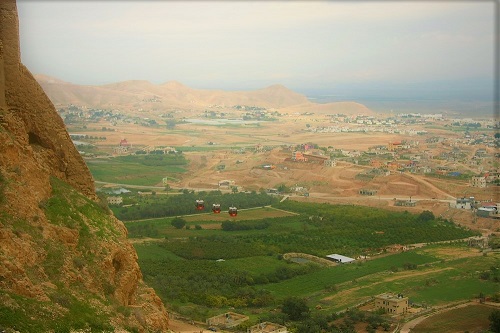
The Mount of Temptation rises up out of the Judean Desert 3km northwestern of Jericho in the West Bank not far from the Dead Sea. At the foot of the mount palm trees and lush vegetation grow and the yellow and orange-hued mountain slopes rise 360 meters above sea level. The Mount of Temptation (Jabel Quruntul or Mount Quarantania) is famed as the site where the devil tempted Jesus to forsake God.The Mount of Temptation in the Bible In Matthew 4:8 we read how Jesus was baptized by John the Baptist and then went into the wilderness where he fasted and meditated for 40 days and 40 nights on the Mt. of Temptation. While here the devil tried to tempt Jesus three times to forsake God. The first temptation was when Jesus was hungry and the devil offered to create bread from stones. Jesus rejected the devil and instead angels fed him. For the second temptation, the devil told Jesus to test God by throwing himself off the highest point of the mount and Jesus replied that it is forbidden to put the Lord God to the test. For the third temptation, the devil looked out across the land and offered Jesus the kingdoms of the world if he would bow down to Satan. Jesus refused and instead told the devil to get out of his sight. The mount is also mentioned in Mark (1:12-13) and Luke (4:1-13). Due to the mount’s Biblical association, it has attracted Christian pilgrims for centuries. The mount offers isolation perfect for meditation and contemplation yet it has a precious water source despite being in the desert. In the slopes of the mount are about 30 caves where monks and hermits would once have lived. They would come here to be close to the place where the Biblical event took place. A Greek Orthodox monastery was built on the mount in the Byzantine-era, 4th-6th century then the site was abandoned for about 500 years until the Crusaders arrived in 1099 and built two churches on the mount. The present monastery was constructed here in 1875 and encompasses the two earlier churches.Visiting the Mount of TemptationVisitors to the mount can take the cable car from Tel Jericho to the summit or hike up the mount which will take about half an hour. A visit to the Mount of Temptation is often combined with a visit to Jericho or the Dead Sea because of their proximity. The Greek Orthodox monastery was built into the side of one of the mount’s steep slopes so that it appears to be clinging miraculously to the side of the mount. The monastery encompasses a cave chapel that has survived from an earlier monastery and is said to be the site of the first temptation. At the south side of the monastery complex is a chapel built around the stone where Jesus sat during his spiritual contemplation. This is said to be where the third temptation took place. On the hillside above the monastery are the remains of a fortress originally built by the Greek Seleucid's (312 BC - 63 BC) and later inhabited by the Hasmoneans (140 BC - 116 BC). Here Simon Maccabeus was murdered in 135 BC by his son-in-law. Simon was one of the Hasmoneans who led the revolt against the Seleucid rulers gaining a form of independence for the Jewish Hasmoneans in Judea. On top of the Hasmonean ruins stands a later wall built by the Greek Orthodox Church in the hope of establishing a second monastery on the mount.Want to see from the top of mount of Temptation? join ourJericho, Dead Sea and the Jordan River Tour.

Kidron Valley

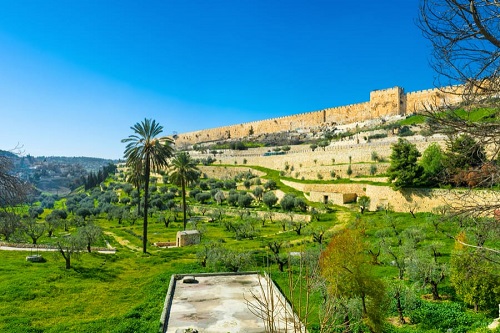
The Kidron Valley in Jerusalem runs north to south dividing the eastern side of the Old City from the Mount of Olives. As visitors travel along the road adjacent to the Old City wall, they get a brilliant view of the valley below and the magnificent churches on the Mount of Olives beyond. The valley has fascinating ancient tombs and monuments with olive groves and rugged ground leading up to the Mount of Olives. Although the most famous section of the valley lies between the Mount of Olives and the Old City walls the Kidron actually runs for 32km towards the Dead Sea.The Kidron Valley in the BibleThe valley features in the Old Testament several times. David fled across the Kidron Valley to escape his rebelling son Absalom; King Asa worshipped idols in the valley and Athaliah was executed here. The Kidron is believed to be the valley referred to in Joel 3:2, 12 when God says that he will assemble all nations in the Valley of Jehoshaphat for their final judgment.In the New Testament Jesus left the last supper with his disciples and crossed the Kidron Valley to the Mount of Olives. Here he prayed and was later arrested in the Garden of Gethsemane at the foot of the Mount of Olives. Jesus would have walked across the Kidron many times in his lifetime. The valley is mentioned in Matthew 4:8 as the site where the devil dared Jesus to jump from the highest point of the Temple.During the Second Temple period (521 BC - 70 AD) a bridge spanned the valley connecting Temple Mount to the Mount of Olives. On the Day of Atonement (Yom Kippur) a goat would be taken across the bridge into the wilderness as an offering in lieu of the people’s sins (scapegoat).Landmark Sites of the Kidron ValleyThe main site in the Kidron Valley is a group of three 2,000-year-old ancient tombs cut into the Mount of Olives. The tombs would have been made during Jesus’ lifetime. For centuries the valley and Mount of Olives have been sought after burial sites. It is believed that when the Messiah appears he will do so in the Kidron Valley where he will raise the dead, making it a great place to be buried!One of the tombs belonged to a priest’s family and bears a Hebrew inscription to “the sons of Hezir.” The middle tomb is Zechariah’s Tomb and has a square shape with a pointed roof. At the base is a small chamber cut into the rock. The southernmost of the tombs was carved out of the rock and never finished. Further north of these tombs is another tomb that Jesus would have seen under construction. It is known as the Pillar of Absalom. It has a square shape cut out of bedrock and a finely cut conical roof cut from a single block of stone. An eight-chambered catacomb lies to the left with an inscription from 400 AD.

Mount of Olives

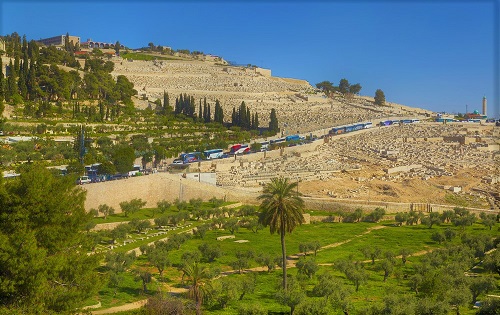
There is so much to discover on the Mount of Olives – history, religion, ancient graves and stunning views across the Old City of Jerusalem. The Mount of Olives faces the walls of the Old City across the Kidron Valley. It is named for the many olive trees which once covered the hillside.The Mount of Olives is located across theKidron Valleyfrom the eastern side of Jerusalem’s Old City. The Mt. of Olives is the site of a 3,000-year-old Jewish cemetery where many prominent Jews are buried and it was the setting for many Biblical events. Today the Mount of Olives is home to beautiful churches, a Jerusalem neighborhood, Augusta Victoria Hospital, Seven Arches Hotel and the Brigham Young University.The Mount of Olives in the BibleThe Book of Zechariah states that the “God of Israel” will stand on the Mt. of Olives. This is interpreted to mean that the Messiah will appear here on the Day of Judgment and the resurrection of the dead will begin here with those buried on the mount. In the New Testament, the Mount of Olives is noted as the place where Jesus stood as he looked out over Jerusalem and wept as he foresaw the city’s destruction. Jesus is said to have taught his disciples the Lord’s Prayer on the Mount of Olives. Jesus prayed in the Garden of Gethsemane and was arrested on the eve of his crucifixion. The Book of Acts tells us that Jesus ascended to heaven from the mount following his resurrection.Christian Pilgrimage Sites on the Mount of OlivesThe Mount of Olives has more than six churches on its summit and slopes; some of which are positioned to mark the sites of events that took place in the Bible.Church of all Nations(Basilica of the Agony) - Located in the Garden of Gethsemane. This church holds a part of the bedrock believed to have been where Jesus knelt to pray on the night of his arrest. The church construction was paid for by several different countries which are remembered by their coat-of-arms worked into the glass decoration of the ceiling’s small domes. The most beautiful feature of the church is its stunning mosaic on the façade pediment supported by Corinthian columns.Pater Noster Church– This church marks the traditional spot where Jesus taught his disciples the Lord’s Prayer. The cloister is adorned with plaques bearing the Lord’s Prayer in more than 100 languages.Dominus Flevit Church (The Lord Wept)– This is where Jesus stood overlooking the Old City and wept as he foresaw the city’s destruction. The structure is shaped like a tear and there is a large window looking out towards the Old City so you can enjoy (almost) the same view Jesus would have seen.Gethsemane– The well-known garden mentioned in the New Testament where Jesus came to pray on the night of the Last Supper and where he was betrayed and then arrested on the night before his crucifixion.Church of the Holy Ascension– The Dome of the Ascension was converted into a mosque by Saladin in 1187 but it still holds a slab of stone which bears Jesus’ footprint from when he ascended to heaven.Church of Maria Magdalene– A Russian Orthodox Church recognizable by its gold-colored onion domes. The church was built in 1888 and holds a beautiful mosaic depicting Mary Magdalene gifting an egg to Emperor Tiberius. Legend has it that the egg turned red as a symbol of Jesus’ blood when she handed it over to the Emperor.The Mount of Olives – Where, When, HowIf you want more information about the Mount of Olives take an organized tour or visit the Mount of Olives Information Center on Jericho Street near the Lion’s Gate. You can walk up to the Mount of Olives from St. Stephen’s Gate in the Old City or take a taxi to the many wonderful churches on the mount. Jerusalem public bus #75 also reaches the mount.To explore Mount of Olives, join our Jerusalem Temple Mount & Dome of the Rock Tour.

Mount Zion Jerusalem

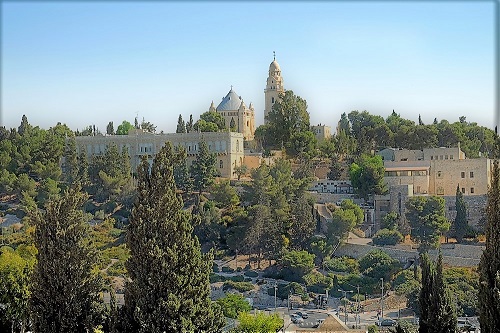
Mount Zion is a broad low hill adjacent to the south side of the Old City of Jerusalem. Mount Zion connects seamlessly with the Armenian Quarter of the Old City via the Zion Gate. For hundreds of years, the mount has had religious significance. Mt. Zion played an important role in the Bible and Second Temple Jerusalem (516 BC - 70 AD). In the Hebrew Bible the name Zion was used to describe the City of David, Temple Mount and Jerusalem. Over the years Zion has become symbolic of the Holy Land as a whole and Jerusalem in particular. Mount Zion lies outside the present Old City walls that were built about 500 years ago under Suleiman the Magnificent. Legend has it that when the Sultan heard that the site of David’s Tomb had not been included within the city walls he had the architects executed. There are two Muslim graves near the Jaffa Gate that are said to be the graves of the two luckless architects.Mount Zion LandmarksDavid’s Tomb - Mount Zion’s role in the Hebrew and Christian religious traditions has earned it great significance. Sites on Mount Zion include David’s Tomb, where King David is said to be buried. His cenotaph is housed in a small room on the entrance level of a building. On the upper level of the same building is a room believed to be where Jesus had his Last Supper. The Upper Room - This room was built in the 12th century and has the typical Gothic vault ceiling. The Upper Room of the Last Supper or Cenacle was at one time a mosque dedicated to the Prophet David (Nebi Daoud). You can still see the minaret above the building; a prayer niche (mihrab) and Koran passages on the stained glass windows.Dormition Abbey - One of the largest structures on Mount Zion was the Byzantine-era Hagia Zion Church which stood where the Dormition Abbey stands today. The abbey stands where Mary is thought to have passed away.St Peter in Gallicantu - On the eastern slope of Mt. Zion is the Church of St. Peter in Gallicantu. The church is built on the site where Jesus was imprisoned and brought before the High Priest Caiaphas after his arrest by the Romans. On the roof of the church, you can see a rooster weather vane; this recalls Peter’s denial of Jesus three times before the rooster crowed.Other Mt. Zion Attractions - On Mount Zion there is a small memorial dedicated to the victims of the Holocaust. Another Mount Zion museum is dedicated to Israeli sculptor David Palombo. You can visit the Protestant cemetery on Mt. Zion and the Catholic cemetery where Oscar Schindler is buried. Shindler saved 1,200 Jews during the Holocaust.Join our Highlights of Jerusalem Tour to explore Mount Zion.

Muslim Quarter

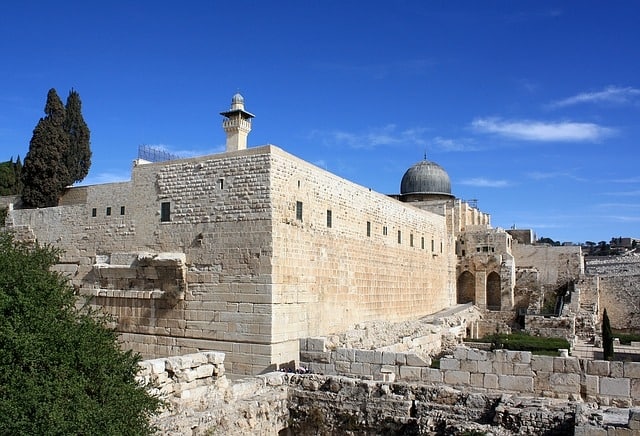
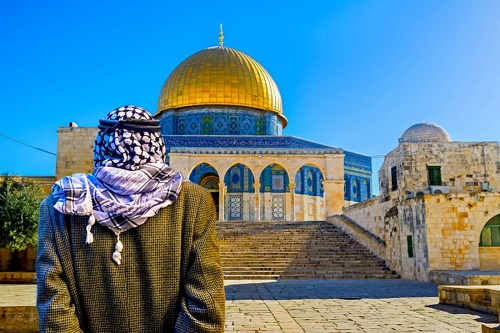
Jerusalem’s Old City is divided into four quarters - the Christian, Jewish, Armenian and Muslim Quarters. The Muslim Quarter lies in the northeastern corner of the Old City and covers 77 acres. It is the largest of the four quarters and the most populated with approximately 22,000 predominantly Muslim residents. Three of the Old City’s gates in the surrounding city walls open up to the Muslim Quarter, they are the Damascus Gate (1542); Herod’s Gate (Flower Gate) and Lions’ Gate (St. Stephen’s Gate). The Golden Gate is a sealed gate that leads directly to Temple Mount.Landmarks of the Muslim QuarterWithin the Muslim Quarter is the large open plaza of Temple Mount where the Jewish Holy Temple stood until 70 AD and where the Al-Aqsa Mosque; Dome of the Rock and Dome of the Chain now stand. Access to Temple Mount is often limited due to security issues but it is the heart of Muslim religious life in Jerusalem. The Al-Aqsa Mosque is believed to be the mosque referred to in the Koran when Muhammad was transported from Mecca to “the most distant mosque” in the Night Journey.Running beneath the streets of the Muslim Quarter are the Western Wall Tunnels that hold a section of the last remaining wall of the Second Holy Jewish Temple (516 BC - 70 AD). The Western Wall starts above ground in the Jewish Quarter but continues in the excavated tunnels beneath the Muslim Quarter. A small section called the Little Western Wall remains above ground in the Muslim Quarter. Christian sites in the Muslim Quarter include the first seven Stations of the Cross along the Via Dolorosa, the route Jesus took through the Old City bearing his cross to his crucifixion. The Muslim Quarter is also home to the Church of St. Anne’s that marks the former family home of Anne and Joachim, Mary’s parents. The Muslim Quarter market is a street bazaar that covers a network of narrow lanes. This colorful and fascinating market has been around for thousands of years. Here you can find clothing, household goods, traditional musical instruments, religious artifacts, food, spices, meat and vegetables.Want to explore the Old City Muslim Quarter? Join our Jerusalem Temple Mount & Dome of the Rock Tour.

Caesarea Port

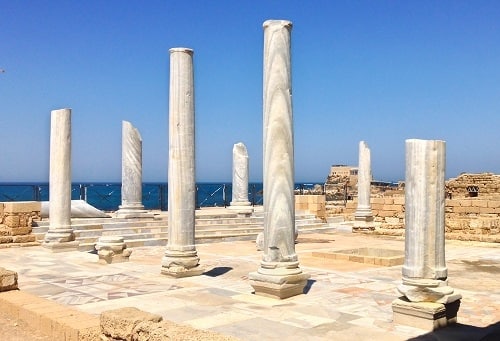
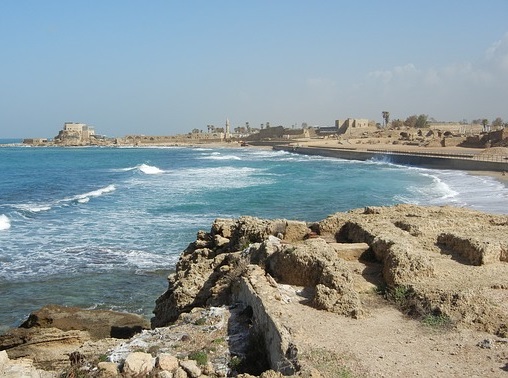
Today modern Caesarea boasts affluent communities with many exclusive neighborhoods, yet if you go down towards the shore you can step back in time to when Caesarea was a mighty Roman port city. The ancient Caesarea port is part of the Caesarea Harbor National Park where you can walk among the remains of King Herod's 2,000-year-old city.Caesarea began as a small Phoenician port city called Staratons Towers; it was annexed by the Hasmoneans in 90BC and claimed in battle by Augustus Caesar in 31 BC. Caesar gifted the town to Herod who spent the following decade building a magnificent city and port, naming it in honor of Caesar. The Caesarea port was unique at the time as most ports of that era were built on natural bays and here, in Caesarea Herod built an artificial port, one of the most sophisticated and largest in the Middle East at that time. The busy port brought business and prosperity to Herod's city.The Roman empire came and went, Herod's port sank into the sea and Caesarea was left to future cultures. In the 12th century, the Crusaders built a smaller port on the ruins of the Roman port. The Mamelukes conquered the city and burnt it to the ground in the 13th century including the port. By the Ottoman era, Caesarea stood empty and it was only towards the end of the 19th century that a group of Bosnian Muslims established a small town here. You can still see the constructions at the northern end of the port built by Romans to protect the land from waves and storms. Visitors can enjoy water-front restaurants and galleries overlooking the beach and new boardwalk. At the new Visitors' Center get insight into ancient Caesarea through exhibitions, a media presentation and displays of archeological artifacts found in and around the harbor. Excavation of Caesarea took place on land and underwater. The submerged port drew international interest as it gave great insight into the technology of port construction during the Roman era. Not only is the old port a beautiful area to explore but divers can even discover the sunken Roman port by following a series of markers beneath the water.Caesarea is a fascinating and ancient site unlike anywhere else in the world. It is not as accessible as Tel Aviv or Jerusalem and some travelers might prefer to see Caesarea with an organized day trip like the Caesarea, Acre and Haifa tour that takes you to all the top coastal cities. Whichever way you visit Caesarea take the time to soak up the atmosphere, enjoy the sea breeze and imagine you have stepped back in time and are standing by a bustling Roman port.

The Roman Theatre of Caesarea

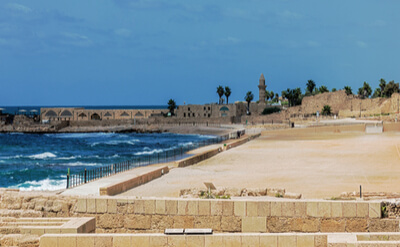
The Roman Theatre of Caesarea is part of the Caesarea National Park which encompasses the remains of the ancient port city capital of Roman Judea. The city was established by Herod the Great in 25 BC on a stretch of coast between Haifa and Tel Aviv. The amphitheater was one of the many structures built by Herod as part of his grand city and is the oldest of its kind in the eastern Mediterranean.Although it has undergone many changes, repairs and renovations the theatre has survived and is still used today. The theater is considered a prestigious venue for performances by Israeli and international stars. Among the international stars who have performed at Caesarea, there are the Pixies; Foreigner; Macy Gray; Alanis Morissette; Bjork; Eric Clapton, and Bryan Adams.Structure of the Theatre at CaesareaBuilt facing the sea the theatre has rows of staggered seating in a semi-circle facing a performance area. The backdrop to the stage would have been columns and statues that left an open view of the sea. The theatre measures 100m in diameter and its semi-circle of stone seating can accommodate an audience of 4,000. Archaeologists have uncovered evidence of changes made to the structure over the years including a colorful plastered floor from the Herodian period underneath a later marble floor.History of the Roman Theatre at CaesareaIn 31 BC Augustus Caesar gifted the small town of Straton's Tower to Herod the Great. Herod renamed the city Caesarea Maritima in honor of his emperor. He spent the next 10-20 years building a magnificent port city that grew to have 100,000 residents and be one of the most famous ports in the ancient world. Among the structures were temples, palaces, bathhouses, and the theater. For the next 500 years, the theatre was used to present classic Greek and Roman plays, sporting events and gladiator fights. The theatre survived through the Byzantine period and in the 4th century the performance area was flooded so that mock sea battles and water games could be presented. The city began to deteriorate in the 7th century after the Muslim conquest. The Crusaders took Caesarea and were followed in the 13th century by the Mamluks who destroyed most of the structures. The theatre and city became slowly buried beneath the coastal sand. Following the War of Independence in 1949 the deserted ancient ruins were excavated and the foundations of Roman and Crusader ruins were uncovered. Restoration and repairs were made to the theater of which much had survived including most of the brickwork done under Herod.To visit the Theater of Caesarea, join our Caesarea, Acre, and Haifa Tour.

Mount Carmel

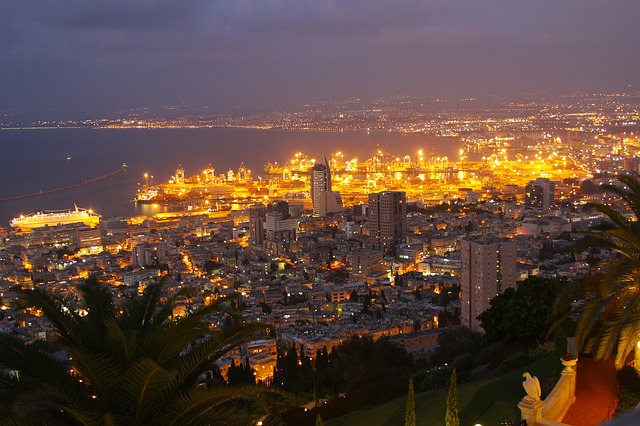
Mount Carmel refers to a 38.6 km long and about 8 km wide coastal mountain range in northern Israel that stretches from the Mediterranean Sea all the way to Jenin in the southeast. The mountain range has a gradual slope in the southwest and a steep ridge in the northeast. The Carmel Mountain Range holds a strategic position between the sea and the Jezreel Valley to the northeast acting as a natural barrier between the coastal plain and the valley. In the ancient world, there were three passes through the range and Mt. Carmel loomed over the Via Maris. Mt. Carmel is a UNESCO Biosphere Reserve and holds several landmarks, points of interest and communities. The most well-known section of the mount is in the coastal city of Haifa. The name “Carmel” comes from the Hebrew word for “freshly planted”. The mount has many caves, volcanic rocks and rich vegetation on the slopes including forests of pine, olive, laurel and oak trees.Mount Carmel National Park and Nature ReserveThe Carmel Forest is in the southwest of the Carmel Range and is a lush, green part of the country with thick forest and many hiking paths, picnic areas, memorials, streams, campgrounds, observation points and outdoor activities. The Mount Carmel National Park Nature Reserve is one of the largest in the country covering 20 acres. The reserve is home to many animal and plant species. Within the reserve there are several communities and attractions including the Druze Hospitality Center. In 1989 and 2010 the park suffered massive forest fires and many of the precious forests were destroyed. Since then intensive efforts have been made successfully replanting the trees.Sacred Locations on Mt. CarmelMount Carmel has being the site of religious events for centuries. With its elevated location, ancient civilizations including the Canaanites considered it a good place to make sacrifices. The Books of Kings tell of an altar on the mount. In the Book of Amos, Mount Carmel is considered a place where it was possible to hide from God. Other references in the Old Testament talk of the beauty and vegetation on the mount. In the Bible the mountain is depicted as a symbol of fertility. Scattered across the mountain range are a number of religious monuments.Prophet Elijah and Mt. Carmel Elijah is a religious figure in all three of the monotheistic faiths. In the Old Testament (Kings I 18:1-40)we read about a contest between the God of the Israelites and a pagan God that took place on the summit of Mt. Carmel. The Israelite King Ahab married Jezebel, a Phoenician. She turned the King away from the Israelite God and had the Israelite priests killed. Elijah then asked the king to assemble 450 pagan priests (Priest of Baal) on Mt. Carmel. He called on the pagan priest to pray to Baal for fire to light a sacrifice. The priests beseeched their God to no avail. Elijah then prepared an altar and a sacrifice to his God. Even though the site was soaked in water fire came down from heaven and lit the sacrifice. Today the Monastery of Muhraqa stands on the site of the contest.Elijah’s CaveThere is a path from the Stella Maris Monastery down the slope of the mountain to a second cave, Elijah’s Cave. This is believed to be where Elijah came to meditate before his confrontation with the pagan Baal priests.CarmelitesThe Stella Maris Monastery is perched high on the western edge of Mt. Carmel overlooking the sea. This is the headquarters of the Carmelite Catholic Order. The Carmelites were founded in the 12th century on Mount Carmel (hence the name) during the Crusader era. Beneath the monastery is a small cave believed to be where the Prophet Elijah lived. During the Old Testament era it was common for people to live in caves on the Carmel Range. Outside the monastery is a statue of Elijah commemorating the victory of God over the Prophets of Baal.Baha’i Gardens Without doubt, the most well-known religious site on Mt. Carmel and definitely the most beautiful is the Baha’i Gardens. The Baha’i Gardens can be seen in the center of Haifa planted in a 1 km strip like a carpet down the slope of Mt. Carmel. There are 19 garden terraces on the mountain slope. They are designed to inspire and bring harmony and unity. A path runs down the middle of the terraces and the gardens are adorned with statues, fountains, lawns and flower beds.Everything is kept in immaculate condition by a team of 200 volunteer gardeners. On the central terrace is a small white shrine topped by a gold-colored dome. The author of many sacred texts and the originator of the Baha’i faith, The Bab is buried in this shrine. Visitors can tour the gardens or get a panoramic view of the gardens, Haifa and the Haifa Bay from a balcony observation point at the top of the gardens.Ahmadiyya Muslim CommunityMount Carmel is the site of the largest Ahmadiyya Mosque in the country, it is known as Mahmood Mosque in Kababir. The mosque has unique architecture including two minarets. The Ahmadiyya community was founded in British colonial India at the end of the 19th century. The major difference between Ahmadiyya Muslims and other Muslims is their belief in the movement’s founder Mirza Ghulam Ahmad as the Messiah and Mahdi (Guided One).Mount Carmel CommunitiesZihron Yaakov, a stunningly beautiful historic town famed for its wine, art galleries and stone-paved pedestrian street. Zihron was among the first Zionist settlements in Israel established in 1882 by 300 families from Romania. Some of the original houses have survived including the Ohel Yaakov Synagogue.Ein Hod On the western edge of the Carmel, just before entering Haifa from the south is a small artists’ community with many fascinating artists’ studios and galleries. At Ein Hod you can enjoy a meal in one of the quaint cafes and wander from studio to studio meeting the artists.HaifaHaifa is by far the largest and most famous of the Mount Carmel cities; it is the third largest city in Israel. The city is built on the slopes of Mt. Carmel and at the foot of the mount between the mount and the sea. It is a major seaport and makes use of the large natural Haifa Bay. The city has a multi-racial and multi-cultural population with many excellent museums, beaches, a historic German Colony, a cable car up Mt. Carmel and many other attractions. Haifa is home to the only underground train in the country. It is actually a subterranean funicular with one track and six stations up the slope of Mt. Carmel.Want to explore Carmel? join our Haifa and Carmel Private Tour.

Acre Old City Market

The Crusader city of Acre lies on the Mediterranean coast just north of Haifa. It is one of the most beautiful ancient cities in Israel with a hidden Crusader city beneath the ground and the 18th century Old City above ground. One of the most exciting things to do in Acre is walking through the Old City where the main streets are lined with market stalls and shops that open up onto the street. The Acre Old City Market is a dirty, colorful, loud and bustling market where the local residents do their shopping among curious tourists. The prices are very reasonable, the vendors friendly and you can even try bargaining. Most of the market is covered so you won’t be in the sun and vendors display their goods hanging from every possible surface and spread out onto the street. The market operates during daylight hours and it is perfectly safe to walk around during the daytime. If you follow the market streets you will eventually reach the sea.The market’s real purpose is to supply locals who live in the Old City with all they need. Among the goods on sale there is clothing, kitchen utensils, toys, jewelry, accessories, shoes, leather goods and more. Food on sale includes both raw and ready-to-eat food. See the fish monger; butcher; vegetable stalls; cheese and spice stalls. At the bakery see large trays of traditional baklava sweet cakes being prepared. You can find unique traditional items in the Acre Old City Market like hooker pipes. In among the market, stalls are several restaurants selling grilled meats, fish dishes, shawama and falafel.Restored Turkish BazaarHaving entered the Old City Market and walked for a few meters you will see a doorway on your right that opens up to a gentrified, restored 18th century market street. This market is dedicated to arts, crafts and souvenirs. It is completely different to the Old City Market and is lined with elegant boutiques, eateries and pubs. If the Old City Market is a bit much for you then head in to this quieter and cleaner side street.Want to stroll around the Acre Old City Market? join ourCaesarea, Acre and Rosh Hanikra Tour.

Church of St. Joseph, Nazareth

The Church of St. Joseph is located in northern Israel in the city of Nazareth where Jesus grew up, the church is believed to be situated where Christ’s earthly father, Joseph once had his home and carpentry workshop. This would then have become the home of Mary as well following their marriage. The church is also known as the Church of Nutrition and the Church of Joseph’s Carpentry. The location first became recognized as the home of the holy family in the 17th century when texts referred to it as “the house and workshop of Joseph.” The Church of Saint Joseph’s Carpentry is within the same complex as the Basilica of the Annunciation together with the Franciscan convent Terra-Santa. In the courtyard you can see architectural artifacts which were uncovered during excavation. Within the church which now stands at this location are several interesting stained glass windows and paintings depicting scenes involving Joseph. There is the scene of Joseph and Mary’s wedding, Joseph dying in the arms of Jesus and Mary, a scene of Joseph showing Jesus how to work in the carpentry as Mary looks on and The Dream of Joseph. The present-day church was constructed in 1914 on what remained of a Crusader Church and this in turn was built on a series of caves. The caves were probably used for food storage in Biblical times and may have been where the workshop was situated. From the present-day church, there is a stairway going down to a crypt and through a grille in the floor where you can see the caves.Further down there is a pool or basin measuring 2m², the pool has a black and white mosaic floor and is thought to have been a baptistery dating back to the 1st century AD. The floor mosaic depicts what appears to be a ladder perhaps symbolizing the spiritual elevation of new converts to Christianity. This indicates that Christians gathered here in Biblical times even before the town had official churches. It appears that the home, having been identified as the home of the Holy Family, was used for Christian worship during the Byzantine era.There are still further steps, which appear to be older, which reach a narrow passage that eventually opens up into a room. In this room are caves that have been carved into the limestone to be used for storage of grain and as water cisterns. This was a typical method of storage during the Roman era.Join ourNazareth and Sea of Galilee Tourto visit theChurch of St. Joseph.

Tiberias

Tiberias is a city on the western shore of the Sea of Galilee in northern Israel and the capital of the Galilee region. In addition to being a vibrant beach resort city and a thriving metropolis, Tiberias has a rich history and major archaeological sites related to all three of the monotheistic religions. Many historic sites have been preserved like the ancient city walls, churches, and an Ottoman-era citadel. The city has a lively beachfront where boat excursions set sail on the Kinneret (Sea of Galilee) and a waterside promenade lined with seafood restaurants, hotels, and a small market. To the south of the city are the hot springs of Tiberias; in the city center are the remains of the Roman city and the walled Ottoman city and to the north and built on the surrounding hills is the modern city of Tiberias.Brief History of TiberiasTiberias was founded in c.18 AD and became the Roman capital of the Galilee under Herod Antipas (mentioned in the New Testament as the Roman King who condemned John the Baptist and played a role in the condemnation of Jesus). Herod Antipas named his new city after his patron Emperor Tiberius. Herod’s city was built alongside a Roman spa that used the area’s natural mineral hot springs. When Jerusalem was conquered in 70 AD many of the Jewish population moved to Tiberias which became the center of Jewish culture and religious study for the next 500 years. It remained an important city for Jewish study until the 16th century. Tiberias is known as one of Israel’s four holy Jewish cities. In about 150 AD the Jewish religious court, the Sanhedrin established itself in Tiberias and remained here until it was disbanded in the early Byzantine era. Many revered rabbis lived in Tiberias in the 1-4th century including Rabbi Judah HaNasi in the 3rd century who is thought to have compiled the Mishnah while in Tiberias. Many years later when the Jewish scholar Maimonides(Rambam) died in 1204 in Egypt his body was brought to Tiberias to be entombed according to his final wishes.Tiberias in the BibleIn Jewish tradition, Tiberias is thought to have been built on the site of a village called Rakkat, mentioned in the Book of Joshua. In John 6:23 Tiberias is mentioned as the place where boats set sail making the crossing from the west to the eastern shore. John describes how the multitude went by boat from Tiberias to Capernaum seeking Jesus. In John, the Sea of Galilee is also referred to as the Sea of Tiberias.Things to Do in TiberiasHamat Tiberias National Park - Here you can enjoy hot spring pools just as the Romans did. Also on the site is a 4th-century synagogue with beautiful mosaics.Rabbi Akiva's Tomb -This Jewish sage challenged Roman rule and supported the Bar Kochba Revolt resulting in his torture and death at the hands of the Romans. His dome-topped tomb is on the hillside overlooking Tiberias and the Sea of Galilee.Tomb of Rambam -The Jewish sage, theologist, doctor, and philosopher Rabbi Moshe Ben Maimon (1135-1204) who compiled the Mishnah is buried here in a modest grave.Tomb of Meir Ba’al HaNess -The tomb of this ancient Jewish sage is within a domed synagogue and surrounded by a number of other religious buildings.Tomb of Rabbi Yohanan ben Zakkai -This 1st-century Jewish hero was influential in replacing animal sacrifice with prayer. His tomb is not far from the Rambam tomb.Al Amari Mosque -This mosque built in 1743 is no longer in use but it stands out with its white dome, black basalt walls, and striped minaret.Scots Hotel -In 1885 Scottish doctor David Watt Torrance opened a hospital in Tiberias which welcomed people of all races and religions. The hospital closed in 1959 and after extensive renovations was reopened as a guest house. Today it is one of the finest luxury boutique hotels in the country with a fine dining restaurant and brilliant views of the Sea of Galilee.Crusader Church -This church has a ceiling reminiscent of an upturned boat, a shaded inner courtyard, and murals dating back to 1903. The church also has a hostel for Catholic pilgrims.Church and Monastery of the Apostles -At the eastern end of the city, you can see a Greek Orthodox Church on the seashore. The monastery is home to a few monks who will welcome visitors on request. Within the complex, there are chapels, a walled courtyard, and an ancient tower.Archaeological sites -In the southeastern foothills of Berniki Hill that rises up behind Tiberias, you can visit a new archaeological park where there is a Roman-era gate, bridge, and theater that could seat 7,000 spectators. Alongside the modern seafront hotels, there is an open-air museum park where you can see archaeological remains. The ancient city walls that can be seen along the water’s edge near the Greek Orthodox Church are from the 18th-century Ottoman period. Another of the surviving Ottoman-era city wall towers can be seen towards the northern end of the city.Fun and Recreation -Tourists can enjoy excellent seafood; the beaches of Tiberias; the Gai Beach Water Park and boat excursions on the water. The waterfront is perhaps the top attraction in Tiberias.

Church of the Pater Noster

The Roman Catholic Church of the Pater Noster (Our Father) stands on the Mount of Olives in Jerusalem alongside the ruins of the 4th century Church of Eleona; a Carmelite monastery; cloisters and a cave where Jesus is believed to have taught his apostle the Lord’s Prayer. The 2nd century apocryphal Acts of John mentions a cave on the Mt. of Olives where Jesus taught God’s word. The cave would have existed in Jesus’ lifetime and would have been a convenient site where Jesus and his disciples could have found a quiet, sheltered spot to learn the Lord’s Prayer.History of the Site of the Pater NosterThe Church of Eleona was commissioned by the Christian Roman Emperor, Constantine I to commemorate the site of Christ’s ascension to heaven and was eventually destroyed in 614 by the Persians. In the 12th century, the Crusaders associated the site with the teaching of the Lord’s Prayer and built a church partially funded by the Bishop of Denmark who was buried here with his butler. The Crusader church fell into ruins in the 14th century. In the 19th century, the stones from the ruined church were taken and used as headstones.Princess Aurelia Bossi de la Tour d’AuvergneThe French Princess Aurelia Bossi bought the land in 1868 and had a Carmelite convent and cloisters built. In 1872 she founded a Carmelite convent and began reconstruction of the ruined Byzantine church in 1874. Due to a lack of funds, the project was halted and remains incomplete. The cave where Jesus taught was uncovered in 1910 in the crypt of the former 4th-century church. According to her wishes, Princess Aurelia Bossi is buried in a tomb at the entrance to the current church. In 1920 construction began on a new church over the sacred cave – the Sacred Heart, but the project was stopped leaving it without a roof and only partial walls. Today the walls of the convent church, cloisters and the surviving walls of the 4th century Eleona Church are covered with ceramic plaques engraved with the Lord’s Prayer in 140 languages.To visit The Church of the Pater Noster, Join ourJerusalem In the Footsteps of Jesus Tour.

Ahava Factory

At the lowest point on Earth, the Dead Sea, the world-famous cosmetics company Ahava welcomes visitors into its factory to learn the secrets that lie in the Dead Sea mud. Guests will receive a guided tour of the factory, an informative multimedia presentation, and expert advice from a cosmetologist.Ahava was established in 1988 with a lone stall selling a body scrub made with Dead Sea mud. A couple of decades later and the company now earns around $150 million every year. The leading Dead Sea brand utilizes the unique mineral make-up of the Dead Sea to cleanse and invigorate the skin, improve metabolism, promote good circulation, and heal the body.There has long been a tradition of healing powers associated with the Dead Sea. The most famous thing about this spot is that people float on the surface of the water, and this is due to the extremely high concentration of salt. The mud soaks up the minerals and is great for rejuvenating skin, while the sulfur in the water heals conditions such as psoriasis, sore muscles, and rheumatic joints. Ziva Gilad, the company's founder, decided to package the mud to sell to others after seeing tourists taking large quantities of the substance to take home with them.The factory tour shows visitors how the production process works from start to finish, starting with the raw material and finishing up with cosmetic products including hand creams, facial cleansers, body milk and anti-aging products among many others. Experts are on hand to give you advice about which products are most suitable for your specific skin type, and you'll be able to buy samples of the full range of products which make for perfect souvenirs to bring back for family and friends.The tour itself is free of charge, and there is no obligation to buy any of the products. The factory is open every day from 8 am to 5 pm, 4 pm on a Friday. It is conveniently located across from Mineral Beach where you can spend hours floating in the water, taking a dip in the sulfur pools, and covering yourself in mineral-rich mud.

Beit Ha’Ir Museum

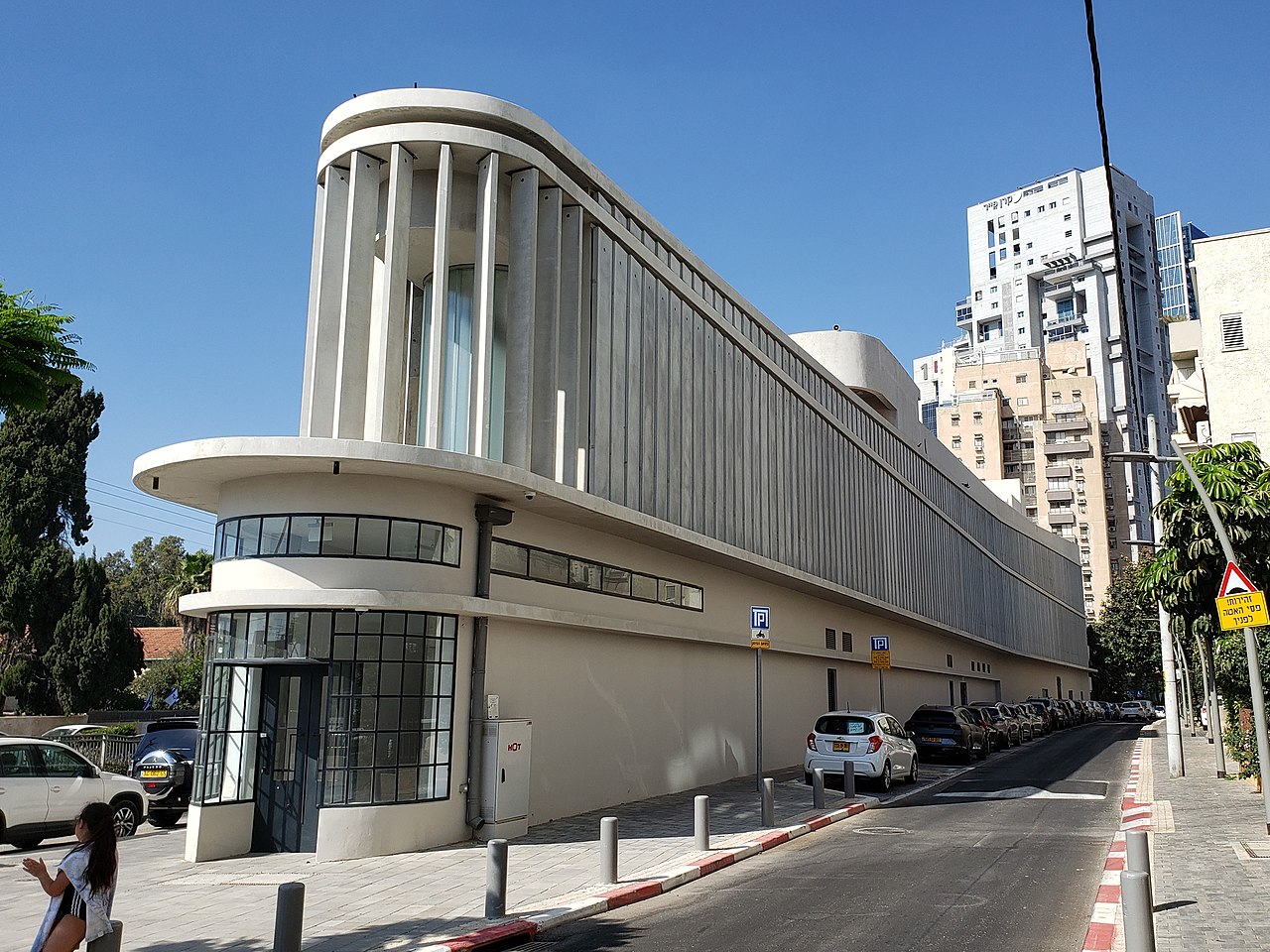
Plan Your VisitOpen Times:Sunday closed. Monday-Thursday 09:00-17:00; Friday, Saturday, and holidays 10:00-14:00.Prices:Free.Average Visit Duration:30 minutes to 2 hours.Popular Times:Mid-day.If you just want to see the building’s facade, then visit at night when it is beautifully illuminated.Special Events:Special events are sometimes held at Beit Ha’Ir during Jewish national holidays andChristian holidays in Israel.Relevant Tours:Private Tel Aviv tourscould include this museum; If you want to get the most out of Beit Ha’Ir it is highly recommended to see it with a PRO guide.The museum is located at 27 Bialek Street at the northern end of Allenby Street just behind Gan Meir. It's fully accessible, and you can combine your visit with a stop at the adjacent Bialik House or the nearby Bauhaus Museum and Reuben Reuven Museum.Beit Ha’Ir translates as “the city house” or “town hall” and this museum is in the historic Tel Aviv City Hall. The museum focuses on the history of the city, and the building is an attraction in its own right. Welcome to Beit Ha'Ir Museum in Tel Aviv!Beit Ha’Ir is part of the Bialik Complex, a hub of culture and entertainment. In addition to the museum exhibitions, Beit Ha’Ir also hosts special events and debates focused on Tel Aviv.History of Beit Ha’IrThis beautiful building was designed by Moshe Cherner, and built in 1925. Just 38 years previously a group of pioneering Jews had left the walled city of Jaffa to set up a new home, a city that would grow to become Tel Aviv. By the time Beit Ha’Ir was constructed, the British ruled Palestine, and Tel Aviv had become a thriving municipality in need of a city hall. Beit Ha’Ir was originally intended as an apartment hotel and owned by Philip and Isidore Skora. They named the building Beit A. Skoura, but soon after, leased and then sold the building to the municipality to be used as the town hall.Beit Ha'Ir in the late 1930sIt served as city hall from 1928 until 1965 when the mayor Meir Dizengoff had his office and hosted dignitaries in his chamber. Many well-known figures passed through Beit Ha’Ir including Ahad Ha’am, Bialik, and British cabinet ministers. when the municipal headquarters moved to a large building on Rabin Square.The Museum of Tel Aviv History opened in Beit Ha’Ir in 1971, although some of the municipal archives remained on the top floor for several years. In 2003 the building became part of the “White City” a UNESCO-recognized part of Tel Aviv where there is an incredibly high concentration of Bauhaus architecture. Beit Ha’Ir itself is designed in the Bauhaus style. The building was restored and redesigned by architect Mayra Kovalsky to preserve the historic architecture and expand the museum’s exhibition space. The museum was renamed in the summer of 2023 and became the Tel Aviv City Museum.What to See at the Beit Ha’Ir MuseumOn the top floor of the museum is the recreated office of Tel Aviv’s first mayor, Meir Dizengoff.The rest of the building has an open-plan exhibition space with regularly rotating exhibits that include photographs, videos, and authentic documents to tell the story of Tel Aviv’s history. Beit Hair night lights (Image source: Dana Menaker CC BY-SA 3.0)The exhibits are more of a collection of stories, rather than displays, they are eclectic, and the museum format has been kept flexible. On display is an impression of the original tile floor, the historic staircase, and the study. But don’t expect to see a historic interior, as the inside of the building has been modernized to accommodate the exhibits. Among the displays is the Tel Aviv Time Machine. Take a virtual tour of the city’s history and see archive material including a computerized database.Pro Tip:Enjoy the view from Dizengoff’s office down the length of Bialik Street which is lined with Bauhaus buildings.
By Petal Mashraki
0 views

Opera Square, Tel Aviv

Plan Your VisitOpen Times:24/7Prices:FreeAverage Visit Duration:30 minutes to 1 hour.Popular Times:Stop here for lunch, or stroll through the Square at sundown to catch the sunset across one of the best beaches of Tel Aviv. Pro Tip:Israeli summercan be tough and there isn’t any shade, so avoid being in the square at the hottest time of day, which is about 14:00.Special Events: In past years, the Tel Aviv Pride Parade in June has set off from Opera Square.Relevant Tours:This Square can be included in private Tel Aviv tours.The best reason for stopping in Opera Square is because it is between the seafront and the city, perfectly situated close to top attractions and even a short walk fromJaffa. The Opera SquareThe Square lies at the western end of Allenby Street(home to Carmel Market), so it is perfect to either start or finish a walk through the city at Opera Square.Pro Tip:You might hear Opera Square referred to as Herbert Samuel Square (because of the adjacent hotel), Casino Square, or Knesset Square.The Square has undergone renovations in the past few years and today is a stunning pedestrian area framed by tall palm trees and designed with flowing patterns on the paving, cycle paths, and a contemporary pond and fountain. The space faces onto the seafront promenade and the beach beyond.What is There at Opera Square?SeaviewsBenches and seatingExpansive paved spacesCafes, Restaurants, and StoresA fountain and pond Pro Tip: Come back at night when the fountain is lit up.Cycle pathDirect access to the promenade and beach across a small streetWhat there isn’t at Opera Square is opera! Although the name has survived from the original Opera House that stood here, the Israel National Opera Company now performs at the Tel Aviv Performing Arts Center (19 Sha’ul HaMelech Avenue).Opera TowerToday the Opera Tower is called the Opera Herbert Samuel Hotel, and it is one of the most luxurious hotels in the city. This is one of the most interesting buildings along Tel Aviv’s seafront. The modernist structure stands on the site of the old Opera House. The facade arches are a homage to the historical Tel Aviv Opera House.The Opera Square Fountain (Image source: Yehudit Garinkol CC BY 2.5)Before the Opera House, this was the site of the Kesem Cinema built in British Mandate Palestine in 1945. Shortly after that when the State of Israel was declared it became the seat of the Provisional State Council and the newly elected Israeli parliament. By 1950 parliament had moved to Jerusalem, and the building was bought by the municipality and used as the Tel Aviv City Council offices.In 1958, the Opera Friends Circle bought the building and it became the Opera House, which had a rich cultural life until being demolished in 1993 and replaced by the Opera Tower we see today.Pro Tip: Did you know that Placido Domingo spent three years training here in the early 1960s?
By Petal Mashraki
0 views

Ben Gurion House, Tel Aviv

Plan Your VisitOpen Times: Open daily, Sunday - Thursday 09:00-16:00, Friday 09:00-13:00, Saturday 10:00-14:00.Prices: Entry to the Ben Gurion House is free but you must book a time slot on the museum website. For those visiting without an organized tour, the museum can provide an audio guide for 10 ILS.Average Visit Duration: 1 hour.Popular Times: The institute is often visited by groups of schoolchildren so it is best to arrive in the afternoon when there are less likely to be large groups of students.Special Events: There are regular workshops, lectures, seminars, and special events, especially during Israeli school holidays.Relevant Tours: Ben Gurion House offers tours for organized groups (schools, clubs, etc). On private Tel Aviv tours, you can opt to include a stop at Ben Gurion House.Ben Gurion House is where Israel’s first Prime Minister, David Ben Gurion lived while in Tel Aviv. The house has been turned into a museum with exhibits highlighting the landmark events in Ben Gurion’s life and the years leading up to the establishment of the State of Israel. Visitors can learn about David Ben Gurion’s vision and his legacy, and see how this humble leader lived.Who Was David Ben Gurion?David Ben-Gurion, born David Grün in Plonsk, Poland in 1886, was a key figure in the establishment of the State of Israel and a prominent Zionist leader. After immigrating to Ottoman Palestine in 1906, he quickly became involved in the Zionist movement.David Ben Gurion speaking at a conversion in 1940Ben-Gurion played a pivotal role in the creation of the Haganah, a Jewish paramilitary organization, to protect Jewish communities from Arab attacks during the tumultuous period leading up to the British Mandate. His political career blossomed as he became a leader in the Jewish Agency, representing Jewish interests in dealings with the British authorities.As the country's first Prime Minister, he oversaw its initial years, facing challenges such as the War of Independence and mass immigration. Ben-Gurion's commitment to building a Jewish state in Eretz Israel shaped the foundations of modern Israel. He later retired from politics in 1953 but returned to serve as Prime Minister in 1955, guiding Israel through significant events such as the Sinai Campaign and the Suez Crisis in 1956. Even after his final resignation in 1963, Ben-Gurion remained an influential figure in Israeli politics and is remembered as a founding father of the nation.The Ben Gurion Museum HouseBen Gurion House was constructed in the 1930s, expanded in 1946, and renovated in 1960. It was the permanent home of the Ben Gurion family from 1931 until Paula and David settled in Sde Boker. After the move, they maintained the house in Tel Aviv to use when they were visiting. A part of the vast library of Ben Gurion's house (Image source: Heritage Conservation Project - Tel-Aviv Pikiwiki Israel CC BY 2.5)Ben Gurion’s former home is an unremarkable structure and was originally part of a workers' neighborhood. It was here in this simple abode that Ben Gurion hosted iconic historic figures such as Golda Meir, Moshe Dayan, Albert Einstein, and J.F. Kennedy. Here Jewish leaders gathered to draft the final version of Israel’s Declaration of Independence.Pro Tip: Ben Gurion left his house and walked to the Tel Aviv Museum of Art on Dizengoff Street to announce Israel’s independence on 13 May 1948. Today the building on Dizengoff Street is no longer an art museum, instead, it is a museum dedicated to the establishment of the Jewish State and is called Independence Hall.The Ben Gurion House MuseumThe house opened to the public in 1974, featuring displays of authentic artifacts that illustrate the landmark moments in Ben Gurion’s life before the establishment of the State of Israel. In addition to the exhibits, Ben Gurion House is used as a cultural and educational center for those wishing to delve deeper into the life of Israel’s first Prime Minister.Pro Tip: If you’re interested in seeing other homes of Ben Gurion visit Julius Jacobs House in Jerusalem and Ben Gurion’s Hut at Kibbutz Sde Boker in the Negev.What To Expect at Ben Gurion HouseFirst Floor: On the first floor is the room of Ben Gurion’s daughter, Renana. During the Suez Crisis in 1956, Ben Gurion set up his war room here, and conducted communications with his Chief of Staff, Moshe Dayan, getting regular updates about the situation.Second Floor: This floor was used only by Ben Gurion and is home to the four-room library, bedroom, and toilet. The library holds Ben Gurion’s extensive collection of over 20,000 books in various languages as well as newspapers, maps, and photographs. One of the library rooms was used as Ben Gurion’s study, and here he sat to write his diary and could receive emergency calls from the Defense Ministry on a direct line.
By Petal Mashraki
0 views

Levinsky Market

Plan Your VisitOpen Times:Sunday-Thursday from the morning to evening, and even late into the night depending on the business and vendor. Friday the market closes in the early afternoon in preparation for theIsraeli Shabbat. The time varies according to the length of daylight hours. So in the summer, it stays open later on a Friday afternoon than in the winter. Saturdays the market is completely closed.Prices:Free.Average Visit Duration:1-2 hours.Popular Times:Levinsky Shuk is at its busiest on Thursdays and Fridays.Relevant Tours: A private Tel Aviv guided tour can take you there, and some group tours include the marketas well.Pro Tip: The most comfortable way to reach the market is using Dan Bus No. 24. You'll find the closest ATM in Bank Hapoalim at 69 Levensky Street.Levinsky Market, in the Florentin neighborhood in the heart of Tel Aviv, is one of thebest markets in Tel Avivand one of the oldest in the country 0 yet it has become a hip hang-out for Friday brunch for those seeking something different, with a little more flavor. A kaleidoscope of colors and aromas defines the market's distinct character. Levinsky Market is renowned for its spice shops, delis, and specialty stores offering an array of Middle Eastern and Mediterranean delicacies.Spices in the market; the mixture of scents is enchanting!The market has weathered the changing tides of time, witnessing the city's expansion and modernization. Today, Levinsky Market stands as a testament to Tel Aviv's cultural mosaic. However, don’t expect a gentrified array of market stalls and shops. Levinsky Market has a raw feel to it. Many areas will make you feel like you have gone off track and wandered into a deserted industrial area. But don’t give up, hidden gems await behind every corner.Pro Tip:If you want to stay in the heart of Levinsky Market there is the Levinski Market Hotel, a modern, urban haven.What to See and Do at Levinsky MarketEnjoy the mix of old and new, the endlessIsraeli street foodstalls, and the sidewalk cafes great foran Israeli breakfast. You’ll see hipsters enjoying brunch at the cafes on a Friday, at places like Cafe Levinski 41 or Cafelix. And walk amongst crowds of old ladies looking for the perfect parsley on a Thursday when many Israelis do their weekly shop-up.Pro Tip:In the evening the market stalls and stores are closed but the area comes alive with bars andgreat Tel-Avivi restaurants(some are closed on weekends). While you’re in Florentin check out the funkyTel-Avivi street art and graffiti.The street food is awesome!We recommend experiencing the authentic local atmosphere at Ouzeria, a small Greek tavern that overflows onto the sidewalk and stays open for lunch and dinner. Try the Greek-style mezze and ouzo or the mouthwatering homemade pistachio ice cream.Enjoy a coffee and sit-down meal at Mabsuta, Garder Hazahav, Tony ve Ester, Levinsky Pasta Bar, or Caffe Kaymak.Pro Tip:Get the Levinsky Market Bite Card and experience a range of samples from various vendors in the market. This is not a tour, but an experience you can have independently at your own pace. The ticket costs 145 ILS and can be purchased online at the shuttle.History of the Levinsky Market, Tel AvivTel Aviv was still a small, developing city when a group of Jewish immigrants arrived in the 1930s from Thessaloniki, Greece. Together the working-class Greek immigrants settled in southern Tel Aviv in a neighborhood now named after the group’s leader, David Florentin, and his nephew who became the first contractor in the area. The community opened spice stores, and eateries in their neighborhood and it was here that a marketplace grew, where the new immigrants could buy food, and make a living.The Levinsky Market back in 1960 (Image source: Nahshold CC BY-SA 4.0)The Greeks of the Florentin neighborhood were joined by Iranian immigrants after the establishment of the State of Israel in 1948. They brought with them the flavors, spices, and dishes of their home country. The marketplace grew, offering Greek and Persian food. The stores with bags of nuts and spices at the door stand side by side with luxury stores and gourmet restaurants. Today the range of culinary traditions found in Levinsky Market goes far beyond Greek and Persian offerings.Pro Tip:If you love markets then Tel Aviv has several other must-see “shuks” including Carmel Market, Jaffa Flea Market, and Sarona Market.
By Petal Mashraki
0 views

Habima Square

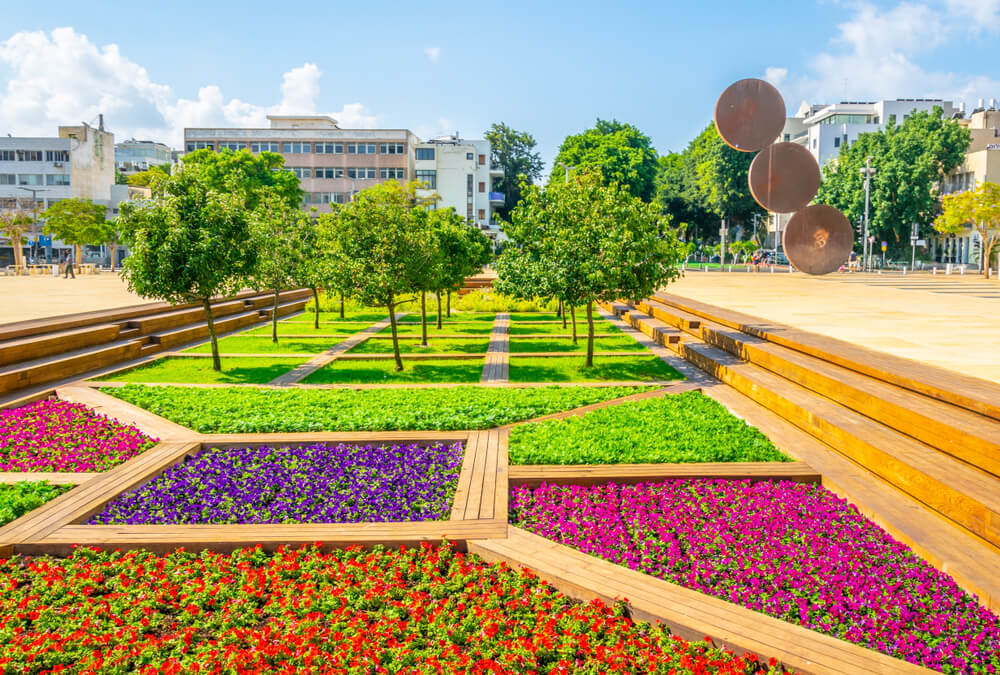
Habima Square, located in the heart of Tel Aviv, is a vibrant public space and a true hub of the city’s cultural scene. This spacious plaza is surrounded by some of Tel Aviv’s most iconic venues, including the Habima Theatre, the Helena Rubinstein Pavilion for Contemporary Art, and the Charles Bronfman Auditorium, home to the Israeli Philharmonic Orchestra. In every direction, you’ll find theaters, concert halls, and trendy restaurants, making Habima Square a dynamic gathering place for both locals and visitors. Whether you’re there for a performance, to explore the art, or simply to relax in the beautiful sunken garden with its colorful flowers and trees, Habima Square offers an unforgettable glimpse into Tel Aviv’s creative energy and cultural life.Plan Your VisitOpen Times:24/7Prices:FreeAverage Visit Duration:30 minutes to 1 hour.Popular Times:During the evening when shows are about to start or about to finish, the plaza fills with people.Special Events:There are often scheduled events in the Square that are advertised in the media.Relevant Tours:As one of the most iconic destinations in the city, a walking tour of Tel Aviv will probably include Habima Square. You can also add this attraction to PrivateTel Aviv tours. Habima Square gardenNot only that but the Square is often used as the venue for special events. You’ll find Habima Square at the intersection of Tel Aviv's two most important streets, Dizengoff Street and Rothschild Boulevard. It is a place to meet, to hang out, and to enjoy a relaxed atmosphere.The Square features a sunken garden where local trees and vegetation have been planted such as lavender, almond trees, and cacti. If you visitTel Aviv with kids, theycan play and you can sit while watching buskers entertain the crowds. Different parts of the Square have different atmospheres, some corners are quiet while other places are dynamic and busy. There is a peaceful water basin, benches, statues, and of course the magnificent architecture that surrounds the Square.Habima Theater building, on the western side of the square (Image source: xiquinhosilva CC BY 2.0)You’ll know you’ve reached Habima Square when you see a sculpture of three giant steel discs balancing one on top of the other at an angle, and reaching upwards. This iconic sculpture was created by Menashe Kadishman, and completed in 1976. It was meant to represent the economic instability at the time.History of Habima SquareThe idea for a cultural plaza was part of the original plan for Tel Aviv, laid out by Patrick Geddes in the late 1920s. When the Habima Theater was constructed in the early 1940s, the Square was a natural continuation of the cultural space next to the theater. Slowly other cultural venues were built in the vicinity.Pro Tip:At the time of writing, parking in the parking lot underneath the Square costs 32 ILS for 2 hours. There is an elevator directly from the parking lot to the Square.Habima Square at night (Image source: Oren Rozen CC BY-SA 3.0)Habima Square, as we see it today, was designed by the Israeli artist Dani Karavan and completed in 2010 together with the underground parking. Several of the Square features pay homage to the early landscape of this area, such as the sandboxes where kids play that represent the dunes, and the sunken garden that represents the vegetation that once covered the ground.Pro Tip:The name Habima means “the stage”, and it is sometimes also called “The Orchestra Plaza”.Cultural Institutions Around Habima SquareHabima Theater: Israel’s National TheaterCultural Palace(Heichal HaTarbut): Was formerly named Mann Auditorium, and is today known as Charles Bronfman Auditorium. The venue is home to the Philharmonic Orchestra of Israel and is the largest concert hall in Tel Aviv.Eyal Ofer Pavilion for Contemporary Art:Formerly the Helena Rubinstein Pavilion for Contemporary Art. One of the most important art museums in the country.If you’re interested in architecture, and the buildings of Tel Aviv’s White City, then take a look around Habima Square where several of the structures are in the international style.Cultural attractions nearby include:Joseph Bau House Museum, 5min walkTzavta Theater, 6 min walkTel Aviv Cinematheque, 8min walkSarona Center, 11 min walkCameri Theater, 13 min walkWhat Happens at Habima Square?Often nothing happens at Habima Square at all. People come and go crossing the Square to get to where they’re going, locals stop to eat their lunch in the sun and then move on, and theatergoers park their cars in the underground parking beneath the Square then ascend to find their venue.Over the last few years the plaza has been the focal point for public events such as the housing protest in 2011, the opening ceremony of the 2019 Eurovision, and in 2023-24, tens of thousands of Israelis gathered here to rally for the return of hostages.
By Petal Mashraki
0 views

Kedumim Square

Plan Your VisitOpen Times: The square is open to the public 24/7 and the attractions and restaurants here each have their open hours.Prices: Entrance to the square is free.Average Visit Duration: About 30 minutes.Popular Times: Kedumim Square is charming at any time of day, visit at lunchtime to enjoy a meal in one of the restaurants, or visit at night when the square is beautifully lit up.Special Events: In the summertime (July-August) the municipality provides free entertainment in the square. The square is the main hub of the Jaffa Nights Festival during the summer months.Relevant Tours: Several Tel Aviv tours and Jaffa-centric experiences such as a Jaffa walking tour will stop at Kedumim Square.Kedumim Square or Kikar Kedumim, (literally translated as Antiquities Square) is in the heart of Old Jaffa, and the perfect place to start exploring this ancient port city. You can’t miss Kedumim Square even if you try, as the city’s top attractions surround it. The Kedumin Square (Image source: Mattes)It is an essential stop for anyone looking for attractions in Jaffa as this is where you’ll find the Jaffa Visitors Center. Beneath the square are archaeological excavations that can be seen at the museum in the Visitors Center. The surrounding buildings are built of beautiful pale sandstone. You’ll find art galleries, restaurants, cafes, souvenir stores, and boutiques here. This is the place to come if you just want to hang out and soak up the atmosphere, or if you want to visit all the top attractions.How to find the Kedumim Square? You’ll enter Jaffa from Tel Aviv, along Yefet Street where you’ll see the city’s most famous landmark, the Ottoman Clock Tower. The Old City of Jaffa and Kedumim Square are west of the Clock Tower. It is easy to explore Jaffa on foot, and if you turn right just after the clock tower you’ll arrive in the Old City. Pro Tip: If you turned left you’d end up in the Jaffa Flea Market which is also worth visiting. If you take Mifratz Shlomo Street it is a 7-minute walk to the square, and you’ll pass the Mahmoudiya Mosque. Alternatively, keep going along Yefet Street a little further before turning right on Louis Pasteur Street. This route is a 13-minute walk to the Old City. Things to See and Do in Kedumim Square, JaffaZodiac FountainIn 2011 artists Varda Ghivoly, Ilan Gelber, and Navot Gil created this fun fountain. It features the twelve zodiac signs carved out of chalkstone.The Zodiac FountainAt night the Zodiac Fountain is lit up bringing the zodiac characters to life. Legend has it that it is a magic wishing well, and if you throw a coin in and make a wish it will come true.Kedumim Visitor Center JaffaYour most important stop in Kedumim Square is the Visitors Center which also houses the Jaffa Museum known as Jaffa Tales. The staff is accommodating providing information about the city’s attractions, and selling tours, and maps. The information about Jaffa is available in Russian, German, English, Arabic, Hebrew, Spanish, and French.Jaffa Tales MuseumThe museum is accessed via the Visitor Center and offers a multi-media glimpse into 5,000 years of Jaffa history. At the museum, visitors walk along walkways through the archaeological excavations beneath Kedumim Square. The museum also known as Jaffa Tales takes you on a journey back in time using genuine archaeological artifacts, animated displays, and holograms of historical figures who tell their story. The two video presentations at the museum are available in Hebrew, Arabic, French<, German, Spanish, Russian, and Chinese. Note that entrance is by prior arrangement.Attractions Within 3 Minutes of Kedumim SquareThe Wishing BridgeJust one minute from Kedumim Square is the famous Wishing Bridge, it features twelve bronze plaques, each with a zodiac sign. Yes, you may have noticed Jaffa has fountains, streets, statues, and bridges with an astrological theme.The Wishing BridgeSaint Peter’s ChurchThis impressive church is named after Saint Peter who spent time in Jaffa. It was here that he brought Tabitha back to life. The St. Peter’s Churchis reminiscent of a European basilica and has a stunning interior.St. Peter's ChurchZodiac LanesFrom Kedumim Square there is a network of narrow stone alleys named after the zodiac signs that lead down to the old port. The lanes are quaint with brightly colored doorways dripping with vines and bougainvillea, perfect for Instagram shots. On the way, you’ll pass several art galleries and boutique stores. Pro Tip: One of the most famous galleries here is the Ilana Goor Museum on Mazal Dagim Street (Gemini Street).The PromenadeFrom Kedumim Square continue north in the direction of Tel Aviv and follow the upper promenade that offers spectacular views of the coastline.
By Petal Mashraki
0 views

Jaffa Museum

Plan Your VisitOpen Times:Sunday-Thursday 10:00-16:00, Friday 10:00-14:00, Saturday 10:00-18:00 Pro Tip: Phone ahead, as their hours vary.Prices: FreeAverage Visit Duration: 1 hour.Popular Times: Saturdays.Special Events: The place has regular temporary exhibitions, and special events during national school holiday periods.Relevant Tours:Private Tel Aviv tours can take you there. For temporary exhibitions, there are often talks with the artists and guided tours at noon on Fridays. If you are visiting without an organized tour call ahead as the museum is often closed for special group visits and events.Jaffa Museum of Antiquities explores the history of Jaffa through a wide range of exhibits from archaeological treasures to contemporary artwork by local artists. Jaffa was an ancient port city that welcomed pilgrims, armies, merchants, and immigrants. The Jaffa Museum (Image source: Ori CC BY-SA 2.0)Many regimes, religions, and cultures made their way through Jaffa leaving their mark. At the museum, you can learn about the endless succession of civilizations that inhabited Jaffa, going back thousands of years, including the Canaanites, Egyptians, Persians, Phoenicians, Greeks, Romans, Byzantines, Ottomans, and British. The museum exhibits change regularly with new and exciting additions as the city continues to grow and new archaeological finds are made.Pro Tip:If you’re asking for directions you might need to say you’re looking for the Old Saraya House, the Jaffa Museum, or the Antiquities Museum. On Google Maps, search for “Jaffa Museum”.The Jaffa Museum Building - Al-SarayaIn addition to the museum exhibits, the building itself is worth seeing. The structure houses the museum and an Arab-Hebrew Theater. Jaffa Museum of Antiquities is housed in an 11th-century Crusader fortress which has been destroyed and rebuilt several times. The present version of the museum building dates back to the 18th century and the Ottoman Empire when it was called Al-Saraya al-Atika and served as an administrative office for the municipality, and later as the post office, and a prison. On a visit to the museum, you can explore the building and see architectural features from the Crusader and Ottoman periods, such as the Crusader colonnaded halls and vaulted ceilings.Some of the exhibits, findings and projects of the Jaffa Museum (Images: The official website of the Israeli Antiquities Authority)Pro Tip:You may hear the building referred to as the “Old Saraya”, as there are two buildings in Jaffa called Saraya. The museum building or Old Saraya, and a second Saraya building, or “New Saraya” that was built to replace the original Saraya building as the Ottoman government offices. It is located at al-Qibla, around Clock Tower Square.In 1733 a local Christian family headed by Hanna Dawud Damiani bought part of the building and converted it into a soap factory that became the largest soap factory in Palestine. The soap factory was abandoned during the War of Independence in 1948 and remained unoccupied and neglected until it was restored for the opening of the museum.Highlights of Jaffa Museum of Antiquities8th-century transcription of Sennacherib, King of Assyria.Personal and household items that belonged to a Jewish family living in Jaffa during the Roman era, about 2000 years ago.Bronze Age pottery was discovered in Jaffa.Roman and Byzantine-era glasswareStone ossuaries from the Herodian and Roman periods.Contemporary art.Know Before You GoLocated at 10 Mifratz Shlomo Street, Jaffa the museum is surrounded by gardens, stone pathways, and other historic landmarks and attractions such as the Hamam.The museum is fully accessible, and there is parking nearby.
By Petal Mashraki
0 views

Tel Aviv Museum of Art

Plan Your VisitOpen Times: Sunday-Tuesday closed. Wednesday-Thursday 10:00-16:00; Friday 10:00-14:00, and Saturday 10:00-18:00. Prices: Regular price: 50 ILS; people with disabilities, students, and residents of Tel Aviv-Jaffa 40 ILS, and senior citizens (Israeli and foreign) 25 ILS. Entrance is free for museum members, visitors under 18 years old; journalists, escorts of disabled persons, tour guides, and recruited army reservists (order 8). You need to show your relevant valid certificate or ID for the discount. The entrance fee provides a one-time entry to the museum. Pro Tip: If you have a Guggenheim Artpass, The Cultivist, or Sotheby’s Preferred membership entrance is free.Average Visit Duration: 1-3 hoursPopular Times: Mid-day. Pro Tip: Last entry one hour before closing time.Special Events: The museum hosts regular temporary exhibitions, family events, activities, workshops, guided tours, and Friday cinema. See the museum website for a calendar of upcoming events. Relevant Tours: Take a private Tel Aviv tour and see this popular attraction with a guide. If you're a true lover of art, try a Tel Aviv Graffiti tour as well.A visit to Tel Aviv is incomplete without a stop at the Tel Aviv Art Museum. It is one of the most important art museums in the country and holds a superb collection of contemporary and modern art from Israel and abroad. Enjoy grand art in Tel Aviv!The art ranges from well-known pieces to experimental works. The exhibits range from visual arts and design to architecture and installations. You don’t have to be an art-lover to enjoy this museum as the exhibits will surprise and delight visitors of all ages and artistic inclinations.History of the Tel Aviv Museum of ArtThis was Israel’s first art museum, established by Tel Aviv’s first mayor, Meir Dizengoff in 1932. It was part of his plan to turn Tel Aviv into a cultural hub, and he used his connections to gather donations of artwork to display in the new museum. Dizengoff let the lower level of his private residence become the museum’s first home and he continued to live on the upper floor of the house. When Dizengoff passed away in 1936 he bequeathed the museum to the Tel Aviv municipality with the request that it remain a museum.From its initial opening, the museum boasted an impressive collection of pieces by artists such as Chagall, Modigliani, and Reuven Rubin. The museum was a great success and continued to add valuable works to the collection.Artwork in the MuseumIn 1948, Israel’s independence was declared in the presence of Ben Gurion at the museum building. Pro Tip: Delve into this part of Israel’s history with a visit to the original museum building, now Independence Hall at 16 Rothschild Boulevard in Tel Aviv.With the establishment of the State of Israel, the museum moved from its temporary home into the purpose-built Helena Rubinstein Pavilion in 1959. Soon it became clear that the building was not big enough to house the growing collection. So a new museum building was constructed on Shaul Hamelech Boulevard.In 2011, the Herta and Paul Amir Building was inaugurated alongside the main museum building on Shaul Hamelech Boulevard. It more than doubled the museum space and now workshops, gatherings, events, and a family gallery could be accommodated. Now with over a million visitors a year, and international recognition the museum is among the top hundred visited museums in the world. Pro Tip: The Helena Rubinstein Pavilion was renamed the Eyal Ofer Pavilion and was completely renovated in 2023.What to See at the Tel Aviv Museum of ArtThe categories of artwork on display include Israeli art; contemporary art; modern art; drawings; prints; photography; design; architecture, and 16th-19th century European art.See works by Gustav Klimt, Lichtenstein, Kandinsky, van Gogh, Maurycy Gottlieb, Jackson Pollock, Pissarro, Monet, Samuel Hirzenberg, Joan Miro, Picasso, and Henry Moore. Pro Tip: The museum also has an extensive art library.The Buildings of the Tel Aviv Museum of ArtThe Tel Aviv Museum of Art has three buildings, spread across two campuses - one on Shaul Hamelech Boulevard and the other on Tarset Avenue.Tel Aviv Museum of Art, main building also known as the Paulson Family Foundation Building at 27 Shaul Hamelech Boulevard. Home to the museum’s permanent collection and temporary exhibitions. The designers of the museum were chosen through a competition won by architects Dan Eitan and Itzhak Yashar. They designed the building in the Israeli Brutalist style, inspired by the architecture of public structures in Tel Aviv from the 1950s to 70s. The interior has a spiral design of four galleries surrounding a tall open central atrium. The galleries are minimalistic and painted white so there are no distractions from the artwork on display. This museum building is home to temporary exhibitions, the Younes & Soraya Nazarian Family Experimental Center, sculpture gardens, restaurants, a gift store, a visitor center, and more.The Museum buildingHerta and Paul Amir Building, adjacent to the main building on Shaul Hamelech Boulevard. The building is a work of art in its own right and exhibits Israeli art, photography, visual arts, and temporary exhibitions. This is the most recent addition to the museum. The building was designed by Prof. Preston Scott Cohen in collaboration with Amit Nemlich. The exterior has a striking appearance, made of 465 panels of polished concrete set at angles to resemble an Origami-like surface. Inside the gallery space is around a central “light fall” atrium with a vertical space under a skylight that lets in natural light. There are five floors, three below ground level.Eyal Ofer Pavilion (former Helena Rubinstein Pavilion) located on Tarset Avenue, was designed by Zeev Rechter, Yacov Rechter, and Dov Karmi, and was inaugurated in 1959.What Facilities Are There at the Museum?Fully accessible, including ramps, adapted restrooms, free wheelchair rental, hearing-aid systems, and accessible parking.Food and drinks: Grab something to eat at the museum’s Studio Cafe or Pastel restaurant in the main building, or enjoy the Helena contemporary wine bar at the Eyal Ofer Pavilion.Cloakroom service (5 ILS deposit)Pro Tip: Both of the museum locations are conveniently located minutes from iconic cultural buildings. On Shaul Hamelech Boulevard you’ll be near the Israeli Opera House and the Cameri Theater, and at the Eyal Ofer Pavilion on Tarsat Avenue, you’ll be alongside Israel’s national theater, Habima, and the Charles Bronfman Auditorium.
By Petal Mashraki
0 views

Eretz Israel Museum

Plan Your VisitOpen Times: Sunday closed. Monday, Wednesday 10:00-16:00; Tuesday, Thursday 10:00-20:00; Friday 10:00-14:00, and Saturday 10:00-18:00. Pro Tip: The closest railway station is Tel Aviv University Station. Prices: Regular price: 52 ILS. Adult Tel Aviv residents 42 ILS. Students 35 ILS. Soldiers, police, and senior citizens 26 ILS. Entrance is free for visitors under 18 years old, people with disabilities, and escorts of people with disabilities. You need to show your relevant valid certificate or ID for the discount or free entry. Pro Tip: The planetarium is not included in the entrance fee and requires an additional 15 ILS. There is paid parking near the museum at 25 ILS, and parking is free for people with disabilities.Average Visit Duration: 3 hours. Popular Times: Mid-day. Special Events: The museum hosts regular temporary exhibitions, lectures, festivals, and special events. In particular, there are special family-friendly festivals during Jewish holidays. Check out the museum website for a calendar of upcoming events. Relevant Tours: Private Tel Aviv tours will take you there. If you like History, go for a Tel Aviv walking tour, and if Art is your main interest - don't miss thisTel Aviv Graffiti tour.You can’t find a museum in Israel more diverse than the Eretz Israel Museum (Israel Land Museum). The overall theme is anything to do with the land and people of Israel, past and present, and this covers a lot of ground from indigenous plants and the postal system to archaeological finds and artwork.A Greek art archeology exhibition in the museumEretz Israel Museum (MUZA) has a permanent collection categorized under ethnography, folklore, local history, photography, and contemporary Israeli art.The museum’s location, close to the Yarkon River, Tel Aviv University, and Ramat Aviv (a northern suburb of Tel Aviv) has allowed MUZA to spread over expansive grounds without the encroachment of city buildings.History of the Eretz Israel Museum, Tel AvivMUZA was established in 1958 on a large plot of land in north Tel Aviv and it was designed by Werner Joseph Wittkower. The location was not selected randomly, it covers the site of the first archaeological tell (archaeological mound) excavated in the State of Israel. This was seen to represent the country’s roots and deep connection with the Land of Israel. It was originally called the Haaretz Museum.Visitors in the Museum (Image source: Talmoryair)One of the motivations for creating the museum was to house the glass collection of Dr. Walter Moses, a German immigrant to Israel and an antique collector. The glasswork and artwork he collected reflected the region of Israel over millennia. Moses died before the museum was complete so he never saw his vision become a reality. In 2015 the museum was rebranded and emerged as MUZA, Eretz Israel Museum.MUZA Museum LayoutSome museums like this one require some careful navigation to find your way around all of the exhibitions. The museum consists of pavilions set in gardens where there are several other points of interest. Each of the pavilions has a unique layout and structure which is intended to reflect the theme of the collection it holds. For example, there is the Glass Pavilion, the Ceramics Pavilion, and the Man and His Work Center. The pavilions house the permanent exhibitions, as well as “white cube” spaces where temporary exhibits are on display.The Eretz Israel Museum ComplexThe most impressive thing about MUZA is the grounds. Visitors can walk among gardens, rockeries, and archaeological excavations including the remains of an ancient settlement dating back 3,000 years. See ancient mosaic floors brought here from around the country and set among the gardens. There is also a display of olive presses, wine presses, and a reconstructed flour mill.Pro Tip: Combine your visit to MUZA with a visit to the nearby ANU Museum for a glimpse into the Jewish communities around the world past and present.Permanent Exhibitions at the Eretz Israel MuseumThe Ceramics Pavilion: See ceramics from several periods in Israel’s ancient history, the products, tools, and materials. Learn about the discovery of clay, pottery methods, decoration methods, plus art and ritual in ceramics.The Glass Pavilion:See Dr. Walter Moses’ original glass collection that takes you on a journey through thousands of years in the region. See glassware from as early as the 15th-1st centuries BC and learn about glass blowing through the ages.Interesting creation in the Glass PavilionThe Kadman Numismatic Pavilion:See coins from every era in the region’s history. The coins tell the story of monetary exchange through the ages, until the present day.The Nehushtan Pavilion:Thousands of years ago copper was discovered in Israel, and this pavilion focuses on the ancient smelting furnaces and copper history in Southern Israel, specifically Timna. There are displays of tools, discoveries of copper, and information about the daily life of copper workers in the area.The Man and His Work Center:Learn about local materials and how they were used for arts and crafts in the region. See tools, weaving, installations, and video presentations.The Ethnography and Folklore Pavilion:A collection of Judaica, contemporary art, and socially significant items.Special ceramic creations, designed to appear like ancient sarcophagiThe Alexander Pavilion of Postal History and Philately: A fun exhibit for children with a mail truck from 1949, a collection of telephones, mailboxes, and printing presses.Israel Photography House: Historic photos giving a glimpse into everyday life and culture in Israel over the years.Eretz Israel Museum GroundsCrafts ArcadeAlongside the Man and His Work Pavilion is a recreated ancient artisans’ market. Eleven stone domes cover recreated traditional workshops together with artisan tools and materials. Included are a blacksmith, carpenter, cobbler, potter, weaver, baker, and several other traditional craft workshops.The Bread CourtAlongside the Crafts Arcade is a recreated ancient threshing floor where grain would be separated from the husk. The tools involved in this particular historic agricultural process are on display.Reconstructed Copper MineAt the entrance to the Nehushtan Pavilion is a reconstructed ancient copper mine from the 5th-2nd millennium BC.PlanetariumAfter a stroll through the museum grounds, you’ll reach the planetarium. Visitors aged 5 and above can enjoy a half-hour show. The shows occur during Israeli school holidays and on Saturdays throughout the day at regular intervals. Entrance to the planetarium requires a museum entrance ticket, plus an additional 15 ILS. Pro Tip: The shows are visually entertaining but they are in Hebrew.The Tel Aviv Planetarium (Image source: Ori CC BY-SA 3.0)The MUZA Park is the latest addition to the museum. The park (which will eventually be about 9,000 sq. meters) is open to the public free of charge. The first phase of the park was opened in September 2023, and it will gradually expand to include a larger area. Visitors can enjoy a pond, reconstructed Olive Press, Flour Mill, the Planetarium, Sundial Square, and archaeological remains. Some of the park’s attractions require an admission fee. MUZA Park is open from 08:00-18:00.What Facilities Are There at the Museum?Food and drinks: Cafe Artsi is located at the entrance to the museum and offers a sophisticated menu of light meals and snacks.Left Luggage: There are lockers at the entrance to the museum that are free of charge.Mobility: Scooters and wheelchairs are available for visitors with mobility issues. There are several elevators both indoors and outdoors as well as tactile warning surfaces, handrails, and orientation stations with enlarged maps of the museum. Most of the museum is wheelchair-accessible and ushers are on hand to help where needed. The Better app makes the museum content accessible to the hard of hearing and there are audio devices at the entrance to the museum.
By Petal Mashraki
0 views

7 Best Military History Museums in Israel

Israel, a land steeped in ancient biblical history, has endured centuries of warfare and strife. Throughout the ages, armies fought over this sacred land, leaving a legacy of military valor and sacrifice. However, in the present day, Israel stands as a peace-loving nation, embracing its past while striving for a future built on harmony and understanding. For those intrigued by military history, Israel offers a fascinating array of museums that vividly showcase its captivating past. Here, we present the seven best military history museums in Israel that provide a captivating glimpse into the nation's tumultuous history.1. Yad LaShiryon Tank Museum, LatrunLocated near Jerusalem, the Yad LaShiryon Tank Museum is a great repository of armored warfare. With an impressive collection of tanks and armored vehicles that is one of the largest in the world, the museum allows visitors to trace the evolution of Israel's armored forces from their early days to modern times.Yad LaShiryon Tank Museum. (Image source: Ricardo Tulio Gandelman CC BY 2.0) Engaging exhibits, informative displays, and knowledgeable guides provide a comprehensive understanding of the pivotal role tanks have played in Israel's defense. Don't miss this museum if you're traveling with the kids on a family vacation in Israel, and looking for great attractions near Jerusalem: most of the tanks are free to climb on.2. Israeli Navy Museum, HaifaSituated in the vibrant city of Haifa, the Israeli Navy Museum offers a captivating maritime experience. Nestled aboard the INS Mivtach, a decommissioned warship, the museum showcases Israel's naval history.The Israel Navy Museum and yes, that really is an Attack Submarine you're seeing there Visitors can explore the ship's decks, immerse themselves in interactive exhibits, and learn about the heroic naval campaigns that shaped Israel's maritime prowess. The museum's picturesque location provides stunning views of the Mediterranean Sea, adding to the enchanting experience. If you want to see more of the area, check out these guided tours in northern Israel.3. Israeli Air Force Museum, HatzerimThe Israeli Air Force Museum in Hatzerim, near Beersheba, is an absolute must-visit for aviation enthusiasts. This vast museum boasts an impressive collection of aircraft, helicopters, and missiles, representing Israel's aerial heritage.Fighters, bombers, helos, and yes - that's an Israeli F15 (Image source: The official IAF Museum gallery on Google Maps)Exhibits highlight significant milestones in the Israeli Air Force's history, including daring missions, technological advancements, and the brave men and women who served. From vintage aircraft like the American P-51 Mustang to cutting-edge fighter jets like F-15s and The amazing Lavi, this museum offers a remarkable journey through the skies. This attraction can be reached on the way to other famous tourist hot spots in southern Israel: you can also visit the Dead Seaor take a guided tour in Masada.4. Etzel Museum, Tel AvivThe Etzel Museum pays homage to the pre-state underground organization that fought for Jewish independence. The museum chronicles the struggles and triumphs of this paramilitary group through compelling artifacts, personal accounts, and multimedia presentations.The Etzel Museum in Tel Aviv, near Jaffa Exploring the Etzel Museum provides a deeper understanding of the complex fight for Israel's establishment and the courage displayed by those who sought to secure the nation's future. If you're interested in the military history of the city itself, you take a Jaffa walking tour and learn about its conquerors from ancienttimes to the 20th century.5. Hagana Museum, Tel AvivSituated in the heart of the city, the Hagana Museum commemorates the activities of the Hagana, a Jewish defense organization during the British Mandate period. One of the main exhibitions in the Hagana Museum (Image source: The official Hagana Museum website)This organization was the cradle of the IDF, and many of its tactics and creative methods were embedded within the famous Israeli Army. Through captivating exhibits and multimedia installations, the museum delves into the Hagana's clandestine operations, intelligence gathering, and military training.6. Ghetto Fighters' House Museum,Kibbutz Lohamei HagetaotLocated in Kibbutz Lohamei HaGeta'ot at the Western Galilee, the Ghetto Fighters' House Museum is a testament to the indomitable spirit of Holocaust survivors. Dedicated to preserving the memory of the Holocaust and Jewish resistance, the museum presents a poignant portrayal of the atrocities of World War II.A model of the Treblinka Death Camp in theGhetto Fighters' House Museum (Image source: The official Ghetto Fighters' House Museum website) Visitors can explore exhibitions, view personal artifacts, and engage in thought-provoking discussions on the resilience and bravery displayed by those who endured and fought against the Nazi regime.7. The Palmach Museum, Tel AvivTucked away in Tel Aviv, the Palmach Museum immerses visitors in the gripping story of the Palmach, the elite Jewish underground organization that operated before the establishment of the State of Israel.An old Radio device, used by Palmach warriors (Image source: Oshra Dayan CC BY 2.5) While the museum focuses on local history, visitors can appreciate the shared military legacy between the United States and Israel, symbolized by the spirit of cooperation and support during Israel's formative years.As you can see, Israel's military history museums offer a captivating journey through time, shedding light on the struggles, triumphs, and sacrifices that have shaped the nation. If you want to learn more about how struggle and strife molded the country of Israel over the ages, we suggest you take a PRO private tour around Jerusalem, A special private tour of the Golan Heights, and remember to ask your guide to emphasize military history.*Main image attribution:Major Ofer, Israeli Air Force CC BY 4.0
By Bein Harim Team
0 views

Digital Nomadism in Israel: The Complete Guide

So you’re thinking of being a digital nomad in Israel? Every digital nomad will need to ask themselves a few key questions about cost, safety, WiFi access, cultural differences, and general quality of life in their new ‘temporary home’ before they book their flight ticket. Digital nomads who visit Israel for the first time can testify: It's easier than in Europe! most nationalities receive a free 90-day visa on arrival, English is widely spoken (as well as French, Russian, Arabic, and Spanish) and the country’s incredibly diverse population and unusual places to hang your hat means that a working holiday in the holy land has never been more simple to organize.Israel is a great spot for Digital Nomads; keep reading and learn why!Below we’ll try and answer some of your questions before you arrive, what we think are the best cities in Israel for digital nomads, as well as a few tips on what to do when you’ve finished your work and are looking for some fun!Is Israel safe?Although you might not think so on reading the news, Israel’s actually an extremely safe country to travel and work in. The crime rate is very low, the streets are very safe to walk at night and women travelling alone here will feel very comfortable.A local co-working spaceOf course, periodically there are ‘flare-ups’ but most of these happen in the West Bank and Gaza Strip, so the chances are you’ll be far removed from trouble. Moreover, Israelis are hospitable and helpful and love to meet strangers, so the chances are that if you do have a difficult experience, it will be ‘offset’ by kindness and generosity.Is Israel Cheap?We have to be honest, Israel is not a cheap destination, and while a short 2-day trip to Tel Aviv won't be expensive, living there is another story. However, once you’ve shelled out for accommodation, you can keep your budget down by buying produce at local markets, eating Israeli street food,and enjoying all kinds of cheap or free activities (hiking, cycling, beach outings).The food is great, and the people are laid-backThe country is jammed full of national parks, nature reserves, ancient fortresses, holy sites, fantastic Israeli Museums, and galleries, many of which cost little or nothing to enter. So if you budget accordingly, working remotely in Israel won’t be as eye-wateringly expensive as some people tell you.What are the best cities in Israel to be a Digital Nomad?Israel’s a small country with an enormous amount going on, but if we had to choose five cities in which we think you could enjoy yourself, these are it…Digital Nomads In Tel AvivVibrant, dynamic, international, buzzy, and 24/7 - these are some of the words visitors use after they’ve spent time in Tel Aviv, aka the Non-Stop City. The lovely port of Jaffa is just a short ride from the city centerFrom beaches and boutique stores to Bauhaus architecture and some top restaurants, Tel Aviv is a place it’s hard not to fall in love with. There are so many charming neighborhoods to base yourself in - including Neve Tzedek, Kerem Hateimanim (the Yemenite Quarter), and Florentin - that you; 'll soon feel like a local.What to do in your free time:Wander in ancient Jaffa, rummage in the flea market, stroll through the artist's quarter, and sit at the port, staring out at the beautiful blue sea. There are some great guided walking tours in Jaffa you can take to learn what's where and discover the city's awesome history. Take a food tour in Carmel Market, wander around Rothschild Boulevard (full of Bauhaus buildings), and enjoy a cocktail at one of the city’s most fashionable bars.Spend time at Tel Aviv’s pristine beaches - with white sand and clear water, they’re perfect for sunbathing, watching sunsets, and walking on at night. Check out this guide to find the best beaches in Tel Aviv.Digital Nomads In JerusalemEvocative, mysterious, beautiful, sacred, magical - Jerusalem has beguiled visitors for as long as we can imagine and that’s not going to change any time soon. Visit the walls of JerusalemThe capital of Israel, and home to three major world religions, there’s no place like it - stay in hipster Nachlaot, trendy Emek Refaim, or the historic German Colony, and either walk downtown or jump on the Jerusalem light railway.What to do in your free time: truly, you are spoilt for choice!Explore the 2000-year-old Old City (home to three world religions and sites such as the Church of the Holy Sepulchre, Dome of the Rock and Western Wall)Visit the world-famous Israel Museum, Yad Vashem Holocaust Monument, Ein Kerem, and Yemin Mosheneighborhoods, and head to the lively Mahane Yehuda market for street food and beer.Take a day trip to Masada and the Dead Sea - marvel at the views of the Judean desert from atop an ancient Herodian fortress then chill out and float in waters so salty no living thing can survive there.Digital Nomads In HaifaThe capital of Israel’s north, Haifa is a big hidden gem - it doesn’t have the glamour of Tel Aviv or the notoriety of Jerusalem but it’s beautiful, charming, historic, and also a much cheaper place to stay in Israel than other big cities.The Bahai Gardens of HaifaLook for a place in Wadi NisNas (a Christian-Arab neighborhood, famous for its falafel joints), the German Colony (established by Templars), or Ahuza (with many students and English speakers). Built on the slopes of Mount Carmel, it’s a safe and green city, with wonderful views of the Mediterranean.What to do in your free time:Enjoy the Carmel National Park, which is on your back door. Known as ‘Little Switzerland’ it’s full of woodlands, streams, and hiking trails.Wander through the Bahai Gardens, the most beautiful in the Middle East.Take anAcre and Caesariatourto see the ancient Crusader City, and the famous city built by King Herod and boasting some very impressive archaeological ruins; Don't missRosh HaNikra (home to beautiful grottoes), all easily accessible by train and bus.Digital Nomads In EilatEilat’s got a reputation for being a party city in Israel and, for sure, it’s a good place to chill out. Nestled on the Red Sea, close to both the Egyptian and Jordanian borders, it receives almost no rain and is a great place to head if you enjoy scuba diving, sailing, eating dinner by the water, and rocking nightlife.How about working right next to the sea?Eilat is a smallish city (population around 52,000) but growing - neighborhoods worth looking into include Amdar (close to the seafront), Shahmon (quiet and residential), or a nearby kibbutz (all of which rent accommodation privately and are between 20-40 minutes north by bus).What to do in your free time:Visit the magical Dolphin Reef and Coral World ObservatoryDo some hiking in Timna Park, just 20 20-minute drive north, and home to an ancient copper mine and weird and wonderful rock formations.Discover Joradan! there are manyPetra and Wadi Rum guided toursthat will show you the Lost City of Petra, a marvel that must be seen.Digital Nomads In NazarethNazareth is Israel’s largest Arab city and also home to one of Israel’s most famous churches, the Basilica of the Annunciation, where an angel visited Mary and told her she would give birth to Jesus. Dating back to Roman and Byzantine times, it has a bustling market and several religious sites, and particularly fascinating for Christian pilgrims.Feel the magic ofNazarethNazareth is cheaper to stay in than other cities in Israel, and probably the best place to stay is in or around the Old City, which is beautiful and fascinating, or perhaps up in the hills, which is quieter and wonderfully pastoral.What to do in your free time:Explore around! take aGalilee 2-day trip: it is a stunningly beautiful area and extremely special for Christian pilgrims since it is where Jesus spent much of his adult life ministering.Hike in one of the many national parks in northern Israel - from the Bunias waterfalls to the Tiberias hot springs, there’s natural beauty at every turn.Take aGolan Heights tourand visit boutique wineries, take a jeep tour along the border with Syria, and hang out with young Israelis in the regional capital of Katzrin.Finally, if you’d like any further information about the organized packages, day tours, and privately-guided trips that we offer across the country, feel free to contact us by email or phone and, in the meantime, take a look at our blog, where you can find out much more about life in Israel.
By Sarah Mann
0 views

Drinking in Israel: The Best Pubs in Every City

Coming to Israel and looking for places to grab a drink and a bite whilst you’re enjoying your holiday? Well, you won’t have a problem finding watering holes because all across the country, you’ll find all kinds of bars, pubs, and nightclubs in which to enjoy yourself.Indeed, whilst located in the Middle East, Israel has a pretty relaxed attitude towards drinking and, like many other Mediterranean countries, alcohol is considered a very normal part of socializing. Many cafes and bars stay open until very late (or until the last customer leaves); in Tel Aviv (the ‘Non-Stop City’) there has been an explosion of neighborhood cafes and cocktail bars, many of which are crowded until the wee small hours.What’s the Drinking Age in Israel?The legal drinking age in Israel is 18 although establishments might not let in someone under the age of 23-25. You may be asked for proof of age so it’s a good idea to have some kind of ID on you, especially if you're going to a nightclub.The local crowd is super friendly!Also, bear in mind that it’s illegal to drink alcohol in public places between the hours of 11 pm-7 am. This means that if the police catch you sitting on the beach with a bottle of beer, technically they can force you to pour it away!What are Local Israeli Beers Like?If you’re a beer drinker, chances are you might be interested in trying a local offering whilst in Israel and there are a few to choose from, including Goldstar, Maccabee, Taibe, and Nesher.Goldstar Beer on tap (Image Source: Koriela CC BY-SA 3.0)The most iconic and popular of these is Goldstar, a dark lager that comes in at 4.9% alcohol and takes the lion’s share of the market. Maccabee - a classic German-style Pilsner - is another popular lager. Taibe is a Palestinian beer that you’ll find in many Tel Aviv bars and Nesher (which means ‘eagle’ in Hebrew) is famous for its non-alcoholic beer, which tastes rather like American root beer.Boutique Wineries in IsraelAnd for those who aren’t so into beer, In the last couple of decades, Israel’s wine industry has exploded and today, all over the country, from the Jerusalem hills to the Galilee and the Golan Heights you can find fantastic Israeli boutique vineyards, where you can visit for tastings and cheese & wine events.Wine in IsraelAnd notwithstanding that Israel has the perfect climate and good soil for this kind of venture, in the Hebrew Bible grapes are one of the ‘seven species’ and wine is something used routinely by orthodox Jews when making sabbath blessings.Cocktail Bars in IsraelCocktail bars are all the rage now in Israel and whether you’re a traditionalist looking for a stiff martini or Old Fashioned, or ready to let the mixologist in front of you whisk up some astonishing creations, the choice is yours. Warning - alcohol isn’t cheap in Israel and cocktails can really burn through your wallet, so if you’re looking to drink without breaking the bank, show up at Happy Hour.Local cocktails are masterfully crafted, and just great!Many Tel Aviv cocktail bars are also amusingly themed - Spicehaus on Dizengoff Street serves their creations in thermos flasks and the waiters wear white lab coats and Double Standard (up the road) serves their Bloody Marys in IV bags! Bellboy on Rothschild Boulevard has a classic 1920s Speakeasy vibe and the Imperial’s bar is stylish to a fault (our tip: Order their ‘Bullet to the Head’)What about Israeli tap water? Can I drink it?You’ll be pleased to know that tap water in Israel is perfectly safe to drink and - even better - all over the country you’ll see public water fountains where you can refill your bottle (and by the way, this is something you really should do, especially in the summer when it’s easy to dehydrate very quickly).Of course, if you’re hankering after mineral water, both still and sparkling varieties are widely available in every small store and supermarket and on restaurant and bar menus.So, where should you go to enjoy yourself? Below, here are some of our suggestions for places to quench your thirst in Israel’s four most visited cities…The Best Pubs in Tel AvivTel Aviv is the nightlife mecca of Israel and the best place for some bar hopping: The atmosphere is very open and locals will gladly talk to a friendly tourist. Note that the music tends to get loud on the weekend, and popular places are understandably crowded.Drink together, then go party!The trick is to go out on weekdays: Mondays are usually the most relaxed day. You can also try arriving early, around 21:00, and grab a seat at the bar - talk to the bartender, and get a feel of the place. Don't be surprised if you'll leave the pub with a group of friends, and have an adventure in Tel Aviv!Molly BloomsGuinness on tap, shepherd’s pie and fish & chips, live music and football screenings make this Irish pub a ‘go to’ hangout in Tel Aviv and St, Patrick’s Day is a regular riot.Molly Blooms, Mendeli 82, Tel: 055 886-0188MinzarAn institution with locals, the Minzar (‘Monastery’ in Hebrew) has a great beer selection at competitive prices and a cool, laid-back, and very unpretentious vibe.Minzar, Allenby 60, Tel: 03 517-3015Lily Rose cold beer, tasty pizza (they bring it from the Italian joint across the street!), and good vibes make this neighborhood pub a great place to make new friends.Lily Rose, Shlomo Ibn Givrol 148, Tel: 050 373-2263Mike’s PlaceFamous in Tel Aviv for its atmosphere, live music, and international clientele, Mike's Place is a fantastic spot to watch sports (from European soccer to American football), order fries, nachos, onion rings, and burgers, then swig down a few beers.Mike’s Place, Herbert Samuel 90, Tel: 03 510-6392The Best Pubs in JerusalemThe Jerusalem nightlife has special energies you don't find in Tel Aviv: people are open for conversations, and you'll find lots of people from other countries.Easy-going, fun atmosphereJerusalem offers a more classic atmosphere with its ancient stone walls and tight alleyways - and many people say that the food is much better at Jerusalem pubs. Here are the best pubs in Jerusalem - just go out and try one!Beer BazaarOffering the biggest selection of craft beer in Israel, Beer Bazaar serves bottles and draft microbrews and boasts super friendly staff. (Fun fact: they even serve gluten-free ale!) Wash your drink down with some hotdog and soak up the vibes in Mahane Yehuda Market, an ultra-cool Jerusalem location.Beer Bazaar Etz Hayim 3, Mahane Yehuda Market, Tel: 058 784-1626The BarrelFriendly staff and a great atmosphere beer make this place popular both with tourists and locals. Order a burger and sweet potato fries with your beer and you’ll quickly feel like you're in heaven. And open until 4 am, you can make a night of it…The Barrel, Hillel 13, Tel: 054-227-5321HatchFamed for its buffalo wings and corned beef sandwiches, Hatch has a smaller selection of beers than Beer Bazaar but it’s solid, and the informed staff make it a great place to spend an evening. A tried and tested Jerusalem favorite.Hatch, Ha Egoz 26-28, Mahane Yehuda Market, Tel: 058 626-2017GenerationOpen on Shabbat (which is a big deal in a city where most things are shut), this Haifa bar has a warm atmosphere, inexpensive drinks (as well as a Happy Hour), and karaoke evenings. (Fun fact: it’s popular with Russians, and even more so since it changed its name from ‘Putin).Hatch, Ha Egoz 26-28, Mahane Yehuda Market, Tel: 058 626-2017The Best Pubs in HaifaThere's something about Port Cities that creates a certain vibe, more relaxed and inviting; Maybe it's the centuries of trading with strangers that makes locals easier to approach - maybe something in the salty air.A pub party, open for all!Haifa is no different: this is the most laid-back city in Israel, and drinking here is a great experience for visitors who want to have fun without running wild. Visit one of these pubs, and you'll see for yourself.IzaInformal and fun, this place serves cheap food plus plenty of beer and liquor,r and the music - 90’s rock and pop - will take you back! Get there early to avoid waiting for a seat.Iza, Moshe Aharon 1, Tel: 058 746-0202After DarkGood vibes and a decent selection of boutique beers make this pub a good choice for a night out, even though it can get noisy and crowded. If you like 80’s rock, you’re in for a treat.After Dark, Derech Jaffa 30, Tel: 053 521-6076LibiraSituated in old Haifa, close to the port, this pub has been around forever but is always good fun,n and their beer offerings are well-priced and local. Open late and they offer a sharing menu too (since they aren’t kosher, you’re in luck if you like pork sausages).Libira, Ha Namal 26, Tel: 04 374-0251The DukeThis is one of the most famous pubs in Haifa and with good reason. The bar is stocked with both local and imported beers, the decor is stylish, the food is consistently good and the volume of the music is such that you can enjoy it and have a conversation too!The Duke, Moriah 107, Tel: 04 834-7282The Best Pubs in EilatEilat is all about youth, quick getaways, and parties - and its pub scene won't disappoint travelers looking for a good time: The parties go on and on, the music scares the fish, and the crowd is usually younger - especially during Summer. Friends drinking near the beachIf you'll party all night long, you can see visitors heading to the border station, on their way to take tours in Petra, the famous Lost City. Here are the best spots in Eilat:Paddy’sClose to the beach and open on Shabbat, Paddy’s is a great place for both beer and tequila, and they serve fantastic steaks, salads,s and wings. Football fans will love the big screens and there are snooker tables upstairs.Paddy’s, Yotam 1, Te: 08 637-0921 The Three MonkeysClose to the Royal Beach Hotel, this pub has a diverse beer menu, plenty of live music,c and a mixed clientele. A bit noisy but you can always escape to the patio area!The Three Monkeys, Pa’amei ha Shalom 23, Tel: 08 636-8989The BreweryThis place is aptly named - they brew their beer (they offer samples before you order) and are perpetually adding new additions to the menu. The food comes highly recommended, including calamari for seafood lovers and the Beyond Burger for the veggies.The Brewery, Ha Orgim 2, Tel: 08 935-0550Drinkin’ BarWith good music and offering a wide variety of beers, cocktails, and chasers at cheap prices, this is a good place to head if you’re on a budget, and it’s a slap bang in the center of Eila if you want to head on to a nightclub.Drinkin’ Bar, Yotam 1, Tel: 054 255-5949The Morning After Hangover In IsraelIsrael does not support hangovers, especially as there are so many ways to prevent them, just lying all around you! Remember to drink a glass of water between Beers and Shots, and eat something before you go to sleep; Street food in Israel is cheap and delicious, and the places serving it are open as long as the pubs are. After a night of drinking with new friends, you can grab an awesomeIsraeli breakfastand continue exploring: There are highly recommended guided tours in Tel Aviv, professionally guided trips in Jerusalem, and many more opportunities to make your visit unforgettable. Check out our travel blog to learn more!
By Sarah Mann
0 views

Where to Eat in Petra, Jordan?

Visiting Petra - an ancient Lost City in Jordan - is an unforgettable experience.However, once you’ve walked along Petra’s Siq, wandered around the magnificent Petra Treasury, explored the famousPetra Royal Tombs, and hiked up to the Petra Monastery, chances are you're going to be tired and hungry!Middle Eastern food you can find around PetraWhilst you can take a packed lunch with you, it’s also nice to head to a restaurant where you can sit down (preferably in air conditioning), rest your weary bones, and fuel up. After all, So where should you eat? Well, Wadi Musa (the city in which Petra is located) is full of places to grab a bite, whether you want a sit-down meal, a buffet lunch, or a grab-and-go pizza slice. Here are seven of our recommendations for tasty fare when you’re visiting this astonishing archaeological site.1. Palm CourtTop of our list has to be Palm Courtsince it ticks all the boxes - great food, friendly staff, charming ambiance, and really reasonable prices. Essentially it’s a no-nonsense eatery with a team of great cooks, with all the traditional Jordanian dishes you’d expect on the menu and a bit more besides.Every dish is just delightful!Customers love their Lebanese chicken, shawarma board (served with crispy French Fries), and their Mansaf. There’s a separate menu for vegetarians who can tuck into things like eggplant with pomegranate sauce and vegan moussaka.Rounded off with some mint lemonade, you’ll leave smiling (especially when you discover the chef used to work in a few five-star restaurants, which explains why your food was so good!)Essentially, this is a great value establishment, close to the Visitors Centre.2. ZawayaAfter a long day exploring Petra, you could do worse than eat dinner at Zawaya, another local restaurant serving tasty local food. Specialties there include the Muqlaba, beef kebabs, and chicken away and you do get a lot of food on your plate.The Zawaya Restaurant (Image source: Google Maps album, uploaded by the official Zawaya account)If you’re not into traditional Jordanian food, they also serve burgers and shawarma, and veggies can enjoy the lentil soup and also their excellent tabouli with couscous. Oh, and their banana milkshakes are wonderful and their lemon and mint juice really hits the spot.With complimentary tea after your meal, accompanied by one of their sweet tooth desserts, what’s not to like?3. Al QantarahIf you’re in the mood for a buffet lunch, head to Al Qantarah, which offers customers a wide range of salads, main courses, and desserts, not to mention plenty of fresh fruit. It’s popular amongst tourist groups because it’s a large place and the lunch itself costs only 10 JOD (soft drinks not included in the price).Hot dishes on the menu can include Kousa Mahshi (a Lebanese dish, featuring zucchini stuffed with mincemeat) beef balls in tomato sauce, and chicken with rice. There are plenty of veggie options too and the salads are plentiful.Classic Kousa MahshiAl Qantarah also has super clean bathrooms (which are always welcome, after you’ve been trekking for hours). No alcohol is served, but their lemonade is excellent. And the retro interior, complete with old photos of Petra, is a lot of fun!4. Reem BaladiServing generous portions of traditional Jordanian food (but with plenty of veggie options too), Reem Baladi is a good place to go to eat well (the food can be ordered spicy, in case you have that kind of palette) at very affordable prices.Great Middle Eastern foodDiners rave about the mixed grill, kofta, and camel meat and the aries (pita bread stuffed with minced meat, herbs, and spices) are excellent. There are salads, hummus, and dips for veggies (as well as vegetables with rice for a hot meal) and you’ll most likely be given complimentary mint tea and baklava at the end of your meal.Reem Baladi has a large interior (which is kept toasty in the winter) and a terrace, which is lovely for the warmer summer months.5. Yummy BitesIf you’re tired of eating local Jordanian food, then head in the direction of ‘Yummy Bites’ which is an excellent place to grab sandwiches, wraps, and pizza. The staff are very helpful and the place - located on the main street in Wadi Musa - is extremely clean.The local pizza is awesome!Yummy bites also offer breakfast fare, if you’re looking to load up before hiking around Petra itself. And it’s really good value for money - you’ll pay around 5 JOD for a pizza which will fill you up nicely. They also serve ‘eureka’ type pastries filled with spinach and pine nuts, shawarma, and french fries.6. My Mom’s RecipeDecorated like the interior of a Bedouin tent, ‘My Mom’s Recipe’ is a welcoming, cozy kind of place with helpful staff and food to suit everyone and whilst it’s not the cheapest option in Petra, it’s certainly worth the splurge.My Mom’s Recipe (Image source: The official My Mom’s Recipe Restaurant website)Meat eaters will enjoy the mixed grill, mistaken (chicken baked with spices), and the kubbeh. The food comes fast and the service is attentive.They also have a separate menu with vegetarian and vegan options and the staff understand the concept of ‘no meat’ - baba ganoush, veggies with rice, falafel, okra, and even a vegan moussaka.Oh - and they even have gluten-free bread!7. The BasinManaged by the Crown Plaza resort, the Basin Restaurant has the advantage of being a restaurant inside the actual archaeological site of Petra. This means that if you’re exhausted after walking all morning around the site, you can stop here for a lunch break.The restaurant is run buffet style and whilst it is expensive by local standards (because of its enviable location) the prices are not exorbitant. There’s a good selection of salads, hummus, dips, and, of course, grilled meats and vegetables.The Basin Restaurant (Image source: The official Petra Guesthouse website)You can also sit outside under large tents but in the summer you’re probably going to want to take advantage of the air-conditioning inside! Even better, the Basin (unlike many restaurants in Wadi Musa) serves alcohol, so you can enjoy a refreshingly cold beer or even a glass of local Jordanian wine.If you’re interested in taking a trip to Jordan, to visit Petra and perhaps even Wadi Rum, feel free to contact us by email or phone for more information - we offer day trips, two-day trips, and packages with something on the menu for everyone!
By Sarah Mann
0 views

The Best Pizza in Tel Aviv [Taste-Tested!]

It’s sometimes hard to imagine that three simple ingredients - flour, water and yeast - made into a dough and then topped with juicy tomatoes and cheese could wow the world as it does. But pizza makes the ‘top five favorite foods’ list of so many and, in Tel Aviv, like the rest of the world, everyone’s on the hunt for the best slice.Luckily, it’s not just the top restaurants in Tel Aviv where you can eat well because this is a city that’s raised its pizza game in the last few years. So whether you’re looking for special sourdough recipes, gourmet pizzas with incredible toppings, or a simple New York-style slice, you won’t be disappointed. Here’s our guide to the best pizza in every corner of Tel Aviv:1. LilaIf you love pizza, but you hate waiting in line, then swallow your hatred because they don’t take reservations at Lila but the wait is truly worth it. Located in Florentine, close to the hip and happening Levisty Market - one of the best markets in Tel Aviv - it’s popular both with locals and international visitors - not just because of its tasty pizzas but its relaxed and friendly vibe.Great ingredients, great pizzaOur team of eaters has to recommend two particular creations - the bacon and maple and the onion jam pizza! Their ‘personal’ sizes are big, with crunchy Neapolitan dough, and there are plenty of veggie toppings and vegan cheese options too. For dessert, order their ice cream or a piece of their homemade chocolate cake. Lila’s is always crowded, but once you’ve tried it you will become a convert.2. Nono AngeloIt’s authentic as it comes at Nono Angelo in Tel Aviv’s Old North (a minute’s walk from the Hilton beach) where two brothers (born and raised in Italy) serve up tasty thin-crust pizza in a warm and welcoming environment.Nono Angelo Pizza (Image source: The official Nono Angelo website)Whether you plump for the marguerite, the artichoke, and mushroom or one with vegan cheese, you’ll feel good afterward... they also serve salads, pasta, risotto, and delicious appetizers in the form of arancini and mozzarella sticks, for anyone that’s come with an appetite.With old-style charm and plenty of Italian music and atmosphere, linger a while, with some dessert and an espresso, sit outside and people watch and just for a moment you’ll feel that you’re in Rome! Just bear in mind that Nono Angelois a kosher dairy spot (so no meat toppings) and therefore closed on the Jewish sabbath.3. HaPIzzaThis local spot on lively Bograshov Street, in downtown Tel Aviv, has had a tried and tested reputation for pizza since it opened in 2007, and the fact that it’s always packed is testimony to this. With its open kitchen and chefs twirling up their dough in front of you, take your pick of veggie pizzas (no meat toppings), homemade pasta, healthy salads, and fabulous offerings for those with a sweet tooth.Hapizza (Image source: The official Hapizza website)Ha Pizza is hip and happening, and you’ll probably have to wait about for a table to open up but with friendly but fast service, it shouldn’t be longer than 15-20 minutes, and - trust us - it’s well worth the wait. This is a quality ‘feel good’ spot that’s perfect for a date night - thin-crust pizza, a glass of chianti, and chocolate cake for dessert. What more could anyone ask for?4. The Green CatFor anyone vegan who has a hankering for pizza but without the dairy on top, there’s no place better to head than the Green Cat in south Tel Aviv. This cool little joint which plays hip music, and has a very laid-back vibe, is determined not to make you feel you’ve missed out, by using a very good cashew ‘mozzarella’ cheese atop its slices and pies, which is so good, many say they can’t tell it’s vegan!The Green Can (Image source: The official Green Cat website)The Green Cat uses high-end ingredients for its toppings, which include sweet potato, seitan strips (in place of pepperoni), and red onions and if you order a pie, you can put different toppings on each half. Service is friendly, the beer is on tap, and for those with a sweet tooth, they offer a vegan ice cream bar (our tip: try the malabi flavour). Next door is the Levontin 7, a bit of an alternative venue that has live music several times a week, so you can eat and enjoy some free entertainment at the same time—a must-visit.5. La TigreGet yourself down to south Tel Aviv to this if you love baked-to-order pizzas with fantastic sauce and a light dough (left to rise for 72 hours!) that’s specially fermented to form unique ‘tiger spot’ bubbles around the crust.La Tigre has a casual, informal ambiance with great Italian vibes - from the appetizers (sweet potato) to the drinks (think Aperol spritz and limonello) and serves unique flavor combinations, including the ‘Carbonara’ and pistachio with mortadella.La Tigre Pizza (Image source: The official Le Tigre website)There are plenty of vegetarian and vegan options too and if you’ve still got room afterward, try their roasted pineapple served with coconut ice cream. It’s incredible.6. Tony VespaTony Vespa has been around for a long time and a reason - it always comes up with the goods, in the form of pizza by the slice which is priced by weight. Whether you’re craving a few bites or want to indulge, just pick your toppings and tell them when to cut. The scales will tell you what you owe! And because their branches are on Rothschild Boulevard and Sarona (full of cocktail bars), it’s a great place to head if you’ve got the munchies.Tony Vespa Pizza (Image source: The official Tony Vespa website)Fresh, tasty, thin-crust slices are what you’ll get - from veggie to meat options, it’s all delicious and perfect for a ‘grab and go’ since there’s not much outside seating. We’d recommend the four-cheese bianca, or the sheep’s cheese and olives, but anything you choose will probably hit the spot. Not cheap, but from the crowds chomping on the sidewalk, you’ll know you’re going to be happy.7. PhilippePhillipe has to be included in this list because what they serve up is simply fantastic and consistently raved about by almost everyone in Tel Aviv who knows what good pizza is. A stone’s throw from the Cinematheque, it’s got a reputation for ‘gourmet’ creations and once you try one, you’ll understand why.A great place to grab a bite with your friendsBaked in a wood-burning oven, expect thin crusts and all kinds of toppings-from Merguez sausages to soft cheeses and a host of fabulous vegetables. Service is friendly and you can sit inside or outside. Our tip: try their ‘eggplant and pecan’ creation - it’s to die for - and if you have room for dessert, it's got to be the creme brulee.8. Har SinaiAnd back to south Tel Aviv, Har Sinai is a lively little spot to grab a slice (or something bigger) if you find yourself hungry in Florentin after midnight. They serve huge slices (and we mean huge - almost the size of two normal slices) for 19 NIS, with five to six different toppings to choose from, and their sourdough crust is super tasty and the tomato sauce is sweet and flavorsome.The Pepperoni is wonderful!The line can be long since Florentin is known for its party scene (and we all know how much you can yearn for carbs as the night wears on) but the staff are efficient and you won’t wait too long. There’s a small seating area outside or just stand on the sidewalk, along with the other revelers, and tuck in, washing things with a Red Stripe beer. Easily the best ‘grab and go’ option in this area after midnight proving that simple concepts are often the best!9. BrooklynIn the mood for some New York-style pizza? Then head over to one of the three branches of Brooklyn, which (as the name suggests) serves up huge slices of pizza that will leave you thinking you’ve crossed the Atlantic and are far from the White City.The toppings are incredible and generous - artichoke, pepperoni, ham, zucchini, beef (and many more) and all three of their locations are great for sitting outside and people-watching. The dough is made with love and care, the ingredients are fresh, they have a couple of vegan options and by Tel Aviv standards the prices are pretty affordable.Brooklyn Pizza (Image source: The official Brooklyn Pizza website)Whether you order a slice or go with a group and buy a pie, washed down with a bottle of beer (or a glass of their iced tea) you won’t leave disappointed.If you’re looking for things to do in the City that Never Sleeps, why not take one of our guided tours of Tel Aviv? From edgy street art to fabulous food markets and the beauty of ancient Jaffa’s port to fantastic Bauhaus architecture, we’ve got you covered. And if you want to head out of town, we also offer short trips around the country - you can take a short Jerusalem Tour,and see its famous grandeur or combine history and chillout time by visiting the Dead Sea and taking a tour of Masada fortress.Contact us by email or phone to find out more and if you're curious about life in Israel, check out our blog.
By Sarah Mann
0 views