Showing search results for ''

Jewish Israel Tour, 7 Days

Discover the Jewish homeland and experience Jewish heritage with this 7-day tour package. Trace Jewish history back thousands of years through the ancient sites. Explore Jerusalem; see the excavated City of David, ancient synagogues and the sacred Western Wall. Travel south to Masada and the Dead Sea. In the north enjoy the lush countryside and historic sites of the Galilee and Golan.

Classical 8 Day Israel Tour Package

Get the most out of your time in Israel with this 8-Day Israel Tour that explores classic gems of the Holy Land. Tour the sites of Jerusalem; see where Jesus was born in Bethlehem; visit Jericho; the Dead Sea and travel north to Caesarea, Akko and the sea caves of Rosh HaNikra. Spend time at the Sea of Galilee and enjoy the lush countryside and historic sites of the Golan.

Christian Holy Land Israel Tour, 8 Days

Have the trip of a lifetime on this 8 day tour package of Christian gems of the Holy Land. Discover Biblical sites in Jerusalem; stand on the Mt. of Olives, walk through the Old City and visit the Holy Sepulchre, Mt. Zion, Western Wall and Via Dolorosa. See Jesus’ hometown, Nazareth and where he spent his ministry in the Galilee and travel Bethlehem and the oldest city on earth, Jericho. Also visit iconic sites like Masada and the Dead Sea.

Classical Israel Tour Package, 9 Days

This 9 day tour package of classic gems of Israel covers incredible attractions, historic sites, Biblical landmarks and natural wonders across the country. See the best of Israel in 9 days including Jerusalem, Bethlehem, Jericho, the Dead Sea and Masada. In the north see the Galilee, Nazareth, Cana, the Sea of Galilee, Golan Heights and the River Jordan. Along the Mediterranean coast visit Caesarea, Haifa, Akko and Rosh HaNikra.

Christian Israel and Petra Tour Package, 9 Days

Experience Israel’s Christian gems on this 9 day tour package. As a bonus take a one day trip to Petra in Jordan, one of the Seven Wonders of the World. See Biblical sites you’ve heard of in church and read about in scriptures like Jerusalem, Bethlehem and Nazareth. Walk in Jesus’ footsteps on the Mt. of Olives and feel the waters of the River Jordan and Sea of Galilee.

Jewish Israel and Petra Tour Package, 9 Days

Experience 9 unforgettable days on this tour package to Israel that focuses on Jewish heritage sites. Tour the Galilee, Golan, Jerusalem, Masada, Caesarea, Acre, Haifa, Tiberias and with an emphasis on Jewish history and culture. See natural wonders like the Dead Sea and Rosh HaNikra as well as many more amazing sites. In addition, take a tour to the UNESCO-listed city of Petra in Jordan.

Christian Holy Land Israel Tour, 9 Days

This 9 day tour package is perfect for Christian travelers visiting the Holy Land. It includes Biblical locations like Jerusalem, Bethlehem, Nazareth, the Galilee, Jericho and more. In Jerusalem walk in Jesus footsteps and in the north tour Biblical sites on the shore of the Sea of Galilee. In addition you will see iconic landmarks like the Dead Sea, Masada, Haifa, Caesarea and Rosh HaNikra.

Classical Israel and Petra Tour Package, 9 Days

See the best that Israel has to offer with this 9 day tour package as well as taking a day trip to the UNESCO-listed Rose City of Petra in Jordan. The itinerary is packed with iconic sites like Jerusalem, Caesarea, Haifa, Bethlehem, Jericho, the Dead Sea, Galilee and Masada. This is one of the most popular tour packages probably because it covers every aspect of the country – plus Petra!

10 Day Israel Tour Package

See the classic gems of Israel on this 10-Day Israel Tour Package. Immerse yourself in the history in places like Herod’s palace at Masada, Jericho and the medieval Nimrod Fortress. Visit religious landmarks in Jerusalem, Bethlehem and Nazareth, where Jesus grew up. See natural wonders like the Dead Sea; the River Jordan, Banias; the extinct volcano crater Bikrat Yam and much more.

Christian Holy Land Israel Tour, 10 Days

Take this 10 day Christian tour package to cover top sites in Israel with a focus on Biblical locations. See places you’ve only dreamed of like Jerusalem; Bethlehem where Jesus was born; Jericho and Nazareth where Jesus grew up. Visit Masada and the Dead Sea. See Cana; the River Jordan where Jesus was baptized; Sea of Galilee and Golan. On the Mediterranean coast, tour Caesarea, Haifa, Akko and Rosh HaNikra.

Classical Israel and Petra Tour Package, 10 Days

This 10 day tour package of Israel’s classic sites includes a trip to Wadi Rum and Petra; a city carved out of rose-colored cliffs over 2,000 years ago. Travel the length and breadth of the country from Nazareth, Sea of Gallee and Golan in the north to Masada, Jericho and the Dead Sea in the south. Tour coastal cities like Caesarea, Acre and Haifa. Don’t miss the iconic city of Jerusalem.

Christian Israel and Jordan Tour Package, 10 Days

Discover the heart of the Holy Land on this 10-day journey through Israel and Jordan. In Israel, explore key Christian landmarks and Biblical sites. Visit Masada and the Dead Sea, tour Jerusalem, and walk the path of Jesus’ final days - from the Via Dolorosa to the site of the Crucifixion. Travel through the lush Galilee region, where Jesus ministered, and visit sacred towns like Nazareth and Bethlehem. Explore Jericho, one of the world’s oldest cities, mentioned frequently in the Bible and known for the story of the walls that came tumbling down.This Christian Gems Tour also takes you across the border into Jordan, with stops in the dramatic desert landscape of Wadi Rum, the coastal city of Aqaba, and the awe-inspiring, UNESCO-listed Petra - an ancient city carved from rose-hued stone cliffs.

Classical Israel and Petra Tour Package, 11 Days

This 11 day tour package visits top attractions in Israel plus the UNESCO-listed ancient rose-colored city of Petra in Jordan. In Jerusalem see religious monuments and historic sites like the Holy Sepulchre, Western Wall and Mt. of Olives. Travel to the Galilee and see green pastures, forests and the Sea of Galilee as well as top attractions. In the south see the iconic Dead Sea, Masada and much more!

Israel & Jordan Christian Tour Package, 11 Days

Discover sacred Christian sites in Israel and venture into neighboring Jordan.In the breathtaking Galilee, visit Nazareth, Capernaum, and the Sea of Galilee. Explore Bethlehem, Jericho, and Jerusalem, retracing Jesus’ footsteps at iconic locations such as the Via Dolorosa and the Church of the Holy Sepulcher. Tour the ancient fortress of Masada and unwind with a float in the Dead Sea.Then cross into Jordan to experience the dramatic landscapes of Wadi Rum, the coastal charm of Aqaba, and the awe-inspiring ancient city of Petra.

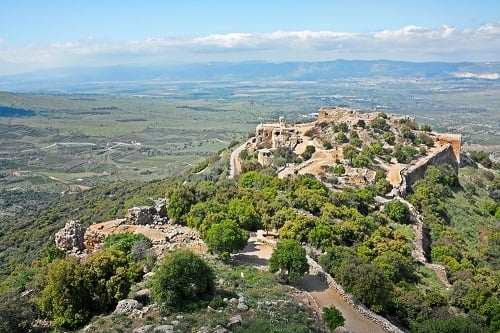
Nimrod Fortress

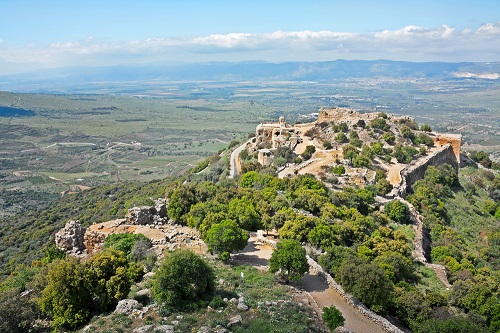
Nimrod Fortress is a historic site at the foot of Mount Hermon in northern Israel. The castle-fortress is perched on an 800m-high ridge surrounded by dramatic steep cliffs and is the largest surviving medieval castle in Israel. Nimrod Fortress is also called Nimrod Castle and Qal'at al-Subeiba in Arabic which literally means "Castle of the Large Cliff." Originally constructed in 1229 to protect the access route to Damascus, today Nimrod Fortress is a protected Israeli National Park.History of Nimrod FortressThe fortress dates back to the reign of Al-Aziz Othman, who took control of the region from 1218 to 1232. An inscription on the fortress walls confirms the name of the ruler at the time of construction. The fortress was hurriedly built in just three years as a defense against the arrival of German Kaiser Friedrich II's army in 1227. The structure was strategically positioned on an elevated ridge overlooking a road leading from the Hula Valley to Damascus. In 1253 Louis IX of France led the Crusaders in an attack on Nimrod Fortress but failed. Later when the region was under Mameluke rule Baibars had Nimrod Castle renovated and expanded. Baibars put Bilich in control of the region and he continued work on Nimrod Castle adding towers. The condition of the fortress declined after the expulsion of the Crusaders in 1291. Under the Ottomans, Nimrod Castle was used as a prison and in the 16th century, it was abandoned and used only by shepherds for shelter. The castle incurred damage from an earthquake that hit the region in 1759 and again the structure stood neglected until the 1920s when the French army made use of it. The French opened the western wall of the fortress creating an entrance that has remained until today. During the 6 Day War in 1967, the Syrians used the fortress as an artillery observation point and the structure incurred damage. In more recent history Nimrod Fortress has been restored and is protected as a national park.Nimrod Fortress TodayToday Nimrod Fortress is a national park where visitors can take in the view of the Galilee and Hula Valley from the western tower. Also, see the keep where is the highest part of the castle and offers views of Mount Hermon and the Golan. The northern tower is a look-out point facing the Israeli-Lebanese border. Of special interest is the Baibars inscription near the western gate dating back to 1275; the 4-story south-western tower; the water cistern; the seven-sided "beautiful tower"; the keep; the moat; the northern tower; the western gate and the secret passage down a 27-meter flight of stairs. In addition to the beauty and history of Nimrod Fortress the area surrounding it has precious natural groves of oak trees, unique flora and fauna plus rare salamanders live in the castle's water cisterns.Want to see the view from the Fortress? join aGolan Heights Private Tour.

Beit Guvrin - Maresha National Park

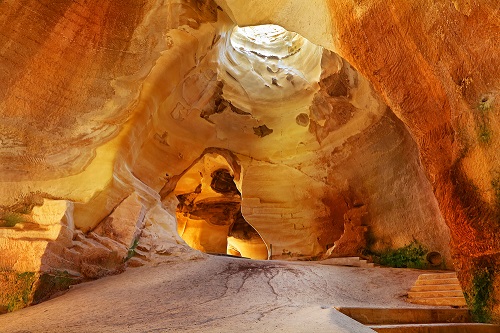
Beit Guvrin (or Bayt Jibrin) is one of the most surprising places to visit in Israel as all of its wonders lie below ground! Beit Guvrin or should I say Beit Guvrin-Maresha National Park is located near Kibbutz Guvrin off the Beit Shemesh-Kiryat Gat road in the Judean lowlands; the “land of a thousand caves.” The national park encompasses ancient archaeological remains of the Roman town of Maresha; the remains of the 1st-century town of Beit Guvrin; a Roman amphitheater; the remains of a Crusader fortress and countless caves.The Ancient Caves of Beit GuvrinThe ancient inhabitants dug caves in the limestone rock not only to quarry the chalk but also to use the caves as water cisterns, storage space, dovecotes, tombs and to keep livestock. Highlights of the national park include the Sidonian Burial Caves, where the leading families of the Beit Guvrin Sidonian, Edomite and Greek communities were buried.These caves are the only ones here that are decorated with frescoes. You can see the burial niches in the rock and the intricate paintings of mythical figures, animals, and plants. There is a burial cave where musicians were buried and this one is painted with musical motifs.History of Beit GuvrinBeit Guvrin became the primary settlement in the area, as we learn from the writings of the Roman historian Josephus Flavius. The city continued to thrive as a Roman-ruled Jewish city until the destruction of the Second Temple (70 AD) and the Bar-Kochva Revolt (132-35 AD).Under the Roman Emperor Septimus Severus, the city became Eleutheropolis and was declared a “city of freemen” and became a municipality.The Byzantine period saw Christian churches built in Beit Guvrin and under the following Muslim rule, most of the caves were created. During the Crusader period, the Byzantine St. Anne’s Church was rebuilt (1136 AD).The Bell CavesAmong the many caves in the area, there are about 800 bell caves. Bell caves are, as the name implies, shaped like bells with an opening in the ceiling. Many of these caves are connected by passageways and some were used as columbariums where small niches have been carved into the walls for pigeons. The bell caves were carved out of the soft limestone during the Arabian period and the chalk dug from the caves was used for laying roads. Some of these bell caves are enormous, reaching heights of 18 meters. Today some of these beautiful, spacious, and cool caves are used as concert venues. Other caves not to miss are the Polish Cave, a Hellenistic Period cistern; the Oil Press Cave, one of 22 underground oil presses from the biblical period; the Bathtub Cave used for washing or ritualistic bathing; a partially reconstructed home from c.113 BC and the Maze Caves of underground dwellings. We will visit the Bell Cave, which is a hard-surfaced rock quarried downward in the shape of the bell. We also see here rock inscriptions from the early Arab era from the seventh to the tenth era. We continue to the Sidon Cave (a series of impressive burial caves with rock paintings, that throw light on the lifestyle and artistic craft styles of the Hellenistic period. Continue to the Roman Theater where gladiator fights took place in the sand arena.Practical Information:Where: Beit Guvrin-Maresha National Park, Off-road #35 between road #38 and Kiriyat Gat.When: You can visit year-round. Sunday-Thursday and Saturday 8 am - 5 pm; Fridays and holidays eves 8 am - 4 pm. In winter the site closes an hour earlier. Passover eve, Yom Kippur and Erev Rosh Hashana 8 am - 1 pm.Admission: Adults 29 ILS children 15 ILS, students 25, ILS seniors 15 ILS.Access: There is limited wheelchair access but the Bell Caves, Roman amphitheater, and Visitor Center are accessible.There are several routes through the park which can be followed by bike and in some places by car. Visitors to the park can take a map and follow the hike paths through beautiful countryside from site to site seeing the ancient remains and exploring the caves. Each of the caves has been made easily accessible with stairs and handrails.You can have an amazing day out at Beit Guvrin exploring both beneath the ground and the flora and fauna above ground. Expect to spend about 1.5 - 2 hours here.There are facilities like toilets, a kiosk, and picnic areas. For more information please check out the Israel Nature and Parks Authority website or call 08-6811020. To visit Beit Guvrin National Park, joinBeit Guvrin Private Tour.

The Talmudic village, Katzrin

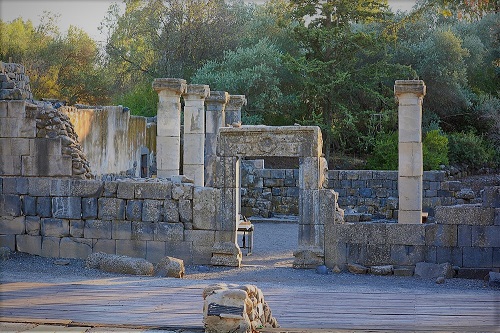
Katzrin (or Qatzrin) is a small Israeli city in the Golan Heights. To the south Katzrin looks down on the Sea of Galilee and to the north is Israel’s highest peak, Mt. Hermon. Katzrin is famed as the site of archaeological remains that show that the settlement was inhabited as early as the Middle Bronze Age. The most substantial archaeological discoveries date back to the 3rd-8th centuries when Katzrin was a thriving Jewish village with a beautiful synagogue.The village is thought to have existed here until being destroyed by an earthquake in the mid-8th century, abandoned by the Jews and resettled by the Islamic Mamluks who built a mosque on the remains of the synagogue. In the 1970s excavation commenced and the Talmudic Village of Katzrin was excavated and reconstructed.The Talmudic Village of KatzrinThe Talmudic era is the period in the 4th century when the Talmud, the Oral Torah of Jewish law was written by sages. It was during this period that the Jewish village of Katzrin existed. Today visitors can walk through the reconstructed village created out of excavated remains. You can see what everyday life would have been like in a 4th-century Jewish village, see restored ancient olive presses, a wine press and replicas of typical household objects. The village is brought to life by costumed guides. It is possible to arrange activities in the village like olive pressing, winemaking, wheat milling, bread baking and pottery making.The Ancient SynagogueThe remains of the ancient Katzrin synagogue built in the 6th century stand on the remains of an earlier 4th-5th century synagogue. You can see part of the original mosaic floor and there are still two rows of columns left standing. The building would have had two stories and a roof. You can see the remains of the bimah (the stone platform where the Torah ark would have stood). Originally the synagogue walls would have been plastered and painted white then decorated with beautiful red geometrical patterns. You can see the original stone benches against the walls where worshipers would have sat.Want to visit Katzrin? join a Golan Heights Tour.

Beit Shearim National Park

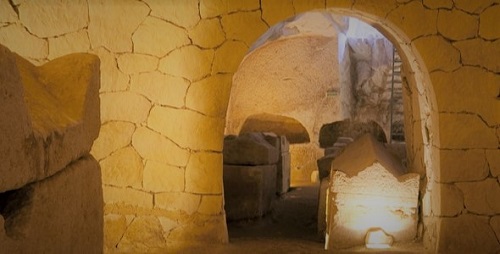
Beit Shearim National Park encompasses the excavated site of a Jewish Roman-era city called Beit Shearim (House of Two Gates) and a complex of Jewish burial caves on the lower hillside. The site is located 20km from Haifa in Lower Galilee. The UNESCO-listed archaeological park is famed for its remarkable necropolis and catacombs that held coffins dating back to the 2nd-5th century AD.History of Beit ShearimDuring the period of the Second Jewish Temple (516 BC - 70 AD) the Jewish high court, the Sanhedrin was headed by Rabbi Yehuda HaNasi (133 - 220 AD) who compiled the Jewish book of oral laws, the Mishnah. Rabbi Yehuda HaNasi lived in the village in Beit Shearim and was buried there. At the time wealthy Jews requested that their remains are buried close to the burial site of Rabbi Yehuda HaNasi and so the burial site grew.What to See in Beit ShearimThe necropolis encompasses 30 burial caves, mausoleums and sarcophagi. Many of the burial sites are adorned with inscriptions in Aramaic, Palmyrene, Greek, and Hebrew. You can see painted and carved adornments on the coffins and cave walls including the Jewish Menorah candelabra. This is the most extensive ancient Jewish burial site ever uncovered.On a visit to Beit Shearim National Park, you should see the remains of the ancient synagogue; a basilica built during a later period; oil presses and the statue of Alexander Zaid on the site of the former village. Zaid was part of Bar Giora that went on to become HaShome'er (Watchmen’s’ Guild), a group that dedicated itself to protecting Jewish villages. Also on the hilltop is the burial site of Sheik Abrek marked by a structure with twin domes.Among the fascinating burial caves, there is a large burial cave that was turned into a cistern during a later period; four burial chambers accessed via a central courtyard and the two-chambered Lulav Cave. The largest of the burial sites is the Cave of the Coffins which held 135 coffins. The large Cave of Rabbi Yehuda HaNasi has a courtyard above-ground with three entrances to the burial caves. There is a circular hike route that will take you past the burial caves and archaeological sites.Other Israeli UNESCO SitesThe other UNESCO sites in Israel include Masada, Tel Aviv’s Bauhaus architecture, Acre’s Old City, the Baha’i Gardens in Haifa and Western Galilee, Beit Guvrin National Park, the Nahal Mearot caves in the Carmel and the biblical tels or mounds of Megiddo, Be’er Sheva and Hatzor which were important points along the ancient incense route. Tourists are often surprised that the sites of Jerusalem’s Old City are not listed UNESCO sites. The Church of the Holy Sepulchre, the Western Wall and the Dome of the Rock in particular seem obvious choices for UNESCO status. However, due to ongoing discussions between Israel, Palestine and Jordan UNESCO has not yet decided how to categorize the sites and under which nation. Consultations are ongoing and a UNESCO mission to the Old City continues to evaluate the sites which all agree to deserve the status of UNESCO World Heritage Sites.Want to visit Beit She'arim National Park? Book our Mt. Tabor, Tsipori, Beit She’arim Private Tour.

Chapel of the Ascension

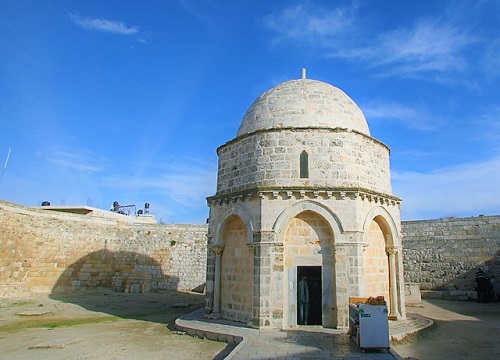
The site of Christ’s ascension to heaven forty days after his resurrection is on the Mount of Olives across the Kidron Valley from the Old City of Jerusalem. The site is marked by a historic chapel. Luke 24:51 tells us that Jesus ascended to heaven forty days after his resurrection.The Chapel of AscensionAt the end of the 4th century, the site was established as the place of the ascension by Emperor Constantine’s mother, Helena who was responsible for marking many biblical sites in the Holy Land. A Byzantine church was built here with a circular design; double rows of columns and an open roof. The Byzantine church survived until the 7th century when it was destroyed by Persians. It was soon rebuilt and finally destroyed by the Arab conquerors in the 10th century. The Crusaders rebuilt the church in the 12th century basing their design on the earlier Byzantine structure. It too had two concentric circles of columns built on the surviving circular base of the Byzantine church. In 1187, Jerusalem changed hands and Saladin turned the chapel into a mosque adding a stone dome and mihrab. The Ottomans later allowed Christians to continue praying here and the mosque was relocated to a building constructed adjacent to the chapel in 1620. In 1835 the Crusader structure was given a new roof and enclosed walls between the columns. The chapel stands in an enclosed courtyard. Only slight changes have been made to the structure since the Crusader era.Not far from the Chapel of Ascension is the Russian Orthodox Church of Ascension in the At-Tur neighborhood. This is the site of the ascension according to the Russian Orthodox tradition.Ascension StoneThe chapel holds a slab of stone bearing a right footprint. This is believed to be Jesus’ footprint left here as he stepped up to heaven. The left footprint in stone has been moved to the Al-Aqsa Mosque on Temple Mount.

The Roof of the Austrian Hospice

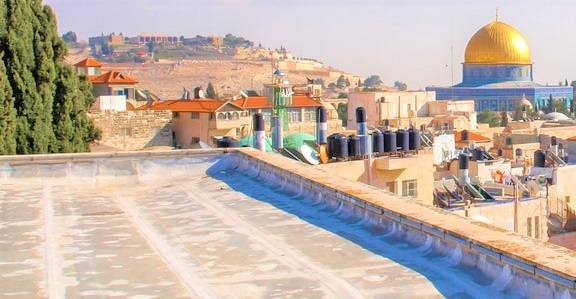
The Austrian Pilgrim Hospice or Osterreichisches Pilger-Hospiz is an oasis in the heart of Jerusalem's Old City. It is the oldest Christian guesthouse in Jerusalem with an unrivaled location in the Muslim Quarter where the Via Dolorosa and Hagai Streets meet. The history of the 166-year old hospice reflects the history of the region. Even if you are not a guest of the establishment a visit to the Austrian Hospice, and its roof terrace is an unforgettable experience.History of the Austrian Hospice, JerusalemIn 1854 the hospice was founded by the Archbishop of Vienna as an ecclesiastical foundation. The hospice was created as a base for Christian pilgrims visiting the Holy Land from Austria and inaugurated by Austro-Hungarian Emperor Franz Joseph I in 1869. The building originally had two stories but with the high volume of pilgrims more rooms were needed and a third floor was added in the late 19th century.The hospice was commandeered by the British following WWI and used during the British Mandate as an orphanage. When the Jordanians took Jerusalem in the 1948 War of Independence they repurposed the building as a military hospital. When Israel reclaimed the city in 1967 the Jordanians left but the building continued to be used as a military hospital, this time by Israelis. In the 1980s the building was returned to the Austrian church. The property was completely renovated to its original condition and its original function as a haven for visitors to the Holy Land.The Austrian HospiceThe entrance to the hospice is fairly inconspicuous but stepping inside you'll find surroundings that would not be out of place in Europe. The Austrian Hospice Café Triest recreates the traditional Viennese coffee-house atmosphere. There is an indoor area and an outside terrace – the largest green area in the Old City. The café staff is young volunteers from Austria and they serve up delicious Austrian cuisine including apple strudel, Sachertorte and schnitzel. The café (non-kosher) is open from 10 am to 9 pm and serves hospice guests as well as visitors not staying at the hospice. In addition to the café, the hospice has several other areas worth seeing including the House Chapel which dates back to 1909. Austrian Hospice Roof TopThe Schwester Bernadette Terrasse or roof-top terrace offers views across the Old City. See the flat roofs, spires, domes and steeples of Jerusalem's ancient Old City. From here you can see the Temple Mount where the beautiful Dome of the Rock stands and beyond that the Mount of Olives. The roof-top is accessible by elevator and is open 10 am – 6 pm to hospice guests and visitors alike.

The Davidson Center - Archaeological Park

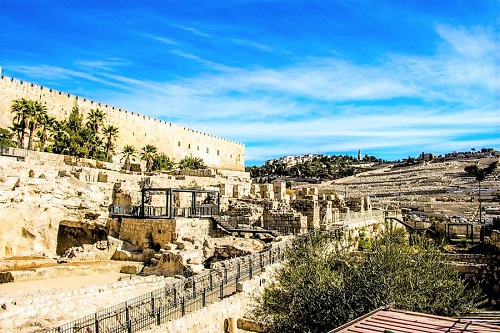
The Jerusalem Archaeological Park - Davidson Center lies near the Dung Gate in Jerusalem’s Old City walls adjacent to the Temple Mount and the Western Wall. The site encompasses the southern part of the Western Wall and Temple Mount’s southern retaining wall plus the excavations that took place in the vicinity. The park holds archaeological remains found at the site and has an exhibition area that uses multi-media to bring history to life. Archaeological remains at the site span about 5,000 years from the Canaanite Era (Bronze Age) to the Second Temple Period. The earliest find dates back to the reign of King Solomon in the 10th century BC. The most significant finds in the park are from the Second Temple Period when Jews would gather here to prepare to enter the Holy Temple. Here they would purify themselves in the ritual baths, purchase an offering for the temple and ascend a massive flight of steps which led up to the Huldah Gates that opened onto Temple Mount where the Second Holy Temple stood and where the Dome of the Rock stands today.Temple MountIn 70 AD the Romans destroyed the Holy Temple on Temple Mount knocking down the massive blocks of stone that formed the walls of the temple. Many of the remains of the former temple walls can be seen in the Davidson Archaeological Park. During the Byzantine era following the destruction of the temple Christian structures were built on the mount and in the 7th century, the Muslims conquered Jerusalem and built the Al-Aqsa Mosque (705 AD) and the Dome of the Rock (691 AD) on Temple Mount.Sites within the Davidson Center Archaeological ParkHerodian Street - At the base of the southern wall of Temple Mount where it meets the Western Wall is a wide Herodian street dating back more than 2,000 years. This would have been Jerusalem’s main street during the Second Temple Period.Robinson’s Arch - In the 19th century, archaeologist Edward Robinson noticed the remains of an arch protruding from the southern wall. The arch, now known as Robinson’s Arch is all that remains of a huge complex and arch that spanned the Herodian street below and led to Temple Mount.Temple Steps - Near the Southern Wall sections of the original wide staircase leading up to Temple Mount have survived. You can walk up these steps as pilgrims did 2,000 years ago.Huldah Gates - In the Southern Wall you can see where three gates, the Huldah Gates have been sealed up and on the western part of the wall are a pair of similar gates. The southern wall gates were used to enter the temple and the western wall gates were used to exit the temple and descend from Temple Mount.Artifacts and archaeological structures were uncovered from later periods of history including Byzantine gold coins and the remains of Umayyad palaces from the Muslim Period. One of these palaces had a bridge connecting it to the Al-Aqsa Mosque which would have given the Sultan direct access. The Muslim Era structures were destroyed by an earthquake in 749.Davidson Center Exhibition AreaIn addition to the open-air archaeological site the center also has an indoor museum exhibition area housed in the former storerooms of a Umayyad palace. The ancient palace structure has been converted into a museum using a sleek glass and metal design. Uncovered artifacts are displayed and there are illustrations and computerized media used to take you back in time. There is a 3D model of Second Temple Period Jerusalem which immerses visitors in the ancient city giving the feeling that you are joining the many pilgrims making the journey to the Temple.

Jerash

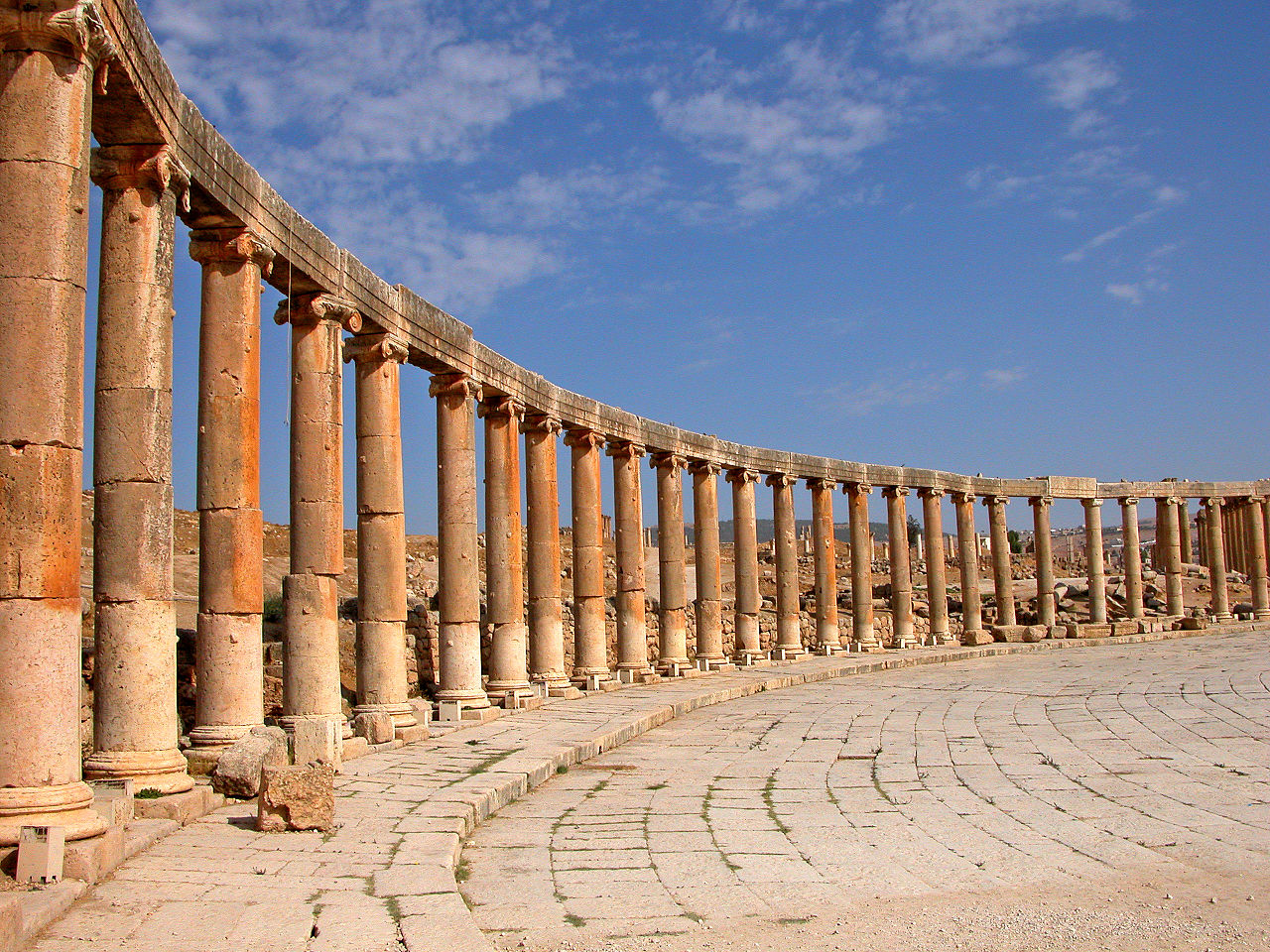
Jerash is a city in Jordan located 48m north of the Jordanian capital, Amman in the Biblical hills of Gilead. The modern city has grown up alongside the remains of an ancient city that can be traced back to the 1st millennium BC when the settlement was called Garshu. The name was later changed by the Romans to Garasa and eventually to the present Arabic name of Jerash. The remains of the ancient city are rivaled only by those of Petra and Jerash is considered one of the largest and best-preserved examples of a Roman provincial town outside of Italy.History of JerashIn 63 BC, the Roman General Pompey conquered Jerash from the Greeks; the city grew and gained importance as a stop along the trade routes. At its prime, Jerash was home to about 25,000 residents. Jerash had its golden era under the Greeks and then the Romans when it was one of the ten Roman cities known as the Decapolis League. This league of semi-autonomous cities is mentioned in the Bible. During the Byzantine Era, Jerash became predominantly Christian and many churches were built. Following the Christians, Jerash was taken by the Persians and then the Muslims in the 7th century. An earthquake in the 8th century left the city uninhabitable and it was abandoned. The ancient city lay hidden by desert sand until being rediscovered in the 1800s and excavated in the mid-1900s.What to See in JerashThe modern city of Jerash and the ancient ruins are separated by Wadi Jerash with the modern city to the east. Careful urban planning has prevented the modern city encroaching on the ancient sites. When visiting the ancient ruins of Jerash the first sight that meets you is the massive South Gate; a triumphal archway with three openings. The gateway was constructed in anticipation of a visit from Hadrian in 130 AD. The hippodrome was built in the 2nd century for large events, chariot races and horse races. The hippodrome measures 245m by 52m and could seat 15,000 spectators. Today there are regular costumed reenactments of Roman battles and chariot races. Continuing into the city there is the Temple of Zeus which stands at the south end of the city’s main street, the Cardo, flanked by rows of tall columns. From the temple you can look out across a large colonnaded plaza; ancient Jerash’s Forum, used for public gatherings, special meetings and events. Not far from the oval-shaped Forum is the massive and pristinely preserved South Theatre; an amphitheater that can seat over 3,000 spectators. The amphitheater was built in 81AD-96AD and is still in use today. From the Forum the Cardo extends north for 800m in the direction of a hilltop where the Temple of Artemis looks down on the city. The tall elaborately carved Corinthian columns of the temple have survived. Other sites in ancient Jerash include the North Theatre constructed in 165 AD and enlarged in 235 AD; it is smaller than the South Theatre and was most likely used for government meetings.The ancient remains continue with an open-air altar; Vaulted Gallery; former fountains; markets; Nymphaeum; bathhouses and more. The site has a museum and visitor center. Among the ancient Roman ruins are the remains of over 20 Byzantine churches constructed sometime between 368 AD and 611 AD. Among the most interesting of the churches are the Cathedral, Jerash’s oldest Christian place of worship built on a former pagan temple; the Church Complex of three adjoining churches; St. George’s Church and the Church of St. John the Baptist where you can still make out some of the church’s original mosaic floor. The Church of Sts. Cosmas and Damian feature a magnificent mosaic floor featuring images of plants, animals and the saints.If you want to visit Jerash, join one of the Jordan 3-4 Day Packages.

Amman, Jordan

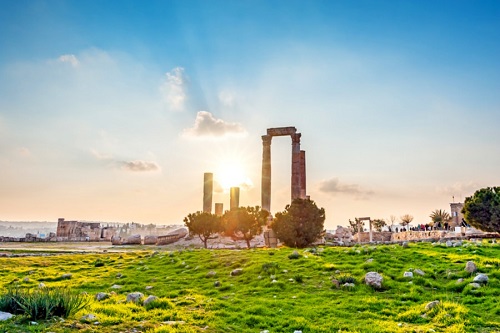
Amman is the capital and largest city of the Kingdom of Jordan, situated in a hilly region between the desert and the Jordan Valley. It is a city of contrasts with ancient roots and a vibrant modern future. It is a multi-cultural, multi-denominational hospitable city where there is a labyrinth of narrow streets with no sidewalk as well as wide avenues and modern business blocks.The downtown area is “Old Amman” or Balad where you can see traditional small businesses, souqs, and street stalls. This is a must-see for tourists where you can get lost in a maze of streets, see locals working at their traditional trades, eat real Jordanian street food, and relax in a shisha café. The downtown tourist area is known as Abdali (Abdali Boulevard) where there are pedestrian-only streets, eateries, and stores. As you venture away from the center there are residential suburbs where all the houses are, by law, faced with local white stone. West Amman is the more modern, dynamic part of the city while East Amman is older and more residential.Amman Then and NowAmman’s history can be traced back to c.6, 500 BC when it was a large Neolithic settlement. During the Iron Age Amman became the capital of the Ammonites who are mentioned in the Bible. At the time the city was enclosed by fortress towers of which you can still see the remains. The Bible tells us how King David took the city despite the defensive towers. In the following years, Amman was ruled by a succession of foreign powers – the Assyrians, Babylonians, Persians, the Ptolemaic Kingdom, Greeks, and Nabataeans. It was during the Ptolemaic rule that Amman was renamed “Philadelphia’ after the Ptolemaic leader, philadelphus.Amman was eventually absorbed into the Roman Empire as one of the Decapolis League of ten free cities with allegiance to Rome. Under the Romans Amman flourishes and became an important stop on various trade routes. As part of the Christian Eastern Roman Empire in the Byzantine Era, two churches were built in Amman. By the 7th century, Islam had made its way north from the Arabian Peninsula and spread across present-day Jordan and Amman. It was at this point that the city took its original Semitic name – Ammon or Amman.The city’s prospects dwindled under the Crusades and Mameluks. It remained a small unimportant city during the Ottoman Empire and by 1806 was reported to be inhabited only by Bedouin. When the Ottoman Empire left the region the city slowly began to grow and prosper. When the Hejaz Railway was constructing in 1905 linking Damascus, Amman, and Medina the city’s population swelled. In 1923 the Emirate of Transjordan was established and in 1946 became an independent kingdom with Amman as its capital.Things to See and Do in AmmanAmman offers all the distractions of a modern city including water parks, theatres, spas, traditional bathhouses, cinemas, concerts, sports, golf, and on the outskirts of the city there is the King Hussein National Park. After dark, visitors to Amman can enjoy clubs playing traditional Arabic music, modern music, or featuring cultural performances. For shopaholics, there is the cobbled Rainbow Street for local goods, restaurants, antiques, and sheesha cafes. The pedestrian-only Wakalat Street has international brand-name stores.Towering above the city is the Citadel on Jabal Al-Qala’a, site of biblical Rabbath-Amman. The excavated site shows the remains from the Roman, Byzantine, and Islamic eras. The most impressive ruins are those of an Islamic Umayyad Era palace. On the Citadel is the National Archeological Museum displaying a collection of antiquities. Not far is the Ummayad Palace. Nearby are the excavated ruins of a Byzantine church and a Roman temple, the Great Temple of Amman. One of the most impressive structures in the city is the Ottoman-style King Hussein Bin Talal Mosque or Al-Husseini Mosque built in 1924.Don’t leave Amman without visiting the markets especially the Gold Souq; the Roman amphitheater and Nymphaeum; the Jordan Museum; the Folklore Museum; the Ammonite-Era watchtower; the sites of the Citadel; the Byzantine-era church; the Jordan National Gallery of Fine Arts and Ummayad Palace. To see what lies in Amman’s future visit ‘View Amman’ where there is a permanent exhibition dedicated to the city’s architecture and development as well as a large model of the city.If you wish to visit Amman with a tour from Israel, join one of our 3-4 day Jordan tours.

Mount Nebo, Jordan

Mount Nebo is an elevated rocky outcrop in the Kingdom of Jordan 9km northwest of Madaba and about 26km from the Dead Sea. The mount is famed as the Biblical location where Moses stood looking out at the Promised Land that he was destined never to set foot in. The Bible tells us that after seeing the Promised Land Moses died here on Mt. Nebo. The 1,000m high ridge offers breathtaking views over Jericho, the Dead Sea, the West Bank, the River Jordan and on very clear days even Jerusalem. Mt. Nebo has two peaks Siyagha and al-Mukhayyat; on the summit of Siyagha is the Moses Memorial Church and the remains of a Byzantine monastery and church.The Biblical Story of Mt. NeboMoses led the Israelites out of slavery in Egypt and through the desert for 40 years. In Deuteronomy 34 we read how Moses went up onto Mt. Nebo from the plains of Moab to view the Land of Canaan. God showed him all of the Promised Land but told him it would belong to his descendants and he would see it but never cross over into it. Moses was denied entry into the Promised Land because he had struck a rock with his staff to produce water for the people in the desert instead of trusting in God and simply commanding the rock to give water as instructed. Deuteronomy 34:5 goes on to tell that Moses died and was buried in the land of Moab (present-day Jordan). Although the Bible does not specify the location of Moses’ burial Christian tradition holds that Moses was buried on Mt. Nebo.Recognition of Mt. NeboFrom the early days of Christianity, Mt. Nebo became a pilgrimage site. Monks and pilgrims from far and wide came to see where Moses had lived out his final days. 3rd-4th century Egyptian monks constructed a small church on the mount to commemorate Moses’ death. In the 5th century, the church was expanded and in the 6th century, it became a monastery and basilica with beautiful Byzantine mosaics. The site was abandoned in the 16th century and only rediscovered in the 1930s. In 1993 the Franciscan church bought the site, restored, excavated and preserved what remained of the earlier church mosaics. Careful excavation revealed six tombs in the natural rock beneath the church.What to See at Mt. NeboThe main attraction and reason for visiting Mt. Nebo is to enjoy the breathtaking view across the Holy Land as Moses did thousands of years ago. The early churches have only survived in part and a modern chapel has been built to protect the remaining mosaic floors from different periods. You can see a large portion of the mosaic measuring 9m by 3m depicting hunting, wine-making, trees and animals. The mosaics are quite magnificent. The original Byzantine baptismal font has also survived. Visitors to Mt. Nebo today can see the Brazen Serpent Monument – also known as the Serpent Cross it was created by Italian sculptor Giovanni Fantoni incorporating Christ’s cross with the Biblical bronze serpent. The story of the Bronze Serpent (Numbers 21:4-9) tells how the people got frustrated with their journey through the desert and complained to Moses about the lack of bread and water. God sent serpents to bite the people as punishment for their lack of faith. When the people repented God told Moses to set up a bronze snake on a pole. Anyone who had been bitten by a snake could simply look upon the bronze snake and they would be cured. Visitors to Mt. Nebo can also see an olive tree, planted by Pope John Paul II on his visit to the site in 2000. Pope Benedict XVI also visited Mount Nebo in 2009.If you wish to visit Mount Nebo with a tour from Israel, join one of our 3-4 day Jordan tours.

Wadi Musa, Jordan

Wadi Musa (Valley of Moses) is the closest town to the Petra Archeological Park in Southern Jordan. The town offers a base for visitors to Petra and has several eateries, many hotels and tourist amenities. There is no accommodation within Petra itself which is an archaeological park, so the closest place to stay is Wadi Musa. The town’s economy is largely dependent on the tourism industry servicing visitors to Petra. Wadi Musa is the perfect place for visitors to Petra to stock up on anything they need, buy souvenirs, eat, find convenient accommodation and meet the locals. Wadi Musa gets its name from a story that tells of the prophet Moses passing through this valley. Not far from here is “Ain Musa” (Moses’ Spring) the site where Moses is said to have struck a rock that began to gush with water. Today a triple-domed structure protects the famous rock on top of a hill. Wadi Musa was also called the “Guardian of Petra” due to its location.Wadi Musa dates back thousands of years and has been inhabited probably as long as Petra itself. There is archaeological evidence of a Nabataean palace in Wadi Musa and a Roman bath system. Today the town is home to several tribes including the Hassanat, Nawafleh, Masa’adeh and Amarat; not far away is a Bedouin settlement.Welcome to Wadi MusaWadi Musa is built on hills overlooking a valley and its brown sugar-colored buildings appear to have grown organically from the surrounding desert. When the sun goes down the buildings of Wadi Musa are bathed in many shades of gold, brown and cream. To add to the exotic atmosphere there is the echo through the streets of the Adhan calling Muslims to pray from the mosque’s minaret. Taking a walk around Wadi Musa you can see mostly modern buildings, signs in English and locals trying to sell their wares. However there are places where you can still get a glimpse of the traditional way of life, for example the historic quarter of Elgee and the local mosque. Most of Petra can be seen from the 4km-long main road which slopes downhill towards the entrance to Petra. Residential areas spread out on either side of the main road. About halfway down the main road is the “center” of town and continuing down there is the Tourist Strip with a concentration of hotels, cafes and restaurants on one side of the street facing the valley on the other side. A little further along the Tourist Strip is the Petra Visitor Center and finally the ticket office and entrance to Petra.What to Do in Wadi MusaThe main reason to visit Wadi Musa is to relax before or after a long day of touring the sites of Petra. Those looking for a little local culture can enjoy a smoke at one of the shisha bars (hubbly bubbly or hookah); sample traditional dishes; take a traditional Bedouin cooking class; enjoy a Turkish bath; a massage or make excursions to the surrounding desert or Bedouin camps. The town offers limited entertainment but there is an Irish Pub and the Cave Bar which has been called the “oldest bar in the world” as it is inside a 2,000 year old cave. Walking through the town you can spot a few interesting landmarks like the war memorial in the center of a roundabout. There are also markets and vendors along the streets selling tourist-oriented items.

Petra Archaeological Park

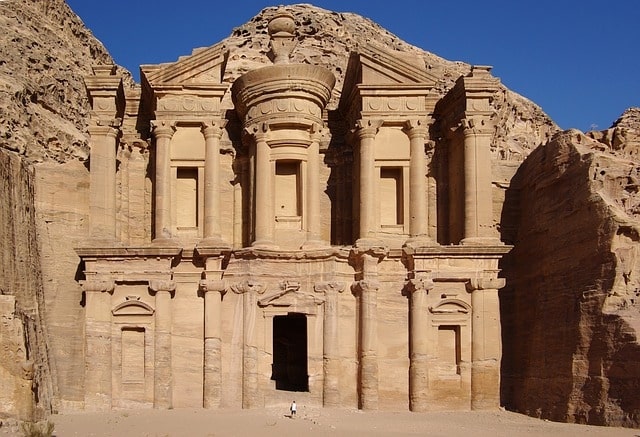
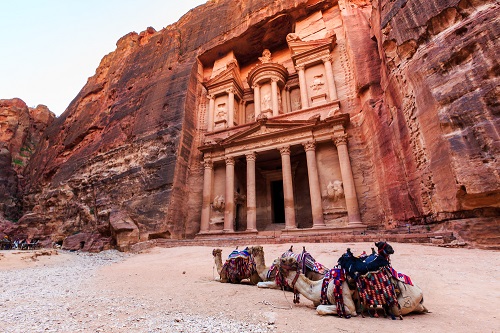
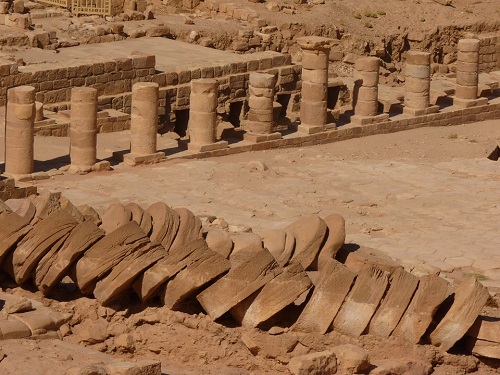
Petra is Jordan’s top attraction, a UNESCO World Heritage Site, and one of the world’s largest and richest archaeological sites. The Petra Archaeological Park was declared one of the Seven New Wonders of the World - and is considered unforgettable among travelers. The park encompasses the well-preserved remains of the ancient Nabataean capital which was a thriving city, and home to about 30,000 residents from 400 BC to 106 AD. But what makes it so unique is the “buildings'' which were not built with bricks but were carved out of massive red sandstone cliffs.The Petra Treasury at nightThe city consists of Nabatean temples, palaces, residences, and other structures hewn from the cliffs by the Nabateans as well as structures built by the Romans and Byzantines in later years. Petra was a stop along the ancient trade routes that stretched from the Arabian Peninsula to the Mediterranean carrying silk from China, spices from India, and incense from Arabia. Imagine merchants and camel caravans stopping at this desert oasis to rest and restock their supplies before continuing on their journey.The Petra Monastery in ancient times (by David Roberts, Cleveland Museum of Art)Where is Petra, Jordan?Petra lies in the desert of southwestern Jordan surrounded by mountains. The park entrance is from the town of Wadi Musa where there are hotels, restaurants, and tourist amenities. Petra is situated about 241km south of Jerusalem and 150km from Amman, the Jordanian capital. The archaeological park can be reached via the Desert Highway which connects with the Israeli/Jordanian border crossing in Eilat.How did Petra, Jordan get its name?Petra is a city with several names but it was originally known by Nabataeans as Raqmu ("colored stone"). The name "Petra" originates from the Greek “Petros” meaning rocks. It is also known as "The Lost City": Following a period where it was a powerful and thriving metropolis, it was abandoned and forgotten from the 14th century AD until being rediscovered by Western explorers in the 19th century. The Arabic name for Petra is Al-Batra and Petra is also referred to as Rose City because of the red hue of the stone cliffs.The Petra TreasuryHistory of the Petra Archaeological ParkPetra during the Iron Age (1200-600 BC): The Edomites (descendants of the biblical figure, Essau) settled in the area around present-day Petra where the natural basin between the mountains allowed water to collect and provided the Edomites a steady water supply. A battle between the Edomites and King Amaziah, the King of Judah left Petra free for new settlers, the Nabataeans.Nabataean Petra (400 BC-106 AD): Nabataeans are believed to have been a nomadic Bedouin tribe that existed in the Arabian Desert. They arrived in Petra in about 312 BC and began building their city. Its location at a crossroad between Arabia, Egypt, Syria, and the Mediterranean allowed them to control the trade routes that ran through the Levant. They developed irrigation technology, building methods, and skills to survive in the desert. The Nabataean civilization began to disintegrate when Byzantine rule emerged and the Roman empire took hold of the region in the 2nd century AD. By the 7th century AD Petra was virtually abandoned.The Lost Years (600s-the 1800s): Petra became a ghost town. Sea routes meant that the desert crossing was no longer essential, and Petra was no longer visited by traders. Apart from Bedouin locals, the massive Nabataean structures stood empty, unknown to those in the west, and hidden by the mountains and desert sand.Modern History of Petra: In 1812 Swiss explorer, Johann Ludwig Burckhardt came across the Lost City of Petra and brought it to the attention of the west. Soon it became a travel destination and point of interest for intrepid travelers, historians, and archaeologists. In 1985 Petra Archaeological Park was named a UNESCO World Heritage Site. And in 2007 it was declared one of the Seven New Wonders of the World.What to See and Do in the Petra Archaeological ParkThe Park has many attractions and most visitors say they were surprised by the sheer number of temples and views considered must-sees. This is why it's important to plan your visit and leave enough time to reach the outskirts of this 8km park. The easiest solution is to take an organized Petra two-day tour to make sure you won't miss a thing. Here are the most prominent, celebrated attractions in Petra.The Obelisk TombThis unique structure combines Nabatean, Egyptian, Hellenistic, and even Indian designs. It was constructed over 2,000 years ago as a final resting place for a Nabatean merchant and his family. The Obelisk Tomb's four pylons made it one of Petra's most photographed attractions.The Obelisk TombThe Djinn BlocksThe Djinn Blocksare immense, chiseled rocks made by the Nabateans to house desert phantoms - the Djinn. These legendary apparitionswere the inspiration behind the wish-granting Genie we all know today. The Nabateans built these structures to appease the spirits, hoping they'll guard their surrounding tombs. People still believe if you'll place your hand on the stone and make a wish, the spirit might help it to come true.The Djinn Blocks (by Gerd Eichmann CC BY-SA 4.0)The SiqAll visitors to the Petra Archaeological Park enter through the Siq, a narrow route flanked by 76-meter-high cliffs. You can enter on foot or hire a donkey to take you through the Siq. ProTip: use the colorful Siq walls to frame your pictures, and create great shots even before you reach the main attractions.The SiqAt the end of the Siq you are met with the breathtaking sight of the Petra Treasury (Al Khazneh). This is the most photographed and recognizable image of the park. The Treasury was a royal tomb and beyond the stunning facade, is a small interior chamber. The facade features Greco-Roman architectural features like the giant urn and impressive columns. It's called the Treasury because locals still believe it holds a hidden treasure of untold wealth.The Petra TheaterThe Petra Theater dates back to approximately 25 AD and was originally built by Nabateans and then expanded by the Romans after 106 AD. The seating cut into the rock would have accommodated about 8,000 in the audience. Following an earthquake in 363 AD most of the structure was destroyed.The Petra Theater, all carved in rockThe Petra Royal TombsOpposite the theater, Mount Al-Khubtha is covered with the facades of the famous Royal Tombs. There are five main tombs, of which the Urn Tomb is the most impressive. The other tombs include the Silk Tomb, the Corinthian Tomb, the majestic Palace Tomb, and the Tomb of Sextius Florentinus, the 2nd-century Governor of Arabia. ProTip: plan to spend there at least an hour, if not more; the tombs look like the setting of an Indiana Johns movie, and you'll just love exploring them and taking pictures.The Royal TombsThe Great Temple of PetraOn the southern side of the Colonnaded Street is Petra’s Great Temple. It is a huge structure covering 7,500 meters square, and with several floors. In some places, you can still make out the red and white stucco that once covered the temple walls. At the highest point in the Great Temple structure is a small theater or odeon. ProTip: From the odeon, there are spectacular views of the Royal Tombs.The Great Temple of Petra (by Bernard Gagnon CC BY-SA 3.0)Qasr al-Bint TempleAs you reach the end of the Colonnaded Street you will pass beneath a gateway and arrive at Qasr al-Bint, a former residence. Locals believe this temple was built as a vacation home for the biblical Pharoh's daughter. ProTip: Near Qasr al-Bint is a pleasant restaurant with outdoor seating under shady trees.Qasr Al-Bint TempleAl Dayr, The Petra MonasteryFrom the restaurant near Qasr al-Bint there is a rock-cut steep staircase leading to the Petra Monastery (Ad-Deir). It takes about an hour to climb the trail to the Monastery. It is Petra’s largest structure with a facade 40 meters high and 47 meters wide. The best path to the temple is up on the ridge and will spoil you with breathtaking views of the red mountain range all the way.ProTip: Take a break at the snack store across from the Monastery where there are also great views of the structure. For even better views climb the hill behind the store.The Petra MonasteryThe Colonnaded StreetThe Colonnaded Street is an ancient Roman road that ran through the city and once was lined with columns. It is flanked by Petra’s rock-cliff structures. Pro Tip: By following the Street you can reach many of the archaeological park’s top sites.Columns at the Colonnaded StreetJebel Madhbah (High Place of Sacrifice)A flight of rock-hewn steps leads to the top of Mount Madhbah to the High Place of Sacrifice. It takes about 30 min to reach the top. Apart from the remains of a sacrificial altar and courtyard, there are magnificent views.The Petra MuseumAt the entrance to Petra is a relatively new museum holding archaeological finds from the site. Here you can escape the heat for a while and see things that you won’t see in the park itself. Many tourists like to conclude their visit to the site with the Petra Museum, to put all that they've seen and experienced in the Archeological Park into a Historical context. The Petra Museum(by Davide Mauro CC BY-SA 4.0)Petra: the Path Less TraveledThere are several hike trails inside Petra Archaeological Park where you’ll get away from other tourists and enjoy a different side of Petra.Jebel Al-Khubtha Trail cuts through the mountain between the Palace Tomb and the Tomb of Sextius Florentinus leading to a higher sacrificial site. ProTip: Follow this trail for the best views of the Treasury from above.The Temple of the Winged Lions can be found on a hill on the northern side of the Colonnaded Street. It is one of the often overlooked sites of Petra.The 5th-century Petra Church and the Ridge Church are also often missed by visitors. You can spot these two churches by the protective canvas roofs covering the sites that are still being excavated.The path leading to the High Place of SacrificeJebel al-Habees is probably overlooked by most tourists because it is tucked away at the end of the Colonnaded Street behind Qasr al-Bint. After following the trail up Jebel al-Habees you will reach the ruins of a Crusader fortress. But the real reason for making the hike is for the panoramic views across Petra.Little Petra (Al-Barid) is 6km from the main site of Petra. It is similar in style, with a valley lined with cliffs that were carved out to create chambers. There is a hiking trail from the Monastery to Little Petra but it is only recommended for experienced hikers and preferably with a local guide.From the High Place of Sacrifice you can take the Wadi Farusa Trail which leads to Qasr al-Bint. On the way, you’ll pass ancient ruins like the Garden Triclinium and the Roman Soldier Tomb.Pro Tip: Petra can be used as a base for exploring other nearby attractions like Wadi Rum.Plan Your VisitOpening Times: Summer 06:00-18:00; Winter 06:00-16:00.Prices: 90 DOJ, but travelers who join a Petra tour from Israel will have the entrance price included in their price.ProTip: If you’re not visiting Petra with a guided tour, buy the Jordan Pass for a discount to the Petra Archaeological Park.Average Visit Duration: 3-4 hours will allow you to see the Siq, the Djinn Blocks, The Obelisk Tomb, the famous Treasury, some of the Royal Tombs, and the Theater. In order to see the magnificent Petra Monastery, the huge Petra Temple, Qasr Al-Bint, the churches, and the colorful path to the High Place of Sacrifice you'll need more than a day. This is why most travelers recommend a 2-Day Petra Tour to make sure you won't miss a thing.Popular Times: The best time to visit Petra is in the early morning or late afternoon.Special Events: A magnificent candlelight spectacle takes place in front of the Treasury on Monday, Wednesday, and Thursday at 20:30. The path leading towards the Treasury and the Treasury itself is lit up with over 1,500 candles. The show features bedouin music, a light show, and tea.

Wadi Rum

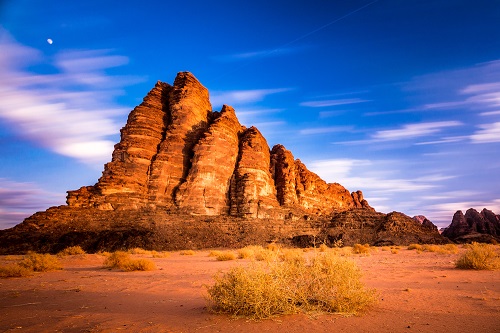
Wadi Rum (Valley of the Moon) is a desert wilderness in southern Jordan, 60km east of Jordan’s Red Sea port city, Aqaba. The valley covers about 778km² and is famed for its stunning landscape of sandstone and granite rocks. This is the desert scenery you see in films and storybooks with dramatic canyons, rolling sand dunes, clear night skies, and small, isolated Bedouin communities. Iron oxide gives the landscape its reddish hue and millions of years of floods, wind, and sand storms have smoothed and carved the gorges and natural arches and towers of sandstone. Human inhabitation in Wadi Rum can be traced back 12,000 years thanks to the inscriptions and paintings left on the desert rocks. Thousands of years ago Wadi Rum was part of the ancient trade routes from the Arabian Peninsula and Africa to the Mediterranean and Syria. Today most of Wadi Rum’s Bedouin community lives in Rum Village, the only settlement in the protected area. The local Bedouins still keep their traditional ways but are also involved in the tourism industry and offer overnight stays, cultural experiences, and guide services in the desert.The rugged landscape of Wadi Rum can be explored on camelback, on foot, or on a thrilling jeep excursion, it is also possible to go rock climbing, hot air ballooning, or star gazing. There is plenty to see and do in Wadi Rum with points of interest including over 40,000 prehistoric rock paintings and inscriptions; abandoned ancient ruins and strange rock formations shaped by the elements.Wadi Rum and Lawrence of ArabiaT. E. Lawrence introduced Wadi Rum to the Western world through his writing. Lawrence (Lawrence of Arabia) served as a British officer in the region and during WWI aided Prince Faisal Bin Hussein in the Arab Revolt of 1917 against the Ottomans. Lawrence called Wadi Rum “…vast, endless and God-like…” The release of the 1960s film “Lawrence of Arabia” brought Wadi Rum to the attention of the general public and it started to attract a steady flow of tourists.Things to Do in Wadi RumJabal Umm ad Dami is the highest point in Wadi Rum and in all of Jordan making it a sought-after destination for hikers and climbers. At Khazali Canyon and Anfishiyyeh, there are ancient inscriptions on the rock walls. The impressive Anfishiyyeh Inscriptions feature Nabataean and Thamudic petroglyphs and images of a camel caravan. Jabal Ram is a monolithic ridge and Jebel Burdah (Big Rock Bridge) is the tallest of Wadi Rum’s natural arches; you can climb to the top for stunning views. Jebel Umm Fruth (Middle Rock Bridge) is one of the most unique rock formations in Wadi Rum and one of the most photographed. This 15m-high natural rock bridge looms over visitors. The Seven Pillars of Wisdom were named by Lawrence in his writing. The rock formation appears to have seven naturally formed pillars. To learn about the legend of Lawrence of Arabia visit Lawrence’s House and near the entrance to Wadi Shalalah is Lawrence’s Spring, named for the legendary Lawrence of Arabia. The 5km long Barrah Canyon is often visited on tours that include rock climbing, hiking, or camel riding.Visiting Wadi Rum, JordanVisitors from Israel making their way to thePetra Archeological Parkor Aqaba can often include Wadi Rum in their itinerary - check out our guide on gettingto Wadi Rum from Petra, and see how simple it is. It is also possible to stay overnight in a desert camp and experience 100% of the valley of the moon: a part of Wadi Rum’s beauty comes from the way the sunlight plays on the rocks creating dramatic shades of red, gold, and yellow. The untouched, timeless desert is particularly breathtaking at sunrise or sundown. Although Wadi Rum can be visited year-round it is best to visit from September-November or March-May when temperatures are less brutal.If you want to stay in Wadi Rum, join our Petra and Wadi Rum, 2 days tour.

Zacchaeus Sycamore Tree Jericho

Zacchaeus’ Sycamore Tree is one of the top tourist attractions in Jericho due to the role it played in a famous New Testament event. Visitors travel to Jericho, about 10 km north of the Dead Sea in the Palestinian Authority lands of the West Bank to see this ancient tree. The tree stands at a major intersection in Jericho. Although the tree may not be the same one Zacchaeus climbed local tradition has named this Zacchaeus tree. Tests carried out on the tree have shown that it is over 2,000 years old and it stands in the same setting as the Biblical sycamore tree.The Biblical Story of Zacchaeus’ Sycamore TreeLuke 19:1-10 tells how Jesus entered Jericho accompanied by crowds of well-wishes. The rich tax collector Zacchaeus was there and he too wanted to get a look at this famous new spiritual leader. However, he was too short to see over the crowds of people. Zacchaeus ran ahead and climbed up a sycamore-fig tree where he was sure to see Jesus as he went by.When Jesus reached the tree he looked up and called out to Zacchaeus by name asking him to join him. Jesus told Zacchaeus that he would stay at his house that night. The crowd was not pleased and began to talk among themselves saying that Jesus would be staying at the house of a sinner. Zacchaeus was rich, collected taxes for the occupying Romans, and probably over-collected on occasion. For this reason, the people of Jericho disliked him and considered him a sinner. Zacchaeus then stood before Jesus and offered half his possessions as a gift to the poor and to compensate anyone he had cheated by four times the amount of money. Jesus said, “Today salvation has come to this house as this man too is a son of Abraham.”The story teaches several lessons. We see Zacchaeus going to great lengths to see Jesus, even climbing a tree which was rather undignified for the short government official. Jesus sees Zacchaeus’ interest in the emissary of God. The story is another example of Jesus reaching out to a sinner and offering salvation.Want to see the Zacchaeus Sycamore Tree? join our Jericho, Dead Sea, and the Jordan River Tour.

The 8 Best Cocktail Bars in Tel Aviv

Looking for a fun night out in Tel Aviv with drinks that will make your eyes widen and taste buds tingle? Well, you’re in luck, because the Non-Stop City, known for its pulsating nightlife, is home to any number of excellent cocktail bars, all offering visitors a mixology experience that won’t be forgotten in a hurry.From swish and opulent spaces to 1920’s ‘Speakeasy’ style bars and local ‘down-and-dirty’ drinking dens, you’ll be blown away by the edgy vibes and the flair and creativity of the creations being served up. Here are what we think are some of the best cocktail bars in Tel Aviv…just remember to pace yourself!1. SpicehausThis ‘cocktail lab’ of a bar, on trendy Dizengoff Street, is a must-visit - not just because of the serious mixology going on but for the ‘themed’ element of it all. Staff where white chemists' coats and drinks are often served in lab equipment such as flasks and beakers. Add to the atmosphere the wild decor touches (bras hanging in the windows) and the Edgar Allen Poe poem recording in the bathroom and how could you not be enticed?Spicehaus has ‘sharing cocktails’ (ideal for couples or gangs of friends) and as well as the classics, there are plenty of unusual creations (the ‘Istanbul’) and the bar team are always up for requests. The food they offer really hit the spot - the ‘crack toast’ comes highly recommended and up until 08:30 pm, the happy hour means you’ll get a great deal. Forget your dull days in chemistry class - this science lab is fun!2. BellBoyAt this achingly hip bar, the general premise revolves around the idea that life is something that needs to be enjoyed. So if you’re looking for fun, head to the Berdichevsky Hotel, because fun you will have. Inside, you’ll find BellBoy, where everything at this 1920’s inspired bar is both beautiful and, as the owners remark, ‘out of the ordinary’.Extraordinary cocktail servings - BellBoy (Credit:BellBoy Instagram)Inspiringly-named cocktails include the ‘Tooth Fairy’ (mate-infused pisco, syrup, mint and soda), ‘Holy Water’ (mastika, eucalyptus, lime, Sauvignon Blanc and Myrrh) or ‘Monkey Business (dark rum, sour rum, Vermouth and Benedictine) are all gorgeously presented. As for bar snacks? Order the duck pate, which is actually molded into the shape of a rubber duck. Truly a unique night out…3. ImperialUnder the watchful eye of some veteran cocktail bar staff at this upscale hotel, the Imperial’s aim (as it boasts) is to create a ‘temple to the lost art of the cocktail.’ And this they do - which is why they’ve won award after award for their creations, all served up in upscale, elegant surroundings, with dim lighting and old-world ambiance, swing jazz playing quietly in the background.Credit: Imperial Cocktail Bar Instagram The drinks at the Imperial are nothing short of fabulous. Try an ‘East of Eden’ (Bombay Sapphire gin, Fino sherry, fresh apple juice and bay leaf-white pepper cordial), or ‘Silver Buddha Punch’ (Banana and pineapple-infused Agricole rums, Amaro Montenegro and silver needles tea cordial). Daring drinkers should sip at the famous ‘Prelude to a Kiss’ (Pere Magloire apple brandy, pisco capel, fresh lime and peach jam) and if you’re not in the mood for alcohol, order their ‘Dollar Shake’ (a show-stopping strawberry milkshake creation).4. Bar 223Up in the Old North, on a quieter part of trendy Dizengoff Street, close to the Namal Port and Park Hayarkon, you’ll find 223, a fine establishment, without pretensions, which has been serving up mouthwatering creations since 2008. The bar staff are knowledgeable and expert at their craft, and with a chilled mood and high-quality drinks, you’re assured of a good time.From classics like the Negroni and Old Fashioned to bespoke creations (the bar staff all speak English so don’t be afraid to ask lots of questions) you can’t go wrong. Teamed with their hamburgers and pizza, you’ll never want to leave. Prices are high but luckily they have a happy hour, so get there early and enjoy.The yard is waiting for you at Dizengoff 223 (Credit:223 Bar Tel Aviv Instagram)5. The Library BarCocktail bars in Tel Aviv don’t come much more stylish than the Library Bar at the elegant and luxurious Norman Hotel. Elegant creations, served in this uber-chic space (the decor is 1940’s British colonial style) and, open all day, this means you can begin enjoying cocktails at lunchtime (and in bar this good, you may stay until closing time). With an extensive list of spirits, and an expert team, as night falls the lights are dimmed and the atmosphere is transformed, making the Library Bar a glamorous choice not just for martinis and daiquiris but also some excellent complimentary bar snacks. To say this place is stylish is an understatement - the Library Bar is probably Tel Aviv’s most coveted spot for an evening drink so reserve well in advance!6. MargozaSet in beautiful and historic Old Jaffa, in the heart of the famous Flea Market, lies Margoza, a friendly neighborhood bar where, just like Cheers, everyone knows your name. A gastrofood haven, with a variety of tapas snacks, their cocktails mixed by expert bartenders who are always friendly and ever-obliging, will go down a treat.Margoza has seating both inside and out (perfect for spring and summer evenings) and great cocktails at very affordable prices. The food they serve up is also very good - try the lamb hummus or ‘flea market platter’ with your drink. Margoza is really a place that makes you feel you’ve come home, and with one of their mean Moscow Mules in your hand, just sit back and enjoy the Jaffa vibe.Credit: Margoza Bar Instagram7. FantasticWith its extraordinary design (inspired, as the owners remark, by ‘fairy tales, poetry, literature and wild animals’) there can’t be a bar in Tel Aviv that’s had so much time, money and effort put into it - and it shows. Up in the Namal Port area, Fantastic (owned by the BellBoy group) is a cross between 1920’s glamour and ‘Alice in Wonderland’ and the moment you enter their ‘Ball Room’ cocktail bar you’ll feel the magic immediately.Credit: Fantastic Bar InstagramFantastic serves up well-mixed cocktails, all in their own special cups and glasses (designed specially) with plenty of little gimmicks beside (go and see for yourself if you’re curious). Accompanying food plates are delicious - try the goose breast or the scallop bisque. Oh, and the decor and drinks at this place are incredibly photogenic so Instagram lovers will be in their element. Costly but a great night out and perfect for a special occasion.8. Social ClubLast but not least, don’t forget Social Club, just off beautiful Rothschild Boulevard, a New York-style bistro which is perfect for an early-evening drink, before the restaurant gets crowded. This ‘happening’ spot in Tel Aviv is always lively and whilst it might look chaotic (staff aren’t assigned to particular tables), there’s a method to the madness and a vibrancy to the place which you can’t miss.As well as the classics (their gin-based cocktails are particularly recommended) the bartenders will be happy to listen to your suggestions and the food bar, in the centre of the restaurant, is very well-designed. If you want to eat with your cocktail, the tataki tuna, grilled aubergine and beef bresaola. Social Club also has a space upstairs for private events, if you’re looking to throw a birthday bash or family event. Pricey but, hey, you only live once.
By Sarah Mann
0 views

Gaza Envelope Memorial: Places You Must Visit

In the last seven months, international news has been dominated by one topic - the Israel-Gaza War. Whilst this region is no stranger to conflict, this particular war has much greater significance for the Middle East than usual because of the sheer scale of the events that led up to it.Today we’re taking a look at the area in which the conflict began, the Gaza Envelope, and what places in this area are still possible to visit.What is the Gaza Envelope?The Gaza Envelope (in Hebrew ‘Otef Aza’) is a region that incorporates all of the communities in the South of Israel which lie within 7 km of the Gaza Strip. Together, there are about 50 communities in the Envelope, with a population of around 70,000 people.These include a number of kibbutzim, moshavim and the town of Sderot. All are in such easy reach of the Gaza Strip border that they have been subject to barrages of Qassam rockets and mortar shells fired by Hamas over the border on a regular basis since 2008.Gaza Envelope, from the 805th Battalion Memorial Observatory (Image source: Blue-green69 CC BY 3.0)What happened in the Gaza Envelope on October 7th, 2023?In the early hours of 7th October 2023, which was both the Jewish sabbath and a religious holiday, Hamas (who ruled the Gaza Strip) launched an enormous attack on Israel. As well as barrages of rockets being launched toward the major cities in Israel, several thousand terrorists infiltrated the border by land, sea and air.Fanning out around the Strip, they went from community to community, murdering those they encountered (the vast majority civilians) and burning homes to the ground. By the end of the day, approximately 1,200 Israelis and foreign nationals were dead, including 350 young people who had been attending a nearby Peace Festival. As well as this, 240 individuals had been kidnapped and taken back to the Gaza Strip to be held as hostages.It was the worst terror attack on Israeli soil since the establishment of the State of Israel in 1948 and the scale of it was quite unprecedented.What are some of the places I should visit whilst in the Gaza Envelope?Within hours of the attack, residents of the Gaza Envelope were evacuated and the majority of them remain displaced around Israel. Whilst it is unclear when they can return, it is now possible to visit some of the sites in the area that were most heavily impacted. (Of course, this is very much dependent on the current political situation, since the Envelope is currently under the control of Israel’s military).Places that are recommended to visit include:1. Netiv Ha’asaraThis moshav (a semi-collective agricultural community) sits just 100 meters from the border and from this point, you can see the Israel-Gaza fence (named the ‘Iron Wall’). It is also home to the ‘Path of Peace’ which is a mosaic on the wall itself, created before the massacre, symbolizing peace, hope and tolerance.Observation deck overlooking the Gaza Strip from the side of kibbutz Netiv HaAsara2. Erez CrossingThis is the most northern of the crossing points between Israel and Gaza and the only border through which both people and goods can pass into Israel. Managed by the IDF, on October 7th many terrorists breached this crossing and then made their way into Israel.Erez Crossing3. SderotSderot is the largest community in the Envelope, with a population of 33,000. It came under heavy attack on October 7th, with terrorists driving through the streets in pick-up trucks, firing weapons indiscriminately and gunning down a group of senior citizens en route to the Dead Sea on a day trip. Around 15 people were murdered whilst trying to hide in a shelter and others in their homes.The police station at Sderot also came under attack, with terrorists overpowering officers and barricading themselves inside. Thirty civilians and officers were killed and the subsequent battle there lasted almost 24 hours, with the situation culminating in the Israeli army bullzoning the building and shooting dead around the terrorists inside.Sderot Resilience Center (Image source: Nizzan Cohen CC BY 4.0)4. Kibbutz Nahal Oz and nearby Nahal Oz Military BaseFounded in 1951, and with a population of 471, Kibbutz Nahal Oz is situated just 4.4 km from the border with Gaza. Early on October 7th, gunmen carrying out surprise attacks all over the Envelope infiltrated the kibbutz, breaking into residents’ homes, kidnapping some and murdering others.At the same time, the nearby Nahal Oz military base came under sustained attack, killing many soldiers both guarding the entrance and inside the base itself. The gunmen used not just Kalashnikovs but toxic flammable substances which led soldiers to suffocate to death. Furthermore, all of the surveillance buildings and the computer equipment at the base were destroyed early on in the attack.The Dining room of Kibbutz Nahal Oz5. Kibbutz Be’eriKibbutz Be’eri sits 5 km east of the Gaza border and was one of the hardest-hit communities on October 7th. Founded in 1946, and home to around 1,300 people, militants stormed it early on the Saturday morning and left a trail of devastation behind them that was simply unimaginable.More than 120 residents were murdered, including children, and a number of hostages were also taken. Homes were set on fire and some residents, who were not shot, choked to death in the smoke. Today, around 120 out of 350 homes are due to be demolished and rebuilt, with many more structures needing enormous renovation due to the damage done that day.6. Kibbutz Kfar AzaKibbutz Kfar Aza sits 1.3 km from the Israel-Gaza border, between Netivot and Sderot. It was one of the first communities Hamas reached on 7th October. Many kibbutz members were shot dead and their bodies subsequently mutilated.Others suffered the ordeal of being burned alive, Molotov cocktails thrown into their homes. Others, it now seems, were tortured and raped. Of around 750 kibbutz members of Kfar Aza, 62 were murdered and 18 were kidnapped and taken hostage in the Gaza Strip.United States Senator Lindsey Graham visits Kibbutz Kfar Aza (Image source:U.S. Embassy JerusalemCC BY 2.0)7. Re’im Forest - Site of the Nova Festival MassacreRe’im Forest was the site of the Nova Festival - an outdoor music festival, which began on the night of 6th October and was due to last into the late morning of next day. About five kms east of the border with Gaza, about 3,500 people (mainly young) were there to celebrate peace and love.Hamas gunmen began attacking the site just after 7 am and in the course of a few hours 364 people were murdered in this normally serene and tranquil spot. Today, there is a memorial you can visit, established by families of the dead, where you can see pictures of those killed and lay flowers. In January 2024 the Jewish National Fund planted a forest of 364 pine trees close by.Nova memorial site8. OfakimOfakim is the community in the Envelope furthest from the Gaza border - approximately 26 km from the fence. With a population of around 30,000, it was the bravery of a number of residents - who went into the streets with their weapons to fight Hamas - that saved many others from a horrible fate.In January 2024, the “Path of Heroines' was inaugurated, commemorating the bravery of these locals, many women, who - with no thought for their own lives - defended Ofakim so tenaciously.How Can I Visit the Gaza Envelope?Whilst it might be possible to travel to this area independently, it’s not recommended, particularly if you don’t have a good command of Hebrew and are not familiar with the political situation in Israel.The best way to visit the Gaza Envelope is with a private tour. Not only will your transport be organized, with a licensed Ministry of Tourism guide leading the group, but, in all likelihood you’ll have the opportunity to meet residents of the area who have returned, so you can hear their stories firsthand.For more information about the Gaza Strip Envelope Private Tour that we offer, feel free to contact us at Bein Harim by phone or email - we’re here to help!
By Sarah Mann
0 views

The 7 Best Bakeries in Tel Aviv

Beaches, galleries, boutiques, nightclubs, Bauhaus architecture…Tel Aviv has them all - and if you’re intent on exploring them all, then you need to fuel up. And forget lunch and dinner - today we’re talking carbs, both sweet and savoury, and in the form of baked goods.The fact is that Tel Aviv isn’t just famous for classic Israeli street food and fine dining restaurants - it’s also home to some fabulous bakeries, where you can start your day with a pain au chocolat, stop for a well-deserved afternoon sweet treat or even pop in the late evening for a little something to end your day.Here are seven bakeries you have to check out when visiting the White City…just make sure you have no diet plans when you set off!1. LehamimWe have to start with this chain of kosher bakeries (several Tel Aviv locations) because it’s simply out of this world when it comes to sweet treats. Renowned for their breads, you’ll be blown away by the choice - pumpernickel and raisin loaf, sourdough and the legendary challah (served on every Israeli table on Shabbat) which Israelis queue for on Friday lunchtime.The sweet treats at Lehamim don’t disappoint either - cookies, rugelach, chocolate Babka, almond croissants, plum cake…you won’t know where to begin. And their legendary ‘Krem Schnitt’ (filled with custard and chantilly cream) is so good there are few words to describe it. This is the perfect place to indulge - your waistline won’t thank you for it but your tastebuds will. 2. DallalNestled in the heart of Neve Tsedek, one of Tel Aviv’s most charming and picturesque neighborhoods, you’ll find the Dallal Bakery, beloved by locals and visitors alike. A team of savvy bakers, supervised by pastry chef Timor Levi, work throughout the day to produce traditional baked goods which combine classic European influences with Israeli flavors - and few leave disappointed.Whether you’re looking for a bagel, a brioche, a croissant (their almond variety is legendary) or a puff-pastry apple caramel turnover, you’ll sigh with delight once you taste it. Have it with coffee (they make a mean espresso) and kick back with a book, or ‘grab and go’, heading to one of Tel Aviv’s nicest beaches, where you can enjoy your fare with a Mediterranean view.3. Stefan Austrian BakeryJust a couple of minute’s walk from the city’s famous Carmel Market, Stefan’s the place to go if you want a slice of Vienna in Tel Aviv. This Austrian bakery has a reputation for serving the most incredible apple strudel and Sachertorten (a legendary chocolate cake that dates back to the 1800s and has never gone out of style).Stefan, the warm and friendly owner, also makes all of the ice creams on the menu - in-house - and visitors rave about it, particularly the range of flavors (watermelon, coconut, clementine…!) Rich, creamy, dense and not too sweet, it goes perfectly with a slice of strudel or any other baked good in the place. Stefan Austrian Bakery is simply unmissable. 4. Urban BakeryIf you find yourself in Noga, a trendy neighborhood in south Tel Aviv, then head straight to the Urban Bakery, which serves up high-quality pastries (made in-house), and strong coffee in a warm and cozy atmosphere. Beloved by locals, who come here for breakfast pastries and lunchtime sandwiches and pizza, the staff are friendly and helpful and everything tastes good.Urban Bakery is French-inspired, so expect almond croissants, macarons, and cream puffs filled with creme patisserie as well as time-honored classics like chocolate chip cookies, poppy seed cake, and gooey brownies. With its Bohemian vibe, it’s the perfect place to start your morning if you’re intent on exploring Old Jaffa. 5. Maison KayserThis bakery, cafe and dessert store (with three branches across the city, the most popular probably at the Namal port) is always busy, so expect to wait (especially on Fridays). However, the wait will be worth it…whether you want bread, croissants, cakes, or some wonderful patisserie, you’ll find it here.Visitors rave about the apple chausson (the French equivalent of the apple turnover), pistachio financiers, chocolate eclairs and their berry tartlets but there are plenty of savory options too, including baguettes filled with cheese and salmon and delicious quiches. Admittedly the prices are high at Maison Kayser, even by Tel Aviv standards, but after a bite, you won’t regret splashing the cash. 6. NOLAIf you’re hankering for a taste of the United States, then head to NOLA Bakery on trendy Dizengoff Street. This bakery’s been a major hit with both locals and tourists since it opened back in 2012, the brainchild of Tayla Rasner, who drew on her New Orleans’ heritage and dreamed up a menu that soon convinced Israelis that American bakeries could be worth visiting!Along with the staples (salmon and cream cheese bagels, fluffy American pancakes, sweet cupcakes and chewy Brownies), there are more unusual dishes like the ‘Blackstone Biscuit’ (a buttermilk biscuit served with poached eggs and Hollandaise), healthy granola with yogurt and fruit, enormous healthy salads (try the wheat berry with roasted pumpkin) and their famous Club Sandwich, served wight both turkey and bacon!)The accompanying retro decor and child ambiance make this a must-visit bakery if you’re in the neighborhood.Open-faced buttermilk biscuit topped with 2 poached eggs, grilled tomatoes and Hollandaise Sauce, served with a green salad 7. MilkThis hipster bakery is perfect for visiting if you’re wandering around Jaffa and ready to take a break. A moment from the famous Jaffa Flea Market (Shuk haPishpeshim) this place is a treat, with pastries lovingly made in-house and throughout the day, as well as excellent coffee to give you a decent caffeine infusion.Whether you’re looking for a simple butter croissant, a slice of a pistachio-cherry cake, one of their delicious sandwiches, or some patisserie (the choux buns come highly recommended) you’ll find it at Milk Bakery. And they also sell marvelous cakes which are perfect for a birthday celebration - the cheesecake decorated with edible flowers is a constant winner!Sitting at Milk, soaking up the ambiance of Old Jaffa and people-watching? Is there anything better to do when on vacation? Looking for more culinary experiences in איק White City? Join our Tel Aviv Food Tourand taste the best authentic dishes of the Carmel Market,from Falafel dishes, to special pastries that only the locals know.
By Sarah Mann
0 views

5 Ways to Experience Tel Aviv Like a VIP

Everyone likes a little pampering now and again and being made to feelthat they’re special - and what better way to do that than to take a holiday which revolves around you being the centre of attention?And if you’re coming to Tel Aviv and looking for a high-end experience on your trip, you’re not going to be disappointed, because this is a modern, vibrant city where everything can be yours - for a price of course…So if you’re ready to go big (but not go home), then the Non-Stop Capital is yours for the taking. The only question is where to begin in your quest to feel like a celebrity, which is where we come in. Here are five ways we think are the perfect way to experience Tel Aviv like a VIP…1. Use the Ben Gurion Airport VIP ServiceWhat better way to start your vacation than by arriving in style? The best way to do this is to use the VIP Airport Service at Ben Gurion Airport (about 20 minutes from downtown by cab).From the moment you disembark, you’ll feel special. An airport representative will be waiting for you with a sign that bears your name. You will be transported by private vehicle with an escort, offered hot food, light refreshments and a variety of soft/alcoholic beverages, whilst an agent will take care of your passport formalities.After your luggage has been collected for you, you will be driven in a luxury air-conditioned car vehicle to your destination of choice.Ben Gurion VIP Transportation service2. Enjoy Fine Dining at Chef-Renowned RestaurantsIn Israel’s ‘capital of cool’ if you want to feel like a VIP then skip the classic Israeli street food (which is great if you want to ‘grab and go’) and instead opt for a Tel Aviv fine dining experience. Whether you like classic French fare, Levantine specialties, or Asian fusion, this city is a foodie’s paradise - although it won’t come cheap!Taizu - this restaurant, under the helm of talented chef Yuval Ben Neriah, is heaven for those who love Asian food and are inspired by his journeys through South East Asia. Themed around Chinese elements, the shareable plates are divine… whether you’re into tiger shrimp, sea bream, dumplings, or sashimi.Shila - located on bustling Dizengoff Street, in the sedate and bourgeois Old North neighborhood, Shila serves up some of the best seafood in the city, and has a well-deserved name for fine dining - the octopus carpaccio is legendary. With its intimate atmosphere, it’s also a great place for a romantic dinner.Messa - located in the lovely Sarona neighborhood (once home to German Templars), Messa is a chef restaurant that consistently cuts with picky Tel Aviv diners - the lamb pate with brandy sauce, cheek meat ravioli in garlic cream and semifreddo brulee will have you groaning in delight.OCD - book ahead for an experience you will never forget - a select few diners (19 per setting) around a bar and prepare for a 19-course degustation menu, with all food served to come from local artisan producers (you can choose from meat and fish-heavy menus to vegetarian and vegan). And the pairings of dishes with wines by the sommeliers? It’s spectacular!Chef-dressing salad with fresh greens3. Stay at one of Tel Aviv’s Luxury HotelThere are more luxury hotels in Tel Aviv than you’d think, and whilst they don’t come cheap they are a fantastic way to enjoy yourself. From beach view Hilton and Dan hotels to understated elegance at the Vera and the Drisco, these accommodations are there to fulfill your every whim…whether it’s a 24/7 concierge, a celebrated chef restaurant, Egyptian cotton sheets or artisan chocolates left on your pillow each night.If you want a beachfront experience, you can’t go wrong either with the Hilton (which overlooks one of the city’s most lovely beaches and boasts a fantastic spa) to the Dan, with its iconic rainbow-coloured facade, poolside bar and ‘breakfast in bed’ service.Classics like the Norman Hotel (with its fine dining restaurant, hardwood floors, and famous Library Bar) and the Vera (a contemporary boutique hotel with rooms so plush they’re a haven for design aficionados) don’t come cheap but are guaranteed to make you feel like a VIP.And of course, don’t forget The Jaffa (a state-of-the-art luxury in a beautifully restored building) and the Setai Hotel (located in a former Ottoman prison, it has an infinity rooftop pool from which you can enjoy staggeringly beautiful views over the sea) in Old Jaffa, where history can be found on every corner.The Norman Hotel Tel Aviv, one of the most luxurious hotels in Israel (Credit:thenorman.com)4. Indulge in Some High-End Retail TherapyIf you’re in the mood to make a dent in your wallet, you could do worse than hit the mean streets of Israel’s most lively city.From tiny boutiques scattered across the city to high-end brand names in the big shopping malls and Kikar HaMedina (home to Louis Vuitton, Dior and Valentino), there’s all kinds of luxury shopping in Tel Aviv.For artisan jewelry, explore the Artists’ Quarter in Old Jaffa, where some of the city’s top designers produce wonderful creations from their studios. Or stroll down Shabazi Street in nearby Neve Tzedek (one of Tel Aviv’s most charming and picturesque neighborhoods) full of upscale clothing and home furnishing stores selling independent labels by local designers.Tel Aviv’s also home to a number of shopping malls - from the iconic Dizengoff Centre in the heart of the city to old-style Gan Ha’ir near Rabin Square, the Azrieli Centre (with showstopping views of the city from its rooftop platform) and Ramat Aviv mall, where ladies who lunch love to come home with heaps of shopping bags.And finally, don’t miss Kikar Ha Medina, which is home to all kinds of luxury brands - Dior, Valentino, Gucci and Louis Vuitton, not to mention plenty of upscale cafes and bakeries where you can enjoy coffee and a croissant where you’re resting your weary feet.5. Take a Private Guide for the DayThere’s no better way to see Tel Aviv (or another part of Israel for that matter) than with your own private guide. The whole trip can be tailored to your precise requirements, from the time of pick-up at your hotel to every aspect of your itinerary. Not only will you be driven around in a luxury vehicle, but you’ll have the undivided attention of your licensed and accredited guide.The Clock Square, at the entrance to Old Jaffa and Jaffa Port - One of the must-see spotsIsrael’s a small country, which means you can be in Jerusalem in less than an hour, without traffic, and free to explore both the Old City (home to the Church of the Holy Sepulchre, the Dome of the Rock and the Western Wall) or stroll in the new city, visit a museum, and take a tour of the city’s lively Mahane Yehuda market.Or what about a Masada and Dead Sea Private Tour? Combine history and archaeology (the ancient fortress of Masada sits on a plateau in the Judean desert and affords astonishing views) combined with chillout time at the Dead Sea, the lowest point on earth! Or even a day trip to the Galilee, where you can tour ancient religious sites, take a boat out on the water and stop at a local winery for a tasting.The choice is yours!
By Sarah Mann
0 views

Jaffa Theater

Plan Your VisitLocation: 10 Mifratz Shlomo Street, Old JaffaOpen Times: Most shows are presented at 20:30 in the evening.Prices: Performance tickets range in price from approximately 90 ILS to 115 ILSAverage Visit Duration: 1-2 hours. Pro Tip: It is worth stopping to see the building’s exterior even if you are not attending a performance. It is also a great place to get sea views.Special Events:The Festival of Arab Hebrew Women - MarchTheatronetto - Passover (April)Festival of Contemporary Arab Culture - MayJaffa Fest - June-JulyInternational Festival of Children’s Theater (Jaffa Children’s Festival) - SukkotRelevant Tours:Many Tel Aviv tours in the Jaffa region will take you to see the theater building’s facade.The Jaffa Theater, also called The Arab Hebrew Theater of Jaffa is made up of two theater companies that operate independently and together - The Local Theater (Teatron Hamekomi) and The Al Saraya Arab Theater. The theater’s Hebrew and Arabic artists work to promote cross-cultural understanding through the arts. The theater holds community and educational programs as well as local outreach programs. It often presents performances that have a social message, or local significance and focus on national identity, tolerance, and social issues.Theater buff? You'll enjoy the cultural scene in Jaffa! Jaffa Theater has received numerous awards and is a haven for intercultural relations in Jaffa, a city shared by Jewish, Muslim, and Christian residents. The theater is located in a stunning historical building in Old Jaffa with great views along the coast and Tel Aviv’s seafront promenade.What Makes the Jaffa Theater Special?This unique theater brings together performing artists and audiences from diverse cultural backgrounds. It is unique among Israeli theaters for its social and political mission and the language used on stage. In the Jaffa Arab-Hebrew Theater, all of the focus is on creating a multi-cultural environment that exists harmoniously. Whether it is through the productions it presents in Arabic and Hebrew, or through the projects that the theater runs with multi-ethnic communities in Jaffa and across the country. This theater offers a platform for interaction and collaboration between people from different religions, races, and cultures.The Jaffa Theater BuildingIt's not just the type of performances and the diverse cultures of the theatrical team that make Jaffa Theater unique. The building that houses the theater is an attraction in itself. The Jaffa Theater building (Image source: Amikamraz CC BY-SA 4.0)Saraya House was built in the 18th century on the remains of a Crusader structure. It served as a grand palace for the Ottoman governor, Mohammed Agha. It was also used for various government offices, a prison, and a post office. In 1897 the Ottoman government offices were moved to a new building.Once the government offices were gone, the Old Saraya building was used as a soap factory by the local Chrisitan Demiani family and they produced soap made from olive oil. The building continued to house various factories until 1961 when it was repurposed into a museum and became home to the Jaffa Museum of Antiquities.Pro Tip: A short walk from the Jaffa Clock Tower past the New Saraya Building, the Greek Orthodox Market, and the Mahmoudiya Mosque to the Old Saraya Building is a great way to enter Old Jaffa.The stone building’s facade has beautiful arches and historic window metalwork. The municipality offered Jaffa Theater the building as a permanent home and extensive renovations were made to create a performance space. Today the museum continues to share the building with the Jaffa Theater.Pro Tip: Jaffa Theater is in the Old Saraya Building. There is also a New Saraya Building built towards the end of the 19th century and later restored. It stands in front of Jaffa’s clock tower and is recognizable by its four tall columns.What is the History of the Jaffa Theater?The theater was founded by Ezraty in 1999. He was inspired by a film called Mephisto which tells the story of an actor who collaborates with the Nazis and sacrifices his moral principles for success. Ezraty wanted a theater where his belief in tolerance and acceptance between the Jews and Arabs who share the country could flourish. The lovely arches of the Jaffa Theater (Image source: Yiftah-s CC BY-SA 3.0)He had been involved in political and social movements but was searching for a way to combine his strong feelings about social issues with his profession as a theatrical director. He believed the theater could be an important and effective tool for teaching about injustice and social issues.Pro Tip: During Israel's summer of 2024 the Jaffa Theater will celebrate its 25th anniversary with special performances.What Can You See and Do at the Jaffa Theater?The productions presented at the theater range from classics such as Shakespeare, Waiting for Godot (given a local twist) to original productions such as Oum Kalthoum about the famous Egyptian singer, and a new adaptation to Hanoch Levin’s Shampoo Queen, performed by a cast of Jewish and Arabic actors. The theater presents award-winning and internationally acclaimed work. No doubt whatever show you see will be surprising, and innovative, and give a new take on the subject matter. You can also see a display of artwork by local artists in the theater foyer. There are discounts for seniors, students, and soldiers. There are several places reserved for audience members in wheelchairs.A promotional image from the show Manegalian Passport, one of the favorites in the theater (Image source: The official Jaffa Theater website)The Jaffa Theater is housed in the same building as the Arab Al Saraya Theater Company and the Jaffa Museum; Performances are in Hebrew and Arabic and some productions have English subtitles. Tickets are bought online on the theater's website and most productions are on Mondays, Tuesdays, or Thursdays. The theater also offers educational programs, workshops, art exhibitions, literary evenings, and musical performances.Pro Tip: Don’t rush out the door when the show ends, as the actors and directors regularly host discussions with the audience following the show.
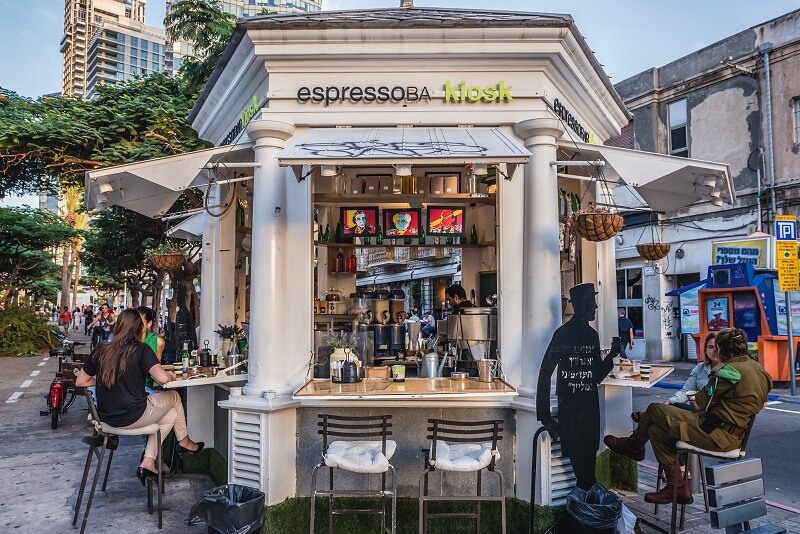
By Petal Mashraki
0 views

Lehi Museum

Plan Your VisitLocation: 8 Avraham Stern Street,Florentin, Tel Aviv.Open Times: Sunday to Thursday 08:00-16:00, Fridays by prior arrangement, Saturdays closed.Prices: Adults 20 ILS, children, students, seniors 15 ILSAverage Visit Duration: 1 hour.Special Events: Entrance is free on Israeli Independence Day, usually in May or April.Relevant Tours: Tours can be prearranged on request, just ask your guide upon taking private Tel Aviv tours.Unless you know a bit about Israel’s history, the name of this museum might seem strange! Lehi is actually an acronym of the Hebrew“Lohamei Herut Yisrael” or in English “Fighters for the Freedom of Israel”. Lehi was an underground Jewish paramilitary organization that fought for an independent Jewish state during the period of British rule of Palestine.The Lehi Museum house in Florentin (Image source: Nadav Barkai CC BY 2.5)The museum was created in honor of the Lehi resistance fighters who lost their lives in the struggle to create a home for the Jewish People. The museum is located in the heart of Tel Aviv’s trendy Florentin neighborhood, in the house where Lehi founder and commander Avraham (Yair) Stern was murdered by the British secret police. The building is also known as Beit Yair (Yair House) in Stern’s honor.What is the History of Lehi?The Jewish underground movement Lehi, also known as the Stern Gang, emerged during the tumultuous period of British Mandatory Palestine in the 1940s. Founded by Avraham Stern, Lehi aimed to resist British rule and fight for the establishment of a Jewish state in Palestine.The group vehemently opposed what they perceived as the British betrayal of Jewish aspirations, particularly in restricting Jewish immigration to Palestine during World War II. Lehi engaged in guerrilla warfare against both British authorities and Arab forces, carrying out attacks on military and civilian targets.Equipment used by Lehi operatives(Image source: The official Lehi Museum website)In 1944, they assassinated Lord Moyne, the British Minister of State in the Middle East. The group's tactics and extremist ideology, including collaboration with Nazi Germany against the common enemy of the British, generated controversy within the Jewish community.From 1944 to 1948, Lehi members were held by the British without trial at a detention camp near Jerusalem and were deported to internment camps in Africa. The British thought this would weaken the underground forces and encourage political submission. The fighters were released and returned to Israel a few months after the State of Israel was established.Despite their relatively small size compared to other Jewish paramilitary organizations, Lehi played a significant role in shaping the dynamics of pre-state Israel, eventually disbanding in 1948 when the state of Israel was established.Pro Tip: Several Jewish underground movements were instrumental in fighting for Israel’s independence. If you’re interested in this period of history you could visit the Etzel Museum or the Palmach Museum.What is there at the Lehi Museum?The museum is spread over two floors devoted to Lehi and its endeavors. On the top floor, you can see the original apartment where Yair Stern was shot. It has been recreated with original furnishings to look as it did in 1942. The rest of this floor of the museum tells the story of Avraham “Yair” Stern. The displays take visitors through the exciting life of this heroic underground fighter.A model of an internment camp used by the Mandate (Image source: The official Lehi Museum website)The apartment on the top floor of the building was rented by Tova and Moshe Savorai, and Stern lived there for the last few weeks of his life. In this one-room apartment, "Yair" hid from the British detectives who offered a monetary reward of one thousand Israeli pounds on his head.On February 12, 1942, British policemen arrived at the apartment and after a short search found "Yair" hiding in a closet and called the chief of the Bureau, Geoffrey Morton, who shot him to death while his hands were tied. For the best understanding of the exhibits, start on the top floor and work your way down.The daring escape performed by Lehi operatives is displayed in the Museum (Image source: The official Lehi Museum website)On the other floor of the museum, there is an exhibit of Lehi’s history in chronological order. On display are records with descriptions of battles and operations. There are excellent models for each of the operations.Learn about the trials of Lehi fighters by the British, and the detention camps in Israel and Africa, where Lehi fighters were held. There is a display of weapons, printed propaganda material, and artifacts used in their intelligence operations.Pro Tip: Did you know that future Israeli Prime Minister Yitzhak Shamir was one of Lehi’s three key members?The museum also hosts changing exhibitions and special events are held here with regular lectures by former Lehi fighters. This floor is home to a library and archives. There is also a commemorative hall honoring the fallen fighters of Lehi and information on other Jewish underground movements at the time.
By Petal Mashraki
0 views

Etzel Museum

Plan Your VisitLocation: Etzel House: 2 Goldman Street in Charles Clore Park. Jabotinsky House: 38 King George St, Tel Aviv-Jaffa. On Waze “Etzel Museum” will offer you the choice of both locations.Open Times: Sunday to Thursday 08:00-16:00 Visits must be arranged in advance via the museum website.Prices: Pay 20 ILS for adults, and 15 ILS for children (5-18yrs) and seniors for each of the museum sites. Pro Tip: Entrance to the museum is free on Independence Day.Average Visit Duration: 1-2 hours.Popular Times: Visit Etzel House towards the end of the day and hang around to see the sunset over the sea.Special Events: Independence DayRelevant Tours:Private Tel Aviv tours can take you there, upon request. The museum offers of its own, and if you’re interested in how the small but strong nation of Israel was established and the heroes behind the fight for Israel’s independence then put the Etzel Museum on your itinerary! The museum has two locations, both cover aspects of the Etzel organization, and both are worth visiting.Etzel is an acronym for “Irgun Tzvai Leumi” in Hebrew or National Military Organization. Etzel was an underground paramilitary Zionist resistance organization that was active up until the establishment of the State of Israel in 1948. They are often called simply “Irgun” or “organization”.The Jabotinsky House. home of the Etzel Museum (Image source: Zeem Zamir CC BY 2.5, and exhibits from the museum)The group fought both the British in Israel for independence, and the local Arabs for their right to exist in Eretz Israel. So this is a history museum with a specific focus, one which will surprise you and give you a better understanding of the struggle and experiences of early Israelis.The Etzel Museum is one of the best military history museums in Israel; it was designed to bring the subject matter to life with recreated scenes, historic photographs, sound effects, and original recordings from that period. There are authentic artifacts, information boards, and short video clips. By the time you leave the Etzel Museum, you’ll have a clear picture of this historical period.What Was Etzel?Step back in time and imagine a period in history when there is no Jewish state, antisemitism is growing in Europe, and a new leader has just risen to power in Germany who intends to wipe out the Jewish People. The only hope for survival of the Jews is a country of their own, and the dream is to establish it in the Jewish ancestral homeland, Eretz Israel.The only problem was that the British had a mandate to rule Palestine and so any Jews wanting to settle in Israel had to do so as illegal immigrants. Young Jews arrived in Palestine with a dream of Jewish independence but they had to fight for it, and they did so by creating several resistance organizations. Etzel was one of those organizations, established in 1931 and determined to protect Jewish settlers in Israel from Arab attacks and fight to eliminate the British Mandate rule to pave the way to Israel’s independence.Fallen heroes of the Etzel (Image source:The official Jabotinsky House website)The organization existed for 17 years, during which time they carried out many dangerous missions. When Israel was established in 1948, Etzel members were integrated into the Israeli Defense Force. This period was when Etzel came out of the shadows and instead of running underground operations, transitioned into open military operations.When the country was attacked simultaneously by Syria, Lebanon, and Egypt, Etzel members fought side by side with other Jewish fighters. Etzel fighters were involved in one of the most decisive battles of the War of Independence, the liberation of Jaffa from Arab hands.The Two Locations of the Etzel MuseumThe Etzel Museum has two locations, the Etzel House on the edge of the sea nearJaffa, covers mainly the liberation of Jaffa while the branch of the museum in Jabotinsky House covers the organization, its history, operations, and leaders.Etzel House (or Beit Gidi)Location: On the seashore, in Charles Clore Park just before you enter Jaffa.This campus of the Etzel Museum is appropriately located near the entrance to Jaffa, as the exhibits cover mainly the campaign to liberate Jaffa during the War of Independence in 1948. Visitors follow a winding path through chronologically arranged exhibits starting in 1947 with the decision by the United Nations to propose a partition plan dividing Palestine between the Jews and the Arabs.Etzel House, Beit GidiThere are maps showing the country’s boundaries at the time and the proposed partition plan borders. Exhibits highlight the various battles and the training that Etzel fighters undertook. The main part of the museum is dedicated to the battle for Jaffa. There is an audio-visual recreation of the battle, maps, weapons, and photographs from the fight to liberate Jaffa, one of the most decisive and important battles of the War of Independence.Other sections tell the story of the shofar that was confiscated by a British policeman and eventually made its way back to Jewish hands.Inside the Etzel House (Image source: Bukvoed CC BY 3.0)Also, the Battle of the Jordan Guard is illustrated, showing how Jewish fighters stopped the advance of Syrian forces. But when ammunition ran out, the Jews were forced to surrender, some losing their lives and others wounded or taken into captivity.Finally, visitors can learn about Altalana, a weapons ship that departed from France and made its way to the shores of Israel, only to sink off the coast of Tel Aviv.Etzel House - The BuildingYou can’t miss this unusual building standing on a grassy slope along the seaside promenade. The striking building is a glass rectangle built above the ruins of a Jewish home built in 1900 at a time when Palestine was ruled by the Turkish Ottomans. It was once part of the Menashiya neighborhood that was destroyed in the War of Independence of 1948. Etzel House is also known as Beit Gidi (Gidi House) in honor of one of Etzel’s leading officers, Amichai Paglin, codename Gidi, and 41 other Etzel fighters who fell in the battle of Jaffa in 1948.Jabotinsky HouseLocation: 38 King George Street, Tel Aviv.This museum is dedicated to Etzel’s commanders, fighters, and their actions. On display are authentic documents, photographs, press clippings, weapons, models, and films all related to Etzel’s activities in the 17 years of the organization’s existence.The Jabotinsky House building (Image source: Dr Avishai Teicher CC BY-SA 4.0)On the top floor is the Jabotinsky Institute where there are two audio-visual presentations highlighting the acts of Ze’ev Jabotinsky, the founder of Etzel, and the story of illegal Jewish immigration to Palestine under the British Mandate. Learn about the ships that carried Jews from war-torn Europe to the Promised Land thanks to the pre-state Zionist organizations. On the entrance level, the exhibits focus on the history of Etzel, its roots, and the establishment of Beitar (a revolutionist Zionist youth movement) and the operations carried out in that period.Visitors in the Etzel Museum (Image source: The official Jabotinsky House website)Visitors descend to the ground floor to learn about the life of the underground Jewish Zionist organizations and the operations they carried out.Among these operations was the bombing of the King David Hotel in Jerusalem when it was being used as the British headquarters. Also, the Night of the Aeronauts, when the organization’s fighters attacked the Ramat Gan police station. Learn about the break-in of the Acre prison and the attack on the Ramallah radio station.Special operation reconstruction in the Etzel Museum (Image source: The official Jabotinsky House website)There is a section dedicated to the immigrants and Etzel fighters who lost their lives in the struggle. Among the fascinating exhibits are forged passports used by escapees from a detention camp in Africa, a British army whip, a radio used to broadcast secret messages, and a bomb made to look like a bottle of milk.Pro Tip: There were several underground Jewish organizations that each played a role in the struggle for the establishment of Israel. Other organizations included Haganah, Palmach, and Lehi as well as Etzel. If pre-state Jewish organizations in Israel interest you then you might like to visit the Palmach Museum or the Haganah Museum.
By Petal Mashraki
0 views

Sarona Museum

Plan Your VisitLocation: The museum is in building 14, at 11 Aluf Albert Mendler St, Tel Aviv-Yafo.Open Times: Daily pre-booked tours 09:30-14:00. Visitor Center: Sunday, Monday, Tuesday, and Thursday 09:00-17:00, Wednesday 10:00-18:00 (September-May), 10:00-21:00 (June-August), Friday and holiday eves 10:00-14:00. Saturdays by appointment only.Prices: Entrance to the Sarona complex is free, but visiting the museum, Beit Habad and Templer Tunnel is 10 ILS. Payment by cash or credit.Average Visit Duration: 1 hour.Tours: Pro Tip: Tours of the Sarona Museum must be arranged in advance on the Sarona website, and are available in Hebrew, English, Russian, French, and Spanish. If you are visiting on a private Tel Aviv tour, your guide will arrange it for you.The Sarona complex is an entertainment and leisure complex housed in the buildings of a Templer colony dating back to 1871. The Sarona Museum is in one of the historic Templer buildings and is the best place to start your exploration of this fascinating complex.Pro Tip: The museum goes by the name Sarona Museum, Sarona Visitor Center, and the Sarona-HaKyria Visitor Center.Sarona Visitor CenterHoused in the same building as the Sarona Museum is the Sarona Visitor Center. Here you can get information about upcoming events in Sarona. Most importantly, the center sells tickets for the tour of Sarona and other Sarona events.Pro Tip: You need to pre-book a visit to the Sarona Museum and then pick up your tickets at the Sarona Museum and Visitor Center.What Does a Visit to the Sarona Museum Include?Sarona Museum - The museum is housed in the former home of the Templer Baldenhofer family. Carl Baldenhofer was an engineer who worked for the Wagner brothers. After the establishment of Israel, the Ministry of Police and Minorities occupied the building. Later the Israel State Archives and the Prime Minister's Library were kept here. In the 1950s Israel’s Shin Bet (the Israeli version of the FBI) used the building.Pro Tip: Spot the Templer bowling alley located next to the beer garden.Olive Press (Beit Habad) - In Pflugfelder House you can learn how the Templers introduced an olive press run by a diesel engine, to replace the traditional olive press that was turned by a donkey. See the olive press in action and watch a short film about the process and history of Sarona. Today the building holds a cafe, Beit Habad Cafe.Templers’ Tunnel - During the restoration of the Templers’ wineries an underground tunnel was discovered connecting them. The Templars used the tunnel to move barrels of wine between the cellars of the two winery buildings. Barrels were loaded onto a small wagon and pulled by a donkey. In the following years, the tunnel was used by the Jewish underground. The tunnel was later used during the War of Independence, in an operation to dismantle, smuggle, and reassemble 15 British planes captured by the Jewish underground.Pro Tip: Visitors are always accompanied by a representative/guide from the Visitor Center so you won’t get lost and you’ll learn about the sites!History of Sarona and the TemplersThe Templars, a German Christian sect, believed that populating the Holy Land would hasten the coming of the Messiah. And so they moved to Ottoman-ruled Palestine and set up self-sufficient colonies in various parts of the country including Tel Aviv, Jerusalem, and Haifa. The colony prospered and the Templers were known for their advanced agricultural methods.When Hitler came to power in 1933, Sarona became the headquarters for the Israel Nazi Party. When World War II broke out, the ruling British in Palestine declared the German Templers enemy subjects and turned Sarona into a detention camp for the residents. Many Templers were deported, and others left on their own.When the State of Israel was established in 1948, Sarona was taken over by Israeli government offices. Then in 2006, after tireless work by the Council for the Preservation of Heritage Sites and the Tel Aviv-Yafo municipality, a plan was approved to preserve 36 of the original Templar buildings. Even some of the trees were preserved and still grace the gardens of Sarona.The original architecture of the colony buildings has been preserved and pleasant park areas, trees, and playgrounds surround the buildings. The complex covers 8,700 square meters and includes over 90 stores and restaurants. Perhaps the biggest attraction here is the Sarona Market, an indoor food hall with a variety of culinary offerings. But if you want to find out more about Sarona, then the museum and visitor center are the place to go.Why Visit the Sarona Museum?The Visitor Center and Museum focus on the history of Sarona and how it transformed from a Templer village to a British detention center, headquarters to the Jewish underground, Israeli government offices and IDF headquarters (the Kirya), and finally to the restored complex we see today.The beauty of this museum is that you are walking inside one of the Templer structures as you learn about their history. See the ground floor, basement, and attic. View the handmade stenciled walls and floor tiles. The museum has several recreated rooms from the Templer period all with authentic artifacts, as well as displays of historic photographs and documents.But there are also rooms in the museum devoted to different periods in history. For example, one room illustrates the settlement during World War I, and another covers World War II. One room has photos and memorabilia related to the British Mandate and another recreates the office of the Minister of Police who used the building after the establishment of Israel in 1948.On the Sarona Museum tour, you’ll learn about the Templers’ arts and crafts, the Jewish pharmacist who acted like a doctor for the Templers, and the winery run by the Templers. See the IDF antenna that received top-secret messages and learn how the Jewish underground built airplanes in the ancient Templer tunnel during World War II. You will also learn about the restoration process used to bring this remarkable complex back to its former glory.Pro Tip: If you like the idea of historic places being turned into leisure, shopping, and dining hubs, then you should also visit HaTachana in Jaffa, and Tel Aviv’s Old Port.Sarona Whiskey BarToday one of the winery cellars connected to the Templer Tunnel is home to the Whiskey Bar and Whiskey Museum. You’ll pass the bar restaurant en route to the Templer Tunnel and see the 1,000 whiskey varieties lining the ancient walls of the cellar.
By Petal Mashraki
0 views

Sarona Market

Plan Your VisitLocation:Aluf Kalman Magen St 3, Tel Aviv-YafoOpen Times:Sunday to Wednesday 10:00-22:00. Thursday 10:00-23:00, Friday 09:00-15:00/16:00, Saturday 10:00-22:00. The pedestrian park area of the center is open 24/7, and the retail stores generally close at 20:00.Prices: It depends on what you buy, but entrance is free.Average Visit Duration:1 hour.Popular Times:Lunch (1-2 pm) and dinner (6-8 pm) time are the most popular times at Sarona Market when the workers from surrounding office blocks stop by to get something to eat. You might prefer to come a little earlier or later to avoid the crowds.Special Events: Being one of the best markets in Tel Aviv, the place regularly holds special foodie events, and often features one particular food. Usually, the special events are held from Wednesday to Friday or Saturday, such as the "Kibbutz Comes to the City" event held in January where Kibbutz farmers were given a platform to sell their goods. There have also been “All-Israeli Food Festivals” “Hummus Festival” and a “Chocolate festival”. Each puts a spotlight on a specific product and there are tastings, demonstrations, and special deals.Relevant Tours:foodies usually take a Tel Aviv food tour in Carmel Market, but there are also food tours in Sarona; Dedicated, true foodies tend to start with Carmel and finish with Sarona.Looking for a lively, dynamic, trendy place to hang out with locals, to try gourmet dishes, and local specialties while enjoying a drink, then Sarona Market is the place for you. This is Israel’s largest indoor food market, offering a unique experience for foodies. The entrance to Sarona Market, Tel Aviv (Image source: Dr. Avishai Teicher CC BY 2.5)The market is located within the Sarona Center complex. It gets its inspiration from the food halls of Europe and offers a warm welcoming atmosphere with dozens of food stalls and booths selling a wide range of Israeli street food, organic produce, and homemade food items. The products are of extremely high quality, often specialty items.Sarona CenterDo you want to relax in a pleasant open space with greenery and water features right in the heart of bustling Tel Aviv? Then visit Sarona. This peaceful haven in the busy city was created from the restored structures of a 150-year-old German Christian Templer settlement. The historic buildings have been restored and now hold trendy restaurants and cool cafes, as well as galleries, and boutique stores. The buildings are spread out over a pedestrian-only area where there are benches, lawns, playgrounds, and ponds.What is the History of Sarona?Sarona has a rich history dating back to the late 19th century. Originally established as a German Templer colony in 1871, the area was named Sarona after a blooming valley mentioned in the Bible. The Sarona Market area from the nearby park (Image source: FeldBum CC BY-SA 4.0)The Templars, a German Christian sect, were inspired to settle in the Holy Land by biblical prophecies. They believed that repopulating the land of the Bible would hasten the second coming of Christ. They built a thriving agricultural community with European-style architecture and advanced farming techniques in Tel Aviv (and at other locations in the country). Sarona became known for its vineyards, orchards, and utopia-style community.Pro Tip: You can see historic Templer settlements in places likeJerusalemand Haifa’s German Colony at the foot of the Baha’i Gardens.Sarona Market in 1923In the early 20th century, political changes led to the decline of the Templer community in the Holy Land. During World War II, the British who controlled the region and were at war with Germany, had the German Templers imprisoned, or confined in internment camps as enemy aliens. By the time the State of Israel was established in 1948 only a few Templers remained, and the Sarona area underwent various transformations.In the 2000s, Sarona was revitalized with the construction of Sarona Center, a mixed-use development featuring a blend of modern skyscrapers and preserved Templer buildings. Opened in 2015, Sarona Center has become a vibrant commercial and cultural hub, housing offices, shops, restaurants, and public spaces, seamlessly blending the area's historical charm with contemporary urban life. It retains the charm of the early Temper settlement.Eating at Sarona MarketIt's a good idea to visit Sarona even if you don’t plan to eat, but if you’re a foodie, or need somewhere to stop for lunch then this place is perfect. Take the opportunity to try some local culinary delights. The market is home to some of Israel’s top chefs who offer the latest culinary creations that blend Israeli food with food concepts from around the world. Here you can taste new food concepts that have only just been invented. Among the star chefs showcased at the market, there is Assaf Granit (Michelin star holder), Eyal Shani, and Rachel Ben Elul.Food stands in the Sarona Market (Image source: Dr. Avishai Teicher CC BY-SA 4.0)Take a seat at one of the communal tables where you can chat with locals while you try the different dishes. Don’t limit yourself to one dish, take a few. And don’t forget to wash it down with some locally produced wine or beer.Pro Tip: There is very little street parking near Sarona, but there are plenty of paid parking lots such as Sarona Parking at 5 Eliav Road. There are also bike-share stations at Sarona so you could rent a bike or electric scooter.Star Dishes to Try at Sarona MarketMeat Bar’s hamburgersHummus by the Magician (HaKosem)Eyal Shani’s pita breadRamen by Chef Yuval Ben NeriahA juicy sandwich by Rachel Ben ElulBrioche-challah sandwiches by GG KubalaSample beers at the Beer GardenSpecialty cheese, olive oil, pickles, halva, and spicesPro Tip: The closest train station to Sarona is HaShalom Station located in the Azrieli Center a short walk from Sarona.What Can You Do at Sarona Center?Eat!The first thing you can do is eat! There is no shortage of restaurant and cafe options. Many of the Sarona eateries are not kosher either because they serve non-kosher food or because they are open on Saturdays.Enjoy eating at the market! (Image source: Dr. Avishai Teicher CC BY 2.5) However, some have the new “Hashkaha” certificate which means the food is supervised by rabbis, it is kosher, and they don’t open on Saturdays, but they are not certified by Israel’s Rabbinate.ShopAmong the many boutiques at Sarona Center are fashion stores, footwear stores, accessory shops, and cosmetic stores. Shop for perfume, leather goods, souvenirs, digital goods, designer home decor products, or toys. Pamper yourself at the L’Occitane store and spa, and visit the exclusive Tasting Room wine bar. Several jewelry designers have stores in Sarona, as well as leading brand sportswear stores. Sarona is home to one of the best ice cream stores in the city, Anita. At the unique Draydel House, you can see a display of dreidels (sevivons or spinning tops). You can also find stores dedicated to specialty food such as coffee, or spices.Fashion Shopping in Sarona? good idea!Pro Tip: The Whiskey Bar and Museum at Sarona is located below ground in a historic Templer tunnel once used to store wine barrels, then as a British prison, and later the Israelis used the tunnel to rebuild captured British airplanes. Legend has it the tunnel was also used by the Mossad, Israel’s intelligence agency. The brick and stone walls are lined with thousands of varieties of whiskey, and there is a modern open kitchen serving meat dishes to complement the drinks.RelaxTake a stroll or sit down outside in the sun in the pedestrian-only area of Sarona. You’ll be surrounded by tranquil ponds and trees, and often you’ll get free entertainment from passing buskers.Sarona Visitors CenterOne of the historic Templer buildings holds the Sarona Visitors Center. Here you can get information about upcoming events in Sarona, and see exhibits highlighting the landmark moments in Sarona’s history. The center sells tickets for a pre-arranged tour of the underground Sarona tunnels.
By Petal Mashraki
0 views

Ramat Gan Museum of Israeli Art

Plan Your VisitLocation: 146 Abba Hillel Silver Street, Ramat Gan Pro Tip: Park in the Ramat Gan Stadium parking lot, about 700m from the museum, or in the parking lot at 22 Tselah Street.Open Times: Monday, Wednesday, Friday, and Saturday 10:00-14:00, Tuesday 16:00-20:00, Thursday 10:00-14:00 and 16:00-20:00, Sunday closed.Prices: Adults 40 ILS, seniors, 20 ILS, physically challenged visitors, accompanying caregivers, students, military, Ramat Gan residents,25 ILS, children under 18yrs free.Average Visit Duration: 1 hour.Special Events: The museum offers a wide range of activities, lectures, children’s shows, art classes, workshops, and tours that are announced on the museum website.Relevant Tours: Tours of specific exhibitions are offered on the museum website. If you take a private Tel Aviv Tour, you could ask your guide to visit this museum - it's not far from central Tel Aviv.Lovers of contemporary art who want to see some of the top Israeli art in Tel Avivshould visit this unique museum. The art of display covers a broad range of styles and use of diverse materials. The Ramat Gan Museum of Israeli Art (Image source: Alex Ostrovski CC BY-SA 4.0)See contemporary sculptures, paintings, photography, installations, multimedia, video art, and even performance art. Visitors are encouraged to get involved and participate in one of the many workshops or activities on offer.The exhibitions at the Ramat Gan Museum of Israeli Art are focused on topical issues that affect Israeli society and culture as well as universal themes. There are also occasional historical tributes and research exhibitions.Inside the Museum (Image source: Talmoryair CC BY 3.0)This is not art for art’s sake, it is a museum that prompts discussion of important current issues. It offers a space where multicultural dialogue can take place and where equality and diversity of cultures and identities are embraced. With over 2,500 works in the museum collection, there are pieces by veteran artists and the latest up-and-coming contemporary Israeli artists.Pro Tip: Ramat Gan has gradually become a city of museums, boasting several outstanding attractions for art lovers such as the Museum of Far Eastern Art, and the Museum of Russian Art.Ramat Gan Museum of Israeli Art BuildingThe museum is housed in a former tile factory built in 1936. The structure has a unique shape that was determined by the unusual shape of the land that is wedged between two roads. The building was built to fit the land, creating a triangular shape in a streamlined modern style that was typical of buildings in Israel during the 1930s.SCREAM by Menashe Kadishman, one of the artworks displayed in the museum (Image source: Yair Talmor CC BY 3.0)After the establishment of the State of Israel in 1948, industrial businesses and factories moved out of the city center to make way for Ramat Gan’s rapid growth. The abandoned factory building was renovated, restored, and reopened in 1987 as the new Museum of Israeli Art. It retains most of its original features. With the creation of artist studios in the area, it became Ramat Gan’s Artists’ Quarter.In 2017, the building was remodeled, expanding the exhibition space, and emphasizing some of the factory building’s original features such as the horizontal lines, flat roof, and ribbon windows.Pro Tip: The Ramat Gan Museum of Israeli Art is located in the Hanan Rosen Museum Campus which houses the historical art studios (Artists’ Pavilions) of artists Nathan Rapoport, Joseph Constant, Aharon Kahana, and Kosso Eloul.Kiryat Omanut (Artists Quarter)Adjoining the Museum of Israeli Art is a complex comprising three former artists' homes - Kahana, Rapoport, and Constant. Their homes have been turned into museums. The Constant House is now a sculpture gallery, Kahana House is a ceramics studio, and Rapoport House holds Nathan Rapoport’s sculpture work.Pro Tip: After visiting the Museum of Israeli Art you could stop at the artists’ houses, and also cross the road to enjoy the beautiful Yarkon Park.
By Petal Mashraki
0 views

5 Beautiful Squares in Tel Aviv

Why do people - both locals and tourists - enjoy spending time at city squares? Well, there are many reasons, and not just because they’re often very beautiful. Public squares have all kinds of benefits - historically they were used as marketplaces, bringing people together democratically.Today, they still host gatherings, such as the huge2023 protests but they’re also places where people socialize, sit in cafesfor an Israeli breakfast, enjoy musical performances and sometimes even live theatre.Squares can also be very beautiful, with ponds and fountains adding to the appeal. They offer fantastic ecological benefits with trees and plants that give out oxygen and also provide shade and shelter. Often they’re named after famous writers, politicians or great historical figures, which adds to the cultural element.Just like London, New York, and Paris, Israel's liveliest city has its own architectural squares (‘kikarim’), which are bound to delight travelers. Here’s our guide to five Tel Aviv Squares that you really must see, when you’re visiting this young and dynamic city:1. Habima SquareThe Habima Square is new, modern, and attractive - a wide open space, that is popular as a meeting place and a hang-out for friends. Habima Square gardenDeliberately minimalist in design, it has a sunken garden, water basins, and flower beds which come to life in the spring. There’s a lot of local flora in this square too - cacti, almond and sycamore trees, and gorgeous-smelling lavender bushesWhat’s going on in the area?The Habima square and surrounding area are filled with Tel-Avivi cultural treasures - there’s the Habima theatre itself (recently redesigned, with glass windows which give you a fantastic view inside at night) and the Mann auditorium, where the Israeli Philharmonic regularly performs and a short walk away is the Israeli Opera House.Habima Theater at night (Image source: Oren Rozen CC BY-SA 3.0)This square also sits at the top of beautiful Rothschild Boulevard, one of Tel Aviv’s most famous and lovely streets - perfect for strolling, admiring Bauhaus architecture or simply sitting in a sidewalk cafe and people-watching. The area has some of Tel Aviv'stop 10 restaurants and cool pubstoo, so it’s the perfect place to go for drinks and dinner.2. Dizengoff SquarePerhaps the most iconic square in Tel Aviv, Dizengoff Square (‘Kikar Dizengoff’) was always popular with locals and tourists but since its major revamp, it’s even more of a ‘go to’ spot. Dizengoff Square (Image source: Ovedc CC BY-SA 4.0)In the heart of the city’s beloved Dizengoff Street, on the square, sits the famous ‘Fire and Water’ fountain designed by Yaakov Agam, and all around are trees (great for summer shade) and chairs (for free) where you can sit and admire the view.What’s going on in the area?Everything you can possibly imagine! Dizengoff Street is home to endless cafes and bars, and if you’re looking for a Tel Aviv fashion shopping experience, with its clothing boutiques, jewelry studios, Bauhaus center, and iconic shopping mall, this is the street for you.The square area is great for shoppingDirectly on the square, you’ll see the Cinema Hotel, a wonderfully-restored Bauhaus building which today is a boutique hotel but once was a popular cinema (walk inside and see a projector from the 1950s on show!) It’s also not too far from the famousCarmel Market, which is a must-visit for foodies.And if you don’t have dinner plans, try one of many eateries near to the square - from La Shuk restaurant for upscale Mediterranean fare to amazing falafel at street food hangout ‘Ha Kosem’ you can’t go wrong.3. Rabin SquareRabin Square is also famous within Tel Aviv - not just as a square where protests and celebrations regularly take place but also as the place where Prime Minister Yitzhak Rabin was assassinated in November 1995.The main sculpture in the canter of Rabin Square (Image source: Lishay Shechter) Formerly known as The Square of the Kings of Israel, its name was changed afterward to commemorate this tragic event. On the other hand, if you want to see a true Israeli celebration, head for Rabin Square every time a local soccer or basketball group wins the city championship, or when an Israeli athlete wins an Olympic medal - this is the place Tel-Avivians go to celebrate.What’s going on in the area?This is not a particularly tourist area, but a good place to really ‘feel’ what the city is like. In one corner of the square, look for the sculpture of Rabin, close to the spot where he was shot three times (you’ll see memorial candles flickering, lit by passers-by, commemorating his life). There’s also a pretty lily pond where you can sit and look out at the people on the street.The Rabin Square memorial corner (Image source: Christian Engeln)Fifteen minutes south by foot, you’ll find the Cinematheque (if you’re a lover of independent movies) and fifteen minutes west will find youGordon Beach, which is perfect for sunbathing, cycling, and strolling on the boardwalk. Mass protest in Rabin Square (Image source: Itayba)There are plenty of restaurants and cafes on the main street - and those who yearn for a Tel Aviv shopping spree can visit the nearby Gan Ha’ir center, full of chic boutiques.4. Kikar KedumimIn English, Kikar Kedumim means ‘The Square of Ancient Times’ and it’s aptly named because this spot is in the heart of Jaffa, an ancient and magical port city that dates back to Biblical times and is a must-visit spot for anyone visiting Israel (especially those who like their Instagram and want to capture the perfect shot).Kdumim Square The central landmark on this square is St. Peter’s Church, built by the Spanish in 1888 for the Franciscan brotherhood - and prepared to be bowled over by its ‘Cathedral-style’ interior.What’s going on in the area?Jaffa is truly magical and almost impossible to visit and not fall in love. Within easy walking distance of Kikar Kedumim, you have the famous Jaffa Flea Market (‘Shuk ha Pishpeshim) which is the perfect place to hunt for second-hand, retro, and vintage items, and pick up souvenirs from Israel, before enjoying a coffee and bite to eat in one of the numerous local cafes and bars that surround it.The Kdumin Square area (Image source: Gady Munz Pikiwiki Israel CC BY 2.5)Jaffa’s also home to a beautiful Artist’s Quarter (with tiny, winding streets) where you can wander for hours, popping into galleries and studios, and also a fine harbor, perfect for strolling. In nearby Abrasha Park, don’t forget to stop at the Wishing Bridge and then take a look at the famous stone statue ‘The Gates of Faith’. And if you really want to understand the history and culture of the area, consider taking an Old Jaffa walking tour, where a local guide can fill you in on the legends and lore of this extraordinary place.5. Atarim SquareDesigned by the architect Yaaokv Rechter, Atarim Square sits at the end of Ben Gurion Boulevard, close to Gordon Beach. Constantly dividing opinion in terms of its aesthetics, it was built in the 1970s in a brutalist style (then considered very fashionable in architectural circles) and boasted - amongst other things - restaurants, stores, and a glass rotunda.The Atarim Square area (Image source:Michael Yakovson)Today, it’s far less fashionable but Kikar Atarim still offers outstanding views of the Mediterranean. Although it’s more empty, for anyone interested in design, it’s well worth a visit. In any event, the municipality is considering development plans in which case, try to see it before it’s gone! There’s also the Ben Gurion House nearby, which is a wonderful chance to see the home of Israel’s first Prime Minister (and it’s been kept just as he used it, back in the 1950s).What’s going on in the area?One of the things Tel Aviv is most famous for is its beaches - white sand, clear blue water, a fabulous promenade and cafes and restaurants not just along it but on the sand too. Walk south and you’ll hit Gordon and Frishman beaches - always popular, and full of people playing volleyball, and matkot (using two small paddles and a ball, it’s Israel’s most beloved sport).The Beach and Marina are just around the cornerWalk north along the beach and you’ll arrive at Hof Hilton, which is the city’s non-official ‘gay beach’ and also frequented by surfers on winter days when the waves are big. Keep walking and you’ll come to the Namal - the Tel Aviv Port - which is filled with restaurants, cafes, and stores as well as an indoor gourmet food marketand, on Fridays until 2pm, a delightful farmer’s market.Relax, drink something interesting, and enjoy yourself!If you’re visiting Israel and want to make the most of your time in the country, we also offer a wide range of day trips, which can take you to Jerusalem from Tel Avivand head south to discover Masada Fortress or take a day on the shore of the Dead Sea. If you'd like to see some marvelous green sceneries, consider taking a tour of northern Israel, and if you're feeling adventurous, we can even take you to visit the Lost City of Petra.Feel free to contact us by email or phone for more information and if you’re curious about Israel, take a look at our our blog which takes a deep dive into all things related to our country.
By Sarah Mann
0 views

Culture in Tel Aviv: Art, Cinema, and Theater

Tel Aviv is much more than justwhite sandy beachesand some of thebest clubs in Israel- it’s a vibrant, modern city that’s always changing, re-inventing itself - and that goes for its cultural scene too.Whether you choose to explore it independently or decide to take a guided Tel Aviv tour, you should remember that Tel Aviv's art museumsare world-class, and the city's full of art galleries, Israeli theaters, and cinemas that could keep you busy for days on end. From history and photography to design and performance, it’s up to you. So where should Tel Aviv culture lovers begin?Tel Aviv Museum of ArtWe have to start with the Tel Aviv Art Museum - it’s a must-visit for any culture vulture, since it’s home to a huge collection of both classical and contemporary art, showcasing works both by Israeli and international artists.From Chagall and Van Gogh to famous Israeli artists such as Kadishman and Gutman, lose yourself in beauty, and after you’ve finished, take a walk in their sculpture garden outside.The Tel Aviv Museum of ArtOnce you’ve filled your head with all this beauty, step outside and stroll down Rothschild Boulevard, home to some stunning renovated Bauhaus structures as well as some lovely cafes perfect for an Israeli breakfastand several dining spots that are among the best restaurants in Tel Aviv.This is Tel Aviv culture at its very best.Center for Contemporary ArtFounded 25 years ago, the Center for Contemporary Art has grown from one small room to a dynamic hub that includes two exhibition spaces and an auditorium at Tel Aviv’s Pollack Gallery and it’s one of Israel’s leading centers for experimental art.Do you like Modern Art? TheCenter for Contemporary Art will be right up your alley!Operating as a non-profit, its mission is to provide visitors with a window into unusual and avant-garde ideas. It hosts several large exhibitions each year, as well as guest lectures, screenings, and panels.Both local and international artists have showcased their work here and with all printed matter in Hebrew, English, and Arabic, you can see that the CCA takes the fostering of a cooperative spirit seriously.Nahum Gutman Museum of ArtDedicated to the artist Nahum Guttman who lived here, this small museum is located in the charming and picturesque neighborhood of Neve Tzedek. Gutman was born in Moldova but in 1905 his family moved to Ottoman Palestine.One of the creations displayed at the Nahum Gutman Museum of Art (Image source: Itzuvit CC BY-SA 3.0)The Nahum Gutman Museum documents his memories of Tel Aviv and Jaffa, providing a fascinating glimpse into the lives of both Jewsand Arabs living in the area at that time. Gutman pioneered a new and distinct ‘Israeli’ style, moving away from European influences and working in several mediums, including, oils, pen and ink, and mosaics.The museum also hosts temporary exhibitions (sculpture, watercolor, ceramics, photography) and it’s a wonderful place to pop into if you’re wandering the area.Rubin MuseumBorn in Romania, to a poor religious Jewish family, Reuben Ruben moved to Paris to study before emigrating to British Mandate Palestinein the early 1920s. He subsequently became a famous painter, drawing on Biblical themes and landscapes of the Holy Land in what today is known as the ‘Eretz Israel’ (‘Land of Israel’) style.One of Rubin's wonderful creations (Image source; The official Rubin Museum website)Today, you can visit his home for yourself - the Rubin Museum is on lovely Bialik Street, a stone’s throw from the Carmel Market. There, you’ll see many of his paintings, including early Tel Aviv vistas, Galilee landscapes, and landscapes and views of Jerusalem.You can really get a sense of the man, since the studio has been preserved, and if you come with kids, take them down to the basement where there’s a children’s workshop.Design Museum HolonJust twenty minutes outside Tel Aviv you’ll find Holon, a typical Israeli city that most tourists will never consider visiting. However, the fact that it’s home to the Design Museummeans that since 2016, when it opened, quite a few tourists have been making the journey there and what they find does not disappoint.The building itself is an artwork. The Design Museum on HolonActually, you could visit here just for the design of the building itself - this Ron Arad creation can be seen from a distance, with its sinuous steel ribbons in burnt orange providing the perfect Israeli Instagram opportunity.Inside, there are all kinds of exhibitions that change regularly, all devoted to contemporary design around the world, including students in design schoolsaround Israel.Habima TheaterHabima sits at the top of the beautiful Rothschild Boulevard and is considered to be a world-class theater. It first opened in 1945, before the establishment of the State of Israel, but as time passed it was rebuilt and today it showcases all kinds of plays.Whilst the theater companies usually perform in Hebrew, there are often simultaneous translations in English, so visitors don’t miss out!Enjoy local and international art!Habima (which actually means ‘The Stage’ in Hebrew) puts on plays and musicals produced both in Israel and across the world, many to critical acclaim.So whether you want to see an Israeli classic, a modern play from Europe or even a musical (both Mamma Mia and Les Mis have come here) you’re assured of a great night out. New Israeli OperaOpera buffs, this one’s for you! Founded in 1995, The New Israeli Opera has made a name for itself in Tel Aviv for its imaginative productions, ranging from classics like Mozart’s Don Giovanni and Puccini’s Tosca to original Israeli pieces such as Hanoch Levin’s ‘Opera’ and ‘Theodor’ - written by Yonatan Cnaanan, it’s subject is Theodor Herzl, widely regarded as the inspiration for the modern Israeli state.The Tel Aviv OperaProductions are sung in the original language (both Hebrew and English subtitles are provided) and with ravishing costumes, marvelously designed sets, and some very grandiose performances, you’re in for an unforgettable evening.Not too far fro there you'll find is the Sarona Complex, where you can grab a bite to eat, drink, or just wander around the beautifully renovated houses that were once home to the German Templars.Cameri TheaterThe Cameri, founded in 1944, is one of Israel’s leading theatres and, to date, has staged over 600 productions, in front of thousands of people. Based in central Tel Aviv, next to the Opera House, they put on around 15 new plays every year.Discover Israeli theaterRenowned for their directors and casts (several of whom were actually awarded the Israel Prize for contributions to their field) usually plays In are performed in Hebrew but there are occasional English-language productions. ‘The Wandering Israeli’ for example, has been a smash hit at the Cameri, hailed for its excellent cast, great music, comedy, and storytelling.It’s the perfect introduction for anyone visiting Israel for the first time and curious to know more about its people.Beit Lessin TheaterFounded in 1980 by director Yaakov Agmon, Beit Lessin Theatre produces and puts on a very diverse and high-quality repertoire of Israeli and international productions, performing seven days a week on three different stages.A show at the Beit Lessin Theater (Image source: Gadi Dagon CC BY-SA 3.0)Always emphasizing local talent and contemporary plays, the company premieres 10-12 new productions each season, of which around a third are world premieres.Beit Lessin has gained a reputation for putting on plays that really get talked about - whether they’ve just been written or are adaptations or modern classics and old-but-gold favorites. And the playwright Shmuel Hasfari’s trilogy (‘Kiddush’ ‘Chametz’ and ‘Shiva)’ in the mid1990s) really helped put them on the map.Tel Aviv CinemathequeIf you love independent movies, then head to Cinematheque, which is one of Tel Aviv’s best centers for small-budget productions, foreign films, and regular international film festivals. Opened In 1973, as a venue for fringe end arthouse films, its aim was certainly to provoke conversations about social and political issues of the day.The Tel Aviv Cinematheque (Image source: Vysotsky CC BY-SA 4.0)Today, it’s still doing that (with six screaming halls, all with state-of-the-art projection facilities) but if independent films aren’t your thing then don’t fear, because they still have plenty of evenings where blockbusters, cult classics, and smash-hit documentaries are put on.Rav Chen DizengoffBeloved by native English speakers (since all of its movies are in English, with Hebrew subtitles), Rav Chen sits in the heart of Tel Aviv, just opposite the famous Dizengoff Square. Part of a chain that operates across Israel, it boasts super comfortable chairs, six screens and plenty of concessions stands for popcorn lovers.Open seven days a week, and showing premieres and blockbusters, it's the perfect place to pass a rainy day in winter or a scorching hot afternoon in the Israeli summer…and because it's in the heart of Tel Aviv, there are plenty of cafes and restaurants around so, afterwards, you can people-watch, eat dinner or simply grab some Israeli street food.Lev DizengoffEstablished 27 years ago, and now with seven of its kind across Israel, Lev Dizengoff has gained a reputation for screening quality international films that are distinctly non-mainstream, but good enough to win international film awards.Tucked away on the third floor of the Dizengoff Center, the theatres are cozy but comfortable - it’s the antithesis of an IMAX experience!Dizengoff CenterFilms made by veteran directors such as Ang Lee (‘The Wedding Banquet’ and ‘Brokeback Mountain’) Pedro Almodovar (‘All About my Mother’ and ‘Talk to Her’) and Mike Leigh (‘Secrets and Lies ’and ‘Vera Drake’) are typical fare and a trip to the Lev (with its intimate feel) can often provoke nostalgia amongst Tel Avivis!If you’re traveling to Israel and want to make the most of your time, consider discovering the true charm of this country with our professionally guided tours. Besides Tel Aviv tours for every taste, we offer tours in holy Jerusalem, day trips to theDead Sea, Masada fortress, Ein Gedi, the crusader city ofAkko, Cesarea, the stunningGolan heights,and many more.Feel free to contact us by email or phone for more information and if you’re curious about Israel, read more about life here on our blog.
By Sarah Mann
0 views

Tel Aviv Sightseeing on Foot: Where Should You Start?

There’s nothing like walking the streets of a city to really get a feel for it - the people, the architecture, the green spaces, the culture, and the food scene. And if you’re visiting Israel, and looking for an urban experience where you can skip buses, taxis, and even bikes in favor of your feet, look no further than Tel Aviv.The magical alleys of JaffaThis lively, modern city ticks all the boxes for walking - it’s flat (unlike hilly Jerusalem), it’s pretty compact (you can walk from Park Hayarkonin the north to theOld Jaffa portin under two hours) and it’s full of fantastic neighborhoods, each with their distinct vibe and charm. Here are our three suggested itineraries for you - basic, intermediate, and complete.1.Tel Aviv Sightseeing on Foot:Basic RouteStart at the Beit Ha’ir - the Museum of the History of Tel Aviv. It’s a great way to learn about how the city, from its humble beginnings in 1910 to the modern metropolis it’s become. It’s a beautiful building on Bialik Street- close to the Carmel Market, considered one of thebest markets in Tel Aviv - that’s been recently renovated and today is a real cultural hub, with plenty of good exhibitions to see.One of Carmel Market's vegetable standsStep outside and across the street to Bialik House - home to one of Israel’s greatest poets, Haim Nahman Bialik, who lived there (you can see many of his books inside). A pioneer of poetry in both the Hebrew and Yiddish languages, the house was designed in the Bauhaus style and has a lovely interior.Bialik Square in Tel AvivA moment’s walk away, still on Bialik Street, stop at the Rubin Museum. Born in Romania to a poor orthodox Jewishfamily, Ruben studied in Paris before emigrating to British Mandate Palestine in 1923 and subsequently became an accomplished painter, drawing on biblical themes and Holy Land landscapes.The studio where he painted has been preserved and is fascinating to look at and the museum periodically puts on special workshops for children.One of Rubin's wonderful creations (Image source: the official Rubin Museum website)By now, you’re probably ready for lunch, so head over to Nahalat Binyamin - every Tuesday and Friday it hosts a wonderful Arts and Crafts fair where everything sold is made by hand by local artists. Stop for a bite and a coffee at one of the many cafesand restaurants that line its streets.Then, join a Tel Aviv graffiti tourto see for yourself the raw talent of Israel;’s young artists, on the walls of surrounding buildings.2. Tel Aviv Sightseeing on Foot:Intermediate RouteFollow all of the above steps, until you get to lunch - But instead of Nahalat Binyamin, head over to the Yemenite Quarter for lunch - it’s a charming neighborhood, full of tiny streets, small houses, and plenty of great eateries including Cafe Yom Tov and Shlomo and Doron’s hummus restaurant.Nakhlat Binyamin street artAfterwards, head south for about 15-20 minutes and you’ll soon reach Neve Tzedek. It’s one of the city’s most popular areas for tourists and when you wander around you’ll see why - renovated buildings, gorgeous tree-lined back streets, and lots of upmarket boutiques, jewelry stores, and cafes on the main drag, Shazabi Street.Treat yourself to some gelato at Anita, wander past the Suzanne Dellal Modern Dance Center, and then end your walking day by heading over to Rothschild Boulevard. One of the city’s most fashionable and exclusive streets, it’s the perfect place to stroll, enjoy Bauhaus architecture or simply sit with a coffee and engage in some people watching.Suzanne Dallal Center in Tel AvivAnd if you’re hungry now and ready for an early dinner, there are so many top restaurants in Tel Aviv (both around Rothschild Boulevard and beyond) that you will be spoilt for choice.3.Tel Aviv Sightseeing on Foot: TheComplete RouteFor those who have both curiosity and stamina, this one’s for you since not only do you get the above, but also the chance to explore a picturesque and ancient city (which, in case you didn’t know, is actually joined up with Tel Aviv, to make one singular municipality.In the afternoon, follow the steps of our ‘basic’ walking tour but in the morning, begin in the beautiful and historic city of Jaffa, a magical place that really has a flavor all of its own.St. Peter's Church in JaffaStart at the famous Clock Tower (built in Ottoman times) on Yefet Street and then walk five minutes towards the famous Jaffa Flea Market. Once you’ve enjoyed some browsing and coffee, head towards the Mediterranean, via Abrasha Park. Not only will it offer you some stunning panoramic views, but it’s also home to the beautiful Catholic church of St. Peter’s (with an interior that resembles a European cathedral!)Pause at the Wishing Bridge (with all of its zodiac signs) then stroll over to the famous Biblical statue ‘The Gate of Faith’ - made of Galilee stone, which depicts famous events from the Hebrew Bible. Head on to the famous ‘suspended Orange Tree’ and look out to the sea, to Andromeda’s rock. The Suspended Orange Tree (Image source: vivali CC BY 3.0)Then take a wander around the nearby Artist’s Quarter and pop into some of the studios, to meet the people behind the jewelry, paintings, and sculptures on offer - beautiful as gifts and perfect as souvenirs from Israel to take home!From there, you can walk all the way along the beach, via the Carmel Market, and arrive for your afternoon at Bialik Street.For sure, it’s easy to follow any of these walking tour instructions but if you really want the inside story (the history, the culture, the food, the people) then why not consider taking a guided Tel Aviv tour? It’s an ideal way to get the most out of your time and with the services of someone who knows Tel Aviv and Jaffa well, and can answer all your questions (and step in, should you need translations from Hebrew to English!) you’ll see and experience an enormous amount in one day.Tel Aviv is much more than just lovely beaches!If you’re traveling to Israel and want to make the most of your time in the country, we also offer a wide range of day trips, like guided tours in Jerusalem, trips to the Dead Sea, Masada voyages, and much, much more.Feel free to contact us by email or phone for more information and if you’re curious about Israel, take a look at our blog which takes a deep dive into all things related to our country.
By Sarah Mann
0 views

The White City - Tel Aviv and the Bauhaus Movement

Many people who’ve never visited Israel imagine it as a land filled with historic religious sites, ancient fortresses, amphitheaters dating back to the time of King Herod, and museums filled with archaeological treasures. And indeed, cities like Jerusalem, Akko, and Safed are just like that…extraordinary treasures in this Holy Land.What fewer people know is that there’s an exciting, dynamic modern side to the country and whilst no visitor to Jerusalem can fail to be moved by its beautiful stone buildings and Old City walls, don’t imagine a visit to Tel Aviv will disappoint - because it’s got an architectural style all of its own.And it’s called Bauhaus.This design movement has had an extraordinary impact on Tel Aviv and whilst it only began in the 1920’s, it’s shaped the city dramatically.Today, we’re looking at how this architectural style flourished on the streets of Dizengoff, Rothschild and Allenby and why you make time to look at some of its most beloved buildings, when you’re in town.Bauhaus building in Tel AvivWhat is Bauhaus style?‘Bauhaus’ (sometimes referred to as ‘international style’) refers to architecture, furniture, and objects that arose from an early 20th-century design school in Germany, founded by Walter Gropius. Putting the emphasis on functionality and rationality, the Bauhaus style always took the view that ‘less is more’.A typical Bauhaus building, therefore, will always put function above form containing classic modernist elements from curved balconies and ribbon windows (Corbusier style) to white exteriors and outdoor communal spaces - elements you’ll see in Bauhaus buildings all over Tel Aviv today. With their clean lines, lack of decorations, and flat roofs (designed so residents could plant gardens, hang laundry, sleep outside or simply socialize) they are unmissable.When did the Bauhaus movement take off in Tel Aviv?The rise of Bauhaus in Tel Aviv was a direct result of the immigration of thousands of Jews who fled Germany (mainly after the rise of the Nazi party) and arrived in the Holy Land (then controlled by the British Mandate). Between the late 1920’s and early 1940’s, they arrived en masse, hopeful for the eventual establishment of the State of Israel.Tel Aviv's Hertzl Street back in 1930 (Image source: Moshe Ordmann)In the meantime, Tel Aviv was a very young city (it had only been founded in 1910) and so the architects who had immigrated set about their work with gusto. In twenty years, around 4,000 buildings were constructed in this style. They were built in a very practical way, painted white (to reflect the heat in what was a very hot climate), and had a very distinct style!Moreover, adopting the ‘International Style’ in Tel Aviv made economic sense - the country was anything but affluent and so low construction costs were considered to be a major plus for the project.What were the social principles behind the Bauhaus movement?Many of the German Jewish architects who arrived in Tel Aviv were both social and zionist and at the heart of their Bauhaus philosophy was the idea of the collective. Focusing on the idea of ‘social living’ their aim was to build a society of equals and this was reflected in their architecture.Houses they designed had equal surfaces - they were rectangular with flat roofs, the aim being to have equality between top and bottom, and front and back. Each part of the building should support another As with the school building and, in many cases, these buildings looked out onto green, communal spots. These architects were not political revolutionaries - rather they harked back to old ideas of utopian socialism and the idea of belonging to a people.Where can I see Bauhaus buildings in Tel Aviv?With four thousand of them still standing (half of which are protected under preservation laws) Tel Aviv boasts the largest collection of Bauhaus buildings in the world today - and they couldn’t be easier to see, either as part of a Tel Aviv-guided tour or just wandering the city’s streets.Bauhaus building in Rotschild Boulevard, Tel Aviv (Image source: Artem.G CC BY-SA 4.0)Many of the buildings can be found in three distinct areas - Rothschild Boulevard and it’s sidestreets (the historic part of the city), Dizengoff Square and the surrounding area (Dizengoff is regarded by many as Tel Aviv’s most lively and action-packed street) and Bialik Street, close to Allenby and the Carmel Market.There are so many that are worth hunting out but some of the real beauties include:The Cinema Hotel, Dizengoff Street - once a popular Israeli cinema, today it’s a beautiful boutique hotel with a wonderful roof terrace boasting views across the Mediterranean.Krieger House, Rothschild Boulevard - built in 1934, it’s still owned by the family of the famous Tel Aviv physician Moshe Krieger, and it’s been beautifully renovated.Bruno House, Strauss Street - constructed by Ze’ev Haller in 1933, it’s a real classic - everything is plain and white.Nahmani Street 43 - once known as the ‘Red house’ this three storey building, constructed in 1923, was once a textile factory.Bauhaus Museum, Bialik Street - inside this stunning building there’s a small gallery space where you can learn more about the history of design in the White City.Is Bauhaus the reason why Tel Aviv is known as the White City?Yes! The collection of modernist buildings (all painted white) is so famous that in 2003 UNESCO placed them on a World Heritage List as ‘an outstanding example of new town planning and architecture in the early 20th century.” Indeed, Tel Aviv is the only city in the world that is today home to such a large and wonderful collection.Perhaps one of the best ways to really see these unique buildings, up close and personal, is on a walking tour of Tel Aviv. A local guide can really give you the lowdown on what makes this architectural style so special, show you backstreet buildings that you might not find alone, and answer all your questions about why they have become such desirable residences today.Bauhaus building near Dizengoff Street (Image source: Artem.G CC BY-SA 4.0)Finally, don’t forget to visit the Bauhaus Center on Dizengoff Street. It has a lovely gallery and a marvelous shop, full of books, posters, design objects, and even fridge magnets (all perfect if you’re looking for souvenirs from Israel).Whether you’re visiting Israel for the first time, or returning to see more of the country, why not consider taking one of our day trips? We also offer guided Tel Aviv tours, where you can explore food markets and learn about local the Tel Aviv graffiti scene. email or phone and to learn more about the history, culture, and daily life of our country take a look at our blog.
By Sarah Mann
0 views