Showing search results for ''

Israel National Trail (hiking tour)

The Israeli Trail or Israel National Trail offers an unusual and challenging experience to hike enthusiasts who want to explore the entire country of Israel. The trail runs for approximately 1000km (580-620 miles) from one end of Israel to the other. Hikers can pick up the trail at any point along the route by following the three strips of white, blue and grey which marker the way.In the southern regions of Israel where urban areas are less prevalent hikers need to either send provisions ahead, carry their supplies with them or make use of Trail Angels. The Trail Angels offer a place to sleep and wash or a lift to those taking the trail. This wonderful community effort adds to the enjoyment of the trail as visitors can get to know locals on the kibbutzim and other Israelis who frequently hike the trail. The trails roughly parallel major highways and roads so in an emergency you can hike to the road for help. It is recommended to carry at least a day’s supply of water with you and in the southern regions be aware of the extreme desert heat. However most hikers say that the desert section of the trail is the most scenic.
By Petal Mashraki
0 views

Kid-Friendly Attractions in Haifa

If you’ll be spending time with your family in the beautiful city of Haifa then you happen to be in one of the most kid-friendly cities in Israel! There are plenty of things to see to keep you busy. Here are some of the best kid-friendly attractions in Haifa, Israel:Cable CarFor a thrilling ride (and a way to get up the mountain) take the cable car from the Bat Galim Promenade all the way to Stella Maris Monastery on the Carmel Ridge. Apart from the thrill of the ride there are gorgeous views across the city and sea.BeachThe Dado Beach and Zamir Beach along the Hof HaCarmel to the west of Haifa are two of the most popular beaches in the country. It is possible to relax, play in the sand, sunbath and even try out water sports. There are restaurants, cafes and stores along the beachfront.National Museum of ScienceThis large museum is full of interactive and hands-on exhibits which explain the basic principles of science and technology. The 400 exhibits cover the topics of sound, the human body, water, electricity, motors and there is a Hall of Mirrors and visual illusions as well as 4D films. The building which houses the museum dates back to 1910 and was originally the Technion Building and once visited by Einstein himself!M. Stekelis Museum of Prehistory and ZooThis zoo will entertain young and old. There is the full range of animals from lions and tigers to the smaller creatures in a petting zoo. In addition to the usual animals you can visit the zoo’s stuffed animal museum and the Botanical Garden section. The zoo is set amid lush plants and tall shady trees.X-ParkThis action park is the largest of its kind in the country. All members of the family can take part in physical challenges like the giant omega, paintball, skating, a climbing wall and a rope bridge park.Clandestine Immigration and Navy MuseumThis museum focuses on the history of Israel’s navy and the clandestine immigration of Jews during the 40s when the country was first being established. However for kids who are navy and ship enthusiasts will find this a thrilling attraction. There are hands-on exhibits and visitors can go onboard a submarine and explore. There is a video presentation of the history of Israel’s navy, naval maps, historic photographs, documents, war medals, model ships and paraphernalia from various vessels.
By Petal Mashraki
0 views

Pesach – The Jewish Pilgrimage

The Jewish religious calendar is full of events and holy days, most of which commemorate historic biblical events. Each religious holiday comes with its own traditions and religious ceremonies. However only three religious holidays require Jews to make a pilgrimage – Pesach (Passover), Sukkot and Shavuot together they are called Shlosh HaRegalim. Of the three pilgrimages Pesach was the most important as it marks the birth of Israel as a free nation.Seder Pesach, aritual feast that marks the beginning of the Jewish holiday of Passover.Photo byPhil GoodwinonUnsplashIn ancient times the pilgrimage was to the Temple which stood on Temple Mount in the Old City of Jerusalem up until 70CE. Pilgrims would come to the Temple and bring a sacrificial offering. Today, because the Temple no longer stands, prayer has replaced the sacrifices and the pilgrimage is no longer a Torah obligation. However many thousands of Jews choose to make the annual journey to visit the City of Gold during the pilgrimage festivals.As the Temple is no longer standing the pilgrimage is made to the Wailing Wall, the last remaining wall of the Temple where pilgrims come to pray. There is a point within the Wailing Wall Tunnel which is the closest point to where the Holy of Holies of the 2nd Temple once stood. Many pilgrims go to this point to prey. Other less religious Israeli Jews make the pilgrimage during Passover but turn it into a fun day out in the country’s capital without the religious implications.Pesach is a celebration of freedom, from slavery into independence from a foreign land into their own. Pesach lasts for 7 days (8 days outside of Israel) it begins on the 15th Nissan (usually in March and on the eve of 25th March in 2013) with Seder Night, a celebratory meal when the family comes together. At the Seder meal symbolic foods are eaten and the Hagadah, the story of Israel’s exodus from Egypt, is read.The first and last days of the holiday are observed like a Shabbat so no work is done and most businesses are closed. The intermediate days (Chol-ha-Mo’ed) are like a regular holiday, businesses may open half-day and schools are on vacation. For the entire holiday of 7 days, Jews abstain from eating bread or anything containing fermented grain. This is a reminder of the hasty exit from Egypt when the bread didn’t have time to rise.The Pesach Pilgrimage in the New TestamentChristians will recognize the Passover pilgrimage as an event in the life of Christ when Jesus traveled to Jerusalem with his parent for the Passover pilgrimage. At the time Jesus was only 12 years old, on this visit, his parents lost him and finally found him preaching in the Temple (Luke 4:43). Many years later when Jesus arrived in Jerusalem in the days preceding his crucifixion it was also leading up to the Passover pilgrimage.
By Petal Mashraki
0 views

Top 10 Israeli Markets

With this list of the best markets (Shuk or bazaar) in Israel you will be able to bargain hunt to your heart’s content as well as get a glimpse into the multi-cultural society of Israel. The colorful people who work and shop in the markets, the aromas, sounds, delicious ethnic foods and unique goods will make your trip to Israel complete.Mahane YehudaWhere: Bordered by Agrippas St., Etz Chaim St., Yaffo St. and Beit Yaakov St., JerusalemWhen: Sun-Thurs 8am-7pm, Fri 8am-3pm, Sat closed but some restaurants and cafes openJerusalem’s main market covers several streets and includes a wide range of food stalls, clothing and household goods. You will also find many eateries of a high standard here. The market has become a magnet for foodies wanting to try ethnic cuisine from Georgia, Tunisia, Morocco and of course Israeli. Highlights of the market include Uzi Eli’s healthy juice stall, the Georgian restaurant Hachapuria and the freshly baked pastries.Shuk HaCarmelWhere: HaCarmel Street, Tel Aviv; Magen David Square to CarmalitWhen: Sun-Thurs 8am-5-6pm, Fri 8am-3pm, Sat closedThis is Tel Aviv’s main market in the middle of the city. Here you can walk down the long pedestrian street and enjoy fresh produce, clothing, toys, household goods, bakeries, fish mongers, butchers and more. The single street market is adjacent to the more sophisticated Nahalet Benyamin Arts and Crafts Fair which is open Tuesdays 10am-6pm and Fridays 10am-3/4:30pm. Here the artists sell their creations which are all hand-made.Jaffa Flea MarketWhere: Across the streets of Olei Zion, Yehuda Margoza, Beit Eshel and connecting covered alley ways in Jaffa.When: Sun-Thurs 9am-5pm, Fri 9am-2pm, Sat closedJaffa Shuk HaPishpushim (flea market) is a truly unique market. It is located in the streets adjacent to Jaffa’s main thoroughfare where the Clock Tower stands. Here you will find piles and piles of antiques, secondhand goods, clothing, musical instruments, jewelry and more. It is truly a flea market, a place for bargain hunters willing to take their time looking for something special. The market has a number of lanes with antique stalls and trendy eateries as well as narrow covered lanes lined on both sides by small stalls piled high with goods and clothing hanging from the shop entrances. Outside you can see carpets spread out on the street along with antique furniture on display alongside a wild mix of everything including the kitchen sink.Acre Old City MarketWhere: Market Street, Acre Old CityWhen: Daily until 6pmThe surrounding buildings of this market make it so special. The market is the main thoroughfare of Acre’s Old Crusader City. During the Crusader Era of the 13th century the Market Street led from the Hospitallers Gate in the north along King’s Way (Via Regis) to the port. Follow the narrow lanes from the entrance to the Old City all the way to the sea port. The sides of this pedestrian-only street are lined with stores selling clothing, fresh fish, hookahs, spices, coffee beans, fresh fruit, cheap toys, linen and household goods. The smells and sound of this market are vibrant. You are walking through the ancient city where people still live and come to the market for their daily shopping. The street splits at several points and you should take a look down the streets less traveled to see into traditional courtyard dwellings, see ornate balconies, flowers handing from the windows, washing out to dry and old men sitting playing backgammon as they smoke their hookahs. Try the baklava sweetmeats and taste some of the unusual herbs and spices on offer. Fresh fish is a great dish to try in the many eateries and when you have walked the length of the market and reached the sea why not take a short boat excursion or ride on a horse-drawn carriage. One of the lanes leading off of the main market street is called the Turkish Bazaar and has been restored into a quaint, gentrified row of eateries, arts and crafts stores.Tel Aviv PortWhere: Hangar 12, Port Tel AvivWhen: Mon-Thurs 8am-8:30pm, Fri 7am-4pm, Sat 8:30am-8pm, food stalls, Kitchen Market and Tapas Bar open daily until 11pm; Farmers’ Market Thursday afternoons and Friday mornings.Shuk HaNamal bills itself as the House of Culinary Israel it is a sophisticated version of the other city markets. It has a great location in Tel Aviv’s port and was the country’s first covered market and was also the first green commercial building in Israel. The market is driven by a desire to provide fresh, seasonal, quality produces and to educate shoppers about the products they buy. The fresh produce found here is really in another league from other Israeli markets. You will often find the vendors grew the produce or made the cheese, wine or baked goods themselves. There are local and international products, specialty stores, a large number of organic fruits and vegetables, butchers, fish mongers, wine, American style delis, artisan cheese, baked goods, hand-made pasta, olives and a professional cookware stall. Looking down on the indoor market from a gallery is a restaurant, demonstration kitchen and center for cooking workshops. In and around the market are many trendy eateries. A farmers’ market is set up in the adjacent squares on Thursday afternoons and Friday mornings. The Farmers’ Market is part of the slow food trend, defending the biodiversity in the food supply and working with suppliers with high standards in animal treatment and environmental protection. For example there are no plastic bags at this market. On Saturdays from 10am to 6pm there is also an Artists’ and Collectors Fair on the pier of Port Tel Aviv.Jerusalem Old City MarketWhere: From the Damascus Gate Old City Jerusalem down El Wad, Via Dolorosa, Cotton Merchants’ Market and three parallel streets between David St. and Chain St.When: Sun-Thurs 9am-sundown, Fridays early closing, Sat closedAs you walk through the narrow lanes of Jerusalem’s Old City Muslim and Christian Quarters market you can imagine that these were the streets that Jesus walked. 2000 years ago market stall holders probably stood here hawking their goods in the very same way as today’s vendors. What makes the Old City market even more interesting is that a large portion of it runs along the Via Dolorosa, the route Jesus took as he carried his cross on the way to his crucifixion where the Church of the Holy Sepulchre now stands. The narrow lanes of the market have small open store fronts on both sides. You can find a range of goods including Hebron glassware, religious goods, hand-made brushes, household goods, traditional Arabian clothing, tourist souvenirs, pastries, Armenian ceramics, olive wood objects, handcrafts, brassware, spices and the delicious freshly squeezed fruit juices. Most tours of the Old City follow at least a portion of the market streets. In the Christian Quarter the market place is called Muristan, a distortion of the Persian-Turkish word for hospital as a Crusader hospital once stood here. While in the market you can see the site of the former hospital and the restored Lutheran Church of the Redeemer. Next to the Muristan is the Aftimos Market, an area of bustling streets lined with stores. The Muristan market area dates back to the 2nd century BC. Today the area has been restored and a beautiful fountain stands at the heart of the market, it was constructed to mark the 25th anniversary of the reign of Sultan Abed al-HamidRamla MarketWhere: Between Herzl Blvd., Detroit Community St. and Jabotinsky Street, Ramle.When: Sun-Fri 7am-5pm, on Tuesdays the market closes at noon, Wednesday market 7am-4pmThis is one of the most authentic markets in the country and one of the oldest. It was founded at the end of the Ottoman era, renovated under the British Mandate and has continue working since then. The market has a reputation as one of the cheapest markets in Israel. Vendors use tape recorded sales pitches to call shoppers to their stalls. The market is always loud with hawking vendors and Middle Eastern music. On offer are many diverse products and the area is full of small hole-in-the-wall type eateries. Try the ice cold lemonade at the Limonero stand, buy unusual spices found only here and the ethnic restaurants in the area. On Wednesdays the traveling Ramle-Lod market sets up alongside the regular market on King Solomon Blvd in front of the Grand Mosque. The goods are displayed from make-shift stalls and you can get almost all clothing items for under 20ILS as well as household goods, toys, food, sweets, natural health products, mobile phones, accessories and more. Being somewhat off the tourist route Ramle is a great market to visit where you won’t be among crowds of other tourists.Rosh Haayin MarketWhen: Fridays 7:30am- about 3 hours before sundown.Where: Yehoshu’a Bin Nun st., Rosh HaayinRosh Haayin is a city off the usual tourist route. It is in central Israel, about 20min north of Tel Aviv. Rosh Haayin has many residents of Jewish Yemenite decent and the market captures that Middle Eastern feel. In fact this is a good place to buy Yemenite spices and taste Yemenite food like jachnun, Kubana and malauach. You can even find bunches of gat, a leaf traditionally chewed by many Yemenite men. It is a sprawling covered market on an open plot, so no meandering lanes like other Israeli markets. There is always a sense of urgency in the air as the Shabbat approaches and locals are in a hurry to get home with their purchases. The market sells a wide variety of goods including fresh fruit and vegetables and nuts, spices. There are many clothing stalls, underwear, household items, Israeli-style ready-to-eat-foods, toys, linen, shoes and cheap art work. The market has a reputation for its cheap prices although it is not a market for bargaining as the prices are already rock bottom. Try a cup of the lemonade at the market entrance, take a walk down the aisle with fresh herbs to smell the parsley, cilantro and fennel but you’ll really love the clothing sections. Bring cash as the market stalls don’t accept credit cards. This market is a great choice if you want a market frequented by locals rather than tourists.Bezalel Arts Fair JerusalemWhere: Bezalel HaKatan St. Near Ben Yehuda St., between Bezalel St. and Shmuel HaNagid, JerusalemWhen: Fridays 10am-4pmThe artIsts of the city sell their creations at this arts and crafts fair. The market has a neighborhood feel and is frequented by trendy hipsters, young families and local residents. The market hasn’t been around for long, it was established in 2009 but is extremely popular. It is similar to the Nahalat Binyamin market in Tel Aviv. On offer are hand-made goods including ceramics, jewelry, hand-painted items, paintings, Judaica, hand-made leather goods, wooden toys, books and chimes among other creations. If you want you can get your hands painted by a henna artist. On one side of the market is the historic former building of Israel’s finest school of arts and design and on the other side are boutiques and sidewalk cafes.Be’er Sheva Bedouin MarketWhere: Derech Habron, Be’er ShevaWhen: ThursdaysThis is a raw, no-frills market in the southern city of Be’er Sheva. It is held in a vacant plot covered only by awnings. The market is a sprawling mix of make-shift stalls and Bedouin who come to the market to sell their wares. Ten years ago you may have seen camels here and Bedouin women selling piles of herbs spread out on blankets on the ground. It is sometimes referred to as the Camel Market. Today the market has become a little more sophisticated but retains its rural feel. This is a market where you won’t see many tourists. You can find the usual market items as well as rows of fabric, electronic goods, pickles, large bags of spices, toys and make-up. The market will give you a glimpse into the colorful blend of cultures in southern Israel.

By Petal Mashraki
0 views

Top 10 Tourist Destinations in Israel

Don’t leave Israel without seeing these top tourist destinations1. Jerusalem Old City, JerusalemWithin the ancient walls of Jerusalem’s Old City you can see the Church of the Holy Sepulchre, the Wailing Wall, Via Dolorosa, the Armenian Quarter, Dome of the Rock and many more of Israel’s top sights.2. Bahai Gardens, HaifaHaifa’s top must-see sight is the garden which cascades down 18 terraces on Mount Carmel, at the top of the garden is the white Bahia Temple. The gardens are maintained impeccably with bright seasonal flowers and landscaped patterns.3. Jaffa Port, Tel-AvivJaffa today has been renovated and preserved, the high stone walls and narrow lanes which balance on the cliff are used for specialty art galleries, restaurants, a small museum and an observation point where you can look back across the water to Tel-Aviv. Visit the flea market and antique stores here and be sure to bargain.4. Sea of GalileeThis inland sea is where Jesus performed many of his miracles like walking on the water and the feeding of the multitude. The fresh water sea is perfect for boat trips and for swimming and is surrounded by stunning countryside. Along the edges of the sea of Galilee are various Biblical sites and small quaint chapels.5. Dead SeaThe Dead Sea is the lowest point on Earth a visit here is a once-in-a-lifetime experience. The sea’s unique salinity (8.6 saltier than the sea) makes the water thick and almost oily so that you can’t sink. You can float in the Dead Sea and benefit from the rejuvenating qualities of the highly concentrated minerals.6. Red Sea, EilatHire a snorkel or take a dive in the crystal clear Red Sea. The coral reefs, tropical fish and even dolphins make this a site not to miss.7. Yad Vashem Holocaust Museum, JerusalemThe world’s best Holocaust museum housed in an innovative modern building, the museum holds thousands of documents, photos, video testimonials and artifacts from the darkest time in the history of the Jewish people.8. Church of the Annunciation, NazarethSee the place where Mary and Joseph lived and where the archangel revealed to Mary that she would soon carry the son of God. One of the most moving features is the display of images of Madonna and baby Jesus from around the world. The mosaics and paintings show the holy family as black, white and Asian according to how the Christians in those countries envision them.9. Acre Old City, AcreEnter the narrow cobbled lanes of this walled port city which is alive with people bustling through the market, this is real living history. The labyrinth of lanes leads you from the entrance down to the water’s edge.10. Ramon CraterWhen driving down from the center of Israel to Eilat the road passes this Crater which is 40km long, 500 meters deep and 10km wide. From Mitzpe Ramon on the northern wall of the crater you can look down on the magnificent desert landscape.It must be said that Bethlehem would have been on this list but officially it is in Palestine and not Israel. Caesarea, Tel-Aviv and Masada also narrowly missed the list!
By Petal Mashraki
0 views

Top 5 Luxury Spas in Israel

Israel has some exclusive luxury spa resorts situated in unique locations including the Dead Sea area and on the shores of the Red Sea. Take a look at these top luxury spas in Israel which have all been nominated or won the World Travel Awards title of leading spa resort.Carmel Forest Spa Resort, HaifaThis is a 126 room luxury spa resort nestled in the Carmel Forest Nature Reserve on a mountain top surrounded by trees. The natural surroundings add to the exclusive and unique feel of this resort. All the luxuriously furnished rooms have breathtaking mountain views and guests can use the resort facilities for free. The facilities include a Turkish steam bath (Hamam) imported from Turkey, a gym, tennis courts, indoor and outdoor pools. Among the added extras available at the resort are spa treatments, massages, tai-chi, meditation, palates and the services of a dietitian. There are three meals a day prepared by a gourmet chef with a focus on healthy eating. The two outstanding features which make this one of Israel’s best luxury spas are the stunning location and that the resort is a child-free-zone!Herods, EilatIn Israel’s leading vacation city you’ll find three luxury Herods hotels – Herods Palace, Herods Vitalis and Herods Boutique but it is the Vitalis which offers spa treatments on another level. The exclusive 53 suit hotel provides a tranquil retreat to those seeking peace and quiet. For this reason under 18s and cell phones are not allowed at the Vitalis. The hotel’s location overlooking the Red Sea and within walking distance from Eilat’s dynamic attractions makes this a perfect vacation option. The design of Herods Vitalis exudes opulence, the architecture resembles a palace with all the trimmings and together with the pampering service and professional spa treatments guests are made to feel like royalty.Mizpe Hayamim Resort, Rosh Pina This resort on a 15 hectare property of pristine countryside enjoys views of the Golan Heights, Sea of Galilee and Mount Hermon. The resort property has gardens, paths, pools and brooks as well as being an organic farm. The farm grows Biblical fruit and vegetables and breeds farm animals organically providing the spa with fresh organic produce. In these ecologically harmonious surroundings the guest rooms are individually designed and the spa offers a range of unique treatments. On the grounds are craft workshops, soap and candle making workshops and an organic bakery. The facilities include a fitness room, dry and wet sauna, indoor and outdoor Jacuzzi and swimming pool.Le Meridian, Dead SeaThis resort has won the award for best spa in Israel for 6 consecutive years. Its location on the shore of the Dead Sea gives it a unique twist and the spa treatments make use of the concentrated minerals provided by the Dead Sea water and mud. The treatments include Dead Sea mud body masques and sea weed wraps.When you’re not getting one of the spa treatments you can visit the private beach, enjoy the indoor and outdoor pools, tennis courts, fitness center, Dead Sea water pools, Jacuzzi and sauna. The large resort has five restaurants, an exclusive 16th floor business level and all rooms have a view of the Dead Sea.Vered HagalilThis exclusive get-away location is named as one of the “1,000 places to see before you die” in the Workman Publications book of the same name. The style of this resort is different to the others mentioned above, it is more rural, down to earth and suited to nature lovers. What makes this a stand-out luxury resort is the horse riding facilities and the individual wooden chalet-style accommodation set in untamed country surroundings. Guests can stay in 2 room cottages, cabins, studio rooms or suites. All the units have a Jacuzzi, luxury facilities and rustic style furnishing. The spa offers treatments in a quiet shady part of the farm with an emphasis on reconnecting with nature.Check out our Dead Sea Spa & Relaxation tour >>The tour include a visit to Mineral or Kalya beach in the Dead Sea with optional SPA treatments
By Petal Mashraki
0 views

Visiting Israel during Shavuot

This year Shavuot will be celebrated from sundown on Tuesday 3rd to sundown on Thursday 5th of June. Shavuot is also called the Festival of Weeks, First Fruits, Harvest Holiday or Pentecost. This religious and traditional Jewish holiday is a celebration of the first harvest. When the Holy Temple stood in Jerusalem this would have been the time when the first fruits were brought as an offering to the Temple. This agricultural holiday is one of three major Jewish holidays which requires religious Jews to make a journey to Jerusalem. In ancient times the Jewish people would make the annual pilgrimage to Jerusalem on Passover, Sukkoth (Feast of Booths), and Shavuot. Shavuot also marks the end of the Counting of the Omer, a 50 day period starting on the first day of Passover. An Omer was the Biblical measure of a quantity of grain and at the end of the counting of the Omer, an offering would be made from the first wheat harvest of the year. Because of the holiday’s association with agriculture, the symbols of Shavuot are the seven species of Israel – wheat, grapes, barley, pomegranates, dates, olives, and figs. The holiday also marks the day when the Torah was given to the people of Israel at Mount Sinai.What to Expect When Visiting Israel during ShavuotYour trip to Israel will only be slightly affected if you are here during Shavuot. On the one hand, there are many fun events, parties, and a holiday atmosphere and on the other hand, Shavuot is a national religious holiday and you may find some sites closed for two days. During Shavuot Israelis traditionally wear white clothes, young children often are asked to wear flower wreaths in their hair to school and the stores are overflowing with an abundance of fruit.It is traditional to study Torah throughout the night during Shavuot so the Western Wall will be alive with visitors and worshipers night and day. Religious Jews attend synagogue on Shavuot and hear the reading of the Book of Ruth which is associated with the holiday. It is traditional to eat dairy products on Shavuot so you’ll find restaurants offering delicious meals made with Israel’s wonderful dairy products. Religious and non-religious alike tend to keep the tradition of dressing in white and enjoying delicious dairy meals. If you have the opportunity to visit a moshav or kibbutz on Shavuot you could attend the Shavuot ceremony of Bikkurim (first fruits) when the harvest fruits and grains are displayed in festive parades. In Jerusalem, you will find special happenings at many museums, malls and lots of activity, and a festive atmosphere in the Old City.
By Petal Mashraki
0 views

Wineries and Wine Tasting in Israel

Being such a small country Israeli cities are never too far away from the open countryside, farms and rural communities. The country has more than 300 wineries, 25 commercial wineries and 150 boutique wineries. The main wine producing areas in Israel include the Judean Hills where Tzuba Boutique Winery, Agur Boutique Winery and the Tzora Winery are located; Carmel region where there is the Vortman Winery, Maor Winery and the wineries of Zichron Yaakov including Somek Winery. Even in the south you can find wineries like the Yatir Winery, Midbar Winery and the Yatir Winery. There are five official wine regions in Israel – Galilee-Golan, Shomron, Samson, Judean Hills and the Negev. Thanks to the length of Israel it has several micro-climates which can support the growth of different types of grapes. More than 90% of Israel’s vineyards are in the Shomron, Samson and Galilee region while younger vineyards can be found in the Upper Galilee and Judean foothills.Grapes and a glass of white wine. Photo credit: © ShutterstockWine production in Israel dates back to Biblical times; archaeological excavations have uncovered ancient wine presses, storage cisterns, and decorative motifs depicting winemaking, grape clusters, and vines. In the 1990s Israeli wine production really took off, modern techniques and equipment were introduced and about 85% of Israel’s wineries were established in the 90s.More recently there have been many boutique winery start-ups that have sprung up across the country. Some of the stand-out wineries in Israel include Bashan which produces organic wine, Carmel which is the largest Israeli winery, Barkan the second largest, Margalit Winery credited as being Israel’s first boutique winery and Binyamina the third largest winery.Kosher Wine and Kosher-Mevushal Wine in IsraelThere are about 80 kosher wineries in Israel, so what makes wine kosher? Kosher wine needs to be overseen and produced only by Shabbat-keeping observant Jews from the time the grapes are picked to the time it is bottled – from crushing to bottling. This ancient law was created because at one time pagans used wine in their worship of idols and so the Jewish leaders wanted to ensure that no Jew was ever mistakenly given wine that had been used in idol worship.However this wasn’t enough, the Jewish authorities still worried that after opening the bottle might be tampered with (used for idol worship). And so Mevushal wine was introduced. Mevushal wine (literally cooked wine) has been heated to the point where idol worshipers wouldn’t use it in their ceremonies. So the rule is that wine that is not mevushal cannot be served to a Jew by a non-Jew. These laws were established a long time ago and the process of boiling wine would take out all the flavor. Thankfully today a process called flash pasteurization is used to make the wine “mevushal.” The process involves rapidly heating the wine to about 180°F/82.2°C for a minute and then rapidly cooling it. This helps retain the flavor that would be lost if it was really boiled. So wine you buy in Israel could be non-kosher, kosher because it has been produced by Shabbat observant Jews, or kosher Mevushal because it has been flash pasteurized.Grapevinefor harvest.Photo credit: © ShutterstockGolan Heights WineryThe Golan Heights has the ideal soil, climate, and topography for many crops and especially for vineyards. If you want a genuine wine country experience then the Golan Heights can make a great day trip. In the heart of Israel’s wine country, you’ll be surrounded by magnificent vineyards, breathtaking views, and small communities. Start your visit at the Visitors Center of Golan Heights Winery near Katzrin. Here you can get information about the tours and wine tastings available and about the history and production of Israeli wine. In the Wine Shop, you can buy souvenirs and locally produced wines. Open hours are 08:30-18:30 Monday to Thursday, 08:30-17:30 on Sundays, and 08:30-13:30 on Fridays and holiday eves.There are several tour options that are led by knowledgeable guides in Hebrew, Russian, English, French, German, Spanish or Swedish. Tours must be booked in advance on the Golan Heights Winery website. The Classic Visit includes a guided tour that covers the wine-making process, a visit to the oak barrel cellar, and a chance to taste several of the Golan Heights Winery wines. The Classic Visit lasts about an hour. For real aficionados, there is a Professional Wine-Tasting Visit which lasts 2 hours and includes a wider selection of wines in the tasting. You also have the option of a Premium Visit which includes a gourmet meal together with your wine tasting in the VIP room or the wine cellar and lasts 2 hours. The 4 hour Vineyard Tour takes you on a drive through the vineyards in an all-terrain vehicle. Your guide will introduce you to the various types of grapes and the incredible geography of the Golan Heights. This tour also includes wine tasting.Grapevine close-up. Photo by Bill Williams on UnsplashCarmel WineryThe Carmel Winery is located in Zichron Yaakov and they have a new Carmel Wine & Culture Center. The center has a wine store, restaurant, tasting rooms, a screening room, and a barrel room in one of Rothschild’s historic underground cellars. Visitors can choose from several touring and tasting options. On a Cellar Tour and Wine Tasting, you can visit the historic wine cellars, taste wine, and see a film presentation (1 hour, 30 ILS). A Winery Tour and Wine Workshop includes a more professional look at the site and a longer wine tasting session (1.5 hours, 50ILS). An Advances Tour and Wine Workshop includes a customized tour, tutoring about the art of wine tasting, and delicious cheese, vegetable, and bread platter (2 hours, 100ILS). The tours must be booked in advance and are slightly more expensive if you want to visit after 17:00. The winery center is open 09:30-17:00 Sunday to Thursday, 09:00-14:00 on Friday and holiday eves, and is closed on Saturdays and Jewish holidays.People in the Field Picking Grapes for the Last Harvest. Photo by Tina Witherspoon on UnsplashDalton WineryThe Dalton Winery is nestled in the hills of the Upper Galilee not far from the Lebanese border and overlooking Mount Hermon. The winery was established in 1995 by the Haruni family that emigrated from England. The winery makes about 800,000 bottles a year. Their vineyards grow at an altitude of 800-900 meters above sea level in the rich soil of the volcanic plateau and in the ideal climatic conditions. The winery recently moved to new premises in the Dalton Industrial Park where they can handle up to 1000 tones. The winery is adjacent to the vineyards making it a picturesque and ideal winery to visit. There is also a factory outlet store selling wine and products from Galilee. On the tour of the winery, you get to see the barrel room, bottling line, and taste the wines.Dalton Winery Visitors Center welcomes visitors for tours that can be booked by calling 04-698 7683 Ext. 2. However if you are in the area you can pop in for wine tasting without a prior booking. The Visitors Center is open daily except for Saturdays and Jewish holidays between 10 am and 4 pm. The last tour is at 3 pm. Green Grapes.Photo credit: © ShutterstockOn Fridays, you can visit from 10 am to 2 pm and the last tour is at 1 pm. The tour and tasting take about 45 minutes. A guided tour followed by tasting costs 20ILS. It is possible to arrange a group tour (30-80 people) together with a light dairy meal. Religious guests can arrange a tour and tasting led by the winery’s Rabbi. Note that not all the wines produced and sold at Dalton Winery are kosher-mevushal.All the above-mentioned Israeli wineries can be contacted on their websites, tours should be booked in advance and you should always phone ahead. In addition, you can visit other Israeli wineries including Katlav in the Judaean Hills; Tzora in the Judaean Hills open to visitors Sunday to Thursday 10 am-5 pm and Friday 9 am-2 pm.Avidan Winery in the Sharon region is open to visitors Friday to Saturday 11 am-4 pm; Bazelet HaGolan in the Golan Heights is open to the public Sunday to Friday 9 am to 3 pm; Assaf Winery in the Golan Heights is open daily 11 am to 4 pm and the Margalit Winery near Caesarea is open to the public in Spring.Vineyard at sunset.Photo by Tim Mossholder on Unsplash
By Petal Mashraki
0 views

Ya-Salam Belly Dance Festival

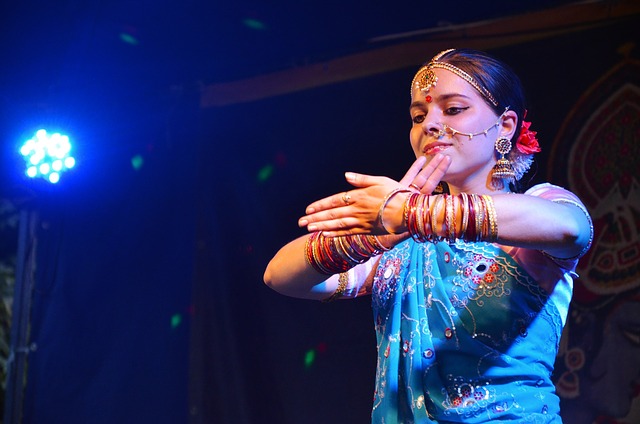
Dance teachers, performers and enthusiasts gather each year on the edge of the Dead Sea to take part in one of the most uniquely Middle Eastern festivals in Israel – the Ya-Salam Belly Dance Festival. Belly DanceThe festival has been held annually since 2005 and attracts participants and spectators from around the world. During the festival there are dance shows, workshops and belly dance parties with live performers. As part of the festival an amateur stage will provide space for dancers of all levels to show their talent, interested dancers should register beforehand.When: Nov 29, 2012 – Dec 1, 2012–08–29Where: Leonardo Hotel, The Dead Sea (at the former Nova Hotel)
By Petal Mashraki
0 views

Tabgha

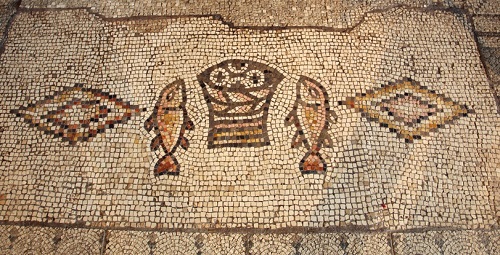
Tabgha is a small area right on the edge of the Sea of Galilee, on the western shore between Capernaum and Ginosar and just below the Mount of Beatitudes. The name Tabgha comes from the Greek – Heptapegon, meaning place of the seven springs. Tabgha has been identified as the site of the miracle of the loaves and fish (Mark 6:30-46) and the place where resurrected Christ came to meet his disciples (John 21:1-24). The seven springs of Tabgha bring warm water into the Sea of Galilee attracting fish which has made it a popular fishing area for centuries. The area has lush green vegetation, trees offering shade and the cool water just a few steps away.Church of the Multiplication of the Loaves and Fish, Tabgha. Photo credit: © ShutterstockBiblical TabghaThe Gospel of Matthew tells us that after Jesus heard that John the Baptist had been beheaded by the Romans he withdrew in a boat to a secluded area. Crowds of followers went after Jesus and by nightfall, there were 5,000 people gathered on the hillside. Jesus took five loaves of bread and two fish and gave them the traditional blessing. Then he divided the food among the gathered crowd. The loaves and fish miraculously fed all of the 5,000 people and there were even leftovers.After Jesus was resurrected he appeared several times to the disciples; one of these appearances took place in Tabgha. Peter, Andrew, Simon, and four other disciples were at Tabgha where they had been fishing through the night but had failed to catch anything. They came ashore and as the sun rose they saw Jesus standing in front of them on the beach of Tabgha. The disciples did not recognize Jesus but he called out to them. He told them to throw their fishing nets back into the water. When the disciples brought their nets in they found them full of fish. Jesus prepared food for the disciples over a fire and lay out the food on a rock. This rock became known as the Mensa Christi and can be seen today in the Church of the Primacy of St. Peter at Tabgha.Jesus challenged Peter’s faith three times symbolically canceling out the three times that Peter denied Christ on the night before the crucifixion. Then Jesus commissioned Peter to lead the church. He asked Peter to feed his lambs, tend his sheep and feed his sheep. Jesus also told Peter that he would die a martyr. From this point onwards Peter was recognized as the head of the church and the apostles.History of TabghaFloor mosaics in theChurch of the Multiplication of the Loaves and Fish, Tabgha.Photo credit: © Dmitry MishinIn the Byzantine era, the spring water of Tabgha was channeled into three water towers and taken via aqueducts to nearby Ginosar to be used for irrigation. During the 4th century, a small chapel was built by Joseph of Tiberias. It was replaced with a chapel in 480 by Martyrius of Jerusalem, the Patriarch of Jerusalem. Martyrius was originally from Egypt and he had the floor mosaics of the chapel created in the Egyptian style. The mosaic we see today of the fish and loaves has survived from this original chapel.The chapel was destroyed in 614 and remained in ruins until excavation in the 20th century. Under the Crusaders the Church of St Peter’s Primacy was constructed in Tabgha and the city was known as Mensa Christi (table of Christ) or Mensa Domini (work of the table). During the Ottoman era in 1595, a village existed on the site of Tabgha with a few houses and mills. Under the British Mandate, a community of Muslim and Christian Arabs lived here and farmed the land. During the 1948 Israeli War of Independence, Tabgha was cleared of residents and structures destroyed. Since then Tabgha’s lands and historic structures have been restored.Tabgha AttractionsChurch of the Primacy of St. PeterAfter Jesus’ resurrection, he appeared to his disciples at Tabgha where they sat down together to eat. It was at this time that Jesus chose Peter to lead the Christian church. This site is commemorated on the beach of Tabgha by the Church of the Primacy of St Peter. It is a small structure built in 1934 of black basalt rock. In the surrounding gardens, you can see a bronze sculpture depicting Jesus giving Peter his blessing. The church is literally on the water’s edge and you can take just a few steps down to the shore and even touch the water. This is a quaint and peaceful church with idyllic gardens and ample shade all around.Church of the Multiplication of the Loaves and FishThe 20th centuryChurch of the Multiplication of the Loaves and Fish that we see today stands on the site of the original 4th-century church and the Byzantine floor mosaic has survived. The mosaic features images of birds, snakes, vines, fish, and flowers. There are peacocks, a flamingo, swan, ducks, herons, geese, cranes, geese, and cormorants. The most significant mosaic is the one closest to the altar that depicts a basket of bread flanked by two fish. Rock in its natural state lies beneath the altar and is believed to be where Jesus placed the bread and fish as he made the blessing.To visit Tabgha, join ourNazareth and Galilee Tour.
By Petal Mashraki
0 views

The Churches of Jesus Ministry in the Galilee

The Christian gospels tell us that Jesus spent 3-6 years (27/29 AD – 30/36 AD) preaching in the Galilee, during his ministry in the Galilee he met and recruited his disciples and traveled around the countryside preaching as well as performing several miracles. His Galilee ministry began with his baptism at the site now known as Yardenit. Today several churches mark the significant sites where biblical events occurred in the Galilee.The Greek Orthodox Church of the Marriage Feast, Cana, Israel. Photo credit: © ShutterstockThe Church of the House of St Peter, CapernaumJesus based himself in the village of Capernaum (Kfar Nahum) during his Galilee ministry; extensive excavations have uncovered a Roman-era synagogue constructed of black basalt rock which could have been where Jesus preached. In addition, Capernaum was the hometown of Saint Peter (and several other future disciples). St. Peter’s house was used for gatherings of the followers of Jesus during his lifetime and later the site was revered by Christians so that over the years churches have been built above the house to commemorate St. Peter.Today the Church of St. Peter is a modern structure located within the Kfar Nahum National Park. The modern church has been built on the site of St. Peter’s house but raised above archaeological findings. Visitors can peer down through a glass-covered opening in the center of the church and see the excavated house of St. Peter as well as a later 5th-century octagonal Byzantine church. In the tradition of earlier churches, the modern Church of St Peter is also octagonal. Within the structure are motifs of the Sea of Galilee and biblical scenes from Saint Peter’s life.Aerial view of Capernaum, Town of Jesus, Galilee, Israel.Photo credit: © ShutterstockChurch of the Apostles, CapernaumThe Greek Orthodox Church of the Apostles is located on the southeastern edge of what would have been the Roman village of Capernaum; the church is dedicated to the seven apostles named in the Gospel of John. The church was completed in 1931 on the site where the village of Capernaum was relocated following an earthquake in 746 AD. The picturesque church has a white exterior with bright red onion domes. Within the church, almost every surface is covered with intricate and colorful murals.Church of the BeatitudesLocated on the Mount of Beatitudes above Capernaum overlooking the Sea of Galilee is the Mount of Beatitudes where Jesus gave his sermon on the mount which contains some of the pivotal teachings in Christianity. The sermon contained the 10 blessings that begin “Blessed are…” as well as the Lord’s Prayer. To mark the site where Jesus gave his longest teaching of Christian principles is the Franciscan Church of the Beatitudes. The church was designed by renowned Italian architect Antonio Barluzzi and constructed in 1938. The church is set in a tranquil garden and the exterior has a covered arcade supported by columns separated by arched openings. The roof of the church has a single central dome. Within the church are stained glass windows featuring the beatitudes and gold mosaics in the dome. The church has an octagonal shape to symbolize the 8 beatitudes (Matthew 5:3-11). The church has been visited by Pope Paul VI and Pope John Paul II.Church of the Beatitudes.Photo credit: © ShutterstockChurch of the Multiplication of the Loaves and Fishes, TabghaTabgha is believed to have been the site of the first feeding when Jesus performed the miracle of sharing 5 loaves of bread and 2 fish with 5,000 people who had come to hear him. The Roman Catholic Church is a modern structure constructed on the site of two earlier churches. Elements of the earlier churches have been preserved including a 5th-century floor mosaic in the two transepts featuring plants, animals, and a lotus flower. Near the altar is a mosaic of two fish and a basket of bread. During excavations a limestone slab of rock was found, this now lies under the altar and is thought to have been the table where Jesus shared out the miraculous meal.Church of the Primacy of Peter, TabghaThis modern Franciscan chapel built in 1933 marks the site where Jesus ate with his disciples following his resurrection and also where Jesus reinstated St. Peter who had denied knowing Jesus three times at Jesus’ crucifixion. It is the signature event of Jesus appointing Peter to look over his church that led to the Pope (a successor of Peter) being the leader of the Christian world (John 21:15-19). The church is located on the water’s edge of the Sea of Galilee, there are even stone steps going down to the water. The steps were carved out of the rock c.2nd century. On the water’s edge at the base of the steps are 12 heart-shaped blocks called the Twelve Thrones dedicated to the 12 Apostles. At high tide, the block columns are submerged beneath the water. The church holds the Mensa Christi or the table where Jesus and his disciples ate. Earlier churches that stood on this site have been incorporated into the more recent structure. Remains of the walls of a 4th-century church are visible in the grey stone structure.Inside the Church of the Multiplication, near the sea of Galilee, Israel. Photo credit: © ShutterstockCana FranciscanWedding Church, Kfar CanaUnlike the churches mentioned above which all lie on the western shore of the Sea of Galilee, this church is in the Lower Galilee between the Sea of Galilee and Nazareth. It was here that Jesus performed his first miracle turning water into wine at a wedding celebration (John 2:1-11).The site of this miracle is marked with a church. It is a Franciscan Catholic church constructed from 1879 to 1883 over the ruins of a 6th-century church and also has a 4th-century mosaic floor with Aramaic inscriptions. The baroque-style church has twin bell towers, and a façade topped with angel statues. There is an arcaded narthex and a pleasant front courtyard. The interior has two levels with a dome above the upper church and a nave on the lower level where you can see part of a Byzantine mosaic. On the lower level is a chapel and museum with artifacts found during the construction.Church of St. George, Kfar CanaNext to the Marriage Church is a Greek Orthodox Church built in 1886, the church holds two of the six jars believed to have been used in the miracle of the wine. Outside the church is a courtyard with palm trees, bells, gazebos, and fountains but the interior is usually closed to tourists.Franciscan Wedding Church, Cana. Photo credit: © Shutterstock
By Petal Mashraki
0 views

UNESCO Incense Route – Desert Cities in the Negev

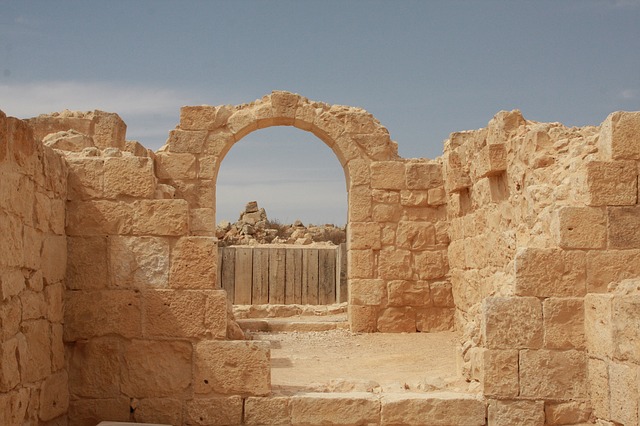
The ancient incense route ran from Yemen, Oman, Somalia and Arabia through Jordan to the Mediterranean Sea port of Gaza, Palestine, covering 1,800 km and passing through 56 stops along the way. The stretch of this route which goes through southern Israel is 100 km long from Moa on the Jordanian border to Halutz. This ancient route through four towns in the Negev – Avdat, Halutz, Mamshit and Shivta; four fortresses – Kazra, Nekarot, Makhmal and Grafor and two caravanserais – Moa and Saharonim was deemed of outstanding universal importance by UNESCO in 2005. The remains offer evidence of the sophisticated engineering, knowledge of agriculture and irrigation used to settle this challenging environment to facilitate trade.Starting in the 3rd century BC and continuing for 700 years the Nabataean people traveled in large caravans from Petrain Jordan, across the burning desert to bring the precious incense and spices to the west. They managed to conquer the harsh desert and bring luxury goods from the Arabian Peninsula to the Hellenistic-Roman world. Their cargo included Myrrh, salt, spices, perfumes, and their most valuable item – Frankincense, which was used in large quantities by the Romans as incense, medicine, and in cosmetics. However along with trade goods came an exchanging of ideas and interaction between different nations, this is another reason the route was so valuable.Renovated Market in MamshitTowns, forts, and caravanserai were established as rest points along the route; as support for the Nabataean population who settled the rough land, and as a way to monitor, secure and defend the route. The innovative town planning involved in creating towns like Avdat is apparent in the surrounding pastoral landscape, field system, and water system with cisterns, dams, and reservoirs. This is another testimony to the power of the Nabataean culture and economy. Due to the challenging desert environment, there has been little damaging modern development on these ancient sites and fossilized landscapes. The settlements have, to a large extent, managed to retain their authenticity and integrity since being abandoned after the Arab conquest in 636AD.Thankfully all of the sites are state-owned and protected within national parks or nature reserves.In Moa on the Jordanian border, there are the ruins of an inn, storerooms, a guard post, and an aqueduct. In Mamshit are the remains of an inn, churches, a bathhouse, and parts of the ancient town’s sophisticated water system. Avdat was perhaps the largest Nabataean settlement along the incense route. Here you can see the remains of a sophisticated bathhouse and steam rooms, a fortress, burial caves, a deep well, a Nabataean shrine, and a furnace. Shivta was a much smaller settlement and here you can still see evidence of the water system, oil presses, and several churches. Halutz was the last town before the caravans headed towards their final stop in Gaza port and here you can see the ruins of a theatre and a church.For more detailed information feel free to read this article Ancient Routes of Israel.
By Petal Mashraki
0 views

5 Attractions in New Jerusalem

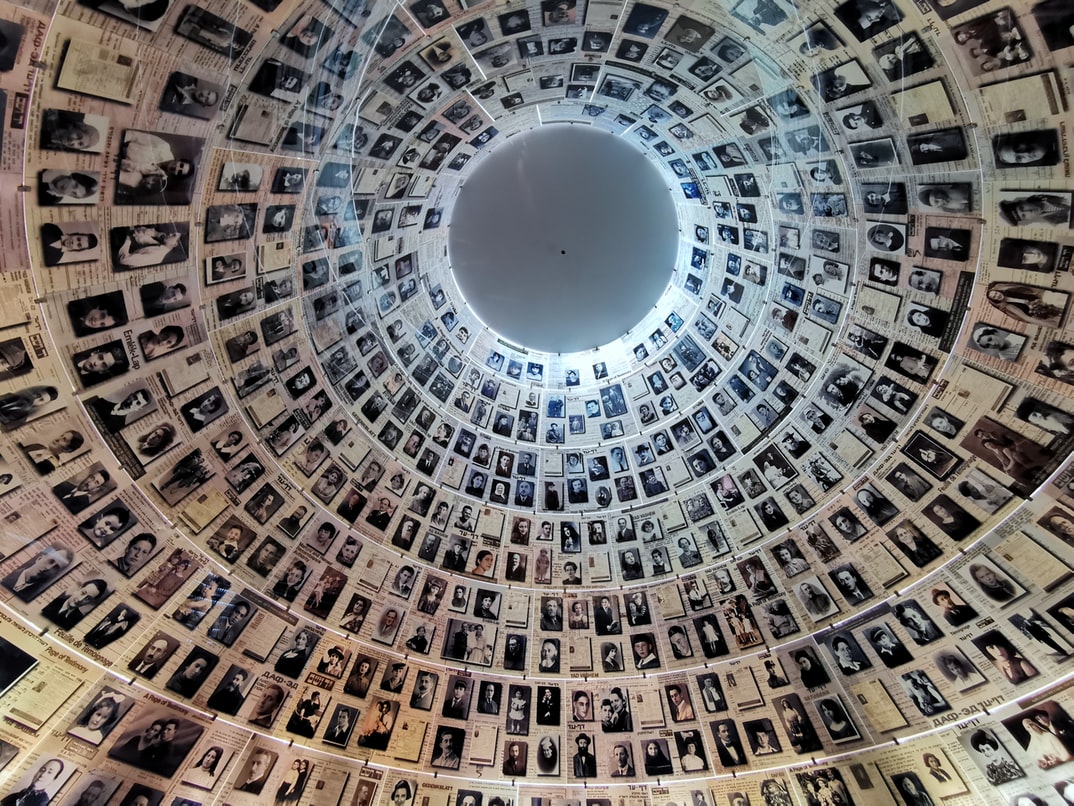
Tours from Jerusalem usually concentrate on Old Jerusalem within the Old City walls. However the Holy Land’s top destination also has a “New” City. If you look at a Jerusalem map you will see that the new, more recently built part of Jerusalem takes up a much larger area than the Old City. It follows that there is a lot to see in the New City of Jerusalem. Here are a few highlights of attractions in new Jerusalem, outside of the Old City walls.Snow in Jerusalem.Photo byShalev CohenonUnsplashYad Vashem Holocaust MuseumThis world-class museum is spread over a large complex on Mount Herzl. The museum holds thousands of authentic Holocaust artifacts, historic documents, photographs, and filmed testimonials by Holocaust survivors. On the grounds are memorials honoring the children who lost their lives in the Holocaust. There is also a part of the complex dedicated to gentiles who helped save Jewish lives during the Holocaust.Hall of Names at Yad Vashem. Photo bySnowscatonUnsplashChagall Windows In a small chapel (Abbell Synagogue) in the Hadassah University Medical Center, there are twelve stained glass windows designed by Marc Chagall. Chagall gifted the windows to the Jewish people in the 1960s. The twelve stained glass windows were inspired by the Bible and particularly Jacob’s blessings to his 12 sons. The images in the stained glass depict scenes from Jewish history, Chagall’s love for the Jewish people, and the artist’s own personal experiences living in a Russian shtetl.Givat Ram, Jerusalem.Photo byFedaa MassarweonUnsplashKnessetThe Israeli parliament or Knesset is situated in the Givat Ram neighborhood of western Jerusalem. The present building was completed in 1966 and it is possible to arrange tours of the building or view it from the outside. Highlights of the Knesset tour include seeing the original copy of the Declaration of Independence. You will see the Knesset Committee Rooms, the Chagall Hall featuring art by Marc Chagall, and the Plenary Chamber. There are 12 stunning floor mosaics and three tapestries by Chagall. The one-hour tours are held daily with a focus on photography and art; architecture and the parliamentary function of the Knesset.The Knesset, Jerusalem, Israel. Photo byRafael NironUnsplashMahane Yehuda MarketAt the bustling Jerusalem Mahane Yehuda Market, you can get everything plus the kitchen sink! The market offers stalls of fresh fruit and vegetables, household items, freshly baked goods, spices, nuts, pickles, arts and crafts. In addition, the market is home to several renowned eateries. There are cooking and tasting tours of the market or you can explore independently.On the way to Mahane Yehuda Market, Jerusalem.Photo byLaura SiegalonUnsplashIsrael MuseumIsrael’s national museum houses extensive collections covering a wide range of fields. Specifically, the museum archaeology and art collections as well as the collection of Jewish cultural items and art are outstanding. The Israel Museum complex includes a children’s wing, sculpture garden a scale model of Second Temple era Jerusalem and the Shrine of the Book. The white dome-shaped Shrine of the Book houses the Dead Sea Scrolls.
By Petal Mashraki
0 views

Purim in Israel

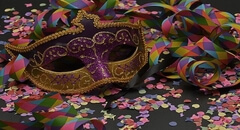
If you’re lucky enough to be in Israel during Purim you will enjoy the festive atmosphere, parties, fancy dress and parades. Purim is perhaps the most joyous Jewish holiday. Purim in Israel occurs in March or April – the date changes each year as it is determined by the Hebrew lunar calendar and not the Gregorian calendar. Although Purim is a Jewish holiday it is not observed like a Shabbat in Israel and businesses and attractions have regular open hours. Purim is a normal working day in Israel although it is a school holiday. Purim in Israel is celebrated by secular and religious Jews alike.What is Purim?Purim Purim celebrates an event in Jewish history which is told in the Biblical Book of Esther. In about 357 BC the king of Persia, Ahasuerus scoured the land for the most beautiful women to make his wife. The woman chosen was Esther, cousin and ward of Mordechai. Esther was forced to marry the king but she hid the fact that she was Jewish. Shortly afterwards Mordechai heard of a plot to assassinate the king and he had it reported and stopped.Meanwhile the villain of this story, Haman was appointed Prime Minister and he undertook to get rid of all the Jews. He had them draw “lots” (Pur in Hebrew, hence the name of the holiday) to decide the day of their annihilation. Hearing of Haman’s plansMordechai sent a message to Esther asking her to appeal to the king for mercy for the Jewish people.That night the king could not sleep and so he sat up reading from the Royal Chronicles. Here he read of the time Mordechai saved him from an assassination attempt. In the meantime Haman had decided to haveMordechai hung for not bowing before him. So Haman had gallows erected and went to the king to ask permission to hang Mordechai. The king asked Haman how such a loyal man should be honored. Haman, thinking the king was referring to him said the man should be dressed in fine clothes and led on horseback through the streets. The king ordered Haman to give Mordachai this honor. Although furious Haman had no choice but to follow the king’s orders.How is Purim Celebrated in Israel?Next Ester appealed to the king, told him of Haman’s plan and asked for mercy on her nation. The king ordered Haman hung from the gallows that had been built for Mordechai and Mordechai was made Prime Minister. Although the king’s decree could not be rescinded he gave the Jews permission to defend themselves. The Jews killed their enemies on the 14th of Adar and on the 15th they rested and celebrated. A holiday was established in memory of this historic victory.The religious community fasts on the day before Purim. At the end of the fast, after nightfall Jews gather in synagogues to hear the reading of the Book of Ester. After synagogue and the following day there are celebrations, parties and parades. The parades take place in almost all Israeli cities and are often before the actual day of Purim or a few days later, depending on the weather and day of the week.Purim Traditions in Israel Purim Foods- Hamantaschen (also called oznei Haman or the ears of Haman in Hebrew) are triangular cookies filled with poppy seeds, jam or chocolate. In Israel you will see these delicious cookies on sale at every bakery and supermarket.Gift Giving- It is traditional to give food hampers (mishloach manot) to friends, family and those less privileged than ourselves. These hampers usually hold wine, cookies, chocolate, nuts and other goodies.Fancy Dress- Kids and adults in Israel dress up in fancy dress during Purim. There are Purim fancy dress parties in bars, pubs, night clubs and private venues. The symbolism of the costumes is to show that God was behind the Purim miracle but his involvement was masked.Getting Drunk- Believe it or not it is even a Purim tradition to get drunk! This originates from a passage in the Talmud which states:” A person is obligated to drink on Purim until he does not know the difference between “cursed by Haman” and “blessed by Mordechai.” So it is a “mitzvah” or good deed when you drink too much during Purim!Things to See and Do in Israel during PurimThere are many special events in Israel during Purim. Purim is one of the most exciting holidays for nightclub. There are many fancy dress parties held in top nightclubs across the country. The main attraction during Purim is the Adloyada or Purim Parade. Parades are held in most cities but the most famous Purim parade takes place in Holon, a short drive from Tel Aviv. The parades include parade floats, costumed performers, dancing and music. Be’er Sheva also holds a great Purim event in the streets of the Old City.Purim in Tel AvivThe main Purim event in Tel Aviv is a street party held in Kikar HaMedina. It is a huge event with live musical performances, market stalls, dancing , singing and great food. Tel Aviv is also the site of the Purim Zombie Walk. Locals (and visitor) dress up as zombies and walk through the streets starting on the corner of Ben-Zion Blvd and King George Street.Purim in JerusalemPurim is celebrated a day early in Jerusalem and other “walled” cities but the celebrations continue throughout the Purim week. To enjoy Purim in Jerusalem head for Safra Square for family-friendly events like circus acts, a costume competition and arts and crafts workshops. There will be performances by top Israeli musicians and TV stars. In Jerusalem’s Sacher Park there will be a fun event with food stalls, music and live shows from 10am. Special Purim events are held at a number of Jerusalem and Tel Aviv museums including the Israel Museum, Bloomfield Science Museum and the Tower of David Museum. Although most of the Purim parties have yet to be announced you will probably find Purim fun at Jerusalem’s Nachalot Street Party. This street party is on Nisim Bachar Street, Jerusalem and entrance is free.
By Petal Mashraki
0 views

HaMidron Garden

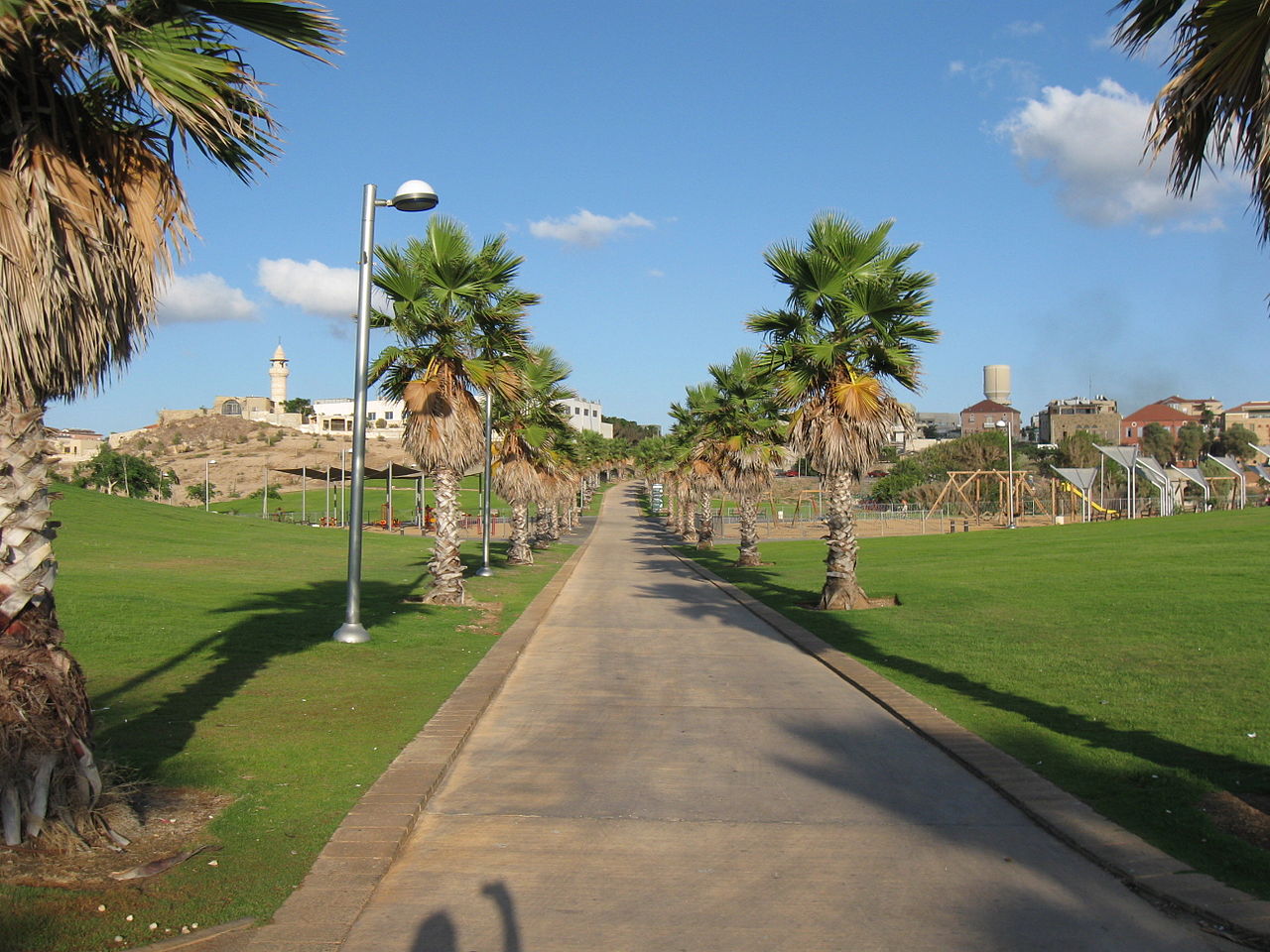
Plan Your VisitOpen Times:24/7Prices:Free.Average Visit Duration:30 minutes.Popular Times:Take a walk along the upper level of the park day or night for spectacular sea views.Pro Tip: Visit in the late afternoon so you can enjoy the sunset over the Mediterranean Sea.Relevant Tours:A walking tour of Jaffa usually includes HaMidron Garden. you can also take a private Tel Aviv tour and ask to go through this green little gem.One of the best parks in Tel Aviv, HaMidron Garden is one of several connecting green patches on the slope down from Jaffa’s Old City to the Tel Aviv promenade. In fact, “HaMidron” means the slope in Hebrew. Of the Jaffa parks, it is the one closest to Tel Avivon the northern slope ofJaffa’s Old City. HaMidron Garden (Image source: DR. Avishai Teicher CC BY 2.5)It is an elongated green space between the sea and the Tayelet Mifratz Shlomo Street with stairs connecting paved areas leading down to the Sea Wall Promenade. You can often see fishermen fishing from the promenade at the lower level of the garden. The park is bordered by some of thebest attractions in Jaffa, like thePromenade, severaltop beaches,Al-Bahr Mosque, the Jaffa Theater, and HaPisga Garden.Pro Tip:For something a little unusual check out the adjacent Jaffa Urban Bat Cave.Hamidron Garden and Midron ParkHamidron Garden on the northern side of Jaffa’s Old City is not the same place as Midron Park which is on the southern side of the city in the Ajami neighborhood.Upper Level of HaMidron GardenAt the top of the garden are benches facing the sea, and cast iron cannons, a reminder of when Napoleon conquered Jaffa in 1799. A winding path runs from the top of the garden to the bottom with stairs, and paved areas staggered on the slope. HaMidron Garden (Image source: ORI)As you walk along the path you’ll notice the remains of several historic buildings among the foliage. These are all that remain of a neighborhood that once stood here. Pro Tip: If you’re into geocaching, there is a cache hidden between the stones of a wall about five steps up the stairs of HaMidron Garden.The Best Things to Do at HaMidron GardenFirst, HaMidron Garden is a connecting point between Old Jaffa and the seafront, or the Tel Aviv promenade thanks to the slope and the stairs. Second, the garden is perfect for watching the sunset and enjoying the views across the sea and along Tel Aviv’s coastline. However, it is not the kind of garden you would go to for wide open spaces, or to take kids to play. If you’re looking for a park in Jaffa with playgrounds, lawns, and other facilities, then check out Midron Park at the southern end of the city. Pro Tip: On the upper level of the park there are water fountains, shade, and benches.

Underground Crusader City Acre

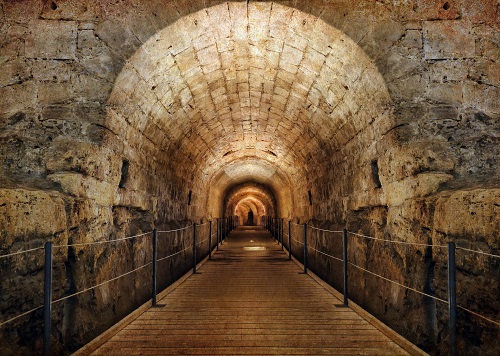
Many tourists visit the Old City of Acre without realizing that there is a complete city beneath the ancient streets. The Acre Crusader City was built during the 12th century and destroyed in 1291 when the Mamluks conquered Acre and built their own city on the Crusader ruins. After painstaking excavation and restoration, visitors can now visit Acre’s Crusader City and see the massive Crusader halls, passages, tunnels and chambers. Despite the impressive structure and size of the Crusader City maps found in the Vatican library show that only about 4% of Acre’s Crusader City has been recovered. Acre is a UNESCO World Heritage Site.Acre’s natural harbor made it a valuable entry point to the Holy Land and Christian pilgrims on route to Jerusalem would often land in Acre. Acre was the connection between medieval Europe and the Middle East. Ships arrived from across the continent bringing foreign cultures, ideas, pilgrims and merchandise. Acre (also known as Aca, Akko, Akka, Acco or St Joan d’Acre) is one of the oldest cities in the world, situated just north of Haifa along Israel’s Mediterranean coast. The city has seen conquerors come and go over the last 4,500 years (at least). One of the most fascinating periods of Acre’s history was during the Crusader era.Who Were the Crusaders of Acre?The Crusaders were Christian monastic soldiers on a mission to protect the Holy Land and provide safe passage to visiting pilgrims. The Crusaders believed that Jerusalem was under threat from the Muslims. They made four crusades to the Holy Land to try and secure the land of Christ for Christians. The First Crusade (1187-1099) secured Jerusalem as the capital of the Kingdom of Jerusalem. The Crusaders held Acre from 1104 until 1187 when Saladin took the city. With the help of Richard the Lionheart the Crusaders retook Acre in 1191 after a two-year siege as part of the Third Crusade. During the Third Crusade, the Christians did not retain their stronghold in Jerusalem and so they planned to transfer their headquarters to the new Crusader buildings in Acre. New floors and new wings were added to the original Hospitallers Center. Acre became the capital of the Second Crusader Kingdom (1191-1291). Under the Crusaders Acre was known as St John d’Acre, the city was named in honor of John the Baptist, the patron saint of the Knights Hospitallers. The Christians remained in the city until 1291 when the Mamluks destroyed Acre and expelling all Christians. The city lay in ruins for about 500 years until the Ottomans arrived. The Ottoman Turks rebuilt the city on top of the Crusader ruins leaving a hidden city beneath the ground. In the 1950s excavations began and today the Acre Crusader City is once more accessible.The Knights TemplarThe Knights Templar was a monastic military Crusader Order that wore white clothing with a red cross. They were first established in the Holy Land on Jerusalem’s Temple Mount (hence the name – Templars). When Jerusalem was taken by Salah a-Din in 1187 the Templars moved to Acre where the Hospitallers had already established a presence. The Templars built their fortress in the southwestern section of the city. The strong fortress ran along the seafront and the entrance was protected by two large towers. The Templars and Hospitallers didn’t always see eye-to-eye but their fates were intertwined. When the Mamluks arrived in 1291 both Crusader Orders were expelled. The Templars carved out a tunnel running from their fortress in the west to the port in the east. The underground tunnel was a possible escape route if they were ever attacked.Sites of the Acre Crusader CityThe Enchanted Garden - A visit to the Acre Crusader City starts at the entrance to the Old City when visitors enter the magical Enchanted Garden. The garden was the entrance courtyard to the Hospitaller Fortress. It has ancient trees creating a canopy above a courtyard with a central fountain. Here you can stop at the Visitor Center and see an introductory film about Acre and the Crusaders. Then the adventure begins. Visitors are given an audio guide and can enter the underground Crusader City going from one hall into the next.Citadel (The Knights’ Kingdom) - The Knights’ Halls of the Hospitaller Fortress lies beneath the Ottoman citadel. The Knights Halls housed the Hospitaller headquarters. Today, visitors can experience Acre history through multimedia displays and exhibits in the Acre Citadel. In the halls of the Citadel visitors can see demonstrations of traditional medieval arts and crafts like glass blowing, weaving and leather craftsmanship.The Fortress Courtyard - This outdoor space covers 1200m² and is surrounded by arches supporting stairways leading to the upper floors.The Northern Hall - This expansive space is divided into six smaller halls connected by arched and covered by a 10-meter high barrel-vaulted ceiling. The outer walls are 3.5 meters thick. An opening leads to the Hall of Pillars via a 3-meter wide corridor.The Pillars Hall - In this impressive 1300m² space exhibits, art work, demonstrations and archaeological displays can be seen. The vaulted ceiling is supported by square stone pillars. During the Crusader period, the hall would have been used for meetings and as a storage space.The Beautiful Hall - This space was named by the excavators who admired the finely chiselled stonework and arched windows. The Crusaders probably used this room as a public rest station for pilgrims.The Sugar Bowl Hall - This hall is a three-story building with water cisterns on the lower floor divided into two halls; the Sugar Bowl Hall is on the second floor.The hall gets its name from the crystalline sugar that was produced and stored in this hall. Earthenware utensils used for sugar production where found in the Sugar Bowl Hall. Sugar was a major industry at the time.Dining Hall - The Dining Hall (Column Hall) would have been filled with long tables and benches where the knights would eat together. It is one of the most impressive rooms in the Crusader complex. The 10-meter high room has three stunning stone columns 3 meters in diameter supporting the vaulted ceiling. There are beautifully decorated capitals. Louis VII visited Acre during the Second Crusade and was impressed by the relief of a lily on the wall of the Crusader dining hall. Following this, the lily was incorporated into the royal Bourbon family coat of arms (fleur-de-lys).The Garderobe (medieval toilet) - The Crusader public toilet room consisted of rows of toilet seats that drained through pipes in the walls into an underground collection room and from there into the central municipal sewage conduit.Prisoners’ Hall - Criminals were held in the window-less Prisoners’ Hall. We can still see the deep holes in the wall where chains would have been attached to shackle prisoners.Templar Tunnel - Today it is possible to walk through the tunnel beneath Acre form one end of the Old City to the other, emerging at the small Acre port. The tunnel runs for 350.5 meters from the former Templar Fortress to the port and was cut through the natural stone.Want to explore the Underground Crusader City? Join our tour toCaesarea, Acre and Rosh Hanikra.

Mount Scopus

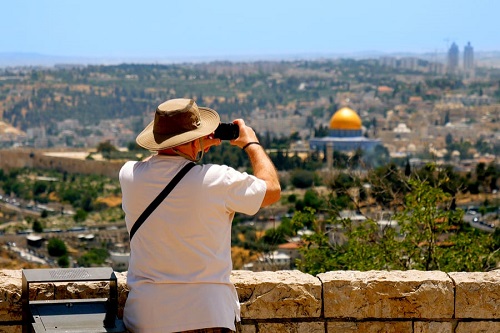
Mount Scopus or Har HaTsofim (Lookout Mount) in Hebrew stands 826m above sea level in northeast Jerusalem. Mount Scopus is part of a ridge of mountains that includes the Mount of Olives. Scopus deserves its name as one of the best places to get an overview of Jerusalem especially from the mount’s “tayelet” or promenade.Mount Scopus LandmarksThe Hebrew University of Jerusalem was built on Mt. Scopus in 1918. Today the university is a respected research institute and site of a national library. Hecht Synagogue on the university campus is known for its brilliant views across the Old City. The National Botanical Gardens founded on the university grounds in 1931 are home to the largest collection of Israeli plants and the burial Cave of Nicanor who donated gates for the construction of the Second Jewish Temple (516BC-70AD). The Tabachnik Garden holds ancient Jewish burial caves and has lookout points facing east and west. Ammunition Hill on the western slope of Mt. Scopus was a Jordanian outpost and the site of a fierce battle during the Six Day War. Today it is a memorial and museum site. Other sites on Mount Scopus include the Jerusalem British War Cemetery; the Jerusalem American Colony Cemetery; Bentwich Cemetery; the Bezalel Academy of Art and Design and Hadassah Hospital (not the site of the famous Chagall Windows which are at the Hadassah Medical Center in Ein Kerem).History of Mount ScopusIn 66 AD the Romans camped on Mt. Scopus as they contemplated their attack on the city. The war resulted in the destruction of the Second Jewish Temple. Many years later the Crusaders used Mt. Scopus as a base when planning their entry into the city.In 1948 the British withdrew from Palestine leaving the unprotected Jewish hospital and university on Mt. Scopus. A convoy of vehicles bringing staff and supplies to the hospital was attacked in the Hadassah Medical Convoy Massacre and 78 were killed. From the Arab-Israeli War of 1948 to Six-Day War of 1967, Jerusalem was split into the Jordanian East Jerusalem and Israeli West Jerusalem with the Israeli enclave on Mt. Scopus was relatively isolated in Jordanian East Jerusalem. In 1967 when the mount returned to Israeli administration Mount Scopus became part of the municipality of Jerusalem.Want to see the view from Mount Scopus? Join one of our great Tours to Jerusalem.

Kfar Kana

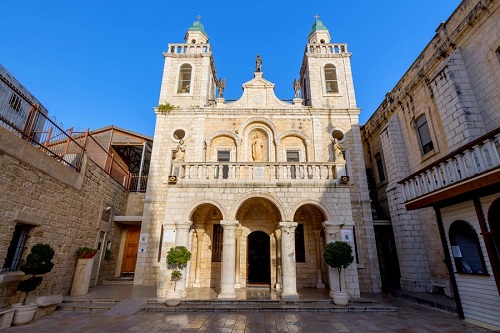
Modern-day Kfar Kana (Kfar Kanna, Khirbet Cana or Cana) is an Arab town about 7km northeast of Nazareth in the Lower Galilee. The town is famed as the site of the New Testament miracle performed by Jesus when he turned water into wine. In the 4th century Empress Helena, the mother of Emperor Constantine identified Kana as the Biblical site and had a church built in the town. An 8th century tradition also associated Kfar Kana with Biblical Cana. In the 17th century a papal emissary identified two possible locations for Biblical Cana – Khirbet Qana and Kfar Kana. On his journey to the Holy Land, he saw the remains of Helena’s 4th-century church and this reinforced the idea that Kana was Biblical Cana. In 1641 Franciscan monks established a presence in Kana and pilgrims journeyed to the town including St Jerome. In 1879 a new Franciscan church was constructed on the remains of an earlier church.Biblical References to CanaIn the Bible, the Gospel of John refers to Cana of Galilee several times. John 2:1-12 tells of Jesus’ visit to the town of Cana. Jesus, some of his disciples and his mother, Mary were invited to a wedding in the Galilee town of Cana. This took place three days after Nathanael (Bartholomew) had become a disciple and Cana was Nathanael’s hometown. It seems that Mary was involved in helping to arrange the wedding feast. She noted that there was a shortage of wine and tells Jesus “They have no wine.” Jesus replies to Mary saying: “Why is that a concern to me or you?” Mary leaves the matter at that and tells those organizing the feast to “Do whatever he (Jesus) tells you.” Jesus instructed the people to fill six stone water jars with water then he tells them to “draw some out and take it to the master of the feast.” Unaware of the miracle that has occurred the master of the feast praises the quality of the wine saying: “you have saved the fine wine until now.” This first miracle is significant in strengthening the disciples’ faith in Jesus. This event is also referred to as the first of Jesus’ signs and as his first public miracle. This first miracle is interpreted as showing us the sanctity of marriage and that the event should be celebrated. It teaches us that Jesus wanted to save the wedding party the embarrassment of not having enough wine to serve. Other Biblical references to Cana include a later visit by Jesus when he is asked to heal the son of a nobleman (John 4:46-49). Cana is referred to in the Book of Joshua but it is unsure whether it refers to the same Galilee town of Cana.Attractions in Kfar KanaToday visitors to Kana can see the Franciscan Wedding Church. This small church has a front courtyard and a modest façade adorned with angel sculptures. The façade is flanked by twin bell towers and the building is topped by a dome. The church has two floors; on the lower level you can see the partial remains of a Byzantine mosaic from the 5th-6th century. There is a small museum displaying archaeological artifacts found in the area including a winepress, cistern and vessels. One of the jars on display is believed to have been one of the original six jars used by Jesus when he created the wine. Excavations beneath the church uncovered 1st century dwellings and the remains of an earlier church.The Greek Orthodox Church of the Marriage Feast stands across from the Franciscan Wedding Church. This church holds two stone jars which some believe to be two of the original jars used by Jesus but they could also be early baptismal fonts. Not far from the modern town is the excavation site where the remains of ancient Cana have been uncovered. Remains have been found from the Roman, Greek, Byzantine and early Arab eras.Join our Christian Sea of Galilee tour to visit Kfar Kana.

Tomb of Maimonides (Rabbi Moshe Ben Maimon)

The Tomb of Maimonides (Rabbi Moshe Ben Maimon or Rambam) is situated in Tiberias on the western shore of the Sea of Galilee. Maimonides (1135-1204) was a learned Torah scholar, philosopher; physician and codifier of Jewish law. Rambam is one of several important “tsadikim” (righteous ones) and Rabbinical figures buried in Tiberias as it is one of Israel’s four holy Jewish cities.MaimonidesMaimonides was born in Cordoba, Spain in 1135 and grew to be an authority on Jewish law. He and his family fled Spain for Morocco in 1135 due to religious persecution and eventually settled in Egypt where he became a doctor to Sultan Saladin, Muslim ruler of Egypt. Rambam died in Egypt in 1204 and requested that his body be laid to rest in the Holy Land. One legend claims that his body was put on his camel and Rambam’s students followed as the camel walked. When the camel stopped at the grave of Rabbi Yochanan ben Zakkai they knew they had found the right burial site. Rambam was well-read in the teachings of Greek philosophers, rabbinical teachings, the Bible and Talmud. In addition, he was an educated doctor versed in the sciences. His contribution to medicine included observations on the anatomy of the uterus, recognition of psychosomatics and especially in the field of medical ethics. Among his greatest works are The Guide to the Perplexed and the Mishnah Torah. Rambam composed a prayer for healers equivalent to the Hippocratic Oath but in a religious context. Rambam made an impact not only on Judaism and Torah studies but also in the fields of philosophy and medicine.Praying at Rambam’s GraveAs with other tombs of great Jewish sages, it is traditional for Jews to come to Rambam’s grave to pray. This age-old tradition does not mean that the person is praying to Rambam but rather that praying at the graveside will add merit to the person’s prayers. The most popular time to prayer at Rambam’s grave is on the anniversary of his passing. It is also traditional to visit the tomb on the eve of Rosh Hashanah (Jewish New Year) and Yom Kippur (the Day of Atonement) to pray for the tzadik to intercede on our behalf on the Day of Judgment.Visiting Rambam’s Tomb in TiberiasA long walkway leading to the tomb is lined with columns inscribed with the titles of the 14 volumes of the Mishnah. At the end of the walkway, a large geometrically-shaped sculpture representing a crown covers an open-air courtyard. The tomb is located here as well as various plaques bearing prayers and quotes. Within the same burial complex are the tombs of Yochanan ben Zakai (30 BC-90 AD) and Rabbi Isaiah Horowitz (1555-1630). Next to the Tomb of Maimonides is the Maimonides Heritage Center where you can learn more about the sage’s life, work and legacy.Book our Galilee Jewish Private Tour to visit The Tomb of Maimonides.

Tomb of Rabbi Meir Baal HaNes

The Tomb of Rabbi Meir Baal HaNes (the Miracle Maker) is located above Hamat Tiberias on the shore of the Sea of Galilee in the city of Tiberias alongside the burial sites of two of his students. The Rabbi’s burial site is a popular stop for those visiting the graves of righteous Jews (Kvra Tsadikkim). As the Rabbi is associated with miracles believers visit the site to ask for their own miracle. When they pray at the tomb site it is not to the Rabbi but to God via the Rabbi’s spirit in the hope that his prayers will hold weight.Why was Rabbi Meir Baal HaNes a Miracle Maker?Rabbi Meir (bringer of light) is admired for his wisdom and contribution to the Mishnah, the book of Jewish oral traditions or Oral Torah. He lived in the 2nd century during the Mishnaic Period and was one of the fourth generations of Tannaim or Rabbinical sages. At this time the son of Rabbi Simeon ben Gamiel, Rabbi Judah the Prince (c.135 - 219 AD) gathered the teachings of the great sages and created the six volumes of the Mishnah (139 - 163 AD).Rabbi Meir’s name is mentioned frequently in the Mishnah and his wife Bruriah is one of only a few women mentioned in the Gemara (book of Biblical commentary). The Babylonian Talmud (book of Jewish law) actually states that all anonymous Mishnas are attributed to Rabbi Meir because his wisdom was unsurpassed. The Rabbi was a student of Elisha ben Abuyah and went on to play an active role in the Bar Kokhba Revolt (132 - 136 AD). Following the death of thousands of Rabbi Akiva’s students, he sought out five new students, one of them being Rabbi Meir.Rabbi Meir passed away on the 14th of the Hebrew month of Iyar while in exile outside of the Holy Land His remains were brought to Tiberias and entombed close to his teacher Rabbi Akiva. The Rabbi requested that his body be buried in a standing position as the Torah uses the word “standing” in reference to prayer.Another version of this legend says that the Rabbi wanted to be buried standing up so that when the Messiah came he could walk straight out to greet him. Before his passing, the Rabbi said that his legacy to generations to come would be that he would intercede in heaven on any person’s behalf if the person is willing to give charity to the poor of Israel in his memory.The Legend of the Master of MiraclesA story in the Jewish Talmud describes how the Rabbi’s sister-in-law was arrested by the Romans and placed in a brothel as punishment. The Rabbi approached the brothel in disguise and gave the guard a bribe to release his sister-in-law. The Rabbi told the guard to keep half and use the rest to bribe the other officials. The guard replied that in the end, they would execute him but Rabbi Meir told him to call out “The God of Meir – answer me” and he would be saved. To prove that the prayer would save him Rabbi Meir showed the guard how a pack of man-eating dogs would not touch him if he called out this single prayer. The guard did as Rabbi Meir had asked and released the Rabbi’s sister-in-law. Once the guard had used up all the money on bribes he was eventually arrested and sentenced to be hanged. As they placed the rope around his neck the guard called out the prayer “God of Meir – answer me” and the rope broke.From this story comes a prayer is spoken by many when they visit Rabbi Meir’s tomb and when they are hoping for a miracle themselves. When invoking the memory of Rabbi Meir Baal HaNes and giving charity in his name it is traditional to repeat the prayer originally said by the Rabbi “God of Meir – answer me.”The anniversary of the Rabbi’s death is a particularly busy day at the gravesite. Thousands of people come to pay their respects and ask for Rabbi Meir’s intervention on their behalf. On this day a special prayer vigil is held and people lit hundreds of candles at the tomb.Book our Galilee Jewish Private Tour to visit The Tomb of Rabbi Meir Baal HaNes.

Diaspora Museum (ANU Museum of the Jewish People)

The Diaspora Museum (recently renamed as ANU - Museum of the Jewish People at Beit Hatfutsot) in Tel Aviv focuses on the story of the Jewish People across the world and throughout history as well as their ongoing story. The museum exhibits look at the roots of Jewish communities and the collective Jewish identity and experience no matter where you are on the globe.Beit Hatfutsot opened its doors in 1978 fulfilling the vision of Nahum Goldmann, former president of the World Jewish Congress. In 2005 Israeli parliament passed a law classifying the Diaspora Museum as a “National Center for Jewish Communities in Israel and around the World.” The purpose of the museum is to strengthen the Jewish identity and provide visiting Jews with an understanding of their legacy providing a sense of belonging. The museum holds a database for those who want to investigate their ancestry. There is also a database of Jewish Nobel Prize winners; Jewish communities; Jewish music, photographs and films.Diaspora Museum RenewalSince 2016 when a new wing of the museum was inaugurated the museum has been undergoing a complete renewal. The new museum is larger and includes a completely new core permanent exhibition (described below). The new exhibition takes on a more pluralistic approach highlighting the multicultural aspects of Judaism and the immense diversity among Jews from different cultures. State-of-the-art exhibition techniques and designs are employed to give visitors a sense of their personal Jewish identity. It also looks at the many Jewish success stories in all fields of modern life.Highlights of Beit HatfutsotThe permanent exhibition entitled “Hallellujah!” Presents 21 models of Jewish places of worship from around the world. There are reconstructions of architectural elements from synagogues including a 1919 stained glass window by Friedrich Adler and the original candelabra (menorah) from the Warsaw Great Synagogue featuring a Polish eagle.The photographic exhibition entitled “Operation Moses: 30 Years After” tells the story of the Ethiopian Jews who immigrated to Israel in 1984 and follows their absorption into Israeli society over seven years. The “Forever Young – Bob Dylan at 75” exhibition focuses on the musician, his work and his relationship with Judaism over the years. “Heroes – Trailblazers of the Jewish People” is an interactive exhibition geared towards children aged 6-12. The exhibition redefines what a hero is by showing Jewish men and women from history that may not be typical heroes. The Diaspora Museum has space reserved for temporary exhibitions like the recent exhibitions that looked at Jewish humor around the world or the exhibition of video art installations by Ronny Douek that look at the story of foreign caregivers in Israel. Lobby displays include one on Leonard Cohen and a display of art by new immigrants to Israel.You can visit Diaspora Museum on our Private Tel Aviv tour.

Palmach Museum

Plan Your VisitLocation: 10 Haim Levanon Street, Ramat-Aviv, Tel AvivOpen Times:Sunday, Tuesday, Wednesday, Thursday 09:00-17:00 (the last tour begins at 15:30), Monday 09:00-15:00, and Friday 09:00-11:00.Prices: Adults 30 ILS, children 6-18 years and seniors 20 ILS, soldiers free.Average Visit Duration: 1.5-2 hours.Notes for Visitors: All bus routes reaching Tel Aviv University will bring you to the Eretz Israel Museum’s parking area adjacent to the Palmach Museum. The museum tour is for visitors over 6 years old. The tours are conducted in Hebrew, English, Spanish, French, or Russian. An audio guide is available in Mandarin. Call 03-5459800 to book a visit.Special Events: Entrance is free on Independence Day, and the museum holds regular activities for children during Israeli school holidays.Tours: Visitors must join a 90-minute guided tour although for a more tailor-made experience take a private tour that includes this museum.Palmach, the strike-force of the pre-state underground Haganah defense organizationYou won’t be disappointed by this unique museum that is dedicated to the pre-state underground Jewish organization, the Palmach. The Palamach was the strike force, or paramilitary branch of the Hagana Jewish defense organization that fought for the right to a Jewish homeland in Israel during the British Mandate period from 1920 to 1948. Following the establishment of the State of Israel, Hagana, and Palmach were integrated into the Israeli Defense Force.Pro Tip: If this period of history, and pre-state Jewish underground movements interest you then don’t miss a visit to the Lehi Museum and the Etzel Museum.This museum has a brilliant design concept, it is an experiential museum which means that visitors walk through recreated scenes that bring history to life. Visitors will feel like they have joined the group of young Palmach recruits and then advance through the story of the Palmach from its establishment to the end of the War of Independence. Unlike conventional museums, the Palmach Museum has no boring displays of documents, instead, visitors are surrounded by three-dimensional décor, for example, tents and campfires. Then with the use of special effects, sound, film, and special lighting, the story of the Palmach unfolds around you.Who Were the Palmach?Members of the Palmach were the military arm or combat reserve unit of Hagana responsible for protecting the Jewish settlements from Arab attacks, and British interference before the establishment of the State of Israel in 1948. The Hagana worked as an underground movement carrying out clandestine operations against British rule. Most of the Hagana’s sixty thousand members were volunteers. The Palmach was positioned across the country from Galilee and Haifa to Tel Aviv and Jerusalem. The commander of the Palmach was Yitzhak Sade.The Palmach fighters, on a wall of the museumThe Palmach and the BritishIn 1942, in an ironic turn of events, the Palmach found themselves working on the same side as the British against their shared enemy, the armies of Nazi Germany that threatened to enter Palestine via Egypt. The British trained Palmach members in guerilla warfare and prepared them for a German invasion. In their work with the British, some Palmach members found themselves parachuted into Europe.This wasn’t the first time that the Palmach had collaborated with the enemy, the British. The Palmach also helped the British take Syria and Lebanon from Vichy French forces. During World War II, while the Palmach worked with the British, two other Jewish paramilitary movements, Lehi and Etzel chose to fight against the British. And so they found themselves being arrested by Palmach members who were taking their orders from the British. Some of the Etzel and Lehi members were detained and others were sent to detention camps in Africa until the end of the British rule in Palestine.Once the war was over there was no reason for the Palmach to side with Britain, and so Palmach members began training and reorganizing itself as a fighting force with the goal of ousting the British and establishing a Jewish homeland. They carried out isolated attacks, and surprise assaults on the British.Palmach and Jewish Immigration to the Holy LandThe British turned their attention to suffocating the Zionist movement and preventing immigration of Holocaust survivors to the Holy Land. The Jewish underground movements facilitated the arrival of illegal immigrants despite the British. They assisted with establishing new settlements, armed struggles against the British, and mass demonstrations. Yegal Alon became the commander of the Palmach and a driving force behind the movement’s activities.They participated in the freeing of illegal Jewish immigrants from the British detention camp at Atlit, bombed British patrol boats, attacked British police stations, and blew up bridges leading to neighboring Arab countries. In response, the British arrested many members of the Palmach on 29th June 1946 in an operation that came to be known as the Black Sabbath.When the UN declared the establishment of a Jewish state, the Palmach had to turn their attention from the British to the Arabs who carried out vicious attacks on Jewish settlements.At the beginning of the War of Independence, the Palmach consisted of 2,200 regular fighters and 900 reservists. The Palmach fought bravely in several critical battles during the War of Independence, defending Israel from invasion by Egypt, Lebanon, and Syria.What to See and Do at the Palmach MuseumGroups of visitors are led through the museum progressing chronologically through the history of the Palmach where important events are highlighted. The tour begins and ends in the Memorial Hall where Palmach members who died fighting for the establishment of the State of Israel are remembered.The establishment of the PalmachConflict with the BritishThe War of IndependenceThe final days of the PalmachThe Jewish settlements and the PalmachThe Palmach’s military tacticsOrganizational structure and fighting units of the PalmachFemale members of the PalmachThe Palmach legacyCulture and folklore of the PalmachThe Memorial RoomIn the Memorial Room are 1,187 draws, one for each of the Palmach fighters who lost their lives between 1941 and 1949. Each draw contains the Palmach member’s file with details about his activity in the organization as well as photos and letters. There is a computer in the Memorial Room where visitors can print information from the files.Can You Visit the Palmach Museum Independently or Only in a Group?Important: You can’t visit this museum without booking in advance via the museum website or by phone. The visit has to be prearranged whether you are coming alone or with an organized group. If you are visiting independently, and not with an organized group the museum will add you to one of the groups. The museum guide takes groups of up to 25 people through the exhibits.Palmach HousePalmach House was constructed by the Dor Hapalmach Association specifically to provide a home for the Palmach legacy and a place where today’s generation can learn about the Palmach. The Dor Hapalmach Association gave the building to the Ministry of Defense which runs several museums related to Israel’s military history. Today Palmach House is operated by the Ministry of Defense’s Department of Museums. The Palmach Museum is located in Palmach House together with the Palmach photo gallery, archive, memorial room, and library.Pro Tip: In the Palmach House courtyard is a cafe serving a dairy menu.

Jaffa Flea Market

Plan Your VisitOpen Times:Stalls and stores are open Sunday to Thursday from 09:00 to 17:00, and Friday from 09:00 to 14:00. The flea market is closed on Saturdays. Bars and restaurantsare open Sunday to Friday from 11:00 to 03:00 and Saturdays from 12:00 to 02:00.Prices:Entrance to the market is free.Average Visit Duration:At least one hour and probably a lot longer.Popular Times:Midday is probably best when the stalls are up and running, and not winding down for the day.Pro Tip: Fridays are the busiest day and probably best avoided. Saturdays, although officially closed, is still a busy time in the market because of eateries, and some stores that remain open.Special Events:Occasionally there are foodie events in the market, especially during the Israeli summer. During Christmas in Israel, there are decorations and special happenings on the market streets.Relevant Tours:Every Jaffa walking tourwill take you there. Many visitors chose more comprehensive Tel Aviv tours to enjoy more of the attractions in Jaffa.The Jaffa Flea Market (Shuk HaPishpeshim in Hebrew) is one of thebest markets in Tel Aviv; it's unique, unlike any other market in Israel offering a combination of old and new, junk and antiques as well as a huge variety of goods. Judaica in the Jaffa Flea MarketRather than being a designated marketwithin one building or on one plot of land, the market is spread out over an entire neighborhood, with a network of lanes and streets, some pedestrian only and others can be accessed by vehicles. There are narrow covered lanes, regular stores, up-scale boutiques, and antique/junk shops that spill onto the street. It is also a place for foodies, and you’ll do about as much eating as shoppingin this market. You can enjoy restaurants all around it, or just grabsome of thestreet food in Israel.If you’re just looking for good Instagram shots of people with local “character” this is the place.Pro Tip:If you fall in love with the market and want to linger, stay at the Market House Hotel, a simple quality hotel in the heart of the Jaffa Flea Market. Or, you could opt for the Old Jaffa House, a hostel in a charming restored historical building.History of Jaffa Flea Market People have been gathering here to sell their wares for over 2,000 years, with ships arriving at Jaffa Port with goods to sell, and locals needing to buy foodand household necessities. But the roots of the market we have today can be traced back to the Ottoman era. In the early 1900s, the region was ruled by the Turkish Ottoman Empire, and Jaffa was a major trading port city. There was a Turkish market near the port, and a Greek Market selling to visiting pilgrims and tradesmen.Home decor in the flea marketThe market used to be in the area surrounding the Clock Tower, but the Ottomans had the market moved to make way for the construction of their government administration building, Soraya. During the British Mandate, from 1920 to 1948, the market was established in its present form and has been operating in the same place for over 100 years.Jaffa Shuk Hapishpeshim underwent renovations in 2001, and the area was somewhat gentrified. During the renovations, the Amiad Center was established as a hub for exhibitions, fairs, and shows. A covered area was built for vendors without permanent stores so that they could bring their wares and display them on make-shift stalls and even spread blankets on the ground to display their goods. In more recent years, trendy boutiques, galleries, and artists' studios as well as eateries and bars began to pop up.Where is Jaffa Flea Market?Take a short walk past the Old Clock Tower on Jaffa’s main street, and turn left (southeast) down Beit Eshel Street. The market is spread out along the streets and lanes to the right of Beit Eshel Street. You’ll find the main market stalls along Olei Tzion Street, Yehuda Margoza Street, Amiad Street, and Beit Eshel Street.A nice cafe in the market area Pro Tip: You can park on the adjacent streets wherever you see blue and white striped markings on the curb. Download the Pango app. To pay for the street parking.You might be disappointed if you only find one section of the flea market, so you need to explore. There are several distinct sections, and areas, as well as parts of the market that specialize in particular goods. Pro Tip: Looking for good Insta-shots and the quirkiest stores, start at Olei Zion Street (or Oley Tsion).The Main Areas of the MarketThe market has three main areas, all within easy walking distance and offering a slightly different atmosphere and variety of goods.Two covered inner streets for pedestrians only, an eclectic mix of memorabilia and second-hand goods.An open lot (Amiad Market) where goods are spread out on the ground under an awning.The Olei Zion pedestrian street is where you’ll find the more established stores, restaurants, and cafes including antiques, handicrafts, and furniture.Pro Tip: The market has excellent graffiti art that you’ll encounter as you explore the lanes and streets.What to Buy in Jaffa Flea Market?This is the type of market where people talk about having everything plus the kitchen sink - because you literally could buy a kitchen sink here! From knickknacks, and Judaica, to real antiques, and junk, Jaffa Shuk Hapishpeshim has it all. Antiquities in the Flea MarketPersian rugs, ceramics, jewelry, second-hand clothing, designer goods, and electrical gadgets. It is a great place to pick up leather goods, and copper items. Collectors will love the array of Soviet memorabilia, as well as rare coins, books, stamps, and furniture. Remember to bargain and to search inside the stores to see goods that are cheaper and hidden from the passersby. Pro Tip: If you’re wondering if the market area is safe, yes it is!Here are a few of the most iconic stores in the Jaffa Flea Market:Palestina Eretz Israel, Olei Zion Street - For about 30 years this cramped antique store has collected a wide array of nostalgic items that take you on a journey through the history of Eretz Israel. See old and new items such as military gear, light fittings, postcards, posters, frames, railings, radios, and even a motorbike with a sidecar.Taos, Olei Zion Street - Probably best described as a kitsch antique shop or a haven of Americana such as life-size figures of Hollywood stars, furniture, candlesticks, posters, and plastic flowers.Risos, Olei Zion Street - Kitschy home decor goods, garden gnomes, bookends, bread bins, mirrors, furniture, and plastic items.Love Me Two Times - A second-hand store with a selection of quality designer clothing and shoes from well-known brands such as Prada and Valentino.Halleluyah, Olei Zion Street - this store sells musical instruments with everything from an Australian didgeridoo to a Thai wooden frog and a Middle Eastern darbuka to a European harp.Aki, Rabbi Yochanan Street - This antique store has a wide range of authentic items, from tricycles and light fittings to radios and hat boxes.Mansur Carpets, Olei Zion Street - See the Persian carpets spread out on the sidewalk, and hanging from every wall.Renaissance, Olei Zion Street - This antique store has the strangest decorative arts, ceramics, artwork, light fixtures, African wooden carvings, and antiques.Where to Eat at Jaffa Shuk HaPishpeshimIn the last few years, Jaffa’s flea market has gained a reputation as a foodie destination. Excellent restaurants have popped up in the market alleyways and surrounding the market.Try the local street food, it's almost addictive!Some of the Shuk Hapishpeshim restaurants and bars stay open during the day and others open only in the evening.Pro Tip: Don’t miss one of the fresh juices sold on several street corners.Leimech - A restaurant bar with Thai beer on tap, and Middle Eastern classics.Yasso Saloniki - An iconic Greek restaurant.Italkia ba-Pish Pishim - an Italian trattoria, popular with locals.Dr. Shakshuka - a timeless classic, specializing in Israeli breakfast.Raisa - Chef Uri Levy, who has worked at Michelin restaurants, offers bistro-style food and cocktails in a hip, industrial-style setting.Cafe Matzliach - A coffee shop with homemade pastries, popular with locals and visitors alike.Falafel Bar - Here you can enjoy the classic Israeli street food at its best.Sifo - Run by Chef Idan Metzner, offering seafood dishes with a Middle Eastern twist.Cafe Puaa - an iconic cafe with the appearance of a retro living room decorated with items from the market.Onza - A vibrant venue open day and night, with a mouthwatering menu of things like lamb cannelloni, and shrimp burgers.Milk Bakery - Sweet, delicious pastries, irresistible breads, cakes, and cookies.Pro Tip: You can buy a Bite Card, which consists of 6 coupons that give you a chance to taste a variety of market foods. The cards are bought on the Shuktlv website and picked up in the market.Afterdark in Jaffa Shuk HapishpeshimWhen the sun goes down the market turns into a lively entertainment hub with restaurants, bars, and clubs. Check out Cuckoo's Nest, a retro bar in an antique store; Casino San Remo, and Margoza Bar.

Carmel Market Tel Aviv

Right in the heart of Tel Aviv beats the pulse of bustling shoppers, market stall owners shouting out their sales pitches to attract customers, loudspeakers blasting out Middle Eastern rhythms, and the constant chatter of people going to and fro. Some shoppers are there to browse slowly between stalls, others have a shopping list to fill and just want to get home and others have come to soak up the atmosphere and enjoy an ice-cold glass of pomegranate juice.Pomegranate Juice in the Carmel Market, Tel AvivThe delicious aromas fill the air of fresh baked goods, fruit and vegetables straight from the farms, pickles, pungent cheeses, fish straight from the sea, and that to-die-for aroma of freshly ground coffee. The colors come at you from all sides; vibrant red, orange, and pink clothing hanging from the awnings; the fruit of every color; shades of brown and green spices piled high and the people in the market also provide a dynamic mix of colors. In other words Carmel Market is alive! It is a dynamic, vibrant attraction that no tourist in Tel Aviv should miss. If you take a walk through the market you will see a slice of “real” life in Israel, from all echelons of society.Carmel Market has some great local sweets!But the real draw to this one-of-a-kind market is the glimpse into the “real” Israeli character. The market vendors are vibrant characters each with their banter as they call out to passersby. Locals doing their shopping in the market add another aspect of authenticity to HaCarmel.The main street of the market, HaCarmel Street has a gentle downhill slope from Magen David Square on Allenby Street to a large parking lot near the sea. The market stalls are packed along HaCarmel Street and across nearby streets. The side streets veering off of HaCarmel hold more stalls and hole-in-the-wall eateries.History ofCarmel MarketIn the 1920s the Tel Aviv neighborhood “Kerem HaTeimanim” (vineyard of the Yemenites) set up a make-shift marketplace called “HaKerem” (the Vineyard) on the site we now known as Shuk HaCarmel. Arthur Rupin, a Polish Zionist and one of the founders of Tel Aviv then helped a group of Russian immigrants to turn the market into a commercial hub. The fledgling municipal council saw the potential and encouraged the growth of the market area.Spices in Carmel MarketThey officially made it a permanent market changing the name to Carmel Market after the main market street. In the 60s and 70s attempts were made to relocate the market but its authentic charm and local color had already earned a permanent place in the hearts of the people of Tel Aviv. The market has been renovated and improved several times over the years and is scheduled for another facelift in the coming years.The Trendy New CarmelIn recent years Shuk HaCarmel has become a trendy spot for foodies seeking local delicacies, down-to-earth ethnic food, and gourmet food products. Among the market eateries, you’ll find boutique coffee bars; freshly squeezed juice bars; chef-owned food stalls, and traditional ethnic foods from around the world.What to eat at Shuk HaCarmelApart from picking up ingredients from the produce stalls, there are many eateries in the market catering to all tastes. Among the stalls are simple, authentic eateries specializing in one or two local favorites prepared on the spot and eaten on the go.Israel has some of the best Humus in the worldFor example, there are grilled meats served in a baguette at Sasson; traditional Middle Eastern dishes at Savtot Mevshlot; Hummus HaCarmel serves homemade hummus, and even Bunny Chow, a South African curry restaurant. Try one of the “barakas” a fried field pastry sold by a recent contestant on the Israeli MKR cooking reality program.What you can buy at Carmel MarketIf you want to buy the ingredients for a picnic lunch or just browse the fresh produce you will find every kind of delicacy at Carmel Market. Food products on offer include spices, nuts, dried fruits, boutique cheeses, fish, meat, coffee grounds on the spot, freshly baked goods, and halva.You can also see stalls selling plants, nargilas (hubbly bubbly), sweets, and delicatessen products. Among the other market stalls, there are vintage records, clothing, accessories, electronics, toys, household goods, shoes, jewelry, and beauty products. VisitingCarmel MarketShuk HaCarmel is centrally located and easy to access from the junction of Allenby, King George, and Sheinkin Streets. It is open from Sunday to Friday with Friday being the busiest day. Open hours are generally 8 am to sundown with early closing on Fridays. While here why not visit the adjacent arts and crafts market on Nahalat Binyamin Street or the nearby old Yemenite neighborhood where the market began?

Mini Israel

Mini Israel is a popular attraction 20 minutes from Tel Aviv and Jerusalem where Israel has been recreated in miniature. Here you can see the whole country in a day! Mini Israel has 385 exact models of Israel's most important landmarks, architecture, historic sites, religious structures, and modern wonders. Mini Israel is populated by 25,000 7cm-high miniature residents! The model is not a small, simple, or colorless creation but rather a large 1:25 scale model with miniature people, electric lights, moving elements, sound effects, and all the landmarks of the Holy Land. If you aren’t going to be in Israel long enough to see the whole country then visit Mini-Israel to see everything from Mount Hermon in the north to Eilat on the Red Sea. There are also about 500 mini animals, over 4,000 mini cars, motorbikes, trains, planes, ships, trucks, and even helicopters. Among the models are beautiful indigenous plants and miniature trees like cypress trees, olive trees, pomegranate trees, myrtle, rosemary, and lavender, recreating some of Israel's most famous landscapes. Walkways and small bridges take visitors on a route through the "country."Visiting Mini IsraelMini Israel was conceived by an Israeli entrepreneur, Eiran Gazit who was inspired by Madurodam, the miniature park in the Netherlands. Mini Israel stands on land belonging to Kibbutz Nachson in the Latrun area with the Ayalon Valley as a backdrop. Since its opening in 2002 Mini Israel has welcomed more than 4 million visitors. The site's slogan is "See It All – Small." The models are laid out in a star of David shape with each of the six triangles featuring the landmarks of Tel Aviv; Jerusalem; Haifa; the Galilee and northern Israel; the Negev and southern Israel and the center of the country. The models are made of polyurethane or polymeric and hand-painted with waterproof paint. There is a visitor center, food court, souvenir store, amphitheater, lecture hall, and a bonsai nursery where you can buy plants. If you want to have a better idea of what you are looking at then get the audio guide.Highlights of Mini IsraelThe latest addition to Mini Israel Park is a 3D MiniMax aerial movie that takes you above Israel's most beautiful landmarks and landscapes. See the magnificent religious structures like the Western Wall, Dome of the Rock, and Church of the Holy Sepulchre. Also, the sites of minority ethnic groups are shown like the Druze and Bedouin communities. Some of the models have moving parts including planes, trains, and a soccer game. Dramatic lighting brings the models to life and sound recordings allow you to hear the people praying at the Western Wall; the planes taking off at Ben Gurion and supporters at a football match. The park is constantly being updated to include new structures. If you want to see the country in just a couple of hours this is the place to come.

Museum and Memorial at Latrun - Yad La Shiryon

Yad La Shiryon (literally ‘Hand of Armour’) is Israel’s official memorial for fallen soldiers in the armored corps. Located in Latrun, it is set on a hill overlooking the road that runs between Tel Aviv and Jerusalem and is considered to be one of the most varied and informative tank museums in the world.Its precise location is actually the historic Latrun Police Station (from the time of the British Mandate) in the heart of the Ayalon Valley, which holds great significance for the Jewish people. In the Old Testament, Yehoshua Bin Nun stated “Sun, stand thou still on Gibeon and Moon in the valley of Ayalon” (Joshua 10), after which his forces defeated the Amorite Kings. In the 1948 War of Independence, Latrun saw many bloody battles, as the Jews fought to break through the siege on the road to Jerusalem (what is now referred to as ‘the Burma Road’). The area was conquered by the IDF in 1967, in the Six-Day War.History of the MuseumYad La Shiryon’s founding stone was laid on 14th December 1982 and was the initiative of veteran officers of the armored corp. The idea was to have a complex which displayed the bravery of fallen soldiers and would serve as a place to commemorate them. Today, the museum boasts an armor display, a tank museum, a Wall of Names, a park for family recreation, and the Museum of the Jewish Soldier in World War II (with ongoing exhibitions).The Main Memorial SiteThe main building is actually a Tegart fortress from the time of the British Mandate. These first were built between 1938 and 1939 as part of the war against Arab terror. The project was dreamed up by Sir Charles Tegart, a former commissioner of the Indian police, who had fought in Bengal. Invited by the Mandate to advise on security, he recommended building a number of police forts first across the country, to act as well-defined defensive structures, which would help guard positions and prevent the infiltration of guerillas from Lebanon and Syria. The Tegart forts were also used as government offices in certain areas.Today, if visitors look carefully, they can see the deeply pocketed outer walls were used in wartime. The inside of the tower is covered in steel that came from a tank and water circulating from a pool underneath the installation by Danny Karavan named ‘Tower of Tears’ shows water trickling down the walls.The Outside Armour DisplayYad La Shiryon hosts an impressive and diverse collection of tanks, made not just in Israel but also in the ex-Soviet Union, the United States, Britain, Germany, and France. There are more than 100 different tanks in this famous collection, including Merkava (Israel) - meaning ‘ Chariot’ in Hebrew, this is the main battle tank of the IDF and was first used in 1979; M24 Chaffee (USA) - an American tank, used in their war with Korea and by the French in their war against Algeria; M42 Duster (USA) - a light armored air-defense gun built in service in the 1950s and 1960s.There are also M50 and M51 Super Sherman (USA) - modified versions of the American M4 Sherman tank and used both in the Six-Day War and Yom Kippur War; Centurion (Britain) - the primary British Army battle tank used post-World War II, introduced in 1945, it is considered to be of excellent design and stayed in production until the 1980s Panhard (France) - a fast, long-ranged, and relatively cheap armored car with excellent reconnaissance capability; Panzer (Germany) - developed in the late 1930s and used extensively throughout World War II; T34 (Soviet Union) introduced in 1940, and famously used by the Red Army in World War II Operation Barbarossa.Tank on the TowerWithout a doubt, Yad La Shiryon’s most famous landmark has got to be the tank that sits on top of a tower. Indeed, it is so well-known that it actually serves as the logo of the museum. In 1979, after a decision approved by Major General (Ret) Moshe Peled, the tank was hoisted on top of a tower on the site, a tower that used to hold water. The tank hoisted up was an M4 Sherman, from the United States, and it was one of the first tanks ever used by the Israel Defence Forces (IDF).The water tower was initially designed to hold no more than 25 tonnes and because the Sherman tank weighed 34, both its transmission gears and the engine had to be taken out before it could be lifted up and placed at the top of the tower.The Tank Museum and the Wall of NamesThis museum boasts a collection of models of tanks and armored combat vehicles, including a model of the Leonardo da Vinci tank, a full-scale model of an armored knight, Assyrian and Egyptian chariots, a battle heritage room, a stamp collection, caricatures about the Armored Corps, a library of combat books and a variety of literature relating to combat vehicles. A moving part of the site, on which the names of all fallen soldiers of the Armored Corps who died in Israel's wars are inscribed.Shelah andEducation CentreYad la Shiryon also hosts Shelah (‘Field, Nation, Society’). This is a branch of the Israeli educational system, whose aim is to turn out well-educated and knowledgeable citizens. The education center is therefore dedicated to the promotion and support of field activities for schools and various youth movements. It offers a wide variety of facilities for overnight and weekend trips, including camping amongst the pine trees, summer trips, and other youth movement activities. The facility includes dormitories, hot water showers, field kitchens, sleeping quarters for staff, water fountains, and equipment that can be used to erect shelter outdoors. The Education Center is a project run jointly by the Yad Lashiryon Association, IDF, and the SPNI (the Society for the Protection of Nature in Israel). It offers an outstanding educational program both for young people and adults, giving them the chance to learn social responsibility, learn more about Israel’s national values and take steps to preserve the country’s natural environment. On-site facilities are available, including classrooms and dormitories. It also hosts the International Center for the Study of Bird Migration, equipped with a special radar that looks like a large green ball, which is used to monitor migration at different times of the year.Visitors'SiteThe visitors' site offers a wide number of facilities which include: 20 classrooms, 2 conference rooms, a 250 seat auditorium which shows films and audiovisual displays about tanks, an amphitheater which can hold 11,000 people used for military and graduation ceremonies for units such as the IDF Land Officers course, a covered patio that can accommodate 500 people, an observational deck on top of the building, offering stunning views of the surrounding area.Practical informationIt is possible to play laser tag at Yad la Shiryon - either in a group or just arriving and joining other groups informally. Please call the information line in advance, to find out more. Yad La Shiryon is an excellent day out for anyone interested in history, archaeology, battle heritage, and tanks. There are guided tours in English but these need to be arranged beforehand. Tel: 08-630-7400 or 08 925-5268.On Israel Independence Day, the museum is open for free and very popular, especially because many of the guides are former soldiers and will happily let younger children climb up onto some of the tanks! There is an onsite restaurant (kosher) which services light refreshments and also a small gift shop. Directions:Public transport: From the Jerusalem Central Bus Station, take line 433 and alight at the Latrun Interchange (approx. 25-minute ride). Walk 10 minutes to the museum. There are no direct buses from Tel Aviv, so consider joining Tel Aviv Region Private tour or travel to Jerusalem first. Opening Hours: Sunday – Thursday: 08:30 - 16:00, Friday:8:30 - 12:00; Saturday & religious holidays: 09:00 - 16.00. Ticket Prices: Adult (30 NIS), Adult in Group (25 NIS), Child (20 NIS)

Synagogue Church, Nazareth

Christians around the world know Nazareth as the hometown of Jesus Christ. Tourists come to see the Church of Annunciation, where Mary learned of her immaculate pregnancy, and Saint Joseph’s Church built above the carpentry and home of the Holy Family. But visitors often miss the fascinating Synagogue Church in Nazareth, which would have been the local synagogue when Jesus lived here. The church is in the heart of Nazareth’s Old Market and is accessed via a small courtyard. In Arabic, the church is called Madrasset El-Masshiach or The Messiah Academy, and a sign above the door reads “The Synagogue.”History of the Nazareth Synagogue ChurchChristians began worshiping in the synagogue during the Byzantine era, and by the Middle Ages, it had been turned into a church. The earliest mention of the Nazareth synagogue was in 570 AD when an Italian visitor to the town wrote that he had seen where Jesus once sat and prayed. Excavations have shown that the present structure was probably built on the remains of a 12th-century Crusader church. The church was controlled by the Franciscans until the 18th-century when the autonomous Arab ruler of the region, Zahir al-Umar, gave the property to the current owners, the Greek Catholic Church (Melkite).The Synagogue Church in the New TestamentChristian tradition holds that the church is built on the ruins of the synagogue where Jesus worshipped in his childhood years and up until he began his ministry at about 30 years of age. This period of Christ’s life is hardly mentioned in the Bible. This makes the Synagogue Church even more significant to Christians. The synagogue was mentioned in Matthew 13:54-58 and Mark 6:1-6 when the local congregation chased Jesus out of the synagogue because they didn’t think he could perform miracles. They rejected His new approach to G-d and religion. The same incident is told in Luke 4:14-30, but in Luke’s version, Jesus was shunned by the Nazareth congregation for giving a Shabbat sermon that implied He was the Messiah. This led to the miracle of the leap at Mt. Precipice. The crowd of angry villages chased Jesus to the mount intending to throw him off the cliff, but instead, Jesus jumped and disappeared. Visiting the Synagogue Church, NazarethVisitors descend into the church which has sunk about 1.5m below ground level over the years. The church has an arched ceiling and benches on both walls of the nave, leading to a podium and altar. You can also visit the adjacent New Synagogue Church built in 1887 which has beautiful murals featuring Jesus as a baby, a teen, and a king. The Nazareth Synagogue Church is open Monday to Saturday from 8 am to 12 noon and 2 pm to 7 pm.

Church of Mensa Christi

The Church of Mensa Christi (Latin for Christ’s Table) is located in Nazareth near the Maronite Church of the Annunciation and northwest of the Synagogue Church. The church was built around a slab of stone. This is the traditional site where resurrected Jesus appeared to his disciples as they dined. History of the Church of Mensa Christi in NazarethIn 1781 the Custody of the Holy Land purchased the site from local Muslims. Franciscan monks then built a chapel to mark the biblical site. It became extremely popular with pilgrims from the 17th-century onwards. In 1859 the chapel was burnt to the ground and was reconstructed a year later. More recently the same chapel has been restored and renovated including the frescoes and dome. Visitors can still see the scratched writing and crucifix markings carved into the Mensa Christi by early pilgrims. The church is no longer used for prayer services. You can visit the Mensa Christi Church on a guided private tour of Nazareth. The church is usually closed and is only opened by special request.Highlights of the Church of Mensa ChristiThe Mensa Christi Church contains a large block of stone measuring 12ft/3.6m x 9ft/2.7m x 3ft/0.91 which according to tradition, is the table where Jesus served his disciples’ bread and fish. After Christ’s resurrection, he appeared to his disciples as they were seated around a table. He reprimanded them for not believing those who had witnessed his resurrection. (Mark 16:14)Today, the table-like slab of rock stands in front of the altar. The church holds a painting by Leonardo Di Mango dated 1876. As you approach the entrance notice the two symbols carved into the stone above the doorway. One is the symbol of the Crusaders. The other is the symbol of the Custodian of the Holy Land. Alternate Sites for the Mensa ChristiAnother tradition based on the description in John 21, places the appearance of Jesus in Tabgha, at the Sea of Galilee. The Church of the Primacy of St. Peter (Mensa Domini Church) in Tabgha, on the shore of the Sea of Galilee, holds a large rock that is venerated as a Mensa Christi. So there are two Mensa Christi Churches in Israel. Both claim to be the site where Christ appeared to his disciples after his resurrection and served them bread and fish. There is also a Mensa Christi in the nearby Church of the Multiplication. This is the table where Jesus miraculously fed the multitudes.