Showing search results for ''

What Can You Do on a Layover at Ben Gurion Airport?

If you have a layover in Ben Gurion Airport and your connecting flight leaves in less than 4 hours then it is probably best to stay in the airport and make the most of the facilities that Ben Gurion offers. If you have more than 4 hours then you could possibly venture out of the airport and visit Tel Aviv, Jerusalem and even the Dead Sea.Ben Gurion has two terminals – Terminal 3 for international flights and Terminal 1 for domestic and low-cost international flights. When calculating how much time you have remembered that Israel has stricter security than other countries and you may need to get to the airport 2-3 hours before your connecting flight takes off.Staying in the Airport during Your LayoverIf you have no choice but to stay in the airport between flights then you will find that Ben Gurion has all the expected airport facilities like a first aid station, ATMs, a police service, synagogue, pharmacy, baby changing facilities, smoking areas and currency exchange. You will also find shops and restaurants.InternetThere is free WiFi in all of Ben Gurion’s passenger halls so it shouldn’t be a problem for you to connect up and spend your waiting time online. If you have any problems connecting try calling Netvision, the service provider at Ben Gurion on 1-800-013-013. There are free recharging stations throughout the airport including domestic and international departure halls.SleepingUnfortunately, there is no sleeping area or hotel within the terminals; it is also a busy airport so you may have trouble finding a quiet place to have a nap. Try going to the departure hall near the food court where there are benches and you may be able to get some shut eye. If you don’t mind the noise the food court is also a good place to sleep.PlayingIf traveling with kids you’ll find play areas in each of the long passages leading off from the Departure Hall.VIP LoungesThe Dan Hotel chain operates the Arbel (T3) and Masada (T1) VIP Lounges in the airport. Use of their services must be pre-arranged and requires a fee. The lounges are used by both arriving and departing passengers. As part of their service, you would be picked up on arrival at Ben Gurion and taken in a special VIP shuttle to the lounge.Massada LoungeAt this luxurious lounge, travelers can get VIP treatment including all their passport, customs, security and VAT refund services. In addition, you can go here on a layover and simply relax. Available (and included in the fee) are light meals beverages and resting areas. You will even get special transportation to your connecting flight when it is time to leave. This service needs to be pre-booked and requires a fee. For more information contact your airline or ground handling company or the Dan Lounges at Ben Gurion. You can call the lounge at 03-9712266. Note that even economy class passengers can buy a special pass to use the Dan VIP lounges; just go to one of the lounges and ask or book 24 hours ahead online for about 150 ILS.Passengers traveling in business or first class on El Al can make use of the EL AL passenger lounge in the departure hall duty-free area. For more information call 03-977111.Feedback StationsIf you have had a particularly bad (or good) experience at Ben Gurion then you might want to leave some feedback at one of the computerized feedback stations which are in all the terminal halls.Leaving Ben Gurion during Your LayoverIf you are from a country like America, Canada or the UK where you don’t need a visa to visit Israel then you will have no problem leaving the airport for a short layover tour. Check with your embassy whether you would need to make any special visa arrangements in order to leave Ben Gurion airport during your layover. And don’t worry about having an Israeli stamp in your passport as records are now kept electronically and you will instead get a piece of paper with the entrance stamp. Keep the piece of paper in your passport until you leave, after which you can throw it away.In the Greeters Hall on Level G next to the employee passage you will find a desk responsible for issuance of special entry permits. They are open Sunday to Thursday 8:30 am-1:30pm and Friday and holiday eves 9 am-1 pm. To contact them by phone you can call 03-9752265.If you have questions about how to spend your time in Israel you could go to the Ministry of Tourism Information Desk in the Arrival Hall. The staff here will provide you with maps and information. You can also contact them on 03-9754260.If you have luggage which is not checked-in to go directly to your final destination then you can leave it at the Baggage Storage Facility which is open Sunday to Thursday 8 am-7:45 pm; Friday 8 am 2:45 pm and Saturday from 8pm until midnight. The Storage Room is located in the west (kerem) short-term car park called “Orchard Parking” on the ground floor (Level G). The storage facilities may change so call for more information to 03-9754436. The service is free of charge.Getting Out of Ben GurionBen Gurion is located in the middle of the country about 40 km (35-50min) from Jerusalem and 15km (20-40min) from Tel Aviv. If arriving on Friday evening or Saturday your transport options will be limited as public buses and trains have limited or no service on Sabbath. However, you still have rental cars and taxis.Taking a Taxi from Ben GurionThe official taxi dispatcher post is located in front of Terminal 3 on Level G near the Gate 1 exit. There is also a desk in the Meeters and Greeters Hall near Gate 3 next to the Information Desk where you can verify the correct taxi fare to a particular location. At the desk staff will write down for you the correct fare and with this, you can approach the taxi dispatcher post. However generally you have nothing to worry about when taking a taxi from the official taxi dispatcher post as all the taxis and taxi drivers are authorized.Buses from Ben Gurion AirportTake Egged line 5 or Veolia line 239 from Level 2 of Terminal 3 and from Terminal 1 to the El Al Junction where you can catch a bus to many cities in the country including Jerusalem. Unless you have a long layover it is not recommended to try seeing the country by public bus with limited time. Rather take a train, taxi or organized tour.Trains from Ben GurionThe airport train station is on the lower level of Terminal 3 but there is a free airport shuttle connecting Terminal 1 and 3. Trains operate to Tel Aviv throughout the day and night but with more regular departures during peak travel hours (there are trains every 30-60 minutes depending on the time of day) and reduced service on Shabbat and Jewish holidays. Trains to Jerusalem take about 2 hours and operate between about 6 am and 7 pm. This is not recommended if you have limited time.Organized Private Layover ToursPerhaps the most convenient and time efficient use of your layover in Ben Gurion is to take an organized daily tours. Tours can be arranged which pick you up at the airport; take you to the landmarks which most interest you and then return you in time to check-in to your connecting flight. There are private one day tours to Jerusalem; Bethlehem; Dead Sea; Masada; Nazareth; Haifa; Acre; Sea of Galilee and Caesarea as well as more off-the-beaten-path destinations like the caves of Beit Gurvrin and dessert safaris. As it is a private tour you can tailor make the tour to suit how much time you have on your layover, your personal interests and the people traveling with you.
By Petal Mashraki
0 views

Top Israeli Botanical Gardens

Israel boasts more than a dozen botanical gardens.Here is a selection of just a few of the amazing botanical and regular gardens in Israel which welcome visitors year-round to enjoy the rich flora of the country.Bright flowers in a botanical garden. Photo byPaul StreltsovonUnsplashUniversity of Tel Aviv Botanical Gardens, Tel AvivThe Yehuda Naftali Botanic Garden is perhaps the most “casual” of the botanical gardens listed here. It is situated in the heart of the university campus in Tel Aviv. An almost missable sign sends you down a path to the garden entrance where you are free to wander in and explore the gardens. The gardens cover almost 8.5 acres and include 3,800 species most of which are native plants as well as plants from neighboring nations and an international collection.Although there are a few signs indicating various routes it is a rather overgrown garden that seems to be left to its own devices. When you look closely you will discover many plant species, unpaved paths through the vegetation, over small bridges, and past picturesque ponds. There is an impressive cactus collection and two indoor areas holding more climate-sensitive plants and trees. You’ll see tropical plants, woodland plants, plants used by humans, medicinal plants, herbs, palms, and succulents.Mount Scopus Botanical Garden, JerusalemThe Mount Scopus Botanical Garden covers 6 acres just behind the Jerusalem Hebrew University campus. The gardens hold sections representing each of the Israeli plant communities like the Mediterranean and desert grasslands to the arid Arava desert plants and plants of the coastal dunes. In all, there are more than 40% of all Israel’s wild plant species.These authentic plant species are preserved in their natural habitats. The gardens are also home to many animals. The gardens hold ancient Second Temple era burial tombs and more recently the tombs of Menachem Ussishkin and Yehuda Leib Pinsker, two prominent Zionist leaders.Jerusalem overview from Mt. Scopus. Photo credit: © ShutterstockJerusalem Botanical Gardens, JerusalemOn the other side of Jerusalem is the Jerusalem Botanical Gardens on the Hebrew University’s Givat Ram campus this botanical garden holds plants from across the world including sections dedicated to the north and South American flora, the Mediterranean, Southern Africa, Europe, and Australia. There is a lake at the heart of the gardens and a café and Visitor Center. There is a bonsai section that holds 150 bonsai trees.The garden holds a living gene bank of endangered plant species. There is a biblical path that visitors can follow with an audio guide and see up to 70 species of plants mentioned in the Bible. Kids will love the African Savannah grass maze created out of perennial grass which is used for thatched roofs in Africa. Kids can follow a trail to discover a series of plants used by humans for different functions.Kibbutz Ein Gedi Botanical Garden, Kibbutz Ein GediThis prize-winning botanical garden in Ein Gedi is the only one in the world which integrates residential homes in the gardens. The landscaped grounds of the botanical gardens are in amongst the homes of the kibbutz residents.The gardens hold more than 900 species of plants from around the world with a focus on indigenous plants of the area like the date palms, desert plants, Sodom apple, Moringa, Tamarisk, and species referred to in the Bible including myrrh and frankincense. The cactus garden includes more than 1,000 species.Ein Gedi National Park, Israel.Photo byRobert ByeonUnsplashUtopia Orchid Park, Kibbutz BahanThis is a unique botanical garden with a large indoor (and air-conditioned) section as well as an outdoor area. Among the attractions here there are farm animals and peacocks, a musical water fountain, carnivorous plants, orchids; parrots; a plant maze, rose garden, cactus garden, and herb garden.However, the star attraction is the indoor tropical garden which includes a massive waterfall and dripping vines, and tropical trees and plants. The park covers 10 acres and also has a cafe and garden center where you can buy plants and garden accessories. This is a stunning attraction that is well maintained and has plenty to keep you occupied.Eilat Botanical Garden and Organic Farm, EilatThis garden has developed around the local landscape of the Arava and was originally built out of ancient stone terraces on the hills surrounding Eilat. The gardens are a wonder of nature considering the area’s very low annual rainfall. Today there are signposted trails that cross streams, past waterfalls, stone, and wooden buildings.There are three lookout points across the Red Sea and the Edom Mountains. You can climb the rocky pathways among 1,000 species of trees and plants, herbs, shrubs, and flowers. There is an organic garden where you can buy plants grown without chemicals.Orchids in a botanical garden.Photo byFabien BELLANGERonUnsplashNeot Kedumim Biblical Landscape ReserveCovering 625 acres and home to more than 630 plant species mentioned in the Bible and Talmud this is one of the most fascinating and unique botanical gardens in the country. The gardens of Neot Kedumim are also home to small animals, many birds, and several archaeological remains including an excavated Byzantine village. In the gardens, the natural surroundings and agricultural areas have been recreated to mirror those which would have existed 3,000 years ago during the biblical era.You can see the seven species of Israel (figs, dates, barley olives, wheat, pomegranates, and grapes) as well as following the 4 self-guided hike paths, seeing ancient olive presses, ritual baths, a water wheel, flour mill, ancient cisterns, and thrashing floors. You can even arrange to have a biblical meal in the gardens and there are regular events, workshops, and activities to teach visitors about biblical life. The hike trails are about 2-2.5 km long and have points of interest and interactive stations along the way.Botanical Garden at Oranim CollegeThis is the only botanical garden in the northern region of the country; it was established on the campus of Oranim College in 1958 and covers 10 acres with 900 different species of plant. Most of the plants here are non-cultivated and indigenous to Israel. The garden has become a model for urban sustainability and is used for teaching, conservation and research.Each section of the garden represents a unique habitat or geographical region. There are two fascinating paths through the gardens – the Poetry Path where quotes from famous poems are displayed on signs along the route and the Biomimetic Path which has nine stations where visitors can stop and learn about the plants, animals, and sustainable solutions to everyday problems.Mount Carmel, Israel. Photo bySte Ben8onUnsplashOther Amazing Gardens in IsraelIsrael has several other stunning gardens which are not officially botanical gardens but they do offer gorgeous greenery and horticultural diversity. Among the most beautiful and most famous is the Bahai Gardens in Haifa. These cascading 19 terraces of carefully landscaped plants and flowers are the setting for the Shrine of the Bab; the Bahai faith prophet.There is also a beautiful memorial garden dedicated to Baron Edmond de Rothschild in Ramat Hanadiv at the southern end of Mount Carmel. Here there are paths and hike trails as well as a kosher dairy café and area where birds of prey are rehabilitated for release back into the wild. If you’re in Jerusalem visit the Wohl Rose Garden, a 19 acre public garden with 15,000 rose bushes.If you are in Tel Aviv you don’t have to go far to enjoy amazing gardens and parks like Yarkon Park where there are six special gardens. Some are dedicated memorial gardens and others are devoted to a particular kind of plant. There is a Rock Garden, Cactus Garden, Tropical Garden, and Ornamental Garden all within the Yarkon Park.Bahai Gardens in Haifa, Israel.Photo credit: © Shutterstock
By Petal Mashraki
0 views

Tu B’Av – Israel’s Valentine’s Day and How it’s Celebrated

Tu B’Av is the Jewish alternative to St. Valentine’s Day. As orthodox Jews don’t commemorate Christian holidays like Valentine’s Day and as it is too good a holiday to miss the Jews have their own day for celebrating love. In Hebrew numbers are marked by letters so “15” is the Hebrew letters?’‘? or Tu and this holiday is celebrated on the 15th of the Jewish month of Av, hence Tu B’Av. In 2016 Tu b’Av starts at sundown on 18th August and continues through the 19th August until sundown (7th August 2017; 26th July 2018; 15th August 2019).Religious Significance of Tu B’AvAccording to the Mishna the Jewish holiday of love has been celebrated by Jews since the 1st century days of the ancient Temple. Tu B’Av marks the first day of the grape harvest season. Traditionally young girls would borrow white clothes and go out dancing in the vineyards to attract a man. The Holy Jewish text, the Talmud, sites several reasons why Tu b’Av should be celebrated but today the main reason observant Jews celebrate Tu B’Av is to mark the end of The Three Week (Bein ha-Metzarim) morning period commemorating the destruction of the ancient Jewish Temple. Tu Tu B’Av should not be confused with Tisha b’Av (9th of Av) which starts The Three Week morning period and is one of the saddest days in the Jewish calendar when orthodox Jews fast to commemorate the destruction of the ancient Jewish Temple. There are no specific religious rituals or ceremonies associated with Tu B’Av except that the day should be one of joy. It is also a very popular day to get married.How is Tu B’Av Celebrated in Israel Today?Today Tu B’Av is mainly a secular celebration when romantics pull out all the stops and propose, wed, go on romantic dates or simply party.Starting off the Tu B’Av celebrations on the 18th August with a bang is the TuTu-Temple Party presented by Temple of Reflection, a spiritual temple project which is part of the Burn global community. A temple structure is built in the desert each year and stands for three weeks before being burnt. The party is a fundraising event and proceeds will go towards Temple of Reflection expenses. The party kicks off at 9am and will continue until 4am at Bascula, HaRakevet 72, Tel Aviv. Admission 40ILS-60ILS.Thursdays @Tel Aviv Art Museum hosts events every Thursday but on the 18th of August this year the events will be even more exciting to celebrate Tu B’Av. Entrance is free and there will be live music performances, guided tours, pop-up stores and garments inspired by works of art.At the Zappa Club Herzlia there will be a special performance by the Sixties Band who will perform the best hits of the 1960s and 70s. The doors open at 8:15pm and the show starts at 10pm; tickets cost 105ILS.Many restaurants in Israel offer special deals on Tu B’Av and the restaurants are usually decorated with hearts, cupids and lots of red and white balloons. Mel and Michelle at 155 Ben Yehuda Street, Tel Aviv; Frame at 2 Raoul Wallenburg, Tel Aviv and the Brown Hotel pop-up restaurant Salva Vida at 25 Kalisher, Tel Aviv will all be offering special deals for couples on Tu B’Av. Chocolate lovers should have the special Tu B’Av menu at any of the Max Brener restaurants.If you want to go out and dance you’ll find dance bars and clubs all decked out in red hearts and ready to party. At HaOmen 17, Tel Aviv Moldavian DJ Andrew Rayel will be making the music; At the Cat and Dog you can hear Infected Mushroom playing live and the Toy Bar in Jerusalem will be having a special party event.
By Petal Mashraki
0 views

Do You Need a Visa to Visit Israel?

Luckily nationals from 96 countries do not need to arrange a visa for Israel before leaving their home country. However it is important to make sure you can travel to Israel visa-free before you book your air ticket. Here is a breakdown to help you understand Israeli visas.Different Types of Israeli VisasIsrael offers a number of different types of visas depending on the purpose of your entry into the country. Visas for Israel include an Immigration Visa; A/1 Temporary Resident Visa; A/2 Student Visa; A/3 Clergy Visa; A/4 visa for spouses and children; B/1 Work Visa and a B/2 Visitors’ Visa. The Immigration Visa and A/1 Temporary Resident Visa are only applicable to a person immigrating to Israel. An A/2 Student Visa is for those coming to study in any institution in Israel and is valid for up to one year with multiple entrances and exits. An A/3 Clergy Visa is for clergymen coming to Israel to perform clerical duties for their religion by invitation of a religious organization in Israel. A clergyman coming on holiday or on a pilgrimage would require a regular B/2 visa, not an A/3 Clergy Visa. The A/4 Visa is for the spouses and children of those with an A/2 Student Visa or an A/3 Clergy Visa. A B/1 Work Visa is for those who have approval from the Ministry of the Interior to work as an expert or artist in their field in Israel. The B/2 Visitors’ Visa is the one that tourists receive.Do You Need a Visa for Israel?Nationals from many countries do not require a visa and can stay in Israel for up to 90 days visa-free after which you can apply for an extension at the Ministry of the Interior. Among the countries with bilateral agreements with Israel allowing visa-free visits are the USA, Britain, Australia, European nations, Russia, South Africa, Canada, Philippines, Iceland, Singapore, Hong Kong, most South American countries, Japan and New Zealand.Check the Israel Ministry of Foreign Affairs website to find out if nationals from your country can visit visa-free for 90 days. If you require a visa you will have to apply for a B/2 Visitors Visa.Israeli Visitors VisaTourists, volunteers, business people coming to Israel for meetings, Hebrew language students, and visitors to Israel from countries that do not have a bilateral agreement with Israel will have to apply for a visa at their local Israeli Consulate in their home country. The visa allows you to visit for up to 90 days and does not allow you to work in Israel.When applying for an Israeli visa you will need a passport valid for at least six months after your stay in Israel; a filled and signed application form; a photocopy of your passport; proof that you can support yourself financially while in Israel (such as a bank statement from the last three months); an air ticket to and from Israel; two passport photos and the application fee.You should receive your visa within two months. Due to the fact that many Arab and predominantly Muslim countries do not grant entry to people with an Israeli stamp on their passport, travelers are now issued with a stamp on a separate piece of paper which must be kept in your passport for the duration of your visit in Israel.
By Petal Mashraki
0 views

Top 15 Free Things to Do in Tel Aviv

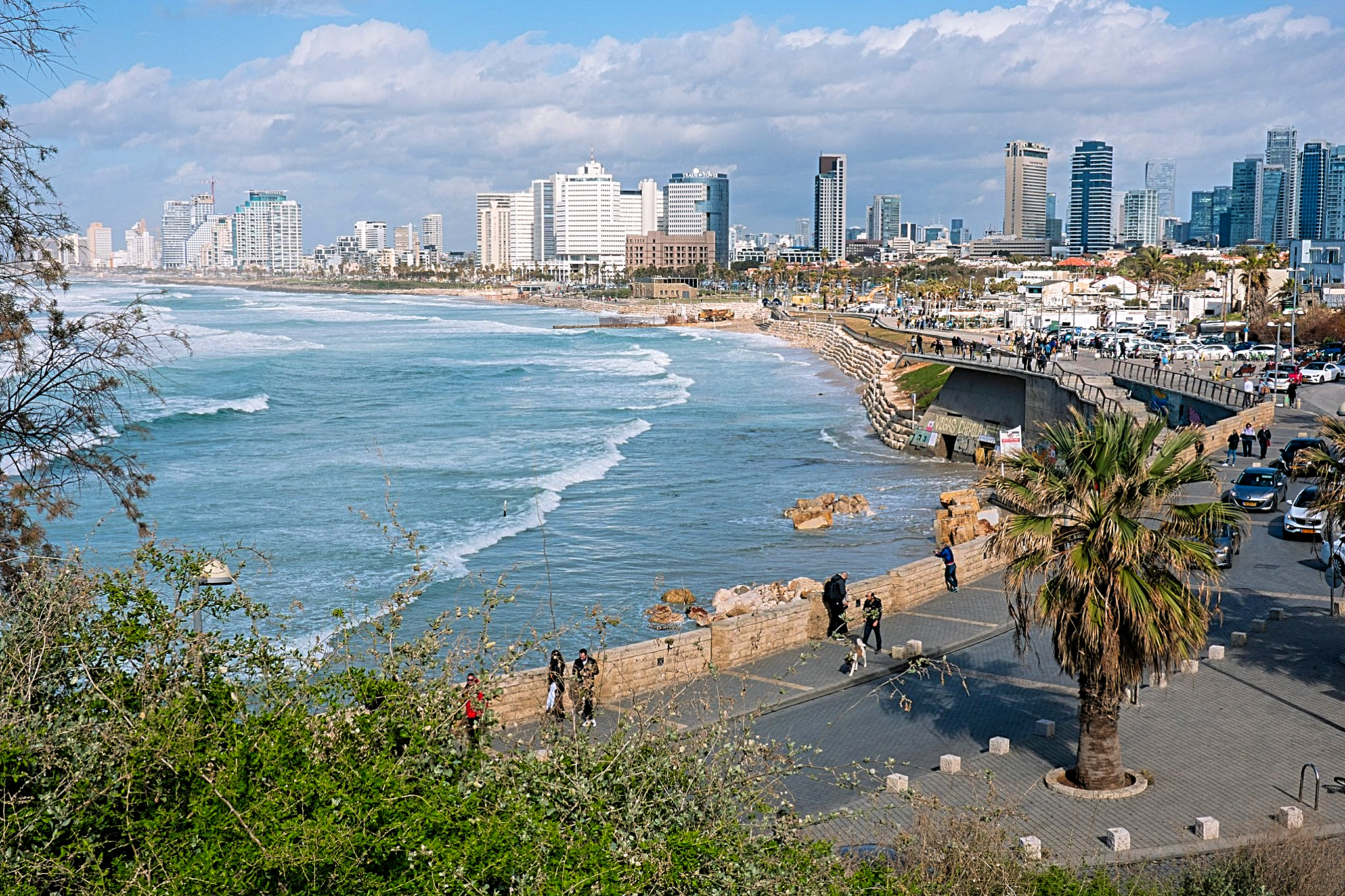
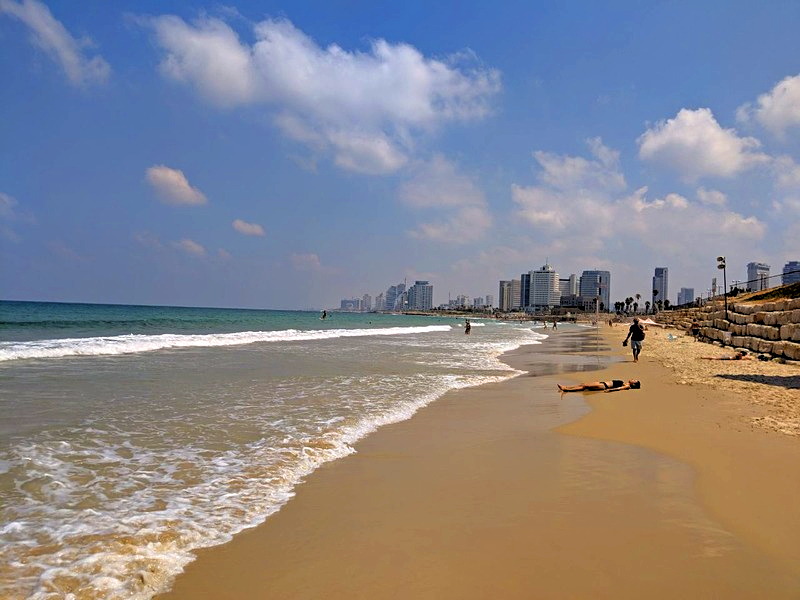
Even if you are in Tel Aviv on a tight budget you can still see the sites and have a great time. Here’s a rundown of the top 15 free things to do in the beautiful city of Tel Aviv.View of Tel Aviv beachfront from Jaffa.Photo credit: © Dmitry Mishin1. Tel Aviv BeachesTel Aviv has some magnificent beaches which run continuously from Tzuk Beach in the north to Alma Beach in the south. Each beach has its own character like the Separated Beach which has separate hours for male and female bathers; Atzmaut Beach which is popular with the gay community and Drummers Beach or Dolphinarium Beach where musicians jam each Friday at sundown. Beach season in Tel Aviv is April to October when lifeguards are on duty.androm2. Tel Aviv MarketsAmong Tel Aviv’s top markets there is the Carmel Market a lively outdoor market where fresh produce and other goods are sold. This market is colorful and exciting, not only that but it is in the heart of the city just off Allenby Street. Adjacent to Carmel Market is Nahalat Binyanim Street Market. This pedestrian walkway hosts an arts and crafts market on Tuesdays and Fridays.There are often street performers at the market. Nahalat Binyamin is lined with great coffee shops where you can sit and enjoy the atmosphere. Levinsky Market is the least gentrified of the three markets. Here you’ll find streets veering off of Levinsky Street from the corner of HaAliya Street to HaMashbir Street. The streets are crowded with small hole-in-the-wall stalls selling fresh produce and everything including the kitchen sink.Orange juice seller, Carmel Market, Tel Aviv.Photo credit: © Dmitry Mishin3. Free Walking ToursTel Aviv municipality offers free walking tours in English on Saturdays at 11 am which meet at 46 Rothschild Boulevard. The tours take a look at the amazing Bauhaus architecture of the White City and introduce participants to a little of the history of Tel Aviv. There is also a tour of Old Jaffa which takes you through the Jaffa flea market and the Old City examining some of Jaffa’s archeological sites and ending up in the Hapisga Garden. This tour meets on Wednesdays at 9:30 am at the Jaffa clock tower. You can also pick up a free map of self-guided walking tours from City Hall. On Mondays at 11 am there is a free tour of Tel Aviv University which gives an introduction to some of the campus’ innovative architecture and environmental sculptures. The university tour meets at the Dyonon bookstore at the campus entrance by the intersection of Haim Levanon and Einstein Streets.4. Self-Guided Tour of Neve TzedekYou don’t need a professional tour guide to explore one of Tel Aviv’s oldest and perhaps most picturesque neighborhoods – Neve Tzedek. This neighborhood was the first Jewish neighborhood established outside of the ancient Port of Jaffa in 1887. Many of the beautiful historic buildings have been restored and now house boutique stores, quaint cafes, and restaurants giving it a small village within a city feel. The neighborhood has some notable Bauhaus and Art Nouveau buildings. A few museums like the Nachum Gutman Museum; art galleries and the Suzanne Dellal Center for Dance are all in this neighborhood. At the southern end of Neve Tzedek is HaTachana, a restored historic train station that has been converted into a shopping and entertainment compound.The lighthouse path, Tel Aviv. Photo by Mor Shani on Unsplash5. Tel Aviv Port The old Tel Aviv Port has been given a make-over and has become a primary entertainment and retail hub for locals and visitors. The port has an expansive boardwalk covering 14,000m² and is lined with interesting restaurants, playgrounds, a carousel, an organic produce market, and fashion stores. When the sun goes down the port becomes the city’s hot nightlife spot. The port is often the site of special events and street performers.6. Ben Gurion HouseThis is one of the city’s smallest museums and is often overlooked by visitors. Ben Gurion House is the former residence of Israel’s first Prime Minister, David Ben Gurion at 17 Ben Gurion Boulevard. Visitors to the museum can walk through the Ben Gurion library; see the living quarters and the study where the prime minister worked. There is a free guided tour of the house where you can learn about the house’s history and the life of Ben Gurion.7. SaronaSarona is a former German Templer colony established in 1817 in what is now one of Tel Aviv’s busiest neighborhoods near the Azrieli towers. The Templers were a German Protestant sect which aimed to realize the apocalyptic vision of the prophets in the Holy Land. They established Sarona as an agricultural settlement and at its peak, there were 41 homes, a winery, workshops, a communal hall, and barns. In 1941 the British deported the residents of Sarona who were believed to be Nazi supporters. Today this compound of buildings has been restored and turned into a shopping and entertainment complex. The former Templer homes are now house restaurants, cafes, and boutique stores. The open spaces between the houses are beautiful plazas where you can relax and enjoy people watching special events and street performers.Tel Aviv Promenade (Tayelet). Photo by Shai Pal on Unsplash8. Yarkon ParkAt the northern end of Tel Aviv is this urban oasis; an expansive green Yarkon park with the Yarkon River meandering through the lawns towards the sea. The park is home to many attractions including climbing walls, paddle boat rental, playgrounds, basketball courts, bicycle rental, and if you continue north you can even reach the safari park in Ramat Gan. So even if you are looking for free things to do in Tel Aviv you can relax on the lawns and enjoy the pleasant surroundings and river views.9. Old JaffaAt the southern end of Tel Aviv along the coast is the old port city of Jaffa which is associated with the biblical story of Jonah, Saint Peter, and mythical tales of Andromeda and Perseus. As far back as the Middle Ages, the port was a gateway to the Holy Land, and many travelers, armies, and merchants landed here including Napoleon. Today you can wander along the narrow cobbled lanes between stone buildings leading down to the water and the old port. There are many art galleries, cafes, and restaurants as well as historic sites and museums in Jaffa. Among the sites to see, there is the Libyan Synagogue, St. Peter’s Church, the Zodiac Fountain, the home of Simon the Tanner, the Mahmudiyah Mosque, the Wishing Bridge, Andromeda’s Rock, the Sea Mosque, and the Ilana Goor Museum.10. Tel Aviv RollersDon’t be surprised if you are taking a stroll through Tel Aviv on a regular Tuesday night when a huge group of people on rollerblades whiz by. Each Tuesday skaters meet at Habima Square at 10 pm and the group begins rolling through the city. They roll through the city showing off their skating skills and having fun. Everyone is welcome to join in so get your skates on!Children at Tel Aviv Old Port. Photo credit: © Dmitry Mishin11. Tel Aviv University Botanical GardensExplore the 34,000m² of the university botanical gardens where there are rare and endangered species of plants from around the globe. There are 3800 plant species from Israel and around the world growing in the campus botanical gardens. The gardens are arranged in ecological groups and themed gardens. Sections in the gardens include the ecological garden of Israeli plants and Mediterranean woodlands; tropical plants from the rainforests; plants utilized by humans; medicinal plants; cacti; poisonous plants; a Palm House; succulent plants and root trees in the Sarah Racine Root Laboratory. The gardens are used by university students for research in ecological and botanical studies and visitors are welcomed for free.12. Rabin SquareIn modern Tel Aviv history, this is one of the most significant sites of the city. Back in 1995, this public square that faces the Tel Aviv Municipality building was called Kings of Israel Square. The tragic events of November 4th, 1995 led to the renaming of the square in honor of Yitzhak Rabin, former Israeli political icon and Prime Minister. It was here on that fateful night during a peace rally that Rabin was assassinated while returning to his car. You can see the exact spot where the assassination took place and the memorial which now marks this location in the northeastern corner of the square. There is also a section of wall covered in graffiti which was drawn by mourners who came to pay their respects in the days following the assassination. In addition, there is a memorial sculpture commemorating the Holocaust at the south end of the square, pleasant trees, and an ecological pool in the square. Rabin Square is often used for concerts, special events, and rallies.Rokach House, Neve Tzedek, Tel Aviv.Photo credit: © Dmitry Mishin13. The Photo HouseAt 5 Tchernichovsky Street is a store/ archive of historic photographs documenting the early days of Israel. The collection includes posters, postcards, and photographs. The store is legendary; it is still run by the Weissenstein family which established the shop in 1936. It is the city’s oldest photoshop and it is more like a museum than a store. In addition to the displayed photos which are on sale, there are regular exhibitions. The private archive of photographs has won several awards and has been exhibited across the globe. All of the photos in the archives were taken by Rudi Weissenstein and all of the prints and souvenirs featuring photographs are taken from the negatives of Weissenstein’s collection. Weissenstein photographed the first performance of the Palestine Symphony Orchestra in 1936; Weissenstein was the only official photographer to document the signing of the Declaration of Independence of the State of Israel in 1948; Weissenstein’s image was featured on an Israeli banknote in 1958 and he won first prize at the International Photography Exhibition in Moscow in 1961.Tel Aviv and Jaffa aerial view. Photo by Shai Pal on Unsplash14. Tel Aviv Art GalleriesTel Aviv has many independent art galleries but there is a particular concentration of galleries along Ben Yehuda Street and Gordon Street which intersects Ben Yehuda Street. You can wander along these pleasant Tel Aviv streets popping into each of the galleries to see current local and sometimes international art. Start with Gerstein Gallery at #101 Ben Yehuda Street and work your way towards Gordon Street. Along the way you will see JOJO Gallery with unique utilitarian and decorative art; Engel Gallery; Gordon Gallery and then on Gordon Street there is the Stern Gallery and Givon Gallery. Along the way and in the adjacent side streets you will discover other fascinating galleries. If you continue on Ben Yehuda Street you will reach Frishman Street where there are even more galleries.15. Musical FountainTel Aviv has a spectacular sound and light musical fountain show to rival those in Barcelona and Las Vegas. The modern music is synchronized to dancing lights illuminating fountains squirting up into the air. This spectacle takes place at Tel Aviv Port during the summer (July and August). There are nightly performances Sunday to Thursday with the fountains at 6:30 pm, 7:15 pm, and 7:45 pm and the sound and lights joining in for performances at 8:15 pm, 8:45 pm, 9:15 pm, 9:45 pm, and 10:15 pm.If you are interested in Tel Aviv tours and attractions, feel free to check out this article.Hamsas sold at Carmel Market, Tel Aviv. Photo by Bartosz Kwitkowski on Unsplash
By Petal Mashraki
0 views

Culinary Delights of Jerusalem Machane Yehuda Market

Machane Yehuda is Jerusalem’s primary market, particularly for food. Not only is fresh produce sold at the market but there are also several market eateries which have become iconic and considered some of the best restaurants in the city. There is so much to see in Jerusalem that few tourists ever manage to fit in a visit to Machane Yehuda but if you are a foodie (or just hungry) make a point of visiting this outstanding market. When you visit Machane Yehuda you get true insight into the day-to-day life of the local community. This is where many Jerusalemites do their weekly shop-up.Machane Yehuda is spread out over several lanes; it was established in 1928 for locals to buy their food goods. Today the market sells everything from household items and clothing to books, pet accessories and ceramic ornaments. The market food stalls include spice stalls where large sacks contain different colored herbs or the herbs and spices piled high on tables. You can also find freshly ground coffee; sweets and candy; fresh fish sold by fish mongers; halva; alcohol; nuts and dried legumes; baked goods; fruit; vegetables; pickles; pastries; artisan cheeses and butchers selling fresh meat.Machane Yehuda EateriesUzi-Eli the Market Witchdoctor is one of the most popular stands in the market. Uzi-Eli has a reputation for concocting natural juices from a number of unusual combinations each specifically to treat a physical or mental ailment. He will mix you up a fruit drink which will help your diabetes or one which will help you handle stress. Try one of the drinks with Hilbe (fenugreek) or gat juice.Khachapuri is a small eatery down HaEshkol Street which serves up traditional Georgian dishes. There are a few tables outside so you can do some people watching while you enjoy your food. If it is your first time trying Georgian food get an acharuli, a baked pastry with optional fillings like the classic salty cheese and egg.Mimi’s Bistro is also on HaEshkol Street; here you can find French-style cheese toast, croquet-Madame (fried egg grilled sandwich) crepes, pasta, soup or Belgian waffles. Everything is freshly made and Mimi even hosts French cooking workshops.Mousseline Jerusalem is the markets boutique ice-cream store where you can get unique flavors most of which are based on fresh fruit juices, herbs and spices. For example you could have a scoop of grapefruit, basil and sour cherry sorbet. The store also sells their own blend of coffee made from Ethiopian and Brazilian coffee beans.Ethiopian Ethnic Center on HaEshkol Street sells Ethiopian products including the spices used in Ethiopian food, Ethiopian beer and more. If you’re in the market on a Friday you can try some of the traditional injera, Ethiopian flatbread.Ochlim B’Shuk is an eatery on Hatapuach Street which specializes in Persian cuisine. They cook the food using authentic methods on old kerosene stoves. The eatery has been open since 2003.HaAgas 1 on Eliyahu Banai Street is a vegetarian restaurant which dishes up wholesome healthy vegetarian food. The restaurant is named after a line in a famous Israeli song written by Ehud Banai who’s family used to live above their vegetable store which is now the restaurant.Café Mizrachi on HaShazif Street opened in order to draw clients to the market. That was many years ago and today the café is one of the iconic coffee places in the market and a household name in Jerusalem.Fish n’ Chips on HaEgoz Street is the place to go if you’re home sick for chips with vinegar! OK so it’s not quite like British fish and chips but it comes close.Que-Pasa on HaEgoz Street serves up Spanish and Mediterranean style tapas as well as Spanish beer. The market has cuisine from around the world and this is a perfect example of international cuisine in the heart of the market.Pasta Basta on HaEgoz Street is a play on the Hebrew word for “stall” which is “basta”. This eatery uses the finest raw ingredients from the market plus some super imported Italian products. The pasta is made freshly at the restaurant each morning and customers who arrive early are treated to seeing the pasta-makers at work.Foodie Fun at the MarketIn addition to wandering through the market and sampling the various foods you could take it one step further and take a bakery tour, wine and cheese tour, shuk cooking workshops or a chef-guided tasting tour.Not far from the market (just one street away) is a chef restaurant, one of the best in the country. It is called Machnayuda – a mix of the two words Machane and Yehuda. The highly regarded restaurant is run by three renowned chefs; one of them is Assaf Granite a judge on one of the Israeli reality cooking shows. The restaurant serves delicious dishes using extremely fresh ingredients and often basing recipes on traditional local dishes with an elegant modern twist. For example you can order fettuccine with apricot butter, white wine, cherries and sundried tomatoes followed by a banufi pie (Indian cheese cake) with banana and coconut.Jacko’s Street is another chef restaurant just one street from the heart of the market. It is a kosher restaurant run by four well known chefs. The restaurant produces salads, grilled meats, Carpaccio, cerviche and more. All diners are treated to a free shot of Arak as they wait for their meal.Practical Information:You can reach Machane Yehuda by walking up Agrippas Street from the city center or catch the Jerusalem Light Rail which stops right by the market entrance. The market stretches from Agrippas Street to Jaffa Road.Open Hours: The market is open daily except for Saturdays. Sunday to Thursday 8am-7pm and Fridays 8am-3pm. Several of the cafes and restaurants remain open on Saturdays.
By Petal Mashraki
0 views

Tel Aviv’s Best Beach Guide

As you enter Tel Aviv you will be met with the glorious sight of the city’s long stretch of sandy beach flanked by the promenade, restaurants, hotels and cafes. What makes Tel Aviv beaches so special is their proximity to the city center. Just a few minutes’ walk from the heart of the city and your feet will be standing in sand! The long stretch of beach (hof in Hebrew) runs 14km along Tel Aviv’s Mediterranean shore and is divided up into several official beaches, each with their own amenities and character.Metzitzim beach, Tel Aviv. Photo credit: © Dmitry MishinSome of the beaches in Tel Aviv are named after the street which runs down towards the beach. Beach season in Israel is from April to October; during that time most beaches have lifeguards and beach services like sunbed rental and vendors selling ice cream. Here is a guide which will help you choose which beach is right for you. Starting from in the north at Tzuk Beach and working our way south to Alma Beach.Tzuk BeachTzuk Beach (literal translation: Cliff Beach) is the only Tel Aviv beach that is not free but it does have the best facilities. There is only an entrance fee (6-15ILS) during beach season (April-October). The beach is a little too far away to reach from the city on foot and is the northernmost point of Tel Aviv’s promenade which stretches all the way to Jaffa. It is also called Mandarin Beach because of a nearby hotel. There is a cool bar right on the beach and on a patio area above the sand. There are lawns, benches, showers, changing rooms, and an outdoor gym. The beach is popular with families and middle-older age people plus wealthy residents from nearby Herzliya. Towards the southern end of Tzuk Beach, it is called Sea and Sun Beach.Lifeguard booth on Tel Aviv beach.Photo by Timo Wagner on UnsplashTel Baruch BeachThis is one of the cleanest Tel Aviv beaches and it is popular with families with kids (although it used to be the hangout of local “working” girls). Because of the curved natural bay, the water is calm here and perfect for those less confident about their swimming. The beach is wide, clean, and sandy. There are an outdoor gym, lawns, and beachside restaurants and cafes. The lawns are a popular BBQ area and people hang out here late at night around the BBQ. The southern part of the beach is dog-friendly and if you continue walking you reach a bridge crossing the Yarkon River and leading to the old Tel Aviv Port The port area is a retail and entertainment venue with a gorgeous deck boardwalk, stores, a fresh produce market, and restaurants.Tel Baruch Beach in winter, Tel Aviv.Photo credit: © Dmitry MishinMetzitzim BeachAlso called Sheraton Beach (because of the proximity of the former hotel) this beach is named after an iconic 1970s Israeli movie “Metzitzim which means peeping tom or people who watch other people secretly. The film stared Uri Zohar and Arik Einstein and was set on this beach. This is the most northerly of the beaches reachable on foot from central Tel Aviv. Metzitim is just south of the Tel Aviv Port area and has recently undergone a face-lift. The beach has showers, toilets, a playground, volleyball courts, an outdoor gym, and a beach bar which is open in the evening. The northern part of the beach is popular with families while further south you’ll find teens and 20-somethings sunning themselves. There is a 24/7 restaurant during beach season and important sports matches are often shown on big screens set up on the sand.Aerial View of Tel Aviv beaches. Photo by Shai Pal on UnsplashSeparated BeachThe Separated Beach (Hof HaNifrad, Hof Ha Datim, or Nordeau Street Beach) is a beach where there are separate days for orthodox religious females (and those looking for a male-free beach) and other days when the beach is reserved for males. This beach is used by the religious community and is sometimes called the Religious Beach. During the week the beach is open until 5 pm. On Friday evenings after sundown and Saturdays until sundown when the religious do not go to the beach, the Separated Beach is used by both men and women.Atzmaut BeachIndependence Beach is also known as the Gay Beach as it is frequented by Tel Aviv’s thriving gay community but of course, everyone is welcome. Tel Aviv is a very liberal city with a respected, large gay community. It is named after Atzmaut Park (Independence Park) which is a small park on a hill overlooking the beach that used to be best known as a place for gay hookups. This is not officially a beach reserved for gay people but is just a popular gathering point for the community. The southernmost part of the beach is dog-friendly where dog owners can go with their pets.Sunset at the Tel Aviv beach.Photo credit: © Dmitry MishinHilton BeachThis beach is named after the nearby Hilton Hotel and is left of a breakwater which creates a calm pool of water. This is great for relaxed swimming but also attracted boats and kayaks. You can walk out onto the breakwater right into the sea. The TopSea Bar serves people on Hilton Beach and there is comfortable seating on sofas. TopSea is also the name of a surfing/kayak/paddle boarding school on this beach. Hilton Beach is one of the most popular Tel Aviv beaches. Tourists come here from several nearby hotels. The southernmost end of the beach is popular with surfers and is called “Hof HaGolshim” or Surfers Beach. The beach hosts the Israeli Triple Diamond Strongman Surfer’s Competition. South of Hilton Beach is the Tel Aviv Marina where you can rent surfboards, windsurfers and take a cruise.Hilton Bay - Absolute Beach & Surf Restaurant, Tel Aviv. Photo by Moshe Silberberg on UnsplashGordon-Frishman-Bograshov BeachGordon Street runs down towards this beach and on the land above the beach is the Gordon (seawater) Swimming Pool. The pool is surrounded by a deck and you have views of the sea and marina from the pool. Here there are toilets (for a fee), a restaurant an ice—cream stand, a beach bar, and Lalaland Café right on the beach. This beach also has some gym apparatus on the beach. Adjoining Gordon Beach is Frishman Beach (they are referred to separately and as one beach). Frishman is near the Dan Hotel and the US Embassy and is one of the cleanest stretches of beach where you can rent beach sunbeds. All three of these beaches are very wide and usually crowded with tourists as they are near to many hotels. Frishman has volleyball courts. The Tel Aviv promenade boarders the beach and across Yarkon Street are many great cafes and restaurants. Bograshov Beach is a continuation of Frishman and like Gordon and Frishman is named after the street which runs down towards the beach.Trumpeldor BeachSouth of Bograshov Beach is this beach bordered by the promenade where you can see a distinctive statue that resembles a monkey on its head on top of some kind of pod (you decide!). Trumpeldor Beach is an unofficial beach so you won’t find lifeguards on duty here even in the summer season. Thanks to the lack of lifeguards or facilities it is a very quiet, uncrowded beach.Banana Beach, Tel Aviv. Photo credit: © Dmitry MishinJerusalem BeachAlso known as Geula Beach it is not a crowded beach and attracts fewer tourists.Banana BeachA little bit south of the Opera Tower is this tranquil beach where you can relax and enjoy a drink at the Banana Beach Bar. The beach has a surf school at the northern end and a more hippie-like atmosphere towards the south. This beach is more popular with locals than tourists and you can see Tel Aviv’s hipsters and yuppies hanging out here reading, doing yoga, or playing backgammon.Dolphinarium BeachUnfortunately, there is no longer a dolphinarium here. Only the remains of the old dolphinarium building. The beach is not that well maintained but on a Friday you can enjoy drum sessions on the sand. Drummers gather to jam together as the sun goes down on a Friday and enjoy a drink from the nearby pub and from Chinky Beach Bar. For this reason, the beach is also called Drummers’ Beach (Hof HaTofim). The drummers are joined by those practicing their capoeira jugglers and dancers.Ending a surf session on a Tel Aviv beach.Photo by Chen Mizrach on UnsplashAlma BeachThis beach is also called Park Charles Clor Beach as it is on the edge of the park at the foot of the cliffs which lead up to Old Jaffa. This beach forms a long narrow strip bordered by green lawns and playgrounds. Families come here to BBQ and couples come here for the romantic sunsets. The beach is popular with residents from the Arab community in Jaffa as well as Jewish locals. The southern end of the beach is unofficially dog-friendly. Alma Beach does not have lifeguards and is a quiet and laid-back beach.To see the list of all beaches in Israel feel free to read this article. Besides beaches, there are a lot of things to do in Tel Aviv, including amazing Tel Aviv tours, visiting museums, and cultural venues.Alma Beach, Tel Aviv.Photo credit: © Dmitry Mishin
By Petal Mashraki
0 views

Sound and Light Show at the Tower of David, Jerusalem

The walls of the ancient city of Jerusalem come to life as they become the screen for a spectacular show of lights, sounds and special effects which takes you through the story of Jerusalem’s history. The show takes place at the Tower of David (also called the Citadel) which is located adjacent to the Jaffa Gate of the Old City. The Citadel is a medieval fortress built under the Mamluks and Ottomans with several architectural additions from later periods. It is at the historical entrance to the city and has symbolized the city for generations. The present citadel stands on the site of earlier fortresses dating back to the Hasmonaen, Herodian and Byzantine periods. The tower gets its name from Byzantine Christians who believed it to have been the palace of King David. Today the citadel is home to the Tower of David Museum but at night the place is transformed into the site of the best sound and light show in the country.The Night Spectacular Sound and Light Show unfolds amidst the restored structures of the Citadel (David’s Tower). This is unlike any other sound and light show you may have seen because of the unique backdrop. Original music is used together with virtual reality images and trompe l’oeil (optical illusions) techniques. The screened images seem to swallow the spectators up in the action so that you really feel immerged in the story of Jerusalem. This is truly a once in a life time multi-sensory experience.The show continues for 45 minutes and takes place outdoors so spectators are advised to dress up warmly. The spectacular is created using a complex system operating 20 projectors, 14 computers, 14 loudspeakers, 10 video players and uses 10km of cables. The experience begins with a walk through the David’s Tower courtyard. The show is a perfect introduction to 4,000 years of Jerusalem history. The show unfolds without text but with still and moving images projected on the citadel’s walls. The stories of King David, the Romans, Muhammad, the Crusaders, Suleiman the Magnificent and other periods of Jerusalem history are revealed. As the show has no text it is suitable for speakers of all languages. It is also suitable for spectators of all ages.Practical Information:When: There is no show during rainy weather. There are usually two shows a night at 8:30pm and 9:30pm on weekdays. On Saturdays times are slightly different and there are no shows on Friday nights. Check the website or call the Tower of David Museum for exact times as these often change.Contact: (0)2 6265333 or *2884 The reservation center is open 8am-4pm and the show should be pre-booked although tickets can be bought on the night according to availability.Price: Adults 55ILS; children (3yrs-18yrs) 45ILS; disabled 30ILS. It is possible to buy a combo ticket which gives you entrance to the Tower of David Museum and the Night Spectacular for 80ILS adults, 55ILS children and 40ILS disabled visitors. Discounts for seniors and students are only applicable for Israelis.Other Details: It is not possible to combine a visit to the Tower of David Museum with the sound and light show on the same night as the museum closes at 4pm (and 5pm in July-August). Filming or taking photographs is prohibited during the show. Cancelations are accepted up until 10am on the day of the show. Cancelations for Saturday night shows must be made by Thursday at 10am.
By Petal Mashraki
0 views

Top 9 Attractions and Activities in the Negev Desert

The magical Negev Desert in southern Israel takes up about 60% of Israel but is sparsely inhabited due to the harsh desert climate. When the State of Israel was established one of the goals set was to make the desert bloom and in many places that has been achieved.Mamshit Archeological Site, Israel. Photo credit: © Manu Grinspan. Published with permission of the Israel Nature and Parks AuthorityThe Negev also has a history dating back to the ancient trade routes and it is home to unique flora and fauna. The Negev is unlike any other area in Israel and shouldn’t be missed. The Negev Desert flows into the Judean Desert where you can also visit Masada, the Dead Sea and the Yotvata Bar Hai Nature Reserve, and Timna National Park in the Arava Desert.1. Jeep excursionsOn a Negev jeep tour, you can go deep into the desert, far off-road to places most people don’t get a chance to see. A guide will explain to you about the local fauna and flora and you will be able to race across the dunes, drive through dry desert valleys and stop to boil up a pot of coffee in the wilderness. There are “wet” jeep tours that take you to desert springs; jeep tours where you can learn about following animal tracks; night jeep tours; survival jeep tours; tours that take you to Nabataean ancient sites and jeep tours that visit Bedouin villages. Tours leave from several points in the Negev including Mitzpe Ramon and Kibbutz Sde Boker.2. Camel Riding ExcursionsIf you want to take things at a slower pace and retrace the steps of ancient camel caravans then take a camel riding excursion into the desert. The “ship of the desert” is a great way to enjoy the scenery, learn about the unique desert environment and gain an understanding of what it was like to travel across the Negev hundreds of years ago. There are a number of places where you can join a camel tour including Mamshit Camel Farm, Kfar Hanokdim, and the Negev Camel Ranch. There is no prior experience needed and camel riding tours are suitable for all ages. There are tours lasting 1-4 hours.Safari Jeep Tour.Photo credit: © Shutterstock3. Ramon CraterThe Ramon Crater or Makhtesh Ramon is a huge naturally formed crater 38km long, 450 meters deep, and 6km wide. It is best reached via the town of Mitzpe Ramon where there is a Visitors Center overlooking the crater. From here you can take hiking tours, jeep tours into the crater, and abseiling excursions where you get to climb down the side of the steep crater.4. Alpaca FarmThere is a welcoming alpaca farm in the heart of the Negev where you can learn about the creatures, pet them, feed them and even stay the night. You can also meet other animals which live on the farm like angora sheep, llamas, donkeys, horses, and camels. There are walking trails on the Alpaca Farm which meander through the untouched desert landscape. Kids can have a ride on the alpacas and you can learn about the alpaca wool production process.5. Negev Wine TastingThe ancient Nabataean civilization cultivated vineyards in the Negev thousands of years ago using a sophisticated irrigation system. The first modern-day winery in the Negev was planted by Carmel Winery in the Ramat Arad area in 1988, then other wineries and vineyards have sprouted up across the otherwise barren landscape. There are now several wineries so that it is possible to follow a Negev wine tasting route along Route #40. Wineries that welcome visitors include the Yatir Winery, Midbar Winery, Sde Boker Winery, Neot Smadar Winery, Carmel Avdat Winery, Rota Winery (where there is also a fruit farm where you can do your own fruit picking in the summer), and Kadesh Barnea Winery.Alpaca farm in the Negev Desert. Photo credit: © Shutterstock5. Sand SurfingThis unique desert experience takes you out to the Negev sand dunes in a 4X4 jeep. Once there you get to slide down the soft dunes on specially designed boards that resemble snowboards but without the footholds. The activity is suitable for those over 2 years old and you don’t need any prior experience. Sand surfing is usually combined with a jeep tour, a historical site, or a desert village for lunch.6. Kibbutz Sde BokerThis kibbutz is famed as the former home of David Ben Gurion, the first Prime Minister of Israel who moved here in 1953. Today Ben Gurion’s former home has been turned into a museum where the original furniture, mementos, and personal items of Ben Gurion and his wife have been preserved. Ben Gurion had a passion for the Negev and the small community. He lived here until his death and over the years he welcomed many dignitaries and world leaders. While at Sde Boker you can visit Ben Gurion's tomb, the Sde Boker Winery, and the Sde Boker Field School.The archeological site of Avdat, Negev Desert, Israel.Photo credit: © Shutterstock7. AvdatThis is a UNESCO World Heritage Site as it was one of the most important Nabataean, Roman and Byzantine sites settled in the 3rd century BC along the Incense Route. Here you can see the ancient remains of a Nabataean tomb, a Roman-era residential area, and the remains of a Byzantine fortress, Byzantine bathhouse, wine press, cistern, and ancient Sacred Precinct. There are also two 4th century churches nearby. Perhaps the most important ancient remains are of the Nabataean Temple of Oboda.8. HikingThere are many marked hike trails through the Negev for those of all levels of ability. The trails are color-coded to keep hikers on track. Many of the trails take you to the oasis where there are deep canyons, waterfalls, and hidden natural spring pools. Some of the most popular routes are the Mamshit Loop, passed the Nabataean city; Mt. Ardon, with a challenging climb; Zin to Ramon, a six-day trek passed mountains and springs; Wadi Shua, with hidden gems; Wadi Mamshit; Ramon’s Tooth passed beautiful rock formations and the Hemet Cistern Loop with great views of the Ramon Crater.9. Bedouin HospitalityThe Bedouin people still live in the deserts of Israel with several communities in the Negev. They have a unique and fascinating culture and there are several places in the Negev where you can be a guest in a Bedouin tent and experience their traditional hospitality. Bedouin hospitality includes traditional food, musical performances, tea, coffee, camel rides and even sleeping over in the Bedouin tent under the desert sky.Сamel riding with Bedouins in the Negev Desert.Photo by Greta Schölderle Møller on Unsplash
0 views

Guide to Mitzpe Ramon and the Surrounding Negev Desert

The small community of Mitzpe Ramon in southern Israel sits on the edge of Makhtesh Ramon (the Ramon Crater); a 38 km wide crater formed thousands of years ago. Perched on the northern ridge of the crater, overlooking the Negev Desert, Mitzpe Ramon has breathtaking views across the desert and plenty to see and do.The community was founded in 1951 to accommodate workers constructing the road to Eilat. Immigrants from Romania and North Africa settled here and the town grew to be a thriving community and the gateway to the Negev. Although Mitzpe Ramon is in the desert it enjoys relatively cool weather thanks to the winds which blow in across the crater to the elevated town. Mitzpe Ramon even experiences snow several times a year. In recent years the area has become a center for organic farming, homemade food products, spiritual retreats, and natural living. A visit to Mitzpe Ramon offers a completely fresh and unique experience, unlike anything you could experience in any other part of Israel.Getting to Mitzpe RamonIf arriving from Tel Aviv take the #40 highway south to Mitzpe Ramon; the town is about 85 km south of Be’er Sheva. If setting out in Tel Aviv you can take #660 and from Jerusalem bus #470. Trains travel from Tel Aviv arriving in Be’er Sheva and from there you can continue on to Mitzpe Ramon by bus #65 or #64. Driving from Tel Aviv to Mitzpe Ramon will take you about 1.15 hours and the bus or train and bus combo will take you 1.15-3 hours. Once in Mitzpe Ramon you can explore the town on foot or by car and take organized excursions into the desert.Mitzpe Ramon AccommodationThere are about six hotels in Mitzpe Ramon including the famous Beresheet Hotel, a luxury hotel of the Isrotel chain which overlooks the crater. Each room has views of the crater and there are spa treatments on offer as well as gourmet food. Chez Eugene is a recommended chic boutique hotel and there is also the Ramon Suites Hotel and Ramon Inn. In the surrounding areas, there are many B&Bs and small inns as well as campgrounds. Try the ibex Unique Desert Inn or Khan Be’erotayim for a desert experience. Budget accommodation can be found at the Green Backpackers Hostel, Mitzpe Ramon Hostel, or the basic Succah in the Desert.Mitzpe Ramon EateriesThe region is known for its organic farms and traditionally edible products like honey, wine, cheese, yogurt, and olive oil. Among the top-rated restaurants in Mitzpe Ramon, there is Hahavit (the Barrel) a bar/restaurant with standard pub food; Beresheet Dairy Restaurant in the Beresheet Hotel has stunning views and Hakatze serves hearty Israeli food in simple surroundings. At Hadassar Natural Living Restaurant you can enjoy locally sourced, organic, vegetarian fare in bohemian-style surroundings. Other dining options are the generic Café Neto, an Israeli coffee house chain, and fine dining at Chez Eugene.Attractions in Mitzpe Ramon & the Negev1. Ramon Crater and Makhtesh Ramon Visitor CenterThe crater (makhtesh) is 38 km long, 6 km wide, and 450 meters deep; this natural wonder looks like something out of a space odyssey. At the Makhtesh Visitor Center, you can get a bird’s eye view across the crater and learn about the history, facts, and figures of the site. To really experience the crater take one of the themed excursions by jeep or on foot into the heart of the makhtesh.2. Ein Avdat National ParkNestled in the Zin Valley this national park centers on the Ein Avdat Spring which flows to a beautiful 8-meter high waterfall and pour into a pool below. The water attracts local wildlife and allows vegetation and trees to grow around the oasis. There are several streams in the park and hike trails through the canyon and along the water’s edge. If you like this attraction you should also visit Ein Gedi by the Dead Sea.3. Alpaca FarmThis fun attraction is home to a herd of alpacas and lamas; the farm also offers accommodation and light meals. A visit includes feeding the alpacas and getting an informative talk from one of the guides.4. Nabatean Avdat AcropolisThe ancient Nabatean civilization set up rest points along the spice route which ran from the Arabian peninsula north to Syria and the Mediterranean. The remains of some of these Nabatean cities include the khan or roadside motel where they had a wine cellar and mud-brick structures. Another Nabatean site in the area is the Ramalia Cisterns, huge wells which were dug out by the ancient civilization to preserve water.5. Desert Jeep TourA desert jeep excursion is a perfect way to discover the crater and the surrounding desert. The thrill of bumping and jumping over rough terrain is unforgettable. Jeep tours can take you to nearby Zin Valley or into the crater and you can see stunning scenery, camels grazing, local Bedouin, and shepherds herding their goats. Many of the tours combine the jeep trip with a stop for coffee in the desert, a dip in a desert spring, or to show you geological wonders.6. Mitzpe Ramon “north”The old industrial zone of Mitzpe Ramon has been gentrified and turned into a hub of boutique specialty stores and places of entertainment. Check out the bakeries, restaurants, craft workshops, Mitzpe Ramon Jazz Club, and Faran cosmetics factory where the products are inspired by the natural surroundings.7. RappellingRappelling or abseiling down the cliffs of the Ramon Crater is a once-in-a-lifetime experience – not just because of the actual activity but also because of the unique location and views as you descend. Several companies in Mitzpe Ramon lead visitors to the edge of the cliff (literally). You don’t need any prior experience, just the guts to hang yourself over the side of a cliff on a rope!8. StargazingFrom Mitzpe Ramon you can take a stargazing excursion into the desert where there is very little artificial light from cities and the wide-open sky can be seen unhindered by skyscrapers or city pollution. Ira and Pam Machefsky run Astronomy Israel; they take visitors to the rim of the crater and set up telescopes, provide a warm blanket and explain the night sky with enthusiasm and humor.9. Rota WineryNorth of Kibbutz Revivim on route #222 is this organic winery where there are wine and cheese tasting as well as tours of the farm. Erez Rota is an artist who used to live in Tel Aviv before moving south and establishing his farm. His metal sculptured art installations can be seen scattered across the farm.10. Neve MidbarThis mineral water health spa features natural thermal bath waters. It is located off route #222 and offers use of the pools plus the option for spa treatments at an additional fee. Visitors can enjoy the coffee bar and cafe.11. Neot Smadar Goat FarmHere you can get a picnic basket filled with the delicious locally-produced cheeses and yogurts made using milk from the 150 strong herds of goats. At the farm, there is a café and store where you can by goat milk products. The store also sells organic products produced on the kibbutz.12. Bedouin Tent ExperienceVisit a real Bedouin tent in the middle of the desert. Visitors can join the Bedouins of the Negev for some dates and black coffee and have the opportunity to see how Bedouin live. Some of the Bedouin offer tours into the desert where they explain about the foraging of food in the harsh surroundings and about the plants they use for traditional medicine. There are Bedouin tent experiences which include a meal, entertainment, and even an overnight stay in the tent.
By Petal Mashraki
0 views

Things to Do at the Sea of Galilee

Visitors to Israel tend to make a beeline to Tel Aviv and Jerusalem but many miss out on one of the country’s most beautiful attractions – the Sea of Galilee (the Kinneret in Hebrew). To get a sense of the diverse natural wonders of Israel you really should make a trip north to Galilee.Paddleboarding on the Sea of Galilee. Photo by Erez Gavish on UnsplashThe Sea of Galilee covers about 102km², 28km from north to south and 10km from east to west. If you want to drive, walk or cycle around the lake it has a circumference of 53km. It is called Kinneret from the Hebrew word for violin or lyre because the lake’s shape resembles a violin.This is also where Jesus spent his ministry preaching in nearby villages and it was here that Jesus walked on water and performed several other miracles. The Kinneret is the country’s reservoir for fresh water and as the water level rises and falls depending on the rainfall so the country watches in anticipation to see if there will be a water shortage each summer. There are a lot of things to do at the Sea of Galilee:1. The Holy City of TiberiasThe largest city on the shore of the Kinneret is Tiberias; the Jewish Talmud was written in Tiberias. Visit the holy city of Tiberias and take a relaxing walk along the Tiberias Promenade. There is a small flea market near the water’s edge and you can enjoy a fish dinner overlooking the water.At the southern end of the Tiberias Promenade, there is a nightly sound and light show which lasts 15 minutes and is performed at 8:30 pm and 9 pm or 10 pm. The multimedia show is free and projected onto two large water screens. The scenes created on the screens highlight the history of the region and are accompanied by classical music and dancing fountains.Rocky Shore of the Sea of Galilee. Photo by Chris Gallimore on Unsplash2. Yardenit Baptismal SiteYardenit is a point at the southern tip of the Kinneret where the lake meets the Jordan River. It was here that Christ was baptized by John the Baptist. Today it is possible for visitors to get baptized in the same waters. At the Yardenit Visitor Center, you can get a white robe, be baptized, and receive a certificate attesting to your baptism. There is an alternate baptismal site further south at Qasr al-Yahud.3. Mount of BeatitudesThe Mount of Beatitudes (Har HaOsher in Hebrew) overlooks the Sea of Galilee and was the site of the Sermon on the Mount. Today a beautiful church crowns the mount; the octagonal church represents the eight beatitudes (Matthew 5:3-11) and was built in 1938.4. The Biblical Village of TabghaIn Tabgha, literally on the water’s edge is the Church of the Multiplication of Loaves and Fishes where Jesus fed 5,000 people with five loaves and two fish. The original church was constructed in the 5th century and has since been restored. The original floor mosaic has survived. Also in Tabgha is the Church of St. Peter’s Primacy where Jesus appeared to his disciples after his resurrection.The Jordan River at Yardenit Baptismal Site.Photo credit: © Dmitry Mishin5. Capernaum -The Town of JesusYou can visit Capernaum, on the northwestern shore of the Sea of Galilee. This biblical town has several ancient churches and synagogues including the church of St. Peter’s House. A modern octagonal church surrounds the remains of St. Peter’s house which can be seen through the glass floor.6. The Jesus Boat at Kibbutz GinosarThe Jesus Boat is a 2000-year-old fishing boat that was uncovered on the bed of the lake during a drought in the 1980s. It is now on display in the Jesus Boat Museum (Yigal Allon Center) on Kibbutz Ginosaron the western side of the Sea of Galilee. Other parts of the museum display art by local Arab and Jewish artists of the Galilee and showcase art that depicts the culture, history, and nature of the area.7. Kibbutz Ein GevOn the east shore of the Sea of Galilee is Kibbutz Ein Gev where there are activities for the whole family, a beach, accommodation, and restaurants. There is also an anchor museum and an art gallery. You can take a 30-minute tour of the kibbutz on a mini-train and learn about the establishment of the kibbutz in 1937 and the everyday life of the kibbutz.A column with Inscription, Capernaum, Israel.Photo by Phil Goodwin on Unsplash8. Camping and Water Sports at the Sea of GalileeThere are several beaches on the shores of the lake as well as campgrounds where you can set up your tent just a few meters from the water. Camping around the Sea of Galilee is a must for all nature lovers. You can try a number of different water sports on the Kinneret including water skiing, kayaking, kite surfing, windsurfing, canoeing, and sailing. The top beaches around the Sea of Galilee are Tzemach Beach in the south and Ein Gev Beach on the east coast. At Gai Beach, Luna Gal, and Tzemach there are water parks.9. Hot Springs near the Sea of GalileeVisit the hot springs of Tiberias where there are ancient Turkish baths fed by natural springs. The thermal mineral pools are both inside and outdoors and there are heated swimming pools, hot tubs, and spa treatments. Not far from the Sea of Galilee is Hamat Gader Hot Springs another thermo-mineral spring complex on the same site that the Romans built their baths 2,000 years ago.10. Cruise Ships on the Sea of GalileeThere are tourist cruise ships that make short excursions from Tiberias. There are large boats that can carry up to 165 passengers to all ports around the lake. These boats resemble the fishing vessels used in Galilee in the times of Jesus. Cruises to Christian sites around the Sea of Galilee are also possible.Boat cruise on the Sea of Galilee.Photo credit: © ShutterstockWhile You’re in the Area….Just a little further afield into the Golan Heights, south to the Jordan Valley, and into the Bethsaida Valley there are more wonders to discover like the lush forests and vegetation around the River Jordan. One of the areas nearby is so beautiful it is believed to have been the Garden of Eden.The Galilee is crisscrossed with hike and cycle trails all clearly marked. Other nearby things to see and do are at the Jordan Park, Naharayim, Bethsaida Nature Reserve, and the Jesus Trail – a 65km hike trail from Nazareth to Capernaum.Liked this article? Join a One Day tour to the Sea of Galilee.View of the southern part of the Sea of Galilee, Northern Israel. Photo credit: © Shutterstock
By Petal Mashraki
0 views

Four Hotels in Israel to Lose ‘Sheraton’ Title

Starwood Hotels and Resorts Worldwide, Inc., one of the world’s largest hotel companies and the owner of the global Sheraton chain, announced last week that as of June 2009 four Israeli hotels will be stripped of their “Sheraton” title. The four hotels, all owned by businessman Shaya Boymelgreen are Sheraton Moriah Tel Aviv, Sheraton Plaza Jerusalem, Sheraton Tiberias and Sheraton Eilat.Sheraton City Tower and Sheraton Tel Aviv will maintain the prestigious brand name. According to the corporation, the decision to remove the Sheraton name from the Israeli hotels was prompted by the desire to preserve the value of the trademark, hinting that the level of the local businesses was not satisfactory.However, the fact that the hotels have not paid their management and franchise fees to the corporation for many months seems to have contributed to the decision as well. Starwood announced that the four Israeli hotels will be taken off the chain’s online booking system and their guests will not be eligible for benefits provided by the chain.Meanwhile, the Fattal-owned Le Méridien Haifa in the northern bay city will lose its “Méridien” title this month after the agreement between the Fattal hotel chain and Starwood has ended. Le Méridien Eilat and Le Méridien Dead Sea will keep their names for the time being.
By Petal Mashraki
0 views

Jerusalem 2020 – See the Future

In a recent interview the Jerusalem Development Authority Director of Tourism, Ilanit Melchior talked about the city’s plan for the next 5 years and how the mayor, Michael Bloomberg sees the future of the City of Gold. jerusalemThere are plans in place for the city’s expansion in industry, biotechnology, academic education, health care, hi-tech and tourism. The city already beats every other city in the world for significant religious sites (Christian, Muslim and Jewish) and is one of the most historic cities in the world. The new vision for 2020 is to add a few mod-cons to the city, attractions which other capitals have already had for many years and which have proved successful tourist magnets. Jerusalem hopes to attract 4 million more tourists by 2020 by marketing itself independently of Israel just as capitals like New York, London and Paris are marketed as stand-alone destinations.The plan for 2020 was born in collaboration with visiting Harvard Professor Michael E. Porter and urban economist Richard Florida. Porter’s plan is based on the principle of “Competitive advantage.” Or simply put: figure out what you have that no one else has and promote it. His principle states that to develop a city’s economy, you must identify its relative competitive strengths and develop them. The plan will involve intensive marketing overseas and focus on people traveling independently and not on package trips. Jerusalem is already the top attraction in Israel drawing in 75% of all visitors and being the site of the top 5 tourist attractions in the country (Western Wall, Jewish Quarter, Church of the Holy Sepulchre, Via Dolorosa and the Mount of Olives).Jerusalem’s Cultural Mile or Museum RowPart of promoting Jerusalem as a travel destination is making the city more walkable. This will be done by connecting significant attractions by tree lined paths and plenty of signs telling tourists about the sites. New additions to the already thriving tourist city include a Museum Row like in New York, Los Angeles and other capitals. The “Row” will start at the historic First Station and connect the top Jerusalem museums with the House of Parliament, Supreme Court Building, National Library and Old City by a series of parks and paths. The walking and cycling route will be lined with cafes, galleries, parkland and cultural centers. Museum Row will also be used as an outdoor venue for concerts, happenings and special cultural events.More Improvements for Jerusalem on the HorizonOther visions for Jerusalem’s future include a cable car from the First Station to the Old City; a tourist mini-train to take you through the Old City and a large Ferris wheel like in almost every other capital in the west. The First Station, which is already a Jerusalem point of interest, is to have a new section called Kid’s Station with kid-friendly attractions like a carousel and rock wall for climbing.Apart from additional attractions, Jerusalem plans to make the public transportation more streamline and increase the number of hotels in the city to accommodate the potential additional 4 million tourists. One of the obstacles is transportation on Shabbat. The religious population in Jerusalem is against public transport on the Holy Sabbath. However, before you get too excited bear in mind that all these plans cost money and are yet to be presented to parliament for approval. Hopefully, the future of Jerusalem will be a bright one and make the already historic and magical city a travel Mecca for globe trotters.
By Petal Mashraki
0 views

Kevrei Tzadikim in Israel (Graves of Pious Jews)

People often go to pious or righteous Jews to ask for their blessing or to ask them to pray on their behalf. This tradition continues after the pious Jew or "tzadik" has passed on. Jews visit the gravesites of pious Jews and famous Great Sages in the hope that they will intercede on their behalf before God. When Jews pray at the graves of pious Jews or "Kevrei Tzadikim" it is not worship of the departed tzadik, but rather worship of God with the tzadik as an intermediary. Burying damaged Jewish prayer books, Mount of Olives Jewish Cemetery.Photo by Zoltan Tasi on UnsplashTraditionally prayer at the graveside of pious Jews is particularly powerful on fast days, holy days, and the anniversary of the passing of a loved one or the tzadik himself. The Gemorah and Zohar emphasize the importance of praying at the graves of tzadikim. Here are the main kevrei tzadikim in Israel but there are many, many more. In Safed, Meron and Tiberias alone there are over 90 kevrah tzadikim!Kever Rachel – BethlehemJacob buried Rachel on the side of the road leading to Bethlehem so that Jews passing by on their way to exile would be able to stop and pray for redemption. Rachel would intercede on the worshiper’s behalf and make their prayers even stronger. The original Kever Rachel was built in 1841, funded by Montefiore but in 1998 it underwent a complete renovation including secure protective walls around the complex.Rabbi Pinchas ben Yair – Tzfat (Safed)This Rabbi was the son-in-law of Rabbi Shimon bar Yochai and he performed many good deeds (mitzvoth) especially in his love for fellow man. Several times he solved problems by pointing out the mitzvah that the person was not performing correctly. It is traditional to circle his grave in Safed seven times.Cave of the Patriarchs, Hebron.Photo byDan RosensteinonUnsplashShmuel HaNavi – Northwest outskirts of JerusalemShmuel HaNavi was a great Torah scholar and in later years became a judge and prophet (navi). He would travel around the country as a judge and never accept payment or gifts for his work. He anointed Shaul as King of Israel on God’s instructions. Shmuel later taught David how to build the Holy Temple and he wrote the biblical Book of Judges. At the gravesite, there is a tall tower which you can climb to get a view across the countryside. Alongside his grave in Jerusalem are the graves of his mother Chana and father Elkanah.Rabbi Shimon Bar Yochai (Rashbi) – Mt. MeronThis Rabbi features prominently in the Talmud and was one of Rabbi Akiva’s students and a 2nd-century Mishnaic sage. The Rabbi performed many miracles and wrote enlightened interpretations of the Torah. He is buried next to his son Rabbi Eliezer (bar Rabbi Shimon) on Mount Meron. On the anniversary of his death, the 33rd day of the Omer (Lug B’Omer) crowds of religious followers gather at his graveside to pray, study, sing, and dance. Traditionally on Lag BaOmer bonfires are lit and three-year-old boys are brought to Mt. Meron for their first haircut at the tzadik’s graveside. The Rashbi is connected with the Zohar – the Book of Splendor – the Kabbalist’s sacred book. Also on Mount Meron are the graves of The Tanna, Rabbi Yiba Saba, Hillel Hazaken, Rabbi Yochanan HaSandlar, and Rabbi Yossi ben Kisma.Mount Meron, Israel.Photo credit: © Dmitry MishinRabbi Yosef Karo – Tzfat (Safed) CemeteryThis 15th-century tzadik was born in Spain and educated in Turkey where he began writing his interpretation of Rambam’s Mishnah. He also wrote Bais Yosef where he focused on the early sages. He then moved to Tzfat (Safed) in Israel where he wrote the Shulchan Aruch explaining the Halachah laws in a way that the common man could understand without being a great scholar. He wrote other books and was highly regarded as an authority on Jewish law. Karo died in 1575 but his books remain the mainstay of most religious Jewish households.Rambam – TiberiasRambam was one of the greatest Rabbis of all time, he was born in 1135 in Spain and came from a respected family of Torah scholars. His family was expelled from Spain along with many other Jews and forced to wander from country to country. He wrote Pirush Ha’Mishnah L’Rambam and in Egypt, he became known as a brilliant medical doctor. He also wrote Mishnah Torah, Yad Ha’Chazaka, Yud Gimmel Ikrim, and Sefer Ha’Mitzvot. He died in 1204 in Egypt and his body was returned to Israel and buried as well as some other prominent tzadikim in Tiberias. He lies beside his father, Rabbi Yochanan ben Zakkai, and his five students. There are 14 pillars lining a path towards his grave each pillar represents a section of the book Mishnah Torah.The Ashkenazi HaAri Synagogue, Safed (Tzfat), Israel. Photo credit: © ShutterstockRabbi Yochanan ben Zakkai – TiberiasRabbi Yochanan ben Zakkai was privileged to see the second Holy Temple of Jerusalem before dying at the age of 120 in 90AD. In his lifetime he served as the leader of Klal Yisroel and studied with Hillel and Shammai. He was buried in Tiberias 1100 years before Rambam was buried alongside his grave.Rabbi Meir Ba’al HaNes – On the Shore of the Sea of GalileeThis tzadik studied under Rabbi Akiva, Rabbi Yishmoel, and Elisha ben Avuya (Acher). He was married to Bruriah, the only woman mentioned in the Gemorah as wise and brilliant. He lived through the terrible period of Roman persecution after the destruction of the Holy Temple. He was a brilliant scholar and a Sofer or scribe of holy Torah scrolls. The Rabbi died in Asia but requested to be buried in Israel. His body is buried not far from Tiberias on the shore of the Sea of Galilee. It is tradition to make a charitable donation to kollelim (places where Torah is studied intensely) in the name of Rabbi Meir Ba’al HaNes. Torah scroll.Photo byTaylor WilcoxonUnsplashYonatan Ben Uzi’el – AmukaVisiting this gravesite traditionally aids those looking for a marriage partner and women come here to pray for fertility. He was a student of Hillel HaZaken and a wise Torah scholar.Hillel Ha’Zaken – MeronVisiting the grave of this ancient tzadik who lived from 110BC to 10AD, 120 years, is thought to aid longevity and good health. He founded the House of Hillel and the school of Tannaim, the Sages of the Mishnah. He lived during the reign of Herod and is remembered for several poignant and wise phrases such as “If I am not for myself who will be for me?”Tomb of the Patriarchs (Ma’arat HaMachpelah) – HebronCave of the Patriarchs in Hebron is where you’ll find the graves of Abraham, Isaac, Jacob, and their wives Sarah, Rebecca, and Leah. These biblical figures are the primary patriarchs of Judaism together with Rachel who is buried near Bethlehem. The site is surrounded by walls dating back to King Herod and the site is sacred to both Jews and Muslims.Rabbi Meir Baal HaNes tomb in Tiberias, Israel. Photo credit: © ShutterstockRabbi Yehuda bar Eliyahu – Ein Zeitim, Near TzfatPraying at this great scholar’s grave is supposed to bring a blessing on your income. There is an olive tree next to the grave and it is traditional to take a leaf from the tree and place it in your pocket. Rabbi Yehuda bar Eliyahu was one of Rabbi Akiva’s last five students. Today a Kollel (house of Torah study) stands over his tomb and his father’s tomb.Ari HaKadosh – TzfatAri HaKadosh (the Holy Lion)'s real name was Rabbi Isaac Luria Ashkenazi and he lived in the 16th century. He wrote an interpretation of the Zohar and began the Kabbalah movement; the mystic branch of Judaism. Visiting this gravesite is a spiritual and mystic experience. In Tsfat you can visit the synagogue named after him.Rabbi Akiva – TiberiasThe great Akiva was a poor shepherd and only at the age of 40 did he learn to read and write. He soon became a wise and respected Torah scholar. He spent the rest of his life studying the Jewish religious scriptures. Visiting this grave gains worshipers the blessing of wisdom and success in their studies. The most popular time to visit the grave is on the eve of Yom Kippur as this is the anniversary of his death.
By Petal Mashraki
0 views

Dome of the Rock

Dome of the Rock is perhaps the most iconic symbol of the City of Jerusalem; its golden dome stands-out above the rooftops of the city, majestic, mysterious and magnificent. Dome of the Rock (Kubbat as-Sakhra) was built on Temple Mount, a hill within the walls of Jerusalem’s Old City in 688-691 by Caliph Abd el-Malik. The Dome of the Rock remains Jerusalem’s most recognized landmark and a UNESCO World Heritage Site. It is possible to tour Temple Mount and view the Dome of the Rock from the outside but entry is prohibited. The best way to see the Dome of the Rock is to join a Jerusalem Temple Mount & Dome of the Rock tour.Location of Dome of the RockThe Dome of the Rock stands on Temple Mount in the southeastern corner of the Old City. It was here that the First Temple (Solomon’s Temple) stood from the 10th century until 587BC. The Second Temple was built in 516BC and was destroyed in 70AD. Temple Mount has been held sacred by Christians, Muslims, and Jews for thousands of years and the exact location where the Dome of the Rock stands has special significance.Significance of the Dome of the RockFor Christians and Jews, the rock over which the Dome of the Rock stands is where Abraham nearly sacrificed his son Isaac to prove his faith in God; for Muslims, the same story is told but instead of Isaac Abraham planned to sacrifice his son Ishmael. Jews also hold this site sacred as it was where the Ark of the Covenant with the Ten Commandments tablets was kept in the Inner Sanctum of the ancient Temple. For Muslims the shrine holds the rock from which the Prophet Muhammad stepped up to heaven; it is also believed that he founded Islam at this exact site. The Dome of the Rock is one of the oldest surviving Islamic monuments. It is not a mosque but a shrine. Sharing Temple Mount with the Dome of the Rock is the Al Aqsa Mosque, believed to be where the prophet traveled on his Night Journey as told in the Koran. For all of these reasons the site where the Dome of the Rock stands is believed to be where the divine presence of God exists more than any other place in the world.Structure of the Dome of the RockThe original 7th-century structure collapsed in 1015 and the one we see today dates back to 1023. The lower section of the Dome of the Rock is octagonal and covered with colorful blue-hued mosaics modeled after nearby Byzantine churches. During the Ottoman era, the exterior was altered somewhat and until the 1960s the iconic gold-colored dome was plain lead. The gold-colored dome shines out above a circular drum on the brilliant mosaic base which is divided up by piers, columns, arches, and windows. Just like the exterior, the interior of the shrine is adorned with opulent mosaics; tin-glazed ceramics; marble and quotes from the Koran. At the center of the Dome of the Rock is the Foundation Stone, credited as the place where God created the world; as the place where God created Adam; the place where Abraham nearly sacrificed his son; it is associated with Islamic beliefs about the creation of the world and as the place where the Prophet Muhammad went up to heaven.

The Old City Market Jerusalem

If you really want to experience the Middle Eastern atmosphere; the hustle and bustle of daily life in Jerusalem and feel like you have stepped back in time then visit Jerusalem’s Old City market. The “suk” (Arabic for market) consists of a network of narrow ancient lanes in Jerusalem’s Old City. The stone streets and stone buildings flanking the narrow pedestrian streets are a thrilling place to people-watch and do some shopping for authentic mementos. One of the best ways of discovering the Old City Suk is to join a Jerusalem guided tour.Jerusalem’s Old City market has been around in some form or another for hundreds of years. You’ll find the suk sprawled along the streets of the Old City’s Christian and Muslim Quarters. You can access the Christian Quarter section of the suk from Jaffa Gate or the Muslim Quarter suk from Damascus Gate. The markets in the Old City are open daily except for early closing on Fridays and closure on religious holidays.Different Sections of Jerusalem’s Old City MarketIf you hear about the “Three Markets” it refers to the Butchers’ Market; Spice Market and Goldsmiths’ Market that run above the Cardo in the Muslim Quarter. The three streets run parallel and are connected by narrow alleyways. Here you’ll find a mix of items on sale including electric goods; fresh produce, meat, household items, jewelry, fabric, and clothing. The “Arab Shuk” runs along David Street in close proximity to Jaffa Gate.The “Muristan Market and Avtimus Market” are in the Christian Quarter near the Church of the Holy Sepulchre. Along this stretch, you can find many eateries, regular shops, and churches. David Street is to the south; the Butchers’ Market to the east and the Christian Quarter Road to the west. This area is where the Roman forum once stood and under the Crusader Knights Hospitallers, a hospital was established here. The present-day Muristan market is named after the Crusader hospital (Muristan is a corruption of the Arabic word, “Bimaristan” meaning hospital). Many years later in 1903 when the Greek Orthodox Church owned the land, a market was established here by the Patriarchate Archimandrite Avtimus (now known as the Avtimus Market after the Patriarchate). At the center of Avtimus Market is an Ottoman Era fountain built in honor of the Ottoman Sultan Abdul Hamid the Second.What can you buy in the Jerusalem shuk?The items on sale in the shuk cover a wide range from kitschy tourist souvenirs and authentic locally made textiles to exquisite glassware and ordinary household items that the locals might need. You will also find religious items (Christian, Jewish, and Muslim); ceramics; jewelry; textiles; clothing; hookahs; statues; pots and pans; loofahs; copper and brass goods; luggage; musical instruments; hats; artwork; leather goods and much more. This is a great place to come to sample the local street food. Get a fruit juice freshly squeezed as you wait; sample the local falafel and hummus or try the shawarma. Most importantly remember to haggle over the prices; ask permission before taking photos of locals; respect local norms and customs plus, as with any market, watch your bags.

Sarona

Located in the midst of bustling Tel Aviv, Sarona is a complex offering both locals and tourists a ‘non-stop experience’. The home of jewelry stores, fashion boutiques, small cafes and trendy restaurants, it is part of a new central business district in the city. Surrounding Sarona is a cluster of modern office buildings, but with its landscaped gardens and the ‘park’ area, it still has a ‘quiet’ feel to it.German Templar ColonyHistorically, the story of Sarona is fascinating. It was established in the 1880s by German Templars, a Protestant sect with their roots in the Lutheran church. These messianic Christians had made their way to the Holy Land, in anticipation of the second coming of the messiah, and created ‘colonies’ around the country, including Jerusalem and Haifa.At this time, Tel Aviv did not exist as a city but by 1889 settlers had built 41 houses in the area and turned it into an agricultural colony. Indeed, it was also the Sarona Templars who introduced the Jaffa orange to the local economy...a fruit that, today, is world-renowned. By the time of the Second World War, however, the Templars had gained a reputation as Nazi sympathizers and in 1939 they were labeled “enemy nationals” and exiled by the British to Germany and Australia.The colony subsequently was used as a military base by the British and on the eve of their departure, it was handed over to the Jewish population. After the establishment of the State of Israel, the buildings were used for a time as government offices and only in 2006 were plans established to regenerate the area, as well as to renovate and restore the old buildings in their original European style.Culinary ‘Hot Spot’In 2014, Sarona opened to great fanfare and today has a well-deserved reputation as one of the city’s ‘hot spots.’ With a wide range of eateries, wine bars, and Israel’s famed ‘Max Brenner’ ice cream parlor, it’s a true culinary center and the ideal place to eat, after wandering through the small stores, all housed inside the old Templar buildings.Its large indoor market houses a wide range of food counters selling all kinds of gourmet products, both from abroad and locally-sourced. Visitors can sample artisan cheeses, breads, olives, and wines, as well as purchase delectable local fruits such as figs, apricots, and dates.Outside there are often children’s entertainers performing and the small park area offers greenery surrounded by views of skyscrapers. A very Tel Aviv experience!

Al-Aqsa Mosque Jerusalem

Al-Aqsa Mosque (The Distant Mosque or Al-Masjid Al-Aqsa) is one of the most prominent buildings on Temple Mount (Haram esh-Sharif) in Jerusalem's Old City. Al-Aqsa is considered the world's third holiest Muslim site after Medina and Mecca. Today, Al-Aqsa Mosque is a functioning house of worship, and although not an attention-grabber like its neighbor, the Dome of the Rock, Al-Aqsa's religious significance and its position on perhaps the holiest ground in the world makes it a remarkable landmark. Together with the other structures on Temple Mount, Al-Aqsa is a UNESCO World Heritage Site. It is also the world's second-oldest mosque after the Kaaba in Mecca.Why is Al-Aqsa Mosque a Holy Muslim Site?Al-Aqsa is not mentioned in the Koran by name but is believed to be referred to in the holy book as the Farthest Mosque. The Koran tells how in approximately 621AD Muhammad was transported from Mecca to the "Furthest Mosque" during his spiritual and physical "Night Journey." For a time, prayers were made facing Al-Aqsa until Muhammad was directed by Allah to face the Kaaba in Mecca during prayers. In Jewish tradition Temple Mount was the site of the Holy Temple and Al-Aqsa was built on sacred Jewish ground. Some Christians believe that it was here that Jesus cleared the Temple of moneychangers (Matthew 21:31). So Al-Aqsa is at the heart of a site held sacred by all three of the Abrahamic religions.Brief History of Al-Aqsa MosqueMuslim tradition can trace Al-Aqsa back to Isaac and Jacob who established Al-Aqsa as the "furthest place of worship" west of Mecca. Al-Aqsa or al-Masjid was originally built by Omar (c.584AD-c.644D) a powerful Muslim Caliph and close companion of Muhammad. Under Umayyad Caliph Abd al-Malik the mosque was expanded. Work was completed by Abd al-Malik's son, Al Walid in 705AD. In 746 it was destroyed by an earthquake but was reconstructed. Following another earthquake in 1033, Fatimid Caliph Ali az-Zahir had the mosque rebuilt. Over the years the structure was repeatedly renovated, improved, and expanded by the ruling Caliphate. In 1099 Crusaders took Jerusalem and converted the mosque into a palace. In 1131 the Crusaders were replaced by a militant branch of the Christian church. They became known as Templars after their new base on Temple Mount. Saladin reclaimed the city in 1187 and made further renovations.In more recent history King Abdullah of Jordan was assassinated at the mosque in 1951. During the 1967 Arab-Israelis War, Israel took control of East Jerusalem, including Al-Aqsa on Temple Mount. The mosque was heavily damaged in 1969 after an arson attack by an Australian Christian hoping to hasten the Second Coming of Jesus by making way for the reconstruction of the Jewish Temple. The site has remained a hot spot with tension between Palestinians and Israelis over ownership and use of the site.What is Al-Aqsa Mosque Like?Al-Aqsa is a low, expansive rectangular structure that is spread over 35,000m² and can accommodate up to 5,000 worshippers. Its most striking features are the four minarets and the silver dome that crowns the structure. The interior of the dome is adorned with dazzling 14th-century decorations. The mosque is predominantly built in the early Islamic architectural style. Elegant 11th-century Romanesque arches cover the tiled façade. The ablution fountain stands outside the main structure, between the Al-Aqsa Mosque and the Dome of the Rock. The refectory on the southern wall is an addition made by the Knights Templars in the 12th century. The decoratively carved mihrab (prayer niche) was added by Saladin in the late 1100s. Inside the mosque, there are seven aisles divided by tall columns and arches. Stained glass windows let in colorful light that reflects off of the decorative mosaic walls and dramatic white arches.Visiting Al-Aqsa Mosque on Temple MountSince 1967 the Jordan/Palestinian Islamic Trust (Waqf) controls all matters on the Temple Mount while Israel controls external security. Non-Muslim visitors are not permitted to enter Al-Aqsa Mosque but they can admire it from the outside by visiting Temple Mount. The best and safest way to see Al-Aqsa Mosque is with a guided tour of Jerusalem's Old City.

Carmel National Park

The Carmel National park, extending over much of the eponymous mountain range, is Israel’s largest national green space and a real Garden of Eden. Running along the top of the Carmel Ridge, westward to the Mediterranean sea, it’s packed full of flora, fauna, hiking trails and breathtaking views. Whether you’re a runner, biker, hiker or simply a nature lover, it’s a must-visit when visiting the north of the country. Even better, because it’s so close to the sea, the area receives quite a lot of rainfall, which means that much of the year it is green and verdant.Little SwitzerlandReferred to as “Little Switzerland” by locals, its Alpine-like woodlands make the Carmel home to over 10,000 hectares of cypress, pine and eucalyptus trees as well as over 650 species of plants. What is even more remarkable is that this is a man-made park - the afforestation project began under the British Mandate (in the 1930s) and was continued by the Jewish National Fund after the state of Israel came into being in 1948. Within the park, there are endless walking and bicycle paths, dedicated nature areas and a range of trails (depending on how far you want to walk and how experienced a hiker you are). For archaeological lovers, there are a number of sites that were inhabited in prehistoric times.The Tree Valley, Cyclamen Forest, Finger RIdge, Kelach Outlook, the Galim Stream, Mount Shokef, the Druze villages of Daliat el Carmel/Isifiya and the Nesher Hanging Bridges are just a few of its many attractions. But if you only have a few hours, here are a few recommendations for a fine day out in this beautiful national reserve:For beginners, try Horshat haArbaim - at just 1,5 kms, you’ll pass ancient oak trees and enjoy a lookout over Haifa Bay. Taking the Kelah Stream, you’ll walk for 3 kms through woodlands where Persian fallow deer have been released into the area by Israeli ecologists. Look out for the rare Madonna Lily, which flowers here in the spring. Or, also at 3 kms, there’s the Etsba Ridge (Finger RIdge) and cave, with part of the route overlapping with the famous Israel National Trail.For the more active hiker, there’s the Sfunim Stream trail which has a short but rather steep incline. At 4 kms long, it gives you a fabulous view of the Carmel coastal plain from the top of the Megadim Cliff.And for the real pros, there’s the Neder and Galim Streams trail - at 8 kms, its path is stony and pebbly and there are lots of challengings parts, including climbing using bars! Hike through Wadi Kelah and past the Oranit caves (home to plenty of bats). All the trails are well marked - and don’t forget to take at least 2 liters of water per person. And keep your eyes peeled for the flowers you’ll see because it’s hard not to be impressed by the array of flora in the Carmel.All along the streams of the trails, there are laurestine, which blossoms beautifully in the spring, and laurel (from which flower bay leaves, good for cooking). Look out for the rock rose, with its white flowers, and soft rock rose, which blossoms in pinks. All around you’ll smell marjoram, sage and the scene of pine leaves.The Cyclamen Trail and Hanging Bridges of Nesher.Beginning close to the Cypress Plaza, this short 1,300-metre trail is famous for its ancient burial area...as you walk along, you will see the entrances to six burial chambers that have been carved into the rock. It is presumed to have belonged to a wealthy Jewish family back in the times of the Mishnah. (Archaeology lovers can continue west, to the site of the Horvat Hermesh ruins),And for those who like action, there’s nothing like a visit to the Hanging Bridges of Nesher. These two narrow bridges span a ravine and run across a seasonal river - built using steel cables, they are part of a hiking route that leads you through Israeli oak, Cypress pines, and Greek strawberry trees. There are two paths - green is easy and black is more difficult. Don’t forget your camera - the views from atop the bridges are outstanding!The Hai BarFor animal lovers, a visit to the Hai-Bar is a must. Close to Nahal Galim, this is a huge nature reserve, home to animals that are in danger of becoming extinct. Inside you’ll see Roe and Persian Fallow deer, wild goats, and Palestinian Mountain Gazelles as well as vultures, eagles and thousands of butterflies. It’s a great place to take the kids and the free guided tours are extremely informative (explaining how they encourage the animals to reproduce in captivity then gradually release the offspring back into the wild)Daliat-el-Carmel villageFinally, if you’re in the area, a visit to the Druze village of Daliat-el-Carmel / Isifiiya is highly recommended, Found at the top of the Carmel mountain, it was established in the 18th century by Druze from Lebanon and 200 years later is still offering visitors open and warm hospitality. The village has a lively Saturday market and the Carmelite Muhraka Monastery (which, according to tradition, is where Elijah the Prophet proved himself) is a popular pilgrimage site. The church is small but the gardens are pretty and the viewing platform affords astonishing views of the surrounding area.Practical InformationThe Carmel National Park is open to visitors throughout the year and admission is free (although there is a fee required for vehicles). The park has picnic areas, a restaurant, playgrounds, and a Druze Hospitality Area, which serves tea and fresh bread. For overnight stays, close to Kibbutz Beit Oren, there is the Fairy Forest ecological campsite, which has an open kitchen, warm showers, compost toilets and a pool in the woods!

Golgotha / Calvary

Many visitors to Israel are surprised to find that so many biblical sites, like Golgotha, still exist. The Bible tells us that Christ was crucified on the Hill of Golgotha. Almost 2,000 years have passed and Golgotha no longer resembles a hill; it is now one of about 30 chapels within the 4th-century Holy Sepulchre Church in Jerusalem's Old City. The site of Christ's crucifixion on Golgotha is the Twelfth Station of the Cross and one of14 Stations of the Cross marking the final events of Christ's life.Golgotha (Aramaic) or Calvary (Latin) means "Skull" and is mentioned in all of the New Testament Gospels. It may have been named "the Place of the Skull" because of the shape of the hill or because it was the site of many crucifixions. Jewish tradition holds that the skull of Adam was passed down by Noah to his son Shem and then to Melchisedech who deposited the skull at the foot of Golgotha. Golgotha may also have been where the binding of Isaac took place.Brief History of GolgothaEarly Christians venerated Golgotha as the site of the crucifixion. In 325 AD Queen Helena, mother of Roman Emperor Constantine I identified the biblical sites that now lie within the Church of the Holy Sepulchre including Christ's Tomb and Golgotha. Constantine I commissioned the construction of the Sepulchre Church, replacing a pagan temple. Constantine's church was destroyed by Persians in 614 and rebuilt only to be destroyed again under Muslim rule in 1009. The church structure we see today is mainly from the Crusader reconstruction in 1149.Was Christ Really Crucified on Golgotha?Early Christians believed this to be the site of the crucifixion. Golgotha is mentioned in the writings of early pilgrims and the Church of the Holy Sepulchre was built to mark this location in AD 326. Experts say that it is very likely that the site revered as Golgotha was in fact where Jesus was crucified. At the time of Christ's crucifixion, the hill of execution would have been outside the city, in accordance with Roman and Jewish customs of the time. Later new city walls were built bringing the hill, within the city.Visiting GolgothaThe Sepulchre Church hums with activity, pilgrims, incense, hymns and religious ceremonies at all times of the day. The Chapel of Golgotha is located immediately to the right once you enter the Church of the Holy Sepulchre. A flight of steep, narrow, stone stairs leads up 4.5 meters to the top of the "hill" of Calvary where Christ was crucified. Here there are two chapels – the Greek Orthodox Chapel of Our Lady of Sorrows and the Catholic Chapel of the Crucifixion.The floor is covered with marble and mosaics while the walls and ceiling are heavily decorated with mosaics, icons, sanctuary lamps and liturgical riches. A Greek Orthodox altar marks the place where the cross stood. Beneath the altar is a circular opening where you can reach through to touch the rock where the cross stood. A glass cover protects the rock from endless visitors and you can see a crack in the rock which may have been caused by an earthquake at the moment of Christ's death. A small window looks down on the Chapel of the Franks and the Tenth Station of the Cross where Jesus was stripped of his clothes. Descending from Calvary via a second set of steps you will find yourself once again at the foot of Golgotha.To visit Golgotha please join Jerusalem Old and New Tour.

Adam's Chapel

The Chapel of Adam is one of the 30-plus chapels within the 4th-century Church of the Holy Sepulcherin Jerusalem's Old City. The chapel marks the site where Adam, the first man is believed to be buried. The Chapel or Cave of Adam is one of the oldest chapels in the vast Sepulcher Church and is located directly beneath Calvary (Golgotha), the site of Christ's crucifixion. It is a small, sparsely decorated chapel with plain ancient stone walls, but the space is packed with history and tradition. Several traditions connect the Chapel of Adam with Calvary above.Visiting the Chapel of AdamAs you enter the Church of the Holy Sepulcher, a small staircase to your right leads up to Calvary, and alongside the stairs is the entrance to the Chapel of Adam. The chapel walls are heavy, ancient stone, and a Greek Orthodox altar stands in a niche at one end of the room. Behind the altar, a section of the cracked Rock of Calvary can be seen through a glass panel. Looking at the chapel walls, you can see that there are remnants of stones from the different historic periods, each constructed in a different style. A door leads from the Chapel of Adam into the Greek Treasury. Here you can see a number of relics, including a piece of the True Cross. You can visit this site as part of various Jerusalem tours that include a visit to the Church of the Holy Sepulcher, such as a full-day Jerusalem tour.Adam's SkullThe name Calvary or Golgotha means “Place of the Skull,” which could refer to the shape of the hill, the execution site, or Adam’s skull buried below. This location inspired the liturgical image of a skull at the foot of Christ’s cross. The skull at the foot of Christ's cross reminds us that man's redemption was brought by Christ's death and resurrection. Jewish tradition also holds that Adam's skull was buried here. According to Exodus 14:18, Noah passed the skull to his son, Shem, and then to Melchizedek, the priest-king of Jerusalem, who buried Adam's remains at the foot of Golgotha. The tomb of Melchizedek once lay in the cave but was destroyed by fire in 1808. The site is sometimes called the Chapel of Melchizedek.Hill of Golgotha Above and The Cave of Adam BelowToday, the Cave of Adam and the Hill of Golgotha are within the Church of the Holy Sepulcher and no longer resemble a cave or a hill. Since the 4th century, chapels have marked these sacred locations. Fission in the rock of Golgotha runs vertically directly down to the Chapel of Adam below. Tradition holds that when Christ was crucified at Calvary, there was an earthquake (Matthew 27:51) that split the Rock of Calvary. Christ's blood then trickled down the rock along the crack onto Adam’s remains buried below. The blood of the Savior redeems Adam from original sin, as it redeems all mankind. This site connects the First Adam with the Second or New Adam (Jesus).History of the Chapel of AdamEarly Christians believed that Adam was buried near or at Calvary. The first reference to Adam’s Cave was by the 3rd-century Christian scholar, Origen (c.184-253). From 135 AD to 312 AD, the site was covered by a pagan temple. In the 4th century, Christian Emperor Constantine I preserved and restored many Biblical sites in the Holy Land. He had the Church of the Holy Sepulcher constructed, encompassing the Tomb of Christ. While the huge church was under construction, the Rock of Golgotha was uncovered together with the cave below. St. Jerome mentions the Cave of Adam in his letters from 386 AD. Over the years the church has been destroyed, rebuilt, and renovated. Adam's Chapel has seen many changes, which are evident in the layers of stone that form the chapel walls.SummaryThe Chapel of Adam stands as a powerful symbol of spiritual continuity, connecting the beginning of humanity with the core events of Christian redemption. Tucked beneath Calvary within the ancient walls of the Church of the Holy Sepulcher, it serves as a profound historical and theological bridge where early traditions, biblical narratives, and centuries of architecture intersect for pilgrims and visitors from around the world.

Chapel of Saint Helena

The Chapel of Saint Helena is one of about thirty chapels within the enormous Church of the Holy Sepulchre in the heart of Jerusalem's Old City. The Holy Sepulchre encompasses the most sacred Christian sites including Christ's Tomb and Calvary. Many visitors to the sprawling 4th-century church overlook the Chapel of St. Helena although it is dedicated to the woman responsible for the church's construction. Helena was the "woman behind the man" as they say. She was the driving force that encouraged her son the Roman Emperor Constantine I to build the Church of the Holy Sepulchre, surrounding and protecting the most sacred Christian sites in the world.Who Was Saint Helena?Helena Augusta (c.247 AD – c.330 AD) was not of noble birth but became the consort of Roman Emperor Constantius Chlorus and mother to Emperor Constantine the Great. She traveled to Jerusalem and Syria Palaestina to seek out biblical sites in order to preserve them for posterity. Among the sites that Helena identified was Christ's Tomb. In 326 AD, on his mother's advice, Emperor Constantine commissioned the construction of the first church on this site to replace a pagan temple. Helena ordered the pagan temple torn down and excavation of the sacred sites. She is said to have uncovered three crosses at the site, one of which was found in a cistern near Calvary. This was declared the True Cross after an ailing woman touched it and was cured. When Queen Helena's work was done she returned to Rome taking some of the Christian relics with her. She dies in c.330 AD and was buried near Rome. Her sarcophagus is on display in the Vatican Museum. She became a saint in the Eastern Orthodox Church, Catholic Church, Oriental Orthodox Church, Anglican Communion, and the Lutheran Church. As a saint, she is revered for her piety and as the Patron Saint of Discoveries. She is sometimes referred to as Helen of Constantinople.Creation of the Chapel of Saint HelenaIn 1048 the basilica was reconstructed and it was further beautified by the Crusaders in 1099. One 12th century chronicler wrote of the church renovations and how they had excavated the site to find the cistern where the True Cross had been found. This space was used to create the Chapel of St. Helena in honor of the woman responsible for identifying the biblical sites. The Church and its new, expanded complex were consecrated in 1149.Visiting the Chapel of HelenaJust past the Chapel of the Derision in the Church of the Holy Sepulchre is a flight of steps leading down to the Chapel of St. Helena located in the crypt of the original 4th-century basilica. It is the oldest complete part of the church and one of only two chapels beneath ground level. The chapel is owned by the Armenian church and known to them as St Gregory the Illuminator, the Armenian national patriot. The walls of the stairway have small crosses carved into the stone by medieval pilgrims. On the chapel floor is a large mosaic depicting historic Armenian churches by 20th-century artist Hava Yofe. The chapel has two apses, the north apse holds an altar dedicated to St. Dismas, "The Good Thief" who was crucified with Jesus. The south apse honors St. Helena. To one side you can see a seat in the southeast corner where St. Helena is said to have sat during the search for the True Cross. The Armenian Chapel of St. Vartan and the Franciscan Chapel of the Finding of the Cross where St. Helena is said to have discovered the True Cross are accessed via the Chapel of St. Helena.To visit the Chapel of Saint Helena join our Jerusalem Old and New Tour.

Church of St. Alexander Nevsky

Church of Saint Alexander Nevsky, JerusalemJust 70 meters from the Church of the Holy Sepulchre, in the Christian Quarter of Jerusalem's Old City, is an unassuming wooden door with signs in Cyrillic script telling you, you have reached the Church of Saint Alexander Nevsky. If you venture in you will discover one of the most interesting churches in the Old City. The St. Alexander Nevsky Russian Orthodox Church is part of Alexander's Yard, also known as the Russian House. Here the Savior's cross was placed on the shoulders of Simon of Cyrene, as Christ stumbled, carrying his cross to Calvary.Who was Alexander Nevsky?Alexander Yaroslavich Nevsky (1221-1263) was a Russian warrior-prince during the rule of the Varangian Rurik dynasty. He protected the Russian state through his military victories and negotiated with the Golden Horde (Mongolian Empire) to prevent Russians from participating in the Horde's battles. In 1547 Nevsky was canonized by the Russian Orthodox Church. St. Nevsky is an extremely popular hero in Russian culture. Numerous churches are named after him; he is the Patron Saint of St Petersburg and he became the Patron Saint of Tsar Alexander III. In 1725 Empress Catherine I made the Imperial Order of Saint Alexander Nevsky one of the highest chivalry honors.History of the Church of Alexander NevskyIn 1858 Palestine was under Ottoman rule and Russia wanted to reinforce its presence in the Levant. They established the Imperial Orthodox Palestinian Society and bought land close to the Sepulchre Church. The aim was to construct a consulate and hostel for Russian pilgrims. Construction began but was brought to a halt when ancient remains were found on the site. The hostel and consulate were eventually built outside the city walls. In 1883 excavations uncovered a stone threshold with hinges for a gate. It may have been part of the Judgement Gate where Jesus passed on his way to Calvary. Today experts consider the threshold to be from the 2nd century, many years after Christ's crucifixion. Other findings included a wide staircase believed to have been part of the Sepulchre Church at a time when the church was a lot larger. This theory corresponds to the depiction of the Holy Sepulchre in the 6th century Madaba Map.The Russians knew that building on top of the ancient remains and so close to the Holy Sepulchre would not be supported by the Ottoman administration. So they continued construction in secret. Russian women smuggled church bells into the church and the exterior was designed to resemble a regular Russian house. The church was completed around 1896-1903 and named after Alexander Nevsky, patron saint of the recently deceased Emperor Alexander III. The church was consecrated by the Russian Orthodox Church in 1891 and again in 1896 by the Eastern Orthodox Patriarch of Jerusalem.Visiting the Church of St. Alexander NevskyFor Russian pilgrims, the Church of St. Alexander Nevsky is a must-see attraction. Enter the Baroque-style church and follow a flight of stairs up to the main chapel. See the painted iconostasis adorned with images of Russian religious icons. Space has a high ceiling, marble floor, and plain stone walls with paintings of Russian saints and Biblical scenes. On the lower level of the church stands an excavated archway that may have been built by Hadrian and reused in the 4th-century basilica. To the right is an 11th-century column and to the left 2nd-century stonework from Hadrian's Roman forum. Beyond the archway is a reconstruction of the wide stairway that once led up to the 4th century Holy Sepulcher Church. Beneath the protective glass is the Judgement Gate threshold and nearby is a large piece of the Rock of Calvary topped by a crucifix. In the adjacent museum are objects related to the church construction and excavations. To visit the church join JerusalemOld City Private Christian Tour.

Damascus Gate

Damascus Gate is the largest and most impressive of the eight gate entrances in Jerusalem's Old City walls. The gate, also known as the Pillar's Gate, Bab el-Amud, Shar Shchem, and the Nablus Gate, openings through the northern wall of the Old City into the Muslim Quarter. The road through the gate leads to the city of Nablus and continues to Damascus.The Roman Damascus GateThe present Damascus Gate structure was built as part of the 16th-century Ottoman city walls but the gate foundations date back to the Romans. The Roman gate spanned the road connecting the Roman city of Neopolis (present-day Nablus) to the Roman Cardo, a thoroughfare through Jerusalem. Excavations uncovered part of the Roman gate and a Roman plaza. The Roman gateway would have consisted of three arched openings with the central one being twice as wide as the side arches. Inscribed above the gate is the city's Roman name "Aelia Capitolina." Only the eastern archway has survived and can be seen below the present gate. Other excavated remains include watchtowers flanking the gate. The 40-foot tall eastern tower has been preserved and stairs connect it to the ramparts.Engraved in the Roman plaza paving are games perhaps scratched into the stone by bored Roman soldiers on duty. A Roman milestone once stood in the plaza and would have been 72-foot high and topped with a statue of Emperor Hadrian. The milestone or victory pillar features on the 6th century Byzantine Madaba Map of the Middle East and gives the gate its Arabic name – Bab el-Amud or Pillar's Gate. The Roman entrance to the city was used throughout the Early Muslim and Crusader period with the Crusaders adding several extensions. Christian tradition places the martyrdom of Saint Stephan outside the gate, and the Crusaders gave it the name St. Stephan's Gate.The Ottoman Damascus GateBetween 1537 and 1540 the Ottoman Sultan Suleiman the Magnificent restored the city walls and the Damascus Gate was the first of the city gates to be reconstructed. The gate was again restored by the British during the British Mandate. In the 1970s the Jerusalem Foundation funded a restoration project that addressed issues such as parking facilities, poor access, and general neglect. The entrance plaza was reconfigured into an amphitheater that leads down to the gate. In 1985 work was done on the remains of the Roman gate and they were opened to the public as part of an archaeological garden.Features of the Damascus GateApproaching the gate from outside the Old City the semi-circular amphitheater stairs lead down to the gate entrance. The gate is perhaps the most decorated of the eight Old City gates. The surrounding defensive walls are topped with crenelated battlements. The towers on either side of the gateway have arrowslits, where archers could have shot through at approaching enemies and machicolations openings where hot liquid could have been poured on attacking troops. Once through the gateway in the Muslim Quarter you can look down onto the Roman remains and ancient Roman gateway and plaza below.

Church of Saint John the Baptist

The Greek Orthodox Church of St. John the Baptist in the Old City's Christian Quarter should not be confused with the church of the same name in Ein Kerem. The church in the Christian Quarter is one of the oldest churches in Jerusalem. The above-ground part of the church, bell tower, and dome date back to the 11th century when it served the Crusader Knights Hospitalier while the crypt below ground-level dates back to the 5th century, Byzantine period. The Church of Saint John the Baptist stands in the area south of the Church of the Holy Sepulchre known as "Muristan." This was the site of the first Bimaristan, meaning a hospital in the medieval Islamic world. The area where the hospital once stood, and where the church stands today, retains the name "Muristan."John the BaptistJohn the Baptist was born to the Virgin Mary's cousin, Elizabeth in Ein Kerem. He grew up to be a preacher, leader of the baptismal movement and he baptized Christ in the Jordan River. He is considered a forerunner or predecessor of Christ. John was beheaded by King Herod Antipas at the request of Herod's daughter, Salome who had asked for John's head on a platter (Mark 6:17-29). The location of his head and other remains is uncertain but some traditions hold that the head was housed in the Church of Saint John the Baptist in Jerusalem's Old City.History of St. John the Baptist ChurchDuring the Byzantine era (4th-6th century) a structure was built on the site of the present church; it may have been a shrine holding relics, including John the Baptist's head. With the Persian arrival in Jerusalem, the Byzantine building was damaged and then restored after 614AD by John Almoner, Patriarch of Alexandria. Over the years the structure sunk about 3m below street level. Italian merchants arrived in the 11th century and built a pilgrim hospital and church above the sunken 7th-century structure which became the church basement. During the Siege of Jerusalem in 1099, injured Crusader Knights were treated in the hospital. Some knights stayed on to established the Order of Knights of the Hospital of Saint John of Jerusalem. The Knights Hospitalier was an order of the Crusader knights dedicated to administering medical care to Crusader knights fighting on route to Jerusalem. Jerusalem was recaptured by Saladin in 1189 and the basement left to accumulate dirt and debris. The Greek Orthodox Patriarchate of Jerusalem acquired the church in the late 15th century and turned the basement into a chapel. In 1839 the church and monastery were restored and a reliquary was discovered in the crypt; perhaps the same reliquary that once held John's head.Features of the Church of Saint John the Baptist, Old City JerusalemThe church complex has an unremarkable exterior but opens to an enclosed courtyard surrounded by several apartments that are used by Greek Orthodox monks. Inside the church are three apses and a long narthex adorned with elaborate artwork and icons. There is a breathtaking iconostasis screen separating the altar from the area where the congregation stands. This is the longest iconostasis in Jerusalem and dates back to 1853. One of the church icons depicts Saint John's head and is attached to a relic believed to be a piece of the saint's skull. Another icon features Byzantine Empress Eudocia who was responsible for establishing several 5th-century churches. Near the entrance of the church are the relics of the Greek Saint Paliottis who came to Jerusalem in the 1820s. He was captured, arrested, and martyred at Jerusalem's citadel (Tower of David Museum). His icon depicts him in a traditional Greek costume. The building is topped by a distinctive silver dome supported by four pillars.

Ein Bokek Beach

Ein Bokek BeachInternational visitors to Israel are often unaware that there are beaches on the shores of the Dead Sea where you can enjoy the usual beachfront pleasures but also the wonders of this unique location. Each of the beaches along Israel’s Dead Sea shore has its own charm but Ein Bokek Beach is unique in being right in front of the “Dead Sea Strip,” where all of the best Dead Sea hotels are located. Ein Bokek is also known as the Dead Sea’s “Tourist Zone” and the beach is conveniently next to stores, malls, and restaurants. For visitors staying at one of the Dead Sea hotels, the Ein Bokek beach is perfect! You can step right out of your hotel onto the sand.Visiting Ein Bokek BeachBeautiful Ein Bokek beach is a wide sandy beach that is kept immaculately clean. Ein Bokek beach is open year-round and is free. The beach amenities include sunshades, beach chairs, water fountains, toilets, and showers. Not only that but if you want you can visit the Ein Bokek Solarium, a world-renowned skin treatment center. You can walk down to the beach at any time, night or day, but the official open hours are daily from 7 am to 5 pm. During these hours there are lifeguards on duty. The most recent addition to Ein Bokek beach is a promenade that runs the length of the beachfront.The Dead Sea Experience at Ein BokekAt Ein Bokek beach you can enjoy the Dead Sea experience of floating in the thick, salty water. The water, which is 9 times more saline than the ocean makes it impossible to sink. It is the concentration of salts and minerals in the Dead Sea region that makes it such a special environment. Located 400 meters beneath sea level, the Dead Sea is the lowers point on the planet. Each of the environmental elements at the Dead Sea has some beneficial quality. The water is rich in salts and minerals that nourish the skin. Dead Sea minerals are used in health and beauty treatments for skin, joint, and muscle ailments. The black Dead Sea mud can be used to rejuvenate the skin as it simultaneously extracts toxins from the skin and nourishes it. The Dead Sea air is dry, practically allergen-free, and has 15% more oxygen than other regions, which is great for respiratory disorders. Being 400 m below sea level the Dead Sea is so low that many of the harmful UV rays are filtered. People with skin conditions like psoriasis come to the Dead Sea for heliotherapy (sun therapy) as here they can safely enjoy the sun. In fact, experts say that the combination of natural elements at the Dead Sea is relaxing and can put you in a good frame of mind.

The First Station Jerusalem

Jerusalem’s historic first railway station (HaTakhana HaRishona) is near the German Colony. It was the last stop on the Jaffa-Jerusalem railway. The station first opened in 1892 and closed in 1998 when the railway stopped operating. For 15-years Jerusalem’s first station stood abandoned and neglected. Then, in 2013, the station was restored and opened as a cultural and entertainment venue. The station has become a venue for annual cultural events and festivals, including the Jerusalem Film Festival and the Jerusalem Jazz Festival.History of Jerusalem’s First StationDuring the 19th-century, Jaffa Port was the main entry point to the Holy Land. Jewish businessmen, including Moses Montefiore and Dr. Conrad Schick, discussed the need for a railway connection between Jerusalem and the coast. In 1885 Jewish businessman, Yosef Navon began looking into the possible construction of a railway line. He had the advantage of being an Ottoman subject and having connections with the Ottoman rulers in Palestine. Navon went to Constantinople to promote the project and was granted a 71-year concession to build the railway. Due to financial difficulties, Navon was forced to sell the franchise, and he went in search of investors for the project. Eventually the Societe du Chemin de Fer Ottoman de Jaffa a Jerusalem et Prolongement was set up to build the line. The railway line follows the ancient route used by pilgrims ascending to Jerusalem. Now, instead of 10-hours by camel or donkey, pilgrims could reach Jerusalem by train.Creation of the First Station Cultural CenterOriginally the train station comprised a double-story building, with two wings. Various alterations were made over the years, but the basic shape of the station was maintained. The station welcomed tourists, business people, and pilgrims who boarded the train in Jaffa and traveled to Jerusalem. The number of passengers decreased over time as motor traffic increased, and public bus services improved along a new highway to Jerusalem. Trains to Tel Aviv were reduced to twice a day until eventually, they were redundant. After its closure in 1998, and a period of 15-years, restoration began in 2013. The station was considered a valuable piece of Jerusalem’s architectural history, and a location with potential as a public space.Visiting HaTakhana HaRishonaToday visitors can enjoy the facilities spread across the former rail yard which is covered in wooden decks. The complex makes use of the historic station house, ticket hall, and concourse. There are food stalls, restaurants, vendor carts, family attractions, and pubs. You can see an exhibition of historical photographs on display in the old station house. A cycle path, built along the route of the old train tracks, connects the First Station to the Train Track Park. There is an exhibition of model trains and a stage for performances. See the Psalms on the Wall, a graffiti exhibition, an artist’s interpretation of the Book of Psalms. The Space-Distance photographic exhibit focuses on the social distancing imposed during the COVID-19 pandemic, and how it has affected our lives. Namaste is an art project displayed at the First Station, featuring six large murals of people from different cultures, welcoming visitors with the namaste gesture. The Jerusalem First Station open-air mall hosts markets throughout the week. From Sunday to Thursday, there is the Jerusalem Designers’ Fair; on Tuesdays, there is the Ramat Rachel Farmers’ Market and on occasional Fridays, you can enjoy a second-hand market. There are weekly outdoor dance and fitness classes held for the public including yoga, kung fu, Zumba, hip hop, and kickboxing. Note that due to coronavirus restrictions some of the First Station events may be restricted or canceled.

Hecht Synagogue

The Hecht Synagogue is located in the Faculty of Humanities on the Hebrew University Campus of Mount Scopus, Jerusalem. The synagogue is famed for its architecture and a breathtaking view over the Old City and Temple Mount with the stunning gold Dome of the Rock.Founders of the Hecht Synagogue, JerusalemThe construction of the synagogue was funded by the Hecht family in memory of Mayer Jacob Hecht (1928-2006). Jacob Hecht (better known as Chic) was the US Republican Senator of Nevada (1983-1989) and the US Ambassador to the Bahamas (1989-1993). The Hebrew University had existed on Mount Scopus since 1925. From 1948 to 1967 the university was in an UN-protected Israeli enclave in the Jordanian-administered territory. During this time the campus had deteriorated and following the Six-Day War in 1967, there was a push to restore and revitalize the university with the help of donations.Tootie and Marty Hecht were at the university visiting their son Alan, a student at the time when they were asked whether they would like to make a contribution to the reconstruction of the campus. At first, they were asked to fund the construction of a dormitory but when they heard that there was no synagogue on campus they undertook to raise the necessary $100,000 in matching government funds for the construction of a synagogue. Construction was temporarily halted during the Yom Kippur War in 1973, then plans went full steam ahead with the government in favor of completing the campus and fortifying the site so that Mt. Scopus would never be taken again.Features of the Hecht SynagogueThe Hecht Synagogue was designed by Israeli architect Ram Karmi and was completed in 1981. It is a minimalist building constructed of white Jerusalem stone and white plaster. It has a fortress-like exterior and inside there are many geometrical angles. The synagogue is best known for the design of the Torah Ark and window. The Torah Ark is split in two, flanking a large picture window with a direct view of the Old City. Unlike other synagogues where congregations face east towards Jerusalem, the worshipers at Hecht Synagogue face west towards the Judean Mountains, the Old City, and the Western Wall. The seating is in a U-shape facing the large window so that all worshippers have a wonderful view. For even more panoramic views you can go on to the balcony and roof.Hecht Synagogue Religious LifeThe synagogue location and the view of the Old City below conjure up images from the Old Testament. A passage in the Talmud tells how Rabbi Akiva stood on Mount Scopus looking down on the ruins of the Temple. Here Romans camped as they planned their attack on Jerusalem. Since its construction, several important events and services have been held in the synagogue. In 1990 the wedding of Evgenij Balter and Inga Kosyrskaya took place here. They were both former Soviet "Refuseniks" and wanted to hold the ceremony here to honor Senator Hecht who had played an important role in securing the release of Jews from the Soviet Union. The synagogue has a thriving beit midrash with various religious learning programs, seminars, and activities. The Hecht Synagogue is an orthodox Jewish place of worship but the Hebrew University also has a conservative synagogue (Ramot Zion), Muslim prayer room, and Fellowship of Christian Students. Regular services are held in the synagogue which is open to the public.