Showing search results for ''

Classical Jerusalem, 3 days

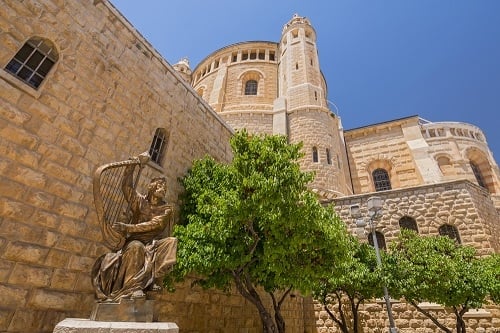
On this 3 day Jerusalem tour package you will see classic attractions, Biblical sites and historic landmarks. Walk through the Old City and follow in Jesus’ footsteps on the Mt. of Olives. Visit the Holocaust Museum, Via Dolorosa, King David’s tomb and the Room of the Last Supper on Mt. Zion. Go beneath Jerusalem to the excavated City of David and discover the water system that supplied ancient Jerusalem.

Christian Jerusalem Tour, 3 days

This 3-day tour of Jerusalem and Bethlehem focuses on Christian landmarks and biblical sites. In Bethlehem see where Jesus was born and visit the Church of Nativity and Manger Square. Get a panoramic view of Jerusalem from the Mt. of Olives. Walk through the Old City and see places like the Stations of the Cross and Holy Sepulchre. Follow in the footsteps of Jesus and enter the Garden of Gethsemane where Jesus was arrested on the eve of his crucifixion.

Zichron Yaakov Wineries

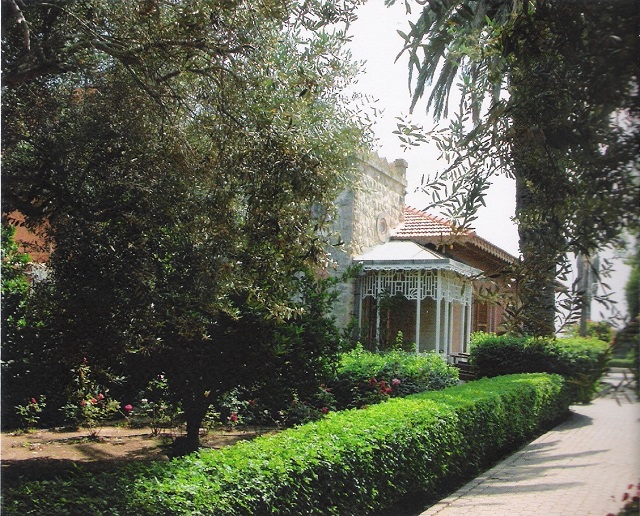
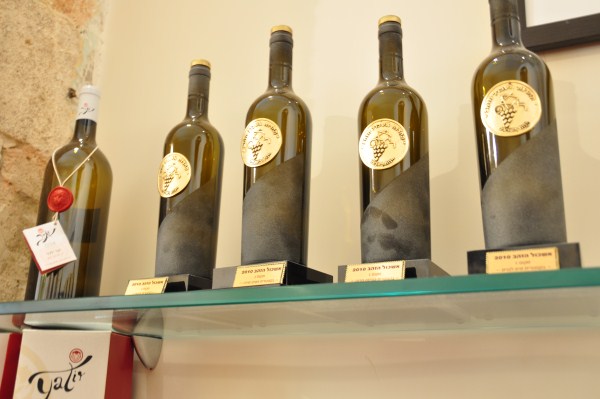
Zichron Yaakov is a quaint town nestled in the countryside, 35km south of Haifa at the southern end of the Carmel Mountains. The historic town and surrounding greenery is reminiscent of a small European village and is best known for its wine industry. Zichron Yaakov is home to 12 winery visitor centers where you can take tours and taste the wines. The Zichron Yaakov wine industry dates back to 1882 when Baron Edmond de Rothschild helped establish the community and develop the vineyards using cuttings of grapevines brought from France. It is possible to spend the day touring the wineries of Zichron Ya’akov and neighboring Benyamina.Carmel WineryLocated in Zichron Ya’akov but with vineyards across the country, this is Israel’s largest modern winery producing more than 15 million bottles a year. The winery was established in 1882 by Baron de Rothschild making it Israel’s oldest winery. Visitors can tour the Wine & Culture Center, take workshops, tastings, see the production process and visit the cellars.Somek Estate WineryThe grapes on Somek Estate are handpicked early in the morning and immediately processed at the nearby winery. The grapes are handled in the traditional way with an old-fashioned barrel press and moved by hand rather than tubes. Their visitor center in Zichron Ya’akov offers workshops, tastings, and a chance to see the wine-making process in action.Tishbi WineryTishbi is an internationally renowned winery that produces about a million bottles a year. Here you can enjoy wine tasting and workshops on wine pairing. There are also guided tours and a restaurant on site.Arens WineryLocated in Binyamina, minutes from Zichron Yaakov this winery was established by the third generation of a local farming family and has deep roots in the community and land. They use only grapes from the HaNadiv Valley and carefully cultivate them using innovative methods.Binyamina WineryThis is one of Israel’s oldest wine-making establishments; founded in 1952 in the quaint village of Binyamina. They produce a wide variety of wines under five labels. The winery is housed in a heritage building and offers wine tours, workshops, and grape juice tastings.To visit one of Zichron Yaakov Wineries, book Caesarea, Zichron and Haifa Private Tour.

German Colony, Haifa

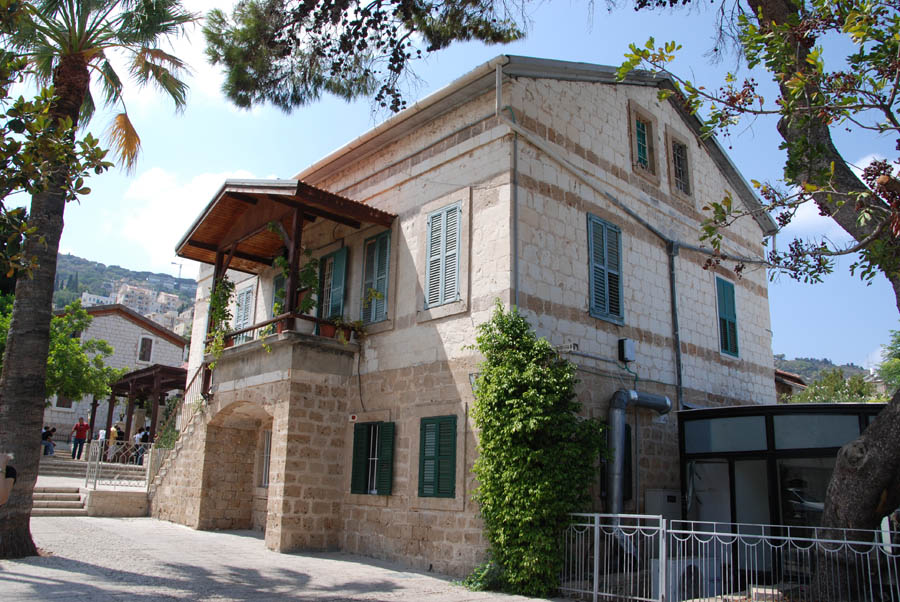
The German Templar Colony is a historic neighborhood in Haifa, at the foot of Mt. Carmel just below the Baha’i Gardens. The area consists of restored buildings built in the 1900s by German Templars.Who Were the German Templars?The Templars were German Christians who believed it's their calling to settle in Israel. They believed that by returning to Palestine they could hasten the Second Coming of Christ. They arrived in Palestine led by Protestant Christoph Hoffmann and established seven communities including those in Jerusalem, Tel Aviv and Haifa. The Haifa colony was the first to be settled in 1869. When the Templars arrived in Palestine the land and amenities had been neglected by the Ottoman rulers. The Templars set about cultivating the land; opening flour mills, oil presses and the first European-style stores and guesthouses. They built their colonies with single-family homes, gardens and adjacent farmlands. At their peak, there were 750 inhabitants in the Haifa German colony.During World War II 34% of the Templars were affiliated to the Nazi Party and the colony raised the Swastika flag. Their support of Germany and the Nazi movement led to the expulsion of the German Templars by the British who ruled Palestine at the time. By the end of the 1940s, there were no more German Templars in Palestine. The name “Templar” comes from the New Testament concept of the body being God’s temple, embodying God’s spirit and as a community building God’s temple on Earth.What to See in the Germany Colony, Haifa?The main street (Ben Gurion Boulevard) of the Haifa Templar colony is beautifully stone-paved; 30 meters wide and lined with trees on both sides. The houses along the street are also built of pale-colored stone and have distinctive red-shingled roofs and shuttered windows. Each of the houses bears a sign telling you about the property’s history. Today the Templar houses hold boutique hotels, art galleries, restaurants, cafes and bars. One of the highlights of the German Colony is Beit Am (House of the People). It was one of the first buildings to be constructed and was used as a place of worship and as a community center.To visit German Colony in Haifa, book Caesarea, Haifa and Acre Private Tour.

Muhraka Monastery, Haifa

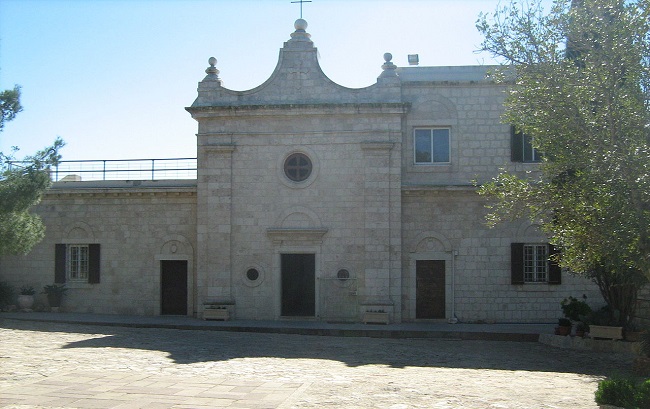
Muhraqa or Horn of the Carmel is the name of a Carmelite monastery located on the southern slope of Mount Carmel about 27km from Haifa at an altitude of 497 meters above sea level. It is here on this high ridge, overlooking the hills of the Lower Galilee that the Biblical battle or contest between the Prophet Elijah and the pagan prophets of Baal took place.Muhraka in the BibleThe site is described in Kings I as the place where Elijah persuaded King Ahab to reject the pagan prophets by challenging them to a contest to see who could conjure up fire. The Baal prophets failed but Elijah successfully evoked fire from heaven on the altar burning the sacrifice, wood and stone and earning it the name “Place of Burning.” Following this the false prophets were led away down river and killed.The Religious Site of MuhrakaSince the 12th century the site on Mount Carmel has been visited by Christian, Jewish and Muslim pilgrims as the site of Elijah’s altar. For over 100 years the site has been owned by the Carmelite Order and their monastery is named after their patron, the Prophet Elijah. The present chapel, built in 1883 was constructed on a former Crusader structure that marked the site of Elijah’s altar. The chapel altar is made with twelve stones in reference to the twelve stones used by Elijah to build his altar. Also at the site is a white stone statue of Elijah with his sword poised to kill one of the pagan prophets. The Muhraka Monastery is surrounded by a nature reserve and offers views of the Plain of Esdraelon, the southern Galilee and the Kishon Stream. Not far from here are a number of ancient ruins including Chirbet-ed-Dawabe and Sumaka, both from the Byzantine era. Also nearby on the western edge of Mount Carmel is the Stella Maris Monastery, the Carmelite word headquarters established at the site where Elijah is believed to have lived and near Elijah’s Cave where he is believed to have meditated.Want to visit the Muhraka Monastery? book our Caesarea, Haifa and Acre Private Tour.

Daliat-el-Carmel

Daliat-el-Carmel is a Druze town 20km southeast of Haifa on Mount Carmel. This is the largest Druze community in Israel. The surrounding landscape is stunningly beautiful and the town itself is unique. The Druze people welcome visitors and are proud to introduce their heritage and traditions to others.Who are the Druze?The Druze are an Arabic-speaking minority with an esoteric faith that grew from Islam. The sect guards its doctrine closely with only a few of the initiated being privy to the religious doctrine. Their tenets include the unity of God and continuous reincarnation. There are Druze living in Israel, Syria and Lebanon and they give their allegiance to the country they are living in. Druze are a valuable and integrated part of Israeli society and serve in the Israeli army. The Druze are a peaceful group known for their grace, loyalty, courage and dignity. Today there are about 130,000 Druze in Israel.What to See and Do in Daliat-el-CarmelVisitors to Daliat-el Carmel can wander through the picturesque streets and see old buildings as well as the Druze houses of worship called Helwa. There are old oil presses on display, weaving mills and several art galleries. A walk down the main street of Daliat-el-Carmel will take you past many stores selling traditional Druze arts and crafts. You can buy Druze clothing, musical instruments and decorative items for the home. The market is in the center of the town and you can often see the elder Druze residents wearing traditional Druze clothing. On a visit to Daliat-el-Carmel you can try authentic Druze cuisine including the large, thin pita breads.Oliphant House sits on a hilltop overlooking the town. It is the former home of Lord and Lady Oliphant and their secretary, Naphtali Herz who wrote the Israeli national anthem. Today the house is a memorial to fallen Druze soldiers and the adjacent wall holds paintings and documents relating to the peace treaties with Jordan and Egypt. There is also an observation point at the house where you can see over the mountains all the way to the sea.Want to visit the Daliat-el-Carmel? book our Carmel Coast and Druze Village Private Tour.

Church of Multiplication - Tabgha

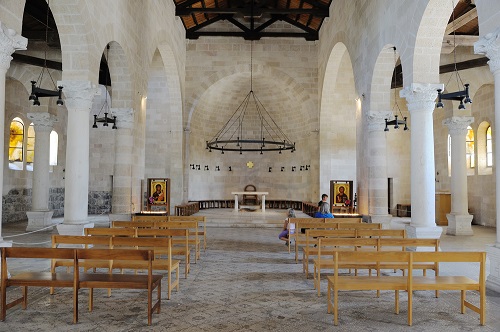
The Church of the Multiplication is in the area of Tabgha on the western shore of the Sea of Galilee. The church marks the site where Jesus performed the miracle of the multiplication of loaves and fish. This was also the site where Jesus appeared for the fourth time after his resurrection.The Miracle of Multiplication in the BibleIn Mark 6:30-46 we read how Jesus and his disciples went out on the water to a remote site in search of some peace and quiet. Crowds of Jesus’ followers came after them and as night fell there was nowhere around to find food for the multitudes. To feed the crowd of five thousand people Jesus performed a miracle sharing the meager two fish and five loaves between all the people. Shortly after performing this miracle Jesus performed an additional miracle by walking on the water. The Biblical reference does not mention Tabgha by name but calls it a remote place on the shores of Galilee.TabghaThe name Tabgha comes from the Greek for “Seven Springs” but Tabgha was originally called Heptapegon. During the Byzantine era there were three water towers at Tabgha. The water from natural springs was collected in the water towers and sent via aqueducts to nearby farmlands to irrigate the fields. It was in the 4th century that Christians first identified Tabgha as the Biblical site of the miracle of multiplication. In 350 AD. The first church was built to mark the Biblical site.In the 5th century the Church of St. Peter’s Primacy was built in Tabgha where Jesus gave Peter leadership over the apostles and where Jesus appeared to his disciples after his resurrection. The church was later destroyed and rebuilt in 1934. In 1596 a small Muslim village stood where Tabgha is today. From 1922 to 1948 Palestine was ruled by the British and under their authority Tabgha continued to be inhabited by a mainly Muslim population. During the 1948 Arab-Israeli War the area was cleared of inhabitants and following the war the area was resettled and the new churches built.The Church of the MultiplicationToday the Church of the Multiplication is a modern structure built on the remains of the 4th-century church. The highlight of the church is the Byzantine floor mosaic which survived after the original church’s destruction in 685. The mosaic near the altar shows two fish on either side of a basket of loaves. Other features of the mosaic are vines, lotus flowers, oleanders and animals including ducks, geese, doves, peacocks, cranes, herons, a swan and flamingo. In the church’s 5th century floor mosaic there seems to be a reference to the three original Byzantine water towers that once stood here.Beneath the altar of the Church of the Multiplication is a large rock where it is thought that Jesus placed the fish and loaves as he blessed them. There is a glass panel in the floor through which you can see the foundations of the original church. In the church courtyard you can see an excavated basalt stone font and oil presses.

Synagogue of Katzrin

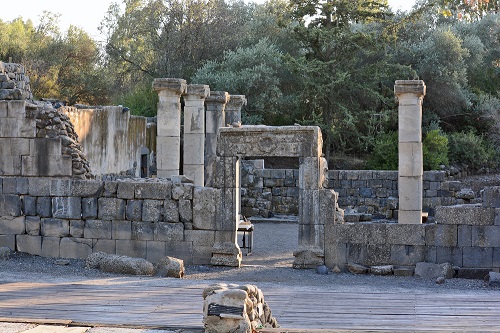
The town of Katzrin in the Golan is famed as the site of a reconstructed Jewish Talmudic-era village created out of excavated remains. The highlight of this incredible site is the Katzrin Synagogue. Originally a small synagogue was built on this site in the 4th century. Then in the 6th century, a larger structure took its place and remained in use until its destruction by an earthquake in 749 AD.The 6th-century synagogue was built facing towards Jerusalem and there were two main entrances, one on the north and the other on the western wall. The synagogue was constructed using large blocks of stone but no mortar was used. Originally it stood two stories high with windows on the upper level. The upper story has not survived but we can still see the two rows of four columns that would have supported the second level. The roof would have been made of wooden beams and covered with ceramic tiles. The walls would have been whitewashed and decorated with red geometric patterns. The synagogue floor was once covered with beautiful mosaics and it is still possible to see sections of the mosaics. Along the walls of the synagogue interior there are two stone step benches where worshipers would sit as they prayed.The main entrance to the synagogue is topped by a lintel featuring decorative carvings. Several features distinguish this as a Jewish place of worship – the engraved motif of a Jewish menorah inducing the raised stone platform against the southern wall where the Torah Ark would have stood. Today it is possible to hold weddings, bar mitzvah ceremonies and special events in the ancient synagogue of Katzrin.Join a Golan Heights Tour and visit theSynagogue of Katzrin.

Syrian Fortification, Mt Bental

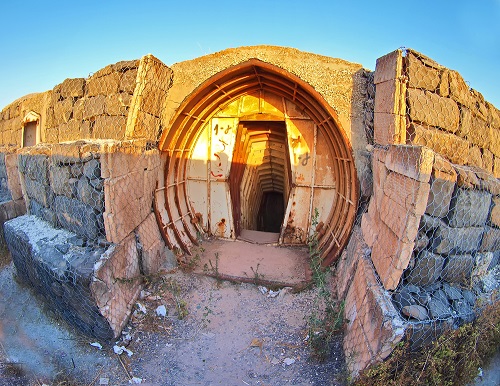
The Golan Heights are a range of mountains forming a natural border between Israel and Syria. In modern history the mountains have changed hands several times. Today the Golan is an area of forests, lush vegetation, farmlands, vineyards, hot springs, archaeological sites and quaint villages. The most unusual attractions are the former Syrian fortifications which have been preserved since being abandoned by Syria in 1967. From here there are stunning views looking down into Syria and back towards the Galilee.History of the Syrian Fortifications on the Golan HeightsSyria gained independence from the French mandate in 1946 and the British withdrew from Palestine in 1948 which led to the establishment Israel. In 1948 Syria invaded the Golan in a simultaneous attack by six other neighboring Arab nations. The Syrians took the Golan and erected fortifications creating a military zone. Their fortifications included military camps, bunkers and settlements of military personnel. From the vantage point overlooking the Jordan Valley and Hula Valley in Israel the Syrians had a strategic advantage over Israel and posed a constant threat. There were regular skirmishes, shelling of Israel villages and the Syrians even tried to divert the Jordan River in 1965 so that water would not flow into Israel. In 1967 a new attack was launched on Israel this time by Syrian, Egypt and Jordan simultaneously. The Six-Day War ended with Israeli troops beating back the Arab armies beyond their borders. The Israelis took the Golan Heights and Syrians fled back to Syria leaving the fortifications, villages and bunkers abandoned. Following a renewed attack by Syria in 1973 a disengagement agreement was reached. The border between Israel and Syrian along the Golan Heights became regulated by UN observer forces and a demilitarized zone was created. Since then the delicate status quo on the Golan has been maintained and the Israeli Golan Heights have flourished into a productive farm area and tourist destination. The fascination with our Syrian neighbors has not waned; so close and yet so far! Today tourists enjoy exploring the fortified remains left behind by the Syrians in 1967.Want to explore the Golan and get a chance to view Syria and the Galilee? join a Golan Heights Tour and visit the Syrian Fortification.

The Pools of Bethesda

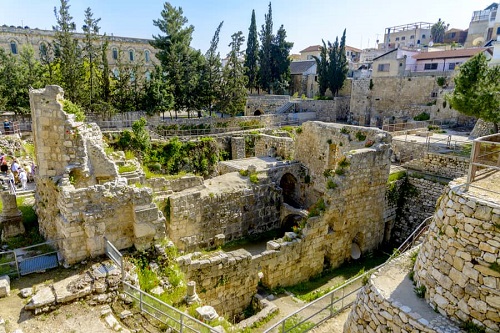
The Pools of Bethesda are mentioned in the Bible as a place where people came to wash in the curative waters and as the site where Jesus cured a paralyzed man. Today the excavated pools are in the Muslim Quarter of the Old City Jerusalem about 50 meters inside the Lions’ Gate (known in the Biblical-era as Sheep Gate, as sheep would be brought into the city through this gate for sacrifice at the Temple). The pools are within a complex with the Church of St. Anne marking the home of Mary’s parents Joachim and Anne.The pool was originally excavated in the late 19th century but work on the site has continued for more than 100 years. Excavation of the site revealed that the pool was divided by a wall or dam creating two separate basins. A flight of steps leading down into one of the pool basins indicates that it could have been a Jewish ritual bath (mikvah). The second basin would have been used to collect and hold rainwater to keep the mikvah constantly supplied with fresh water. In the Bible the pool is described as having five porticoes, this would suggest a five-sided pool.The Pools of Bethesda in the BibleThe Bible tells us how the Pool of Bethesda was visited for its healing powers. The first person to enter the water was cured of their ailment. In John, we read how a paralytic had been coming to the pool for the last 38 years but never given the chance to be first in the water. Jesus visited the pool and told the man to “take up his mat and walk.”History of the Pools of BethesdaDuring Jesus’ lifetime, the pool could have been a Jewish ritual bath (mikvah). During the Roman era, medicinal baths were built at the pool site suggesting that the waters were believed to have curative powers as written in the Bible. In the following centuries, the Byzantines and Crusaders built churches and chapel at the site and you can still see remains of these structures.Want to view The Pools of Bethesda? join a Jerusalem in the Footsteps of Jesus Tour.

Ancient Synagogues, Safed

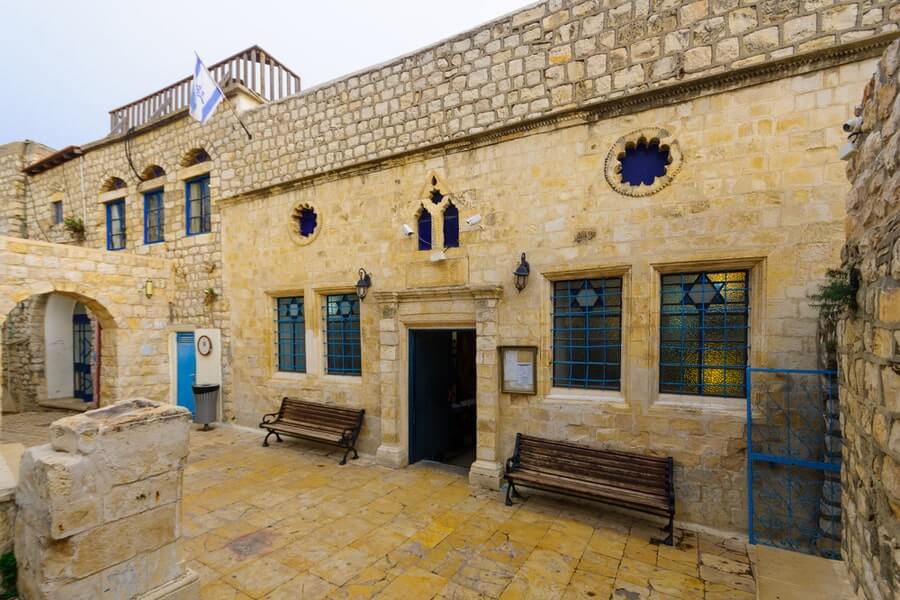
The ancient city of Safed (Tzfat) is perched on a hilltop in northern Israel's Upper Galilee. During the 16th-century Jewish scholars and mystics expelled from Spain were drawn to Safed. The city became a spiritual center for Jewish mysticism and Kabbalah and home to rabbis like Rabbi Yitzhak Luria (Ha Ari HaKadosh); Rabbi Shlomo Alkabetz and Rabbi Yosef Karo. During this period many synagogues were constructed, several of which have survived. In the Old Town, you can find the narrow cobbled streets lined with ancient buildings and synagogues.Ari Ashkenazi SynagogueThis 16th-century synagogue was founded by Spanish exiles and Kabbalists who followed Rabbi Isaac Luria, known by his acronym – Ari. It was the Ari's custom to pray at this synagogue on Friday evenings and then walk into the fields to welcome the Shabbat. This tradition led to the creation of the popular Shabbat song Lecha Dodi. In the 18th century, the congregation was joined by a group of European Ashkenazi Hasidim and the synagogue became known as the Ashkenazi Ari Synagogue. Highlights of the synagogue include the carved olive wood Holy Ark. Today the traditional welcoming of the Sabbath is still performed at the synagogue on Friday evenings.Ari Sephardic SynagogueThe Ari Sephardic Synagogue constructed in 1522 was originally used by North African Jews. In the 16th century, Rabbi Isaac Luria (The Ari) frequented this synagogue to enjoy the view from the window overlooking Mount Meron, site of the Tomb of Rabbi Shimon Bar Yohai. Legend has it that while studying Kabbalah in the synagogue one day the Prophet Elijah appeared to the Ari. During the War of Independence, the synagogue's location on the edge of the Jewish Quarter brought it into the conflict and the structure was used as an outpost against the Arab invasion into the Jewish Quarter.Yosef Caro SynagogueThis synagogue was built in the 16th century, destroyed twice by earthquakes and rebuilt. The synagogue is named after Rabbi Joseph Caro, a scholar, and Kabbalist who wrote the Shulchan Aruch, codifying Jewish law. According to tradition, the residence beneath the synagogue was home to Caro and the site where the "Maggid" appeared to him, revealing the secrets of the Torah which he recorded in the "Maggid Meisharim."Other Safed Synagogues Worth VisitingThe Abuhav Synagogue houses a Medieval Torah scroll and has three holy Arks instead of one. If you visit the Avrutch Synagogue with a Golan Heights and Safed tour you'll hear about how this synagogue gave shelter to the faithful during the 1837 earthquake and see the surviving Holy Ark. Stop at the 15th century Bana'a Synagogue and visit the Alsheich Synagogue which has remained untouched since its construction in the 16th century. The Beirav Synagogue is the place to visit to learn about the Carlebach Prayer.

Ancient Fisherman's boat (Jesus boat), Ginosar

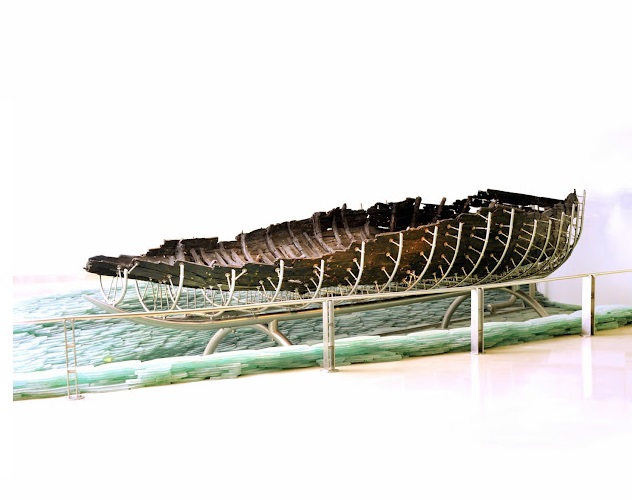
The Jesus Boat or Galilee Boat is the name given to an ancient fishing boat discovered in the Sea of Galilee and now on display at the Yigal Allon Museum at Kibbutz Ginosar on the edge of the Sea of Galilee. The boat was found by chance in 1986 when Israel was experiencing a drought and the water level of the Sea of Galilee had dropped dramatically. The low water level in the Sea of Galilee (actually a land-locked freshwater lake) exposed the muddy bed of the lake where the fishing boat had been lying for almost 2,000 years. Fishermen stumbled across the boat buried in the mud on the northwest shore of the Sea of Galilee just 1.5km north of Migdal, the Biblical hometown of Mary Magdalene.The find consisted of the hull of a fishing boat measuring 8.3m long, 2.3m wide and 1.3m deep. A boat of this kind would have been able to carry up to 15 people. After careful and complicated excavation that took 11 years, the waterlogged timber was safely brought to land. The boat was carefully examined and radiocarbon dating was performed. The experts declared the boat to be from the 1st century AD (approximately 120 BC - 40 AD). This dates the boat back to Jesus’ lifetime and the period he spent in Galilee.Jesus and the Ancient Galilee BoatThe boat existed at a time when Jesus was living in Galilee. It was during this period that he went from village to village in Galilee preaching the word of God. The Bible tells us of many occasions when Jesus spent time with the fishermen of the Sea of Galilee. Fishing boats on the Sea of Galilee are mentioned 50 times in the Bible including an occasion when Jesus went out onto the water in one of these fishing boats. No one can prove whether or not this is the actual boat that Jesus sailed in but it was definitely a boat of the same kind that existed during the same period.

Franciscan Monastery of San Salvador, Jerusalem

The Catholic Franciscan Monastery of San Salvador (Sacred Savior) is located in Jerusalem’s Old City near the New Gate. This is the center of the Franciscan Order in the Holy Land and the Middle East. The extensive monastery complex encompasses a publishing house, offices, church, Catholic school, and the monks’ living quarters. History of the San Salvador Monastery, JerusalemIn 1560, the ruling Sultan Sulieman the Magnificent allowed the Franciscans to buy the property where the monastery stands, from the Georgian Orthodox Church. By 1850 the old church was too small for the parish, and Sultan Abdulmecid I gave permission to demolish the old structure and build anew. Construction was financed by donations including a contribution from the Austro-Hungarian Emperor Franz Joseph I and the church was completed in 1885.The monastery church was designed by Father Raffaele Cingolani and unlike most churches, it is built on the north-south axis. In 1932 two floors were added to the church clock tower in honor of the 700th anniversary of St. Anthony of Padua. In 1985 the complex was renovated in honor of the 100th anniversary of its construction.Highlights of the Franciscan Monastery of San Salvador, JerusalemThe Pope appointed the Franciscan Order to be custodians of the Holy Land, and preserve the interests of the Catholic Church in the east. As you enter the complex notice the Franciscan coat of arms and the symbol of the Custodia Terra Sancta carved into the gate. The magnificent church has a high ceiling covered with intricately patterned paintings. Marble-clad columns supporting arches divide the church into two aisles and a wide nave. The tiled floor is particularly beautiful with a unique geometrical pattern. Entrance to the complex is off-limits but visitors can tour the breathtaking San Salvador Church.

Wedding Church, Cana

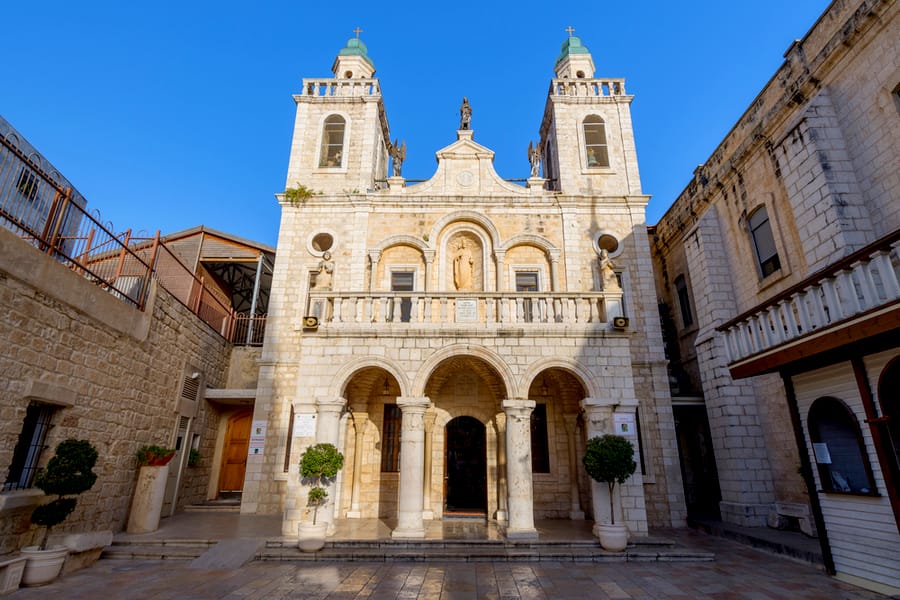
The Wedding Church stands in the Lower Galilee town of Kfar Kana. 2,000 years ago Kfar Kana would have been the town of Cana. Jesus attended a wedding in Cana and performed his first miracle, turning water into wine. As the site of such an important Biblical wedding Cana has become a popular place to wed or renew marital vows and it is home to the famous Wedding Church. In the 4th century Empress Helena, mother of the first Christian Roman Emperor Constantine traveled to the Holy Land to identify Biblical sites. Helena had a church erected in Kfar Kana to mark the site of Jesus’ first miracle. In 1883 the Franciscans completed the construction of a new church over the remains of the 4th-century church. This Franciscan church is the church we know today as the Wedding Church.Cana in the BibleMary, Jesus and his disciples attended a wedding in Cana. At some point during the celebrations the wine ran out and Mary approached Jesus saying: “There is no more wine.” Jesus replied:” Why do you involve me? My time has not yet come. “Mary then told the servants at the wedding to do whatever Jesus tells them to do. Jesus commanded the servants to fill six stone jars with water. He then told them to pour from one of the jars to fill the master of the banquet’s cup. Upon tasting the master of the banquet declared it to be top quality wine (John 2:1-11).The Wedding Church of CanaVisitors approach the Wedding Church across a courtyard and are faced with a modest facade flanked by twin bell tower and adorned with angel statues. There is an arcade narthex (enclosed front porch) topped by a balcony. Within the church there is an upper level with a chapel topped by a dome. The nave of the upper church holds a section of Byzantine mosaic from the 5th-6th century. In the lower church is a chapel and small museum displaying excavated artifacts including an ancient jar which could have been one of the jar that Jesus filled with wine.Want to visit Wedding Church of Cana? Join our Sea of Galilee Christian tour.

Christian Quarter

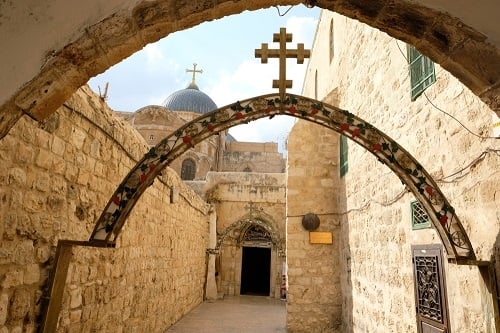
The Christian Quarter is one of four quarters of Jerusalem’s Old City together with the Jewish, Muslim and Armenian Quarters. The Christian Quarter takes up the northwestern section of the Old City and can be accessed via the Damascus Gate, Jaffa Gate and New Gate. It is home to Christians of a number of denominations including Greek Orthodox, Eastern Orthodox, Roman Catholics and Ethiopian Christians.History of the Old City Christian QuarterIn the 4th century, Emperor Constantine’s mother Helena traveled to the Holy Land where she identifying a site in Jerusalem as Calvary where Jesus was crucified and the cave where Jesus was laid to rest. She had the Church of Holy Sepulchre constructed making a bold statement for Christianity in this part of the city. Over the centuries other religious institutions and churches were built close by creating a community of Christians in what we now know as the Christian Quarter.Landmarks in the Old City Christian QuarterThe Church of the Holy Sepulchre is a huge church encompassing the sites where Jesus was crucified, prepared for burial and laid to rest. It is the main attraction of the Christian Quarter; an opulent, historic site shared by several Christian denominations. Leading to the Holy Sepulchre is the Via Dolorosa, the route Christ took bearing his cross to his crucifixion. The Via Dolorosa starts in the Muslim Quarter and ends at the Holy Sepulchre which holds the last 5 Stations of the Cross. Lining the Via Dolorosa there are small churches. The Greek Orthodox Church of St. John the Baptist has a crypt dating back to the 5th century and was used by the Crusader Hospitalliers; it is recognizable by its silver dome. The Lutheran Church of the Redeemer is one of two Protestant churches in the Old City built in 1898. Below the church is an archaeological site. The Church of St. Alexander Nevsky stands alongside the Holy Sepulchre and was built by the Russian Orthodox church in the 1800s and dedicated to Emperor Alexander III’s patron saint, Alexander Nevsky. There are two monasteries and two mosques within the Christian Quarter. One of the most popular tourist attractions in the Christian Quarter is the Muristan Market. You can find eateries, stores, hostels and hotels in the Christian Quarter all geared towards tourists and Christian pilgrims.Want to explore the Christian Quarter and other Christian sites? Join one of our Christian day tours to discover the Christian side of Israel.

Ein Hemed National Park

Pastoral Ein Hemed National Park makes a perfect destination for nature-lovers, and those looking for tranquil surroundings. Ein Hemed is conveniently located between Tel Aviv and Jerusalem, south of the Tel Aviv-Jerusalem highway and opposite Abu Gosh. It offers picnic areas, playgrounds, the remains of a Crusader structure, ancient burial caves, and a babbling stream.The arcadian park is green year-round with lush vegetation, Mediterranean woodlands, old orchard trees, and Palestine oaks which are the largest of their kind in the Jerusalem hills. In winter and spring, the ground is covered with a carpet of wildflowers including cyclamen, narcissi, anemones, and buttercups.Hundreds of years ago this location would have been beside a Roman road connecting Jerusalem with the coastal plain. The main attraction of the park is a well-preserved fortified Crusader structure that was once part of an agricultural settlement and would have been one of the fortresses built to protect pilgrims traveling along the road to Jerusalem. The abundant water sources in the area made it ideal for farming. The park was established in 1968 to protect the Crusader remains and natural surroundings.Highlights of Ein HemedCrusader Fortress: Visitors can explore the remains of a Crusader structure that is believed to have been part of the Aqua Bella agricultural farm. The fortress was built in the mid-12th-century to protect farmlands given to the Order of the Hospitallers. The Hospitallers were the medical branch of the Crusaders who took care of ailing pilgrims and wounded Crusaders. The homestead may have been used as a convalescent home for knights of the Order. Archaeological excavation has revealed that the fortress would have had two stories and covered about 1,000m². The complex was characterized by rooms with vaulted ceilings, an entrance gate, a courtyard, and a watchtower.Recycled Stream: A closed system collects water from a spring that feeds the Kesalon Stream, and returns it to the starting point so that it continuously flows. This prevents the stream from drying up in the hot Israeli summers. Burial Caves: Visitors can take the circular hike trail past First Temple (957 BC-587 BC) era burial caves.Hike Trail: A circular hike trail starts at the park entrance and takes visitors past the most important points of interest in the park including the burial caves, Crusader remains, and the stream. The hike continues to a lookout point with scenic views of the Jerusalem hills. The trail is accessible to wheelchairs and baby buggies. The park has been made easily accessible for visitors. There are expansive lawns, picnic tables, toilets, and trees for shade. To visit Ein Hemed book one of our Jerusalem private tours.

Masada and Dead Sea Day Tour

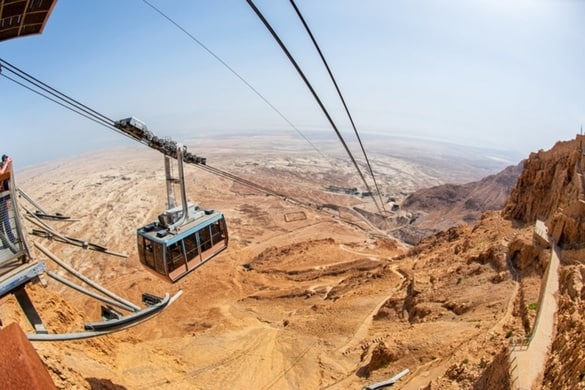
We start this exciting Masada and Dead Sea tour traveling south of Jerusalem through the Judean Hills. The Masada tour passes the Inn of the Good Samaritan and pauses by the sign indicating sea level. From that point, the tour descends beneath sea level to the Dead Sea at the lowest point on the planet. The tour travels along the edge of the Dead Sea where the turquoise water is lined with a white salt crust.Our first stop on this tour is Masada, a “mesa” or flat-topped rock outcrop rising 450m from the desert plains. We take a cable car to the plateau summit of Masada where there are breathtaking views of the Dead Sea.Thanks to the dry climate and remote location the structures have been well preserved. About 100 years later during theFirst Jewish–Roman War (66–73 CE), a group of Jewish zealots took refuge on Masada. They held off the Romans for several months until the Romans built an earthen ramp to scale the steep cliffs. When Roman troops reached the plateau they found that all of the 960 Jews had killed themselves rather than be captured and forced to forsake their God. This event in Jewish history has made Masada a symbol of Jewish determination not to relinquish their independence.The tour leaves Masada and takes you to the nearby Dead Sea past Ein Gedi and Qumran, the site of the Dead Sea Scroll discovery. If time permits, we will stop for refreshments at the Dead Sea Mineral Cosmetic factory. Our final stop on this tour is the Dead Sea where you can relax on the beach and unwind. Enjoy the natural health benefits of the Dead Sea environment including the salt-rich water, oxygen-rich air, and mineral-rich black mud that you can use as a natural skin mask. Don’t leave before you have a shot of yourself floating in the Dead Sea!

Petra and Wadi Rum 2 Day Tour from Tel Aviv

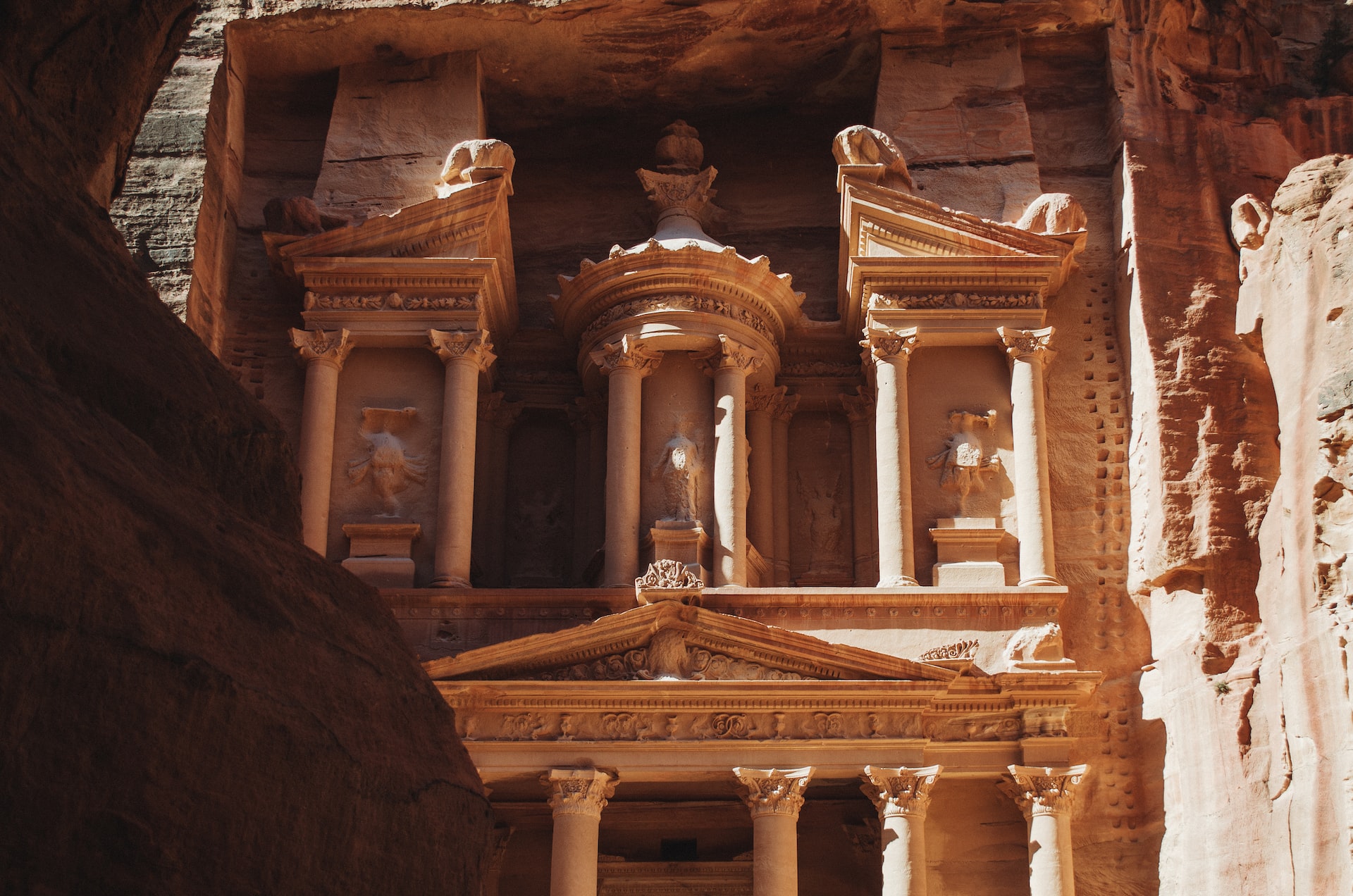
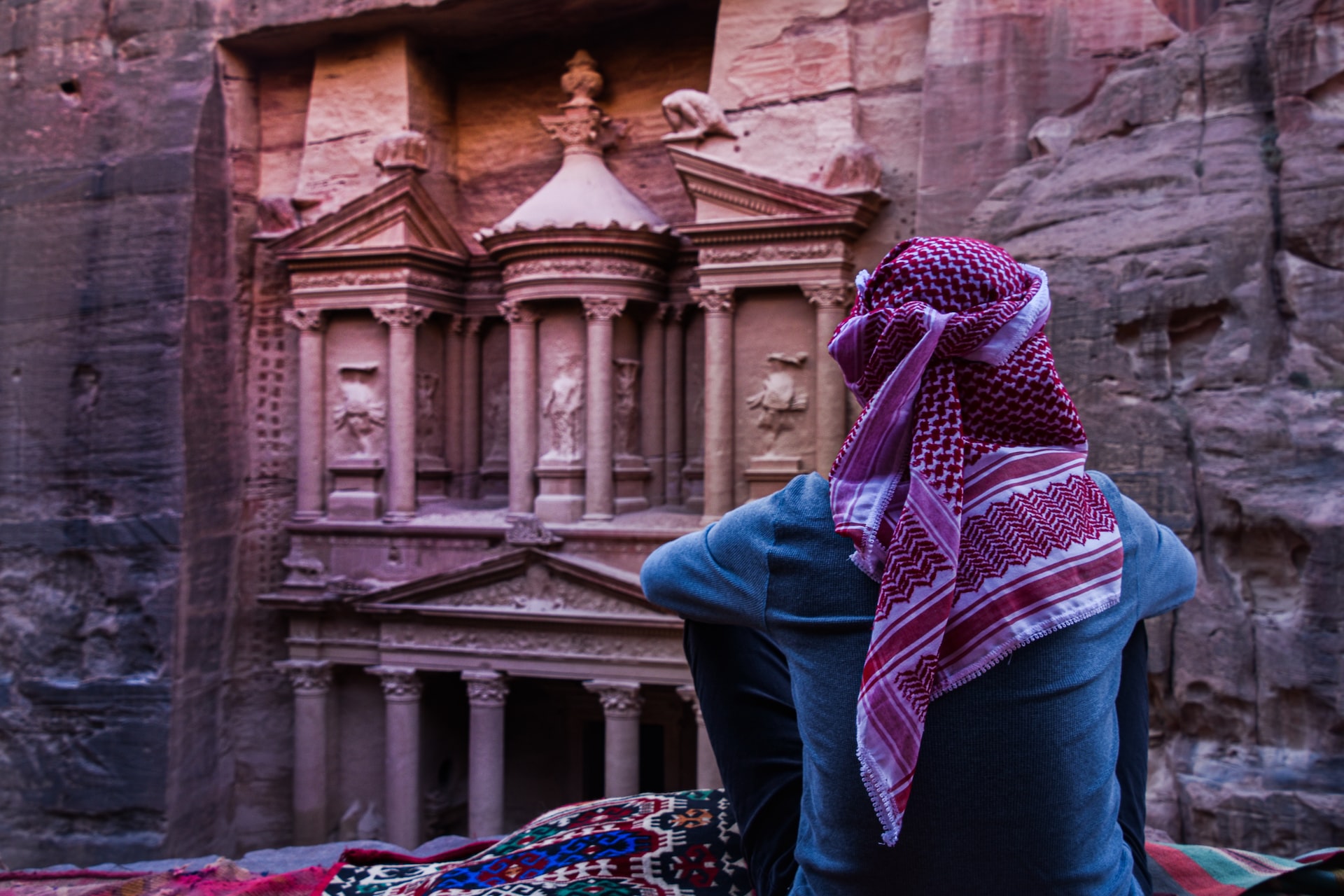
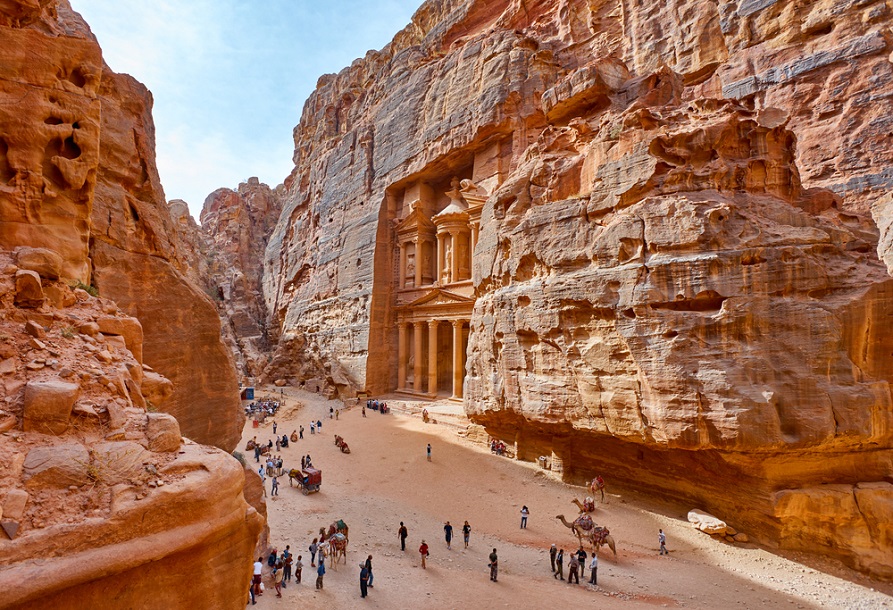
This splendid Petra and Wadi Rum 2-day tour from Tel Aviv includesexquisite Middle Eastern landscapes, the famous city ofPetra - one of the Seven New Wonders of the World- and an excitingjeep safari through Wadi Rum.Start with a drive south in an advanced bus, then swiftly cross the border into the Kingdom of Jordan. Stroll through Aqaba's picturesque street passages toMamluk Castle- an Ottoman fort overlooking Aqaba Bay's border nexus. You'll have free time toenjoy great beach activitiessuch as boating and snorkeling or have fun on an awesome private beach with a pool and a Jacuzzi.Next, you'll head out for a thrilling jeep tour of Wadi Rum, a special desert wilderness with amoon-like landscapeand an opportunity to snap some fantastic photos. SeveralStar Wars movieswere shot here, and you'll see why.After an authentic, yet indulging night ina genuine Bedouin camp, You'll head for Petra. This wonderful city was carved out of the red-hued desert cliffs 2,300 years ago, and its shrines and majestic mausoleums await you - starting with the renownedPetra Treasury.See the enigmaticDjinn Blocks, explore the ancientRoyal tombs, discover Nabatean History at thePetra Theater,and take excellent pics of this UNESCO world heritage site.

Petra Wadi Rum 2 Day Tour from Jerusalem

This Petra and Wadi Rum 2-day tour from Jerusalem will show youenchanting Middle Eastern landscapes, the well-known city ofPetra - one of the Seven New Wonders of the World- and an excitingjeep safari through Wadi Rum.Travel south in an advanced bus, then swiftly cross the border into the Kingdom of Jordan. Step through Aqaba's picturesque alleys toMamluk Castle- an Ottoman fort overlooking Aqaba Bay's border nexus. You'll have free time to enjoy awesome beach activities such as boating and snorkeling and have fun at an excellent private beach with a pool and a Jacuzzi.Next, you'll head out for an exhilarating jeep tour of Wadi Rum, a remarkable desert wilderness with amoon-like landscapeand an opportunity to take some fantastic photos. SeveralStar Wars movieswere shot here, and you'll see why.After an authentic, yet pampering stay ina genuine Bedouin camp, You'll head for Petra. This fabulous city was carved out of the red-hued desert cliffs 2,300 years ago, and its shrines and majestic mausoleums await you - starting with the awesomePetra Treasury.See the mysteriousDjinn Blocks, explore the ancientRoyal tombs, discover Nabatean History at thePetra Theater,and take fabulous pics of this UNESCO world heritage site.

Petra, Wadi Rum & Highlights of Jordan - 3 Day Tour from Tel Aviv or Jerusalem

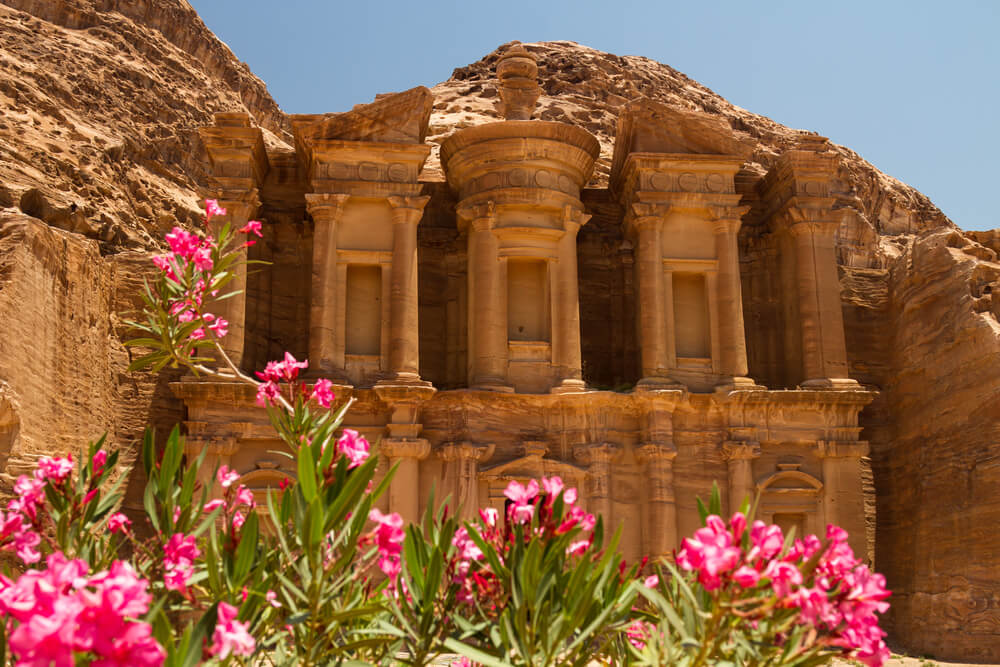
This Aqaba, Petra, and Wadi Rum 3-day tour delivers exquisite Middle Eastern landscapes, the wonderful beaches of Aqaba, the iconic city of Petra - one of the Seven New Wonders of the World - and an exhilarating jeep safari through Wadi Rum.Take a ride in an advanced tour bus from Tel Aviv or Jerusalem and reach the southern city of Eilat - then swiftly cross the border into the Kingdom of Jordan. Start your adventure with a visit to Mamluk Castle, a fort overlooking the border nexus of Aqaba Bay. Then enjoy free time to explore the seaside city of Aqaba, and enjoy beach activities such as boating+snorkeling, and fun on a private beach.Next, you'll take an exciting jeep tour of Wadi Rum, a distinctive desert wilderness with a moon-like landscape and an opportunity to snap some amazing photos. Several Star Wars movies were shot here, and you'll see why.After an authentic, yet pampering night in a real Bedouin camp, You'll head for Petra. This extraordinary city was carved out of the red-hued desert cliffs 2,300 years ago, and its temples and tombs await you - starting with the famous Petra Treasury.See the mysterious Djinn Blocks and the unique Obelisk Tomb, Walk in the footsteps of kings to the Royal Tombs, and take awesome shots of the Nabatean Theater from between the impressive columns.After a night in a great hotel right next to Petra, you'll have a whole day of scouting, hiking, interesting local cuisine, and more. This is your opportunity to visit the wonderful Great Temple of Petra, andthe Petra Monastery - a massive structure of rare magnificence, located at the end of a mountain trail with fabulous views.

Israel and Jordan 12-Day Tour Package

Experience the Best of Israel and Jordan in 12 Days!Join Bein Harim Tours for an unforgettable 12-day journey through the heart of the Middle East. Led by expert guides, this comprehensive tour includes comfortable hotel accommodations and daily breakfast.Discover the rich history and vibrant culture of Israel - explore Jerusalem, the Galilee, and the Golan Heights. Stroll through bustling markets, savor local flavors, unwind on the shores of the Dead Sea, and ascend the ancient fortress of Masada. Visit iconic sites like Caesarea, Haifa, Nazareth, and the Jordan River.Then, venture into Jordan to explore the port city of Aqaba, the dramatic desert landscapes of Wadi Rum, and the awe-inspiring rock-carved city of Petra.This tour offers the perfect mix of history, adventure, and relaxation - an ideal way to experience the region and create lasting memories.

Jewish Israel Tour Package, 6 Days

This 6-day Jewish Israel tour package is the best way to explore the Jewish heritage of the Holy Land. From Galilee and the Golan Heights in the north, through Jerusalem, to the Dead Sea and Masada. Ascend Masada, the fortress beside the Dead Sea, and tour the ruins. See the River Jordan and Banias, the Nimrod Fortress, and the Talmudic village of Katzrin. Visit the Herodian city of Caesarea on the Mediterranean. See the Bahai Gardens in Israel’s third city, Haifa. Follow a route that mainly includes sites relating to the Jewish heritage with the best tour guides in the country.

Petra 1-Day Tour from Tel Aviv

Rise early for a full day of adventure: sit back and relax as our spacious tour bus takes you from Tel Aviv to the beautiful south of Israel: the landscape will change color as the sun rises, and after crossing the Arahav Valley, you'll have a glimpse of the Red Sea and the Riviera of Eilat - Israel's best resort city. Your next stop is the Israeli-Jordanian border, and then a 2.5-hour drive through the unique landscape, all the way to the lost Nabatean city of Petra – considered one of the 7 New Wonders of the World.The city was carved into the surrounding red cliffs over 2,300 years ago, and many of its impressive temples were left pristine and untouched. See the mysterious Djinn Blocks, created to hold spirits and make a wish touching the stone, Take great shots of the Obelisk Tomb, then continue down the Siq – a colorful, smooth gorge to the famous Petra Treasury; here you'll see all the jaws drop, in front of its amazing, huge columns and intricate decorations. Visit the Royal Tombs and the Petra Theater – and explore the many shrines, mausoleums, and relics of a lost culture. Finish your day with a long ride back, all the way to the drop-off point in Tel Aviv.Enjoy a Worry-Free Vacation: Our representatives will assist with the visa requisition and border crossing. Our expert local tour guide will meet you on the Jordanian side of the border.Note that a 1-Day Tour of Petra won't leave you with enough time to fully explore this wonderful archeological park. This is why most travelers recommend a 2-Day Tour to Petra, to see Ad Deyr - the iconic Petra Monastery up on the ridge and visit Qasr Al-Bint Temple and the Great Temple of Petra.

Mount of Olives, Temple Mount, Dome of the Rock Tour

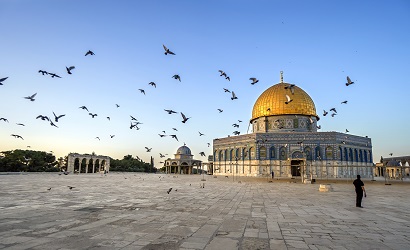
The Temple Mount tour starts at the Mount of Olives, where you can enjoy spectacular views of Jerusalem’s steeples, domes, and towers, as well as the Old City walls and Temple Mount. Pass by many beautiful churches on the Mount en route to Kidron Valley, located between the Mount of Olives and the Old City walls. In Kidron Valley, view the magnificent 1st-century tombs of Absalom, Benei Hezir, and Zechariah.Continue to the 16th century Dung Gate where the tour enters the Old City and takes you to Temple Mount, a site held sacred by Christians, Muslims, and Jews. It was here that Solomon built the First Temple which was destroyed in 587BC. The Second Temple stood on Temple Mount from 516 BC to 70AD. The Temple held the Ark of the Covenant where the Ten Commandments were kept. Today the mount is home to the magnificent Dome of the Rock built in 687AD; the Al-Aqsa Mosque, the third holiest site in Islam and the Dome of Chains. You can see these impressive structures and learn about Temple Mount’s incredible history. On occasion, the Temple Mount is closed to visitors, if so the tour will visit the Tower of David instead of the Temple Mount.Next, we visit the Davidson Center an archaeological site alongside Temple Mount. Here you can see excavated artifacts and architectural structures from various historical periods including the First and Second Temple Periods, Byzantine, Muslim, and Crusader eras. Among the archeological finds at the Davidson Center are walls from the First Temple Period; steps leading up to the Temple Mount; a Second Temple era street; ritual baths and more. The tour comes to an end when you are returned to your hotel.

Megiddo and Nazareth Private Tour

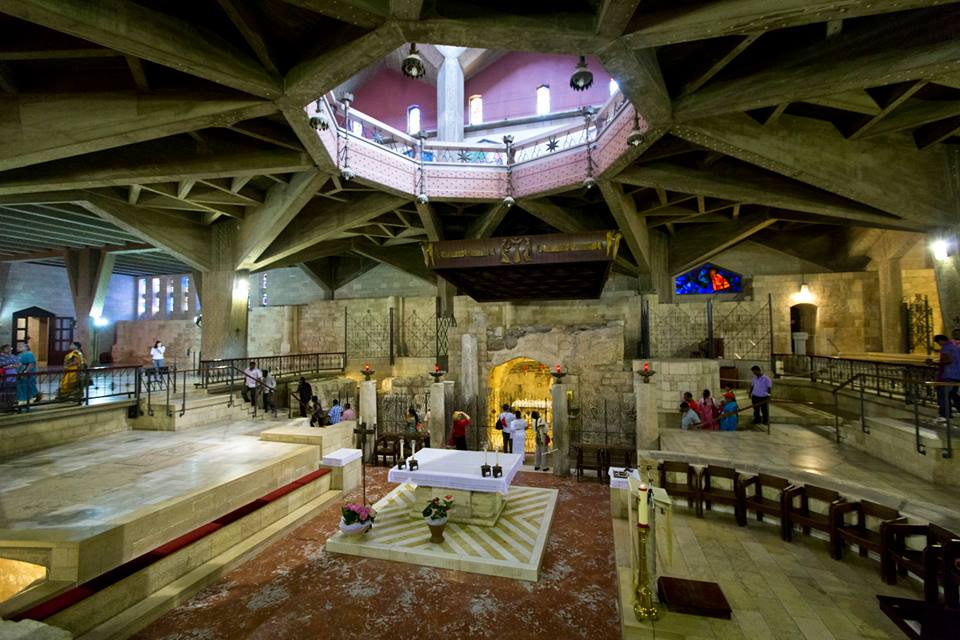
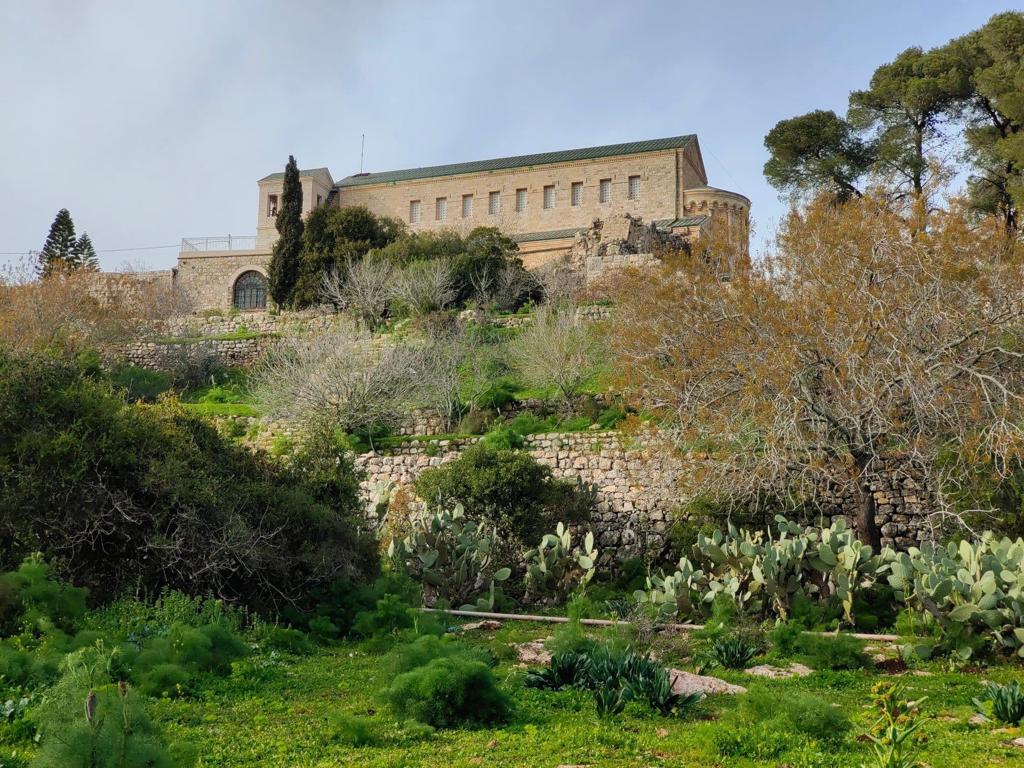
After you are picked up from your hotel the private tour takes you north to the Galilee. The first stop is at Tel Megiddo, an archaeological mound overlooking the Jezreel Valley where the remains of 26 ancient cities have been uncovered. Megiddo is a UNESCO site and is believed to be Armageddon, where the New Testament places the Final Battle. While here you can see the Late Bronze Age city gate; an ancient circular shrine and excavated stables that belonged to the Israelites.From Megiddo the tour continues to Nazareth, home to Israel's largest Christian population. As Christ's childhood home, Nazareth is a major Christian pilgrimage destination. The magnificent Church of the Annunciation marks where the Angel Gabriel appeared to Mary and told her of the son she would have. Visit the Church of Saint Gabriel, built above an underground spring where the Eastern Orthodox Church believes Mary was drawing water when the annunciation took place. Before leaving Nazareth explore the city's traditional market and look out across the rooftops of Nazareth from an observation point.The next stop is Sepphoris (Tzippori or Zippori), once a major Roman city and birthplace of the Virgin Mary. In Sepphoris, you can visit an excavated 5th-century basilica built to commemorate the birth of Mary and see an ancient Roman theater. Sepphoris is famed for its 2nd-7th century mosaics which once covered the Roman city's public streets and buildings. As this is a private tour you can adjust the schedule and include alternative stops in the area. For example, you could visit the Biblical town of Kfar Cana, where Christ turned water into wine or Mt. Tabor, site of Christ's Transfiguration. Other possible stops are Beit She'arim, site of a 3rd-4th century necropolis; a local kibbutz, or halva factory in Nazareth.If you choose you can include stops at other top tourist destinations in the region:1. Kfar Cana – A New Testament village associated with the miracle of the transformation of wine into water and the site of the famous Wedding Church.2. Mount Tabor – Situated on the edge of the Jezreel Valley and known as the site of the Transfiguration of Jesus.3.Beit She'arim – This national park encompasses the ancient Jewish town of Beit She'arim where a 3rd-4th century necropolis was the final resting place of important figures like Rabbi Judah Ha-Nasi.4.Tour of Kibbutz – Learn about traditional kibbutz life and get to know this pastoral community.5. Nazareth Halva Factory - In Nazareth see how halva is made, sample the delicious sesame treat, and enjoy the hospitality of a local Arab family.

Mt. Tabor, Tsipori, Beit She’arim Private Tour

On this private tour, you’ll be picked up at your hotel and begin driving north towards Mount Tabor. Traveling through Wadi Ara, you pass Megiddo, a place mentioned in the Book of Revelations as the site of Armageddon. The tour visits Mount Tabor, the site of the transfiguration of Jesus and the Biblical battle between the Israelites and Canaanites.On Mount Tabor visit the Roman Catholic Church of the Transfiguration, designed by Antonio Barluzzi in 1924, and see the Greek Orthodox Church. From this elevated position, you can look down across a patchwork of farmlands in the Jezreel Valley. It is possible to hike to the summit where the views are even more spectacular, especially in the spring when the hillside is covered with wildflowers.Next experience a unique encounter with the local Bedouin people in a traditional Bedouin tent in Kfar al-Shivli and learn about their rich culture. The tour continues to Tzipporah (Sephhoris, Tsipori, or Zippora) where you can visit excavated sites including the restored ancient Roman amphitheater, Roman bathhouses, and colonnaded streets. See the beautiful floor mosaic in a Byzantine-era synagogue. In a 3rd century Roman villa see mosaics featuring the face of the “Mona Lisa of the Galilee.” The next stop is at Beit Shearim National Park which encompasses extensive burial caves. It was here that Rabbi Yehuda HaNassi worked on the Mishnah and where he was buried. On the hill overlooking Beit She’arim is the statue of Alexander Zeid who guarded over early Jewish settlements before being killed in an ambush in 1936. Alongside the statue is a two-domed shrine or sanctuary that dates back to the 18th century Sheikh Abreik village that once stood here.Additional Options in the Area:1. Kfar Tabor Colony Museum or the Farmers’ Courtyard Museum in Tabor Village2. Tabor Winery3. Marzipan Museum4. The Archaeological Museum of Kibbutz Ein Dor5. The Kadoori Agricultural School6. Sigiriya Agricultural Farm

Acre and the Western Galilee Private Tour

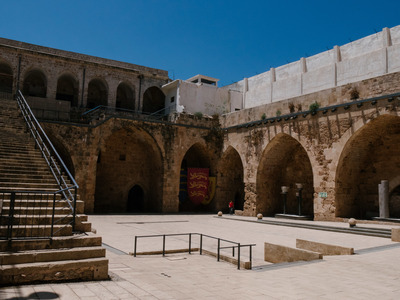
The tour begins with a drive along Israel’s coastal road heading north past Caesarea and Haifa to the Old City of Akko (Acre). The city stands on a spur of land that juts out into the Mediterranean and is surrounded by thick stone walls. Narrow cobbled streets twist and turn between the stone houses leading to Acre harbor where there is a lively atmosphere, open-air restaurants, and cafes facing the water. On a private tour of Acre, you’ll visit the top attractions in the city and learn about the battles fought and rulers that came and went. The Crusader Fortress (Hospitaller Fortress or the Knights Kingdom) was built at the turn of the 12th century by the Knights of Saint John who provided protection and help to pilgrims visiting the Holy Land. Since its rediscovery, it has been restored so you can walk through the cavernous halls and see hewn stone walls, and thick stone columns supporting the high barrel-vaulted ceilings. The Acre Citadel is an Ottoman-era structure that was used in the 20th century as a British prison. Take a walk along the underground Templar tunnel that connected the Templar Fortress to the port. The 18th-century al-Basha Turkish Bath has been fully restored and the Ottoman-era hammam atmosphere has been recreated with a soundtrack narrative and sculptured figures. The al-Jazzar Mosque stands out with its green domes and pointed minaret. The mosque was built in 1781 and is Israel’s largest mosque outside of Jerusalem. Stop to see the synagogues of Acre including the Or Torah (Jariva) Tunisian synagogue that is covered in mosaics and the Ramchal Synagogue, which dates back to the 16th-18th century.The market street runs through the Old City flanked by open-front stores selling fresh produce, fish, pastries, spices, household goods, clothing, and everything else you could imagine. Just outside the Old City are the Acre Baha’i Gardens, not to be confused with the gardens in Haifa. The Acre gardens have two historical structures – the manor where the Baha’i prophet, Bahaullah lived for 12 years and the shrine where he was laid to rest after his death.Additional Options in the Area:1. Rosh HaNikra2.The Holocaust Museum at Kibbutz Lochama HaGetaot3. Acre aqueduct4. Keshet Cave, natural stone arch5. Wall and Tower Museum, Kibbutz Hanita6. Monfort Fortress Observation Point, Park Goren7. A walk along the Kziv River8. Ein Hardalit Spring9. Haifa10. Caesarea

Haifa and the Carmel Private Tour

This private tour starts with a drive up Israel’s beautiful Mediterranean coast past the ancient Roman port city of Caesarea to Haifa. The first stop is at the Baha’i Gardens viewing balcony on Mount Carmel. The gardens’ 18 terraces cascade down the mount to the city. The gardens are the setting for the gold-domed Shrine of the Bab, where the founders of the Baha’i faith are buried. With prior arrangement, it is possible to take an hour-long walking tour of the gardens and visit the shrine which is open until midday. At the foot of Mt. Carmel, is the historic German Colony established by German Templers in 1868. This quaint village-within-a city has been restored and now the cobbled streets lined with stone houses hold unique one-off stores, boutique hotels, and gourmet restaurants. The tour continues to the Hecht Museum of Archaeology at Haifa University. While on campus, take in the views from the 30th-floor observatory of Eshkol Tower. Next stop at the Druze village of Daliyat al-Carmel. Visit the Druze market and Lawrence Oliphant House, former home of Sir Laurence Oliphant (1829-1888) and his secretary Naftali Herz Imbar, who penned Israel’s national anthem. Also, see the Yad Lebanim memorial to Druze soldiers who fell in the service of the Israeli army. The tour stops on the south-eastern peak of Mt. Carmel at Muhraka or Place of Fire where the Prophet Elijah challenged Jezebel’s pagan priests. Today the site is home to the Carmelite Stella Maris Monastery, built in 1836. See the main church where the altar is situated above a cave associated with Prophet Elijah. A footpath from the monastery leads down to Elijah’s Grotto where he is said to have meditated before encountering the priests of Baal. The tour takes you to a lookout point above the church for unrivaled views of the tree-covered mountain, the city of Haifa, and the dramatic arc of Haifa bay.Additional Options in the Area:1. Experience the hospitality of a Druze family in the village of Daliyat el-Carmel.2.Beit She’arim Archaeological Park3. Atlit Immigration Museum (Detention Camp Museum)4.Ein Hod Artists’ Village5.HaMizgaga Museum of Archaeology and Glass, Kibbutz Nahsholim, Dor Beach6. Israeli National Maritime Museum7. Hike trails through Little Switzerland on other Mt. Carmel trails

Essential Jaffa: Top 11 Things To Do In Jaffa, Tel Aviv

There are certain places in Israel that no one should miss on a visit- and one of them is Jaffa. Picturesque, mysterious and timeless, this ancient port, at the southern tip of Tel Aviv, offers visitors the chance to step back in time. One of the most ancient ports in the world (who doesn’t remember the Biblical story of Jonah and the whale?), and with views of the Mediterranean that will have you reaching for your iPhone, it has a charm all of its own.Old Jaffa, full of winding streets, charming old buildings, and ancient historical sites, offers the visitor a bit of everything- a famous Flea Market,charming artists' galleries winding narrow streets, quirky coffee shops, and small boutiques, excellent restaurants and the port, where you can stroll by the blue-green sea, watching local fishermen reel in their catches and listen to locals playing the oud and the guitar,Easily reached from Tel Aviv by bus, bicycle, or on foot, along the promenade or beaches themselves, here are eleven things we think you shouldn’t miss if you’re in this charming neighborhood.1. The Jaffa Flea Market (Shuk haPishpeshim)For anyone who loves poking around in junk stores, searching for unusual items, or just wants a good bargain, the Jaffa Flea Market can’t be missed. From jewelry and vintage clothing to Oriental carpets and furniture, be prepared to patiently wander the stalls and haggle like mad (it’s expected!).The Jaffa Flea Market is a lovely spot you shouldn't miss!As well as the chance to bag a bargain, the area’s teaming with coffee shops, restaurants, and small, independent stores, selling all kinds of charming items. if you want to make more of your visit, just take a Jaffa Flea Market walking tourand discover the area's amazing history. if you want to know more about the area’s history.Stallholders set up before 7 am, and if you want your pick of the best items, turn up early!2. The Jaffa TheatreLocated in the Old Saraya House, this multilingual theatre offers performances both in Hebrew and Arabic, and two companies inhabit it, working side by side.The Jaffa Theater (Image source: The official Jaffa Theater website)Described as a creative partnership between two peoples, and two cultures, the Jaffa Theatre is known for promoting coexistence between Jews and Arabs in the area. Try and catch a performance of ‘The Wandering Israeli’ (in English) on certain Mondays- it’s well worth it.3. House of Simon the TannerNext to the old lighthouse, this ordinary-looking building was once the house of Simon the Tanner. House of Simon the Tanner (Image source: Yoshi Canopus CC BY-SA 4.0)According to Christian tradition, this is where St. Peter accepted hospitality from Simon, at that time a religious outcast, and it was here that God came to Peter in a dream.The House of Simon the Tanner is private property and you cannot go inside but there is an inscription above the door.4. St. Peter's ChurchThe most distinctive building in Old Jaffa, and one with a fascinating history, the Franciscan St. Peter’s Church has served as a Christian meeting place for thousands of years. Built in 1654, over Jaffa’s mediaeval citadel, it’s dedicated to St. Peter, one of Jesus’ disciples, and known for raising a local woman- Tabitha- from the dead.St. Peter's Church in JaffaInside, its architecture might well remind you of European cathedrals- stained glass, high-vaulted ceilings, and marble walls- and the four panels represent different parts of St, Peter’s life. Because it’s built at such a high point in Jaffa, the views across the Mediterranean are simply wonderful.5. The Clock TowerIt’s almost impossible to miss the Clock Tower - a Jaffa icon, it stands in the center of Yefet Street and dates back to Ottoman times. Erected in 1901 in Jaffa’s Town Square, it was built out of limestone (quarried from the nearby Zakaria's Cave) and features two clocks, telling the time both in Israel and in Europe.The Jaffa Clock TowerFun fact: according to local legend, the clock tower was built because of an initiative of Yossef Moiaia, a wealthy local Jew who became tired of local passers-by entering his shop to ask him the time! 6. Jaffa PortThe Jaffa port is one of the oldest in the world and has a rich and strategic history. After the establishment of the State of Israel, it fell into disrepair but in the last decade, its renovation has made it one of the most popular places in the area for a visit.The Old Jaffa PortWander the boardwalk and watch locals fishing, check out the art exhibitions in the hangars, enjoy a drink as you watch small private vessels sailing out to sea (you can even take a boat tour yourself), or enjoy lunch at one of the many excellent restaurants there (it’s got to be fish and chips!)7. The Ilana Goor MuseumHoused in a beautiful 18th-century building, this unique spot (both a museum and the private home of the artist herself, boasts over 500 artworks, not just of Ilana Goor but Israelis and international creative types. These include jewelry, sculptures, tiny statues, fashion objects, furniture, and pottery.The Ilaa Goor Museum (Image source: The official Ilana Goor Museum website)The Ilana Goor Museum house itself offers fabulous views over the Mediterranean and is packed full of collections and memorabilia. There are quite a lot of steps to climb up but it is worth it 0- and don’t miss the rooftop sculpture garden.8. Jaffa’s Art GalleriesThe area is full of art galleries that you shouldn't miss and many can be stumbled upon as you wander the narrow, winding streets of the Jaffa Artist's Quarter. Here you’ll find all manner of local creative types, and they’re the perfect place to browse for a special piece for your home, or indeed a gift if you’re looking for souvenirs from Israel.Don't miss the local art scene!Har-El (fine art; contemporary). Farkash (home to vintage Israeli posters), Adina Plastelina (handmade jewelry) Itay Noy (run by a very gifted watchmaker), and the Sind Studio (beautiful ceramics) are all worth a visit, but our advice is just to wander around and step inside spaces you find intriguing. If you plan on taking a Jaffa private tour, make sure your guide knows you like art, and they'll make sure you'll get your fill.9.The Wishing BridgeOverlooking the Mediterranean, connecting Jaffa’s Abrasha Park with Kedumim Square you’ll find the wooden Wishing Bridge. Decorated with twelve bronze zodiac signs (and if you wander the streets, you’ll see a continuation of this astrological theme, in street names and signs) it’s a popular place to walk over.The Wishing BridgeThe local legend surrounding the bridge seems to be that if you gaze at the sea, whilst holding your astrological sign, and make a wish, it will come true! It’s a pretty spot to visit, and whilst you’re there you can also visit the nearby ‘Gate of Faith’ statue by Daniel Kafri. Made of Galilee stone, it depicts three important Biblical stories concerning God and the Jewish people- the binding of Isaac, Jacob’s ladder, and the Battle of Jericho.10. Dr. ShakshukaNo trip to Jaffa would be complete without a visit to the legendary Dr Shakshuka restaurant (which was featured on the Netflix series ‘Somebody Feed Phil’). Shakshuka is a very popular Israeli food, hailing from North Africa- consisting of eggs baked in a spicy tomato sauce, with a few spices thrown in for good measure.The Shakshuka is epic!Whilst it’s traditionally a breakfast dish, it can be eaten at any time of the day and Dr, Shakshuka serves it in all different ways- with mushrooms, with spinach, and even with shawarma. Wash it down with some of their cold lemonade and you’ll be fuelled up for plenty more strolling.11. The Uri Geller MuseumFinally, for all those fascinated by the psychics, illusionists, and magicians, head over to the Uri Geller Museum. Geller, who is best known for his spoon-bending powers, and had a TV show for years, moved back to Israel from the UK some years ago and decided to open a museum displaying objects associated with his career.The Uri Geller Museum in Jaffa (Image source: The Official Uri Geller Museum website)Visitors can book an organized tour which is led by the man himself and as you walk around you'll see plenty of memorabilia (including his famous Cadillac car, covered in thousands of bent spoons) and hear lots of entertaining stories about Mr. Geller’s career (he met Elvia Presley and Prime Minister Golda Meir!) Great fun and very entertaining.If you want to see more of Jaffa and you're short on time, just take a Jaffa walking tour. and if you want to discover some culinary delights, interesting street art, and beautiful architecture - join this Tel Aviv walking tour.
By Sarah Mann
0 views

Tel Aviv's Best Beaches Guide

It’s not an exaggeration to say that Tel Aviv has it all art galleries, live music, great food, pulsating nightlife, quirky coffee shops, and plenty of pretty people in them!But what gives it that ‘extra something’ is its spectacular coastline, with golden sandy beaches and crystal clear water that stretches the length of the city. Perfect for cooling off in the summer and taking long walks along in the mild winters, you’re free to lie on the sand, stroll by the water, or take in the view from the famous ‘tayelet’ Tel Aviv beach promenade.Tel Aviv’s BeachesTel Aviv beaches all have their particular style and personality and whether you’re looking for something family-friendly, a place to surf, a gay-friendly spot, or a chance to join a local volleyballing crowd, you won’t be disappointed. As well as the traditional favorites, there are also spots where you can bring your dog, watch teenagers perfecting their Brazilian martial arts moves, and enjoy gender-segregated sunbathing.Enjoy the best beaches in the Middle East!So which one should you choose? Here’s our rundown of where to head when you’re ready to kick off your shoes, put on your bathing suit, and hit the golden sands in the Mediterranean city that never sleeps…1. Hilton BeachNamed after the luxury hotel it sits beside, Hilton Beach is in north Tel Aviv and is the city’s unofficial gay stretch of sand (if you visit here during Tel Aviv Pride Week in June, you’ll see rainbow flags fluttering everywhere). It’s extremely beautiful, with golden sand and blue-green water, and is situated under a cliff area (above it is Independence Park, great to sit and watch the sunset).The lovely colors of the beach are just what you need for a relaxing vacation!Sitting left of a breakwater (perfect for calm swimming) the Hilton Beach also has a fabulous bar/restaurant named TopSea, where you can sip cocktails and juices whilst lounging in hammocks and lazing on sofa beds, whilst chilled music plays in the background.Moreover, it’s also well positioned for kayaking, paddle boarding, and surfing (you can rent all the gear you need there), and just south of it lies the marina, where you can rent boats. And if you need to park, the Hilton hotel offers an underground lot (not cheap, but very convenient).2. Gordon BeachGordon Beach takes its name from the street that runs from the promenade, down to the city’s Rabin Square, and it is perfect for sports lovers- it’s home to an upmarket gym with a beautiful outdoor swimming pool (day passes are available) as well as volleyball nets on the sand, and sports equipment you can rent on the nearby promenade.Gordon Beach, next to the Gordon Swimming Pool complexThe restaurant there- LaLa Land - is perfect for you if you want to eat lunch with your toes in the sand. If you head down there on Saturday mornings, you can hang out and watch locals playing the market (Israel’s favorite beach sport) and dancing to Israeli folk music. Gordon Beach is always popular so get there early if you want a prime spot.3. Frishman BeachContinuing from Gordon there’s Frishman Beach, close to the iconic Dan Hotel (with its colored façade) and the US Embassy. Because it’s so close to many of the big hotels, it’s invariably crowded but that doesn’t make it less fun- it’s also got beachside restaurants where you can grab coffee, snacks, and plenty of lunch fare too (by no means cheap, but you're paying for the location).A statue of David Ben Gurion, the first PM of Israel and a national hero, right next to the beachFrishman Beach is also good for families- there are changing facilities (great for kids and babies) and sunbeds and umbrellas for rent. But it gets crowded on the weekends, so be prepared to jostle for a spot! And if you’re up for it, pose next to the iconic statue of Israel's first Prime Minister, David Ben Gurion standing on his head (he was captured here in 1957 by photographer Paul Goldman, in that very position!)4. Banana BeachAnother great spot to relax is Banana Beach, not far from Tel Aviv’s Carmel Market and a short walk from historic Jaffa, it's a little more quiet and secluded than the hectic ‘city center’ beaches. Moreover, because of the wind and occasional waves in the winter months, it’s ideal for kitesurfers and parasailers.The Banana Beach areaAs well as its breakwater and small jetty, Banana Beach is also known as the ‘drum beach’ because this is where free-spirited Tel Aviv come with their instruments on Friday afternoon, to welcome in Shabbat. Anyone who feels like it can just show up with a drum and participate, but onlookers are welcome to watch the sessions!5. Bograshov BeachWhatever the weather, Bograshov Beach is always popular- maybe it’s because of its central location, yoga lovers, paddle boarders, or Tel Aviv's who come here Friday at sunset to welcome in Shabbat with open-air services, but with its white sand, plenty of space and turquoise waters, it’s known and loved by every local.The Bograshov Beach areaAs well as the obligatory sunbeds, ice cream stores, and outdoor gym, Bograshov boasts the popular La Mer beach restaurant, which is lit at night by red cones and is a fine place to sit with a drink and listen to the waves lapping calmly. Of course, if you’re there during the day, and don’t want to get up, they’ll even bring your lunch to your sun lounger!6. Alma (Charles Clore) BeachThis is the most southerly of Tel Aviv’s beaches and is popular both with dog owners (like the dog beach next to the Hilton Beach, this is where furry friends can run free) but it’s also one of the city’s best spots to surf. In the winter months, especially when the weather turns stormy, you’ll see plenty of locals (and a few tourists) in their wetsuits, having fun with the tremendous waves.The lovely Alma BeachIt’s less quiet than other beaches and it’s also just a stone’s throw from Jaffa, if you feel like a trip to the famous Jaffa Flea Market, strolling by the ancient Jaffa Port, or wandering in the beautiful Artist’s Quarter - you can have it all with a niceJaffa walking tour.7. Metzitzim BeachNorth of the Hilton beach lies Metzitzim - in Hebrew, this means ‘Peeping Tom’ and it gets its name from an iconic 1970s movie, which was actually set on this stretch of sand!Metzitzim is cove-shaped and popular with families since it has a breakwater barrier- the lack of waves makes it ideal for children to swim. With golden sand and crystal clear water, it’s utterly picturesque- just grab a beer or an iced coffee from its restaurant and stare out onto the horizon.People enjoying at Metzitzim Beach (Image source: Udi Steinwell CC BY 2.5)As well as being next door to Tel Aviv’s Namal port (full of bars, clubs, and restaurants) this beach is much less busy during the off-season, which makes it the ideal place to head if you want some peace and quiet between November and April. It’s also got a parking lot, which is handy if you’re coming with the family, and plenty of beach gear.8. Nordau BeachThis dedicated gender-segregated beach was set up to meet the religious needs of orthodox Jews in Tel Aviv who keep certain traditions that pertain to modesty and separation. Sitting between Hilton and Metzitzim, the way it works is that on Sundays, Tuesdays, and Thursdays it's open for women, and Mondays, Wednesdays, and Fridays for men. Saturday (Shabbat) is a day that the beach is open to everyone.Even the most strict orthodox Jews can enjoy the beach in Tel Aviv!There’s a wall built around the area (so it’s impossible to peek in from the outside) but inside it has clean golden sand and perfectly blue waters. Something else- if you’re a woman who’s looking for a way to swim and sunbathe without men around, this is a good place for a quiet day. You don’t have to be religious to use this beach - so it’s ideal for any female who likes her privacy.9. Tel Baruch BeachNorth of the Tel Aviv port, this well-maintained beach with a stunning shoreline is far more popular with locals than tourists but is well worth a visit, because of its beautiful views, pristine sand, and clear blue waters.The Tel Baruch Beach areaWell-maintained, Tel Baruch is also popular with young families, not just because it has ample parking but because it has a breakwater that softens the waves. It has an outdoor exercise area, a fine beachside restaurant, and a picnic area, it’s the perfect spot for anyone looking to get away from ‘rowdy’ city beaches!If you’re visiting the Non-Stop City and looking for things to do as well as enjoy its beaches, why not consider taking aTel Aviv guided tour - whether you’re interested in food, Bauhaus architecture, cycling, or searching for bargains in flea markets, we’ve got something for you to enjoy.
By Sarah Mann
0 views

Tel Aviv Transportation: All You Need to Know

So you’ve arrived in Tel Aviv and you’re wondering about the best way to get around. Well, the good news is you’ve got plenty of options. Not only is the city quite compact (you can walk from the Namal port to Old Jaffa, along the beachfront, in around one hour), it’s also flat so you won’t find yourself out of breath as you rack up your step count.Bike riding is just one good way to get around in the cityBut what about the transportation options in the city - buses, trains, taxis, e-scooters, sheruts - for when you’re in a rush or too tired to stroll the sidewalk? Here’s our guide to the cheapest, easiest, and most convenient ways not just to get around the Non-Stop City but also to reach other must-see places in Israel from Tel Aviv. Follow this guide to make sure you'll make the most of your visit, even if you have just 48 hours in Tel Aviv.Public Transport in Tel AvivGetting around Tel Aviv isn’t difficult - public transport in Israel is cheap, efficient and runs from early in the morning until after midnight (there are also a few night buses that operate and an hourly train that runs from Tel Aviv to Ben Gurion Airport between midnight and 6 am). There’s also a new light railway in the pipeline - one line is already running and others should be up and functional reasonably soon.Rush hour in Tel AvivYou can’t pay a driver in cash any longer but it’s easy to pick up a Rav Kav card at any station or pharmacy, and then pre-load it with cash to pay for your bus and train rides. You can also pay with your phone (by scanning) or credit card on public buses.One thing that’s important to point out is that regular public transport doesn’t operate in Israel on the Jewish sabbath (from Friday afternoon to Saturday evening). There are, however, buses operated by the local municipality which you can take - and best of all they are free! They won't get you out of the city but within Tel Aviv and Jaffa, they are a great way to get around on Israel’s ‘day of rest.’Buses in Tel AvivThe majority of the buses in Tel Aviv are operated by the Dan company. A couple of lines that are particularly well-known and journey between the north and south of the city every few minutes - numbers 4 and 5 - will take you to the ‘must see’ parts of the city including Dizengoff Street, Rothschild Boulevard, and the beachfront promenade.A ticket costs 5.90 NIS and you can make unlimited journeys with it for 90 minutes. A day pass costs 13.50 NIS, so if you’re planning on making more than a couple of trips, it’s quite economical - your Rav Kav or credit card won’t charge you beyond that amount, however often you use the bus in a day. You can also buy weekly and monthly tickets, which give you access to intercity trains in the local area too.The buses are cheap and reliableThere are two main bus stations in Tel Aviv, at different ends of the city:1. Tel Aviv Central Bus Station (Levinsky) - this is the city’s main bus station, situated in the south of Tel Aviv. It's easily reached by buses number 4 and 5 and inside, along with the floors for buses, there are lots of shopping areas and places to grab a bite.2. Arlozorov Bus Station - on the corner of Arlozorov and the Namir Road, many intercity buses stop here (or pass by) and you can also pick up buses to Jerusalem, Haifa, the Golan Heights and Be’er Sheva (gateway to the Negev desert) here.Taxis in Tel AvivThere are two ways to order a taxi in Tel Aviv - either by hailing one in the street or booking one in advance. If you’re in the city center, on trendy Dizengoff Street, or close to the beach, it shouldn’t be hard to flag one down.To avoid any ‘misunderstandings’ (and to make sure you’re not taken advantage of) either agree on the price with the driver beforehand or tell them to put on the meter.Taxi Apps to Use in Tel AvivUsing a taxi app is also a good way to go. Uber doesn’t operate in Tel Aviv but Gett does, and not only is it easy to download (it’s in English) but it’s quick and convenient to use.A Taxi is a good choice for getting around the city if you're short on timeWhen you sign up, you’ll have to give your credit details but then you don’t have to deal with cash - it’s all taken care of and you’ll be notified by text message when your driver (complete with their registration details) is close by. Gett now also operates a ‘Gett Kid’ service where you can pre-order a cab in Tel Aviv with a baby seat!Bikes and E-Scooters in Tel AvivUnlike Jerusalem, which is rather hilly, Tel Aviv is flat, which makes it a great place to cycle. There are shops around the city center where you can hire bikes by the hour or day, but there’s also the city-run ‘Tel-O-Fun’ - a bike-sharing scheme that lets you pick up your wheels in one part of town and drop them off in another. Scooter in Tel AvivAll you need is a credit card to unlock the bike - then off you go. Tariffs are quite reasonable and there are cycle lanes all over the city.Trains in Tel Aviv and to other parts of IsraelIsrael Railways operates all over the country and Tel Aviv is at the heart of its network. Within the city itself are three large stations:1. Sabidor (Arlozorov) - Sabidor is in the north of Tel Aviv, and is also a bus terminal.2. Ha Shalom - Ha Shalom is in the heart of the city’s business district and a stone’s throw from the famous Azrieli Towers.3. Ha Haganah - the most southern train station, 400 meters east of the Levinsky Tel Aviv bus station.All three stations have information in English and cashiers if you want to buy a paper ticket!Getting from Tel Aviv to JerusalemNo one should visit Israel without seeing Israel’s capital and whilst intercity buses and sheruts (Israel’s yellow minibuses) run every 15 minutes to Jerusalem, the quickest way by far is the new high-speed train that runs between the two cities, taking just 40 minutes!You can depart from any of the three city train stations (see above) and 40 minutes later, find yourself at Yitzak Navon train station, which is next door to the Jerusalem light railway (dropping you at the Jaffa Gate in the Old City, in less than 15 minutes).The Train is a good optionThe Old City is a perfect place to wander, but if you don’t want to explore the capital alone, consider taking one of the many guided tours in Jerusalem on offer, as well as day trips to places like Masada and the Dead Sea, all well worth the visit!Another question we’re often asked is how much is a taxi from Tel Aviv to Jerusalem. Well, if you want to splash out, prices start from around 350 NIS but will be more if it’s on Shabbat or late at night.Getting from Tel Aviv to HaifaYou can reach Haifa via bus number 910 which leaves from the seventh floor of the Levsinky bus station every hour. You can also take other buses, but then you will have to change along the wayFrom any of the Tel Aviv stations, trains run every 20-30 minutes to central Haifa - you can use your Rav Kav, an app, or even buy a ticket (using cash) from a cashier in the station.How to Visit Masada from Tel AvivMasada is one of Israel’s most popular tourist attractions - this ancient Herodian fortress in the Judean desert is simply breathtaking and is well worth the trip from Tel Aviv. There is an Egged bus - number 421- that leaves twice a day, once at 9 am and a second time at midday. The journey takes about two hours.However, using public transport to reach there is not convenient if you’d like to see other parts of the area (the Dead Sea) and many travelers who don’t want to rent a car opt to take a guided tour - a day trip to Masada and the Dead Sea means you’ll have a guide, an air-con minibus and you can maximize your time at the two sites.How to Get From Tel Aviv to the Dead SeaMuch like Masada, it’s possible to visit the Dead Sea from Tel Aviv but not that convenient - you can take the 421 bus (see above) and ask to alight at Ein Bokek but then you are constrained by the bus timetable and it will be hard to see other places in the area, such as the stunning Ein Gedi nature reserve, complete with hiking trails and waterfalls). In this respect, again we’d advise taking an organized trip.
By Sarah Mann
0 views

The Green City: 7 Best parks in Tel Aviv

Tel Aviv is nicknamed ‘the White City’ (in honor of its fantastic Bauhaus architecture) and the ‘Non-Stop City’ (famous for its pulsating nightlife), but it’s also a place that boasts some beautiful parks and gardens, all ideal for when you want to escape the hustle and bustle of Israel’s most lively city.So where should you go when you’ve lounged on pristine white beaches, taken a food tour of the Carmel Market, spent a day wandering the ancient streets andexploring the flea market in Old Jaffa, and partied until the sun came up? Well, here are what we think are seven of Tel Aviv’s best parks and gardens, all with their charms…and perfect for exploring, when you’re ready to seek out some greenery.1.Park Hayarkon (Ganei Yehoshua)Gloriously lush and tranquil, the Hayarkon Park in Tel Aviv has to take first spot on our list, because it ticks every box and then some. Stretching 3.5 km, it’s Tel Aviv’s largest green space and the perfect place to escape when urban chaos feels a little overwhelming.Golden Jackals at Hayarkon Park; don't worry, they won't bite!Through Park Hayarkon runs the eponymous river, along which you’ll see runners, walkers, and school children (it has many play areas, both for toddlers and young adults). On a beautiful spring afternoon, there’s nothing better than renting a rowing boat or a bike (the park is flat, so easy to cycle around).It’s also home to beautiful tropical gardens, where you can wander along wooden walkways, lined with palm trees, surrounded by rainforest species (a veritable plant museum) and all kinds of birdlife. Kids can enjoy the petting zoo and Hayarkon Park also boasts one of Israel’s largest water parks, which is the perfect family-friendly activity in Israel on a hot summer’s day.Finally, at the top end of the park, there’s the Namal - Tel Aviv’s port- which has a fantastic boardwalk, shops, and eateries and is a fine place to enjoy Mediterranean views2. Sarona GardensOn the edge of the business district, you’ll find Sarona, a neighborhood that dates back to the 19th century when it was settled by German Templars. Today, the entire area has been renovated, with old houses beautifully restored, and turned into boutiques, cafes, and restaurants. But it’s not just a great place for shopping and eating- Sarona also boasts beautifully landscaped gardens.Sarona Gardens (Image: Visit Tel Aviv official website)They’re a beautiful place to sit and admire the urban views (glittering glass skyscrapers at every turn) and a real ‘oasis’ in the city. Like Independence Park, Sarona is also an excellent picnic spot, since the area’s a culinary hot-spot - pick up some local bread, cheese, olives, and local fruits and enjoy a lazy lunch, next to the pond.3.Independence Park (Gan Haatzmaut)Next door to the Hilton hotel, overlooking the Mediterranean and uninterrupted views of the white sandy beach lies Independence Park (‘Gan Haatzmaut’ in Hebrew) and it’s a beautiful place to enjoy views of the city since from this hill you can see to Jaffa!Moreover, in our opinion, Independence Park is one of the best picnic spots in Tel Aviv- at the entrance, it has a shady area with wooden benches and tables, as well as a well-equipped children’s playground and fitness station. It’s ideal for yoga lovers, running fanatics, dog walkers, and those who want to relax with a book.In good weather, it’s always crowded, particularly popular with families celebrating birthdays on Shabbat (Saturdays) and- on Israel’s annual Independence Day- packed to overflowing with locals barbequing (a national tradition)4. Abrasha Park (Gan HaPisga)At the top of a hill in Old Jaffa, with stand-out views of the Mediterranean and Tel Aviv in the distance, lies the small but pretty Abrasha Park. On the grounds itself, you’ll find the famous Wishing Bridge (decorated with all twelve signs of the zodiac) as well as the celebrated ‘Gate of Faith’ statue (sculpted by Daniel Kafri, and depicting three famous scenes from the Hebrew bible).Close by is the Franciscan Church of St, Peter (with impressive interiors that will remind you of European cathedrals), and the charming Artists Quarter where you can wander narrow, winding alleyways and stumble upon studios of local jewelers, painters, and ceramicists. Below the park is the Jaffa port, perfect for strolling, watching fishermen reel in their catches, and grabbing a bite at one of the many cafes and restaurants there.5.Gan Meir (Meir Park)This beautiful little park, slap bang in the middle of Tel Aviv, is another oasis of green in the city. Next to the famous King George Street, and just a few minutes walk from the vibrant Dizengoff Street it has beautiful areas to sit, a lovely pond (where, if you’re lucky, you‘ll spy some turtles), ping pong tables, a children’s playground and even a dog park (always full of locals and their four-legged friends).Gan Meir is also home to a Gay Centre, which is an invaluable resource for the city’s LGBTQ community. Inside is a cute little cafe where you can grab coffee and pastries; outside, there are tables where you can enjoy green views. There’s even a public library on wheels- perfect for picking up a book and getting lost in some printed matter whilst city life goes on all around you.6. Charles Clore ParkThis beachside park, in the south of Tel Aviv, is a fine place to come and enjoy greenery with sand and sea thrown in for good measure. Named after a British Jewish philanthropist, Charles Clore Park was opened in the mid-1970s and is a popular spot for locals, families, and picnic lovers, because of its lovely views of the water.Charles Clore Park has fantastic playground facilities (perfect for those with young kids) which include a rope pyramid and water fountain (ideal for scorching hot summer days). There’s also a sculpture garden (look out for the local pieces, especially by artist Ilana Good (who has a museum of her own nearby) and the Etzel Museum (the Etzel or ‘Irgun’ was an underground organization established in 1931, which fought for the establishment of the State of Israel).7. Tel Aviv University Botanical GardenCalling all botanists, greenhouse aficionados, and succulent lovers - the Tel Aviv Botanical Garden awaits you. Situated in the leafy green suburb of Ramat Aviv (just a short bus ride or 15-minute taxi journey from the city center), this six-acre area has more than 3,800 plant species, combining native flora, Middle Eastern specimens, and plants from around the world.Set up in 1972 as a university research and education center (which specializes in the conservation of rare and endangered species), although there is an admission fee, and tours must be coordinated in advance, anyone interested in ecology should visit. Close by is the Steinhardt Museum of Natural History, which has some excellent collections and is full of treasures - a good place to bring kids if you want to teach them about biodiversity!If you’d like to know more about the guided tours in Tel Aviv and the organized tours of Israel (from Jerusalem and the Galilee to the Dead Sea and the Golan Heights), feel free to contact us by phone or email. In the meantime, to read more about our amazing country- its food, history, culture, art, and people- take a look at our blog.
By Sarah Mann
0 views

What to expect of the Israeli weather in the winter?

If you’re thinking of making a trip to Israel, one of the things on your mind will be what the weather will be like. And it’s a good question! We’re often asked what the climate is like in our country and, for much of the year, our answer is a resounding ‘hot’. Between October, there’s little or no rain, azure blue skies, and often scorching temperatures, particularly in the Negev desert and down on the Red Sea.These are Golden Jackals, Warming under the December sun in Hayarkon Park, Tel AvivThese sunny warm days are what makes so many people book their trips in the spring, summer, and fall. But what about the weather in Israel in the winter? If you have the chance to travel in the Holy Land out of season, and you’re not fussed about the lack of sunbathing opportunities, what should you expect? Will it be so unpleasantly cold that you can’t enjoy yourself? What kind of clothing will you need to bring? Will there be enough activities for days out?When is Winter in Israel?The winter in Israel basically runs from mid-November to mid/end February. And because Israel has lots of different geographical areas, depending on which part of the country you’re in, it could get chilly! However, for many Europeans and North Americans, even on the coldest days it won’t be freezing or snowing in the way you’re used to (although yes, it does snow, periodically in this part of the globe - usually in the Golan Heights but, once every few years, in Jerusalem).Israel could get a bit rainy in the winterActually, many tourists who aren’t keen on high temperatures enjoy traveling at this time of the year - apart from the Christmas period, when many Christian pilgrims tour the Holy Land, it’s quieter and less expensive. And, of course, whatever the weather, there are many museums and galleries in Israel to explore, if the rain is pouring and the wind is howling!Winter in Israelin NovemberMost of the time, November in Israel is very pleasant. Temperatures can still be quite warm - in fact, on odd days you might even see people sunbathing in Tel Aviv and on beaches across the country, when the thermometer can go as high as 25°, and average temperatures range from 18-23°. The beaches North of Tel Aviv are cool, yet calm in NovemberIt will be colder in the mountains- Jerusalem, Safed, and the Golan Heights- but if you’re yearning for sun, you’ll definitely find it in Eilat, on the Red Sea. As well as diving, surfing, and all kinds of water sports, it’s also a hop, skip, and a jump from Jordan, perfect for visiting the lost city of Petra and the beautiful desert scenery in Wadi Rum.Winter in Israel in DecemberBy the time December arrives, the temperatures are dropping, but on the coast, and in the 24/7 city of Tel Aviv, you won’t need a winter coat, just the lightest jacket and perhaps an umbrella here and there. Temperatures will range from 12-21° but once you go higher up, you’ll feel the cold.It might get a bit cold, but this is when the flowers pop out!Jerusalem, Bethlehem, and Nazareth can all be rather chilly in December, so if you’re traveling to Israel at Christmas, make sure to pack a warm coat, gloves, scarf, hat, and even some thermal underwear! In Jerusalem, expect temperatures to range from 7-14°, and if you’re up in the Golan Heights, even a bit colder. If your bones are so cold you can’t stand it anymore, head to Eilat, where you can even sunbathe and swim on Christmas Day, or if you’re more of an adrenaline junkie, take a trip to Timna Park and hike around canyons.Winter in Israel in JanuaryJanuary is the coldest month in Israel, wherever you are. The chances of rain are at their highest and whilst it’s just ‘chilly’ in Tel Aviv, temperatures plummet in Jerusalem and can be positively icy up in the Golan Heights. Of course, if it snows, you will be rewarded with beautiful, picture-perfect views and have the opportunity to ski on Mount Hermon.Ski at the Hermon MountainIt can be a good time to explore Israel’s south- the Negev and Arava deserts are excellent places to hike. In places like Mitzpe Ramon- home to an extraordinary crater, down which you can rappel, and inside which you can hike- there can be sunny days but beware when the night falls - it will be bone-chillingly cold! Temperatures can actually fall to almost zero in the desert, and not much higher in Jerusalem, so make sure to pack accordingly.Winter in Israel in FebruaryBy the time February arrives, you know that winter is on its way out, although there’s still the chance of rain. However, it’s a great month to visit Israel because sights like the fortress of Masada and the Dead Sea are less crowded, and (unless it’s pouring down). A great time to see MasadaWith average water temperatures at the lowest point on earth at 21°, you can even chill out whilst floating and soaking up a few rays of sun visiting this incredibly Herodian fortress, coupled with a sea so salty nothing can survive in it makes for the perfect Israel day trip.Winter Tourist Attractions in IsraelThere’s so much to do in Israel that even when the weather isn’t warm and sunny, you’re simply spoilt for choice- holy sites, places of great historical importance, museums and galleries, vineyards, national parks, and fantastic eating opportunities- the country has it all.Winter in JerusalemNo trip to Israel is complete without spending some time in Jerusalem, Israel’s capital. Whatever the weather, it’s possible to spend hours walking inside the Old City, wandering the four quarters, and exploring sites like the Dome of the Rock, Church of the Holy Sepulcher, and Western (Wailing) Wall. And in the more modern part of the city, the world-famous Israel Museum and Yad Vashem - the country’s memorial to the six million Jews murdered in the holocaust - are must-see attractions.Winter in Tel AvivTel Aviv, similarly, is a good place to visit in the winter- there are many days when the sun is shining, and it’s not raining, so you can walk on the beaches, even along the boardwalk from the Namal Port to Jaffa, the ancient biblical city that’s home to winding streets, artists’ studios, churches, a port, and a bustling flea market. And those who love to eat will be in their element too- a food tour of the Carmel Market is highly recommended for anyone interested in the cuisine of the region.Winter in Northern IsraelThere’s also plenty to do in the north of the country- the ancient Crusader city of Akko is a fine place to explore, not to mention Caesarea National Park (full of archaeological treasures that date back to the time of King Herod) and the beautiful limestone grottoes of Rosh ha Nikra on the border, with fantastic views of the Mediterranean coast.And vineyards in the Galilee and Golan Heights are a great way to spend a day- after a tour, you’ll often be treated to lunch, or at the very least some wine-tasting (often paired with excellent local cheeses). If it’s snowing, Mount Herman is the perfect place to head for some skiing, and if you aren’t a fan of heights then simply rent a wooden cabin in one of the many kibbutzes in the area, and explore the nature by day and curl up next to a log fire at night.The Galilee is also home to several beautiful churches, and any Christian pilgrim who wants to understand more about the life and times of Jesus can walk in his footsteps in the Galilee, this being the place where he spent most of his adult life, ministering and performing his miracles.If you’re interested in visiting Israel, take a look at the many offerings we have- from organized package tours to privately guided trips and day excursions all around the country, we’ve been in the tourism business for over 30 years and with our knowledgeable guides and professional team guarantee you an experience that will stay with you for years to come.Feel free to contact us by email or telephone to find out more about our tours, and if you want to know more about life in Israel, take a look at our blog.
By Sarah Mann
0 views

10 Best Luxury Hotels in Israel [UPDATED]

Are you planning a vacation in Israel? If so, the country is waiting for you! After two long, exhausting years, people are desperate to travel abroad again and many of us are so worn down from the pandemic that we’re ready to splash some serious cash about, ensuring that we get a holiday that ticks all of our boxes. And, honestly, there’s never been a better time to treat yourself - let’s face it, you deserve it.Luckily, Israel can oblige in this sense, that is because in the last decade, it’s raised its ‘accommodation game’ substantially. Today, there are luxury hotels scattered across the country, all able to satisfy the most discerning traveler’s needs. Whether you want a city break (think historic Jerusalem and hipster Tel Aviv), a peaceful retreat (the tranquil Sea of Galilee and the empty, silent Negev desert), or cocktails and dance clubs at the Red Sea, you’re spoilt for choice. That’s because, in the last decade, Israel’s raised its game, with a series of sophisticated and stylish luxury hotels.Why Stay at a Luxury Hotel in Israel?We all need a vacation periodically - to rest our body and our mind, not to mention have a little fun. And whilst some people think that staying in a luxury hotel is a waste of money, we’d disagree…because it’s going to give you certain amenities and benefits that really make your time away that much more special, in terms of comfort, facilities, and service.Luxury hotels mean top-end mattresses, soft bed linen, and fluffy pillows, not to mention 24-7 housekeeping services. They’re going above and beyond in their facilities - whether it’s infinity pools, high-end toiletries, afternoon teas, champagne, and chocolate in your room on arrival, or even a butler service. Within them are fine-dining restaurants, cocktail bars, and coffee lounges designed with your enjoyment in mind. And, of course, luxury hotels in Israel always emphasized world-class service - from the General Manager to the bellboy, everyone is working to ensure your expectations are not just met but surpassed. Today, we’re looking at luxury hotels in Israel that really have the ‘wow’ factor. And whilst we want to stress here that our opinions are entirely subjective, the ones we’re recommending here all come highly recommended - by our friends, colleagues, and TripAdvisor! If you don’t believe us, book a private day tour in Israeland then add it on as a treat to yourself. After all, you only live once! Here we go!Luxury Hotels in JerusalemMamillaJust a few steps from theOld City of Jerusalem, and overlooking the Jaffa Gate, the Mamilla’s location alone is something to rave about. But it’s far more than just the views you’ll enjoy here- with a contemporary design and sophisticated feel to it, the Mamilla is famed for its ‘personal touch’ where every guest is assigned a personal host, there to ensure the entire stay is faultless.Mamilla Hotel (image: Mamilla Hotel official website)Boasting 194 rooms, and a renowned rooftop restaurant (perfect for cocktails and dining alike) the inside is ultra-modern, with minimalist décor and a breakfast buffet that comes highly recommended. Scattered throughout the hotel (as well as the bedrooms) are books on design and history, which is a nice touch. Concierge services are outstanding and the warmth that staff show guests is so genuine, no wonderthe Mamillahas this kind of reputation.The American ColonyJust a minute's walk from the Damascus Gate, you’ll find theAmerican Colony Hotel- beautiful and historic, with a reputation for extraordinary service and comfort in the most relaxed of settings. With its beautiful grounds, pool area, and lovely courtyard (perfect for relaxing in the day or enjoying a pre-dinner cocktail by night) the American Colony makes you feel like you’ve gone back to the time ofthe British Mandate, with rooms furnished in Ottoman style ( though they do concede with the bed linen, which is high-end Italian!). A room in the American Colony Hotel (image: the American Colony Hotel official website)The hotel offers 94 rooms and suites (in four different buildings), helpful and accommodating staff (from housekeeping to the concierge), and a dining experience that few forget- the famous Courtyard restaurant is surrounded by mulberry trees, and in its center is a beautiful fountain. Menus are not kosher and international cuisine is the order of the day (fun fact: this is a hotel where some of the world’s top journalists like to stay). Unrivaled luxury inJerusalem!Luxury Hotels in Tel AvivThe JaffaHoused in a historic building, which was once a French hospital, the design ofthe Jaffa Hotelis nothing short of stand-out. Combining vaulted arches and stained glass windows with contemporary furniture (think velvet sofas and eclectic lamps) with Damien Hirst Art, it’s a stone’s throw from the ancient port, lovely artists quarter, and famousJaffa flea market, and has 120 rooms and suites (some within the historic building and others in a new, modern wing).The swimming pool in Jaffa, a Luxury Collection Hotel, Tel Aviv-Yafo, Israel (image: the Mariott official website)The bedrooms are sophisticated, with neutral colors, and the infinity pool upstairs looks out on the Mediterranean, with a cocktail bar that sets up at midday. In terms of dining options, it’s less Middle Eastern and more North American/Mediterranean. ‘Golda’s Deli’ has bagels with lox and tuna melts and their restaurant ‘Don Camillo’ (which is not kosher) is excellent. With its personable staff and enviable location (close to the beach and a short cab ride from the heart of Tel Aviv), no wonder it’s taken the neighborhood by storm.The NormanLocated in the beautiful and historic part ofTel Aviv, close to the famous Rothschild Boulevard,the Norman Hotelprides itself on its understated elegance and if you are lucky enough to stay here, you’ll soon understand why. Beautiful restored, and set in two classic buildings (with a citrus garden nestled in between), you; 'll enjoy high-ceiling rooms, fabulous linens, wow-factor bath products, and a rooftop pool boasting phenomenal urban views.And it doesn’t end there. The Norman is well-known for its cuisine- the Alena is considered to be one ofTel Aviv’s top restaurants, serving exquisite Mediterranean food, featuring plenty of seafood, aged meats, and wonderful desserts made by their in-house pastry chef. Those who love drinks in a refined environment can head straight to their Library Bar- the perfect place for a gin and tonic, espresso martini, or glass of wine from one of Israel’s top vineyards. What else can we say, except prepare to be wowed?Luxury hotels in Southern IsraelBeresheet, Mitzpe RamonIt’s hard to imagine a more dramatic setting for a luxury restaurant than overlooking a crater, but that’s what you get when you book a stay atBeresheet in Mitzpe Ramon, in the Negev desert. Peaceful, tranquil, and perfect for those who crave solitude, this spectacular hotel has suites with pools, golf cars to transport you from your room to the main space, a gym, a playroom, two restaurants (kosher meat and dairy respectively) and a movie theater!The pool in Beresheet Hotel offers an endless viewThe rooms are spacious and well-designed, with bathrobes, slippers, and high-end toiletries, and the staff are helpful and attentive, without being overly solicitous. The remarkable views are to die for and be prepared to see ibex (mountain goats) wandering by as you sit enjoying the serenity. And if you’re not in the mood for hiking or rappelling down the side of the crater, just order a cocktail and sit by the infinity pool.Six Senses, ShaharutDesert sunrises and starry skies await you at this breathtaking hotel. Constructed to ‘blend’ into the desert (the materials it uses- stone, wood, copper, teak - all reflect this design),Six Senses Shaharutoffers 60 suites and villas in a rustic style, some with a private pool and one not just with a pool but it’s own pizza oven and chef service!) Luxury bath products are made using camel and goat's milk and you’ll also find yoga mats and walking sticks (should you want to do some hiking) in your room.Six Senses Shaharut, Israel Resort & Luxury Spa in Negev Desert. Photo fromwww.sixsenses.comTheir fine dining options use seasonal and organic products purchased from local farms and draw on the culinary traditions of the Middle East and the Mediterranean. Midian offers the very best of traditional Israeli cuisine, Edom View offers mezes, the poolside grill services both butcher’s cuts and homemade ice cream and the Jamillah bar is the perfect place to enjoy a cocktail at sunset…Six Senses Shaharut also offers several original activities and experiences, including sunrise yoga, hikes, star gazing outings, 4x4 off-road jeep tours, and camel treks. The emphasis is on the guest’s experience being integrated with nature - entertainment is often in the form of local musicians, at the on-site amphitheater. And since the setting here is so tranquil, it’s no surprise that this luxury hotel also offers a Wellness Programme, including retreats, a hammam, and aerial yoga. Our verdict - simplicity and luxury combined!Luxury Hotels in Northern IsraelThe Scots HotelSituated in Tiberias and overlooking both the peaceful, beautiful Sea of Galilee (‘the Kinneret’ in Hebrew) and the Golan Heights, the Scots Hotel is situated in a beautifully preserved old building, formerly known as the Scots Mission Hospital. Today it welcomes visitors with plenty of ‘Highland Hospitality’, from the arrival drinks it serves to live music performances in their whisky-themed bar.The Scots Hotel Tiberias outside view, Sea of Galilee, Israel. Photo fromwww.scotshotels.comThis luxury hotel and spa boasts sixteen renovated rooms, all constructed out of basalt rock and with high ceilings. The decor is traditional but all the extras you need are in your room, including high-end toiletries, plasma TV, a ‘coffee corner’ with a chaise lounge, and a Nespresso machine. The rooms are suitable just for two, which is why this hotel is frequented more by couples and older people, than families with young children.Pereh Mountain ResortHidden away in theGolan Heights, Pereh Mountain Resort (which only opened in the summer of 2022) is a welcome addition to the Israel luxury hotel market. Situated on a private estate, on a hilltop that overlooks mountains and valleys, and contains beautifully manicured gardens and lush orchards, it has only 27 rooms and suites and is for couples only, making it a very romantic getaway.The Pereh Resort (image: Pereh Mountain Resort official website)Local materials used to buildPereh Mountain Resortinclude basalt, wood, and stone, and, along with the pool and spa, the hotel has its wine cellar the area is perfect for hiking or visiting one of the many wineries which are all easy driving distance. Their restaurant, ‘Rouge’, which is led by the talented chef Roe Dori, goes to great pains to use local produce. With its remote location and wildly beautiful scenery, no wonder it was featured recently in Conde Nast!
By Sarah Mann
0 views

The Complete Guide to Airport Security in Israel

If you’re visiting Israel, the chances are you’ll be arriving by plane - whilst the country shares land borders with Jordan and Egypt (and it’s easy to cross over) and cruise ships often dock at Haifa, most tourists will fly into Ben Gurion Airport, close to Tel Aviv and just a thirty-minute train ride from Jerusalem.We’re often asked how strict airport security in Israel is and what things are good to know in advance, to make your trip that much easier. And working on the basis that to be forewarned is to be forearmed, we think that once you have an idea of the questions and techniques that staff use as you head towards your destination, you won’t feel as worried.Israeli Airport SecurityIsraeli airport security has a reputation for being some of the best in the world, and that reputation is entirely justified. It’s incredibly good and takes advantage of the most up-to-date technology on the market. All airport personnel go through rigorous training before working with the public, where they learn different techniques when questioning travelers and how to spot anything odd from a distance.Welcome to Ben Gurion Airport!It’s all designed to keep you safe from start to finish- from the moment you arrive at the airport (via bus, train, private car or taxi) up until the minute you board your plane. In fact, much of the security is ‘invisible’ which means that whilst you won’t see it, it’s operating constantly, all around you.Questioning by Israeli Airport SecurityThis is taken very seriously by airport personnel and everyone- a work traveler, a tourist, or a citizen- is subject to it. Questions might include why you were visiting Israel, if you have friends or family in the country and if you visited any ‘hotspots’ in the West Bank, which is an area where trouble can sometimes flare up.It’s a good idea to be prepared for this and if you have been staying with friends or family, be ready to provide security with their contact details. (Occasionally, they will verify them). For sure, it will be easier to pass the questioning process if you’ve been staying with locals/family or traveling around Israel with an organized tour, but there’s no need to worry if you’re a backpacker or solo traveler- you just might be questioned a little longer.Security officer at the Ben Gurion AirportYou will be asked if you packed your bags if someone gave you anything to carry on the plane (as a gift), if your bags were in your possession the entire time from them being locked until now, and if you are carrying anything sharp (nail scissors and swiss army knives, for instance). You may also be questioned if you have visited other countries in the Middle East with whom Israel does not have a good relationship (e,g, Lebanon, Yemen).Overall, however, as long as you are calm, and have nothing to hide, it should be a quick and painless process. Try to relax - no one is out to ‘trap you’- the staff are just doing their job and, anyway, it’s all to keep you safe.Your hand luggage will then be screened using very advanced machinery. You also might have to take off your shoes and remove your laptop from its case. The queues are usually not too long and then you’ll be free to shop, grab a coffee, or charge up your laptop and smartphone.How long does it take to pass through Israeli Airport Security?It’s hard to say precisely but you should allow a good three hours before your flight is due to depart. In the summer and at other popular times of the year (the holidays of Passover and Sukkot, and at Christmas in Israel), thousands of people will be using the airport daily, so queues can quickly form. However, because of the up-to-date technology and well-trained staff, you won’t be stuck in a line too long but, in general, it's good to err on the side of caution.Is it safe to fly to and visit Tel Aviv?We’re happy to tell you that flying into Tel Aviv and visiting the city is very safe. Sure, Israel has occasional ‘flare-ups’ and conflicts with its regional neighborhoods, but Tel Avivas a city is extremely safe. The city welcomes all kinds of visitors each year - young and old, backpackers, independent travelers, and groups, and few people don't fall in love with the city; many of them explore it using Tel Aviv guided tours to save time.Tel Aviv from aboveTel Aviv itself is flat, so easy to walk around- it has a fabulous boardwalk where you can stroll for hours, along fine beaches. not to mention bike lanes which make taking a cycling tour of the city a great idea. It’s easy to walk from the Namal port (near HaYarkon Park) in the north of Tel Aviv, all the way to Jaffa, and it will take you a little more than an hour.Tel Aviv’s also very safe to walk around at night- it’s very common to see people sitting in cafes at 1 am, walking their dogs at 3 am and returning home from nightclubs as the dawn breaks. Compared to most European and North American cities, crime against the person is incredibly low. And Israelis love to help- so if you ever find yourself in a tight spot, the chances are someone will be there to aid you.Airports in IsraelThere are two airports in Israel- Ben Gurion (which is 25 km from Tel Aviv) and Ilan Ramon (18 km from Eilat).Ben Gurion International Airport is Israel’s gateway to the rest of the world, with hundreds of flights taking off and arriving each day. It has two terminals, both well-equipped with eateries, cafes, and duty-free stores, and a free shuttle bus that runs between the two (taking about 15 minutes), should you need to transfer.It’s also well-connected by train (easily reachable from Tel Aviv and Jerusalem, as well as Haifa in the north and Be’er Sheva in the south). You can also reach this airport with the 445 bus that runs from the north of Tel Aviv, along the promenade and beachfront, then onto the highway.Taking off from the Ben Gurion AirportIlan Ramon airport, in the south of Israel, is where tourists fly if they want to holiday in the south of Israel or visit Petra and Wadi Rum (an easy trip from the southern border with Jordan).Just a twenty-minute drive from the attractions of Eilat- a resort city nestled on Israel’s Red Sea, it’s easily accessible either by public bus number 30 which leaves from the city’s public bus station, every 20-30 minutes. Alternatively, you can take a taxi, which should cost you around 80-100 NIS depending on how many passengers and luggage. Eventually, there will even be a rail link so tourists can take the train directly to Eilat.Ilan Ramon Airport has just one terminal but already handles around 2 million passengers a year, and this will probably grow with time. For now, there’s everything you need.If you plan on visiting Israel, keep in mind that while this is a small country, it still holds troves of culture, history, nature, culinary surprises, and activities to discover. Choosingprivately guided tours in Israel could save you lots of time, and help you make the most of your visit.
By Sarah Mann
0 views

7 Israeli Restaurants with Outstanding Views

There are few things more wonderful than good food in picturesque surroundings…in fact, some foodies take the view that there’s no point in eating out if there’s only a plate to look at.If you’re visiting Israel then you’re in luck on both fronts- the country is full of excellent restaurants and views to die for. Whether you’re looking for local dishes or some European-style fine dining, the country’s full of great eateries with jaw-dropping views- from the skyline of Jerusalem’s Old City to Tel Aviv’s glorious Mediterranean, the beautiful Sea of Galilee and the awe-inspiring Golan Heights.Here are seven Israeli restaurants with a view and whichever one(s) you end up trying, we guarantee you won’t leave disappointed…1. Notre Dame, JerusalemIf you’re visiting the Eternal City, and looking for a special place to watch the sunset, you could do worse than to head to Notre Dame- a Cheese & Wine Rooftop experience. But don’t be fooled- it’s far more than the name sounds because this is a restaurant with drop-dead gorgeous views combined with fabulous fare.Notre Dame rooftop restaurant (photo: Notre Dame Center official website)Notre Dame, you see, has views over Jerusalem’s fabled Old City (home to iconic sites such as the home of the Rock, Church of the Holy Sepulcher and the Western Wall) and a wide array of cheeses and wines that will knock your socks off. Across from the New Gate, sit atop of this building (which welcomes Christian pilgrims from around the world) and take in unparalleled vistas- of the city and the rolling hills and Judean desert that stretch beyond it. Great food, great view. Notre Dame rooftop restaurantThe restaurant itself offers over 40 kinds of imported gourmet cheeses and more than 60 wines of extensive vintages, if you’re up for some nibbling and sipping, but there’s also a full menu- pumpkin soup, arancini, and halloumi salad all make for excellent appetizers, chestnut ravioli, and goat’s cheese gnocchi will make the vegetarians happy and their salmon lamb cutlets and t bone steak are all wonderful. As for the cocktails- well we’d have to recommend the ‘rooftop delight’- a mix of white rum, grenadine, and orange juice.Round it off with their orange crème Brule or their chocolate molten lava cake, as you stare over rooftops that date back to the time of King Herod. Truly memorable.2. Manta Ray, Tel AvivArguably one of the best restaurants to visit if you’re looking for a spectacular view in Tel Aviv is Manta Ray, which is located at Alma Beach, footsteps from the Mediterranean sea. Insanely popular both with locals and visitors, it’s a fabulous restaurant to visit for breakfast, lunch and dinner…but, of course, if you come at sunset, you’ll really be in for a treat as you sit watching the sky turn from pale yellow to glowing orange to fireball red.The view is unforgettable!Manta Ray specializes in seafood, which isn’t to say there’s nothing else on the menu, but that’s really what it excels at. And if you’re going in a group, even better, because dishes are set up for sharing- from delectable ceviche, shrimps with gnocchi, roasted calamari, and the denis fish are dishes diners continually rave about, but don’t despair if you don’t eat fish- there’s steak and pulled pork for the carnivores, which come highly recommended.Veggies can be tucked into mezze dishes (think eggplant, tahini, hummus, falafel, tabouleh salad) and the risotto with mushroom, Manchego cheese, and garlic confit is fabulous. Their drinks menu rocks too- for white wine, we’d recommend their Israeli ‘Flam’, for red the GOlan Heights Malbec and if you like cocktails, you won’t be disappointed with their apple martini.If you’ve room for dessert, try the ‘Legally Advic Chocolate’ concoction (which is so rich it will blow your mind) or a more ‘tropical’ theme, a vanilla parfait topped with passion fruit, mango, caramel and topped with a coconut cookie crumble. Seriously decadent.To sum up, whether you’re dining indoors or sitting on their outdoor terrace, Manta Ray is the kind of restaurant that rightly deserves its reputation as a Tel Aviv institution. Book ahead, because table reservations are in high demand. if you like the views of Tel Aviv, wait until you learn about its amazing culture, history, and awesome food: check out one of these Tel Aviv tours to know more.3. Moshbutz, Golan HeightsIf you like your meat, then you’ll be in seventh heaven at Moshbutz, located high up in the eastern Golan Heights, where carnivores will find themselves in awe not of the carnivorous offerings placed before them but the ‘wow factor’ views over the Kinneret (Sea of Galilee) too.Even better, all meats served at Moshbutz are sourced from local farms, so the food you’re getting is incredibly fresh and always changing, depending on the season. Homemade chorizo sausage, succulent hamburgers and liver pate, delectable Osso Bucco and tender, juicy porterhouse steaks will make your mouth water and the drinks menu is also very impressive (try a cabernet from the local Assaf winery or one of their craft beers).There are vegetarian options- salads and pastas- and the whole menu is based upon creative twists to classic dishes. The desserts are wonderful- try the Levantine malabi or the knafeh (both excellent)- and they have some excellent Digestifs and cognacs on the menu, which are a fine way to round off a good meal.Moshbutz is farm to table at its best- and their superb cuisine combined with breathtaking views makes this a perfect place to go for a romantic dinner or a special occasion- oh, and they even have a small shop next door, where you can buy local produce! Not to be missed.4. Uri Buri, AkkoAttention fish lovers! No trip to Israel can be complete without a visitor to the fabled ‘Uri Buri’- an institution in the Crusader City of Akko, in northern Israel, and named one of the best restaurants in the world by Trip Adisor in 2019. Headed by chef Uri Jeremias (with his trademark long white beard and lively personality- he’s known for coming out to the dining room and chatting with guests), it specializes in seafood, which is cooked with incredible care and love and can be enjoyed overlooking the city’s harbor and the beautiful Mediterranean. Begin with octopus served with zucchini, olive oil, and Arak, or the baby St, Peter’s fish in caramel with beetroot cubes, Gorgonzola shrimp, and scallops served with ginger and white wine or or the season's seafood mix (served with couscous, snow peas and carrots) will all make you smile and the vegetarians and vegans aren’t forgotten either, with porcini gnocchi and cauliflower and rice with chili and apple both good choices.The more adventurous might want to try the sea bass with coconut sauce, chili and apples or the barramundi in a lemon butter/sage sauce with cauliflower puree or- of course- the tasting menu!Kiwi soup with Pernod, basil and red grapefruit, or the fruit trifle have to be the deserts to pick (unless you’re a chocolate fiend, in which case try the ‘Royal Praline- creamy chocolate with honey and passion fruit sauce. Then just sit there, with a digestif, and look at the sea.5. City View, JerusalemIt’s not just Notre Dame that affords you great views of Jerusalem- City View is also a top choice for anyone looking for excellent food and astounding landscapes. Situated close to the Hebrew University, in an Arab neighborhood, it combines influences- Middle Eastern meets fusion meets European in this top-notch dining establishment where service is impeccable and the management make everyone feel welcome from friendly smiles on arrival to blankets handed out on chilly evenings.Their focaccia with dips is well worth ordering, as is the Lahmajoon (minced lamb, onions, tomatoes, pomegranates and molasses baked in dough), lamb cutlets and the sea bass baked in their taboon oven are excellent. There are plenty of excellent salads, an eggplant mashwi (served with lemon juice, pistachio and pine nuts), fried Jerusalem artichoke and marvelous Italian-style arancini and pizzas too. Deserts are varied, with old favorites like tiramisu and apple pie a big hit.City View is a great place to bring friends and also guests who come from abroad - the food menu is varied, portions are enormous and if you don’t like drinking alcohol, order a shisha pipe or one of their famous banana and date milkshakes! Although it’s a bit pricey (because you are paying for the incredible view) this restaurant is not to be missed.6. Shuk Dagim, EilatDown in Israel’s south, with unparalleled views of Jordan, Egypt, Saudi Arabia, the tranquil Red Sea and the red mountains of Israel’s Arava desert behind you, you will find Shuk Dagim which, translated from Hebrew, means ‘Fish Market. And Fish lovers won’t be sorry they visited because for the price of your main course, you’ll also be treated to focaccia bread, salads, and entrees.Calamari rings, ceviche, salmon and gray mullet are all cooked to perfection. Barramundi, St. Peters fish and Sea Bream also hit the mark. Grilled shrimp skewers are a popular item and do not fear it if you don’t like fish- they also serve beef filet medallions and grilled rib-eye steaks. Veggies can opt for salads or the cheese ravioli dish, which is served in a cream rose sauce.Shuk Dagim also offers children’s portions and if you don’t want a full meal, you can order just mezzes. The deserts are plentiful- try the profiteroles or the decadent chocolate soufflé served with vanilla ice cream. Stare out at the tranquility of the Red Sea and sigh with delight because it doesn’t get much better than this.7.Magdalena, Sea of GalileeDon’t be fooled by its odd location, atop a supermarket because overlooking the Sea of Galilee you'll find Magdalena, boasting wonderful views of the tranquil lake and exotic flora. This elegant fine-dining restaurant is headed by Chef Youssef (‘Zuzu’) Hanna, who’s made it his mission to provide diners with traditional home-cooked Middle Eastern cuisine, but with a modern twist.Don’t fill up on the delicious appetizers (which include Jerusalem bread sticks) because the mains are astonishing. The Galilean lamb chops served with bulgur and lentil mujadara (an Iraqi dish), okra and burnt onions is fabulous, as is the smoked trout with porcini mushrooms and Jerusalem artichoke. The shrimp in cream sauce and squid ink pasta are delicious and veggies and vegans are well catered for too- the eggplant carpaccio, with raw tahini, almonds, and pomegranate seed is a treat.Magdalena has an exciting wine rack (with some good local wines) and for dessert, you’ll be hard-pressed to decide between the pistachio crème Brule and their semolina ‘cigars’- sweet delights filled with ricotta, honey, and nuts.Expensive but really worth it!
By Sarah Mann
0 views

Holy Sites in the West Bank

The West Bank is an area of land lying between Israel and Jordan, with the Dead Sea to its south. It was given this name after being captured by Jordan in 1949 but after the Six-Day War in 1967, Israel took control of the territory. Today, parts of it are administered by Israel and parts by the Palestinian Authority. Whilst it can be challenging to visit there, it is certainly possible, particularly when traveling as part of an organized tour.The Church of St. Catherine, BethlehemHere are some of the holy sites in the West Bank that are holy to three major world religions - Judaism, Christianity, and Islam and a guide to what makes them so special to their followers.To see the list ofholy sites in Israelhave a look at this article. To explore the West Bank and its sites join us - we offer awesome, guidedJericho toursand Bethlehem tours.Jewish Holy Sites in the West BankHill of Phinehas -In the Bible, it says in the book of Joshua that the Hill of Pinehas is the burial place of Aaron's sons, Itamar and Eleazer. Aaron’s grandson, Phinehas, is also believed to have been buried at this site. Awarta - In Arabic, Awarta means ‘windowless’ or ‘hidden.’ Inhabited since Biblical times, between the 4th and 12th centuries the town was an important Samaritan center and was the place of one of their synagogues. In Awarta today there are three large sites which, according to Jewish tradition, are the burial tombs of Aaron’s sons, Itamar and Eleazer.Eshtemoa synagogue -This ancient city mentioned in the Bible houses the remains of an ancient Jewish synagogue dating from around the 4th–5th century CE. The remains of the synagogue were excavated in 1934 by archaeologists Reifenberg and Meyer. They described a hole in the wall which they believe was used as a Torah Ark. A further excavation in 1970 by Ze'ev Yeivin showed that the synagogue was built in the main part of the village. Constructed in a ‘boardhouse’ style it had no columns and worshippers could enter by any of 3 doors on its eastern side. Archaeologists found external ornamental carvings and a mosaic floor. Four menorahs (Jewish candelabra) were found carved onto doors and one of these can, today, be seen in the Rockefeller Museum in Jerusalem. Two benches were built along the north and south walls.Jericho synagogue - Discovered in 1936 in excavations carried out under the British Mandate, archaeologists estimate that this synagogue dates back to the late 6th/early 7th century CE. All that remains of it today is a mosaic floor, on which there is an Aramaic inscription. Visitors can also see a medallion on which is carved "Shalom al Yisrael" (meaning "Peace on Israel"). This is the reason some people refer to it as the “Shalom al Yisrael synagogue. Whilst the site was taken care of by Israel after the Six-Day War, it came under the control of the Palestinian Authority after the Oslo Accords. However, since 2005, prayer services for Jews have been allowed there once a week.Tombs of Joshua and Caleb close to Kifl Hares - Joshua and Caleb were two Israelite spies, who took the initiative to obey God and lead their people into the Promised Land. Revered as national heroes by religious Jews, it is still possible to pray in this area but under guard provided by the Israeli Army.Hebron -Situated south of Jerusalem, Hebron has been a focus of religious worship for over 2000 years. Its name is derived from the Hebrew word haver (friend), a description for the Patriarch Abraham, the friend of God. Hebron has a long Jewish history that relates to the Cave of Machpelah, which Abraham purchased as a family tomb. This was the first piece of land owned by the Jewish people in the Promised Land. According to the Bible, the Patriarchs Abraham, Isaac, and Jacob, and the Matriarchs Sarah, Rebekah, and Leah are buried there, and, in the Jewish tradition, the tombs of Adam and Eve are also located in Hebron.Cave of the Patriarchs, Hebron. Photo by Dan Rosenstein on UnsplashChristianHoly Sites in the West BankChristian Holy Sites in BethlehemThe Church of the Nativity - This basilica is the oldest of its kind in the Holy Land and is of incredible importance to Christians since they believe it is the spot where Jesus was born. First commissioned by Emperor Constantine the Great, there is a grotto inside which thousands of pilgrims flock, year-round. At the heart of the Church of the Nativity is the Grotto, the cave where Jesus is supposed to have been born, and north of it is the Roman Catholic Church of St. Catherine. The original Roman-style floor is now covered with flagstones but beneath a trap door, there is a part of an original mosaic from the time of Constantine. The medieval gold mosaics that covered the walls are now, for the most part, gone. Midnight Mass is held here every Christmas Eve and is also broadcast live around the world.The Milk Grotto -The Milk Grotto is a sacred spot for Christians since, according to legend, it is the place where Joseph and Mary stopped so that Mary could nurse her baby, Jesus. Tradition also has it that as she nursed him, a drop of her milk fell upon the stone on which she sat, and it turned white. Today, visitors will see the carved rock is white. This is a popular spot for new mothers to pray, as well as women who wish to conceive.Shepherds' Fields - On this spot stands a Roman Catholic church and tradition has it that this is the site where angels announced the birth of Jesus to the world. The church was constructed in 1953 by Franciscans and designed by the famous Italian architect Antonio Barluzzi (who has a stellar reputation for his numerous monuments in the Holy Land). Inside are five apses, which are supposed to resemble the outline of a tent. Nativity scene, stained glass, Church of St. Catherine, BethlehemChristian Holy Sites in JerichoZacchaeus Sycamore Tree - This tree in Jericho is named after Zaccahues, an influential tax collector who lived in Jericho. He is known for being so devoted to Jesus that he climbed a sycamore tree to see him. Zacchaeus was known for his generosity (giving away much of his wealth) and as a descendant of Abraham, some Christians regard him as carrying out Jesus’s values of charity.Elisha’s Spring - Also called ‘the Prophet’s Fountain’ this freshwater spring is located near Tel Jericho.. According to the Bible, the city’s water source was polluted, making local people sick and women infertile. Elisha was told by God to throw salt in the water and a miracle was then performed - healing the water and giving new life to the city.The Mount of Temptation - Located on the edge of a cliff in the Judean desert, this is - according to the Gospel of Matthew- the place where Jesus battled Satan for 40 days and 40 nights, resisting all of the temptations that were offered to him. Halfway up the mountain is the Greek Orthodox Monastery of Temptation ("Deir al-Qarantal" in Arabic).Jacob's Well - Constructed out of rock that is believed to be about 2,000 years old, this deep well is located close to the archaeological site of Tel Balata. It lies within the complex of an Eastern Orthodox monastery in the city of Nablus.Mar Saba Monastery-Set amid the stunning scenery of Wadi Qelt this is a must-see, even if you cannot get inside. Please keep in mind women are not allowed in the Monastery.St. George's Monastery, Wadi Qelt- also known asthe Monastery of Choziba, is an amazing construction hung on the cliff.If you want to get in women should wear clothes that cover their legs and shoulders. This outstanding location is not to be missed.The real sycamore tree from the Bible, the Greek Orthodox church in JerichoMuslim Holy Sites in the West BankNabi Musa, Tomb of Moses - Nabi Musa lies about 20 km east of Jerusalem and 10 km south of Jericho, this site is also known as Nebi Musa, it is believed to be the place where Moses was buried. It is also the name of an important religious festival that lasted 7 days and was celebrated each year by Palestinian Muslims, beginning the Friday before Good Friday. Some argue that it is the most important pilgrimage site in Palestine. The building has several white domes and sits on the Jerusalem-Jericho road. Historically, this was a major route used by Arabs in the Mediterranean, who traveled along the road en route to Mecca, for a pilgrimage. Great Mosque of Nablus - This is the largest and most well-known mosque in the whole of Nablus. Originally built as a Byzantine church, it was converted into a mosque during the Islamic era, rebuilt as a Latin church by the Crusaders, and then rebuilt once more as a mosque in the 12th century. It is situated in the east of the Old City and its interior is long and rectangular. The building has a silver dome. It is used daily for worship, by locals and Muslims across the West Bank, and although not particularly touristic, visitors can see just how old it is from the stone pillars. There is a smaller entrance for women at the side. Locals often refer to this building as the Al Salahi Mosque. Mosque of Prophet Yunus - This mosque is home to a tomb that Muslims believe to be that of Prophet Yunus. The mosque was built in 1226 CE by the Ayyubids and can be found in a town near Hebron by the name of Hulhul. It is built on Mount Nabi Yunus, the highest peak in the West Bank. Yunus is also known by two other names - Dhun-Nun (Lord of the Fish) and Sabhilil-Hot (Companion of the Fish). Built on two floors, the burial area is in the crypt. The building has a square floor surrounded by porticoes, with well-built cross vaults. Yunus, of course, was Jonah in the Bible and the embroidered green cloth covering the tomb has beautiful Arabic calligraphy written on it.Nablus, West Bank.Photo by Nour Tayehon UnsplashSites in the West Bank Holy for All 3 Faiths:Rachel's Tomb - For Jews, this is the ‘Kever Rachel’ and for Muslims, it is the Bilal bin Rahab mosque. It is located in the north of Bethlehem and is generally considered to be her resting place. The earliest recording of this comes from the 4th century, from the Bordeaux Pilgrim. When Moses Montefiore, a Jewish philanthropist, renovated the site in the mid-19th century, he obtained keys for Jews but also built an antechamber for Muslims to pray. The site is the third holiest in Israel for Jews and because of its location in the West Bank remains a contentious site and is often closed; for more details, check out our updated guide for travelling from Jerusalem to Bethlehem,Cave of the Patriarchs - Situated in Hebron, and also known as the Cave of Machpelah, this site is holy both to Muslims and Jews. Muslims call it by the name of the Sanctuary of Abraham. After theTemple Mount, Jews consider it to be their second most holy site. In the book of Genesis, it is told that when Sarah (Abraham’s wife) died, he purchased this land to bury her - it is the first commercial transaction recorded in the Bible. The rectangular building is divided into two sections with four cenotaphs dedicated to Abraham, Sarah, Jacob, and Leah. The entrance to the enclosure is on the southwest side of the building and there is a mosque outside the entrance - this must be passed through to gain access to the cenotaphs. Pottery found by archaeologists in the area indicates that the site could well date back to the 8th century. Today the site is extremely sensitive, with restricted access both to Muslims and Jews, under the terms of the Wye Agreement. At present, the Waqf (an Islamic Charitable Agreement) controls 80% of the area.Cave of the Patriarchs, Hebron.Photo byDan RosensteinonUnsplashTomb of Samuel - Known both as Nebi Samuel or Bebi Samwil, this is considered to be the traditional burial site of Samuel, a prophet both for Jews and Muslims. It sits on a high heel, 900 meters above sea level, close to the Israeli settlement of Givat Zeev and the Palestinian village of Beit Hanina. Archaeological excavations were carried out there between 1992 and 2003 although conclusions as to the area’s importance are still disputed.Joseph's Tomb - Located on the outskirts of Nablus, 300 meters from Jacobs Well, this monument is at the foot of a valley that separates Mount Gerizim and Ebal. It is considered to be holy by Christians, Jews, and Muslims, and some Muslims believe it is the location of a local sheik, Yusef Al-Dawlik, who lived in medieval times. There is no concrete archaeological evidence that this is Joseph’s tomb but the Bible gives clues. In Genesis, it is said that his brothers swore to carry Jacob’s bones from Egypt to Canaan, and in Exodus, it says they were taken by Moses. Later accounts state the bones were brought to the Promised Land by the Children of Israel and interred in Shechem (the biblical name for Nablus). Oak of Mamre - Also known as the Oak of Sibta, this site is located in Hebron. Its name is so because of the ancient tree that grows there that appears to be dead, only there is a young sprig/sapling next to it. Some traditions say it is where Abraham hosted three angels and pitched his tent. Nearby is a Russian Orthodox monastery, making the site a major pilgrimage site for Russian pilgrims. Today, it is the only functioning Christian site in the entire Hebron area.If you'd like to learn more about the West Bank, Israel, and Jordan, feel free to check out our travel blog - and contact us if you wish to visit these wonderful holy places; it is our specialty.
By Sarah Mann
0 views

The Complete Guide: Things To Do in The Winter in Israel

Surprisingly for many, winter in Israel can actually be a good time to visit the country. Sure, you won’t be able to sunbathe and swim in the Mediterranean, but there are endless other ways to fill your time- national parks, historical sites, the Old City of Jerusalem (crammed full of iconic holy places), food tours and sports activities for those looking for an ‘adventure holiday’.When is Winter in Israel?Winter in Israel can generally be described as the period between mid-November and the end of February, but the chilly temperatures vary quite widely depending on where you are in the country. If you’re visiting Tel Aviv or somewhere along the coast, the evenings won’t be as cold, and in the day there’s often sunshine and temperatures as high as 23°.Winter in Israel is a season of blooming and growthHowever, if you’re staying in Jerusalem, it can get rather cold and you’ll need to dress up warmly (think her, scarves and gloves, and a few layers of clothing!). In the depths of January and February, temperatures can plummet to almost freezing and the same goes for the Upper Galilee and Golan Heights, which are high in the mountains. Still, on the upside, it might even snow in these places…making for beautiful views and great Instagram shots!So if you are coming to Israel in the winter, what should you expect in terms of ways to fill your time? Obviously, there’s a lot of excitement over the period leading up to Christmas in the Holy Land- when Jerusalem and Bethlehem are packed with Christian pilgrims- but what else should you check out?Winter Tourist Attractions in IsraelWhere to begin? For a small nation, Israel packs a punch in terms of its attractions. Note that while destinations in the USA and Europe tend to close some businesses or attractions during colder times due to weather or local interest, Israel remains open and offers a bewildering variety of attractions for every taste:Historical and Religious Sites in the Holy LandNo visitor (whether first-time or returning) wants to miss Jerusalem - it’s the kind of place you could get lost in for weeks on end.The Old City, home to iconic religious sites such as the Dome of the Rock and Temple Mount, the Church of the Holy Sepulcher and the Western Wall, is a great place to wander- follow the Via Dolorosa along the stations of the cross (where Jesus made his last journey), shop in the bazaar for Israeli souvenirs then stop for some traditional food (hummus, shawarma, falafel, kebabs) in one of the four ancient city quarters.A rainy day in JerusalemThe ‘new city’ also has plenty to keep you occupied, even in the rain, in terms of culture. The world-famous Israel Museum boasts treasures such as the Shrine of the Book (which houses the Dead Sea Scrolls), a miniature model of the Second Temple model and reconstructed synagogues from Cochin, Curacao and Venice, not to mention a beautiful outdoor sculpture garden.A visit to Yad Vashem, the monument to the six million murdered in the Holocaust, is also recommended if you want to learn more about the history of the Jews in Europe, and the catastrophic events that led up to the establishment of the State of Israel in 1948. From there you can catch the light railway to the Mahane Yehuda market, which is always bustling and comes to life on Thursday nights, when there’s live music and plenty of students hanging out.Yad Vashem MuseumYou can also take a day trip to Bethlehem and Jericho from Jerusalem - it’s possible to travel independently but since it involves crossing over into the Palestinian Authority, we’d recommend booking with a tour operator. And for those that want history combined with some ‘chill time’ then a day trip to Masada and the Dead Sea has to be had- after exploring a Herodian castle in the Judean desert, you’ll be able to float at the lowest point on earth, and enjoy spectacular views of the surrounding area.National Parks in Caesarea, the Galilee and the GolanIsrael’s north is simply stunning and in the winter months, the rain makes it even more lush and verdant. A great day trip to Caesarea, Rosh ha Nikra and Akko can be had, where you’ll travel up the coast and explore Herodian ruins, Crusader tunnels and limestone grottos- Akko is also home to a beautiful harbor and some excellent fish restaurants.Northern Israel is also full of national parks, and many are in the Galilee and Golan Heights. As long as it's not pouring with rain, they’re easy to discover- full of hiking trails (ranging from easy to difficult), streams, rivers and incredible flora and fauna.The Banias WaterfallFrom the Banias nature reserve (with its incredible waterfall) and Gan Hashlosha (known for its warm thermal waters) to the Carmel area (with trails and suspension bridges) to Zippori (close to the biblical city of Nazareth) all you need is some sturdy shoes, a waterproof jacket and some water and snacks and you’re in for the perfect day out.Food Tours, Vineyard Hopping. Adventure Expeditions and Family OutingsIf you’re less of a culture vulture or ‘outdoorsy type’ and prefer sedentary activities, don’t worry! Israel’s a wonderful foodie destination and if take a food tour in Tel Aviv’s Carmel Market your tastebuds will soon be tingling - spices, fruits, breads, cheeses, and all kinds of hummus are in wait for you.Visit the famous Carmel MarketWine lovers will be enthralled by the number of vineyards in Israel, the most well-known of which are in the Galilee and Golan but also a few emerging in the Negev desert. And if you’re down in the Negev, winter is an excellent time to do some trekking- you can explore the crater at Mitzpe Ramon (hike inside it or rappel down its sides), star-gaze at night, explore wadis and copper mines and enjoy stunning empty spaces.There are also plenty of family-friendly activities in Israel,especially around Hanukkah and Christmas, and over Purim (one of the Jewish calendar's most riotous holidays, where both kids and adults dress up and make merriment for a day). Puppet shows, theater productions for children, the Jerusalem zoo and aquarium, the Ramat Gan Safari and Haifa’s Madatech (Israel’s National Museum of science, technology and Space) will all keep the little ones amused for hours.Entertainment and NightlifeFinally, winter activities don’t end in Israel when night falls and in Tel Aviv the ‘non-stop capital’ of the country, that’s when the city actually comes to life.Tel Aviv has some incredible restaurants, bars and nightclubs, where you can eat, drink and dance till the wee small hours.The local cocktails are just awesome!Tel Aviv’s nightclubs are infamous for their music and chilled vibe, and cocktail bars in the city are often open until dawn rises. Since the city is so safe to walk around, if you’re ever up for an early-morning walk on the promenade and beach, it’s more than likely you’ll see a few party-goers bleary-eyed, and heading home from a riotous night out.In terms of how to get around Israel, you have a few options:Public transport - Israel’s buses and trains are both cheap and efficient, although they don’t run on the Jewish sabbath), For instance, the high-speed train traveling between Tel Aviv and Jerusalem takes 40 minutes and costs a mere $6 (24 NIS) one way.Car Rental - renting a car in Israel is easy and, surprisingly, quite cost-effective if you are more than two people. There are branches of companies both at the airport and in large cities, and everyone will speak English. Just bring your license and you’re good to go.Taking a Tour - if you’re looking to see as much of the country as possible in the time you have, with minimal hassle, then taking a day trip in Israel or an organized package (from a few days to a couple of weeks) is an excellent idea. You’ll have a Ministry of Tourism-appointed guide and comfortable transportation, and your days will be busy!Similarly, if you opt for an Israel tour package, not only will you have a guide and transport but all of your accommodation and some of your meals will be provided. Whether you’re a Christian pilgrim, a history buff, a foodie or someone who’s visiting Israel for the first time and wants the ‘highlights’, you really will get bang for your buck.If you’d like to find out more about the wide range of day trips, privately-guided excursions and tour packages that we offer, feel free to contact us by email or phone and, if you’re curious, look at our blog, where we take a deep dive into all things relating to Israel.
By Sarah Mann
0 views

The Best Hotels in Northern Israel [UPDATED]

Whether you’re looking for a vacation that offers you history, culture, vineyards, local produce, or simply amazing views, the north of Israel won’t disappoint you. From beautiful Haifa, with its sloping hills and views of the Mediterranean to the fabled Sea of Galilee, and from the tiny, winding streets of ancient Safed to the rugged hills of the Golan Heights, this part of the Holy Land is perfect for taking a break.And in terms of where to stay, some of the best hotels in the Holy Land aren’t just in its big cities but nestled away in quieter parts of the north, where you’ll find both lush greenery and rugged, wild surroundings. There is accommodation in northern Israel that offers guests mount-watering cuisine, luxurious spa treatments, and scenic views at every turn. In this case, the big question you have to ask yourself is where you should go.Here are what we think are some of the best hotels in northern Israel…Canaan Hotel, SafedBoasting wondrous views of Mount Meron and the Sea of Galilee, the upmarket Canaan Hotel offers visitors luxury in the form of wellness and relaxation. Drawing on the concept of ‘slow stay’ it’s exclusively for guests aged 16 and upwards (generally couples) who want to embrace calm and quiet and are ready to put down their smartphones and adopt a less hurried pace.The city of SafedTheir 119 rooms are spacious, meticulously designed, and very chic. The wellness sanctuary lets you enjoy Turkish baths, indulgent treatments, and a heated pool and meals are a delight, as well as yoga, meditation, and Pilates sessions. There’s also carefully prepared fare sourced from local Galilee farmers and an array of salads and dips that will astound you. A hotel perfect for a romantic getaway.What to see in the area?Safed is an ancient, hilltop city full of charm and character, with its winding narrow streets, beautiful artists' quarters and magical, mystical feel, you’ll feel like you’ve stepped back in time.Pereh Mountain Resort, Gadot, Golan HeightsLocated on a private estate, high in the Golan Heights, overlooking valleys, mountains, and beautifully designed gardens and orchards lies the Pereh Mountain Resort. Less than two years old, it’s small and exclusive and with only 27 rooms and suites (all carefully crafted, using stone and basalt materials which are paired with contemporary furniture) is ideal for those looking for a quiet getaway.The Pereh Resort (image: Pereh Mountain Resort official website)The hotel is hidden high up in the hills, making it a perfect spot for walking, hiking, or just lazing in the grounds, enjoying the spectacular scenery. The surrounding area has many wineries (all easily reached by car) and their restaurant ‘Rouge’ (overseen by chef Roe Dori) offers excellent French-inspired cuisine with a small carbon footprint (artisanal cheeses from nearby farms, trout from the local Dan River) and much of his fruit (mango, fig, grapefruit) grow in his private garden.What to see in the area? If you’re staying in the area, why not take a day tour of the Golan Heights, letting you see Mount Bental, old Syrian observation points, and the ancient city of Katzrin, today the capital of the region?Pina BaLev, Rosh PinaA veritable haven of tranquillity and beauty, Pina BaLev (which means ‘a place in the heart’ in Hebrew) is set on an estate dating back to the 19th century. Today, this beautifully restored historic mansion is an exclusive spa hotel with just six suites, all individually designed and kitted out with everything the discerning guest could need.The magical Pina Balev Resort (Image source: The Official Pina Balev website)The gardens themselves are magical, and it’s here you’ll find a naturally reconstructed pool, built by some of the first pioneers (hammocks are strategically placed around for those who love to lounge). If swimming isn’t your thing, then head to the jacuzzi and sauna to their ‘treatment room’- inside a yurt- where you can indulge with deep tissue massages and mud facials. Breakfast is delivered to your room and although there is no on-site restaurant, there are some wonderful places to eat in the vicinity and the staff are happy to give recommendations.What to see in the area?Pina Ba Lev overlooks the Hula Valley, a nature reserve in the Upper Galilee which is lush and water-abundant, and also famous for its bird migrations. The Scots Hotel, Tiberias, Sea of GalileeLocated in a wonderfully preserved old building, the Scots Hotel in Tiberias boasts some good old-fashioned hospitality in very comfortable surroundings. With only 16 rooms (only doubles, all with high ceilings, traditional decor yet every necessary modern appliance), like the Pereh, it’s quiet and calm, therefore attracting an older clientele and many couples.The Scots Hotel Tiberias outside view, Sea of Galilee, Israel. Photo fromwww.scotshotels.comTheir famous garden offers to-die-for views of the Sea of Galilee, and at night you can enjoy live music in their famous Ceilidh whisky bar or simply disappear into their library and settle down with a book. The cuisine at the Scots Hotel is notoriously good- the breakfast and dinner buffets are practically gourmet-level (from seafood and prime cuts to salads and vegan offerings, plus outstanding desserts). Throw in the impeccable service from the moment you arrive, and this is a stay you won’t forget in a hurry.What to see in the area?The entire area is simply beautiful, full of historic sights and holy places, including churches where Jesus ministered. Taking a tour of nearby Nazareth and the Sea of Galilee is an excellent way to spend a day.Amirey Hagalil, AmirimJust outside the village of Amirim, on the road leading to Safed, you’ll find the Amirey Hagalil, a boutique hotel with just 24 guest rooms, all spacious and thoughtfully designed. The hotel building is simply stunning, complete with stone floors, oriental carpets, a winding staircase, and a beautiful atrium, and every small detail for guests’ pleasure is taken into account- from the 24/7 tea and coffee station to the hot cider they serve before massage treatments.Amirei Hagalil (Image source: The official Amirei Hagalil website)The hotel commands wow-factor views, all the way from the Sea of Galilee to the Golan Heights,and whilst it doesn’t have a pool, there are endless hiking trails and outdoor activities for those who aren’t the sedentary type. Their restaurant- ‘Bein Kramim’ - offers excellent fare, from rich breakfasts to fabulous gourmet-style dinners. Rustic and serene, it’s the perfect place to escape into nature.What to see in the area?All of Galilee is magnificent and worth exploring, but if you want a manageable day trip, then why not consider taking atour of Akko, the ancient Crusader City on the Mediterranean? It’s only 40 km away and as well as its underground tunnels and beautiful harbor, it can be combined with time in Haifa. Another good option is taking a quickGolan Heights tour.If you’re interested in finding out more about the organized tour packages in Israel that we offer, not to mention day trips and privately-guided excursions, feel free to contact us by email or phone and - if you’re curious - take a look at our blog, where we explore everything Israel-related.
By Sarah Mann
0 views

10 Must-Visit Museums in Jerusalem [2023 UPDATE]

Jerusalem is a truly unique city - home to three world religions, it’s got a charm all of its own and to walk its streets is an experience everyone should have at least once in their lifetime.But Jerusalem’s more than just the two-thousand-year-old Old City, packed full of historical and religious sites - it’s also home to some incredible museums, at which you can easily idle away your time. Here’s ten of the museums we think you shouldn’t miss when visiting the capital of Israel!1. The Israel MuseumThe Israel Museum in Jerusalem doesn’t have a reputation for world-class exhibits for nothing: it’s a must-see on any visit to Jerusalem and you could easily spend a full day here because there really is so much to see. Along with the fine art section, Jewish art and life wing, sculpture garden, and miniature model of the Second Temple, its most unique feature is the Shrine of the Book.An ancient statue piece, next to the Shrine of the BookThis is a building not just with a unique design (a white dome, with a reflecting pool, and two-thirds of its space under the ground) but housing something incredible - the Dead Sea Scrolls. Accidentally discovered in 1947 by a shepherd, these ancient manuscripts date back to the time of Jesus, and walking through long dark tunnels to see the display is a highlight of any visit.The Israel Museum also boasts a fantastic children’s section, which is very interactive and includes story hour, films, and workshops, all of which are tremendous fun for youngsters.2. Yad VashemNo visitor to Jerusalem should skip Yad Vashem Museum - whilst it’s certainly not a ‘feel good’ experience, Israel’s national holocaust museum, which is dedicated to the six million Jews murdered in the Second World War, isn’t just educational and informative but moving and emotional.The Hall of Names in the Yad Vashem MuseumCompletely renovated in 2005, Yad Vashem is a series of galleries through which you walk, tracing the roots of the holocaust beginning in 1930's Germany. It’s an astonishing exhibition, in which you will have the opportunity to read letters, see films, gaze at personal items of Jews from the camps (suitcases, watches, diaries), and listen to the testimony of survivors.As well as the museum itself, you should not miss the ‘Hall of Names’, a circular memorial containing over three million names of those who died. With no tombs or gravestones, this is their monument. This is a hard museum to walk through but imperative to visit, to understand the history of the Jewish people.3. Tower of David MuseumLocated a stone’s throw from the Jaffa Gate, in the Old City, you’ll find the Tower of David - an ancient citadel dating back to Ottoman times but actually built over the remains of ancient fortifications dating back to the time of King Herod. This is a museum that tells the story of Jerusalem - a timeline that uses displays, models, and interactive media that make the history of the Holy Land’s capital truly come to life.The tour offered will explain to you why Jerusalem is so holy to three religions, allowing you the chance to see fascinating archaeological artifacts, enjoy interactive screens and movies then take you to the highest observation point in the Old City - perfect for those who love photography.Moreover, if you’re there once dusk has fallen, don’t miss the impressive ‘Night Spectacular’ - a show that uses sound and light to enchant visitors with breathtaking displays. (Just remember to take a sweater, since Jerusalem is in the mountains so it can get chilly!)4.The Museum for Islamic ArtSituated in the beautiful Katamon neighborhood, the Museum for Islamic Art was founded by Vera Salomans and is an excellent introduction to the history of Islam and Arab culture in this part of the world. Here you can find artifacts from Iran, Morocco, Uzbekistan, and Yemen (to name a few countries) as well as exhibits that explain the history of the Prophet Mohammed, the Sunni-Shia divide, the idea of a Caliphate, and the extraordinary contributions of Islam made in fields such as astronomy, philosophy, and mathematics.The Museum for Islamic Art in JerusalemThe splendid collection of watches and clocks is a must-see - it includes a priceless collection donated by Lionel Salomons including the famous ‘Marie Antoinette’ watch (which took 20 years to make!) History buffs will be fascinated by the story of a break-in at the museum in 1983 when over 100 watches were stolen. It took twenty years before a break in the case led to the retrieval of 88 - the others are unaccounted for. 5. The Bloomfield Science MuseumIf you’re looking for children’s activities in Jerusalem, then head to the Bloomfield Science Museum, which offers all kinds of exhibits in a fun and interactive environment. It’s a very hands-on environment, where kids can touch and manipulate the exhibits and watch live science shows.Family fun in the science museum!Spots the kids will really love include the Electricity Hall, Illusions, and Levers. They will learn why buildings don’t fall, how we can use gadgets for all different purposes, and even visit a Teddy Bear hospital! Even better, there’s a chance to go ‘behind the scenes’ at some of their workshops, so they can see up close and personal where all the magic happens. If you're visiting Israel with children, check out this guide to make the most of your family trip to Israel.6. Bible Lands MuseumDevoted to telling the story of the history of humanity through rare artifacts from the lands of the ancient Near East, the Bible Lands Museum is a must-visit museum for anyone curious about the people of ancient times.The Bible Lands MuseumFrom permanent exhibits of hunter-gatherers and the land of Egypt to special exhibits on themes such as frescos and Greek gods, you’ll be able to learn more about the ancient cultures that laid the groundwork for Western civilization - including Babylon, Egypt, Persia, Greece, and Rome.The museum is packed full of artworks, sculptures, frescoes, ceramics, and beautiful hand-made jewelry and with twenty galleries to wander through, there’s plenty to see and it's a wonderful opportunity to learn more about the worlds that women and men of the Near East lived in Biblical times.7. The Museum on the SeamIf you’re interested in the socio-political situation in Israel, then you should visit the Museum on the Seam (so named because it’s on the ‘seam’ or ‘border’ between east and west Jerusalem (traditionally and historically, Arabs have lived in the east and Jews in the west). TheMuseum on the SeamEven the location speaks volumes - this was the spot where the border between Israel and Jordan existed, between 1948 and 1967, after the establishment of Israel but before the Six Day War.It’s a small museum, which gives it an intimate feel and has intriguing exhibitions about modern art, contemporary politics, and fractured society, which really force you to stop and think. Its spiral staircase leads to a rooftop, on which you can sip coffee and admire panoramic views. If its purpose is to stimulate discussion, then it has succeeded.8. TheRockefeller Archaeological MuseumOpened in 1938, and set in an impressive limestone building in east Jerusalem, close to Herod’s Gate in the Old City, the Rockefeller Archaeological Museum houses an impressive collection of antiquities that were discovered in excavations at the time of the British Mandate In Israel (1914-1948).An ancient arch in the Rockefeller Archaeological MuseumThousands of artefacts are arranged in chronological order which ranges from prehistoric times up until the Ottoman Empire. You can gaze at a 9,000-year-old statue from Jericho, utensils from the Stone Age, and even the remains of a man found on Mount Carmel, ten thousand years ago.There are also interesting photographs, documenting all of the work carried out by archaeologists. Don’t miss the partially reconstructed chamber from Hisham’s Palace and the central courtyard, which has some lovely examples of Armenian ceramics.9. Nahon Museum of Italian Jewish ArtFounded in 1981, the Nahon Museum of Italian Jewish Art was established to preserve and display all kinds of objects (many quite rare) relating to Italian Jewish life, from the 15th century onwards.The Museum of Jewish Italian Art (by Mickytc CC BY-SA 3.0)This European community dates back 2,000 years and has a rich history - and when you see the synagogue that was brought over to Jerusalem in its entirety and placed in this building, you’ll understand why.There are textiles (relating to everyday wear as well as formal ceremonies), illuminated manuscripts, antique tapestries, objects made of silver, and even an elaborately decorated ketubah (Jewish marriage contract). It’s a small museum, and you can easily see everything in an hour, but it's beautiful and the guides are passionate and friendly.10. Ticho HouseThis historical house in Jerusalem’s city center is also a museum, its claim to fame being that it was one of the first buildings established outside of the Old City walls in the mid-19th century. Today the Ticho House is a tribute to Anna Ticho (an Israeli artist, famous for her drawings of the Jerusalem hills) and her husband, a well-known eye doctor.Hosting contemporary art exhibitions and a much-loved cultural center in the city, not too long ago, it underwent renovations, Now, the ground floor rooms (which were once a library and restaurant) are galleries. On the upper floor, there are beautiful ceiling paintings (which were actually discovered during the renovations).From the second you arrive and see the courtyard and flower beds that lead into this beautiful home, you’ll see how special it is. And - even better - on the second floor you can eat at ‘Anna’ - a kosher dairy restaurant that serves Italian food with an Israeli twist. Sit on the terrace and drink in the atmosphere - you won’t regret a visit here.If you wish to explore and discover wonderful Jerusalem on your own, it's possible. But is you want to make sure you won't miss anything and learn as much as you can about this amazing city, consider taking one of our guidedJerusalem Tours
By Sarah Mann
0 views

Is it Safe to Travel to Jerusalem?

The city of Jerusalem is beautiful, extraordinary, and unique and, for many, at the top of any travel bucket list. The capital of Israel, and a city which Jews. Christians and Muslims all revere it, it’s the kind of place that, once you’ve visited, you’ll never forget.However, because of its long and complicated history (conquered endlessly over the centuries by the Crusaders, Muslims, and the British, to name but a few) and the fact that it is so venerated, means that many people considering visiting Israel ask us ‘Is it safe to travel to Jerusalem?’We’ve been offering Jerusalem tours for over 30 years, so we’ve got a lot of information at our fingertips, in this article, we’ll be answering many of your questions so that you can plan a trip without any worries.Is it safe to travel to Jerusalem at the moment?Absolutely. The last months have seen thousands of tourists visiting Israel - from pilgrims and backpackers to families and solo travelers. Jerusalem, of course, is the city that everyone wants to see on a trip to the Holy Land, and few come away saying that they felt unsafe.The City of JerusalemJerusalem has endless attractions, ranging from art galleries, museums, and quaint neighborhoods to the magical Old City, home to three major world religions and fabled sites, such as the Church of the Holy Sepulchre, Temple Mount, and the Dome of the Rock and the Western Wall. It’s easy (and safe) to walk around all these areas, to shope, to eat and drink and wander around freely. Jerusalemites are proud of their city and love to show it off - moreover, tourism is wanted and welcome.Of course, if you feel even the slightest bit nervous, you can always travel to Jerusalem as part of an organized package to Israel - having a guide and things set up for you will give you extra peace of mind.Can I walk the streets safely at night in Jerusalem?Unlike many parts of the USA and Europe, it’s very safe to walk the streets of Jerusalem at night. Crime against the person is very rare and even petty theft is not that common. In the warmer months, you’ll also see people out late at night (often well after midnight), sitting in cafes and bars, and taking advantage of the cool breeze that comes from Jerusalem being up in the hills.Many tourists also like to wander the Old City at night (especially those who love photography) and in general, this is ok, although you should exercise a bit of caution if you stray off the main streets. But visiting the Kotel (Western Wall) at night is always safe and you’ll see security around, if you need help.Are there lots of scams in Jerusalem?Like cities the world over, there are - unfortunately - a few locals in Jerusalem who like to take advantage of tourists, but this is less dangerous than annoying (and frustrating). The biggest ‘scams’ you should watch out for are;Taxis - either agree on a price in advance or ask your driver to put the meter on before setting off (this is the law, and you can insist upon it). Also, if you have a smartphone, you can download the ‘Gett’ app and order a taxi directly.Money changing - although it’s easy to pay for almost everything by card now, it’s still good to have a little cash on you. There are money changers all over the city and of course, they charge a commission - just check the rate before you hand over your cash! The Damascus Gate, inside the walls of the Old City, has favorable rates and they also change money into Jordanian dinars, which will be useful if you’re thinking of making a day tour to Petra from Jerusalem.Shopping in the Old City Bazaar - it’s great fun shopping in the Old City, and there are all kinds of souvenirs to take home there. But some unscrupulous merchants will try and take advantage of you - don’t feel under any obligation to buy and if you feel like you are being overly pressured or bullied, just walk away (or look for tourist police).Is it safe for women to travel solo to Jerusalem?Israel is a modern and liberal country but Jerusalem is a little bit more conservative than other parts of the country. Whilst it’s completely safe for women to travel to Jerusalem, it’s good to be aware of your surroundings and dress accordingly. Don’t wear shorts and tight T-shirts in the Old City- you may inadvertently draw attention to yourself. If you wear a dress, make sure it covers your shoulders, and swap skinny jeans for loose-fitting pants.It’s also good to carry a light scarf with you - you can cover your head inside holy sites with it, and it will also help keep the sun off you (temperatures can be brutal in Jerusalem between June and September).Finally, if you’re visiting the neighborhood of Mea Shearim, where many extremely Orthodox Jews live, then dress modestly. This means no pants/jeans whatsoever and sleeves covered to the elbows - this is an area where ‘modesty’ rules the roost. The same is true in parts of East Jerusalem, where many religious Muslims live - they will appreciate you for it and you, in return, will feel comfortable.What’s the political situation like in Jerusalem at the moment?Israel is no stranger to political conflict and over the years there have been periods of intense difficulty.Having said that, overall the country is very safe, and in the event that ‘flare-ups’ (such as rocket attacks) occur, when there are conflicts with Gaza and Lebanon, it’s rare that they are fired at Jerusalem or the south of the country.Israelis are also quite vigilant - everyone has their eyes open for suspicious packages or odd behavior and there are also lots of security personnel around the Old City, on the city light railway, and in popular places like the Mahane Yehuda market.In the last few months, there have also been anti-government protests in Israel, but the biggest are held in Tel Aviv. Protests in Jerusalem happen, but outside the Parliament and the Prime Minister’s residence, both of which are sites far from tourist areas. That aside, the protests are almost always peaceful, consisting of people waving Israeli flags and no tourist who has gone along to witness them has ever been hurt.The Bottom Line: Is Jerusalem Safe for tourists- Really?The fact is that Jerusalem, all in all, is a very safe place to visit. Of course, when you read the news, you may feel anxious (and, yes, everybody knows about the Jerusalem terror attacks and some people might feel worried about them). Still, the truth is you’re more likely to be hit by lightning than caught up in political turmoil than to be hurt whilst visiting here.If you do feel nervous, you can also take day tours in Jerusalem - all guides are licensed by the Israeli government and will never take you anywhere remotely dangerous. It’s also possible to visit areas in the Palestinian Authority like Bethlehem and Jericho as part of an organized tour - you’ll be transported safely from one area to the other and feel safe from start to finish, we promise you.If you have any questions or queries or would like any further information about the wide range of day trips, privately-guided tours, and packages we offer to Israel, don’t hesitate to contact us by email or phone.
By Sarah Mann
0 views

Is it Safe to Travel to Israel Right Now?

The fact that Israel is a small country, geographically, doesn’t mean that no one's heard of it! On the contrary, for a land the size of New Jersey, it’s in the media an awful lot - and often portrayed as a dangerous destination, a place you’d really better avoid if you care about your safety and a vacation spot where you’ll never get a quiet moment.But how true is this? Is visiting Israel something you should pass up when you’re putting together your Bucket List, simply because it has a reputation for being unsafe?The old city of Jerusalem. Is it safe?We’re pleased to tell you that the ‘doom and gloom’ reports are just one side of a coin and that the other side is a destination that offers history, sunshine, food, nature, and child-friendly activities, all in a very laid-back environment. And, as anyone who’s ever visited will tell you, one visit will rarely do it justice, which is why so many people return, again and again.nevertheless, we understand the nervousness that surrounds this kind of decision so today we’re dealing with some of the big questions people ask us at Bein Harim before they decide to press the button and book their flight.How Safe is Israel?Israel is actually a very safe country - the crime rate is extremely low, the streets are very safe at night and it’s an extremely female-friendly destination. On top of that, Israelis are exceptionally friendly and outgoing and it’s unusual to sit in a cafe or bar and not have a local start strike up a conversation with you.Israel? completely safeIsrael is a Mediterranean country, where people are sociable, lively, opinionated, and extremely hospitable. Don’t be surprised if you’re in a cab on Friday morning and when you tell the driver that you don’t have plans for the traditional Friday night Shabbat meal he invites you to dinner with his entire family!Is Israel under attack right now?We are happy to say ‘no.’Indeed, what fascinates many visitors is that they arrive thinking that Israel is moments from war but very quickly see people drinking coffee in local cafes, jogging, skateboarding and cycling on boardwalks, hiking in nature reserves, sunning themselves on beaches, and generally enjoying life.Tourists chilling in the Dead SeaThat’s why, after initial nervousness, most tourists after a couple of days are rubbing their eyes in disbelief as to how ‘laid back’ everyone seems."Yihyeh b’seder” the locals say, which translated from the Hebrew means “It will be ok.” And they always mean it.Do I need travel insurance before traveling to Israel?Absolutely. The thing about travel insurance is you never know if you’re going to need it, but if you travel without it and something does go wrong, you’re potentially in big trouble!The biggest reason you’ll need travel insurance in Israel is if you need medical care. The healthcare system is top-quality, with highly qualified doctors (most of whom speak excellent English and many of whom studied and worked abroad) and modern facilities across the country. In fact, Sheba Medical Centre (close to Tel Aviv) is the largest medical center in the Middle East and is at the forefront of all kinds of cutting-edge research.Street band in JerusalemHowever, if you don’t have travel insurance and you need to see a doctor or make a trip to the ER, the costs will mount up quickly, so it really is essential to have your bases covered, in this regard.Travel insurance is also vital in the event that you lose your passport, your phone/laptop, or even have a delayed flight/lost luggage. Honestly, it’s foolish to fly without it. With any luck, you’ll never have to use it but if push comes to shove and the need arises, you’ll be grateful you have it.Will I feel safe walking the streets in Israel?The answer is ‘absolutely’ (the writer has lived in several countries around the globe and never felt as safe as she does here).Not only are the streets of Israel very safe to walk, but in the unlikely event that something unpleasant happens to you, the chances are also that a local will run to your rescue immediately.Live show in the Tel AvivAnd in Tel Aviv (famed for its bars, restaurants, and non-stop nightlife) you’ll always see people on the streets at 3 am, en route home from a club, walking their dog, or simply heading to the local minimarket to deal with a craving for ice cream!Even better, most people speak excellent English, which means that if you need to make yourself understood, it won’t be too much of an issue.Is it safe to drink tap water in Israel?Tap water in Israel is perfectly safe to drink and millions of healthy Israelis are proof of that! It comes from many different sources across the country and tastes just fine.However, if you feel nervous, all of the Israeli supermarkets, drug stores, and ‘makolets’ (local ‘corner stores’) sell inexpensive bottled water (both still and sparkling).The famous Tel Aviv boardwalkDrinking plenty of water is always important, but Israel in the summer can be brutally hot and it’s easy to dehydrate, without realizing it. Don’t leave home without a water bottle in your bag, which you can refill throughout the day at many of the country’s public fountains and sip even when you don’t feel like it!What is the likelihood that Israel will attack Iran?It’s no secret that there’s an ongoing tension between Israel and Iran but, in reality, the risk of the first carrying out an overt strike on the second is unlikely. At present, neither side is looking for direct confrontation, and for Israel to bomb Iran’s nuclear facilities would be tantamount to a declaration of war.Damascus Gate in JerusalemThe implications of an attack would be dramatic and painful for both sets of citizens, not to mention the possibility that it could lead to a greater regional or international conflict. Of course, the ‘military option’ is always there but, at the end of the day, this really would be a last resort option, because of the subsequent political fallout.In conclusion, the likelihood of such an attack is very small.Are there many terror attacks in Israel at present?Luckily, no. Since the end of the Second Intifada (1987-1993) the situation has been relatively calm.Furthermore, it’s important to remember that the majority of terror attacks in Israel do not happen in places that most tourists visit.The West Bank and Gaza Strip (much of which is not controlled by Israel) may pose some risk to your security and a fair few embassies worldwide recommend exercising caution when visiting them.Israeli soldiers on leave, always with their rifles to keep you safeHowever, the majority of visitors to Israel are here to visit big cities like Jerusalem or Tel Aviv, make a Christian pilgrimage to the Galilee, float in the Dead Sea, or enjoy a chillout vacation in Eilat, on the Red Sea and the chances of being caught up in a terror attack here are probably lower than being involved in a fender bender whilst you’re on the road.Moreover, Israel’s security forces (on both a local and national level) are top-notch and - amongst many experts - considered to be the best in the world. The safety of its citizens and visitors is Israel’s primary concern and if incidents do occur, the impact on your trip will probably be quite minimal.Is it safe to travel to areas in the West Bank, like Bethlehem and Jericho?At the moment, it is. Naturally, many Christian pilgrims wish to visit Bethlehem and Jericho, one being home to the Church of the Nativity (where Jesus was born) and the other to the Mount of Temptation and a stone's throw from Qasr al Yahud, where Jesus was baptized.TheNativity Church in BethlehemHowever, like most travel agencies in Israel, we would recommend taking an organized tour of Bethlehem and Jericho - our staff have a good working relationship with local Palestinian guides and can ensure fast, smooth transfers across the border. Having someone there to take you around, who speaks Arabic and knows the locals is invaluable and doesn’t just keep you safe but means you’ll get to pack quite a lot in, in a few hours.Is it safe to travel independently to Israel or is it better to book a package tour?This is a tricky question to answer because, as we all know, one size doesn’t fit all.There are some people who really enjoy taking a package tour - it’s convenient, you see a great deal, you avoid a lot of hassle and inconvenience and (with luck) you’ll have made a few new friends by the vacation’s end. And since Israel’s not a large country, you can see a great deal in a week or so.Others prefer paddling their own canoe - they don’t like early morning starts, enjoy their own company, prefer the flexibility that independent traveling entails - for instance if they want to stay longer in a place they fall in love with, or to visit an ‘off-the-beaten-path’ attraction. And Israel welcomes thousands of such tourists every year.The Bahai Gardens of HaifaThe bottom line, it’s up to you. If you’re nervous, book a package tour (you can always return, solo, another time) and leave the company and your guide to do the leg work. If you feel confident, buy a ticket, book accommodation online, and wander freely. Of course, even if you’re traveling independently, you can still take day tours around Israel - they’re perfect for anyone who doesn’t want to rent a car, wants some history of the place, or wants to meet other travelers.We hope this article has been helpful and if you’re curious about life in Israel, why not take a look at our blog, where you can read about Israeli history, music, beaches, nature reserves, holy places, and archaeological sites (and much more too). If you’re interested in taking a package tour, privately-guided trip, or day excursion, feel free to contact us.
By Sarah Mann
0 views