Showing search results for ''

How to Get from Haifa to Jerusalem

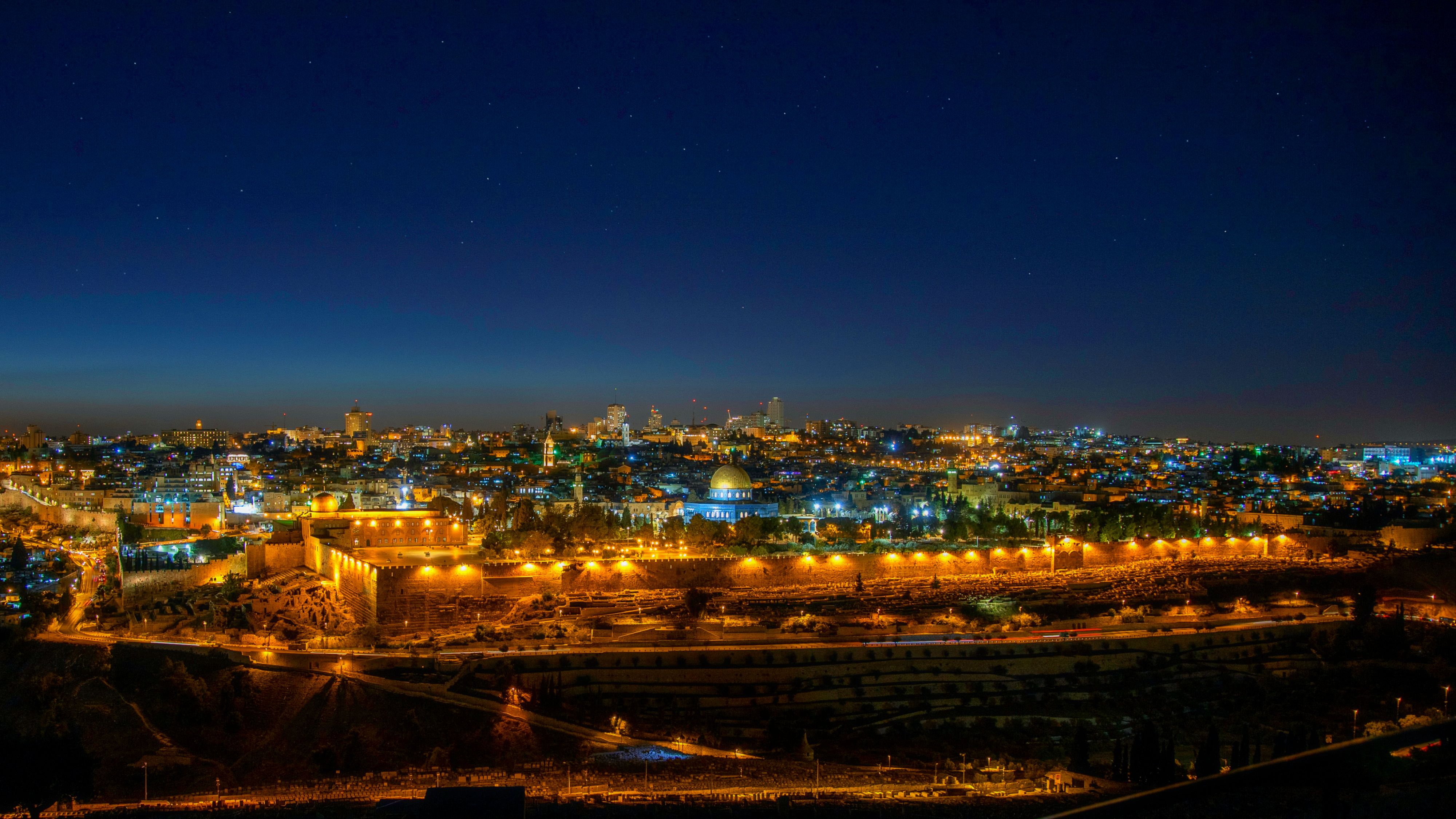
By North American or European standards, Israel is not a large country. In fact, you can easily travel from one end to another i.e. the Golan Heights to Eilat, in a few hours. Whether you’re using the bus, train, taxi or renting a car, it’s easy to move between cities, which means you can pack a lot into your trip.Haifa Maritime Museum, Israel. Photo credit: © Dmitry MishinToday, we’re looking at how to get from Haifa to Jerusalem. Haifa is Israel’s largest city in the north of the country and sits on the Mediterranean coast, on the slopes of Mount Carmel. Within the city itself, there are some fine things to see, including the iconic Bahai Gardens, the German Colony neighborhood (with its Templer houses), Wadi NisNas (with its tiny alleyways, old stone houses, and colorful market), and the National Museum of Science, Technology, and Space.Not too far from Haifa itself are beautiful nature reserves, parks, hiking trails, and also attractions such as Acre (an ancient Crusader City), Rosh Hanikra, in the Western Galilee, with its caves and grottos, and also Nazareth, the city where Jesus’ birth was announced by an angel and where Jesus himself spent many of his formative years.Of course, no trip to Israel would be complete without a visit to Jerusalem, a city of three world faiths and home to some extraordinary museums, places of worship, and archaeological sites. Staying in Haifa doesn’t mean a day trip to Jerusalem is out of the question either, as long as you’re prepared to make an early start. The actual distance between Jerusalem and Haifa is just 120 km (74 miles), which is really quite manageable. Let’s take a look at some of the ways to get between these two cities, and some step-by-step directions to make your journey run smoothly.Haifa View from Bahai Gardens Terrace.Photo credit: © Dmitry Mishin1. Bus from Haifa to JerusalemIsrael’s public network is cheap, efficient, and modern, and traveling from Haifa to Jerusalem is easy and inexpensive. Without traffic, the journey should take around 1 hour 40 minutes. There are different bus stations at which you can catch an Egged bus (Israel’s national bus line) including Haifa Merkazit Hamifrats/Inter-City Platform, Hof HaCarmel, and the Technion/visitors station.HaMifratz central bus station is the main bus station of the Haifa Bay district. It is next to Haifa's central railway station (see below under the ‘train’ section) and also the Lev HaMifratz shopping mall.Egged bus from Haifa to Jerusalem (№960) leaves from Floor 3 Haifa Merkazit Hamifrats/Inter-City Platform bus station, every 20 minutes. It takes, on average, 1 hour and 44 minutes, and a one-way ticket costs 36 NIS (11 USD).Hof HaCarmel is close to the sea and Haifa’s central bus station. It serves local buses within the city and all Egged buses heading south. Passengers can ask for a free transfer to urban buses when they buy their inter-city ticket to continue from one central bus station to the other one, or into the city. FromHof HaCarmelbus 947 runs less frequently but is also a direct service, taking just under 2 hours. Again, it costs around 36 NIS.Technion - the Israeli Institute of Technology has a visitors center and buses run from there.From the Technion University, it is possible to take the 796 to Mishmar HaGvul junction, walk 3 minutes then catch the 942 to Jerusalem. All buses alight at Yitzhak Navon, the central bus station in Jerusalem, which is adjacent to the city’s light railway (the best way to travel around Jerusalem). Haifa Bay View from Bahai Gardens. Photo credit: © Dmitry Mishin2. Trainfrom Haifa to JerusalemTaking the train from Haifa to Jerusalem is an excellent way to travel - Israeli trains are comfortable and modern and the service is frequent - every half an hour. At present, it is necessary to change trains at either Tel Aviv Savidor or Ben Gurion Airport stations - there is a connection time of around 11 minutes - before continuing on to Jerusalem. The journey, in general, takes between 1 hour and 42 minutes to 2 hours. Most tourists will wish to alight at Jerusalem’s main train station, Yitzhak Navon. Spacious and modern, it is conveniently located on Jaffa Road, next to the Jerusalem Central Bus Station and the light railway (which runs every 3-5 minutes, both to downtown Jerusalem and the Damascus Gate, in the Old City).Payment can be made by buying a ticket from the cashier's office, by booking through the Israel Railways website, using a green Rav Kav card loaded with pre-paid credit (which can be purchased from any station and many pharmacies and stores in Israel), or the Rav Kav mobile telephone app. The cost of a regular one-way ticket is 42 NIS (around 13 USD). Trains begin running at approximately 5.30 am and the last train leaves Haifa at approximately 21.30, arriving in Jerusalem two hours later (11.30 pm).Trains depart from three stations within Haifa itself - Center HaShmona, Bat Galim, and Hof HaCarmel. The largest of these is HaShmona which is situated at Plumer Square, on Independence Road. The station itself was built by the British under the Mandate, in the Bauhaus style, and opened in 1937.Bat Galim was Haifa’s major train station from 1975 until the early 2000s. It is within walking distance of the port and also the city’s Rambam hospital. Hof HaCarmel - located next to the Carmel Beach central bus station. Situated on Sakharov street - this is the city’s busiest train station. It is within walking distance of two shopping malls and the MATAM high-tech park. The train in Israel does not run between Friday afternoon and Saturday evening (two hours before Shabbat commences and an hour after it ends).Interior of the Israeli train.Photo by Lital Bamnulker on Unsplash3. Getting from Haifa to Jerusalem by TaxiTaxis are plentiful in Israel and it should not be difficult to find one to take you to Jerusalem. You can either ask your hotel concierge to book one for you or call one of the numerous operators in the Haifa area. You should look to pay somewhere between 700-800 NIS (215-250 USD). One of the most popular companies to use is BookTaxi.4. Getting from Haifa to Jerusalem with Private TransferPrivate transfers are very easy to arrange in Israel but it's advisable to book them through a trustworthy Israeli tour operator, who has contacts within the industry and can ensure you will be put in touch with a reputable and honest operator. Once you are satisfied with the quote, you will be charged by credit card and all matters forthwith will be handled by the tour operator, giving you complete peace of mind.At Bein Harim, we are always happy to help obtain quotes for people visiting Israel who need a private taxi - please call us or send us your details on our ‘Contact Us’ form and we will get back to you promptly, with a competitive offer.Taxis in East Jerusalem.Photo by Georg Arthur Pflueger on Unsplash5. Israel Shore Excursions from Haifa PortHaifa is becoming an incredibly popular destination for international cruise liners, and if you have a full day on land, traveling to Jerusalem is a wonderful idea. A ship-to-shore excursion to Jerusalem is really worth considering - you will be picked up at Haifa port by a private guide and whisked off to Jerusalem, giving you time to see world-famous spots, historical and religious landmarks, and even walk on the Mount of Olives. You’ll have a comfortable and interesting experience, and it will all be timed perfectly so you’ll return to Haifa before your ship leaves the port.6. Getting from Haifa to Jerusalem with a rental carRenting a car in Israel is a popular way to see the country. Rental charges are not exorbitant and using a car to get around gives you a level of freedom that nothing else can. Whilst parking can be a challenge in Jerusalem (and it may be advisable to pay for a spot for the day), it’s a fast way to get you from one city to the next. Taking Route 90 (Yitzhak Rabin Highway) will usually take about 2 hours, as long as there is not too much traffic on the road.Popular rental hire companies in Israel include Eldan, Hertz, Shlomo Sixt, and Thrifty, and, on average, renting a car costs around 260 NIS per day. All are convenient to work with, accessible, and competitively priced, and if you shop around beforehand you can get some great deals.View of Jerusalem Old City.Photo by Robert Bye on Unsplash
By Sarah Mann
0 views

Historical Events in Israel: From the Byzantines to the British

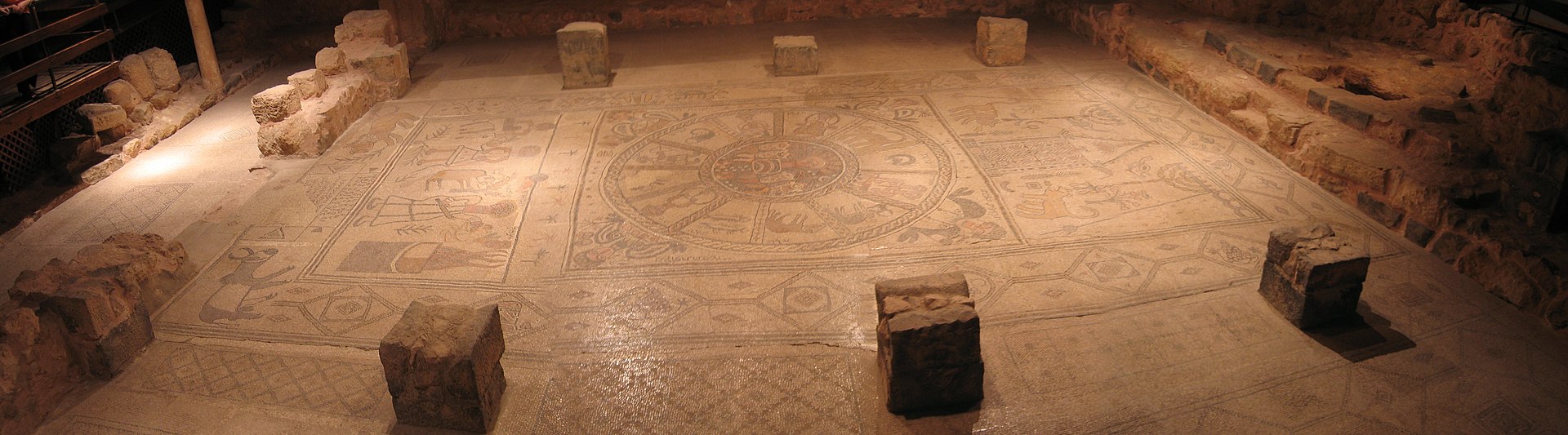
The history of the Land of Israel, from ancient times, through the centuries, and up until present day, is incredibly rich and fascinating, full of twists and turns - no wonder there are no end of books on it. But if you don’t have time to read tomes when planning your perfect vacation in Israel, then let us do some of the hard work for you and give you a ‘potted history’ of the Holy Land.The Knights Halls in the Hospitaller quarter, Acre, Israel.Photo credit: © ShutterstockIn Part One of our series on major historical events in Israel, we took a look at certain ‘stand out’ events in the Bible, recorded in the nation’s first thousand years - from Abraham and Moses at Sinai to the eras of Kings David and Solomon, followed by uprisings against the Romans and the life and times of Jesus.Following on from this, today we’re taking a look at thousands more years of Jewish history, beginning with Byzantine Rule and ending with the British Mandate and plenty in between. From Persians and Crusaders to Arabs and Ottomans, we’ll do our best to give you a timeline on what, when and how in the Holy Land, from 313 to 1948. Ready? Then read on…1. Byzantine Rule in ancient IsraelBetween 313-636, ancient Israel was controlled by the Byzantines. Ruled over by Emperor Constantine, Christianity became widely practised in the Holy Land and churches were built in Jerusalem, Nazareth and the Galilee. The conquered territory was divided into three provinces: Palestina Prima, Palestina Secunda and Palestina Tertia and these provinces were part of the Diocese of the East.The Byzantines practised Orthodox Christianity but, compared to other periods in time, Jews fared well under their rule, at least the early part. This is because they occupied a legal position that was somewhat in ‘no man’s land’. They were not regarded as pagans, nor were they expected to convert to Christianity.Byzantine Cardo, Jerusalem, Israel.Photo credit: © ShutterstockInstead, they were granted citizenship (i.e. legal equality with other citizens) and, for the most part, allowed to worship as Jews. They were not forced to violate Shabbat or Jewish holidays and synagogues were their recognised prayer houses. (However, the ritual practice of circumcision was banned, since it was considered barbaric by the Byzantines).Unfortunately, by the beginning of the 5th century, Emperor Theodosius ruled that Jews were perfidious (since they had rejected Jesus) and forbade them from holding public office and increased their taxes. Intermarriage was forbidden, as was the building of new synagogues. Luckily for the Jews, the Byzantines had other problems within their Empire so enforcement of the last restriction was lax. Consequently, Jews continued to build, and in old synagogues across Israel today, you can find beautiful mosaic floors, depicting Byzantine-style art. Some of the best examples can be viewed at archaeological sites such as Tsipori, Tiberias, Beit Shean and Beit Alpha.2. Persian Invasion to Ancient IsraelAt the tail end of Byzantine rule came an invasion of ancient Israel by the Persians. They were helped by the Jews (who hoped to be ‘delivered’ from their lowly status) and, as a reward for the help, the Persians decreed that they could administer Jerusalem. Unfortunately for the history of Jews in Israel, this ‘halcyon period’ only lasted three years after which the Byzantine army reconquered Jerusalem and expelled its Jewish population.Beit Shean Roman Theatre, Israel. Photo credit: © Dmitry Mishin3. Arab Rule in Ancient IsraelBetween 636-1099, ancient Israel was conquered by the Arabs, who would rule ancient Israel for the next 450 years or so. Events began with the Siege of Jerusalem in 636, four years after the death of the Prophet Mohammed when the Rashidun army conquered the territory. In the next four centuries, a number of Caliphates would rule, first from Damascus and subsequently from Egypt.Initially, Jews were allowed to return to Jerusalem and settle there. They were granted the status of ‘dhimmi’ (non-Muslims protected by law) and this gave them security over their property as well as freedom of worship. Of course, this came at a price - special taxes that they paid - but it certainly safeguarded their lives.However, as time passed, the Jews began to suffer more economic and social discrimination and, as a result, many of them left the country. By the end of the 11th century, the number of Jews in the land of Israel had decreased quite substantially.In the meantime, under the Umayyad Empire, caravan stops, bathhouses and places of worship were constructed, the most famous of which is the Dome of the Rock Mosque in the Old City of Jerusalem. Built by Caliph Abd al-Malik ibn Marwan in 691, this Islamic Shrine is one of the best examples of architecture and, today, a UNESCO World Heritage Site. Constructed on the Temple Mount, its golden dome makes it the city’s most recognisable landmark and, of course, it continues to be a focal point for Muslim prayer.Dome of the Rock, Temple Mount, Israel. Photo byThales Botelho de SousaonUnsplash4. The Crusaders Arrive in the Holy LandBetween 1099-1291, the Crusaders dominated the landscape of the Holy Land. Christian knights and peasants from across Western Europe heeded the call of Pope Urban to take up arms and aid the Byzantines in their struggle to recapture the Holy Land from Muslim control.The Crusades (or ‘holy wars’ as they are also known) were met with an extraordinary response from all sections of society. Military Orders were particularly well represented, including the Knights Templar, the Teutonic Knights and the Hospitallers, who made it their business to protect pilgrims travelling to and from the Holy Land.All in all, there were four major Crusades, the first of which culminated in the fall of Jerusalem and the slaughter of hundreds of its inhabitants, even though the leader Tancred had promised they would be spared. Today, if you visit the Church of the Holy Sepulchre in the Old City, you can still see endless crosses carved into the stone walls, left behind by Knights who took shelter there.As a result, Christian rule was established in the Holy Land. Castles were built in Acre and the Galilee and Crusader states were established far north of ancient Israel. Only in 1181 did Saladin (the first Sultan of both Egypt and Syria) reclaim Jerusalem. In front of the Damascus Gate and the Tower of David, Saladin's army bombarded the ramparts with arrows but only after six days, when he moved to the Mount of Olives, was he victorious.Jews fared little better than Muslims in the Crusader era - thousands were murdered (beheaded or thrown in the sea) and their synagogues. The Crusades set the tone for many more centuries of antisemitism, not just in the Holy Land but throughout Europe.Ruins of Yehiam Teutonic Fortress, Israel.Photo credit: ©Dmitry Mishin5. Mamluk Rule in PalestineBetween 1291-1516, it was the Mamluks who ruled the region. In Arabic, Mamluk means ‘one who is owned’ or ‘slave’ and these non-Arabs (who had, historically, served Arab dynasties in the Muslim world) came from a number of regions including Caucasia, Turkey and from Southeastern Europe.The Mamluks' years in power were marked by a major eradication of Crusader culture in the Holy Land. Not only did they prevent the Mongols from advancing into Syria but they were also extremely cultured - today, in Israel, and especially in Jerusalem, you can still see many of the buildings they designed.Initially, as with the period of Arab rule, Jews were once more granted ‘dhimmi’ status but as time passed, the Jewish community began to shrink. Where Jews continued to live, they were discriminated against in legal matters and forced to pay taxes on all manner of things, including the drinking of wine. Even so, despite these restrictions and laws, the legal position of Jews in the region was still far better than most of their fellow Jews in Europe. Mihrab (prayer niche) cut in the wall near Damascus Gate, Jerusalem. Photo credit: ©Dmitry Mishin6. Ottoman Rule in PalestineLife for the Jews improved considerably between 1517-1917, when the Ottomans conquered the region - in fact, many of the Jews driven out of Europe fled to the Holy Land, since they knew their chances of surviving there were better. Under the Ottomans, there were fewer restrictions for Jews in their daily lives and professions (even though they still had to pay a ‘head tax‘) but many decrees against them were not enforced and some Jews even rose to power in the Ottoman Court, as physicians and economists.Both Ashkenazi and Sephardic Jews settled in the Ottoman Empire and many became successful in business enterprises. The Jews were allowed to be responsible for their own courts and schools and held a wide variety of political opinions - some were extremely loyal to the Ottomans, others were ardent Zionists.Ottoman building in Acre, Israel. Photo byShalev CohenonUnsplash7. First Aliyah to Palestine‘Aliyah’ in Hebrew means ‘to ascend’ (or ‘go up’) and is a term traditionally used when referring to the immigration of Jews from around the world to Israel. The First Aliyah (also known as the ‘agriculture aliyah) was a large-scale arrival of Jews to Palestine. Many of them arrived from Russia since waves of nationalism and antisemitism had led to pogroms (organised killings) in their birthplaces. Since immigration to Palestine has occurred before, the use of the term "first aliya" is controversial.The Jewish Virtual Library says that almost half of the settlers (3000 persons) did not remain in the country as they faced financial problems and did not have any experience in farming.A majority of the immigrants did move to cities, such as Rishon LeZion (‘First in Zion’). However, some of them - pioneers as they are now known - established agricultural settlements, particularly with the financial support of Baron Rothschild. These includedZichron Yaakov(nearHaifa), Metulla (in northern Israel) and Rosh Pina (in Galilee).Ohel Ya'akov Synagogue, Zichron Yaakov, Israel.Photo credit: © ShutterstockLife wasn't easy for the pioneers - when you factor in disease, lack of infrastructure, hard physical work and the hot climate, in retrospect it is astonishing how much they achieved with their labours. Nevertheless, the founding of these ‘yishuvs’ (agricultural communes) only served to strengthen their resolve to create a new kind of Jew - one who was both physically and mentally resilient, both a warrior and a farmer!The First Aliyah was also responsible for a resurgence in the cultural life of the Holy Land. Much of this can be credited to Eliezer Ben Yehuda, born in Vilna in 1858 who, after having moved to Jerusalem, vowed to transform Hebrew into a modern language, spoken by the majority of people arriving (at the time, it was only used for prayer).In this period, the National Library was founded and today houses books, photographs, maps and pamphlets and even poems written in the revived Hebrew language(now known as ‘Ivrit’). Incidentally, Ben Yehuda not only wrote the first-ever Hebrew-English dictionary but realised his dream - today, it is the national language of the State of Israel and spoken by almost nine million people! Quite some achievement.Old fashioned farming in the Biblical Garden in Yad HaShmona, Israel.Photo byGeorg Arthur PfluegeronUnsplash8. Second Aliyah to PalestineThe Second Aliyah took place between 1904-1914 when approximately 35,000 immigrants arrived in Palestine. The vast majority were from Eastern Europe (many fleeing pogroms in Poland and Russia) but some were from Yemen. Many of them were pioneers who joined the ‘old yishuv’ i.e. traditional Jewish communities based in Jerusalem, Tiberias, Hebron and Safed and this brought with it considerable urban development (most notably in Tel Aviv, which was founded in 1910).Although a minority of them were ideologically committed, without a doubt they left their mark. They were committed to the establishment of ‘Hebrew settlements’ (run as co-operatives) and many eventually became involved in politics - including Ben Gurion and Beri Katznelson. The framework they created would, undoubtedly, set the groundwork for the establishment of the future state of Israel.9. British Mandate Period in PalestineOttoman rule came to an end after 400 years when the British arrived in town and established the Mandate. The period of their rule lasted from 1918-1948 (from the moment General Allenby walked through Jaffa Gate of Jerusalem’s Old City (becoming the first Christian in hundreds of years to control the city). The British Mandate was a critical period in Jewish history for a number of reasons, maybe one of the most important being that it set the scene for the “Balfour Declaration.” In essence, this was when Lord Balfour, Britain’s Foreign Minister, pledged his support for the establishment of a ‘Jewish national home in Palestine’.The house of Paula and David Ben-Gurion in Tel Aviv, Israel.Photo credit: © Jenny EhrlichThough Israel would not be ‘born’ for some decades, this declaration had a major effect - Jewish migrants began arriving in earnest to Palestine and Jewish institutions began to take shape. However, as violent clashes between Arabs and Jews, unfortunately, became more common, support in England for the Mandate began to wane.Whilst the Mandate survived World War II, support for it was at an all-time low and after Jordan was given independence in 1948, Britain declared they would terminate their Mandate in Palestine on 14th May 1948. In that respect, they did accomplish one of their goals - hours earlier, the Israeli Declaration of Independence was issued. This leads us onto number 10…!10. The State of Israel is ProclaimedOn 14th May 1948, on Rothschild Boulevard in Tel Aviv, David Ben Gurion read out a proclamation, declaring the birth of the State of Israel. Today this building is a museum and is called the Hall of Independence. Just eleven minutes later, the USA would recognise his decree, soon followed by the USSR. Jews everywhere danced into the street, celebrating joyously, even though they understood that a war with the Arab world was almost inevitable. Although the British army had withdrawn their troops earlier that day, the State of Israel officially came into being at midnight on 14th May 1948, when the Mandate was officially terminated. And then began a whole new era, with the first-ever Jewish state established. Watch this space for Part Three, when we’ll look at some of the major historical events in Israel from 1948 to the present day.Independence Hall where is The Israeli Declaration of Independence was made on 14 May 1948, was the Tel Aviv Museum.Photo credit: © Shutterstock
By Sarah Mann
0 views

Souvenirs in Israel

If you’re a first time visitor to Israel, not only are you going to be bowled over by the sheer variety of places to visit and things to see, you’re also going to be tempted at every turn by things to buy. And why not? After all, picking up something for yourself by which to remember your trip is a great idea.Assorted souvenirs at Jaffa flea Market, Israel.Photo byTamara MalaniyonUnsplashBut as well as souvenirs from Israel for yourself, what about your friends, family and colleagues, especially those who haven't visited, but are curious about the Holy Land. What are you going to bring back for them? Well, don’t worry - you aren’t going to return home empty-handed. An enormous number of different arts and crafts are produced in the State of Israel, including Judaica, jewelry, sculptures, ceramics, cosmetics, textiles and apparel. Today, we’re going to look at this history of how these items came to be popular and where you can purchase some of them, on your next vacation in Israel…The History of Arts and Crafts in IsraelThe history of arts and crafts in Judaism is an interesting and unusual one. According to the rabbis who penned the Talmud, obeying the laws that God gave to Moses on Mount Sinai is not in itself enough - it is also a great deed to carry out the rituals of prayer and worship in a way that is beautiful. As a result, many things associated with Judaism - both in the synagogue and in the home - were made as crafts, over the ages.These included menorot (candelabrum), mezuzot (the small ‘boxes’ that Jews attach to their doorposts, with a miniature biblical scroll inside), kippot (the head coverings that observant Jews wear) and many other ritual objects. Today, they can be found in stores across Israel, particularly in Jerusalem and Tel Aviv, and they make wonderful gifts for anyone you know back home who care about their Jewish heritage.In more contemporary times, whilst the British Mandate ruled Palestine, between 1917-1948, the crafting of metal jewelry, by new arrivals from Yemen, became very popular. At the same time, because of the large number of German immigrants who arrived in the Holy Land in the 1930s and 1940s, ceramics became popular. This was because many of those who arrived were potters, and soon established studios to carry out their profession.Traditional Jewish Menorah. Photo byLuis GonzalezonUnsplashToday, in Israel, you’ll see statues everywhere - not just in museums but in public life, in installations, along the cliffs of the crater in Mitzpe Ramon, outside Ben Gurion airport, all around the big cities and also dotted throughout the countryside. Indeed, there are many artists on kibbutzim and moshavim (agricultural settlements in Israel) who take advantage of their space to build workshops and sell their wares to people visiting. Weaving and textile production are also popular in Israel - indeed, as some have commented, Tel Aviv was a textile centre long before high tech came to town. The history is fascinating - because over the ages Jews were not allowed to join trade and craft guilds, textile and wholesale manufacturing became one of the few industries where they could earn a living.Jewish traders in Morocco and Spain, throughout the centuries, imported cotton and silk and were also well-known for their weaving. And in Austria and Germany, before World War II, the majority of department stores and retail businesses were owned and run by Jews. Not surprisingly then, when immigrants began arriving in Palestine / Israel, they brought with them their experience and skills, which is why their craftsmanship became renowned for its quality.Today, in Israel, both Jewish and Arab communities also have a history of wood and leatherwork. Israeli Arabs, in particular, have a long tradition of carving out of olive wood, as well as basket weaving, fine embroidery and glassware. There are also famous sculptors and artists such as David Gerstein (known for his metal statues) and Kadishman, well known for his colourful paintings of sheep! One thing is for sure - creativity abounds…Jewelry at the flea market in Jaffa, Israel.Photo credit: © ShutterstockTraditional Souvenirs in IsraelIf you want to err on the side of tradition, you can ‘play it safe’ and start your souvenir hunting in Jerusalem, Israel’s capital and home to stores both in downtown west Jerusalem as well as the enormous, bustling, vibrant market scene in the Old City.Judaica is constantly a popular gift from Israel and the number of Judaica souvenirs may quickly overwhelm you. As we mentioned above, if you’re looking for religious artefacts, then there are too many to mention - candlesticks, Kiddush cups (in which Jews bless their wine), challah trays (on which the delicious Friday night bread is served up). Hannukiot (the candelabra lit especially to commemorate the ‘Festival of Lights’ in the winter) embroidered bags for men to carry their ‘tallit’ (prayer shawl) and even beautifully decorated ‘seder plates’ for the Passover holiday.The Israel Museum in Jerusalem doesn’t just have a world-famous collection (including the Dead Sea Scrolls) but a wonderful gift shop, with many of the products inspired by different eras in the Holy Land. There, you can pick up vintage posters from the 1930s, books, stationery, accessories for the home and even beautiful paperweights, spelling out ‘Ahava’ (Love, in Hebrew) in the shape of the famous statue in their sculpture garden.Jewelry Souvenirs from IsraelJewelry souvenirs from Israel make a great gift - jewelry is something many women and young girls love receiving and whether you’re looking for a traditional or modern piece. How about a Hebrew name necklace? Or a pair of contemporary-style earrings from an up and coming artist in the Jaffa Artists Quarter? Star of David pendants are, for obvious reasons, very popular, as well as rings (which can come with biblical inscriptions). Pieces made with an Eilat stone (a beautiful shade of blue-green) also make wonderful souvenirs.Dead Sea salt island. Photo byKonstantin TretyakonUnsplashDead Sea CosmeticsYou can’t come to Israel and not go home with a souvenir from the Dead Sea, the lowest place on earth and a place where all kinds of wonderful bath salts, mud packs, hand and foot cream, body lotions and moisturisers are on offer. Trust us, they smell amazing, and are also fantastic for your skin, since they contain local minerals such as magnesium, sodium and potassium from all around the area. Not only are these products made from top-quality ingredients, they’re vegan, gluten-free, and also eco-friendly (taking care not to pollute the delicate eco structure in the area) and their manufacture uses sustainable and green methods at every turn.Christian Souvenirs from IsraelYou are going to be spoilt for choice picking out religious souvenirs from Israel - whether you’re in Bethlehem, Jerusalem, Nazareth or the Galilee region, there are an endless number of gifts from Israel you can pick up to take home with you. Jerusalem - walking through the streets of the Old City of Jerusalem is one of the things that people say is the best part of their vacation to Israel, and as well as the astonishing number of religious sites (churches, mosques and synagogues) there’s also a fantastic shopping opportunity. Traditional wooden Christian souvenirs in Jerusalem gift shop, Israel. Photo credit: ©Dmitry MishinThis enormous Bazaar is packed to the gills with beautiful souvenirs - rosaries and crosses, soaps, Armenian pottery, traditional sweets like baklava and halva, and meaningful gifts for young adults, such as communion cups.Bethlehem - Bethlehem is the birthplace of Jesus and something that’s really worth picking up for a Christian friend is a wood carving of the Nativity scene. Also look out for incense, olive oil soap and icons depicting Jesus at the Last Supper.Nazareth - Nazareth is the city where Mary was visited by the Archangel Gabriel and where Jesus spent many of his formative years. After you’ve explored the Nazareth churches, go to the market and look out for the excellent local honey, scented candles and olive wood art.Galilee - when travelling around Galilee, the visit to the baptismal site of Yardenit is a must. Whether you’re a Christian pilgrim who wants to be ritually immersed in the Jordan, or simply a curious onlooker, this place is magical. It also has a large restaurant and an equally large store, with all kinds of Christian souvenirs. These include holy water from the Jordan river, crucifixes, anointing oil, religious candles and precious metal crosses.Icons and Judaica items in an Israeli gift shop.Photo credit: ©Dmitry MishinCool Souvenirs from IsraelThere’s always going to be a friend or family member you know who likes something a little unusual in the way of a gift. Don’t worry - there are plenty of cool souvenirs in Israel to take home. In particular, we’d suggest a wander around Tel Aviv’s hippest (and often hipster) neighbourhoods, where you’ll see all manner of unusual items on display.Bauhaus Centre - Tel Aviv’s Bauhaus Centre, established to promote Bauhaus architecture and design in the ‘White City’ has a fantastic book and gift store in the heart of the city, on Dizengoff Street. Whether you’re looking for original Bauhaus items or something more contemporary, you’ll find something very unusual! Some of their most popular products include smooth-papered coffee table books, posters of 1930s ‘White City’ buildings, fridge magnets of historical figures in Israel (think Ben Gurion, Theodor Herzl, Golda Meir and Moshe Dayan), coffee coasters, sterling silver miniatures, and attractive and stylish clocks, bookends and pens.Jaffa Flea Market, Israel.Photo credit: ©Dmitry MishinJaffa Flea Market- the ‘Shuk haPishpeshim’ - or ‘Jaffa flea market’ in English - in this historic area inJaffa, is adored by locals and visitors alike and a great place for a morning or afternoon out. Open six days a week, it’s the perfect place to rummage for bargains as well as hunt in vintage stores.Friday morning and afternoon is when it really comes to life - as well as the shopping, there are street musicians, funky bars playing all kinds of music, coffee shops to spend a few hours in and plenty of good eateries, where you can try some authentic Middle Eastern food - particularly hummus, shakshuka and knafe.One part of the market is strewn with tables, where you can poke around to your heart’s content, looking for old jewelery, postcards, badges, clothes, and toys. Some of the things are in pretty good condition too - the merchants arrive here at 5 am usually and the serious bargain hunters show up around 7-8 am but if you’re patient and a little lucky, you’re probably going to be able to find something ‘local’ to take home with you.A Jaffa cafe, Israel.Photo credit: © ShutterstockAs well as bargain hunting, there are a number of great vintage stores, selling furniture, light fixtures, retro posters of the State of Israel, beautiful rugs, and all kinds of accessories that wouldn’t look out of place in your home. Warning - these vintage stores aren’t particularly cheap, but the chances are that anything you do pick up is really going to be authentic. So if you’re the kind of person who prefers ‘mismatch’ to ‘department store’ then head here.Nahalat Binyamin - twice a week, next to the Carmel Market (Shuk haCarmel), artists around Israel set up their stalls for this special craft market, which sells all kinds of handmade goods. Whether you’re looking for jewelry, a puzzle game, a clock with the outline of Charlie Chaplin, or some local soap, this is where you should come. All of the stall owners are obliged to sell only their own products, so not only are you supporting local businesses but you can be sure that whatever souvenir you take home really is made by hand.David Gerstein Gallery - as mentioned above, David Gerstein is an internationally-recognised sculptor and one of his famous statues is a fantastic souvenir to take home with you. Whether you like the guy on the racing bike, the butterfly, a traditional ‘hamsa’ or something romantic like ‘1000 kisses’, these beautiful, vibrant pieces will add a certain something to any home and won’t fail to impress the recipient. Hamsa with Home Blessing Sale at Carmel Market, Tel Aviv.Photo credit: ©Dmitry MishinFood Souvenirs from IsraelThey say that Israel is the land of milk and honey, so why not take back some kind of sweet treat as a souvenir? Israel is famous for producing Medjool dates (grown both in the Arava desert and the Jordan Valley) and something else worth picking up is ‘silan’ which is a marvellous date honey syrup. Halva - a sesame candy (similar to fudge, but made from a nut or tahini base, instead of butter) is also delicious and easy to pack in your suitcase.Olive oil is produced all over the Galilee region and is top quality - from mainstream types to boutique brands, which you can order online or pick up whilst on a day trip or driving tour in northern Israel. And, finally, we’d be remiss if we didn’t mention Bamba - Israel’s favourite snack. Adored y babies, kids and adults alike, this peanut-flavoured treat is utterly moreish - and incredibly light to pack (which means you can buy plenty of it). Enjoy whatever you buy - and enjoy your trip to Israel!Spices sale at Carmel Market, Tel Aviv.Photo credit: ©Dmitry Mishin
By Sarah Mann
0 views

Emmaus

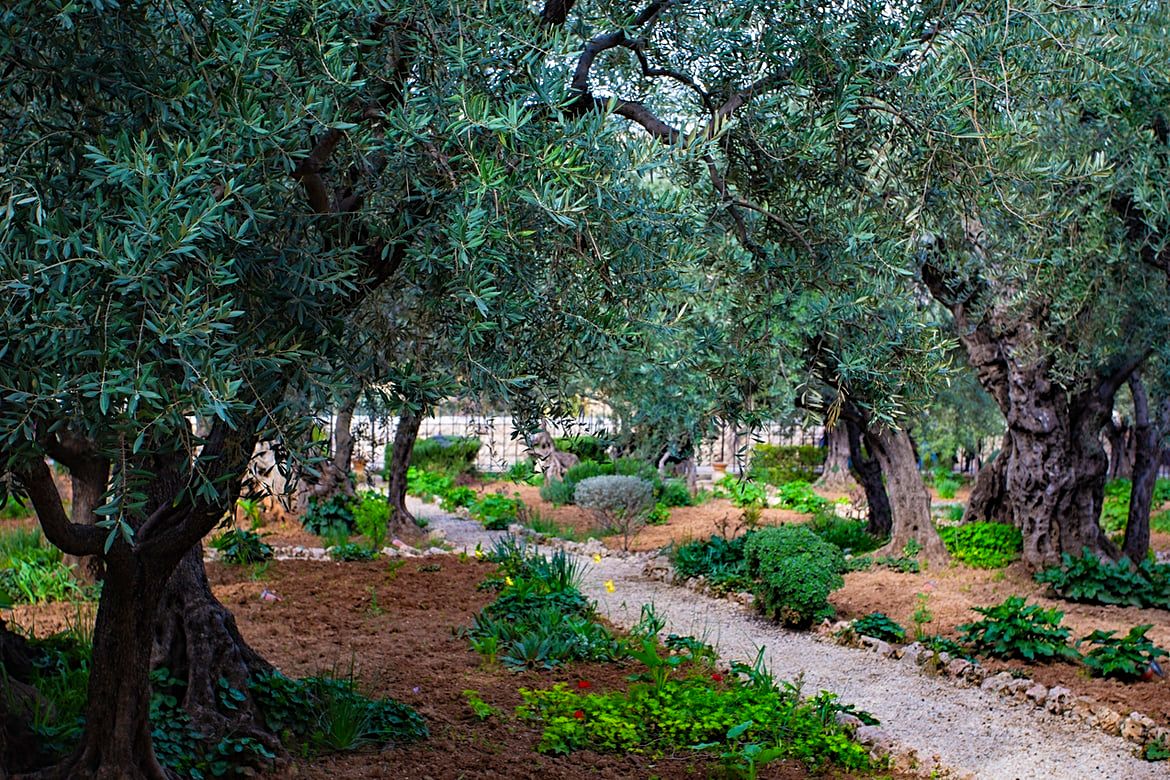
Israel is an fantastic country to visit, whatever your background and faith, but for Christians there is incredible significance in making a journey to the Holy Land. Whether wandering through the narrow streets of the Old City of Jerusalem and gazing at the Church of the Holy Sepulchre, visiting the Basilica of the Annunciation in Nazareth, where the Angel Gabriel informed Mary she was with child, or exploring the Galilee, where Jesus spent many of his later years ministering, the experience is usually a very profound one.An NRSV Bible open to the title page of the New Testament. Photo byTim WildsmithonUnsplashOf course, as well as the ‘must see’ Christian holy sites in Israel, there are also many places more out-of-the-way, which are imbued with religious significance. One of these is Emmaus and although it is not particularly well-known, it has a fascinating history. Not only is it linked to the resurrection of Jesus but, in recent times, archaeologists have excavated remains that point to it possibly being the site where the Ark of the Covenant was placed. Let’s take a look at the background of this place to try and understand more about its significance for scholars, archaeologists, and also modern-day Christian pilgrims.Etymology: What does Emmaus mean?The name ‘Emmaus’ is thought to be a Hellenized (Greek) version of the Hebrew name Hammath. The name Hammath comes from the root חמם (hamam), meaning to be warm and in modern-day Hebrew is used to describe hot springs. A spring of Emmaus (Greek: Ἐμμαοῦς πηγή), or alternatively a 'spring of salvation' ( πηγή σωτήριος) can be found in Greek sources. Emmaus is mentioned by this name in two Midrashim (Rabbinic/Biblical interpretations) - Midrash Zuta for Song of Songs and Midrash Rabbah for Lamentations and Ecclesiastes. Historically, Emmaus was a relatively common name in the Levant and even today, across the Middle East, many sites are called Hama, Hammath (e.g. Hamat Gader), and other variations on this theme.Silhouettes of man and woman near a cross. Photo byJunior REISonUnsplashEmmaus in the Christian BibleEmmaus is mentioned in the third of the Gospels (the Gospel of Luke) as the place at which Jesus appeared to his disciple Cleopas and a friend, who were walking on the road from Jerusalem to Emmaus (possibly a distance of between 10-12 km). According to Luke, the story takes place on the day of Jesus’ resurrection. The two disciples had heard that the tomb where Jesus had been buried was now empty and were discussing the matter. Luke goes on to state:And it happened that while they were speaking and debating, Jesus himself drew near and walked with them, but their eyes were prevented from recognizing him … as they approached the village to which they were going, he gave the impression that he was going on further. But they urged him, "Stay with us, for it is nearly evening and the day is declining." So he went in to stay with them. And it happened that, while he was with them at table, he took bread, said the blessing, broke it, and gave it to them. With that their eyes were opened and they recognized him. Luke also recounts that after the three of them ate supper at Emmaus, Jesus scolded the two of them for their lack of belief and taught them about the prophecies of the Messiah. Emmaus is not mentioned in the Gospels of Matthew or John; in the Gospel of Mark a similar story is mentioned, but with no particular reference to Emmaus.Red Bible on a wooden table. Photo byTim WildsmithonUnsplashWhere was the exact location of Emmaus?Historians have debated this question hotly for many years and the answer is, we don’t really know because references to its precise location are quite vague and in manuscripts of the Christian Bible there are references to at least three different distances between Emmaus and Jerusalem. Among the contenders are the sites of Emmaus Nicopolis / Imwas, Al-Qubeiba / Castellum Emmaus / Chubebe / Qubaibat, Kiryat Anavim / Abu Gosh, Coloniya, El-Kubeibeh.Emmaus Nicopolis / ImwasThis site is the oldest of the possible locations and, today, many Christian pilgrims regard Emmaus-Nicopolis as the place at which the disciple Cleopas and his friend encountered Jesus after he had risen from the dead. It was Eusebius of Caesarea who first raised the idea of Nicopolis as the site of Emmaus.Eusebius was a Greek historian whose account of the first centuries of Christianity is a landmark text for historians. Jerome, who later translated Euebius’ book, insinuates that there was a church in Nicopolis, built in the house of Cleopas, and this was where Jesus and the two disciples broke bread together. Other sources that talk of Emmaus include the first book of the Maccabees, the writings of the Roman historian Josephus and accounts from the late Roman, Byzantine, and early Muslim eras.In the modern era, it was the explorer Edward Robinson who was first said to have found the location of Emmaus - he believed it was the Arab Palestinian village of Imwas, close to the Latrun Monastery. Imwas was destroyed in 1967 but before then it was situated close to the Judean hills, about 23 km from Jerusalem via the Kiryat Yearim ridge.Latrun Trappist Monastery, Israel.Photo credit: © Dmitry MishinThe Walk of EmmausToday, many of these pilgrims, as a way of recreating this journey, set out to walk the route called the ‘Emmaus Hike’. This begins at the Saxum Visitor Centre (just outside of the village of Abu Gosh), runs for 20 kilometers, and has a number of different trails. Just as interesting, part of the route pilgrims take today was once a Roman road that connected Jerusalem with the port of Jaffa, and it is more than 2,000 years old. Along the trail, there are a number of interesting archaeological sites, including the remains of a Byzantine basilica.Al-Qubeiba / Castellum Emmaus / Chubebe / QubaibatAnother possible location for Emmaus is the town of Al-Qubeiba, northwest of Jerusalem. In Arabic, it means ‘Little Domes’. In 1099, a Roman fort by the name of Castellum Emmaus was discovered there although historians do not believe it was named ‘Emmaus’ at the time Jesus lived. By the 12th century, the Crusaders had named the site ‘Small Mahomeria’ (as opposed to ‘Large Mahomeria’ which stood near Ramallah). In 1335, the site was taken over by the Franciscans, who began organizing pilgrimages there each year and in 1902 built a church there.By the Second World War, the British Mandate held prisoners of Italian and German heritage at Emmaus Qubeibeh and between 1940-1944, the archaeological Bellarmino Bagetti carried out excavations there. He found a number of artifacts from different periods - Hellenistic, Roman, Byzantine, and Crusader - and subsequently carried out some explorations.Olive groves around Latrun, Israel.Photo credit: ©Dmitry MishinAbu Ghosh / Kiryat AnavimThe village of Abu Gosh is situated about 12 km from Israel’s capital, in the middle of the Kiryat Yearim Ridge, with Nicopolis on one side and Jerusalem on the other. The explorer Edward Robinson (see above) estimated that it dates back to the Crusader era and considered it to be the best-preserved ancient church in Palestine. When the 1940s excavations were carried out, archaeologists found ‘Fontenoid’ which was a site the Crusaders regarded as Emmaus, before they reconsidered and accepted Nicopolis as the ‘authentic’ Emmaus.Abu Gosh itself is situated in an area of Israel where some of the earliest humans lived - excavations have shown habitation dating back to the Neolithic period. Today it is famous for its excellent hummus (many Israelis will admit to having driven long distances to eat there) and its famed choral music festival, taking place twice a year, in the spring and the fall.In this festival, choirs and musicians not just from Israel but across the world come to perform in two of the churches in Abu Gosh. As has been commented, the opportunity for Jews to visit a Muslim community and hear music in a Christian place of worship is really an excellent example of working towards peace. Judean Hills, Israel. Photo byBenjamin GrullonUnsplashEmmaus / Colonia / Motza / Ammassa / Ammaous / Khirbet MizzaSituated between Jerusalem and Abu Gosh, also on the Kiryat Yearim Ridge Route, is Colonia. It was referred to in the Hebrew Bible, in the book of Joshua, as ‘Mozah’ and in the Talmud as a place where people came to cut down tree branches to celebrate the harvest festival of Sukkot. The historian Joseph Flavius wrote in ‘Antiquities of the Jews’ about the Maccabean Revolt, and in this instance mentions a city named Emmaus, which seems to link up with the idea of Emmaus being Nicopolis (in terms of its distance from Jerusalem). However, in ‘The Jewish War’ he talks of a second location from Emmaus, where Roman legions settled after the First Jewish Revolt. Latin manuscripts talk of ‘Amassa’ and Greek manuscripts ‘Ammaous’ but once the Roman legions (‘colonia’) had arrived, these names were soon forgotten. The name ‘Colonia’ survived for a long time - the Jerusalem and Babylonian Talmud both refer to ‘Qeloniya’ (the Aramaic term for Colonia) and in Arabic, the name still exists, in the form of ‘Qalunya’. In 1881, William Birch (who was part of the Palestine Exploration Fund) identified what he called ‘Motza’ as the Emmaus mentioned in the Gospel of Luke. Less than 2km to the north is a ruin named Khirbet Beit Mizza, which some scholars believe to have been the biblical Mozah. Contemporary excavations now place Mozah at Khirbet Mizza.The Gospels set from Alabaster Co.Photo byLauren KanonUnsplashTouring Emmaus todayNorth of Emmaus’s church complex you can find a very well-preserved Roman bath complex. Archaeologists believe it is in such a good state because the structure was considered holy by Muslim conquerors, and built a cemetery around its edges over the years. It is possible to visit Emmaus today by car - the entry fee is very small and it is just off Highway 1. Alternatively, it is possible to take a private tour of Jerusalem and/or the Judean Hills area - you will be able to customize the tour exactly to your needs and visit there for as long as you desire.
By Sarah Mann
0 views

Top Attractions in Eilat

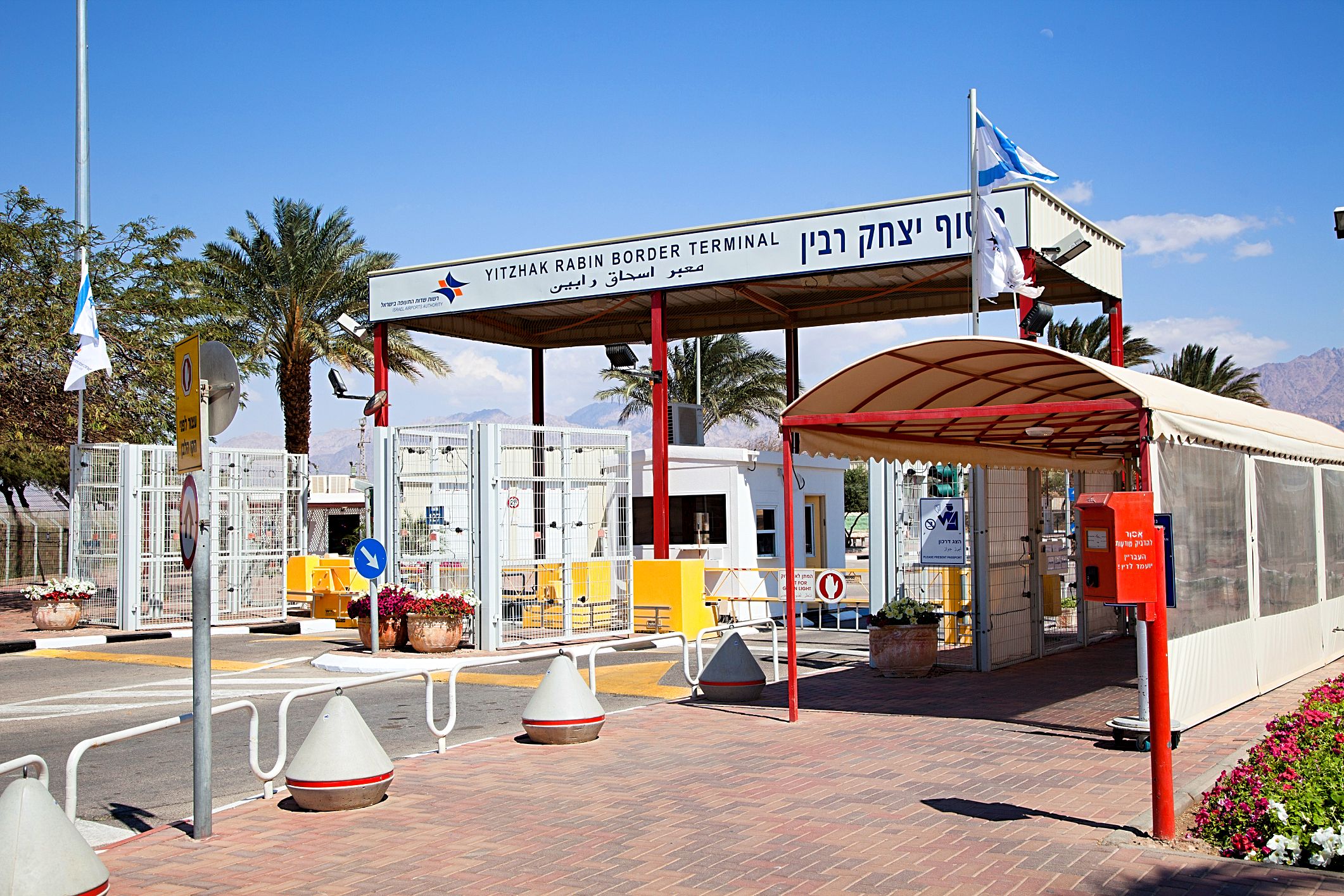
Lying at the very bottom of Israel, nestled on the coast of the Red Sea, lies the city of Eilat. Today, a premier vacation spot, it wasn’t always this way - indeed, until the 1970s it was nothing more than a quiet fishing village. However, as Israel became an increasingly popular tourist destination, this tiny spot began growing into the resort it is today - complete with luxury Eilat hotels, excellent cafes and restaurants, and all kinds of attractions.Eilat Coral Beach, Israel. Photo credit: © Doron Nissim. Published with permission of the Israel Nature and Parks AuthorityYear-Round Sun and Year-Round Fun!And with its year-round warm climate, it’s the perfect place for anyone (Israeli or tourist) to head if they’re seeking sunshine, beaches, warm waters and plenty of fun, both for kids and adults. The Eilat weather is a big draw too - in the winter months, temperatures are extremely pleasant (between 21 and 25 degrees in the day), which makes it an ideal place to escape grey winter climes. And in the summer, even though it’s the hottest spot in Israel, it’s still a popular place to head for some ‘R&R’...Long Weekends and Chillout Vacation in EilatSince Israel’s a small country, travelling the length and breadth of it is not too difficult. Eilat is within easy travel distance of both Jerusalem and Tel Aviv, where many tourists spend their time. Public buses run regularly (and are inexpensive), driving down from the centre of Israel to the tip will take around 5 hours and flying directly between Ben Gurion airport and Eilat Ramon airport is circa 45 minutes. So it really is a place you can visit for a long weekend! Below we’re taking a look at some of the most popular things to do in Eilat, from water sports to camel riding, jeep tours and hiking in the nearby mountains, and even hopping over the border to Jordan, to visit the lost city of Petra or explore the fascinating Wadi Rum desert, made famous by Larence of Arabia.Reefs at Eilat Coral Beach, Israel. Photo credit: © Assaf Zvuloni. Published with permission of the Israel Nature and Parks Authority1. Underwater Observatory ParkFor anyone interested in marine life (young or old) this has got to be on your list of ‘must see’ things in Eilat. The Underwater Observatory Park is a fantastic way to learn about life under the sea without even getting wet, and there are enough displays inside to keep you occupied for ages!There are over 35 aquariums (with more than 800 species of rare fish and marine creatures), some of them only found in Eilat! Kids also love the ‘Shark Pool Complex, where - as they walk through a transparent tunnel - it's possible to gaze at these astonishing creatures, up close and personal!The observatory is also home to manta rays, giant turtles, jellyfish and even the Googly-Eyed Glass Squid. It’s hard to believe that you’re just six metres below sea level, as you watch so many species in their natural habitat. For an additional cost, you can also take a trip out in one of their glass-bottomed boats, or visit the ‘Aquadome’ and learn more about the humpback whale. Wow…2. Eilat Coral Beach Nature ReserveThe Eilat Coral Beachnature reserve is also a national park and the northernmost shallow-water coral reef in the world. Extending for 1,200 metres off the coast of Eilat, it is an ideal place for snorkelers and divers to explore marine life - its delicate natural habitat is full of colourful fish as well as astonishing plants. On land, the beach is well cared for and the nature reserve guards helpful, the showers and restrooms are clean and pleasant and there’s also a snack bar. Underwater enthusiasts…this attraction is for you!People getting ready for snorkellingat Eilat Coral Beach, Israel. Photo credit: © Doron Nissim. Published with permission of the Israel Nature and Parks Authority3. Dolphin Reef in Eilat, IsraelEilat’s ‘Dolphin Reef’ has got to be on your bucket list - it’s a magical, extraordinary and unique way of enjoying a few hours with these magnificent creatures, watching them frolic and swim that’s not just natural but also belongs to them. The ‘reef’ is home to a number of bottlenose dolphins (as well as their offspring) who ‘choose’ to live here (i.e. there are no nets to keep them in). The owners have done this deliberately, to foster the idea that the bond created between visitors and dolphins is truly authentic.Once you’ve entered, there’s a secluded beach, hammocks and structures where you can sit and wait for the dolphins to appear - some will swim up to you, so you can actually pet them. It’s possible to sit very close by and watch, as they are fed. It’s also a wonderful place to relax, with a book, or a drink from the beach bar, staring out at the Red Sea.It’s possible to snorkel in the area (and there’s plenty to see) and for the truly hooked, there’s also the opportunity to dive with the dolphins…you’ll get a wetsuit and flippers and be taken out by a professional. The Dolphin Reef is perfect for a day out - whether you’re a family with young children, a couple who are looking for something romantic to do or simply someone who loves these intelligent and adorable animals.Dolphin Reef Beach, Eilat, Israel. Photo bySilviu GeorgescuonUnsplash4. Camel Riding in Eilat, IsraelTaking a camel ride is something many people dream about when planning a trip to Israel. Well, just a few kilometres from Eilat’s the Red Sea are mountains and deserts, so this is a no brainer. The ‘Eilat Camel Ranch’ offers visitors the chance to take a journey through the Arava desert, enjoying clean air, panoramic views and tranquillity. The silence as you trek is extraordinary - and all the camels they use are female (apparently more well-behaved than the males!), well-fed and trained, and very friendly. Visitors can choose from four different treks - we’d recommend the two-hour sunset ride, with a cheese platter to follow!P.S. For serious adrenalin junkies, they also offer a ‘Rope Line’ which consists of 700 metres of routes, including swings, climbing nets and ziplines.5. Snorkelling and Diving in Eilat, IsraelEilat is a veritable paradise for anyone who likes to snorkel or dive. All the way down from Coral Beach nature reserve to the border with Egypt is full of coral and just a few metres down, you’ll be able to see as much as if you were 30 metres below! When you dive in Eilat, you can also walk straight into the water - so no boat is necessary.Freediver-girl snorkelling across the sea.Photo by Israel Gil on UnsplashBecause the water is so clear, in one short dive you might see a host of tropical fish and dolphins besides! Although Israel only has a tiny part of the Red Sea (compared to other surrounding countries), it’s pretty magical. If you’ve already passed your test and have a PADI licence, it’s very easy to rent tanks and other equipment from one of the many dive centres in the area. You can, of course, just dive with your buddy but there are many trained guides who can take you out to spectacular places, including some wrecks.Two of the best of the wrecks, we think, are Satil and Yatush. Satil was an Israeli navy speedboat from the 1960s, and today is home to numerous schools of fish. You can explore the missile launching area, the bridge and the engine room. Yatush is deeper down (around 28 metres), so you’ll have less time to spend there, but that gives you ample opportunity to enjoy the tropical fish and corals when you descend. Prepare to be overwhelmed - Eilat’s waters contain so many species, including triggerfish, clownfish, butterflyfish, lionfish, scorpionfish, frogfish, sea snakes, moray eels, octopus and barracuda. Some lucky divers might even spy a whale shark in the summer months. And because the water is so clear, you won’t feel deprived if you’re simply snorkelling, rather than diving. Grab those fins, masks and tanks…Red sea, Eilat, Israel.Photo byVitaliy PaykovonUnsplash6. Jeep Tours in the MountainsIf you’re the adventurous type, then we’d definitely recommend a jeep tour into the Eilat mountains, with a 4x4 vehicle. Driven by a professional and knowledgeable guide, you’ll spend several hours exploring desert landscapes in the Eilat Mountains, including the Red Canyon, Doum Palms, Ein Evrona Nature Reserve, Wadi Raha, and the Flamingo Pools. If you go later in the day, you may also be able to spot animals that only come out into the desert once the sun sets…7. Visit Jordan - Petra, Wadi Rum & AqabaEilat is just a hop, skip and a jump from the border with Jordan, so why not consider making a trip to one of Israel’s neighbours? Jordan’s most popular attraction, by any stretch of the imagination, is Petra, which - located in the south of the country - is just two hours drive from the border, making a day trip to this Lost City quite possible. Wadi Rum, Jordan. Photo byLior DahanonUnsplashIf you take a Petra tour and leisure day in Eilat, you can combine fun and history! After sunbathing, coral reef exploration and some cocktails at sunset, spend the next day exploring this Nabatean gem, complete with Treasury, Monastery and rose coloured rock formations. Wadi Rum - this astonishingly beautiful dessert is also known as the ‘Valley of the Moon’ and is a valley cut into sandstone rock and granite. It was made famous by Lawrence of Arabia and is home to caves, canyons and springs. It is a great destination for adventurous travellers, since you can hike, rock climb, take 4x4 jeep tours and horse rides. It’s also popular to sleep there in Bedouin camps, where traditional dinners are provided.Aqaba - Just a 12-minute drive from the Yitzhak Rabin border, Aqaba makes an ideal day trip. Like Eilat, it’s situated on the Red Sea and offers the visitor an interesting combination of city life, beach life and history. Like its neighbour, it’s also a good place to enjoy water sports and sunbathing and there are also plenty of shops, as well as places to eat authentic local food.Al-Khazneh (The Treasury), Petra, Jordan.Photo bySnowscatonUnsplash8. Desert explorationThere’s plenty to see in the nearby desert including: Timna, one of the Arava desert’s most popular attractions and no wonder. About 25 km north of Eilat (a short drive, by bus or rental car), it sits in 15,000 acres in a valley shaped like a horseshoe, surrounded by dramatic steep cliffs. As you hike around, you’ll see wondrous rock formations, naturally formed millions of years ago (look out for ‘the mushroom’) as well as an ancient copper mine. Unbelievably, there’s also a lake (yes, a lake!) at which you can take shade. Yotvata Hai-Bar - About 35 minutes drive from Eilat (by bus or car) lies the Hai-Bar, a phenomenal nature project, designed to bring back animals to this area that were once extinct in Israel (particularly the Arabian oryx and Asian wild ass). Spread out over 3,000 acres, it is home to snakes, Griffon vultures, sand cats and even spotted leopards. The Hai Bar is divided into three areas. The first is where herbivorous creatures live, the second includes carnivores such as wild cats, hyenas and leopards (as well as birds of prey and lizards/snakes) and the third is a darkroom area, where you can watch creatures in their nocturnal state (such as bats). Because the reserve is open only during the day, the hours are reversed, so you will see activity!Hai-Bar Yotvata Nature Reserve, Israel.Photo credit: © Doron Nissim. Published with permission of the Israel Nature and Parks Authority9. Hiking in the Red Canyon, IsraelThe Red Canyon provides hikers with an easy and accessible trek, with the ‘classic’ trail just 2 km (which means you can take kids along). Just a 20-minute drive north of Eilat, it gives you the opportunity to enjoy natural canyons. Named because when the sun hits the sandstone, it turns a reddish colour, it’s amazing to think that these rocks were carved by wind and water over thousands of years.Our tip: if you want a hike that’s a little more challenging, follow the ‘black trail’ (which goes along two creeks and affords wonderful photo opportunities). This trail should take about 1 hour 30 minutes to complete.10. Shopping in Eilat, IsraelWhen all else fails, why not go shopping? Eilat has a reputation for being the cheapest place in Israel to shop - that’s because it’s in a free trade zone which is exempt from VAT. This means that prices here are very competitive, so whether you’re in the market for beach attire, Judaica, Dead Sea products or Medjool dates from one of the nearby kibbutzim, the bill is most likely going to be cheaper than anywhere else in Israel. Get out your wallet!Moutains near Eilat.Photo byGregory AtkatsonUnsplash
By Sarah Mann
0 views

Historical Events in Israel: From Abraham to Bar Kokhba

When visitors arrive in Israel today, they are often surprised to see an incredibly modern country, with gleaming highrises, raved-about cuisine, renowned academic and scientific institutions, and a booming hi-tech industry. Stereotypes about locals riding around on camels and not speaking English are quickly crushed as they realize that Israel is at the forefront of so much innovation, particularly the bustling beach city of Tel Aviv, with its 24/7 action.View of Tel Aviv from Jaffa. Photo byReiseuhuonUnsplashWhat makes this even more amazing is that Israel is an incredibly young country - not even an octogenarian in people terms! Created in May 1948, a huge amount has been achieved in these 73 years and who knows what lies ahead? But what about important historical events in Israel long ago?The fact is that whilst Israel, in many respects, is an incredibly modern country but it’s steeped in extraordinary history - it’s everywhere you go, in its seaports, Herodian cities, Crusader castles, Roman defenses, and Old City walls. Ancient Israel is thousands of years old, and in the time before it took for David Ben Gurion to declare independence in Tel Aviv, a great deal happened.We realize that, whether you’re a first-time visitor to Israel or you’ve been here many times, this can all be a little confusing, which is why we’ve decided to put together some ‘Top Ten’ list covering what we think are some of the most important events in ancient Israel’s long, chequered and glorious history. We are not scholars, so we’ll try and keep it succinct, but - remember! - Rome wasn’t built in a day, and neither was the Land of Israel. Here goes…Part One of our ‘Historical Events’ series, beginning with Judaism’s beloved Patriarch, Abraham.Cows in Shaar HaCarmel National Park, Israel. Photo credit: © Oksana Mats1. Abraham arrives in the Land of IsraelIt was Abraham, the father of monotheism (a belief in the One God) who was the first protagonist in the fateful story of the Jews. Commanded by God to leave his birthplace, he set off on a long and arduous journey to the land of Israel.Abraham, Isaac, and Jacob (his son and grandson) would become the three Patriarchs of the Jewish religion and the Hebrew Bible is filled with extraordinary stories about their lives. These include God’s blessing of Abraham (to make him the father of a great nation), the binding of Isaac, and Jacob’s stealing of his brother Esau’s birthright.Jacob would go on to have 13 children, 10 of whom would be founders of tribes of Israel. In the latter part of his life, famine forced the Israelites to migrate to Egypt, where Jacob would finally be reunited with his beloved son Joseph (owner of the fabled coat of many colors).Cave of the Patriarchs (Sanctuary of Abraham), Hebron, West Bank. Photo byDan RosensteinonUnsplash2. The Ten Commandments are given to MosesIn terms of major historical events in Israel, this really has to be up there. It was at Mount Sinai where Moses, Judaism’s most important prophet, received the Torah (which in Jewish terms means the first five books of the Hebrew Bible), including the Ten Commandments. These are considered to be the blueprint for the ethics and worship in Jewish life up until today - they are the laws that Jews (and also Christians) strive to abide.Without a doubt, Moses was an extraordinary hero of the Jewish people, who led the Jews out of slavery in Egypt (famously parting the Red Sea with his staff) and led them, after many years of wandering, to the Promised Land. As he stood at Sinai, he entered into a covenantal relationship with God and, as a result, delivered God’s words to his people. Moses is considered to have been the only person who ever saw God ‘face to face’ (atop Sinai) and his actions are also indicative of a renewing of God’s covenantal relationship with Abraham, long before.Sunset on Mount Sinai. Photo byVlad KiselovonUnsplash3. The Eras of King David and King SolomonThis really was a golden era, by any standards. Named ‘the United Monarchy’ period, it refers to the United Israelite kingdom of Israel and Judah, during the reigns of Saul, David, and Solomon, whose story is told in the Hebrew Bible. Scholars estimate that it lasted between 1047 BCE and 930 BCE. Under King David’s rule, the Judean dynasty was founded and all the tribes of Israel were united. Born a shepherd boy, he famously slew the giant Goliath with nothing more than a slingshot, then served at King Saul’s court as an aide. After going into hiding and living as a fugitive and “Robin Hood’ figure, he was anointed King at the age of 30. Following this, he conquered the city of Jerusalem, established it as Israel’s capital, and made the Ark of the Covenant the focal point of the city. David was a talented musician, poet, and lyricist, many of the biblical Psalms are ascribed to him and in prophetic literature, he is the forefather to the Hebrew Messianic Age. In Jerusalem today, there are endless references to David - his tomb, King David’s Tower, and the underground City of David, which is 3,000 years old.King David’s Tomb, Jerusalem, Israel. Photo credit: © Oksana MatsEven the Bridge of Chords (a striking architectural masterpiece, located at the city’s entrance) has been deliberately shaped to resemble his harp (its cables representing strings). After his death at 70, his son Solomon replaced him as King. Known for his ruthlessness in dealing with political opponents, he appointed close friends in positions of government and reinforced his position as King through military means (infantry, cavalry, and chariotry). Solomon was also both a master builder and a sage (hence the phrase ‘ the Wisdom of Solomon’). He was responsible for the erection of the First Temple of Jerusalem, the national and spiritual center of the Jewish people, as well as an enormous building program throughout the entire nation. Deemed wiser than any other sage, the Hebrew Bible's Book of Proverbs tells the famous story of his adjudication between two women, each claiming to be the mother of a baby, and his profound conclusion. Moreover, the ‘Song of Solomons’ - also in the Hebrew Bible - is an extraordinarily beautiful love poem, attributed to him. Today, Solomon is revered both in Judaism and Christianity for his wisdom and is regarded by Muslims as a prophet.Solomons pillars, Timna Park, Israel.Photo byRaimond KlavinsonUnsplash4. HellenismIn 332, the land of Israel was conquered by Alexander the Great, a brilliant Greek leader and a great force in history. He ushered in an era of Hellenism (rule characterized by the culture of ancient Greece). However, the Jews fared better under him than they had done under the Romans and came to an ‘arrangement’ with them. The ‘pact’ they made was that in return for paying taxes and behaving in a loyal fashion towards him, they could remain autonomous.On the positive side, Jews survived (i.e. were not slaughtered en masse, as they had been in Roman times). The flip side of their acquiescence was that the door was opened to Greek culture and a certain level of assimilation. It also led to the creation of a tax system that was so corrupt, the Jews hated it long after Alexander had died.5. The Maccabees RevoltBetween 167-160 BCE, a revolt by the Maccabees took place against Hellenistic influences and the Seleucid Empire. King Antiochus IV introduced a number of repressive anti-Jewish measures, including making the Second Temple a site of a pagan cult. A group of Jewish fighters, led by Judas Maccabeus (Judah Maccabee) and they even had an early victory, capturing Jerusalem.Although Judah was killed in a subsequent battle, eventually the Greeks were expelled from Jerusalem and the Maccabees went on to establish the independent Hasmonean Kingdom, which ignited a sense of Jewish nationalism.Ben Shemen Forest near Modiin, where the Maccabees Revolt started. Photo credit: © Dmitry Mishin6. Jewish independence under the Hasmonean monarchy.The subsequent period, which lasted until 63 BCE, saw the Jews living independently in the Hasmonean kingdom. It was an extremely unstable dynasty and the Hasmoneans were not conventionally Hellenistic, rather a ‘national monarchy’. Initially triumphant, Jewish life flourished but eventually, their reign became quite corrupt and within a few decades, Rome’s power began to be felt. Eventually, the Hasmonean dynasty fell, leading to the installation of Herod the Great as King, who made Judea into a Roman client state. 7. The Capture of Jerusalem by the RomansA dark period in Jewish history, in 63 BCE the Roman General Pompey captured the city of Jerusalem and installed a puppet king. Friction ensued and three years later culminated in the First Jewish Revolt. By the spring of 70 BCE, Jerusalem was besieged by General Titus. The Romans cut off supplies to the city by encircling the walls, quickly driving the Jews inside to starvation. By August of the same year, the Romans were inside the Old City, ransacking and burning as they went, and then massacring many of the remaining population. They subsequently destroyed the Second Temple (today, only a trace of it remains, in the form of the Western Wall). The Romans celebrated their victory by building the Triumphal Arch of Titus at the foot of the Palatine Hill, in Rome’s Forum.The Roman rule would continue for hundreds of years, with King Herod (who became one of the most powerful monarchs in the Roman Empire), who remodeled the Temple. After his death, ancient Israel would come directly under Roman administration, and great suppression of Jewish life, culminating in the defeat of ancient Israel's last Jewish outpost, Masada (see below).The Judean Desert view from the top of Masada Fortress, Israel. Photo byDaniel LeeonUnsplash8. Jesus of Nazareth’s Ministry in the GalileeJesus, regarded by Christians as the son of God, spent his formative years in Nazareth but the latter part of his life - between around 20-33 BC, traveling around the Galilee, ministering. After being baptized in the Jordan River, by John the Baptist, he recruited his twelve disciples and began preaching in synagogues, casting out demons and healing people.He is known for miracles such as calming seas and walking on water, feeding a crowd of 5,000 with two fishes and five loaves, turning water into wine at a wedding, and raising a man from the dead. Today, all around the Galilee are places of extraordinary importance for Christians (theGospel Trail), including the Mount of Beatitudes, near Capernaum and Tabgha.Here Jesus gave his famous ‘Sermon on the Mount’, the ‘Wedding Church’ at Kfar Cana and Yardenit baptismal site.Eventually, Jesus left Galilee for Jerusalem, where he was betrayed by his disciple Judas, and crucified by the Roman authorities, before rising from the dead, three days later.Capernaum, established during the time of the Hasmoneans, Israel.Photo credit: ©Dmitry Mishin9. The Jewish Revolt at MasadaThis ancient desert fortress, built by King Herod, located on a plateau in the Judean desert and close to the Dead Sea, was a place that would truly be remembered in history for years to come. Meaning ‘Support’ or ‘Strong Foundation’ in Hebrew, it was at Masada that the Jews there made a last heroic stand against the Romans.In 66 CE, the Jewish leader Eleazar Ben Yair fled Jerusalem (for Masada, to command a group of Judean rebels. Once the Romans had destroyed the Temple, they turned their sights to Masada, the last community (with just under 1000 rebels living there). Led by the military leader Flavius Silva, thousands of Romans built camps at the bottom of the fortress, as well as a siege wall and a ramp, by which they planned to storm through. The rebels held out for two years but in April 73 CE, it became apparent to them that they had lost. Rather than surrender and be captured as slaves, they followed the instructions of Bey Yair and committed suicide en masse. For several centuries, Masada remained uninhabited although, during the later Byzantine period, a group of monks built a monastery there. Two centuries later, when the Muslims conquered the region, the fortress would be abandoned once more. Today, Masada is one of Israel’s most famed attractions and is beloved both by tourists and Israelis.It is a popular site for touring, military commendation ceremonies, and bar mitzvahs (the ritual where a 13-year-old Jewish boy comes of age). Its opulent palaces, storerooms, Roman baths, and extensive water system make it a site of major archaeological importance in Israel and at an emotional level, Jews identify with it as a symbol of courage, resilience, and hope.Ruins of Masada Fortress, Israel. Photo credit: © Shutterstock10. Bar Kokhba’s uprising against RomeThis rebellion by Jews in Judea was led by Simon Bar Kokhba and was fought against the Romans sometime between 132-136 CE. It was the last of three major wars the Jews fought against the Romans. After Emperor Hadrian had spearheaded a series of measures to hellenize the region (including the outlawing of circumcision and the erection of a temple to Jupiter over the remains of the Jewish Temple) Bar Kokhba and his followers stormed the Roman colony of Aelia in Jerusalem. Eventually, the battle between the Jews and the Romans became so fierce that Hadrian himself visited from Rome and ordered 35,000 men to fight the rebels. Gradually, the Jews were worn down and in 135 CE Bar Kokhba, himself was killed, in Bethar, southwest of Jerusalem. The rebels were quickly crushed, Judea was abandoned and the Jews were barred from entering their holiest city.To be continued.A man riding a donkey on the road to Jerusalem. Photo byIva RajovićonUnsplash
By Sarah Mann
0 views

The History of Cinema in Israel

For a small country, Israel has not just a thriving film industry but a nation of cinema aficionados. Indeed, even in the era of home streaming and Netflix, you’ll find movie theatres across the country packed out, both for blockbusters and small, independent films. Whether it’s a film by a local director or the latest James Bond, Israelis will be there…and this is reflected in famous Israeli movies competing internationally and winning many awards over the years.Cinematographer’s room.Photo byNoom PeerapongonUnsplashIn Israel today, the population is just under 9 million people but there are 10 film schools and seven international film festivals held each year! Even though cinema attendance has declined in the last 30 years (well, this is true of almost everywhere in the world today), film directors are still hard at work, producing works that showcase Israel across the world as a vibrant, modern nation, not without its dilemmas but constantly changing.The History of Cinema in IsraelBefore the state was established, there were many cinemas in Israel (see below), initially silent movies. Baruch Agadati established the AGA Newsreel and directed an early film called ‘This is the Land’ in 1935. Also, the children’s author Zvi Lieberman had two of his books turned into films and one of them - ‘Over the Ruins’ - is considered to be a ‘landmark’ in the history of cinema in Israel. After Israel came into being in 1948, different genres of film emerged. These included:1. Documentary / Propaganda films in Israeli cinemaThese were filmed for several purposes - not only were they informative (letting Jews around the world see how the new state of Israel was faring), but they also served as a means of persuasion i.e. encouraging Jews to emigrate, not to mention attracting donations. Two of the most important of these filmmakers were Ya’acov Ben-Dov and Lazar Dunner. The latter was responsible for the short color film entitled ‘A Day in Degania’, showcasing the first established kibbutz in the country, in the Galilee. In 1953, the Israeli Public Information Administration was established and subsequently produced many propaganda films - they dealt with current affairs, news to do with agriculture and health. These films gave foreigners a glimpse into Israeli Society and were a powerful tool of instruction.Сinema Sign. Photo by Samuel Regan-Asante on Unsplash2. ‘Bourekas’ films in Israeli cinemaThese ‘comic melodramas’ were popular in the 1960s and ’70s. Often real tearjerkers, they played on ethnic stereotypes of Ashkenazi (European) and Mizrahi (Sephardic-Arab world) Jews and stuck to a predictable format. In general, this would involve a canny, street-smart Mizrahi man trading insults with a conceited, cold, arrogant Ashkenazi man. Whilst highly popular, with their slapstick humor, they were also criticized for being ‘shallow’ and ‘low brow’. Today, they are no longer made but many have obtained cult status, including ‘Sallah Shabbati’ by Ephraim Kishon, ‘The Contract’ directed by Menachem Golan, and ‘Hagiga B’Snuker’ by Boaz Davidson.3. ‘New Sensitivity’ films in Israeli cinemaStyled after the new wave French movement, this genre of film was popular in Israel in the 1960s and 1970s. Promoting both artistic and aesthetic values, it was a somewhat modernist style. Films at this time included “The House on Chelouche Street” by Moses Mizrahi, “Hole in the Moon” by Uri Zohar, and “But Where Is Daniel Wax?” by Abraham Zeffer.A spectator in the cinema. Photo byKaren ZhaoonUnsplashMovie Theatres in Israel - Past to Present‘Kolnoa Eden’, Tel Aviv - The Eden cinema dates from the turn of the 20th century and was one of the earliest cinemas built in Tel Aviv. It was founded by Moshe Abarbanedl and Mordechai Wieser in 1914, even though residents of the neighborhood (Ahuzat Bayit) objected strongly.During the First World War, it was closed by the Ottoman government but reopened under the British Mandate and was a true center of social and cultural activity. It even served as a live venue in 1923, when it hosted ‘La Traviata’ performed by the Palestine Opera! It remained popular into the 1950s and 1960s but closed its doors in 1974. Mograbi Cinema, Tel Aviv - The Kolnoa Mograbi (Mograbi Cinema) was an art deco cinema that opened in 1930, in central Tel Aviv. For years it was, arguably, the city’s most famous cinema and during holidays people often gathered in front of it - indeed, after the 1948 partition and establishment of the State of Israel, it was one of the places where locals broke into spontaneous dancing and cheers of joy. It remained a city landmark for decades afterwards but, following a fire in 1986, it was demolished.Cafe Lorenz, Tel Aviv - In 1905, Cafe Lorenz opened to the public in Jaffa Road in the neighborhood of Neve Tzedek, with the Lorenzo family screening films there and 20 years later, the Kesem Cinema (‘Magic Cinema’) was housed there for a short period. Turned on projector.Photo byJeremy YaponUnsplashEsther Cinema, Tel Aviv - Built in 1930, it opened as the ‘Dizengoff Square’ cinema (because of its location but the following year was renamed ‘the Esther Cinema’. Built in the Bauhaus style of architecture (popular in Israel in the 1930s, because of the number of German Jewish architects who had arrived in the city), it was commissioned by Esther and Moses Nathaniel. Very modern for its day, it had seating for 1000 people, air conditioning and a cafe. Soon, it became a social and cultural hub, holding lectures and political meetings too. What makes this building special even today is that it was restored and renovated, made into a boutique hotel called ’Cinema’. Great care was taken to keep the exterior in keeping with the 1930s and inside you can see the original staircase, chandeliers, and a display of projectors and movie posters. It is fair to say that, today, this building is one of the most striking in Tel Aviv.Alhambra Cinema, Jaffa - Located on Jerusalem Boulevard in Jaffa, and designed in Art Deco style by Elias Al-Mor, this cinema opened in 1937 and was named after the Alhambra Palace in Granada, Spain. Owned by Palestinians, it was used as a cultural institution as well as a cinema, then as a theatre in the 1960s. After being abandoned for a long time, it was restored in 2010 and now is home to the Scientology Centre. People watching a movie in a movie theatre. Photo byKrists LuhaersonUnsplashCinema International, Jerusalem - This silent movie theatre opened in Jerusalem on Jaffa Road in 1912. Housed in Feingold House, it screened silent feature films but with no regular showings - it all depended on how many tickets were sold! Smadar, Cinema Jerusalem -Situated in Jerusalem, in the German Colony, this cinema opened for commercial screenings in 1935 and was soon known as the ‘Orient.’ Jewish management took it over (since originally it had been a German-owned business) and after 1948 it was purchased by four young soldiers, three of whom were later bought out by the fourth, a movie lover called Arye Chechik. It became a real family business - he sold tickets and worked the projector, whilst his wife sold sweets at a nearby stand!The Armon, Haifa -Moshe Greidinger opened this cinema in 1935 - a building that could seat 1,800 and in art-deco style. Soon it became the hub of Haifa’s entertainment scene, being used not just as a movie theatre but also as a music venue for the Israeli Opera and Israeli Philharmonic.Clapboard plays an important role in the video production process. Photo byJakob OwensonUnsplashMovie Theatres in Israel TodayToday, many of the small, independent cinemas in Israel have closed down, since they cannot compete financially with the big multiplexes, in the form of ‘Cinema City’ and ‘Yes Planet’. However, that does not mean that there is no demand for independent productions - on the contrary, Tel Aviv, Jerusalem, and Haifa are all popular, and not just on a day-to-day basis but for the film festivals they hold.Cinematheque Tel AvivOpened in the spring of 1973, and located within walking distance of the historic part of the city, Tel Aviv Cinematheque and movie archive boasts five screening halls. It shows all kinds of films, both Israeli and international, and hosts a number of festivals. In the fall of 2011, its ‘sister’ the Israeli Cinema Centre opened next door to it. This wing is much larger than the original and boasts three screens, a library, and a restaurant. Cinematheque JerusalemThe Jerusalem Cinematheque was opened in 1981, the brainchild of George Ostrovsky, Lia van Leer and the then-mayor of the city, Teddy Kollek. Situated at the Valley of Hinnom (on Hebron Road), it boasts spectacular views of the Old City. With four screening halls and a growing film archive, the Cinematheque is a real treasure for all movie fans. Screening a mixture of commercial, Israeli, and international films (as well as gems from its archives) it regards itself as a leading platform for the promotion of local cinema. Its Film Archive preserves and showcases films from the beginning of Israeli cinemauntil modern times and is an exciting venue both for established and up-and-coming film directors. People at the movie theatre. Photo byErik WitsoeonUnsplashCinematheque HaifaThe Haifa Cinematheque was also established by Lia Van Leer and her husband Wim, but long before its Jerusalem counterpart - actually in the early 1950s. Today it offers visitors the choice of 40 plus films each month, screened in two different theatres. These include old and new films, restored prints, and retrospectives.Recognized Israeli Film DirectorsThere have always been classic Israeli films that are loved by its people, but until the last 20 or so years, they didn’t really break onto the world scene. All that has changed now and more and more tales of life in Israel, focusing both on the secular and religious worlds, as well as politics, music, and love, are ending up on the big screen. Ari Folman was nominated for an Oscar in his groundbreaking ‘Waltz with Bashir’, following the story of an Israeli soldier who battles mental health issues after fighting in the first Lebanon war. Eytan Fox became famous after his film ‘Song of the Siren’ (in 1994) was released, taking a comic look at an Israeli woman’s convoluted love life in the midst of the Gulf War. In 2002, ‘Yossi and Jagger’ was released, a touching portrayal of two men in love, whilst in the midst of their army service. And in 2006, ‘The Bubble’ aired a very personal film for Fox who, openly gay, wanted to deal with the subject of coming out of the closet.‘Footnote’ by Joseph Cedar, was released in 2001, and later won the ‘Best Screenplay Award’ at Cannes. Exploring the troubled relationship between a father and son who both work at the Hebrew University of Jerusalem, it is both touching and poignant. Black and silver cameras with film reels. Photo by昔日少年寻不见onUnsplashCinema Festivals in IsraelIsrael holds a number of film festivals each year, which are well-attended. And because of its fascinating history and people, there’s a story to be had on every street corner, which means there are plenty of Israeli directors at the screenings too. The oldest of these festivals is the one held in Haifa, which began in 1983 and is held every year around Sukkot time (between September and October). Not only are there all kinds of screenings, but each night there is a program of cultural events, which includes outdoor film screenings, live music, and an artists’ market close by.Hot on the heels of Haifa is the Jerusalem International Film Festival (JIFF) which was first held in 1984. Ever since, each July, it screens between 150 and 200 films, giving both locals and tourists the opportunity to see some of the finest films that have just been made. A cinema sign, crafted into the ironwork.Photo byNick FewingsonUnsplashNor is Tel Aviv shy in this department, especially when it comes to documentaries. Docaviv, (the Tel Aviv International Documentary Film Festival) was founded in 1998 is the largest festival in Israel, drawing audiences of up to 40,000. And there’s also TLVFest, which focuses on films related to the LGBTQ movement, supporting pluralism in one of the world’s most gay-friendly cities.Moreover, there is the Tel Aviv International Student Film Festival, which promotes young filmmakers, starting out in the industry. Each June it shows more than 200 short films from around the globe and its prizes are highly coveted. Held at the Cinematheque, events include masterclasses, exhibitions, conferences, and artist workshops. Running now since 1996, it has developed a real reputation for innovative cinema.If you are visiting Israel for one of these film festivals and would like to organize a day tour or private tour within the country, please feel free to contact us by phone or email. We are always happy to help!Cool looking movie theater popcorn bags. Photo by Corina Rainer on Unsplash
By Sarah Mann
0 views

The History of the Hebrew and Yiddish Languages in Israel

When you arrive in Israel, one of the first things that will strike you is the letters of the Hebrew alphabet! You’ll see them on storefronts, menus, banners at Ben Gurion airport, and all kinds of public transport. The letters in this alphabet (referred to by scholars as Jewish script or ‘Ktav Ashuri’) certainly can puzzle visitors (luckily for them, the Roman script is widespread too!)A historic Old Testament scroll rescued from the city of Lodz in Poland.Photo byMick HauptonUnsplashEarly Hebrew was the alphabet used by Jews before the 6th century (basically the Babylonian Exile) and existed in local variants. For sure, it developed over time but essentially it had - and still does - 22 letters, but only with consonants represented.The letters are written in block form. Just as interestingly for the visitor, it was - and is still - written from right to left. And it’s not the only language in Israel you’ll see written this way either - Arabic (although written in cursive, not block letters) and Yiddish are also written right to left.As we all know, language is an incredibly powerful tool in society - it helps people communicate with each other, build relationships, and also enables them to promote their culture. Language lets people share common ideas, express feelings and desires, and, in turn, forges all kinds of ties between people. And never more so than in Israel which was in the interesting position of only having revived Hebrew (in its modern form) in the last 150 years!Today, we’ll be looking at language in Israel - how linguistic scholars and Zionists alike promoted a Hebrew revival and how this Hebrew revival impacted Yiddish speakers (many of whom had come to Palestine/Israel from Eastern Europe and knew nothing of Hebrew, save for what they could read in the Bible). We’ll also take a look at how Yiddish is still used in small religious communities in Jerusalem and how it’s even making a bit of a comeback amongst the young and secular in wider Israel. Let’s go! Lamir Geyen! ! בוא נלךA wall at Netiv HaAsara facing the Gaza border reads the words “Path to Peace” in Hebrew, Arabic, and English. Photo byCole KeisteronUnsplashHebrew From Ancient Times until the 19th CenturyHistorically, ‘square’ (block) Hebrew was established in the land of Israel, some time between the ½ BCE and slowly developed into what is now the modern Hebrew alphabet, in the next thousand years. By 10 CE, classical Hebrew existed in three clear formats - formal (used in books), rabbinical (used by medieval Jewish scholars), and local scripts.So actually, Hebrew had roots that dated back a long time, which makes the story of it being brought back to life even more extraordinary. As mentioned earlier, 150 years ago Hebrew was not a spoken language - it was effectively dormant and used simply for prayer. Only because of Eliezer Ben Yehuda - an individual of exceptional vision - was it brought back from life. How did he do it?A Hebrew RevivalBen Yehuda was born in Lithuania and arrived in Israel (then Palestine) in 1881. Settling in Jerusalem, he heard many languages around him - Russian, Polish, Arabic, German - and soon he took the view that these new arrivals needed a common tongue to unite them. As a Jewish nationalist. Ben Yehuda believed both in the return of Jews to their historical homeland (the Land of Israel) and a ‘national tongue’. To make the latter challenge a reality, he decided to transform ancient Hebrew - used just for prayer for thousands of years - into a modern language.Ben Yehuda campaigned vociferously for Hebrew to be made the official language of instruction in schools and set to work expanding the existing Hebrew vocabulary. He created more than 300 new words (including ‘toy’, ‘car’, ‘ice cream’, and ‘newspaper’). He also dedicated himself to compiling the first modern Hebrew dictionary and later edited the first Hebrew-language daily newspaper. On a personal note, Ben Yehuda was a stickler for discipline and, in schools today, every Israeli child hears the story of how he only spoke Hebrew to his own children (even when they wept). In fact, his son Ben Tzion was the first child in modern times to grow up using this language as his mother tongue because of his father’s sheer determination.Mia's Mosaics "We Were All Once Refugees". A collaboration with Kuchinate, a Women's African Refugee Collective, Tel Aviv. Photo byAntoine MerouronUnsplashHebrew as the national language of IsraelThanks to Ben Yehuda’s sterling efforts, more and more communities of Jews who had arrived in the First Aliyah (1881-1903) and the Second Aliyah (1904-1914) established Hebrew schools in their surroundings. As a result, by 1922 there were enough Jewish pioneers speaking Hebrew in their daily lives that the British Mandate rulers recognized it as the official language of Jews in Palestine. Since then, modern Hebrew has developed a lexicon of more than 75,000 words including almost 2,500 deliberately designed Hebrew alternatives for foreign words. Whilst Ben Yehuda himself never lived to see the creation of the State of Israel, this idea of the Jews speaking their own language in their own land came to pass. Arguably, this made him one of the most successful language revivalists of all time as well as one of the most prominent historical figures in Israel! Today, modern Hebrew (or ‘Ivrit’ as it’s called) is the standard form of the Hebrew language spoken in Israel, and every new immigrant who arrives is offered, courtesy of the government, a free ‘ulpan’ which is a language instruction program, teaching them the basics.Road sign in Haifa in Hebrew, Arabic, and English.Photo byLevi Meir ClancyonUnsplashSo whatis the Yiddish language?Today, in every school, restaurant, and business place in Israel you’ll hear Hebrew spoken. But as well as the fact that it was only adopted ‘officially’ 100 years ago, there’s another reason Hebrew wasn’t widely spoken back then - it’s because Yiddish was incredibly common. Yiddish was the language of Ashkenazi Jews - Jews who hailed from Central and Eastern Europe.Written in the same alphabet as Hebrew, by the 19th century Yiddish was spoken widely in any community in the world where a Jewish population existed. The history of Yiddish is indeed a fascinating one. Scholars have traced its origins back to the 14th century when Ashkenazi Jews emerged as a community in Europe. From its birthplace, in German-speaking areas, it eventually spread to all of Eastern Europe. A fusion of High German (‘Hoch Deutsch’) vernacular and Slavic words (especially Polish and Ukrainian) it even has a historical trace of Romance language expressions in it. Yiddish is an incredibly rich language, as a result, even having what is called ‘artificial loanwords’. This actually means that the word borrowed from elsewhere and used in Yiddish doesn’t even exist in the original language. A good example is ‘tate-mame’ which means ‘parents’ in Yiddish. (And not to forget aboutYiddishe mama). In Slavic, these two words mean ‘dad’ and ‘mum’, but there’s actually no such phrase in Polish (or, indeed, any other Slavic language).As a result, many of the Jews who arrived in the Holy Land (then Palestine) spoke Yiddish as their mother tongue. They came from all walks of society - writers, politicians, business leaders, artists, social activists - and they were devoted to their language. This, of course, would become problematic for them as time passed, since they were also Zionists, therefore felt obliged to promote the Hebrew language in its new, modern format.Orthodox Jews in Jerusalem.Photo byArno SmitonUnsplashHebrew vs YiddishBetween the first aliyah and the creation of the State of Israel, therefore, Yiddish was spoken widely, although as time passed, modern Hebrew became predominant. However, Yiddish culture was alive and kicking in all kinds of forms - on the stage, in music venues, and in European-style cafes on Tel Aviv’s trendy Dizengoff street.So what changed this? Essentially, a huge cultural and ideological shift in Israel in the 1940s and 1950s. after the unspeakable horrors of the Holocaust. After millions of Jews had been murdered in the camps, the remaining survivors began looking for new homes. Some went to North America, others to Europe, and some even to Australia but many, of course, set sail for Israel.The then-Prime Minister, David Ben Gurion, had made a decision not to turn away a single refugee, in his quest to bring Jews from across the globe to this new homeland. But not, as Ben Yehuda had also said, to be a collection of different peoples - to forge a new country and a new national identity. This didn’t just mean having Hebrew as the official language of the state, it meant actively encouraging Yiddish speakers to abandon their ‘mamaloshen’ (mother tongue).Ben Gurion’s vision (and that of many of his contemporaries) was to create a new identity for the Jews - strong, proud, and ideologically committed. He encouraged immigrants from Eastern Europe to forget the ‘shtetls’ (villages) where they had been raised, and ‘shake off’ everything to do with their old lives. Candles from Safed with inscriptions in Hebrew, Israel. Photo byJoshua SukoffonUnsplashIt was their obligation - he argued - as citizens of this young nation - to be pioneers and part of that duty was to abandon the culture of the diaspora. And thus the ‘Sabra’ was born - the ‘new’ Israeli who was resilient, the Jew who would fight back against tyranny (the implication being that many Jews in Eastern Europe had gone to their deaths ‘like lambs to the slaughter’).As a result, Yiddish didn’t have an easy time in the 1950s, in the state of Israel. Many of the state’s population spoke it as their mother tongue but were embarrassed and ashamed to speak it publicly. Even worse, legislation was passed, protecting Hebrew from ‘competitor’ languages, particularly Yiddish, forbidding theatre productions to be performed and newspapers written in other languages. Additionally, diplomats and anyone else who represented Israel abroad actually had to Hebraize their names.Many children of Holocaust survivors also recount their ‘shame’ at having parents who spoke Yiddish together, instead of Hebrew. The awful truth was that, in the 1950s, the enormity of the Holocaust was not really understood, and - as a result - many of the refugees were ‘blamed’ for not fighting back against the Nazis. A lack of consciousness about this dark period meant that children born in Israel often ‘rejected’ their parents (and as some admit, did not want to have anything to do with their ‘old world’ language and customs). As a result of this dilemma, and the growth of modern Hebrew, today in Israel only about 3% of the population speak Yiddish on a day-to-day basis. So who are they?View of the Jewish Cemetery on the Mount of Olives. Photo byRiaonUnsplashYiddish in the Haredi Ashkenazi World in IsraelWithin Jerusalem is a special neighborhood, named ‘Mea Shearim’ which in Hebrew means ‘one hundred gates’ or ‘a hundredfold’. One of the oldest of the city’s neighborhoods, the people who live there are of Haredi background - that is Ultra-Orthodox Jews. Their day-to-day language of communication is Yiddish. The residents only use Hebrew for religious studies and prayer at synagogue, since they believe Hebrew is a sacred language that should only be used for communicating with God.For any visitor to this quarter of Jerusalem, it may almost seem as if they have stepped back in time, into a world of yesteryear. Men wear black frock coats and large black hats. Women are always dressed modestly - no skirts above the knee or plunging necklines and blouses that cover the elbows. They also cover their hair, either with headscarves or wigs.For anyone visiting this neighborhood, they will hear Yiddish on every street corner. They will also see it written in the form of ‘Pashkvils’ which are street posters, used both for political manifests and obituaries. Whilst Mea Shearim is open to all, there are large signs at its entrance (both in Hebrew and English) reminding people to behave respectfully by dressing modestly and, on Shabbat, not using their cellphones or taking photographs.The Wailing Wall in Jerusalem's Old City, Israel.Photo byIvan LouisonUnsplashPreserving Yiddish Culture in Israel TodayBut what of Yiddish in the rest of Israel? Well, there is, thank goodness, a more ‘happy’ side to this story - after years of it being sidelined (and ‘downgraded’) in Israeli society, there has been a resurgence in interest in the Yiddish language and culture. Today, you can attend lectures in cities across the country, given about famous writers (such as Isaac Bashevis Singer, who wrote ‘The Magician of Lublin’ and Shalom Aleichem, who penned ‘Tevye the Dairyman’).There is a Yiddish theatre in Tel Aviv called ‘Yiddishspiel’ which was inaugurated in 1987, as a result of the campaigning of the then Mayor, Shlomo Lahat. Its mission is to restore this wonderful language (which had almost disappeared from Israel) to the public - who can learn about its charm and glory, and the extraordinarily rich culture that lay behind it. Today, it is flourishing and puts on several productions a year, which are viewed by Israelis and tourists of all ages.Furthermore, many Israelis (especially children and grandchildren of Holocaust survivors) have now signed up for Yiddish classes. Tel Aviv University has begun hosting Yiddish summer camps and the Hebrew University now offers classes for credit. Every year, in Israel, the National Authority for Yiddish Culture now gives out prizes to prominent figures in the fields of arts and literature who contribute significantly to the Yiddish language and culture in Israel.So, what are you waiting for? Visit Israel and learn more about these two interesting languages for yourself!People in Tel Aviv cafe, Israel. Photo byYaroslav LutskyonUnsplash
By Sarah Mann
0 views

Abu Gosh

Abu Gosh is an Arab-Israeli town located about 10 km west of Jerusalem in the Judean Hills. It is named after one of the most prominent clans inhabiting the town. Abu Gosh is known for its picturesque scenery, authentic local cuisine, ancient churches, and welcoming community. It is also home to the second-largest mosque in Israel. Flowers in Benedectine Abbey in Abu Gosh, Israel. Photo by Pauline on UnsplashAbu Gosh hosts a biannual music festival held during the Jewish holidays of Shavuot (Pentecost) and Sukkot (Festival of the Tabernacles). Most of Abu Gosh’s 7,000 residents are Muslims but there are also several Christian and Jewish families. History of Abu GoshThe majority of Abu Gosh residents come from four clans that can trace their roots back to the Chechen and Ingush tribes of the Caucasus Mountains. The ancestors of Abu Gosh residents were enlisted by the Ottoman army to join the fight for the Holy Land in the 1500s. They were known for their price, wealth, courage, and strength. Once the Ottomans had conquered Palestine, many of the Chechen and Ingush soldiers remained. They settled in the Abu Gosh area, and for hundreds of years, they controlled the pilgrimage route between Jaffa and Jerusalem. Sultan Selim gave them permission to charge travelers a tax or fee for safe passage along this route.Hummus made Abu Gosh famous.Photo byLudovic AviceonUnsplashHighlights of Abu GoshThe New Mosque - Construction of the New Mosque in Abu Gosh was funded by President Akhmad Kadyrov of Chechnya, in honor of the Chechen people of Abu Gosh. It was completed in 2014 and is the second-largest mosque in Israel after the Al-Aqsa Mosque on Temple Mount. The magnificent mosque has four tall minarets, a golden dome, and combines Middle Eastern and Caucasus architectural styles.Benedictine Monastery of St. Mary and the Church of the Resurrection - This monastery complex was built by Crusaders in 1141 and has beautiful gardens, a church, and a guesthouse. The monastery’s Church of the Resurrection has walls adorned with outstanding medieval frescoes. In the church crypt is the spring that attracted settlers to Abu Gosh thousands of years ago. The monastery is still active, and visitors can listen to Gregorian prayer chants sung throughout the day. Visitors can buy ceramics and candles made by monks and nuns. Abu Gosh is believed to be the site of Emmaus, a place mentioned in Luke 24. Two disciples were traveling the road from Jerusalem to Emmaus when they met and ate with a stranger who was the resurrected Christ.Our Lady of the Ark of the Covenant Church - The second church in Abu Gosh is known for a statue depicting Mary carrying baby Jesus. The statue can be seen from almost anywhere in Abu Gosh. Below the sculpture of Mary is a base resembling the Ark of the Covenant. Abu Gosh is identified with the biblical site of Kiryat Ye’arim. The Book of Exodus tells how the Ark of the Covenant (an ornate golden chest containing the original stone tablets of the 10 commandments) was kept at Kiryat Ye’arim before being taken to Jerusalem by King David. Our Lady of the Ark of the Covenant was built in 1924 on the ruins of a Byzantine church. Part of the original Byzantine mosaic floor can still be seen.Local Cuisine in Abu GoshNo one comes to Abu Gosh without trying some of the excellent local cuisine. The main road is lined with restaurants serving authentic Middle Eastern dishes. Abu Gosh hummus is particularly famous.Abu Gosh is a model of coexistence. Its multicultural community welcomes international visitors and Israelis who particularly like to come here to enjoy the food. Abu Gosh is a unique destination with much to discover and the residents welcome everyone with open arms.If you are interested in visiting Abu Gosh, join one of our private tours.
By Petal Mashraki
0 views

Ashdod

Today we’re taking a closer look at Ashdod, Israel’s sixth-largest city, which sits on the Mediterranean and - whilst not one of the country’s obvious tourist attractions - has plenty to offer the visitor. Ashdod is the largest port in the county - indeed, it accounts for 60% of the country’s imports.Winter day in Ashdod, Israel.Photo byMax SimonovonUnsplashWhere is Ashdod?Ashdod is located on the Mediterranean coast, in the southern district of the country, just 32 kilometers south of Tel Aviv and 20 km north of Ashkelon. With a population of around 221,000, whilst it does not have any world-class museums or galleries, it can offer the visitor a large marina with restaurants and cafes, green open spaces in which to walk, museums and archaeological attractions, and - perhaps best of all - long stretches of pristine Israeli beaches.Ashdod in the BibleAshdod is a biblical name meaning ‘inclination',’ diffusion’ or ‘theft’. It is mentioned thirteen different times in the Hebrew Bible, which tells of it being a member of the Philistine pentapolis (the ‘five cities’). According to the Book of Joshua, in the Hebrew Bible, it was also part of the tribe of Judah. In the first Book of Samuel, Ashdod is once again mentioned as being among the principal Philistine cities. Indeed, after they captured the Ark of the covenant from the Israelites, the Philistines took it to Ashdod and set it down in the temple of Dagon. (The God ‘Dagon’ was the legendary inventor of the plow).Geography and Climate of AshdodAshdod lies on Israel’s coastal plain, next to the sea, and is a very flat city. It has a typical Mediterranean climate - because it is on the coast, its summers are long, hot, and very sticky. In contrast, winters are cool (with not too much rain) and many clear days. Temperatures in the summer can soar to well over 35 degrees and in the winter (January being the coldest month) fall to 12 degrees at night.Ashdod bedroom suburb. Photo byOleksandr KovalonUnsplashAshdod in Ancient TimesThe first documented urban settlement at Ashdod dates back to the Canaanite culture of the 17th century BCE. In 8 CE, the city fell to King Uzziah but was then captured by Assyria. In Hellenistic times, the city was known as Azotus, in Byzantine times it was under the control of Bishops. The ancient Ashdod, underneath the mound (‘tel’) had outports as Ashdod Yam and a Crusader castle. By the 1960s and 1970s, archaeologists from Israel and the USA had excavated remains in Ashdod dating back to the Canaanite period, as mentioned above.Ashdod TodayModern Ashdod was founded in 1956, along the Lakhish stream estuary, It was always intended to be a port city, because of its position on the Mediterranean and the fact that it rests on flat land, at a strategic economic crossroads. Today, it exports the majority of Israel’s citrus fruits as well as diamonds (and other precious stones), chemical products, and computer equipment. Ashdod is also a port at which many cruise ships from around Europe dock. Because it is so close to both Tel Aviv and Jerusalem, booking acruise excursion is an excellent way to spend a day in Israel. Whether you want to head to Israel’s capital, wander in the Old City, explore historical sites and places of worship, or travel to Tel Aviv and enjoy some Bauhaus architecture, boutique shopping, or a trip to Jaffa’s famous port and flea market, a private ship-to-shore tour from Ashdod port is a perfect way to manage it.The Ashdod Festival of the Nations and Their Tastes, Israel. Photo credit: © Oksana MatsAttractions in AshdodAshdod is not a particularly large city and it’s easy to walk around, hail a cab, or use the public transport system. Here are a few of the attractions we’d recommend you seek out if you’re in the city:1. The Marina - the Ashdod Marina is close to the city center and close to the ‘beach zone’ of the city. Known as the ‘Blue Marina’ its mooring basin is in the shape of a circle, with the dock stretching out like an arm. The dock itself looks like a menorah (a Jewish seven-branched candelabra) with three ‘finger docks’ to each side. It has berths that can accommodate up to 550 yachts and small boats and is a popular place to stroll. There are many restaurants and cafes in the neighborhood and the area is regenerating constantly. It is an excellent place to have a fish lunch or dinner, and if you are keen on water sports, in Ashdod there are schools for diving, surfing, and sailing dotted around the area.2. Ashdod Yam Park - this 50-acre flagship project is a beautiful place to walk and makes for some very family-friendly outdoor fun. They have a carp pond and an excellent playground, and there’s even a huge skate park, for those who love their boards! This is a lovely park to walk in on summer evenings, especially as the sun goes down.3. Ashdod Museum of Art - located close to the city center, this museum has been open for 15 years now and places its focus on issues that relate to the nature and identity of Ashdod. Many of the exhibitions put on in the last few years have looked in-depth at contemporary Israeli culture and feature artworks both by modern and veteran artists, both Israeli and from across the globe. A ship dragged anchor at Ashdod, Israel. Photo by Felix Tchverkin on Unsplash 4. Lachish River Park - this 650-acre park t stretches along the southern bank of Nahal Lachish River, which is the green lung of Ashdod. You can stroll along the river that divides the city and beaches from the port - lookout for kingfishers! Inside the mini zoo, halfway up on the right, you can see ostriches, goats, zebras, and turtles. In the summer, children will love the trampolines, bumper cars, and inflatable cars, as well as a play area and pool. 5. Museum of Philistine Culture - the Corinne Mamane Museum of Philistine Culture is the only archeology museum in Israel (and, indeed, the world) dedicated solely to the Philistine culture, ancient culture in the Canaanite cities, Ashdod being one of them. It’s fairly small, and can be explored in about 2 hours - there are interactive stations to encourage children to get excited and one actually includes getting dressed up in ancient costumes! Others have videos and one has an interactive display of Samson pulling down some pillars! Admission is 30 NIS.6. The Eye of the Sun - this modern sculpture sits in a large circle at the end of Ashdod’s promenade. Designed by Motti Mizrachi, it changes color at night. 7. Bet Guvrin-Maresha National Park - not far from Ashdod, this is a huge archaeological complex that contains the remains of two ancient cities. It contains the Maresha caves that date back 2,000 years, to the time of Bar Kochba, as well as a reconstructed ancient wine and olive press and the northern complex. The northern complex boasts significant remains from the Roman period (both a bathhouse and impressive amphitheater), as well as the remains of a Crusader fortress with a church, dining room, workshops, and underground vaults. The caves are fascinating and there are many of them but are probably not suitable for children under the age of 5.Beit Guvrin Archaeological Park. Photo credit: © Manu Grinspan. Published with permission of the Israel Nature and Parks AuthorityMusic, Art, and Culture in AshdodIf you’re in Ashdod, try and grab a ticket for a performance by the Israeli Andalusian Orchestra in Ashdod - founded in 1994, this orchestra endeavors to act as a cultural bridge between Israel and the Arab world. It performs pieces that were created during the Golden Age of Jewish Culture in Spain.Ashdod also has its own Symphony Orchestra and holds dance festivals from time to time. Ashdod’s Méditerranée Festival, held annually, showcases the best artists from Israel and well-known guests from the Mediterranean countries. During the festival days various shows are held, film screenings, and culinary events from the best Mediterranean cuisine. The festival’s events are held at various sites across the city.Getting to Ashdod from Tel AvivAshdod is well connected with Tel Aviv, the bustling economic center of Israel, with its hipster bars, innovative food scene, antique markets, and non-stop nightlife. There are a few ways you can travel between the two cities, including:1. Two buses that will take you from Ashdod to Tel Aviv. The first is bus number 320, which leaves Ashdod Central Bus Station every 20-30 minutes and takes approximately 50 minutes, dropping you at the Tel Aviv Central Bus Station (Levinsky) in the south of the city. The second bus is number 626, which leaves from Ashdod al Halom and takes approximately one hour, dropping you at the Savidor bus station (on Arlozorov Street), in the north of the city. You can buy a ticket online beforehand online, use a green Rav Kav card (with preloaded credit) or simply pay the bus driver with cash when you board. A one-way ticket would cost around 14 NIS.Israeli train.Photo byJohn AdeoyeonUnsplash2. Train - these run hourly from Ashdod to Tel Aviv and the fastest will take 45 minutes. You leave from Ashdod al Halom and alight at one of Tel Aviv’s three railway stations - HaHaganah, HaShalom, or Savidor. A one-way ticket should cost around 18 NIS.3. You can hire a car.Car rental in Israel is relatively simple and all you need is your international driving license and a credit card - there are many companies that can help you including Eldan, Shlomo Sixt, and Budget.The cost is relatively cheap (compared to other countries in Europe or the US), all of the representatives speak good English and if you shop around online, a day or two before, you may be able to pick up a real bargain. 4. Taxi - take a taxi or even book a private transfer if you wish to make the trip by road. Taxis in Israel can be pre-booked with a hotel concierge or with the Gett app. It is better to agree on a price beforehand for this kind of trip, so there are no nasty surprises involved at the end of the ride. For private transfers, please contact us at Bein Harim - we will be delighted to arrange this service for you.Jaffa port, Israel. Photo byFaruk KaymakonUnsplashGetting from Ashdod to JerusalemJerusalem is also within easy reach of Ashdod. Bus number 448 leaves Ashdod Central Station regularly (every 30 minutes or so) and the journey takes approximately 1 hour and 10 minutes. You will arrive at the Jerusalem Central Bus Station, which sits directly on Jaffa Road, and from there you can easily continue onto all of the major attractions, including the Old City, using the Jerusalem light railway. A one-way ticket from Ashdod to Jerusalem should cost around 20 NIS and - again - you can use a Rav Kav card or simply pay the driver in cash when you board.It is possible to travel between Ashdod and Jerusalem by train, but not directly. You will have to change in Tel Aviv, at HaHaganah station, and then continue on and the journey time will be around 1 hour 40 minutes. Both stations are modern and have English signs (and electronic self-service machines, with a variety of instructional languages) and elevators, should you have heavy luggage! A one-way ticket from Ashdod to Jerusalem should cost around 25 NIS.Driving between the two cities, either using a hire car, a taxi, or a private transfer, should take you around just over one hour, using Route 1, providing there is no traffic.The Wailing Wall, Jerusalem. Photo byThomas VogelonUnsplash
By Sarah Mann
0 views

Bedouins in Israel

One of the many incredible things about Israel is its diversity - and not just in landscapes! A first-time visitor to the Holy Land will, most likely, be amazed at how many different kinds of people they see and talk to, whether it’s on the streets of large cities like Tel Aviv and Jerusalem, in tiny villages in the Galilee or in the desert areas of the south.Riding Through The Desert, Israel.Photo byRobert ByeonUnsplashBedouin in Israel: FactsAnd if you ask someone “What kind of people make up Israel’s population?” it’s quite likely that they will respond with a number of answers. Most people know that Israel is a country formed in 1948, to represent Jews, and they also know that the land is home to a fair number of Arabs (both Muslim and Christian). But what about other, smaller, minority groups such as the Druze, the Bedouin and the Bahai?Today we’re going to be taking a look at the Bedouin - a nomadic tribe of people who have lived in Israel’s Negev desert for hundreds of years - and explore their history, their culture and lifestyle and how they feel about their lives in Israel today. Who are the Negev Bedouin?The Bedouins in Israel are a small community of nomads, who live in Israel’s Negev Desert, and are part of Israel’s Arab Palestinian minority. The number of Bedouin in Israel today is estimated to be around 200,000-250,000, which accounts for approximately 3% of Israel’s total population. However, in the Negev desert (which is sparsely populated) they actually account for one in four residents. The Bedouin tribes in Israel can be divided into three different groups, depending on their origins. The first are descendants of ancient Arabian nomads, the second hail from certain Bedouin tribes in the Sinai and the third are Palestinians who came from more cultivated areas.Rahat, the cultural capital of Bedouin in the State of Israel. Photo byLevi Meir ClancyonUnsplashHistory of the Bedouin in Israel.From the Spice Route to 1948The majority of the Negev Bedouin can trace their history back to the Hejaz region, located in the north of the Arabian peninsula (in modern terms, between Saudi Arabia and the Sinai area). Between the 14th and 18th centuries they began migrating to the Holy Land - of course, when you consider the history of ancient Israel, this means they are relatively new arrivals! They travelled along the IncenseRoute and, in fact, many became wealthy because of their ability to trade luxurious goods. Historically, the Bedouin were (and still are) nomadic or semi-nomadic tribes. They would wander from place to place, in search of agricultural land where their sheep and goats could be put out to pasture, and after they left an area, it would replenish itself naturally. Since they were highly dependent on water, they moved places according to the climate.In the 19th and early 20th centuries, neither the Ottoman rulers nor the British Mandate had any real interest in the desert part of the country, which meant that Bedouin - for the most part - were free to live and act as they chose. Of course, this all changed after the War of Independence (leading to the creation of the State of Israel, in 1948). After Egypt’s soldiers invaded Israel, the Negev soon resembled a terrible background and, soon after, around 90,000 Bedouin fled to Egypt and Jordan. By the end of the war, only 11,000 remained!Mohamed, part of the Israeli Bedouin community in the Negev. Photo byLevi Meir ClancyonUnsplashBedouin History from 1948 onwardsThose in positions of power in the newly created state quickly realised that much of Israel’s landmass (actually, 60% of it) was desert. Not surprisingly, they regarded the Negev desert as an area where development and growth could take place and, in their haste to settle the land, did not give sufficient thought to the Bedouins already there. Today, many historians argue that this policy has continued, insofar that every Israeli government since 1948 has ignored Bedouin claims to the land in their haste to develop it for their own purposes. (To read more about this subject, take a look at ‘Land Ownership’ below)Where Do Israeli Bedouin Live?Israeli Bedouin live in small villages and ‘townships’ in the southern Negev desert. Essentially, this is a ‘triangle’ located between the outskirts of Beersheba, Israel’s gateway city to the south, and the small cities of Dimona and Arad. You can also see Bedouin walking with their animals, en route from Jerusalem to the Dead Sea.Fun fact: it was actually a Bedouin shepherd boy who discovered the Dead Sea Scrollsafter one of his sheep became lost from the flock and he went into the Qumran Caves to look for it. The result? One of the great archaeological discoveries of the 20th century (the Dead Sea Scrolls can be seen today, at the Israel Museum in Jerusalem, where they are housed in a building that has been described as an ‘architectural masterpiece.’A camel rests between trips, Negev Desert.Photo byCole KeisteronUnsplashBedouin Villages in IsraelAfter the War of Independence, few Bedouin remained in the Negev but as the years passed, they slowly began to return. By 1954, about 11,0000 were recognised by Israel as citizens and between 1968 and 1989, Israel built seven townships for them in the northeast of the Negev. Eventually, it is estimated that about 60% of them relocated to these towns, especially to the largest - Rahat. Indeed, by 1984, the population of the town had grown sufficiently to be recognised as a city by Israel, which means today that it is the largest Bedouin city in the world. The other six townships in the Negev in which Bedouins in Israel live today are Tel as-Sabi (Tel Sheva). Ar-arat an-Naqab (Ar’ara BaNegev), Lakiya, Hura, Shaqib al Salam (Segev Shalom) and Kuseife (Kseife). Having a Bedouin Experience When In IsraelIf you’re travelling in Israel, it’s actually possible to see, first-hand, how this nomadic tribe lives, by taking a day tour (or even, sometimes, an overnight tour) to one of the many Bedouin villages in the Negev desert. The experience itself many report as being extraordinary - and one thing for which the Bedouins are well-known in Israel is their hospitality.There is no one typical trip but almost every ‘Bedouin Experience’ will contain certain components, including food, hiking (or trekking with camels) and an overnight stay. Many trips include travel to off-the-beaten-track locations, up in the Judean Hills, or in arid parts of the Negev. Negev tour, rocky desert on horseback, Israel.Photo byGreta Schölderle MølleronUnsplashIt’s possible, often, to take jeep tours (similar toJudaean Desert Safari Private Tour), partake in the age-old ‘coffee ceremony’ (after which you can try pita that’s just come straight from the fire), visit ‘off the grid’ villages and take night hikes under the starry skies. Bedouin lunches and dinners are usually served in a ‘khan’ which is a large Bedouin tent. Meals often take the form of feasts - visitors sit on traditional mats (not tables) and food is served on platters that serve many people. A typical dinner could include homemade pita, salads, tahini and hummus and eggplant, followed by ‘Maklube’, a traditional Arab-style dish. Maklube is a traditional one-pot dish, filled with rice, roasted vegetables and meat, which is flipped upside down when served (‘maklube’ means ‘upside down’ in Arabic!) And whilst it's not common to be served alcohol at these meals, you will be offered juices and sweet baklava for dessert! An overnight stay in a Bedouin tent is often the highlight of a visit. They come in all kinds of shapes and sizes but are often large enough to accommodate dozens of people. Woven out of goat hair, in their most basic form they have mattresses for guests and in more luxurious tents the experience is more like ‘glamping’. Don’t worry either - they have thick rugs on the floor and warm blankets, so you won’t catch a cold, even on winter nights.The Negev Desert, Israel.Photo byMatan PerlmuteronUnsplashLand Ownership Issues:The question of land ownership is still a complex one in modern-day Israel - legally, as well as socially and historically. As stated above, Israel built seven townships (one which became a city) but what is also problematic is the number of unrecognised villages in the country, in which basic services - such as electricity and water - are often hard to come by. As a result, these villages are often ‘off the grid’ and their inhabitants suffer as a result.In the meantime, the Negev Bedouin have been claiming ownership of land in the Negev desert that amounts to 12 times the size of Tel Aviv! Since the 1970s, over 3.000 claims have been filed - the Bedouin argument is that these lands were illegally taken from them after 1948. They wish for these lands to be legally returned to them since they argue that they are indigenous people whose rights are continually being violated by the Israeli government. They argue that these lands are theirs as they were to their grandfathers and fathers and that after the state of Israel was declared, they were not allocated adequate space. In contrast, the Israeli authorities have argued that Bedouins are trying to take over many parts of the Negev by building homes on empty land, staking out farming and grazing areas. Since they have no permits to build, the Israeli government argues that they are effectively building on state-owned land, which is illegal...Israel is currently in the process of building a number of new villages or towns for the Negev Bedouin and these townships are intended to meet all of their future needs. The Israel Land Administration (ILA) also says it is doing everything in its power to deal with the problems of the landless Bedouin in the Negev. Clearly, the matter is very complex, since there are thousands of claimants (approximately 15,000) who represent the clans of the original claimants.The Negev Desert from the car window, Israel. Photo by Ondrej Bocek on UnsplashIdentity and Culture of Negev BedouinThe Bedouin are extremely tribal in nature and are organised in clans, in which are many extended family members. Bedouin culture is also patriarchal - the head of each family, as well as of each larger unit, which makes up the tribe, is called a sheikh.Each sheikh is aided by an informal tribal council of male elders. Furthermore, polygamy is widely practised in Bedouin society, which means it is quite usual for a Bedouin man to have a number of wives and sometimes even dozens of children. In places such as Egypt and Jordan, the Bedouin are often referred to as Arabs and this is technically correct. However, there is a real distinction - Bedouins are different from other groups because of their extensive kinship networks (giving them a great deal of community support) and rich culture.It is fair to say that the Bedouin have a very traditional (even conservative, by Israeli standards) culture. However, modern-day standards mean that they are far less homogenous a social group than they were, say, 50 years ago and many Bedouin now are pursuing professional and academic careers. In certain instances, they have also been incorporated into the military and police service.For sure, Bedouins are known for their extraordinary hospitality and also resourcefulness (after all, they have managed to survive in harsh climates, with limited resources, for hundreds of years). The Bedouin are also extraordinarily independent - as animal herders, they are used to migrating into the desert during the rainy season and returning to cultivated land in the dry summer months. It is not surprising, therefore, that so many of them have struggled to adapt to ‘urban living’, after moving to towns.A Bedouin man in Wadi Rum, Jordan. Photo byLukas BeeronUnsplashThe Bedouin Attitude towards IsraelThis is a very interesting question since there is a lot of ambiguity in Bedouin attitudes towards Israel. On the one hand, they are not ardent nationalists and struggle to identify with the concept of Zionism. On the other, many are proud Israelis, who choose to serve in the IDF (service which is mandatory for all Jews).Since Israel is very advanced in terms of education and high-tech, this means that more Bedouin have the opportunity to take advantage of technological progress and gain a university education (particularly women).Still, it is fair to say that the Bedouin community suffers from discrimination in Israeli society (particularly because its towns do not have the level of services and resources that they should have). Many Bedouin are still on the bottom rung of the socio-economic ladder in Israel and - by moving to townships - they have lost the traditional livelihoods that sustained them for centuries and, for them, that means a loss of ‘freedom’. So their attitude to Israel, essentially, remains ambivalent.If you are interested in Bedouin culture, feel free to book one of our customizable private tours!
By Sarah Mann
0 views

Day Trip to Masada and the Dead Sea

Tourism is slowly returning to the world and Israel is no exception - COVID restrictions are easing and if you’ve been double vaccinated and your last shot was less than 6 months ago, then you’re welcome in the Holy Land. Once you’ve received the results of your PCR test from the airport (which usually takes around 12 hours) you’re free to start exploring - and what better place to start than with two of Israel’s top attractions - Masada and the Dead Sea.Tourists on a day group tour to Masada and the Dead Sea with Bein Harim.Photo credit: © Sarah MannWriting this not just as Bein Harim’s social media maven but as an intrepid solo traveler, I’ve always wondered what it’s like to explore sites abroad with a group, led by a professional, guide and today I’m being given the chance to find out first-hand, joining one of the company’s first-day tours running since Winter 2020! I really have no idea what to expect so I’m coming with an open mind, plenty of sunscreen, snacks, and the requisite bathing suit! Let’s see if it’s all it’s cracked up to be…Tel Aviv pick-up - 6.40 amBleary-eyed, I show up at the pick-up point, in downtown Tel Aviv, early. I quickly spot the other participants - three women, from France, Austria, and the US respectively. They’re all taking a longed-for vacation after Corona and love the idea of a group day tour - they tell me they don’t want to deal with car rentals, Israeli roads, and complications in Hebrew. They also want to learn as much as they can about the area we’re visiting, andguided tours in Israelare perfect for that.And before we know it, here he is, in a bright yellow banana-themed t-shirt. His name’s Itamar and he’s been guiding for over a decade - he’s young, fun, personable, and immediately we all warm to him. We hop in the van and head towards Jerusalem, to pick up our fifth trip member. Before we’ve even hit the highway, he’s giving us a bit of the history of Tel Aviv and quizzing us on our Hebrew. This is going to be fun!Sea Level Sign, on the way to the Dead Sea. Photo credit: ©Sarah MannJerusalem pick-up -7.55 amWe pick up Elena at the hotel - we’re a bit late because we’ve been battling city traffic and then we’re off. Jerusalem’s en route to the Dead Sea and soon we’ve left the city behind and are confronted with desert scenery and Bedouin shepherds. We stop for an obligatory photo at the ‘Sea Level’ sign and stretch our legs - it’s November but the weather is perfect - a toasty 26 degrees. Then we jump back in our van and head south, heading further and further below sea level. The Dead Sea’s the lowest point on earth (!) and we can feel the temperature rising. Itamar reminds us to drink lots of water (a must in this part of the world) and points out things of interest en route, including the Qumran caves (where famousDead Sea Scrollswere discovered there in 1947).There is a number of sinkholes (where the soil has eroded, with devastating consequences) causing parts of Route 90 to be cordoned off. The Dead Sea is evaporating - in the last 30 years it’s said to have lost 30% of its water - and the climate crisis isn’t helping it either.Masada Cable Car, Israel. Photo byDebby HudsononUnsplashIn the meantime, we’re all getting to know each other, chatting about where we’re from and why we took the trip. For some, it’s the first time in Israel, for others a chance to rediscover old places. We’re a group of independent women, all with our own reasons for loving travel, and being driven by Itamar is a delight because he’s hilarious and knowledgeable at the same time. After a pit stop at the Ahava outlet (where we grab a coffee and a couple of us buy some mud pack treatments), it’s onto our first stop of the day - Masada.This ancient fortress is a place I personally have visited a fair few times but I have to admit that every time I return, I get goosebumps. Completely isolated, at the top of a mountain in the midst of the Judean desert, it takes your breath away. Designed by King Herod, a master builder and lover of the good life, not only was Masada his ‘winter retreat’ but also a haven from his enemies. And Herod spared no expense either - this Royal Citadel contained not one but two sumptuous palaces, remains of which have been excavated and we’re going to see today.Looking through an ancient stone wall opening at the Masada ruins in Israel. Photo byCraig VodnikonUnsplashMasada Fortress - 11.30 amBefore we ascend by cable car, Itamar gives us a little history of the complex (which is, by the way, completely fascinating) and we watch a fun 7-minute film, explaining the strategic importance of the fortress and why it’s so important to Israelis today. There’s a lot of Jewish history bound up with this place - after all, it was where Jewish rebels, 2,000 years ago, decided to commit suicide en masse rather than be taken alive (and then be made slaves) by the Romans. A sobering thought - but also a symbol of Jewish resistance, heroism, and bravery. No wonder it’s so revered today.Exploring the Fortress - 12 pmWow! Up we go, in the cable car, with astonishing views below us, including the ‘snake path’ which winds through the mountain precariously. We then spend a good hour exploring the site - frescos, bathhouses, cisterns, storerooms (with tonnes and tonnes of grain), and even a synagogue. Now I realize the advantage of taking guidedMasada tours- Itamar has a wealth of information at his fingertips and I’m learning so much (even as someone who’s studied Jewish history for 20 years). He takes us from place to place, answering our questions, explaining the whys and wheres of this astonishing fortress, treating us to some ‘Bamba’ (a tasty peanut snack that Israelis love, which he packed in his bag in case we became hungry before lunch!) We look at models of Masada, in terms of how it was set out, back in the day, and marvel at the thermal pipes, the aqueducts, and even the sleeping quarters for the guards who protected Herod. Tourists in Masada, Israel.Photo credit: ©Sarah MannThere truly is no end to the resourcefulness of the engineers involved in Masada, we all agree. Built in the year 30 BCE, it’s spread out over three terraces and made up of eight Roman camps, a siege wall, and a ramp constructed of earth and wood, which was established on the western side of the fortress. It’s also an example of a luxurious villa - Herod imported only the finest wines and best food here, no matter the cost and the lengths that armies of servants had to go to transport it. Still, this was a place where the King didn’t just enjoy himself but also conducted business - and Herod was certainly one for impressing his guests.It’s super hot by now and we’re all looking for shade, every time we move to a different spot. Itamar takes us to some fabulous lookout points where, at every turn, we’re afforded panoramic views. The Dead Sea glistens before us, shades of blue and turquoise, and the sky is clear. What’s even more astonishing is that, because of COVID, Masada is almost deserted. We don’t have to wait to enter a single part of the complex and, in certain parts, the silence almost deafens us.Masada ruins, Israel. Photo byKelly ReprezaonUnsplashIt’s also fun to be in a group tour like this - because it’s a lot smaller than normal, it gives us the chance to ask endless questions and really get to know each other better. We’re a very diverse group - Maria grew up in South America and because she’s catholic, it’s always been her dream to visit Israel. Francois’s been in the Holy Land before, but it was over 20 years ago, and in the meantime, she’s been learning Hebrew, Linda’s flown in from LA because she wanted to take a holiday before starting a new job. And Ute’s taking a quick break, having hopped a flight from Vienna to Tel Aviv with Wizz Air. It’s really eye-opening, meeting all these different people, who’ve come from all over the place to visit this country! It’s also good to see how much they’re enjoying their time in Israel and, from what I can see, their day out with Itamar. Our guide reminds us to keep swigging water and we oblige. Now it’s off to the Dead Sea, for a spot of lunch, some floating in the lowest point on earth and some optional mud-slathering!2000-year-old fortress of Masada. Photo credit: © ShutterstockDead Sea - 2.15 pmWe’re heading to Kalia Beach, at the top of the Dead Sea (for which there is an entry fee, but it’s included in the price of the day trip). Itamar, our loveable guide, gives us the lowdown on where to find changing rooms, lockers, and places to grab a bite (because we’re all starving!) Nobody can wait to get into their bathing suit - the idea of floating in water is quite novel! - and soon we’re all at the water’s edge. As someone who’s content just to sit in a chair and admire the views of Jordan from across the water, I soon become the appointed photographer, snapping everyone as they wade in and realize, quite quickly, how buoyant they are!The weather’s good, even though it’s mid-November, and the beach isn’t particularly crowded either. The air feels so clean and pure, and I can’t help but smile as I watch my group trying valiantly to put their feet down in the water! Some are reading books (the ultimate photo opportunity, to show off back home).Some are floating peacefully and one has got out of the water to cover herself in black mud, which can be found all over the beach and is perfect if you want to rejuvenate your skin! Even Itamar has stripped down to his trunks and has gone in, and I have to smile as I watch them all larking around…Floating at the Dead Sea, Kalia Beach, Israel.Photo credit: ©Sarah MannThe beach closes at 4.30 pm (since it gets dark early at this time of the year) and, as sorry as we are to leave, we’re all quite exhausted. We hit the road back to Jerusalem and as we arrive in the city, dusk is turning to dark and the lights are twinkling. Itamar drops off two of our participants (one wants a cocktail, the other has decided - on my recommendation - to make an impromptu visit to the Israel Museum since it’s open until 9 pm that night). Everyone’s swapping numbers and hoping to meet again in Tel Aviv, for dinner, in a couple of days. We’re tired but happy, that’s for sure. By the time we arrive back in Tel Aviv, I’m dead beat, Itamar, who’s gone above and beyond for all of us today, drops us all off personally, close to our homes, and as I hug them all goodbye I wonder why I’ve spent my life avoiding day group tours. After all, even if you’re traveling independently in Israel, there’s no reason why taking these kinds of trips isn’t a great idea.So there you have it - what to expect on a day tour to Masada and the Dead Sea. And whilst I do work for Bein Harim Tours, I have to say that this is a day tour I’d recommend to anyone - history, archaeology, scenery, and a chance to chill out at the beach too. These are sites that everyone should see on a trip to Israel, and taking one of the organized Dead Sea tours is ideal for anyone who doesn’t want to hire a car, appreciates the knowledge of a guide, and wants to make new friends. Competitively priced and giving you a lot of bang for your buck, what’s not to like? In fact, I might even take another one soon. Watch this space… Sunset at the Dead Sea, Israel. Photo byBenjamin RascoeonUnsplash
By Sarah Mann
0 views

Sculpture in Israel

Israel is a country packed with culture - and for art lovers, there’s an incredible amount to see, and not just in the endless museums scattered all across the country. Sculpture is not what often springs to mind when you say ‘art’ in Israel but it is a medium that’s becoming more and more prevalent.Sculpture in Ilana Goor Museum, Israel.Photo credit: ©Dmitry MishinWhether you’re walking in Israeli sculpture gardens in the big museums of Tel Aviv and Jerusalem, exploring kibbutzim and moshavim (small settlements) in the countryside, or just traveling from place to place and stopping off randomly along the way, you’re going to see sculptures. There’s even one at Ben Gurion airport, at the arrivals gate - a figure reading a book (well, Jews are said to be the people of the book!) Let’s have a look at some of the most popular installations you can see when visiting Israel...From when can we chart the beginnings of Israeli sculpture?It’s fair to say that we can trace the beginnings of Israeli sculpture back to the founding of the Bezalel Academy of Art and Design in 1906. (Bezalel, according to the Hebrew Bible, was the most important artisan of his time, and, appointed by Moses, led the project to build the Ark of the Covenant). Bezalel is situated in Jerusalem, on the Mount Scopus campus of the Hebrew University. It was founded in 1906 by Boris Schatz, a Jewish painter, and sculptor, and is Israel’s oldest educational institution. Schatz had a vision of a ‘national style’ of art that would blend traditional Jewish and Middle Eastern works with a European tradition.What is interesting is that even though Schatz himself was a sculptor, sculpture was not really considered a priority, and much more emphasis was placed on the art of painting, as well as design. Of course, at that time, there were not many sculptors in Israel. The majority of them were immigrants from Europe and their work was often a fusion of European styles with a national artistic trend that was developing in the land of Israel (and, after 1948, the State of Israel).Palmahim Beach sculptures, Israel. Photo byChen MizrachonUnsplashBoris Schatz - The Father of Israeli ArtSchatz himself was considered the Father of Israeli Art. Before arriving in Jerusalem he had studied in Paris and had learned his skill from teachers who took quite a classical approach, so unsurprisingly his own work was very much influenced by this training. Nevertheless, because he was a Zionist, his subjects were primarily Jewish. He took figures from the Bible such as Mattathias ben Johanan and created them in sculptures as a way of representing good over evil. Still, for decades to come sculpture was very much on the periphery of the curriculum. Commemorative SculptureIsrael is filled with monuments commemorating events in the history of the state - both from 1948 (when it was established) until today and before 1948. Many of these are sculptures and have been designed specifically to invoke the notion of remembrance. These sculptures are a form of visual art but what makes them different is that they have been designed to commemorate historical events - and in Israel’s case, tragic events, the most important one being the Holocaust. Sculptures exist all over the country, commemorating what was probably the greatest tragedy in the history of the Jewish people. Fountain "Zodiac Signs", Jaffa.Photo credit: ©Dmitry MishinSculpture at Yad VashemPerhaps one of the most moving places to witness these is at Yad Vashem, Israel’s museum to the murdered six million. Located at Mount Herzl, in Jerusalem, visitors can explore the extensive museum and walk through the grounds, where there are 20 outdoor sculptures that relate to remembrance and the Holocaust. These works include The Warsaw Ghetto Square, the Pillar of Heroism, and the Yad Vashem Candelabra.The Warsaw Ghetto Square - designed by Nathan Rapaport, this monument is made of two bronze reliefs on a red brick wall (symbolizing the wall of the ghetto). On the right, the deportation of Jews to the extermination camps is depicted - young, old, healthy, and sick. On the left, there is a portrayal of the Ghetto Uprising, where men and women, with rifles, stones, and guns, fought heroically against the Nazis.The Pillar of Heroism - this is a three-sided pillar, made of shining stainless steel conclave panels, the front of which bears the inscription: “To the martyrs...the ghetto fighters...the partisans...to those who rebelled in the camps...to the fighters of the underground...to the soldiers in the armies...to those who saved their brethren...to the courageous people who took part in the clandestine immigration...to the heroes of valor and revolt …”The Yad Vashem Candelabra - this symbolic menorah was designed in 1985 by the sculptor Zohara Schatz, the first woman to ever win the Israel Prize. The six-branched aluminium candelabra represents the six million Jews killed and the piece, considered to be one of the museum’s great emblems, is at its entrance.Hall of Names in the Yad Vashem Holocaust History Museum, Jerusalem. Photo bySnowscatonUnsplashSculpture at the Weizmann Institute, RehovotIn 1972, Danny Caravan created the monument “To the Holocaust” at the Weizmann Institute, Israel’s leading scientific institute in Rehovot, a city close to Tel Aviv. Inside a rectangular plaza (which is sunken) is a large bronze sculpture of a broken Torah scroll, balanced in a very unsound way (as if it could fall at any moment) on a white stone basis. A stream of water that flows constantly drips down a crack in the center of the base. The dripping water symbolizes the tears of those who were sent to their death. A Star of David is engraved on the Torah as well as a series of numbers - these are carved to represent the numbers tattooed onto the arms of victims of the camps. There is also an inscription of the first line of the Shema - a central prayer in the Hebrew liturgy and one said traditionally by Jews before death draws close. Sculpture at Kibbutz Mishmar Ha’EmekThe only Holocaust monument established in Israel before the creation of the state in 1948, this is a monument to the children who perished in this terrible time. Located at Kibbutz Ha’Emek, it is nestled in the Jezreel Valley, a beautiful part of northern Israel. A stone wall surrounds a small plaza and carved into the wall are four alcoves, each with sculptured figures. They movingly depict the tiny spaces in which children hid and the ways in which their parents tried to protect them.The Gate of Faithby Daniel Kafri, Jaffa, Israel. Photo byJeremy BezangeronUnsplashThe Billy Rose Sculpture Garden at Jerusalem’s Israel MuseumThe Billy Rose Art Garden, named after the New York theatrical producer and designed by the Japanese-American sculptor Isamu Noguchi, is considered to be one of the most wonderful sculpture gardens of the 20th century. Located in Jerusalem’s world-famous Israel Museum, Noguchi began planning the garden in the early 1960s on the steep slopes of the grounds of the museum and divided it up into different sections, using walls of fieldstones. Noguchi worked with a Zen principle in mind and used materials such as water, gravel, and concrete, as well as incorporating many plants indigenous to the Middle East into his design. Completed in 1965, and set against the backdrop of an astonishing and dramatic Jerusalem landscape, visitors can wander the gardens and see works by many famous sculptures, including Henry Moore, Pablo Picasso, Auguste Rodin, Joel Shapiro, and Menashe Kadishman.Notable pieces include the Indian artist Kapoor Anish’s ‘Turning the World Upside Down’- an hourglass-shaped reflective piece that effectively turns the world on its head. Apparently, it is meant to represent the vision of the former mayor of Jerusalem, Teddy Kollek, who saw Jerusalem as a ‘merger’ of heaven and earth.Another piece that is infinitely photo-worthy (and loved by Instagrammers!) is Robert Indiana’s famous ‘Ahava’ sculpture at the Israel Museum in Jerusalem. Ahava, in Hebrew, means ‘love’ and is spelled out in four Hebrew letters (aleph, heh, bet, heh). Visitors can climb inside the huge steel weathered letters and pose for the camera with the Jerusalem hills in the background.Park Sculpture by Eli Ilan, Har HaBanim, Ramat Gan, Israel. Photo credit: ©Dmitry MishinThe Tel Aviv Museum of Art Sculpture GardenEstablished in 1999, the Tel Aviv Museum’s sculpture garden gives visitors the opportunity to view over 30 contemporary works by sculptors both from Israel and around the world, in its permanent collection. The Lola Beer Ebner Sculpture Garden in Memory of Dolfi Ebner is a true place of peace and tranquility in busy Tel Aviv. A sunken garden, it is surrounded by eucalyptus trees and the perfect place to take a break from the hustle and bustle of Tel Aviv. Visitors should look out for the Tel Aviv–Yafo Mosaic, created in 1999 by Italian artist Enzo Cucchi. It forms the path linking the upper level to the lower one. Another interesting sculpture is by Israeli artist Yitzhak Danziger in 1963. Close by, in Nata’s Garden, are two other sculptures on permanent display: ‘Sisyphus and Jacob Meet by the Well’ by Sigalit Landau and ‘Wreaths’ by Erez Israeli."Mizpor Shalom" - The Ursula Malbin Sculpture Garden, HaifaSituated in Haifa, this is the first sculpture garden in Israel devoted entirely to a female artist. Here, visitors can view many of Ursula Malbin’s works, created in the last 60 years. Mitzpor Shalom (which in English means ‘Peace Park’) is close to the Bahai Gardens.Tel Aviv Museum of Art.Photo credit: ©Dmitry MishinThe Omer Open Museum Sculpture GardenThis sculpture garden can be found just outside of Beersheba, the getaway city to Israel’s Negev desert. Omer is a small ‘yishuv’ (a settlement created before the State of Israel was created) and on the grounds of its Open Museum visitors can see a range of artworks from the museum collection. The collection includes sculptures by the following artists: Ilan Averbuch, Shlomo Selinger, Shlomo Schwarzberg, Ofra Zimbalista, Gengiz Çekil. As well as the permanent works, the garden also features temporary sculpture exhibitions. Omer is one of three Open Museums (the other two are Tefen and Tel-Hai, in the north of Israel) and another sculpture garden - Dalton - which have all been established within industrial parks in Israel.Kibbutz Dalia Sculpture Garden, GalileeLocated in Galilee, this sculpture garden was established by kibbutz member Nathan Ezra Yenuka who wanted to focus on art and present it in a way that really represented the spirit of the community. There are 24 works to see and they are made of all kinds of material, including polyester, marble, and even local rocks. Bahai Gardens, Haifa.Photo credit: ©Dmitry MishinVarda Yatom Sculpture Gallery, Upper GalileeLocated in Kibbutz Sasa, in the Upper Galilee, artist Varda Yatom is considered to be one of Israel’s leading ceramic sculpture artists and has a wonderful gallery which you can visit, and meet Varda herself. The kibbutz also boasts a museum of archaeology (free entry) and panoramic views of northern Israel and Lebanon. Our tip: don’t miss their ice cream parlor - the flavors are fantastic!Sculpture Park at Mitzpe Ramon, Negev HillsThe brainchild of Ezra Orion, this sculpture park is located on the edge of the Maktesh Ramon (the Ramon Crater) which was formed over millions of years. It runs for 2 kilometers and was created in 1963 after artists from across the world were invited to arrive and create whatever piece they chose. The only condition - they had to chisel their pieces out of one large rock. Take a trip to the Negev desert, visit Mitzpe Ramon and decide for yourself what some of these weird and wacky creations represent!To explore Israeli sculpture in detail feel free to join our private tours.
By Sarah Mann
0 views

Ancient Routes of Israel

When reading about the history of the Middle East and, in particular, the Holy Land, you’ll often hear references to the term ‘‘ancient Israel’. But what does that really mean? Well, in large part it is to do with the tribes and kingdoms that were formed by the Jewish people in the Levant in ancient times. (The Levant is an area that, today, is made up of Lebanon, Jordan, Syria, Israel and Palestine)A camel rests between trips, Negev Desert, Israel.Photo byCole KeisteronUnsplashAncient Israel's main agricultural products were grapes, olives, lentils, dates and grains (usually wheat or barley). Over time, they developed a thriving trade with Egypt, Greece and Cyprus (using their ports on the Mediterranean). But how did they travel further afield? By creating different routes, some which ran by the sea and others which ran over hilly terrain.Below we’ll be taking a look at certain ancient routes in Israel - some no longer exist, and others have been ‘modernised’ to give tourists a sense of what life was like thousands of years ago when people travelled by foot and with camels to explore new lands and trade their wares...The Via MarisThe Via Maris was, for sure, one of the most significant ancient Israel trade routes. Both In Hebrew (‘Derech haYam’) and Latin, this means ‘ Way of the Sea’ and references to it can be found both in Isaiah (in the Hebrew Bible) and Matthew (in the Christian Bible). It dates back to the early Bronze Age and was a route linking Egypt with the northern empires of Syria, Mesopotamia and Anatolia.‘Via Maris’ is a Roman term and the reference to the sea is, of course, theMediterranean Sea- the stretch of coast through which the route passed. It is also known by other names - the ‘Coastal Road’ and ‘the way of the Philistines’ and in modern-day Israel, it is referred to as the ‘International Coastal Highway.’Tel Aviv Port, Israel. Photo byShai PalonUnsplashThe Via Maris was one of three major trade routes that were used in ancient Israel, along with the Ridge Route and the King’s Highway. Within ancient Israel, it ran from the Galilee (in the north) to Samaria (in the south) and passed through the Jezreel Valley. Along the route, it split into two branches - one that ran along the coast from Acre down to Ashkelon and Gaza, and the other that took an inland route, through the Sea of Galilee and Jezreel Valley, the two branches reunited at Megiddo (known in contemporary times as ‘Armageddon’).The Via Maris was a principal coastal highway for traders and the one most of them chose to travel on from Egypt and then far north. There were simple reasons for this - it was close to water, sources of food and towns. It also avoided the highlands. Megiddo was equally important as a pit stop on this route, guarding the western branch of a narrow pass on the most important trade route of the ancient Fertile Crescent. Sea of Galilee, Israel. Photo byChris GallimoreonUnsplashThe Via Maris connected all of the major trade routes stretching from Egypt and Syria to Iraq, Turkey and modern-day Iran. As a major thoroughfare, it connected the Sinai with Damascus passing, as mentioned before, through the Jezreel Valley. Over the centuries, after the Jews were exiled from Israel, that valley was abandoned and became a marshy, swampy area. It was only revitalised after Zionist pioneers arrived in the early 20th century and set about draining the land; today, of course, it is unrecognisable - filled with orchards, greenhouses and kibbutzes/moshavim that produce all kinds of fruits and vegetables.Crucially, branches of the Via Maris also intersected with the major trade routes of its era including the Silk Road, the Indus Valley and beyond. The Via Maris was a ‘home base’ for explorations of worlds beyond - indeed, it was really the beginning of commerce, where Jews would trade fish, grains, oil and dairy for everyday staples from the Far East (as well as luxuries like spices). Nachsholim Beach, Nahsholim, Israel. Photo byBen MichelonUnsplashThe King’s HighwayThe Kings Highway (also referred to as the ‘Via Nova Traiana’ was an ancient thoroughfare that connected the Gulf of Aqaba and Syria through the area that we now know as Jordan. One of the world’s oldest continually used routes of communication, it is mentioned in the Hebrew Bible. The King’s Highway was a crucial passage for ancient trade, running from north to south of this part of the Levant. The Roman Emperor Trajan (who reigned from 98-1117 CE) actually renovated the road, in his desire to improve communications and transport between Aqaba and Bostra.Once ‘modernised’ the road was then referred to as the ‘Via Nova Traiana’ (as opposed to another road, in Italy, that had been built by the same Emperor, named ‘Via Traiana’. The King’s Highway was a crucial artery for Crusaders, journeying from Europe via Syria to Jerusalem on their military pilgrimages and for the interested visitor, there are many fortified castles to be explored on its route, even today.Today, the King’s Highway is still promoted as a tourist attraction with more rural parts of Jordan. It links up important historical sites such as Al Karak, Al Tafilah and, most notably, Petra, as well as beautiful natural sites such as Wadi Al Mujib.Wadi Rum, Aqaba, Jordan. Photo byRinaldo VadionUnsplashThe Ridge RouteThis path was of less importance for international trade than either the Via Maris or the King’s Highway but, nevertheless, travellers used this route. They would travel through the hills of Judea and Samaria, passing by the city of Jerusalem. It was called the Ridge Route (or sometimes the Hill Route) because it followed the watershed ridgeline of the surrounding mountains.The Way of the PatriarchsThis ancient north-south route crisscrossed the land of Israel. It was given this name by biblical scholars because of its having been mentioned in biblical narratives. This, you see, was the route often travelled by Abraham, Isaac and Jacob, the three founding fathers of Judaism.Also known as Derech ha Avot (the Hebrew term), it linked Jerusalem and Hebron and today can be found between the communities of Alon Shvut and Neve Daniel in the Gush Etzion part of Judea. Unlike the Via Maris and the King’s Highway, which were ancient roads that ran international borders and passed through the territory of many different peoples, this route was entirely within the territory of ancient Israel.Snow in Kings Highway, Jordan.Photo by Thales Botelho de Sousa on UnsplashThe Incense RouteThe Incense Route was an ancient trade network of important land and sea trading routes. It connected the Eastern world with the Mediterranean and involved ports all across Egypt and the Levant, as well as northeastern Africa, Arabia, India and the Far East. From the 3rd century BCE until 2 CE, the Nabateans were transporting incense across the desert, from Arabia to the Mediterranean and, from then on, demand for other luxury goods in the Roman world flourished. The Incense Route was a way to trade all kinds of articles, including Arabian frankincense and myrrh. Gold, rare woods and feathers came from Africa whilst precious stones, pearls, silk and spices arrived from India and further east. The Incense Trade Route was, in the main, controlled by the Arabs, who transported goods by camel caravans and for almost 700 years, this hazardous but very profitable trade was carried on.Mamshit, Nabatean city, part of the Incense Road, Israel. Photo credit: Jenny EhrlichMerchants also had other ingenious ways of trading on this route - indeed, some individuals in Southern Arabia constructed inflatable rafts made out of animal skins. From there, they could secretly float bundles of incense out on the Arabian sea, where ships were clandestinely waiting for them. The ships would then sail up the Red Sea in the dead of night and drop off the incense at ports in Egypt.Today, visitors to Israel can explore the Incense Route down in the Negev desert. This UNESCO World Heritage Site is a wonderful site, with archaeological sites and desert panoramas. The ‘Spice Route’ as it is called by locals, is perhaps best explored on a jeep trip since much of the terrain (especially in the Arava part of the desert) is barren and suitable only for experienced hikers.Travelling north on the Spice Route, a particularly fine place to visit is Mitzpe Ramon, home to the world-famous crater. Whether you want to hike inside it, wander around its parameters and enjoy the views or abseil down its side, you’re bound to enjoy yourself. There’s also an ‘Artists Quarter’ nearby, as well as a farm selling local goats’ cheeses and many visitors choose to stay overnight in Bedouin campsites.Mitzpe Ramon, Israel. Photo byDmitry ShamisonUnsplashThe Gospel TrailThe Gospel Trail was established by Israel’s Ministry of Tourism in November 2011, giving Christian pilgrims (and indeed anyone else interested in this period of history) the opportunity to walk in the footsteps of Jesus. Consisting of over 60 km of paths and roads with special signposts, tourists can walk, hike or cycle as little or as much of the route as they choose. The route itself runs through Galilee, beginning at Nazareth (where Jesus spent many of his formative years) and ending at Capernaum, on the edge of the Sea of Galilee. It follows the route Jesus was supposed to have taken (referenced in the Book of Matthew, in the Christian Bible) when he left his hometown and set off for Galilee, where he would begin his ministry.The main part of the route begins, as stated above, in Nazareth, and visitors can walk along the Nazareth range, affording panoramic views of Mount Tabor, the Church of the Transfiguration, Kfar Kanna, and the Turan Valley.Column in the synagogue,Capernaum, Israel. Photo byPhil GoodwinonUnsplashThe path then slopes down through the Arbel cliffs towards the sea of Galilee, until it reaches ancient Magdala (the home of Mary Magdalene). From Magdala, it continues north along the Sea of Galilee until it reaches what is known as the ‘Holy Triangle’ - the places that are the Mount of Beatitudes, Tabgha, and Capernaum.From there, visitors can walk the length of the Sea of Galilee on the promenade (or bike around it, if they are fit!) and stop along the way to see all kinds of attractions, including national parks, churches and the baptismal site of Yardenit.Israel National Trail (Shvil Israel)This hiking trail traverses the length of the country, stretching approximately 1000 km from Kibbutz Dan in the far north (near the Lebanon border) all the way down to Eilat, on the Red Sea. Loved by nature enthusiasts, biblical scholars, and adventurers alike, it's the perfect way to see Israel’s natural beauty.The Israel National Trail was the idea of Abraham Tamir and Ori Dvir, who were avid Israeli hikers. Inaugurated in 1995, it has given thousands of locals and tourists the opportunity to experience Israel’s varied landscapes up close and personal - from mountains and hills to deserts and wadis. A continuous footpath across the country, it has been lauded by nature enthusiasts, ramblers, hikers, and even National Geographic.Mountains near Eilat, Israel.Photo byJosh AppelonUnsplash
By Sarah Mann
0 views

Jerusalem Biblical Zoo

Jerusalem is the perfect setting for this unique zoo. At the Jerusalem Biblical Zoo, you can see the creatures we read about in the Bible and others that don’t appear in Scripture. The zoo focuses on biblical animals, but as many are extinct, the decision was made to also include endangered species.Jerusalem zoo opened in 1940 as a small petting corner in the city center. It changed locations several times before reaching its present site. The Tisch family of New York made a sizable donation towards the zoo’s new and final location. The zoo reopened in its new setting in 1993 in the Malha Valley, just outside the city.Visiting the Jerusalem Biblical Zoo (Tisch Family Zoological Gardens)At the zoo, the entrance is a Visitor Center shaped like Noah’s Ark. The Visitor Center holds an auditorium, art gallery, snack bar, gift shop, and interactive screens where visitors can learn about the zoo animals. The Jerusalem Biblical Zoo has two levels and covers 62 acres. A mini-train makes a circular route, taking visitors between the upper and lower levels. The animal enclosures are set among landscaped gardens.Many of the trees and shrubs feature in the Bible. A man-made lake lies at the heart of the zoo, with waterfalls and pools feeding into the lake. There are expansive lawns, colorful flower beds, and trees that offer shade. Monkeys play on islands in the stream and swans float by on the water. The zoo is home to over 2,000 animals representing almost 300 species. The Noah’s Ark sculpture garden is a unique playground designed by the same artist who created the Mifletzet playground, not too far from the zoo. The Jerusalem Zoo Design and PhilosophyThe zoo strives to recreate the natural habitat of the animals. There are no bars or cages. Instead, moats, ditches, glass windows, and bridges are used to separate the animals from the public. Jerusalem Zoo operates a green policy. On the grounds is a sewage treatment system, compost is made from animal waste and plant material, and water is recycled for irrigating the gardens. The zoo tries to educate visitors about environmental issues.For example, the Wet Side Story exhibit teaches about water conservation and ecology awareness. The Jerusalem Biblical Zoo collaborates with zoos around the globe and is recognized for its success at breeding endangered species. They also release some of the zoo-bred animals into nature. There is a bird egg incubation center at the zoo, a department for animal research, and a veterinary clinic. Animals at the Jerusalem Biblical ZooThe animals are housed in themed sections including the Small Animal Pavilion, The Land of the Lemurs, The Elephant Route, African Courtyard; and The Underground World exhibit, where visitors can learn about creatures that live below ground. See the cute meerkats and the rather chilling naked rat. Other zoo residents include South American animals, pandas, and tigers.There is a section with nocturnal animals and a place where you can see birds of prey, water birds, tropical birds, and parrots. In the Australasia Animals section, you can see species from the Australian mainland, Papua New Guinea, and New Zealand. The zoo is currently working on a new exhibit, a Butterfly House where visitors will walk among butterflies from around the world. A petting zoo allows kids to get close up to small animals.The Land of Biblical AnimalsThe section of the zoo dedicated to animals that feature in the Bible covers 10 acres. This section is divided into three areas. One area is for Biblical animals that lived among the rocky landscape of the Land of Israel. Another area is for Biblical animals that lived among Israel’s Mediterranean woodlands. The third area is for desert animals that would have lived in Israel’s southern deserts.Jerusalem AquariumA short walk from the Biblical Zoo entrance is one of Jerusalem’s newest attractions, the Israel Aquarium. The aquarium is one of only two aquariums in the country and the only one not on the coast. It is also unique in focusing on sea creatures from the waters that touch Israel’s shores.Practical informationThe Biblical Zoo is open 7 days a week and entrance is 47 NIS for adults and for children entrance is free! The zoo is wheelchair accessible. There are trains and buses which reach the Zoological Gardens.

Israel Defense Forces Cemetery

Israel’s National Military Cemetery is on Mount Herzl (Mount of Remembrance) in Jerusalem. The mount is named after Theodor Herzl (1860-1904) who fought tirelessly to establish a Jewish state. His tomb is at the highest point in the cemetery. The Mount Herzl Cemetery is for Israel’s fallen soldiers, leading politicians, and national heroes. Ceremonies are held at the cemetery on Independence Day, Holocaust Remembrance Day, Memorial Day for Israel’s Fallen Soldiers, Memorial Day for Victims of Terrorism, and Memorial Day for missing fallen soldiers. A walk through the cemetery gives you a true understanding of the sacrifice made to establish and protect the Jewish nation.Establishment of the Israel National CemeteryIn 1934, Zionist leader Menahem Ussishkin attempted to create a burial site for Jewish leaders. He had the body of Zionist activist Leon Pinsker moved to Mount Scopus. The dream of a national cemetery was born. But the occupation of Mt. Scopus by the Arab Legion 1948 made Mt. Scopus an impractical location. Herzl died in Germany in 1904 and had asked for his body to be transferred to the Land of Israel when the Jewish people eventually got their own country. And so, in 1949, his remains were brought to the Holy Land and reburied on a hill facing the Mount of Olives. The government renamed the mount in his honor–Mount Herzl. Soldiers who fought and died in the 1948 Israeli-Arab War were the first soldiers to be buried on Mount Herzl. The Mount Herzl National Cemetery officially opened in 1951. According to Herzl’s wishes, most of his family is buried on Mount Herzl, including his parents, sister, and two of his three children.National Leaders and Heroes Buried on Mount HerzlThe cemetery’s Great Leaders of the Nation section is the burial site for five Israeli prime ministers-Golda Meir, Levi Eshkol, Yitzhak Shamir, Shimon Peres, and Yitzhak Rabin who is buried alongside his wife, Leah. Israeli presidents and select members of parliament are also buried in this section of the cemetery. Nearby is The Leaders of the Zionist Organization section. Some well-known political leaders buried on Mt. Herzl include iconic Jerusalem mayor, Teddy Kollek, Chaim Herzog, and Ze’ev Jabotinsky. You won’t find all deceased Israeli leaders on Mt. Herzl, as some are buried elsewhere.Mt. Herzl Cemetery MemorialsThe Victims of Acts of Terror Memorial honors all victims of terrorism in Israel since 1851. There is a memorial for Jewish underground fighters and a memorial for the last generation of Holocaust survivors who died defending Israel. There is a common grave for 204 Jews who went down with the Salvador immigrant ship in 1940. And a common grave for the 44 Jewish Moroccan immigrants who died on the Egoz in 1961. Another memorial honors deceased Jewish immigrants from Ethiopia. There are individual memorials for fallen soldiers from each war and some important battles. For example, the memorial for soldiers who died in the Battle of Latrun (1948); the soldiers who fell during Operation Kadesh (1956), and the soldiers who lost their lives in the First Lebanon War (1982). There are also plots for fallen soldiers from the Six-Day War, the Yom Kippur War, and soldiers who have fallen since 1990.Each Grave Tells a StoryEach memorial could spark your curiosity, and each gravestone has a story to tell. Fascinating memorials honor Jewish soldiers who fought in the Red Army in World War II and the Jewish soldiers who died fighting in the Polish Army in WWII. The Tomb of the Unknown Soldier and Garden of the Missing in Action honor soldiers who have died since 1914, and whose resting places are unknown. There is also a memorial for the 69 soldiers who died on the Dakar submarine in 1968, and whose bodies were never recovered. All fallen Israeli soldiers are honored, including Christian, Muslim, and Druze who have lost their lives serving their country. Soldiers are buried side-by-side, with identical size and shaped headstones, regardless of rank. The gravestones bear only the soldier’s name, rank and place, and date of birth and death.

Mar Saba Monastery

Mar Saba Monastery is built into the side of a rocky cliff in the Judean Desert, overlooking Kidron Valley, 15 km east of Bethlehem The brown dusty tones of the monastery make it blend into the desert surroundings. The complex has thick walls, giving it a fortress-like appearance. Mar Saba is known as the greatest of Israel’s desert monasteries. It is also referred to as the Holy Lavra of St. Sabbas. Lavra is Latin for the monastery, and Saint Saba (or Sabbas) founded the monastery. At one time, Mar Saba Monastery was inhabited by over 300 monks. Today, there are about 20 monks at the monastery, continuing their ancient traditions.History of Mar Saba MonasteryThe monastery was founded in 483AD by Turkish monk, Saint Sabbas the Sanctified (439-532) or Mar Saba in Arabic. The monastery started as a cluster of cave cells where monks would retreat for solitude. Saint Sabas was one of these monks. He lived for five years in one of the caves, which you can see across the valley. Together with other monks, living in the nearby caves, they formed a community. When two monks arrived, who were architects, Saint Sabbas had the monastery built. The monks would spend weekdays in their caves and gather on weekends for communal prayer. Sabbas became the superior of all hermit monks in Palestine.The monastery grew for 131 years after its establishment in the 5th-century before being destroyed and plundered by the Sassanid Persians in 614. Mar Saba Monastery was rebuilt and monks continued enjoying the tranquility of this remote location. Then, after suffering attacks by the local Bedouin, the monastery was abandoned. In 1504, Serbian monks purchased the monastery, and 150 years later they were forced to sell the property because of dept. Mar Saba Monastery was bought by the Greek Orthodox Patriarchate of Jerusalem in the 1630s. In 1834 Mar Saba suffered damage from a major earthquake.The Monks of Mar Saba MonasteryMonks of the Mar Saba Monastery helped to develop how the Divine Liturgy is celebrated today. The monks created a typicon, a book to guide worshipers through religious services and ceremonies. How they celebrated became the standard throughout the Orthodox world. A tradition holds that the last Divine Liturgy before the Second Coming will be hosted at the Mar Saba Monastery.The monistic life of Mar Saba involves complete isolation and disconnection from modern-day life. In the early days of the monastery, monks would make rope and weave baskets out of rushes to help finance their community. The monks are in a state of constant prayer. They are not permitted any contact with women. Even a woman’s voice could break their focus on prayer, so no women are allowed on the grounds. The Women’s Tower is the only place in the complex where women are allowed. A stone stairway leads from the monastery entrance to the tower where there are magnificent views. Tradition holds that the tower was built by Saint Saba’s mother, who was also forbidden to enter the monastery.Highlights of the Mar Saba MonasteryWithin the monastery, walls are two churches, chapels, a dining room, kitchen, storerooms, water cisterns, and living quarters for the monks. The entrance is through a low door in the western wall. A passageway then takes you to the central courtyard. The monastery complex’s main church is a 6th-century Byzantine basilica with a blue dome. Attached to the church are several ancient chapels. The most interesting of the monastery structures is the small St. Nicholas grotto church. It was the first church built in the monastery complex and inaugurated by Saint Sabbas. The church doubles as an ossuary and holds the skulls and bones of monks killed by Persians in the 5th century.A balcony overlooks the rugged desert landscape. From here you can see caves in the rocky hills where monks used to retreat, leaving behind their worldly distractions. At the base of the monastery is an area enclosed around a spring. It was this rare water source, in the harsh desert environment, and the remote, peaceful surroundings, that made this the ideal location for the Holy Lavra of Saint Sabbas.

Tomb of Mary

The Tomb of the Virgin Mary, mother of Christ is marked by the Church of the Assumption at the foot of the Mount of Olives, in Jerusalem. The site has an upper 14th-century church and a lower 1st century, underground crypt that holds Mary's Tomb. The church also has elements of a Crusader church that once marked the site.The Biblical Burial Site of MaryThe Bible does not tell us of Mary's death or burial but Catholic teachings hold that she fell into an eternal sleep and was assumed to heaven. The Catholic site where Mary fell asleep is commemorated at the Dormition Abbey ("dormio" is Latin for sleep) on Mount Zion. Eastern Christians believe Mary died, was buried, and was resurrected, after three days. The Eastern Orthodox tradition holds that Mary was buried in a cave at the foot of the Mount of Olives, now known as the Tomb of Mary.The Site of Mary's TombIn the 1st century AD, burial caves were cut into the rock at the foot of the Mount of Olives in the Kidron Valley. One of these caves was believed to be Mary's tomb and so in the 4th century, Emperor Constantine had rock-cut away around her tomb to create a sanctuary. A Byzantine-era octagonal-shaped church was built above the rock tomb and later destroyed by Persians in 614.The 12th century Crusader Queen Melisende of Jerusalem had the church above the tomb rebuilt and expanded to include the Abbey of St. Mary of the Valley of Jehoshaphat. In 1187 the Crusader church was destroyed by Saladin. Miraculously through each era, the underground tomb was respected and left untouched. The present church was built by Franciscan friars in the late 14th century and taken over by the Greek Orthodox Church in 1757.The Church of the AssumptionVisitors enter the cross-shaped upper church through the original Crusader entrance. A wide flight of 47 steps dating back to the Crusader-era, leads deep into the lower church. Flanking the stairs are two small chapels, one dedicated to Joseph, Mary's husband, and the other to Mary's parents Anna and Joachim. Also buried here is the Crusader Queen Melisande who ruled Jerusalem with her husband from 1131 to 1153.There are ornate Armenian and Greek-Orthodox altars; a Syriac altar and a modest Catholic altar. The Ethiopian Orthodox, Copts, and Syrian Orthodox have some rights at the site. The dimly lit church, with its dark stone walls blackened by candle smoke, is adorned with Medieval paintings, religious icons, and many brass, silver, and copper oil lanterns hanging on chains. The ceramic balls halfway down the lantern chains prevent mice from running down into the lantern oil.Mary's TombAt the end of the central hall is a round apse with a Greek-Orthodox altar marking Mary's Tomb. Like the entrance to the Holy Sepulchre, visitors must bend to enter through the crypt's low doorway. As they duck down they inevitably bow, showing their respect. The tomb itself is a stone bench where Mary may have been placed after her death. Narrow openings allow pilgrims to touch the stone.The Tomb of Mary in Islamic TraditionThe Tomb of Mary also holds a place in Islamic tradition and a section of the crypt is reserved for Muslim prayer. You can see a mihrab (niche showing the direction of Mecca) in the wall that was installed during Saladin's rule. Mary is mentioned in the Koran more than any other woman and revered by Muslims as the mother of the prophet Jesus. One of the best-known stories from the Koran is the Night Journey when Muhammad has whisked away to the "farthest mosque" in Jerusalem. On the Night Journey Muhammad saw a light shining over the tomb of his "sister Mary."

Kziv River

The Kziv River (Nahal Kziv or Horn Valley) flows from Mount Meron in northern Israel, westward to the coast near Achziv. It stretches for 39-km through the Upper Galilee and is part of the popular Sea-to-Sea hike trail. Kziv is Galilee’s longest perennial stream with the largest draining basin. Four streams feed into Kziv-Ein Ziv, Ein Tamir, Ein Hardalit, and Ein Yakim. The river banks boast ancient ruins and scenic areas. In winter the waters swell from rainfall, and springs add to the volume of water. At a point along the route, Israel’s national water company draws water to supply residents. Further along the river, the company pumps water back into the stream. The river attracts locals and tourists with its abundance of water, lush vegetation, and many attractions along the route.Highlights along the Route of Nahal KzivAlong the river banks are wildflowers like the oleander, ferns and Madonna lilies. The surrounding area is dotted with bushes, oak, Platanus trees and Mediterranean woodlands. Several species of animal live close to the river for a reliable source of drinking water. Golden jackals, wild boar, and wolves are among the local wildlife. Nahal Kziv is one of only three places in Israel where the Persian fallow deer lives. Perched above the Kziv River gorge, on a spur of rock, is Montfort, a Crusader fortress. You can climb up to the fortress remains for stunning panoramic views of the river and surrounding Mediterranean woodlands. On the edge of the river, just beneath Montfort, are the remains of ancient water-powered flour mills. Nearby attractions include the Hellenistic period stone carving of a man 1.78m-high near Abirim Stream. Near Ein Tamir are the remains of a Middle Bronze Age Canaanite fortress (17th-18th century BC) looking down on the water from a clifftop.Hiking along Kziv RiverNahal Kziv attracts hikers who come to enjoy the water, forests and wildflowers. There are several hike trails you can follow. The most popular is a circular route from the Mitzpa Hila parking area. Other popular Kziv River hike trails include one that begins west of Ma’a lot-Tarshiha. The river runs through Goren Park, which has several scenic trails, recreational areas, and observation points. Most of the Kziv River flows through the idyllic Nahal Kziv Nature Reserve. Take a dip in the rock pools near Ein Tamir. The Ein Tamir spring gushes out of a 15m-long tunnel which can be entered for a genuine thrill. As you walk along the Kziv River, there are places where you can wade through the water or hike along the river bank. Kziv has earned its reputation as one of Israel’s most popular natural attractions.

Rockefeller Archaeological Museum, Jerusalem

The Rockefeller Archaeological Museum in East Jerusalem holds a rare collection of antiquities uncovered in the Holy Land. It was established during the British Mandate (1919-1948), and most exhibits are from excavations during the same period. Artifacts are arranged chronologically from the prehistoric era to the Ottoman Period. Exhibits trace the civilizations that have passed through the Land of Israel and left behind a wealth of archaeological treasures. The museum building is an impressive structure with a white limestone exterior and a blend of architectural styles.Beginnings of the Rockefeller Archaeological MuseumThe history of the Rockefeller Museum goes back to the British Mandate period. A national antiquities museum in Jerusalem was first proposed in 1919. This was a new concept for the British Empire. Previously, antiquities found in British territories were brought back to British museums. The new policy left some archaeological treasures to be exhibited in the countries where they were found. Several proposals for a national museum were discussed, and rejected. Then in 1925, John D. Rockefeller put his money behind the project. Austen St. Barbe Harrison, Chief Architect of the Public Works Department of the Mandatory Government from 1923 to 1937, designed the museum building. He was known for blending local architectural styles with colonial architecture. This can be seen in the museum’s domes, arches, colored tiles, round stone roofs, and other elements of Harrison’s Mediterranean Modernism style. The museum opened to the public in 1938. At first, it was officially called the Palestine Archaeological Museum (PAM). But even then, many referred to it as the Rockefeller Museum. Today the museum shares the building with the Israel Antiquities Authority.The Rockefeller Museum BuildingThe museum was built on the site of Karm el-Sheikh, a property owned by the Mufti of Jerusalem in the late 17th century. Elements of the original historic structure were incorporated into the museum design. The museum building has a central courtyard with a sunken area in the middle and a reflecting pool. Large exhibition items are displayed under arcade arches that flank the courtyard. The exhibition halls are arranged symmetrically on two sides of the courtyard. Two diagonal wings project from the courtyard, giving the building a hexagonal shape. The wings hold the museum library and an auditorium. At one end of the inner courtyard is a tower where the 17th-century Mufti could look out over his fields. The main entrance doors are copper plated and adorned with decorative Islamic North African motifs. Cork, limestone, and polished black mortar were used for the floors. One of the oldest pine trees in Israel stood in the back courtyard of the museum until 1998. Arab legend holds that Ezra the Scribe sat beneath the tree to write the Torah for Israel. You can still see the 300-year-old tree stump on the museum grounds.Highlights of the Rockefeller Archaeological Museum, JerusalemThe most significant museum exhibits are displayed in two main galleries. Other rooms contain exhibits that focus on a particular subject, era, or excavation site. Exhibits include the stucco sculpture from the Umayyad Hisham’s palace at Jericho. You can see 8th-century doors from the Al-Aqsa Mosque, and 12th-century decorative architectural elements from the Church of the Holy Sepulcher. There are exhibition rooms devoted to ancient coins, Jewish culture from the Talmud period, and archaeological finds from the period when Egypt ruled Palestine. The exhibits come from archaeological sites in Jerusalem, Ashkelon, Samaria, Megiddo, Lachish, Jericho, and Samaria. A more recent addition to the museum is a collection of historic photographs of archaeological sites in Israel.

Bible Lands Museum

The Bible Land Museum is an archaeological museum in Jerusalem. It is the only museum in the world dedicated to the history of the people of the Bible in the Ancient Near East. The core exhibitions trace man’s belief in one God back to its roots in ancient civilizations. People of all faiths can learn about Biblical history and the foundations of Judeo-Christian heritage. The museum aims to put the people of the Bible into a historic context. In 1992, scholar and art dealer-collector Elie Borowski moved his collection of Ancient Near Eastern Art from Toronto to Jerusalem to establish the museum. The museum offers cultural events, workshops, themed tours, educational programs, and lectures to adults and children.Exhibitions at the Bible Lands MuseumThe museum’s core exhibition is From Sumer to Rome: Treasures of the Ancient World. Sumer refers to the land of the Sumerians, ancient non-Semitic-speaking people of Western Asia. The collection includes ancient religious art and architecture from the region. It traces monotheism from the beginning of civilization to early Christianity. The collection takes visitors on a journey through the ancient Bible Land. Artifacts include pieces from Afghanistan, Israel, the Caucasian Mountains, and as far south as Sudan. This is the area known as ancient Mesopotamia. It was the cradle of civilization, with Israel at its center. Through the exhibits, you can learn about the civilizations that rose and fell, including Sumerians, Egyptians, Assyrians, Canaanites, Babylonians, Philistines, Hittites, Phoenicians, and Persians.What Can You See at the Bible Land Museum?Among the artifacts on display are ancient documents, coins, idols made from various materials, seals, ceramics, and primitive weapons, from across the ancient Near East. There are scale models of important ancient sites including the pyramids in Egypt, and places in Jerusalem. Signage explains the relationship of the artifacts to Biblical history with relevant Biblical quotes and explanations about relevant topics. The main gallery displays historic artifacts in chronological order. Other themed sections cover specific aspects of Biblical history like the story of David and Goliath. One exhibition focuses on Gods, Heroes, and Mortals in Ancient Greece. The Bible Lands Museum also hosts temporary exhibitions such as Yemen: From Sheba to Jerusalem. A visit to this museum gives visitors an overview of the deep religious roots in Israel, the Bible land.

Beit Alpha Synagogue

Beit Alpha (or Beth Alpha) synagogue was built in the 6th-century AD on the foothills of the Gilboa Mountains, in the Beit She‘an Valley, Israel. In 1928, members of a nearby kibbutz came across the synagogue remains while preparing fields for irrigation. Excavation began immediately, led by Eleazar Sukenik of the Hebrew University. Later in 1962, further excavations uncovered residential structures alongside the synagogue. This shows that the synagogue was once at the heart of a Byzantine-era Jewish village. Today the remains of the 1,500-year-old synagogue are preserved within the Bet Alfa Synagogue National Park. The highlight of the ancient synagogue is a magnificent floor mosaic. It is unique in its size and condition as well as its motifs and images.What Would the Beit Alpha Synagogue Have Looked Like?About 1,500-years ago, the synagogue would have had two stories, a vestibule and a large courtyard reaching from the street to the synagogue entrance in the western wall. The courtyard was paved with mosaics in geometric designs. The upper level was probably a women’s gallery. Female worshipers could look down on the male worshipers, and the prayer service below. Two rows of stone pillars divided the lower level to create two side aisles and a central nave. The congregation faced the apse at the southwestern end of the hall, looking toward Jerusalem as they prayed. Stone benches lined the walls on both sides.The Torah Ark, holding the Torah scrolls, would have stood in the apse. During prayer services, they took the scrolls from the Ark, and the leader of the congregation would stand on a raised platform, or bimah to give the Torah reading. The total area of the synagogue would have been 20m X 14m, and the walls were of plastered stone.Archaeological Finds at Beit Alpha SynagogueAmong the discoveries at the Beit Alpha site was a cache of 36 Byzantine-era coins found in a hole in the synagogue's floor. Above the northern entrance were inscriptions in Aramaic and Greek. The Aramaic inscription tells us the synagogue was built during the reign of Byzantine Emperor Justinus and construction was paid for by donations. The Greek inscription honors the artisans who worked on the synagogue. Flanking the inscriptions are stone carvings of a lion and a buffalo. These were the protective symbols of the synagogue. The most famous feature of this ancient synagogue, and the real reason people come to Beit Alpha, is the floor mosaic.The Mosaics of Beit Alpha SynagogueThe mosaic has three panels, each with a different theme from the Bible. The northern panel features the Binding of Isaac (Genesis 22, 1-18). All of the figures are labeled with their Hebrew names. The magnificence central panel depicts a Jewish version of the zodiac wheel. The twelve zodiac signs form the outer circle while an image of Helios the Greco-Roman sun god fills the inner circle. Female images in the four corners represent the seasons. There has been much debate about how early Judaism adopted certain aspects of Greco-Roman mysticism and astral religion, such as the zodiac wheel. The southern panel of the floor mosaic features a decorated Torah Shrine at the center surrounded by various ritualistic symbols and religious objects. Flanking the Torah Shrine are candelabras (Menorot) and framing the mosaic panel are two pulled back curtains. The beauty and attention to detail make the Beit Alpha Synagogue mosaic a rare archaeological find, and one worth seeing.

Tel Aviv Beach Promenade

Tel Aviv Promenade, or Tayelet in Hebrew, stretches along Tel Aviv’s Mediterranean coastline, from the old Tel Aviv Port to Jaffa. On the inland side of the promenade are hotels, bars, and restaurants. And on the other side is a continuous strip of wide beaches. Although Tel Aviv promenade has been around since the 1930s, it was given a serious make-over in the 2000s. The renovations included a complete renewal of the 2.5km-long promenade. Today the Tayelet is a wide, colorful public space, with two levels. The upper level is for pedestrians, bikers, and skaters. And the lower-level blends bamboo decking and seating seamlessly down to the sand.Experience the Tel Aviv BeachfrontWhether you’re walking, cycling, or blading along the Tayelet, you’ll experience the magical atmosphere of Tel Aviv. You can breathe in the fresh salty air and enjoy the sunshine. Along the shoreline you’ll hear music blasting from beach bars, see people relaxing on the sand, working out, and playing the local beach paddle-ball game (Matkot). It is an easy walk or bike ride from Tel Aviv Port at the northern end of the promenade to Jaffa in the south. So, whether you’re there to grab a bite to eat, exercise, or enjoy the beach, the Tel Aviv Tayelet is a must for all visitors to the Big Orange.The Early Years of Tel Aviv TayeletThe promenade was built in the 1930s when the British were UN-appointed administrators of Palestine. Briefly the beachfront became a popular recreational area. But the beaches were closed because of WWII. Later, the beaches were closed again, because sewage was being discharged directly into the sea. The beachfront became a disreputable, sleazy area that the public avoided. Then, in the 1960s, the ports of Jaffa and Tel Aviv closed. This changed the character of the promenade that stretched between the two ports. In the 80s, conditions improved. The city’s sewage was redirected to a treatment plant, and the beaches were cleaned up. The promenade was widened and breakwaters were built, expanding the beaches. By the early 2000s, the Tayelet’s granulite surface and unattractive gazebos made it look outdated, and it needed another face-lift.Rebirth of Tel Aviv PromenadeIn the early 2000s, Tel Aviv municipality funded major renovations of the promenade. The renovations were completed in 2018. The promenade designers made sure that the materials used to create the promenade are ecologically friendly. They used bamboo woodwork, bamboo decking in places, and reused construction elements to minimize the project’s environmental footprint. The design features curves, circles, and waves instead of straight lines. Even the pattern in the paving swirls like waves. This adds to the wonderful flow of the Tayelet and mirrors the motion of the sea. There is a variety of seating options-on beaches, stairs, and terraced sitting platforms. The promenade is accessible for wheelchairs and strollers, so everyone can enjoy the seafront.Tel Aviv Promenade TodayToday boutique hotels, trendy cafes, and “in” bars line the Tel Aviv promenade. Visitors can move seamlessly from the stores and markets at the heart of Tel Aviv to the promenade and onto the beach. The Tayelet is where the city meets the sea. Making Tel Aviv an urban destination and a beach resort city. The promenade has also allowed a continual walkway from Tel Aviv Port, which is now an upscale boardwalk with eateries, entertainment, and a farmers’ market, to the restored Old Jaffa Port. Towards the Jaffa-end of the promenade is the Charles Clore Garden, a venue for flea markets, festivals, and recreation.Visiting Tel Aviv TayeletOne of the most important improvements to the Tayelet was steps between the promenade and the sand, making the beaches easily accessible. There are recreational areas along the length of the promenade, including playgrounds, game courts, and sports facilities. Several unusual works of public art stand along the Tayelet. There are 13 unique beaches along the promenade. They offer various services, including lifeguards, beach restaurants, outdoor gyms, volleyball courts, water sports, and playgrounds. On the Tel Aviv Tayelet, you can see buskers, lovers, and families strolling along, the elderly playing backgammon, and people of all ages exercising, while younger visitors take selfies from all angles.

Tel Aviv Port

Don’t expect an actual port! Tel Aviv Port was a functioning port until the 1960s, but today it is a fantastic public space for dining, clubbing, entertainment, shopping, and recreation. It’s the perfect place to enjoy Tel Aviv’s vibrant atmosphere and Israel’s sunny weather. Tel Aviv Port (or Namal Tel Aviv in Hebrew) sits at the northern end of the Tel Aviv beachfront promenade. The port’s outdoor area has bamboo decking, creating a wide boardwalk with open spaces. You can walk or cycle seamlessly from HaYarkon Park to the Tel Aviv Port, and on to the promenade that takes you all the way to Jaffa. Whether it’s night or day, you’ll find something to see and do at Tel Aviv Port.The Early Days of Namal Tel AvivFor hundreds of years, Jaffa Port was the main sea access point to the Holy Land. Then in the 1930s, during the British Mandate, there was an Arab uprising in Jaffa, and an alternative port was needed. A new port was constructed in Tel Aviv, which for a brief time, was the largest and most important port in the country. The port was closed to civilian use during the Second World War and again during the Israeli War of Independence in 1947-8. But it did welcome masses of new immigrants and handle commercial shipping for several years. As technology progressed, and containerized shipping became the norm, Tel Aviv Port was no longer big enough. A new port opened in Ashdod, and the Tel Aviv and Jaffa ports became redundant. For years, Tel Aviv Port’s large hangers stood empty, and the area was neglected.The Transformation of Tel Aviv PortIn the early 2000s, the original developers of the port rehabilitated and repurposed the site, as a place of leisure and entertainment. The entire port was given an overhaul, and the infrastructure was improved. Old port hangers were converted into trendy stores, nightclubs, restaurants, event venues, and cafes. And the outside area was landscaped and gentrified.Visiting Tel Aviv PortThe port’s 14,000m² boardwalk looks out to sea. There are areas where the bamboo decking undulates, mirroring the waves. A cut-out area in the boardwalk is filled with sand for kids to play in, like a mini-beach. Several mechanical kid’s rides and a carousel offer more entertainment for little ones. You can see people doing yoga, cycling, skating, jogging, and exercising on the port boardwalk. You can even rent a bike at the port and cycle down the promenade. The waterfront area of the port is lined with restaurants and cafes with outdoor seating. Trendy fashion stores and big-brand outlet stores stay open until 10 pm, and the port restaurants operate day and night. Hanger 12 holds the Tel Aviv farmers’ market, and on the upper level, a gourmet restaurant.Friday is the most popular day at Tel Aviv Port. On Fridays, there is an outdoor organic fresh produce market, buskers, and free yoga class on the boardwalk. At night, Tel Aviv Port turns into a hive of clubs and bars. It is the venue for all-night parties and special events. Whether you visit Namal Tel Aviv day or night, to eat, go fishing, jog or people-watch, you will always find something interesting happening at the port.

King George Street, Tel Aviv

At first glance, you might not think that King George Street is one of the highlights of Tel Aviv, but it is packed with hidden gems. King George stretches from Magen David Square (near Carmel Market), towards Masaryk Square through several different neighborhoods, each with its own character. Located literally at the center of the city, it is never more than a short walk from King George to important landmarks like Rabin Square, and Habima Theater. The street was named after King George V, who ruled England during the British Mandate of Palestine (1920-1948). Head for King George if you’re looking for great street food, hipster bars, an iconic shopping mall, historical architecture, and sidewalk cafes.Points of Interest on King George StreetStart exploring King George Street from Magen David Square, where it meets Allenby Street, Carmel Market, trendy Shenkin Street, and pedestrian-only Nahalat Binyamin. At #38 stands Metzudat Ze’ev (Jabotinsky House), named after Ze’ev Jabotinsky, founder of the Revisionist Movement. Built in the Brutalist style, the building marks the site where the Revisionist Zionist headquarters once stood. Today it houses the Jabotinsky Museum, Irgun Museum, and the Partisans and Fighters Museum. Meir Park, (#20-#39) is an unexpected relief from the concrete jungle located on the edge of King George. The park has a picturesque lily pond, a library on wheels, a café, a dog park, a bike rental, and the city’s LGBTQ Community Center. The park is the starting point of Tel Aviv’s annual Gay Pride Parade.Shopping on King GeorgeThe iconic Dizengoff Shopping Center was the first mall that opened in Tel Aviv in 1983. It holds a mix of local and international brands and is worth checking out. On Fridays, the mall hosts a designer market and food bazaar. King George has several antique stores and second-hand book shops as well as one of the city’s most popular book stores, The Little Prince (#19). They hold books in several languages, including a large selection of English books. Comics and Vegetables (#40) is a famous comic book store that also sells genre-specific figurines. On King George, you can find exclusive boutique fashion stores, as well as vintage clothing stores. At #72, is Flashback, Israel’s largest vintage clothing store. For abstract designs and wearable art visit PlasmaLab at #14 and #16.Where to Eat on King GeorgeThe restaurants on King George cover a full range of international cuisine. But the most predominant gastronomic treat on King George Street is authentic local food. King George is home to La Gaterie (#97) that offers a Parisian ambiance. The Streets (#70) is a 24/7 diner with a menu for meals throughout the day and night. For ice-cream stop at Cremerie De L’éclair (#53). At #29 is MarketTLV, where the food is made strictly from seasonal produce. One of the best ways of experiencing the cool vibe of King George and getting to know the city’s eateries is on a Street Food Tour.Tel Aviv’s Top Street Food and Vegan Restaurants on King GeorgeKing George has several vegan and vegetarian restaurants, including Goodness (#41) which is considered one of the best vegan restaurants in the city. Miznon (#30), is where celebrity chef Eyal Shani reinvents typical Israel street food. Everything comes in a pita, from steak and eggs to shakshuka. HaKosem (the Magician) is at the junction of Shlomo HaMelech Street and King George. But it deserves a mention as one of Israel’s most famous falafel joints. Another great place to get hummus on King George is at Hummus Abu Dabi (#81). There are several pizza places on King George including Pizza Shiroko (#23) near Gan Meir.King George After DarkKing George is in the heart of Tel Aviv’s nightlife zone. Most of the city’s top bars and clubs are within walking distance. On King George, you’ll find OzenBar (#48), which has a sleep-easy ambiance to go with the nightly live performances. Other places to party on King George include Bootleg; Denim Drinks First; FIFTY, and the Gin Club Supreme.

Nachalat Binyamin, Tel Aviv

Plan Your VisitLocation: NachalatBinyamin, Tel Aviv. The pedestrian street starts on Allenby Street adjacent to the Carmel Market.Open Times: Visit this street and neighborhood 24/7. The Arts and Crafts Fair is open Tuesdays and Fridays from 10:00-17:00 and in July and August until 19:00. In winter the fair operates Tuesdays from 10:00-17:00 and Fridays from 10:00-16:30. The fair is also held during the week of Passover.Prices: FreeAverage Visit Duration: 1-2 hoursNotes for Visitors: The best time to visit is Tuesday when you can enjoy the market but miss the frenzy of Friday shoppers.Special Events: The Comics and Illustrations Festival is held during Passover, a New Year's Greeting Card event is held in the weeks running up to the Tishrei High Holidays in September, and the Alternative Book Week is held in June.Tours: Join a walking tour of Tel Aviv, a Tel Aviv Graffiti Tour, or a market tour to get the most out of your time at NachalatBinyamin.NachalatBinyamin is a pedestrian street running parallel to Shuk HaCarmel, the Carmel Market in Tel Aviv. NachalatBinyamin is lined with Bauhaus and art-deco buildings with picturesque balconies, flower boxes, and decorative architectural elements. Housed within these beautiful buildings are unique one-off stores and cafes. Although the street alone is worth visiting for the café culture and architectural beauty, the real attraction that draws in crowds is the NachalatBinyamin Arts and Crafts Fair.Nachalat Binyamin Art FairThe street comes to life on Tuesdays and Fridays when it hosts an outdoor arts and crafts market. The fair was established in 1988 and is the oldest and largest market of this kind in Israel. With over 200 artists presenting their creations at the market, there is a committee that approves each artist in order to maintain a high standard of work.Another of the committee’s criteria for acceptance is that the artists must have made the product themselves and the artist must be the person selling the goods behind the stall during the fair. Visitors to the market are supporting local artists by buying here and they get to interact with the artists and talk about the arts and crafts. Everything on sale is handmade and one-of-a-kind.The items include crafted jewelry, ornaments, trinkets, hand-made dolls and toys, ceramics, handbags, photographs, wire crafts, art made from recycled items, silver items, glassware, wood carvings, home-made soap, embroidery, paper sculptures, stained glass, dried flowers, leatherwork, paintings, artistically designed household items and much more.Pro Tip: There is plenty of parking close to Carmel Market and Nachalat Benyamin if you approach from the bottom end of the market closest to the sea. There is a large public car park where you pay by the hour at Ahuzat HaHof Carmel-Kalisher Street, corner of HaCarmel Street. Alternatively, some buses stop at the top of the market along Allenby Street.Nachalat Binyamin NeighborhoodOnce you have experienced the buzz of NachalatBinyamin’s pedestrian street you can venture further into the neighborhood and see the, often less glamorous, but just as picturesque areas of NachalatBinyamin neighborhood.Pro Tip: Follow one of the lanes on the northern side of the pedestrian mall (on your right if you’re coming from Allenby) and you’ll reach Carmel Market. From there you can keep going into another historic neighborhood - Kerem HaTeimanim.History of Nachalat BinyaminAbout a century ago this was a working-class residential area with modest homes. It all began in about 1911 when a group of craftsmen and tradesmen banded together and tried to raise money to build themselves a neighborhood. Thanks to an article by a journalist called Binyamin, accusing the Jewish National Fund and the banks of favoring the rich and not lending to the common working-class people, the group got their funding.They used it to buy a strip of land along the dunes where they built their community, and named the main dirt road after the journalist - The Estate of Binyamin or Nahalat Binyamin. The first few homes were completed in 1914, and the street was paved a few years later.In the 1980s the neighborhood underwent gentrification and restoration of the historic buildings, including the transformation of the main street into a pedestrian mall.Where is Nachalat Binyamin?The pedestrian street of NachalatBinyamin started at Magen David Square where Sheinkin Street, King George Street, HaCarmel Street (the Carmel Market), and Allenby Street meet. Adjacent to the Carmel Market entrance is the entrance to NachalatBinyamin, and this is the best place to start your visit.Pro Tip: You’ll be doing a lot of shopping so the nearest ATMs are at Allenby Street 65 (Bank Hapoalim) and Allenby 76 (Bank Discount).Although the section of NachalatBinyamin near Allenby Street is the most famous stretch, Nahlat Binyamin actually runs all the way to Shalma Road, crossing Derech Jaffa, Lilienblum Street, and Rothschild Boulevard (to name just a few).Pro Tip: Public toilets can be found at the upper end of the market on Allenby Street in the pedestrian underpass.What to See and Do at Nachalat BinyaminEnjoy the Tel Aviv Bauhaus ArchitectureNachalat Binyamin has some of the finest examples of Bauhaus architecture in the city. There are several architectural styles including outstanding art-deco buildings and eclectic buildings from the 1930s. Among the architectural gems is Palm Tree House at #8 NachalatBinyamin, and across the road at #5 is another house by the same architect, Tabachnik.The building at #11 NachalatBinyamin is one of the neighborhood’s oldest homes which stands adjacent to the Levy House built in 1926 and is famed for its row of biblical-themed ceramic tiles. Look across the street at #12 to see beautiful rounded balconies and a carved wooden door.Don’t miss a peek at the Nordau Hotel on the corner of NachalatBinyamin and Gruzenberg Street. Stand at the junction of Rambam Street and NachalatBinyamin to see several outstanding historic buildings including the House of Jugs (1927) and the Joseph Berlin House (1931).Tel Aviv Graffiti ArtYou’ll come across street art throughout Tel Aviv, but Nachalat Binyamin is particularly rich in colorfully painted graffiti art. Israel’s leading mural artist, Rami Meiri has adorned the buildings of NachalatBinyamin with scenes from everyday life. One of the best is at #18.Nachalat Binyamin RestaurantsEating in one of the street cafes along the Nachalat Binyamin pedestrian street is one of the best reasons to visit this area! The atmosphere is magical and the food is fantastic. Take your pick from The Prince, Yonita, Goshen, Kaful or one of the other enticing eateries.Pro Tip: Enjoy a traditional Israeli breakfast at one of these sidewalk restaurants.Entertainment Along Nachalat Binyamin StreetBuskers often perform along the pedestrian street of NachalatBinyamin, but particularly you’ll find them there on market days. Special events and exhibitions are also held here including circus shows, live musical performances, and the occasional art exhibition.

Haas Promenade

For that perfect shot of Jerusalem’s skyline, with the dazzling golden Dome of the Rock, church steeples, and domed roofs, there is no better place than Haas Promenade. The scenic lookout point at Haas Promenade (Tayelet Haas in Hebrew) is on the edge of the Peace Forest. It overlooks Jerusalem from the south and runs for 1,300 feet (396m). From this elevated position, you can see the Mount of Olives, Mount Scopus, and the Old City. The promenade connects the Goldman Promenade in the east to the Sherover Promenade in the northwest, making a continuous path with sweeping views in several directions. Together the three promenades are known as Armon Hanatziv Promenade. Most guided tours of Jerusalem start at the Haas Promenade, to give visitors a photo op they will never forget. Like most places in Jerusalem, the promenade location is steeped in history.The Armon HanetzivThe Haas Promenade is on a high ridge which may be the place mentioned in Genesis 22:4-5. Tradition holds that Abraham stood here and looked out over Mount Moriah (Temple Mount) where he was to bind his son Isaac. Herod the Great built an aqueduct that carried water from Solomon’s Pools to Jerusalem. Part of the aqueduct arches has been incorporated into a portion of the promenade design. In the 1930s the British High Commissioner had his residence here in an area now called Armon Hanetziv (Commissioner’s Palace). In 1948 the British handed the residence over to the Red Cross. Following the 1948 War of Independence, the area was a no man’s land. In the 1967 Six-Day War, the Israelis pushed back Jordanian forces, and Jerusalem was liberated including Armon Hanetziv. Today the commissioner’s residence is the headquarters of the UN in the Middle East.Creating the Perfect Lookout Point over JerusalemThe promenade was created in 1987, and funded by the Haas family. It was named after Walter and Elise Haas. Landscape architects Lawrence Halpin and Shlomo Aronson planned the beautiful site using Jerusalem stone. The Peace Forest was planted after the 1967 war and slopes down the ridge from the promenade. Since then, the Israeli government plants a tree in the forest for every child born in Jerusalem. Haas Promenade is also the traditional site of the annual Ethiopian Jewish celebration of Sigd.Visiting Haas PromenadeAt the promenade, you can rest under shady trees in landscaped gardens as you take in the view of Jerusalem at your feet. Among the sites you will see in the distance are the City of David, Temple Mount with the Dome of the Rock, the white dome of the Hurva Synagogue, the spire of Augusta Victoria Hospital on the Mount of Olives, and in the distance, the Hebrew University on Mount Scopus. Further along, there are views of the other side of the Old City. This direction looks out on Mount Zion and modern landmarks like the tower of Jerusalem’s YMCA building and the famous King David Hotel. Haas Promenade is the ideal place to start any visit to the City of Gold.

Herod’s Palace at Jericho

Herod the Great (37BC-4BC) had a winter palace built about 3-km southwest of Jericho in southern Israel. The enormous palace complex spanned Wadi Qelt gorge, with a bridge connecting the sections built on the northern and southern banks. It had luxurious amenities, courtyards, sunken gardens, and swimming pools. Herod’s palace was near the Roman road that connected Jericho and Jerusalem. Jericho was a lush oasis in the desert and benefitted from the abundant water of nearby springs. Herod chose this site for his winter palace, where temperatures were warm in the winter, and it was only a day’s ride to Jerusalem. The palace remained in use until the Jewish Rebellion against Rome in 66-70AD. Herod also had palaces in Jerusalem, Herodium, Masada, Caesarea, and several other places. You could say he was a construction aficionado, who was responsible for some of the greatest Roman architectural remains in Israel. This earned him the epithet, the Greatest Builder of ancient times.Who was Herod?To make things a little confusing, there was more than one “Herod” in Israel. Herod the Great (c.72BC-4BC) was the Governor of Galilee and ruler of Judea from c.37BC until his death. He is famed for his massive building projects, including the construction of the Second Temple in Jerusalem, the port city of Caesarea, and the fortress at Masada. According to the Gospel of Matthew, he was also the king who ordered the Massacre of the Innocent at the time of Christ’s birth. This is the Herod who had a palace at Jericho. When he died, his kingdom was divided between his sons-Herod Antipas, Herod Archelaus, and Herod II Philip and his daughter, Salome I. They ruled for about 10-years. Herod Antipas was the ruler mentioned in the New Testament, who played a role in the crucifixion of Christ. Then, King Herod Agrippa, I took over, followed by his son, Agrippa II, who was the last Herodian monarch to reign over Judea. There were others in the Herodian Dynasty that had less eventful lives.Herod the Great’s Three Palace at Wadi QeltHerod built three palaces at Wadi Qelt. In 35BC he built the first palace on land leased from Cleopatra of Egypt on the southern bank of Wadi Qelt. He built his second palace in 30BC, north of Wadi Qelt, on the remains of a Hasmonean palace. Some archaeological remains at the site of Herod’s Jericho palace, date back to the Hasmonean palace that was destroyed in 31BC by an earthquake. Subsequently, Herod covered the remains with an artificial mound, on which he built his second Jericho palace. Herod incorporated elements of the destroyed Hasmonean palace into his own palatial home. Herod’s third palace was built in 14BC, overlooking the gorge from the northern bank. A bridge spanning the gorge connected the first palace on the southern bank to the second and third palaces on the northern bank. The third palace would have been the most opulent. Surrounding the palaces were service buildings, farms, orchards, and living quarters for palace staff. Jericho’s fertile ground and springs meant they could grow palm trees for dates and honey, spices, and plants from which they produced rare aromatic perfumes.Visiting Herod’s Palace at JerichoImagine this incredible palace, surrounded by desert and dominating the deep Wadi Qelt gorge. Ancient travelers, including Jesus, would have seen the palace from the Roman road between Jericho and Jerusalem. Today, visitors can walk among the excavated remains of Herod’s palace at Jericho. Many of the architectural elements have been uncovered, including ritual baths, a courtyard surrounded by columns, rooms paved with mosaics, and walls adorned with frescoes. Originally the palatial home would have had a reception room with a marble floor. On the northern bank of the river gorge was the palace reception room, large courtyards, gardens, a gymnasium, and a bath complex. Across the bridge that spanned the gorge was a sunken garden and swimming pools. The expansive excavation site gives visitors an understanding of the luxurious life lived by Roman royalty and the ingenious skills of Roman engineers.