Showing search results for ''

The Druze in Israel

Israel is home to all kinds of religious and ethnic groups - Jews, Christians, Muslims and those of the Baha'i faith. But one group isn’t talked about as much - and that is the Druze. Indeed, even in Israel, many of its citizens don’t know much about this small minority who have lived in the religion for thousands of years.Druze man in his car. Photo by Marquise de Photographie on UnsplashThe Druze community is, within the Levant, not a small group - in fact, it numbers between 800,000 and a million followers. Based mainly in Lebanon, Syria, and Israel (and a small number in Jordan) there is a certain amount of mystery surrounding them since many of their practices are kept secret not just from ‘outsiders’ but even from members of their own community.Indeed, even today, only a small privileged number of Druze known as ‘Uqqal’ (followers) participate fully in Druze religious rituals and are given access to the teachings of their secret scriptures. Moreover, since Druze have historically been forbidden from marrying outside their own faith (and intermarriage today is still unusual) it is hard for those outside their society to fully grasp the inner workings of their community.So what do we know about the Druze, particularly those in Israel? Is it possible to visit them and experience their hospitality? Can one convert to the Druze faith or pray with Druze? And how do they seem themselves, as a minority in the state? Let’s take a closer look at some of their beliefs and practices, and find out more about these fascinating people...Druze guard in Jerusalem, Israel. Photo byLevi Meir ClancyonUnsplashHistory of the DruzeThe history of the Druze is indeed a fascinating one with historians, anthropologists, and geneticists still arguing about their origins today. There remains much dispute as to whether the Druze are of Turkish, Arabian, Persian, or Caucasus descent. No one is entirely sure but recent findings point to them hailing from a region somewhere between northeastern Turkey, northern Iraq, and southwest Armenia, bordering the Ararat and Zagros mountains. The Druze are first mentioned by a 12th-century traveler named Benjamin of Tudela, who wrote of them as being ‘fearless mountain-dwelling warriors who favored the Jews.’ Historians now believe the first Druze worshippers lived in Cairo, under the protection of Al-Hakim bi-Amr Allah, the ruler of Egypt and the eastern Mediterranean. After his rule, however, the Druze were persecuted terribly and many fled to other parts of the Levant. (This persecution may, in part, account for the fact that their faith soon became ‘closed’ to outsiders).Pyramids of Giza, near Cairo, Egypt. Photo by Simon Berger on UnsplashDruze ReligionWithout a doubt, the Druze are a unique religious and ethnic group. With a tradition dating back to the 11th century, their faith incorporates elements of different traditions including Islam, Hinduism, and even classical philosophy. The Druze place a great emphasis on spiritual purity and religious philosophy and their faith has many mentors, including John the Baptist, Moses, Jesus, and the Prophet Mohammed. However, unlike Christianity, Judaism, or Islam, the Druze have no clear holy days, pilgrimage obligations, or even a clear liturgy. Druze people are also admirers of Greek philosophers such as Socrates, Plato, and Aristotle! What is interesting about the Druze religion is that although the faith originally developed out of the Ismaili Shia branch of Islam, the Druze certainly do not identify as Muslims. In fact, Druze's philosophy supports the idea of reincarnation and believes that at the end of the cycle of rebirth (after many reincarnations) the soul will be united with the Cosmic Mind. This is a much more Hindu-like approach! The Druze do adhere to the idea of ‘theophany’ i.e. the appearance of a Deity (or even a personal encounter with a Deity), as well as their belief in the oneness of God. However, their holy book - known as the Book of Wisdom - is not known to many (it is not accessible or even comprehensible to those outside the faith).Aristotle's Metaphysics translated by Joe Sachs.Photo byTbel AbuseridzeonUnsplashThe Druze comunity in IsraelThe Druze population in Israel, according to the most current census carried out in 2019, stands at approximately 145,000. This is a dramatic increase since the eve of the establishment of the State of Israel in 1948 when the Druze community numbered just 14,500. This means that the Druze account for 1.6% of the total population of the country.Druze communities can be found in the north of Israel, predominantly in Galilee, the Carmel, and parts of the Golan Heights. Whilst it is certainly possible to visit Druze villages in Israel and experience great hospitality, it should be noted that in many respects they are a tight-knit and secretive spiritual community.One of the largest and most interesting Druze villages in Israel is Daliat-el-Carmel, around 20 kms southeast of Haifa. It has a bustling Saturday market (which is closed on Friday, the Druze sabbath) where you can buy handcrafted items and Druze souvenirs from Israel (don’t forget to bargain!) as well as local Druze restaurants and cafes at which you can sample excellent hummus. The Druze holiday of Nabi Shuʿayb atDaliat-el-Carmel, Israel. Photo credit: © ShutterstockOlder residents will be wearing long flowing gowns; younger residents dress in more Western-style clothing. Within the oldest part of town, look out for the shrine of Abu Ibrahim, whom the Druze consider a prophet, as well as the Oliphant House, home to Lawrence Oliphant, a British diplomat, mystic, and Christian Zionist of the 19th century.Just outside of the village (a few minutes' drive away) is the Carmelite Monastery of St. Elijah (also known as the ‘Muhraka monastery’). It is believed to be the place where Elijah offered a sacrifice to God, which in turn, was answered by God who sent down fire from the heavens. Inside the catholic chapel is a small sanctuary but it is the gardens that are really lovely, offering visitors the chance to engage in some peaceful contemplation or take the walking trail. For spectacular panoramic views of the Carmel, climb up to the roof. Daliat el-Carmel makes for an excellent day trip, which lets you also visit the charming artist’s village of Ein Hod, nearby.The Carmel Mount, Israel.Photo byYoav NironUnsplashDruze ZionismThe Druze community in Israel is extremely patriotic and their loyalty to the state is without question. The cultivation of a ‘special relationship’ between Jews and Druze began in the 1930s, in the form of a paramilitary alliance (which may have gone some way to alienate Druze Palestinians from their Sunni Muslim neighbors). Since the establishment of Israel, the general consensus has been that the Druze are natural allies of the Israeli state since they are loyal to the point of being prepared to fight in combat units. Israel has also recognized them as a separate Arab community since 1957. ||Druze IdentityAccording to recent research, 90$% of Israeli Druze feel very connected to their community and say they have a strong sense of belonging. The Druze in Israel are overwhelmingly proud of their identity and also believe (like many Jews and Muslims) that they have a special responsibility to take care of other members of their community around the world.What is also interesting is how they define themselves - what being Druze means to them. Is it culture, faith, or history? Here there is no clear consensus. Again, because no one can convert to the faith or technically leave the faith, outside accounts of Druze culture that exist are quite limited. A street in Daliat-el-Carmel, Israel.Photo credit: © ShutterstockIn terms of the ‘rules’ that they must follow, these include a prohibition on alcohol, tobacco, and pork. Polygamy is forbidden and men and women are technically viewed as equals, although whilst the role of women in Druze society is slowly changing, the Druze women are still seen, primarily, as mothers and daughters within the social hierarchy. Marriage is encouraged, but no Druze couple is permitted to marry until the prospective husband has built them a home. In terms of their economic contribution, historically Druze worked on the land but many have now entered the mainstream workforce, and are represented in all sections of society. Even Druze women, who traditionally worked in fields of teaching and education, are breaking into the world of finance and high tech. Indeed, spearheaded by fintech company Finastra in Kfar Saba (just 45 minutes drive from Tel Aviv), Druze women are being actively recruited into computer programming careers.The Druze FlagThere are variations of the Druze flag but the one thing all versions contain is five specific colors - green, red, yellow, blue, and white. Each color has different symbolic meanings: Red - the moon, the soul, and the ‘feminine’; green - the sun, the mind, and the ‘masculine’; blue - mental power and ‘the will’; yellow - ‘the word’ (i.e. the purest form of God’s truth); white - ‘the realization’ (i.e. the fulfillment of the word).The Druze Flag.By © Verdy pRelations with the Jews from 1948 to Present DayOn the eve of the War of Independence, the Druze had no hesitation in allying themselves with Israel, unlike most of the Palestinian Arabs. Historically, in 1942, after the Sunni leadership in Jerusalem threatened in 1942 to take control of the tomb of Jethro (‘Shuʿayb’’ to the Druze) in Tiberias, the Druze sided with the Jews and this has continued since - indeed, Druze soldiers have fought for Israel in every war since 1948. Today, not only are they well represented in the IDF but they also work in Israel’s diplomatic Corps and the Border Police. Military service and public officeThe Druze are very active in public life and not just subject to the military draft (the Israel Defence Force) but willing participants. Actually, for more than 40 years, there was a military unit composed primarily of Druze Infantry, called the ‘Herev’ (in Hebrew ‘Sword Battalion’). Distinguishing itself, it was awarded with two citations over the years (one for its operational activities in Lebanon, in the second war, and the other for infiltrating an Egyptian intelligence unit in the Negev).The Heruv battalion was dismantled in 2015 although, today, 80% of the Druze population in Israel is still drafted into the IDF and their soldiers have a stellar reputation for excelling in combat units.The Golan Heights.Photo byAviv Ben OronUnsplashStatus and position of the Druze in the Golan HeightsThe Druze who live in the Golan (as opposed to around the Carmel and the Galilee) in general have a more complicated relationship with Israel. In general, they refuse citizenship of Israel and in Majdal Shams, many still have relatives on the Syrian side of the border. Madjal Shams overlooks the divide between the Israeli-occupied part of the Golan and the plateau controlled by forces loyal to Syrian President Bashar al-Assad, Indeed, after the Golan was first annexed, the local Druze went on strike for some weeks until the Israeli government promised not to issue them with identity cards.To sum up then, if you’re visiting Israel, and especially if you’re planning on spending some time in the north of the country, particularly around the Galilee and Nazareth, why not visit one of the Druze villages - including Isfaya, Beit Jann, Pe’kin, Kasra, and Julis. With their tradition of warm hospitality and excellent cooking, you can see for yourself what makes them such a unique and extraordinary part of Israeli society.If you wish to explore the Druze culture and to distill the Druze secrets, feel free to book aHaifa and the Carmel Private TourThe destination sign at the Golan Heights.Photo byKarima AonUnsplash
By Sarah Mann
0 views

Beersheba

Beersheba is the largest city in the south of Israel and often referred to as the ‘Capital of the Negev.’ Historically, it was home to many Jews from Sephardic backgrounds (i.e. those who immigrated to Israel from Arab countries). Over time, more immigrants arrived from Ethiopia and the former Soviet Union and today the city has a very mixed feel.Tel Beer Sheva, Israel. Photo credit: © Doron Nissim. Published with permission of the Israel Nature and Parks AuthorityThe outskirts of Beersheba are also home to many Bedouin - nomadic Arab tribes, who practice Islam and who mainly live in their own townships, built between 1968-1989 by Israel. The city has grown substantially since the establishment of the State of Israel in 1948 and today is home to the prestigious Ben-Gurion University of the Negev, as well as an emerging high-tech scene in Omer, a suburb just outside the city.Etymology of the name BeershebaEtymologically, be’er is the Hebrew word for ‘well’ and sheva could either mean ‘seven’ or ‘oath’ (see the history section below for more about this). In terms of what the city’s name actually refers to, there are a few explanations. These refer to Beersheba meaning: the oath of Abraham and King Abimelech (‘Well of the Oath’); the seven wells supposedly dug by Isaac (‘Seven Wells’); the oath of Isaac and King Abimelech (‘Well of the Oath’); the seven young lambs that sealed Abraham and King Abimelech's oath (‘Well of the Seven’).Beersheba in the BibleBeersheba has an interesting biblical history. According to the Hebrew Bible, it was created after Abraham built a well (‘be’er’ in Hebrew) in the Negev desert. After the king’s servants captured his well, Abraham complained to their master. The dispute was eventually settled with an accord (agreement) and they both, then, together, swore an oath (‘shevua’ in Hebrew) to confirm this.Beersheba symbolized the southern boundary of the Land of Israel. Historically, it was also the home of not just Abraham, but the other two Israelite patriarchs - Jacob and Isaac. It was an important center in Israelite times until the destruction of its altar in 7 BCE.Tel Beer Sheva National Park. Photo credit: © Nadav Taube. Published with permission of the Israel Nature and Parks AuthorityHistory of BeershebaThe earliest remains of settlement at Beersheba were found by archaeologists in the form of a number of rock-hewn dwellings (11th/12th centuries BCE) as well as a deep well that supplied fresh water to the first permanent settlement of the Israelites from the Tribe of Simeon. Much of this site was excavated in the late 1960s and early 1870s, uncovering several layers of settlement remains, including fortified towns from the early Israelite period and the time of the Kingdom of Judah.Geography of BeershebaSo where exactly is Beersheba? Well, if you look at a map of Israel, it’s situated on the northeastern edge of the Negev desert. It is 120 km southwest of Jerusalem and 115 km southeast of Tel Aviv. Because of the existence of water (which flows south from the Hebron hills each winter) and remains underground, it has been populated for thousands of years. Beersheba’s main river is the Beersheba stream which floods in the winter. Climate of BeershebaIn Beersheba, the summers are long, hot, and very dry. The winters, in contrast, are cold and mostly clear. Throughout the year, the temperatures can range from 7 to 35 degrees. Rainfall is rare but sandstorms occur periodically, as well as flash floods in the colder months.Demography and Economy of BeershebaBeersheba is the fourth largest city in Israel (after Tel Aviv, Jerusalem, and Haifa) with a population of 204,000, and an estimated population of 300,000 by 2030. It is a predominantly Jewish city, with 97% of its occupants identifying as Jews.The economy of Beersheba is growing, with the three biggest employers being the Soroka Medical Centre, the IDF (Israel Defence Forces), and Ben-Gurion University. A high-tech park is currently being built near the north railway station and another, the Sammy Ofer park, is located in nearby Omer. The city is also home to a number of electronic and chemical plants, including Teva Pharmaceuticals.The archeological site of Tel Beer Sheva, Israel. Photo credit: © Tsvika Tsuk. Published with permission of the Israel Nature and Parks AuthorityMuseums and Art Galleries in BeershebaAnzac Museum, Beersheba - the Anzac Memorial Centre is a wonderful center that tells the story of the ANZAC soldiers - hundreds of horsemen who came from Australia and New Zealand - who fought bravely in First World War Palestine. It tells the story of these soldiers and the conquest of the city in the course of the Battle of Beersheba (1917) in a very experiential manner, giving visitors the opportunity to journey back to another time and place.Old Quarter, Beersheba - the new ‘Old City’ in Beersheba was designed to provoke an upturn in tourism and seems to have had some success. The old train terminal has been restored, along with a Turkish engine (dating back to Ottoman times), two original railroad cars, and the station master’s dwelling. The historic city of Beersheba, widely known as "the Old City" is a unique example of a well-planned city, built by the Ottomans. Designed by German and local Arab architects it was once an extraordinary combination of oriental and modern. Alongside beautiful gardens and well-planned streets were fine oriental buildings, with ornate balconies and beautiful Arches and you can see these again today.Art Museum of the Negev, BeershebaThe museum’s collection mainly relates to modern Israeli art but, over the years, began displaying exhibitions of ceramics and international art. Back in Ottoman times, it was the home of the Governor and during the First World War, it housed British Officers. An important biblical site of Tel Beer Sheva. Photo credit: © Tsvika Tsuk. Published with permission of the Israel Nature and Parks AuthoritySites of BeershebaAbraham’s Well International Visitors Centre - According to the world’s three monotheistic religions (Christianity, Islam, and Judaism), this is the spot at which Abraham dug his famous well, leading the city to be named as such. Visitors are invited to join a tour (approximately 1 hour) where the story of Abraham is recounted and learn about the different roles of wells in ancient times. There is also the opportunity to watch a 3D movie with subtitles (in nine different languages). Israeli Air Force museum - one of the top attractions in Beersheba, here you can see an enormous collection of airplanes and helicopters, some of which you’ll even be able to explore and scramble upon, as well as a video on offer telling the story of Israel’s air force. As you might imagine, this museum is particularly popular on Israel Independence Day (when you can visit for free!)Negev Zoo - this zoo has a good collection of mammals, reptiles, and birds - keep a special lookout for the lizards, snakes, and turtles!Carasso Science Park - this family-friendly science museum offers visitors both young and old a variety of outdoor displays and interactive exhibits. It’s very much a hands-on experimental place, designed to stimulate kids’ interest in technology and science. It has seven specialized laboratories, dealing with subjects such as genetics, crops, and nuclear energy, as well as a 3D printing facility. It is open every day save for Friday.Driving in the Negev Desert, Israel. Photo by Ondrej Bocek on UnsplashTel Beer Sheba - these UNESCO-listed biblical city ruins can be found several kilometers east of the modern city today. This ancient town was originally built on a low hill on the banks of a wadi (dry river bed) which flooded each winter. These include an altar (once used for sacrifice), a well of 68 meters deep (one of the deepest in Israel), and the city gates (two, an outer and also the main gate, guarded by two towers). Visitors can also see the “Governor’s Palace'' which once boasted ceremonial halls, a storeroom (one of the largest buildings in the ancient city) which, when excavated, were found to contain hundreds of pottery vessels, and a water system, built deep into the chalk rock of the city fortifications.Transportation in BeershebaBeersheba, as the gateway city to the Negev, is well-served by public transport, which is fast, efficient, and relatively cheap. Egged bus number 470 from Beersheba to Jerusalem runs every half an hour from the main station and takes approximately 1 hour and 32 minutes, dropping you at the third floor of the Jerusalem Central bus station. Buses from Tel Aviv to Beersheva also run regularly, both from the Levinsky bus station and Savidor on the Namir Road. The fastest journey will take about 1 hour 13 minutes. Taking the train from Tel Aviv to Beersheba is also a good option - trains leave from Savidor, HaShalom, and HaHaganah stations every 30 minutes and the journey takes just under 1 hour 30 minutes with a fast train.From Beersheba to Eilat, there are buses leaving constantly, traveling directly south on Route 40. The journey will take approximately 3 hours with bus 397. From there, visitors can take tours to Jordan, especially tours to Petra. Even a day tour of Petra is possible since travel time from the border of Eilat/Aqaba to Petra is only 2 hours by car or minibus.Tel Beer Sheva, Beersheba, Israel. Photo credit: © Nadav Taube. Published with permission of the Israel Nature and Parks Authority
By Sarah Mann
0 views

How to Get from Ashdod to Jerusalem

First of all, let’s assume you’re reading this because you’re already in Israel, or planning a visit to Israel, in which case “Congratulations - you’re going to have a great trip!” This country is an incredible destination with an enormous amount packed into a small amount of land, and there’s really something for everyone - whether it’s museums and galleries, old churches, beaches, mountains, nature reserves, deserts or archaeological sites. Whether it’s your first time in Israel or you're a returning visitor, you won’t be disappointed...The Western Wall, Jerusalem. Photo credit: © ShutterstockThe fact is, however, that whether you’re here for a few days or a few weeks, you want to make the most of your time, and that involves a bit of forward planning when it comes to moving between cities. The majority of visitors to Israel really do want to take advantage of the fact that you can get from the north to the south of the country in just a few hours, and between major cities like Tel Aviv, Jerusalem and Haifa in an hour or two. So let’s give you the good news straight up - Israel has a very well-developed infrastructure in terms of public transport and highways. A great deal of investment is being put into them at the moment so whether you want to get around on the road or by the train system, you’re not going to have too many problems. In fact, your biggest problem may well be traffic, because Israelis love their cars and as quickly as highways are being expanded, more people are purchasing new vehicles!That being said, if you plan ahead and travel outside of the busiest hours (rush hours being between 7 am to 9 am and 4 pm to 6 pm) making journeys between cities won’t be too bad at all. In this particular piece, we’ll be taking a look at how to travel from Ashdod (on the Mediterranean Sea coast) to Jerusalem (up in the hills), and hopefully, when you’ve taken a glance, you’ll have a better idea of your options and can choose the one that suits you best. Let’s start exploring Israel! First of all, let’s take a quick look at both Ashdod and Jerusalem and what they have to offer the visitor.Ashdod - is Israel’s sixth-largest city, home to a large Russian community, and the largest port in the country (receiving 60% of the country’s imports). It is situated in the south of the country, on the shores of the Mediterranean, 32kms from Tel Aviv. The distance between Jerusalem and Ashdod is 64 km.Non-touristy Ashdod, Israel.Photo byOleksandr KovalonUnsplashAlthough it’s not the first city people tend to visit after arriving at Ben Gurion Airport, it is where many cruise ships arrive, making a ship to shore excursion to Jerusalem ideal.Alternatively, you can spend time there visiting the old Arab Citadel/Fort, built at the end of the 7th century, the Museum of Philistine Culture and the Sand Dune Park. It’s also got fabulous beaches, where you can soak up the sun and swim in clear blue water.Jerusalem - is a city that needs no introduction. Home to three of the world’s major faiths, it brims with charm, excitement and spirituality. No visitor can fail to be moved as they walk through the narrow streets of the Old City, past the Church of the Holy Sepulchre and the Al Aqsa Mosque, down to the Western Wall. Whether you’re a Christian pilgrim, a history student, a fan of museums or a lover of open-air markets, you’ll be enchanted by what you see and experience and come away longing for more.Now to methods of transport - well, you have plenty of options. There is plenty of information on the various ways you can travel between these two cities - whether it’s taking a bus, booking a train ticket, using a private or shared taxi, enjoying a ship-to-shore excursion or renting a car. Let’s take a look at them all, one by one, so you can choose the one that’s best for you.People praying at the Wailing Wall. Photo byOndrej BocekonUnsplash1. How to Get from Ashdod to Jerusalem by BusIsrael’s bus service is comfortable, efficient and pretty cheap (since the bus system is subsidised by the government). Even better, the bus from Ashdod to Jerusalem runs very regularly, from early in the morning (5.30 am) until late at night (11 pm), notwithstanding the Jewish sabbath (from Friday afternoon to Saturday evening, when all public transport grinds to a halt).If you don’t travel in rush hour (usually between 7-9 am and 4-6 pm) the journey will likely take about 70 to 90 minutes. Bus number 448, operated by Egged, will take you there directly and it leaves every 45 minutes. A one-way ticket from Ashdod to Tel Aviv costs approximately around 20 NIS (6,5USD).You can either pay the driver as you board (in cash), buy a ticket from the counter beforehand, use one of the self-service machines, which often have different language settings) or pay by Rav Kav card. These green cards are easily purchased all over the country (in every bus and train station, small stores and the ‘Superpharm’ chain). Just purchase one for 5 NIS and then put as much credit onto it as you like. When you board the bus, press the card onto the electronic screen, as directed by the driver, and it will automatically deduct the cost of the ticket for you. (The receipt that’s printed out will also show you how much money you have left on your card). To learn more about this, go to the official Rav Kav website.Dome of the Rock, Temple Mount, Jerusalem, Israel.Photo byAdam KringonUnsplashAshdod Central Bus StationThe Ashdod Central Bus station is located on Menachem Begin Boulevard, in the city centre, and just under 20 minutes walk to the Marina. You can see inside very easily from which platform the bus departs - there are electronic signs everywhere in Hebrew and English - or ask a member of staff. Jerusalem Central Bus StationThe Jerusalem Central Bus Station is very close to the entrance to Highway 1 (where you’ll see the famous Bridge of Chords), on the Jaffa Road, which runs through the city centre and down to the Old City walls. It’s a large and modern building and is also located next door to the new and impressive Yitzhak Navon railway station.The Jerusalem central bus station is also a central hub for buses that run everywhere else in the country - north and south. From here you can reach Haifa, the Galilee, the Jordan Valley, Beer Sheva and Eilat, which is where you’ll be heading if you’re planning on making a trip to Petra, Jordan. Religious Jews walking near Old City Walls, Jerusalem. Photo byArno SmitonUnsplash2. How to Get from Ashdod to Jerusalem by TrainTaking the train from Ashdod to Jerusalem is also a good way to make this journey - it’s comfortable and reasonably fast, although you can’t travel directly (you have to make a change). The train leaves every half an hour and the first part of the journey takes about 45 minutes. At Tel Aviv HaHaganah station, you have to change trains (the waiting time is approx. 7 minutes) then the fast train on to Jerusalem will take you about 35 minutes.Ashdod railway station is in the Ad Halom area, near the eastern part of Ashdod. There is a drinks stand and small kiosk inside, as well as self-service ticket machines and a counter at which you can buy tickets and speak to officials. Yitzhak Navon central railway station is a super modern, recently opened building in Jerusalem. And it has the honour of being the world’s deepest station too (it’s 80 metres underground). With its glass ceilings and attractive mosaics, it’s capable of transporting thousands of people a day and can also hold large numbers, in case of emergencies. Once you arrive there and travel up to ground level by elevator or escalator, you’ll find yourself directly on Jaffa Road. From there you can catch the light rail downtown - to Mahane Yehuda Market, Zion Square and the Old City or, in the other direction, Mount Herzl and Yad Vashem. There are also a number of buses that stop outside the station, which can take you to neighbourhoods such as the German Colony, Rehavia and Talpiot.Mahane Yehuda Market, Jerusalem, Israel. Photo byRoxanne DesgagnésonUnsplash3. How to Get from Ashdod to Jerusalem by Private TaxiFinding a private taxi in Israel is no problem at all. The first scenario is you hail one down in the street (in the big cities, you will see them everywhere). Either ask them to put on the meter before you begin your journey or negotiate a price beforehand, so there are no surprises when you arrive in Jerusalem. Secondly, ask your hotel concierge, who will be able to recommend a local firm, who supplies them with trustworthy and honest drivers. Thirdly, you can always book a taxi directly from your Smartphone using an App such as Gett. The cost of a private taxi from Ashdod to Jerusalem will probably be somewhere between 400 - 500 NIS (125-155 USD). It is usually to give the driver a tip at the end of the journey - between 10-15% is fine.4. How to Get from Ashdod to Jerusalem with a Private TransferPrivate transfers are easy to arrange, but we advise you to book them through a trustworthy tour operator, to ensure you will be put in touch with a reputable and honest operator. You will be given a price and if you are satisfied with it, you can pay by credit card and from then on all matters will be handled expertly by the company and you don’t have to worry about a thing.At Bein Harim Tourism Services, we are always happy to help obtain quotes for people visiting Israel who need a private taxi - please call us or send us your details on our ‘Contact Us’ form and we will get back to you promptly, with a competitive offer.A shop in Jerusalem Old City.Photo byChristian BurrionUnsplash5. Ashdod Shore ExcursionsMaking a shore excursion from Ashdod Port to Jerusalem is a great way to spend your free day since you can be at your destination quickly and have several hours to spend exploring the old and new parts of the city. With ship-to-shore excursions from Ashdod Port, as soon as you step onto dry land, you will be met by a private guide and within minutes you’ll be in a comfortable vehicle, heading off. In just over an hour, as long as the traffic doesn't hold you up, you’ll arrive in Jerusalem. Then it’s up to you - explore the tiny alleyways of the Old City, walk in the footsteps of prophets and Crusaders, visit churches such as the Holy Sepulchre and Dominus Flevit, or take a trip to the world-famous Israel Museum then grab a light bite at Jerusalem’s famous Mahane Yehuda. We give you our word that when you book with Bein Harim, we’ll have everything go to plan and promise to get you back to your ship in good time for your departure.Gethsemane Garden, Jerusalem. Photo byStacey FrancoonUnsplash6. How to Get from Ashdod to Jerusalem with a Rental CarRenting a car in Israel is an excellent way to see the country. You’re in control from start to finish - it’s all up to you. You can leave what you want, make as many stops. As you like and even change your plans at the last minute. Car rental prices in Israel are quite competitive and, besides, renting a car gives you a level of freedom no other method of transport has, and who can put a price on that?If that’s not enough to convince you, unfortunately, there is no public transport in Israel from Friday afternoon to Saturday evening (the Jewish Shabbat), so options for travelling are quite restrictive. Of course, once you rent a car, this problem is gone! Driving from Ashdod to Jerusalem, without too much traffic should take you around 55 - 75 minutes. We would warn you, however, that Jerusalem is a very tough place to find parking. There’s a lot of traffic in the centre and free parking is a great challenge. There are underground garages and parking lots all over the city, however, so you can of course bite the bullet and pay for a ticket. Alternatively, you can try and park for free in a quiet suburb and take a taxi or bus into the centre. There are several well-known rental hire companies in Israel which include Hertz, Shlomo Sixt, Eldan, Avis and Budget. On average, renting a small car may cost you between 260-300 NIS (80-94 USD) a day but if you want to shop around, you might even be able to pick up a bargain. Take a look online a couple of days before or call and speak to their representatives - Israelis really do love to help...Now start planning your trip!Chruch of the Holy Sepulchre, Jerusalem.Photo byCristina GottardionUnsplash
By Sarah Mann
0 views

Car Rental in Israel

If you’re traveling to Israel, and want to spend time in more than just one place (as most of us do) then you’re going to be thinking about ways to get around. The good news is that there are various modes of transportation in Israel - trains, public buses, private taxis, shared taxis, bikes, electric scooters and even, in Tel Aviv, initiatives such as ‘Bubble’ (shared vans that have the convenience of a taxi but for a far cheaper price).Beit Shean Theatre, Israel.Photo credit: ©Dmitry MishinHowever, if you want complete and absolute freedom (if one can ever have that!) then you really should think about renting a car. Once you’re behind the wheel, you’re in complete control - you get to decide when you travel, where you travel, and what kind of route you want to take. And if at the eleventh hour, you want to change your mind, then you won’t have to make phone calls, lose deposits and check schedules. The car will still be there for you when you are ready to leave.Business and Pleasure - a Сar is IdealRenting a car in Israel is ideal for tourists but it’s also great for business trips too. OK, you are in Israel to get work done but that’s no reason you can’t have some fun too. Traveling for work has its own challenges but if you have a car, you can explore the country and - with a bit of internet homework beforehand - find activities, restaurants, coffee shops, and museums that you’re curious about. Once you’ve rented a car, the country is yours for the taking. If a meeting finishes early or is even rescheduled, you can take advantage of your free time and drive to the beach or a nature reserve in no time at all. Traveling from Tel Aviv to Jerusalem is a breeze, by the way - less than an hour on the highway without traffic, meaning it's an easy day trip, especially if you leave in the afternoon (before rush hour) and return late in the evening.Driver's hand on steering wheel.Photo bywhy keionUnsplashOff the Beaten Track - Seven Days a WeekAnd if you’re in Israel as a tourist, you want to have fun and having a car means you set your own agenda. There are many parts of the country that are quite spectacular, including the Galilee, the Golan Heights, Crusader fortresses, and desert trails, but many are pretty inaccessible without a car. When you rent a vehicle, you can put together an itinerary that doesn’t just suit your personality but takes you off the beaten track, to the hidden gems of Israel that tourists never see - the ‘real’ Israel.Of course, even with a car, it’s sometimes nice to take a private tour of an area, where a professional local guide shows you around and gives you a chance to learn more about the area whilst not having to do too much work! Whether you want to join a group tour or book a customized excursion, here at Bein Harim we offer all kinds of solutions for the business or leisure traveler.Something else that’s critical to know is that Israel takes its religious Jewish holidays - including the weekly Sabbath - very seriously. Between Friday afternoon (about 2 hours before the sun goes down) until Saturday night (around an hour after the sun sets), all public transportation comes to a halt. This means that getting around is very difficult unless you are prepared to pay for costly private taxis. Of course. if you have a car, you can bypass these restrictions...Sure, we admit that driving in Israel can sometimes be challenging but you can do it. With some courage and patience, a GPS system (or Waze, which you can download on your smartphone) let’s take a closer look at the nuts and bolts of renting a car here...A car driver chatting with his pals in the middle of the street, Jaffa, Israel.Photo credit: ©Dmitry MishinCar Rental AgenciesThe good news is there’s plenty of choice in Israel. What’s the best car hire company to use in Israel? Well, there isn’t one in particular but car rental companies that we'd recommend include Eldan, Hertz, Budget, Shlomo Sixt, Tamir, and Avis. They all have branches dotted around the country - particularly in Jerusalem, Tel Aviv, and Haifa - as well as Ben Gurion Airport. One thing that is important to note is that it is not possible to drive a rental car from Israel to Jordan. This means that if you’re planning on taking a trip across the border to tour Petra, the best thing to do is to go with a guided tour. Logistics of Renting a Car in IsraelIn Israel, all road signs are written in three languages - Hebrew, Arabic, and English and, like most of Europe and North America, you drive on the right-hand side. We recommend that you download Waze - an app that was ‘born’ in Israel in fact - onto your smartphone before setting off. It can show you almost every road in Israel, as well as advise you on the fastest route, delay updates, and real-time traffic jams. Its smart technology can even help re-route you, once it knows that a traffic jam is building up, which means you’ll be directed away from crowded areas. This saves you time and frustration and makes for a much more pleasant driving experience!Traveling by car in Israel. Photo credit: ©Dmitry MishinParking in IsraelParking, in Israel, can be a headache, we won’t deny it, but the good news is that there are plenty of parking garages around. Another app we’d recommend downloading is called PinkPark. This clever little tool shows you available parking throughout the area you’re in - it’s especially popular in Tel Aviv (where it’s notoriously hard to park!). Working on the ‘shared economy’ basis, you can pay the owner of a spot (either at their home or workplace) and ‘sublet’ it by the hour. Since you’ve pre-booked it, that’s less time driving around or sitting in line, and more time to enjoy yourself! Parking garages (or lots) are plentiful in the big cities - whether they’re tucked away in side streets or in a mall/commercial building. In Tel Aviv, they are dotted all over the city - especially close to the beaches, the Carmel Market, Sarona (a popular nighttime area, with many cafes and restaurants inside converted Templar Houses), Rothschild Boulevard, and Jaffa.If it’s the summer, you might also want to consider an underground parking lot, since the heat can be relentless and your car will take the brunt of it. There are often digital signs at the entrance of these lots, to show you how many spaces are free on each level. However, please be aware that if you see a blue light flashing in a space, that means it's set aside for someone with a disabled badge.At the large lots, take your ticket when entering and keep it until you leave, at which point you can pay at self-service machines. At smaller lots, there will usually be a man in charge who you’ll pay a set fee to for the day/evening. He may also ask you to leave your keys behind whilst you go off, in case he has to move your car to let someone else through! Don’t worry - your keys will be safe!Red and white curb parking, Neve Tzedek, Tel Aviv, Israel.Photo credit: ©Dmitry MishinTips for the Car Renter in Israel1. Do your homework beforehand. Car rental in Israel does not have to cost an arm and a leg. Prices can start from as little as 260 NIS (80 USD) a day and if you shop around online, a few days before, you might even grab a bargain and find a cheap car rental in Israel. Take a look at a few websites and see what’s there - you can also call the representatives themselves - they will all speak good English, for sure! 2. Remember to pack your own license (or, if you have it, an international driver’s license). This is really a deal-breaker! In general, most car rental agencies will insist that you are over the age of 24 (or sometimes 25) - this is for insurance purposes.3. If you’re coming to Israel in the height of the summer or around the busy Jewish holidays (particularly Passover and Sukkot) we’d highly recommend that you plan ahead and book something before you arrive. At these times of the year, thousands of people arrive at Ben Gurion Airport each day and you don’t want to be disappointed when you get to the car rental desk and they’re all sold out! Speed Limits in IsraelAs with most countries in the West, Israel has speed limits and does enforce them. Here are a few of them, in kilometers. Driving in urban areas 50 kms per hourHighways 80 kms per hourHighway 1 (Tel Aviv to Jerusalem) 100 kms per hourHigh-speed highways 110-120 kms per hourSpeed limit road sign. Photo byTitus BlaironUnsplashRules for inside the car in Israel1. It is mandatory to wear a seat belt. If you have toddlers or babies, make sure to strap them in their booster seats.2. Talking on your cell phone (without using a hands-free device) is strictly forbidden. If you are seen doing so, you will in all probability be stopped and given a ticket. If that’s not enough of a deterrent, remember how dangerous it is!3. Turning right at a red light in Israel is not allowed.4. All rental cars are fitted with yellow reflective vests. So if you’re unlucky and you break down/have to pull over, put it on and make yourself visible at the side of the road.5. Between 1st November and March 31st, it is mandatory to have your headlights switched on, whether driving within cities or on highways.Traffic Lights in IsraelThe traffic light system in Israel is a little different to that which you will find in North America or Europe. The red, yellow, and green colors have the same meanings as you would expect but you may see them in an order that you find strange. Here’s an explanation: when the light is red you have to stop; when it is red and yellow together, this means: ’get ready to drive’. Once it’s green, and not before, you can set off. When you see the green light flashing, this means you need to begin slowing down and, quickly after, the light will turn yellow and then red once more.Car Parking in Acre, Israel.Photo credit: ©Dmitry MishinRight of Way in IsraelIn Israel, if you see a green light you automatically have the right of way. That means you do not need to wait for oncoming traffic before turning. Of course, you should still keep a careful eye out for pedestrians!Parking Rules and Regulations in IsraelLike every country, there are rules about parking in Israel, which are set out according to curb color, and here are some of them:Blue and White - You will see this primarily in areas in large cities, where paid parking is available. Either you can buy a ticket from an old-fashioned machine and then display it in your front window, put some coins into a nearby meter or use the ‘Pango’ app, which can easily be downloaded to any Smartphone.When you see blue and white curb parking, it’s also advisable to read the signs nearby carefully. Just because it;’s paid parking, that doesn’t mean it’s available 24 hours a day. For instance, it may be necessary to pay only up until 7 pm, it may be free on Shabbat or some of these spots might be reserved for local residents. Cars at the traffic lights, Jerusalem, Israel.Photo credit: ©Dmitry MishinRed and White -Simply put, red and white curb colors mean “do not park here under any circumstances.” If you do, you will be given a ticket (and officers patrol the major cities with vigilance) for at least 200 NIS (63 USD) and possibly more. Worst case scenario, your car will be towed away, which means a tiresome and costly visit to a compound to retrieve it. You have been warned!No Color -If you’re in a small town or community, it’s often possible to park more easily. This is because there’s not too much traffic and not many residents in the center. So if you see a curb without color, you’re good to pull in. Highway numbers in IsraelFinally, here are some of the major highways you might be using, when driving: No. 1 - the Dead Sea – Jerusalem – Tel-Aviv - Jordan Valley; No. 2 - Tel Aviv - Haifa; No. 3 - Ashkelon - Kirya Malakhi - Latrun - Modi’in; No. 4 - Rosh Hanikra – Ashkelon.Israel has one toll road, which is Route 6 (also known as the Trans-Israel or Yitzhak Rabin highway). This begins in the north of Israel, near the Lebanon border, and runs down to the center, to Tel Aviv and Rishon LeZion. If you want to use this road, factor in the cost before you set off - in general, from the far north to Tel Aviv will probably cost you around 32 NIS (10 USD) but do check first.Now buckle up, put some gas in the car and get going!Cars in the White City of Tel Aviv, Israel.Photo credit: ©Dmitry Mishin
By Sarah Mann
0 views

Deserts in Israel

Israel receives a great deal of tourism, which is no surprise - it has beaches, nature reserves, archaeological sites, endless places of worship, the exciting city of Tel Aviv and the spiritual mecca of Jerusalem. You can ski in the Golan Heights, dive with tropical fish in the Red Sea, explore Herodian ruins and Crusader towns in Caesarea and Acre and trek for hours in pastoral settings. And that’s before you’ve even got started on the hundreds of museums, art galleries and music venues that are dotted all over the country.The stunning landscape of Judean Desert, Israel. Photo credit: © ShutterstockWhat people often don’t think of, however, when talking about things to do in Israel is spending time in the Israel desert region. So is Israel mostly desert? Indeed, many people don’t actually realise that almost two-thirds of Israel’s landmass is actually desert - beginning in Beer Sheva. This southern city, just an hour and a half’s drive from Tel Aviv is a gateway to three of the deserts of Israel - the Negev, Arava and Zin which stretch all the way down to Israel’s most southern point - Eilat. The fourth, the Judean Desert, can be found east of Jerusalem, extending down to the Dead Sea.The early Zionists, who arrived in Israel at the turn of the 20th century had a vision - to transform the country and, in particular, the empty desert lands. “It is in the Negev that the creativity and pioneer vigour of Israel shall be tested,” said David Ben-Gurion, Israel's first prime minister. The deserts of Israel have indeed bloomed in the last half a century. Indeed, more and more Israeli families, today, are trading in city life for the Negev desert.Mamshit, the best restored ancient city in the Negev Desert, Israel. Photo credit: © Doron Nissim. Published with permission of the Israel Nature and Parks AuthorityStarry Nights, Rustic Zimmers and Plenty of Fresh AirThe fact is that the desert part of Israel has low levels of pollution, so not only will you be able to breathe well, you’ll also be able to see more stars at night than you ever imagined. Israel’s south is a paradise for wildlife too - yaelim (ibexes), camels, birds of prey...not to mention springs and oases you can stumble upon, after walking for hours in barren areas. Even better, when the rains have come in winter, the north of the country, the Negev, Arava and Zin areas remain pretty dry (unless you’re witness to some flash flooding which, although potentially dangerous, can also be fascinating to watch).The Negev, Arava and Zin areas are best visited between October/November and March/April before temperatures rise to uncomfortable levels. Days are warm and you may well end up with a suntan, although when the sun leaves the sky and night falls the temperatures drop dramatically, so arrive prepared (with plenty of warm clothes). In the last 20 years, more Israelis have moved south and the result is noticeable - small farms that sell local goats cheese, an artists' quarter in Mitzpe Ramon, with an artisan bakery next door, vineyards set up by enterprising folks, and all kinds of accommodation - from modern campsites and rustic zimmers to luxury hotels and glamping sites in the Israeli desert with every amenity you can think of, and then some! Tourism is booming and the desert is blooming!Shivta, an ancient city in the Negev Desert, Israel. Photo credit: © Doron Nissim. Published with permission of the Israel Nature and Parks AuthorityFrom canyons and craters to hiking trails and chocolate toursToday we’ll be looking at the first three, those covering much of the south of Israel. The fact is that if you’re prepared to get out of your comfort zone, you’ll be overwhelmed by what you see in this part of the country. Whether it’s exploring the astonishing Ein Avdat canyon, admiring the extraordinary views from atop the crater at Mitzpe Ramon and its surroundings, hiking in the desert,or trekking in Timna National Park, with its red-orange coloured rocks, you’ll have an experience many of your friends back home will envy. Finally, get ready for some adrenaline-rush activities too - whether it’s rappelling down the side of a cliff, taking a four-wheel-drive jeep tour, riding horseback, mountain biking, or running a desert marathon - an Israeli desert experience is a treat for the adventurer. And if you’ve got young kids, that’s no barrier either - they can enjoy petting alpacas and antelopes at different farms, taking ‘chocolate tours’ at the Yotvata kibbutz and sleeping in a Bedouin tent on a mattress. Let’s take a closer look at the famous deserts in Israel…Nubian ibexes on the edges of Makhtesh Ramon, Israel. Photo credit: © Jenny Ehrlich1. The Arava Desert, IsraelThe Arava desert, which is divided into the Central and Southern regions, is a valley that begins in the Dead Sea and stretches all the way down to Eilat, bordering Jordan to the east. It covers about 1500 square kilometres and, historically, was part of the ancient Incense Route.The Arava desert climate is, by any standards, harsh and unforgiving. It is extremely dry, with low annual rainfall (around 25-50 mm) and temperatures that can often soar to above 45 degrees in the height of summer. The Arava also suffers from a continuous lack of water - this is not just because of low levels of precipitation but also because there are very few permanent sources of water. Flash Floods, Sandstorms and Extreme Temperatures in the Arava DesertBecause there has been so little rainfall for tens of thousands of years, soil development and rock erosion are very slight. This means the saline content of the soil can be quite shallow and very high in saline. Temperatures also vary dramatically between day and night and summer and winter. As a result, conditions for growing are not optimum and flora and fauna face many challenges. Most plants live in the dry riverbeds (where occasionally there are flash floods) and also have to cope with the occasional sandstorms, which spread across the desert very quickly!Historically, the Arava is home to the remains of several Israeli fortresses at Ein Hatseva (‘Ein’ means ‘spring’ in Hebrew). This spring is a source of fresh water in the area and clearly the area had strategic significance since it was perched on a hill. Many fortresses were built in this area over around 1,000 years, serving as military centres for the area, as well as a spot through which caravans could pass. The Arava Desert landscape, Israel. Photo credit: © Jenny EhrlichNature reserves, solar power farms and birdwatching sites in the Arava DesertSomething else that makes the Arava interesting is that, notwithstanding its inhospitable arid climate, there are still many species that live and thrive in the desert - hyenas, reptiles, scorpions, spiders and an array of unusual birds. A great place to see them is at the Hai-Bar Yotvata Reserve, which is run by the Israel Nature and National Parks Protection Authority. The Hai Bar, about 35 km from Eilat, and located near Yotvata kibbutz, on salt flats, was established with the goal of returning to the Arava and Negev Desert animals that lived in biblical times. These ‘lost’ species are now being bred here and include gazelles, sand cats, ostriches, asses, leopards and wolves. Once grown, many are released into the desert.In terms of employment, many of the Arava’s residents today are involved with tourism and agriculture, using cutting-edge technology to make this barren part of the country fertile. Arava farmers today are involved in vegetable and fruit production, flower growing and all kinds of environmentally-friendly projects, including algae growing, solar power and fish farming.Indeed, many of the kibbutzim in the area - including Lotan, Yotvata, Ketura, Neot Smadar and Yahel - offer tourists the opportunity to look around their premises - between them, they have dairy farms, cafes and restaurants, a ‘chocolate milk’ tour and ice cream making workshops at Yotvata and birdwatching facilities at Lotan. Many of them also offer overnight accommodation in the form of lovely zimmers (rustic cabins, with modern touches, and a hearty Israeli breakfast included the following morning).A Desert Oasis and a Farm in the Arava Desert, Israel.Photo credit: © Jenny Ehrlich2. The Negev‎ Desert, IsraelThe Negev is a desert (and semi-desert) in the southern part of Israel, characterised by rocky brown mountains, craters and wadis (dry river beds that flourish for short periods after rainfall). The Hebrew root of the word comes from the term ‘dry’ and in Arabic, it is called ‘an-Naqab or an-Naqb’ meaning ‘mountain pass.’The Negev Desert is bordered on the west by Egypt and to the south the Arava. Geologists believe the area to be around 1.8 million years old, giving it the distinction of being the oldest discovered surface on earth. Broadly, it can be split into different parts - western and central, northern, a high plateau and then the Arava Valley. The northern part receives a fair amount of rain (around 300mm annually) and its soil is quite fertile, whilst the western part receives less - around 250 mm annually - and has soil that is more sandy. The central Negev receives only 200 mm of rain each year, and its soil is far more impervious. The high plateau - the Negev Heights - is between 370 metres and 520 metres above sea level and has extreme temperatures - freezing cold in the winter and extremely hot in the summer. The Arava, as discussed previously, is the most barren part of the country, with very little rainfall and scorching summer heat.Much like the Arava, there is not an enormous amount of vegetation in the Negev but, still, quite a lot of flora and fauna flourish. If visitors are lucky, they may catch a glimpse of Persian fallow deer, golden jackals, striped hyenas, Arabian oxen and for sure they will see Ibex, who number into their thousands in the area.Sha'alvim, The Negev Desert, Israel. Photo by Julia Gavrilenko on UnsplashThe Negev Desert in Ancient and Modern IsraelIn the Hebrew Bible, the Negev is mentioned in Genesis (Abraham lived there for some time) and Numbers, when Moses sent 12 scouts {spies) on a reconnaissance mission to the Promised Land. Later the northern part was inhabited by the Tribe of Judah and the southern part by the Tribe of Simeon, before being incorporated into the Kingdom of Solomon.Nomads lived in the Negev for thousands of years from the 10th century onwards - they were (and are) known as Bedouins, who were sheep and goat farmers who moved around constantly. Today they still form small communities and many of them offer traditional hospitality to tourists, in the form of visits that include a camel ride, dinner and overnight accommodation.As of 2020, around 700,000 people are living in the Negev desert and that figure is expected only to increase in the next 10 years, as more and more people make the move south - those with farming ambitions, entrepreneurs and people looking for a quieter way of life. Reflections of trees in a puddle, Sde Boker, the Negev desert, Israel. Photo by Vered Caspi on UnsplashTourism has boomed and, as a result, all over the Negev, it’s possible to find accommodation - camping sites, private cabins, Bedouin tents and upmarket hotels (Bereshit, in the Negev Hills, boasts luxurious accommodation overlooking the Ramon crater, some of the rooms even with their own private swimming pools).Moreover, today, some Israelis are taking a leaf out of the book of the Nabatean (an ancient Semitic people) who, years ago, developed techniques of terracing and conserving winter rains. Today, the Negev boasts wineries and goats cheese farms, as well as a popular artists' quarter in Mitzpe Ramon, where tourists can take ceramic classes. So between hiking the Shvil Israel, yoga retreats, high-octane sports activities (rappelling down cliffs and jeep tours) and watching meteor showers in the summer, the Negev really does have something for everyone and is the perfect getaway from Jerusalem or Tel Aviv, since many of its attractions are only 2 or 3 hours drive away, making a short break (or even a day trip) very easy.The Negev Mountain Reserve, Israel. Photo byItay PeeronUnsplash3. The Zin Desert, IsraelThe Zin Desert (also known as ‘the Wilderness of Zin’) refers to a geographic area somewhere between the Arava and the Negev - interpretations differ. Actually, the term used has two different meanings - one biblical and the other modern. Historically, the Zin Desert is mentioned in the Hebrew Bible - firstly in Numbers and then again in Psalms, as the ‘Wilderness of Kadesh’. English translations make a distinction between ‘zin’ and ‘sin’ and, indeed, the ‘Wilderness of Sin’ is mentioned in the Bible as a place close to Mount Sinai.Today, in Israel, the ‘Zin desert’ refers to a southern desert area made famous by the British Explorer Thomas Lawrence, better known as ‘Lawrence of Arabia’. A British archaeologist, diplomat and army officer, his writings about Arab culture and Palestine of the day made him famous (after all, who hasn’t heard of the 1962 film?). Indeed, it was in the Zin desert that he made an expedition and ultimately carried out a survey of the entire Negev desert.Ibex in the Negev Desert, Israel.Photo byAvi TheretonUnsplash‘Neve Tzin’ is also referred to today as an area close to Kibbutz Sde Boker and the Midreshet Ben Gurion (where Israel’s first Prime Minister, David Ben Gurion, is buried). Its crags and crevices overlook huge valleys, which are home to all kinds of birds including vultures, falcons and tawny owls - its clifftop walks offer stunning views and the immense wide spaces are the perfect place to take a moment and appreciate the emptiness. To sum up, as you can gather, Israel’s miracle in the desert is not only astonishing but something that, in all probability, will continue to grow. From desert eco-tours in Israel and fish farming to olive farms and vineyards, what was once a barren and inhospitable part of the country has been - and continues to be - transformed. Treat yourself to some time there - whether visiting an olive farm, hiking in Timna, visiting one of the many kibbutzim or camping out under the stars, you’ll come away longing for more.To visit Israeli deserts, join our private tours.Tel Beer Sheva Archeological Site, the Negev Desert, Israel.Photo credit: © Doron Nissim. Published with permission of the Israel Nature and Parks Authority
By Sarah Mann
0 views

How to Get from Jerusalem to Eilat

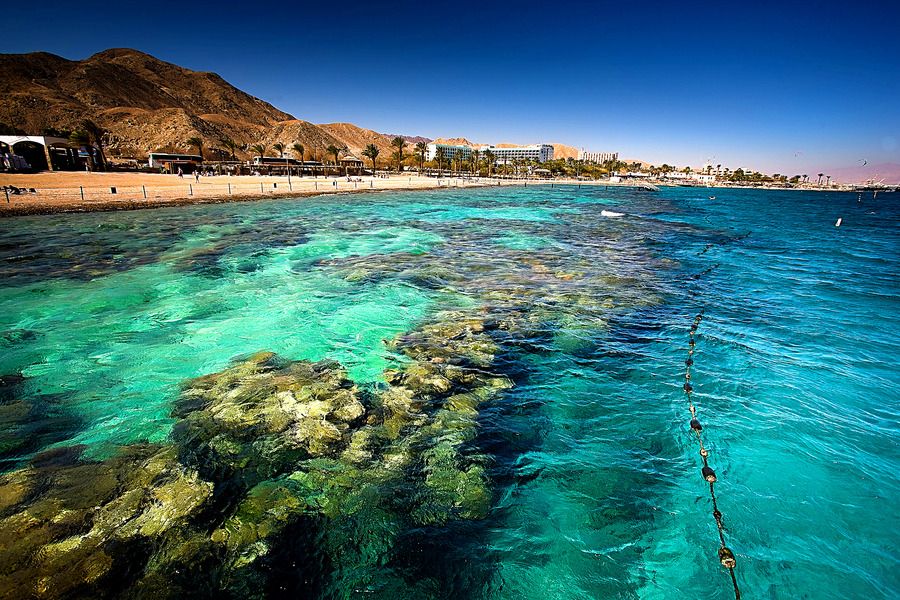
The great thing about traveling in Israel is that it’s a pretty small country, which means that whether you’ve got a few days or a couple of weeks at your disposal, you can still see a great deal. For many tourists, an ideal trip for them in Israel means combining relaxation with culture, beaches with mountains, sea with deserts, and the old with the new.Eilat at night, Israel.Photo credit: © Oksana MatsWell, you don’t get much older than the city of Jerusalem and you don't get much newer than the Red Sea resort town of Eilat! Jerusalem - holy to three major world religions, a city steeped in history and spirituality, a city renowned for its golden Dome of the Rock, ancient stone walls, and tiny, narrow alleyways...a city like no other.You can get lost in Jerusalem, and we don’t mean just in the backstreets of the Old City, but lost in yourself. With its religious landmarks (the Church of the Holy Sepulchre, the Al-Aqsa Mosque, and the Western Wall), its endless museums (of which Yad Vashem and the Israel Museum are must-visits), and its charming neighborhoods (the German Colony, Ein Kerem, Nachlaot near the thriving Mahane Yehuda Market) Jerusalem is fascinating, charming, and sometimes a little ‘intense.’Eilat, on the other hand, is anything but overwhelming. It’s the quintessential ‘fun’ city in Israel, with its sandy beaches, warm Red Sea waters, and endless leisure activities to keep you amused. Whether you want to snorkel or dive, sun yourself on Coral Beach, pet dolphins, rent a jet ski, or even take a day trip to Petra, the ancient Nabataean city in Jordan, and just two hours drive from Eilat. And at night, you’ll never be short of places to eat, drink and make merry. Israel’s most southern city really is the perfect place to kick back after a few long days in the capital. Let’s look at the different modes of transportation from Jerusalem to Eilat, and find out which one is best for you.Incense shop in the Old City of Jerusalem, Israel.Photo byChristian BurrionUnsplash1. How to Get from Jerusalem to Eilat by Bus from the Central Bus Station, Jaffa RoadTraveling from Jerusalem to Eilat by bus is a good option - it’s not expensive (public transport is subsidized in Israel), buses run regularly and the journey is pretty comfortable. You’ll always recognize the national bus service in Israel because their fleet has a distinctive green and white logo - they’re called Egged. The distance between Jerusalem and Eilat is 318 km (197 miles) and, without traffic, the journey takes just over four hours.There is a direct bus 444 from Jerusalem to Eilat - and it leaves from the third floor of the Jerusalem Central Bus Station. There are four buses a day and the bus makes several stops en route, at which you can get out and stretch your legs, take a bathroom break and get a cup of coffee. Tickets cost 82 NIS one way (approx. 25 USD).In terms of availability, you can definitely show up and just hope for the best - either buy a ticket from the counter in the station (all representatives will speak a certain level of English) or simply pay the bus driver in cash when you board. You can also use a Rav Kav card (a green public transport card easily purchased across Israel, onto which you can load credit).However, if you want to be assured of a seat (and the route certainly does get busy just before Jewish holidays and in the summer) you can also order your ticket online, via the Egged website, or by calling customer service on +972 3 694 8888 or *2800.Jerusalem Biblical Zoo, Israel.Photo credit: © Dmitry MishinSomething else - in case you can’t get a seat for the direct journey, it’s also reasonably convenient to take a bus from Jerusalem to Beer Sheva (Israel’s gateway city to the Negev desert) and from there change buses. It’s the same bus station, so you won’t have to make a big journey, and it’s full of cafes and bakeries, as well as shops and places to grab a falafel - arguably Israel’s favorite snack.Egged bus 470 leaves from Jerusalem to Beer Sheva at least once an hour and takes an hour and 32 minutes. Once you’ve arrived at your destination, you can pick up one of many buses running south - the 397 is direct and takes approximately 3 hours 30 minutes. The cost of the journey this way may be a few shekels more, but nothing significant, and it will give you the chance to see some breathtaking scenery between Mitzpe Ramon in the Negev Hills.Our tip: nearly all of the buses stop at Yotvata in the Arava desert, which is a kibbutz famous in Israel for its fabulous dairy products. There you can try one of their Italian ice creams (for those that prefer non-dairy, they also sell sorbets). They have a restaurant where you can buy lunch and also a shop, which sells olive oil and local Majool dates (a fantastic gift to take home to friends and family).Finally, if you want to break up your journey between Jerusalem and Eilat with some fun, then you can always take a bus to the Dead Sea and Masada - the 486 bus to Ein Gedi is ideal in this respect - and then continue on, a few hours later, or the following day (there are endless accommodation options in the Dead Sea, ranging from camping and kibbutz guest houses to fancy hotels on the edges of the sea itself).A Hotel Swimming Pool Area, Eilat, Israel.Photo credit: © Oksana MatsEgged Buses ScheduleThe Israeli workweek begins on Sunday and runs until Thursday (or in some cases Friday morning). In terms of reaching the Jerusalem Central Bus Station, it is located in the heart of the city, not far from the Mahane Yehuda market, on the Jaffa Road, next door to the Yitzhak Navon central railway station. It can most easily be reached by the Light Railway or different local buses. Inside the terminal are many stores and cafes, so you can begin your journey armed with water and snacks. Take the escalator up to the departure floor (clearly marked in English) and look for the electronic boards or ask a member of staff to direct you.On Fridays, the last bus from Jerusalem heading south will leave no later than 1-2 pm, since Shabbat (the Jewish sabbath) arrives at dusk and does not end until 25 hours later. It’s important to note that between Friday afternoon and Saturday evening, no public buses run in Israel, which means you will not be able to travel. So if you are planning on heading south on Friday, do check the timetable carefully and - just to be on the safe side - give customer service a call to confirm your departure times.All buses to Eilat arrive at the same bus station, which is in the city’s downtown area and from there it is a short walk or taxi ride to many of the hotels and the beach. If you are traveling on the border with Jordan and then continuing to Petra you can either take a private bus or the hourly bus that runs close by (you will have to walk the last 20 minutes, which could be tough in the summer months).Jet skiing in Eilat, Israel. Photo byShalev CohenonUnsplash2. How to Get from Jerusalem to Eilat by Plane from Ben Gurion AirportIf you aren’t a fan of long car journeys, you could consider this option, although bear in mind that you will have to first travel from Jerusalem to Ben Gurion Airport (which takes about 45 by bus or taxi). There are no direct flights from Jerusalem to Eilat. Internal flights from Ben Gurion Airport (Tel Aviv) to Ramon Airport in Eilat take just under an hour and are operated by Arkia and Israir, around every 2 hours. A flight will cost you around 350 NIS (110 USD) one way and it’s definitely recommended if you’ve just arrived in Israel after an exhausting long-haul flight. All flights from Ben Gurion airport arrive now in the new Ramon Airport, which is a 15-20 minutes drive from downtown Eilat and can be reached either by taxi (around 100 NIS / 32 USD) or public bus (4.50 NIS / 1.5 USD). 3. How to Get from Jerusalem to Eilat by TaxiThis is a costly option and if you are going to travel by taxi, we’d recommend booking one in advance (Israel’s Gett Taxi is a very popular app) or asking advice from your hotel concierge. A taxi from Jerusalem to Eilat and from Eilat to Jerusalem could run into the hundreds of dollars - as much as 1500 NIS (approximately 464 USD).Eilat coast, Israel. Photo byJosh AppelonUnsplash4.How to Get from Jerusalem to Eilat with a Private TransferWithout a doubt, the fastest and most convenient way to travel from Jerusalem to Eilat is to book a private transfer. This really is a ‘door to door service’ and gives you complete autonomy over when and where you want to be collected and dropped off. Make sure to use a trustworthy tour operator, who will be able to recommend an honest and reliable driver.The good thing about the private transfer option is that once you’ve agreed on the price quoted, and paid with your credit card, you don’t have to worry about another thing - the company will take care of every detail. And you can choose the itinerary - so if you want to break up the journey in the Dead Sea, Mitzpe Ramon or one of the kibbutzim in the Arava - where you can take tours - the choice is yours. Don’t be afraid to ask questions of your tour operator either and let them know about your specific needs beforehand. Here at Bein Harim, we’re always happy to help - contact us night or day and we’ll get back to you fast, with a competitive quote.5.Petra tour & Leisure Day in EilatThis is an ideal way to combine time in Eilat with a trip to the astonishing ‘lost city’ of the Nabateans - Petra. Start your Eilat-Petra vacation with a free day on the Red Sea, snorkeling, sunning yourself, hanging out with the dolphins at the Dolphin Reef, or enjoying a movie at the IMAX theatre. The next day, join your group, cross the border early in the morning and drive down to Wadi Musa, where you’ll explore Petra. With its red-colored rocks, astounding Treasury and Monastery, and rock architecture, it’s hard to be disappointed at this contemporary Wonder of the World. On the way back to Eilat, as long as there’s time, you’ll be given a quick peek at Aqaba too.Marina in Eilat, Israel. Photo byShalev CohenonUnsplash6.How to Get from Jerusalem to Eilat with a Rental CarRenting a car in Israel is quite easy and not that expensive if you feel like making the journey and being in the driving seat yourself. Jerusalem has quite a number of rental car businesses that will be happy to help you - they include Hertz, Shlomo Sixt, Avis, Budget Eldan, and Tamar. Car rental in Israel can be as cheap as 260 NIS (80 USD) a day so if there are 2 or more of you, it’s not a particularly costly option, particularly when you consider how much freedom it gives you - you can go at your own pace and really act spontaneously.You’ll need nothing more than your international driver’s license and a credit card to start the ball rolling and, if all goes well, you should be driving away within the hour. Alternatively, shop around online beforehand because there are some really good deals to be had if you do your homework. Many cars can be reserved online beforehand with nothing more than a few clicks.It is a 4-5-hours drive from Jerusalem to Eilat, using Route 90, depending on how fast you drive, and whether you make a stop along the way). As we’ve said above, there’s plenty to see along the way - the Dead Sea (the perfect place to have a float and slather yourself in black mud, Mitzpe Ramon (with its breathtaking views of the Ramon Crater and alpaca farm for the kids, and Timna Park (a wonderful place to take a hike) are all highly recommended by us.One thing we would say is that from Mitzpe Ramon to Eilat and the Red Sea, the road can be quite narrow and it does wind around for a while, so drive carefully. We’d actually recommend making this journey in the day if you haven't done it before - making it night could leave you sick or nervous (there are long stretches in the dark). Besides, if you travel in the day, you get to take in the astonishing desert scenery and watch the landscape change color as the day progresses.We hope this article gives you all of the information you need to make planning your vacation in Israel a little bit easier but should you have any questions, just reach out to us any time - we’re at +972 3 542 2000 and info@beinharim.co.il - so don’t hesitate to get in touch. Coral Beach, Eilat, Israel. Photo credit: © Doron Nissim. Published with permission of the Israel Nature and Parks Authority
By Sarah Mann
0 views

How to Get from Ashdod to Tel Aviv

If you’re reading this, chances are you’re either in Israel or planning a visit so let’s first say ‘welcome - you’re going to have an amazing time!’ Israel’s relatively small by North American or European standards but it has an enormous amount to offer and, because it doesn’t take hours and hours to drive between cities, that means you’ve got more time to enjoy yourself - whether it's exploring historical sites, wineries, nature parks, pristine beaches, Crusader fortresses or Herodian ruins. A ship dragged anchor at Ashdod, Israel. Photo by Felix Tchverkin on UnsplashThe other thing we should say, off the bat, is that Israel is very well developed in terms of its infrastructure. The roads and highways are in good condition and public transport is pretty cheap and, for the most part, efficient. This means if you don’t want to stay in one place (and most people don’t) you’re going to be able to move around with little fuss and maximise your free time.In this article, we’ll be looking at how to get from Ashdod to Tel Aviv, a distance of just 35 km (22 miles). Both cities are situated on the shores of the Mediterranean Sea and have fantastic beaches, marinas, boardwalks and plenty of options for lunch and dinner.Tel Aviv, Israel’s biggest, and just a short drive from Ben Gurion airport, is a must-see for any tourist in Israel. Situated, like Ashdod, right on the seashore, it’s full of trendy restaurants, lively bars, cute cafes and charming neighbourhoods, not to mention a wealth of museums, art galleries, theatres and live music venues. So, without a doubt, spending a day (or several!) in the "White City" won’t disappoint.So here below is you plenty of information on the various ways you can travel between these two cities - whether it’s taking a bus from Ashdod to Tel Aviv, booking a train journey, using a private or shared taxi, booking a ship-to-shore excursion from your cruise ship or putting your foot down in a hire car. Once you’ve read through the options, you’ll have a better idea of which one is right for you, so you can plan a trip that suits you.Tel Aviv Beach Promenade.Photo credit: © Shutterstock1. How to Get from Ashdod to Tel Aviv by BusIsrael’s bus service is modern, comfortable, inexpensive and reasonably efficient. Taking a bus from Ashdod to Tel Aviv by bus is a good option, with buses running regularly from early in the morning (6 am) until late at night (11 pm). If you don’t travel in rush hour (7-9 am and 4-6 pm) the journey will likely take about 50 minutes. The bus number you need is 320 and is operated by Veola. A one-way ticket from Ashdod to Tel Aviv costs approximately 10 NIS (3 USD) and you can pay the driver as you board. There is also a second bus departing from Ashdod to Tel Aviv, numbered 280, which can drop you at Tel Aviv’s second bus station, in the north of the city.Another popular way to pay for buses (and trains) is by using a Rav Kav card. These small green cards can be purchased easily all over Israel (in all bus and train stations and sometimes in stores and pharmacies). Once you’ve bought one, you can load it with credit or buy a daily/monthly ticket. Just swipe it in front of the electronic device next to the driver, when you board the bus and it will automatically deduct the payment, showing you on the receipt how much credit you have left. For more information, check out the official Rav Kav website.The Ashdod Festival of the Nations and Their Tastes.Photo credit: © Oksana MatsAshdod Central Bus StationThe Ashdod Central Bus station is located on Menachem Begin Boulevard, in the heart of the city, and an 18-minute walk to the Marina. Check inside with information to see which platform the bus departs from (there are signs in English and staff who can point you in the right direction). Tel Aviv Bus StationsTel Aviv’s Central Bus Station (Tachana Merkazit) is located in the south of the city on Levinsky Street. The bus will drop you on the building’s sixth floor and after that, there are a number of possibilities to continue your journey - either by private taxi, shared yellow van taxi, (see below), or the local Dan buses, which run all over the city. The Levinsky bus station is also a gateway to cities around Israel, and also operates buses that run every two hours down to Eilat, for those wishing to travel on, for a trip to Petra, Jordan. Tel Aviv’s second bus station (‘Terminal 2000’) is in the north of the city, on the corner of the Namir Road and Arlozorov streets, conveniently located next door to the city’s Savidor railway station. It is a half an hour walk to the beachfront and you can also take intercity buses on to Jerusalem and Haifa.Saint Peter's Church, Jaffa, Israel.Photo credit: © Shutterstock2. How to Get from Ashdod to Tel Aviv by TrainTaking the train from Ashdod to Tel Aviv is an excellent way to make the trip - it’s fast and efficient and trains leave reverie 15-20 minutes at peak time. The journey itself takes between 50-60 minutes, depending on which of the three Tel Aviv stations. A one-way ticket costs 20 NIS (approx 6 USD) and trains run from 5 am to 11 pm.Ashdod Ad Halom railway station is in the Ad Halom area, near the eastern entrance to the city. The station contains a small beverage and refreshment kiosk and you can buy tickets there from machines (using different language options) or at the counter or online through different smartphone apps. Tel Aviv has three stations - Savidor, HaShalom and HaHaganah. Savidor is situated on the corner of Namir Road and Arlozorov street in the north of the city. It’s next door to the Terminal 2000 bus station (see above). HaShalom is the train station closest to the Azriel Towers and many large offices in the city centre. HaHaganah is Tel Aviv’s most southern railway station and is located about 400 metres from the Tel Aviv (Levinsky) Central Bus Station.The interior of the Israeli train.Photo by Lital Bamnulker on Unsplash3. How to Get from Ashdod to Tel Aviv byPrivate TaxiTaking a private taxi in Israel is easy - you can either flag one down in the street, book one through an App (such as Gett) or order one from a reputable taxi firm (your hotel concierge can help you). The cost of a private taxi from Ashdod to Tel Aviv will probably be somewhere between 230-420 NIS (70-130 USD). It is customary to tip the driver 10-15%, depending on how helpful he is. You can also travel from Ashdod to Tel Aviv with a sherut (shared taxi service).4.How to Get from Ashdod to Tel Aviv with a Private transferPrivate transfers are very easy to arrange, but we advise you to book them through a trustworthy tour operator, to ensure you will be put in touch with a reputable and honest operator. You will be given a price and if you are satisfied with it, you can pay by credit card and from then on all matters will be handled expertly by the company and you don’t have to worry about a thing.At Bein Harim Tourism Services, we are always happy to help obtain quotes for people visiting Israel who need a private taxi - please call us or send us your details on our ‘Contact Us’ form and we will get back to you promptly, with a competitive offer.A building inRothschildBoulevard, Tel Aviv.Photo credit: © Shutterstock5. Shore Excursions from Ashdod PortMaking a shore excursion from Ashdod Port to Tel Aviv is a great way to spend your free day since you can be in Tel Aviv within an hour and have plenty of time to see many of the sights that this buzzy, fashionable city has to offer. With Ashdod Port Cruise Excursions, as soon as you step onto dry land, you will be met by a private guide and within minutes you’ll be in a comfortable vehicle, heading off to Tel Aviv or Jerusalem.In less than an hour, all things being equal, you’ll be in the ‘White City’ of Tel Aviv (so named for its fabulous Bauhaus buildings) and the next few hours are yours. There’s so much to do, you won’t be disappointed - stroll along the boardwalk and admire views of the Mediterranean, take a bike tour around the city, or wander along the famous Dizengoff Street, known for its cafes, restaurants and boutique stores.There’s also a number of beautiful small neighbourhoods that are lovely to explore - the Kerem (close to Tel Aviv’s famous Carmel Market), Neve Tzedek (with its charming houses and tiny alleyways) and, of course, Jaffa, one of the world’s oldest cities, famous for its port (where Jonah fled God and, for his trouble, ended up in the belly of a whale), a charming artists quarter and the famous Jaffa flea market, where you can hunt for bargains before eating lunch in one of the many lovely cafes around. Finally, we promise that when you book with Bein Harim we’ll get you back to your ship in good time for your departure. (Just for the record, if you want to travel to Tel Aviv from your cruise ship independently, please note that the bus terminal is about 6 km from the port so walking there is not possible. You can, of course, grab a taxi, (which should cost about 50 NIS (15,5 USD) and take a few minutes) or even bus number 2, which costs 5.30 NIS and will take about 15 minutes.A street in Jaffa, Israel.Photo credit: © Shutterstock6. How to Get from Ashdod to Tel Aviv with a Rental a CarRenting a car in Israel is a wonderful way to see the country on your own terms. You can decide how long you want to spend in a city and also stop off on the way if the mood takes you. Prices for car rental in Israel are quite reasonable and, with a car, you have a level of freedom that no other kind of transport affords you. Moreover, since there is no public transport in Israel from Friday afternoon to Saturday evening (the Jewish sabbath), options for moving around are limited - obviously, when you have a car, this is not a problem.Driving from Ashdod to Tel Aviv, via Route 4, without too much traffic should take you around 45-55 minutes. Just bear in mind that parking in Tel Aviv is notoriously difficult to come by - free parking is almost impossible to find and even parking lots can get crowded on weekends. Of course, if you are patient (and ready to pay up!) you will always find somewhere to park but if you want to save money (and hassle) you can always park just outside the city and travel by public transport.One way to do this is to park up in the north of Tel Aviv, near the Tel Aviv Port (Namal, Reading area) where there is some free parking, then just catch a bus/sherut/taxi into town. For the adventurous, there are also bikes and electric scooters that can be rented easily, with just the swipe of a credit card!Well-known rental hire companies in Israel include Eldan, Hertz, Shlomo Sixt, Hertz, Eldan and Thrifty. Prices can be quite competitive and, on average, renting a car should cost you around 260 NIS (80 USD) per day. All of the representatives you encounter will invariably speak good English but you might also want to shop around online beforehand - there are always bargains available so why not take advantage of them?Enjoy your journey!Aerial overview of Tel Aviv Port (Namal parking).Photo by Shai Pal on Unsplash
By Sarah Mann
0 views

How to Order a Taxi in Israel

There are plenty of ways to travel around Israel - between cities you can use public Egged or Metropoline buses, catch a train or rent a car. Within cities, there are also excellent local bus services that run from early in the morning until late at night, as well as city bikes and electric scooters that can easily be rented, with nothing more than a credit card.Taxi sign.Photo byMarkus SpiskeonUnsplashHowever, there are always going to be times when nothing but a taxi will suit you! Whether you’ve just arrived at the airport after a long haul flight and you’re jetlagged, or you’re in a rush to get across town, whether you’re laden down with bags of shopping or it’s 2 am and you’re coming out of a trendy Tel Aviv cocktail bar, grabbing a cab is going to be the fastest and most foolproof option.In this article, we’re looking at the hows, wheres, and whys of taking taxis in Israel - whether hailing them on the street, ordering them through phone apps (or through hotel services/tour operators), or ‘going native’ and sharing them with locals. With all of this information at your fingertips, you’ll be able to make the decision that’s best for you and your wallet...which will only improve your mood and your trip to Israel!1. Regular private taxiPrivate taxis are plentiful and easy to order in Israel, whether you want to book one in advance, particularly from Ben Gurion airport to Tel Aviv, or simply just flag one down on the street. A taxi in Jerusalem.Photo credit: © Dmitry MishinTraveling by taxi from Ben Gurion AirportThe taxis at Ben Gurion Airport operate under the supervision of the Israel Airports Authority and are all registered and regulated. After you pass through customs and walk out into arrivals, head through the main door and walk straight ahead. This is where the taxi stand is located.The taxis are easily recognizable with their distinct black and yellow taxi sign on their rooftops. The taxi fare you will pay to whichever city in Israel you are traveling to has a legally fixed price. This will depend on the time of the day that you are traveling (after 9.15 pm there is a surcharge of +25%). There will also be an extra charge for more than 2 passengers and if you have a large amount of luggage you may have to pay another 5-10 NIS. Taxi drivers also charge an extra 5 NIS when leaving the airport.In general, a taxi into Tel Aviv should cost you anywhere between 120 - 180 NIS and, without traffic, the journey should not take more than 30 minutes. It is normal to tip around 10% for a regular taxi ride and perhaps to increase it to 15% for anything above or beyond (i.e. help with luggage). There are reduced rate licensed taxis on Level 2 at Terminal 3 but the airport does not recommend you use them. There are also unauthorized taxi drivers operating in the area and we would not advise taking them, since they might compromise your safety or present you with an ‘extra’ charge at your destination.Ben Gurion Airport, Israel.Photo credit: © Maria MurashovaCatching a cab in the street in IsraelIt is still common practice to hail a taxi on the streets in Israel. There are two ways to set the price: A) Ask the driver to turn on the meter - this is a good way to ensure you do not get overcharged by someone unscrupulous. The meter should begin at 13 NIS, which is the standard minimum charge in Israel between 5.30 am and 9 pm. Drivers are also obliged to present you with a receipt at the end of the journey, should you ask for one.B) Negotiate a fee with the driver before you get into the taxi. Make sure you agree on a fair price for both of you, so there are no nasty surprises when you arrive at your destination. In general, it is usually better to insist the driver uses the meter, and drivers are legally obliged to switch it on if you ask. Of course, many will try and convince you it is not necessary - but you are well within your rights to insist. Ordering a taxi through companies/hotel concierges in IsraelYou can always ask your tour guide, or the concierge at the hotel, to call you a taxi. They will know reputable local firms with honest and reliable drivers, who will not try and overcharge you.Tel Aviv street with a parked taxi, Israel.Photo byDaniel LermanonUnsplash2. Sherut Taxi (“Service Taxi”) in IsraelService taxis (in Hebrew ‘Moniot Sherut”) are brightly-colored minivans that run throughout the bigger cities in Israel and also between major cities. Basically, they are shared taxis which accommodate 10 people. Yellow in color, on their front windscreen you can see their number and this shows what route they are taking.Sheruts are privately owned and run which means that, unlike public buses and trains, they do run on the Jewish Shabbat, and this is a major plus for anyone who wants to travel on Friday afternoon/evening or Saturday.In general, these yellow shared taxis follow the same routes as the major bus lines in the city they are in. In Tel Aviv, for instance, the two most common sheruts are numbers 4 and 5, which more-or-less replicate the routes of the two major bus lines, running from the Central Bus Station past Rothschild Boulevard, Ben Yehuda, and Dizengoff Street and through the heart of the city.The way it works is incredibly simple - simply raise your hand and hail one, as you would a private taxi. The driver will pull over and open the door using a large handle from his seat. Once you’ve climbed in, just grab a seat. You can pay the driver yourself (in cash) but a time-honored Israeli tradition (which some love and some hate) is to hand the money to the person in front of you, who passes it forward. Your change will come back the same way! Unlike buses, there are no fixed stops with service taxis so they will let you off wherever you like, along the route. Just tell the driver the corner or spot, you want to alight and he will pull over and drop you at the side of the road. Something else about this method of transport is that it tends to be a bit faster than using a bus (since it’s transporting fewer people and generally stopping at fewer stops). Some people find them a bit cramped and it’s definitely harder to board one if you have a lot of luggage but, in general, it’s a convenient way to travel and much cheaper than taking a private taxi.Tel Aviv roads at night. Photo by Shai Pal on UnsplashService taxis (monit sherut) within citiesAs stated above, sheruts tend to run on major streets - either check online for their routes, ask a friendly local (Israelis love to help!) or just keep an eye out for their yellow color, which makes them so noticeable. Tel Aviv numbers 4 and 5 begin at the Central Bus Station on Levinsky street - on the ground floor, just around the corner from the main entrance. Service taxis (monit sherut) at Ben Gurion AirportWhen you walk out of the airport’s main arrival door, at Terminal 3, walk straight until you come to the road. There you will see a private taxi stand. Look to the right and you will see a bus stop and different yellow vans. On the front of their windscreen, they will have the destination written on them. Jump in and pay (your luggage will go in the back) - the van will set off as soon as it’s full. There is no need to tip the driver when you reach your destination; this is included in the price. These sheruts go to Jerusalem and Haifa (not Tel Aviv) and run 24 hours a day. There are also sheruts from Jerusalem to Ben Gurion Airport.Please note that there are no sheruts from Ben Gurion to Tel Aviv. However, you do have other options - private taxi (starting at 120 NIS), Israel Railways - a one-way ticket to the center costs 14 NIS - or bus 445 that leaves from a stop close to the Jerusalem shuttle. Although it leaves only once an hour, it does run through the city center, and along HaYarkon Street, next to the beach and all of the hotels there. Taxis in East Jerusalem.Photo by Georg Arthur Pflueger on UnsplashIt also costs a mere 9 NIS. From Ben Gurion Airport or central Tel Aviv to Eilat it is possible to book a service taxi that accommodates up to 10 people usually - a good way to do this is through your hotel or concierge or a trusted tour operator like ourselves. It is also possible to book a private transfer from Ben Gurion Airport to Tel Aviv or Jerusalem - this is the most costly option but once you are happy with your quote and have paid by credit card, there is nothing else to worry about. No doubt about it, this is the ultimate hassle-free choice.Service taxis (monit sherut) between cities in IsraelYou can take monit sheruts between the big cities - the most popular route is Tel Aviv to Jerusalem but shared taxis also run to Netanya, Haifa, Rishon le Zion, Ashdod, and Rehovot. They leave from the Levinsky Central Bus Station in Tel Aviv and from the corner of Ha Rav Agan and Ha Rav Kook streets, close to Zion Square in Jerusalem on weekdays. On Fridays and Saturdays the sherut only pick up in Jerusalem either at HaNevi'im and Monbaz corner or they move a couple of blocks to HaRav Agan and HaRav Kook streets.Fares of service taxis (monit sherut) in IsraelService taxis have a fixed price, no matter how many stops you go, which is almost the same as public buses. However, be aware that on Shabbat you may have to pay a few shekels more. Jerusalem thoroughfare near Mamilla Mall.Photo credit: © Dmitry Mishin3. Apps: Gett, Yango, Uber in IsraelBooking a taxi using an app on your smartphone is increasingly popular now.Yango Taxi Israelis an app where you can set your destination and see the estimated cost of your ride almost immediately. You can also track your ride in the App and see exactly when it will arrive. It’s an easy-to-use service that works both on Android and iOS telephones. Yango lets you book a ride with multiple destinations and can also suggest alternative pickup points to reach your destination faster and at a cheaper price. Because the price is upfront, it will stay the same, even if you are delayed by traffic.Gett - About 8,000 of Israel's 25,000 cab drivers now use Gett, an Israeli company once known as Gett Taxi. Gett Taxi app in Israel does not actually own taxis or employs drivers but simply takes a fee for introducing passengers and drivers, and acting as a third-party for payments. Like Yango, the system is transparent so passengers can’t be overcharged. Also, it’s easy to pay by credit card.Uber - Uber is smaller than Yango or Gett so response times might be a bit longer but ordering an Uber driver costs 8 NIS from the time you get in the car then 1 NIS for every minute you spend in it, plus 2 NIS for every kilometer.Ordering a taxi with an App. Photo by Priscilla Du Preez on Unsplash4. Private Transfers in IsraelPrivate transfers in Israel are a very comfortable way to travel between cities and are not difficult to arrange. However, we do advise that you book them through a trustworthy tour operator - this means you’re likely to get an honest price and a reliable driver. Once you have been told the price and agree that it is fair, your credit card will be charged and everything afterwards will be taken care of, meaning you won’t have to deal with any aspect of the journey. At Bein Harim, we are always happy to help with private transfers - please call us or send us your details on our ‘Contact Us’ form and we will get back to you promptly, with a competitive offer.
By Sarah Mann
0 views

Music of Israel

Israel is a long way from its 100th birthday but in the last century, all kinds of influences have combined to create a very diverse and unique musical culture in the country. From enthusiastic amateur singers, cabarets, and small choral societies in the 1920s, to the establishment of the Israeli Philharmonic after the state was created, stretching onto the 1990s, when almost a million Russians emigrated to Israel, many of them excellent musicians, the music scene has been popular!Amusician playing bass guitar at a concert, Israel.Photo by Anton Mislawsky on UnsplashToday, Israeli opera, jazz, and pop music are also forces to be reckoned with, so if you’re traveling to Israel, you can be sure of finding a ticket to something very exciting. Moreover, not just Tel Aviv, Jerusalem, and Haifa but many other cities and small towns sponsor their own choirs and hold annual music festivals in Israel. Whether it’s a small recital, a full-scale symphony performance, Madonna performing in Yarkon Park,an Israeli folk singer giving a concert in the restored Roman theater at Caesarea, you can be sure of finding incredible musical performances the length and breadth of the country.What Defines Israeli Music?So, what are the characteristics of Israeli music? That’s a hard question to answer! There are all kinds of global influences, for sure - including Russian folk songs, Eastern European Klezmer band traditions, Yemenite ballads, Hasidic melodies, and, of course, the enormous influence that Arabic music has had. And that’s before you even begin to factor in Greek, Ethiopian, central European, and Latin American influences. Of course, that’s to be expected - after all, if Israel is the ultimate melting pot, then why should its musical heritage be any different? Since immigrants began arriving in the Holy Land at the turn of the 20th century, they have been looking for ways not just to express themselves but also to define the ‘national spirit’. This has resulted in a wealth of talent - whether it’s classical, jazz, folk ballads, or pop and rock, the music scene in Israel is incredibly diverse.Beautiful old violin on a red tablecloth, Israel. Photo by Leonid Portnoy on UnsplashNational Musical Instruments of Israel:The history of musical instruments in Israel is a long and rich one. It is fair to say that music played an integral part in the local culture - cymbals and tambourines were used to celebrate joyful occasions, lyres and harps were played at royal concerts, and trumpets were sounded to remind people of momentous events and to celebrate victories.Several musical instruments in ancient Israel are specifically mentioned in the Bible, whilst others are referenced in historical manuscripts. These include: kinnor - this ancient Jewish lyre is also known as King David’s harp since it is the instrument the famous Israelite played. It is Israel’s national instrument and a spiritual instrument for Christians. The Roman Jewish historian Josephus describes the kinnor as having 10 strings, constructed out of a sheep's small intestine, and played with a plectrum (pick). However, the book of Samuel in the Hebrew Bible states that David played the kinnor "with his hand".Shofar - shaped like a horn, this Hebrew trumpet was blown to summon people to prayer, war, or solemn ceremonies. It was also blown by the Cohen priests to mark the beginning of the Jewish New Year and the tradition continues in synagogues around the world today, each Rosh HaShanah.David Playing the Harp Before Saul, Jerusalem, Israel. Photo credit: © ShutterstockThe shofar is mentioned several times in the Bible. These include the book of Joshua, where the blowing of the shofar was part of the battle to capture the city of Jericho, and in the book of Judges, where it was sounded by Gideon and his warriors in order to terrify the opposing army. Shofars are made out of ram’s horns and, indeed, make a powerful sound (almost like a blast) when blown.Oud - this stringed musical instrument was played regularly in medieval times and is still popular today, in Islamic culture. It is the parent of the European lute, usually with 11 strings grouped in six courses. It has a deep, pear-shaped body, a relatively short neck, and a fretless fingerboard. In Arabic, it means something close to ‘wood stick’ or ‘flexible stick’. It is still played today at traditional music concerts in Israel and the Middle East.Kanun - this stringed instrument can be played either solo or as part of an ensemble and its origins go back to before the birth of Christ. Also part of the lute family. Arabic kanuns are usually made with five skin insets that support a single long bridge, resting on five arching pillars. They have ornamental sound holes called kafes and are played sitting or squatting, plucking the strings with tortoiseshell picks.Darbuka - this goblet-shaped percussion instrument is still widely played in Islamic classical and folk music throughout North Africa, Central Asia, and the Middle East. Lutes, flutes, and bells were also commonly used in biblical times. Daniel, the prophet of Jehovah, wrote of the orchestra of King Nebuchadnezzar - their instruments actually included the pipe, the zither, and the bagpipe!Oud, the traditional musical instrument of Israel, similar to modern lutes. Photo by Youssef Abdelwahab on UnsplashThe History of Music in IsraelMusic has always been an integral part of the country, beginning with the pioneers who arrived from Russia and Europe. As they built the land, they were encouraged to sing - and in groups. Public ‘sing-a-longs were a popular pastime, especially in the kibbutz, because many of the leaders of the day thought it would promote the ‘national spirit.’Today, Israelis young and old still love to sing these songs - particularly out on hikes and sitting around bonfires. This mixture of patriotism and nostalgia for the early days of the state is something many visitors to the country really do find fascinating and touching.Musical cabarets in the 1920s and Aliyah in the 1930sCabarets became popular in British Mandate Palestine in the 1920s and were responsible for the fame of quite a few artists, including Shoshana Damari (a famous Yemenite singer who began her career at ‘Li La Lo’ in Tel Aviv - a cabaret that revolved around drama and satire.By the 1930s, the political tide was turning and the rise of fascism meant Jews were no longer safe in Germany and wider Europe. Many fled and some of them arrived in Palestine - and the country gained an orchestra as a result. In 1936, the Israeli Palestine Philharmonic made its debut, under the leadership of Arthur Toscanini. (Shortly after, a radio orchestra was set up (today it is known as the Jerusalem Symphony Orchestra) and the concerts it broadcasted were soon attracting tens of thousands of listeners).Since 1948, the Israeli Philharmonic has gone from strength to strength and is now recognized on the global stage. It even rises above politics from time to time - in the 1980s it performed on the Israel-Lebanon border, playing to audiences on both sides of the fence, who had come to enjoy the concert!Evgeny Zlatin, an Israeli pianist, Jerusalem Academy of Music. Сourtesy photoThe Israeli Conservatory of MusicOne of the oldest and most prestigious institutions in Israel, this Tel Aviv Conservatory was founded in 1943 and serves today as a center to nurture the talent of young musicians in Israel. It boasts a music library, a state-of-the-art concert hall, and a separate wing for opera and chamber music classes.The Jerusalem Academy of Music and DanceThe Conservatory is one of three institutions that make up the Jerusalem Academy of Music and Dance. It offers all kinds of educational programs in music for students from preschool through to graduate level in Israel.What Kind of Music Will I Hear in Israel?If you travel around Israel, you’ll hear all types of music - in the open-air markets, in restaurants, on the local and intercity buses (Israeli drivers love to sing and play music whilst they’re on the road!), in religious services, national ceremonies and just on the streets in different neighborhoods.These musical genres range from ‘Eastern’ (meaning that which originated in Arab-speaking societies), Hasidic (religious music which has its origins in Eastern Europe, especially Poland), Iraqi Jewish music, Ladino songs (which began in Spanish-speaking societies), Yiddish (secular in origin, and often part of ‘Klezmer’ bands) Israeli-Arab (with an emphasis on long, melodic notes) and modern-day Israeli pop.Daria Zlatina, an Israeli pianist, Jerusalem Academy of Music. Сourtesy photoMizrahi - in Hebrew ‘mizrach’ means ‘east’ and this kind, of music, is associated with Sephardic Jews. The movement began in the 1950s, with performances by locals in neighborhoods in which Jews from Arab countries mainly lived. They performed songs in Hebrew but in an Arabic style (on traditional instruments). By the 1970s, Mizrahi musicians like Avihu Medina and Zohar Argov had become very popular and, today, Mizrahi pop is the most common and prominent form of pop music in Israel.Hasidic and Orthodox Jewish music - the Hasidic movement began in the second half of the 18th century in Eastern Europe and placed a great emphasis on expressing joy through song and dance. Today, Hasidic music can be heard at simchas (celebrations) such as weddings and bat mitzvahs, as well as at the Rabbi’s table {the ‘tisch’).Hasidic music has a number of genres including niggunim - religious Jewish songs (or tune) sung in groups, often quite repetitive, using sounds such as “lai, lai, lai”, “bim-bim-bam” or “ai, ai, ai” instead of actual lyrics. Some can be woeful and others very joyful. Niggunim are central to worship in Hasidic Jews life, and a soulful reflection of how mystical intense prayer can be.Iraqi Jewish musicin Israel - in the 1930s, Iraqi musical groups were almost always Jewish! Today, in Israel, this continues in the form of beautiful Arab music, including love songs, folk chants, and traditional music.Tamar Eisenman, Israeli rock and folk singer and songwriter. Photo credit: ©Dmitry MishinLadino music in Israel- Ladino was the language of the Spanish-speaking Jews, throughout medieval times, with music in the form of ballads sung by women in a dramatic style, either in private or during celebrations. Yiddish music in Israel - this kind of music is sung in the language of the Jews from the tiny villages of Eastern Europe - Yiddish, It includes songs from Yiddish theatre, Klezmer bands, and songs modeled on French melodies and German lieder. Klezmer dance tunes, ritual melodies, and virtuosic improvisations were often played at weddings. Today, Klezmer is making somewhat of a comeback and, in fact, an international Klezmer festival is due to be held in August 2022 in Jerusalem, featuring musicians from around the globe.Israeli Arab music - these melodious songs have become increasingly popular in the country in the last 20 years. One of the most popular on the scene is Ziv Yehezkel, who seems to have captured the hearts of Arabs in Israel. Now, after Israel’s signing of the Abraham Accords with Bahrain and the UAE, it’s quite likely to mean new inspiration for Arab music singers in Israel. Sarit Hadad, an Israeli mizrahi singer.Photo credit: ©Dmitry MishinSecular music in Israel - in recent years, many modern artists and pop singers from Israel have broken onto the scene, not just within the country but the wider international stage. Some of the more famous include: Etti Ankri - Born of Tunisian parents, this singer has become famous for her moving and emotional songs and is also called the ’contemporary voice of Israel’. Ofra Haza - an icon in Israel and known in the west as ‘the Israeli Madonna’ Haza became famous for her Yemenite songs and after representing Israel in the Eurovision Song Contest, her song ‘Im Nin'Alu’ itself became a Top 20 hit in the UK.Dana International - after winning the Eurovision Song Contest in 1988 with her hit song ‘Diva’, this once Drag Queen and proud transexual singer shot to fame and her songs were soon being played at every dance venue in Israel and every gay bar across Tel Aviv! Netta Barzilai - well known simply as ‘ Netta’ this singer shot to fame after winning an Israeli tv competition - her prize was to compete at the Eurovision Song Contest in Lisbon. There, in May 2018, she won the contest with her song ‘Toy.’Musicians performing atJerusalem Knights Festival, Israel. Photo credit: ©Dmitry Mishin
By Sarah Mann
0 views

How to Get from Haifa to Tel Aviv

If you’re visiting Israel, whether it’s for the first time or the tenth, the chances are you aren’t going to want to stay in one place. And why should you? Israel has it all - beaches, archaeological sites, wineries, places of worship, nature trails, mountains, deserts and so much more besides.View of Bahai Gardens, Haifa.Photo credit: © ShutterstockTo give you an idea of the size of Israel, it’s about equivalent to the US state of New Jersey or half the size of Switzerland. Its total area is 22.145 square km (8.630 square miles) of which 21. 671 km is land. Israel is bordered by Lebanon to the north, Egypt to the southwest, Syria to the northeast, Jordan to the east, and the Mediterranean Sea to the west.And something else that’s really great about travel in Israel is that the country has a highly developed infrastructure - highways and public transportation in Israel are both modern and efficient, making it easy to move around - and reach one end of the country from the other - quickly and with not too much effort. This means that even if you’re just in the country for a few days, you can see several areas without wasting too much of your precious time.In this article, we’ll be looking at how to get from Haifa to Tel Aviv. Haifa is the ‘capital’ of the north of the country and a real Mediterranean city, perched on the slopes of the lovely Mount Carmel. Historically a port city, and today very mixed (Jews and Arabs continue to live and work together here) it’s a lovely place to visit or even spend a few days.Within the city itself there is lots to explore - the Wadi Nisnas neighborhood, with its bustling market and small alleys, the German Colony (home to the German Templar movement, over a century ago) and, of course, the world-famous Bahai Gardens (affording spectacular views of the city), with its perfectly manicured lawns and shimmering gold dome. Haifa Maritime Museum, Israel.Photo credit: © Dmitry MishinOutside Haifa, less than an hour’s drive from the city you can find nature reserves, the Crusader City of Acre, the Herodian ruins of Caesarea, Druze villages, charming vineyards, rustic zimmers (upmarket ‘cabin style’ accommodation, usually in pastoral settings), Nazareth (where Jesus spent many of his early years) and the Sea of Galilee. And if you want to head as far north as possible, there’s also Rosh Hanikra, with its spectacular caves, close to quiet and pristine beaches. Of course, we haven’t yet mentioned Tel Aviv - Israel’s largest and most lively city, in the heart of the country, close to Ben Gurion airport and also situated on the shores of the Mediterranean. Just 92 km (50 miles) separates the two cities, so traveling between the two is really very easy - whether you want to go for a few hours, make a day of it or take a mini-break in the ‘White City’ giving you time to explore its cafes, boutiques, Bauhaus architecture, and excellent restaurants.Below, we’d like to give you some detailed information on the different ways to make the journey - taking the bus from Haifa to Tel Aviv, catching a train, a private or shared taxi, using a private transfer, opting for a shore excursion from your cruise ship or simply renting a car. This will give you a better idea of how to plan, for when you arrive in Israel and start planning your trip around the country. The distance from Tel Aviv to Haifa is approximately 94 km.The Bahai Temple in Haifa.Photo credit: © Dmitry Mishin1. Getting from Haifa to Tel Aviv by BusIsrael’s bus service is modern, comfortable, inexpensive, and reasonably efficient. Traveling from Haifa to Tel Aviv by bus is a popular option since buses leave regularly. If there is no traffic on the road, the journey should take between 1 hour 15 minutes and 1 hour 30 minutes, and a one-way ticket costs 24 NIS (approx. $7.50).Haifa Bus StationsThere are two different bus stations at which you can catch an Egged bus (Israel’s national bus line) including Haifa Merkazit Hamifrats/Inter-City Platform and Hof HaKarmel station. HaMifratz central bus station is the main bus station of the Haifa Bay district. It is next to Haifa's central railway station (see below under the ‘train’ section) and also the Lev HaMifratz shopping mall.Egged bus 910 leaves Haifa Merkazit Hamifrats/Inter-City Platform bus station from Floor 3, every 20 minutes and runs directly to Tel Aviv Central bus station. It takes between 60-90 minutes and a one-way ticket costs 21 NIS (6,5 USD). You can pay the driver in cash when boarding or use your Rav Kav Card. View of Haifa Bay from the top terrace of Bahai Gardens.Photo credit: © ShutterstockIt will drop you directly at the Tel Aviv Central Bus Station (see below). It is also possible to alight on the Namir Road, at the Arlozorov (Savidor) bus station, if you are heading to the north (rather than south or central) Tel Aviv. Buses can also drop you further down, at the Azrieli Centre (ideal for connections with the HaShalom railway station).The green Rav Kav cards are used widely in Israel - they can be purchased either at bus and train stations or stores and pharmacies in cities and towns. It is possible either to pre-pay specific amounts (with cash or credit cards) or purchase daily/monthly passes. For more information, take a look at the official Rav Kav website.From Hof HaKarmel, bus number 910 can also be caught. Also known as the Carmel Beach bus station, it opened in 2003. Passengers are entitled to receive a free transfer to urban buses when they buy their intercity ticket to continue from one central bus station to the other one, or into the city.Banana Beach,Tel Aviv.Photo by Daniel Klein on UnsplashTel Aviv Bus StationsTel Aviv’s Central Bus Station is located in the south of the city on Levinsky Street. The 910 bus alights at the seventh floor and from there it is possible either to take a private taxi, a yellow van shared taxi / monit sherut (see below) or Dan local buses to your destination. The Levinsky bus station is a gateway to cities around Israel, and also operates buses that run every two hours down to Eilat, for those wishing to connect on for their trip to Petra, Jordan. Tel Aviv’s second bus station is in the north of the city, on the corner of the Namir Road and Arlozorov streets, next to the Savidor Railway Station. It is close to the Ramat Gan Bourse, as well as a half an hour walk to the beachfront. Many local buses run from this station around the city, as well as out to Ramat Aviv and the university, as well as intercity buses onto Jerusalem and Beer Sheva.2. Getting from Haifa to Tel Aviv by TrainTaking the train from Haifa to Tel Aviv is highly recommended. It’s a fast, frequent and very efficient way to travel and trains leave every 20 to 30 minutes, making it easy to change your plans at the last minute. And because, on Israel Railways, you can buy a ticket at the last minute and it won’t cost you any more than if you book it in advance, you don’t even have to worry if you’re delayed - simply take the next train!The journey from Haifa to Tel Aviv takes approximately 1 hour 4 minutes on the fastest train, which runs directly between the two cities. There are also slower trains, which take up to 1 hour and 26 minutes. A one-way ticket costs 31 NIS (approx $9.50) and trains run from 5.25 am to 11.35 pm. A train is also an excellent option if you’re time conscious since you won’t have to factor in traffic jams and tailbacks which, unfortunately, are very common on the main highway during commuter hours.Yachts in Jaffa Port.Photo credit: © ShutterstockHaifa Train StationsThere are three train stations from which you can begin your journey from Haifa to Tel Aviv - Center HaShmona, Bat Galim, and Hof HaKarmel. HaShmona is the largest of the three and is located on Independence Road, at Plumer Square. The station opened in 1937 and was built by the British (under the Mandate) and has a Bauhaus design.Bat Galim was Haifa’s primary train station from 1975 until the early 2000s. If you are staying close to the port or coming from Rambam - the city hospital - this station is within walking distance. Hof HaKarmel situated on Sakharov Street is the city’s busiest train station. It is conveniently located next to the Carmel Beach central bus station and walking distance from the MATAM high-tech park.Payment can be made by buying a ticket from the cashier's office, by booking through the Israel Railways website, using a green Rav Kav card loaded with pre-paid credit (which can be purchased from any station and many pharmacies and stores in Israel), or the Rav Kav mobile telephone app. Please note, much like the bus services, there are no trains in Israel on the Jewish sabbath. From two hours before Shabbat commences (Friday afternoon) and an hour after Shabbat ends (Saturday evening) public transport in Israel does not run. Israeli train.Photo by John Adeoye on UnsplashTel Aviv Train StationsSavidor (Arlozorov) - this is located at the intersection of Namir Road and Arlozorov street and is next to the bus station, providing quick access to local buses. From here, it's a quick journey to Tel Aviv University and north Tel Aviv. HaShalom is the train station closest to the Azriel Towers and many large offices in the city center. HaHaganah train station is Tel Aviv’s most southern railway station and is located about 400 meters from the Tel Aviv Central Bus Station (Tachana Merkazit).3.Getting from Haifa to Tel Aviv byPrivate Taxi / Shared Taxi (Monit Sherut)Taxis in Israel are easy to come by - you can either hail them in the street, use one of the many operators in Haifa or Tel Aviv (ask your hotel concierge or check online) or book a taxi from Haifa to Tel Aviv directly through an app such as Gett. You should look to pay somewhere between 700-900 NIS ($215 to $280) for the drive.Another useful service in Israel is the monit sherut from Haifa to Tel Aviv (in Hebrew this means ‘ shared taxi’). These little yellow vans are operated privately and seat 10 passengers. They run between cities and you simply get in and pay the driver. The only ‘catch’ is that they don’t leave until the van is full, so if you’re the first one in you might have to wait a few minutes. The upside to the monit sheruts is that because they are not state-operated, they operate on the Jewish sabbath. They are an excellent option for those who wish to travel late Friday or on Saturday. Sheruts in Haifa can be found in HaNevi’im street in the Hadar neighborhood and run to Tel Aviv’s Levinsky Station. Expect to pay a few shekels more than you would for a bus ticket.Cozy streets of Old Jaffa.Photo credit: © Shutterstock4. Getting from Haifa to Tel Aviv with a Private TransferPrivate transfers are a comfortable way to travel between cities and in Israel they are easy to arrange. However, we do advise that you book them through a trustworthy tour operator - this means you’re likely to get a fair price and an honest driver. Once you have been given the price and are comfortable with it, your credit card will be charged and everything afterwards will be taken care of, meaning you won’t have to deal with any aspect of the journey. At Bein Harim, we are always happy to help with private transfers in Israel - please call us or send us your details on our ‘Contact Us’ form and we will get back to you promptly, with a competitive offer.5. Israel Shore Excursions from Haifa PortHaifa is a famous port and, as the years have passed, has become an increasingly popular destination for a cruise. So if your ship is stopping in northern Israel for the day, making a trip to Tel Aviv is a fantastic idea. With shore excursions from Haifa Port, the moment you disembark, you will be met by a private guide and set off quickly for Tel Aviv.Just over an hour later, traffic permitting, you’ll be at your destination, giving you several hours to explore this buzzy, cosmopolitan city.Take a stroll along Rothschild Boulevard and admire the Bauhaus architecture, wander the streets of the charming Neve Tzedek neighborhood, book a tour to the Jaffa flea market or simply stroll along the boardwalk and enjoy lunch at one of the many fantastic restaurants in the city. With a ship-to-shore excursion from Haifa to Tel Aviv, you can really make the most of your free day and, rest assured, we’ll get you back up north in plenty of time before your scheduled departure.Lifeguard Station, Tel Aviv. Photo credit: © Shutterstock6. Getting from Haifa to Tel Aviv with a Rental carRenting a car in Israel is an excellent way to see the country, leaving you in control of when and where you travel. It is not incredibly expensive to rent a car (indeed, prices are quite competitive) and the freedom it gives you is unparalleled - you can travel before dawn breaks, on Shabbat, and to the tiniest villages in the Galilee and Negev desert that public transport won’t get you to.Parking in Tel Aviv, however, can be an enormous headache so if you are planning on driving from Haifa to Tel Aviv, think about either paying to leave the car in a lot (although it won’t be cheap). Alternatively, there is some free parking up at Reading, in the north of the city, near to the Tel Aviv Port and you can then take a bus, electric scooter, taxi, or even bike into the city.Driving from Haifa to Tel Aviv, via route 90 (Yitzhak Rabin Highway) will take anywhere from an hour to an hour and a half (depending on how much traffic you encounter and how fast you drive!) Popular rental hire companies in Israel include Shlomo Sixt, Hertz, Eldan, Thrifty, and, on average, renting a car costs around 260 NIS (80 USD) per day. All of the representatives will speak good English and their hubs are accessible. Take a look beforehand online - if you shop around, there are some great deals to be had.Namal (Tel Aviv Port), Israel.Photo credit: © Shutterstock
By Sarah Mann
0 views

Fruit and Vegetable Picking in Israel

Farming is a big deal in Israel. No, seriously! The first Jewish immigrants to the country (decades before the State of Israel was established) went not just to cities like Jerusalem and Tel Aviv but also to remote areas across the country, with the deliberate aim of settling and cultivating the land. Whether it was the barren Negev desert or swampy malarial parts of the Galilee and Jordan Valley, they were determined to make things grow.Lemons are grown in Israel.Photo by Dan Gold on UnsplashToday, just over a century later, for Israeli farmers living on kibbutzim and moshavim (collective and semi-collective settlements) their work is, in some ways, still a way of fulfilling the dream their forefathers had of being a free people in their own land. Israeli farmers, today, are not just growing produce to be self-sufficient but they also feel a strong connection to their land. Oh, and they’re contributing to Israel’s economy too!And when you travel out of Israel’s big cities, you can see the fruits of their labor (no pun intended!) everywhere. Israel’s a world leader in new and innovative agricultural techniques (think hydroponic tomatoes and vertical farming) and when you’re in the Golan Heights, the Galilee, or even the desert, you’re never far from a vegetable field or a fruit orchard.Cherry orchard in Israel.Photo credit: © Oksana MatsEvery Israeli child learns about the ‘halutzim’ (pioneers) in school and one really fun and creative way to keep that tradition alive is by taking them on a day trip to one of these places to pick vegetables and berries. Fruit picking and vegetable picking are an activity that’s great for all the family. After all, whether you’re old and young, it’s nice to be out in the fresh air, plucking something straight from the ground or tree.It’s also incredibly rewarding, as a parent, to teach your children that fruits and vegetables don’t grow in the supermarket. Whether it’s strawberries, cherries, beets, or carrots, the feeling you get as you (literally) get your hands dirty, is a fantastic one. And the best part? Not only do you get to pop a few fruits in your mouth (all you can eat, very often) but you take a basket or two home at the end of the day. Fruit and vegetable picking (katifim) is very popular in Israel. Let’s have a look at some of the places you can pick fruits, vegetables, and berries in Israel, take tours of the local areas you’re in, and also find overnight accommodation in Israel on the farms themselves or in the locale.Tomato greenhouse, Israel.Photo by Benjamin Rascoe on UnsplashBustan Bereshit Farm, Golan HeightsLocated in the Golan Heights, this is probably the largest fruit picking site in Israel. With around 100 dunams of land at their disposal, you can pick all kinds of seasonal fruits, including raspberries, gooseberries, blackberries, sweet and sour cherries, apples (all varieties, even from Asia), figs, grapes, peaches, and nectarines. Once you’ve paid your entry fee, shuttle buses will transport you out to the fields and then you can get picking, straightaway! Admission is 37 NIS (12 USD) and includes a tour in a tractor car for the entire family. Bustan Bereshit also offers a variety of attractions - rope-climbing, horseback riding (and pony riding for younger kids), an ‘animal corner', and even baking classes.There are shady areas at which you can relax and picnic, as well as a cafe selling coffee and light refreshments. There’s also a store that sells all kinds of produce made in the Golan. Bustan Bereshit, Ein Zivan. Tel: 04 688 3512.Picking cherries, Israel.Photo credit: © Oksana MatsStrawberries Meshik Farm, Hod HaSharon, Central IsraelJust half an hour's drive from Tel Aviv is this wonderful strawberry farm where there are all kinds of delicious strawberries. Even better, each year they introduce a new variety, so if you come back you’ll never be bored. It’s a little bit more expensive than your average fruit-picking farm but definitely worth it. Tut Meshek, Asirey Tsiyon St, Hod Hasharon. Tel: 052 591 2244Hapardes Hakasum, Central IsraelJust 15 minutes drive from Tel Aviv, close to the city of Petach Tikva, lies HaPardes Hakasum. Pardes means ‘ orchard’ in Hebrew and this is a good place for the whole family to spend time. As well as guided fruit picking Israel tours, they also have craft tables, a petting zoo, soft play, and a pita-making class. The function hall is a good place to hold a birthday party for a group of youngsters. HaPardes HaKassum, Hashlosha 1, Kfar Ma'as. Tel: 050 2566 0206.Picking berries, Israel. Photo credit: © Oksana MatsMeshek Levy - Sha’al Berry Picking, Golan HeightsNestled in the Golan, this farm is run by the Levy family, and here you can pick all kinds of wonderful fruits, including figs, sabras (Israel’s national fruit) and clementines, sweet and sour cherries, blueberries, mulberries, Chinese dates, and both red and yellow raspberries. The site is open from May to October and offers competitive picking prices. There’s a cafeteria, offering light bites and a sandbox and animal petting corner for young kids. All produce sold is kosher mehadrin and the site is closed on Shabbat. You can also camp at the Levy family’s moshav (they have a dedicated site) or if you’re looking for a little more comfort, book one of their rustic cabins. They also offer jeep tours and night safaris...a real adventure for those who like to live dangerously…Meshek Levy, Sha’al, Golan, Tel: 052 460 0465.Dates on a plate.Photo by Mona Mok on Unsplash‘Farming Circus’ Moshav Yogev, Emek Israel, Central IsraelAlways popular with kids, here your kids can enjoy themselves in more ways than one. This agricultural circus is unique in Israel in that it teams up agricultural activities with a circus show - hilarity, juggling acts, and even a ride on a unicycle! The moshav has organic gardens and if you take the tour, it includes a visit to their greenhouse, where you can learn more about their Italian planting hydroponic system. In the winter, you have the chance to pick all kinds of vegetables, including beetroot, cabbage, broccoli, carrots, lettuce, kohlrabi, and potatoes. You pay for entry to the circus and then have the option after to pay to pick. Agricultural Circus, Moshav Yogev, Emek Jezreel. Tel: 073 374 4211.Blueberry Picking. Photo by Ava Tayler on UnsplashThe Orchard, Moshav Beit HillelMoshav Beit Hillel lies on the banks of the Hasbani river, about 3 kms from Kiryat Shmona in the Golan Heights. It’s a great place to pick your own vegetables and seasonal fruits, and the guides give a lot of detail. After you’ve picked your produce, you can make salads and drink tea. There’s a picnic area with benches, a coffee shop and a good Italian restaurant called ‘Cheese’ (we’d recommend trying the gnocchi and, for dessert, their delectable cheesecake). They also offer bike trips along the Snir River and Kfar Blum kibbutz, close by, can organize kayaking tours. Moshav Beit Hillel, Upper Galilee Tel: 052 525 7671.Banana farm. Photo by Tistio on UnsplashShvil HaSalat FarmDown in the Negev, ‘Shvil ha Salat’ (which means’ Salad Trail’) is the perfect opportunity to tour greenhouses and eat your way through them at the same time! In their Tomato Greenhouse, you learn about how these sweet treats grow upwards and in the Greenhouse of Flying Strawberries, you’ll find out why water and a certain kind of soil make them such a tasty fruit. And don’t miss the Orchard or Chinese Oranges either - afterwards, you can make necklaces out of the fruit!Shvil HaSalat also offers kids the opportunity to bake bread with olive oil and za’atar (a local spice) with Bedouins, then head off to the Field of Carrots, where the whole family can pick a bunch of these orange goodies, then take them home and make them into juices, soups or lunch snacks. Fun and nutritious! Shvil HaSalat, Nachal haBasor, Negev region. Tel: 08 998 2225.Cabbage picking.Photo credit: © Oksana MatsKtofoti, Bethlehem of Galilee, GalileeLocated in the Galilee near Kiryat Tivon, around 10 ms north-west of Nazareth, this self-picking farm is a wonderful place with all kinds of fruits and veggies - think strawberries, cherry tomatoes, lettuces, potatoes, carrots, onions, cauliflower, and even artichokes. There are also guides in the fields, who are very helpful. Entrance is 45 NIS (14 USD) per person (which includes anyone over two years old) although every fourth family member pays 40 NIS (12,5 USD).You then pay 30 NIS per family basket or 20 NIS for a small basket. Everybody above two years old must purchase a ticket). And every fourth family member pays 40 NIS. Moreover, you pay 30 NIS per family basket or 20 NIS for a small basket. It’s not super cheap but a lot of fun and, if you look on the web, you might find some coupons, giving you a discount.A cup of raspberries.Photo by Julia Potatoes on UnsplashKurlender Farm, Golan HeightsSituated high up in the Golan region, the Kurlander farm, on the banks of the Hasbani river, has been run for decades by three generations of farmers. They operate a state-of-the-art dairy farm and, for young families, this can be a wonderful day trip. Their English-speaking guides are helpful and informative and on any tour, everyone gets a taste of their chocolate milk and some samples of cheese. You’re even given the opportunity to learn to milk a cow, and the kids can bottle feed the calvers!Kurlender also sells grapefruits, tangerines, and oranges in the winter, and other produce made locally including honey and olive oil. Oh, and if you travel there on Friday you can sample one of their famous ‘Galilee breakfasts’ - a delicious dairy feast! There’s plenty of accommodation nearby, including a guesthouse, zimmers and even a spa.Carrot picking.Photo by Harshal S. Hirve on UnsplashBe’er Tuvia, Negev regionWhen it comes to flowers, who doesn’t love anemones and buttercups? These gorgeous buds, also known as Ranunculus (‘Nuriot’ in Hebrew), tend to flower at the end of April, for about a month. Visiting this place is therefore the perfect springtime activity. Be’er Tuvia is a moshav near Kiryat Malachi, which is about an hour 10 minutes drive from Tel Aviv. The entrance is 40 NIS per family - for this, you will be given some scissors and a plastic can (to put the flowers you’ve picked). If you don’t want to pick, you can just pay 20 NIS and take photos of the masses of red, yellow, pink, and white flowers that surround you. You won’t be disappointed.To learn more about farming in Israel, feel free to read this article. If you would like to visit a farm in Israel, please book one of our private tours.
By Sarah Mann
0 views

Welcome to Eilat Ramon Airport

The Ramon Airport (also known locally as the Eilat Ramon airport) is a new and modern airport, situated in the Timna Valley, in Israel’s Arava desert. Opened officially in 2019, it is approximately 18 km north of the city of Eilat, directly on the Red Sea.The bridge connected to the plane at the airport terminal. Photo by VOO QQQ on UnsplashThe Ramon Airport is Israel’s second-largest airport, after Ben Gurion airport (close to Tel Aviv). It can be reached directly from Highway (Route) 90 and serves as the southern gateway to Israel, as well as acting as the country’s primary diversion airport.History of the Eilat airport before RamonThe old Eilat airport was established in 1949, a year after the creation of the State of Israel. During Operation ‘Ovda’ the Negev brigade captured Eilat (which was then named Umm Rashrash), famously raising the flag there. A few months later, the Air Force paved the first runway so that light aircraft could take off and land there, ensuring Eilat was not cut off from the centre of the country. The airport was actually close to the water, in what would later become the beginning of ‘downtown’ Eilat.Until the 1970s, the area did not really increase in size but as the years passed, tourism increased and Eilat expanded from a small fishing village to a destination both for Israelis and international tourists. By the 1990s, it was clear that having an airport at the entrance to the city centre was a safety concern so the government drew up plans for a new airport, to be constructed in a more open space. On 18 March 2019, the old Eilat airport stopped receiving passengers and air traffic was moved to the new, modern, Ramon airport.People queuing at check-in at the airport. Photo by Phil Mosley on UnsplashWho was Ilan Ramon?The Ramon Airport in Eilat is named after Colonel Ilan Ramon, an Israeli fighter pilot who was also Israel’s first astronaut. After a distinguished career in the Israeli Air Force, he trained at NASA and, between 1997-2003, logged 15 days, 22 hours and 20 minutes in space. On January 16th 2003, along with six other crew members, he set off on the Columbia - this was a dedicated science and research mission. Although not a religious Jew, in space he ordered kosher food and observed the sabbath, famously remarking: "I feel I am representing all Jews and all Israelis. In total, the crew conducted approximately 80 experiments. Tragically, he and his colleagues were killed when, on 1st February, the space shuttle Columbia exploded and disintegrated, during re-entry, just before its scheduled landing. Four days later, his body was found, as well as remains of some objects he had brought with him, including - remarkably - excerpts from his personal diary. Ilan Ramon was posthumously awarded a Medal of Appreciation from the IDF Chief of General Staff and buried in Israel in a military funeral attended by both the Israeli Prime Minister and the President of Israel.An antelope in Arava Desert.Photo by Dennis van Lith on UnsplashLocation of Ramon AirportThe Ramon Airport is located approximately 18 km north of Eilat, close to the beautiful Timna Valley Park in the Arava desert. With Highway 90 directly outside the airport, this means that passengers can be in Eilat within 15 minutes. Public transportation from Ramon Airport to EilatFrom Ramon airport to Eilat, there are several ways of travelling:1. Getting from Eilat Ramon Airport to Eilat by bus - this is by far and away from the cheapest option. Four different lines, all operated by Egged, run regularly to and from the airport: Route 30 - from Ramon Airport to Eilat Central Bus Station, every 20-30 minutes (5.30 am to 11 pm); Route 50 - from Ramon Airport to Eilat’s hotel area and the Taba border crossing with Egypt (5.15 am to 8.45 pm); Route 31 - from Ramon Airport to Eilat’s northern neighbourhoods (5 am to 8 am); Route 32 - from Ramon Airport to Eilat’s southern neighbourhoods (5 am to 8 am). The cost of a ticket is 4.20 NIS (approximately $1.30)2. Getting from Eilat Ramon Airport to Eilat by taxi - there is a taxi rank situated outside the terminal building and from there you can easily find a taxi. A standard fare for this 15-20 minute Ramon Airport to Eilat taxi ride is approximately 100 NIS ($25).3. Getting from Eilat Ramon Airport to Eilat with car rental services - car rental agencies can be found in the main terminal, close to the arrivals section. These include Hertz, Budget and Avis to name but a few. Car rental in Israel is ideal if you want a certain level of independence on vacation, or if you want to explore. Whether you’re looking for a small, economical model, a larger family car, a convertible or even a 4X4 for off-road desert trips, the airport’s car rental representatives are all very helpful and speak excellent English, making the process fast and smooth.4. Private transfer - If you arrive at Eilat Ramon Airport within the framework of your Petra 1-Day Tour from Tel Aviv with Flightsyou will be picked up by a company representative who will drop you off at the Arava bordernot far from Eilat on your way to Jordan.Driving a rental car. Photo by Why Kei on UnsplashGetting From Jerusalem toEilat Ramon AirportThe distance from Jerusalem to Ramon airport is approximately 301 km.1. Getting from Jerusalem toEilat Ramon Airport by bus - there is no direct service from Jerusalem to the airport, but it is possible to travel from Jerusalem to Beer Sheva by Egged bus and then transfer - with the minimum of ease, within the terminal - onto another bus, which will take you directly to Ramon airport. Bus lines 446 and 470 run regularly between the two cities and a one-way ticket costs approximately 26 NIS ($8) From there, bus 397 runs directly to the airport - it leaves about once an hour but it is advisable to check the schedule beforehand.2. Getting from Eilat Ramon Airport to Jerusalem by taxi - this is a more costly option since the journey takes close to 4 hours from door to door. If you hail a taxi at the rank, your bill could be an eye-watering NIS 1500 for the ride (466 USD).3. Getting from Ramon Airport to Jerusalem with Ramon Airport car rental services - Israel has a number of good car rental companies, including Hertz, Shlomo Sixt and Europcar. 4. Getting from Eilat Ramon Airport to Jerusalem with a private transfer - this is a comfortable and convenient way to make the journey, since when you book through a trustworthy tour operator, once you have reserved your service and paid, everything is taken care of. To find more about private transfers with Bein Harim, feel free to call us or write to us via the “Contact Us” form.Timna National Park. King Solomon's Pillars. Photo credit: © Oksana MatsFrom Tel Aviv to Eilat Ramon AirportThe distance from central Tel Aviv to Ramon airport is approximately 327 km.1. Getting from Tel Aviv to Eilat Ramon Airport by plane - it is surprisingly easy to fly from Tel Aviv to Eilat - there are several direct flights to Ramon Airport each day, leaving from Ben Gurion airport with Arkia and Israir airlines.2. Getting from Tel Aviv to Eilat Ramon Airport by bus - there is no direct bus from Tel Aviv to Ramon airport but, as with Jerusalem (see above), it is possible to connect by taking bus 390 (to Eilat) from Tel Aviv’s Central Bus Station (on Levinsky Street) to Rotem Junction/Oren then transferring to bus 397, which will drop you at the Ramon airport. The 390 bus leaves every 2 hours. The 397 bus runs every 1-2 hours. For schedules and connections, please check with the Egged bus website.3. Getting from Tel Aviv to Eilat Ramon Airport by taxi - a four-hour taxi drive from Ramon airport to central Tel Aviv will, like Jerusalem (see above) be expensive and run into large sums. 4. Getting from Eilat Ramon Airport to Tel Aviv with car rental services - again, as above, car rental is an excellent option for the independent traveller and a number of agencies will be able to assist you, once you find yourself in the Arrivals area.5. Getting from Eilat Ramon Airport to Tel Aviv with a private transfer - again, this is a comfortable and convenient way to make the journey, since when you book through a trustworthy tour operator, someone else takes care of the logistics. To find more about private transfers with Bein Harim, feel free to call us or write to us via the “Contact Us” form. We will be happy to provide you with a competitive quote.Eilat Bay view from the Hotel. Photo by Boris Izmaylov on UnsplashParking at Eilat Ramon AirportThere are four parking lots at the front of the terminal - for taxis, for the general public, for employees/authorised personnel and for rental vehicle companies. Parking does have a charge, which is 5 NIS (1.5 USD) per hour and 25 NIS (8 USD) for a flat rate per day. Services at Eilat Ramon AirportThe passenger terminal at the airport consists of an area of ​​about 30,000 square meters and is large enough to accommodate approximately 2 million arrivals each year. Airport facilities include a large lounge, restaurants and snack bars, duty-free shops, VAT refund counter, synagogue, play area for young children and a cell phone charging station. At the entrance to the terminal, and around it, are parking areas for taxis and private vehicles, as well as car rental companies, a public transport area and stops for shuttle buses.International & domestic airlines at Eilat Ramon AirportRamon Airport services encompass a growing number of airlines, including Wizz Air, Ryan Air, Finn Air, Lufthansa, Transavia and Pobeda to European destinations, as well as Russia. Israir and Arkia both operate several domestic flights a day, to Ben Gurion Airport in central Israel. It is expected that in the next year or two, more airlines will begin flying to Ramon airport, including Easyjet.Passengers entering a Ryanair plane. Photo by Portuguese Gravity on UnsplashTravelling from Eilat to PetraTours to Petra from Eilat are easy to take since Eilat shares a border with Jordan and from Aqaba (12 minutes drive from the border) it is less than two hours drive to Petra. Petra is one of the world’s great wonders, an ancient Nabatean city, famed for its astonishing Treasury, pink-red coloured rocks and magnificent desert scenery. Whether you have just a day free or want to spend more time there, hiking its trails and marvelling at its archaeology, taking an organised tour to Petra from Eilat is highly recommended - all visas, accommodation and tickets can be arranged for you, making your stay comfortable and your trip unforgettable.
By Sarah Mann
0 views

The Jordan River

The Jordan River is located in the Middle East, stretching down from the Sea of Galilee all the way to the Dead Sea. Shared by Israel, Jordan and the Palestinian Authority, it lies in a structural depression and has the lowest elevation of any river in the world. Beginning at the Syria-Lebanese border, where the Banias River of Syria and the Hasbani River of Lebanon meet, it begins its journey flowing south to Mount Hermon.Yardenit baptismal site, the Jordan River, Israel.Photo credit: © ShutterstockFrom the peaks of Mount Hermon in the Golan Heights (Israel’s most northern point), it forms subterranean waterways which turn into springs, continuing on down into the fertile Hula Valley. There, it turns into one river - the Jordan - arriving at the Sea of Galilee (the ‘Kinneret’ in Hebrew) before winding its way down to the Dead Sea, where it empties.The etymology of the Jordan RiverThe Jordan River (or River Jordan) is known in Hebrew as ‘Nahar ha Yarden’ and in Arabic as ‘Nahr Al Sharieat’. There are several theories as to the origin of its name. One is that it is related to the Egyptian word ‘ ye or’ (meaning ‘big river’). Another is that it hails from the Semitic ‘ Yard-on’ (meaning ‘flow down’). It’s also the case that ‘den’ may be linked to the Akkadian word ‘dannum’ (which means powerful).The first historical evidence of the name is when it appears as ‘Yardon’ on Egyptian papyrus, dating back to the time of Ramses II. Arabic writings at that time also refer to the river as ‘ Al-Urdunn. After the Crusader era, locals began referring to it using the Arabic term ‘Nahr Al Sharieat’ (‘the watering place’) and this was actually recorded by geographers in medieval times.Shores of the Jordan River, Galilee.Photo credit: © Jenny EhrlichHistory of the Jordan RiverIn the 19th century, the Jordan River was explored by boat by men such as Christopher Costigan, Thomas Molyneux, and William Francis Lynch. Mark Twain visited the Jordan River as part of his trip to the Holy Land in 1867 and commented: “It is only 90 miles long and so crooked that a man does not know which side of it he is on half the time. In going 90 miles, it does not get more than 50 miles of ground. It is not any wider than Broadway in New York.” After the War of Independence and the creation of the State of Israel, in 1948, the Jordan river marked the border between Israel and Jordan, from the southern part of the Sea of Galilee down to where the Yabis River flows into it. However, after the Six-Day War, in 1967, when Israel conquered the West Bank, the Jordan River began serving as the ceasefire line as far south as the Dead Sea.Geography of the Jordan RiverThe Jordan River is more than 360 km (223 miles) long but because it winds and twists, the actual distance between its primary source and the Dead Sea is less than 200 km (124 miles). It is part of the East African Rift Valley, which runs from Turkey, via the Red Sea, into eastern Africa.The valley is narrow and long and lies lower than the surrounding landscape - in some parts, the land can be 900 meters higher than the river. In places, it resembles more of a creek than a river - less than 2 meters deep and 10 meters wide. The walls of the valley can be bare and steep but are broken by gorges of water. By the time it arrives at the Dead Sea, it is at the lowest elevation of any river in the world - almost 420 meters below sea level. Have a look at the Jordan River map to get a better idea.The Jordan River at Yardenit, Israel.Photo credit: © Dmitry MishinImportance of the Jordan River as a Water SourceUntil the first decade of the 21st century, the waters of the Jordan River had been the largest water resource for Israel; lately, desalinated seawater from the Mediterranean Sea has taken over this role. Israel's National Water Carrier, completed in 1964, has delivered water from the Sea of Galilee to the Israeli coastal plain for over four decades until prolonged drought led to abandoning this solution in favor of desalination.Until the beginning of the 21st century, the waters from the Jordan were essential for Israel. However, in more recent years, and with the advent of technology, desalination projects mean that the majority of Israel’s drinking water is now recycled from sewage plants. By 1964, Israel had been diverting water from the Sea of Galilee to a National Water Carrier, using a pump. In the same year, Jordan built a channel diverting water from the Yarmouk (a tributary) to the East Ghor Canal. Syria also has reservoirs to channel water from this tributary. As the years go past, more of the Jordan river's waters are being used for manmade purposes - around 70% to 90%. This, of course, is having a detrimental effect on river flow and the ecology of the area.Qasr Al-Yahud Church on the shores of the Jordan River.Photo credit: © ShutterstockReligious Significance of the Jordan RiverMentions of the Jordan River in the Bible are many - in fact, it is mentioned more than 185 times. This is not surprising since the Jordan River is revered both by Jews and Christians. In the Hebrew Bible, the river is first mentioned in Genesis, when Jacob crossed it with just a staff, before receiving the blessing of God. In Exodus, Joshua led the Israelites across the Jordan River into the Promised Land, before conquering Jericho. Crossing the Jordan, for them, was a step towards freedom, the waters representing liberation from oppression. The Jordan River is also mentioned in the context of different battles, led by Gideon and Saul. The prophets Elisha and Elijah were both associated with the river (Kings I and II) - Elisha told a man to bathe there to rid himself of leprosy and Elijah lived near the Jordan for some time. Moreover, both of them are purported to have crossed the Jordan river, miraculously.In the Christan Bible, the Jordan River was the location that set the scene for the ministry of Jesus Christ. John the Baptist preached there regularly and baptized those who asked for repentance. Indeed, for Christians, It was at the Jordan where God proclaimed his love for Jesus and the Spirit.According to the Gospel of Matthew, Jesus himself came to the river to be baptized, not to ask for repentance but to ‘fulfill all righteousness’ In the Gospel of Luke, there is a recounting of the Holy Spirit descending upon Jesus immediately after his baptism. At the same time, Luke tells of a voice that came from Heaven addressing Jesus with the words: "This is my beloved Son, in whom I am well pleased."After the Church of the Nativity in Bethlehem and the Church of the Holy Sepulchre in Jerusalem, the Jordan River is perhaps the most sacred spot in Israel for Christians to visit today.The person holding the Bible.Photo by Timothy Eberly on UnsplashIsrael’s Two Baptismal SitesThere are two different baptismal sites in Israel, to which thousands of pilgrims flock each year, either as visitors/spectators or as participants in an actual Jordan River baptism. The first - Qasr al-Yahud - is situated close to Jericho, which can easily be combined with trips both to Jerusalem and the Dead Sea. The second - Yardenit - is up in the north of Israel, in Galilee.Qasr al-Yahud Baptismal SiteChristians believe that this was the spot where Jesus was baptized by John the Baptist, at a spot on the east bank of the river named Bethany Beyond the Jordan. It is said that John lived here and where Jesus sought refuge after being threatened with his life in Jerusalem.Tradition also has that it is the spot where the Israelites (led by Joshua) crossed into the Promised Land, after their exodus from Egypt. Around 300 years later, the prophet Elijah crossed the same river, but in the opposite direction. According to his disciple Elisha, he then ascended heaven in fiery chariots.Qasr al-Yahud fell under Jordanian control after the War of Independence therefore visitors to Israel could not access it. Between 1967 and 1884, it was still almost impossible to visit, since it lay in a ‘no man’s land’ surrounded by landmines and barbed wire. Today, it is possible to be baptized in these waters and the site is particularly popular with Greek Orthodox, Franciscan, Coptic, Russian Orthodox, Ethiopian and Syriac pilgrims - particularly at Easter and Epiphany. However, facilities are somewhat limited - here are some benches at which people can eat (visitors will need to bring their own food) and take shelter. There are also changing rooms, but pilgrims will need to bring their own robes. There are also several chapels, churches, and monasteries south of the site. Entry to Qasr al-Yahud is free.The Jordan River at Qasr al-Yahud Baptismal Site.Photo credit: © ShutterstockYardenit Baptismal SiteSituated on the banks of the river Jordan, on the southern shores of Galilee, Yardenit is a beautiful tranquil setting and each year welcomes over half a million tourists and pilgrims. This is the place where Jesus spent much of his life ministering, therefore it is infused with spiritual and religious significance, and visiting here is always a very moving experience for Christians. Yardenit was built by the Israeli government as an alternative pilgrimage site to Qasr al-Yahud since for long periods of time the former site was inaccessible. Arriving at Yardenit, visitors will see an account of Jesus’ baptism, as recounted by the Gospel of Mark. This is written on the ‘Wall of Life’ in 80 different languages. The grounds themselves are green and scenic, and the riverbanks teem with wildlife. There are quiet areas for contemplation and prayer and baptisms take place throughout the day, which visitors are welcome to watch. White baptismal robes are available for purchase and there is also a restaurant and well-stocked gift shop. Entry to Yardenit is free. To visit Yardenit and Qasr al-Yahud, feel free to book our Nazareth and Galilee tour and Jericho, the Dead Sea, and the Jordan River Tour.Wall of Life at Yardenit Baptismal Site.Photo credit: © Shutterstock
By Sarah Mann
0 views

Sports in Israel

Sports in ancient Israel are mentioned in the Bible although some practised by Egyptians and Greeks were condemned by the sages for involving pagan practises. But others were definitely ‘kosher’ e.g. running. Although sport was not supposed to detract away from the idea of studying the Torah (Jewish Bible), there are dissenting ideas. Rabbi Kook, for instance, argued: "When the holy people will be physically firm and strong, holiness will prevail in the world.” The theatre in Caesarea is also evidence that sports were popular, back in the day.Kitesurfing in the Red Sea, Israel. Photo by Raimond Klavins on UnsplashMajor sports in Modern Day IsraelThe sports tradition in more modern times has continued, particularly with football which first came to the Holy Land under Ottoman rule. In 1928, the Palestinian Football Association was formed and the British Mandate of Palestine national team played Egypt in 1934 in a World Cup qualifying game (they lost - and badly!) After the creation of the State of Israel, they were renamed as the national team of Israel and their first match as an independent nation was against the US Olympic Team. So what are the most popular sports in Israel? Well, we’d have to say football and basketball for starters.Israel’s Premier League was started in 1999, and today is a member of UEFA. The national stadium, first located in Ramat Gan, was where games were originally held but today games are usually played at Bloomfield Stadium, in Tel Aviv. Football (soccer), arguably, is Israel’s national sport today, just edging out basketball in the popularity stakes. ‘Ligat Ha Al’ - the Israeli Basketball Premier League - makes up the top 12 basketball teams in Israel and was set up in 1954. It is well-known in Europe and in recent years they have had more links with the NBA in North America.Surfers at Alma Beach in Tel Aviv.Photo by Zoltan Tasi on UnsplashThere are also many other sports that are popular in Israel - swimming, rowing, tennis, chess, boxing, figure skating, and gymnastics. Golf is a relatively new sport in Israel but there is a full-sized course in Caesarea. Baseball became more popular in the 1990s, and today there’s a very successful ‘Baseball for All’ program running in Israel, which encourages Jewish and Arab Israeli students in 6th grade to play together three times a year. Indeed, Israel was only just pipped to the post (by the Netherlands) in the European Baseball Championship in September 2021.Martial arts are very much enjoyed, particularly Krav Maga (a self-defense and fighting system, developed by the Israel Defence Force). There’s also Kapap - a ‘fusion of different fighting styles like boxing, judo, jiu-jitsu, and knife combat. Extreme sports in Israel are also becoming more popular. Whether you want to rappel down the side of the Ramon Crater, a canyon in the Golan Heights, or sandboard in the dunes of the Negev desert, there’s a tour for it. The bicycle race Giro d'Italia in Israel.Photo by Yoav Aziz on UnsplashWater Sports in IsraelWith its fabulous Mediterranean coastline, the Sea of Galilee, and the beautiful Red Sea besides. Israel is a paradise for anyone who loves water sports. Diving - there’s no better place to dive than Eilat, with its clear waters, stunning coral reef, and shoals of brightly colored tropical fish. For beginners, there are authorized PADI courses available and for more experienced divers Eilat Coral Beach is a great spot to explore. For those nervous about going underwater, it’s also fun to snorkel. Jet skiing - available both in Eilat and the Sea of Galilee, either take a trip out with an instructor or rent your own! Trust us, it’s an extremely exciting experience. Stand Up Paddle Boarding - this sport is growing in popularity - these boards look much like surfboards but are infinitely more stable, so you move around without tipping over precariously. Ideal for exploring on flat water, you’ll see both locals and tourists out on the Mediterranean, enjoying themselves in this way.Sea Kayaking - If you want to go out on open waters such as lakes, bays, or the Mediterranean Sea in Israel, Because they are long and narrow, they’re great for negotiating waters. Sailing - it’s easy to hire a yacht in Israel and spend a few hours on the sea, topped off with a wonderful sunset. Clubs in Tel Aviv and Herzliya rent out vessels from a few hours to a week...so get set!Swimming in the Jordan River, Israel. Photo credit:© Jenny EhrlichBeach Sports in IsraelMatkot - this is, unofficially, Israel’s national beach sport and much loved by the locals. It’s a wooden paddleboard game, where two players smash the ping pong-sized ball back and forth and observers hope they don’t lose an eye when the ball goes astray!Beach Volleyball - also very popular in Tel Aviv.On summer Saturday mornings in particular, at Gordon Beach, you’ll see plenty of young, attractive people (dressed in very little) getting fit, by way of the free courts there.Sports Events and Festivals in IsraelThere are so many to choose from, it’s hard to know where to begin but here are a few we can’t resist mentioning...The Maccabiah Games are held every four years - essentially it’s a quadrennial Jewish Olympics, bringing together the most promising Jewish athletes from around the world. First held in 1932, It is the third-largest sporting event in the world, with 10,000 athletes competing and hosts open, junior, master, and disabled events.The games were named after Judah Maccabee, a Jewish leader who defended his country from King Antiochus. Today, the torch that lights the flame at the opening ceremony takes place in Modiin, his birthplace. The Maccabiah Games recognizes all 28 current Olympic sports, as well as chess, netball, and cricket! Women in Yoga Project, Israel. Photo by Mor Shani on UnsplashTel Aviv MarathonUsually taking place in February, this is a huge event, both for locals in Tel Aviv and runners around Israel. Over 40,000 people have been participating in the last years and because Tel Aviv is quite compact, the marathon passes through many parts of it. Starting in the north, at Yarkon Park and culminating in the south, in Jaffa, it’s a great day out, either as a participant or just a spectator.Jerusalem MarathonTaking place a month after Tel Aviv’s marathon, in March, back in 2013 Women’s Running Magazine this was chosen as one of the top 10 international spring running events worldwide. And whilst Tel Aviv is very flat, Jerusalem is incredibly hilly so this is a very challenging marathon, even for experienced runners. The good news is you can choose the length of your run - and the astonishing views of Jerusalem are to die for. Because it takes place at the beginning of spring, weather conditions are also good. Have a look at this video, to see for yourself.Beach volleyball in Tel Aviv, Israel.Photo by Kai Pilger on UnsplashFrom North to South - Marathons Across IsraelThere are also many more marathons in Israel, held in all parts of the country. There’s one in the Dead Sea, where you’re literally running the lowest race on earth! The Sea of Galilee event is the oldest of its kind in Israel (45 years old) and has a flat course. The Crane Race, in the Hula Valley, offers a variety of marathons (half, 19k, 5k, and family events) around Hula Lake, where you can see thousands of cranes migrating. And let’s not forget the ‘Volcano Run’ in the Golan Heights. Beginning in Mount Hermon and ending at the Yarmuk River, you can enjoy running up and down five peaks, past a dormant volcano and breathtaking views. Probably not for the fainthearted! The desert marathon is held in Eilat, beginning in the desert and ending on the shores of the Red Sea. The Bible marathon recreates a run mentioned in the Bible, with its starting point at Rosh Ha’ayin (once Eben Exer) and ending at Shiloh (an ancient Сity of the Tabernacle). And let’s not forget the Arad-Masada race - beginning in the desert and ending at the foot of Masada, it’s renowned for its ‘afterparty rave’. After all, isn’t a dance party the perfect way to end this kind of race!People exercising on sports ground in Tel Aviv, Israel.Photo credit: © Jenny EhrlichTel Aviv Night RunHeld annually in October, this 10k race is fantastic fun - and unique in Israel because it’s held at night. It’s a tradition for anyone who runs to wear neon clothes (pink, yellow, green), and anyone over 14 can sign up. The route is completely urban and with thousands of people cheering on the runners, it’s a fantastic experience. It begins at Rabin Square, Rothschild Boulevard, down trendy Dizengoff, and into the finish area at Yarkon Park. Oh - and then there’s an all-night celebratory party with music and dancing - Tel Aviv style!Sail Tel AvivSail Tel Aviv is Israel’s largest maritime sports activity, and runs from between two to four days, usually in the spring, celebrating all things to do with the sea. Held next to the beach, it’s free for the public and involves many different kinds of competitions and activities. Come and look at the sand sculptures and the photography exhibitions, grab a bite, listen to some music. If you’re brave, you can even sign up for the open experience day with SUP, kayak rowing, and boat sailing! Israman Eilat and Ironman TiberiasA full & half Iron-Distance Triathlon takes place in Eilat, in January and another arduous one in Tiberias, by the Sea of Galilee, in November. So if you’re up for swimming, biking, and running, you know where to go!Skaters in Tel Aviv. Photo byYoav AzizonUnsplashSovev Tel Aviv Bike FestivalUsually taking place in October, around the Jewish holiday of Sukkot, Sovev Cycle Tel Aviv offers the participant three different routes - the 8km (for beginners and family), the 21 km (for anyone in good shape), the 40 km route (if you’re experienced) and the 60km (for masters of the sport!) Bara Epic IsraelTaking place in northern Israel, between the Crusader city of Acre and the Sea of Galilee, this event is designed for avid mountain bikers! The race routes change annually, to make sure long-term participants never get bored (!) and range from 75 to 100 km per day. It’s all very challenging, with the idea to finish within a designated time limit. If you like spectacular scenery and something to test your stamina, this is an ‘epic’ choice! Here’s a short video, to give you a taste of how exciting it is.Israel RideThis great fundraising ride, where all proceeds benefit environmental charities, takes place in the Arava desert and lasts 5 days. Whether you’re an experienced cyclist or want a more ‘recreational’ experience, there’s a route for you. The crew supporting you organize local accommodation, hearty food, and a chance to learn about the ecology of the area, and the challenges environmentalists there face. Shabbat is a day off too, so you’ll get to spend some quality time with your fellow riders. Old and young are equally welcome too.Skiing in Mount Hermon, Israel.Photo credit: © Evgeny BrizeliWheels of LoveThis charity cycling event takes place in southern Israel, often in the Arava desert, and whether you choose the three or four-day routes (the offroad is a little more challenging) the monies you raise will help an incredible cause - ALYN, which is a Jerusalem Hospital caring for children and adolescents. Mud Run Tel AvivFor those who are looking for a bit of levity, there’s nothing more fun than the Mud Run. Beginning at Ganei Yehoshua in Yarkon Park, you can challenge each other in an obstacle race of either 2, 5, or 10 km, and very few finish in a clean state. As the organizers say ‘Get Ready to get dirty!’Among other major sports in Israel are martial arts, sport fishing, and sky sports.Finally, Bein Harim is happy to help if you want to join a private or group day tour, whilst taking part in a sports event in Israel. Feel free to contact us, by phone or mail, to talk more about your needs. We’ll be delighted to help.
By Sarah Mann
0 views

Bethphage

The village of Bethphage is nestled among olive trees on the eastern slope of the Mount of Olives in Jerusalem. According to Christian tradition, this is where Jesus sent two of his disciples to find a donkey for him to ride into Jerusalem on the first Palm Sunday (Matthew 21:1-11 and Mark 11:1-10). Nearby is Bethany, where Jesus met Martha, sister of Mary Magdala (John 11:17-34), and where He brought Mary and Martha’s brother, Lazarus, back to life (John 11:38-44). The name Bethphage or “house of the unripe fig” commemorates the fruitless-fig tree cursed by Jesus (Mark 11:12-14 and Mark 11:20-25). For today’s visitors to Bethphage, the main point of interest is the Church of Bethphage. The village is visited by Christian pilgrims throughout the year, but particularly during Easter. Since the Crusader era, the annual Palm Sunday procession into Jerusalem has started at the Bethphage Church. The procession reenacts Jesus’ triumphant entrance into Jerusalem, as jubilant crowds lay palm fronds at his feet. Palm Sunday marks the beginning of Holy Week and the last week of Christ’s life.The Church of BethphageThe Franciscan Church of Bethphage was built in 1883, on the remains of a Crusader chapel that stood on the foundations of a 4th-century Byzantine shrine. At the time of construction, there was the anti-Christian sentiment in Ottoman-ruled Palestine. To hide the true purpose of the church, it was built to look more like a fort than a church. In 1897, an arch was added, and the church tower was built in 1954. The church holds a Crusader-era stone, traditionally thought to be where Jesus stepped up to mount the donkey, before riding into Jerusalem on the first Palm Sunday. The stone was discovered in 1876 and is known as the Stele of Bethphage. It is adorned with paintings and Latin descriptions of Biblical events that took place in Bethany and Bethphage-Jesus meeting Martha and Mary, the resurrection of Lazarus, Jesus starting his journey into Jerusalem, and people holding palms. This event is also illustrated on the church walls.Bethphage in the BibleBethphage or nearby Bethany, was the hometown of the three siblings: Martha, Lazarus, and Mary. There are multiple Marys mentioned in the Bible, and post-biblical traditions have sometimes confused the different Marys. There was Mary, mother of Jesus, Mary Magdalene, and Mary of Bethany, Martha’s sister. Medieval Christian tradition sometimes referred to Mary of Bethany and Mary Magdalene as the same person.Orthodox Christian tradition holds them as two separate Biblical figures. Bethany and Bethphage are two neighboring villages. In some religious texts, Martha’s house is in Bethphage, and in others, it is described as being in Bethany. Luke 10:38-42 tells us how Jesus visited Martha’s house but doesn’t name the village where she lived. Her sister, Mary, sits at Christ’s feet listening to his teachings. When Martha asks Jesus to tell Mary to help her, Jesus says that Mary has chosen to do the one thing that matters-learn the word of God. In the Gospel of John, Bethany is named as the hometown of the siblings, Martha, Mary, and Lazarus. John 11:1-12 says that Mary’s tears prompt Jesus to resurrect her brother Lazarus. In thanks, Mary washes Christ’s feet with perfume. This story is mentioned in all four Gospels, but only John calls her Mary of Bethany.

Hecht Museum

The Hecht Museum in Haifa is a gem often overlooked by visitors to Israel. It showcases an impressive collection of archaeological finds and artwork. The museum is named after the founder, Dr. Reuben Hecht (1909-1993) who established the Dagon Granaries near Haifa. The museum displays archaeological artifacts in chronological order. This is a great way to get an overall understanding of the country’s ancient history, and how it progressed. The art section of the museum is equally impressive, with works by some of the world’s greatest artists such as Van Gogh and Pissarro.Archaeological Exhibitions at the Hecht MuseumThe museum’s permanent exhibition Archaeology of Eretz-Israel in Chronological Sequence includes archaeological artifacts found in Israel from the Chalcolithic Period to the Mishnaic, Talmudic Era (Roman-Byzantine Era). There is also a permanent exhibition focused on the ancient maritime exploits of the Phoenicians who settled on Israel’s north coast in the Biblical Era. Pieces on display are from maritime excavations. The exhibit is set up to look like a Phoenician archaeological site, with seashells on the floor and display cabinets mounted on stones found in excavations.The Ancient Crafts and Industries exhibition covers woodwork, glass-making, metalwork, masonry, the art of medicine, and calligraphy. One of the museum highlights is the Ma’agan Michael Ancient Ship. Visitors can see the remains of a 2,400-year-old ship’s hull, anchor, and even the cargo. Several themed exhibits cover ancient jewelry, West Semitic seals, motifs of the seven spices of Israel, pieces from Temple Mount excavations, ancient games and toys, oil lamps, Etruscan culture, Jewish coins, weights, plus excavated artifacts from Cyprus and Egypt.Art Exhibitions at the Hecht MuseumIn the art section of the museum, there are works from a range of genres and historic periods. The sections cover French Painting 1830-1930; Jewish Art from Mid-19th-Century to Early 20th-Century and the Ghez Collection of work by Jewish artists who died in the Holocaust. Among the most impressive works on display are pieces by Manet, Monet, Van Gogh, Pissarro, and Modigliani. Works by Jewish artists include those by Russian expressionist painter Chaim Soutine and German etching artist Hermann Struck. Struck lived a fascinating life, he painted portraits of figures such as Oscar Wilde, Einstein, and Freud. While you are in Haifa, you can visit his former home which is now a museum.The Road of the MillenniaOn the grounds of the Hecht Museum, is a path that leads visitors through natural woods. In this natural setting are reconstructed buildings brought from across Israel representing different historic periods. Dr. Hecht had the initial idea to collect structures that were likely to be destroyed and bring them to the museum grounds to be preserved. Among the reconstructed architectural pieces are Bronze Age dwellings and a burial site from the Negev Highlands, Byzantine oil presses from Hurbat Castra, Iron Age granaries from an Israelite fortress in the Negev, and a Chalcolithic Period tomb from the southern coastal plain.

Monastery of the Cross

The Eastern Orthodox Monastery of the Cross is in the Valley of the Cross, near Jerusalem’s Nayot neighborhood. Christian tradition holds that Adam’s head may have been buried here. And that the wood for Christ’s cross came from a tree that grew on the same spot. The place where the monastery stands has been held sacred since the 4th-century when Roman Emperor Constantine consecrated the ground. Today you can visit the monastery basilica and see where the sacred tree once grew.Religious Tradition of Lot’s TreeTraditionally, three trees, (cedar, pine, and cypress) grew together into one tree which was used to make the True Cross. Orthodox icons depict Abraham’s nephew, Lot watering the tree which became known as Lot’s Tree. One legend tells how Adam was sick and sent his son Seth to the Garden of Eden to get a healing balm. The angel at the garden gate refused to give Seth the balm, but gave him three seeds from the Tree of Life (Tree of Knowledge). When Adam died, Seth buried his father with the three seeds beneath his tongue, as instructed by the angel. The tree grew from Adam’s grave, and the wood was used to make Christ’s cross. This strengthens the legend connecting Adam’s sin with Jesus. Adam committed the original sin, and Christ died to pay for mankind’s sins. A popular tradition holds that the cross was made from dogwood, and another claims that mistletoe was used.History of the Monastery of the CrossChristian Emperor Constantine had the first church built on this site in the 4th-century. In 327 AD, he gifted the monastery to the Georgian monarch, King Mirian III, when the Georgian Kingdom officially adopted Christianity. The 4th-century structure was destroyed by Persians in 614, and rebuilt in the 11th-century, by a Georgian monk, Giorgi-Prokhore of Shavsheti. It became an important monastic and cultural center. The monastery was home to 100-800 monks, scholars, scientists, and artists. One resident was the Georgian poet, Shota Rustaveli, who wrote the epic poem The Knight in the Panther’s Skin. Not long after that, the monks were executed by the Mamluk Sultan Baibars, on suspicion of being spies for the Mongols. The Georgians reclaimed the site in 1305 and continued to inhabit the monastery. In 1685, the Georgians sold the monastery to the Greek Orthodox Church. The Greeks expanded the complex and many of the Georgian fresco inscriptions were painted over with Greek wording. A description of the church written in 1697 describes the stump of Lot’s Tree beneath the church altar.The Monastery of the Cross TodayOver the years, the monastery and church have been restored and renovated several times. Most of the complex dates back to the 12th-century Crusader structure. The monastery complex includes the basilica, living quarters, a library housing Georgian manuscripts, a gift shop, and a small museum. The basilica has a central dome, and an interior covered completely in 12th-17th-century frescoes. Many of the paintings depict the story of Lot’s Tree. You can still see part of a mosaic from the 4th-century church. The complex looks more like a European fortress than a religious complex. This is probably because they built it in an isolated location, outside the city walls, and the monastery would have been vulnerable to attacks. As the years have gone by, the city has grown up around the valley. Today the monastery is no longer isolated, and the valley is surrounded by Jerusalem neighborhoods. Looking down onto the Valley of the Cross is the Israeli parliament building (Knesset) to the north and the Israel Museum to the west. The monastery is inhabited by a few monks, who welcome visitors to see the church and place where Lot’s Tree once grew.

The Struthion Pool

The Struthion Pool is an ancient water reservoir hidden beneath the ground, in Jerusalem’s Old City. It was originally built by the Hasmoneans, Jewish rulers who reigned until the kingdom was conquered by Herod the Great in 37 BC. Herod changed the water system but continued to use the pool. Hadrian was the last ruler to alter the architecture of the Struthion Pool in 135 AD. The unusual name “Struthion” comes from the Latin for sparrow. This may refer to the fact that there were many other reservoirs in the city, and this was one of the smallest. Today the pool lies beneath a public plaza and is accessed via the Western Wall Tunnels or the Convent of the Sisters of Zion.History of the Struthion PoolThe Hasmonean built an open-air aqueduct system to bring water into the city. The water was gathered and stored in the Struthion Pool. When Herod the Great took the city, he expanded the Temple area. Herod cut the aqueduct in half, blocking off the southern section, which was no longer used. The northern section of the aqueduct continued to bring rainwater to the pool. The pool acted as a moat protecting the northwestern side of Herod’s Antonia Fortress. During this period, pilgrims to the Second Temple would have used the pool for washing, drinking, and even ritual purification.In 135 AD, Hadrian seized Jerusalem and built his city, Aelia Capitolina. He had the pool covered with a roof supported by arches and added a wall that divided the pool length-wise. The arches and wall supported a marketplace built above the pool. This turned the pool into an underground cistern. The pool was virtually forgotten for hundreds of years. Then, in the 1800s, the pool was uncovered during the construction of the Convent of the Sisters of Zion. The nuns feared that somebody might enter the convent via the pool that connected to the ancient Hasmonaean aqueduct. Another wall was built dividing the Struthion Pool. This time it cut the pool across its width to prevent strangers from entering through the aqueduct at the southern end. Today, the northern section of the pool is accessed from the convent, and the southern section is connected to the Western Wall Tunnels. Visiting Struthion PoolThe Struthion Pool measures 171ft x 46ft (52m x 14m) and lies beneath a paved plaza supported by Hadrian’s vaulted arches. Above ground, you can still see part of the market’s arched entrance way or Ecce Homo. On a visit to the Struthion Pool, you can see the openings in the stone ceiling where people once dropped their buckets to draw water. The dark and damp pool has dramatic stone walls with a beautiful curved ceiling. Visitors to the Struthion Pools can enter via the convent. On a tour of the Western Wall Tunnels, you can follow the route of the Hasmonean aqueduct, which ends at the pool. From here it would have been possible to exist via the convent, but an alternative exit has been created so that visitors can leave the pool through an opening by the 1st Station of the Cross on the Via Dolorosa.

Ecce Homo Arch

Ecce Homo means Behold the Man in Latin. The phrase is associated with an ancient stone arch that curves over a lane in Jerusalem’s Old City. Traditionally, the Ecce Homo Arch is where Pontius Pilate stood as he presented Jesus to the hostile crowd saying, behold the man. Jesus stood, humiliated, beaten by the Roman soldiers, and wearing a crown of thorns. Soon after, he carried his cross along the Via Dolorosa, towards Golgotha and his crucifixion. The ground beneath the Ecce Homo Arch is steeped in history and religious significance.Pontius Pilate’s Ecce Homo SpeechAccording to the Gospel of John (18:28-19:16), these words were part of a speech given by Pontius Pilate. Pilate wanted to satisfy the mob by parading a beaten and whipped Jesus before them. They mockingly placed a crown of thorns on his head, and a purple robe on his shoulders, to dress him as a king. Ironically, the King of the Jews, with his crown and cloak, stood beaten and bleeding. Several times Pilate said, “I find no fault in Him” and “You take Him and crucify Him if you choose.” In his Ecce Homo speech Pilate was saying, look at this miserable caricature of a king, behold, how could he possibly pose any threat. Experts are not sure what Pontius Pilate really meant with his Behold the Man speech. Either he was trying to distance himself from the unfolding events, or he was hoping Christ would be spared, and that the mob would think the beating was punishment enough. Pilate gave this speech at the market gateway in Jerusalem’s Old City. Part of the gateway where Pilate stood to give this speech, has survived and is known as the Ecce Homo Arch.The Ecce Homo ArchTraditionally, the Ecce Homo Arch was the exact spot where Pontius Pilate presented Jesus to the crowds. But archaeologists have proven that the arch did not exist at the time of Christ’s crucifixion. Archaeological evidence shows that the arch dates back to c. 135 AD and was built during the reign of Emperor Hadrian. This would have been at least a hundred years after Christ’s crucifixion. The arch was the central one of three arches that formed an entrance to a marketplace in Hadrian’s city. There has been plenty of construction and destruction since the year 135, and parts of the marketplace paving and the arched entranceway still exist under and inside nearby structures.The Ecce Homo Arch and the Convent of the Sisters of ZionThe section of an archway that we can see above the street continues through a wall into the adjacent Convent of the Sisters of Zion. When the convent was built in 1857, the archway was incorporated into the structure. Visitors to the convent can see the northern side arch that frames the chapel altar. The southern side arch did not survive. The convent also has a small museum dedicated to archaeological remains. Some flagstones from Hadrian’s marketplace are also visible here. Other sections of the ancient marketplace can be seen in the nearby Church of Flagellation and the Church of the Condemnation.The Christian Tradition of Ecce HomoAlthough archaeologists date the Ecce Homo Arch to after Christ’s death, the arch is still the traditional site of Pontius Pilate’s Ecce Homo speech. The area provides the appropriate setting, and the surroundings are fittingly close to the Via Dolorosa to still be a worthy pilgrimage site.

Acre Port

Acre (or Akko) is, without doubt, one of the most beautiful Old Cities in Israel. The city was built on the edge of a natural harbor, on Israel’s Mediterranean coast, south of Haifa. Its sea access and strategic location made it an important site for ancient civilizations that settled here. Acre is one of the oldest continuously inhabited cities in the world. Its history dates back to the Early Bronze Age, but the city is best known for its Crusader and Ottoman-era structures. Today the picturesque port offers visitors outdoor cafes, fish restaurants, and boat excursions.The History of Acre PortThe earliest mention of Acre Port was in Egyptian hieroglyphics, in 3,500BC. It appears again in historic documents in 527-525BC when the port was the base for a Persian attack on Egypt. The bustling port saw hundreds of ships come and go, bringing supplies, soldiers, and horses to the Levant. Julius Caesar famously visited Acre and Marco Polo stopped at Acre Port on his journey east.During the reign of the Umayyad Dynasty (661-750AD), a large shipyard was built in the port of Acre. When the Egyptians conquered the city in 868-884BC, they fortified the port and coastline. In the Middle Ages, Acre saw many battles, and Mamelukes, Syrians, and Crusaders reached the port city. It was during the Crusader Period that Acre Port played an important role in establishing ties with the West. In 1104, the Crusader city became the main entry point for pilgrims and Crusaders arriving by sea. The Crusaders lost the city to the Ottomans in 1291.Ottoman AcreIn the 17th century, Daher El-Omar became the autonomous ruler of Galilee. As part of his efforts to separate Northern Palestine from the Ottomans, he restored the port and had massive defensive walls constructed. It was these walls that repelled Napoleon’s attempt to take Acre in 1799.Thanks to a Royal Navy flotilla, in the Acre Port the French were prevented from getting artillery supplies by sea. The harbor blockade forced Napoleon’s supplies and troops to make the long journey overland. British gunboats came in close to the shore and helped defend the Ottoman city from a sea attack, and Napoleon was turned away.Acre Port in the 19th-20th-CenturyThe port remained in good working order through the 19th century. The Egyptian fleet of Muhammad Ali used Arce Port. Acre’s most famous ruler, Ottoman governor, Ibrahim Pasha or Al-Jazzar further developed the port. In 1840, the British and Austrian navies destroyed the port during a battle against Al-Jazzar. In the last few years of the Ottoman Empire.Acre faced increasing competition from the port in Haifa. Under British rule, the port of Acre was closed in favor of Haifa’s larger port just a few kilometers north. A new breakwater was built in 1965 and the port became a marina in 1982.Visiting Acre PortA typical visit to Acre includes walking along the main market street, which ends at Acre Port. The small wharf is sheltered by a breakwater, and you can see fishermen mending their nets, bringing in the day's catch, and preparing their small vessels for another day at sea.Visitors can enjoy the quaint port’s picturesque sea views, with pleasant eateries and cafes along the water’s edge. The newest attraction to Acre Port is a pleasure boat that sails from Acre to Haifa. At Acre Port, you can relax and enjoy the historic surroundings, and imagine Crusaders, pilgrims, and warriors who docked here thousands of years ago.2,300-year-old port discovered in AcreAs if Acre wasn’t interesting enough, in addition to the ancient port that tourists have been visiting for decades a new port has now been discovered. At the base of the seawall on the south side of the existing port, archaeologists have uncovered a port that runs all the way to Horses Beach.The port dates back to the 2nd and 3rd century BC, the Hellenistic period. Ongoing archeological digs are continuing to discover elements that have lead experts to believe that this 2,300-year-old port could accommodate warships in its dock which was constructed of dressed stones to secure the large vessels to the shore. The port was first discovered during preservation work on the existing seawall in 2009 when paving stones (8 meters by 5 meters) were found beneath the sea. In addition to the quay there appear to be remains of large buildings and other artifacts like pottery fragments have been found which came from Greece. Experts think that the remains prove that the port was deliberately destroyed so they are now trying to piece this together with historic events specifically the Hasmonean revolt in 167BC. Excavation will continue in the direction of the sea but parts of the ruins go under the Ottoman city walls and so will be difficult to reach.

Tel Dor National Park

Tel Dor is an archaeological site along a 14-meter-high sandstone ridge overlooking the sea, about 33km south of Haifa. Beneath the Tel or mound lies 4,000 years of history. Archaeologists have peeled away layer after layer of successive civilizations that built and rebuilt the city of Dor. Dor (“generation” in Hebrew) was a powerful Phoenician port city, the Egyptian settlement D-jr, the Biblical city of Dor, and the Greco-Roman city, Dora. Great civilizations settled here because of the natural harbors, and the location at the cross-road of two branches of the ancient Via Maris route. Throughout history, the primary role of Dor was as a port and gateway to the Middle East. Ancient traders, conquerors, and pilgrims arrived in the Middle East at the Dor harbor.The Ancient City of DorDor is mentioned in the Bible (Joshua 11: 1-2 and 12:7,23) as a Canaanite city. Excavations have shown that in the 11th-century BC the Canaanite city was destroyed, probably by the Phoenicians, the Sea People, or the Philistines. According to Kings I 4:1-2, Dor was incorporated into King Solomon’s kingdom and remained an Israelite city until 925BC, when it was conquered by the Egyptians. Again, Dor was destroyed, this time by the Assyrians (Kings II 15:29), who rebuilt the city and ruled for another 100 years. The city of Dor was lost to the Babylonians (630BC-538BC) and then to the Persians (538BC-332BC). From 332BC to 57BC, Dor was a Phoenician-Hellenistic city and became increasingly important.The Greco-Roman City of DoraThe Greek city was named Dora or Doros, after the son of Poseidon who, according to Greek mythology, founded the city. Roman historian Flavius describes how Antiochus IV placed the city under siege in 138BC. After the Roman conquest of Palestine in 63BC, Dor was made an autonomous city. A Roman theater was added to the north, and aqueducts were constructed to bring fresh water to the city. When Roman King Herod came to power in 32BC, he realized that Dor’s port was too small, and larger vessels were forced to anchor outside of the harbor. As an alternative, he built the larger port city of Caesarea, south of Dor. With the new port at Caesarea, Dor’s maritime traffic dwindled, and the city declined. By the 3rd-century AD, Dor was abandoned. In the 4th-century, a large Byzantine basilica was built on the remains of the city and it stood until being destroyed by Arab conquerors in the 7th-century.The Crusaders, Ottomans, and Modern Day Tel DorThe Crusaders built their fortress of Merle on the southwestern side of the old city. They removed all traces of the earlier Roman city and used some of the Roman stones to build their new structures. The Crusader Templars occupied the fortress from 1187 to 1264 when it was destroyed by the Mamelukes. When the Ottomans came to power in 1517, they expanded Dor’s port, and ships regularly plied the waters between Europe and Dor. In 1799 Napoleon docked his ships at Dor, for his attempted attack on Acre. On his retreat, he dumped heavy artillery, cannons, and muskets, which were later discovered at the port. The ruins of the ancient city of Dor, built and rebuilt over thousands of years, were eventually covered over by sand. The first modern excavation of the site was in the 1920s and new excavations are still ongoing. After walking through the archaeological remains of Tel Dor visitors can stop at the Glasshouse Museum on nearby Kibbutz Nahsholim to see artifacts from the excavation of Tel Dor.

Timna Valley Park

Timna Park - also known as Timna Valley Park - is located in the far south of Israel, in the arid Arava desert. It is 30 kilometers north of Eilat, which sits on Israel’s Red Sea and overlooks the Gulf of Aqaba, in Jordan. Timna is rich in copper ore and historians believe that there have been mines in existence there since 5 or 6 BCE. Set in around 15,000 acres, with steep cliffs and red-pink colored mountains surrounding it, Timna is a spectacular natural attraction, perfect for hikers, trekkers, and those who love ancient history, and with a few geological surprises thrown in for good measure.The History of the Copper MinesAll across the park are ancient copper mines with underground shafts. Evidence - in the form of radiocarbon matter - shows that these mines were once connected to Ancient Egypt (at the time of the New Kingdom). The theory is that copper was mined by workers for its use in all kinds of industries, for over 500 years, from the 16th to the early 11th century BCE. The copper found was in great demand and used by the Ramses Pharaohs for many purposes, including the making of utensils, weapons, sculptures, and elaborate jewelry.Some historians believe, however, that mining continued for much longer than this period and only reached its heyday several hundred years later. What we do know for sure, however, is that thousands of tunnels and shafts were dug, in order to extract the copper from deep inside the stone, and many of these still exist today. Fun fact: until recently, experts assumed that the backbreaking digging was carried out by slaves, but archaeologists are now not so sure. Quality dyed fabrics (which the dry heat preserved) point to these laborers being actually employed. Olive and date pits, as well as goat bones, reinforce their theory- these foods are part of a rich diet, and not something usually fed to slaves!Geography and Points of InterestTimna is an excellent place for hiking with many unusual sites. (Bear in mind, however, it is a large area, which makes it time-consuming to move, on foot, from one spot to another. For this reason, many people prefer to take an organized tour). Shaped like a horseshoe, and ringed by steep cliffs, as you begin walking you will spy, on the western valley side, ‘the Arches.’ These are natural structures, formed as a result of erosion, and the walking trail that follows them also runs along some copper mine shafts. One of Timna’s top draws is its unique rock formations, some of which are quite extraordinary:‘The Mushroom’ - This is a huge stone boulder, resting on a sandstone column, and - like the Arches - it was also formed as a result of erosion. Made of red sandstone, and mushroom-shaped, its shape was made by centuries of wind, water erosion, and humidity. All around it is copper ore smelting sites, dating back to 12-14 BCE. King Solomon’s Pillars -this striking, and well-known, natural formation is known as Solomon’s Pillars. Jutting out of a rockface, erosion, and fractures in the sandstone eventually formed them into a series of pillar-shaped structures. They were named after the American Archaeologist - Nelson Gleuck - who claimed that they were related to King Solomon and named them appropriately. His theory has never been proven but, of course, the name stuck in everyone’s minds. These pillars form the background for evening concerts and performances that Timna holds in the summer months.Statue of Hathor - this is a small Egyptian temple at the foot of King Solomon’s Pillar, dedicated to Hathor, the Egyptian goddess of mining. Initially erected by Pharaoh Seti I, it was destroyed in an earthquake and subsequently rebuilt by Ramses II. He drew up plans for a large courtyard, made of sandstone and granite. When archaeologists began excavating, all kinds of artifacts were discovered, including cartouches (seals), alabaster vessels, and animal figurines.Cliff wall carved with figures in chariots - about 3 km from the mines, as you walk along a side road, you will see a parking area. Close by is a cliff wall, with figures in chariots engraved into it. This is thought to hail back to Egyptian times too.Mine Shafts and a LakeWhilst many tourists prefer just to peer down a mine shaft and use their imagination as to what happened there, hundreds of years ago, for the more adventurous It is possible to explore some of Timna’s mines alone. It is estimated that Timna is home to about 10,000 ‘saucers’ (mine shafts that fell into disrepair and ended up covered in sand and rocks).Climbing down the ladder of the ‘Open Mine’, you descend through a deep shaft and eventually into caverns through which you can walk. Look out for the niches carved into the sides and the chisel marks that miners once made here. (Tip: be careful to wear study footwear and walk with a partner, for increased safety). Even more astonishing, Timna is home to a lake. Yes, a lake (albeit an artificial one) can be found here and, built for recreational purposes and surrounded by acacia trees and pergolas, it’s an ideal spot to enjoy the shade, rest, and enjoy the outstanding views of the desert, Pedal boats are available for hire and activities are also offered for children, including sand bottling (the sand here is a unique color). Practical InformationArriving at Timna by public transport is not an easy task, so most people choose to travel there either by car (which takes about 20 minutes from Eilat) or as part of an organized tour. At the entrance gate, you can pick up a road map, which is included in your admission fee. Inside, there is the helpful staff at a visitor’s information center who can advise you on which hiking trail best suits your needs. The trails are of varying difficulty, but however long you are hiking for, please be aware of the sun (which can be extremely dangerous at certain hours of the day). It is always best to come prepared - wear cool clothes (preferably cotton, which can breathe easily), a wide-brimmed hat, sunscreen, and plenty of water. Look out for ibexes and gazelles, as well as the dramatic red-purple-pink-orange hues of the cliffs all around you.As well as its 25 different trails, Timna has 4 different biking paths, all newly paved and guaranteed to please avid cyclists. The park also offers a ‘Challenge’ area, close to the red sandstone cliffs, where you can try your hand at archery, rappelling, and wall climbing. There is a Bedouin restaurant, serving simple food and refreshments, and a campground, which rents large tents with mattresses inside if you do not have your own tent to pitch. Inside the visitor pavilion is a souvenir store, a cafeteria, and a dedicated space where adults and children alike can enjoy a multimedia show of the area’s history.Entrance to Timna costs 45 NIS (36 NIS for children under the age of 15) and includes a bottle for filling sand and entrance to the multimedia show. Opening hours are:September- June: Sunday to Thursday and Saturday - 8 am to 4 pm. Friday - 8 am to 3 pm.July- August: Sunday to Saturday - 8 am to 1 pm. Tel: 08-631-6756 https://www.parktimna.co.il/en/

The Habima Theatre

The Habima Theatre is Israel’s national theatre company and is located in the aptly-named ‘Habima Square’ in central Tel Aviv. It was founded in Moscow in 1917, by Nachum Zemach, as a Hebrew-speaking theatre company, with productions that dealt with Jewish folklore and tradition. Initially, it met with some hostility from the Czarist government and, once again, with Stalin's communist party after the Russian Revolution. With the increasing persecution of the Jews in Russia, a decision was made to move the theatre to Palestine and in 1931, the company settled permanently in Tel Aviv.Habima in Tel AvivThe idea of establishing a cultural center in Tel Aviv was first proposed by Patrick Geddes, the man behind the Geddes Plan. His view was that the theatre should represent a sort of ‘Acropolis’ - a cultural center within the city - and in this regard, he was joined by Oscar Kaufmann, the architect who designed the original building in the ‘Bauhaus International Style’. A cornerstone was finally laid in 1935 and, throughout the 1940s, the area was home not just to Habima but also an educational center and a small sycamore grove too.From then until now, the theatre has its home in a vibrant part of the city, namely the intersection of Dizengoff Street and Rothschild Boulevard. (Geddes' idea was that the cultural life of Habima would be juxtaposed with the more commercial area of Dizengoff). Today, the intersection remains a lively area, popular with locals, tourists, and young people, who sit at the numerous sidewalk cafes and stroll or cycle along the surrounding boulevards.Renovations at HabimaAn ambitious plan to renovate the entire area was set in motion by architect Dani Karavan in 2007, incorporating not just the theatre itself but the surrounding streets and square. Four and a half years later, after much discussion, the complex was opened. Built, as before, in the international style of the White City (drawing on Corbusier/Bauhaus architecture and intended for preservation under UNESCO Heritage terms) it is indeed a minimalist look. Whilst some people have argued that it is rather cold and austere, this is deliberate. The ‘stripped-down’ design, it is argued, serves to detract attention away from the public space and towards the theatre itself.Architectural StyleHabima was designed in a classical style, as per Kaufman’s previous European designs, and is home to four auditoriums, all completely rebuilt. Each one is a different color and size - Rovina seats 930 people and is blue, Meskin is painted lavender and seats 320; Bertonov comes in green and seats 220, and Habima 4 (once known as ‘Heineken’) boasts wood paneling and seats 170. The Frederick Mann auditorium (where the Israeli Philharmonic performs) was rebuilt in a more modernist style, and the contrast is noticeable.Performances TodayToday, Habima receives an annual state subsidy, which enables it to host a wide variety of plays, using some of Israel’s best actors and actresses from the stage and screen. The content is wide-ranging, from Shakespearian classics to contemporary dramas by Tennessee Williams to popular musicals like ‘Evita’ and ‘Mamma Mia.’ Many plays also deal with current-day affairs relating to Israel (such as Maya Arad’s play ‘Ten Minutes from Home’, dealing with the assassination of Prime Minister Yitzhak Rabin in 1997) and pieces that deal with the Israel-Palestinian conflict. As expected, almost all of the plays are in Hebrew, but from time to time English subtitles are available, giving tourists the opportunity to enjoy a performance.Surrounding AreaOutside Habima, the square itself is a popular place for strolling, passing an afternoon drinking coffee, and listening to buskers perform. In the sunken garden nearby you will see lavender, cacti, and almond trees, all planted as a nod to the vegetation that grew there years before and a water basin is another unusual feature of the square. At its foot lies Rothschild Boulevard, one of the most beautiful streets in the city and filled with renovated buildings in the original Bauhaus style. Just as importantly, underneath the square is a huge car park, enabling people to drive from outside the city to attend cultural performances and enjoy the general ambiance.Close by (a block from Rothschild) is another beautiful street, called Ahad Ha’am (‘One of the People’ in Hebrew). It was named after Asher Ginsburg, who was a poet and journalist and a central literary figure in reviving cultural Zionism (fun fact: the street boasts more Bauhaus buildings than any other in the city). Ahad Ha’am street is well-known for its famous, and beloved, ‘Cafe Noir’ (with its European-style waitstaff in long white aprons, and legendary chicken schnitzel).The restaurant is open until late and, with its proximity to the theatre, remains a popular spot for artists and playwrights to grab a bite after performances. To the north of the square sits the Helena Rubinstein Pavilion, a 1959 Bauhaus-style building that hosts exhibitions of cutting-edge local and international art and ten minutes walk in the other direction brings you to King George Street, with its Bohemian stores and cosmopolitan style.To sum up, today Habima is truly one of Tel Aviv's most iconic buildings. The entire area has never been more popular, which is evidenced by the number of outdoor performers, art installations on Rothschild Boulevard, and a growing number of eateries in the neighborhood. Whilst, by day, it may seem lacking in color, anyone who sits there as dusk falls and the lights of the theatre are switched on, cannot fail to be impressed by the inviting atmosphere and the high regard which the locals clearly have for the area.

Suzanne Dellal Center

Plan Your VisitLocation: 5 Yehieli street, Neve Tzedek, Tel AvivOpen Times: The outside area of the Suzanne Dellal Center is always open. Performances, workshops, and other activities each have their scheduled time advertised on the center’s website.Prices: Performance prices range from 70 ILS to 200 ILS. Enjoying the outside area of the campus is free. Pro Tip: There are excellent children’s shows on Saturdays usually at 11:30 and tickets cost 55-75 ILS.Average Visit Duration: To enjoy the outside area takes 30-60 minutes. For performances, you’ll need about 1-2 hours.Special Events: The Suzanne Dellal Center plaza in front of the building is often the site of festival happenings and special events, especially during Israeli national holidays. In July the center hosts the “Tel Aviv Dance” festival with both paid performances in the venues and free performances outside.Relevant Tours: On a tour of Neve Tzedek you’ll be taken to see the Dellal Center. If you take a private tour in Tel Aviv, you can ask your guide to go through the Suzanne Dellal Center.This may be a performance venue but it is also an attraction worth visiting even if you are not attending one of the shows! No visit to Tel Aviv’s historic neighborhood of Neve Tzedek is complete without stopping at the Dellal Center.The Suzanne Dellal CenterThe Suzanne Dellal Center is the heart of Israeli dance and in particular contemporary dance. It offers several venues, rehearsal studios, and a restaurant. For casual visitors, the main attraction is the beautiful outdoor plaza that spreads out under shady trees in front of the building.Neve Tzedek and the Dellal CenterNeve Tzedek dates back to the late 19th century when it was founded as the first Jewish neighborhood outside the walls of the ancient port city of Jaffa. The historic neighborhood has undergone a remarkable transformation over the years and has become a hip, gentrified destination with a bohemian vibe. Neve Tzedek is a vibrant and trendy district, known for its picturesque streets, boutique shops, and charming architecture.The lovely Neve Tzedek streetsAt the heart of Neve Tzedek lies the Suzanne Dellal Center for Dance and Theater, a cultural hub that has become a symbol of creativity and artistic expression. After a period when Neve Tzedek was slowly collapsing in the 1980s, the Dellal Center was created and helped turn the neighborhood into a fashionable and expensive part of the city. The center attracted people of different cultures to Neve Tzedek and opened their eyes to its potential and beauty.Pro Tip: Nearby you can find a wealth of other attractions including the Nahum Gutman Museum, and HaTachana Center.History of the Suzanne Dellal CenterFollowing World War II, most of Neve Tzedek was abandoned buildings, and only poor residents lived in the dilapidated remains of the historic neighborhood. But in an abandoned educational compound, a theater group was operated by Miki Yerushalmi and Oded Kotler, and in another part of the school compound, the Annabell Dance Troupe was founded. The compound consisted of the Yechieli Girls' School, the Alliance School for Boys, and Seminar Lewinsky.The main building of the Suzanne Dellal CenterIn the 1980s, the compound buildings were chosen as the site for the new performance center. The compound structures were derelict, and the Seminar Lewinsky building had collapsed. The rehabilitation of the compound aimed to preserve as much of the original architecture as possible. Most importantly the historic facade was saved. In addition some new structures were added, including the present home of the Batsheva Dance Company.Originally, Yechieli Street ran through the compound’s two main buildings, but permission was granted to remove the street and bring the two buildings together creating a central plaza. This has become a popular pedestrian walkway and place to hang out.The Suzanne Dellal Center for Dance and Theater was established in 1989 by Yair Vardi, who sought to create a space dedicated to the promotion and preservation of Israeli dance and performing arts. The venue received support from the philanthropic family of Jack Dellal of England, and it was named after his late daughter, Suzanne Dellal.Modern Dance showThe Dellal Center’s main goals were to create a venue for world-class dance performances and a place for cultural and educational activities. The center's history is closely intertwined with the evolution of contemporary dance in Israel.Pro Tip: Take a walk from Tel Aviv’s Jaffa Road in the east, over the Aharon Chelouche Street bridge to Amzaleg Street, through the Dellal courtyards, through the center’s colonnade, and follow the row of eucalyptus trees to the Charles Clore Park on Tel Aviv’s beachfront promenade.What Can You Do at the Dellal Center?The center hosts an array of Israeli and international performances, from cutting-edge contemporary dance to traditional theatrical productions. Beyond performances, the center also offers workshops, classes, and educational programs, engaging the local community and visitors in the creative process.The beautiful outdoor courtyard is a popular gathering spot, hosting cultural events, festivals, and open-air performances. There are benches, water features, trees, and flower beds. Here you can see the water well that was discovered during construction, and enjoy the beautiful façade, and colonnade of the Dellal Center.Pro Tip: Not far from the Dellal Center is the Dallel Bakery (yes, spelled with an “a” instead of an “e”). It is renowned as one of the best bakeries in the city.

Neve Tzedek

Neve Tzedek (“oasis of justice” in Hebrew) is not only one of Tel Aviv’s oldest neighborhoods it is also thought to be one of the most beautiful. Neve Tzedek is located southeast of Carmel Market and was established in 1887 as the first Jewish neighborhood built outside of the walls of Jaffa. A group of families decided to leave the confines of Jaffa where conditions were crowded and set up their own community which soon grew as other Jewish families joined them. They built the neighborhood with low-rise buildings along narrow streets incorporating elements of the art nouveau and later Bauhaus architecture.By 1909 the neighborhood had expanded to such an extent that Tel Aviv was born. Over the years as new developments were built people moved away from Neve Tzedek and the area became run down. Only since the 60s, the municipality has invested in the restoration and preservation of the historic buildings. The area has been restored to its former glory and attracted chic boutiques, trendy cafes, and art galleries.The cobbled streets and historic buildings have gained a new lease on life and have been completely gentrified. The window boxes drip with brightly colored flowers, trees bring greenery into the streets and the architecture alone is breathtaking. Each house features some unique element of Bauhaus or Art Nouveau (Jugendstil) architecture. Neve Tzedek is famed for its exquisite architecture, cultural legacy, and village-within-a-city feel. The neighborhood lives up to its name, being a peaceful oasis in the busy metropolis. The neighborhood is perfect for exploring on foot and you can often see groups taking walking tours through Neve Tzedek. In the first half of the 1900s the neighborhood was home to writers and artists including Brenner; Nobel Prize winner Agnon and artist Nachum Gutman. Today artists, writers, public figures, and performers are still attracted to the neighborhood. Actress Gal Gadot (Wonder Woman and Batman V Superman) has a home here.See and Do in Neve TzedekAlthough you will enjoy just wandering the streets of Neve Tzedek there are several highlights. The Rokach House at 36 Simon Rokach Street was one of the first houses built in the neighborhood by Shimon Rokach whose son Israel Rokach went on to be Tel Aviv’s second mayor. The Suzanne Dellal Center on Yahieli Street is the city’s official dance center and the site of a tree-shaded piazza where there is a cafe. The dance center is housed in a former school building constructed in 1908 in the Bauhaus style. Chelouche House at 32 Shlush Street was the first house built in Neve Tzedek in 1886 by Aharon Chelouche today it is an art gallery. Visitors can go up to the rooftop terrace for brilliant views. The Nachum Gutman Museum is located in the artist’s former home in Neve Tzedek and Samy D is a ceramic studio worth visiting.For designer stores, boutiques and art galleries wander down Shabazi Street. Shabazi is the neighborhood’s main street but be sure to explore the smaller lanes which branch off. Once you have had your fill of architecture, culture, and shopping relax in one of the many Neve Tzedek restaurants or cafes. The eateries have the most beautiful settings in tranquil courtyards, historical buildings, or sidewalk seating.

Gesher Theatre

In 1991, a number of Russian actors, newly immigrated to Israel formed The Gesher Theatre. They were led by Yevgeny Arye, a well-known Moscow stage director. Although the group of actors had moved to Israel, they still wanted to continue working in theatre. The new theatre was named Gesher which is Hebrew for bridge and symbolizes the connection between Russian and Israeli culture.In the beginning, the actors gathered in a cramped Tel Aviv basement and rehearsed the Hebrew texts that had been transcribed to the Cyrillic alphabet. As it was during the first Gulf War, sirens would sound when there was an imminent missile attack and the actors were prepared at any moment to rush to a bomb shelter, wearing their gas masks, and costumes. Defying the odds, the curtain rose on their first production, Stoppard’s Rosencrantz and Guildenstern Are Dead, and Gesher was applauded as “The Russian Miracle of the Israeli Theatre” (D'var Hashavua,1991). And it really was miraculous. When the group of Russian immigrant actors first got together, the theater seemed like a dream yet it became an incredible artistic success. Gesher is unique in being the world’s only theatre of immigrants that has lasted. And, it is safe to say that Gesher is the only theatre in Israel where rehearsals are held simultaneously in Hebrew, Russian, and English. The actors even perform alternately in Russian and Hebrew.Over 30 years later, Gesher theatre continues to symbolize the connection between Israeli and Russian cultures. Gesher has welcomed many Israeli actors into its troupe. Today, most Gesher performances are in Hebrew, and the company has staged over sixty productions. Gesher has represented Israel at over 17 international theatre festivals and won numerous awards.Gesher has earned its rightful place among top Israeli theaters and has gained international recognition. Gesher’s extraordinary success is attributed to the dedicated and talented actors, and the determined efforts and artistic vision of the theatre’s founder and Artistic Director, Yevgeny Arye. He has created a theatrical language combining an original and innovative approach with the principles of traditional Russian theatre.Gesher has been given the support of the Tel Aviv-Jaffa municipality and its mayor, as well as the Ministry of Culture. Credit must also go to the dedicated members of "The Friends of Gesher Theatre Organization" led by its Chairman Mr. Israel Makov and the Director Mrs.Ruthy Heilpern.Some of the Awards Received by Gesher Theatre: 1995, The Chairman of the Knesset (Israeli parliament) awarded Gesher for “enriching the Israeli social life by contribution and creation in the cultural field".1996, Igal Allon Award for best achievement in culture. 2006, Gesher was given an honorary title by Bar-Ilan University.2007, Gesher was awarded the Israel Lions Award and the Ruppin Academic Center Honorary Award.What the press say about Gesher Theatre:“Such theatre cannot be seen every day, not only in Israel. The audience emerges with a song in its heart, saying to itself: “how beautiful” Ma’ariv newspaper (after the premiere of "City. Odessa Stories")“This is theatre at its best. Rarely do we see here such a large company, where most of the actors are excellent… there are not many theatres of such quality and high standards in the world today” Hadashot, January 1993.“{Gesher} is an ensemble whose reputation exceeds the borders of Israel, and rightly so "Le Figaro" 1993.“...one of the greatest and most important troupes in the world” "Times"

Israeli Opera

The Israeli Opera (formerly known as the New Israeli Opera) is Israel’s leading opera company. Situated in Tel Aviv, since 1994 its main performance venue has been the Tel Aviv Performing Arts Centre on Shaul haMelech Street, close to Habima Theatre and the Cinematheque. Singing opera in the original language, complete with English subtitles, the company is not just a leading light in the field of opera but also offers jazz, classical music, and dance performances as part of its annual series.Early Days - Mordechai Golinkin Has a DreamThe history of opera began in the second decade of the 20th century when Palestine was still under the control of the British Mandate and before the State of Israel had been established. Mordechai Golinkin, a Russian-born Jewish conductor decided to found a choir, with the aim of making enough money to set up an Opera company in the not-yet-state. The choir gave performances all over Russia, in order to raise funds, and in 1923, with a lump sum in his pocket, Golinkin set off for the Holy Land.Since there was no Opera House in Tel Aviv, in which to perform, a rendition of ‘La Traviata’ sung by the Eretz Israel Opera was held in a cinema! It was Golinkin’s dream to establish an Opera House in Jerusalem but, as it happened, Tel Aviv was the city chosen, because more of the performing artists lived there. Between 1923-1927, they performed 17 different operas but then the money ran out.The Founding of the Israel National OperaFast forward to 1945, when an American soprano, Edis de Phillipe, founded the Israel National Opera. This became Israel’s leading opera company up until 1982 when - once more - funds dwindled. The Ministry of Culture and Education decided they could no longer support the venture and the company closed.Three years later, in 1985, the Council for Arts and Culture established The New Israeli Opera was born, out of a partnership between the Israel Chamber Orchestra and the Cameri Theatre of Tel Aviv. The Director of the Cameri, Uri Offer, was offered General Directorship of the Opera and in 1987, they opened with a production of Dido and Aeneas by Henry Purcell.Subsequent PerformancesSince then, the Israeli Opera has put on numerous productions, including ‘Turandot’, ‘Hansel and Gretel’, ’Falstaff,’ ‘Carmen’, ‘Norma’, and ‘A Love for Three Oranges.’ In 2003, their ‘La Traviata’ production toured in Wiesbaden, and in 2005 ‘L’Elisir D’Amore’ toured with the Deutsche Opera in Berlin.The Hebrew opera, based on the famous novelist A.B. Yehoshua’s work ‘Journey to the End of the Millennium’ was commissioned in 2008 and performed especially for the opera’s 20th anniversary. Conducted by Musical Director David Stern, it recreated a medieval world with great depth and sensitivity and was well received.The Israeli Opera’s Home - Tel Aviv Performing Arts CentreThe Tel Aviv Performing Arts Centre has been home to the Israeli Opera since 1994. Designed by the architect Yaakov Rechter, it is part of the larger ‘ Golda’ Centre (all located around Shaul haMelech, Weizmann, and Leonardo da Vinci Streets). Regarded as the major cultural complex of the city, the Cameri Theatre is housed in a wing close by.Grand Opera at MasadaIn 2010, the Israeli Opera followed in the footsteps of other opera companies that chose to perform outside and held its first-ever production under the stars at the Masada Fortress in the Dead Sea. The site has great historical and emotional significance for Israel (it was the spot where the Romans lay siege, between 73-74 CE and the Jewish inhabitants committed mass suicide, rather than be taken alive). The benefits of holding these performances outside (in the summer) are many. First of all, being performed under the stars really brings the opera to life, particularly when one is sitting at the top of a fortification that existed from the Roman Times, with a view of the Dead Sea below. Secondly, using this kind of location means the stage can be larger than in a building, which can really benefit large-scale productions such as Carmen, Aida, or Tosca. Thirdly, hosting an opera festival such as this is of great economic benefit to the surrounding area, encouraging people not just to come for the evening but to take a mini-break, and really enjoy themselves. Fourthly, it is wonderful - in itself - to enjoy opera in such majestic and natural settings, which is probably why - year after year - the open-air festival is a sell-out! To take a peep at rehearsals in anticipation of the 2015performance of ‘Tosca’, take a look at this link.Meitar Opera StudioThis study and performance program is open to young Israeli opera singers who graduated from nationwide music academies and wish to prepare themselves for a career in the field. It offers these graduates a chance to gain experience on the stage - they can perform in regular productions as well as concerts in Israel and around the world. This link gives you a little more insight into their work.Opera for ChildrenThe Israeli Opera is well aware of the positive impact music has on young people and, to this end, now offers two specific programs for children. These include a ‘Children’s Opera Hour’, for those aged 5-10. One-hour performances are given, in full costume (accompanied by commentary and piano) with singers of the Meitar Opera Studio. The Opera House also offers’ Sounds of Magic’ for those aged 2 to 6, introducing basic concepts of music in the form of a particular composer or musical style.Post-Covid PandemicAfter a year of its doors being shuttered, the Israeli Opera opened its doors again in March 2021. David Sebba, the conductor, and Ra’anana Symphonette Orchestra put on a performance of ‘Hebrew Songs”. Drawing on old favorites - singers like Naomi Shemer (''Jerusalem of Gold’), Matti Caspi (“Twilight”), and other Israeli artists - the early Israeli classics were brought alive once more. Strauss, Menotti, and Rossini operas are also on the menu for the following months, in what promises to be a lively and innovative summer. The Israeli Opera is currently directed by Zach Granite, and boasts the Israeli Symphony Orchestra Rishon le Zion as its resident Orchestra, conducted by Dan Ettinger.

Magen David Square

Kikar Magen David or Magen David Square (Star of David Roundabout) is situated in central Tel Aviv. The square got its name because of the six streets that radiate out of the square, like the points on a Jewish Star of David (the star on the Israeli flag). Kikar Magen David is the meeting point of Allenby Street (in two directions), King George Street, HaCarmel (famed for Carmel Market), Nahalat Binyamin, and trendy Shenkin Street. This busy intersection is where people mingle, tourists start exploring, and locals come to shop and dine. Tel Aviv is famed as the White City, because of its high concentration of Bauhaus architecture. Magen David Square has several interesting buildings, including neglected art-nouveau buildings, and Bauhaus houses with curved corners and wrought-iron balconies.The Streets of Kikar Magen DavidMagen David Square is a meeting point of streets and cultures. You have the trendy spots of Shenkin Street; the rough and ready market on HaCarmel Street, elegant Nahalat Binyamin; and the modern commercial streets of Allenby and King David.HaCarmel Street - Most tourists come to Kikar Magen David for the first time when they are visiting Shuk HaCarmel. This is the city’s most popular market selling everything from fresh produce, and clothing to toys and electronics. The market runs the length of HaCarmel Street, with stalls lining both sides. It is a noisy, busy market, with tons of colorful characters to catch on your camera. In recent years, Shuk HaCarmel has gained a reputation for its excellent eateries, including some gourmet street foods, and artisan products.Nahalat Binyamin- This colorful neighborhood joins Kikar Magen David as a pedestrian mall lined with restored pastel-colored historical buildings. The street has outdoor cafes under shady trees, fascinating street art, and one-off boutique stores. On Tuesdays and Fridays, there is a large art and crafts fair along this picturesque street.Shenkin Street- Originally part of a neighborhood of craftsmen, today Shenkin is synonymous with Tel Aviv’s boho culture. Despite its working-class roots, Shenkin is home to trendy cafes, chic restaurants, designer boutiques, and one-off stores selling unusual items. Most of the buildings along Shenkin were built in the 1920s International style.King George Street - This street was named after King George V of England who ruled during the British Mandate of Palestine. The street starts at Kikar Magen David and ends at Masaryk Square in northern Tel Aviv. It is a busy commercial street but lined with leafy trees. Along the street, there are several public squares, bars, cafes, and excellent falafel stands.Allenby Street - Running through Kikar Magen David, Allenby counts as two of the “star’s” points. Allenby is a shopper’s dream, with individual stores selling items for all budgets. The street has several historical landmarks, designer boutiques, restaurants, tons of street food, and a surprising number of stores selling evening gowns! Book-lovers should check out Halper’s Books which is on a par with Paris’ Shakespeare & Co. At night Allenby’s bars, clubs, and restaurants keep the street buzzing until the early hours of the morning.What to Expect at Magen David Square?This extremely busy square has several benches, shaded areas, and eateries to choose from. You’ll find vendors hustling their wares near the market entrance, and shoppers hunting for bargains. A walkway can take you under Allenby to Shenkin on the other side. If you wanted to sit and watch life go by, this would be the place. It is also a great starting point for any walk around Tel Aviv. On the Nahalat Binyamin Graffiti Tour, you’ll pass through Kikar Magen David, and enjoy the hustle and bustle of this dynamic city.