 Login / Register
 Contact
12 Roman Catholic Churches in Israel Every Pilgrim Should Visit
For Roman Catholics, visiting the Holy Land is far more than a sightseeing trip. It is an opportunity to encounter the places where the story of salvation unfolded, from the Annunciation in Nazareth to Christ's Passion, Death, and Resurrection in Jerusalem. Every church tells part of that story, preserving centuries of faith, prayer, and Christian tradition.
Israel is home to dozens of Catholic churches, chapels, and shrines. Some stand above locations described in the New Testament, while others commemorate places identified through centuries of Christian tradition. Throughout this guide, we distinguish between biblical accounts, historical evidence, and long-held tradition so you can better understand why each site holds such importance for Catholic pilgrims.
Many of these churches are entrusted to the Franciscan Custody of the Holy Land, which has cared for Christian holy places since the thirteenth century. Others belong to religious communities such as the Benedictines or are shared with other Christian denominations. Together, they form the spiritual heart of every Catholic pilgrimage to Israel.
Whether you are planning your first pilgrimage, organizing a parish group, or creating a customized Holy Land itinerary, these twelve churches represent the most significant Roman Catholic sites to include in your journey.
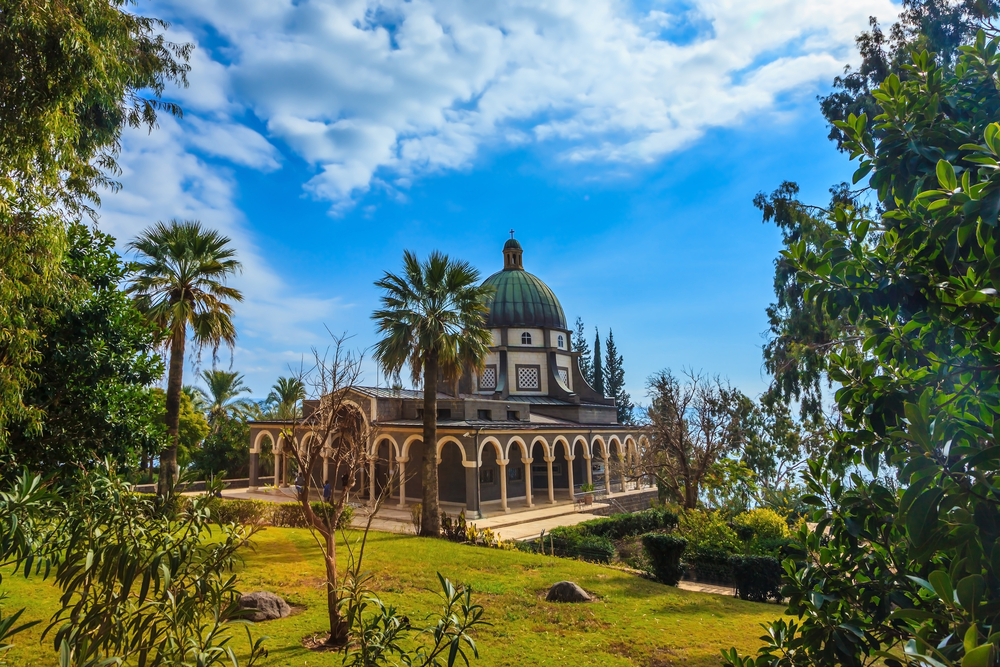
The Church of the Beatitudes
Why Visit Roman Catholic Churches in Israel?
Every Catholic church in Israel offers something unique. Some preserve places associated with the life of Jesus, while others commemorate moments that shaped the early Church. Beyond their spiritual significance, these churches also showcase remarkable architecture, ancient mosaics, archaeological discoveries, and centuries of Christian devotion.
A pilgrimage through Israel allows visitors to:
- Walk in the footsteps of Jesus
- Deepen their understanding of Scripture
- Experience places where Christian tradition has been preserved for nearly two thousand years
- Celebrate Mass at some of Christianity's holiest sites
- Discover the rich history of the Catholic Church in the Holy Land
Many churches are located close to one another, making it possible to combine several important sites in a single day. Jerusalem alone contains some of Christianity's most sacred destinations, while Nazareth, the Sea of Galilee, and Mount Tabor together tell the story of Jesus' public ministry.
1. Church of the Holy Sepulchre, Jerusalem
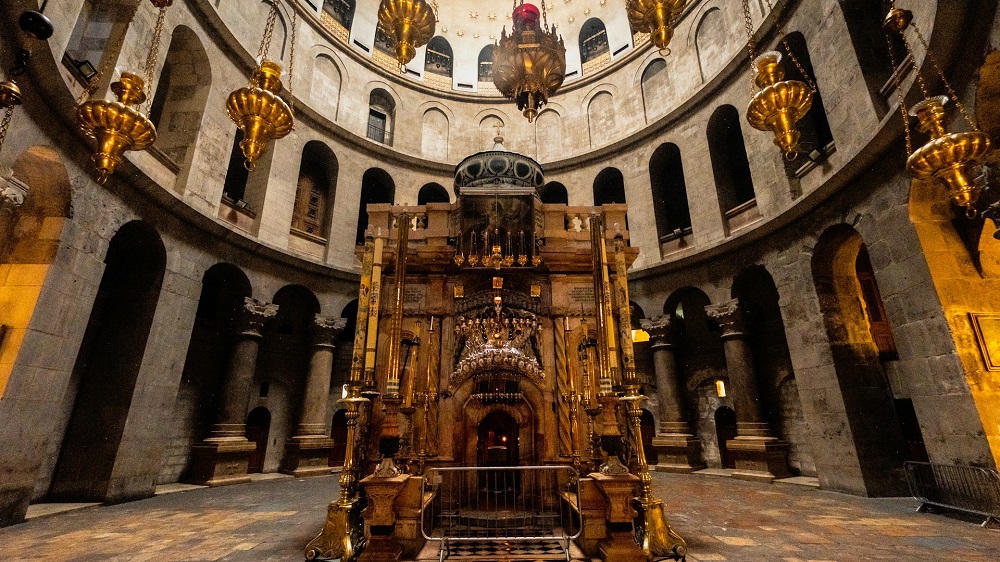
Church of the Holy Sepulchre, Jerusalem
Why It Matters to Catholics
For Catholics, no church in the world holds greater spiritual importance than the Church of the Holy Sepulchre. According to ancient Christian tradition dating to the fourth century, this is the place where Jesus was crucified, buried, and rose from the dead. While historians continue to study the site's earliest history, this location has been revered by Christians for nearly seventeen centuries and remains Christianity's holiest sanctuary.
Rather than marking a single event, the church encompasses several of the most significant moments of Christ's Passion within one remarkable complex. Pilgrims can pray at Golgotha, visit the Stone of Anointing, and enter the traditional Tomb of Christ, all under one roof.
Biblical Significance
The Gospels describe Jesus' crucifixion outside the city walls at Golgotha and His burial in a nearby tomb belonging to Joseph of Arimathea.As the Gospel of Matthew records:
"He is not here; for He is risen, as He said." (Matthew 28:6)
For Catholics, these words lie at the very heart of the Christian faith, making this church the destination that defines every pilgrimage to Jerusalem.
History
The first church was commissioned by Emperor Constantine in the fourth century after his mother, Saint Helena, identified the site during her pilgrimage to Jerusalem.Over the centuries, the church has experienced destruction, rebuilding, earthquakes, fires, and extensive restoration. The Crusaders reshaped much of the structure seen today, while ongoing conservation efforts continue to preserve one of the world's most visited Christian monuments.
Today the church is shared by several Christian communities under the historic Status Quo agreement. The Roman Catholic Church, represented primarily by the Franciscan Custody of the Holy Land, celebrates daily liturgies alongside the Greek Orthodox and Armenian Apostolic Churches.
What to See Inside
Highlights include:- The Stone of Anointing
- Calvary (Golgotha)
- The Chapel of Adam
- The Rotunda.
- The Edicule housing the traditional Tomb of Christ
- The Chapel of Saint Helena
- The ancient Crusader architecture
Each chapel reflects centuries of Christian devotion and artistic heritage.
Visitor Information
Recommended visit: 1 to 2 hoursBest time: Early morning before tour groups arrive.
Dress code: Modest clothing covering shoulders and knees.
Accessibility: Some areas, including Golgotha, require climbing stairs.
Nearby Attractions:
Bein Harim Travel Tip: Many visitors arrive only to see the Tomb of Christ and leave after a short visit. We recommend allowing enough time to explore the church's many chapels with a licensed guide. Understanding the symbolism, history, and traditions behind each section transforms what might seem like a crowded building into one of Christianity's most profound spiritual experiences.
2. Basilica of the Annunciation, Nazareth
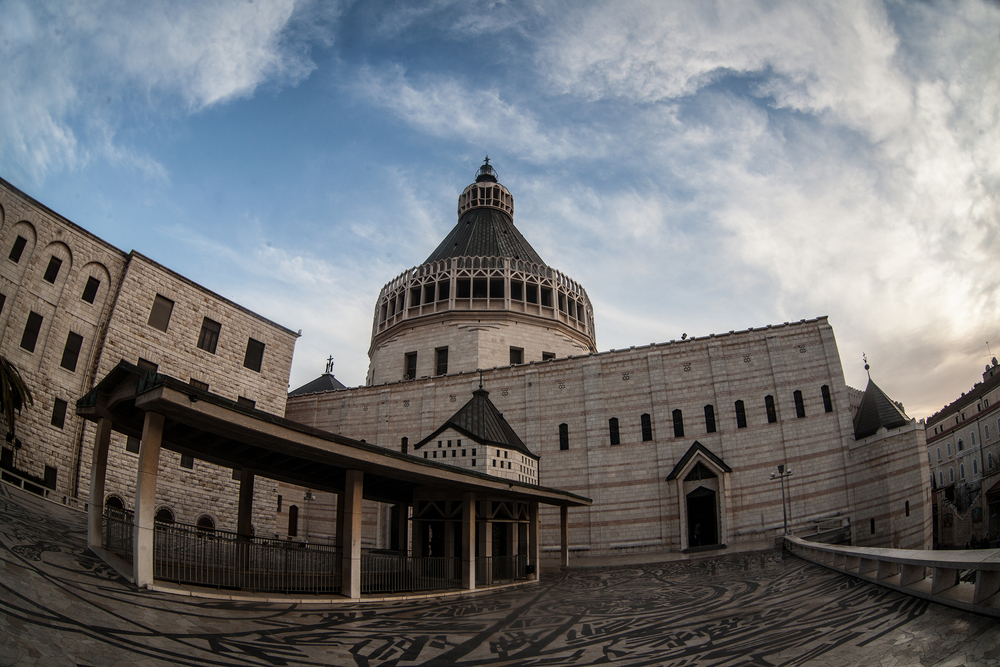
Basilica of the Annunciation, Nazareth
Why It Matters to Catholics
The Basilica of the Annunciation marks the traditional site where the Angel Gabriel announced to the Virgin Mary that she would conceive Jesus through the Holy Spirit. For Catholics, this moment represents the beginning of the Incarnation, when God became man through Christ.
As one of the largest churches in the Middle East, the basilica welcomes millions of pilgrims each year and serves as the spiritual center of Nazareth.
Biblical Significance
The Gospel of Luke recounts Gabriel's visit to Mary with remarkable detail.
Mary answered:
"Behold the maidservant of the Lord! Let it be to me according to your word." (Luke 1:38)
This verse reflects Mary's complete trust in God's will and has become one of the defining passages of Catholic spirituality.
History
Christian tradition has associated this location with Mary's home since the earliest centuries of Christianity.
Archaeological excavations beneath the modern basilica uncovered remains of earlier Byzantine and Crusader churches, along with ancient dwellings that date back to the time of Jesus.
The current basilica was completed in 1969 and designed by the Italian architect Giovanni Muzio. Its distinctive dome symbolizes an inverted lily, representing Mary's purity.
Architecture
The basilica combines contemporary design with ancient remains preserved beneath the church.
The lower level centers around the Grotto of the Annunciation, the traditional place where Gabriel appeared to Mary. The upper church is filled with natural light, colorful mosaics, and Marian artwork donated by Catholic communities from around the world.
One of the most fascinating features is the international collection of mosaics depicting the Virgin Mary through different cultural traditions.
What Not to Miss
- The Grotto of the Annunciation
- The international Marian mosaics
- Archaeological remains beneath the church
- The magnificent central dome
- The peaceful courtyard
Visitor Information
Recommended visit: 60 to 90 minutes
Best time: Morning, before large pilgrimage groups arrive.
Photography: Allowed in most areas while respecting worshippers.
Nearby Attractions
- St. Joseph's Church
- Nazareth Village
- Mary's Well
- Nazareth Old Market
- Greek Orthodox Church of the Annunciation
Bein Harim Travel Tip: Many pilgrims combine Nazareth with Mount Tabor and Cana in a single day. While this itinerary works well, spending extra time inside the Basilica of the Annunciation allows visitors to appreciate its remarkable artwork and archaeological discoveries instead of simply taking photographs before moving on.
3. Church of the Nativity, Bethlehem
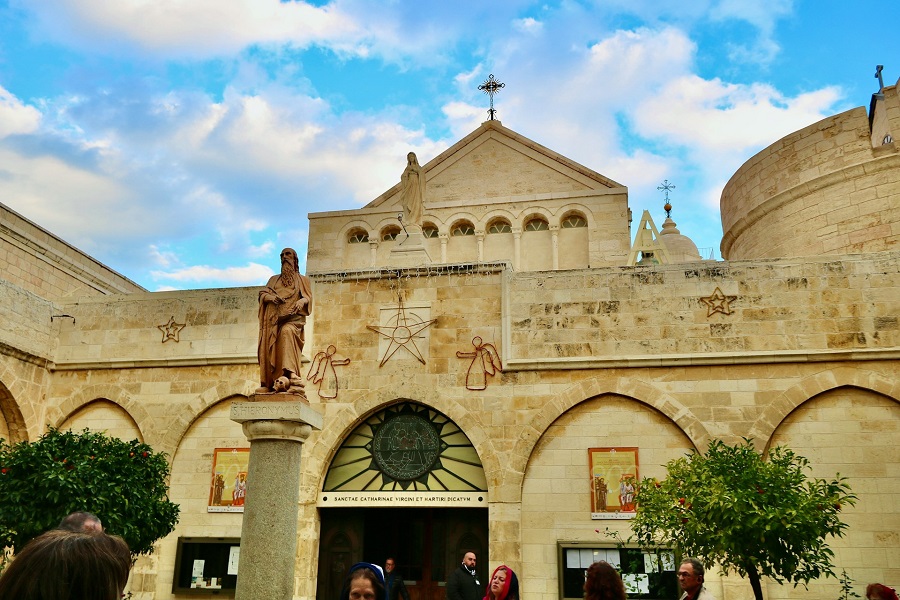
Church of the Nativity, Bethlehem
Why It Matters to Catholics
Although located in Bethlehem, just south of Jerusalem, the Church of the Nativity forms an essential part of nearly every Catholic pilgrimage to the Holy Land.
According to Christian tradition, this church marks the birthplace of Jesus Christ. For Catholics around the world, visiting the Grotto of the Nativity is a deeply moving experience that connects believers with the mystery of Christ's birth.
Biblical Significance
The Gospel of Luke tells the story of Jesus' birth in Bethlehem.
As Scripture says:
"She gave birth to her firstborn Son, wrapped Him in swaddling cloths, and laid Him in a manger." (Luke 2:7)
While the Bible does not describe the exact cave now venerated beneath the church, Christian tradition has identified this location since the second century.
History
The original church was commissioned by Emperor Constantine in the fourth century and later rebuilt by Emperor Justinian in the sixth century.
Remarkably, much of Justinian's structure still survives today, making it one of the oldest continuously functioning churches in the world.
The basilica is shared by several Christian communities, while Roman Catholics celebrate Mass in the adjacent Church of Saint Catherine.
Architecture
The church combines Byzantine simplicity with Crusader artwork, medieval mosaics, and beautiful carved columns.
Descending into the Grotto of the Nativity, pilgrims encounter the famous silver star marking the traditional birthplace of Jesus.
For many visitors, this quiet underground chapel becomes the emotional highlight of their entire pilgrimage.
Visitor Information
Recommended visit: 90 minutes
Best time: Early morning.
Dress code: Modest attire is required.
Nearby Attractions
- Church of Saint Catherine
- Shepherds' Field
- Milk Grotto Church
- Manger Square
Bein Harim Travel Tip: Bethlehem becomes exceptionally busy during Christmas and Easter. Visiting outside these peak seasons often allows pilgrims to spend more time in prayer at the Grotto while enjoying a more relaxed atmosphere.
4. Church of All Nations, Jerusalem
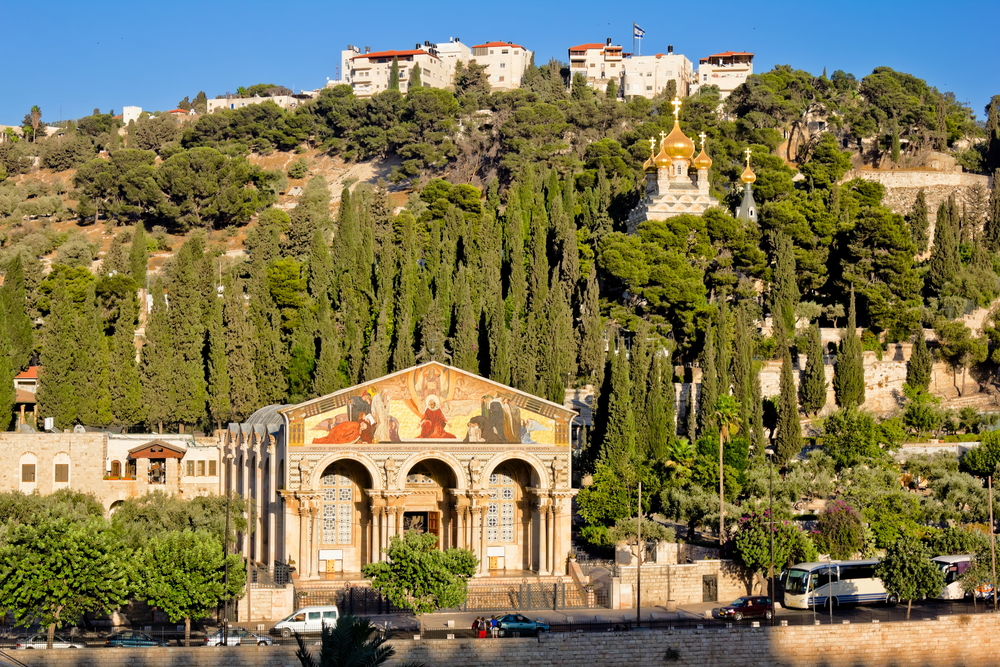
Church of All Nations, Jerusalem
Why It Matters to Catholics
Located at the foot of the Mount of Olives beside the Garden of Gethsemane, the Church of All Nations commemorates one of the most emotional moments in the life of Jesus. According to the Gospels, this is where He prayed on the night before His crucifixion, accepting the Father's will before His arrest.
For Catholics, Gethsemane represents Christ's complete obedience and willingness to embrace His Passion for the salvation of humanity. Many pilgrims describe this church as one of the most moving places they visit in Jerusalem because it invites quiet prayer and reflection rather than celebration.
The basilica received its popular name because donations from twelve different countries helped finance its construction during the early twentieth century. Their coats of arms are incorporated into the church's design, symbolizing the universal nature of the Catholic Church.
Biblical Significance
Before His arrest, Jesus withdrew to Gethsemane to pray.
As the Gospel of Matthew records:
"My Father, if it is possible, let this cup pass from Me; nevertheless, not as I will, but as You will." (Matthew 26:39)
This prayer has become one of the defining expressions of trust and surrender in Christian spirituality.
History
The current basilica was completed in 1924 and designed by the renowned Italian architect Antonio Barluzzi, whose work shaped many of the Holy Land's most recognizable Catholic churches.
The church was built over the remains of Byzantine and Crusader sanctuaries, preserving a tradition that stretches back to the earliest centuries of Christianity.
Immediately outside the church stand ancient olive trees, some believed to be several hundred years old. While they do not date to the time of Jesus, they create an atmosphere that helps pilgrims imagine the appearance of the garden throughout history.
Architecture
Barluzzi intentionally designed the interior to reflect the solemnity of Christ's agony.
Purple stained-glass windows soften the daylight, filling the church with subdued light. Above the altar rests a large section of exposed bedrock traditionally identified as the place where Jesus prayed before His arrest.
Magnificent mosaics portray Christ praying alone, His betrayal by Judas, and His arrest by Roman soldiers.
What Not to Miss
- The Rock of Agony in front of the altar.
- The colorful ceiling decorated with symbols of the twelve contributing nations.
- The ancient olive grove outside the church.
- The impressive façade depicting Christ as mediator between God and humanity.
Visitor Information
Recommended visit: 45 to 60 minutes
Best time: Early morning or late afternoon.
Dress code: Modest clothing is expected.
Accessibility: The main church is wheelchair accessible, while the surrounding garden paths are mostly level.
Nearby Attractions
- Garden of Gethsemane
- Tomb of the Virgin Mary
- Mount of Olives
- Dominus Flevit Church
- Kidron Valley
Bein Harim Travel Tip: Plan enough time to sit quietly inside the basilica after your visit. Many pilgrims rush through Gethsemane, but spending even fifteen minutes in silent reflection often becomes one of the most memorable moments of the entire pilgrimage.
5. Church of the Beatitudes, Sea of Galilee
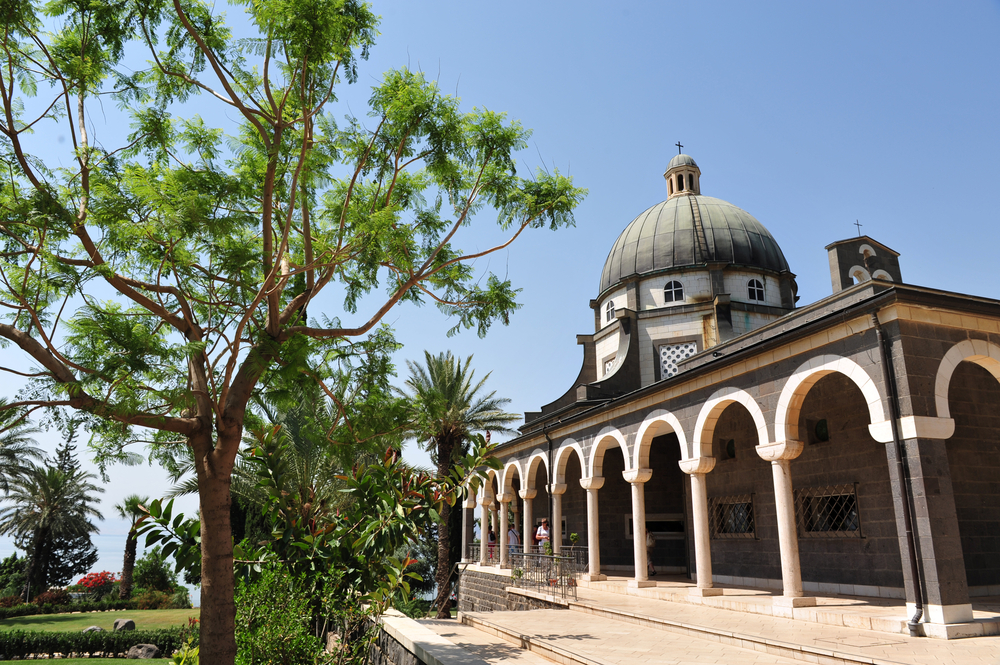
Church of the Beatitudes, Sea of Galilee
Why It Matters to Catholics
Perched on a peaceful hillside overlooking the Sea of Galilee, the Church of the Beatitudes commemorates the traditional location where Jesus delivered the Sermon on the Mount. Although Scripture does not identify the exact hill, Christian tradition has associated this area with Christ's teachings since at least the Byzantine period.
For Catholics, the Beatitudes form the foundation of Christian discipleship. They summarize the values of the Kingdom of God and continue to shape Catholic teaching on holiness, mercy, humility, justice, and peace.
Unlike many churches in Jerusalem that focus on Christ's Passion, this sanctuary celebrates His public ministry and His call to live according to God's will.
Biblical Significance
The Gospel of Matthew opens the Sermon on the Mount with these words:
"Blessed are the poor in spirit, for theirs is the kingdom of heaven." (Matthew 5:3)
The Beatitudes remain among the best-known teachings of Jesus and are central to Catholic spirituality.
History
The present church was completed in 1938 and, like the Church of All Nations, was designed by Antonio Barluzzi.
Earlier Christian pilgrims identified this hillside as the traditional setting of the Sermon on the Mount, and archaeological discoveries confirm that Christian communities worshipped in this area during the Byzantine period.
Today the property is maintained by the Franciscan Custody of the Holy Land and remains one of Galilee's most peaceful pilgrimage destinations.
Architecture
The octagonal design represents the eight Beatitudes described in Matthew's Gospel.
Large arched windows frame breathtaking views across the Sea of Galilee, while beautifully maintained gardens encourage visitors to pray and meditate.
The simplicity of the church reflects the humility of Christ's teaching.
What Not to Miss
- The panoramic terrace overlooking the Sea of Galilee
- The octagonal sanctuary
- The peaceful gardens
- Quiet walking paths leading toward the lakeshore
Visitor Information
Recommended visit: 45 minutes.
Best time: Morning or late afternoon, especially during spring and autumn.
Photography: Outdoor photography is particularly rewarding because of the panoramic views.
Nearby Attractions
- Capernaum
- Church of the Multiplication
- Church of the Primacy of Saint Peter
- Sea of Galilee shoreline
Bein Harim Travel Tip: Many visitors focus on the church itself, but the surrounding gardens deserve just as much attention. Walking quietly through the grounds while reading the Beatitudes creates a meaningful connection between Scripture and the landscape where Jesus taught.
6. Church of Saint Peter in Gallicantu, Jerusalem
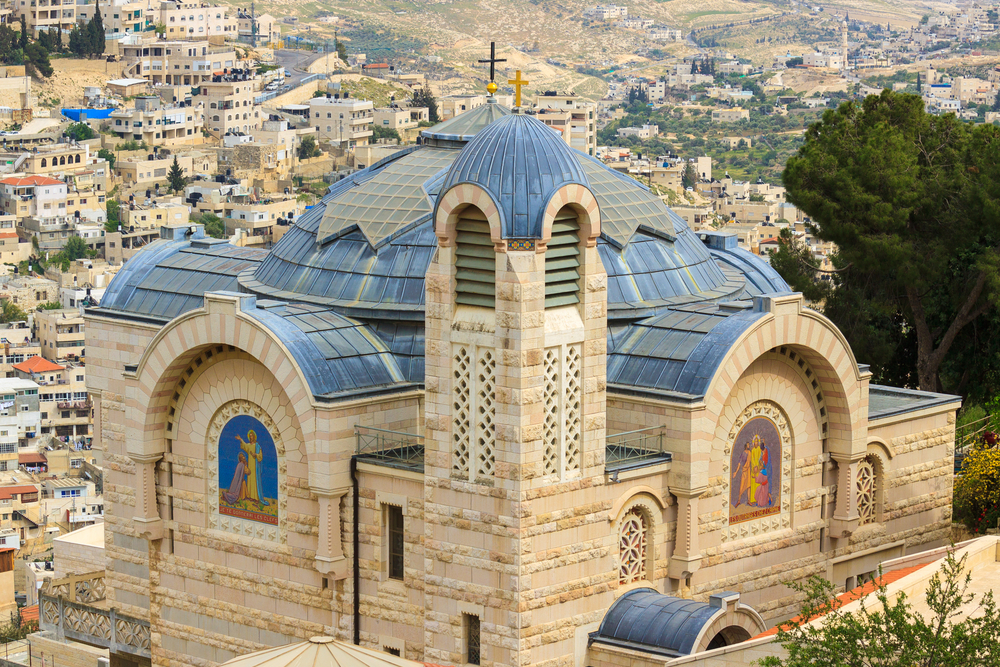
Church of Saint Peter in Gallicantu, Jerusalem
Why It Matters to Catholics
The Church of Saint Peter in Gallicantu commemorates Peter's threefold denial of Jesus before the crucifixion. The name "Gallicantu" comes from the Latin phrase meaning "the rooster crowed," recalling Christ's prediction that Peter would deny Him before dawn.
For Catholics, this church is a powerful reminder of repentance, forgiveness, and God's mercy. Peter's failure did not define his future. Instead, he became the leader of the Apostles and the first Pope, making this site especially meaningful for Catholic pilgrims.
Biblical Significance
Jesus foretold Peter's denial during the Last Supper.
After Peter denied knowing Him three times, the Gospel records:
"The Lord turned and looked at Peter... and Peter went out and wept bitterly." (Luke 22:61-62)
The passage reminds believers that sincere repentance opens the door to forgiveness.
History
The present church was completed in 1938 and, like the Church of All Nations, was designed by Antonio Barluzzi.
Earlier Christian pilgrims identified this hillside as the traditional setting of the Sermon on the Mount, and archaeological discoveries confirm that Christian communities worshipped in this area during the Byzantine period.
Today the property is maintained by the Franciscan Custody of the Holy Land and remains one of Galilee's most peaceful pilgrimage destinations.
Architecture
The church's striking modern mosaics illustrate Peter's denial, Jesus before Caiaphas, and the events leading to the Crucifixion.
Below the church, visitors descend into ancient underground chambers traditionally associated with Jesus' imprisonment before His trial.
The sweeping terrace outside offers spectacular views over the Old City of Jerusalem.
What Not to Miss
- The underground chambers
- Ancient stone steps leading toward the Kidron Valley
- Panoramic observation terrace
- The colorful sanctuary mosaics
Visitor Information
Recommended visit: 60 minutes
Best time: Morning
Nearby Attractions
- Mount Zion
- Dormition Abbey
- Room of the Last Supper
- Church of the Holy Sepulchre
Bein Harim Travel Tip: Take time to walk the ancient stone staircase below the church. While scholars cannot prove Jesus used these exact steps, they date to the Second Temple period and help pilgrims visualize Jerusalem during the final hours before the Crucifixion.
7. Church of the Visitation, Ein Karem
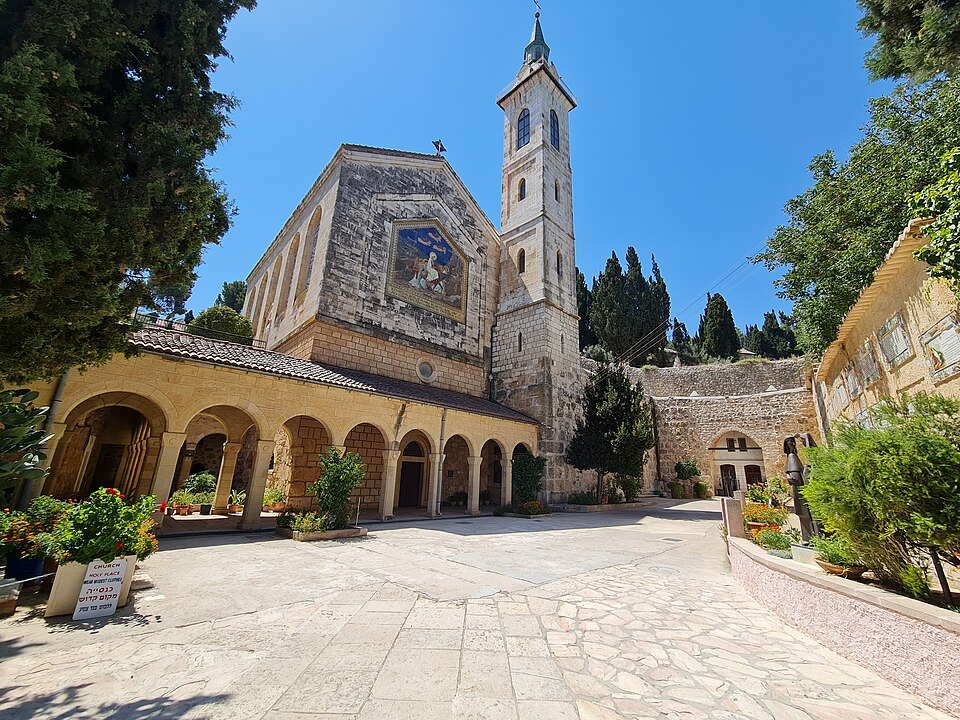
Church of the Visitation, Ein Karem (by Nettadi CC BY-SA 4.0)
Why It Matters to Catholics
Hidden among the picturesque hills of Ein Karem, the Church of the Visitation commemorates Mary's visit to her cousin Elizabeth shortly after the Annunciation. According to Christian tradition, this joyful meeting took place at or near this location.
For Catholics, the Visitation celebrates Mary's faith, humility, and willingness to serve others. It also marks the first meeting between Jesus and John the Baptist while both were still in their mothers' wombs.
The peaceful atmosphere of Ein Karem offers a welcome contrast to the busy streets of Jerusalem and allows pilgrims to reflect on one of the New Testament's most joyful encounters.
Biblical Significance
Luke's Gospel describes Elizabeth's greeting to Mary.
Elizabeth proclaimed:
"Blessed are you among women, and blessed is the fruit of your womb!" (Luke 1:42)
Mary responded with the Magnificat, one of Christianity's most beloved hymns of praise.
History
Christian tradition has associated Ein Karem with the birthplace of John the Baptist since at least the Byzantine period.
The present Franciscan church was completed in 1955, replacing earlier Crusader and Byzantine structures.
Although archaeology cannot confirm the exact location of the biblical event, the village has remained an important Christian pilgrimage destination for many centuries.
Architecture
The church consists of two beautifully decorated levels connected by gardens and terraces overlooking the Judean Hills.
Its courtyard walls display the Magnificat in dozens of languages, symbolizing the universal message of Mary's song of praise.
Inside, colorful frescoes depict scenes from Mary's life and the infancy narratives found in the Gospel of Luke.
What Not to Miss
- The multilingual Magnificat wall
- The upper sanctuary
- Peaceful hillside gardens
- Scenic views across Ein Karem
Visitor Information
Recommended visit: 45 to 60 minutes.
Best time: Spring and autumn, when the surrounding hills are especially beautiful.
Nearby Attractions
- Church of Saint John the Baptist
- Ein Karem village center
- Local cafés and artisan shops
Bein Harim Travel Tip: Ein Karem deserves more than a quick stop. Allow time to stroll through the village between the Church of the Visitation and the Church of Saint John the Baptist. The relaxed atmosphere makes it one of Jerusalem's most enjoyable neighborhoods for pilgrims and photographers alike.
8. Church of the Primacy of Saint Peter, Tabgha
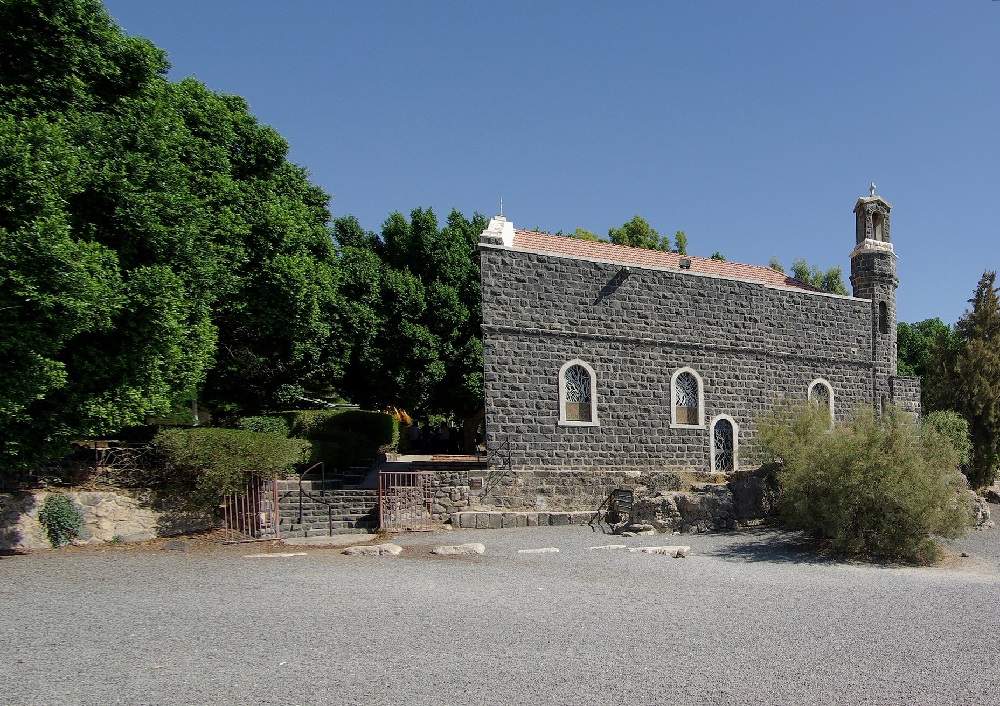
Church of the Primacy of Saint Peter, Tabgha (By Berthold Werner)
Why It Matters to Catholics
On the northwestern shore of the Sea of Galilee stands one of the most meaningful churches for Catholics. The Church of the Primacy of Saint Peter commemorates the traditional location where the risen Jesus appeared to seven of His disciples, shared breakfast with them, and entrusted Peter with the pastoral leadership of His followers.
This encounter is central to Catholic tradition because it highlights Peter's restoration after denying Jesus three times and his mission as shepherd of the Church. Catholics recognize Peter as the first Pope, making this church a powerful symbol of reconciliation, forgiveness, and apostolic leadership.
Its peaceful lakeside setting also reminds pilgrims that many of Jesus' appearances after the Resurrection took place in Galilee, where His public ministry had begun.
Biblical Significance
After the Resurrection, Jesus asked Peter three times whether he loved Him.
The Gospel of John records:
"Feed My sheep." (John 21:17)
These simple words have profound significance for Catholics because they reflect Christ's commission to Peter to care for His Church.
History
Christian tradition has associated this shoreline with Jesus' appearance since at least the fourth century. The current Franciscan church, completed in 1933, stands on the foundations of earlier Byzantine sanctuaries.
Just outside the church lies the limestone rock known as the Mensa Christi, or "Table of Christ." According to tradition, this is where Jesus shared breakfast with His disciples after the miraculous catch of fish.
Although this tradition cannot be verified archaeologically, it has inspired Christian pilgrims for centuries.
Architecture
The church is intentionally modest in appearance. Rather than impressive decoration, its design encourages visitors to focus on prayer and the natural beauty of the Sea of Galilee.
The simple sanctuary opens toward the lakeshore, creating a peaceful atmosphere unlike almost any other church in Israel.
- What Not to Miss
- The Mensa Christi
- The lakeside shoreline
- Quiet gardens surrounding the church
- The beautiful view across the Sea of Galilee.
Visitor Information
Recommended visit: 30 to 45 minutes.
Best time: Early morning or shortly before sunset.
Nearby Attractions
- Church of the Multiplication
- Church of the Beatitudes
- Capernaum
- Mount of Beatitudes National Park
Bein Harim Travel Tip: Spend a few minutes by the water after visiting the church. The peaceful shoreline offers one of the best opportunities in Galilee to reflect on the Resurrection narratives while enjoying the same landscape that Jesus and His disciples would have known.
9. Basilica of the Transfiguration, Mount Tabor
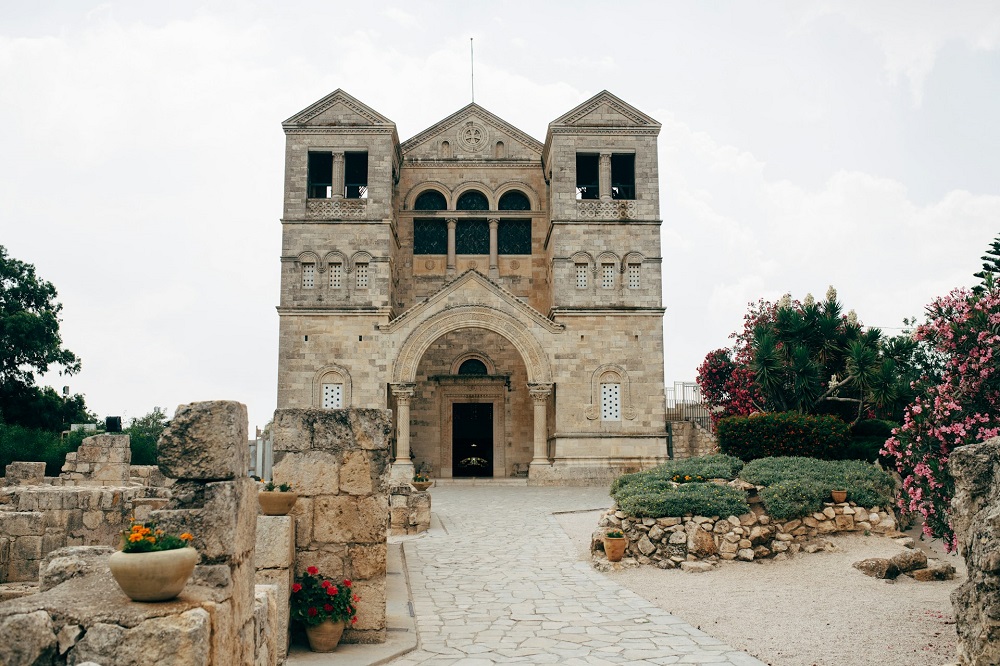
Basilica of the Transfiguration, Mount Tabor
Why It Matters to Catholics
Rising nearly 600 meters above the Jezreel Valley, Mount Tabor has long been identified by Christian tradition as the place where Jesus was transfigured before Peter, James, and John.
Although the New Testament does not name the mountain, Christian pilgrims have associated Mount Tabor with this event since the fourth century.
For Catholics, the Transfiguration reveals Christ's divine glory before His Passion and offers a glimpse of the Resurrection to come.
Biblical Significance
The Gospel of Matthew describes this extraordinary moment.
"His face shone like the sun, and His clothes became as white as the light." (Matthew 17:2)
The appearance of Moses and Elijah affirmed Jesus as the fulfillment of the Law and the Prophets.
History
Several churches have stood on Mount Tabor throughout history.
The present basilica was completed in 1924 by Antonio Barluzzi, who designed many of the Holy Land's most important Catholic sanctuaries.
The Franciscans continue to care for the church today.
Architecture
The Basilica of the Transfiguration incorporates Crusader ruins into its design.
Two impressive towers represent Moses and Elijah, while the bright sanctuary symbolizes the divine light witnessed by the Apostles during the Transfiguration.
The mountain itself offers spectacular panoramic views across Lower Galilee.
What Not to Miss
- The upper sanctuary
- The panoramic terraces
- Ancient monastery remains
- The mountain viewpoints
Visitor Information
Recommended visit: 60 to 90 minutes.
*Access to the summit is usually by local shuttle because the mountain road is steep and narrow.
Nearby Attractions
- Nazareth
- Cana
- Megiddo National Park
- Lower Galilee
Bein Harim Travel Tip: Morning visits often provide the clearest views before afternoon haze develops across the valley. On exceptionally clear days, visitors can see as far as Mount Carmel.
10. Church of Saint Joseph, Nazareth
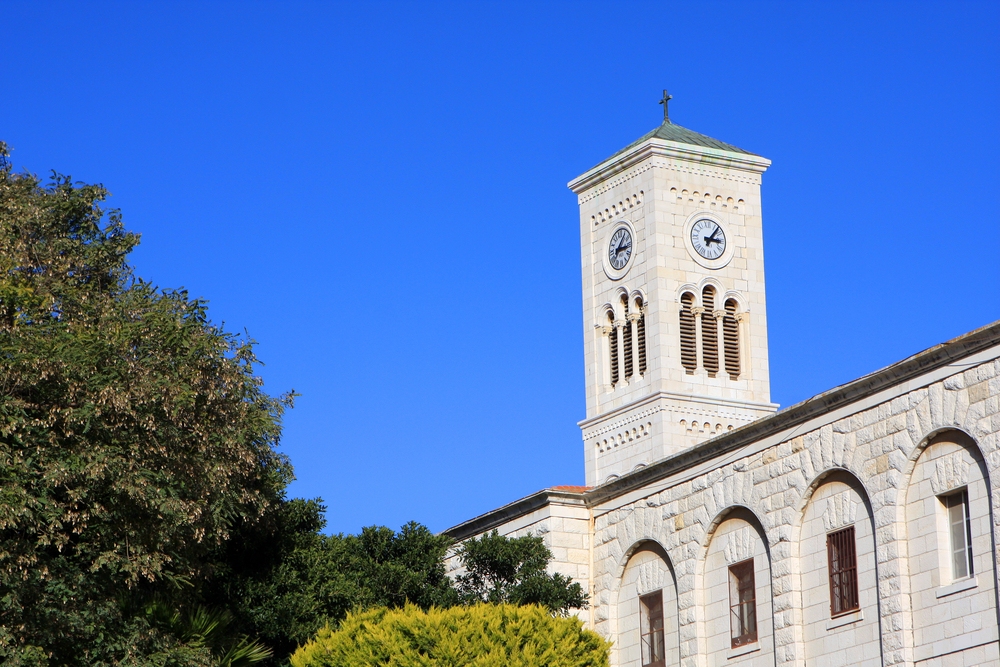
Church of Saint Joseph, Nazareth
Why It Matters to Catholics
Standing beside the Basilica of the Annunciation, Saint Joseph's Church honors the earthly father of Jesus and the husband of the Virgin Mary.
While it receives fewer visitors than the neighboring basilica, many Catholic pilgrims appreciate its peaceful atmosphere and its connection to the Holy Family's daily life in Nazareth.
Biblical Significance
Matthew describes Joseph's obedience after receiving God's message in a dream.
"Joseph did as the angel of the Lord commanded him." (Matthew 1:24)
Joseph's faithful response has made him a model of humility, obedience, and trust throughout Catholic tradition.
History
Christian tradition associates this location with Joseph's workshop.
Archaeological excavations beneath the church have uncovered ancient storage caves, cisterns, and remains from earlier Christian churches.
Although historians cannot confirm this was Joseph's actual home or workshop, the discoveries illustrate life in first-century Nazareth.
Architecture
The present church combines Crusader-inspired architecture with modern design.
Visitors descend beneath the sanctuary to view archaeological remains preserved below the floor.
What Not to Miss
- Underground archaeological remains
- Quiet prayer chapel
- Views toward the Basilica of the Annunciation
Visitor Information
Recommended visit: 30 minutes.
Nearby Attractions
- Basilica of the Annunciation
- Nazareth Market
- Mary's Well
- Nazareth Village
Bein Harim Travel Tip: Most organized groups spend only a few minutes here. Adding just twenty extra minutes provides valuable insight into everyday family life during the time of Jesus.
11.Church of the Multiplication of the Loaves and Fishes, Tabgha
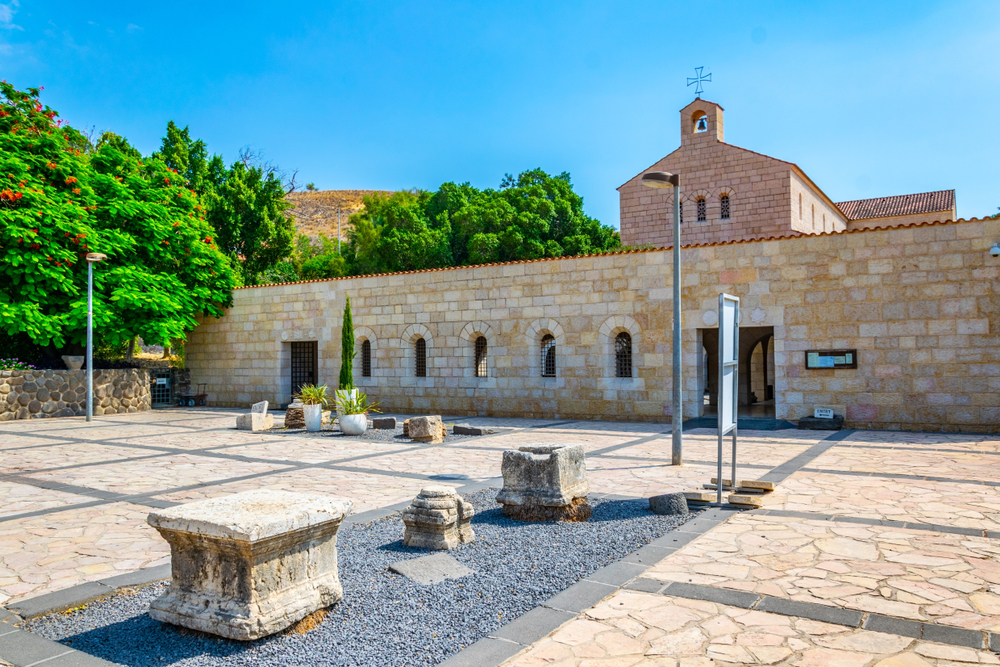
Church of the Multiplication of the Loaves and Fishes, Tabgha
Why It Matters to Catholics
Located a short walk from the Church of the Primacy of Saint Peter, this beautiful church commemorates the traditional site where Jesus fed five thousand people with five loaves and two fish.
The miracle demonstrates Christ's compassion and generosity while foreshadowing the Eucharist, giving the church particular significance within Catholic theology.
Biblical Significance
Matthew records the miracle with these words:
"They all ate and were satisfied." (Matthew 14:20)
The feeding of the multitude remains one of the few miracles recorded in all four Gospels.
History
The modern church belongs to the Benedictine Order and preserves one of Israel's finest Byzantine mosaics.
Although the present building dates to the twentieth century, it stands above the remains of a fifth-century Byzantine basilica.
Architecture
The famous mosaic depicting two fish beside a basket of bread has become one of Christianity's most recognizable artistic images.
Beautiful gardens surround the church and create a peaceful setting overlooking the Sea of Galilee.
What Not to Miss
- The fifth-century mosaic
- Ancient church foundations
- The peaceful gardens
Visitor Information
Recommended visit: 45 minutes.
Nearby Attractions
- Church of the Primacy of Saint Peter
- Church of the Beatitudes
- Capernaum
Bein Harim Travel Tip: Visit both Tabgha churches together. Their close proximity allows pilgrims to reflect on Christ's miracles and His post-Resurrection appearances in one memorable stop.
12. Dormition Abbey, Jerusalem
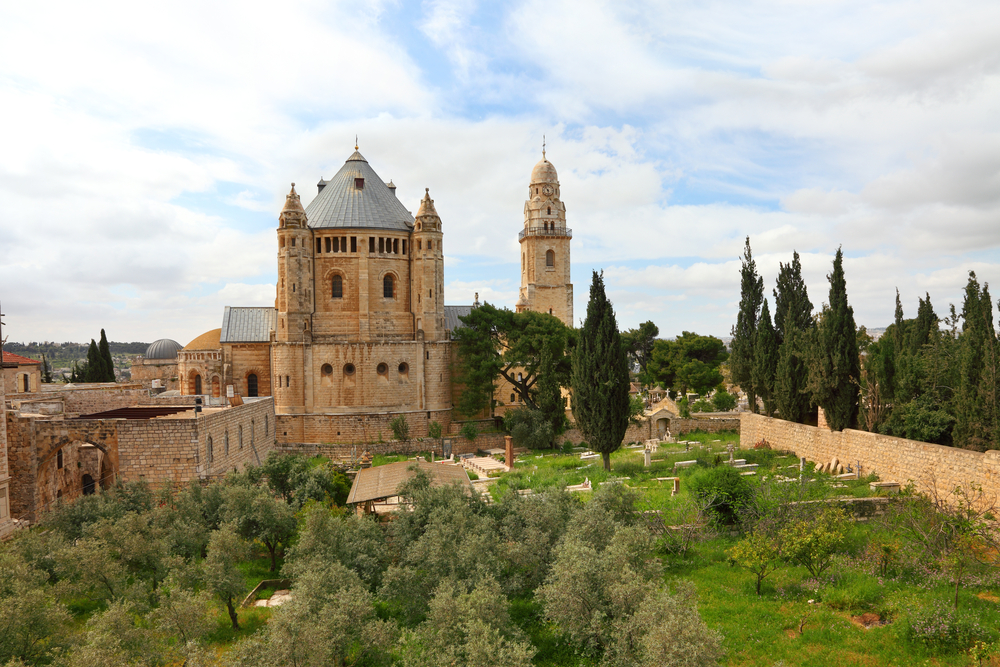
Dormition Abbey, Jerusalem
Why It Matters to Catholics
Although not directly connected to an event recorded in Scripture, Dormition Abbey occupies an important place in Catholic tradition. It stands on Mount Zion near the traditional location of the Last Supper and commemorates the Dormition, or "falling asleep," of the Virgin Mary before her Assumption into Heaven.
For Catholics, the abbey reflects centuries of Marian devotion and remains an active Benedictine monastery welcoming pilgrims from around the world.
Biblical Context
The New Testament does not describe Mary's final earthly years.
Instead, the significance of this church comes from long-standing Christian tradition rather than a specific biblical account.
For this reason, it is important to distinguish between Catholic tradition and the biblical record.
History
The present abbey was completed in 1910 on the site of earlier Byzantine churches.
Its Benedictine monks continue to maintain daily worship and hospitality for visitors.
Architecture
Dormition Abbey is one of Jerusalem's architectural landmarks.
Its circular sanctuary, tall bell tower, and richly decorated crypt combine Romanesque and Byzantine influences.
The crypt contains a beautiful sculpture representing Mary's Dormition, surrounded by mosaics honoring women from the Old Testament.
What Not to Miss
The circular sanctuary
- The crypt
- Panoramic views from Mount Zion
- The peaceful monastery grounds
Visitor Information
Recommended visit: 45 minutes.
Nearby Attractions
- Room of the Last Supper
- Church of Saint Peter in Gallicantu
- Church of the Holy Sepulchre
- Mount Zion
Bein Harim Travel Tip: Because many groups focus only on the Upper Room, Dormition Abbey often feels surprisingly peaceful. It is an excellent place to conclude a day exploring Mount Zion.
Frequently Asked Questions
Q: What is the most important Roman Catholic church in Israel?
A: The Church of the Holy Sepulchre is regarded as Christianity's holiest church because it is traditionally associated with Jesus' crucifixion, burial, and Resurrection.
Q: Are all of these churches mentioned in the Bible?
A: No. Some churches commemorate locations directly connected with biblical events, while others preserve traditions that have been honored by Christians for centuries. Throughout this guide, we have distinguished between Scripture, historical evidence, and Christian tradition whenever appropriate.
Q: How long should a Catholic pilgrimage to Israel last?
A: A six to eight day itinerary allows enough time to visit Jerusalem, Bethlehem, Nazareth, the Sea of Galilee, Mount Tabor, and several additional biblical sites at a comfortable pace.
Q: Can visitors attend Mass at these churches?
A: Many Roman Catholic churches in Israel celebrate daily Mass, although schedules vary by season and religious feast days. It is always advisable to check the official church or Franciscan schedule before your visit.
Q: Do I need to dress modestly?
A: Yes. Visitors should wear clothing that covers the shoulders and knees when entering churches and other Christian holy sites.
 Certificate of Excellence
 Guaranteed Departure
 Low Prices Guaranteed
 24/7 Support


