Showing search results for ''

Yehudiya Forest

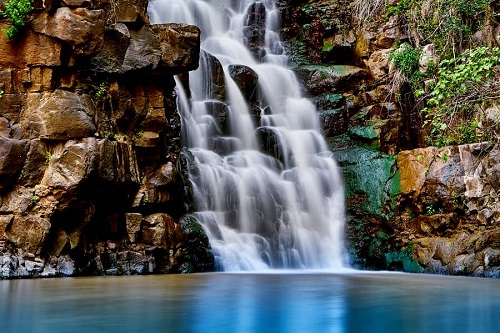
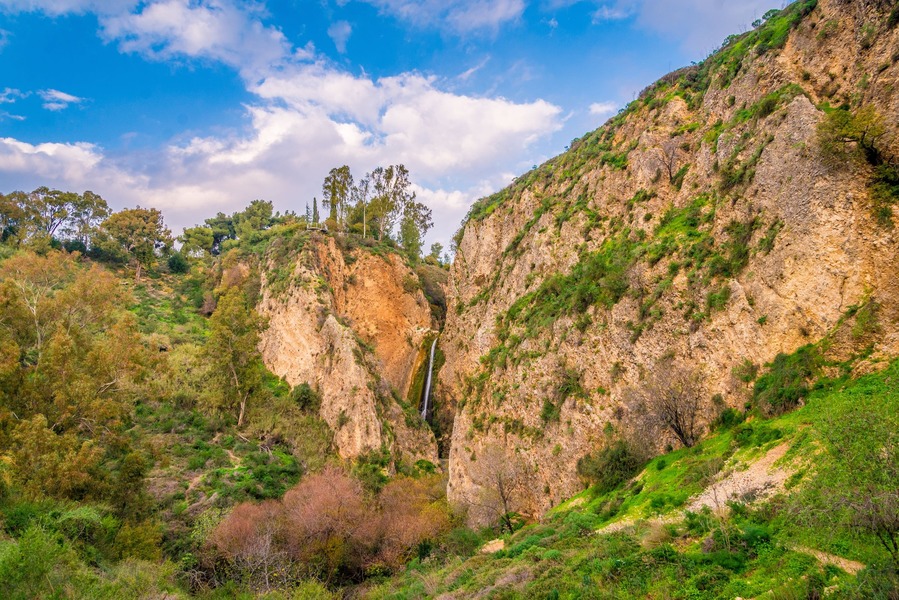
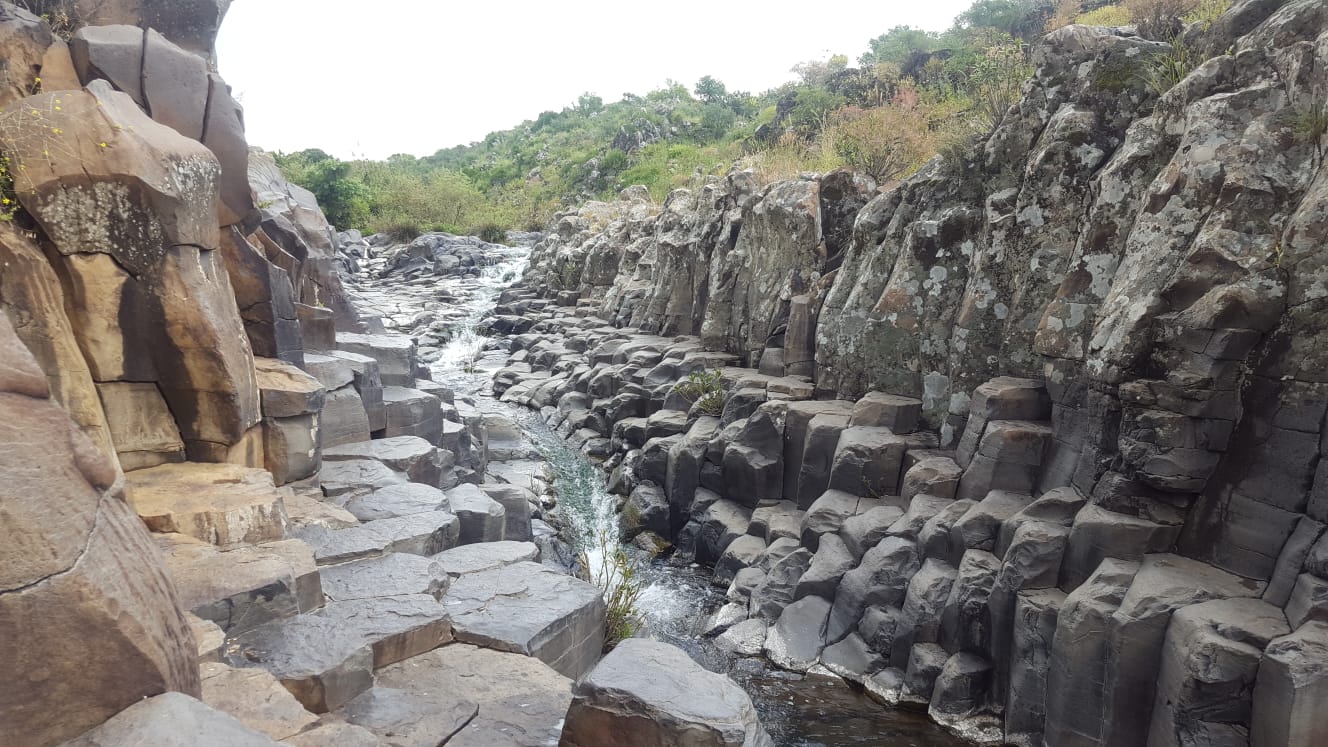
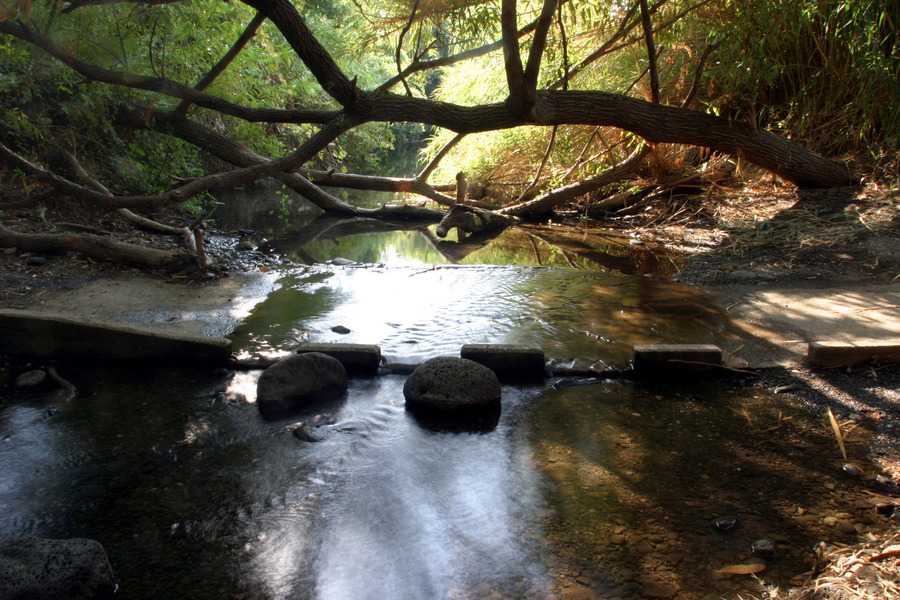
The Yehudiya Forest is located above the Sea of Galilee in the central Golan Heights. The forest is protected within the Yehudiya Nature Reserve by the Israel Nature and Parks Authority and covers a landscape of deep ravines, waterfalls, canyons and a magnificent forest of Mount Tabor oak trees. This is one of the largest nature reserves in the Golan and is treasured for its geological diversity. The streams that run through the park are vital to the drainage basin of the Sea of Galilee and the reserve is home to abundant flora and fauna.Yehudiya Forest Flora and FaunaThe forest of Mt. Tabor oak trees covers an area between Katzrin and the Sea of Galilee and hike trails run through the forest and past the highlights of the park. In among the forest trees grow wild oats and barley. You will find the park landscape includes jujube bushes, almond trees reeds, myrtle bushes, willow trees, oleanders, areas of savannah and Christ’s thorn jujube trees.In the winter there is an abundance of wildflowers including anemones and cyclamens. You can also see the Golan iris which is unique to this area. The nature reserve is a protected habitat of deer, foxes, wolves, jackals, wild boars and raptors such as vultures. Herds of wild boar live in the Yehudiya Forest. There are over 170 species of animal in the reserve including about 110 bird species.Basalt HexagonsThe park is home to a unique phenomenon known as basalt hexagons. Thousands of years ago when the Golan Heights were formed cracks split the lava as it coagulated creating tall hexagonal pillars of rock. Over the course of time the elements have further shaped and smoothed the basalt pillars. The basalt hexagons can best be seen at Brechat HaMishushim (Hexagon Pool). You can also see examples of these fascinating rocks along the Zavitan Stream and at the Ayit Waterfall.Yehudiya Nature Reserve WaterwaysThe park has a number of waterways including the Meshushim Stream (the lower part of the Daliyot Stream); the Yehudiya Stream and the Zavitan Stream. In places, the streams are flanked by towering cliffs and form waterfalls and natural pools. The streams in the Yehudiya Nature Reserve flow year-round. The Yehudiya Stream flows along a deep canyon. Falling rocks from the canyon cliffs have caused sections of the canyon to be closed but there is an alternative route upstream leading to the Yehudiya Falls.The parks another major stream is the Zavitan Stream that runs through a deep canyon where the En Nataf Spring drips down the cliffside like a curtain. The Black Gorge is in the Zavitan Stream canyon and consists of a series of waterfalls. Intrepid visitors can cross the waterfalls by rappelling. To venture into the Black Gorge you will need to register in advance with the nature reserve office. See the Ayit Waterfall, one of the highest and most beautiful in the region. You can follow the “Waterfalls Route” along Road 808 to see the park’s waterfalls from lookout points.Archaeological SitesThere are a number of archaeological sites within the reserve including the ruins of a former Syrian village, Yehudiya Village. This ancient village looks down on the Yehudiya Stream from the cliff tops and like other ancient structures in the Golan the village houses were built of basalt rock. Also within Yehudiya Nature Reserve are the remains of several Byzantine synagogues and ancient burial stones (dolmens) from the 3rd millennium BC.Visiting Yehudiya ForestThe most popular activity in the nature reserve is hiking. There are marked paths that give access to the most interesting parts of the park and several “wet hikes” where you can walk in the streams as you follow the route. Some areas of the park are closed for the conservation of the wildlife populations. Visitors can camp within the park at an organized campground situated at the park entrance where the hike trails start.

Korazim National Park

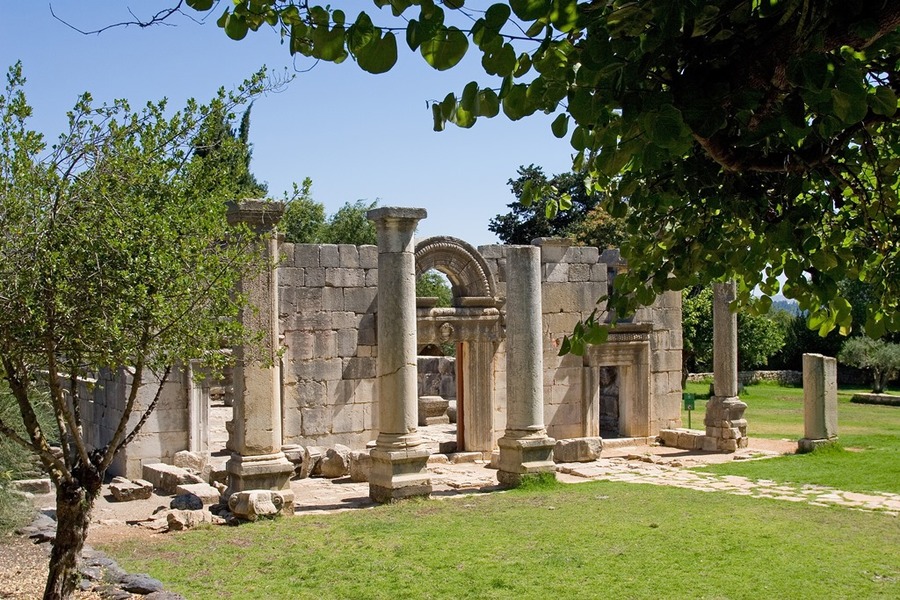
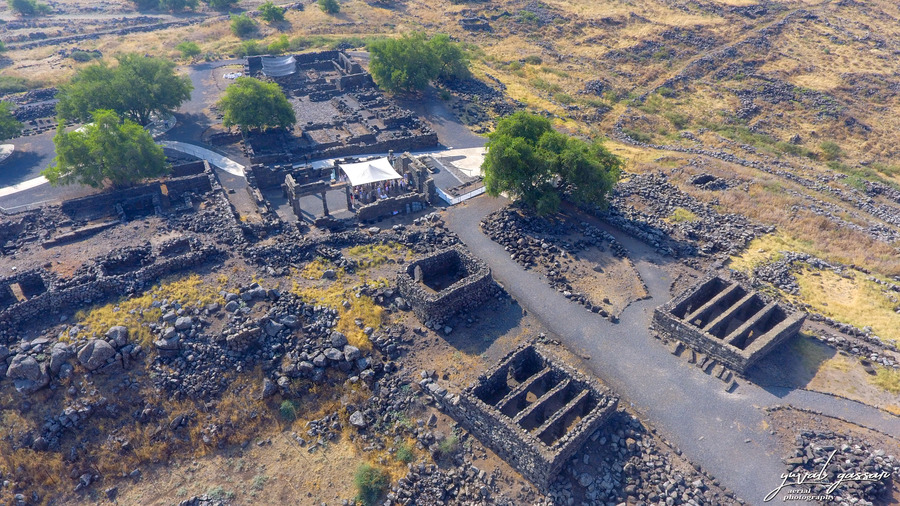
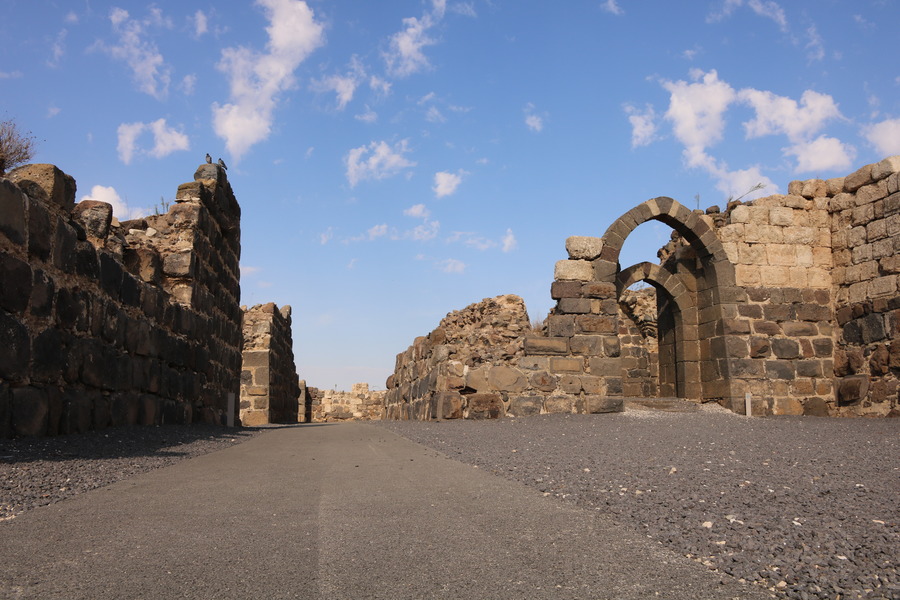
In the eastern Galilee, overlooking the Sea of Galilee is the Korazim or Chorazin National Park, the site of an excavated ancient Jewish town with roots going back to the Roman Era. The 25-acre park preserves the remains of a Roman/Byzantine settlement built from the region’s black basalt stone. Although the town dates back to the 1st century, almost all the remains are from the 3rd-4th century including the highlight of the park a Byzantine synagogue.Second Temple Period (567 BC - 70 AD) sources mention the good quality wheat farmed by the inhabitants of Korazim. The New Testament names Korazim, together with Bethsaida, and Capernaum as devoutly Jewish towns that Jesus cursed after they rejected his teachings (Matthew 11:20). Visitors that come to explore the archaeological site can also enjoy views of the Sea of Galilee and the beautiful natural surroundings that include Christ-thorn jujube trees and an ancient Mount Tabor oak tree. Over 2,000 Years of History at Korazim National ParkAlthough most of the archaeological ruins you can see today date back 1,500 years, the Korazim settlement existed as early as the 1st century. Perhaps the site of the town was chosen for the elevated location, fertile farming land, and the nearby spring that supplied valuable water. This was the land of Jesus’ ministry where he preached in Galilee towns and performed miracles. In fact, Christ would have preached in Galilee synagogues just like the one at Korazim.The town grew during the Mishnaic and Talmudic periods of the 3rd century and in the 4th century, Korazim was destroyed, perhaps by the 363 AD earthquake. It was rebuilt and remained inhabited until the 8th century before being once again abandoned. From the 13th century, Korazim was sporadically resettled and later Syrian Bedouins established a village known as Karazeh which remained until 1948. Near the park entrance is the Mameluke Period tomb of Sheikh Ramadan. Local Bedouins visit the grave to make offerings, vows and to settle disputes.The Korazim SynagogueThe Korazim synagogue was built and rebuilt between the 3rd and 5th centuries and remained in use until the 8th century. The synagogue was 23m long and 17m wide and like the rest of the settlement, the synagogue was constructed out of the volcanic basalt rock that forms the mountains of the Golan.Carved into the synagogue stones are geometric shapes, zodiac signs, Jewish motifs, and images of flora and fauna. Skilled artistry went into carving the hard basalt rock and decorating it in great detail. The three synagogue entrances were topped by beautifully carved triangular gables. The excavation uncovered a basalt-hewn seat that was probably used by senior members of the congregation when teaching. The stone seat or Moses Seat is inscribed with a dedication to the community donors.The partial remains of the synagogue include the lower walls, an archway, stone lion figures, and 5 of the original 12 columns. Near the synagogue is a Jewish ritual bath where worshipers would have purified themselves by submerging in the bath before entering the synagogue. Also discovered were dwellings, paved courtyards, and an olive press. Today the synagogue is sometimes used for outdoor events, bar mitzvahs, and weddings.

Ayun Stream Nature Reserve

Ayun Stream Nature Reserve is located in northern Israel, near the city of Metula, on the edge of the Lebanon border. The park covers the course of the Ayun Stream from where it flows into Israel from Lebanon to the Hula Valley, and on to the Jordan River. Ayun Stream is one of four sources of the Jordan River. The stream descends from an elevation of 500m to 350m above sea level, through a deep gorge, traveling down five levels, and creating some of the most beautiful waterfalls in the country. The picturesque waterfalls are surrounded by a lush landscape of vegetation, forests, and wildflowers. History of Ayun Stream Nature ReserveIn 1896 the community of Metula was established on the “Finger of Galilee '' a narrow strip of Israeli land surrounded on three sides by Lebanon. Ayun Stream flows past Metula, and in the early years of the community, inhabitants exploited the stream for irrigating their fields, turning a flour mill, and drinking water. Following World War I, the Ottoman Empire fell, and the Middle East was divided up between the British and France. The northern borders of Israel were negotiated between the British, who controlled Palestine, and the French, who controlled Lebanon. The new border placed the Ayun Stream gorge within British Mandate Palestine, but the source of the spring in Ayun Valley remained in French Lebanon. In World War II, the British needed to protect Palestine from infiltration by the Vichy forces in Lebanon. They created a dam, downstream of Ayun Waterfall, to supply their troops with water. The route was later used to smuggle illegal Jewish immigrants into British Palestine. The Ayun dam Bridge was destroyed along with other bridges by the Jewish Palmah on the “Night of the Bridges” in 1946. The Ayun Stream Nature Reserve was established in 1968 to preserve the rare scenery, waterfalls, flora, and fauna. In the 20th century, Lebanese farmers exhausted the stream of all its water, to such an extent that each summer the stream ran dry on the Israeli side of the border. And the park’s famous waterfalls stopped flowing. In 2009, in the absence of a political solution, the Israeli park authorities dug wells near the Dan spring and allowed the water to flow into Ayun Stream. Points of Interest in Ayun Stream Nature ReserveAyun Stream: Nahal Ayun (Ayun Stream) is a perennial stream and a tributary of the Jordan River. It originates from two springs in southern Lebanon and runs south through Hula Valley before flowing into the Hasbani River, which joins the Jordan River. In winter the stream fills with rainwater and gushes over the waterfalls. In summer, only a few springs continue to flow into the stream from Ein Sukhra, Tanur Spring, and Cascades Spring. Water is diverted from the Dan springs and supplements the smaller springs to fill the Ayun.Ayun Stream Waterfalls: The different levels of elevation along the course of the stream create waterfalls along the route. Visitors can see the Ayun Waterfall (9.2m); Eshed (Cascade) Waterfall which drops 5 meters and then down the second drop of 9 meters; Tahana (Mill) Waterfall (21m), and the tallest waterfall, Tanur (Oven) Waterfall, that drops 30 meters. There is an upper parking lot and a lower parking lot close to Tanur Waterfall so that if you only want to see the highest waterfall you stop at the lower parking lot.Flora and Fauna: The nature reserve is home to a variety of trees including the turpentine tree, maple, and buckthorn. Other plants and flowers include Spanish broom, cyclamen, anemones, and cyclamen flowers. The beautiful maritime squill flowers cover “Squill Hill” with a carpet of color in the fall. In the winter you can see grey wagtails, white-throated kingfishers, and common kestrels. Rock pigeons and the Eurasian eagle-owl nest in the surrounding cliffs. For a short time, each year, the park is visited by the rare wallcreeper bird. The waters of Ayun Stream are home to a variety of fish. Hike Trails: Follow the signposted trails between three of the park’s idyllic waterfalls. The trail starts at the northern entrance parking lot close to Metula and follows a route downstream past Ayun Waterfall, Tahana Waterfall, and Eshed Waterfall where there is a lookout point. Then the scenery changes and you can walk through wildflowers until you reach a second lookout point with stunning views across Tanur Waterfall. The hike route is not circular, and you need to retrace your steps back to the starting point or leave a car at the termination point at the lower parking lot. The waterfalls are magnificent in the winter but this is a great hike at any time of year.Observation Points: the Tanur Lookout Point (Gafni) is near the lower parking lot, and gives you brilliant views of the 30-meter high Tanur Waterfall. The observation point at the upper parking lot looks towards the Ayun Valley in Lebanon, and the ancient Beaufort Fortress. There are also lookout platforms near the other waterfalls. En Sukhra: The old water pump is located south of Tahana Waterfall on En Sukhra Spring. The spring water was pumped to provide water for Metula up until 1957. The remains of the pump are still in place and the spring provides small pools where fish live year-round, even when the stream is dry.Reaching Ayun Stream Nature ReserveVisitors can stay at campgrounds located at the northern (upper) and southern (lower) entrances. Both entrances and campgrounds have picnic areas, toilets, and barbeque areas. Near the southern campsite are three beautiful wading pools. There is a wheelchair-accessible trail from the southern campground along the last section of the hiking trail to Tanur Waterfall. Reach the Tanur Waterfall on the Kiryat Shmona-Metula road. About 1km south of Metula turn east to the falls. To reach the Ayun Waterfall and the park’s northern entrance, continue on the Kiryat Shmona-Metula road to the northeastern end of Metula. If you’re using Waze to reach the park, enter “Ayun Stream Nature Reserve”.

Hamat Tiberias National Park

Hamat Tiberias National Park is situated on the Western side of the Sea of Galilee, (‘Kinneret’ in Hebrew), just south of Tiberias. The sea (or lake, as it is also called) lies at the heart of the Jordan Valley, north of the Mount Carmel / Mount Gilboa area. The Galilee also receives a great deal of rainfall in the winter, which means that its flora and fauna are quite diverse. With its green fields, streams and waterfalls, not to mention numerous towns and villages all mentioned in the Bible, it remains one of Israel’s top tourist attractions.Offering views not just of the Galilee but also the Golan Heights, Hamat Tiberias is home to the remains of an ancient Jewish town, some very popular hot springs, a building which once served as a hammam (’bathhouse’ in Arabic) from the Ottoman period, and synagogues that date back to Roman, Byzantine and Umayyad eras. One of the prayer houses boasts a mosaic floor displaying a Zodiac sign.The History of TiberiasHamat Tiberias may well have been where the ancient city of Hammath was once located, in the Canaanite period. Historically, and even today, Tiberias is considered to be one of Judaism’s four holy cities - along with Jerusalem, Safed and Hebron. Established around 20 CE, it was named after the Second Roman Emperor. Many non-Jews settled there during Herodian times but up until the 6th century, it remained a centre of Jewish learning. In 629, radical Christian monks slaughtered many of the Jews there and Jewish life declined.Under the Caliphate, in 634, 70 Jewish families were allowed to return and by the 8th century, Tiberias entered its ‘Golden Age’ when the city was at its most diverse. After the Crusades, life became difficult once more for the Jews but by the 1700s, with the decree of Sultan Zahir, Jews were encouraged to rebuild their community. Rabbi Haim Shmuel HaCohen Konorti (from Spain) settled there in 1792 and was a driving force in this regard. By the time the British arrived in Palestine, there was already a Jewish majority in Tiberias.Today the city has a population of just under 50,000, many of the inhabitants being children of Jews who fled Arab lands for Israel in the 1950s. The city is a major tourist hub, especially as so many Christian pilgrimage sites (such as Capernaum, Yardenit and Nazareth) are located close by. The lake itself is popular with Israeli tourists, especially in the summer months, and there are many activities to enjoy, including fishing, sailing and an attractive Water Park.Hot SpringsThe entire area around Hamat is filled with mineral-rich hot springs that flow along the fault lines of the Jordan Valley and the Galilee itself. As the water rises up from the depths of the earth, it picks up minerals along the way - sodium, bromide, potassium and sulphate - which rise to the surface. There, steam escapes through chimneys.In Roman and Byzantine times, the springs were very popular, as the locals believed that the waters had the power to cure them of ailments. Over the centuries, the Jewish sages permitted bathing there, even on Shabbat, since they believed deeply in their medicinal properties. Today, visitors can enjoy wading and dipping their toes in baths of all different temperatures - 30, 35 and 40 degrees...perfect for relaxing and warming up in the cooler winter months! All you need to do is to remember to bring a towel! Admission to the hot springs is included in the price of the ticket.Turkish HamamThis well-preserved ancient bathhouse dates back to the 18th century. Built around 1780, the Suleiman Hamam was used by people in the locale, as well as pilgrims who flocked to the area to bathe in the hot springs and ‘be healed’.The Severus SynagogueThis is the largest synagogue in the park, located in what was once the ancient town of Hamat Tverya. It was built around 230 CE but then destroyed in an earthquake. It was then rebuilt and the remains of a fabulous Zodiac mosaic are on display today. Look carefully and you will see three different elements. The first shows two lions, centred around a number of Greek inscriptions. The other side depicts a Torah Ark, with different Jewish symbols including a shofar (Ram’s Horn), lulav (one of the ‘four species’ used in the holiday of Simchat Torah) and two candelabras with seven branches each (‘Menorot’ in Hebrew).In the middle of the mosaic, there is an ornate Zodiac, inside which there is an image of the Sun God, Helios, driving his chariot across the sky. One of the inscriptions mentions ‘Severus’ and this is why the synagogue has come to be named as such. Around the four corners, you will see four women, all of whom symbolize a different season of the year. After being destroyed once more in an earthquake in the 5tgh century, it was rebuilt and continued to be a house of prayer for another 500 to 600 years. Inside the ancient synagogue, visitors can enjoy a multimedia display in the form of a short film. Staff at Hamat Tiberias national park speak good English and, apparently, are particularly helpful.Practical InformationHamat Tiberias National Park, 4 km south of Tiberias, following Route 77 and 90. Tel: 04 672-5287Website: https://www.parks.org.il/en/reserve-park/hamat-tiberias-national-park/Opening hours - Summer: Sunday to Thursday and Saturday - 8 am until 5 pm. Friday - 8 am until 4 pm.Opening hours - Winter: Sunday to Thursday and Saturday - 8 am to 4 pm. Fridays - 8 am to 3 pm.There is no official car park, but it is possible to leave your car close to the Tomb of Rabbi Meir.

Kochav HaYarden National Park (Belvoir Castle)

Kochav HaYarden (Star of Jordan) or Belvoir Castle is situated in northern Israel, on a hilltop 20km south of the Sea of Galilee. The castle was built by the Crusaders in 1168 and now lies at the heart of the Belvoir National Park. Kochav HaYarden is unique in being one of the best-preserved Crusader castles in the Holy Land. The castle stands 500 meters above the Jordan Valley, on a commanding plateau that once looked down on ancient roads connecting the north to Jerusalem. History of Belvoir CastleAs early as the ancient Israelite period in the 12th century BC, Ramat Kochav was inhabited. During the 2nd and 6th centuries BC it was the site of a Jewish settlement called Kochava. In the 12th century, the Crusaders established the Kingdom of Jerusalem, and the noble family of Velos was given the land. They built a fortified estate on the hill of Kochava. In 1168 AD the Crusader Knights Hospitaller bought the land from Velos. The Crusaders built the castle as a strategic fortress overlooking the road that connected Damascus to the Crusader Kingdom of Jerusalem. The castle’s elevated position on the north-eastern boundary of the Crusader Kingdom dominated the surrounding landscape. There were several Crusader castles in the region, but Belvoir was one of the most important. It represented an obstacle in the way of Muslim invaders from the east.In 1180 the castle withstood a Muslim attack, and in 1182 the Battle of Belvoir Castle was fought between Muslim leader Saladin and the Crusader King Baldwin IV of Jerusalem. In 1187, Saladin held the Belvoir under siege for a year and a half until the Crusaders surrendered in 1189. After Saladin’s death in 1193, Galilee was given to the ruler of Damascus. He feared that the Crusaders would return and so he had the fortress destroyed. Belvoir remained in Arab hands until it was ceded to the Franks who held the castle from 1241 to 1263.During the Ottoman’s 400-year rule over the Holy Land, the hilltop castle and surrounding area became the village of Kawkab al-Hawa. The civil conflict of 1947-48 resulted in the village inhabitants being ousted by Yishuv forces (Jewish forces formed before the establishment of the State of Israel). Since Israeli independence in 1948, the land has been cleared, and the historical remains preserved.What’s in a NameThe castle and park were named after the ancient Jewish village Kochava (Star), which stood here thousands of years ago. The Arab name given to the Crusader castle was Kawkab al-Hawa (Star of the Winds) which sounds like the Hebrew name, of the original Jewish village, Kochava. The name Star of the Yarden, originated because the castle stands close to the Jordan River. Its elevated position led a 12th-century Arab historian to call it the “Fortress Set Amidst the Stars”. The Crusader name for the castle, Belvoir means “beautiful view” in French.Points of Interest at Belvoir National ParkCrusader Castle: During excavations that took place in the 1960s, complex military Crusader architecture was uncovered. Belvoir is the earliest example of a concentric castle plan which was used frequently by the Crusaders. The design had an inner rectangular fortress with towers at each corner, and a large gatehouse in the middle of the western wall. The castle is symmetrical, with a rectangular outer wall with corner towers mirroring the inner fortress. The castle was almost completely built from local basalt stone. Originally the castle was surrounded by a moat 20 meters wide and 12 meters deep. Visitors can see the moat, living quarters, storage rooms, the remains of a bathhouse, and the remains of the kitchen ovens. There are stairs that would have reached a second story. Hiking the Yadid Path: Visitors can follow a 1.2km footpath that circumvents the castle and passes the Ein HaYadid Spring, and a memorial monument to Orde Charles Wingate. The trail offers views towards the east, and west to the hills of Nazareth, Mount Tabor, and the hills of the Upper Galilee.Sculpture Garden: The park encompasses a sculpture garden where you can see the works of Igael Tumarkin.Garden of Rare Plants: The Shelter Garden for Rare Plants is a fenced-off area where rare plants are cultivated. The plants are native to the Lower Galilee and suited to the basalt soil. The ultimate goal is to reintroduce the plants to Galilee.Observation Point: The Dan Shomron Observation Point is south of the castle and overlooks the Jordan Valley, Sea of Galilee, Mt. Gilboa, and the Golan Heights. The Eastern Gate Observation Point offers breathtaking views to the east.How to Reach Kochav HaYardenVisitors are welcome to use the park’s campground where there are toilets, drinking water, a barbeque area, and picnic tables. The park is open Sunday to Thursday and Saturday from 8 am to 5 pm, and until 4 pm in the winter. On Fridays and holidays eves the park stays open until 4 pm/1 pm. To reach Kochav HaYarden National Park take Road 90 in the direction of Tiberias and about 15 km north of Beit Shean turn on to Road 717. If you’re using Waze, enter “Kokhav HaYarden National Park.”To visit Belvoir National Park and Fortress join Megiddo and the Jezreel Valley Private Tour.

Meshushim Stream

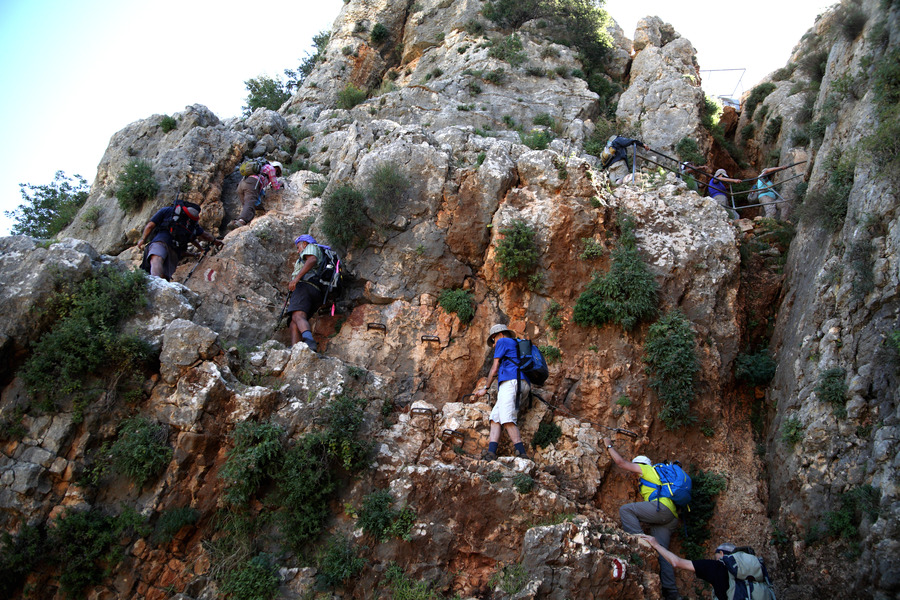
Nachal Meshushim or the Hexagon Stream, runs through the Yehudiya Forest National Reserve in Israel’s Golan region, north of the Sea of Galilee, and is part of the Meshushim Stream Reserve. The Meshushim Stream flows for 35km from springs at the foot of Mount Avital and gains strength as it travels through canyons, into pools, down waterfalls, and through wetlands. The highlight of the reserve is the Hexagon Pool (Brichat Meshushim). This well-known idyllic spot at the foot of a canyon is named for the hexagonal basalt columns that nature has stacked up on the rim of the water. This unique geological formation comes about when layer after layer of lava flows over rocks for hundreds of years then cools rapidly forming polygonal shapes as it contracts. The wall of geometrically-shaped rocks rises about 5 meters to the east and a waterfall cascades into the pool which is shaded by Mount Tabor oaks and Syrian ash trees. Visitors can swim in the water that remains cool year-round. The Meshushim Pool is just one of the spectacular points along the stream which eventually flows into the Sea of Galilee.Hiking to the Meshushim Pool The nearest community to the Meshushim Stream is Had Ness on road 888. At the entrance to the park, there is a car park, snack kiosk, toilets, change rooms, and picnic tables. There are four loop trails in the reserve including the short Lookout Trail (300 m) that offers views of the forest and is wheelchair accessible. The 700 m-long Dolmen Trail leads to a Bronze Age basalt burial monument called a dolmen. The most enjoyable way to reach the magical Meshushim Pool is to follow the downhill Pool Trail (2 km) for about half an hour. If you want a longer hike there is a 3km Stream Trail route that takes you deeper into the canyon. This is a harder route that includes climbing a 3m-high rock cliff using handholds that have been attached to the rock. On the Stream Trail, you will stop at the Hexagon Pool, pass through an olive grove, get views from a quaint bridge, and see the forest landscape before completing the trail. The longest of the trails is 8km-long and leads to the Yehudiya Campground then continues to the Zavitan Stream. It is a difficult route that includes steep descents and is recommended only for fit experienced hikers. Yehudiya Forest Nature ReserveThe Yehudiya Forest Nature Reserve is crisscrossed by five streams that tumble over waterfalls as they flow from the mountain tops at 600 m above sea level to 200 m below sea level. The distinct landscape has deep canyon-like streambeds and flat stretches of forest that cover about 35 km². During the spring the ground is covered with a carpet of wildflowers. The Meshushim Stream is the northernmost of the reserve’s streams. In addition to the natural beauty of the reserve, there are also several archaeological sites from early Christian and Jewish villages including the 1st-century village of Gamla. The reserve is named after the remains of a Talmudic and Mishnaic era Jewish village. The reserve is home to small animals including gazelles, porcupines, red foxes, wild boars, and even a few golden jackals. There is a large raptor nesting site in the reserve where rare vultures and eagles come to nest.

Yehiam Fortress

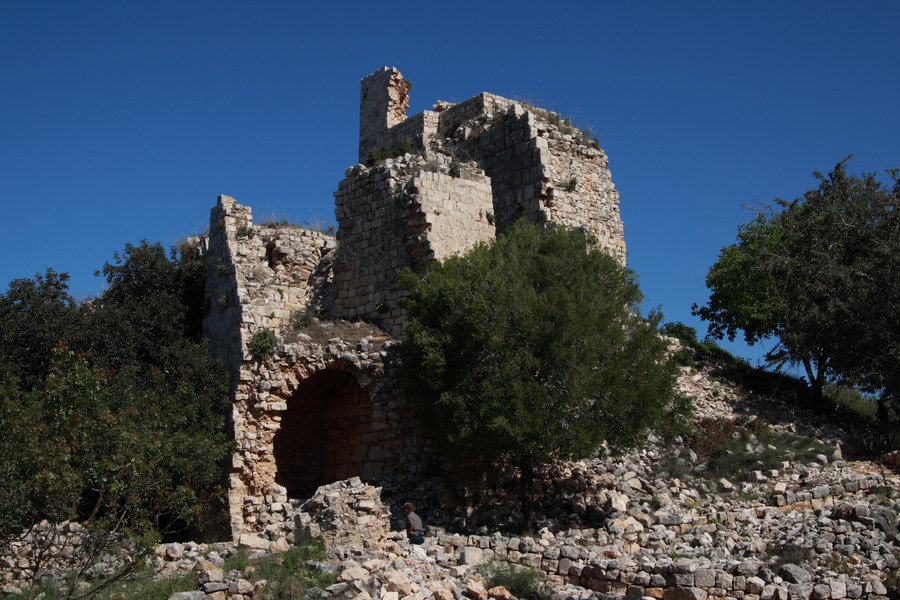
Yehiam Fortress National Park is located in the Upper Galilee, between Nahariya on the coast, and Mount Meron to the east. The park’s main attraction is the ruins of Yehiam Fortress, which looks down on Yehiam Stream Nature Reserve, where thick woodlands fill a deep ravine.History of Yehiam FortressArchaeological remains show that the site was inhabited during the Byzantine period, and may have begun as a fortified agricultural farm. In the 12th century, the land was inherited by Lady Stephanie de Milly, a Crusader noblewoman, and in 1249 the site was gifted to the Teutonic Order, a military wing of the Crusaders established in Acre in c.1190. The Crusaders would have chosen this site to build their fortress because of its strategic, elevated position where they could control the road that connected Acre to Lebanon.Sometime in the 1260s-70s, the fortress was destroyed by Mamluk Sultan Baibars. In the 1700s, local leader Mahd al-Hussein claimed the abandoned property. Later it was captured by Zahir al-Umar, a Bedouin leader during the Ottoman era. He rebuilt and renamed the fortress Qal’at Jiddin. Just a few years later in 1775 Yehiam Fortress was destroyed by Ahmed Jazzar Pasha, the Ottoman governor of the region, best known for the structures he built in Acre. The fortress was no longer known as Qal’at Jiddin (Jiddin Castle), but as Khirbat Jiddin or the Jiddin Ruins. The ruins were abandoned, and over the following years were used by the al-Suwaytat Bedouin tribe.Birth of Kibbutz YehiamIn 1946 Kibbutz Yehiam was established by a group of about 50 Hungarian Holocaust survivors. They used the remaining rooms of the castle and camped outside in tents. The fortress was turned into a military training camp, and survival was not easy with no potable water, and little communication with the outside world. They were also plagued by ticks left from the animals that once inhabited the ruins.The 1947 UN Partition Plan divided Palestine between the Jews and the Arabs, placing Khirbat Jiddin in Arab territory. But when the Arab nations surrounding Israel attacked in the 1948 Arab-Israeli War (War of Independence), the Arabs were pushed back and Israel’s Sheva’ Brigade captured the fortress and surrounding land. Trenches were dug around the fortress for defense.During the 1948 war, kibbutz members were held under siege in the fortress for two months. They barricaded themselves within the fortress walls, and with the help of Haganna Field Corps defended themselves in a life and death standoff. The Kibbutz was named after Yehiam Weitz, who was killed nearby during the “Night of the Bridges” when the Palmach set out to blow up the bridges over the Kziv Stream. The national park was declared in 1967 and covers 0.5km²/12 acres.Points of Interest at Yehiam FortressThe Crusaders built the fortress around two towers, with an outer enclosure wall. But the ruins that have survived date back to the 18th-century structure when Zahir al-Umar reinforced the outer walls and added a moat, gatehouse, living quarters with vaulted ceilings, a small mosque, and a bathhouse. On the walls, you can see gun slits used for defense.Fortress Gate: Visitors enter the fortress through an 18th-century gate that would have had heavy wooden doors.Crusader Tower: A semicircular Crusader tower guards the front gate. Today the tower is 15 meters high but thanks to its thick walls it would have once had three stories. From the top of the Crusader Tower, there is a lookout point across the hills of Western Galilee.Fortress Trenches: Visitors can walk through the trenches surrounding the fortress which were dug out by the kibbutz members during the Israeli War of Independence.Round Tower: An 18th century round tower stands in the northeastern corner of the fortress, and beneath the tower is an ancient cistern.Mosque: You can see the room that functioned as a mosque and a mihrab niche in the wall facing Mecca. The fortress was built of limestone but the mihrab was made of sandstone.Western Lookout Point: On the roof facing west, (which would have been the floor of the second story) there is a magnificent lookout point.Reception Hall: One of the most impressive parts of the fortress is the Reception Hall with a vaulted ceiling supported by 15 piers. The rest of the fortress was built above the Reception Hall. The Ottomans would have used it as a storeroom, and the kibbutz members turned the hall into their living quarters before they moved to their permanent kibbutz location.Mushroom Hall: The kibbutz members used a second hall to grow mushrooms during the 1950s. Today the Mushroom Hall is home to a video presentation covering the history of the Yehiam Kibbutz.Archaeological Site: On the southwestern slopes of the park is an archaeological site that has not been excavated. The site encompasses ancient burial caves and the remains of a 6th-century church where mosaics were found.How to Reach Yehiam Fortress National ParkThe national park has washrooms, parking, signposted routes, wheelchair-accessible routes, picnic areas, and a film about the history of the site. There are facilities for camping overnight including electrical outlets, drinking water, cooking areas, and lighting. The park is open Sunday to Thursday and Saturday from 8 am to 5 pm, in summer, and until 4 pm in winter. On Fridays and holidays, the park opens until 4 pm/3 pm. During the Jewish holiday of Sukkot, the park hosts a Renaissance Festival.To reach Yehiam Fortress take the Ma’a lot Road (route 89) from Nahariya and about 2.5km east of Kabri Junction turn south to Kibbutz Yehiam (route 8833). Continue for 5km to the Yehiam Kibbutz and park entrance. If you’re using Waze, enter “Yehiam Fortress National Park”.To visitYehiam Fortress National Park bookAcre and the Western Galilee Private Tour.

Tel Hazor National Park

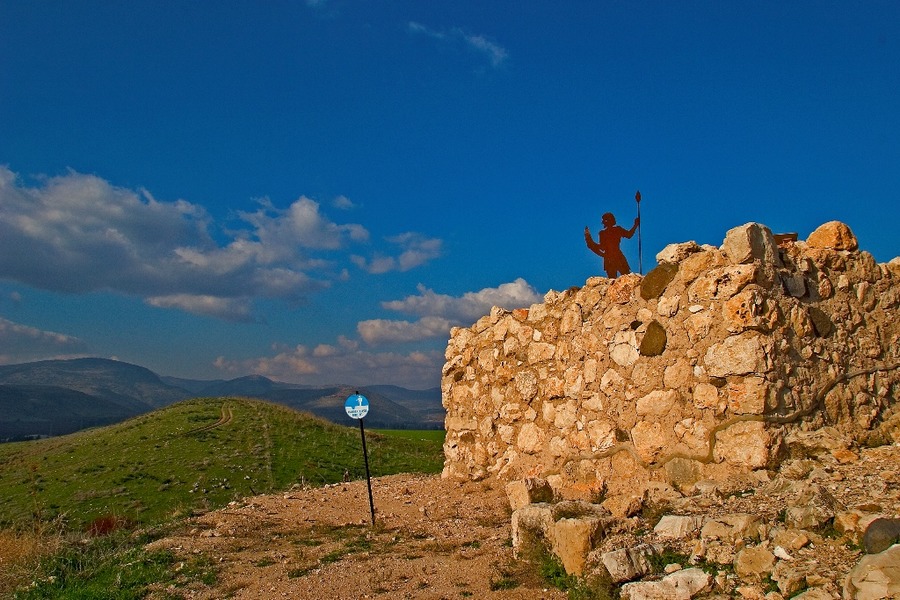
Tel Hazor (or Tel Hatsor) is an archaeological mound located north of the Sea of Galilee in the Hula Valley. The site has been identified as the biblical city of Hatsor established in the Late Canaanite period (around 1750 BC). The city was one of the largest and most important biblical-era cities, holding a strategic position alongside the ancient trade route between Syria and Babylon with Phoenicia and Lebanon. Visitors can see remains of the Canaanite city and the 9th-century BC Israelite city. The upper part of the archaeological mound covers 30 acres, and the lower city covers more than 175 acres. Tel Hazor is a designated UNESCO World Heritage Site in Israel together with several other biblical tels in the area. Hazor is described in the Book of Joshua as the “Head of all those Kingdoms''.History of Tel HazorThe first settlers at Hatsor were in the 28th to 24th centuries BC. It was later abandoned until the Middle Canaanite I Period (23rd-21st centuries BC), but archaeologists have found pottery shards and copper ingots from this period. Around 1750 BC the settlement was expanded, and construction spread to the Lower City, due to an influx of immigrants. The lower city lacked fortifications, and so a deep moat was dug to the west and the excavated earth was used to construct a rampart to the west and north. Slopes on the eastern flank reinforced the city’s defenses. Within the walls were temples, public buildings, and homes. By the Middle Bronze Age, the lower city was the largest in the land of Israel, with approximately 1,000 inhabitants. The city’s location, north of the Sea of Galilee, on the trade route connecting Babylon, Syria, and Egypt, made Hazor a strategic location.Hazor in the BibleThrough the Late Bronze Age, the lower city was destroyed and rebuilt several times. By the 14th-century BC, Hazor was an extremely prosperous city and probably the largest in Canaan with a population of about 20,000 residents. The Book of Joshua describes Hazor as the seat of the Canaanite King Jabin, and Hazor is also mentioned in the Book of Judges. Jabin led a confederation against the Israelite leader, Joshua Ben-Nun. In the 13th-century BC, around 1200 BC, a battle between Joshua and Jabin resulted in a massive fire that destroyed Hazor. In later years the city was reestablished but it never regained its former glory. Under the Israelites, Hazor was a small village, and according to the Book of Kings, it was fortified and expanded by Solomon. It was during this period that “Solomon’s Gate” was constructed. In the 9th-century BC, Hatsor was rebuilt by Ahab, and it was conquered, destroyed, and rebuilt several times, until in 732 BC, King of Assyria Tiglath-Pileser III, captured Hatsor, and the city was destroyed for the last time.Points of Interest at Tel Hazor National ParkLookout Points: To get an overall view of the lower city there is a lookout point at the entrance to the site. A second observation point is from the Israelite Tower at the western end of the mound. From here there are views across Tel Hazor, Galilee, and the Golan Heights.Solomon’s Gate: A 10th century BC gateway with the remains of casemate walls – two parallel walls with six chambers created by partitions between the walls.The Canaanite Palace: The palace was used by the Kings of Hatsor in the 14th-13th centuries BC. You can see a ritual dais, basalt pillars, and a throne room.Ancient Water System: The city water system is comprised of an access structure of ashlar blocks, a vertical shaft that drops down 45 meters to the bedrock with 3-meter-wide steps carved into the wall, and a 25-meter tunnel from the bottom of the shaft, sloping down to the water-bearing deposits. King Ahab designed the water system so that residents would have access to fresh water without leaving the city walls.Israelite Fortress: King Ahab had a fortress built west of the upper city with casemate walls, and a dais.Remains from the Israelite Period: Visitors can see the remains of a residential home and a public storeroom from the 8th century BC.The Passage Between the Lower and Upper Cities: During the Canaanite Period basalt stairs connected the upper city to the lower city. Part of a wall has been dismantled to reveal the passageway and the remains of a large structure with a ritual dais. The dais is made of a single slab of basalt stone weighing about two tons.Hazor Antiquities Museum: Located at the entrance to Kibbutz Ayelet Hashahar is a museum displaying archaeological finds from Tel Hazor. Among the exhibits are photographs and maps from the excavations, plus artifacts from the Canaanite temples and graves. Among the artifacts are pieces that would have been imported during the Israelite Period from Crete, Cyprus, and Egypt.How to Reach Tel Hazor National ParkTel Hazor National Park is open Sunday to Thursday and on Saturdays from 8 am to 5 pm and until 4 pm in winter. On Fridays and holidays eves the park opens until 4 pm and 1 pm in winter. There are useful maps and information boards to guide visitors through the site. The park is located east of the Rosh Pina-Metula Road (route 90), about 4km north of Mahanayim Junction, near Kibbutz Ayelet HaShahar. If you are using Waze, enter “Tel Hazor National Park”.To visit Tel HazorNational Park book the Galilee Private Tour.

Ma'ayan Harod

Ma’ayan Harod (Harod Spring or Gideon’s Spring) originates in a cave where Mount Gilboa meets the Harod Valley in the eastern part of the Jezreel Valley, 8 km south of Afula. The spring becomes the Harod Stream and flows along the narrow valley into a pool then runs through the Ma’ayan Harod National Park and finally reaches the Jordan River. In the distant past, a Roman aqueduct channeled the spring towards two water-powered flour mills. You can still see remains of the aqueducts but today the park is for recreation and relaxation.Historic Events in Harod ValleyLooking back over the last 2,000 years this small valley has been the site of incredible historic events and seen iconic figures come and go. The cave where the spring originates is called the Cave of Gideon after a famous Old Testament judge who gathered his warriors here when preparing to battle the Midianites.In the Book of Judges, we read how Gideon encamped at the Well of Harod and tested the men who had gathered to find the best warriors. He asked each one to drink from the spring and God told him to send home those who had lapped the water like a dog and keep only those who had knelt and brought the water to their mouths with their hands (Judges 7:4-7). The valley has also been associated with the death of Goliath (1 Samuel 17) and Saul’s victory over the Philistines (1 Samuel 29).It was in Harod Valley that the Battle of Ain Jalut was fought, and the Mongols were defeated by the Egyptian Mamelukes. This was a decisive battle that changed the course of history. The Mamelukes went on to conquer the Holy Land from the Crusaders and rule until the Ottomans took Palestine in 1516. Up until the beginning of the 20th century, the marshy valley was used only for battles and as home to a few Arab families. In 1909 Yehoshua Hankin began buying up land for Jewish settlements in the area.Points of Interest in Ma’ayan Harod National ParkThe Hankin House stands in the center of the national park overlooking Harod Spring. Today the house is a museum documenting the life of Yehoshua Hankin (1864 - 1945) who was responsible for buying more than 600,000 dunams of land across the country for the Jewish people who came to establish the State of Israel in the 1940s. Hankin is known as the “redeemer of the lands of the valley” and is buried with his wife alongside the house.The grave is at the highest point in the park and is a great place for views across the Lower Galilee, Harod Valley, and Yizrael Valley. During the War of Independence, seven local young men lost their lives on Mt. Gilboa. Today a memorial commemorates their lives and the lives of those lost in all battles fought in the valley. The memorial was created by sculptor David Palombo. The iron memorial sculpture is shaped like a bridge torn in places by flames of fire with two symbolic figures rising from the bridge. Visiting Ma’ayan Harod National ParkVisitors to the park can see Gideon’s cave and Ma’ayan Harod. They can swim in a large recreational pool and visit the Hankin Museum House. Alongside the house are the memorial, lookout point, and Hankin’s grave. A large lawn has been set aside for camping overnight. The park can also accommodate caravans and tents. There are facilities such as picnic tables, mobile phone charging stations, toilets, and showers. At the park, visitors can enjoy a pleasant day in the sun but also know that this valley has seen remarkable historic events.

Gan HaShlosha (Sahne)

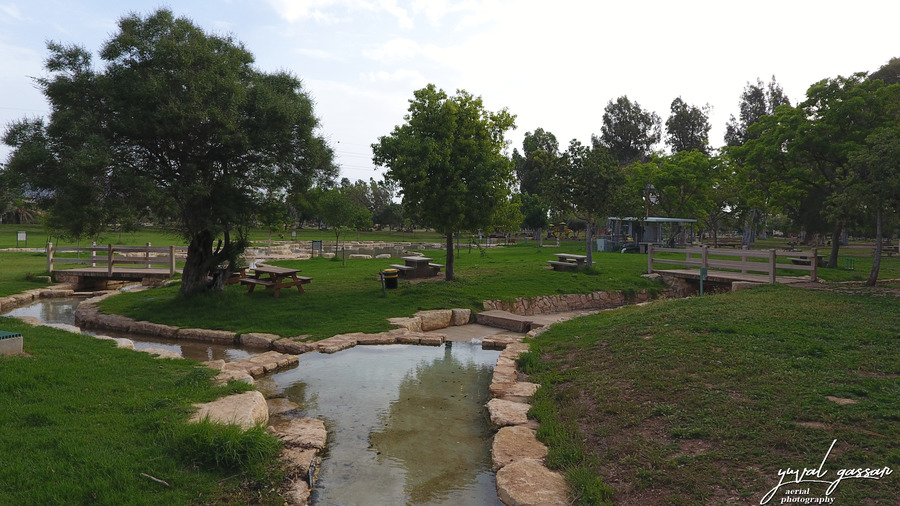
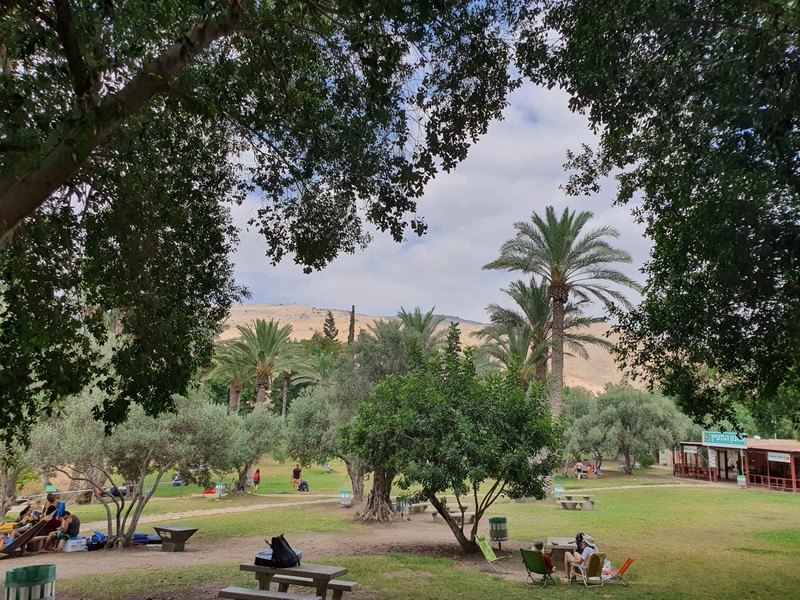
Gan HaShlosha National Park is without a doubt one of the most beautiful places in Israel. It is much more than a park, with its abundance of water gushing over a series of waterfalls into natural pools where you can swim, and expansive lawns shaded by tall trees. Gan HaShlosha National Park is located in northern Israel, at the foot of Mount Gilboa in the Beit She’an Valley.The park opened in 1958, ten years after the establishment of the State of Israel. Landscape architects Lipa Yahalom, Zvi Bahir, and Dan Tzur turned ancient ruins into the oasis it is today by planting thick vegetation and an assortment of trees around the pools. The dense gardens include ornamental trees, fig, olive, and carob trees. The park’s curious name “Gan HaShlosha” or “Park of the Three” is in memory of three local pioneers who were killed in 1938 when their car drove over a landmine.Sahna Hot Water SpringsThe essence of Gan HaShlosha is the abundance of water that originates in the Samaria Mountains east of Mount Gilboa. The water flows east beneath the ground where it reaches temperatures of 28°C (82°F) before emerging in the eastern part of the park. This explains the Arabic name for the park – Sahne or “hot” as you can enjoy the warm naturally-heated spring water pools year-round. The spring water accumulates in a natural pool then cascades over picturesque waterfalls into two pools that were created by widening the Amal Stream that runs for 500m through the park. The pools are fringed by vegetation and shaded by a canopy of trees.Attractions at Gan HaShlosha National ParkThe main attraction of Gan HaShlosha is the river, waterfalls, and pools. You can laze in the warm water, get a natural massage by standing under the stream of the waterfalls or catch some sun on the lawn enjoying the lush gardens. The park has an archaeological museum, with two sections – the Museum of Regional and Mediterranean Archaeology and a reconstructed Tower & Stockade pioneer settlement. The Tel Amal Tower & Stockade was one of the first Jewish pre-state settlements, established in 1936. Visitors can see the reconstructed dwellings, a watchtower, and stockade where gravel was stored. Other attractions include a restored water-driven flour mill and the remains of a naumachia or Roman water theater where the audience would sit in rock-hewn seats watching recreations of famous sea battles performed on the stream. The park’s Settlement Bell Garden has a display of restored bells from pioneer settlement sites. These bells would have been rung by the watchmen to warn settlers of danger, to call to prayer, or to signify the end of the workday. Gan HaShlosha is home to the Israeli Orchard where you can see specimens of trees mentioned in the Bible including pomegranate and figs.Visiting Gan HaShloshaFacilities within Gan HaShlosha National Park include barbecue stations, picnic tables, changing rooms, bathrooms, and a snack bar. Despite being far from Tel Aviv, Gan HaShlosha attracts crowds, especially on summer weekends when the park’s charm is lost among the hordes and a smog of barbecue smoke hangs in the air. Luckily music and ball games are prohibited in the park. It is better to visit in the off-season, not on a school holiday or religious holidays and if possible, visit on a weekday. No matter when you visit this idyllic park it will take your breath away with its natural beauty.Gan HaShlosha can be reached by car, bus or by taking a private guided tour of the area.

Majrase

Majrase Nature Reserve (also called Beteha Nature Reserve) is in the Bethsaida Valley northeast of the Sea of Galilee. Within the reserve is the meeting point of several Golan streams that merge to form a delta as they drain into the Sea of Galilee. This lush nature reserve is known for its wet hike trails where visitors come in spring and summer to hike through the streams and swim in the natural pools. In winter visitors can watch the roaring streams splitting into channels and forming small islands; flooding the hike trails, and cascading over waterfalls. In places, the nature reserve resembles an African jungle or European countryside with lagoons, thick vegetation, and abundant birdlife. In the summer the level of the Sea of Galilee drops and open meadows appear where animals graze and wetland birds come to nest.Daliyot Stream Hike TrailThe Daliyot Stream flows from the Golan mountains to the north-eastern shore of the Sea of Galilee. The estuary of the stream is where you can find the Blue Trail, an 800-meter hiking route through the water. From the starting point, the route is a wet hike along the stream, shaded by waterside trees, reeds, and bamboo. On the return trip, you can enjoy a dry hike and see other parts of the reserve.Zaki Hike TrailThe Green Trail or Zaki Trail is a more challenging hike route that takes visitors along the riverbed where the Yehudaya Stream estuary merges with the Meshushim Stream. Part of the route is through the shallow stream while other parts open up to deep pools where it is possible to swim. You can shorten the hike by ducking off at one of eight “escape routes” along the way. The end of the hike brings you to Zaki Lagoon where you need to follow the Black Trail alongside the stream, back to the car park. Thanks to the “escape routes” you can always leave the wet route if the water gets too deep and there are sections where you can no longer walk but need to swim through the water.The Rich Birdlife, Animals and Flora of the Majrase Nature ReserveThe nature reserve encompasses several animal habitats making it home to a wide range of wildlife, insects, marine life, and birds. The main thing that attracts animals to this area is the water. Here they can find food, shelter, and water. The streams are inhabited by fish, snails, crabs, mollusks, and amphibians. You can even see the occasional turtle on the water’s edge. On land, there are small mammals and reptiles such as lizards, porcupines, otters, and wild boars, plus insects such as the delicate dragonflies that hover above the water. The abundant birdlife includes songbirds, birds of prey, herons, seagulls, ducks, kingfishers, storks, and more.Early Settlements in the Beteha ReserveIt is no wonder that this fertile valley attracted people thousands of years before hikers arrived. The abundant water and rich soil made it perfect for agriculture and an attractive place for settlements. Farmers and fishermen settled here as early as the Bronze Age, more than 3,500 years ago. During the Roman and Byzantine periods, and Christ’s lifetime, this area northeast of the Sea of Galilee would have been populated. Throughout the nature reserve, there are ancient dolmens (tombstones) dating back thousands of years.Visiting Majrase Nature ReserveThe whole family can enjoy the natural beauty of the Galilee at the Majrase Nature Reserve whether you visit in winter to admire the racing streams or in the spring and summer to walk the wet hike trails.

Arbel National Park and Nature Reserve

At the heart of Arbel National Park is a dramatic cliff that overlooks the Sea of Galilee and Ginosar Valley. The cliff has a steep 110-meter drop, at a height of 390 meters above the surrounding area, and offers some of the best views of the Sea of Galilee. From here there are vistas of the Golan Heights, Jordan Valley, and across eastern Lower Galilee. The park is home to several unique natural habitats, wildlife, and diverse plants. It encompasses heritage sites, such as the Arbel cave fortress, an ancient synagogue, and the site of a historic battle.History of the Arbel Nature ReserveThe incredible cliff was created by geological faults that formed the Jordan Rift Valley. Arbel is mentioned in the Bible at Hosea 10:14 and in the Book of Maccabees I. An important battle took place here in 161 BC between the Jewish Maccabees and Greek-Syrian forces. During the Second Temple Period, Galilean Jews expanded the cliff’s natural caves to create dwellings. In 38 BC a battle took place on these cliffs, between partisans of Antigonus, the last Hasmonaean king of Judea, and Roman forces led by King Herod. According to the Roman historian Josephus, Jews barricaded themselves in the caves. Herod had soldiers lowered down the cliffs to the cave openings, making the Jews easy targets. Almost 300 years later, a Jewish settlement was established nearby and remained in use until the 8th century. In the 17th century, Druze connected the caves of Mt. Arbel’s northern face and created a cave fortress called Qala'at Ibn Maan.Prior to Israeli independence in 1948, the land was part of the Arab village of Hattin, and after the establishment of the State of Israel, Moshav Arbel was founded. The reserve was declared in 1967 to protect the Arbel Cliff and surrounding areas including Mount Nitai, the Horns of Hattin, Arbel Plateau, and Mount Savyon. It also encompasses Nabi Shu’ayb, Horvat Vradim, and the Arbel Stream.Points of Interest in Arbel National Park and Nature ReserveArbel Cliff: This magnificent vertical cliff (reminiscent of the cliff in Lion King) rises 390 m above the Sea of Galilee. It is made of hard limestone and dolomite rocks. Arbel Stream: Running for 10km through the park is Arbel Stream (Ein Hamam). On the river bed are the remains of ancient aqueducts and a water-powered flour mill.Caves and Fortress: The breathtaking Arbel Cliff is pockmarked with caves that were formed naturally by erosion, and then enlarged by early man to use as dwellings. During the Ottoman era, Druze leader Ali Beg turned the cave system into a fortress with halls, passages, staircases, and cisterns. Visitors can descend into the cave fortress on stairs, using cables that have been installed as hand-holds to help navigate the descent.Archaeological Remains: The park encompasses the remains of an ancient synagogue built in the 4th century AD and destroyed in the 8th century. Unlike other early structures on the Golan Heights that were built with local black basalt rock, the ancient synagogue was constructed using large limestone blocks. This is the only synagogue in the world where the ark does not face Jerusalem.Horns of Hattin: Twin peaks of an extinct volcano overlooking the plains of Hattin. This is believed to have been the site of a famous battle where Saladin defeated the Crusaders in 1187.Nabi Shu’ayb: This is the shrine or tomb of Shu’ayb, a 14th century Islamic and Druze prophet commonly identified as the biblical figure Jethro.Flora and Fauna in Arbel ParkSmall animals have made the karstic cliff’s crevices and caves their home. You might be able to spot rock doves, the blue rock thrush, long-legged buzzards, snake eagles, horned owls, lesser kestrels, and bats. Occasionally you can spot rock hyraxes, red foxes, golden jackals, gazelles, badgers, and mongooses. In winter the rare wallcreeper bird visits from Europe.Several rare plants grow in the park including centaury flowers, pendulous carnations, and Scrophularia. In January you can see gorgeous blue hyacinths covering the ground and in winter and spring, the landscape is covered with a carpet of anemones, tulips, blue lupines, and pink hairy flax.Hiking in Arbel National Park and Nature ReserveFrom the main entrance of the park, there is a 2.5 km-long circular trail that takes you past the best viewpoints and the cave fortress. A more challenging route starts at the Sea of Galilee and takes you on an 8 km hike. Climb to Arbel’s summit via the fortress, and continue through the park’s main entrance, past the ancient synagogue, and down into Arbel Valley then along the stream back to the starting point. On this route, you can stop at the Carob Tree Look-Out Point, for brilliant views across the Sea of Galilee. The Arbel National Park is one of the points of interest on the Jesus Trail and it is included in the Israel National Trail.How to Reach Arbel National Park and Nature ReserveThe park requires an entrance fee and has toilets and plenty of parking. Arbel National Park is open from 8 am to 5pm in summer and until 4pm in winter. To reach Arbel, travel north on the coastal road (Highway 2), and turn inland at route 67 which joins route 70 traveling north. Pass Yokne’am and continue to route 77 which takes you east towards the Sea of Galilee. Just before you reach Tiberias, take a left onto route 7717 in the direction of Kfar Hattin. Turn right at the turnoff to Moshav Arbel, and just before the moshav entrance turn left and continue for 3.5km to the park entrance. If you’re using Waze enter “Arbel National Park and Nature Reserve.” Instead of driving, you can also book a private tour of the area.

Gamla

Situated high on a hill in the Golan Heights, is the Gamla Nature Reserve. It offers the visitor beautiful scenery, varied flora and fauna, unique bird-watching opportunities, fascinating archaeological ruins and unparalleled views of the Sea of Galilee.‘Camel’ hillHistorically, early settlers (in around the 1st century BCE) named the area ‘Gamla’ because the steep hill on which it is situated resembles a camel (in Hebrew ‘gamal'). Jews settled the area but the Romans eventually took the city, using battering rams to break through the fortifications. Thousands of inhabitants were killed and many chose to jump off the cliff, rather than surrender. Today, the nature reserve contains 325 species of plants, including the Jerusalem Autumn crocus, Mountain Star of Bethlehem, Persian cyclamen. It boasts trees such as the Mount Tabor Oak, Judas tree and Christ’s Thorn Jujube and wildlife such as the Palestinian mountain gazelle, wild boar, and grey wolf.Vulture ColonyThe reserve is also an ornithologist’s delight since it contains the largest colony of griffon vultures in Israel. Hikers can walk along a ‘Vulture’s Trail’ which leads to a bird-watching post, directly on the cliff face. These majestic creatures average an astonishing 3 meters in length. Because their population is dwindling, griffon vultures from Spain have been brought into the reserve. Talks about this program are given daily (both in Hebrew and English).From the vulture lookout, it is possible to cross into Mount Gamla. Visitors can follow signs to the ancient path - today a hiking trail which takes about 90 minutes and offers spectacular views of the Sea of Galilee. Gamla also contains the tallest waterfall in Israel - 51 meters high, it flows year-round and can be reached by a 45-minute hike from the entrance.Ancient SynagogueExcavations in Gamla have unearthed iron arrowheads, Roman catapult stones and - amazingly - the remains of an ancient synagogue from the Second Temple period, the oldest found in Israel to date. It is actually possible to tour the ancient town of Gamla by bus now since a narrow road has been built.Archaeological digs also show the remains of human life from different periods. Of particular interest are over 760 dolmens (ancient burial mounds), found in the north of the reserve, close to the Daliyot stream. Built out of huge stone slabs, they resemble large tables. The assumption is that they were once used to bury elite members of the community.Gamla is 20 kilometers south of Katzrin (the capital of the Golan) and entrance to the reserve costs 28 NIS. To explore Gamla, book our Golan Heights private tour.

Taninim Stream Nature Reserve

This nature reserve is easy to reach from Tel Aviv and one of the most impressive coastal waterscapes along Israel’s Mediterranean shore. Nahal Taninim (Crocodile Stream) flows from northern Israel near Megiddo to the south of Ma’agan Michael where it pours into the Mediterranean Sea. The stream marks the southern limit of the Carmel Coastal Plain. The crocodiles that once inhabited the nearby swamps are long gone, but the name remains. Taninim Stream is the cleanest of Israel’s coastal rivers. The nature reserve is a pleasant trip, where you can hike through lush vegetation, along the banks of the stream. This vibrant natural area is rich in birdlife and is home to various small animals. At the mouth of the stream is Tel Taninim, an archaeological mound with remains from various periods. The Romans built a dam here in the 3rd-4th century BC, creating a large lake to channel water to nearby Caesarea. Another ancient dam was constructed north of the reserve using natural topography, to form a lake in Kabara Valley. This became the starting point for Caesarea’s Low Aqueduct. You can still see the remains of this dam which include tunnels, deviation pools, and water regulatory devices from the Romans. The ancient dam is well-preserved and a testament to Roman engineering. Enjoy the beautiful natural surroundings and the remains of this ancient water system.To explore Taninim Stream Nature Reserve, book our Caesarea, Zichron and Haifa private tour.

Tel Aviv Graffiti Tour in Nachalat Binyamin

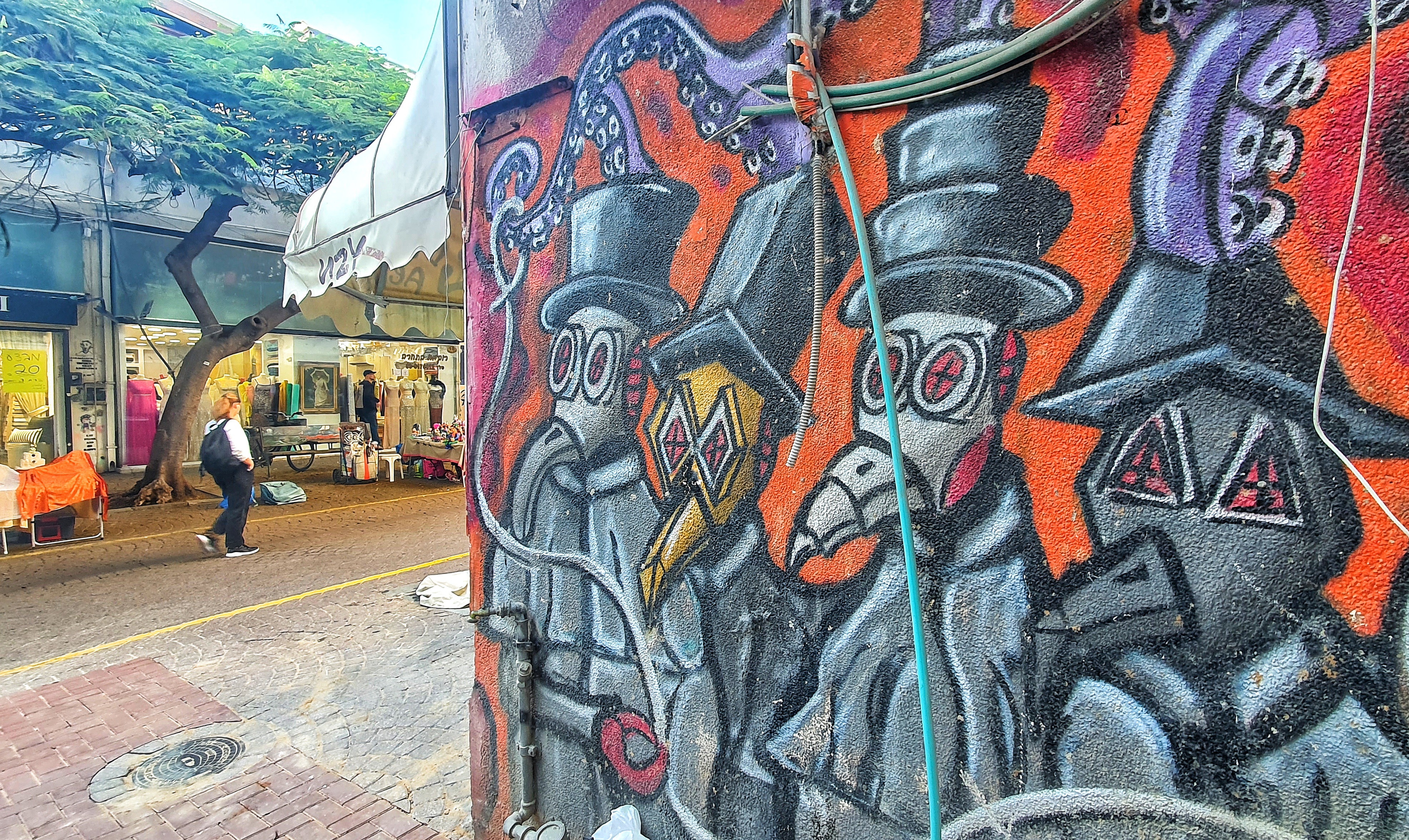
This Graffiti Tour of Tel Aviv begins when you meet your local guide and set off to explore Nachalat Binyamin. The neighborhood has a car-free section that includes the main Nachalat Binyamin pedestrian street, as well as a network of lanes and alleyways. The leafy neighborhood is known for its variety of historic houses built around the 1920s-30s including Bauhaus buildings.The architecture is stunning, with wrought-iron balusters, elegant balconies, and art deco elements. Most of the buildings are painted in pleasant pastel tones. Your guide will fill you in on the history of Nachalat Binyamin, how it became a Taylor's paradise with its countless fabric shops and tell you a bit about the buildings you see. The tour continues through the streets of Nachalat Binyamin, past sidewalk cafes, trendy fashion stores, and restaurants. Your tour guide will show you the neighborhood's unique graffiti street art.Plastered across walls, that would otherwise be blank, are magnificent creations by Israel’s top street artists - Dede, Nitzan Mintz, and others. Many of the creators are women and couples with interesting personal stories. you'll Learn about the artists and their different styles, influences, and struggles. Your guide will tell you about the role street art plays in Tel Aviv’s urban culture and explain the significance of some of the satirical images. Nachalat Binyamin is unique in encouraging graffiti artists to use the neighborhood’s walls to express themselves.Through their murals, street artists express their views on society, politics, and human existence. Some will make you laugh while others are thought-provoking. With its high concentration of graffiti, Nachalat Benyamin is the best place to get to know the street art scene in Tel Aviv.

Jaffa Walking Tour - Old Jaffa, Jaffa Port, the Flea Market and More

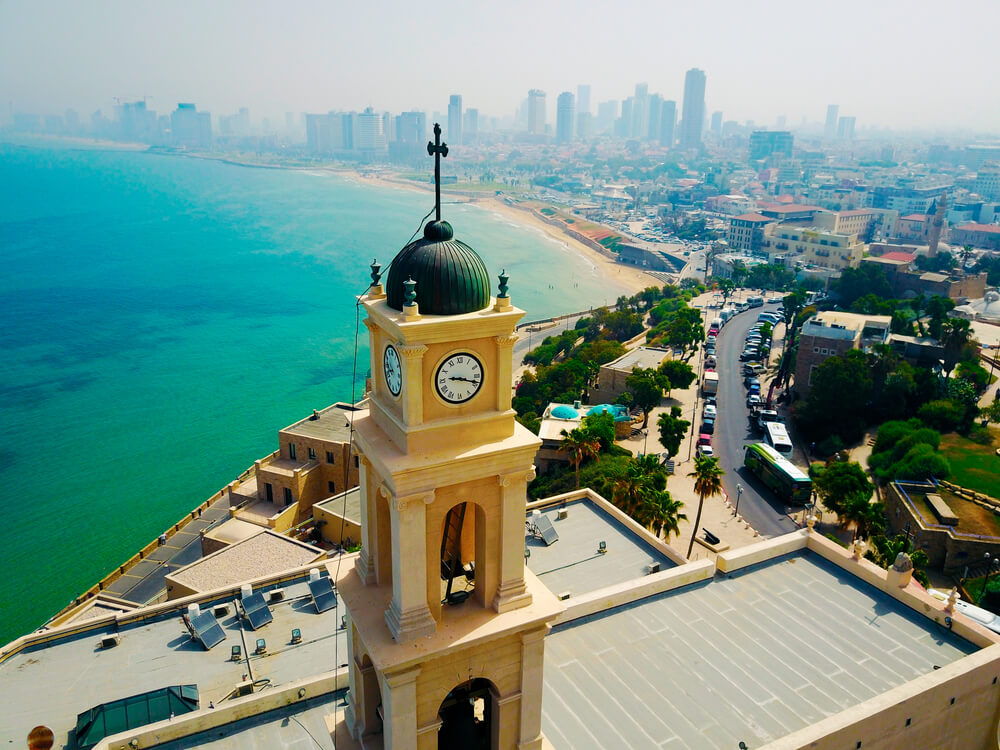
This Jaffa tour takes you on an enchanting journey through the heart of the city, where history and modern life intersect in surprising ways. You’ll start at the iconic Clock Square, which encapsulates the rich tapestry of Jaffa's history, from its Ottoman and Turkish roots to its vibrant contemporary culture. As we wander through the colorful streets and take lots of great pics, we'll delve into the intriguing past of this square and learn just how significant it was over time for several cultures - and still is. Then we’ll reach the captivating alleyways of Jaffa's harbor and discover the historical impact of the port, and how it helped in shaping the city's heritage and maritime history. Our next stop will be Giv'at Kedem Hill, where we'll visit the entrance of Saint Peter’s Church, a Franciscan Catholic church tied to the journeys of Jesus. Visitors like exploring beautiful architectural features and immersing themselves in religious and cultural history. You’ll see the beautiful Zodiac signs Fountain, and the renowned Jaffa Orange Tree hanging in mid-air, and continue through Raamses Gate to the Garden of Pinnacle. This serene oasis atop the hill offers a breathtaking panoramic view of the city. We'll take a short stroll to this peaceful haven, where you can revel in the tranquility and stunning vistas. Next, we'll cross the Bridge of Wishes and listen to the fascinating story of Jaffa's renowned clock tower, a symbol of unexpected success and aspiration. After hours of interesting stories and countless photo-ops, you’ll reach the Jaffa Flea Market - the authentic, beating heart of the city. This cultural kaleidoscope of eclectic stalls offers unique treasures and will be a colorful, perfect ending to this awesome Jaffa walking tour!

Masada and the Dead Sea Day Tour from Ashdod Port

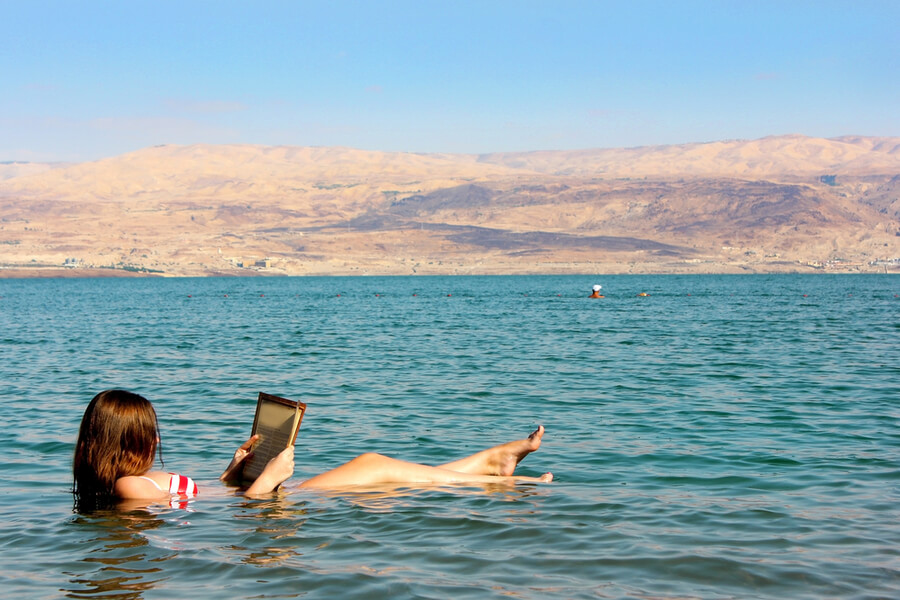
Your tour guide will meet you at Ashdod cruise port and your day trip will begin with a drive south in a comfortable air-conditioned vehicle. We take the winding road down through the mountains of the Judean Desert. You will be traveling below sea level to the lowest point on Earth. Along the way, we drive parallel to the Dead Sea towards Masada.At Masada, you’ll take a cable car to the plateau summit of this massive rock outcrop that stands 1,424ft (434 meters) high. Take a guided tour of the remnants of King Herod’s palace-fortress. Learn about the elaborate complex and see the well-preserved archaeological remains including mosaics, storerooms, palaces, and a bathhouse. Also visit the Masada Museum at the foot of the mount, where there are over 500 artifacts found at Masada. And learn about Masada’s history from an audiovisual presentation.Leaving Masada we drive to Ein Bokek beach at the Dead Sea. You will either have a lunch break at Masada or at the beach. Then spend the remaining part of the afternoon at your leisure, relaxing on the beach and floating in the Dead Sea. Get revitalized by the rich minerals and salts of the Dead Sea water, or purchase some of the Dead Sea mud as a natural skin treatment. After a day packed with adventure, history, and fun, we take the route via Arad back to Ashdod Port and your cruise ship.

Jerusalem and Bethlehem Day Tour from Ashdod Port

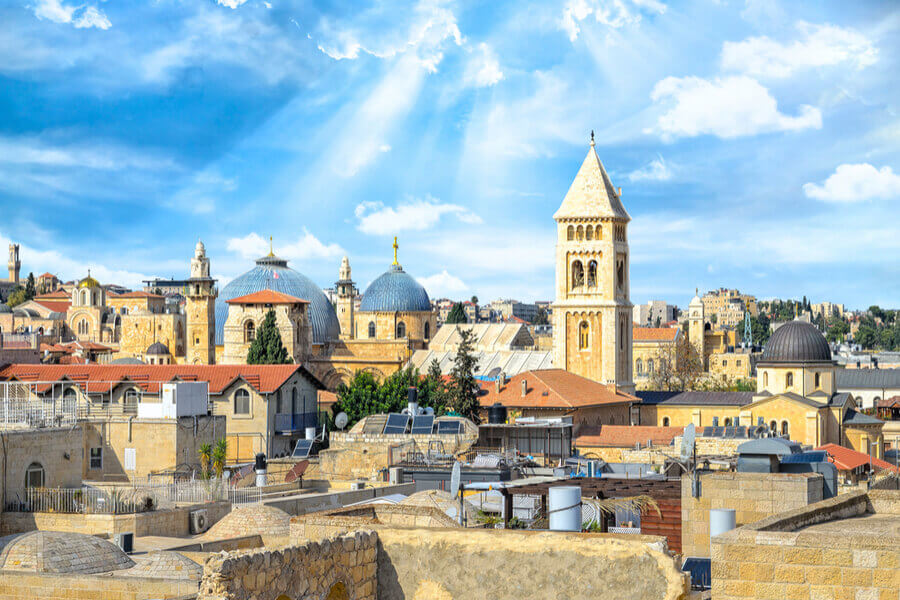
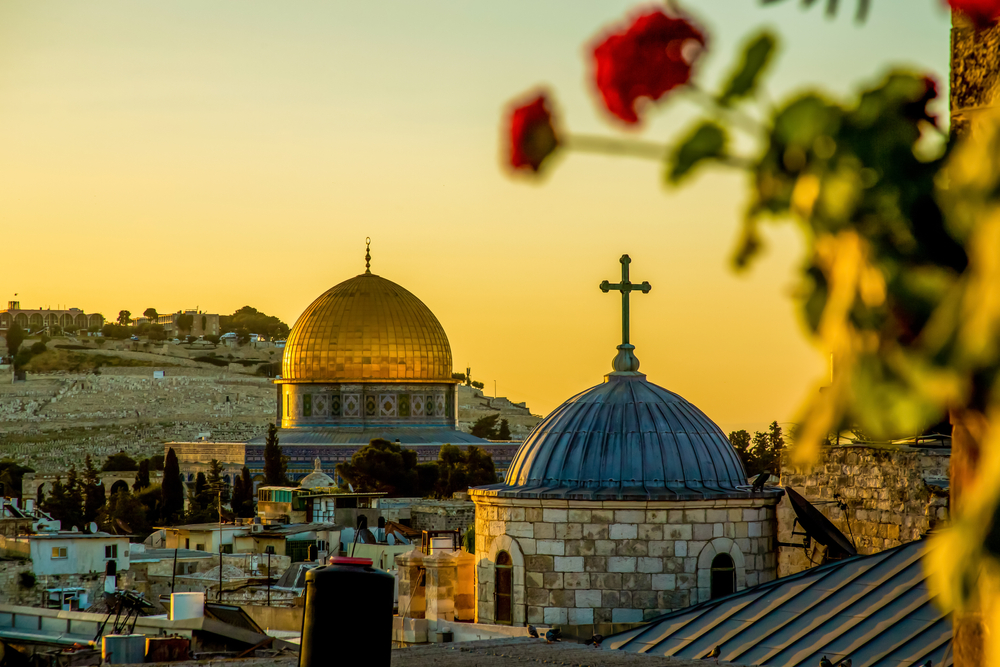
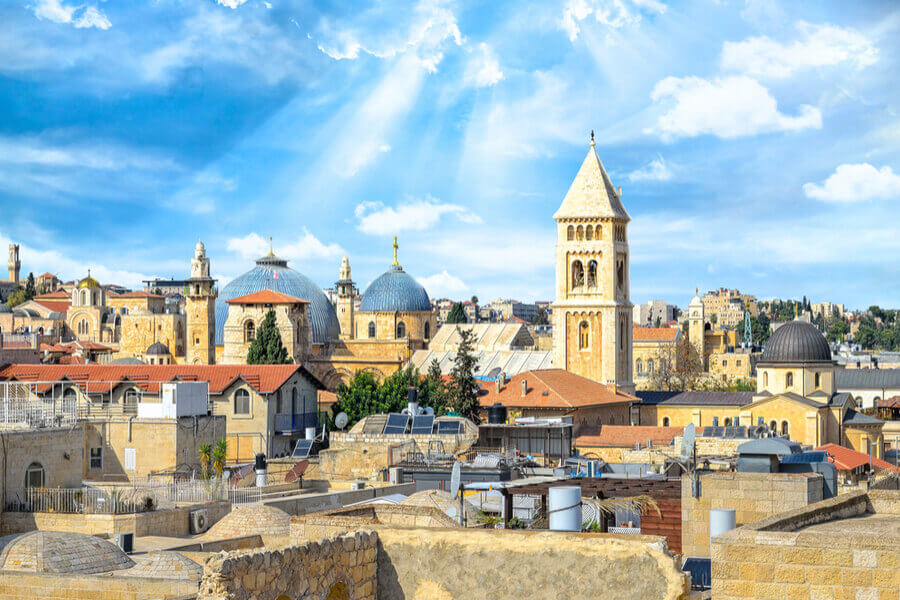
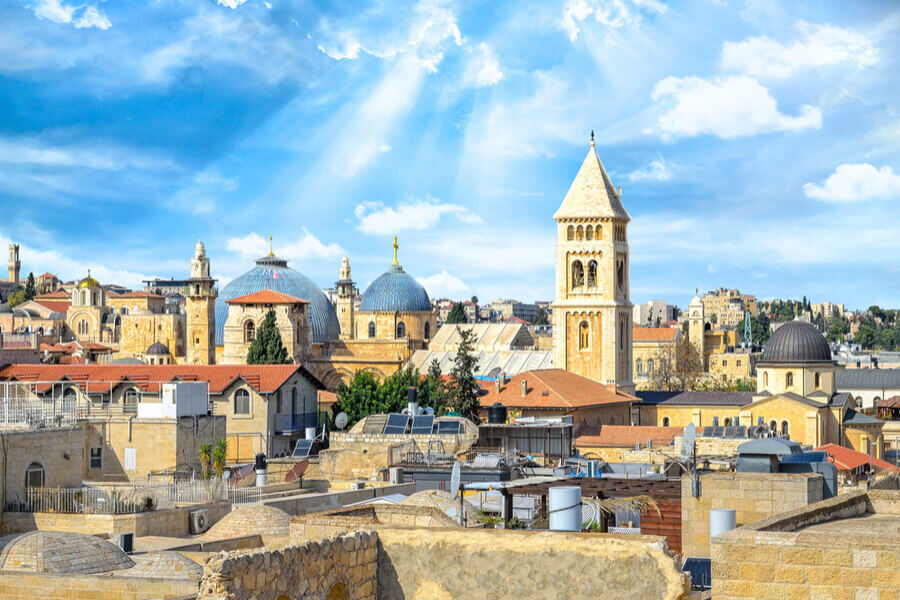
This Bethlehem and Jerusalem tour from Ashdod port starts when you are met by your tour guide at the cruise port. You’ll be driven to Jerusalem in a comfortable air-conditioned vehicle. The first stop is on Mount Scopus to take in the view across Jerusalem’s rooftops and domes. The tour continues past the Garden of Gethsemane and the Church of All Nations on the Mount of Olives. We drive past Kidron Valley, the site of ancient Jewish tombs, and see the Ophel Promenade that runs parallel to the Old City wall. We enter the Old City through one of the gateways in the 16th-century walls. Here there are views of the Western Wall excavations where more of the ancient city is being uncovered. On a walking tour of the Old City’s top sites, we stop at the Western Wall, a section of the Second Jewish Temple that stood on Temple Mount until 70 AD. We continue to the Byzantine Cardo, once Jerusalem’s main thoroughfare lined with columns. We follow the Via Dolorosa, where Jesus walked towards Calvary, and arrive at the Church of the Holy Sepulcher. This 4th-century basilica holds multiple chapels and altars shared by several Christian denominations. The church was built around the site of Christ’s tomb, and Golgotha (Calvary) where Christ was crucified. While in the Old City, we visit several traditional Middle Eastern markets and stop for a lunch break. Next, we'll drive away from the Old City Bethlehem. Arriving at Manger Square, the tour will continue to the Nativity Church. This magnificent church was built around the Holy Grotto, believed to have been the site of Christ’s birth. From Bethlehem, we return to your cruise ship in Ashdod port.

Nazareth and Sea of Galilee Day Tour from Haifa Port

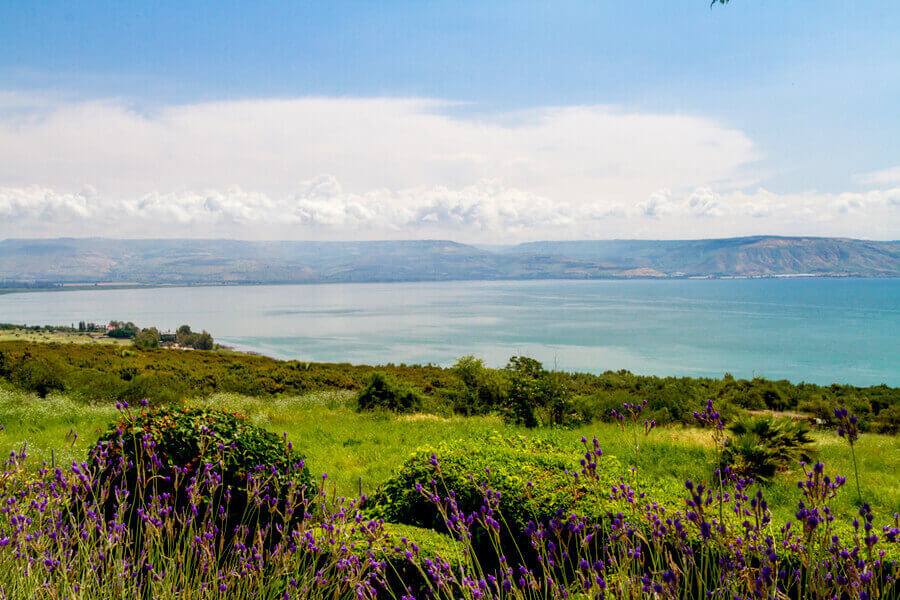
This tour to Nazareth from Haifa port starts with an hour-long drive through the breathtaking countryside of northern Israel. On route, you’ll get views of Jezreel Valley which is mentioned in the Bible as the site of Armageddon. In Nazareth, Jesus’ hometown, we tour the Church of the Annunciation where the Angel Gabrial appeared to Mary and told her she would bear God’s son. Visit the Church of St. Joseph, and go beneath the church to a 1st-century grotto which may have been the Holy Family’s home and Joseph’s carpentry. Leaving Nazareth we pass Mary’s Well and Kfar Kana, (Cana) where Jesus turned water into wine. The next stop is at the Mount of Beatitudes overlooking the Sea of Galilee. On this picturesque hill stands an eight-sided church designed by Antonio Barluzzi. It marks the site of the Sermon on the Mount. Next, we travel to the Church of the Multiplication of Loaves and Fish in Tabgha. This is the traditional site where Jesus fed the masses (Mark 6:30-46). The church has a stunning 5th-century floor mosaic. The tour visits Kfar Nachum, the biblical town of Capernaum, where Jesus based himself during his ministry and where he performed several miracles. We stop for lunch at a local restaurant and then continue to Yardenit. This famous baptismal site on the Jordan River welcomes over half a million tourists each year. Time permitting, you could be baptized here in the Jordan River. As we leave Galilee, we pass the Horns of Hattin, twin peaks famed as the site of an 1187 battle between Saladin and the Crusaders. After a day packed with the most important Christian sites in Galilee, you are returned to your cruise ship in Haifa port.

Petra, Wadi Rum & Aqaba, 3-Day Tour from Eilat

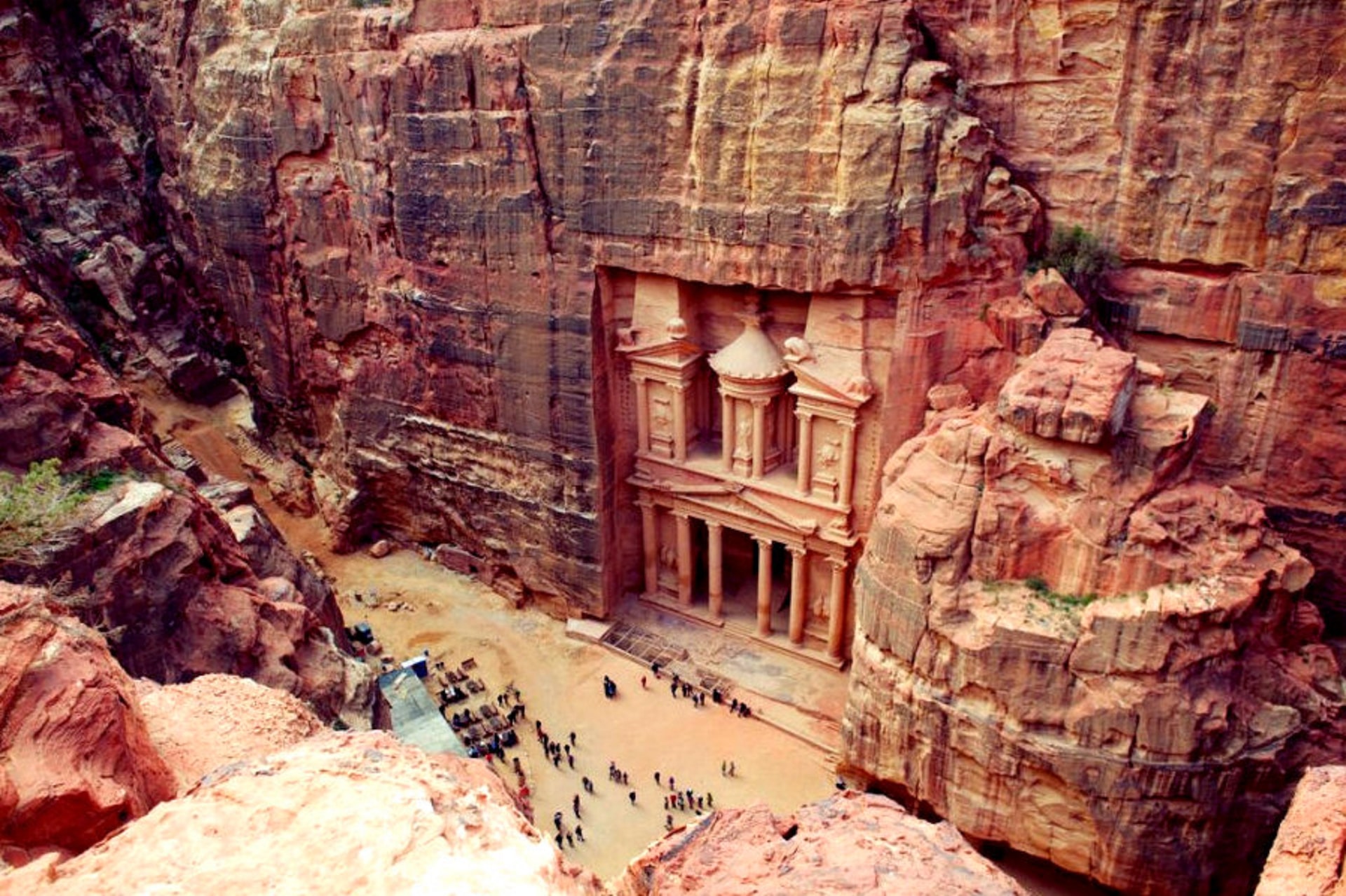
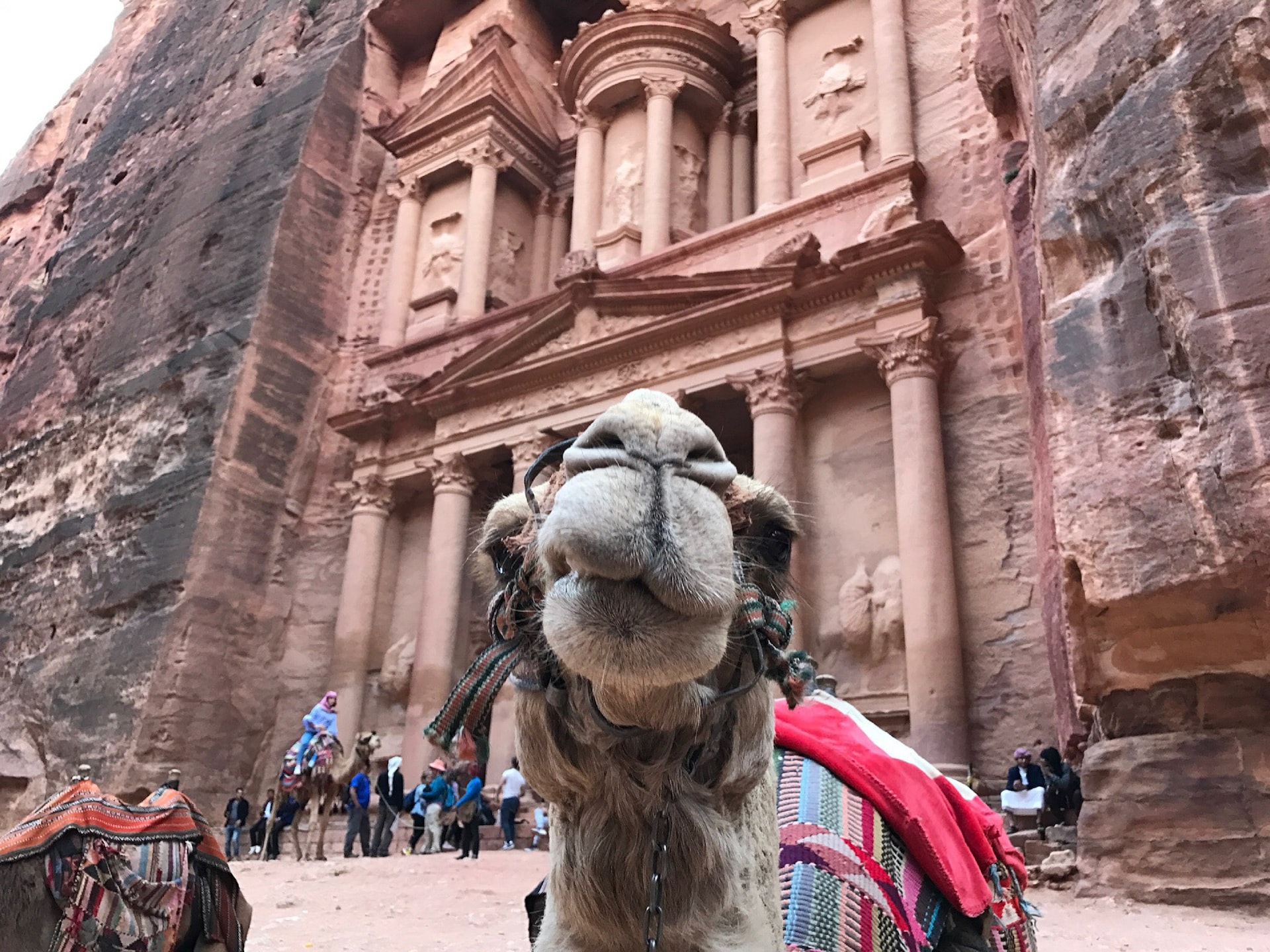
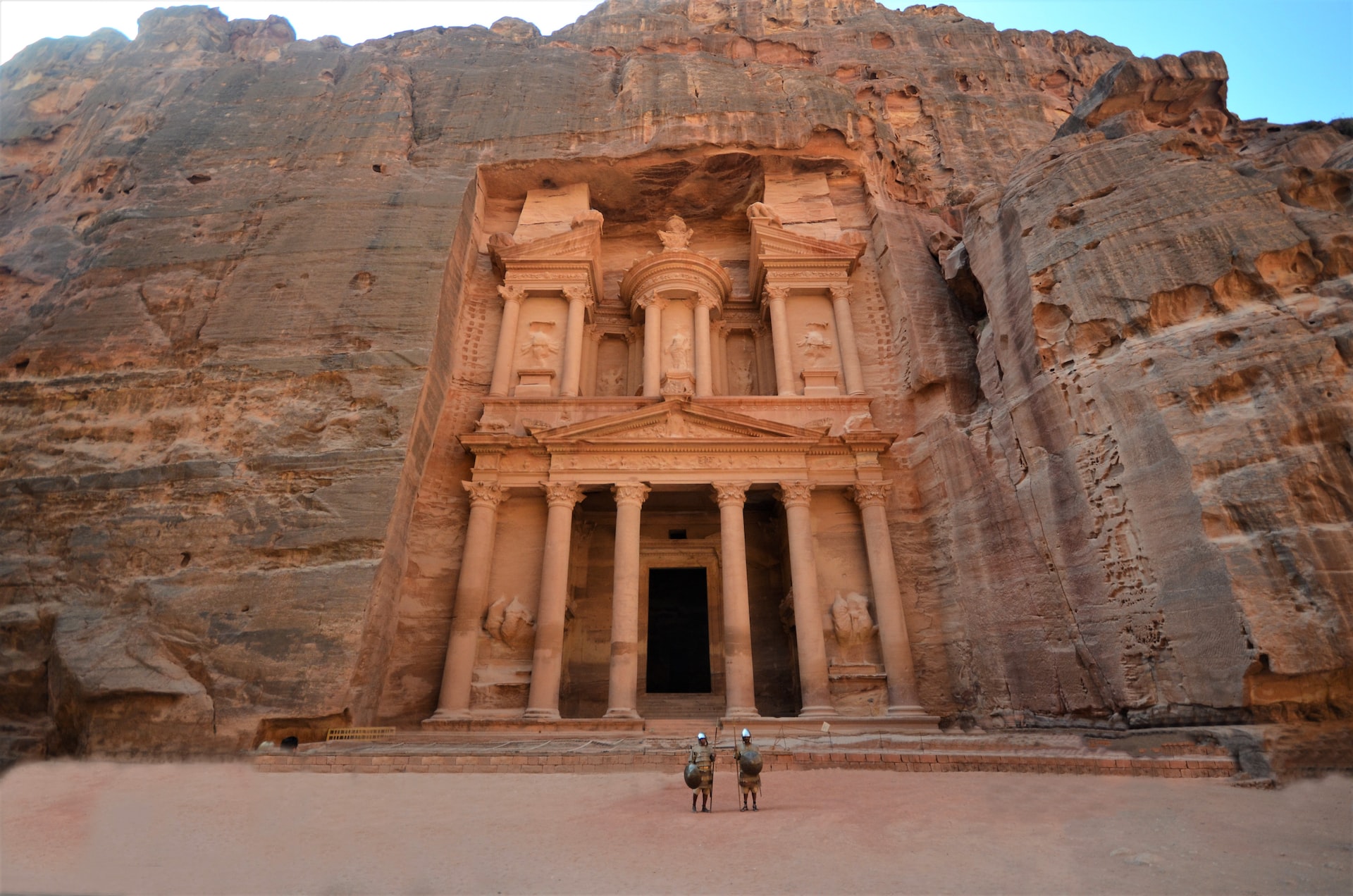
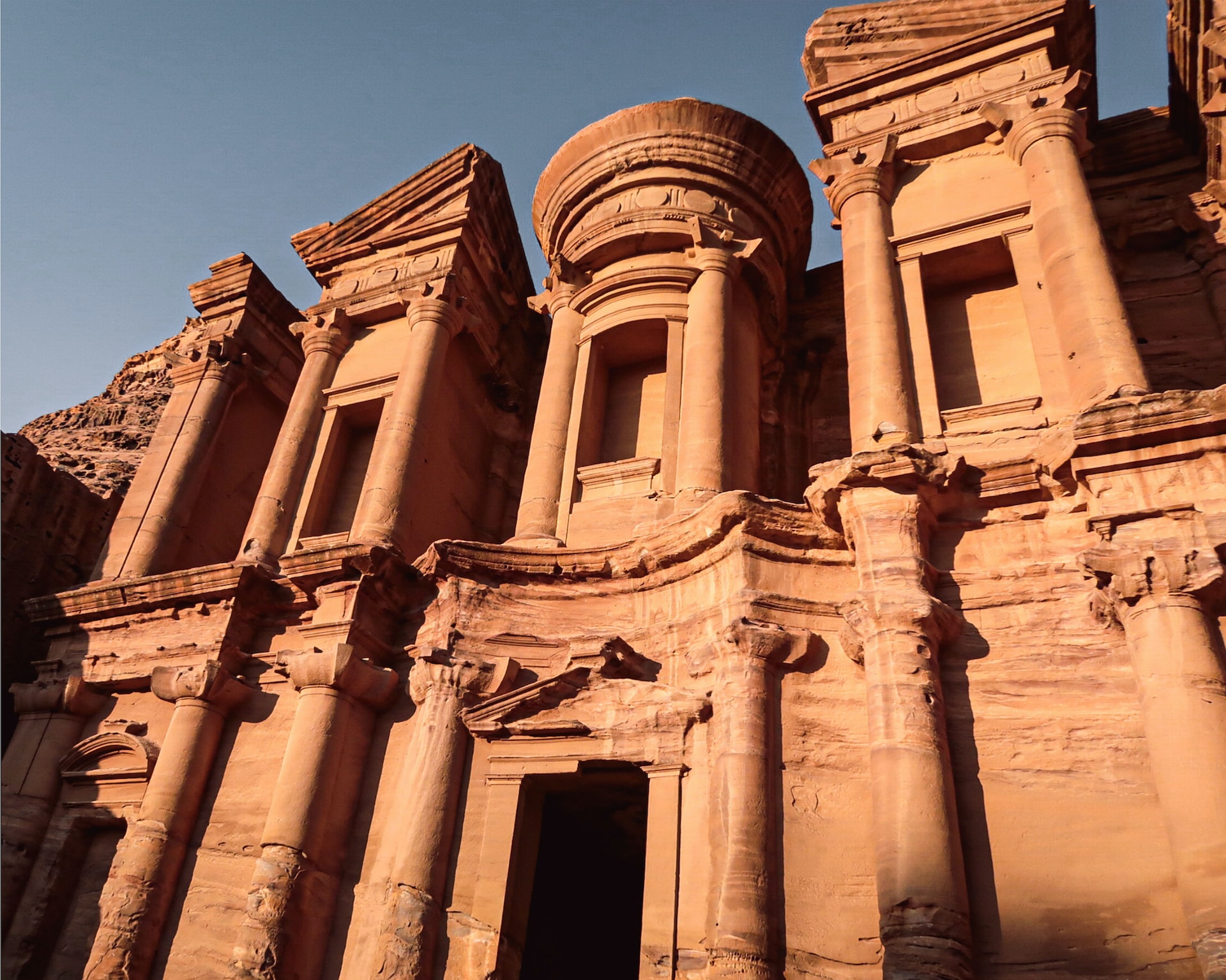
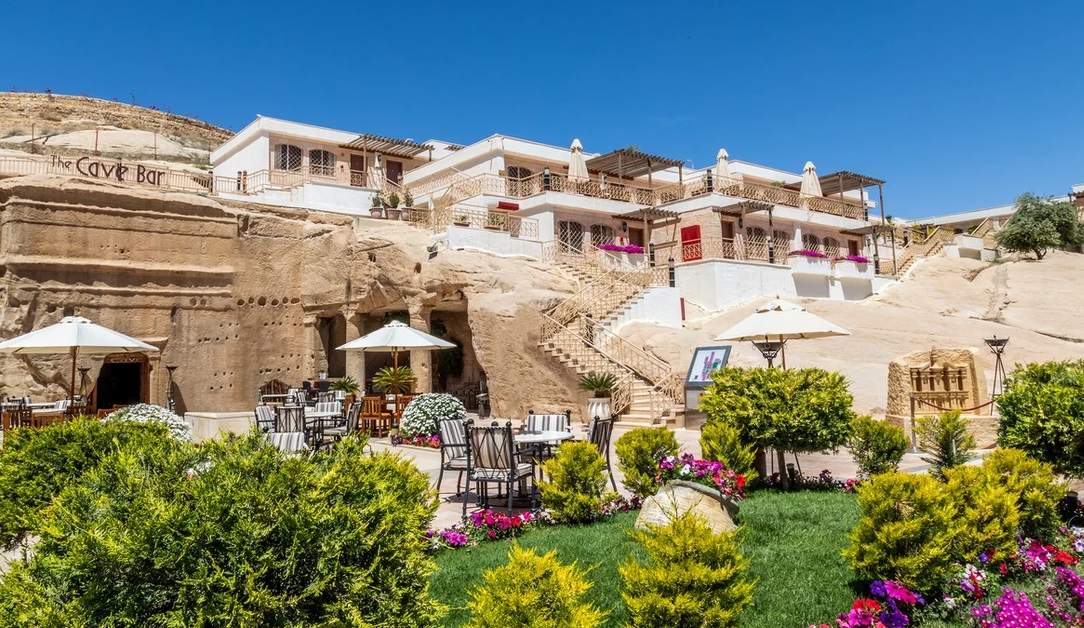
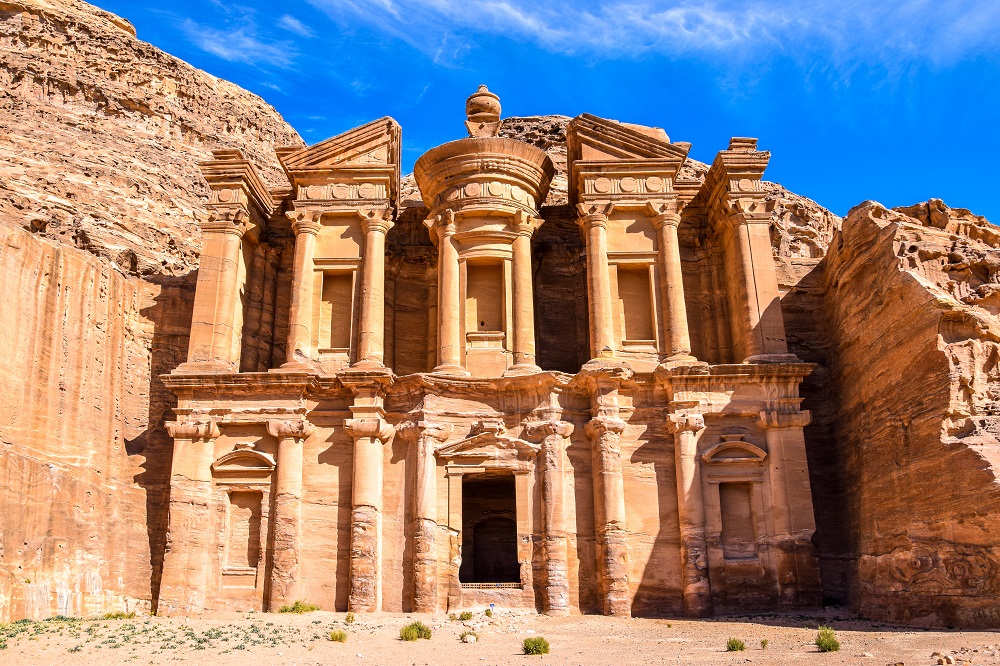
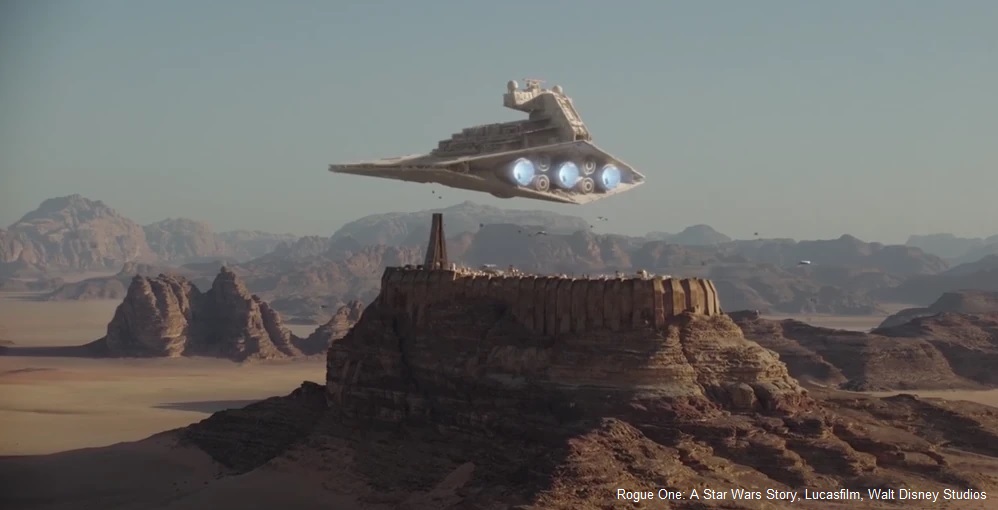
This 3-day Petra tour from Eilatoffersbeautiful Middle Eastern views, thefabulous beachesof Aqaba,the iconic city of Petra- one of the Seven New Wonders of the World - and a thrillingjeep safari in Wadi Rum.Take a ride in a cutting-edge tour bus from Eilat, then quickly cross the border into the Kingdom of Jordan. Begin your adventure with a visit to Mamluk Castle, a fortress overlooking the border nexus of Aqaba Bay. Then enjoy free time to explore the seaside city of Aqaba, and enjoy beach activities such as boating+snorkeling, and a private beach.Next, you'll take an exciting jeep tour of Wadi Rum, a unique desert wilderness with a lunar-looking landscape and an opportunity to snap some awesome photos.Some of the bestStar Wars movies were shot here,and you'll see why.After an authentic and relaxing night in a real Bedouin camp, You'll head for Petra. This remarkable city was carved out of the red-hued desert cliffs 2,300 years ago, and its temples and tombs await you - starting with the famousPetra Treasury.See the enigmaticDjinn Blocksand the strikingObelisk Tomb, Walk in the footsteps of monarchs tothe Royal Tombs, and take excellent shots of the Nabatean Theater from between the impressive columns.After a night in a great hotel right next to Petra, you'll have a whole day of scouting, hiking, intriguing local cuisine, and more. This is your chance to visit the fabulousGreat Templeof Petra, andthe Petra Monastery- a massive structure of rare brilliance, located at the end of a cliff trail with incredible views.

Petra 1-Day Tour from Jerusalem

Wake up early for a whole day of adventure: relax as our advanced tour bus takes you from Jerusalem to the beautiful south of Israel: the landscape will change color as the sun rises, and after crossing the Arahav Valley, you'll have a glimpse of the Red Sea and the Riviera of Eilat - Israel's best resort city.Your next stop is the Israeli-Jordanian border, and then a 2.5-hour drivethrough the unique landscape, all the way to the lost Nabatean city ofPetra– considered one of the7 New Wonders of the World.The city was carved into the surrounding red cliffs over 2,300 years ago, and many of its impressive temples were left almost undamaged.See the enigmaticDjinn Blocks, constructed to house phantoms and make a wish touching the stone, Take fantastic shots of theObelisk Tomb, then go downthe Siq– a multicolor, smooth canyon all the way tothe renowned Petra Treasury;here you'll stand in awe in front of its impressive, huge columns and elaborate decorations.explore theRoyal Tombsand thePetra Theater– and see the many shrines, mausoleums, and relics of a lost culture. Complete your day with a long ride back, all the way to the drop-off point in Jerusalem.This one-daytour to Petra from Jerusalem offersa worry-free Vacation:Our representatives will assist with the visa requisition and border crossing. Our expert local tour guide will meet you on the Jordanian side of the border.Notethat a 1-Day Tour of Petra won't leave you with enough time to fully explore this wonderful archeological park. This is why most travelers recommend a2-Day Tour to Petra,to see Ad Deyr - the iconicPetra Monasteryup on the ridge and visitQasr Al-Bint Templeandthe Great Temple of Petra.

2-Day Petra Tour from Jerusalem

Sit back and relax as our premium tour bus takes you on an adventure in the NabateanLost city of Petra!See eyes pop with amazement in front of the magnificentPetra Treasury, then feel like Indiana Johns in the surrounding shrines and mausoleums - from theRoyal Tombsto thePetra Theater.After an authentic, yet spoiling night in a great hotel, you'll go back to the Archeology Park for a day of exploring, hiking, fabulous local food, and much more. This is your best chance to visit Al Dayr - thePetra Monastery- a giant structure of rare beauty, at the top of a mountain path with unbelievable views.Don't miss theQasr Al-Bint temple, theGreat Temple, and thePetra Museumwhich shows precisely how remarkable was the ancient Nabatean society. This 2-day tour to Petra from Jerusalem has it all!

Petra 2-Day Tour from Tel Aviv

Sit back and relax as our state-of-the-art tour bus takes you on an adventure in the Nabatean Lost city of Petra!In this 2 day Petra tour from Tel Aviv you'll see every jaw drop in front of the magnificentPetra Treasury, then feel like Indiana Johns in the nearby shrines and mausoleums - from the Royal Tombs to the Petra Theater.After an authentic, yet pampering night in a great hotel, you'll go back to the Archeology Park for a day of exploring, hiking, awesome local food, and much more. This is your opportunity to visit Ad Deyr - the Petra Monastery - a massive structure of rare magnificence, located at the end of a mountain trail with fantastic views.Don't miss the Qasr Al-Bint temple, the Great Temple, and the Petra Museum which shows just how unusual was the ancient Nabatean civilization.

Arab Street Food, with a twist: Culinary in Jordan

Like all countries in the Middle East, locals in Jordan place a great emphasis on food - particularly traditional dishes. However, whilst most of the international current culinary scene puts the emphasis on gourmet fare, cutting-edge creations or local food (influenced by Arabic culture) Jordan doesn’t conform to this idea.That’s why, whether you’re visiting Amman, Petra, Wadi Rum or Aqaba, you will find traditional food that is gourmet-inspired, as well as local versions of common Middle Eastern dishes. And that’s before you even get started on the unique creations of Jordan itself.Today, we’re looking at cuisine in Jordan - what meat-eaters, fish-lovers and vegetarians can expect to enjoy when making a trip to this part of the world. And, don’t worry, there will be plenty of tips for those who have a sweet tooth!A Jordanian meal: celebration for every palateWhat Food do they eat in Jordan?Mansaf: one of the most beloved dishes in Jordanian cuisine, mansaf is the country’s national dish. Commonly eaten at family celebrations and festivals, it has deep roots in Bedouin culture and, historically, was made with camel meat.Today, you’ll find it to be a dish of tender lamb with ‘jameed’ (fermented sheep’s milk) then seasoned with a spice mix (which includes cumin, cardamon, paprika, and cloves) then finally decorated with pine nuts and almonds.Jordanian MansafMaqluba: you’ll understand why this dish means ‘upside down’ in Arabic when you see it - it’s a combination of meat, fried rice and vegetables which are cooked and then flipped over, to form a very impressive shape!Maqluba plateKofta Kebab: this is a popular Middle Eastern street food, made with ground beef, spices and green herbs usually served with a yoghurt-garlic sauce and flatbread. Many people who tried kebab in other countries say the Jordanian version is among the best: not too spicy, not too salty, and always juicy enough; arab grill at its finest.Kofta KebabHummus: This quintessential Levantine dip is perfect ‘on the go’ food, as well as at a sit-down meal. Made of garbanzo beans, lemon juice, garlic, olive oil and tahini, it’s incredibly delicious and, even better, full of protein. It’s also a firm favourite with vegetarians and vegans - and you’ll find it on every street corner across Jordan.The best Hummus is in JordanFalafel: Just like hummus, these crunchy, flavorful fried chick-pea balls are mouthfuls of heaven - every chef has their own blend of spices when making them and, served on a plate or in pita bread, they make for a great lunch.Fresh Falafel balls in pita bread with chopped salad, hot peppers, lemon, and tahini sauceFuul: This fantastic fava bean stew, cooked with olive oil and cumin is eaten at home and on the street, and is a delicious and healthy option for when you’ve had enough of hummus and falafel! It’s often served with a side of radishes, tahini, mint or hard-boiled eggs.Hummus, Fuul and EggsTabbouleh: A wonderful Levantine salad, made up of bulgar (a whole grain) cucumber, tomatoes, mint and chopped parsley. It’s then seasoned with olive oil and lemon - and it’s very refreshing, especially on hot summer days.Tabbouleh SaladKnafeh: This Middle Eastern dessert is perfect for anyone that loves sweet treats - made with spun pastry (‘knafeh’), drenched in a sweet syrup and layered with cheese, nuts and pistachio, this is a must-order whilst you’re travelling in Jordan.JordanianKnafehBasbousa: also known as harissa or namoura, this rich, dense cake is made of semolina, yoghurt, rose blossom and coconut and is perfectly served with a cup of tea or Arabic coffee.Great candy. Arab BasbousaCan I drink alcohol in Jordan?It’s certainly possible to drink alcohol in Jordan, and even though it’s a Muslim country you’ll be able to purchase beer, wine and spirits at bars in hotels and sometimes in restaurants.However, public drunkenness is considered a serious ‘no no’ in this country and if you are with locals, or invited to a family home, expect to be offered a range of soft drinks, including:Limonana: this really is the ‘national drink’ of Jordan - and it’s fantastic, particularly in the summer. Peeled lemons, sugar, mint and ice are all crushed together, before being drunk as a ‘slushy’.Limonana - the local freshenerArabic coffee: you can’t travel to Jordan without indulging in Arabic coffee. What makes it so different is the spices that are added to the lightly-roasted coffee beans - cardamom, cloves and saffron. It’s a very complex and fragrant flavour, and rather less bitter than ‘western’ coffee.Traditional Arab Tea: both black tea and mint tea are drinks that are served on all kinds of occasions in Jordan. Mint tea is often paired with sweet treats and black tea usually comes heavily sweetened (ask if you want it ‘just black’).South Jordan RestaurantsPetra and Wadi MusaReem Baladi: if you’re looking for a varied menu and generous portions of food, come to Reem Baladi. The lamb stew and camel meat are both very popular, and there are lots of vegetarian options (including an eggplant dip, which comes highly recommended). Don’t forget to order some baklava and hot mint tea for dessert. The inside is large and there’s also a small terrace, which is lovely in the warmer months.The amazing Petra Treasury; seeing it would build up your appetite!My Mom’s Recipe: traditional Jordanian flavours are on the menu here and you can eat Bedouin-style food outside, with a fine view of the mountains. They also have a buffet option, for those who are looking for a bang for their buck.Al Qantarah: this is an excellent choice if you’re looking for a buffet lunch - there’s a wide range of salads, main courses and desserts, and plenty of fresh fruit too. The staff here are helpful and they are quite child-friendly. Drinks (soft) cost extra but it’s still good value for money.Yummy Bites: a great place to grab sandwiches, wraps and pizza. The staff are very helpful and the place - located on the main street in Wadi Musa - is extremely clean. A good option when you’re visiting Petra.AqabaShinawi: on Al Nahda street, close to the beach, this restaurant offers a wide variety of dishes with a great atmosphere, efficient service and friendly staff. Mixed grills and chicken liver dishes are popular and the hummus and bread (which is very fluffy) go down a treat. Big portions and fair prices,Captains: if you’re a fan of seafood, then head to this high-end restaurant, where you can pick out your own fish and then have the staff cook it for you. The main plates are plentiful, with salads and appetisers and diners rave - in particular - about the shrimp and seafood mixed grill. Please note, however, that alcohol is not served here.Julias: serves good Italian food - think plates of pasta and pizzas - and there are plenty of vegetarian options. Yummy desserts and free coffee at the conclusion of your meal are just more reasons why it’s so popular.Aqaba, by the way, is just across the border from Eilat, in Israel, and easy to get to overland, from one of the three border crossings the two countries share.West Jordan RestaurantsAmmanGhaith: this unassuming local spot serves up good quality food at a cheap price. For anyone who’s interested in Jordanian cuisine, Ghaith offers a fantastic mansaf as well as a tasty shawarma on the menu. Vegetarians will enjoy the hummus and falafel.The citadel of AmmaThe citadel of Amman. Visit the site, then have a great meal!Sufra: serving good-quality, traditional Jordanian food, in beautiful villa-like surroundings, this upscale restaurant can be relied on to serve good quality food. The lentil soup, hummus with walnut and mansaf are all excellent, and if you want to be daring, order the lamb spleen. With its cosy atmosphere and beautiful outdoor area (perfect for warmer days), Sufra is a hidden gem of a restaurant in Amman.Al Quds: extremely popular with locals, Al Quds serves up traditional, affordable Arabic food in clean surroundings. Kebabs, fried fish and the mansaf are continually popular and it’s all very authentic. However, it is not always possible to pay by credit card so make sure you take cash.The Dead SeaBurj al Hamam: located inside the Crowne Plaza Hotel, with astonishing panoramic views of the Dead Sea, enjoy authentic Arabic dishes at Burj al Hamam. With hot and cold mezze, mixed grills, delectable desserts and local wine, as well as gluten-free dishes on offer, you won’t be disappointed.Enjoy the water, then treat yourself to a local, authentic fish dish!Ashur: with lobster, shrimp and salmon for fish lovers and pizzas and pasta for vegetarians, Ashur is a fine restaurant to visit (though not super cheap). Situated inside the Kempinski hotel, popular dishes include the veal milanese, ravioli with pecorino and spinach and panna cotta with a berry coulis.Panorama: offering Jordanian, Arabic and international cuisine, Panorama is perfect for those who like a view - the sun setting over the Dead Sea at dusk is marvellous and on a clear night you can even see the lights of Jerusalem twinkling. They’re also happy to make vegetarian plates for those requesting them.Plan Your VisitIf you're thinking about seeing the Kingdom of Jordan, know this:Many tourists prefer taking organized Israel and Jordan tours, to see both countries on the same vacation while knowing everything will be arranged to make sure their experience will be perfect - and they won't miss any must-see. The most popular kinds are the Tel Aviv to Petra tourcategory, and the Jerusalem to Petra tourcategory - both include day trips to Petra from Israeland tours that include the otherworldly Wadi Rum. Feel free to contact us for details.
By Sarah Mann
0 views

Petra by Night: A Dance of Fire and Magic

Petra, Jordan is an ancient lost city, a remarkable site you really have to put on your bucket list if you’re visiting the Middle East. Ancient, impressive, and incredibly beautiful, hued out of rock that changes color according to the position of the sun, it’s the kind of place people visit and never forget. But this place also holds hidden splendor, revealed only after the sun sets - a dance of light and darkness, known by locals as Petra By Night.The famous Petra Treasury, Jordan at nightInside Petra, Jordan: Why is it so special?The name ‘Petra’ can be traced back to the Greek ‘Petros’ - rocks. Historically, it was a very important center for trade, since it was situated at a crossroads between the Orient/Far East and the West.No wonder then that trade flourished here, making Petra a place where great wealth was concentrated. In fact, not just luxury goods but even medicine was traded here. Historians and archaeologists think it was established around 312 so by any standards it is one of the world’s oldest cities.The Petra Monastery (By David Roberts, the Cleaveland Museum of Art)Around 2,300 years ago, the Nabtateans (a tribe who came from the southeast of the Arabian peninsula) built this famous ‘Rose City’ (so named because of the color of the rocks from which it was carved).They were master builders and engineers and, as a result, the city had temples, halls, caves, tombs, and marketplaces. These were beautifully carved and sculpted. The city prospered until 363 CE when an earthquake destroyed much of the area. Consequently, Petra was abandoned and traders began looking for other routes. The city, which even had its artificial oasis (also thought up by the Nabtaeans, to ensure that Petra prospered) was soon abandoned.The Petra Treasury by dayFor centuries afterward, the only people who lived there were Bedouins (nomadic tribes, who can actually trace their heritage back to the Spice Route). It was not until 1812, that an explorer named Johann Burkhardt, born in Switzerland, rediscovered it. His journals, which are housed at Cambridge University, describe in detail what he found.Needless to say, the world was stunned.Visiting Petra, Jordan TodayPetra is one of the Seven New Wonders of the World (chosen for this honor in 2007 by a vote of 100 million people). Half-built and half-carved into the rock, it is an extraordinary archaeological site and, even today, only about 20% of it has been excavated.From the Siq, a long narrow passageway, with towering rocks lining both sides of it, to the magnificent Treasury (an elaborate temple carved out of a sandstone rock face) and from the Royal Tombs (a very elaborate burial place) to the Monastery (a legendary monument but with over 800 steps to climb!) Petra is truly a place you have to see before you die.Even better, unlike many other attractions around the world which shut at dusk, it is a site that offers special nighttime admission in the form of a Petra by Night event.What is Petra by Night?Petra by Night is a light show that is held several times a week in the lost city, beginning at 20:30 (occasionally an hour earlier in the winter) and lasting for two hours.You'll start from the main path, all the way to the narrow SiqIt allows a limited number of visitors to walk the fabled Siq passageway, all the way to the Treasury, with candles lit along the pathway to guide them.Once visitors arrive at the Treasury, the entire area in front of the entrance is also lit with candles - more than one thousand! The evening continues with a short cultural show, and musicians playing traditional instruments.Because of the extraordinary topography (enormous cliffs on both sides, wonderful sculptures, a narrow passageway through which you have to walk), the feeling of being here at night is very different from coming in the day.The Siq gorge is glowing in the light of candles and starsIn the day, there’s a great deal of hustle and bustle, not to mention the clip-clop of horses transporting people back and forth along the Siq.At night, it’s a far quieter experience and many people say that walking along this passageway, silently, with the vast rock formations and emptiness of the desert surrounding them gives them goosebumps.It’s also an excellent opportunity for anyone who loves taking photographs to come here - you really will get some remarkable shots.The lights near the treasury in PetraDo I need a ticket for Petra by Night?Yes, it is not free to visit Petra at night. Regular tickets for entrance from 07:00 to dusk range in price, depending on whether you want a one/two/three-day pass. These tickets will set you back 50/55/60 JOD respectively (between $70 and $85).Nor is a visit to Petra by night including in the Jordan Pass. Entrance to the night shows is 17 JOD (about $24) and has to be purchased separately from a day ticket. If you have a child that is aged ten or below, they can enter for free.The easiest way to buy a ticket is either with the help of your guide if you are on an organized trip to Petra, or from the Visitors Centre, which is located at the entrance to the site.ProTip: These 5 simple hacks will help you save money in Jordan.The photos you'll take will be unmatched. Petra by NightWhen can I visit Petra at night?Petra by Night is open to the public three days a week - on Mondays, Wednesdays, and Thursdays. You can enter the site from 20:00 onwards and stay until 22.30.The only thing to bear in mind is that you cannot take transportation from the Visitors Centre to the Treasury - you will need to walk 1.2km there and back, so be sure to wear comfortable and sturdy shoes and stay on the path.Hot tea is served at the Treasury but you may want to bring a bottle of water for yourself too. And remember, whether it’s winter or summer, the desert can be pretty chilly at night so don’t forget to bring a sweater!ProTip: If you're visiting Jordan, make sure not to make these 7 common mistakes!Is it Safe to travel to Petra in Jordan?Yes, it Is. The Kingdom of Jordan makes great efforts to expand inbound tourism: There's a notable police presence in most areas of Jordan; Citizens feel safe, and you should as well. Jordanian policemen are very competent and happy to serve and protect. Check out this recent analysis of tourist public safety in Jordan, made by our field operatives.The Obelisk Tomb, PetraWhat else can I do in Petra?The Petra Archeological Park is filled with ancient shrines, sacred sacrificial grounds, huge temples - and the Petra Royal Tombs will make youfeel like Indiana Johns (minus the snakes). Some attractions, such as the enchanting Petra Monastery, require hiking and the views are worth each and every step.The photos you'll take will make everybody jealous, and the sights will leave you with amazing stories to tell.If you’re interested in taking a worry-free trip to this lost city, there are many organized tours on offer, giving you the chance to see this magnificent site. Moreover, you can also combine Petra with a trip to Wadi Rum - a desert oasis made famous by the movie, ‘Lawrence of Arabia.’Jeep Safari in Wadi Rum, JordanAnd because Jordan shares a border with Israel, it’s also very easy to visit Petra from Eilat, traveling overland, or taking a day trip to Petra from Tel Aviv (flying down to Eilat early in the morning and then continuing with a minibus and a guide).If you're interested, check out these Israel and Jordan Tours; We’re one of Israel’s oldest and most well-established travel companies and offer organized packages, day trips, and privately-guided tours all around Israel, as well as to Jordan.Don’t hesitate to contact us and see how we can help you with your travel needs. And if you’re curious about life in Israel, and traveling to Jordan from Israel, take a look at our blog.
By Sarah Mann
0 views

Petra, Jordan on a Budget: 5 Money-Saving Tips [2023 UPDATE]

It's no wonder the Kingdom of Jordan is becoming so popular among tourists nowadays: With the fabled lost city of Petra, Jeep safaris at the otherworldly scenery of Wadi Rum, and relaxing in the legendary Dead Sea, it seems Jordan has something for every taste. However, Jordan is not the cheapest place to take a break. But don't worry: there are ways to make your buck go further in Jordan, taking advantage of a few of our tips right here.The Petra Treasury - the gem of the lost city, all carved into the red cliff1. Get the Jordan PassIf you want to save time, hassle and money, you absolutely must buy the Jordan Pass. There are three categories (Wanderer, Explorer and Expert) which cost between 70-80 Jordanian dinars.All of them give you free entry to over 40 different attractions (including Wadi Rum, Jerrash and various museums and archaeological sites), the ability to download digital guides and the cost of your entry ticket to Petra (for one, two or three days).The Martian landscape of Wadi RumEven better, if you buy the pass before you arrive, and stay more than three nights in the country, the cost of your Jordanian visa will be waived.You can buy the Jordan Pass online, and then just show it at any attraction, on your smartphone. It’s a no-brainer!2. Buy Food at Street Markets to eat on the goJordan isn't an expensive destination, but eating at restaurants in Jordan can actually be quite costly; be smart and head towards local markets, where there are all kinds of street food to be purchased for a song.Whether you’re in the mood for falafel, hummus, pita with meat or fresh vegetables, if you have a backpack (or cooler) you can treat your tastebuds without burning a hole in your pocket. And since alcohol is not always cheap in Jordan (and occasionally - for instance Ramadan - impossible to buy), swap beer for water or juices (you’ll cut down on calories too).If you’re desperate, you’ll certainly be able to find imported snacks but they are costly - so why not just eat the way locals do? Fruit, for instance, makes for a great dessert and whatever you do, don’t forget to try some Medjool dates - they’re a local speciality and with their sweet and caramel-like taste, they’re not known as the ‘King of Fruits’ for nothing.The food is just great and the portions are huge3. Don't skip Public TransportToo bad so many tourists prefer taxis or hire a private driver which can really be quite costly; public transportation in Jordan is pretty great. It’s easy and economical to travel to Jordan from Israel (particularly via the southern border crossing on the Red Sea) and once you’ve arrived in Aqaba or Amman you’ll find it easy to take advantage of buses and sheruts (yellow vans, which accommodate 10 people and leave for the destination only once they are full). If you want to learn more about transportation, check out our full guide -how to get from Petra to Wadi Rum.A shuttle in the Petra Archeological Park4. Take a Day Trip to the Dead Sea rather than Staying OvernightHotels on the Jordanian side of the Dead Sea are expensive - there is no getting around this difficult fact - so rather than break the bank, why not take a day trip to the Dead Sea from Amman, using public transport?It’s less than 60km (40 miles) and recently a JETT bus service has started up, which leaves the capital at 08:30. The most inexpensive of the public beaches is ‘Amman’ and costs 12 dinars to enter, but once inside you’ll have not just the use of the beach but also a pool, changing rooms and showers.The Dead Sea5. Book a tour to Petra and Wadi RumFinally, Petra and Wadi Rum are arguably the country’s two most stunning attractions. If you’ve bought the Jordan pass before arriving, then your entry fee will be waived but you’ll still have to find accommodation and restaurants in Petra can be a bit pricey (after all, it’s in the desert, so you’re a captive audience).To be honest, whilst it’s definitely possible to travel to Petra and Wadi Rum on a budget, it’s still going to be a bit of a splurge because they are both in-demand attractions. The alternative, which isn’t a bad idea, is to take a Petra Tour.The Petra Treasury at nightBy the time you’ve crunched numbers, you may well find that it won’t be that much more expensive than traveling independently. You will save time and hassle when crossing the border if you’re with a group, and tour companies always make good deals with local guides, hotels/glamping sites, and even restaurants.You’ll also have the services of a guide at all times, and not only are they knowledgeable but they’re always informed about local events, not to mention being on hand if something goes wrong. This kind of help - from advising you on restaurants to helping you file a report if you’ve lost your passport - can be truly priceless. And this way you'll travel worry-free, knowing you won't miss one bit of this awesome destination. Here you'll find affordable Petra and Wadi Rum Tours, proven to cover any taste and avoid every possible hassle.
By Sarah Mann
0 views

Wadi Rum Camping: The Complete Guide [2023 UPDATE]

If you’ve decided to visit Wadi Rum, in Jordan, you’re in for a treat: otherworldly views, Bedouin hospitality, and loads of activities will make sure you'll return with a huge smile and plenty of stories to tell.And where you'll lay your head at night is an experience in itself: you see, this beautiful part of Jordan is situated in the heart of the desert, which means that the accommodation on offer is a little bit different to what you might be used to. Fear not though - what awaits you isn’t just different from your average night away, but incredibly special:Wadi Rum Glamping!Wadi Rum Campsite. Check out the Martian landscapeWhere to Stay in Wadi Rum?The first thing that we should say is that there are plenty of options from which to choose if you’re looking for an overnight stay. These range from basic, budget affairs to high-end luxury tents with all mod cons, including WiFi, private terraces and en-suite bathrooms with western-style toilets and plenty of hot water.If you’re travelling in Jordan on a budget, it’s quite possible to find a campsite where for just a few dollars a night you can enjoy a night out in the middle of nowhere. But for those who prefer more comfort, there are some very fancy options.Martian scenery? Martian tentsFrom beds that are like army cots to beds that wouldn’t look out of place in five-star hotels, all you need to do is figure out your budget beforehand. Campsites have easy access to bottled water and breakfast is almost always included (and often a buffet dinner too).One thing you can be sure of, however, is that whichever camp you choose to stay at, you won’t have to put the tent up yourself!The Basic Option: Budget Campsites in Wadi RumIf you’re watching your money, the good news is that there are quite a few campsites out there that won’t break the bank. Whilst you might have to share a bathroom, and you won’t be treated to ‘extras’ like toiletries, hairdryers and air-con, many of these Bedouin camps have all the essentials - and, of course, the view at night is free!The standard tents in a Wadi Rum CampIf you’re not travelling on an organised tour to Wadi Rum, then expect to pay around $20-30 for basic accommodation (as well as entry to the site at a cost of 5 Jordanian dinars, unless you have the Jordan Pass, in which case it is free).The Better Choice: Wadi Rum Luxury CampIf you really want to push the boat out, then there’s nothing better than staying in a ‘Martian Dome’ (also known as ‘Bubble Tent’ or ‘Star Pod’) at an upscale camp.Arguably, this is the ultimate way of spending the night since, not only are they extremely comfortable, they actually give you the opportunity of having an ‘outer-space experience’ in private. The view from a Bubble TentHow? Because parts of the tent (be they a panel or sometimes the entire roof) are transparent, which means you can lie in bed and gaze up at thousands of twinkling stars in the clear desert sky.Even better, because the tents are well spaced-out, you’ll have plenty of privacy and won’t hear a peep from your neighbours!This kind of accommodation is a lot more costly - you could pay close to $250 per night - but it really is an extraordinary and quite magical experience.Bubble Tents at nightDesert Attractions: What to Do in Wadi RumOne of the reasons some of the camps are so reasonably priced is that visitors to Wadi Rum are often looking for day-time activities to enjoy in the area, and many of the camps offer ‘add-ons’ for which you have to pay an additional charge.Some are more costly than others but all are great fun in their own way and, depending on your stamina level, and how much you want to shell out, there are few people who leave the area feeling that they’ve missed out.1. Sunrise Camel RidingSince the dawn of time in the Arabian peninsula, camels were the primary means of transport between Europe and Asia (passing through the Middle East) so what better way to start your trip in Wadi Rum than with a journey on one of these graceful animals?Camel Ride at sunriseSetting off before dawn breaks, then watching the sunrise whilst you’re atop a camel, really will make you feel like a real nomad. And trekking across a sandy wilderness, just like Lawrence of Arabia did, isn’t only a wonderful way to see the desert, but it also gives you a window into Bedouin life.2. StargazingIf the best things in life are free, then this has to be one of them. Since Wadi Rum is in the midst of the desert, there’s little pollution so you’ll be able to stare up at the night sky and lose yourself amidst thousands of twinkling lights. And, yes, it’s definitely possible to see the Milky Way!Wadi Rum Stargazing3. Taking a Jeep TourYou can’t visit Wadi Rum and not enjoy a jeep tour of the desert - at least that’s what many visitors say. And, with an experienced Bedouin driver behind the wheel, you’re free to enjoy the spectacular scenery and really explore the area.Whether you book a two, four or six-hour jeep tour, make sure to take plenty of water, a hat and sunscreen (in the warmer months, these things are imperative!) And whilst the roads are quite bumpy, this gives you the opportunity to visit a lot of the above activities - just tell your driver what you want to see most!Jeep Tour in Wadi Rum4. Trekking in the Khazali CanyonThis narrow canyon (with two fig trees marking its entrance) might appear quite nondescript from the outside but once you’ve squeezed through the narrow passageway, which is less than 100 metres long, you’ll be rewarded by the sight of some extremely well-preserved petroglyphs. These impressive rock carvings date back to the Stone Age and, made using stone chisels and hammerstones, depict animals, humans and Islamic inscriptions.Wadi Rum Rock Carvings5. Hiking around the Rock Bridges and Sandstone ArchesThe Rock Bridges and sandstone arches in Wadi Rum are wow-factor geological formations - and whether you take a tour here at sunrise or sunset, you’ll be bowled over by them.If you are reasonably fit and don’t suffer from vertigo, you are going to be able to climb up one of them and enjoy magnificent views.The three most popular to visit are Burdah, Um Fruth and Little Bridge. Burdah is one of the largest of its kind in the world and provides particularly good photographic opportunities.Wadi Rum Rock Arch6. Visiting the Lawrence Springs and Lawrence HouseGiven its name by Lawrence of Arabia, who purportedly rested there during the Arab Revolt, this is a spring that Bedouins have visited for generations, to stop and sip clear water whilst they heard their goats.The view from the spring is beautiful, overlooking the valley. All around you, you’ll see red, ochre and white rocks, and the bright green moss around the spring itself contrasts magnificently with the desert hues.Nearby is the Lawrence House, where the man himself is supposed to have slept, and whilst it is nothing particularly special, it was built on an original Nabatean structure and exudes mystery!Marvel at the view!7. Sandboarding on the DunesGreat for those seeking a thrill, Wadi Rum is home to quite a few sand dunes - small and large. And it’s not just incredibly fun to slip down these slopes, whilst attached to a board - it’s also a fine opportunity to take photographs.Whether you’re a beginner - in which case the smaller ones will be your friends - or more experienced and looking to pick up your speed on a bigger dune - this might be one of the most adventurous activities you’ve undertaken in a while!The Red Dune of Wadi Rum8. Enjoying a Ride in a Hot Air BalloonIf you really want a bird’s eye view of Wadi Rum, then why not splash some cash (around $200) and jump into a hot air balloon that, as it rises slowly above the ground, treats you to breathtaking views of the desert?Stunning landscapes, combined with desert serenity, make for a spectacular two-hour trip and although it’s a bit of a splurge, this is a popular activity and you’ll have to book it in advance if you want to be sure of securing a spot.Hot Air Balloon in the desertIf you’re thinking about visiting Wadi Rum, then probably the most convenient way to do it is with an organised tour. This means that everything’s taken care of from start to finish - transport there, accommodation and food. The various camps all offer an array of activities (some of which we’ve mentioned above) and you can also book trips via the Wadi Rum Visitors Centre.Bein Harim offers you the opportunity of seeing both desert landscapes and the ‘Rose City’ on a two-day Petra and Wadi Rum tour, which departs from Eilat in Israel, just across the border from Jordan. Feel free to contact us; tours depart daily and include an overnight stay in a Bedouin camp
By Sarah Mann
0 views

7 Common Mistakes Tourists Make in Jordan

The kingdom of Jordan is filled to the brim with exotic attractions, fascinating history, and views you won't soon forget: from the ancient temples of Petra to the colorful landscapes of Wadi Rum that looks like an alien planet. It's not surprising that so many tourists flock to Jordan either by organizedPetra and Wadi Rum Tours or just traveling on their own. But many of them make these common mistakes that could cause unnecessary complications and even ruin their vacation. Here are the seven you must know to avoid. The sights are magnificent, and so are some of the mistakes tourists make1. Relying on credit cardsIn many parts of the modern world, we’re used to whipping out our credit cards for everything - from a large purchase to a cup of coffee. But this is not the case in many parts of Jordan, especially outside the capital; you’ll find that simply a Visa or Mastercard will leave you woefully underprepared when it’s time to settle the bill.Many post offices, grocery shops, cafes, and even restaurants will not take credit cards so do come prepared. The national currency is the Jordanian dinar (DOJ) and, if possible, change money beforehand, to be assured of the best rates.A Cafe in PetraIf you are arriving in Jordan from Israel, and have been in Jerusalem beforehand, there's an excellent place to change dollars (or shekels) into dinars is in the Old City: the Damascus Gate area, where exchange rates are quite competitive. Be prepared to bargain hard though.Keep in mind that while Jordan is not eye-wateringly expensive in the way London, Tokyo, NYC, and even Tel Aviv can be - it’s not super cheap, so err on the side of caution and bring more cash than you think you might need!2. Assuming that it won’t be coldThe fact that Jordan is situated in the Middle East leads many people to assume that the weather will always be hot, on a visit. This is not the case!Whilst summers in Jordan can be scorching, winter days can be rainy and, in the desert, temperatures will drop considerably the moment the sun has gone down.Petra at night. Don't forget to take a jacket!This means that if you’re visiting Petra and Wadi Rum between November and February, you need to bring warm clothing. This should include not just a sweater but a fleece jacket, scarf, hat, and gloves.If you want to be prepared, bring something waterproof to wear too; very occasionally there’s a torrential downpour and if you’re exploring a lost city, you may well be exposed to the elements!3. Thinking Petra is a One-Day stopMany people think a day trip to Petra will suffice when visiting Jordan, but we’d recommend putting aside more time because not only is it an extraordinarily beautiful place to explore (it has UNESCO status) but it’s also much larger than you think.The lost city of Petra incorporates not just the Siq passage and the famous Petra Treasury, but tombs, caves, and a ‘wow factor’ Monastery. If you only have a day in Petra, there’s no way you can fit all that in…after all, even if you hire a donkey, there’s a lot of walking involved!The amazing Petra MonasteryIf you stay overnight (i.e. take a2-day Petra tour) not only will you have the opportunity to see it by night - lit up by thousands of candles - but arrive early in the morning, to walk the narrow Siq passageway and arrive at the Treasury before the daytrippers all arrive, a few hours later.Accommodation in Wadi Musa (the town in which Petra is nestled) is plentiful, and many people love the Bedouin-style upmarket camping option - even better, if you travel onto Wadi Rum, afterward, you can sleep in a ‘Martian pod’ (they have transparent roofs, ensuite bathrooms and transport you to another dimension, hence the name!). Bottom line: Just a one-day trip to Petramight be great, but will leave you hungry for more.4. Thinking Horse and Doney rides are completely FreeEvery Petra Tourstarts at the entrance to the Petra Archeological Park, and every visitor immediately sees plenty of smiling locals offering to take them on a horse or donkey ride down the Siq. This ride is included in their ticket price, but tourists fail to realize the locals expect a big tip when the ride ends. To avoid quarrels, you should always settle the tip before you start and agree on an exact sum.These rides are not free. Donkeys at the Petra Archeological Park5. Ignoring local customsWherever you travel in the world, it’s good to follow local customs…vis a vis the ‘When in Rome’ rule. In this case, remember that however modern some parts of Jordan may look when you arrive (air-conditioning, Starbucks, and Zara clothing) - you are still traveling in the Middle East.Jordan is a conservative country in many respects, which means you need to pay heed to how you dress. A general rule of thumb is to cover the elbows and knees - no ‘short shorts’. Women will do well to wear loose clothing (swap your skinny jeans for some loose pants) and carry a scarf, in case a head covering is needed in a mosque.Drinking alcohol is acceptable in many places but not widespread and being drunk in public should be avoided at all costs. Moreover, if you are visiting during the month of Ramadan please make sure not to eat and drink in public, whilst locals are fasting.One final word of advice - Jordanians are friendly and helpful people and curious about tourists in their country but it may also be a good idea to avoid political debates, for fear they may become rather heated!6. Bringing Drones without a permit The beautiful sights of Petra can be a drone flyer's dream: navigating the Siq, seeing the huge treasury up close and personal, and much more. But note that the Kingdom of Jordan has very strict rules regarding drone flying.You can't enter drones in Jordan without a permit, and such drones will be confiscated at the border crossing! You must fill outthis form and email the CARChere; note the required documents and don't miss any.The use of drones in Petra is prohibited without prior, separate approval from the Petra Development and Tourism Region Authority (PDTRA). This is to ensure the safety of visitors and the protection of this site.Don't bring your drone without prior permits!If you want to fly a drone in Petra, you must obtain permission from the PDTRA beforehand. You can contact them throughtheir websiteor in person at the Petra Visitor Center. They will provide you with information on the application process and any fees involved.If you fly a drone in Petra without obtaining the necessary permission, you could face legal consequences, including harsh fines and confiscation of the drone. Additionally, you will be asked to leave the site.7. Walking around fearing for their safetySome people still treat Jordan as some sort of an Extreme Destination: something risky and therefore, exciting. While the Royal Tombs will make you feel like Indiana Johns and a Wadi Rum jeep tour can give you quite a rush - there's nothing perilousabout this country; People visit Petra with their kids. The fact that Jordan is situated in the Middle East does not make it unsafe. Far from it. Along with Israel, Jordan is a pretty safe country to visit. Crimes against the person are very unusual and the police are helpful (they speak English and you will see them at all major tourist sites).Jordanian Police car (by Dickelbers CC BY-SA 3.0)Additionally, if you travel with a company, you’ll have the use of a guide who speaks Arabic and knows the country well. This means you’re even more ‘protected’ in the event you need some help.Traveling in Jordan is a pleasant and safe experience. Of course, always watch your personal belongings because, like anywhere in the world, there are petty thieves around but, other than that, you have no need to fear. For more details, check out our 2023 analysis ofTourist Safety in Jordan.So what are you waiting for? Contact us and find out more about Israel and Jordan Tours - with our knowledgeable guides and professional staff, you’re assured of the trip of a lifetime.
By Sarah Mann
0 views

10-Day Israel Itinerary: Plan the Perfect Israel Trip

Nobody can truly experience Israel in just a few days; The country offers so many enchanting views, so much unique history, and countless attractions for every taste. Together, all of these tell a remarkable story that makes Israel such an exceptional, once-in-a-lifetime destination. This is why most travel experts agree: a 10-day Israel itinerary is the best way to make the most out of your trip. Let's see what such a vacation could look like, including must-sees, cultural gems, holy places, and the local's favourites.Fun in the sun at a Tel Aviv beachWhat to See in Israel in 10 Days?Israel’s small when it comes to land mass but enormous when it comes to attractions. With a 10-dayIsrael Itinerary, you won't have to decide whether Mediterranean beaches and culinary hotspots in Tel Aviv outrank exploring holy places in Jerusalem and hiking up in the north or down in the Negev desert. There are manyClassical Israel Tour Packages that will take you worry-free between the country's main points of interest.The crusader knights' hall in AkkoWhat Should I Pack for 10 Days in Israel?When packing for a 10-day vacation in Israel, you should consider the time of year you are visiting and the activities you plan to do. However, here is a general packing list that can help you prepare for your trip.Clothing: Take comfortable, breathable clothing for warm weather, as even the Israeli winter had plenty of sunny days. You should also take a Light jacket or sweater for cooler evenings. Swimwear is a must – you don't want to miss the beaches and the lovely Dead Sea. Not that most tours will include a reasonable amount of walking, so you should prefer sneakers or loafers.Outfits: Israel is a country with a rich cultural and religious history, and you may be visiting religious sites, such as temples and churches. Be sure to dress modestly in these areas and cover your shoulders and knees.Electronics: The Israeli outlets operate on a 230V power supply (and 50Hz), so you should have a C/H/M adaptor (2/3 pins). Universal power adaptors can be purchased in every airport, and most hotels will lend you an adaptor if you'll need one.10-Day Israel Itinerary: The Classic BestDays 1-2: Tel AvivThere’s so much to do in the City that Never Sleeps - whether you’re looking to sun yourself on one of the endless sandy beaches, take a bike ride around the city (Tel Aviv has many bike lanes and is flat, so this is a great way to get around), explore the colourful food scene, sit in a sidewalk cafe and people-watch or hit the town at night in one of the city’s trendiest cocktail bars.Do you like Gourmet Food? Tel Aviv is the place for youMust-visits include the Carmel Market, a stroll through the charming neighbourhoods of the Neve Tsedek and ‘the Kerem’ (the Yemenite Quarter) and a wander up Rothschild Boulevard. The Tel Aviv Museum of Art, Yitzhak Rabin museum and Ben Gurion’s House are all worth a visit too, and for architect fiends, there’s the wonderful Bauhaus scene.The lively streets of Tel AvivDays 3-4: JerusalemAh, Jerusalem! Home to three of the world’s major religions, beautiful, evocative, mysterious, magical…there are many words to describe this city but seeing it with your own eyes is something else. It’s easy to get lost here, spend weeks wandering the narrow backstreets, soaking up the charm of it all.The Western WallBut use your two days well and you can see plenty. The Old City deserves quite a few hours - walk the Via Dolorosa (retracing the footsteps of Jesus), visit the Church of the Holy Sepulchre, where he was crucified and resurrected, stare at the Dome of the Rock on Temple Mount and stand spellbound at the ancient Western Wall. If you have time, visit the Mount of Olives and gaze at panoramic views of the city from its top.The Church of the Holy SepulchreDay two belongs to the New City - visit the world-famous Israel Museum (housing the famous Dead Sea Scrolls, amongst other things) or Yad Vashem, Israel’s impressive and moving monument to the Holocaust. Take a stroll through Mahane Yehuda, the city’s liveliest market, and grab some typical Israeli street food. By night, take in views of the capital from the Bridge of Chord.Day 5: Bethlehem and JerichoJust a hop, skip and a jump from the capital, Bethlehem is sacred for Christians, since it’s the place of Jesus’ birth, and Jericho is perhaps the world’s continuously inhabited city. Visit the Church of the Nativity, stroll around Manger Square and at Jericho take a cable car to the top of the Mount of Temptation, giving you the chance to visit the monastery there and enjoy wonderful views.The city of BethlehemWhilst Bethlehem and Jericho are both in the Palestinian Authority, it’s safe to visit both these places and there are plenty of Bethlehem and Jericho Day Toursto choose from. These will easily arrange for guides to escort you there, dropping you off at the checkpoint in the morning and picking you up again later.Days 6-7: Masada, the Dead Sea and Ein GediSpend two days down in the Judean desert, taking in incredible sights and sounds. Masada, the ancient Herodian fortress, sits in the wilderness and gazing out at the desert from its top (reached by cable car or a long hike up!) is nothing short of stunning. There’s a reason it’s one of the country’s most beloved sites!TheMasada cable carThen onto the Dead Sea, for a few hours of relaxation, floating in salty waters, covering your body in black mud (it’s free and all over the place) and sitting with a cold beer or a glass of lemonade, staring over the water, to where Jordan lies.The following day, take a hike in Ein Gedi, one of Israel’s most beautiful nature reserves, where there are waterfalls, springs, and ibex all around you.Ein Gedi OasisAlternatively, treat yourself to a spa day, where you can be pampered with seaweed wraps and massages with oils and creams all made in the area, from the minerals found nearby. Finish the day back in Tel Aviv.Day 8: Caesarea, Rosh Hanikra and AkkoThe north of Israel is incredibly beautiful (at any time of the year) and a day spent visiting Caesarea, Rosh Hanikra and Akko is quite doable, if you get up early!Begin at the ancient harbour of Caesarea and walk through the remains of once a Roman city, marvelling at what is left of the harbour, hippodrome, frescoes, amphitheatre and aqueducts.The Caesarea AqueductThen, after a quick stop in Haifa to admire the Bahai Gardens, head to the grotto of Rosh Hanikra, close to the border with Lebanon, where you can take a cable car down into the caves, water splashing all around you - it’s also a perfect spot for photography and Instagram lovers!Finish the day in Akko (also known as Acre), an amazing Crusader city, whose old part is a UNESCO World Heritage site. Visit the painstakingly restored Knights’ Halls of the Hospitaller Fortress, the Turkish Bath and the Templars Tunnels (used in battles) then eat dinner at one of the excellent fish restaurants on the harbour, overlooking the Mediterranean. Head back to Haifa for the night.The Akko FortressDay 9: Nazareth and the Sea of GalileeBegin in Nazareth, the city where Jesus spent some of his formative years and visit the Church of the Basilica, where his mother Mary was visited by the Angel Gabriel, informing her that she was with child. Wander around the old city, through the ancient streets, and pick up some souvenirs from the Holy Land.Then onto the Galilee, for an afternoon of well-deserved time off, where you can spend a quiet afternoon overlooking the sea and enjoying a beautiful sunset and a good dinner.The Sea of GalileeDay 10: JaffaBefore you leave Israel, put some time aside for Jaffa, next door to Tel Aviv. This ancient city (renowned in the Bible as the place where Jonah fled God and ended up in the belly of a whale) has a renovated port area, a charming Artist’s Quarter (with narrow, cobbled streets), three historic churches (and the nearby wishing fountain and mosaics, telling Biblical stories).Five minute’s walk from there, past the Ottoman clock tower, lies the fantastic Shuk Hapishpishim - the Jaffa flea market. Whether you just like strolling or always like rummaging for a bargain, the market’s full of vintage items, retro clothing, furniture, prints and jewellery. All around are cafes, bars and restaurants, which stay open late into the night (many with live music).The Jaffa Sunset from the Tel Aviv boardwalkThis is just one way to spend 10 days in Israel without compromising on culture, nature, history or religious hotspots. If you want more ideas about travel in this unique country, check out our website for the packages, private trips and day excursions we offer, as well as our articles about life in Israel on our blog.
By Sarah Mann
0 views

Bedouin Hospitality in Jordan

Everyone who ever visited Jordan will happily show you breathtaking photos of the enormous temples of Petra, all carved into red cliffs. They'll tell you about the otherworldly landscape of Wadi Rum (no wonder several Star Wars movies were filmed there), the interesting local food, and the amazing weather. But if you'll ask what impressed them the most about this country, many will answer: ‘Bedouin hospitality' - And they'll be right.In Bedouin culture, the receiving of guests goes above and beyond what most of us can even understand - that is, every guest who visits them is treated like an actual member of their family!Jordan's amazing desert nomads are a fascinating cultureIndeed, in their tradition, anyone who arrives at their home must be welcomed in, no questions asked - and protected from any harm. Guests will be hosted for three days before they are even asked why they have arrived!For most westerners, this is beyond comprehension.Who are the Bedouins?The Bedouins are ancient Arab people, tribal in nature and living in extended families, who have spent thousands of years roaming the deserts of the Middle Eastern. In fact, in Arabic, Bedouin means ‘desert dweller’ and, historically, these are people who have practiced a nomadic lifestyle, wandering through harsh terrain across the Arabian Peninsula.Independent and quick thinking, their animal-herding skills and ability to migrate into the desert (in the rainy season) and then continue onto cultivated land in the dry periods mean that they can survive in all kinds of adverse circumstances.Bedouin girl in the Lost City of Petra (by Berthold Werner, CC BY 3.0)Bedouins are organized in clans - every ‘tent’ (in which they dwell) is a family and these families connect to form clans. Within the clan, unconditional loyalty is demanded. Bedouin society is patriarchal and there is a structure of kinship, which you see in their wide networks of blood relations (all descended through the male line of course).Leaders of clans then form a Council of Elders and although this Council doesn't have absolute authority, it is very powerful. In some situations, it is Sheikhs who rule the roost and in other smaller tribes, power is usually passed from father to son. Polygamy is also widely practiced and, not surprisingly, men with four wives will often sire large numbers of children!Bedouin Culture in JordanThe Bedouins in Jordan are one of the most well-known ethnic groups and many of today’s population are descended from them. What makes them so different from other groups is their wide-ranging kinship networks - the notion of community is taken extremely seriously.The other thing that cannot be disputed is their incredibly rich culture. Like the fellow clansmen in the Egyptian Sinai, Saudi Arabian, and the Sahara in north Africa, their dress, dwelling places and customs are still easily recognizable.Bedouin passing a rock bridge, Wadi RumBedouin Dress and LifestyleBedouin men wear ‘galabia’ (long gowns) and a keffiyeh’ (scarf) atop the head. You’ll see Bedouin women in long black gowns (called abayas or thwabs) which are beautifully embroidered (often in bright colors) and have long neck openings.If you like it, you could get one yourselfBedouin hospitality: What can you expect?If you really want to experience some authentic Bedouin hospitality, probably the best place to do it is in Wadi Rum. This area of the desert, made famous by Lawrence of Arabia, is a fantastic place to head if you want to camp under the stars, marvel at rock formations like the famous Seven Pillars of Wisdomand the Um-Fruth Rock Bridge, hike in empty spaces, and learn more about a very ancient way of life. These kinds of things might include:1. Drinking fantastic Arabic CoffeeServed on every conceivable occasion (from family dinners to weddings and funerals) this is one of the traditions visitors most appreciate when visiting Jordan. It really is a big production too - from roasting the beans, grinding them down, and then making the actual coffee on the fire, caffeine never tasted so good.The best dark coffee you'll ever drinkThe traditional grinder that Bedouins used was often made of pistachio wood and it’s said that it would ‘play a melody’ as the beans were grinding. This meant that everyone in the neighborhood knew coffee was brewing and that they were invited over!Today, when you arrive at Wadi Rum, it’s likely that the first thing your Bedouin host will do is invite you inside a tent, to drink Arabic coffee whilst you relax around the fire.There is definitely a specific etiquette to all of this. A ‘typical’ coffee-making ceremony will involve some drumming, whilst the beans roast on the fire. Once they have been cooled, they will be ground in a stone mortar, into which cardamom pods will be added. Finally, it will be served to you in teeny tiny cups called ‘feenghal’. The Bedouin black coffee is just splendid: the strong, rich taste is unequaled, rivaled only by Turkish coffee.Bedouin making coffeeFun fact: it’s traditional for Bedouins to serve their guests three cups of coffee - the first as a gesture of hospitality, the second for fun, and the third for protection now and in the future.2. Eating Bedouin BreadFor Bedouins, ‘arbood’ is a staple food - something that men would eat at lunch, years ago, whilst wandering across the desert, taking care of their sheep and goats, often miles from anywhere. It can also be made from just a few simple ingredients - flour, water, and salt, all kneaded together but then - and this is the twist - in a wood fire with hot ashes.The bread is prepared in the easiest way imaginable and it’s not leavened. Since ovens are not readily available, it is cooked in another way - the dough is placed over ashes and then covered with ashes. The dough is then turned with a stick, throughout the bake, to make sure it’s cooked evenly on both sides and the result is wonderful - a little chewy and with a powerful and slightly nutty flavor.Bedouin Bread3. Learning how to Make Kohl EyelinerWomen throughout the world use kohl as an eyeliner/mascara. What most don’t usually know is that it has an interesting history in the Arab world. For Bedouins, kohl is thought to protect against eye infections, not to mention strengthen eyesight, but is tied up with cultural tradition.There are references to kohl in poetry and Islamic texts and, in years past, it was made from the ashes of a gum tree, which they then mixed with olive oil until it turned into a powder. Indeed, Bedouin men wore it because they believed it would protect them both against sandstorms and the ‘evil eye’.Today, it’s an integral part of a woman’s beauty ritual and it is possible to watch it being made by local women before it is applied to your eyes!Bedouin woman4. See the Weaving of Goat-Hair TentsFor hundreds of years, the Bedouins have been making their own tents, out of animal hair. And it really isn’t as easy as it looks because apart from the fact that it needs to be done in the dry season (when the weather is already hot) it’s quite an effort, physically!In the past, these tents needed to be easily put up dismantled and transported and it was traditional to use either camel or goat hair that was densely woven. Mixed in with vegetable fibers, it became a fabric they could put over the poles.Today, many Bedouins still live in tents {called Bayt al-shar in Arabic) which are made out of black goat hair and, inside, divided with cloth curtains into areas for men, women, and cooking. Goat hair is a good material to use as it is ‘breathable’ and provides dense shade during the day and a little heat at night.If you do get a chance to see something like this, it is incredible to watch. The hair is spun into strands by Bedouin women who then weave it together into panels. It really is a simple and elegant design, and it makes you realize how the old ways could sometimes really be the best.A Bedouin Family (by Tanenhaus, CC BY 2.0)How do you get to Wadi Rum, Jordan?Many tourists travel to Israel and Jordan on the same vacation; They usually start in colorful Tel Aviv or majestic Jerusalem, then go south toward Eilat - Israel's best beach resort city. From there, they cross the border to the kingdom of Jordan and take a 2.5-hour ride through the enchanting desert.Israel and Jordan tours are the best way to see both countries knowing you won't miss any attractions, and enjoy the sights worry-free. For example, you can enjoy Eilat's wonderful coral beach and tax-free malls, then embark on a 2-dayPetra and Wadi tour.
By Sarah Mann
0 views

Better Ways: How to Get from Petra to Wadi Rum? (2023 UPDATE)

Jordan has an enormous amount to offer tourists but, without a doubt, it’s Petra that the majority of people come to see. This is not surprising - it’s an extraordinary spot, a true national treasure and a UNESCO World Heritage site to boot.But there’s another hidden gem in Jordan that more and more visitors are flocking to. It’s the Wadi Rum valley, a natural treasure, also called "The Valley of the Moon", that looks like an alien world; no wonder several Star Wars movies were filmed there.The Wadi Rum reserve is south of Petra, close to the border with Saudi Arabia; The travel distance is 105km (68 miles) and it takes about two hours. Today, we’re looking at how to travel between Petra and Wadi Rum, and the good news is that whether you’re splurging or on a budget, it’s really quite easy. Here are the best ways, updated and tested by our field teams.1. Taxi from Petra to Wadi RumThe city of Wadi Musa sits just outside the Petra Archeology Park and It’s easy to flag down a taxi on the main streets. All you need to do is negotiate the price before you set off. This should be somewhere between 35-40 JOD (after you’ve haggled) and since Petra welcomes many independent visitors, it’s also possible to split the cost with other solo travellers.One thing you should bear in mind, however, is to ask beforehand about the method of payment - some drivers will insist on cash so make sure you are in agreement before you leave town.Pros: FastCons: Payment issues, PriceWadi Musa2.Jordan Car RentalRenting a car in Jordan is quite simple and relatively inexpensive. It gives you tremendous flexibility, you can stop where you choose along the route, and - let’s face it - aren’t road trips great fun?Just note that you’ll need to rent the car either in Amman (the capital) or Aqaba (on the Red Sea, close to the border crossing with Israel) because Wadi Musa, where Petra is located, is really not much more than a small desert town.Pros: Flexibility, faster travel timeCons: Not available in Wadi Musa, and require rental and return in other citiesAmman's streets. Here you could find car rental agencies3. Organised tours in Petra and Wadi RumMany would argue thatPetra and Wadi Rum toursare the best way to combine these two attractions and, without a doubt, it’s the most convenient and hassle-free way to go. If you book a tour of Petra and Wadi Rum, you’ll be transported in a comfortable air-con bus, enjoy the services of a knowledgeable local guide and have accommodation set up for you in advance.This means that you don’t have to think about anything - cash for cab drivers, getting lost in your rental car, buses that are uncomfortable or stop endlessly to pick other passengers up along the way…it’s not an issue. Everything is arranged for you and that’s that.Pros: Worry-Free vacation, comfort, expert guides andCons: Some couldbe pricey. Here are some budget-smartIsrael and Jordan tours100% fun, zero hustle. Jeep Safari in Wadi Rum4.Petra to Wadi Rum byStandard BusThe most budget-friendly option is to take a bus. The local minibus departs daily from Wadi Musa Bus Station at 06:00. Not surprisingly, it will take you much longer than if you’re driving, so factor in about two and a half to three hours on the road, but it’s definitely an interesting experience and a chance to meet the locals.Pros: PriceCons: Longer travel timeStandard Buses are cheap, but take longer to arrive6.Petra to Wadi Rum byJETT BusAlternatively, you can take the JETT bus from Petra to Wadi Rum, which leaves every day at 05:00 from the front of the Visitors Centre. It’s comfortable, has air-con, there are bathrooms on board and the journey time is around 90 minutes. It costs 15 JOD and it’s advisable to book a ticket in advance.Pros: Shorter travel timeCons: Not cheap and not always available if you didn't book aheadJETT Bus (image: official JETT website)7. Private Transfer from Petra to Wadi RumTaking a private transfer is the most expensive but definitely the most convenient option. Once booked and paid for, all you have to do is wait for the driver to arrive at your hotel. Then sit back and enjoy the ride. You can organise these with the reception at your hotel or book them online easily.Pros: ComfortCons: PriceTransfer Van in JordanHow do I enter Wadi Rum?Once you've arrived, stop at the Visitor’s Centre and show your Jordan Pass, which gives you free admission. Otherwise, the cost of entry is 5 JOD. Then it’s up to you what you want to see in this spectacular desert.And you really are spoilt for choice, trust us. From hiking in spectacular canyons, visiting the Lawrence Springs and the Seven Pillars of Wisdom, gazing at dunes, camel riding, taking a trip in a hot air balloon, rock climbing, star gazing, hiring a jeep or simply enjoying a sunset, there’s no shortage of things to keep you occupied for at least a couple of days.The Martian landscape of Wadi RumIs it possible to see Petra and Wadi Rum in one day?Technically yes, but everyone who ever visited Jordan will advise against it. The fact is that both of these places deserve your time and attention and trying to cram them into one day will probably leave you exhausted and frustrated. It’s better to allow a minimum of two days if you really want to enjoy yourselves.Plan a trip to Petra and Wadi Rum from IsraelTourists who visit Israel and enjoy the wonders of Jerusalem and the colours of Tel Aviv tend to include Jordan in their vacation as well. An organised Petra and Wadi Rum tour from Eilator a Tel Aviv to Petra 2-Day tourcould give you time to really see and experience the beauty of these two places, with a guide to make sure you get the most out of your experience. The guide will deal with all the formalities and every possible issue, so you can focus on your fun and adventure.If you’d like any further information about the tours we offer to Jordan, feel free to contact us and take a look at our blog, which is full of useful information if you’re planning a trip either to Petra, Wadi Rum or Israel.

By Sarah Mann
0 views

7 Reasons You Should Visit Wadi Rum from Israel

If you’re vacationing in Israel or looking for an ‘off-the-beaten-path’ trip, then there’s no better place to head to than Wadi Rum, in Jordan.Located in the south of the country, close to the Saudi Arabian border, you’ll find an astonishing landscape that will, in all probability, take your breath away.Welcome to Wadi RumIn the heart of the Jordanian desert, Wadi Rum boasts towering cliffs, dark caverns, narrow gorges, impressive mountains, sweeping dunes, and refreshing springs. Even better: it suits not just those who are looking for beauty and solitude, but adrenaline junkies as well. So let's start with 7 reasons you should visit Wadi Rum, and then talk about how to get there.1. The Martian Scenery Will Blow Your MindAlso known as ‘The Valley of the Moon’, because its desert landscape looks so utterly alien. In Arabic, a wadi is a usually dry riverbed (save for a short rainy season) and ‘rum’ means ‘elevated’ or ‘high’. This gives you an idea of how dramatic the scenery in this part of Jordan is.Just like Mars. Wadi RumYou'll find no roads or buildings in Wadi Rum, and the only thing around you visible will be sandstone and granite mountains. It really does look like the moon’s surface, which is why it’s a popular film location (both ‘Dune’ and ‘The Martian’ were filmed here, and several Star Wars movies).Whether you want to hike, climb, or take a jeep tour, this extraordinary landscape will make this trip unforgettable.Wadi Rum camps. yes, this is Earth2. The Spectacular ColorsThere are dunes all around Wadi Rum and they are truly astonishing - if you want an idea, think of ‘Lawrence of Arabia’ (which was also filmed here). Yellow, red, and orange - they are wonderful to look at and the photos you'll snap will make all your friends jealous. Wadi Rum Jeep trips are an amazing opportunity for photography loversIt’s also possible to ride between the dunes on buggies and jeeps. And for the more adventurous, there’s sandboarding, where you climb to the top of a dune and then slide down it on a board, with both your feet attached. The most popular of these is known as ‘Big Red’.Dunes are a truly unique natural phenomenon and whether you want to climb them or just stare at them, Wadi Rum is the place to do it.Wadi Rum Dunes3. The Authentic Bedouin ExperienceWadi Rum is a Bedouin community; Bedouins are nomads who have roamed Jordan’s empty spaces for hundreds of years. With a reputation for warm hospitality, staying at a Bedouin camp in Wadi Rumand living life as they have done for thousands of years is a marvelous experience.ProTip: Sorry, Italy - but Bedouins make the best coffee on earthThe Bedouin camps in Wadi Rum are not uncomfortable either - in fact, some of the tents in which visitors stay are utterly deluxe, with air-con, hot showers, balconies, and mink blankets to keep you warm at night! And when you factor in the traditional Jordanian cuisine you’ll be served, you’ll quickly realize that this is not camping - this is glamping.Finally, if you really want to push the boat out, we’d suggest booking one of the ‘martian tents’. Also known as ‘star pods’ or ‘bubble tents’, they have transparent panels built in, allowing you to look out at the stars. It’s the closest you may ever come to thinking you’re in outer space, and the little extra cost is well worth it.Martian tents in Wadi Rum4. An Uninterrupted Date with the Milkey WayDon't miss stargazing tours in Wadi Rum; This place sits in the middle of a huge desert, which makes it - for the most part - quite undeveloped. The skies, therefore, are an inky black at night, save for the twinkling stars.Most of us live in cities and aren’t used to seeing clear skies. But in Wadi Rum, for approximately 300 days a year, you’ll be guaranteedperfect visibility. With its low latitude and high altitude, it really is one of the best places to stare at the sky and trace the outline of the Milky Way.The stars await. Wadi Rum Stargazing5. It’s a Rock-Climber’s ParadiseWadi Rum is home to some astounding rock formations, all of which were formed millions of years ago (geologists believe it was between two separate Ice Ages). Indeed, the entire valley is cut out of sandstone (soft and white quartz) and granite, making for stunning scenery and remarkable views.Just look at these rock formations!No wonder then that it’s such a utopia for rock climbers; there are limitless opportunities. Do take a guide, however - the topography is complicated and because of the endless streams and canyons, it can be very challenging.Of course, if you don’t want to strap on gear and dangle from the top of a ledge, you can simply trek. However, please don’t forget to take a lot of water (even in the winter, you’ll need to be drinking at least 2 liters per day). Moreover, if you’re going without a guide, take a buddy and let people know your route in advance - finding yourself lost in the desert is no joke!The famous Seven Pillars of Wisdom, in Wadi Rum (by Daniel Case CC BY-SA 3.0)6. It's so close to Petra!You should not come to Jordan without making a trip to Petra (which is 110 km away, about a 2-hour drive). This fabled lost city, built by the Nabateans 2,300 years ago, is the country’s most visited attraction and once you’ve seen it for yourself you will understand why.The Petra Treasury‘The Rose City’ as it is known (because the rocks out of which it is carved are rose-pink, although they change color throughout the day) is quite spellbinding, from the narrow Siq passageway through which you walk to the renowned Petra Treasury (once a tomb and a temple).Note that a single day there might allow you to see some of the attractions of the Petra Archaeological Park, but you'll miss many special gems.Dozens of ancient temples and shrines, all carved into the rosy cliffs. PetraFor those who want to spend more than a day in this lost city,2-day Petra toursare highly recommended; this way, they'll have enough time to explore the whole park, and see the High Place of Sacrifice and the Petra Monastery - both are well worth the trek. Plus, you’ll be able to return to Petra at night and see it lit up with thousands of candles.7. You can Combine Wadi Rum with a trip to IsraelIt’s extremely easy to travel to Jordan from Israel - and many visitors like to see both countries on the same vacation. They usually start in central Israel, where they enjoy many attractions in Tel Aviv - an unstoppable celebration of a city - and the ancient splendor of Jerusalem. Then they take a bus ride or a flight to Eilat, Israel's No.1 resort city, and cross the border to Aqaba, Jordan. Wadi Rum is a few more hours by bus from there.Church of the Holy Sepulchre, JerusalemMany visitors don't like to handle all the details and possible mishaps on their way to adventure - and prefer to travel worry-free, so they just take an organized tour.Here at Bein Harim, we offer such package Israel and Jordan Tours (focusing on historical, religious, and ‘classical Israel’ themes) as well as day trips and privately-guided tours. We’ve been in business a long time and with our professional staff and expert guides (all certified by the Ministry of Tourism) we can make your trip to Israel and Wadi Rum everything you dreamed of - and then some.Interested? Feel free to contact us, and learn more about Israel and Jordan in the Bein Harim Blog.


By Sarah Mann
0 views

Is it Safe to Travel to Jordan? (2023 UPDATE)

Is Jordan a safe destination for tourists? how about families with young kids? and lone women? How helpful are the local police? Our updated field research has all the answersWhen we’re asked ‘Is travelling to Jordan safe?’ we answer, unequivocally, ‘you bet’. How can we tell? because we don’t just offer day trips to Petrafrom Israel and overnight trips for tourists: many of our staff, friends and family travel across the border too. And if it’s not safe for us, then why would we advise you to travel there?Let’s take a closer look at what travelling in Jordan entails, and why you can feel confident in booking a trip there, whether it’s simply to Petra or a wider tour of the country, taking in Wadi Rum, Amman and Jerash.Is it safe to visit Petra? Sure it isGeneral Safety in JordanFirst of all, we’re happy to say that violent crime is extremely rare when travelling around Jordan. Occasionally, a visitor will have to cope with an incident of petty theft, just like in any other tourist destination around the world. Luckily, there’s a wide police presence in most parts of Jordan; Locals appreciate the safety and they feel you should too.Moreover, the Jordanian police themselves are capable and anxious to help any traveller in trouble. So if you follow some common sense rules (be respectful if you’re near a mosque, choose long pants over shorts if in doubt, and don’t eat food or drink beverages in public when Muslims are fasting during Ramadan), you will be fine.Jordan Police Patrol (by Dickelbers CC BY-SA 3.0)Is it safe for families to travel to Jordan?If we know one thing, it’s that Jordanians love foreign children and will welcome your kids with open arms.Middle Eastern culture is strongly family-oriented and it’s quite normal to take your children everywhere with you, even out to restaurants in the evening. Jordanians (and also Israelis) are no strangers to family-friendly vacation plans and accommodation is bound to be equipped with cots, high-chairs and the like. Moreover, guides, hotel staff and taxi drivers are all consistently helpful when it comes to meeting the needs of the younger members of the trip.Bringing your kids to Jordan is more than a good vacation idea - it’s actually educational. After all, this is a country full of history and archaeology, not to mention the natural beauty of the desert. What better way to capture your child’s imagination than by showing them the Middle East in person, not via a book or laptop screen?You can take the whole bunchIs there a great deal of crime in Jordan?No. There might be incidents of petty theft, and irritating panhandlers - but this is par for the course on any vacation. Attentive Police officers are present in most parts of the country and make sure every visitor will get the best possible service and protection.Crime? Not more than in other countries. And the Camels won't biteIs it safe for women to travel to Jordan?Yes! Many women travel to Jordan each year, both on organised trips and independently, and will tend to tell you that they felt comfortable the entire time. Particularly in more touristy areas, such as Petra and Wadi Rum (did you know Star Wars movies were shot there?), you will see many people on vacation, in all probability quite a lot of them speaking English too! It’s always a good idea, however, for women to dress modestly in Jordan. This doesn’t mean putting on a burka, by the way! Rather, to avoid any unwanted attention, choose clothing that is loose and covers the arms and legs and wear a hat/sunglasses. This isn’t just to ward off intrusive starring either - it will protect you from sunburn! The key, as a woman travelling in the Middle East, is to always be aware of your surroundings and show cultural sensitivity. If you were in Tel Aviv for a day or two, it would be easy to put on a short dress and go out on the town alone. That may not work quite as well elsewhere. Nevertheless, we’re happy to say that, with a little common sense and awareness of local customs, any woman can travel safely in Jordan.Visit Petra worry-freeIs it safe to travel to Jordan solo / independently?An increasing number of people are travelling to Jordan alone, and almost all of them will tell you they had no problems. English is widely spoken in the capital and in tourist areas like Petra and Wadi Rum. Buying a visa for Jordan is usually possible on the border itself and finding a taxi or using a public minibus to get around, once you’ve arrived, is not difficult.What you should bear in mind, however, is that travelling solo in Jordan is not necessarily going to save you time or money. Whilst you can book accommodation online and find local restaurants at which to eat, you won’t have the services of a guide (who knows the area well) and, in the event of a medical mishap, bad weather (which may close roads) or any emergency, you will have to cope alone, which can be frustrating and exhausting.You can do it alone. But why would you?Moreover, travelling alone isn’t much cheaper than booking an organised trip to Jordan, because the company you use will take care of visa requirements, and entry fees to places like Petra and have accommodation lined up for you. Indeed, many people who book a trip to Petra rave about the Bedouin campsites they stay in (which are pretty glamorous, with excellent local food and mink blankets to keep you warm at night).At the end of the day, it’s all about personal preference and whilst we would say that a solo traveller should feel safe travelling around Jordan, the convenience of an airconditioned bus with a knowledgeable guide, and everything is done for you, actually lends a feeling of security to the trip.Enjoy your trip to Jordan - and tag us here at Bein Harim Tours on Instagram, if you would like us to share your photos. Happy travels!
By Sarah Mann
0 views

How to Travel to Petra from Israel (2023 UPDATE)

Petra is a perfect spot for everyone who wants to make the most of their vacation in Israel. The majestic, ancient city sits right across the border, and getting there is easier than you thinkEverybody knows there are plenty ofattractions in Israel to keep any tourist excited: Sunbathing on white sand beaches, exploring theOld City of Jerusalem, touring the scenic Sea of Galilee and Golan Heights or even hiking down the Ramon Crater in the Negev desert. And that’s just for the opening act!But if you're looking for something out of the ordinary, just take a hop, skip and jump across the country’s southern border, and visit Petrain Jordan. A UNESCO World Heritage site, it was voted one of the seven New Wonders of the World in 2007 and its beauty and history are, without a doubt, awe-inspiring.And because it is such a small country, travelling from Tel Aviv to Petra or from Jerusalem to Petra can be much more simple than most people think.Just use one of the following methods, and make the most of your Vacation in Israel.1. The long road: Taking Public TransportHow far is Petra from Israel? Once you've crossed the southern border in Eilat, it's about 2 hours drive.Israel has a cheap and efficient public transport system so if you’re on a budget or want to travel independently, it can be done. Buses to Eilat (on the Red Sea) run several times a day and go from both Jerusalem and Tel Aviv; they take approximately 5 hours and cost around 80 NIS one way.From the Eilat bus station, you can either take a taxi (around 35 NIS) or a public bus (4 NIS) to the Yitzhak Rabin border crossing. It’s a quick 15-minute journey and for most travellers, a visa is necessary, although usually visas can be obtained on the border. Once you’ve crossed over, you can take a taxi to Aqaba (a 10-minute journey) then once in the city find a public bus or minivan that will take you directly to Wadi Musa (about a two-hour ride).You can also negotiate with taxi drivers directly at the Jordanian border, although this will be a more costly option as you have limited bargaining power!2. The easy way: Joining an Organised TourThere are a large number of Petra toursfrom Israel on offer and if you like things being handled for you, want to make the most of the time that you have and don’t want the inconvenience that can come from travelling independently, this is by far and away the most simple and efficient way of travelling.Whether you take an overnight trip, decide to see more of Jordan on a classical tour (which might include a visit to Wadi Rum or Jerash) or don’t have much free time and want to squeeze Petra into one day, the right organised tour will fit your needs.For example, we use only expert, qualified guides - all of whom are experienced and knowledgeable (tours are offered both in English and Spanish) and comfortable, air-conditioned vehicles so you won’t swelter in the hotter months.Moreover, you won't have to worry about paperwork at the border because our Israeli representatives (based in Eilat) will take care of your visa application and be on hand, on the infrequent occasions that problems arise.Accommodation is in comfortable hotels, on a bed and breakfast basis - there are three classes of the hotel (price structured) from which to choose.And if you’re really on a tight schedule, our Petra tours from Israelinclude day toursto Petra from Eilat, where an awful lot can be squeezed in (though be prepared for an extremely early start!)3. For road hogs: Renting a CarIf you want to travel independently but prefer to do it on your terms, then think about renting a car in Israel to make the journey down to Eilat; the desert views are lovely.Just be aware that youwill not be allowed to drive from Eilat to Aqaba, so once you arrive at the Red Sea port, you will need to hand in your rental and travel by cab to theYitzhak Rabin border. Once across the border, you can either take a taxi directly to Wadi Musa or journey to Aqaba and find transport there (see ‘Taking Public Transport’ above).4. Just sit back: Book a Private TransferIf you want to travel to Petra alone or in a small group, this can also be arranged, using our private transfer service from Jerusalem or from Tel Aviv to Eilat. Bein Harim can also organise a car, driver and private guide for your trip and, of course, all visa requirements will be taken care of for you.Bottom Line: let's Petra!Petra really is an extraordinary destination that everyone should see, when in the Middle East, so consider making it a part of your itinerary if you’re coming to Israel. And remember - it's easy to just add this Gem to your travel plans and just make it a Jerusalem to Petra Tour.
By Sarah Mann
0 views

Can You Drink the Water in Jordan? [2023 UPDATE]

When you’re planning a vacation, you’ll have plenty on your mind - what clothes to bring, whether to rent a car and what kind of accommodation you’re looking for. But there’s something else that’s often on people’s minds before they fly - the question of eating and drinking in another country.Making a trip to Jordan can leave a lot of people anxious - will it be very hot? will I find food to my taste? and - as often as not - will I be able to drink the local water? And this is a great question - which we’re here to answer today.How is the water in Jordan?Before we get going, however, we’d like to point out that if you’re traveling to this part of the Middle East in the warmer months, you’re going to need to be drinking water constantly. Temperatures can be scorching and, without even realizing it, if you’re not glugging down fluids constantly you could end up exhausted, bad-tempered, and - worst case scenario - so dehydrated you can barely move!Let’s take a look at the water supply in Jordan - where it originates from, whether is it safe to drink, and where you can buy bottles of the stuff when you’re not in your accommodation. Because when it comes to staying in shape on your holiday, drinking water is a top priority!Is the water in Jordan safe to drink?It’s one of the most frequently asked questions by our customers; The basic answer is ‘yes’ insofar as the local water supply in parts of Jordan you might be visiting - Amman, Petra, Wadi Rum, Aqaba - have clean and safe supplies. The nation itself is grappling with major water scarcity issues (it’s the second most water-scarce country in the world) but when you’re traveling around, you probably won’t be aware of it.The Beautiful Wadi MujibIn general, a lot of Jordanians will tell you that whilst you can drink the local water, it doesn’t always taste as pleasant as you might like - sometimes a little salty. Now this doesn’t mean it will make you sick - but it does mean that, as a result, many locals use bottled water for drinking and tap water for brushing their teeth and you might want to consider doing the same.Should I boil the water in Jordan before drinking it?Anyone who has ever camped in the great outdoors will tell you that a tried-and-tested tip is to boil your water before you drink it. Now, of course, this can be a bit time-consuming but it’s not difficult - and the chances are that you might be in a hotel or Bedouin camp where there’s a kettle to hand. Once you’ve boiled the water, you can let it cool down and then store it in your room for future use.Desert Glamping in Wadi RumSomething else we always tell prospective clients is to bring a reusable water bottle or thermos flask with them. This means you fill it up before you leave for the day. If you forget it, don’t worry - just reuse a plastic bottle you’ve purchased on arrival.The other good thing is that many of the hotels in Petra and Wadi Rum have installed water purification systems for their guests, which means you can drink water from the tap that isn’t just safe but tastes pleasant.Nevertheless, if you want to buy bottled water that is an option too…How much is a bottle of water in Jordan?This very much depends on where you’re buying. The world over, it’s common to find that in tourist attractions, prices of things like water can rise to eye-watering prices, which is why - if you want to be kind to your wallet - it’s good to plan.The cheapest place to buy bottled water in Jordan is in supermarkets or local stores. There, you can buy not just one bottle but packs - and if you buy in bulk, you’ll save money.Jordanian Water: Camel-approved, and that's officialAs a rule of thumb, expect to pay about 0.35 JOD (Jordanian dinars) for a large bottle, which is $0.50. Of course, if you buy a pack of six or twelve, the cost will drop even further. Whilst you might balk at this (because you’ll think that carrying around all these bottles will weigh you down). remember that you should be drinking a minimum of two liters a day wherever you are in the world. So, if it’s spring or summer in the Middle East and you’re trekking in Petra or exploring the Wadi Rum desert, temperatures are high. chances are you’ll want to be consuming far more.Finally, once you’re inside Petra, you’re going to pay a premium for the stuff - and you really will be at the mercy of local vendors, so do consider bringing as much as you can carry before you arrive at the Visitors Gate. On the bright side, as the day goes on, your backpack will become substantially lighter!How much is a bottle of imported or mineral water in Jordan?Tourist areas in Jordan cater to all kinds of tastes, so you can be sure it’s possible to buy imported water, both in stores and at hotel bars and local restaurants. Israel exports a great deal of water to Jordan so don’t be surprised if you see Israeli brands, alongside a couple of European brands.Local or imported, the water's greatIf you’re going out to dinner in a restaurant, also bear in mind that ordering water (whether it’s tap or from a purification system) is not free. Any drink that you order will have to be paid for - so check the prices carefully. To give you a general idea, a six-pack of mineral water in Jordan’s Carrefour supermarket will cost about 4 JOD. but the same bulk buy of Evian or Volvic will cost almost three times the price.What’s the water supply like in Jordan?As we mentioned above, Jordan is one of the most water-scarce countries in the world - there’s only 97 m3 of available water per capita each year - and the absolute water scarcity threshold is 500 m3 per capita per year.All of the country's large water sources are close to the country’s borders, which means it need to be brought long distances inland - this is expensive, particularly with the recent rise in fuel costs.A water canal along the Siq, a smooth gorge that serpentines on the way to the Petra TreasuryEven more troubling, climate change is threatening the livelihoods of many Jordanians who work in agriculture, and depend entirely on the success of their crops. Rainfall has decreased precipitously in recent decades and warmer temperatures mean that when rain does fall, it often evaporates incredibly quickly. So, yes, water is a precious commodity in this country.What are Jordan’s water sources?Because much of Jordan is desert terrain, the country receives only 100 mm of rainfall a year - and this is very little, compared to most of the world. In the meantime, groundwater makes up over half (54%) of its supply. There are 12 groundwater basins in Jordan and 80% of this water is contained within just three aquifers; Disi, Amman-Wadi Es Sir, and the Basalt aquifer.The Jordan River in ancient timesOf this supply, over three-quarters goes to the agricultural industry. The major surface water resources are the Jordan River and Yarmouk River, but these are shared with Israel and Syria, so what is left is never really enough.What Else Can I Drink in Jordan, save for Water?Whilst Jordan is not as rigid in its social attitudes as many other countries in the Middle East, it is still quite conservative when it comes to its drinking culture.You’re much more likely to see local people drinking mint tea, Arabic coffee, and soft drinks than you are alcohol - in fact, religious Muslims abstain from alcohol altogether.The local Bedouine make the herb tea you'll ever drinkMoreover, throughout the month of Ramadan, many Jordanians will be fasting from sunrise to sundown and not touching any fluids at all. This means that if you are visiting the country at this time, you really should refrain from eating and drinking in public (at least sip from your water bottle discreetly).Fruit juices are also in good supply - and a great source of vitamin C.Where can I drink alcohol in Jordan?Many restaurants in Jordan do not serve alcohol - either they have no license or there is not sufficient demand. But in most of the big hotels in Amman and Petra, it will be possible to indulge - either some local beer and wine or hard liquor in the form of imported gin, vodka, and whisky. Of course, it won’t be particularly cheap, since it’s heavily taxed, so bear this in mind.Tourists and young locals drink beer, but most of the Jordanian population avoid alcoholAnd finally, an important word of caution - that public displays of drunkenness are very much frowned upon - especially at beaches, tourist spots, and in the street. So if you do want to live it up a bit, then drink in a hotel bar or restaurant - and remember that ‘moderation’ is the word of the day.If you’re looking to travel to Jordan, then why not consider booking a trip with us? Established almost 40 years ago, we offer a range of organized packages, day trips, and privately guided tours, including day trips and overnights to Petra, glamping, jeep tours, camel riding, and hikes around Wadi Rum and a ‘classical Jordan’ package for those who want to take a deep dive into the country’s history.For more information about the tours we offer, feel free to contact us by email or phone and if you’re curious about our country, take a look at our blog, where we discuss all aspects of life in Israel.
By Sarah Mann
0 views

The Best Places to Eat Sufganiyot in Tel Aviv

Everyone in Israel has their favourite time of the year. It might be spring, when the flowers bloom, summer where you can spend all day (and night) at the beach, fall (when the weather is perfect) or winter (when the rains - and even some snow - finally arrive).And it’s the same with the Jewish holidays - some people love the atmosphere of Passover, and the traditional seder meal. Others love Rosh Hashanah (the Jewish New Year), with moving prayers and apples dipped in honey. There are those who enjoy Shavuot, when it’s traditional to eat dairy products and take your kids to visit a kibbutz. And then there’s Hanukkah.Yes, Hanukkah, the festival that falls every December (the month of ‘Kislev’ in the Jewish calendar) which, although a minor festival in the year, is loved by all - the lighting of candles every night for eight nights, children spinning the dreidel and collecting chocolate coins and then the sugary treats no-one wants to miss out on - sufganiyot.Sufganiyot (a cross between a beignet and a jelly donut) are something you’ll see everywhere at this time of the year - not just in bakeries but in supermarkets across the country. Traditionally, sufganiyot were a humble affair - deep-fried in oil, filled with a tiny dollop of strawberry jam, and dusted with powdered sugar.But, today, with the blooming of so many bakeries in Israel there’s an extraordinary range of them - from simple to gourmet. And what better way to celebrate Hanukkah than by indulging? Here are our trips for the best places to eat sufganiyot in Tel Aviv this month…1. RoladinRoladin really sets the tone for sufganiyot in Israel each year, and although they're pretty pricey, they’re definitely worth it. With a seemingly never-ending supply of flavours (think tiramisu, salted caramel, cheesecake and creme brulee) these are truly bites of heaven.The presentation of the donuts is also very ‘wow’. With flakes and sprinkles and little ‘syringes’ where you can ‘inject’ some of the flavour into your donut before biting in, if you have to choose one bakery to hit at Hanukkah, it should be Roladin.Roladin Sufganiyot. Photo credit: roladin.co.il2. LehamimLehamim (which is another good chain in Israel) can always be relied upon to come up with the goods - and whilst they serve very ‘classic’ donuts, they don’t skimp on the quality (like all of their baked goods, they only use the most top-end ingredients).Lehamim’s sufganiyot usually come in three flavours - quality strawberry jam. Belgian chocolate ganache and dulce de leche. And the fact is that when you bite into one you’ll realise that you don’t need bells and whistles to make something like this tasty.Lehamim BakerySufganiyot. Photo credit:Lehamim Bakery Facebook Page3. Cafe XohoFor vegans, finding great sufganiyot in Tel Aviv can sometimes be a challenge but Cafe Xoho won’t let you down. This hipster cafe in the heart of Tel Aviv, and a stone’s throw from Gordon Beach, pushes the envelopeEgg and dairy-free creations, using almond-nut butter, are delicious - in the past, they’ve come up with beetroot-flavoured icing and fruity toppings - their menus in general are creative and few leave this cafe disappointed. Grab one and head down to one of Tel Aviv’s best beaches…4. ShemoShemo was established by the fabulous pastry chef, Miki Shemo, and is renowned for its patisserie and, in true Hanukkah style, always lives up to the challenge.In previous years, their donuts (which are famously light) have grown more ‘ambitious’ in flavour varieties, sprinkles and toppings. White chocolate ganache, pecan and lemon, plus lots of glitter atop their creations, will greet you as you walk through the door and you will be hard-pressed not to buy just one. Yum.Miki Shemo Special Sufganiyot. Photo credit: SHEMO Bakery Facebook Page5. Boutique CentralIf you’re looking for something decadent, then head to Boutique Central (with locations all over Israel). Along with all the classic fillings, they also sell sufganiyot which are styled like brioche and baked (rather than fried) which comes in the shape of a cake!Fillings of the donuts include Nutella, pistachio, lemon, creme patisserie and caramel - and with stores all across the country, they can be counted on to keep you happy. Additionally, they don’t forget the one million Russians who live in the country and last year produced a creation for ‘NovyGod’ (their version of ‘Sylvester’) which is celebrated at this time.Boutique Central Sufganiyot. Photo credit: Boutique Central Facebook Page6. DallalLocated in the beautiful old neighbourhood of Neve Tzedek, the Dallal Bakery is famous for its delicious pastries (particularly their Danishes, which are reputed to be the best in the city).They won’t let you down over the Hannukah season either - in the last few years, they’ve served visitors with creations made of raspberry ganache, coconut and ‘milk jam’. Dallal has an outdoor seating area, perfect for taking a break, and the vibe is always chilled. And if you want to take yours away, the beach is just a couple of minutes walk…
By Sarah Mann
0 views

Christmas in Nazareth

Tucked away up in Galilee, less than an hour’s drive from the Mediterranean city of Haifa, lies Nazareth. Charming, beautiful, and fascinating, it’s a wonderful place to visit, whether you’re a Christian pilgrim, someone fascinated with ancient places, or just a curious tourist.The sky over Nazareth, Israel. Photo byYousef EspaniolyonUnsplashAnd the best time to go? Well, spring and fall have the optimum climate, summer in Israel is glorious but hot and then there’s the winter and, of course, the Christmas period. Yes, Christmas in Israel is really something worth experiencing, especially in Nazareth, since this is the city where Jesus spent some of his early years, and where his parents were also raised. Indeed, on any day tour of Nazareth and Galilee, visitors will explore the Church of the Annunciation (where the Angel Gabriel appeared before the Virgin Mary, announcing that she was with child) and the Church of St. Joseph, built over what was once the carpentry workshop of Mary’s husband, Joseph. Let’s take a closer look at Nazareth and what you can expect to see if you’re traveling to Israel this December and hoping to experience some of the Christmas festivities there.Christmas Festivities in IsraelIsrael’s largest Arab city, with a sizable Christian population, Nazareth really comes to life at this time of the year. Here are some of the dates you might want to put in your diary if you’re planning a trip. December 6th, 2022 - This is the day that the city’s famous Christmas tree will be lit. Located by the Greek Orthodox Church of the Annunciation, it really doesn’t matter whether you’re a Christian or not when watching the lights being switched on - trust us, the crowd is going to be packed with a mixture of locals, tourists and Israelis from all over the country who’ve come to enjoy the experience. Here’s a really nice video by ‘@Relaxing Walker’ of the Night Illuminations in Nazareth in 2021 to give you an idea of how fun it is.Annunciation Church, Nazareth, Israel.Photo credit: © ShutterstockDecember 11th, 2022 - in the heart of the city, at Mary’s Well Square, there will be the annual Nazareth Christmas market. As always, it’s going to be a jolly affair, with arts and crafts, food stalls, entertainment, and market stalls selling all kinds of local produce, including hot chestnuts. sweet treats and artisan foods from farms in the area, including spices, coffee, cheeses, and olive oils. And if you’re looking to pick up some souvenirs from Israel to take home, the stalls will also be selling traditional Arab jewelry, fabrics, and clothing, all of which make a perfect gift for someone close to you. There will also be singers, bands (on a stage specially erected) and - of course! - Santa Claus will be making an appearance. With lights twinkling and carols being sung, it really will be a lovely day.December 24th, 2022 - The festivities kick off at 3 pm, when the Christmas Parade takes off, beginning at Mary’s Well and proceeding down Paulo VI street. There will be scouts, musicians, and dancers, all in brightly-colored costumes. At 5.30 pm (at which time it will already be pitch black) there’ll be a fantastic firework display, free of charge, which will thrill both kids and adults. Dress up warmly and don’t forget your gloves and hat either! At 7 pm Midnight Mass will take place in the Basilica of the Annunciation. This is an ancient tradition that sees Christians across the globe (including in Nazareth) come together for a jubilant celebration of the Nativity of Jesus who, as told by the Bible, was born in a manger, in a stable in Bethlehem. It is held at midnight since the tradition has it that this was the exact moment Jesus arrived in the world. St. Joseph's Church, Nazareth, Israel.Photo credit: © ShutterstockDecember 25th, 2022 - On Christmas Day itself, all over the city festive services and masses will be held. They will be incredibly joyful, with candles lit and carols and hymns sung. For Christian pilgrims, this really is one of the most special days of the year and, along with Jerusalem and Bethlehem, one of the most popular places in Israel to celebrate the birth of Jesus.Nazareth is also just a short drive away from the Sea of Galilee (in Hebrew ‘the Kinneret’) which makes for a fine day out, whether you want to explore the many churches of Jesus' Ministry in Galilee, including the Church of the Apostles at Capernaum, the church on theMount of Beatitudes (where Jesus gave his famous ‘Sermon on the Mount’) or the Church of the Multiplication (where Jesus performed the miracle of transforming two fishes and five loaves of bread into sufficient food to feed a crowd of five thousand). And for anyone wanting to undergo the experience of baptism, close to the city of Tiberias lies Yardenit, where Christian pilgrims can immerse themselves in the Jordan River, much the way John the Baptist immersed Jesus, thousands of years ago, we offer both organized tours and day trips all across Israel.And because we’ve been in business for over 25 years, we have a wealth of experience. Our guides are top-notch, friendly, informative, and professional, and speak many languages. Finally, we use comfortable transport, with air-conditioning for hot summer days. Contact us by email or phone to find out more about our tours or have a read of our blog to find out more about the amazing country of Israel. You can also join ourChristmas Eve in Bethlehem Tourwith pickups from Jerusalem and Tel Aviv!Rooftop view of Nazareth, Israel. Photo byJonny GiosonUnsplash
By Sarah Mann
0 views