Showing search results for ''

Ein Prat and Wadi Qelt

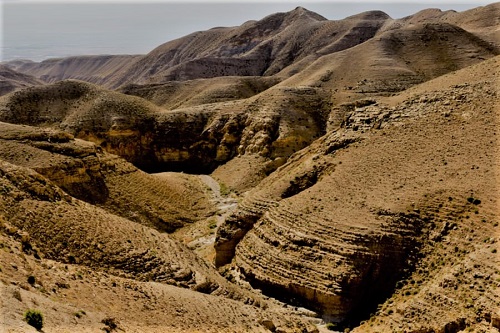
Wadi Qelt is a canyon or gorge in the Judean Desert located in the West Bank southeast of Jerusalem. The Prat Stream gushes through the fertile gorge forming natural rock pools along the way before flowing eastward to the Jordan River, north of the Dead Sea. The stream is fed by the Ein Prat spring at the upper part of the gorge, the Mabo’a spring, and the Qelt spring. This perennial stream has been an important water source since Biblical times. The Hasmoneans and Romans used aqueducts to channel the precious freshwater through the harsh desert to Jericho and between 1927 and 1970 British-built pumping stations supplied Ein Prat water to East Jerusalem. Remains of the ancient aqueducts and British pumping station can still be seen in the Ein Prat Nature Reserve.Biblical Wadi QeltSome believe that Wadi Qelt could have been the “valley of the shadow of death” as mentioned in Psalm 23. It also would have been on the route that featured in Jesus’ parable of the Good Samaritan (Luke 10:29). According to Christian tradition, Wadi Qelt is where the prophet Elijah hid from Queen Jezebel (Kings I 19).Ein Prat Nature ReserveThe constant flow of Ein Prat creates a cool oasis of lush vegetation along the edges of the babbling stream that can be enjoyed by hiking through the Ein Prat Reserve. There are several marked hike trails through the canyon that pass the remains of ancient aqueducts, magnificent monasteries, waterfalls, and overflowing rock pools where you can swim. Visitors to the reserve can abseil (rappelling) on the cliff of the northern bank of Ein Prat stream.Ein Maboa and Ein QeltThe Ein Maboa pool is a unique natural phenomenon. Every few hours the spring’s stone pool empties and refills as the flow of the spring changes. At the lower section of Wadi Qelt canyon is the Ein Qelt spring which flows into a waterfall and natural pool. A trail from the village of Mizpe Yericho leads down to the spring.Faran MonasteryFaran or Chariton Monastery was the first of the Byzantine monasteries to be built in the Judean Desert, the Biblical wilderness. It was founded in 330 AD by Turkish monk Hariton who was captured by robbers and held in a cave in Wadi Qelt. When he was miraculously released, he stayed on in the cave, and eventually, the monastery was built on the southern cliff of the canyon. Monks secluded themselves here, each in solitary cave-like dwellings meeting weekly to pray in the monastery church. The Faran Monastery was destroyed by the Persians in 614 AD and rebuilt towards the end of the 19th century by the Russian Orthodox Church. Eventually, the monastery was abandoned until the 21st century when a chapel and Hariton’s tomb were restored.St. George MonasteryOne of the highlights of Wadi Qelt is the breathtakingly beautiful Monastery of St George of Choziba (or Koziba) built clinging to the side of Wadi Qelt’s cliffs about 69m above the valley floor. The cliff-hanging Byzantine monastery was established in c.480 AD by John of Thebes. In 614 AD it was destroyed by Persians and 40 of the monks were murdered. George was a Cypriot monk who survived and continued living in the monastery ruins. After his death, the monastery was named in his honor. Then in the 12th century, the Crusaders rebuilt the monastery which was later abandoned. In the last 19th century Greek Orthodox monks reclaimed the monastery and have continued to maintain it as a place of solitary prayer and reflection. The monks welcome visitors on guided tours of the monastery.Want to visit Ein Prat and Wadi Qelt? Book our Bethlehem & Jericho Private tour.

The Gilboa Nature Reserve

The Gilboa Nature Reserve encompasses the area around Mount Gilboa, south of the Sea of Galilee in Lower Galilee. The reserve covers a lush landscape with hike trails, mesmerizing views, and breathtaking wildflowers. The main attraction is Mount Gilboa, which is part of a boomerang-shaped ridge stretching for 18kms and separating the southeast part of Jezreel Valley from the west. The ridge is Israel’s watershed where tributaries of the Kishon River flow down towards the Mediterranean. At the foot of the ridge, is a geological fault that separates it from the Harod Valley. Several springs originate in the fault line, the largest being Harod Stream.Ancient History of Gilboa Nature ReserveMount Gilboa is mentioned in the Old Testament as the place where the Israelite King Saul fought the Philistines (Samuel I 28-31) in the 11th century BC. The battle ended with Saul and three of his sons being killed, leaving his son David to be the next King of Israel. The peaks of the Gilboa Range bear the names of Saul and his sons, Johnathan, Avinadav, and Melchishua, as well as biblical events.Archaeological remains and ancient Roman burial caves found nearby show that the area was inhabited 2,000 years ago. The ancient agricultural communities were wine producers who left behind many ancient wine presses. In 636 AD, an Arab conquest drove the settlers away, and it was 250 years later when several small Arab villages were established in the area. In 1183, the Crusaders fought Saladin, Sultan of Egypt and Syria at the foot of Mount Gilboa. The Battle of Ain Jalut was fought here in 1260 when the Egyptian Mamluks, led by Beybars, successfully repelled the Mongols in their westward advance. If the outcome had been different, Europe would be unrecognizable today!Modern History of GilboaIn the 1920s the Jewish National Fund (KKL-JNF) began acquiring land in the area, and four communities were established – Ein Harod, Tel Yosef, Heftziba, and Beit Alpha. During the 1948 Israeli War of Independence, the Gilboa Arab villages were used as a base for the Iraqi army to launch attacks on Jewish communities. The Arab villages were abandoned and at one point the Iraqi forces occupied the ridge. In the last few days before the end of the war, Israeli’s climbed to the top of Mount Barkan and reclaimed the peak. The security situation remained tenuous, and in 1958 the KKL-JNF created a patrol road along the Green Line from Sandala to Har Barkan, Faqqua, and Jilabun to Mt. Melchishua, and along the descent to Beit Shean Valley.Next, the KKL-JNF took it upon themselves to plant trees on Mt. Gilboa. Today the forest covers about 5,000 acres. Roads were built through the forests, hike trails were established, and Kibbutz Maale Gilboa was founded in 1962. In 1970 the Gilboa Iris Nature Reserve was declared to protect the rare Gilboa irises, and in 2005, the eastern Gilboa Nature Reserve was established covering 1829 hectares.Points of Interest in Gilboa Nature ReserveMount Saul: Here you’ll find the main recreational area as well as incredible views of the valley below. The peak stands out from the chain of peaks along the ridge. Archaeological findings on Mt. Saul show evidence of human inhabitation as far back as the Paleolithic period, Bronze Age, Israelite period, Roman era, and the Byzantine period.Saul’s Shoulder: This site is home to Mt. Gilboa’s main recreational area and is a good point to start hiking towards Mt. Saul or to Mt. Giborim. Fierce battles took place here during the 1948 War of Independence.Tel Jezreel: It was here that biblical King Ahab built his palace, and lived with his wife Jezebel. On the advice of his wife, Ahab killed Naboth to get his vineyards.Hidden Valley: This hiking trail leads from Mt. Barkan to the Harod Valley near the Old Tel Yosef site. It is a challenging trail suited to experienced hikers and can be too slippery to follow in the rainy season.Yitzpor Stream: You can follow a hiking trail from north of Kibbutz Maale Gilboa, to the road that leads to Beit Alpha.Gilboa Scenic Road: If you’re not into hiking you can take the scenic road on the eastern ridge of Mount Gilboa. The route stretches east from Highway 666. Along the route, there are picnic areas, observation points, and places where you can join hike trails.Fauna and Flora: From late February to late March, the Gilboa is covered with a carpet of Hayne’s Iris (Gilboa Iris). This violet flower has six petals of two kinds that are arranged alternately, three up and three turned down. The northwestern slopes are covered with Mediterranean flowers, while those on the southeastern slopes are characteristic of flowers found in the steppe regions. Among the flowers of Mount Gilboa are cyclamen, crocuses, anemones, lilies, Sharon tulips, Persian buttercups, poppies, orchids, Aleppo Adonis, and thistles. The nature reserve is also home to approximately 170 plant species. This is the habitat of several animal species including reptiles, rodents, and birds. You can see gazelles, rock hyrax, foxes, rabbits, badgers, and other small creatures in the nature reserve. Alongside the Gilboa Nature Reserve is the Gilboa Iris Nature Reserve where these rare flowers are protected on 728 hectares of mountain slopes.Gilboa Nature Reserve Recreational AreasNurit Area: Here you’ll find picnic tables and a recreational area. Iris Area: This recreational area is great for seeing the brilliant Gilboa irises. You can follow a footpath through the beautiful flowers.Ishta Area: This is a small recreational area not far from Saul’s Shoulder.Vinya Reuven Cohen Area: This small area is named after an early member of Kibbutz Ein Harod. From here there are views of the kibbutz.Golden Gate Area: This is a great choice in spring when the area is blooming with wildflowers. From here paths lead to the Hidden Valley and onto Har Lipidim Nature Reserve.Maale Gilboa Area: This recreational area beside Kibbutz Maale Gilboa, offers views across the southern section of the Gilboa Ridge from several observation points connected by a footpath.Mount Avinadav Area: Here you have views of the Jordan Fault and across the Gilead Region and Beit Shean Valley. A 7km trail leads from here to Avinadav Cave, and on to Ein Moda. There are picnic tables, ancient olive trees, and a fascinating installation that allows the wind to make music as it blows through metal pipes.Barkan Area: This area is used for large gatherings, and offers views south across the Green Line. There is a hiking trail to the Hidden Valley through fields of wildflowers.Old Tel Yosef Area: This area is at the foot of Mt. Gilboa, and marks the endpoint of a trail that leads down from Mt. Barkan through the Hidden Valley. How to Reach Gilboa Nature ReserveVisitors can enjoy the reserve’s picnic areas, barbeque areas, recreational areas, marked hike trails, and the area’s natural beauty. If you’re coming from Tel Aviv, follow the coastal road (Route 2) until just before Caesarea, and turn inland to route 65. Follow Route 65 (Kvish HaSargal, named for being as straight as a ruler) to just outside Afula. Turn south (right) at Sargel Junction onto route 675. The road turns slightly right and becomes 675 then merges onto route 71. From there turn right after 3km, and right again a few meters later. Then left, and right to find the park’s parking lot. If you’re using Waze, enter “Gilboa Lookout Parking”.Interested in visiting Gilboa Nature Reserve? Book one of our private tours in the area.

Givat Kobi (Kobi Hill)

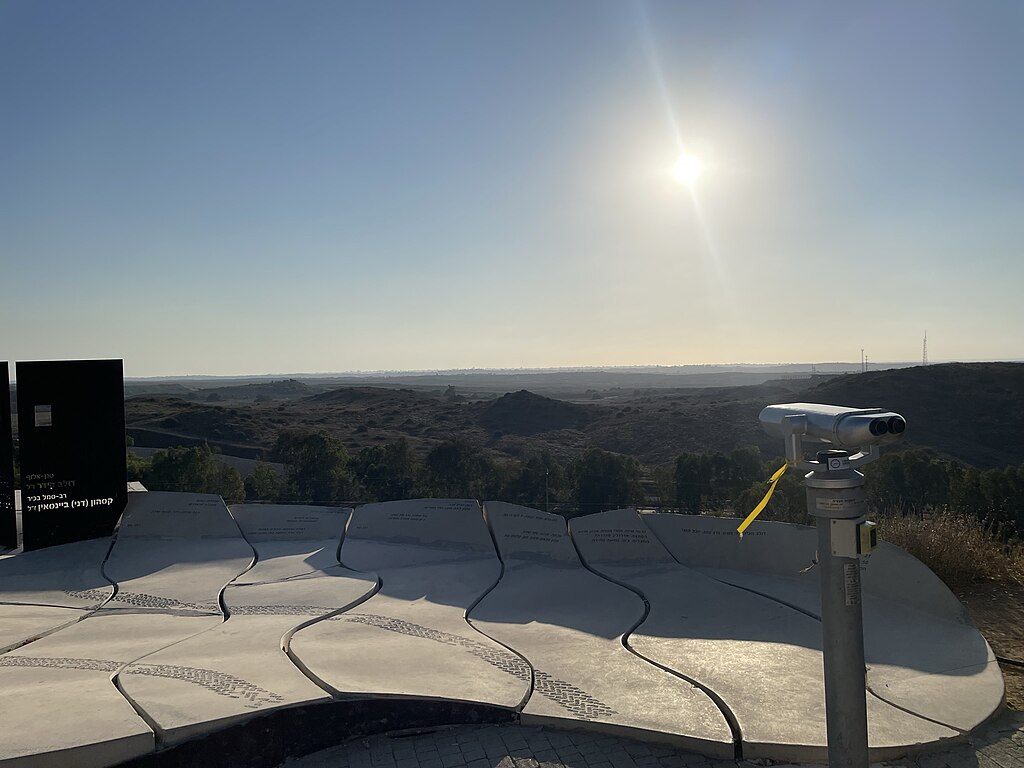
Background on the Four MemorialThe Four Memorial (Sderot Lookout) is located on Kobi Hill, a new commemorative site established in honor of Lt. Col. Dolev Keidar, Master Sgt. Maj. Dani Kassahun Bainsain, Staff Sgt. (Res.) Nadav Goldmacher, and 2nd Lt. Yuval Heiman. They fell on July 21, 2014, during Operation "Protective Edge," in a battle against terrorists who emerged from a tunnel approximately 700 meters from this location. The attack aimed to execute mass-casualty terror strikes in Sderot and Kibbutz Nir Am. The memorial was inaugurated in early February 2022.You can visit Givat Kobi on your own or as part of one of our tours exploring the Gaza Envelope.How Was the Memorial Built?The construction of the Four Memorial took five years, during which the lookout and the memorial were developed. The design represents the bravery of the fallen soldiers and the resilience of Sderot residents who have withstood terrorism for many years.The memorial combines concrete and steel, two strong materials that complement each other in their chemical properties—symbolizing the courage of the soldiers and the steadfastness of the residents.The structure is built on a wavy surface, resembling the sands where the battle took place and reflecting the uncertainty that prevailed before the attack regarding the identification of the assailants.The memorial features tire tracks from the jeep used by the four soldiers etched into the surface and leading to doors that symbolize the jeep’s doors. Inscribed on the doors are the names of the fallen soldiers.The doors, designed to mirror the jeep’s, remain open to signify the moment the four soldiers leapt into battle—a battle from which they did not return.Behind the doors is a concrete platform suspended over a precipice, symbolizing the journey of the soldiers—a path of no return on one hand, yet one that continues eternally through their commemoration.Looking through the gap between the open doors or the window, visitors can see the actual battle site, creating a geographical connection between Kobi Hill and the events that occurred nearby.Kobi Hill: A Unique ViewpointKobi Hill is named after Kobi Harush, a local Security Coordinator (Ravshatz) and resident of Sderot. Harush frequently leads groups of visitors, soldiers, and diplomats to the hill, offering them a close view of the border area.This hill is one of the highest points in the region. On a clear day, visitors can enjoy breathtaking views of the Mediterranean Sea to the west, the city of Ashkelon to the northwest, Ashdod to the north, and Sderot and Kiryat Gat to the east. To the southwest, one can see Gaza City and "Golani Hill," also known as "Hill of Love" or "Yanchik Hill," with its prominent horse sculpture.Until recently, the path to the hill was accessible only via a dirt road for hikers or off-road vehicles. The hill has always been a popular destination for those seeking a scenic vantage point with fresh air. During times of conflict, it became a gathering place for visitors from across Israel to witness rocket launches into Israeli territory and the IDF’s retaliatory strikes.Preserving MemoryBeyond the basic fact that these soldiers died defending the residents of Sderot and Nir Am, the memorial’s concrete edges feature a detailed account of the battle. The descriptions were reconstructed step-by-step based on IDF investigations, a painstaking and emotional process.The memorial and its surroundings are meticulously maintained by the Municipality of Sderot, ensuring its cleanliness and preservation. Architects Yaakov Cohen and Sigal Ben-Shmuel designed the memorial, while sculptor Ophir Geller and his wife Danit, owners of "Hofim," completed the finishing touches. Their work brought the memorial to life, with transportation and assembly completed by August 2021.Landscape architect Naama Eshel Tsuberi also contributed to the project, ensuring the design harmonizes with the natural surroundings.The Four Memorial was funded through donations from the families of the fallen and other generous individuals. The largest donation came from an anonymous Jewish philanthropist from abroad who wished to remain unnamed.Directions to the MemorialTo visit, enter "Sderot Lookout – Four Memorial" in Waze.The memorial is located near Route 34 in the city of Sderot. Follow these directions:Take the first two roundabouts straight.At the third roundabout, turn right at the first exit to Rabbi Yoram Abergel Street.At the next roundabout, turn left onto Derech HaAliya Street.Continue straight through several roundabouts.At the final roundabout, turn right.The memorial is a few dozen meters ahead on the left-hand side.

Escaping the Heat in Israel

Vacationing in Israel? Coming to Israel any time soon? Fantastic. The rainy season in Israel is long gone and now the worst of the pandemic seems to have abated, everyone is traveling again. Indeed, it looks like flights are going to be even busier than usual - no doubt because people really want to take a long-deserved vacation after enforced time at home!Palms in Jerusalem. Photo byIlanit OhanaonUnsplashAnd here in the Mediterranean, Israel remains a popular spot for tourists. It’s got everything you need for summer fun - beaches that stretch up and down the coast, full of white sand and clear water, nature reserves where you can hike, national parks such as Masada, where you can look at archaeological remains from thousands of years ago, and Eilat, on the Red Sea, which is ideal for anyone who wants to dive, snorkel, jet ski or drink cocktails and party at night!Beaches, nature, holy sites, and - hot weather!Israel’s also got deserts (which are great for trekking in), an extraordinary crater at Mitzpe Ramon (millions of years old), lush vegetation in the Galilee, and boutique vineyards in the Golan Heights.Not to mention Crusader castles, Herodian theatres, ancient villages, and a multitude of holy religious sites (churches, mosques, and synagogues everywhere you look).But something else Israel has is hot weather. And we aren’t joking. When we say ‘hot’ we mean ‘hot’. And it can get extremely hot here in the summers, which are long and sometimes feel endless. Locals have all kinds of strategies for dealing with the heat (because they’ve grown up with it) but for those visiting, it really can be overwhelming. And combined with humidity on the coastal plains, if you aren’t careful, you can end up wiped out - fast.Lifeguard Post on Tel Aviv beach. Photo by Vladimir Anikeev on UnsplashHow to escape the heat in Israel?Writing this as someone who’s lived in Israel quite a long time now, I’d say (and so would everyone around me) that it’s certainly possible to have a fantastic time in the Holy Land at the height of summer. However, you really do need to prepare yourself, both physically and mentally, especially if you’re coming from a climate that isn’t known for long, dry summers.Today, you’re going to be reading about ideas my colleagues and I have come up with, to keep you from going mad when the mercury soars. We’ve put together a list of tips for you, helping you to keep cool in Israel, whether you’re at the beach, exploring fortresses, hiking in nature reserves, or exploring ancient cities like Jerusalem, Jaffa, and Acre. So get prepared - to stay cool and then to enjoy!Sun protection - it might seem obvious but we had to start with this one. Whether you’re having a day of fun at the beach, kayaking on the Jordan River, or exploring the Old City of Jerusalem, you really have to protect your skin. Essentials (and they really are) to pack for your next trip to Israel (or buy here, if you are traveling light) include:A tourist in Israel wearing a wide-brimmed hat.Photo credit: © Dmitry MishinHat - protect your head, with something wide-brimmed if possible. Baseball caps are ok but they won’t give you the same level of protection. Or pick up a ‘tembel hat’ - it’s an Israeli national symbol, used by the first Zionist pioneers. Shaped like a bucket, and meaning ‘foolish’ in modern Hebrew, it fell out of style in the 1980s but is actually making a bit of a comeback!Long-sleeved cotton shirts - these are perfect not just for protecting your arms but, at a pinch, can be used as head protection, if you lose your hat! Cotton (or linen) is what you’re looking for, and, ideally, in white, to deflect the sun. Israeli fashion designers are wonderful, so maybe you should consider a shopping trip?Sunscreen - the higher the number the better. The sun can be a real beast in Israel in July and August and even just 20 minutes outside without protection can leave you red and sore. Slather it on - regularly.Water - few locals leave home in the summer without a bottle of water. Either pick them up at Israeli supermarkets or corner stores or buy a reusable water bottle and fill it as the day continues - there are public drinking fountains all over Israel, in parks, beaches, and museums. Person holding a bottle of water.Photo byBluewater SwedenonUnsplashUmbrella - if you’re at the beach, hire an umbrella or buy one of the very popular ‘tarps’ that you can pitch. You’ll be grateful for the shade.Cover-up swimsuits for kids - Israel’s beaches are a perfect (and quite cheap) day out, but if you’ve got kids in Israel, we’d advise putting them in swimsuits that cover as much of their bodies as possible. They’re easily purchased all over Israel.Icecream - Israelis love ice cream and, in the summer, the lines at the parlous are long! Whether you want something traditional, or ‘out there’ in terms of an odd flavour, you’re bound to find it, whether you’re in the big cities of Tel Aviv and Jerusalem or towns and villages in the Galilee or the Negev Desert.Ben & Jerry’s has been sold in Israel for a long time, and still is, although the political fallout from a decision they made not to sell ice cream in the West Bank has divided locals. They don’t have many parlours but it’s widely available in supermarkets and small stores.Golda - Golda, is arguably Israel's most popular ice cream brand at the moment, with over 30 franchises across the country. With lots of flavours, made by hand and even options for vegans, it’s got to be worth a try! Our tip: try the halva and pistachio.Tel Aviv has a wide array of small ‘boutique’ ice cream stores too, including Anita in Neve Tzedek, Arte onNahalat Binyamin and Otello on the famous Dizengoff Street. All of them also sell sorbets, which are particularly good at cooling you down on a hot day.Tourist approaching a small waterfall in Ein Prat, Israel.Photo credit: ©Dmitry MishinCold Drinks in IsraelIced Coffee - Israelis love coffee and in the summer, drinking it with ice is the way to go. You can order ‘cafe kar’ which means ‘cold coffee’ (with milk, sugar and ice cubes). Or a ‘Barad’ - meaning ‘hail’ in Hebrew - it’s more like a slushie and is especially popular with kids. Ice pops - words like ‘Artik’ and ‘Kartiv’ are synonymous with summer in Israel and refer to any kind of milk or water-based sweet treats on sticks. The fruit-flavoured ‘Eskimo’ popsicle is not to be missed and the watermelon flavoured one is a delight too! Water - as we said above, carry water with you everywhere! Refill bottles from the tap (water is safe to drink in Israel) or pick up flavoured and fizzy brands at cafes and corner stores. Public Water Fountains in IsraelDrinking water is what’s going to save you on a hot summer’s day in Israel. And if you don’t want to spend a fortune in the ‘makolet’ (local grocery stores) then keep your eyes peeled for the endless water fountains you’ll see in public places all across the country. Iced coffee in a cup. Photo by Valeriia Miller on UnsplashWater ParksWhat better way to spend a day of fun than at one of Israel’s water parks? Meymadion - if you’re in Tel Aviv and want the kids to burn off some energy but have had your fill of the beach (!) try this water park. The largest of its kind in Israel, it stretches over 25 acres and is filled with water slides, from the ‘simple’ water tube channel to the ‘Slalom’ ‘Meteor’ and ‘Cannon’ slides. They have six pools, which means kids of all ages have a lot of choice and there’s a huge picnic area and lots of shady spots where you can admire the surrounding Ganei Yehoshua park. And, of course, there are plenty of inflatables in the water, for floating around and chilling out.Aqua Kef - on the shore of the Sea of Galilee (or, as Israelis call it, the ‘Kinneret’) this water park is simply fabulous.Full of floats and slides, you can have a lot of fun climbing up and then falling down back into the water and as long as your children are aged 6 plus, they are allowed in! The ‘Family Park’ offers all kinds of facilities, including jumping towers, bridges, climbing walls, ladders and trampolines. They also have ‘Olympic’ and ‘Extreme’ areas for the more adventurous.Water park slides. Photo by Alaa Albahrani on UnsplashNational Parks in IsraelIsrael has an extraordinary number of nature reserves, which are incredible places to have a day out. Many are also filled with streams and waterfalls, which offer sharp relief from blistering heat, especially if you’ve been trekking for a few hours.Popular national parks include Banias (in northern Israel) where you can hike ‘the Hanging Trail’ and walk across a boardwalk before arriving at the waterfall, which comes from the Hermon mountain. (If you’re a keen photographer, go up to the observation deck). Ein Gedi is also another firm favourite for hiking. Located close to Masada and the Dead Sea (about an hour’s drive from Jerusalem). This nature reserve is nothing less than a lush oasis in the middle of the desert in Israel, complete with hiking paths, spring-fed streams and waterfalls. For some of the top water hikes in Israel, take a look at our website and blog.Day Tours in IsraelBooking a day trip in Israel, or any kind of organised tour around the country, is a very good idea for anyone that doesn’t want to drive, doesn’t want to travel solo in Israel or is interested in learning more about Israel’s history and culture. Israeli guides are fantastic - many you’ll meet haven’t just had excellent training but also years of experience with groups, and they also bring their personal knowledge to the job and are always happy to answer unusual questions!Waterfall in Banias National Park, Israel. Image © ShutterstockMuseums in IsraelFinally, an incredibly good way to stay out of the heat is to visit a museum. Israel’s full of them (we aren’t joking) and not only are museums in Israel air-conditioned (sometimes so heavily that you’ll need a sweater!) but plenty have cafes and restaurants in Israel where you can eat, making sure you have a few hours - ideally at the height of the day - out of the sun. As we said, you’ll be spoilt for choice but some of the ones we can’t help but recommend include:1. Israel Museum - located in Jerusalem, close to the Knesset (the country’s Parliament) is truly a world-class museum and a must-visit for anyone who wants to know more about the country. Established in 1965, the Israel Museum been significantly expanded in the last decade and is home to around half a million objects, as well as a sculpture garden, and replicas of synagogues from Italy and India. Don't miss a fantastic model of the Second Temple and, of course, the Dead Sea Scrolls, which are housed in their own specially-designed building named ‘The Shrine of the Book.’ Moreover, the Israel Museum has a beautiful gift shop and two restaurants - one serving meat dishes and the other milk (in accordance with the Jewish dietary laws).The Israel Museum Of Science Technology & Space, Haifa, Israel.Photo byKelly TelleronUnsplash2. Eretz Israel Museum - situated in Tel Aviv, this treasure of a museum, has all kinds of ancient relics, eight permanent exhibitions and sites such as Mosaic Square (full of beautiful mosaic floors). Eretz Israel also has a planetarium (perfect for kids), and a cafeteria.3. Madatech Israel National Museum of Science, Technology and Space - if you’re in Haifa, and want to learn more about science, this is a great place to visit and, if you have kids, it’s particularly good because it’s very hands-on, and chock-a-block full of interactive exhibitions (crash simulators, solar power and acoustics and waves displays will leave them enthralled). There’s also a cafeteria and a special play area for kids.If you want to take a day tour or organised trip around Israel with Bein Harim, feel free tocontact us- we’re at the end of the phone and email constantly - and the good news is that all of our buses are air-conditioned, so you won’t swelter on the way to your destination!Children on a tour in one of Israeli national parks.Photo credit: ©Dmitry Mishin
By Sarah Mann
0 views

Summer in Israel

Yep, it’s that time of year again - the rains are long behind us, the skies are clear and blue and the days are stretching endlessly ahead of us. It may only be May in Israel now but we know summer’s on the way - in fact, it’s positively round the corner. Everywhere you look, you’ll see flowers blooming - poppies in the Galilee, jacaranda in Tel Avivand roses in Jerusalem.El-Mona Gardens, Gulis, Israel.Photo credit: © Dmitry MishinIs it hot in Israel in summer?Take a trip to the big city markets in Israel - such as Shuk HaCarmel or Mahane Yehuda - and everywhere you look you’ll see strawberries, watermelon, apricots, and nectarines. In Tel Aviv and all along the coast, you can even take an evening stroll in nothing more than a light shirt (in Jerusalem - which is high in the hills - you’ll need a sweater but there will still be a delicious breeze).Casual Israeli fashion comes into its own - no one dresses formally in Israel so expect to see lots of women in colorful sundresses and men in t-shirts and shorts (with the obligatory sandals, to finish off the outfit). But by June and July, it will be hot. And we mean hot! Summer in Israel is always fun.What is summer in Israel?With the average summer temperature in Israel (hitting 30 degrees in Jerusalem or more and the humidity of Tel Aviv making for a sweaty experience), you might want to factor in afternoon naps, so you’re fresh as a daisy for long lazy evenings out. Of course, if you’re a beach bunny, Israel is the perfect place to be between mid-June and late September - and for the cost of a sun lounger and umbrella, you can wile away your days next to the Mediterranean.But when you’ve had your fill of the beach? Well, that’s why we’re here - to point you in the direction of other ways to enjoy your Israel vacation - by hiking in a nature reserve, checking out a new museum exhibition, taking a food tour, exploring some wineries, trying out some of the endless water sports on offer or simply sitting in a sidewalk cafe, watching the people go by. Not to mention the special events and festivals in Israel that always pop up here in the summer. Without further ado, let’s have a look at ways to spend your summer vacation in Israel. Enjoy!Akhziv National Park, Israel.Photo credit: ©Dmitry MishinCultural Events and Festivals in Israel in summerFestival of Light - Running throughout June of this year, Jerusalem’s Festival of Light promises to bring the Old City to life, by illuminating the city walls and cobbled streets with all kinds of light installations. Whether you know this extraordinary part of the world well or it's your first time in Israel, there, you will surely be captivated as you make your way along the different tracks (all marked in varying colors), in and around the Old City. The festival is a fantastic way to see Jerusalem by night, and also boasts guided Jerusalem tours, shows, and performances from guest artists.Jerusalem Wine FestivalThe annual Jerusalem Wine Festival will take place at theIsrael Museum in mid-August and, like every year, is bound to be a great social event. Showcasing (and celebrating) some of Israel’s best wines, as well as a few international offerings as well, go along not just for the wine and cheese but also to enjoy the musical offerings and the ambiance of the beautiful outdoor Sculpture Garden, where it is hosted.Laila Lavan (White Night) in Tel AvivTel Aviv literally stays open all night at this festival (which, in Hebrew, means ‘White Night’) and the city comes to life, with endless musical performances, dancing, galleries open until the wee hours and sunrise yoga at the beach. It’s all free and it’s incredible fun - just take a long afternoon nap so you can fit in as much as possible. This year’s date is expected to be between the end of June and the beginning of July - watch this space. Most probably, July 1, 2022.People clinking wine glasses. Photo byKelsey KnightonUnsplashThe Pixies in ConcertIf you’re a fan of American Alternative Rock, then you’re in luck because of the iconic band. The Pixies in Israel, are performing in Tel Aviv on Monday 22nd July at the Expo Centre. With their infectious melodies and reputation for screeching vocals and searing guitar chords, this is a concert you really don't want to miss. The Upper Galilee Voice of Music FestivalIf you love chamber music, then head north for the Upper Galilee Voice of Music Festival, held inKfar Blum in Upper Galilee, running from 28th June to 2nd July. In scenic surroundings, enjoying performances by artists both from Israel and around the globe. And in addition to the main event, there will also be a children’s festival, with unique workshops for the youngsters. National Parks in IsraelIsrael has an extraordinary number of national parks and nature reserves, all full of fantastic hiking treks, amazing flora, and fauna, and surrounded by streams and waterfalls that never cease to delight their visitors. Some of the ones we’d recommend most highly include:Akhziv National Park - this gorgeous area has sea turtles, rock pools, lagoons, steep sandstone cliffs, and an ancient fishing village. There’s also a lovely bathing beach, picnic facilities, and a nice camping area if you want to spend a few days out in nature. The Rosh HaNikra National Park includes the famous underwater caves, with a cable car ride for fun! Tourists at Nesher National Park, Israel. Photo credit: © Dan PorgesGan HaShlosha - close to the Jordan Valley, near Beit Shean, is this well-known nature reserve, boasting all kinds of bathing pools whose waters come from springs in the nearby Amal River. The water is a comfortable 28 degrees all year round and is a wonderful place to come and soak. Surrounded by palm trees and lush greenery, it’s arguably one of Israel’s most beautiful spots. The park also has a tower and stockade, and an archaeology museum, and isn’t far from Mount Gilboa, if you want to do some serious hiking!Ein Gedi - on the eastern edge of the Judean desert is this marvelous nature reserve, and it’s perfect to explore, either alone or combined with a trip to Masada and the Dead Sea. Here, water flows year-round and you can trek through baths, natural pools, waterfalls, and canyons. If you’re lucky, you might catch a glimpse of the fabled leopard that supposedly lives in this oasis. Ein Gedi is full of lush vegetation, all kinds of flora and fauna, and an easy drive from Jerusalem.Caesarea - this national park is home to magnificent Herodian ruins, including impressive Roman aqueducts, bathhouses (complete with mosaic floors), an ancient harbor, and the remains of both a hippodrome and theater (where summer concerts are often held at night). Nearby are lovely beaches, where you can picnic and swim. Caesarea is an easy day trip from Tel Aviv, and can also be combined with a visit to Haifa.Banias - flowing down from Mount Hermon, the crystal clear waters of Banias make it a top pick for nature reserve lovers. Although you can’t swim in the waters, walking along the suspended circular walkway and seeing the amazing waterfalls up close, make it a great day out. There are two entrances to Banias, both with their own ticket booths, and a range of trails, depending on how much of a challenge you want. Gan Hashlosha (Sahne) National Park, Israel. Photo credit: © Manu Grinspan. Published with permission of the Israel Nature and Parks AuthorityCamping in IsraelIf you’re traveling to Israel on a budget, then a fun and affordable way of doing it is by camping. All over the country, you’ll find well-equipped and reasonably priced camping grounds, so whether you want to hike in the Negev, explore a fortress in the Golan Heights or wake to the sounds of the Mediterranean waves, somewhere between Tel Aviv and Haifa, there’s a site that’s right for you.In our opinion, camping around the Sea of Galilee is really one of the most beautiful ways to spend a few days. The area is lush and green, but it’s also full of attractions - churches and synagogues, the famous Yardenitbaptismal site, and a huge water park, which is the perfect activity for kids.Water Sports in IsraelIf you’re not into sedentary holidays, then partaking in some of Israel’s many water sports is the perfect way to enjoy yourself. There’s kayaking on the Jordan River, after which - if you’ve still got energy - you can take a jeep tour along the border with Syria. If you’re down in Eilat, and you’re licensed, then you can’t take a dive along its coral reef (or, if you prefer, just hire a snorkel and fins). There are also jet skis for hire, all around this Red Sea resort, not to mention the opportunity to take an organized trip to Petra since Eilat is slap bang on the border with Jordan.Snorkeling at the Red Sea. Photo byArtem KniazonUnsplashDay Tours in IsraelDay tours are a great way to see Israel and their advantages are many - you have the services of a professional guide (so you will learn a lot), transport is taken care of (so you don’t need to rent a car and cope with the sometimes chaotic roads) and you’ll fit a lot into one day (ok, they start early, but that means you really do get to see a great deal). Spots like Masada and the Dead Sea and the Galilee and Golan Heights aren’t that accessible by public transport, so being driven there on a comfy air-conditioned bus really makes sense. Taking an organized day trip in Israel is also a great idea if you’re a solo traveler and want to meet other travelers. At Bein Harim, we offer a wide variety of group and private tours, as well as Israel tour packagesand if you’re interested in booking one, don’t hesitate to contact us or check out Bein Harim's Instagram page for photos of our many destinations.Сaesarea Port, Israel.Photo credit: © ShutterstockBeaches in IsraelThe fact remains that beaches in Israel are still one of the biggest draws of this country. Stretching endlessly along the coast, whether you’re up in the north, close to Acre, slap bang in the center in Tel Aviv, or down in the south, nearer to Ashdod, you’re always going to be able to find a beach that suits you down to the ground.Israeli beaches are almost always free and are usually good for amenities - cafes and restaurants, showers, changing rooms, toilets, and play areas close by for kids. You’ll also see plenty of workout stations, where you can tone up your abs or get a cardio session for free. And that’s before you’ve even dipped a toe in the water. When spending a day at the beach, you’ll also see the locals in their element, playing matkot (a quintessential Israeli game, which involves two bats and a ball, and lots of yelling!) and volleyball (the locals are friendly, so feel free to ask to join in). The Mediterranean in Israel is gorgeous in the summer and at the height of July and August, you could be forgiven for thinking you’re in a warm bath when you jump in the waters. And if you’re not a fan of water, just rent a chair and parasol, put on your sunglasses (and plenty of lotion), and kick back with a book or your headphones. Carmel Beach, Haifa, Israel. Photo byYousef EspaniolyonUnsplashMuseums in IsraelFinally, for days when the mercury is sizzling inside the thermometer, you can always take refuge in one of Israel’s museums or art galleries. There are so many, including the world-famous Israel Museum, in Jerusalem, where you can see a replica model of the Second Temple, sculptures in the outside garden, and the famous Dead Sea Scrolls, which are housed in their own specially-designed building. There are also underground Western Wall Tunnels to explore, close to the Western Wall, the Tower of David, and, of course, the narrow alleyways of the Old City, and its four historic quarters.Tel Aviv comes into its own too with the Tel Aviv Museum of Art, the Yitzhak Rabin Center (telling the story of the late Prime Minister and his relationship with the State of Israel), and the Museum of the History of Tel Aviv, exploring the fascinating backstory to this city which was born as late as 1910 but is now as modern as modern can be. There are also museums worth exploring in the north of the country, including MadaTech in Haifa, which is ideal if you want your kids to learn about science in an interactive and engaging way.If you are in Israel for the summer, go ahead and book some guided tours with a decent tour operator.The Israel Museum Of Science Technology & Space, Haifa, Israel.Photo byKelly TelleronUnsplash
By Sarah Mann
0 views

Events and Festivals in Israel in June 2022

As spring turns to summer each year, Israel comes into its own, which is why June can be a great month to visit the country. The weather is already very warm but not as roasting hot as it often is at the height of summer. And while the rains are long gone, evening strolls are utter perfection - in Israel you can eat outside, take long walks along beaches and seafronts at night (grabbing a drink at the endless cafes and bars on the sands) or just sit around and people watch.Beach at Rishon LeZion, Israel. Photo byAviv Ben OronUnsplashIn a Mediterranean Mood?And if you’re less in the mood for a city break, in Tel Aviv, Jerusalem or Haifa, there are ample opportunities to explore the country - it’s not yet high season which means the roads won’t be too jammed and you can still get off the beaten track and head to nature reserves and waterfalls, which will be a lot more crowded the following month. Yes, we can say without hesitation that June is an ideal month for a trip to Israel.June in Israel - a Holiday with a Bit of EverythingThe fact is that Israel has a bit of everything, which means you can ‘pick and mix’ on a break here. In Jerusalem, arguably the world’s most holy city, you can spend days exploring religious and historical sites, wandering the tiny backstreets of the Old City, before heading to dinner at the famous Mahane Yehuda Market.In Tel Aviv, you can take a Bauhaus tour, learning more about the extraordinary architecture of the ‘White City’ as you walk the boulevards. Or hire a bike and cycle all the way from Tel Aviv Port (Namal) in the north to the Jaffa Port in the city’s south, taking in a tour of Jaffa Flea Market, visiting the Artist’s Quarter, and then grabbing some local food - hummus or fish - whilst you watch the sunset over the Mediterranean Sea.In June of this year, there are plenty of cultural events and festivals, as well as musical performances, in the big cities - a huge draw for culture vultures.Hiking by the Dead Sea. Photo byJonathan GamburgonUnsplashAnd for the Adrenaline Junkies?In the Negev, although hiking is not recommended in the hottest hours of the day, you can bask in the silence, enjoy the tranquillity of early morning sunrises, or explore the Ein Avdat canyon, Timna Valley Park, or the breathtaking crater at Mitzpe Ramon later in the day. And in the north of the country, there are all kinds of adventures for adrenaline junkies - from 4x4 jeep tours in the Golan Heights, discovering Crusader castles and fortresses, and kayaking trips on the Jordan River - perfect for those who don’t like to sit still.So if you’re looking to take a break and want a holiday destination that gives you a bit of everything, look no further. Whether you want to sun yourself on a beach, cool off periodically in the Mediterranean, explore archaeological sites in Jerusalem, hike in the Golan, or learn more about wine from some of the many boutique vineyards in the Galilee, you won’t be disappointed.And, as we said before, the weather is perfect - it will be warm, but not too hot, with cool breezes as day turns to night. Without further ado, let’s take a look at what’s going on in Israel this June 2022…all over the country!Vineyards in the Golan. Photo byLevi Meir ClancyonUnsplashEvents in Israel in June 2022. The Jewish Festival of ShavuotShavuot is a Jewish festival that commemorates one of the most important events in Jewish history - when God gave Moses the Torah on Mount Sinai. But it’s also a harvest festival, marking the wheat festival in the land of Israel, according to the Hebrew Bible.Shavuot is a holiday that everyone in Israel loves to celebrate - there are events going on all over the country. The main traditions are to eat dairy foods (think cheese, blintzes, and hummy cheesecakes) and, for Orthodox Jews, to attend synagogue where you sit up all night at a learning group (‘Tikkun Leila’).Shavuot is especially popular on kibbutzim and moshavim in Israel (agricultural settlements) where the ‘first fruits’ of the harvest are gathered. Locals love visiting these places and tourists will enjoy the activities, traditional Israeli folk dancing, and tractor rides for the younger members of the group!Shavuot this year is from 4th-5th June (since the Jewish calendar is solar-lunar in nature, all holy days begin in the evening). And, just to bear in mind, there is no public transport at this period, so if you want to get out of the city, you will have to rent a car in Israel.Cheesecake, traditional Shavuot food. Photo by Sebastian Coman Photography on UnsplashEvents in Jerusalem in June 2022Design Week - Held at the Hansen House, this year between 23rd and 30th June, the Jerusalem Design Weekis now in its eleventh year. Considered to be the country’s leading public design event, it’s expecting over 40,000 visitors and 40 events, showcasing the work of both Israeli and international designers. Each year, there is a central theme, looking at unique aspects of Jerusalem and Israel, incorporating the idea that the unusual cultural landscape in the country lends itself well to the idea of exploring important global issues. This year, the subject is time! The week promises all kinds of shows and events, as well as musical performances and ‘pop up’ food and drink offerings. An event to inspire!Hanan Ben Ari Concert in Jerusalem, June 2022On 22nd and 23rd June this year, the Israeli singer and songwriter Hanan Ben Ari will be performing at two concerts in Israel, both at the Sultan’s Pool in Jerusalem. And Ben Ari is an unusual guy - because he is from an orthodox background (he studied in a religious seminary, married young, and had six kids!) but performs in front of co-ed crowds and even writes songs for female songwriters!Moreover, his own music transcends stereotypes - it’s a fusion of rock, soul hip hop, and religious pop and his lyrics deal with a wide range of subjects, including literature, religion, pop culture, and social commentary. Hanan Ben Ari preaches tolerance and empathy and is making a real name for himself, so why not grab yourself a ticket and see for yourself what all the fuss is about?Shop in the Old City of Jerusalem, Israel.Photo byChristian BurrionUnsplash‘Divine Food’ exhibition at the Israel Museum, JeruselemJune is your last chance to catch the ‘Divine Food’ exhibition that’s been running at the world-famous Israel Museum for a while now. Showcasing unique pieces from the Olmec, Maya, and Aztec civilizations from Central America, all highlighting the way maize, cacao, and agave became food staples, you can also see an astonishing reconstruction of a Mayan Temple. It’s a great way to learn how these crops were cultivated, and something extra about the Gods of that era. Included in the price of the ticket is entry to the entire museum, giving you the chance to explore the Second Temple model, enjoy some beautiful fine art, wander in Sculpture Garden, and - of course - marvel at the Dead Sea Scrolls, housed in their own bespoke building. Events in Tel Aviv in June 2022Gay Pride Week - Pride week in Tel Aviv is, arguably, one of the highlights of the month, taking place every year in early to mid-June. After a long-drawn-out pandemic, with crowds forbidden or kept low, Pride is back - and it’s going to be big! Tel Aviv is unofficially known as the gay capital of the Middle East and the Pride parade here is one that people from all over the world flock to.Throughout the week, which runs 5th to the 10th of June, there will be events all over the city, culminating on Friday morning, when tens of thousands of people will take to the streets, waving flags, dancing, singing, and cheering on the guys and gals on the many floats. The parade begins at the LGBTQ center in Gan Meir and is very family-friendly - kids aren’t just welcome but loved! And, of course, expect a few after parties!Gay Pride in Tel Aviv, 2018.Photo credit: ©Dmitry MishinTLV International Student Film Festival (12-18 June 2022)Tel Aviv International Student Film Festivalis one of the largest festivals in the world for student films and is attended by many from around the globe. Each year, in June, hundreds of lecturers, students, and well-known persons in the cinema industry descend on Tel Aviv for a chance to see new films and meet up-and-coming producers. Run since 1986 by film students from the University of Tel Aviv, this Israeli project includes premiere screenings, workshops, films, special events, and conferences taking place each day, all at the Cinematheque, just a three-minute walk from the Sarona Complex, historically settled by the German Templars and today a popular area to eat and drink. Tel Aviv Vegan Festival (7-9 June 2022)Tel Aviv’s unofficially known as the vegan capital of the world, due to its ever-growing number of vegan restaurants serving only plant-based produce. So for anyone that follows a vegan diet, taking a holiday here is really very easy - whether you’re looking for traditional Israeli street food, light bites, or high-end cuisine, you’ll find it in this city.The annual Vegan Festival in Tel Aviv this year takes place between Tuesday 7th and Thursday 9th June, at the Sarona Complex in the heart of the city. It’s a veritable paradise for vegans and foodies alike - last year, there were over 100 stalls from restaurants and stores across Israel and, now Covid has waned, over 50,000 people are expected to attend this free event. So whether you fancy some non-dairy ice cream, a yummy poke bowl, or just the opportunity to learn more, put this date in your diary!Bread toasts with avocado, banana, tomato.Photo byElla OlssononUnsplashMovement Archery and Zen Acrobatics (23-25 June 2022)From 23rd to 25th June this year, in Tel Aviv, Tom Weksler and Roser Tutusaus will be holding a Movement Archery workshop. Having established ‘Wonderground’ in 2019, the partners focus on creations that deal with movement, dance, and other art forms.At this workshop, you can learn about posture, balance, imagination, and space. The two of them have taught all across the world and between them have years of experience in art and dance forms, working with companies such as Inbal Pinto & Avshalom Pollak and Guy Nader & Maria Campos.Laila Lavan, aka ‘White Night’ (1 July 2022)Technically it's not June, but we can't help mentioning ‘White Night’, one of the biggest nights of the year in Tel Aviv, with the city coming to life as the sun sets, and events continuing on through the night until the sun rises again. Yes, things really do go on through the night - but then what would you expect from Tel Aviv which is aptly named the Non-Stop City?Many stores and restaurants that would normally close at 10 pm will be open much later. All over the city,Tel Aviv museumswill be free to the public, as well as musical events - think jazz, opera, klezmer, rock, and plenty of cover bands, who’ll perform up and down the famousRothschild Boulevard.In keeping with past events, there will also be activities for kids, dancing at the beach, street artists performing in the Jaffa Flea Market vicinity, and yoga at the Namal port, as the sun rises. The fact that all these events won’t cost you a penny means you’ve no reason not to pick a few that take your fancy (and make sure you’ve had a long afternoon nap before you head out into the 24/7 atmosphere…) If you are interested in Jerusalem tours or Tel Aviv excursions, feel free to contact us.Lifeguard station on the Tel Aviv waterfront. PhotobyGuy TsroronUnsplash
By Sarah Mann
0 views

May 2022 in Israel - What's Going On?

Springtime in Israel, particularly the month of May, is an absolutely fantastic time to visit the country. The rainy season has long passed, the sunshine is plentiful but it’s not terribly hot yet, in the way it can be in the high summer. With endless opportunities to enjoy the beach, explore the country and eat dinner outdoors on cool, breezy evenings, some would say it’s the perfect month to plan your perfect vacation in Israel.Sunset in the south of Israel. Photo byShai PalonUnsplashVisit Israel in the Spring!It’s also the ideal season for swimming in the Mediterranean Sea (the water is very pleasant), hiking inGalilee or Golan Heights, where flowers are blooming, visiting some boutique vineyards, or spending a few days in Jerusalem. If you’re there, why not wander the narrow alleyways of Nachlaot before grabbing a bite in theMahane Yehuda Market? There are also endless special events in Israel taking place - concerts, exhibitions, festivals, and one-off performances. If you’re down in the party city of Eilat, after a day of jet skiing, hanging out at the Dolphin Reef, or exploring nearby Timna Park, enjoy a cocktail by the Red Sea in Eilat, with breathtaking scenery in the form of desert mountains behind you.Here are a few of our recommendations for things to do in Israel in May - there’s something for everyone, trust us, so take a look at the list and get packing.Gray Dolphin in Eilat, Israel. Photo bySilviu GeorgescuonUnsplashJerusalem events in May 2022Jerusalem is the world’s most holy city for three major religions and a place packed full of historical sites, archaeological digs, and cultural treasures. And there is plenty going on there in May 2022.Jerusalem International Book ForumRunning from 15th to 18th May in the charming neighborhood of Mishkenot Shaananim, a stone’s throw from the Old City, Jerusalem International Book Forum is a week of professional and intellectual gatherings, with people from all different backgrounds across the world showing up in the capital. The forum offers workshops, panel talks, interviews, and social gatherings, looking at subjects such as podcasts, audiobooks, literature for young adults, and how to publish in a post-Covid world. With almost every event held in English, it’s the perfect event for anyone who loves books.Where: YMCA (26 King David Street) and Mishkenot Shaananim Conference Centre Flag of Israel at the Wailing Wall, Jerusalem. Photo byIvan LouisonUnsplashInternational Museum DayInternational Museum Day falls this year on the19th of May and those participating in Israel (specifically in Jerusalem) and offering free entrance include the Bible Lands Museum, Bloomfield Science Museum, the Museum of Islamic Art, and the world-famous Israel Museum.Established with the intention of exposing the public to the cultural wealth of museums, it’s a great way to raise awareness of the place of the museum in our society, and not just for adults but for children too. The Israel Museum, in particular, is bursting with treasures, including the Model of the Second Temple, the beautiful Sculpture Garden, replicas of ancient synagogues, and the famous Dead Sea Scrolls, housed in a dedicated building.There are also free guided tours that take you through the four wings - Archaeology, Fine Arts, Jewish art and life, and the Youth Wing for Art Education, as well as a chance to see current exhibitions on masks, food, and castles! Fun fact: Did you know that there are more museums, per capita, in Israel than anywhere else in the world?Where: In museums across Israel (check website for details)The Shrine of the Book, Israel Museum, Jerusalem.Photo credit: © ShutterstockJerusalem Day, all across the City of Jerusalem (28th-29th May 2022)Jerusalem Day(‘Yom Yerushalyim’ in Hebrew) begins on the evening of 28th May and ends the following evening. Commemorating the reunification of the city, after the Six-Day War in 1967, today the capital takes center stage. There’s plenty in store for anyone visiting Jerusalem, including Jerusalem tours, tastings, live music, workshops, and an enormous parade (complete with floats, featuring veterans, local Yerushalmis, and Christian supporters of Israel).It’s a wonderful thing to see, with stages set up in city parks, old-time singers belting out the classics (including Naomi Shemer’s ‘Jerusalem of Gold’) and the kids will love it too since there’s plenty of face-painting on offer! And if you want to learn more about the history of Jerusalem, from the time of King David, head down to the Jaffa Gate - the parade always goes past the walls.Where: Across central Jerusalem and outside the walls of the Old City, at the Jaffa GateEntry of a synagogue in Jerusalem. Photo byLevi Meir ClancyonUnsplash“Which Came First? The Story or the Egg?” Exhibition at the Israel Museum, JerusalemRunning at the world-famous Israel Museum in Jerusalem, this exhibition focuses on prize-winning children’s books illustrator Hilla Havkin. Now she’s painting stories - on ostrich eggs! - and more than 20 of them are on display in this exhibition, each one focusing on a different story - including giraffes, bats, balloons, and kites. As the eggs rotate, surprises abound. What a wonderful exhibition!Where: The Israel Museum, Ruppin Boulevard 11, JerusalemSovev Cycling Event, Jerusalem (Friday 13th May 2022)If you love cycling, love Jerusalem, or love both, then Sovev is for you! This May, to celebrate spring, the city’s largest cycling event takes place, with routes that will take you through pastoral scenes, urban landscapes, and astonishing historical sites. There are three routes - 10km, 40km, and 50kms - and thousands of participants will join. Make sure to register early!Where: The gathering point for everyone is at the First Station in the German Colony.A palm tree in Jaffa, Israel. Photo byReiseuhuonUnsplashTel Aviv events in May 2022After a day at thebeach in Tel Aviv, stroll on itspromenade,learn about Bauhaus architecture in the White City or rent a bicycle and cycle toJaffa. You can also join one of the Tel Aviv special events listed below.DocAviv, Tel Aviv (26th May - 5th June 2022)Beginning on 26th May and running for 10 days, Docaviv in Tel Aviv will be showcasing a range of documentaries, many being their world premieres. Whether you’re interested in history, art, language, family, or politics, there’s going to be something there to intrigue you. This year’s opening film is ‘The Devil Speaks; Eichman’s Lost Confession’ which shows reels of footage of the infamous Nazi, talking to a journalist in Argentina, before his celebrated capture by the Mossad.Where: Cinematheque, 5 Ha’arba’a Street, Tel AvivEat Tel Aviv - A Tel Aviv Food Festival(8th May 2022)The ultimate festival for foodies, Eat Tel Aviv brings together many of Israel’s top chefs in one place, all attempting to woo visitors with their creations. For several days, down at Charles Clore Park, close to the Neve Tzedek neighborhood, you can enjoy live music, fantastic food trucks, and innovative dishes. Some of the top restaurants in Tel Aviv participate here, including Manta Ray (seafood), Vicky Cristina (tapas), and Dixie (burgers) as well as plenty of celebrity chefs. Tastings and street food. What’s not to like?Where: Charles Clore Park, Tel AvivJaffa port area. Photo byShai PalonUnsplashRooftop Yoga at City Hall, Tel AvivEvery Thursday beginning at 6 pm, at City Hall, next to Rabin Square, yoga lovers gather together, to enjoy an hour or two of free yoga classes and sessions on the roof of the municipality. Apart from the fact that there are great views over the city, it’s a good way to meet new friends.Where: Tel Aviv City Hall, Rabin Square, 66 Ibn Gvirol StreetWhite City Bauhaus Tours, Tel AvivEvery Friday at 10 am, beginning at the Bauhaus Center on trendy Dizengoff Street, a classic Bauhaus Tour takes place, beginning with an introductory movie and a map. You’ll then set off with your guide, and also armed with stereo headsets, connected to their microphone.You’ll be taken around the oldest boulevards and streets in the city - including Rothschild, Ahad Ha’am, and Nahmani - and learn about the history of the White City’s most prominent buildings in this style, built in the 1930s and ’40s by German Jews, who arrived in Tel Aviv just before World War II. The cost is 80 NIS (25 USD).Deep Purple Concert, Tel Aviv (Sunday 22nd May 2022)Founded in 1968, Deep Purple is truly a pioneer of the heavy metal scene (they also won a Guinness Record award for being the world’s loudest band). Next month, they will be performing at the Menorah Mivtachim Arena in Tel Aviv, to the delight of their many fans in Israel. So get ready for a night out, with a bunch of hard rock lovers.Where: Menora Mivtachim Arena, Tel AvivBlack horse carriage in Tel Aviv, Israel. Photo byAvi TheretonUnsplashEvents in Northern Israel in May 2022Whether you’re hiking in Galilee, tasting wines and cheeses on the farms of the Jezreel Valley, or kayaking down theJordan River, the Holy Land is waiting for you!Shivat Roim Dairy, northern IsraelBefore Shavuot arrives (in early June), why not head north to Shirat Roim (‘Shepherds Song’) up in the Galilee. It’s a boutique dairy, making fantastic sheep and goat cheeses, all without preservatives! It’s so good, it’s won prizes in Europe for its fabulous products. At their dairy on Kibbutz Lotem (near Karmiel), you can see the entire process (the making and the ripening), attend a workshop, and taste some samples. The ‘House of Cheese’ which is next door is open to the public on weekends and holidays. Yum! Where: Shirat Roim Dairy, Kibbutz Lotan, Western GalileeKayaking on the Jordan RiverThis is a really good activity for May because the weather is fantastic - not too hot and not too cold. It’s also a great experience for adults and kids - and the Jordan River is perfect for kayaking. Slide over small cascades, as your guide directs you through thick vegetation. Enjoy the fabulous views - the river banks are green and peaceful and if you’re lucky, you might even see a turtle!Where:the Jordan RiverView of the Golan Heights from Mount Bental.Photo credit: © ShutterstockYom Ha’Atzmaut (aka Israel Independence Day)Taking place this year on 4th-5th May, this is one of the most joyful days of the year, with celebrations that kick off at dusk and last through the night, followed by more celebrations the following day, in the form of a traditional Israeli ‘mangal’ (barbeque) at the beach, or in your friend’s back garden.All towns and cities in Israel have festivities, which include fireworks and concerts. In Jerusalem, there is the traditional torch-lighting ceremony atMount Herzl, attended by dignitaries, and in Tel Aviv, there’s a huge gathering atRabin Square(the square named after the late Prime Minister Yitzhak Rabin) with dancing and music.The following day, if you’re not a fan of barbeque, you can enjoy free entrance to certain museums, includingYad La Shiryonin Latrun (Israel’s official memorial for fallen soldiers) and theHall of IndependenceonRothschild Boulevard, where David Ben Gurion read out the famous Declaration of Independence in May of 1948.Where: Events all across the countryFireworks at the end of the 70th Independence day ceremony on Mt. Herzl. Photo byLavi PerchikonUnsplashJeep Tours, Golan HeightsThere are plenty of jeep tours you can take in Israel, but one we’d highly recommend is run by the company ‘No Other Land’ up in the Golan Heights, based on Kibbutz Merom Golan. It’s not just a great chance to explore northern Israel but really to see how locals, especially on kibbutzim, live in this part of the country.Guided by Ilan Shurman, who not only served in the IDF as a paratrooper but also holds a degree in Israel and Middle East Studies, he’ll give you plenty of history and geopolitics, with trips out to Qunietra (today a ghost town) and a stop outside one of the Israeli bunkers close to the border with Syria. This is a perfect family attraction and teenagers in particular, tend to love it!Where: Kibbutz Merom Golan,No Other Land Jeep Tours.International Yoga Festival in Israel, May 2022Israelis love yoga (seriously!) and this year, between 12th-14th May 2022 an enormous festival is taking place in the north of the country. Featuring teachers, lecturers, musicians, and workshops, people will gather together to learn and practice their skills for a long weekend, in the most pastoral of environments.A woman doing advanced yoga pose. Photo byARA CHOonUnsplashThe ‘yoga village’ at which it will take place is atGan HaShlosha National Park, one of Israel’s most beautiful nature reserves, which is located close to Mount Gilboa. The surrounding streams and astonishing waterfalls lend themselves to an atmosphere of happiness and tranquillity…and the festival is even promising a special ‘water compound’ with special sessions.The International Yoga Festival, along with all of the usual the ‘yogie’ activities, will feature music shows, a kid’s compound (complete with fun activities and shallow swimming areas), food stands (many of which are promoting vegan food), and a great artist’s fair, where you can purchase jewelry, clothing, and art.Wine Tours in the Carmel MountainsIsrael’s full of fabulouswineriesand what better thing to do than to take a tour of one, whilst enjoying the astonishing scenery? The Carmel Winery was founded by Baron Edmond de Rothschild in 1892, with the aim of helping farmers earn a long-term living, rather than relying on more simple crops.The Centre For Wine CultureinZichron Yaakovprovides guided tours and this includes a wine shop, restaurant, two specialist-tasting rooms, a small cinema, and a barrel room in an underground cellar. And Zichron itself is a lovely little town, so take a stroll afterwards on its midrachov (main pedestrianized street) or even head off toHaifa, which is just 30 minutes away.Where: Carmel Wintery, 2 Derek Ha Yekev, Zichron YaakovInterested in special events in Israel, private orday tours in Israel?Feel free to contact us!Flam Winery, Eshtaol, Israel. Photo by Eli Levit on Unsplash
By Sarah Mann
0 views

Experiencing Israel's biblical wonders

Every year, milions of people come on trips to Israel. Their reasons are varied - pristine beaches on Mediterranean coastlines, endless sunny days with beautiful blue skies, museums and art galleries, hiking trails, boutique vineyards and a foodie scene that’s taken the world by storm.Dome of the Church of the Holy Sepulchre, Jerusalem. Photo byAdam KringonUnsplashIsrael - Land of the BibleBut, for many visitors, the most important reason to visit is to take a biblical tour of the Holy Land - to see the many beautiful and extraordinary sights connected with the history of the country. Israel is a melting pot, and home to people of many faiths - Jews, Christians, Muslims…and for each, there are places that are incredibly important.Walk in the Footsteps of JesusFor Christians, a tour of biblical Israel is often the trip of a lifetime, giving them a chance, literally, to walk in the footsteps of Jesus and visit many of the places mentioned in their holy book. Whether it’s Bethlehem, where Jesus was born, Nazareth, where he spent his early years, Galilee, where he ministered and recruited his twelve disciples, or Jerusalem, where he was arrested, crucified, buried and then resurrected, taking a biblical tour in Israel will not disappoint.Even better, for anyone curious about archaeology, the land of Israel is literally bursting at the seams with fascinating sites, dating back hundreds, if not thousands of years. Places of worship, fortresses and ancient cities that were built in different eras (Roman and Herodian, Byzantine, Crusader, Arab, Mamluk and Ottoman) are easily accessible and can really bring history to life before your very eyes.The Church of the Transfiguration, Mount Tabor, Israel. Photo byJoshua LanzarinionUnsplashThe History of Christians in IsraelThe history of Christian communities in the Holy Land dates back to the life and times of Jesus. After his death, the Apostolic church - particularly around Jerusalem - remained Judeo-Christian but after 130 CE, when Emperor Hadrian established Jerusalem as the Roman city of Aelia Capitolina, the church changed its composition.Today, when exploring Israel, in particular Jerusalem, it really is possible to see a chain of continuity and survival of the Christian community in the country, despite the war, natural disasters and endless conquests. Many of the churches, convents, shrines and monasteries that pilgrims visit are sites associated with the earliest times of Christianity, back in Herodian and Roman times, and really give the visitor a sense of how Jesus lived.In this article, we’ll be looking at the biblical side of Israel - places of worship dating back thousands of years, their architectural styles, and what their particular traditions were. This will help you understand what different Christian communities exist in Israel today, and how they have not just survived the centuries, but are thriving. We’ll also give you an idea of the ‘must sees’ on your visit, as well as famous archaeological sites in Israel. Direction sign showing the way to the Garden Tomb, Jerusalem. Photo byJonny GiosonUnsplashHow Many Christians Live in Israel today?In 2022, Israel’s population stood at just under 9.5 million people. The majority of these are Jews, with a sizeable Muslim community, and then smaller communities, including Christians and Druze. Today, Christians account for about 2% of the country - about 182,000 people.Approximately 76.7% of Christians in Israel are Arab and Christians make up 7% of Israel’s Arab population. Most of these people live in areas such as Haifa, Nazarethand Jerusalem, so for anyone coming on a biblical tour of Israel, these cities will surely be visited.The Christian community in Israel can be broken down into four basic groups - Orthodox, Catholic (Latin and Uniate), Protestant and Non-Chalcedonian (Monophysite). Apart from the Armenian church, most of these communities use Arabic as their lingua franca and many of them may well be the earliest descendants of Christians born in the Byzantine period.What Places Should I Visit on a Biblical Tour in Israel?Israel is a small country, with very many sites of interest for Christians. However, if you really want to get the most out of your visit, taking an organised day tour or private tour is a good way of seeing a great deal in the shortest time. You’ll also have the services of a professional guide, whose job it is to answer every last question you have. The good news is that it’s easy to take an organised tour of biblical sites in Israel, as well as specific Christian tour packages. They run regularly and in many languages and set off both from Tel Aviv and Jerusalem, so all you need to do is find one that suits you. Here are a few of the top holy sites in Israel we’d recommend, with links to specific tours you can take…Pilgrims lighting candles in the church of the Holy Sepulchre in Jerusalem. Photo byPeter AschoffonUnsplashThe Biblical Sites of JerusalemArguably the holiest city in the world, there is no shortage of sites to see in Jerusalem - in fact, you could spend weeks, if not months, exploring the churches and Christian sites of the Old City of Jerusalem. Divided into quarters (Muslim, Christian, Jewish and Armenian), the Christian quarter is the second-largest and most marvellous place to explore, wandering through its narrow alleyways. The Christian quarter of the Old City is most easily entered through the Jaffa Gate and is a huge draw for most visitors, with a wealth of attractions which include: The Church of the Holy Sepulchre - the most sacred site in the world for Christians, it is filled with magnificent artwork, shrines and altars and can hold up to 8,000 people. The original structure was built by the mother of Constantine the Great, on what she considered to be the hill of Golgotha and the tomb in which he was subsequently placed.Inside, pilgrims can walk up a small staircase to the Place of the Crucifixion, and also see the Stone of the Unction, where tradition holds that Jesus’ body was prepared for burial here. All year round, pilgrims flock here, and in the week between Palm Sunday and Easter Sunday the Christian quarter of the Old City takes on a more serious (and subsequently joyful) tone. Jerusalem Biblical garden, Israel.Photo credit: © Dmitry MishinFun fact: as you explore the church, pay attention to its stone walls, in which you will see inscribed thousands of tiny crosses. These were made by the Crusaders, who took shelter here after making their holy pilgrimage from Europe. Via Dolorosa - in Latin meaning ‘the Path of Sorrow’ in Latin is the traditional path Jesus took en route to his crucifixion, stopping at points along the way which are now known as ‘Stations of the Cross.’ Established in the 18th century, it runs through the Old City, beginning close to the Lions' Gate and ending at the Church of the Holy Sepulchre. It is a place of contemplation and prayer, and comes alive particularly on Good Friday, at the annual procession. Temple Mount - this walled compound within the Old City, houses the famous ‘Dome of the Rock’. Whilst the debate usually focuses on Jews versus Muslims, it certainly has religious significance for Christians too, since it was here that Jesus came, studied, learned and argued with the leaders of the Temple at that time (an act which, it is argued, led to his eventual arrest and killing).Temple Mount, Jerusalem, Israel. Photo by Jorge Fernández Salas on UnsplashMount of Olives, JerusalemEast of the Old City, Mount of Olives is the place where Christians believe Jesus ascended into heaven. It is a very special place for believers and home to many interesting sights, including the Church of All Nations - also known as the Basilica of the Agony, and built on the ruins of a 4th-century basilica and a 12th century Crusader chapel. The beautiful interior is built on Corinthian columns and a mosaic, portraying Jesus as a mediator between God and man.Dominus Flevit - this Roman Catholic church offers splendid views of the Temple Mount and is the spot at which Jesus stood and foresaw the destruction of Jerusalem by the Romans, before weeping (the church’s name actually means ‘the Lord Wept’). Designed in the shape of a teardrop (representing Jesus’ tears) its impressive western window (which looks out on the Old City) makes for marvellous photographic opportunities.Garden of Gethsemane - at the foot of the Mount of Olives, this is the spot at which Jesus prayed and was later arrested, the night before his crucifixion. Church of the Pater Noster - meaning ‘Our Father’ in Latin, the importance of this church is bound up with Jesus’ teaching of the Lord’s Prayer here, to his disciples. Indeed, throughout the cloister and church, you can see beautiful ceramic plaques on which this prayer is translated into no fewer than 140 languages. Mount of Olives, Jerusalem.Photo credit: © ShutterstockThe Biblical Sites of BethlehemChurch of the Nativity - one of the oldest working churches in the world today, was first built by Emperor Constantine in 4 CE over the grotto where, according to Christian tradition, Mary gave birth to Jesus. Walking down two flights of stairs, a fourteen-point silver star marks the exact spot where the Son of God came into the world.Today, custody of the Nativity Church is shared by three denominations - Roman Catholic, Greek Orthodox and Armenian and - of course, it is a focal point of any tour, Each year, on Christmas Eve, there are celebrations in Bethlehem as well as a public mass, attended by thousands, which is held in Manger Square.Shepherds' Fields- situated in Beit Sahour, about 1km east of Bethlehem, this is the spot where - according to Catholic tradition - angels announced the birth of Christ. Nearby is the Shepherd’s Field Chapel (adorned, inside, with beautiful frescoes depicting the nativity scene) and also the Greek Orthodox chapel of Dar El Rawat.Mar Saba Monastery - dating back to the 5th century, this Greek Orthodox monastery overlooks the Kidron Valley and, to this day, maintains many of its traditions (including forbidden entrance to women, past the main entrance). Its thick walls and small windows are reminiscent of a fortress, and its remote location, around 15 km from Bethlehem, and down a steep road, means it is difficult to reach independently, thus best seen as part of a private tour.The interior of Nativity Church, Bethlehem.Photo credit: ©Dmitry MishinThe Biblical Sites of Jericho, the Dead Sea and MasadaIn biblical times, it was the city of Jericho where Joshua fought his famous battle and, in the words of the song, ‘the walls came tumbling down.” Here also lies the Mount of Temptation which is where Jesus was tempted by the devil. Not too far away lies the ancient fortress of Masada, one of Israel’s top attractions and full of astonishing Herodian excavations. Built as a palace for the King, it stands atop a mountain, overlooking the wilderness of the Judean desert and really takes one’s breath away. From there, it’s an easy journey - by car - to the Dead Sea, where you can float in the salty waters and slather yourself in black mud (which is excellent for the skin!). Because public transport is rather limited in these areas, by far and away the most convenient way to see these places is with a Masada group tour or a private tour. The Biblical Sites ofNazarethChurch of the Annunciation - this is where the Angel Gabriel appeared to the Virgin Mary and announced to her that she would conceive and bear Jesus, the Son of God. It was founded around the same time as the Church of the Holy Sepulchre and the Church of the Nativity and has a splendid basilica, designed by Italian architect, Giovanni Muzio. Outside the courtyard is decorated with beautiful mosaics, donated by communities from across the globe. Church of St. Joseph - close to the Basilica, this Franciscan Roman-Catholic church was built over the remains of much older churches. According to tradition, it stands above what was once the carpentry workshop of Joseph, the husband of Mary.Donkey in Nazareth, Israel. Photo byJonny GiosonUnsplashThe Biblical Sites of GalileeAny highlight of an Israeli biblical tour has got to be a trip to the Galilee, in northern Israel. This is where Jesus spent much of his time ministering and performing miracles - turning water into wine, raising the dead, walking on water and transforming two fishes and five loaves of bread into sufficient food to feed a crowd of 500 people.Church of the Beatitudes-- this is the spot at which Jesus gave his famous ‘Sermon on the Mount‘. Built on the site of a 4th century Byzantine church, its octagonal design represents the eight beatitudes (‘blessings’) and, inside, seven virtues - charity, faithy, hope, justice, prudence, temperance and fortitude) are symbolised on the mosaic floor. Yardenit - located at the southern tip of the Sea of Galilee, on the banks of the River Jordan, this is where Christian pilgrims from around the globe come to be baptised, replicating the baptism that Jesus undertook by John the Baptist, thousands of years earlier. Capernaum, a biblical village in Galilee, Israel. Photo byJoshua LanzarinionUnsplashChurch of Multiplication - located in Tabgha, a church and monastery were built here in the 5th century to commemorate the miracle of the feeding of the five thousand. Parts of the exquisite mosaic floors (which are rare in Byzantine churches) were unearthed in archaeological excavations, and depict the flora and fauna of Galilee.Megiddo - In the New Testament, Megiddo is referred to as Armageddon and, according to prophecy, it is the spot where a great battle will take place at the ‘end of days’ i.e. before the Second Coming of Jesus. Today it is a splendid national park, full of archaeological finds including an 80- metre long aqueduct that supplied this ancient Canaanite city with spring water. An excellent way to see it is on a private tour of Megiddo and Nazareth.If you are interested in biblical sites in Israel, feel free to join one of our Day Christian Tours or a Christian Israel Package.Mount Precipice, Nazareth, Israel.Photo byShalev CohenonUnsplash
By Sarah Mann
0 views

Chol HaMoed and What to Do in Israel over Passover

Spring has arrived in Israel, in earnest, and with it comes the festival of Passover, one of the most beloved and most celebrated festivals in the Jewish calendar. However, Passover, unlike other festivals, does not last one or two days - it lasts an entire week - only of which two of these days are actually religious holidays! Complicated? Well, maybe, but let’s try and explain it here in terms that don’t have you scratching your head!People praying at the Western Wall. Photo bySnowscatonUnsplashWhen you know it’s spring, you know it’s PassoverAll Jewish festivals begin and end at sundown since the Jewish calendar is lunar. Of the seven days of Passover (in other communities around the world, Passover is celebrated for eight, but that’s another story) only the first and last day in Israel are days where observant Jews obey many aspects of Jewish law. Chol HaMoed - the ‘secular’ days of the festivalThe middle five days are referred to as ‘Chol Ha Moed’ - the ‘weekdays’ of the festival. The literal Hebrew translation is ‘application of the consent’ or ‘the secular part of the occasion’ and these days apply both to the holidays of Passover and Sukkot (which falls every year in the autumn, after the Jewish Day of Atonement).In Israel, Passover is a much loved holiday, celebrated both by secular, traditional, and Orthodox Jews, in different ways. Almost all Israelis attend a ‘seder meal’ on the first night of Passover where, along with friends and family, they celebrate their freedom, telling once more the story of Exodus in the Bible, when the Israelites fled slavery in Egypt and became a free people.A counter with spices at Jerusalem shuk.Photo credit: © ShutterstockHow to celebrate Passover over Chol HaMoedHowever, even though the days that follow are not religious, all schools are closed and many people take time off from work, to be with their children or to travel, in Israel or abroad. Not all work is forbidden, according to Jewish law, but generally, if you are in Israel at this time of the year, you will notice that people are out and about, enjoying themselves and it’s quite common to find that businesses are closed for the entire week.Today, we’re going to take a look at some of the things that are going on in the Holy Land this Passover, over Chol HaMoed. And, trust us, there is plenty to do, and not just for the kids either. The weather is good, everyone wants to be out, taking advantage of the best beaches in Israel, hiking trails, and desert scenery, but there are plenty of cultural attractions too. Best of all, many of them open their doors for free at this time of the year, so a day out won’t necessarily be hard on the pocket. So, pack yourself a matzah sandwich and some fruit, and enjoy yourself, wherever you choose to go… A Jewish man eating matzah. Photo bycottonbroonPexelsWhat’s going on in Jerusalem over Passover?1. Ice Eat Complex Offering food and music and workshops, this is a great place to bring the kids. They can learn to make Passover muffins with a yummy chocolate frosting, enjoy storytime sessions and join in their ‘cooking hour’ with top chef Chen Koren. The entrance is free.2. Passover at Train TheatreClose to Liberty Bell Park and offering all kinds of puppet performances, both in English and Hebrew, there are storytelling sessions with music and daily shows here too, including ‘Goldilocks and the Three Pandas’, ‘Toto and Friends’ and ‘Yuka the Doll’. 3. Bloomfield Science MuseumWith free entrance for kids toBloomfield Science Museum, this is a fantastic day out in Jerusalem, giving the whole family a chance to learn about Leonardo da Vinci, Hypatia the mathematician, electricity, levers, and why buildings don't fall down! What a way to make science fun.4. Passover at the Tower of DavidIf you want to learn more about the history of Jerusalem, you should visit the Tower of David. Take part in a ‘Hide the Afikomen inside the Box’ and crack the riddle or Climb to the top of the tower and enjoy magnificent panoramic views of the city. Or come at night for the ‘King David’ performance, and learn - through lights and music - about the boy who became King and founded this amazing city.Bloomfield Science Museum. Photo credit: © Katya Savina5. Passover at the Israel MuseumThe world-famous Israel museum is hosting a special Children’s Exhibition over Passover, as well as ‘Family Tuesday’ photography sessions, recycling workshops, and storytime in the illustration library. You can also enjoy the sculpture gardens, and the Dead Sea Scrolls area and tour the model of the Second Temple.6. Jerusalem Botanical GardensOffering free entry, this wonderful oasis offers a glimpse of plants from around the globe, and the opportunity to learn about biodiversity too. Wander from garden to garden and continent to continent, and escape the hustle and bustle of the capital for a couple of hours in Jerusalem Botanical Gardens. 7. The Bible Lands MuseumThis is the place to go if you want to engage in some ‘Pharoah Mania’. The Bible Lands Museum is hosting a special exhibition for kids called ‘Egypt Here We Go’ where you can unravel the mysteries of Egypt, play online games and puzzles, enjoy crafts workshops and theatre performances and learn about the great Pharaohs!8. Ramparts WalkThe best place to see Jerusalem? From above, on the ramparts of course! Not everyone knows about this tour but it;’s fantastic….and two different routes are included in the admission ticket. From the north side, you’ll go from the Jaffa Gate to the Lion’s Gate, close to the Dome of the Rock. The south side (easier for kids) begins at the Tower of David and ends at the Western Wall. Put on your walking shoes!Ramparts Walk, Jerusalem. Photo credit: © Dmitry MishinWhat’s going on in Tel Aviv over Passover?1. ‘White City’ Architecture TourRun by the Bauhaus Center, and recommended by the Israeli Ministry of Tourism, if you’re a fan of this German design style, you can’t miss this. Each Friday, beginning at 10 am at 77 Dizengoff Street, their two-hour tour of the ‘White City’ architecture of historic Tel Aviv takes you through Rothschild Boulevard, Ahad Ha’am, Montefiore Street, giving you a chance to see how many of these classic buildings have been lovingly restored. There are also family tours and private tours available. 2. Yitzhak Rabin CenterAssassinated in 1995 by an Israeli extremist, Rabin’s memory - as a brilliant soldier, much-loved Prime Minister and ‘typical Sabra Israeli’ has been honored at this museum, which is wonderfully designed. As you walk through the passages of Yitzhak Rabin Center, on one side you’ll learn about Rabin’s life, whilst on the other side - concurrently - you’ll see what was going on in Palestine/Israel at the very same time. Moving and emotional. Free entrance.Yayoi Kusama: A Retrospective, Tel Aviv Museum of Art.Photo credit: ©Dmitry Mishin3. Food Tour of the Carmel MarketThe Carmel Market typifies everything that is Tel Aviv - it’s chaotic, bustling, and sends your senses into overdrive with all of the sounds and smells on offer. Either walk around there alone or take a food tasting tour there, where you’ll mix with locals, learn about the history and the culture of the market and hopefully come away with some goodies for your pantry! 4. Tel Aviv Museum of ArtShowcasing modern art from both Israel and around the world, entrance to Tel Aviv Museum of Art is free this Passover. Not only can you wander their permanent collections, but there are also activities for kids such as ‘kaleidoscope’ (inspired by the Japanese artist Kusama’s work) and Shai Ignatz’s ‘Goldi’ portraits.5. Jaffa Flea MarketJaffa is the kind of place everyone falls in love with - wandering the narrow alleyways of the Artist’s Quarter, wandering down at the historic port, overlooking the Mediterranean, enjoying hummus at local eateries, and, of course, poking around at the flea market. It’s a treasure trove - bric-a-brac, vintage, furniture, second-hand clothes, and piles of toys on the floor. And if you’re really curious about the market’s history, then sign up for a Shuk to Chic tour!Jaffa Flea Market, Israel.Photo credit: © ShutterstockWhat to do in Haifa and Northern Israel over Passover1. Haifa ZooA great day out for the entire family, this lovely little zoo has more than 100 species, including lemurs, meerkats, anacondas, Griffon vultures, camels, and the rare Persian fallow deer (who live almost exclusively in the Upper Galilee). All of the animals are in specially-designed habitats, and once you’ve had your fill of animal watching, you can enjoy their botanical garden and the Prehistory Museum in Haifa.2. Madatech Museum of ScienceA leading science and technology museum in Israel, Mada Tech offers more than 20 interactive science and technology exhibitions to its visitors. Learn about binoculars and microscopes or Leonardo da Vinci. Check out the solar system or discover what green energy is (steam, wind, solar), and don’t miss the exhibition ‘Smile’ where you can learn all about the teeth inside your mouth!Hi-Bar Carmel National Park. Photo credit: © Manu Grinspan. Published with permission of the Israel Nature and Parks Authority3. Carmel National ParkPacked full of walking paths, bicycle lanes, dedicated nature reserves, and endless archaeological sites, Carmel National Park is Israel’s largest national park and you can easily spend an entire day there. There are scenic views both of the Mediterranean and the mountains, and hiking trails of all lengths and difficulties. Look out for jackals and eagles, and enjoy peace and tranquillity, even though you’re very close to Haifa. 4. The Old City of AcreThe extraordinary Crusader City of Acre has much to offer the visitor, including the Knights Halls, Templar's Tunnel, the traditional market, and the historic Acre port. Home, over the years, to Romans, Byzantines, Mamluks, Ottomans, and the British, it is steeped in history and actually a UNESCO World Heritage site. After you’ve explored the Turkish baths, mosques, and citadels (all built on top of Crusader ruins), eat lunch by the sea (the fish is excellent), and you can even take a boat ride (for a small fee) and see the city from the water.5. Tour the Sea of GalileeArguably one of the most lovely areas of Israel, Galilee is a large area but a drive around the sea area is a fantastic day out. Explore the historical sites - the Mount of Beatitudes, the Church of the Multiplication, the ruins of a fourth-century synagogue…then head onto Ein Gev, where your kids can explore the kibbutz on a train and you can eat a good fish lunch, whilst overlooking the sea.The route of the Old Akko walls, Israel.Photo credit: © ShutterstockWhat to do in the Negev Desert and Southern Israel over Passover1. Mitzpe RamonIf you wanted to capture the spirit of beauty and silence in the desert, there’s no better place to do it than in this small town, which is home to an enormous Ramon crater. Here, you can hike, climb, abseil or just sit by the edge and enjoy the stunning views of Mitzpe Ramon. There’s also an Alpaca Farm nearby, which the kids will love, as well as the opportunity to spend the night at a Bedouin camp, complete with a bonfire and traditional dinner.2. Ein Avdat CanyonClose to Kibbutz Sde Boker, the burial place of Israel’s first Prime Minister, David Ben Gurion, this hidden gem of a hiking trail boasts springs, hiking trails, and a marvelous canyon, with steps carved out of the rock itself. Set within the striking landscape of the Zin Valley, the Ein Avdat canyon stretches for over 60 km and is home to all sorts of flora and fauna. If you’re lucky, you might even see an eagle soaring high above you!3. The Negev Wine RouteDespite all the odds, there are a growing number of wineries in the Negev so why not explore them on this route? These include Nana Estate, Ramon, and Sde Boker wineries, all along Route 40 between Beersheba and Mitzpe Ramon. It’s a great opportunity to meet the owners who, in true pioneer spirit, have overcome the many challenges of working in such an inhospitable climate and are excelling in their trade.Ein Avdat National Park, Israel. Photo credit: © Oksana Mats4. Timna National ParkAbout 25kms north of Eilat, in the Arava desert, lies Timna National Park, which affords the visitor extraordinary hiking and biking trails. Once home to a copper mine, dating back to 4500 BCE, it is home to extraordinary rock formations, in hues of pink, orange, red and brown. And if you’re really adventurous, you can actually descend down one of the ancient mine shafts…affording you relief from the heat of the ground!5. Eilat over PassoverIt might be a bit of a cliche, but who can resist Eilat at Passover? It’s a holiday resort, with all kinds of attractions - restaurants, bars, the famed Dolphin Reef, and Underworld Observatory. And because it’s on the Red Sea, you can snorkel, dive, jet ski, swim, or just hire a sun lounger and lie on the beach all day, looking out at the Gulf of Aqaba! Wherever you end up going this Pesach, however, enjoy yourself, both at seder night and on Chol HaMoed and if you’d like to book a day trip in Israel with us, just contact us - we’re here to help. EilatAquapark, Israel. Photo byMichal IcoonUnsplash
By Sarah Mann
0 views

Day Trip to Nazareth and Galilee

Greetings readers! I’m Sarah Mann, writer, editor, and travel blogger and today I’m on the road, once more, with Bein Harim Tourism. They’re a family-owned and family-run travel company that organizes all kinds of tour packages in Israel, not to mention plenty of day trips around the country too.Capernaum, aerial view.Photo credit: © ShutterstockWhilst I write often on their blog (which is a great read, by the way, and you can find it here) I’m a bit of a novice when it comes to group travel since I’m usually on the road solo. But there’s nothing wrong with taking a day trip and - actually - if you don’t have a driver’s license, feel nervous about renting a car in Israel, want to learn more with a professional guide, or simply want to meet new people, this is the chance to do it.Today, I’m giving you the rundown on Bein Harim’s day trip to Nazareth and Galilee, which is the perfect way to get a taste of Israel’s north, not to mention the opportunity to see extraordinary historical sites. People often ask us what to expect on our day trips and it’s a good question. Since I’ve never been on this particular tour before, I arrived at the pick-up point with an open mind…and here’s what I discovered…Tel Aviv Pick-Up for Nazareth and Galilee Tour - 7 amIt’s an early start for us since it’s a reasonably long drive north but everyone seems in good spirits. We climb into our minibus (we’re a group of 12) and all start chatting to each other - it’s a mixed group, with half the participants from the USA (including two kids) and the other half from Latin America.Luckily, our guide Yuval (“Call me Yuvvi”) is a whizz kid with languages - he’s trilingual (Hebrew, English, and Spanish) which means everyone’s happy (and also gets the chance to brush up on their second languages). He tells us to get comfortable and promises us a coffee stop before we reach Nazareth, so we can dose up on caffeine for the trip that lies before us.Nazareth is approximately 105 km north of Tel Aviv, and with the coffee stop, it takes around two hours. We watch urban landscapes give way to fields of spring flowers and, luckily for us, it’s a glorious day, with almost no clouds in the sky. By the time we arrive at our destination, the sun is out!The Church of the Multiplication of the Loaves and Fish, Tabgha, Israel. Photo credit: © ShutterstockExploring NazarethNazareth, as is well-known, is famous for being the city where Jesus spent his early years. Although he was born in Bethlehem, this is where his parents, Mary and Joseph, were from and it is where Jesus was raised, studied, and began attending Temple, astounding the Priests there with his knowledge. The central point of interest is, of course, the Church of Annunciation, the Catholic basilica where the Angel Gabriel appeared to Mary, telling her that she would conceive and bear the Son of God.Tourism is picking up again in Israel but we’re in luck - there’s only one other group with us. We enter the courtyard and gaze at the beautiful artwork outside - there are many mosaics of the Madonna, all donated by Catholic communities from around the world (including one, poignantly, from Ukraine) and also a statue commemorating a Papal visit.Inside, we see that the church is on two levels - the lower part is the holiest, being the cave where Mary was visited by an Angel. Inside there is an altar, on which is inscribed, in Latin, ‘Here the Word was made Flesh’. The first church here was built on the site in 427 CE and others have been built and destroyed since. This building, which is designed in a modern style, is one of the largest and most impressive churches in the Middle East.The basilica takes our breath away. Almost 60 meters high, it is shaped like an inverted lily. Designed by the Italian architect Giovanni Muzio, it is decorated with indented dots, and, staring up at it, we realize why it dominates the Nazareth skyline. Glance down at the marble floor to read the names of Popes over the centuries and don’t miss the large mosaic portraying Jesus, the Virgin Mary, and St. Peter.We then make the short walk to the Church of St. Joseph, where Joseph had his carpentry workshop - in contrast to our first stop, it’s a modest, humble building, run by the Franciscans and was erected in 1914, over the remains of a Crusader church. Walking back to the bus, we stop at a fruit stand nearby, for some pomegranate juice (it’s freshly squeezed and delicious) then it’s onwards and upwards, to our next destination - the Sea of Galilee.Inside the Annunciation Church, Nazareth.Photo credit: © Oksana MatsOnwards to GalileeIt’s a beautiful drive, with all the flowers in bloom - particularly the cyclamen - and as we continue we pass Cana, where Jesus performed the miracle of turning water into wine. Before we know it, we have a fantastic view not just over the Sea of Galilee (or ‘Kinneret’ as it’s known in Hebrew) but also ofMount Hermon in the Golan Heights. We’ve really hit the jackpot in terms of weather…and it’s a stunning sight.The next stop is Yardenit, Israel’s official baptismal site, where Christian pilgrims come from around the globe to be immersed and ‘born again’ in the waters of the River Jordan. This isn’t actually the spot Jesus was baptized by John the Baptist - that is down near Jericho in Qasr al Yahud - but it’s set up nicely with a lovely entrance, where the Lord’s Prayer is written in an array of languages.Inside, it’s incredibly tranquil, with Jordan’s waters clear and green. Normally, Yardenit welcomes around 400,000 visitors each year and - at peak time - can be packed but because of Corona, it’s a lot quieter. However, we’re in luck - a group of pilgrims from Brazil is down at the water’s edge, dancing, singing, and being immersed, one by one, by their Priest, and it’s a moving sight, watching it all. For any Christian, being able to partake in a baptism ceremony here is the opportunity of a lifetime and Yardenit obliges, offering white garments for rent and plenty of space for people to stand, sit or wade into the water. Whilst it’s definitely more commercial than the site down by Jericho, it’s well-organized, with clean facilities, a gift store, and even a restaurant. It really is a beautiful spot and we’re all happy to spend 45 minutes there.And now it’s lunchtime - and we head off to a local restaurant, offering classic Middle Eastern fare - either fish, chicken, or a kebab, with plenty of mezze (salads and dips) to enjoy too. We all chat about our reasons for visiting (or in my case living in) Israel and it seems everyone’s having a wonderful vacation in the Holy Land, even the kids (who got a week off school in the US to come here but are learning plenty!). It’s not a long, leisurely affair though because there’s much more to see…after all, this is where much of Jesus’ ministry took place.St. Joseph's Church Franciscan Roman Catholic church in the Old City of Nazareth.Photo credit: © Oksana MatsTabgha and CapernaumWe drive through the regional capital, Tiberias (located on the water’s edge) but don’t stop - we’re heading to the Church of the Multiplication, in Tabgha, on the northwestern shore of the Galilee, the spot where Jesus performed another of his miracles, turning two fishes and five loaves of bread into enough food to feed a crowd of 5,000.The church is maintained by a Benedictine order and rests on the sight where a Byzantine church was erected in the 4th century. It’s a simple and modest structure, constructed out of limestone with black basalt walls. Inside, we’re all captivated by intricate floor mosaics, actually the earliest examples of Christian art in the region. All of them relate to plants and animals found in Galilee, save for a lotus flower. At the altar, there is one more, showing two fish and a basket of bread. Yuval, our ever-knowledgeable guide, fills us in on the history of the area and points out a large stone structure in the courtyard, asking us what we think it is. My guess is closest - I think it’s a wine press. In fact, it’s an olive oil press. Olive oil is what made this community wealthy - used for lighting, soap-making, anointing, cooking and as a medical remedy, you can’t underestimate the importance of the olive trees in this area…Our last stop of the day is to another church, close by in what was once the ancient village of Capernaum. Rediscovered in 1838, it was restored by Franciscan monks, and today it’s known as the ‘House of Peter’. According to Christian tradition, this is where Jesus appeared to his disciples, after being resurrected, as well as appointing Peter as head of this new movement.In fact, it is a compound of three different churches - the Insula Sacra (circa the time of Jesus), Domus Ecclesia (4th century), and the Octagonal Church (5th century). Its location is beautiful - adjacent to the shores of the Sea of Galilee it affords us perfect views across the water. At its entrance, Yuval points out the statue of St. Peter, holding keys (symbolizing the keys to the Kingdom of Heaven) and as we walk inside the building, we notice the stand-architectural feat.Yardenit baptismal site, Israel.Photo credit: © ShutterstockThe church has been built above the ruins of what is thought to be the centuries-old home of St. Peter. Yes, this is truly a futuristic design - as you look down, you see what was his dwelling, through a glass floor! Now, this really is walking in the footsteps of Jesus and his disciples!Peter’s house, moreover, pre-dates the Constantine era and is the earliest known example of a house/church in the area. Beneath the large glass windows are sculpted icons with scenes from Christian history - including a tabernacle, wooden panels depicting the Virgin and Peter on a boat, and an altar mosaic showing the miracle of the loaves and fishes and the manna was sent by God to the Israelites, whilst they wandered in the desert.Adjacent to the house under the glass floor are the ruins of the synagogue that Jesus himself attended. It was clearly an impressive structure in its day, built of white limestone blocks hewn from the surrounding Galilee. Built on a platform above the houses in the town of its time, its southern facade was decorated, and - of course - it faced Jerusalem since this was (and remains) the direction in which all Jews pray.As I wander around, listening to Yuval captivating me and the rest of the group with all kinds of interesting stories, I try to imagine the courtyard, entrance porch, and staircase that led to the synagogue itself. The prayer area was divided by a row of columns, creating three aisles, and the columns were on high pedestals, with Corinthian capitals. As I shut my eyes, the years fall away…I am transported back to the time of the Bible.Yuval points out engraved motifs - animals (eagles and lions) as well as Jewish motifs such as a seven-branched menorah (today one of the national symbols of Israel and found on every citizen’s passport), bunches of grapes, pomegranates, and what is thought to be the Ark of the Covenant.Sea of Galilee (Kinneret), Israel.Photo credit: © ShutterstockThere are also geometric motifs - stars, pentagons, hexagons, and even tiny rosettes! Finally, he takes us to an area where archaeologists made a fine discovery - evidence that children played games when they were tired of the rabbi’s sermons in the form of ‘tic-tac-toe' engravings in the stone! This is the kind of thing that makes you glad you’re with a guide - their knowledge and passion for the job can really bring this kind of site to life.There’s also time just to sit by the water, in quiet contemplation, looking out over the Sea of Galilee, and hearing the waves lap against the shore. It’s incredibly peaceful and light-years away from the hustle and bustle of Tel Aviv. I think some of us would truly like to stay longer, up here in the north, but time is marching on, the sun is fading and our day is drawing to a close. It’s been another great day out with Bein Harim - my first ‘day tour’ experience was down in Masada and the Dead Sea, last November. This time, I’ve swapped the desert for green hills and floating in the Dead Sea for views of the Golan Heights, but the fact is that this tour held its own, and everyone’s talking about how much they’ve enjoyed themselves. We drive back to Tel Aviv, talking amongst ourselves, swapping phone numbers, and I can’t help thinking to myself that we’ve packed an awful lot into today’s trip. We’re all tired, and our feet ache (I’ve just checked my fitness app, and I’ve clocked up over 13,400 steps today) but no one’s complaining. This is one day out no one will forget in a while.If you are interested in Christian day tours or Christian Tour Packages in Israel, feel free to contact Bein Harim's office.Entrance to Capernaum biblical site, Israel. Photo credit: © Shutterstock
By Sarah Mann
0 views

Passover - A Guide to the Famous Holiday

The Jewish festival of Passover, arguably is one of the most important events in the annual calendar, up at the top of the ‘must celebrate’ with Rosh Hashanah (the Jewish New Year) and Yom Kippur (the Day of Atonement). One of the three biblically-ordained pilgrimage festivals (along with Shavuot and Sukkot), it is widely celebrated, both in Israel and across the globe, by Jews.The word Passover. Photo byAlex ShuteonUnsplashIt has an extraordinary history too - the backdrop for the festival is centered around the story of God, Moses, and the Pharaoh (as told in the Book of Exodus, in the Hebrew Bible) and the Israelites' miraculous escape from slavery in Egypt - possibly the most monumental event in Jewish history. Passover takes place each year on the 15th day of the month of Nissan which, according to the solar-lunar Jewish calendar, falls between March and April. Etymology of Pesach. What is Passover?The origin of the word Passover can be traced back to the Hebrew term ‘Pesach’ which means to omit or to ‘pass over.’ The word ‘Passover’ also refers to the story in the book of Exodus (see below) where God’s tenth plague killed the firstborn son in every home in Egypt. However, Israelites were exempt from this, with God ‘passing over’ their homes. And how did God know whose homes to ‘pass over?’ Because the night before the Israelites fled Egypt, they sacrificed a paschal lamb, then marked their doorposts with its blood, as a sign to God that he should spare their children.In ancient times, in Jerusalem, an animal would always be sacrificed before Passover (either a lamb or a goat) in the courtyard of the Temple. Only those who were circumcised could take part in the ritual and, once sacrificed, the priest would collect the blood. Modern attempts to revive this tradition in Israel have not been particularly successful, especially because of concern about cruelty to animals.In Latin, Passover means ‘Pascha’, which refers to the crucifixion, death, and resurrection of Christ, and - in fact - the Last Supper, held by Jesus in Jerusalem. As he knew that this was the last meal he would ever share with his disciples, he used elements of the Passover meal, which later became symbols of his death.Matzoh-crusted chicken for Passover. Photo by Sheri SilveronUnsplashThe Story of Passover in the Hebrew BibleThe story of the Passover is recounted in the book of Exodus, the second book of the Hebrew Bible. After Joseph (he of the multi-colored coat) went to Egypt, his father Jacob and his brothers moved there to be close to him. However, once Joseph died and a new Pharaoh came to the throne, distrust of the Israelites grew.The Egyptians’ answer to that was to enslave the Jews, compelling them to carry out backbreaking labor. Still, however, their community continued to grow, which is why Pharaoh commanded all midwives to kill newborn Jewish men. When Moses was born, his mother makes a cradle for him out of bulrushes and placed it in the Nile, where it was found by the Pharaoh’s daughter. The upshot? Moses was raised at the palace.However, as he grew older, he came face to face with oppression when he saw an Egyptian beating an Israelite. In a moment of fury, he kills him, then flees to Midian. Whilst herding a flock of sheep, he stumbled on a burning bush and it was here that God spoke to him, commanding him to go to the Pharaoh and tell him ‘Let My People Go” and promising Moses that, eventually, he and the Jewish people will find themselves in the Promised Land.After Pharoah turned his heart to stone, God sent ten plagues - including frogs, pestilence, locusts, and boils - to smite the Egyptians, but the Israelites are still not freed. Finally, God ​​instructed the Israelites to make an offering - a slaughtered lamb, whose blood should be sprinkled on every one of their doorposts. The tenth plague - killing the firstborn in every home - was enacted, but the Israelites were spared.Finally, Pharoah relented, telling the Jews to leave, and so they did. But because they left in such haste, there was no time for their dough to rise, which is why they took only matzah. Fleeing, with the Pharaoh and his troops still behind them, they were trapped at the Red Sea. At that moment, Moses lifted his staff and the waters parted, letting the Israelites pass through, en route to freedom. As the waters closed over the pursuing Egyptians, drawing them, the Israelites sang a song of gratitude for their deliverance.The Seder table. Photo byPhil GoodwinonUnsplashPassover Today. How long does Passover last?This is an interesting question and, believe it or not, it depends on where you are in the world. In Israel, Passover lasts for 7 days whereas in the diaspora (all of the Jews who live outside the Holy Land) conservative and orthodox Jews add on an extra day. This is because, historically, the Hebrews’ months began with a new moon. In Israel, this was easy to ascertain but communities further away were always a little more uncertain. Therefore, they adopted the practice of adding another day, just in case their calculations were wrong. What are some of the important rituals involved with Passover?Let’s start with the cleaning of one’s house from top to bottom, to ensure that every last particle of leavened food (‘chametz’ in Hebrew) is removed - from the kitchen to the salon to the bedroom. Any substance which has flour in it has to be discarded - this includes bread, flour, baking powder, cereals, dried pasta, etc.The cleaning out of chametz before Passover is often used as an excuse for a big spring clean, in Jewish homes, and may begin a good week before the festival commences. In orthodox Jewish homes, all existing plates, dishes, and cutlery are also packed away, and others specifically designed for Passover are brought out.Discarding and Burning ChametzIt is common for children to get involved in the whole process, especially on the last night before the festival begins, when - according to tradition - the family carries out ‘bdikat chametz’. Using a feather, a spoon, and a candle, they search for any last crumbs - some very observant Jews place ten small pieces of bread around the house so that the search should have a strategic purpose.The next day, all chametz that has not been thrown away is discarded and, in some communities, burned, whilst reciting a blessing. If you are visiting Israel and in Jerusalem, it is possible to observe this ritual in many Jerusalem neighborhoods, especially the ultra-orthodox area of Mea Shearim.Baking matzah on the day before Pesach. Photo byavitalchn on PixabayUsing special utensils and cutlery over PassoverSpecial utensils are used over Passover - plates that are kept packed away the rest of the year. This is because, in daily use throughout the year, regular pots and pans in the kitchen have absorbed chametz through cooking. Observant Jews will also ‘kasher’ their kitchen before the festival, to make it kosher for Passover.Eating MatzahOne of the most important rituals involved in Passover is the eating of matzah and it is fair to say that this unleavened flatbread forms an integral part of the holiday experience! As the Torah (the first five books of the Hebrew Bible) recounts, God commanded the Israelites to eat only unleavened bread for seven days during the festival. There is also a symbolic reason for the eating of matzah - it represents redemption and freedom. It is also ‘lechem oni’ (poor man’s bread) and so it teaches Jews to remain humble and not forget the pain of their servitude.Matzah and many other goods that are labeled ‘kosher for Passover’ are all easily obtainable in Israel, beforehand. The day before the holiday begins, all bakeries (and some restaurants) will close for a week and, outside of Tel Aviv, restaurants that remain open will only be serving food that is considered kosher for Passover (i.e. nothing made with flour).Haggadah, the Jewish text that determines the order of the Passover Seder. Photo by Ri_YaonPixabayGreetings at PassoverThere are different greetings you can use in Hebrew, at this time of the year. One is ‘chag sameach’ which means ‘happy holidays.’ (and you can use this for any of the Jewish holidays). The second is ‘chag Pesach kasher vesameach” ’ which means ‘have a kosher and joyous Passover.’Ashkenazi Jews whose parents grew up speaking Yiddish may often say ‘Gut yom tov’ (the last word often sounding like ‘yontif’), meaning ‘have a good day’ or ‘a zissen Pesach’ meaning ‘have a sweet Passover.’The Passover SederThe Passover Seder is a ritual that has been taking place in Jewish communities for thousands of years. It is a holiday that is popular with all - including secular Jews - and, indeed, even in Israel, where many Jews do not identify as religious, the proportion of people attending a seder is as high as 96%.The table is set beautifully, with a special ‘seder’ plate in its center. Seder, as mentioned before, means ‘order’ in Hebrew because the evening is always conducted in a certain order, set out in the Haggadah - a book which instructs you how to proceed, and which everyone has a copy beside them. On any seder plate you will find a few essential ingredients. These include:a hardboiled egg (‘beitzah) - this represents both the circle of life and the coming of spring; a shank bone (‘zeroah’) - this represents the Paschal sacrifice before the Jews fled Egypt.Horseradish (‘maror’) symbolizes the bitterness of slavery; a sweet mix of apples, nuts, cinnamon, and wine (‘charoset’) - when eaten with the maror, it balances out the bitterness and symbolizes optimism; vegetables (‘karpas’) - these should be something other than bitter herbs and represent renewal and hope. They are dipped in saltwater before eating, and this represents the salty tears of slavery.4 cups for Passover.Photo bymonove on FreeimagesFrom Oppression to LiberationThe seder is, literally, the recounting of the story of the Exodus, as told above and concepts such as oppression, slavery, and liberation are at the forefront of the narrative. In fact, the word ‘Haggadah’ in Hebrew means ‘telling’ and, according to Jewish law, Jews are commanded to tell this story. Moreover, they are told that, as they read, they are to imagine that they are slaves themselves, back in Egypt, being liberated from oppression. Throughout the meal, four glasses of wine are drunk (if you want to stay sober, fill yours just half full!) with blessings over them. Although there is always someone knowledgeable who will lead the seder, it is customary to go round the table in the course of the ritual and let everyone read a few verses. There is not just reading in the seder but also singing. Traditionally, the youngest person at the table sings ‘Ma Nishtanah’ which asks why this night is different from all other nights. (Click on the link for a lovely rendition of this song, by the ‘Maccabeats’).Another song that is very popular is ‘Dayenu’ which, literally translated means ‘It would have been enough’ and refers to the ten plagues that God inflicted upon the Egyptians, for not letting the Israelites go. After each plague, Jews explain “if God had stopped there, it would have been enough for us.’ The earliest version of this poem is from a 9th-century Babylonian prayer book!The Book of Exodus, the second book of the Bible.Photo byBrett JordanonUnsplashA third that is always a big hit is ‘Ehad Mi Yodea’ which means ‘Who Knows One?’ It talks of all the things important to the history of Judaism, including the two tablets given to Moshe on Mount Sinai, the five books of the Torah, and the eight days before a baby’s brit milah (circumcision).After the first part of the reading from the Haggadah, everyone enjoys a festive meal and once, sated, resumes the reading. The last song of the evening is ‘Chad Gadya’ (‘One goat’) which is a playful song that children love, written originally in Aramaic and telling the story of a father who purchased a goat for ‘two zuzim’.One final tradition that we shouldn’t forget is the one that kids love the most - searching for the ‘afikomen’. Early in the seder, a piece of matzah is broken in two and the bigger piece is hidden somewhere in the house. Every child helps search for it and the winner receives something small, like a piece of candy. It’s also a great way of keeping younger attendees interested in what can often be a long evening!Sculpture of Moses at the entrance of Mt. Nebo, Jordan. Photo byLaura SeamanonUnsplashWhat foods are traditionally eaten at the Passover seder?Every home has their own traditional Passover recipes - Ashkenazi Jews often serve gefilte fish, matzah balls, potato kugel, and brisket; in a Sephardic home, you are more likely to be given seared salmon, lamb shank, and rice with vegetables. Desserts in both homes are often fruit salads or macaroons/biscuits made with almond flour.Activities Offered Over Passover in IsraelPassover is a holiday that lasts a week and whether you’re a first-time tourist in Israel or a local with kids, there’s plenty going on all over the country. And because only the first and last days of it are religious holidays, that leaves the intermediary period (‘chol ha moed’ in Hebrew) for enjoying yourself.Many museums in Israel offer free entrance at this time, there are all kinds of performances for children (music and theatre, both indoor and outside) on offer, endless activities set in nature (hiking trails, waterfalls, treks in the Negev desert) and, of course, the beaches and the Mediterranean Sea to take advantage of. In conclusion, Passover isn’t just an opportunity to remember, it’s an opportunity to enjoy - and if you’d like to take any of our organized day trips or book a private tour of Israel with us, don’t hesitate to get in touch. Passover 2022 falls out at sundown on Friday, April 15. Chag sameach! Happy Passover!Judean Desert, Israel. Photo credit: © Shutterstock
By Sarah Mann
0 views

Roman Ruins in Israel

What do you think when the word ‘Israel’ comes to mind? An exotic, faraway land where the natives ride around on camels? The place Jesus was born, ministered, was crucified and rose again? The land of milk and honey, with plenty of other wonderful produce besides? High-tech companies, housed in gleaming modern glass buildings? Miles and miles of sandy beaches, at which people sun themselves and cool off with a dip in the Mediterranean Sea?Roman ruins in Beit Shean, Israel. Photo byPatrick CampanaleonUnsplashWhy visit Israel?Well, if you mentioned any of the above, you wouldn’t be wrong, because Israel is a small country but it’s just bursting with things to do and see. Whether you’re looking for a chillout vacation at the beach, a hiking holiday in the Galilee, the opportunity to visit boutique vineyards and enjoy gourmet restaurants or simply the chance to wander the cities and countryside, soaking up the sights and sounds of the place, you won’t be disappointed.Archaeological Sites at Every TurnAnd for anyone interested in history, there’s no doubt about it, Israel’s a top destination. The fact is you can barely take a few steps without tripping over an ancient building or Roman ruins in Israel patiently restored by archaeologists. Actually, compared to other countries in the Mediterranean, Israel has an enormous number of archaeological sites - about 35,000 in approximately 22,00 square km! And that’s some serious history.In Israel’s long and chequered past, Roman rule was perhaps one of the most exciting periods in terms of building - particularly when it comes to King Herod, who was - by any standards - a Master Builder. Undertaking all kinds of gigantic building projects, the results of his labours are still visible today, and truly a sight to behold. Today, we’re going to look at some of them - Roman ruins all across the country that tell the remarkable story of their period of rule over the Jews.Herodion National Park (Herodium), Israel.Photo credit: © ShutterstockWhen exactly was the Roman Period?Roman rule in Israel began around 63 BCE and did not end for almost 400 years. This period in Israel’s history was, in many respects, extraordinary because not only did it incorporate the crucifixion of Jesus and the destruction of the Second Temple, but it was also a period of prosperity (after all, the Romans were not just organised, but obsessive when it came to infrastructure). For much of these four centuries, Israel (known as ‘Judea’) was an ‘autonomous’ part of the Roman Empire - the Jews paid taxes but had a certain degree of freedom when it came to self-rule. Of course, when disputes arose, the Romans would not hesitate to lay down the law.However, it was King Herod who really upped the ante, building prolifically during his reign, including the Temple Mount in Jerusalem, the maritime port of Caesarea and palaces at Jericho and Masada, to name but a few. In the words of the scholar Vermes: “Without a doubt, he was the greatest builder in the Holy Land, planning and overseeing the execution of palaces, fortresses, theatres, amphitheatres, harbours and the entire city of Caesarea, and to crown them all, he organised the rebuilding of the Temple of Jerusalem".Roman Theatre at Beit Shean National Park, Israel.Photo credit: © Dmitry MishinThe Roman sites in IsraelToday, all of these sites are easily visited, with many of them ‘must-sees’ in Israel, whether youexplore them independently or visit them as part of an organised tour, with an expert guide. Here are a few suggestions, to give you a deeper understanding of how the Romans left their mark in this extraordinary time.1. Roman sites in JerusalemThere’s no better place to begin than in the capital of Israel - Jerusalem - and its breathtaking and captivating Old City. Church of the Holy Sepulchre - one of Christianity’s most holy sites, according to tradition this is where Jesus was crucified, buried and resurrected. It was the Roman Emperor Constantine the Great who made Christianity the official religion of his Empire and decided to build a shrine on the spot where Jesus was said to have died. He actually had the Temple of Venus in Jerusalem demolished as a result and, in doing so, a tomb was discovered that was thought to be the burial place of Jesus. Today, it is visited by millions of pilgrims from around the globe and cared for by priests of different denominations, under rules still in place from Ottoman times!Practically razed to the ground in 1009, the Holy Sepulchre Church and wider complex were rebuilt in the centuries that were followed by different groups, including the Byzantines and Crusaders. Evidence of this can be seen in the thousands of crosses carved in its stone wall - they were made by crusaders who had travelled to the Holy Land from Europe. Roman Pillar, Сardo, the Old City of Jerusalem. Photo byShraga KopsteinonUnsplashThe Cardo - cardos were ancient Roman cities that ran north to south, filled with merchants’ stores and decorated elaborately with stone columns. Jerusalem’s Cardo was no different, beginning at the Damascus Gate and running south through the Old City, ending at Zion Gate. During excavations inside the Jewish quarter, archaeologists discovered that it had a central open-air passage for both carriages and animals, as well as pedestrian sidewalks. Today, you can still walk its cobblestoned streets and admire the arches, Corinthian columns and stone walls. Second Temple Compound and Western Wall - within this compound lies both Temple Mount (housing the Dome of the Rock) and the Kotel - the last remaining wall of the Second Temple, built by Herod. Complete with pinnacles, inner courts, retaining walls and underground vaults, Jews from across the Roman Empire would travel there (via the port of Jaffa) to ritually cleanse themselves then worship. Today, it remains an extraordinary site - the Western Wall Plaza is open around the clock but it’s likely that whatever time you choose to visit it, you will see Jews close to the wall, singing, praying and placing notes they have written to God in its cracks. You can also take a tour of the Western Wall tunnels, underground, which run for 488 metres and were built to carry water from nearby valleys to the Old City.City of David - actually located just outside of the Old City walls, surrounded by the Kidron Valley, Mount of Olives and Mount Zion. It was after David’s amazing conquest over Goliath that it took his name… and soon after, his son Solomon would erect the first Temple. After the Six-Day war in 1967, extensive excavations were carried out and today you can see treasures dating not just from Roman times, but also Greek, Muslim, Persian and Ottoman eras.Caesarea ruins at the Mediterranean Sea, Israel. Photo byJacques BopponUnsplash2. The Roman site of CaesareaSituated on the Mediterranean coast, about an hour’s drive north of Tel Aviv, this is one of Israel's most impressive archaeological sites. Once a Phoenician port, King Herod built here a magnificent harbour (which could accommodate 300 ships!) and afterwards an aqueduct (bringing water from Mount Carmel), hippodrome, amphitheatre and even a Roman palace. Excavations in recent times have uncovered no end of treasures, including a mosaic floor, synagogue, bathhouse, a temple dedicated to Augustus Caesar government buildings, courtyards and a cardo. Caesaria really is a ‘must visit’ on any visit to Israel, not just because of its ruins but also because of the beautiful views from atop the harbour.3. Masada National ParkProbably Israel's most visited site, the astonishing fortress of Masada is situated in the remote and barren Judean desert, close to the Dead Sea. Built by King Herod for use as a private residence, today you can ascend either by cable car or by hiking its long, winding snake path. At the top, as well as marvellous views looking out as far as the Dead Sea, you’ll see the remains of a bathhouse, mosaic floors, thermal baths, storehouses (with clay pots) and a magnificent palace. Masada is also the site at which the famous revolt of the Maccabees against the Romans took place, culminating in a siege by the Romans and mass suicide of the Jews there. In recent years, archaeologists have found coins minted within the time frame of the rebellion, fragments of Torah scrolls and even skeletons. As you wander the complex, you can’t help but be filled with a sense of awe - this was truly a feat of engineering, as well as the last stand of its Jewish patriots.Masada National Park, Israel.Photo credit: © Shutterstock4. Beit Shean/Scythopolis This enormous national park in Beit Shean in northern Israel was once a city named Scypotholis. Built by the Roman statesman Gabinius, it was the only city of its time west of the Jordan river and flourished under the ‘Pax Romana’ (a period generally regarded by scholars as to the ‘golden age’ of Roman rule).Today it is home to one of the best-preserved Roman theatres of its time (it could seat 7,000 people), not to mention Roman temples, cardo, stores, the workshops of artisans, collonaded streets, and a hippodrome. Excavations have uncovered rare mosaics, burial tombs (in which sarcophagi have been found) and other notable treasures, including a bronze incense shovel. As well as these spectacular Roman ruins, you can also wander around buildings from other periods - Crusaders, Mamluks and Ottomans to name a few. The setting of this park is also wonderful - it’s surrounded by dramatic mountain scenery, which only adds to its grand past. A perfect attraction as part of any trip to Northern Israel.Beit Shean Archeological site, Israel.Photo credit: ©Dmitry Mishin5. Winter Palace of JerichoAbout 3 kms from Jericho stands a winter palace constructed by Herod the Great - who, as well as being a master builder, had a taste for the finer things in life. This huge palace complex stretched across the entire Wadi Qelt gorge, not too far from the Monastery of St. George, and was connected at both ends by a bridge.Inside were upmarket amenities, including spacious sunken gardens, swimming pools and courtyards. Excavations beginning in 1973 actually showed the complex was made up of three different palaces and showed just how opulent life in Jericho was. Even the bathhouse was sophisticated - paved with red, white and black geometric tiles, it is one of the earliest mosaic floors uncovered in Israel.Additionally, because this palace was reasonably close to Jerusalem (it could be reached within a day) and had access to a regular water supply, from the nearby springs, it was also a place where dates, spices and aromatic plants were grown. With unobstructed views of incredibly desert scenery, it’s an easy trip from the capital, and can even be visited en route to the Dead Sea.Wadi Qelt Gorge, West Bank.Photo byChristian BurrionUnsplash6. HerodionThis impressive archaeological site is home to yet another palace belonging to King Herod (in case you are wondering, he had 15 of them!) Also known as the ‘Mountain of Paradise’ or ‘Jabal al-Fourdis’ it is only 12 km south of Jerusalem and was commissioned by the king, and built between 23 and 15 BCE. Today, it is believed to be the burial spot of Herod.Archaeologists working at Herodion have uncovered many elaborate buildings, including a synagogue, bathhouse, churches, tunnels, the palace itself and also a Mausoleum in which Herod is believed to have been interred. As you walk around, marvelling at this fortification, look out for the theatre that seated 400 and the escape tunnels (carved out by the rebels during the Bar Kochba rebellion). 7. Apollonia/ArsufEstablished by the Persians, between 5 and 6 BCE, this settlement close to Herzliya, on the Mediterranean coast, was once inhabited by a community famed for a purple dye that they made and exported! During Roman times, the town grew substantially and today you can see the remains of an elegant Roman villa, built around 2 CE using the finest Roman architectural touches.Furthermore, Apollonia is well-known for the remains of a Crusader castle established there in the 13th century. After you’ve explored the villa and castle, walk along the coastal path, looking out for the Sidna Ali Mosque, built in 1481, and the furnace, constructed in the Byzantine period. Archaeologists discovered shards of pottery and glass close by, concluding that the furnace was used to make both clay and glass vessels.Apollonia National Park, Israel.Photo credit: ©Dmitry Mishin8. TsiporiOnce the capital of the Galilee, Tsipori was known in Roman times Diocaesaraea lies just a few kilometres from Nazareth and is an archaeologist's delight, containing remains from all kinds of periods, including Roman, Byzantine, early Islamic, Crusader and Mamluk. Tsipori, in Hebrew, means ‘little bird’ and this name might refer to the fact that the site is perched on the side of a mountain like its namesake could be.King Herod captured this city in 37 BCE and, today, much of Tsipori has been subject to excavations, which have revealed cobblestoned streets, homes of the Jewish people who lived there and also ritual baths. It’s also home to a Roman theatre, villas (containing elaborate mosaic floors) and a 5th-century synagogue. Archaeologists from the Hebrew University of Jerusalem also made a discovery, in recent years, of a winepress that dates back to Byzantine times, found inside a Roman-era reservoir…At Bein Harim, we offer both day trips, private tours andtour packages around Israel, many of which incorporate some (if not all) of the Roman ruins in Israel. Don't hesitate to get in touch with us if you’d like further information. We know Israel well and our guides are experienced and professional and perfect when it comes to leading groups around these ancient sites. Enjoy your trip - and we hope you get to enjoy some of these extraordinary places…Tsipori National Park.Photo credit: © Shutterstock
By Sarah Mann
0 views

Jewish Calendar

There are many things that non-Jewish visitors to Israel find fascinating and also perplexing - the list is long but can include kosher dietary laws (why can’t you mix milk and meat?), Shabbat laws (why doesn’t public transport run from Friday night to Saturday night?), Yom Kippur (why does the whole country shut down for 25 hours, even the airport?!) and the nature of the state itself (if the state is ‘Jewish’ then do Christians and Muslims have the same rights as Jews?)Sevivon, a spinning top, played during the Jewish holiday of Hanukkah.Photo byRobert ZunikoffonUnsplashThese are all good questions, and deserving of good answers, but there’s another question too, that many people ask, again and again, which we’re going to discuss today. That question is ‘Why is the Jewish calendar different from calendars used in most of the West today?” Well, let’s take a closer look at the historical events in Israel and the history behind Jewish dates, and why the Hebrew calendar (‘Ha Luah Halvri’) differs in any respect from the Gregorian one.Hopefully, by the end of this article, you’ll even be able to tell locals what Hebrew month your birthday falls in, and why Jewish holidays such as Pesach, Rosh Hashanah, and Hanukkah fall on different ‘Western’ dates each year. Put simply, the date of these Jewish holidays doesn’t change i.e. it's celebrated on the same day of the Jewish calendar each year, but because the Jewish year works on a different basis to that celebrated by most of the world, the date will always shift on the ‘Western’ (civil) calendar.Matzoh-crusted chicken for Passover. Photo bySheri SilveronUnsplashThe Biblical PeriodFrom the earliest of times, peoples and countries in West Asia, including the Israelites, made use of the Babylonian calendar. This was ‘lunisolar’ in nature - it consisted of 12 lunar months, each of which began at sunset on the day a new crescent moon was cited. Additionally, a thirteenth month was added - as needed - by decree (more of this later). The Babylonian calendar took its shape from the Umma calendar of Shulgi, which dates back to around 21 BCE. By 6 BCE, with the Jews in captivity by the Babylonians, the names of their months were incorporated into the Hebrew calendar. By the Tannaitic period (10-220 CE) an additional month was added every 2-3 years to ‘correct’ (or at least account for) the difference between the solar year and the twelve lunar months. This additional month was usually added depending on agriculture events in ancient Israel.By the 12th century, Maimonides - one of Judaism’s greatest sages - addressed the issue in his book ‘Mishneh Torah’. He ruled that the world was created on October 6th, 3761, according to the narrative of creation in the Book of Genesis. All of his rules for this calculated calendar (with its scriptural basis) are used by Jewish communities throughout the world today.Religious Jews against the background of Jerusalem walls. Photo byArno SmitonUnsplashHow the Jewish Calendar WorksEssentially, the Jewish calendar is based on three astronomical events - the Earth rotating on its axis (one day), the moon revolving around the earth (a month), and the revolution of the earth around the sun (a year). On average, it takes 29½ days to make a month and 365¼ days to calculate a year, which comes out at about 12.4 lunar months.Now, the civil calendar (in use in Europe, North America, Africa, etc) has long since abandoned the idea of correlating the moon cycles and months - instead, the lengths of various months have been set (somewhat arbitrarily) at 28,29,30 or 31 months. However, the Jewish calendar coordinates all three of these astronomical phenomena - its months are either 29 or 30 days (in line with the 29½-day lunar cycle) and years are either 12 or 13 months (in line with the 12.4-month solar cycle).Western Wall, Jerusalem, Israel. Photo byOndrej BocekonUnsplashWhen does the lunar month begin in the Jewish calendar?This begins when the first ‘sliver’ of the moon becomes visible after the sunsets. Historically, this would be determined just by looking at the sky - when Jews saw the new moon, they would notify the Sanhedrin (a kind of ‘Supreme Court’, universally acknowledged by Jews). Once two of its members had listened to testimony from two eyewitnesses, who they deemed to be reliable, they would declare ‘First of the Month’ (‘Rosh Chodesh’ in Hebrew).This shows that the Jewish (Hebrew) calendar is lunisolar, as opposed to the Gregorian (Roman) calendar, which is linear and works around the date of Jesus' birth. The Jewish calendar's months start and finish according to the moon - when the crescent’s center leans right and gets bigger every day, it’s the beginning of the month. By the time it is full, it is the middle of the month and when the crescent leans light and becomes slimmer, this shows that the month is concluding.Of course, the problem with this is that the lunar calendar is slightly shorter than the solar calendar, so the year ends up becoming shorter. (Actually, according to the Lunar calendar in Islam, holidays such as Ramadan can be held in winter one year and in summer a couple of years later). However, because the Jewish calendar places great emphasis on nature and agriculture, it is deemed important that the holidays fall in the same seasons each year.The star of David with Blossoms on a fruit tree in spring. Photo byDavid HolifieldonUnsplashThe Months of the Jewish calendarHere are the 12 months of the Jewish calendar: Nissan (March - April), Iyar (April- May), Sivan (May - June), Tammuz (June - July), Av (July - August), Elul (August - September), Tishri (September - October), Cheshvan (October - November), Kislev (November - December), Tevet (December - January), Shv’at (January - February), Adar (February-March), Adar II (every 3 years),February - March.In Jewish leap years (which occur seven times in a 19-year cycle, which amounts to approximately once every 3 years) an additional month of Adar is added (Adar II). This ensures that the lunar months align with the solar year and that the Jewish holidays continue to fall in their proper seasons.When do Jewish days actually begin?In the west, a new day begins at midnight. But that’s not the case in Judaism. According to Jewish law, the day begins with the appearance of three stars in the sky. This is because, in the first book of the Hebrew Bible - Genesis - in the first chapter, which describes the creation of the world, it is said: “And there was evening and there was morning…one day.” Thus, Jews argue, first was evening and only afterward the next day. This is why Jewish holidays always begin at sundown - and why the Jewish Sabbath ‘’Shabbat’) begins Friday evening and ends Saturday evening. According to Western culture, each day begins at midnight.Freshly baked (challah) bread. Photo byshraga kopsteinonUnsplashWhy does the Jewish New Year Begin in September or October?The Jewish (Hebrew) calendar begins with Rosh Hashanah (which means’ First of the Year’) and this always falls on the first day of Tishrei (the seventh month), which is some time in September or October. Fun fact: the Jewish calendar actually has several ‘New Year’. Nissan 1 - for the purpose of counting the reigns of Kings and months), Elul - for the tithing - voluntary contribution/taxing - of animals, Shevat 15 - for trees, determining when the first fruits of the season can be consumed. Tishri 1 - the new year for years. The Jewish Year - Why is it Only in the Five Thousand?The Jewish calendar’s specific year number represents how many years have passed since creation. It’s important to remember that for the most part, Jews do not use the terms ‘AD’ and ‘BC’ to refer to the years in the civil calendar. This is because Jews do not believe Jesus is Lord, ergo would not want to use terms such as ‘Before Christ’ and ‘Anno Domini’ (Latin for ‘In the Year of our Lord’). This is why Jewish scholars will always use the terms ‘BCE’ and ‘CE’ which refer to the Common Era, before and after respectively.An Orthodox Jew against the background of the red wall. Photo byCarmine SavareseonUnsplashSo what year is it in the Jewish calendar?Currently, the Roman year is 2022 because, according to them, Christ was born 2022 years ago. However, because Jews do not believe that Jesus was the son of God, they, therefore, count the years from what they believe was the creation of the world.This means that, according to Jewish calculations, the year 2022 is currently 5782. The years of the Hebrew calendar are always 3,750 or 2,761 greater than the Gregorian calendar - and why this discrepancy? Because the number of the Hebrew New Year always changes at Rosh Hashanah, in the Autumn/Fall, rather than on January 1st.Of course, this leads to a huge debate between theology and science, since most scientists regard the beginning of the universe as commencing with the ‘Big Bang’. Roughly speaking, that is around 13.8 billion years ago! How do Orthodox Jews account for this disparity? It’s a good question and the fact is that many will freely admit that the first ‘six days’ of creation did not necessarily occur in 24-hour periods (particularly because, according to Genesis) the sun was not created until the fourth day!)As a result, they say, these ‘days’ of creation were actually much longer periods of time. They could have been ages or even periods lasting billions of years. As some Jews remark, “A billion years to man might be like a mere day to God.” This is a way, perhaps, to get around the current discrepancy between the Bible and science, although no doubt the debate will continue to rage.Weekly Torah reading. Photo byEran MenashrionUnsplashAre there any other Jewish calendars in use?This is an interesting question and the answer is ‘yes’. Outside of mainstream Judaism, there exist smaller groups who use calendars based on the above practices, but with some differences.The Karaite calendarKaraite Judaism differentiates itself from mainstream Jewish beliefs in that it recognizes only the written Torah as the basis for religious law (Halachah). Karaites believe that all of the commandments that God gave Moses on Mount Sinai were recorded in the written Torah alone. Therefore the Oral Torah (which takes its form in the Talmud) and other interpretations of Jewish law are not considered binding by Karaites.The Karaite calendar uses the lunar month and the solar year, but there are two major differences. The first is that the beginning of a new month - Rosh Chodesh - is contingent on the sighting of a new moon so, if for any reason, it is not sighted, then it will be put back a day. Karaites also differ from the mainstream in that they calculate the leap year - Adar II - by the ripening of barley at a certain stage, which means they can occasionally end up one month ahead of their counterparts.Star of David.Photo byBenny RotlevyonUnsplashThe Samaritan calendarThe Israelite Samaritans trace their lineage back 127 generations within the Holy Land, adhering to the laws of the Torah and reading the scriptures in ancient Hebrew. Rather than a rabbi at their pulpit, they usually have a ‘High Priest.’ Their calendar is similar to the Jewish one, with the main difference being when its starting year is. Traditionally, it was calculated on observations of the moon, as mentioned earlier in this article. However, whilst mainstream Judaism takes the day of creation (as told in Genesis) as its first day, Samaritans count day one as the day the Israelites entered the Promised Land with Yehoshua Bin-Nun. Consequently, they are not completely synchronized, and, as a result, after a cycle of 19 years, the Samaritan festivals take place one month after the mainstream Jewish festivals.The Qumran calendarThe Dead Sea Scrolls (discovered accidentally by a shepherd boy, in Qumran, in 1947) make several references to a calendar used by the people who lived there in ancient times - the Essenes. It seems that they used a Mesopotamian system of twelve 30-day months, and then added on four days at the solstices and equinoxes. This amounted to 364 days in a year, in all, which meant that after a few years their calendar would have been seriously out of sync with the seasons. No one really knows how the Essenes dealt with this - whether they regulated it or simply ignored it!We hope you’ve got something out of this article, and now understand a little more about Jewish festivals and why they fall when they do in Israel. If you’re interested in learning more about Jewish history in Israel, why not consider taking one of our Jewish tours, giving you the chance to see important sites and learn more about the heritage of the Israelites.The Qumran caves, Israel.Photo credit: © Shutterstock
By Sarah Mann
0 views

Bible Archaeology in Israel

There are so many reasons to visit Israel - to sun yourself on sandy beaches, next to the Mediterranean Sea, to hike in the lush greenery of the Galilee and Golan Heights, to explore the still and beautiful Negev desert, and, of course, to visit Jerusalem, arguably the world’s most important city, because of its significance to three major world religions. The Tsipori National Park, Israel. Photo credit: © Manu Grinspan. Published with permission of the Israel Nature and Parks AuthorityThere’s also the foodie scene (which has really taken Tel Aviv by storm), the museums (especially the world-famous Israel Museum) arts and culture (in the form of small galleries, opera, and modern dance), and music (think pop concerts in the theater of Caesarea, Israeli folk music at Sultan’s Pool in Jerusalem or jazz at the annual Red Sea Jazz Festival). But there’s also another reason people show up - their fascination with the history and archaeology of a country that is thousands of years old and, over the ages, has been conquered and ruled by a slew of leaders. When you travel around Israel, you only have to throw a stone to find a site that dates back to the reign of Kings like Herod and Solomon. And that, in part, is how biblical archaeology sprung up in Israel.Mosaic floors at the Church of the Multiplication of the Loaves and Fishes at Tabgha, Israel. Photo credit: © ShutterstockWhat is Bible Archaeology?Essentially, biblical archaeology is an academic school of thought that deals with Levantine archaeology and biblical studies combined. These sites are all over the Ancient Near East but, in particular, in Israel (which was also known as Palestine, the Holy Land, and Canaan, at different periods). Why is it so important, you might ask? Well, because it can provide insights where biblical historiography can't. Looking at archaeological discoveries, in combination with biblical texts, is an excellent means by which to gain a better understanding of Ancient Near Eastern peoples and their cultures.Moreover, compared with other Mediterranean countries, Israel has a much higher concentration of archaeological sites, in a smaller area. Kursi National Park, Israel.Photo credit: © Sarit Palachi Miara. Published with permission of the Israel Nature and Parks AuthorityThere are estimated to be around 25,000 archaeological sites in a country of just 22,145 square meters. Jewish history began with the patriarchs - Abraham, Isaac, and Jacob - and these finds show how deep the connection was between Jews and the Land of Israel. Of course, many other peoples ruled here too and excavations indicate just how many of them left a huge imprint on the country. The fact is that nothing helps us better understand the lives of the people who inhabited this land - after all archaeology helps us all gain a better idea of where we came from. Biblical archaeology goes one step further - the artifacts that have been found here in the Holy Land let us piece together the lifestyle of the Jews who lived here many years ago, as well as supporting the historical accuracy of the Hebrew Bible.Model of Israelite Megiddo (in the Tel Megiddo Museum), Israel.Photo credit: © Dmitry MishinThe History and Stages of Biblical ArchaeologyBiblical archaeology began in the 19th century when European explorers began arriving in Ottoman-controlled Palestine. Here are just four examples of the many archaeological sites discovered in Israel, over the years. Biblical ArchaeologyBefore the British Mandate (pre-1917)A fantastic find, in 1867, Hezekiah’s tunnel was discovered close to the Temple Mount in Jerusalem, by Charles Warren. Constructed circa the 8th century, it was used to transport water from the Gihon Spring to inside the city walls. An inscription on the wall indicates that the tunnel was dug by men with axes, who started at opposite ends and met in the middle!Tel Hazor National Park, Israel.Photo credit: © Yuval Gassar. Published with permission of the Israel Nature and Parks AuthorityBiblical ArchaeologyDuring the British Mandate (1917-1948)Arguably the find of the century, it was at Qumran, close to the Dead Sea, where a shepherd boy wandered into a cave and stumbled upon what we now know to be the Dead Sea Scrolls. Around two thousand years old (from 3 BCE to 1 CE) and offer insight not just into the Essene sect, who lived at Qumran, but also the wider rituals and belief system of the Jewish people in ancient times.Biblical ArchaeologyAfter the British Mandate (1948 onwards)After the Six-Day War in 1967, when Israel recaptured the Old City of Jerusalem, British archaeologist Kathleen Kenyon led a series of excavations of Jericho and the Ophel Ridge and Mount Zion in Jerusalem where she found grains in jars, broken walls, pottery shards, and destroyed towers. She not only discovered the true age of Jericho but also, controversially, proved that the Battle of Jericho (and the city’s downfall) could not have happened exactly as the Bible says.Masada ruins near the Dead Sea, Israel. Photo credit: © ShutterstockModern, 21st-CenturyOne of the latest archaeological findings in Israel was made just last year, in 2021. Archaeologists working at the City of David discovered an ancient wall, five meters wide, proving that the biblical accounts of Jerusalem being fortified were indeed correct. Today, there are more or less two different schools of thought when it comes to biblical archaeology - minimalism and maximalism. Essentially, these two schools take differing positions as to whether the Bible is a historical and religious document, or not.The most prominent of the ‘Minimalists’ is the Copenhagen School, who argue that the Bible was written in the Persian (or perhaps even Hellenistic period), which was between 5 and 2 BCE, therefore too late to give relevant details about the previous centuries. In stark contrast are those who take the Bible very literally and do not believe the scriptures need to be ‘proved’. The debate no doubt will continue to rage, especially when it comes to Biblical characters, places, and events.Tel Hazor National Park, Israel.Photo credit: © Doron Nissim. Published with permission of the Israel Nature and Parks AuthorityNotable Archaeological Sites in IsraelIf you have more than a passing interest in archaeology and are prepared to veer off the beaten tourist track, we’d recommend visiting any one of these sites:1. Beit Alpha - at the foot of the Gilboa mountains, this ancient synagogue was discovered in 1928. Archaeologists believe it was built in 6 CE and was once the center of a Byzantine Jewish village. Inside the building is an extraordinary mosaic floor, divided into three panels, all depicting different biblical themes, including the famous ‘Akedah’ (Binding of Isaac).2. Beit Shean - first settled 6,000 years ago and continually inhabited since then, today it is one of Israel’s best-preserved archaeological sites. Today a national park, are remains of what was once a bustling Roman city, including baths, a basilica, craftsmen’s stores, and a Roman theater.Synagogue of Katzrin, Golan Heights.Photo credit: © Shutterstock3. Katzrin - this ancient village in the Golan Heights has, as its highlight, a synagogue, which was originally built in 4 CE and then again in 6 CE. Constructed facing Jerusalem, its entrance is topped by a lintel, featuring decorative carvings. 4. Megiddo - Megiddo lies east of the Carmel Mountains and this ancient city overlooked the Via Maris trade route. Many civilizations came and went, all leaving behind traces of the cities and excavations have uncovered 26 layers of ancient settlements back to 7000 BCE!5. Nimrod Fortress - at the foot of Mount Hermon, in the Golan, this fortress is the largest surviving medieval castle in Israel. It was built in a great rush, in just three years in fact, as a defense against the arrival of Kaiser Frederich II in 1227, as part of the Crusades. Nimrod Fortress. Photo credit: © Dmitry MishinIsrael’s Top Biblical Sites for TouristsIf you're visiting Israel and want to explore some of the many archaeological sites it has to offer, where should you begin or prioritize? To give you a better idea, take a look at the map of biblical sites in Israel below…And if you’re still stuck, here are a few of the must-see biblical sites which we believe belong at the top of the list, in terms of their beauty and sheer impressiveness.The GalileeCapernaum - the city where Jesus ministered and its synagogue. Archaeological digs have proved that the city was established in 2 BCE, during the Hasmonean period. Today, Capernaum is one of Israel’s most holy Christian sites, where visitors can explore the ancient synagogue where Jesus visited and walk in the same streets that he did. Indeed, the whole area is steeped in history, from Nazareth, where Jesus lived as a child, to the Sea of Galilee, where he gave sermons, healed the sick, and recruited his disciples. Today, you can experience all this for yourself by hiking Israel’s Gospel trail, allowing you to walk in the footsteps of Jesus.The map of the Kingdom of Judah and the Kingdom of Israel.This image is the copyright of theSociety of Biblical LiteratureBiblical sites in JerichoKing Herod’s Winter Palace - just 3 km from Jericho, this site was chosen by Herod for the building of a grand palace since it was a lush oasis in the desert (therefore had a water supply) but was also just a day’s travel from Jerusalem. Archaeologists discovered evidence of courtyards, swimming pools, and sunken gardens and the entire complex spanned the Wadi Qelt gorge (with a bridge connecting its different sections). Biblical sites in JerusalemTower of David / Citadel Museum - Situated close to the Jaffa Gate, leading into the Old City of Jerusalem, this ancient citadel (also known as the Tower of David) dates back to the Mamluk and Ottoman periods and some of its archaeological finds date back 2,500 years. Dan Bahat, an Israeli archaeologist who led excavations in 1971-1972 actually discovered that the citadel’s walls were built on the remains of a tower that protrudes three meters from the line of the wall.The 1:100 scale aluminum model of the Jerusalem Citadel, Tower of David Museum of the History of Jerusalem. Photo credit: © Dmitry MishinCity of David - this world-famous site (and probably the most important archaeological site in Israel) can be found southwest of the Old City, under the Arab Village of Silwan. Many excavations have been carried out here, and all kinds of artifacts continue to be discovered on a regular basis. Considered to be the birthplace of Jerusalem, the City of David gives tremendous insight into the lives of people at the time of the First Temple. Ticket admission includes access to walls and fortifications of this holy city, including Hezekiah’s water tunnel. Carved out of rock, it brought water from the Gihon Spring to the Siloam Pool and helped Jerusalemites survive a siege by King Sennacherib of Assyria. A true feat of engineering.Entrance to the City of David, Jerusalem.Photo credit: © ShutterstockChurch of the Holy Sepulchre - the oldest and most famous church in the Old City of Jerusalem, this is the place Christians believe Jesus was crucified, buried, and resurrected. About 50 years ago, as part of a restoration project, excavations were carried out below the foundations, which led archaeologists to reconstruct a plan of the old complex.They realized it had four distinct quarters - the Cardo, the Basilica, the Holy Garden, and the Rotunda.A few years ago, the custodians of the church jointly agreed for renovations to be carried out, the first since 1947 actually. Since it’s such an enormous project, don’t be surprised if you see scaffolding and archaeologists peering at pillars and walls, when you visit there…The Cardo - in ancient times, this was the main street in Ancient Rome, running from north to south and full of stores and craftsmen. Built by Emperor Justinian (527-565) it was a path that linked two main churches in this Byzantine period - the Nea Church and the Church of the Holy Sepulchre.Church of the Holy Sepulchre, Jerusalem, Israel.Photo byAdam KringonUnsplashActually, historians originally believed the Cardo was constructed by Hadrian, but excavations carried out between 1971-1981 under Nahman Avigad uncovered many architectural features that gave scholars the idea that Hadrian could not have been behind the architecture.The Western Wall Tunnels - the Western Wall of the Temple Mount is one of Jerusalem’s most iconic sights - it’s also the last remnant of the Second Temple, destroyed 2,000 years ago. Many people, however, do not realize what lies beneath - tunnels, which were first excavated in the 19th century and run for 488 meters, where you can see a large part of the wall which is hidden from view when above ground.The real digging, however, began after the Six-Day War in 1967, when Israel captured the Old City of Jerusalem. The Western Wall Tunnels are full of extraordinary archaeological findings, including water pits, an ancient aqueduct, and huge stone arches. Painstaking work means you can walk through parts of this original site, which dates back to the first century. Aerial view of Judean Desert, Israel. Photo byDaniel NewmanonUnsplashBiblical sites in the Judean DesertMasada - overlooking the Dead Sea and situated in the Judean desert. Built by King Herod of Judea, Masada is one of Israel’s top tourist attractions. It was excavated extensively between 1963-1965 by a team led by Yigal Yadin, an Israeli archaeologist, and former soldier. Since it was so remote, they concluded that it had remained mainly untouched for two millennia. Today you can walk up its snake path or take a cable car to the top, at which you’ll get an idea of the daily lives of the people who lived there. Rather than discovering luxurious items, the team found cooking pots, urns for collecting wine, bathhouse structures, and even a bakery. Excavations continue even today. If you’re curious about any of these sites and want to delve into their histories, don’t hesitate to contact us - we offer both private tours and tour packages to many of the spots mentioned in this article.Western Wall Tunnels, Jerusalem. Photo credit: © Shutterstock
By Sarah Mann
0 views

Jordan River Border Crossing

After two long years where many countries were hard to visit, and Israel was - to all intents and purposes - closed to visitors and tourists - we’re perhaps seeing a chink of light at the end of the tunnel. COVID rates are down, regulations are being relaxed and, once more, countries are opening to business, including us!North Theater of Jerash, Jordan.Photo byChijui YehonUnsplashHere at Bein Harim, we’re slowly returning to normal with the operation of our many Israel and Jordan tours and it’s a good feeling to see them running again - whether they’re daily, weekly, private, or entail crossing a border. In the case of 3-4 day Jordan packages, which we’re discussing today, even as we go to press, it’s not entirely clear how many different kinds of trips to Petra From Israel we’ll be offering in the near future, but rest assured there will be many! For anyone travelling to Jordan (whether in a group or independently), the lost city of Petra, with its feats of Nabatean engineering and beautiful coloured rock formations, has got to be the highlight of a trip. But it’s not the only place worth visiting in Jordan - there’s also the desert of Wadi Rum (made famous by Lawrence of Arabia), the capital Amman and the Greco-Roman city of Jerash.So, to recap, the good news is that if you’re heading to the Levant, it’s now possible to freely travel both in Israel and Jordan. Today, we’re looking at one of the three border crossings between Israel and Jordan - the one furthest north named Sheikh Hussein, which is probably the quietest of the three in Israel but still used on a regular basis.The Treasury, Petra, Jordan. Photo byBrian KairuzonUnsplashWhere is the border crossing of Sheikh Hussain?The border crossing of Sheikh Hussain lies on the outskirts of the city of Beit Shean, in the Jordan Valley in northern Israel. To drive there from either Jerusalem or Tel Aviv takes approximately two hours.What hours is the border crossing between Israel and Jordan open?The Jordanian border crossing here is open seven days a week, year-round, save for two days - Yom Kippur (the Jewish people’s most holy day) and the first day of Id El Hijra, the first day of the Muslim New Year. Specific hours are: Sunday - Thursday: 08:00- 18:00ִִ; Friday: 8:00 - 18:00; Saturday: 08:30hrs - 18:00.Do I need a visa to enter Jordan?The answer is yes, a visa is usually required if you want to travel to Jordan. However, the good news is that it is easily obtainable and can be purchased at the border crossing itself. So obtaining a visa for Jordan is really not too difficult. Here’s the lowdown:For most tourists of western countries, conditions to meet are quite simple. You must have a passport that is valid for at least six months beyond the time you are planning to stay, and at least two blank pages in your passport that officials will use for stamps.For citizens of other countries, including South Africa, Indonesia, Ecuador and states that make up the Gulf Cooperation Council (GCC), visa-free travel is granted, for periods of time that range from one to three months. The ruins in Jerash, Jordan.Photo by Hisham Zayadnh on UnsplashHow much does a visa for Jordan cost?At present, the cost of a single-entry visa to Jordan, valid for one month, is 40 Jordanian dinars (JOD) which comes out to approximately $56. A double-entry visa, which is good for three months, will set you back 60 JOD (approx. $84) and if you need to travel back and forth regularly, then you may want to purchase a multiple-entry visa which costs 120 JOD (approx. $170).How do I travel independently to the Sheikh Hussein border?If you are not travelling to Jordan as part of an organised tour, then - to be honest - this is probably not the best border crossing for you to use, since it is the furthest distance from Petra of the three, and also not easily accessible by public transport. However, it is possible. From Jerusalem, you can take Egged bus 961 from the Central Bus Station, which takes 1 hour 50 minutes. If you prefer things to be organized for you, just take a Jerusalem to Petra tour.From Tel Aviv, you can catch the 843 bus from the Central Bus Station on Levinsky Street - it is a huge building, and you should head to the 7th floor. The journey will take 1 hour 55 minutes. Arriving from either of these cities, you will be dropped off in the centre of Beit Shean and from there you will have to take a taxi to the border - this should cost you around 50 NIS ($15). If you are driving in your own car, it is possible to leave it at the nearby Kibbutz Maoz Haim, which costs approx. 40 NIS per day in parking fees.There is also a bus service that runs three times each week, from Nazareth to Amman. Operated by Nazarene Tours, it is a cheap way to get to the capital since it only costs around 80 NIS one way. The bus leaves Nazareth at 08.30 and, traffic and border controls permitting will have you in Amman by 14.00.Beit Shean, not far fromSheikh Hussein Border Crossing, Israel.Photo byBriana TozouronUnsplashWhat Facilities are there at the Sheikh Hussein Border Crossing?Facilities are quite minimal - there is no bank and no major eateries, so come prepared with your own snacks and lunch. There is a small Currency Exchange where you can exchange notes. There is also a Duty-Free at the crossing, on the Israeli side. The terminal is wheelchair accessible and all staff speak good English. If you’ve forgotten snacks, there is a machine where you can purchase sweets, fizzy drinks, water, etc.What is the Procedure for Crossing the Border into Jordan?Whether you are travelling independently or as part of an organised tour, you will have to pay an exit tax to Israeli officials which stands at 107 NIS (about $30). Your passport will then be stamped and you will be free to continue on your way. You will then need to take a shuttle to the Jordanian side (walking is not an option) which costs 5 NIS (just under $2). Make sure you have this money in small change and give it to the driver of the shuttle.The shuttle will take no more than 3 minutes and will leave you on the Jordanian side of the border. There, you will be met by a Jordanian, English-speaking representative that works with your tour company and they will assist you, by taking your passports and organising the processing of your group’s visas. Once this is complete, you will soon be on your way. Please note that if you have dual nationality, between Israel and another country, you must use your Israeli passport to cross the border.If you are not in a group, after formalities have been carried out, you will find yourself in a deserted open space with just a few taxi drivers, all hungry for your business. There are no public buses from the border onto any Jordanian cities (Amman or otherwise) so you are really at their mercy - of course, they also want you to take their car, so it is possible to haggle about the price of a cab to the capital. In general, you should be prepared to pay around 50 JOD ($70) for this 90 km drive.Amman Citadel, Jordan.Photo by Hisham Zayadnh on UnsplashDo I need to take a PCR test before leaving Israel for Jordan?Since yesterday, the regulations for COVID testing have been updated, both by Jordan and Israel. As things stand, this is the procedure you must follow:1. You MUST be in possession of valid personal health insurance that covers COVID-19 treatment for the entire period of your visit to Jordan.2. Before arriving at the border, you must visit the Gateway to Jordan platform to register your details online, filling in all the relevant information. Once you have done this, a confirmation will be issued to you by email/cellphone, containing a QR code. It is imperative that you understand that without this QR code confirmation, you will not be allowed to enter Jordan.3. No PCR test is required if you are making a short trip, but if you are staying longer than 72 hours in Jordan you may be required to take a test. Ruins of Amman Citadel, Jordan.Photo by Hisham Zayadnh on UnsplashCrossing from Jordan via the Sheikh Hussein Crossing, back into IsraelThe first thing that is worth mentioning is that the longer you’ve stayed in Jordan, the less you will have to pay in departure taxes. No doubt this is to encourage people to book hotels and spend money in restaurants. The departure tax will be around 10 JOD (14 USD), depending on how many nights you’ve stayed in the country. If you have stayed more than three, it will be exempt. Whilst restrictions have been eased substantially since the beginning of the COVID pandemic unless you are an Israeli citizen you will still need to take a PCR test before you leave Jordan and once arriving in Israel. Here is the procedure:1. Two days (48 hours) before your planned arrival, fill out Israel’s entry statement form. In it include your personal information, and sign the health declaration.2. Take a PCR test in Jordan, any time up to 72 hours before your arrival in Israel. This should cost you around 20 JOD (28,5 USD).3. Pay in advance for the PCR test you will be required to take on arrival at the Israel border. This will cost you 80 NIS (25 USD) if you pay in advance, 100 NIS (31 USD) if you pay on the spot with a credit card and 115 NIS (36 USD) if you wish to pay in cash.4. Once you have left Jordan, and arrived in Israel, wait to take your test and then travel directly to your hotel, apartment or place of residence where you should enter isolation. Wait until your result is proven to be negative, or that 24 hours have passed before you venture outside.Please note that these rules and regulations are changing regularly and that they are subject to change at any time. If you are interested in tours to Petra and Jordan, feel free to contact us.
By Sarah Mann
0 views

Entering Israel: Updated COVID Guidelines

It’s been two long years - two long years of masks, social distancing, isolating, not seeing friends and - of course, not travelling. Corona has made it so hard for us to take a vacation, even in our own countries, let alone abroad. And Israel, which was one of the first countries in the world to shut its border, when things first became alarming, has been closed for business for what seems like forever.Heart shape hands.Photo byAntononUnsplashBruchim Habaim - Welcome to Israel!The good news is that it seems we’re slowly getting back to our routines, and whilst it’s not ‘normal’, the ‘new normal’ means that at least we can take a trip. Before the pandemic, Israel was an incredibly popular destination for travelers from around the world - whether you’re a family with young kids, a foodie, a Christian pilgrim, an intrepid backpacker, an archaeologist or historian who’s looking for a private tour, or someone who wants to lie on the beach day after day, Israel can help.Traveling in the Holy LandAnd because it’s so small, it’s an easy country to travel within - base yourself in Tel Aviv and make day tours to Jerusalem, the Galilee,or even Acre. Roman amphitheaters, boutique vineyards, and the Golan Heights are all within easy distance of the center too, if you want an overnight trip. Or what about heading off to the desert or the Red Sea for a few days of R&R? After all, from Jerusalem or Tel Aviv, you’ll be there in no more than a few hours. Yes, there’s no shortage of places to visit in the Holy Land.Bedouin village in Israel.Photo credit: ©ShutterstockWe’ve been giving regular COVID updates throughout the last two years, and now Israel’s borders have started opening (albeit slowly), we want to bring you up-to-date on current regulations and how they are going to change again on 1st March. Of course, everything’s subject to change, but - if all goes well - Israel will be fully open for business very soon - in time both for Passover and Easter in Jerusalem when thousands of Christian pilgrims from around the globe fly to Israel to commemorate the last week of Jesus’ life.Below, we’re going to try and give some information to make planning your trip here as easy as possible. Whether you’re a first-time visitor or a returning Israel-aficionado, they may help answer your questions, and give you a renewed vigor for dusting off your passport and taking a long-overdue holiday!Ein Avdat Canyon, Israel. Photo byCallie JosephonUnsplashCurrent Entry Requirements for IsraelA question we’re often asked, here at Bein Harim, is what are the requirements to enter Israel as things stand? Well, at the current time, you can only enter Israel if you have been vaccinated or can show proof of having recovered from Covid. Essentially, if you have been vaccinated twice, you may enter Israel, provided that six months have not passed since the second vaccine. Any vaccine recognized by the World Health Organisation is acceptable for entry to Israel (including the new, single Johnson & Johnson jab, as long as it has been administered within the last 180 days). In terms of recovery, if you are from the EU, the UK, Switzerland and have digital proof of recovery in the last six months, you are eligible for a visa to Israel. However, recovery from the US, Canada, and other non-EU countries will NOT be considered acceptable at this point.Eilat coastline, Israel.Photo credit: ©ShutterstockAdditionally, you must submit an Online Entry Form within 48 hours of your flight to Israel, showing details of your vaccination or recovery. Once completed and declared successful, you will be given an entry declaration and a Green Pass (sent to you by email) which you must show your flight attendant before boarding. Before you fly, you must be able to show a negative test result - either a PCR test taken 72 hours beforehand or a supervised antigen test taken within 24 hours of your flight time.When you land at Ben Gurion airport, you will have to take a test at the airport, administered by Femi/Test & Go. This can be ordered online, at a cost of 80 NIS, or 100 NIS if you don’t pre-register. Once you have taken the test, you should travel (preferably not using public transport) to your destination and quarantine there until your test result is confirmed to be negative. This usually takes between 12-24 hours. You are then free to travel around Israel, without hindrance.Signpost in Israel.Photo byBenjamin RascoeonUnsplashFrom 1st March 2022, who is allowed to enter Israel?From 1st March 2022, Israel is substantially downgrading its list of requirements for entry, and whether you’ve been vaccinated or not, you will now be allowed entry.Taking a Covid test both before boarding and upon arrival to IsraelThe only condition of entry is that all visitors take a PCR test (which must be negative before boarding) and then submit to a second PCR once they land. Please note that, unlike at present, there is no option for using an Antigen test. The test you take before leaving your destination must be a PCR test. You will also need to fill out an Online Entry Form (see above), no more than 28 hours before your departure.Arriving at Ben Gurion AirportWhen you arrive in Israel by air, as stated above, your next test will be carried out at Ben Gurion Airport by ‘Test & Go’ and can be ordered beforehand, online, or simply paid for on arrival. You will then be required to stay in quarantine at your hotel/apartment until either the test comes back negative or 24 hours have passed.Sunset in the south of Israel.Photo byShai PalonUnsplashDo I need a visa to enter Israel?Israel entry requirements are pretty straightforward for almost 100 nations - on arrival, you will be given an automatic visa (which is free) for 90 days. That’s usually enough for most people, although it is sometimes possible to extend it (if you don’t mind dealing with Israeli bureaucracy!) The conditions of this are quite standard - that you have a passport that has at least 6 months validity, proof of sufficient funds, and an onward/return airline ticket. You’ll then be given a slip of paper by officials, which is known as a ‘B2’ visa and which you should keep for the duration of your stay.Countries that grant an automatic visa include (but aren’t limited to) the US and Canada, most of Europe and South America, Hong Kong, Japan, Taiwan, Australia and New Zealand, and South Africa. More recently, the UAE joined the list, so it’s easier than ever to travel between Tel Aviv and Dubai.Dormition Abbey, Jerusalem, Israel.Photo credit: © ShutterstockCan I enter Israel from Jordan?The good news is yes! There are three points at which you can cross over from Jordan to Israel - in the north, center, and south, though most people use the one in the south. This is called the Wadi Araba/Yitzhak Rabin crossing, and it’s on the Red Sea(in Eilat), bordering the neighboring Jordanian port city of Aqaba. It’s a new and modern terminal, and probably the fastest of the three crossings at which to cross.Additionally, it’s the ideal border to use if you want to make a trip to Petra, the wondrous ‘lost city’ of the Nabateans, just a two-hour drive from the Israeli border. You can even make the trip in a single day, although if you really want to get the most out of a visit, we recommend two or three days. As above, follow the PCR guidelines (obtain a test in Jordan, which you can present at the border crossing and then submit to an additional test when you arrive at the Israeli terminal). From there, you can take a taxi into Eilat (there is a taxi rank there, and you can usually agree on a price of around 50 NIS) or walk just over 1km and catch the local bus into town/the central bus station, which will be a fraction of the cost of a cab. The Wadi Araba/Aqaba crossing is open from 06.00 -20.00 seven days a week, at present, but closes for significant Jewish holidays and Muslim festivals or in times of political turbulence (it is advisable to check ahead of time, to ensure you do not have a wasted journey).An Orthodox Jew at the Wailing Wall, Jerusalem, Israel. Photo by Jorge Fernández Salas on UnsplashCan I enter Israel from Egypt?You can also enter Israel from Egypt - if you are coming overland, the southern border between Eilat/Taba is where you will arrive. This is a popular crossing for those who have been diving in the Sinai or exploring the country but not wanting to fly out of Cairo.As with Jordan, you will have to take a PCR test before leaving Egypt and a second on the Israeli side. You can then take a taxi (between 40-50 NIS) or a public bus (number 15 - around 5 NIS) to Eilat. Please note that the Taba border is open every day from 08.00-20.00, except for Yom Kippur (the Jewish Day of Atonement) and the first day of the Muslim New Year.We hope this information has been of use to you and that whether you’re coming for Easter in Israel, Tel Aviv Fashion Week, Gay Pride, a summer holiday or to see friends and relatives, you’ll have a wonderful time. And if you would like to book a day tour or hire a private guide, don’t hesitate to contact us - we’re here to make your stay a fantastic one.See you soon…Looking through an ancient stone wall opening at the Masada ruins in Israel.Photo byCraig VodnikonUnsplash
By Sarah Mann
0 views

Budget Hotels in Eilat

Israel’s opening up for tourism again and as well as the obvious ‘hotspots’ - Jerusalem, Tel Aviv and the Galilee - Eilat is gearing up to start welcoming back visitors. Located in the far south of the country, with wonderful views of both the Red Sea and the mountains, it’s the perfect place for a vacation, a romantic weekend or just a few well-deserved days of R&R.Eilat restaurant with a view, Israel. Photo credit: ©ShutterstockEilat may not be a big city, but with warm temperatures year-round, and situated slap bang on the Red Sea it’s a resort that’s perfect for eating, drinking, shopping, swimming, snorkelling and diving. Its lively bars and nightlife make it popular with young people andtop attractions suchas the Underwater Observatory and Dolphin Reef mean it’s a big draw for those with young children. Eilat is also close to the Wadi Araba Border Crossingconnecting Israel andJordan which means that making a trip to Petra is extremely easy. And if your passion is hiking, then it’s a short drive up to Timna Park, with its copper mines, rock formations and manmade lake…you can take jeep tours and camel treks in the area too!In the last 20 years, Eilat has developed significantly and as that happened, many luxury hotels sprung up. And whilst they boast all kinds of facilities, they come with a steep price tag - indeed, a weekend vacation down at the Red Sea can really be tough on the wallet. So are there any options for the dollar-conscious traveller?The good news is, yes, you can visit the Red Sea and not break the bank, particularly when it comes to finding a place to sleep. We’ve looked around and found more than a few budget hotels in Eilat, where you don’t have to spend hundreds of dollars each night but still get clean, comfortable facilities. What are you waiting for? Eilat Promenade by night.Photo credit: © Shutterstock1. Custo Club, EilatThis down-to-earth guesthouse is a great place to stay if you’re looking for a place to swim and/or diving lessons. A little further away from the beach than many hotels, it’s still within walking distance, but the area it’s situated in is a quiet and peaceful neighbourhood.Custo offers free Wi-Fi throughout the space as well as air-conditioning and LCD TVs in all the rooms. Some of the rooms have balconies and private bathrooms, whereas cheaper options mean you’ll have to share. There is also a big kitchen where you can cook and there’s a relaxed atmosphere in the place at all hours.Custo’s outdoor pool has sun loungers and a ping pong table nearby. They also have a space within the villa where a diving club operates. Here you can rent equipment, take introductory SCUBA lessons and if you’re staying at Custo you’ll even get a discount!Custo is a good choice, price-wise, because although things need a bit of modernisation, it’s clean and the owner is a friendly and reliable person. You can walk there easily from the central bus station and they also offer an airport shuttle service, if you’re leaving from Eilat Ramon.Custo Club. Mish'ol Shoshan 2, Eilat. Tel: 050-887-7989.Villa Custo Club in Eilat, Eilat. Photo from Custo Club Facebook page2. Flintstone Guesthouse, EilatLocated just over 1km from Dekel, Mosh and Papaya beaches, the Flintstone Guesthouse offers guests non-smoking rooms, free Wi-Fi throughout the property and an outdoor heated swimming pool. All of the rooms come with private bathrooms (with showers, not baths) and free toiletries. There is air-conditioning in every room and some family options also provide a kitchenette with a microwave. Visitors rave about the hospitality and talk about how helpful and kind the owners are. This place also has a good reputation for cleanliness. In short, Flintstone’s is really good value for money.Flintstone Guest House., 2 Mishol Egoz, Eilat. Tel: 08 630-3777 A tour on a glass-bottom boat on the Red Sea in Eilat, Israel.Photo credit: © Shutterstock3. La Villa EilatLocated in a quiet, residential part of the city, which is ideal for anyone arriving by car, La Villa offers guests cosy accommodation with spacious common areas. Nearby is an excellent pizzeria and there are several supermarkets where you can buy food to cook, in their well-equipped kitchen. Indeed, many guests talk about how nice it is to eat breakfast outside in the garden.La Villa boasts spacious clean rooms, some with kitchenette facilities, and the beds are very comfortable. It also has a swimming pool, hot tub and barbeque area and the rooms are comfortable and clean (with the showers boasting good water pressure). Guests talk about how accommodating and friendly the owner David is. This is a great find and incredible value for money.La Villa Eilat, Mish'ol Habushim 1, Eilat. Tel: 054-808-8084Acruiseboat in Eilat, Israel.Photo credit: © Shutterstock4. Blue Hotel, EilatThe Blue Hotel is not far from the central bus station and so close to banks, supermarkets and a few cheap eats. Offering affordable prices, it has 30 rooms which can suit a range of people - individuals, families and groups of travellers. The hotel offers air-conditioned rooms, a terrace and a shady garden. The rooms are all non-smoking and come with flatscreen TVs, private bathrooms and the owners can arrange for you to have breakfast at a nearby cafe if you don’t want to make your own arrangements. Tea, coffee and water are complimentary. Blue Hotel is owned by the Marina Divers Club and so if you want to don your SCUBA equipment, they’ll be happy to help and give you a nice discount too. Walking to the beach will take you about 15 minutes.The Blue Hotel, Ofarim St 123, Eilat. Tel: 053-2321656Blue Hotel, Eilat, Israel.Photo from Blue Hotel Facebook page5. Americana Hotel, EilatThe Americana regards itself as ‘Eilat’s most popular, moderately priced resort hotel’ and many would agree. Situated on the north beach of Eilat, it’s close to many entertainment spots in town and prides itself on its professional service, personal touches, excellent location and friendly atmosphere. The Americana has free wi-fi, modern rooms (all with cable TV and kettle), two restaurants, a pool with hot tub and a smaller pool for kids. Rooms all have private bathrooms and air-conditioning and on site there is also a supermarket and gift shop.Guests love the buffet breakfast (with up to 20 dishes to choose from) and the place is clean and has friendly staff. As a value for money, it can be highly recommended…it’s not five stars but it’s a great budget option in Eilat. The Americana, Kaman Street, Eilat. Tel: 08 630-0777The Americana Hotel, Eilat, Israel.Photo from Americana Hotel Facebook page6. Comfort Hotel, EilatA five-minute walk from the Central Bus Station, and 12 minutes by foot from the shores of the Red Sea, the Comfort Hotel is strategically located (close to everything) and offers simple but pleasant accommodation. All of the rooms are air-conditioned, with LCD TVs and private bathrooms, and come with a kettle, tea and coffee and a safe. Some rooms also have a view over the Gulf of Aqaba.The Comfort has an outdoor pool and you can also book paid sessions at their spa (which has a steam room, hot tub and dry sauna). The beds are comfortable, the place is clean and if you’re not hankering after a luxury resort, this hotel is the perfect option. Comfort Hotel, Sderot Hativat HaNegev 14. Tel: 08 636-3222Comfort Hotel, Eilat, Israel.Photo from Comfort Hotel Facebook page7. Hotel Adi, EilatSituated in the centre of Eilat, not too far a walk from the beach, Hotel Adi is close to restaurants, pubs and a big shopping mall. It boasts 111 rooms, and the suites have either a private jacuzzi or two adjoining rooms. With air-conditioning throughout, safety deposit boxes and cable tv, it’s ideal for families. The Adi hotel also has a lobby, bar and large dining room with a diverse menu and guests talk about the good breakfast which is included in the price. This is a simple hotel but it’s friendly and the staff are very efficient. Its location is also great - you can get everywhere on foot, and quickly. The Adi is a good choice if you don’t want to pay the high prices of big Eilat hotels. Hotel Adi, Topaz St 6, Eilat. Tel: 08 638-8111Palms at Eilat beach, Israel.Photo credit: © Shutterstock8. Sunset Inn, EilatThe Sunset Inn is located just two minutes walk from the Central Bus Station, and another 15-20 minutes walk from the seashore and the town’s promenade. All rooms are air-conditioned, have flat-screen TVs with cable options and free Wi-Fi. All of the rooms come with kitchenette facilities, including a minibar, electric kettle (with tea and coffee) and a microwave, so it’s ideal if you want to prepare food. If you’re not arriving by air or bus, take advantage of their free private parking. This is a no-frills place, not fancy but very clean and is definitely good value for money. Guests comment on how accommodating the staff are and how much they enjoy the outside space, which they say is good for reading and relaxing.Sunset Inn, Retamim St 130, Eilat. Tel: 050-270-8795Sunset Inn, Eilat, Israel.Photo from Sunset Inn Hotel Facebook page9. Palms Hotel, EilatMarketing itself as an ‘urban resort’ this recently renovated hotel, with its trendy modern decor, is the most costly option on our ‘budget hotel in Eilat’ list but still a steal when you consider what it offers. With a range of comfortable rooms, suitable for couples and families, the Palms features a sun terrace, two swimming pools - one for adults and the other for children - a video games room, a jacuzzi and a Kids Club. The Palms Hotel is located about 10 minutes walk from the shopping centre and beach, in the city centre. The 152 rooms are elegant, spacious and all include black-out curtains, LED TV, air conditioning and mini-fridge. Some suites have private jacuzzis and sun terraces and there is free parking for guests, close by. Guests are particularly impressed with the comfortable beds and rich, diverse Israeli breakfast. For a mid-price, three-star hotel in Eilat, you can’t go wrong.Sderot HaTmarim 2, Eilat. Tel: 08-651-6000.Palms Hotel, Eilat, Israel.Photo from Palms Hotel Facebook page10. Red Sea Hotel, Eilat.Offering guests a central location, the Red Sea Hotel is a good choice for anyone looking for accommodation with a number of facilities, but at a reasonable price. The spacious rooms all come with LCD TV and cable TV, air-conditioning, minibars and private bathrooms and downstairs there is a 24/7 reception.The Red Sea Hotel features an outdoor swimming pool and there is a private beach, ten minutes walk away, with free sun loungers there. On the beach is the Mamam restaurant and guests of the hotel can receive a discount when eating there. The hotel is small but clean and tidy and offers guests a decent breakfast, with a good quality and variety of food. It’s located close to the central bus station, so you’re close to money changers and supermarkets. Fair prices for what you get.The Red Sea Hotel, Tamarim 12, Eilat. Tel: 08 637-2171Israel's Red Sea coastline.Photo credit: © Shutterstock
By Sarah Mann
0 views

Mitzpe Ramon

Mitzpe Ramon is a town in the Negev Desert of Southern Israel. Most visitors to the Holy Land pass Mitzpe Ramon on their way to the Dead Sea or stop briefly to see the town’s most important attraction – the Ramon Crater. Mitzpe Ramon is located on the northern edge of the Ramon Crater, the largest erosion cirque in the world. In Hebrew “mitzpe” means lookout and the town of Mitzpe Ramon literally looks out across the Ramon Crater. It is a small isolated community, surrounded by spectacular natural beauty. Mitzpe attracts tourists that want to venture into the desert and artists who come to be inspired but the Negev’s dramatic landscape and endless starry skies.The Birth of Mitzpe RamonIn the early 1950s, a group of workers was sent to Southern Israel to construct Route 40, the country’s north-south intercity highway. The workers were accommodated at the Independence Camp established where Mitzpe Ramon stands today. A group of young families settled permanently in Mitzpe Ramon and established a cooperative agricultural settlement. In 1957 the government came up with a plan to develop the settlement, build homes and support employment by opening quarries, industrial plants, and tourist sites in the area. By 1961 the town had 370 residents and 180 homes were built to accommodate an influx of new immigrants from India, North Africa, and Holocaust survivors from Europe. It was not easy to live in the fledgling community with the harsh desert conditions, limited food supplies, hardly any amenities, and only prefabricated asbestos barracks for the new settlers.Conditions improved in the early 1970s and the town had a population of about 1,400 people. Mitzpe suffered a blow to the economy when the new Arava Road was constructed redirecting traffic on route to Eilat to bypass Mitzpe. When the Ramon Army Airbase was built nearby in the 1980s Mitzpe Ramon grew and by the end of the 1990s, the town’s population had swelled having absorbed arriving immigrants from the former Soviet Union. The original route 40 to Eilat is now considered the scenic route and brings travelers through Mitzpe Ramon once again.Why Visit Mitzpe RamonThe main reason to visit Mitzpe Ramon is as a base for exploring the Negev Desert and the Ramon Crater. The Mitzpe Ramon Visitor Center is a good place to start. There are many opportunities for desert safaris, extreme sporting adventures in the Ramon Crater, cycling, hiking, and mountain biking. Visit nearby ancient ruins dating back 2,000 years, take a camel ride in the desert, or see the Ramon Crater from the Albert Promenade. Mitzpe Ramon and the surrounding desert are perfect for star-gazing thanks to the lack of city light pollution in the desert. There are star-gazing tours at night that leave from Mitzpe Ramon and 5km west of Mitzpe Ramon is the Wise Observatory overlooking the Ramon Crater. Mitzpe Ramon is home to several bed and breakfasts as well as hotels like the luxury Beresheet Mitzpe Ramon Isrotel where each room has views of the desert. You could even have a Bedouin experience and stay overnight in the desert.Mitzpe Ramon hosts festivals and musical events throughout the year. The Artist Quarter is home to creative artists who come to Mitzpe Ramon for the isolation, pristine surroundings, and to escape the rat race. Mitzpe Ramon has gained a reputation as a spa destination where people come to relax and recharge their batteries. You can enjoy spa treatments, or attend a yoga retreat or spiritual workshop in the desert. The town’s Spice Route Quarter is another magnet for people seeking positive energy and spiritual surroundings. See local animal life at Bio Ramon, home to 40 species from the Negev, or visit the nearby Alpaca Farm. Believe it or not, the Negev also has several excellent wineries where tours and tastings are available.

Tower of David Museum

The Tower of David site consists of a medieval fortress which has been altered several times over the years. Although it is called “David’s” Tower it actually has no connection to King David. Roman historian Josephus Flavius mistakenly attributed the tower to Kind David when in fact it was originally the Tower of Phasael and dates back to the time of Herod. When Westerners arrived in the Holy Land seeking biblical sites they too interpreted the site as David’s palace.History of the CitadelAccording to archaeological findings and references in the Bible Hezekiah King of Judea expanded the fortifications of Jerusalem to include the hill to the west of Temple Mount in the late 8th century BC. In the 2nd century, BC fortifications were expanded further and in the 1st century AD, Herod added three towers to the fortifications of the northwestern corner of the western hill where the Citadel now stands.Herod’s towers were intended to protect the city and his palace on Mt. Zion. Herod called the towers Mariamne in honor of his second wife who had been executed and buried near the towers; Hippicus in honor of one of his friends and the tallest of the tower, Phasael, in memory of his deceased brother. Of the three towers, only the base of the Phasael Tower survived.After the destruction of Jerusalem in 70 AD, the Romans used the Citadel to house troops and in the 4th century, Christian monks inhabited the Citadel. It was during the Byzantine era that the Citadel was erroneously associated with David’s Palace which is mentioned in Samuel II. The Citadel was known as the Tower of David from that point on.The Mamluks built a citadel in 1310 on the remains of Herod’s earlier fortifications. The Ottomans expanded the citadel in the 16th century and it served as their garrison for 400 years. They added a mosque to the site and built a minaret in 1635-1655 on the remains of Herod’s Phasael Tower. This minaret (and the entire fortress complex) has become a symbol of the city.Under the British Mandate (1917-1948) the citadel was used as a cultural center and under Jordanian rule from 1948 to 1967 the citadel once again took on a military role. Following the Six-Day War in 1948 the citadel returned to Israel jurisdiction. The Tower of David Museum was opened in 1989.The Citadel MuseumThe Museum of the History of Jerusalem traces the major historical events that have taken place in Jerusalem over the 4,000 years from the second millennium BC to 1948 when the State of Israel was established. To appeal to all visitors the museum uses advanced digital technology, holograms, and activities.Visitors can walk along the citadel walls and in the courtyard where archaeological findings are on display. From the top of the tower, there are breathtaking panoramic views of the Old City, Mt. Scopus, and the Mount of Olives. The museum hosts regular temporary exhibitions of contemporary art and culture as well as special events, performances, and educational activities. In the evening there is a sound and light show entitled The Night Spectacular where Jerusalem’s story is told through projected images on the ancient stones, sound, music, and lights.

Mei Kedem Roman Water System

Alona Park is about 80km from Zikhron Ya’akov, west of Moshav Amikam, at the southern end of the Carmel Mountains. The park includes natural Mediterranean forest, open lawns, and Mei Kedem (Ancient Water), a unique archaeological site dating back 2,000 years. Here you can explore an underground tunnel that was part of a complex Roman water system. It brought fresh water from the Ein Tzabarin Springs to the port city of Caesarea, over a distance of 23km. Armed with a flashlight, visitors can wade through shallow water in the underground tunnel and learn about this Roman engineering marvel.History of Mei Kedem (Ancient Water System)In c.22BC-10BC BC, King Herod built a grand port city on Israel’s Mediterranean coast, about half-way between Tel-Aviv and Haifa, and named it Caesarea Maritima. This magnificent city, with luxurious palaces, a huge amphitheater, and a man-made harbor needed a reliable water supply for its growing population. Herod's water system was a raised canal that brought water from the Shumi Springs on the southern side of Mount Carmel to Caesarea. Emperor Hadrian arrived in Caesarea in 130AD, and seeing that the water supply was no longer sufficient, he had repairs made and a second aqueduct constructed. This brought water from the Taninim River and comprised a 6km-long tunnel and aqueduct alongside the original aqueduct. For the next 1,200 years, these parallel aqueducts were used to supply water. By the 12th century, the aqueducts were beyond repair, and so the Crusaders built a third canal to replace the original two. There was a fourth water system built during the Byzantine era bringing water from the Maagan Michael Springs, north of Jiser-e-Zarka.The Engineering of Mei KedemHerod’s water system consisted of canals, clay pipes, aqueducts, and a 6km-long tunnel. The engineers had to overcome many obstacles in creating the water system. The various elevations of the terrain presented a problem. Roman engineers studied the local topography and used gravity to channel the flow of water. They began with a 6km-long tunnel dug horizontally into the hillside near the Ein Tzabarin Springs. Every 50m of so, shafts were dug into the ground. Then teams would dig through the solid rock from opposite ends until they met in the middle. Workmen used axes to hack through the rock. The engineers made calculations using measuring rods, ancient spirit levels, and other Roman tools. You can still see the niches in the rock where the Roman workmen placed their candles as they dug through the rock.What to See and Do at Park AlonaYou can have a unique adventure, walking through a 280m-long section of the Mei Kedem tunnel at Park Alona. Steps lead down into the underground tunnel, which is narrow enough for an adult to touch both sides. Visitors walking through the tunnel are surrounded by the thick stone walls and the water can be 40-70cm deep. Although there is dim lighting, it is recommended to bring a flashlight. Wear sturdy shoes and clothing that you don’t mind getting wet. Alongside the water tunnel is a small museum where you can learn about the tunnel’s history from the Romans, to the Byzantine-era.

Mizgaga Archaeological Museum

HaMizgaga Museum is a hidden gem, with a fascinating collection of nautical and regional archaeological finds. The exhibits are housed in a former glass factory in the heart of Kibbutz Nachsholim. The kibbutz is on Israel’s Mediterranean coast, about 20km south of Haifa. Most of the museum exhibits were discovered just a short walk away, at the Tel-Dor archaeological mound and in the seabed just offshore. Today the Nachsholim coast is a sleepy stretch of sandy beaches and rock pools frequented by families, but for thousands of years it was a hub of maritime activity.The Former Glass Factory at Kibbutz NachsholimThe museum is in a two-story stone building that once housed a wine-bottle factory opened by Baron Edmond James de Rothschild in 1891. For a time, the factory was managed by Meir Dizengoff, who would become Tel-Aviv’s first mayor. The local sand was found unsuitable for glassmaking, and the factory faced other challenges that made it unprofitable. It closed just five years after opening and the building was abandoned. Then in 1980, members of the kibbutz began restoring the structure. Nearby at Tel Dor, excavations took place that uncovering a wealth of archaeological treasures. The abandoned bottle factory became a perfect venue to display finds from Tel Dor, archaeological artifacts recovered from the regional waters and local glass art.What to See at the Museum of Archaeology and Glass NachsholimThe museum building is an attraction in itself, and most of the architecture has been restored and preserved. The exhibits include artifacts discovered at the Tel Dor archaeological mound, just 500m from the museum. Over the course of 3,000 years, Tel Dor was settled by Canaanites, Israelites, Phoenicians, Assyrians, Persians, Greeks and Romans. See the treasures from these diverse cultures that used this stretch of coast as a gateway to the Middle East. Also on display are archaeological remnants from ancient shipwrecks offshore. Thousands of years ago, this stretch of coast had busy shipping routes, with the Roman port of Caesarea just a few kilometers south. The nearby coast has seen many vessels crashed and torn apart, leaving treasures on the rocky seabed. Besides archaeological artifacts, the museum displays local glass artwork. During school vacations and national holidays, the museum provides family activities and glass-blowing demonstrations. Next to the museum is an ancient burial cave that has recently opened to the public.

Turkish Hammam, Acre

Turkish Hammam, AcreVisitors to Acre’s Old City can tour the incredible Turkish bathhouse, Pasha’s Hammam. The 18th-century bathhouse was once an important part of city life. The hammam was where men met, discussed business, and talked about the issues of the day. Today the traditional bathhouse is fully restored to its former glory, complete with a domed roof and marble floors. It no longer offers steam baths and massages but has been turned into an experiential museum. Visitors are swept back in time with the help of music, an entertaining audio guide, and sculptured characters that are brought to life with special lighting.History of the Acre Turkish HammamThe Ottoman governor of Acre, Ahmad Pasha al-Jazzar built the bathhouse in 1781. Hama al-Jadid (New Hammam) came to be known as Hammam al-Basha (the Pasha’s Hammam) in honor of Ahmad Pasha al-Jazzar. The Ottoman governor may even have had a hand in designing the bathhouse. Its construction was part of Acre’s transformation from a small fishing village to a busy port city. Hammam al-Basha was built on the remains of an earlier bathhouse and was the largest Hammam in the country. The hammam was one of two Acre bathhouses where local men gathered regularly to meet and relax. In 1918 the Ottomans were forced out of Palestine by the British, but the bathhouse continued to function until 1947.During the British Mandate of Palestine, the Acre citadel was used as a prison for members of the Jewish underground. In a 1947 prison break, the Jewish resistance blew up the southern wall of the citadel, which was right above the bathhouse. This caused so much damage to the bathhouse that it had to close. It was only in 1954 that the bathhouse became a municipal folklore museum. In the 1990s, the municipality made new plans and began restoring the bathhouse to replicate the bathing experience in Ottoman Acre.Features of the Acre HammamThe hammam has several sections, starting with the entrance courtyard and summer dressing room where visitors would change their clothes into bathing robes and sandals. Then they would go to one of the four middle rooms for various treatments such as massages and skin treatments. Next is the hot room, or steam room, at the heart of the hammam. Here visitors could use a heated pool and steam bath. They could also have treatments here, such as scrubbing, soaping, and massages. There are small cubical rooms around the steam room where visitors could have private treatments.Acre Bathhouse–An Experiential MuseumAt the Acre Bathhouse, you can experience what it would have been like as a functioning bathhouse over 200 years ago. Visitors get an audio guide (available in 8 languages) to listen to as they walk through the hammam. The soundtrack features five generations of fictitious bath attendants telling their stories about the hammam. Visitors can listen to the characters talking about the latest gossip in the hammam and the history of Acre during the Ottoman era. The stories on the audio guide include historical facts so you learn about Ottoman Acre while being entertained. There are static sculptured characters in each room of the hammam, each illustrating a typical activity that took place in the bathhouse. Together with the soundtrack and sculptured figures, there is atmospheric music and lighting. As the audio guide leads you through each section of the hammam, you can virtually experience what it would have been like all those years ago.

The Ramchal Synagogue, Acre

On Old Acre’s busy market street is a tiny 18th-century synagogue, named after Rabbi Moshe Chaim Luzzatto (Lotsato). The scholarly Rabbi spent three years of his life in Acre, where he would pray and lead the congregation at this small place of worship. The Ramchal’s Synagogue (also called Ohel Haim) has some fascinating features and is an important part of Acre’s Jewish heritage.Who was Rabbi Moshe Chaim Luzzatto?RaMCHaL is a Hebrew acronym for Rabbi Moshe Chaim Luzzatto, a well-known 18th-century Italian Kabbalist, philosopher, writer, and poet. The Ramchal was born in Venice in 1707, where he had a Jewish and secular education. From a young age, he was interested in mysticism, religious lore, art and science. He was a brilliant scholar, but he became a controversial figure after claiming to have had a visitation from an angel. The Rabbi began teaching “Divine Lessons” he had received from the angel. Local Rabbi’s viewed him as a dangerous heretic and eventually he was forced to leave Italy. The Ramchal lived in Amsterdam from 1735 to 1743, where he continued to be a prolific and controversial writer. He wrote plays, poetry, religious commentaries, and books on Jewish law and ethics. The Ramchal wrote 71 books including his best-known works, Messilat Yesharim (The Path of Just) and Derekh Hashem (The Way of God). In 1743 he traveled to the Holy Land and settled in Acre. Three years after arriving in Acre the Rabbi and his family died of the plague. The synagogue where he attended services, was named in his honor – Ohel Chaim.Another tradition holds that the synagogue was named after Chaim Farchi. Farchi was the synagogue’s benefactor, advisor to the Turkish Sultan, and worked with the Turks to prevent Napoleon’s invasion of Acre in 1799. Close to the synagogue is Chaim Parchi’s Home, where you can learn more about this influential Jew from Damascus.History of the Acre Ramchal SynagogueDuring the 16th to 18th century, there were two synagogues in Acre, the smaller Achav Synagogue, and the larger, more elegant Ramchal Synagogue. In 1758 the Bedouin ruler Zahir el-Omar destroyed the larger synagogue and had the el-Mualek Mosque built in its place. As compensation, Zahir el-Omar gave the Jews a smaller building along the market street. The Rabbi would have attended services in the original Ramchal Synagogue named in his honor, but it is the newer small synagogue that now bears his name. In recent years the Ramchal Synagogue has been renovated and restored.Architectural Features of the Ramchal Synagogue in Acre’s Old CityThe synagogue has a simple interior with stone ceiling arches that frame the space. The most interesting feature of this synagogue is a deep pit in the floor. According to tradition, Rabbi Moshe Chaim Luzzatto would go down into this hole to read the day’s Torah portion. The Rabbi was inspired by the Torah verse “Out of the depths have I called Thee, O Lord.” Another unusual feature of the Ramchal Synagogue is that it does not have a women’s section. Synagogues usually have a designated area, separate from the men’s area, where women can pray. At the Ramchal Synagogue, women would stand on the street and listen to the services through a window. Hanging on the synagogue wall is an old piece of parchment paper with three columns of text, taken from a Torah scroll written by the Ramchal. The small synagogue is not the most beautiful synagogue you will ever see, but it holds a rich history and deep significance for Acre’s Jewish heritage.

Al-Jazzar Mosque, Acre

As you approach the Old City of Acre, the first thing you see is the Al-Jazzar Mosque’s slender green and white minaret rising above the city’s stone walls. This magnificent structure is Israel’s largest mosque outside of Jerusalem. The Acre mosque is also known as the White Mosque, the Great Mosque of Lights, and the Pasha’s Mosque after the Ottoman governor Ahmed Pasha al-Jazzar, who was responsible for the construction.Building the Al-Jazzar MosqueConstruction of the mosque began in 1781AD and they completed it within the year. The Turks built on the ruins of a Crusader church and kept the church’s large barrel-vaulted cisterns that lie beneath the mosque. Al-Jazzar took an active role in designing the mosque, although he had no architectural training. The mosque complex originally included a place for Islamic studies and accommodation for the students; a public library and an Islamic court. Al-Jazzar wanted the mosque to be much more than a place of worship.Who was Al-Jazzar?Al-Jazzar was born in Ottoman-ruled Bosnia sometime between 1720 and 1730. He moved to Constantinople (Istanbul) where he worked for a while before traveling to Egypt. He began his military career and made a rapid rise in the Mamluk ranks. As an important military leader, he was sent to defend Lebanon. He helped defeat the Bedouin ruler Zahir al-Umar al-Zaydani and was made governor of Sidon, an area from Egypt to Lebanon. Al-Jazzar made Acre his capital and transformed the former Crusader city with many new buildings, including the grand mosque. He was a ruthless and often cruel leader, earning the name al-Jazzar–the butcher. Despite his excessive cruelty, he made lasting improvements to Acre and even successfully defended the city against Napoleon in 1799. Al-Jazzar defeated his enemies one by one, consolidating his power and gaining prestige throughout the Ottoman Empire. The powerful leader died from malaria in 1804 and is buried along with his adoptive son and successor, Suleiman Pasha, in the mosque courtyard.What to See at the Al-Jazzar MosqueAl-Jazzar Mosque took its inspiration from the mosques of Constantinople, specifically the Hagia Sofia. The design is predominantly Ottoman in style but includes elements of Byzantine and Persian architecture. Al-Jazzar mosque looks like something out of Aladdin! Stairs lead up to a walled courtyard where there are Roman columns “borrowed” from Caesarea, and palm trees surround the mosque building. Outside the courtyard entrance is an Ottoman Rococo-style kiosk (sabil) with a green dome. The kiosk would dispense water to residents. The mosque building has green domes and a green-capped minaret set against white walls with colorful inlaid marble decoration around the entrance. Inside the mosque is just as impressive with a high ceiling, marble minbar, and mihrab. Delicate Arabic calligraphy adorns blue and green tiles on the walls. A glass cabinet holds the Sha’r an-Nabi (lock of hair) which is said to be from the beard of the Prophet Muhammad.

Dormition Abbey

The Dormition Abbey (or Basilica of the Assumption) is one of Jerusalem’s most impressive churches. It stands on Mount Zion, the highest point in ancient Jerusalem. The Dormition Abbey is built on the site where Mary, mother of Jesus, fell into an eternal sleep and was assumed into heaven, body, and soul. Two places claim to be the site where Mary died–Ephesus, in present-day Turkey, and Mount Zion in Jerusalem, where the Dormition Church now stands. The massive Benedictine abbey has a distinct shape and unique architectural elements, unlike any other Jerusalem church.History of the Dormition Abbey, JerusalemIn the 5th century, the Hagia Sion Cathedral stood on the site where the Dormition Abbey now stands, but it was destroyed in the Persian invasion of 614AD. In the 12th century, a monastic order built the Sant Maria in Monte Sion Church on the remains of the Byzantine church. The Crusader church was destroyed in the 13th century and the land was unused for about 500 years.In 1898 the German Emperor William II visited the Holy Land and bought the land from the ruling Ottoman sultan for 120,000 German Goldmark. The Emperor gave the land to the German Association for the Holy Land to build an imposing, fortress-like church that would reinforce Germany’s place in the Holy Land. The Dormition Abbey was completed in 1910. The abbey was damaged during the Israeli War of Independence in 1948 and again in the 1967 Six-Day War.The Unique Features of the Dormition AbbeyThe huge Roman Catholic Benedictine abbey measures 34-meters high and has two levels. There is a crypt and Marian shrine on the lower level and a high altar and monastic choir on the upper level. The upper level has large windows and walls covered with mosaics depicting scenes from Christian and Benedictine history. The most impressive mosaic is above the main altar and shows Mary with baby Jesus. There is also a large circular floor mosaic in the upper church, dating back to 1932. The lower level has a central rotunda where a life-size wood and ivory statue of Mary lies sleeping on a simple bier. Mosaics featuring six Old Testament women adorn the dome above Mary. The fortress-like church has a round central building with four round towers at each “corner” and a free-standing bell tower. Topping the church is a cone-shaped lead-covered dome, unlike other churches of Jerusalem that have a round dome or spire. The architect blended the neo-Romanesque style of European churches with the white and red stones used in Mameluke architecture. The church has two organs that are used in services and liturgical music concerts. If you get the opportunity, join the Benedictine monks for a prayer service where Gregorian chants accompany the chilling organ music that resonates in this historic stone church.

Mea Shearim Neighborhood

Me’a She’arim Ultra-Orthodox NeighborhoodIsrael is a melting pot of cultures, religions, and sects, including the ultra-orthodox Jews (Haredi) of the Me’a She’arim neighborhood. This unique community lives according to traditional Jewish laws as their ancestors did in Eastern European villages a hundred years ago. Me’a She’arim (literally a hundred gates, contextually “hundredfold”) gets its name from a Biblical passage. The narrow streets of Me’a She’arim are fascinating, but the most interesting thing about the neighborhood is undoubtedly the people.History of Me’a She’arimIn 1874, a group of like-minded Hasidim (a sub-group within the Haredi community) pooled their resources to buy land outside the Old City walls. They asked architect Conrad Schick to design a closed neighborhood. He planned attached courtyard homes and a wall that encloses the community. There were only two entrances to the neighborhood and these were locked at night. The Haredim wanted a sense of security and a place to live according to their beliefs, undisturbed by the outside world. As Rabbinical leaders settled here, their followers joined them. Time has stood still in Me’a She’arim. It has been an exclusively ultra-orthodox neighborhood for almost 150 years.Who are the Haredim?The Haredim community came about in the 1700s-1800s when emancipation and assimilation into the gentile world posed a threat to traditional Jewish life in Europe. The Hasidic spiritual revival movement of the 18th century sought to live according to strict religious laws, taken from the Bible and sacred writings. These laws go into minute detail covering every aspect of life from how to dress, and what to eat, to how to behave, and what to study. There are many groups of Haredi Jews, each loyal to a Rabbi that acts as a spiritual leader. Men often study Torah full-time while the women work and provide the household income. The ultra-Orthodox prefer to associate with members of their community and try to avoid being influenced by the outside world. They avoid the Internet and secular media. Hasidic Jews prefer to speak Yiddish, as they believe Hebrew should only be used for religious purposes.Interesting Things to See in Me’a She’arimThe streets of Me’a She’arim have traditional bakeries; Judaica stores; clothing stores selling only modest items; book stores selling only religious books and food stores where all products are strictly kosher. There are many synagogues, some no bigger than a small room, and street charity boxes for the needy. One of the most distinctive features of the Me’a She’arim neighborhood is the way residents dress. The different Haredi traditions each have a distinct style of clothing. But the standard mode of dress for Haredi men is a black suit and a white shirt, with a head covering, (a black Fedora, Homburg hat, Shtreimel, or skullcap). Haredi women wear dark loose-fitting dresses or skirts, with long sleeves and high necklines, as well as stockings in all weather. Married women wear either a wig or head covering, and sometimes even both. On the walls of Me’a She’arim are signs asking visitors to dress modestly when passing through-closed blouse, with long sleeves, long skirt, no trousers, and no tight-fitting clothes. In Me’a She’arim there is no driving, no smoking, no use of mobile phones, and no use of electricity on Shabbat and religious holidays.Visiting Me’a She’arimVisits to Me’a She’arim must be in small groups to avoid disrupting the unique way of life. The residents are not keen on non-members of their close-knit community entering their enclave. When visiting, it is important to dress modestly, males and females should not touch in public, and you should refrain from using your phone. That said, a visit to Me’a She’arim should not be missed and offers a glimpse into the world of ultra-orthodox Jewish life.

Tel Aviv Museum of Art

Israel has some incredible museums; among them is the Tel Aviv Museum of Art. The museum's focus is on modern and contemporary art and holds Old Masters (16th-19th centuries). In addition, the Tel Aviv Museum of Art has one of the world’s largest Israeli art collections. The museum is spread through three venues – the Helena Rubinstein Pavilion; the Main Building and the adjacent Herta and Paul Amir Building.The newest wing of the museum was opened in 2011 alongside of the museum’s main building. It houses the Israeli Architecture Archives and exhibitions of photography and visual arts. The building covers 5.6km² spread over five floors. The museum building was the creation of Preston Scott Cohen.In addition, there is a youth wing; a Sculpture Garden, and Art Education Center. The museum holds collections of classic and contemporary art with a focus on Israeli art. If you are looking for things to do in Tel Aviv, then this Tel Aviv museum offers unbeatable value for money. The entrance is reasonable and all visitors under 18 years old enter for free.Herta and Paul Amir BuildingThe Herta and Paul Amir Building has become a modern landmark in the city. The dramatic architecture includes 2 floors above ground and 3 below ground all spiraling around a central atrium. Each gallery is built on different axes stacked one above the other. The galleries overlook the 26-meter high atrium through long windows in angular walls. Natural light floods in through the atrium skylight. The building has a triangular shape with rectangular galleries. The exterior has tessellated concrete walls with multiple angles and windows matching the rectangular and triangular panels.Tel Aviv Museum of Art holds Diverse Art Genres and MediumThe museum’s art collection has pieces representing many of the dominant modern art movements by leading artists. See work from French art movements; Impressionism; Post-Impressionism; German Expressionism; Futurism; Fauvism; Russian Constructivism and Surrealism movements. In addition, there are works by the greatest artists of the early 20th century. In addition to paintings, you can see sculptures, prints, drawings, architecture, photography, installations, and visual arts.Tel Aviv Museum of Art displays works by Leading ArtistsAmong the prominent artists included in the museum collection, there are the pieces by Picasso; Chaim Soutine; Joan Miro, and Roy Lichtenstein who’s created a mural specifically for the museum entrance. The museum holds works by Friedericke Maria Beer; Gustav Klimt and Kandinsky. You can see works by Pollock, Andre Masson, Richard Pousette-Dart; Yves Tanguy, and Roberto Matta. The museum also holds work by van Gogh, Marc Chagall, Pissarro, Reuven Rubin, and Anselm Kiefer. Among the outstanding Israeli works, there are pieces by Nahum Gutman; Itzhak Danziger; Aviva Uri; Moshe Gershuni and Michal Na’aman.Visit the Tel Aviv Museum of Art for its Impressive GalleriesIn 2011 the Amir Building was added adjacent to the main museum building. The building holds an Israeli Architectural Archive and galleries focused on visual arts and photography. The innovative museum building was designed by leading architect Preston Scott Cohen and features 1718 m² of gallery space on five floors.Permanent and Temporary ExhibitsIn addition to the permanent collection on display, the museum features temporary exhibits by well-known artists and group shows. It is also a popular venue for special events like screenings, shows, and festivals.Practical Information:Opening Hours: Mon, Wed, Sat 10 am-6 pm; Tues, Thurs 10 am-9 pm; Fri 10 am-2 pm and Sunday the museum is closed. Information: 03 6077020.Admission: Adults 50ILS; Tel Aviv residents 40ILS; students 40ILS; children under 18yrs free; seniors 25ILS. Children under 13 years must be accompanied by an adult and one adult can be responsible for up to three children.

Israeli Supreme Court Building

The Israeli Supreme Court Building is one of the landmarks worth seeing in Jerusalem’s new city. It stands in Jerusalem’s Givat Ram governmental precinct, near to the Knesset (Israeli parliament building). For forty-four years the Supreme Court was in Jerusalem’s Russian Compound. Construction of the new Supreme Court building began in the 1980s and was funded by the Jewish philanthropist, Dorothy de Rothschild. Architects Ada Karmi-Melamede and Ram Karmi designed the courthouse, which is packed with symbolism and architectural themes. The new Supreme Court building opened in 1992. It houses the highest judicial authority in Israel. Judgments made by the Supreme Court are binding on all lower courts and all people and institutions in the country. There are 15 judges and a panel of three Justices usually sit for each case. The Supreme Court acts as a constitutional court and a court of appeals.Israeli Supreme Court BuildingThe Supreme Court building is loved by some and hated by others! The courthouse has three main buildings: a rectangular administrative wing where the judges’ chambers surround a cloistered courtyard; a building with five courtrooms, each extending out of the main hall and a square library building with a round courtyard and pyramid-shaped antechamber or “gatehouse.” The blend of architectural styles gives a nod to several periods in Jerusalem’s history. For example, the copper-clad pyramid roof of the entrance was inspired by the pyramid-shaped roof of the Tomb of Zechariah in the Kidron Valley. Visitors entering the court pass a wall of unhewn stone reminiscent of the buildings of ancient Jerusalem. A curved panoramic window lets in natural light and offers views of the city, including one of the oldest neighborhoods, Nachla’ot. The many windows and glass walls let in natural light, but also symbolize enlightenment and transparency. The Supreme Court building has a mix of contrasts–light and shade, narrow and wide, round and square, open spaces and closed.Supreme Court MuseumThe Supreme Court Museum presents the history of the Israeli judicial system. It covers the judiciary system in Israel under Ottoman rule, the British Mandate, and the State of Israel. The museum looks at the legal system and changing society during these historic periods. The museum also covers precedent-setting judgments since the establishment of the State of Israel. There are sections on human rights judgments, judicial disputes, and the law system. A video presentation explains the inner workings of the Israeli justice system. Of special interest is the reference to the unique character of the State of Israel as both a Jewish state and a democracy.