Israel Travel Blog


Jerusalem and the Crusades

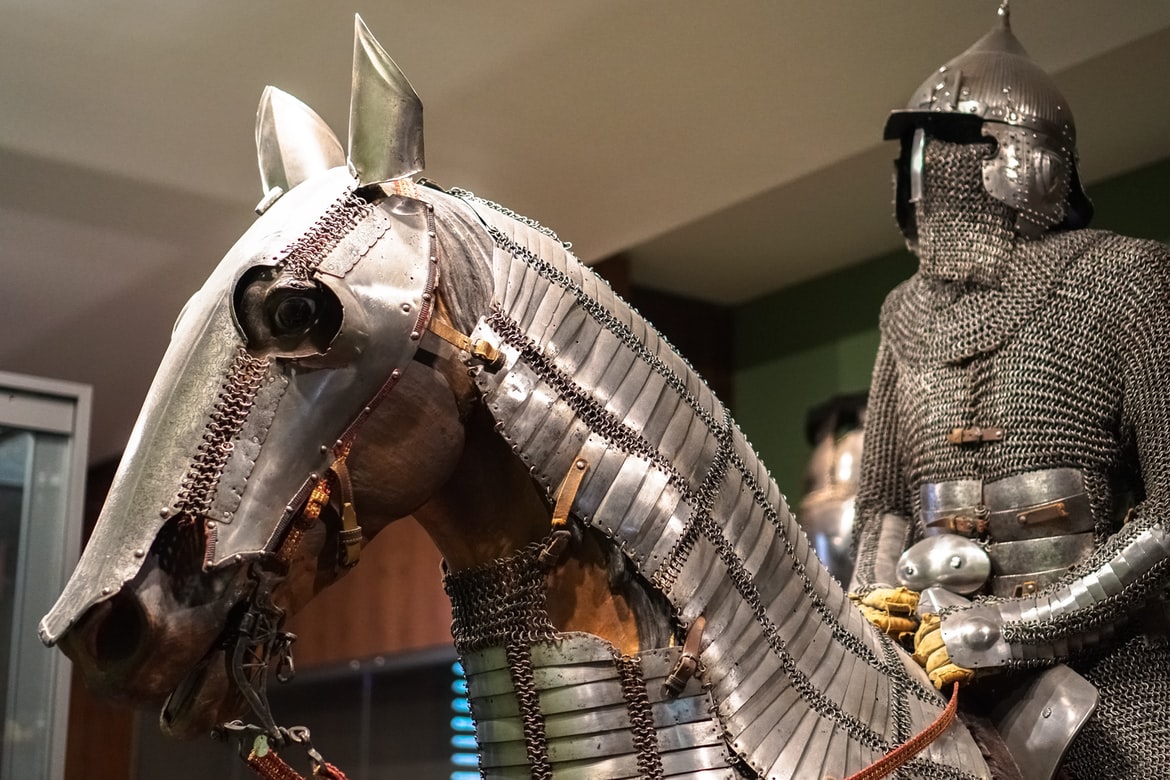
The Crusades are an extraordinary and fascinating period for anyone intrigued by history, particularly in the context of Israel (or what was then referred to as ‘the Holy Land’). Some scholars argue they were a pilgrimage whilst others see them as a Holy War. Much has been written, and can still be written, about these military expeditions but for those who want the basics, this article is an attempt to explain some of the major events that occurred over these centuries, and how they impacted Jerusalem.A Crusader in the Army Museum, Paris.Photo byJeremy BezangeronUnsplashWe don’t promise here to give you all the answers (we couldn’t, even if we wanted to!)...rather look at a few of the important questions dealing with the long and arduous journeys undertaken by nobles and knights, all the way from northern Europe to Jerusalem....and what transpired when they finally reached the Levant. Today, we’re going to focus primarily on the First Crusade (scholars are still arguing about exactly how many there were) and the impact it had on Europe and the Levant.So what exactly were the Crusades?Essentially, from the perspective of the Christian history timeline, the Crusades were a series of religious wars/military expeditions that took place between Christians and Muslims. They began in the 11th century and were instigated by Western European Christians who were angered by centuries of Muslim rule. Supported, and often directed, by the Latin Church, the best known of them are the ones directed towards Jerusalem, between the period of 1095 and 1281.Sunset in the Old City of Jerusalem.Photo byDavid HolifieldonUnsplashIn 1009, the Church of the Holy Sepulchre needed to be rebuilt, after being destroyed by the Caliph of Egypt, Al-Hakim. Subsequently, Christian pilgrims were free to visit the church. Around 1077, Muslim Seljuk Turks took control of the Holy Land, and it became harder for Christian pilgrims to visit there and rumors of pilgrims’ mistreatment spread. Soon, the Byzantine Emperor Alexius, who feared that the Seljuks might soon invade his land (and reach the Christian city of Constantinople) reached out to the Pope, appealing for help. The call to arms by Pope Urban II was heard by tens of thousands of men, young and old, across Western Europe, and apparently, his words resonated with them. “May you deem it a beautiful thing to die for Christ in that city in which he died for us” he told them. Thousands cut out red Crusader crosses and sewed them into their white tunics before setting off. For them, the die was cast - they would fight for Jerusalem, at whatever personal cost. Church of the Holy Sepulchre, Jerusalem. Photo byAdam KringonUnsplashWho took part in the Crusades?The popular response across all social classes was enormous - both the People’s Crusade and the Princes’ Crusade attracted no end of participants. The Crusader's journey to Jerusalem was certainly seen as a ‘worthy’ penitential privilege and a willingness to accept Papal commands was common. What we do know is that the ‘call to arms’ was spearheaded by Pope Urban II at the 10-day Council of Clermont. There he gave a rousing and impassioned speech, designed to recruit men.As a result, many noblemen from France and England also signed up for the Crusades. Knights were particularly well represented, particularly a mysterious Order named the Knights Templar. Originally, their purpose was to protect pilgrims from danger but, over time, they ‘expanded’ their duties and became known as defenders of the Crusader states in the Holy Land. These knights were certainly brave, skilled warriors, and even today, tales of their military prowess are told to schoolchildren.Сrusader armor. Photo byNik ShuliahinonUnsplashWhat were the motives behind the Crusades?There were all kinds of reasons behind the Crusades in fact. Some individuals felt the need to obey the Pope, who had decreed that the Holy City of Jerusalem should be freed from Muslim infidels, in order to grant Christian pilgrims free access to worship. In the words of St. Bernard of Clairvaux: “Oh men of war, oh mighty soldier, you now have something to fight for. If you win, it will be glorious. If you die fighting for Jerusalem, you will win a place in heaven.”Others were anxious to be forgiven for their sins since the Pope offered automatic forgiveness for anyone who signed up. Particularly for Knights, who had killed many in battle, this was an opportunity to have their soul cleansed. Serfs signed up because they were promised freedom from indentured labor. And then there were some troublesome young men who were ‘packed off’ abroad by their families. Obviously, there were other more materialistic reasons too - if victorious, the spoils of war would be theirs, particularly in the form of land (which could always tempt knights who were not destined to inherit their father’s lands). Finally, let us not forget the question of ‘honor’. Participating in a Crusade was an opportunity to prove one’s bravery, as well as see the world and have an adventure into the bargain.Dome of the Rock, Jerusalem. Photo byGary ChapmanonUnsplashWhy was Jerusalem important in the Crusades?To medieval Jews, Christians, and Muslims, the Holy Land was not a mere geographical entity in the Middle East. Rather it symbolized purity and spirituality. All three faiths revered Jerusalem - for Christians, it was where Jesus was crucified, buried, and rose again. For Jews, it was where the city of King David was once captured and then made the capital of the ancient Jewish people.For Muslims, the Dome of the Rock on Temple Mount was the place where Mohammed the Prophet was said to have flown over, on his fateful journey to Mecca. The enormous significance of Jerusalem to all three faiths in the time of the Crusades could not be underrated.The First CrusadeThe Crusaders marched across Europe, from France, Germany, and Italy, to Constantinople. After crossing into Asia Minor, they split up and began pillaging the countryside. There was an orgy of killing, in which citizens and enemy soldiers alike were massacred and even the arrival of a large Turkish army could not stop them. The Antioch fortress surrendered to the Europeans.The Crusaders rested and reorganized for some months but their eyes were still on the great prize - Jerusalem. Although they had lost many men in previous battles, they still numbered 1,200 cavalries and around 12,000-foot soldiers. On reaching Jerusalem, they found the city to be heavily fortified and so began building three huge siege towers. A week later they were complete. The Gate of St. Stephen was first to be penetrated and, once opened, the Crusaders flooded in.Knight's armor, the Army Museum, Paris. Photo byJeremy BezangeronUnsplashIn this battle, thousands of its Muslim defenders were massacred without mercy. The attack was so brutal that a Christan from that time actually claimed: “the slaughter was so great that our men waded in blood up to their ankles.’ Another eyewitness, Ralph of Caen, watched the battle from the Mount of Olives and reported, “the scurrying people, the fortified towers, the roused garrison, the men rushing to arms, the women in tears, the priests turned to their prayers, the streets ringing with cries, crashing, clanging and neighing.”For sure, having to surrender Jerusalem to the Crusaders was an enormous blow to the Muslims. Christians quickly took control of the Al-Aqsa Mosque and the Dome of the Rock. Many Jews fared just as badly - thousands hid in their synagogues but were found and killed. Soon after, the Kingdom of Jerusalem was established under the rule of Godfrey of Bouillon. Al-Aqsa Mosque, Temple Mount. Photo byToa HeftibaonUnsplashThe Crusader StatesOnce they had fulfilled their vows of pilgrimage, many of the Crusaders left the Holy Land to return to Europe. This, of course, left the problem of who would govern these now conquered territories. At first, there was some disagreement about what kind of government should be established. Godfrey of Bouillon refused to take on the title of ‘King’ since he wished Jerusalem to be a secular state. Eventually, he took on the title of ‘Defender of the Holy Sepulcher‘.After Godfrey of Bouillon died suddenly of typhus (there was great mourning, and his body lay in state for several days, before being buried at the Church of the Holy Sepulchre) the throne passed to his brother Baldwin I, also known as Baldwin of Boulogne. His Latin Kingdom eventually boasted 15 cathedral churches including the Church of the Nativity in Bethlehem. Four large western settlements, or Crusader states, were eventually established, in Jerusalem, Edessa, Antioch, and Tripoli By 1112, Caesarea, Arsuf (Apollonia), Acre, Beirut, and Sidon had been captured. Crusader castles were built in Galilee.In the meantime, all around the city of Jerusalem, you could see arts and crafts from different traditions - Latin gold workers on one side of the market, and Syrian goldsmiths on the other. Some pieces that you can see today even bear inscriptions, showing that they were made by an Islamic craftsman for a Christian purchaser!Muslim people near Herod's Gate, next to the Old City of Jerusalem.Photo byLevi Meir ClancyonUnsplashThe French Influence of the CrusadesThe vast majority of the Crusaders in the Jerusalem Kingdom were from France, not to mention the soldiers and knights who arrived in the next 200 years to act as reinforcements. Of course, with them they brought the French language, thus making Old French the lingua franca of the Levant. Without a doubt, King Baldwin was able to take advantage of the rivalries that existed between his Muslim enemies and soon extended his control along the Mediterranean coast.The states were ruled very successfully for the next 20 or so years. But by 1131, the rule of the early Crusaders had come to an end. There was no more a policy of expansion, rather a consolidation of what had been captured. Unfortunately, the northern Crusader states were now endangered, since the Byzantines were preparing to go to war. In 1133, Edessa was captured and this would set the scene for the next chapter - the Second Crusade.Analyzing the CrusadesSo what was it all about? Some historians argue today that whilst the overriding initial motive for the Crusades was religious, many pilgrims succumbed to their darker impulses i.e. greed and a lust for power. What we do know is that the dead number is millions. Ultimately, the Crusades never did manage to create a ‘Holy Land’ that they envisaged would be part of Christendom but with their actions, they certainly changed history forever. Montfort, the principal Crusader castle of the Teutonic Order, Israel.Photo credit: © Dmitry MishinWhat was the Impact of the Crusades?The Crusades, over time, did not have the impact they had hoped insofar that Islam was not defeated - in fact, the actions of the Crusaders in what is now Israel eventually produced a backlash. When Saladin famously conquered Jerusalem in 1189, his plan was to avenge the slaughter of Muslims in Jerusalem by killing all of the Christians he found in the city. Luckily for them, he eventually agreed to let them ‘purchase’ their freedom, as long as they gave assurances that Jerusalem’s Muslim citizens be left unharmed.Who controlled Jerusalem after the Crusades? Without a doubt, Saladin’s achievements were astonishing - he unified the Muslim Near East, using a clever mixture of diplomacy and warfare. At the height of his power, his sultanate spanned Egypt, Syria, the Jazira (Upper Mesopotamia), the Hejaz (western Arabia), Yemen, parts of western North Africa, and Nubia. After defeating the Crusaders in the Battle of Hattin, he regained control over the city after 90 years of Christian occupation. Muslims across the world still consider this liberation of Jerusalem a great incident, particularly because Saladin restored the city’s religious, political, and social balance. Arsur of Crusader Kingdom of Jerusalem, Apollonia National Park, Israel.Photo credit: ©Dmitry MishinIn the meantime, Europeans learned a great deal from this period of history too. They became better warriors - more adept at designing castles and using gunpowder. They learned a great deal from Muslim scholars about medicine and science, and eventually adopted their numbers system (1, 2, 3) which they found more straightforward than Roman numerals.The Crusaders also learned that the world was vast, and that beyond Jerusalem were India and China, places where they could buy and sell. Over the years, trade flourished and many goods were brought to Western Europe, including silk, spices, cotton, and lemons. Much was also learned about agriculture, the breeding of animals and flora, and fauna.Today, of course, the argument still reigns about the Crusades and whether they were a legitimate reaction to Muslim aggression or simple colonial aggression. What we do know, however, is that the battle for Jerusalem was far from over - and that centuries of war would lie ahead, as armies wrestled for control of this extraordinary city.If you are interested in Christian day toursfeel free to contact us. If you are willing to visit some Crusader castles in Israel, let us know and we will elaborate a customized private tour for you.Belvoir Crusader Castle,Jordan Star National Park, Israel.Photo credit: ©Dmitry Mishin
By Sarah Mann

Mountains in Israel

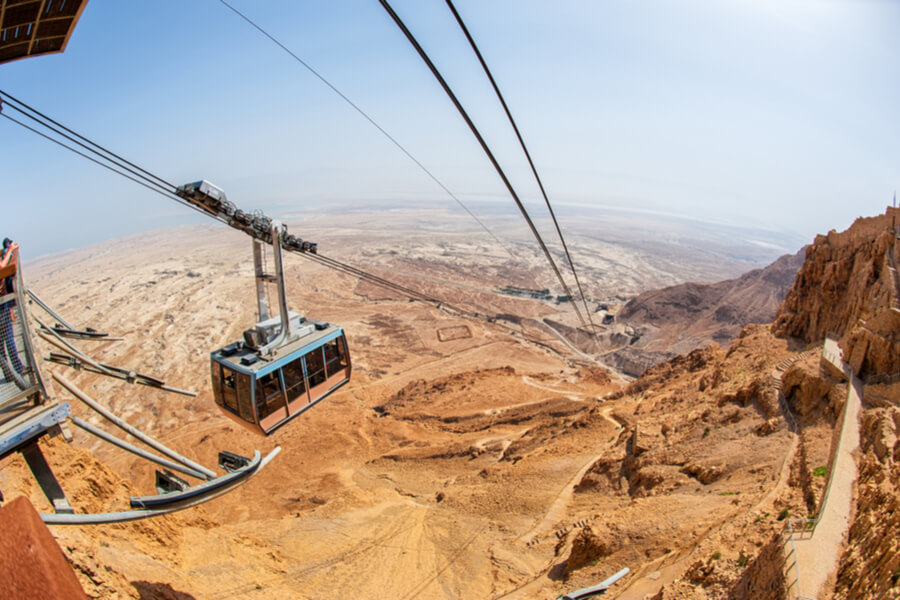
The geography of the Holy Land is incredibly diverse - you can actually dive with tropical fish in the Red Sea, cycle through the Arava and Negev deserts, swim and sunbathe by the Mediterranean Sea all in the space of a day, if you get up early. Something else that’s amazing about Israel is just how many mountains it has. Many tourists aren’t aware of this - they imagine sun, sea and sand, without knowing that within an hour or two’s drive of both Jerusalem and Tel Aviv it’s possible to find amazing places to climb and hike.Masada Cable Car, Israel.Photo credit: © ShutterstockMountains in Israel are also imbued with religious significance, important to Christians, Jews, and Muslims alike. From Mount Sinai, where God gave Jews the Ten Commandments, to the Mount of Temptation(where Jesus battled with Satan), great drama takes place. No less so either in the Quran - in Islamic history, the small hills of Al-Marwah and Al-Safa are the locations between which Muslims travel back and forth during their famous pilgrimage known as the ‘Hajj.’And for those less interested in history and more in sport, Israel’s a great place to visit if you’re athletic. Whether you want to hike,indulge in some rock climbing, take off on a mountain bike action in Israel, ski and snowboard on Mount Hermon, or rappel down the sides of the Mitzpe Ramon crater in the Negev desert, there’s a tour guide waiting to arrange your excursion in Israel.Below we’re looking at some of these mountain ranges, what makes them important to the pilgrims who visit there and why you should think about visiting a few of them on your trip to Israel.Mount Arbel near Tiberias. Photo credit: © Dan PorgesMountains and the Hebrew BibleMount Carmel -This coastal mountain range in Haifa is, at its highest point, 5454 m above sea level. The name dates back to biblical times and comes from the Hebrew word ‘kerem’ (‘vineyard’), referring to the mountain’s fertility. Its most important reference in the Old Testament is in Kings 1, where Elijah confronted the false prophets of Baal.Mount Gerizim - Located in the West Bank, just south of Nablus (Shechem) Mount Gerizim rises to 880 m and is the twin of Mount Ebel, which sits to its north. The mountain is mentioned in Deuteronomy 11, as the site where God was to give his blessing to the Jewish people - and this ceremony was subsequently performed in the time of Joshua. Gerizim is also mentioned in the writings of the Roman historian Flavius Josephus and in the rabbinical Talmud. Mount Gilboa - The Gilboa Ridge runs to around 80 km and rises to a height of 650 meters above sea level. Close to the Great Rift Valley, its slopes are steep and ideal for hiking when in Israel. It is also home to several springs, including Ein Harod and Ein HaShlosha and these are very popular both with tourists and locals.Overlooking the Jordan Valley to the North and the Jezreel Valley to the south, Mount Gilboa is where Saul (Israel’s first King) died (by falling on his own sword) in a battle against the Philistines. When David heard this news, he wept and cursed the mountain.Hai-Bar Carmel National Park. Photo credit: © Manu Grinspan. Published with permission of the Israel Nature and Parks AuthorityMount Hazor - Located in the West Bank, with Samaria to its north and Judea to its south, Mount Hazor reaches over 1,000 meters at its peak. In Hebrew, ‘Hazor’ means ‘courtyard’ and refers to the wall enclosures that people constructed here in ancient times. In Joshua’s day, it was regarded as the ‘head of all the kingdoms’, and accounts from the Dead Sea Scrolls suggest that this is the place where Abraham built an altar and prepared to obey God’s word and sacrifice his son Isaac.Judaean Mountains - Also known as the Hebron hills, the Judean Mountain range stretches from the foothills of Judea to parts of the Jordan Rift Valley, including important cities such as Jerusalem, Bethlehem, Hebron, and Ramallah. Reaching a height of just over 1,000 meters, they formed the heart of the Kingdom of Judah, where the first Jewish settlements emerged.After the death of David’s son, King Solomon, the ten northern tribes separated from Judah, and Jerusalem remained the capital of the kingdom of Judah, which continued until 587/586 when the Babylonians conquered it. This majestic mountainscape is also where David hurled a stone at Goliath and Bar Kochba led a revolt against the Romans. Today, it is a wonderful place to hike, enjoy a wine tour/picnic and visit numerous archaeological sites.Judaean Desert Mountains. Photo by Amit Lahav on UnsplashMount Betarim -This mountain is sacred to two faiths - according to Jewish tradition, it is the spot at which God made his covenant with Abraham and according to Muslim tradition, it is where God commanded Abraham to sacrifice four species of birds, before bringing them back to life.Сity of David - More than 3,000 years ago, King David left Hebron for a small hilltop city known as Jerusalem; he would later establish it as the capital of the tribes of Israel. Years later, his son Solomon built the First Temple there and, as a result, this hilltop became one of the Holy Land’s most important sites.Mount Sinai (in Arabic, Jabal Musa) lies on the Sinai Peninsula of Egypt, rising 2,280 m high, and surrounded by even higher peaks. It is, of course, famous as the spot on which God gave the Israelites (via Moses) the Ten Commandments. Mount Nebo rises 710 m high and is situated in Jordan. It is mentioned in the Hebrew Bible as the place at which God gave Moses a view of the Promised Land.Breathtaking Sunrise at the top of Mount Sinai in Egypt. Photo by Vlad Kiselov on UnsplashMountains and the Christian BibleMount of Beatitudes - Overlooking the Sea of Galilee, this is the place where Jesus was supposed to have given his famous Sermon on the Mount. The exact site is not known but pilgrims commemorate the event at the Church of the Beatitudes, built on the slope of the mount and close to the Tiberias-Rosh Pina road. Mount Precipice - Located just outside of Nazareth, and almost 400 m high, this mountain offers wonderful views of the surrounding area, as well as beautiful walking paths known by pilgrims as the ‘Gospel Trails’. According to the Gospel of Luke, an angry mob attempted to throw Jesus off this mountain, after his bold sermons in the area.Mount of Temptation -Rising to 360 m above sea level, and offering wonderful panoramic views of the Jordan Valley and the Dead Sea, this is the spot - near Jericho - at which tradition holds Christ was tempted by the Devil. You can reach the summit only on a steep path, passing by a monastery that literally ‘clings’ to the face of the cliff.Mount of Transfiguration - According to the Gospel of Matthew, this is the spot at which Jesus underwent his transfiguration - his face shone like the sun and his clothes turned white. Its actual location is unknown - it could be Mount Tabor or Mount Hermon.Mount Tabor - Located in Galilee, at the eastern end of the Jezreel Valley, although it is not mentioned specifically in the New Testament, Mount Tabor is assumed to be the location of Jesus’s transfiguration (see above).Mount of Beatitudes Church, Sea of Galilee, Israel. Photo credit: © ShutterstockMountains of Jerusalem‎Mount of Olives - The Mount of Olives (in Hebrew’ Har HaZeitim’ and in Arabic ‘Jabal Al Tur’) sits east of and next to Jerusalem and is named after the olive terraces that cover the slopes. Referred to frequently both in the Old and New Testaments, it is a sacred spot for Christians, Jews, and also Muslims, and also home to a prominent cemetery.First mentioned in the Bible as the “ascent of the Mount of Olives”, it is also mentioned in the Book of Zechariah at the end of days prophecy. For Christians, it is the spot where Jesus spent time in the last week of his life, particularly at the Garden of Gethsemane (where he prayed before his arrest) and also as the spot from which he ascended to heaven. For Muslims, the Mount of Olives is where the Kaaba - the black stone from Mecca - will one day return. Temple Mount (Moriah) - Also known as Haram al-Sharif and Al Aqsa, this hill in Jerusalem is venerated both by Jews and Muslims. For Jews, it is the place where the divine presence manifests itself and where Abraham prepared to sacrifice Isaac. For Muslims, it is the site of Mohammed’s ascent to heaven, in 7 CE. Located just above the Western Wall, in recent years its sovereignty has become hotly contested.Mout of Olives with the Church of Dominus Flevit, Jerusalem.Photo credit: © ShutterstockMount Zion - Situated just outside the Old City Walls, Mount Zion is mentioned in the Hebrew Bible (in conjunction with the City of David and also Temple Mount) but today its name refers to the Western Hill of ancient Jerusalem. The word ‘Zion’ certainly has emotional connotations for Jews...it is where God dwells, is King, and has installed his King. Mount Scopus - At 825 meters high and situated in north-east Jerusalem, Mount Scopus has historically been a strategic point (‘scopus’ in Latin means ‘lookout’) and used by the Romans and Crusaders, as well as the scene for modern-day battles. Between 1948-1967, Mount Scopus was protected by the UN as an Israeli enclave within Jordanian territory. Today it offers panoramic views of the city and is home to the world-famous Hebrew University.Mount Herzl - Named after Theodor Herzl (the founder of modern Zionism) and also known as Har haZikharon (the Mount of Remembrance) this hill is home to Israel’s national cemetery and also other education and memorial facilities. It is a site of great importance in Israel, being where the state ceremony for the conclusion of Memorial Day and the beginning of Independence Day takes place each year. To its west, sits the Yad Vashem Memorial to the six million murdered in the Holocaust.Dormition Abbey, Mount Zion. Photo credit: © Sofia EmeliyanovaFamous Mountains in Northern IsraelMount Hermon - Mount Hermon (or Jabul al-Sheikh, "Mountain of the Sheikh" in Arabic) is a cluster of hills in the Lebanon area, with peaks that sit between the border of Syria and Lebanon. The United Nations is in control of the buffer zone at the top, separating Israel and Syria and its southern slopes are home to a ski resort that is popular with Israelis, though Mount Hermon's weather is characteristic of fog.Mount Heman soars to 2814 above the sea and is the highest mountain in Israel, surrounded at its base by a number of small Druze villages. Historically, Mount Hermon has been known as a holy place, a snow-capped hill, and also a mountain of great military (strategic) importance. Its springs at the base of the mountain form into streams that eventually make up the Jordan River.Mount Bental - Located in the Golan Heights, Mount Bental rises 1,170 meters above sea level and provides amazing views of Mount Hermon and the Golan. The overlook is managed by Kibbutz Merom haGolan, the first of its kind established after the Six-Day War in 1967.In 1973, in the Yom Kippur war, this mountain was home to an enormous tank battle and as a result of the huge casualties (100 Israeli tanks were reduced to 7, under extreme enemy fire) was subsequently known as the ‘Valley of Tears.’Valley of Tears, Golan Heights.Photo credit: © Dmitry MishinMount Arbel - Situated near Tiberias, in the Lower Galilee, this mountain boasts beautiful hiking trails that lead to a fortress-like building, the remains of an ancient synagogue, and stunning views of the Golan Heights. The caves dug into Mount Arbel’s cliffs were historically used as a hiding place for Jews fighting their enemies - the historian Josephus writes of the last Hasmonean rebels who lived in the cliffs and were eventually defeated by the Romans. Mount Meron - Located close to Safed in the Upper Galilee, Mount Meron has great significance for Jews, being particularly famous for the tomb of Rabbi Shimon bar Yochai and a huge annual celebration of the festival of Lag B’Omer. It is mentioned in the bible as the spot at which Joshua defeated the Canaanite kings and some Jews also believe a cave nearby holds the remains of the famous rabbis Hillel and Shammai.The Temple Mount with the Dome of the Rock, Jerusalem.Photo credit: © Shutterstock
By Sarah Mann

The Mediterranean Sea

Israel’s a popular tourist destination for many reasons - ancient historical landmarks, wonderful archaeological sites, mountains, deserts and bountiful orchards. It might be a small country, but Israel packs a big punch in terms of what there is to see and do, making it an ideal place to take a break. And for those who love water, one of the biggest draws has got to be its long, sandy coastline with gorgeous beaches, bordered by the beautiful, clear waters of the Mediterranean Sea.A boat in Caesarea Harbor.Photo credit: © ShutterstockToday we’ll be taking a look at what makes the Mediterranean sea so special - its location (and ports that served it historically), its geography and weather patterns, the tremendous biodiversity it offers marine biologists, and its beautiful beaches. We’ll give you a little insight into the astounding maritime archaeology that can be found off the Israeli Mediterranean coast, as well as a few tips and pointers for holidaying at cities up and down its shores.Etymology of Mediterranean SeaThe actual word ‘Mediterranean’ comes from the Latin ‘mediterraneus’. Medius and terra, combined, spell out ‘middle of the land’. However, the Mediterranean has been known by a number of names throughout history - to the ancient Romans it was ‘mare nostrum’ (‘our sea’) and to the Turks ‘Akdeniz’ (‘the white sea’).The Old English name of theMediterranean Sea was Wendel-sæ, named so after the Vandals, living on the southwest coast after the fall of Rome. In Hebrew, it is ‘HaYam HaTikhon’ (‘the middle sea’), in Arabic ‘Al-Baħr Al-Abyad Al-Muttawasit’ (‘the middle white sea’) and in the Bible, it is referred to as ‘the Sea of the Philistines’, ‘the Great Sea’ or simply ‘the Sea.’Aerial view of Caesarea coast, Israel. Photo credit: © ShutterstockGeographyof Mediterranean SeaIn general, the Mediterranean climate is one of mild, wet winters and hot, dry summers, which is why it's ideal for growing crops such as olives, lemons, oranges, and grapes. Because it is almost landlocked (having only the narrowest connection with the Atlantic ocean) its tides are quite limited. Another thing that is noticeable about this sea is its color - because nitrates and ammonia in its waters are in short supply, the result is the crystal clear blue waters that swimmers and divers know and love. Additionally, although most nutrients are found in the bottom layers of the sea, algae thrive at the top (where the sun shines).What many people don’t know is that, long ago, the Mediterranean sea almost dried up - and it was only ‘revived’ by a sensational flood, about 5 million years ago. Some scientists even believe that - for a time - the entire sea evaporated - and was desiccated, just like the Sahara. Today, the only real evidence of this ‘flood’ is a layer of salt up to two miles thick, hidden deep below the sea basin. The Mediterranean Sea in Acre, Israel.Photo credit: © ShutterstockMediterranean WeatherThe weather in Israel’s Mediterranean area, as mentioned before, is characterized by hot, dry summers and cool, rainy winters. Rains begin in late October and are usually gone by early May, with rainfall peaking in January and February. From late spring to October, temperatures can be scorching and high humidity levels can make walking outside quite uncomfortable. The evenings bring a breeze, but it is quite common, in July and August, for the thermometer to register 25 degrees celsius (77F) at midnight and soar to 36C (96.8F) in the day.History of the Mediterranean SeaFrom ancient years (dating back to the Bronze Age) to contemporary times, the Mediterranean Sea has played an important part in Israel’s history - in the form of a number of ancient seaports such as Jaffa, Caesarea, and Acre.Jaffa (from where Jonah supposedly fled God and, for his trouble, was swallowed by a whale) is arguably the oldest seaport in the world - ancient documents show it was in use as long as 4,000 years ago.The Cable Car to Rosh Hanikra Sea Caves on the coast of the Mediterranean Sea, Israel.Photo credit: © ShutterstockCaesarea and Acre (further up the coast) also give visitors an idea of how important the Mediterranean was to Israel. Caesarea (established by King Herod in 20 CE) was the main gateway port for Roman soldiers and even though much of it was destroyed, you can still see incredibly well-preserved ruins there today.The same is true for Acre - during Crusaders' times, it was a leading port for Europeans arriving and departing and several rabbis arrived there, including Maimonides. Today it is a UNESCO World Heritage Site and famous for its citadel walls, Arab gates, and Ottoman towers. Today, Israel has two large, active cargo ports - Ashdod and Haifa. Haifa has emotional significance to Israelis too because it was the point of entry for many refugees arriving in Israel, first fleeing Europe after the Holocaust and later seeking refuge from Arab persecution.View of Jaffa port and Tel Aviv beachfront.Photo credit: © ShutterstockBiodiversityThe Mediterranean is a veritable hotspot for biodiversity - it has between 15,000 to 25.000 species, and 60% of these are unique to the region. Even though it covers less than 1% of the world’s ocean area, this tiny semi-closed sea is rich in underwater beds and islands, as well as serving as an important place for wintering, reproduction, and migration of species.Climate Change and Environmental ChallengesClimate change is also causing problems for the Mediterranean - its million cubic miles of water keep vaporizing as the years pass, with insufficient rain to rectify the loss. The only water source keeping the sea stable is flowing through the Strait of Gibraltar (a narrow channel between Spain and Morocco). In the meantime, over 1,900 species of birds, fish, mammals, and reptiles have recently been assessed by scientists and it is estimated that almost 20% of them are threatened with extinction. Certain irreplaceable species are already extinct, including the Hula Painted Frog and the Sardinian pike. Reasons for this include habitat loss (caused by developing coastal infrastructure and dam building) as well as over-fishing, pollution, and invasions by alien species. Increasing urbanization and the arrival of millions of tourists to the area each year are also taking their toll. It’s safe to say that urgent conservation action needs to be taken, as well as caring for endangered species, to ensure the damage does not continue.Tel Aviv Promenade.Photo credit: © ShutterstockThe Mediterranean Sea in IsraelWhy is the Mediterranean sea important to Israel? For millions of Israelis (as well as those visiting the country) the Mediterranean sea is a source of pleasure, leisure, income, and food. Alcoholism, obesity, and heart disease rates are some of the lowest in the world here, even though wine, olive oil, fruit, and bread are widespread. Abundant sunshine means it's easy to get a constant supply of Vitamin D.The sea absorbs around a quarter of all the carbon dioxide added to the atmosphere through human activity. Many scientists believe that living near the Mediterranean reduces the risk of heart disease, type 2 diabetes, Alzheimer's, and Parkinson's, not to mention improving longevity and quality of life. Mediterranean sea air is a natural cleanser, has antiseptic properties, and can help improve circulation. It all helps - in 2021, Israel was ranked 12th in the UN’s World Happiness Index and Tel Aviv, in particular, is said to be the world’s 8th most happy city! Surely this has got something to do with living next to the Mediterranean sea and its glorious beaches?Tel Aviv beachfront. Sunset on a rainy day. Photo by Shai Pal on UnsplashIsraeli Cities on the MediterraneanMany important cities in Israel are situated on the Mediterranean coast, including Ashkelon, Ashdod, Jaffa, Tel Aviv, Herzliya, Haifa, Acre, and Nahariya. So if you’re looking to travel in this area, either independently, as a part of a group tour, or by booking a private tour, then you have an astonishing number of beach options. From Surfing and Drumming to Churches and FishermenTel Aviv is a magnet for travelers of course - its foodie scene, small coffee shops, bustling boardwalk, small boutiques, and 24/7 nightlife make it incredibly popular with all age groups. Tel Aviv’s beaches all have their own style and flair - whether you want to beat drums, surf, enjoy some folk dancing or simply lounge on a chair - there’s something for you. Moreover, Jaffa is less than an hour’s walk south along the shore from North Tel Aviv’s Namal Market, and a marvelous place to spend time. Whether you want to rummage in the Jaffa flea market, stroll the narrow, cobbled streets of the Artists' Quarter, or wander down by the harbor, watching fishermen sit patiently at Jaffa Port, hoping for a catch, you’ll have a fine time.Ships at Jaffa Port. Photo credit: © ShutterstockFortresses, Sand Dunes, and BathingSouth of Tel Aviv, Ashdod and Ashkelon have wonderful sandy beaches, complete with sand dunes. Ashdod has an ancient fortress and Ashkelon boasts a National Park, where you can bathe and then explore nature on the same day. North of Tel Aviv, upmarket, ritzy Herzliya Pituach and French-dominated Netanya (where boulangeries serving authentic croissants and quiches) are fantastic for travelers. The sea temperature of the Mediterranean is cool in the winter but between May and October, it is pleasantly comfortable (almost like a warm bath) for swimming. The jellyfish season in Israel is usually between June and August, so watch out! (Luckily, although a sting can be painful, it will not be fatal). And as for the question “Are there sharks in Israel?” the answer is, “Yes, but none that will hurt you!”. In recent years, groups of ‘sandbar sharks’ (an endangered species) have been sighted both in Ashdod and Hadera, although they are still pretty rare. So spending a day at the beach is really not a bad idea!Ashkelon Beach.Photo credit: © Dmitry MishinShore Excursions and Day Trips to JerusalemFor those who would like to explore the north of the country, we’d highly recommend booking Caesarea, Acre, Rosh haNikra tour.It’s also possible to take a private Israel Shore excursion from Ashdod of Haifa. If you’re on a cruise that docks in the country, this is the ideal way to spend a few hours and because most of these tours are private, they can be customized according to your exact needs.Many of our customers also ask us “How far from the Mediterranean Sea is Jerusalem?” and the answer is “not far at all!” From Tel Aviv, it's a 45-minute drive (without traffic) and even faster with the new high-speed train which for a few dollars will transport you to Jerusalem’s central train station (connected with the light rail, and just a 15-minute journey thereafter from the Old City Walls). So you can enjoy time at the coast and also visit this unique city - taking a day trip to Jerusalem has never been this easy.Maritime ArchaeologyIsrael is also home to all kinds of maritime archaeology, not to mention shipwrecks that have been found off the Mediterranean coast. Historically, Israel’s coastline lacked deep and natural harbors so boats in ancient times had to look for shelter from the storm in river mouths. Many, unfortunately, did not survive the perilous waters!Since the 1960s, maritime archaeologists have been carrying out underwater excavations all along the coast, trying to find the remains of shipwrecks, cargos, and ancient harbors. For those who are curious, there are a number of national parks that can still be visited, giving a sense of how these coastal towns operated thousands of years ago. Here are a few we’d recommend:Aqueduct Beach, Caesarea, Israel.Photo credit: © Shutterstock- Ashkelon Archaeological park is just 40 minutes drive from Tel Aviv and boasts an ancient fortress and the remains of two churches. - Crusader City in Acre - The maritime capital of the Crusaders, Acre has astonishingly well-preserved ancient walls. Don’t miss the citadel, Templars' Tunnel, Knights Hall, Al-Jazzar mosque, and a stroll along the harbor.- Caesarea National Park - this magnificent Herodian city boats an amphitheater. Roman theatre, Caesarea Port, hippodrome, and bathhouse. There’s also an Underwater Museum (fantastic for diving enthusiasts) and the often-empty Aqueduct Beach.- Apollonia-Arsuf National Park - close to Herzliya, here you can walk along the coastal path and explore this Crusader castle and Roman villa. -The Carmel Caves - these dwellings of prehistoric man provide valuable insight into life back then, with excavations throwing up flint tools, animal bones, and a human burial site. - Tel Dor National Park - this ancient Phoenician port city can be found on the Carmel coast and was once a great city in the Mediterranean.- Atlit Yam - located near Haifa, a number of submerged prehistoric sites have been found here, dating back to 7 BCE. Findings include a mysterious stone circle and dozens of human skeletons, all still in their graves. One of the oldest and largest sunken settlements ever found.Apollonia coastline, Israel.Photo credit: © Dmitry Mishin
By Sarah Mann

Visa for Jordan

Jordan’s one of the less talked about countries in the Middle East but actually, it’s the kind of place that, once people visit, they realise just what they’ve been missing. With its beautiful natural landscapes, stunning desert scenery, ancient religious sites and - of course - the wondrous ancient city of Petra - it really should be on any tourist’s bucket list, particularly if you’re combining it with a vacation in Israel or Egypt (with which it shares borders).A jeep tour in Wadi Rum, Jordan.Photo credit: © ShutterstockWhy Should I Visit Jordan?In terms of traveling in the country, Jordan is relatively stable, politically speaking, quite developed in terms of its infrastructure, and its people - from the capital city of Amman to the Bedouins in the desert - are warm and welcoming. It has fine Levantine cuisine, diverse landscapes, and a climate that’s amenable to travel almost the entire year round. Moreover, whether you’re a backpacker or looking to splash some cash, there are accommodation options to suit all budgets.Moreover, because Jordan is only 90,000 square kilometers (about 35,000 square miles) you can travel from place to place quickly - whether by private car and driver, public transport or as part of an organized Jordan tour. Traveling from the capital Amman to the desert in Wadi Rum, the ancient ruins of Jerash, the extraordinary nature around the Dead Sea, the wonders of Petra, and the chilled-out atmosphere of Aqaba, on the Red Sea, you can pack in a lot, not just in a week or two but even a long weekend. Below, let’s look at some of the practicalities involved in obtaining a visa for Jordan so that you can begin planning your trip and anticipating what fine things await you...Madaba Mosaic Map of the Holy Land, Madaba, Jordan.Photo credit: © ShutterstockDo I Need a Visa to Visit Jordan?“Do I need a visa to visit Jordan?” is a question we are asked regularly, by people wanting to book trips with us. Well, the answer is - for the most part - yes. The good news is that it’s not a difficult or time-consuming procedure and, for the most part, it’s just a matter of paying your fee and having your passport stamped.Broadly speaking, citizens arriving from most countries in the West do not need a visa in advance - it’s something that can be purchased on the border. The main conditions for entry are a passport that is valid for at least 6 months beyond the time you wish to stay there, and two blank pages within the passport that will be used for stamps. The only citizens who do not have to present a passport are those from Lebanon - in this case, a valid national ID card is all that is required.A sandstone formation carved by the elements in Wadi Rum,Jordan. Photo credit: © ShutterstockReturn Ticket Proof and Police Registration at the Jordan BorderIf you are arriving by air, at Queen Alia International Airport, you may be asked for proof of your return ticket. This is less likely if you are traveling overland but please note that all tourists, however they have arrived, are obliged to register with the Jordanian police after 28 days of being in the country.At present, citizens of certain countries are granted visa-free entry to Jordan for varying periods (ranging from one to three months, depending on their nationality). Some of these countries include Egypt, South Africa, Barbados, Indonesia, Malaysia, and Ecuador. Nationals of all member states of the Gulf Cooperation Council (GCC) are also allowed to enter without a visa.The Temple of Artemis in Jerash, Jordan. Photo credit: © ShutterstockJordanian e-Visas and Visas on Arrival in JordanAll other foreign citizens (i.e. those not on the list above) entering Jordan from Israel are required to obtain an approved visa for Jordan. This can be either in the form of an e-visa, which is a simple process that can be carried out online or by purchasing one in person, after waiting in line at immigration, at one of Israel and Jordan borders (either the Sheikh Hussein orYitzhak Rabin). (Embassy visas for diplomats can be ordered in advance from the government office of Amman) At the time of writing this article, there are no bans currently in place for any citizens wishing to travel to Jordan.How Much is a Visa to Jordan?If you are not arriving by air, you will cross into Jordan probably from one of the three borders that are shared with Israel. The two at which you can simply arrive at the border and buy a visa are in the north (Sheikh Hussein at Beit Shean) or in the south, on the Red Sea, where Eilat meets Aqaba (Rabin/Arava crossing). You can either pay for your visa in cash (Jordanian dinars or US dollars) or with a credit card. The cost of a one-month single-entry visa to Jordan is, at present, 40 Jordanian dinars (approx $50). Double-entry visas, which are valid for 3 months, cost 60 JOD (approx. $84). If you are looking to travel back and forth on several occasions, consider investing in a multiple-entry visa which costs 120 JD (approx USD 170).South Gate Of The Ancient Roman City Of Gerasa (Jerash), Jordan.Photo credit: © ShutterstockCareful Where You Cross!It’s always good to know this before you set off but, at the Allenby Bridge crossing (between Jerusalemand Amman), you cannot just arrive and purchase a visa. However, if you have a visa that has been pre-arranged, you will be able to enter. As a rule of thumb, we would recommend crossing overland either in the north or south of Israel to Jordan, because the lines are shorter and there is less bureaucracy. Also, because the Allenby Bridge crossing is used by many Palestinians, who wish to fly abroad via Amman, there are far more security checks. So, if you want shorter waiting times and generally an experience with little hassle, we’d advise against using the Allenby Bridge. Indeed, all of Bein Harim’s Petra Tourscross through the southern borders.Vista of Promised Land from Mount Nebo, Jordan.Photo credit: © ShutterstockWhat is the Jordan Pass? Will It Save Me from Having to Buy a Visa and Is It Worth the Money?The Jordan Pass is a venture set up by the Jordanian government to encourage tourism within their country and essentially, offers the entrance to a range of tourist attractions, including the Petra Archeological Park, The city ofJerash with its surrounding ruins, and the fabulousWadi Rum.So you could say it’s a good investment - not only will it help save you money seeing some amazing sites, but it also means you skip the issue of having to obtain a visa. You won’t have to submit online applications, fill out paperwork or even wait in line at immigration. You’ll just walk right through.Ruins of Roman Theater in Jerash, Jordan.Photo credit: © ShutterstockWhat’s Included in the Jordan Pass?For your money, you’ll benefit from digital brochures which you can download to your laptop, tablet, or smartphone, waiving the visa, provided (as mentioned before) you spend at least 3 nights in the country. Entrance to Jordan’s top locations, including Petra, Wadi Rum, Jerash, the Amman Citadel, Karak and Shobak Castles, Qasr Al-Azraq, the Madaba Archaeological Museum, St. Elijah’s Hill, and Al-Hamimah, to name but a few.The Jordan Pass is valid for a whole year and you can buy it in advance of your trip. It will expire automatically, two weeks after the first attraction you visit. It has been designed with the curious tourist in mind and - since Petra is the highlight of any tourist’s trip - the cost of it depends on how many days you wish to spend there.The Valley of the Moon, Wadi Rum, Jordan.Photo credit: © ShutterstockAll passes include free downloads of digital brochures, the waiving of the visa fee (if you spend more than 3 nights in the country), and entrance to over 40 attractions, Depending on how long you wish to spend in Petra, you can choose from:Jordan Wanderer - this costs 70 JOD (approx. $99) and offers you a full day in Petra.Jordan Explorer - this costs 75 JOD (approx $106) and you can spend 2 days in Petra (a good choice for those who want to see the main sites and perhaps also visit the Monastery).Jordan Expert - at 80 JOD (approx $113), this allows you a full three days in Petra (ideal for those who want to hike and explore off-the-beaten-track parts of the area).If you choose to join one of the numerousIsrael and Jordan Toursplease keep in mind that: tours usually do not include visa-issuing and border fees ($140).Travelers of certain nationalities require advance issue of visas. For more information please contact us,or check if you're eligible for a visa upon arrival here.Border crossing includes border control and customs, this process may take up to an hour.
By Sarah Mann

Herzliya

Herzliya is a city in the centre of Israel, just north of Tel Aviv, and is easily reached from there by car, train or bus. Home to around 100,000 people, it is prosperous - owing to its thriving start-up culture - and also close to a number of beaches. It covers around 21 square kilometres and its western suburbs are home to very wealthy neighbourhoods, where the tree-lined roads are filled with ‘villas’ (spacious homes that are a rarity in Israel).Yachts in Herzliya Marina.Photo credit: © Evgeny BrizeliHerzliya and its most wealthy suburb - Herzliya Pituach - is a city in which many diplomats live (it is home to a number of prominent embassies) as well as successful Israeli and international entrepreneurs. It is affluent and pleasant and according to the Israeli Bureau of Statistics, one of the wealthiest cities in Israel. With its pristine beaches, endless amenities and close proximity to Tel Aviv (with no traffic, Tel Aviv can be reached in 20 minutes by car and 15 minutes by train) it is considered to be a desirable location, both for living and holidaying.Herzliya was founded in 1924, initially as a kind of farming co-operative ‘moshav’ in Hebrew), and named after Theodor Herzl, the founder of modern Zionism. By 1948, when the state of Israel was founded, its population had reached around 5,000 and in 1960, when it reached 25,000 it was declared to be a city. Today, it is home to football and rugby teams, all kinds of amenities - including excellent restaurants, shopping malls and beaches - and each year hosts the ‘Herzliya Conference’, which brings together business leaders, academics and politicians from across Israel and the globe.The Mediterranean seashore north of Herzliya, Apollonia National Park.Photo credit: © Dmitry MishinTop Herzliya AttractionsHerzliya Marina - Israel’s largest and most prestigious marina, here you’ll see hundreds of vessels moored and - in warm weather - hundreds more out on the Mediterranean. The Marina is a great place to stroll, stop for ice cream or a light bite, do a little shopping or grab dinner as the sun goes down. There are sports bars, live music venues and great views of the water.Apollonia National Park - Apollonia, also known as Tel Arsuf, is a hidden gem in the area. A national park, looking out over the Mediterranean Sea, it dates back to Crusader times. Visitors can explore the fortress inside, along with a moat, furnace and Roman villa, and walk along a coastal trail. Look out for gazelles, porcupines, red foxes and star lizards and enjoy the lavender bushes and eucalyptus trees.Herzliya Museum of Contemporary Art - Opened in 1975, this building was constructed partly as a memorial building and partly as a museum/cultural centre. Its focus is on contemporary art produced by young artists, both from Israel and abroad, and it also has a sculpture garden.Apollonia National Park.Photo credit: © Dmitry MishinKfar Shmaryahu Caves - Samaritans lived in Apollonia/Arsuf as far back as the 5th century and here, in these caves, they buried their dead. A number of these graves can still be seen today (although there are no skeletons!) and are still preserved in a rather good condition, thanks to the limestone. A fun hour or two can be had with kids here - there’s also free admission and plenty of parking.Museum Beit Rishonim - meaning ‘Founder’s House’ in Hebrew, this museum documents the history of Herzliya, from the time it was settled in 1924, onto when it was declared a city in 1960. An interesting exhibition about the ideology of Zionism and Herzl’s vision of what a Jewish state might look like.Sidna Ali - the Sidna Ali mosque is located in the old village of Al-Haram, in the northern part of the city. Inside are vaulted arcades dating back to the 13th-15th century and the tomb of a local saint, Ali Alim. The mosque is popular as a pilgrimage site with Israeli Arabs from Galilee. A playground in Herzliya. Photo credit: © Natalia BrizeliWhere to Stay? Best Herzliya HotelsPopular with tourists year-round, there’s a variety of accommodation in the city and along with no-frills apartments there are also a number of high-end hotels in Herzliya, should you be willing to splash the cash. Here are a few we’d recommend, for a pampering stay:Ritz Carlton - this luxury hotel has beautiful spacious rooms and elegant bathrooms and is only a 3-4 minute walk from the beach. The waiters at the poolside area serve free bottled water and the weekend breakfast runs to 12 midday. Great lobby bar, as well as a spa and their signature restaurant, the ‘Herbert Samuel’.Dan Accadia - close to the beach, with a large pool, the Dan is elegant yet not ostentatious. Vegan visitors rave about their food, especially the breakfasts. The Dan lounge, for members, offers light snacks and drinks. There’s also a lovely beach patio to eat out on, in the later afternoon.Publica Isrotel - the rooms are of small size, but thoughtfully designed and elegant. The infinity pool is beautiful, and the hotel offers colourful and functional workspaces for those arriving with laptops! Visitors rave about the comfortable beds and gym facilities.Herods - Comfortable rooms, excellent buffet breakfast and helpful staff make this hotel on the beach a tried and tested favourite. They offer a free shuttle to the mall and visitors report they are very child-friendly.Dan Accadia Hotel, Herzliya.Photo credit: ©Dan Accadia HerzliyaOkeanos - overlooking the beach, this ‘aparthotel’ is ideal for the business traveller or anyone who likes to keep to their own schedule. All spaces have fully-equipped kitchens and separate spaces for working, sleeping and living, as well as all the amenities of a modern hotel. Visitors rave about the pool and Okeanos also offers a 24/7 fitness centre. NYX - Attractively designed, with an excellent kosher dairy-fish restaurant and cocktail bar area. As well as a pool and spa, the NYX offers free bikes to its guests. The hotel has a business lounge and their stylish rooms all come with a Nespresso machine. Expensive but worth it!Daniel - this is an old favourite for many visitors to Israel. Close to the beach and the marina, they offer spacious rooms (many with fridges) and an excellent buffet breakfast. Visitors often comment on the friendly staff and the well-maintained sauna and jacuzzi facilities.Sharon - with its large outdoor pool, giving direct access to the beach, free bicycle hire and beautiful views of the Mediterranean, the Sharon comes highly recommended. Many of the bedrooms have been recently renovated and the breakfast buffer services an astonishing array of food. The Ritz-Carlton, Herzliya.Photo credit: ©The Ritz-Carlton, HerzliyaA Day at the Beach - Herzilya’s Finest StretchesThere is a number of spectacular Herzliya beaches, all with powdery white sand and clear water. Whether you’re looking for family-friendly activities, a sporty time or some seclusion, there’s something for everyone - and they’re all public, with quite a lot of free parking close to hand, so you don’t have to break the bank. Hasharon Beach, Herzliya - probably the city’s favourite beach, with lots of facilities, including beach chairs for rent and lots of places to eat nearby. Popular with those learning to surf, the waters can occasionally be rough here so watch out! Acadia Beach, Herzliya - Clean sand, clear waters, good working showers and a lookout make this a great place to spend a day. Pick shells, borrow a book from the public library van or just sun yourself. For those looking for an adrenaline rush, there’s also a surf school.Zvulun Beach, Herzliya - not too noisy and not too crowded, you can take shade here in the mornings from the hotel nearby. In the winter, it's a popular spot for kitesurfing. The grassy areas are also ideal for picnics.Marina and Boats Beach, Herzliya - very close to the marina, and with the shopping area and many restaurants nearby, these two interconnecting beaches are always popular and this is the place to go if you want to sail or jet ski.Apollonia Beach, Herzliya - with its empty stretches of sand and green-coloured water, Apollonia is an incredibly beautiful - and very quiet beach. Access to it is by clambering over rocks Great for a long, philosophical stroll or a romantic sunset walk, gaze up at the ancient ruins and lose yourself for a moment.A girl in Herzliya. Photo by Or Hakim on UnsplashFree Time - Things to Do in Herzliya:Shopping - Herzliya has plenty for the shopper, including the Arena and Seven Stars malls. Branded stores include Tommy Hilfiger, Nine West, Timberland and Nautica. Inside are plenty of eateries as well as activities for kids and some free workshops and shows in the summer. Water sports -Whether you want to sail, surf or take out a kite, you can do it here. Yachts can be chartered here, there’s a surf school that offers classes year-round and there are plenty of attractions for kids, including surfing in Herzliya.Israel Day tours from Herzliya -Israel is a compact country, and you can go on day tours around Israel from Herzliya to the most popular destinations like the Dead Sea, Jerusalem and Galilee. Day tours from Herzliya to various places depart daily and are offered in several languages.Bars and restaurants in Herzliya:Sebastian - with its Mediterranean vibe, and delicious dishes that include arancini, chicken liver terrine and salmon with capers, Sebastian isn’t cheap but it’s definitely popular.Meat Bar - the perfect place for carnivores, specializing in steaks (T-Bone, New York, Porterhouse steaks) and the lamb chops and chicken are popular too.A girl at Herzliya Beach.Photo by Pauline on UnsplashZozobra - serving all kinds of Asian fare, particularly Ramen and curries, you sit at long tables and dishes arrive as soon as they are cooked. Reasonable prices and tasty food.Giraffe - if you like sushi, noodles or gyoza, this reasonably priced Asian fusion restaurant is perfect. Try the Orange Thai curry or the ‘Afghan’ with goose breast.Meat and Wine - this smart kosher restaurant has lots of South African inspired meat dishes, including steak, duck and goose liver. The upscale atmosphere with a good selection of wines and tasty non-dairy desserts.Getting to HerzliyaThe number 90 bus runs directly from Tel Aviv to Herzliya, beginning at the Carmel Market, through Dizengoff Street and the Namir Road and costs 10 NIS (3 USD) one way. Allow 30-45 minutes depending on traffic. Trains also leave regularly from Tel Aviv Savidor, Hashalom and Hahaganah stations and a one-way ticket costs 14 NIS (4,5 USD) and takes approx. 13-18 mins. By car, the journey will take between 20-30 minutes on Route 2 (Namir Road).If you are interested in visiting Herzliya as part of an organised private tour, we offer a number of day tours. Also, feel free to call us on (972) 3 542-2000 for more detailed information.
By Sarah Mann

The Dead Sea Scrolls

The Dead Sea Scrolls are ancient Hebrew/Jewish manuscripts, discovered in the Judean desert, inside the Qumran Caves, in 1947. Historians are confident they date back to the last three centuries BCE and the first century. Written also in Aramaic (a Semitic language that was commonly spoken in this period and often used in the writing of holy scriptures) their contents include the second-oldest known surviving manuscripts that were later put into the Hebrew Bible. The majority of the scrolls were written on parchment, with some on papyrus and one on copper.The Shrine of the Book, Israel Museum, Jerusalem.Photo credit: © ShutterstockHistory of the Dead Sea ScrollsThe Dead Sea Scrolls are, of course, of enormous significance - historically, theologically, and archaeologically - since they give us enormous insight into the daily religious practices at the time of the Second Temple. Because of the poor condition of some, less than half of them have actually had their texts identified to date.Of those that have been studied, scholars agree that about 40% relate to the Hebrew scriptures, roughly 200 books from the Hebrew Bible. Another 30% are related to the Hebrew Bible but not canonized. These include commentary on the Bible and apocalyptic proclamations. Finally, the remaining 30% relate to apocryphal manuscripts, containing books not included in the Jewish canon - either previously undiscovered or known only through translations. So how were the Dead Sea Scrolls actually found? In fact, it is an astonishing story.Qumran and the Discovery of the ScrollsThe story of the discovery dates back to 1947 when a shepherd boy and his cousin were out tending their flock. On realizing that one of them was missing, they wandered into the nearby Qumran Caves (close to the Dead Sea) to search for the animal. There, they stumbled upon seven scrolls, all of which were buried in earthenware jars. Burying worn-out Hebrew manuscripts was a common Jewish practice at that time, since - in Judaism - it has always been forbidden to discard them casually. Not knowing the importance of this discovery, they took the scrolls back to their Bedouin camp. There they remained for some time, whilst their family began looking for a dealer to whom they could sell them. How they later came to be recognized for the extraordinary items they actually were is, again, a fascinating story.The Dead Sea Shore.Photo credit: © ShutterstockDetective Story Behind the Discovery of the Dead Sea ScrollsEventually, not knowing their true value, the Bedouins sold all seven scrolls to two antique dealers - three to a man named Salahi and four to a man called Kando (who then resold his to Archbishop Samuel, head of the Syrian Orthodox Monastery of St. Mark, in Jerusalem). Professor Chaim Sukenik, an archaeologist working in conjunction with the Hebrew University, tracked down Salahi and, after seeing the scrolls and, in his own words, trembling with excitement, acquired them.In the meantime, because of the 1948 War of Independence, Archbishop Samuel smuggled his four scrolls out of Israel (to keep them safe) and shipped them to New York. In 1954, having decided to sell them, he placed an advertisement in the Wall Street Journal. This very advertisement was seen by Yigael Yadin, the son of Professor Sukenik, back in Israel. After having raised $250,000, he purchased them, through a middleman, on behalf of the State of Israel, and - once they were back in Jerusalem - reunited them with the other three. A true detective story!What Can We Learn from the Dead Sea Scrolls?The scrolls give us enormous insight both into history and biblical texts. Many of the words in the fragments found are quite different from the words of the same passages in the Greek Old Testament. This shows that the ‘sacred words’ of the Bible have changed over time, even after the Romans conquered the region.Obviously, there is an enormous debate between academics as to their origins and how they came to be placed in this cave. Many scholars believe they were put there by the Essenes. The Essenes were a sect in ancient times who were regarded as being extremely pious and who - it is believed - had deliberately left Jerusalem for the wilderness of the Judean desert. The Judean Desert.Photo credit: © ShutterstockWho Were the Essenes?The Essenes, essentially, were priests, many of whom practiced a monastic existence. They regarded Jerusalem as a city of corruption and, in comparison, regarded themselves as the ‘sons of light’. In the desert, they worked communally, eschewing private property. They were alone (they had left their families behind) though still kept Jewish law, although they ate no meat and carried out no sacrifices. They worked hard in their fields and not for profit, rather for basic survival. Their lives were disciplined, admission to their group was not easy, and, once a member, an Essene divulged nothing to the outside world. One of the professions in which they excelled was scribe, which is perhaps why the scrolls at Qumran were so well looked after. As well as having been placed in earthenware jars (which were water-resistant and practically airtight) most had been written on the hide (skin) of animals, which is known to be a long-lasting material. The cool, dark atmosphere of the caves acted as a deterrent against humidity.Not all academics, however, believe it was the Essenes who wrote the Dead Sea Scrolls. Some believe the scrolls were abandoned by refugees fleeing the Romans, after the siege of Jerusalem in 70 CE. Others believe that it could also be possible that they were placed there by a number of individuals, over a longer period of time. After all, these caves were used for shelter by all kinds of people, for hundreds of years.The truth is, we will never be entirely sure who wrote them. Without a doubt, however, the Dead Sea Scrolls have provided scholars with a unique window into a time in Jewish history that was extraordinarily complex.The Qumran Caves, Israel.Photo credit: © ShutterstockWhere are the Dead Sea Scrolls Today?The Scrolls today are held in a building erected especially for them, at the Israel Museum in Jerusalem. Named “The Shrine of the Book” it is by far and away one of the most popular attractions there and visited by tens of thousands of visitors each year. This Shrine holds all seven scrolls - Isaiah A, Isaiah B, the Thanksgiving Scroll, the Habakkuk Commentary, the Community Rule, the War Rule, and the Genesis Apocryphon. Save for the last (written in Aramaic), all are written in Hebrew. The Isaiah and Copper ScrollsThe most impressive of the Dead Sea Scrolls is, perhaps, the Isaiah Scroll - the only one from Qumran that is completely preserved. At almost 735 centimeters long, it is the oldest of its kind - academics estimate that it was written around 100 BCE. This stands in the center of the hall, beneath the Dome itself.The Copper Scroll also has a fascinating backstory - it is, in many respects, a ‘treasure map’ because it lists 54 different underground places where caches of silver and gold were hidden. Unfortunately, none of these hoards have ever been recovered (historians believe they may have been pillaged by the Romans (or, if you are more cynical, never existed at all). Since it was not made of parchment, the Hebrew and Greek letters of this scroll were actually chiseled onto it.The galleries of the building are also worth exploring - the upper section tells the story of the people who lived at Qumran and the lower gallery center of the 10th-century Aleppo Codex, which is the oldest-known complete manuscript of the Hebrew Bible.Israel Museum, home to the Dead Sea Scrolls.Photo credit: © ShutterstockDesign of the Shrine of the BookThe Shrine of the Book was designed by two architects - Frederick Kiesler and Armand Baros. Built in 1965, with funds detonated by the David Gottesman family (a Hungarian philanthropist) its magnificent design is structured to represent one of the earthenware jars in which the scrolls were found.The building itself is contemporary, and striking because of its use of black and white. Some have referred to it as an abstract modernist’s dream. The white dome of the building is shaped like the lid of the jar, with a black basalt war standing nearby. This contrast is deliberate and mimics the theme of the struggle between the forces of light and dark (i.e. good and evil) mentioned in the texts.A Modernist Design for a Building Symbolising SpiritualityTwo-thirds of the building is actually housed underground - the entrance is beneath the basalt wall - and walks through a passage that has been designed to imitate the actual caves in which the scrolls were discovered. Inside are many glass cases that contain pages of scrolls. However, it is the central display, which resembles a giant spindle, along with a handle, that really catches the eye. More pages of the scrolls are displayed here, and spun around (rotated) regularly so that no one section is ever at risk of deterioration from being ‘over-displayed.’ The building took seven years to complete and its location, is a reflection of the national importance that is placed on these ancient texts and the extraordinary building which is now housing and preserving them. Today, the building is regarded as an icon of modernist design. The symbolism of the building has also been taken, by many, to show the Shrine of the Book as a kind of sanctuary, in which deep spiritual meaning can be found. Not accidentally, a corridor links it with the Second Temple of Jerusalem model, emphasizing that these two buildings, together, are an invaluable source of learning for anyone seeking to understand that period in history.View of the Dead Sea from Masada fortress.Photo credit: © ShutterstockVisiting Qumran and the Israel MuseumQumran, which is set in the Judean Desert, not far from the Dead Sea can be seen from afar during any day trip to the Dead Sea and Masada. Alternatively, individuals with a particular interest in history and archaeology can choose to travel to the archaeological park alone, or take a trained guide, as part of a private tour of the Dead Sea area. Approximately 20 miles from Jerusalem, it takes around 50 minutes to reach there by car.The Israel Museum is one of the country’s most prominent museums and world-renown, not just for the Dead Sea Scrolls but also for its fine art collection, Model of the Second Temple, sculpture garden, reconstructions of synagogues that once existed in Venice, Curaçao, and Cochin and engaging exhibits (both permanent and temporary) relating to Jewish culture, art and life.The Israel Museum is situated 2 km from the Central Bus Station and is close to the Knesset (the Israeli Parliament). It can be visited alone, as part of a guided tour, with aJerusalem Private Tour, or with a Jerusalem New City Jewish Private Tour. Parking is available and buses numbers 14 and 15 run there from the city center.The Israeli Museum is open seven days a week and offers discounts for students, senior citizens, and the disabled. A number of guided tours take place each day, in different languages, most of which are free. Audio guides are available and can also be downloaded onto your smartphone. Tickets can be booked online at a price of 59 NIS/18 USD (regular) ad 39 NIS/12 USD (discount).The museum also boasts an excellent shop, which sells beautiful jewelry, sculptures, small statues (including the replica of the famous ‘Ahava’ statue there), art books, and Judaica (menorot, hannukiot, and wine cups) made by established Israeli and international artists. Visitors can also purchase refreshments and meals in its two eateries, both being kosher, with one serving dairy products and the other a meat menu.The Judean Desert vegetation.Photo credit: © Shutterstock
By Sarah Mann

The West Bank

The West Bank is a term that refers to landlocked territory of Judea and Samaria in the Middle East, lying between Israel and Jordan. Also referred to as ‘Cis Jordan’ (the Latin for ‘on this side of the River Jordan’) and Transjordan (literally ‘on the other side of the Jordan River’) it is a densely populated territory which, historically, has been ruled by the Ottomans, the British, Jordan and Israel in the last century or so. Its legal status continues to be hotly debated.The hills near Jericho in the West Bank. Photo by David McLenachan on UnsplashOrigin of the Term "West Bank"The actual name "West Bank" is an Arabic translation of the term “ad-Diffah I-Garbiyyah”. This refers to land west of the Jordan River that, after the 1948 war between Israel and the Arab nations, was captured by the Jordanians. In 1950, it was annexed by them and, in 1967, lost to Israel in the Six-Day War. Geography and Climate of the West BankThe West Bank has a mostly Mediterranean climate (particularly on the coastal plains) although, at night and in the winter, it is much cooler in the hills. It has limestone hills that are 700 to 900 metres high. Summers are invariably warm but there is much terrain that is relatively well-watered and used for sheep grazing. The Judean Desertand the Dead Sea areas are hot and dry.Olive groves are everywhere and their cultivation is widespread. The Jordan River valley is also intensely cultivated for all kinds of vegetables and fruits. Save for this arable land, the West Bank has few natural resources - forests and woodlands account for just 1% of the terrain, which is 5,600 square km in total.Demographics of the West BankThe total number of people living in the West Bank, as of 2021, exceeded over 3.2 million. Around 2,750,000 of these are Palestinians. About 390,000 Israeli settlers also live here, as well as around 210,000 settlers in East Jerusalem. The major population centres of the West Bank are Hebron, Nablus, Bethlehem and Jericho.Christmas in Bethlehem.Photo by Leon Wu on UnsplashHebron, West BankNestled in the Judean hills and just 30 km from Jerusalem, Hebron is of great significance both to Muslims and Jews and has numerous holy sites including the Tomb of the Patriarchs (also known as the Ibrahimi Mosque) and the Avraham Avinu synagogue. Public transport, however, is quite limited and due to the constantly changing political situation, we would definitely recommend visiting this city with a private tour. Nablus, West BankFamed for its bustling market (which sells local olive oil, soap and the delicious dessert ‘knafeh’), Nablus and its surrounding areas (including Jacob’s Well, Joseph’s Tomb and Mount Gerizim) are easily accessible on a day trip, since it is just 60 km from Jerusalem.Bethlehem, West BankFamous as the birthplace of Jesus, thousands of tourists flock here, particularly at Easter and Christmas, to visit the Church of Nativity and Shepherds' Field. Since it is so close to Jerusalem, it is easy to take an organised half-day tour here. Celebrating Christmas in Bethlehem is a one-of-a-kind experience for every Christian.Jericho, West BankVisit the town famous for Joshua’s battle, and stare at the Mount of Temptation (where Jesus battled the devil) on a day tour of Bethlehem and Jericho.Church of Shepherd's Field, Bethlehem. Photo credit: © ShutterstockHistory of the West BankAfter World War I and the collapse of the Ottoman Empire, the territory of Palestine was governed by the British Mandate. In the years that followed, there was substantial immigration by Jews (predominantly from Eastern Europe). The future of the land was hotly debated and tensions often led to violence including riots in Jaffa and a massacre in Hebron.By 1947, the UN put forward a proposal that the land governed by the Mandate should be split into two territories - one for the Jews, the other for the Arabs. This Partition Plan was accepted by the Jews and rejected by the Arabs - a day before the Mandate was due to expire, Israel declared its independence.There then followed the 1948 Arab-Israeli war, with the aftermath being that Transjordan was left in control of the West Bank. Five years later, they annexed this territory and held onto it until 1967, when it was captured by Israel in the Six-Day War. From 1967 until the 1990s, and the advent of the Oslo Accords, the West Bank was under exclusive Israel control. Despite many negotiations, there has never been a final status agreement of the area.Consequently, today, the West Bank is divided into different areas - A, B and C. The Palestinian Authority (PA) currently controls 39% of the territory, with Israel in control of the other 61%. Most of the international community and the International Court of Justice regards this control as an occupation.View of Jericho from the Mount Temptation. Photo by Snowscat on UnsplashReligion in the West BankThe majority of Palestinians living in the West Bank are Muslim and, of these, 98% identify as Sunni on their identification cards. There are about 52,000 Palestinians who identify as Christian. Most Palestinians, it seems, do not identify as atheists or agnostics.Of the Jewish settlers living in the West Bank, a large number identify as religious - either ‘national religious’ or ‘haredi’ (ultra-orthodox) although there are built-up areas where secular Jews live. In general, the Jews who live in the West Bank tend to be more religious than those living in Israel.Legal and Political Status of the West BankThis is a much-contested subject. The future status of the West Bank has been hotly debated, since the beginning of the Oslo Accords and the 2002 ‘Road Map for Peace’ proposed by a Quartet of the USA, Russia, the European Union and the United Nations.The Palestinians hope, and believe, that the West Bank should be part of a future Palestinian state, with an independent legislature. They see any control of this territory by Israel as an impediment to their rightful statehood.President Obama’s view was that a final legal and political agreement would have to reflect current demographic realities i.e. that there would have to be a ‘land swap’ between Israelis and Palestinians, in order to pave the way for a Two-State Solution. The United Nations has passed resolutions, criticising and condemning Israel’s policy of establishing settlements in the West Bank.Palms in the West Bank.Photo by Levi Meir Clancy on UnsplashIsraeli society is split on how to deal with the situation. The ‘left’ broadly supports a two-state solution, as part of a ‘land for peace’ agreement, implying an independent State of Palestine alongside the State of Israel, west of the Jordan River. The centre-ground would support some kind of Palestinian statehood but with a continued Israeli presence, to prevent terrorist attacks. The more ‘right-wing’ elements advocate Israeli annexing the West Bank and giving Palestinians citizenship. The most radical elements of Israeli society believe in the idea of ‘transfer’ i.e. handing Palestinians over to Jordan.Public Opinion and the BDS MovementPublic opinion is heavily divided both in Israel and the West Bank, as to how viable a two-state solution is. More moderate elements of both groups advocate for peaceful co-existence and independent statehood for the Palestinians, as part of a land swap (which is agreeable to both sides, of course).Radical on both sides argue against this - Israelis say that Palestinians cannot be trusted to keep the peace if given a state of their own. Palestinians, in return, say Israel has no interest whatsoever in space moreover, they argue, many of the Palestinian refugees today (now many generations on) do not want to live in the West Bank - rather they want to return to their old homes in Jaffa andGalilee.Jews in the diaspora (i.e. Jews around the world) seem to be equally divided in their political opinions. Palestinians outside of the Middle East are equally divided. Some tend to have regarded the Oslo Accords as an act of surrender, a ‘Palestinian Versailles’. Others take the view that negotiations and compromise with Israel are inevitable if they are ever to realise their hopes of independence.Wadi Qelt, West Bank. Photo by nour tayeh on UnsplashTheBoycott, Divestment and Sanctions MovementThe Boycott, Divestment and Sanctions Movement (BDS) was established by activists in 2005 in order to push what they call the end of international support for Israel’s occupation. They support a range of tactics, all intended to put pressure on Israel to comply with its obligations under international law. These include boycotting academic institutions, disinvesting in Israeli companies and applying sanctions to the state of Israel. Many BDS activists argue that Israel is a colonialist project and, to all intents and purposes, an apartheid state. BDS argues that Israel must do the following three things: end the occupation of the West Bank and take down the Separation Barrier (‘the Wall); give full equality not just to Palestinians in the West Bank but Arab Israelis within the State of Israel; giving Palestinians the right to return to their ancestral homes, from which they left/fled as refugees.Opposition to BDSThose who oppose BDS say it is an organisation that is, in fact, anti-semitic, implies that Israel has no right to statehood and promotes discrimination against Jews. They argue that the Separation Barrier is, unfortunately, a very real and necessary barrier since it stops Palestinians from infiltrating Israel and carrying out terror attacks, which killed many Israelis in the Second Intifada.Moreover, they argue, support of the right of return for all Palestinian refugees is just a thinly-disguised attempt to dismantle the state of Israel. If all Palestinian refugees were allowed to return to their villages, before 1948, Jews would quickly become a minority in their own land. This would mean they would no longer have any right to self-determination.The BDS movement is widely (and often vociferously) opposed by the majority of Jews outside of Israel and campaigns against it have been made a top priority of the pro-Israel lobby in the USA. It has been described as a ‘dishonest cult’ since its members refuse to state, openly, that they do not recognise Israel’s right to exist.Cable car to Mount Temptation, Jericho.Photo credit: © ShutterstockCrossing PointAllenby Bridge - also known as the King Hussein Bridge, is the most important port for the Palestinians in the West Bank to the Jordanian borders. It is situated 55 km (about a 1 hour 15 minutes drive from Jerusalem). Close to Jericho, it can be used by Palestinians, foreign travellers and diplomats. Israel citizens can not cross it.The Allenby Bridge crossing was established during World War I, and was nothing more than a simple wooden bridge by which soldiers could cross over the Jordan River simply. Today, it is under the administration of the Israeli Airports Authority (IAA).TourismMaking a trip is becoming increasingly popular with visitors and, for sure, taking a tour to the West Bank is an experience that few forget. The area has beautiful scenery, holy sites (mosques, synagogues, monasteries in Wadi Qelt, etc), bustling markets in the major centres and some fine cuisine. For Christian pilgrims, tours to Bethlehem (the birthplace of Jesus) and excursions to Jericho (where Jesus healed a blind man) are moving experiences. Making a visit to the West Bankis not without a few practicalities - so it’s definitely advisable to plan ahead. On major Jewish and Muslim holidays, the borders may sometimes be closed. In times of political tension or outright military conflict, it may also be difficult (and inadvisable) to cross. The best thing to do is to keep updated with the news and, of course, take the advice of your tour guide.It is possible to travel to the area yourself but, in general, much better to take guidedday tours of Bethlehem and Jericho, for example. Your guide will be someone who knows locals and this is always of great help. The locals are friendly and often very hospitable, but it is good to be aware of their customs and traditions and a guide can answer your questions as to what kind of behavior is expected. For more about this subject, take a look at our article Making a visit to the West Bank - a Few Dos and Don’ts.Ancient Jericho, a UNESCO-nominated archaeological site, the West Bank. Photo credit: © Shutterstock
By Sarah Mann

Galilee

The Galilee (‘ha Galil’ in Hebrew and ‘al Jalil’ in Arabic) is an area of Israel located in the north of the country (as well as a part of southern Lebanon). It encompasses all of the land north of the ridge that stretches from Mount Carmel to Mount Gilboa and south of the east-west part of the Litani river.The Sea of Galilee.Photo credit: © ShutterstockThe Galilee stretches from Acre on the Mediterranean shores (the coastal plain of Israel area) all the way to the Jordan Valley and from the Litani (in the north, partly in Lebanon and also bordering on the Golan Heights) Locals often refer to specific parts of it as being in the ‘Upper Galilee’ and ‘Lower Galilee’.‘Galilee of Nations’‘Galil’ in Hebrew is a unique word meaning ‘district’ and in some biblical texts it is referred to as ‘ha Galil ha goyim’ which means ‘the Galilee of nations’. ‘Goyim’ can also mean ‘gentile’ in Hebrew so this is clearly a reference to ancient times when many non-Jews lived in this region.Today, the area’s population is quite diverse. The majority of the population is Muslim, and most of these are Arab, although there are sizeable Christian Arab and Druze communities. Bedouins and Maronites also live in Galilee and, of course, there are Jewish communities too (often found on kibbutzim and ‘moshavim’).A Boat at the Sea of Galilee, Israel.Photo credit: © ShutterstockGeography of GalileeThe Galilee is set in beautiful hills and much of it is lush and green. Its climate is very warm for much of the year and because its soil is so fertile it is the perfect place to grow fruits and vegetables. Historically, the area was prosperous - in Jesus’ times - barley, figs, grapes, wheat and olive oil were produced in large amounts. All of these are still produced today but advanced agricultural techniques mean you are likely to see many greenhouses filled with subtropical fruit, as well as orchards filled with citrus fruit, as you drive around the area.Nevertheless, The Upper Galilee can have cool nights and even the occasional snowfall in winter, and both parts receive ample amounts of rainfall in the winter so, as mentioned before, the area is rich in agricultural land. Still, summers can be very hot, sometimes even sweltering and humid too. In general, the best months of the year to visit are March to May and October to December, although for much of the year temperatures can be pleasant. The Sea of Galilee itself is 21 km long and almost 13 km wide. At almost 43 km deep, it is 209 metres below sea level which means it is the lowest freshwater lake on earth and the second-lowest lake in the world after the Dead Sea.The view of the Sea of Galilee. Photo credit: © ShutterstockHistory of the Galilee -Israelites, Crusaders and Muslim RuleHistorically, the region was ruled by the Israelites, under the auspices of the tribe of Naphtali. Throughout the times of Jesus, the Galilee was actually run by one of King Herod’s sons, as more of a ‘client state’. Jesus spent most of his adult life in this area so, unsurprisingly, many Galilee Christian sites eventually sprang up. The Hasmoneans conquered the area at the beginning of 2 BCE. Muslims conquered the area in 630 CE.By the 10th century, the Shia Fatimids had taken control, which is how the Druze came to live in the north of the region. During the Crusades, it was an important region, one of the four major ‘seigneuries’ of the Kingdom of Jerusalem.Ottoman Rule, the British Mandate and the War of IndependenceDuring the Ottoman period, Galilee was ruled by the Safad Sanjak - during their rule, many Jews, having been expelled from Spain, moved to this region, mainly to Safed, making it a centre for learning (in particular the esoteric school of Kabbalah).Under the British Mandate, there was a rise in nationalist politics in both the Arab and Jewish camps. After the War of Independence in 1948, the area was divided between Israel and what was then Transjordan. Today, its most prominent cities are Nazareth, Safed, Karmiel, and Afula and Haifa serves as its main hub (as a port city). The city of Safed in the Upper Galilee.Photo credit: © ShutterstockNational Parks in GalileeTel Hazor - this ancient site contains some very impressive ruins including Solomon’s gate, a Canaanite palace and a water system that dates back to the time of King Ahab and supplied local residents with water, even in times of drought.Hula Nature Reserve - a major wet habitat in the Middle East and a fantastic site to see water birds, many of whom spend winter in this region. This national park contains an observation tower, a floating bridge, water buffalo and fallow deer. Walk around the marshes and spy animals hiding and look out for the large grove of eucalyptus trees. Tsipori National Park - this large complex has the remains of sn Roman theatre, a Crusader castle, a Jewish residential quarter, a synagogue and even a Roman villa. Look out for the impressive ancient reservoir which runs for 260 metres underground.Hamat Tiberias - here you can see beautifully preserved mosaics in an ancient synagogue, as well as the remains of a Turkish hammam (bathhouse) dating back to the 18th century. There are also mineral pools you can take a dip in!Korazim - this town, mentioned in the Babylonian Talmud, contains remains that date back from the 3rd and 4th centuries. The beautiful synagogue here was built at the end of the 4th century and was made of basalt, a common stone in Galilee. The beautiful synagogue at Korazim, built at the end of the fourth century or the beginning of the fifth century CE, is made of basalt, the region’s most common stone. The building has an elaborate facade, with geometric patterns carved in the stone.Hamat Tiberias National Park.Photo credit: © ShutterstockArchaeological Sites in GalileeMegiddo - this ancient city (known, famously, in Greek as Armageddon) was one of the most important cities in Canaan and today it is possible to explore its remains, including underground tunnels and a water system.Capernaum - this is the remains of a fishing village of Kfar Nahum from the time of the Second Temple and today houses the remains of an ancient synagogue including stone friezes.Tomb of Rabbi Meir Baal HaNes- this ancient sage whose name is translated from Hebrew as the Miracle Maker, lived at the time of the Mishna ( Oral Torah, 139-163 CE). His tomb is located in Tiberias.Kursi National Park - encompasses the impressive remains of a Byzantine monastery and church. Christians believe it is the site of the Miracle of the Swine mentioned in the Bible.Tsipori Archaeological site.Photo credit: © ShutterstockMuseums in GalileeYigal Allon Museum - located at Kibbutz Ginosarhere you can find exhibits relating to the history, nature, and culture of the Galilee, as well as artworks made by local Arabs and Jews.Janco Dada Museum - established in 1983 in the lovely village of Ein Hod, this small museum is dedicated to Marcel Janco, who brought the Dada movement to Israel.Wilfred Israel Museum - located on Kibbutz Hazorea, near Megiddo, this tiny museum is dedicated to the art of the Far East - here you can see sculptures, paintings and artwork.Upper Galilee Museum of Prehistory - a small site, filled with prehistoric artefacts collected from the Hula Valley, situated in Kibbutz Ma'ayan Baruch.The Artists Village of Ein Hod.Photo credit: © Dmitry MishinJewish Holy Sites in GalileeThere are several sites that have a long Jewish history in Galilee. Perhaps the most important is Safed, a town that has been a centre for Jewish mysticism for hundreds of years. Its tiny winding streets are picturesque and it also boasts a beautiful Artists' Colony.Here we can see synagogues that operated until the 6th century AD throughout Galilee.There are a plethora of Jewish holy sites likeBeit Shearim, the Tomb of theProphet Habakkuk, tombs of the most influentialRabbis, like Rabbi Shimon Bar Yochai, Rabbi Akiva, or the Tomb ofMaimonides (Rabbi Moshe Ben Maimon) and Tomb of the Matriarchs in Tiberias.Beit Shearim National Park. Photo credit: © ShutterstockChristian Holy Sites in GalileeThe Galilee is full of fascinating religious sites, mentioned both in the Hebrew and Christian Bibles, which are really worth a visit. Jesus ministered primarily in Galilee and many of his miracles were carried out in this region. This is where he changed water into wine, transformed two fishes and five loaves into food to feed 5,000 and walked on water. Today, the Galilee is a popular pilgrimage site for tens of thousands of Christians who, each year, arrive at the famous baptismal siteYardenitwith Chrisitan tour packages.There are many churches to visit around the area too including the Church of the Beatitudes, designed by renowned Italian architect Antonio Barluzzi (where Jesus gave his famous Sermon on the Mount), Church of the Multiplication in Tabgha (where Jesus created food to feed thousands), the Wedding Churchof Cana (where Jesus turned water into wine at the wedding of a poor local couple) and the Church of the Primacy of St. Peter in Capernaum (where Peter once lived).Furthermore, In 2011, the ‘Jesus Trail’ was established, giving pilgrims the opportunity to walk in the footsteps of Jesus, along with a 60 km (40 miles) network of footpaths, bicycle lanes and roads. Pilgrims begin in Nazareth and hike the journey all the way to the Sea of Galilee, where the trail ends at Capernaum. It is possible to camp along the way, as well as spend the night in local kibbutz accommodation or private ‘zimmers’ (bed & breakfasts).Ruins of the Synagogue of Jesus in Capernaum, Israel. Photo credit: © ShutterstockAround GalileeNazareth - home to Joseph and Mary, the parents of Jesus, the ancient city of Nazareth is where Jesus spent some of his earliest years. It is well worth a visit, not just to see theChurch of the Annunciation (where the Angel Gabriel visited Mary) and the Church of St. Joseph, but also for its shuk (market). Join one of numerous Nazareth tours to discover this biblical city.The Sea of Galilee - a beautiful place to drive around, and dotted with sites along the route, there are all kinds of places to tour here including visits to Magdala, Kibbutz Ein Gev, and a number of historic churches.Camping - there are a number of camping sites in the area, which are ideal for overnight stays - they are relatively inexpensive, with excellent facilities, and afford beautiful morning and evening views over the lake. Camping tents. Photo by I Do Nothing But Love on UnsplashGalilee Attractions and CuisineThe area is full of attractions, including Mount Tabor, Mount Meron, and the beautiful Rosh Hanikra (on the Lebanon border). It is a wonderful place for outdoor lovers, since it is full of hiking trails, and sports lovers can enjoy horse riding and kayaking in the Jordan River.For wine lovers, there are a number of excellent wineries in the region, where you can attend tastings and buy wine, as well as other local produce, such as cheese, olive oil, and chocolate. Cuisine in the region is light and fresh. In the spring, almonds flourish, as do mulberries. Local cheeses are always very popular with tourists, as is the organic produce - try the avocados, sweet peppers, nectarines and dates. In recent years, the concept of ‘foraging’ (searching for wild produce that is then incorporated into dishes) has become popular.Harvest moments in the vineyard. Photo by Árpád Czapp on UnsplashGetting to GalileeThere are three ways to travel to, and around, Galilee - public transport, car rental, and group excursions as well asGalilee private tours.Getting to Galilee by bus - you can travel directly to Tiberias from Tel Aviv, Haifa, or Jerusalem but then things become more difficult - buses in the area do not run regularly and you waste precious time waiting for connections. Some young people do hitch rides in the area.Getting to Galilee by car - renting a car in Israel is not difficult and this will give you flexibility in your itinerary. However, bear in mind a couple of things - firstly, you may find driving in Israel challenging (it is fast-paced and not for the faint-hearted) and secondly, you will have to deal with parking problems (which can really give you a headache in certain areas).Getting to Galilee by tour - the third, and definitely, the easiest option is to book a tour of the Galilee - either in a group or privately. Whether you have one day or several, there are all kinds of options - those that focus on archaeological sites in Northern Israel and historical landmarks in Galilee, those that concentrate on religious/pilgrim aspects, and those that give you a ‘mix’ - a little history, a little nature, and a little theology. Of course, if you decide to take a private Galilee tour, it can be tailored to your specific needs - you set the agenda.However you travel, though, enjoy Galilee!Tel Hazor National Park. Photo credit: © Doron Nissim. Published with permission of the Israel Nature and Parks Authority
By Sarah Mann

Beaches in Israel

One of the top reasons to take a vacation in Israel has to be its fabulous beaches - whether you’re in the north, south or centre, there’s always a spot where you can don a bathing suit or bikini and spend a day sunning yourself or splashing around in the Mediterranean, the Red Sea, the Dead Sea, or the Sea of Galilee.Caesarea Aqueduct Beach.Photo credit: © Dmitry MishinIsrael’s beaches are glorious - with their white sand and clear water, they’re the ideal place to kick back for some relaxation or bring the kids for a fun day (or longer!) out. And many of them are close to other attractions too - snorkeling and dive spots, national parks, and even archaeological sites - which means you can mix up a day’s activities if you’re so inclined. Let’s take a look at some of the top beaches in various parts of the country - we’re confident there are going to be a few you’ll long to visit...Top Tel Aviv BeachesWhatever you’re looking for in a beach in Tel Aviv, we’re pretty sure this city can offer it. With beautiful white sand and clear blue water, whether you’re keen on calm or looking for a sporty adrenaline rush, want live music, or a deserted stretch of coast, you’ll find a Tel Aviv beach you will fall in love with. Here are some of our favorites:Tel Baruch Beach, Tel AvivWide and clean, this beach has some great cafes and restaurants and a wide, sandy area to sunbathe. You can hold barbecues on the lawn nearby and there’s also plenty of parking!Hilton Beach, Tel AvivOne of Tel Aviv’s most popular beaches, this is a great place to kayak, surf, or paddleboard. Traditionally, it has been a popular spot for gay travelers, but it’s also beloved because its waters are calm and clear. The Hilton beach also contains a section where dogs can run freely.Banana Beach, Tel Aviv. Photo credit: © Dmitry MishinMetzizim Beach, Tel AvivThis is the most northern beach in the city and close to Tel Aviv Port (Namal) full of eateries and boutique stores. It has a playground, a cafe, showers and, with its shallow waters, is ideal for families. This is a good place to visit at night if you want privacy since it is situated off the main promenade area.Gordon Beach / Frishman Beach, Tel AvivOpposite the Sheraton hotel, this beach is a great choice for those who love volleyball, ‘matkot’ (an Israeli tradition), and a wonderful outdoor (saltwater) pool. If you go on Saturday mornings, you’ll also see locals folk dancing on the promenade! Chairs, loungers, and parasols for rent (as with every Tel Aviv beach).Banana Beach, Tel AvivThis beach is great for flying kites, surfing, body-surfing, and looking for seashells. The southernmost of all these beaches, you can easily walk to Jaffa from here.To see the complete list of Tel Aviv beaches feel free to check out this article.Metzitzim Beach, Tel Aviv. Photo credit: © Dmitry MishinRecommended Mediterranean Beaches1. Ashkelon BeachesWith its long beachfront, you’re free to choose from a number of beaches here - Bar Kochba, Delilah, the Rock, and Surfer’s beach amongst them. It’s also great for kids - not just the boardwalk but also a lovely children’s playground and a skating area. Well maintained, with clean sand and pristine restrooms. Beach Chairs and umbrellas can be rented all the way along and there are shallow waters, for the most part. Ashkelon Archeological Park is minutes away.2. Palmachim Beach near Rishon LeZionWhat this beach lacks in facilities, it makes up for in sheer beauty. With amazing cliff views to the south and Tel Aviv views to the north, this secluded sandy area views of cliffs to the south, this white sand, crystal clear water beach is perfect for a day out. The nearby national park is great for exploring sand dunes, unusual flora and fauna, and limestone ridges.3. Ajami Beach in JaffaJust south of Old Jaffa lies the Ajami beach, which is popular with locals - a mixture of Jews and Arabs. The water is clear and if you get bored of sunning yourself, head off and explore the Jaffa port, Jaffa flea market,and Artists' Quarter. Not far away is the famous seafood restaurant ‘the Old Man and the Sea’ - they don’t take reservations but it’s worth waiting in line!Ashkelon Archaeological Park.Photo credit: © Dmitry Mishin4. Apollonia Beach near HerzliyaLocated under a cliff, overlooking the sea, this pretty beach, with green-colored water, can only be accessed by walking across rocks, and so it’s ideal for those who want some ‘alone’ time. Nearby is the national park Tel Arsuf (Apollonia National Park), dating back to Crusader times.5.Beit Yanai Beach, near NetanyaThis perfect sandy beach is not far from the moshav Beit Yanai named after the Hasmonean king Alexander Jannaeus (known in Hebrew as Alexander Yanai). There is an old dock and decent facilities: bathrooms, showers and a fish restaurant. Keep in mind that sometimes waves can be particularly high, as the beach is not protected from the open sea.6. Mikhmoret Beach, near NetanyaThis quiet stretch of beach, close to Netanya, has natural rocky barriers which block large waves (making it safe for kids) and there are acres of sand dunes to explore. It’s great for kite flyers but can be a little rocky (so bring flip flops). Mikhmoret has a Sea Turtle Rescue program and if you’re lucky you might spot one.7. The Aqueduct Beach, CaesareaIt doesn’t have many facilities but it does have a long row of beautifully preserved stone arches that served as an aqueduct and date back to Roman times. Undeveloped and pretty, you can swim here but there’s no lifeguard.Apollonia Beach. Photo credit: © Dmitry Mishin8. HaBonim Beach near Zichron YaakovWith more bays and inlets than any other in Israel, the coastal strip of Dor HaBonim, not far away from Zichron Yaakov, is picturesque and magical, with a nice campground that makes it perfect for overnight stays. There’s also a walking trail on the kirkar (calcareous sandstone) path and Tel Dor - an ancient city and harbor - close by.9. Dado Beach, HaifaWith a long promenade, full of restaurants, clear water, and helpful lifeguards, this clean and spacious beach in Haifa is not usually too crowded. Great for relaxing and walking on the boardwalk.10. Akhziv beach near Nahariya Arguably one of Israel’s finest beaches, Akhziv beach with the Akhziv National Park, is about 15 km north of Acre and near to Rosh Hanikra. It has cliffs, lagoons, and coves, all full of marine life - the kids will love the rock pigeons and swifts and in the summer, you might even spy a sea turtle on their way to lay their eggs. Akhziv has a campground, showers, lifeguards, and a cafe.Akhziv National Park. Photo credit: © Yaniv Cohen. Published with permission of the Israel Nature and Parks AuthorityTop Dead Sea BeachesDead Sea beaches are quite unique since they’re filled with water that is 9.6 times saltier than the ocean, meaning you can’t swim in them but you most definitely can float! Whilst you will need some decent beach shoes (because there are rocks around), you can also take advantage of the black mud on the shores - it’s perfect for slathering yourselves in if you want a free body treatment! Another wonderful activity tourists can enjoy is exploring the amazing salt deposits all along the sea’s edge - they form all kinds of strange shapes - white ‘icebergs’, strange sculptures, and flat platforms. There’s no doubt about it, with its extraordinary natural features and situated at the lowest point on earth, a trip to a Dead Sea beach is something you can’t miss out on, whilst on vacation in Israel.1. Ein Gedi Spa BeachThis very popular spa resort is a great place to enjoy the Dead Seanear Ein Gedi Nature Reserve. Ein Gedi Spa offers many treatments and activities including thermo-mineral sulfur pools, as well as dramatic east-facing views over the waters, towards Jordan. In our opinion, one of the best beaches of the Dead Sea.2. Ein Bokek BeachFree of charge, this beach has plenty of shade and is well-equipped. The whole Ein Bokek area is very clean and if you bring your own padlock, you can use one of the free lockers. The water here is somewhat saltier than at the northern end of the Dead sea but it's also crystal clear. Whilst you won’t find too much black mud here, you can always buy it elsewhere and smear it on yourself for an authentic experience! Ein Bokek Beach. Photo by Tristan MIMET on Unsplash3. Biankini BeachThis private beach is part of an upscale resort with luxury suites, terraces, and gardens with panoramic views and a good place to consider if you want to stay overnight. The entire atmosphere is Moroccan - the decor, the food, and the music and there are plenty of family-friendly activities, including a swimming pool and a kid’s club.4. Neve Midbar BeachThis beach has showers, bathrooms, a boutique, and a beach bar that serves drinks and snacks. It also has plenty of natural black mud on its shores. Be aware that there are a few slippery steps to clamber down, and wear sturdy shoes because there are rocks all around.5. Kalia BeachWith a good selection of places to eat and quite a few shops, Kalia beach is less crowded than the other Dead Sea stretches and even the opportunity to go camel riding nearby! It is easily accessible with a Masada and Dead Sea Day Tour.Kaila Beach, the Dead Sea.Photo credit: © ShutterstockTop Eilat BeachesEilat is a great getaway spot and its beaches offer restaurants on the sand, water sports, and excellent diving in the Red Sea:1. Migdalore Beach, EilatAway from the tourists, therefore a little less crowded, this is a lovely beach for relaxing and also snorkeling. You can rent chairs and loungers and food is served at reasonable prices. Fun fact: ‘migdalore’ in Hebrew means ‘lighthouse’. Look up the hill and you’ll see it...2. Dolphin Reef Beach, EilatThis beautiful area is worth the cost of the admission, because you get to see dolphins up close and personal, even being able to pet them. There’s plenty of shade and a bar that serves food and drink. If you want, you can pay to take a 20-minute snorkel or dive with these beautiful and friendly creatures. The perfect place to visit in Eilat - whether as a family, a couple, a group of friends, or a solo traveler.The Lighthouse in Eilat.Photo by Shalev Cohen on Unsplash3.Coral Beach, EilatIf you like the idea of snorkeling amongst coral reefs, you found the right spot. Eilat Coral Beachis a private beach that has warm water showers, clean bathrooms, a snack bar, and plastic chairs (included in the price). There are lots of covered seating and family areas roped off. Access the water via a long jetty over the reef and enjoy the endless colorful fish.4. Princess Beach, Eilat Possibly the best free beach to snorkel in Eilat, there isn’t much shade but there’s plenty of coral and fish in the water. The fact that it is the last beach in Eilat before the border with Egypt means it’s less crowded than other places, and a little more ‘wild.’ Not too many facilities but a great place to visit.5. Mosh Beach, EilatThis pretty pebbled private beach offers visitors good food and music, as well as a relaxing atmosphere. If you like coconut cocktails and a chilled-out atmosphere, this is where you should come.Paddleboarding in Eilat.Photo by Josh Appel on UnsplashTop Sea of Galilee (Kinneret) Beaches1. Gofra Beach, KinneretWith calm and scenic views over the lake, this rocky beach on the east of Galilee is full of eucalyptus trees, making it popular with campers (who always like their shade!) Just be aware that Gofra Beach is not a recognized beach and therefore does not provide lifeguard services.2. Ein Gev Beach, KinneretThis private beach is on the eastern shore of the lake and is next to a kibbutz with a fine fish restaurant, surrounded by lush green lawns and a short drive from a number of Galilee Christian sites. Enjoy the mini harbor and lovely boardwalk.3. Bora Bora Beach, KinneretThis beautiful private beach lies on the northern shores of the Sea of Galilee and is surrounded by natural spring waters. Facilities include lounge chairs, hammocks, sofas, a Polynesian-style bar (serving all manner of drinks), a cigar bar, and a restaurant. There are water sports available (including kayaking, boat sailing skiing, banana skiing, tubing, water skiing, jet skiing, and windsurfing) and even a dance bar.Sea of Galilee.Photo credit: © Shutterstock4. Tsemach Beach, KinneretOn the south of the Kinneret, this family-friendly beach is perfect if you’re looking for activities to keep everyone occupied, particularly on hot spring and summer days. There’s a water park with slides and an indoor swimming pool, sun umbrellas, lockers rooms, and a range of water sports too - tubing, kayaking, and floating on mattresses. There’s plenty of parking and places to stay overnight, whether you’re a camper or looking for lodging. 5. Rotem-Shizaf Beach, KinneretSituated on the eastern shore, between Kibbutzes Haon and Ein Gev, its white sands, picnic tables, and parasols make it the ideal spot for a quiet day. There are toilets, a grocery store, and a kiosk too but no lifeguard!This list of beaches in Israel is incomplete - there are 137 beaches in Israel in total and most of them are famous for clear blue water and great beach facilities.To visit Kinneret beaches book a Private Sea of Galilee TourView on the Sea of Galilee at sunset. Photo by Dave Herring on Unsplash
By Sarah Mann

Top 10 Sites to Visit in Nablus

Nablus (‘Shekhem’ in Hebrew) is a city in the West Bank. The city, and the surrounding area, has an overwhelmingly Arab population. Nablus was occupied by Israel after the Six-Day War in 1967 but, since 1995, as a result of the Oslo Accords, it has been controlled by the Palestinian Authority. With a population of 135,000, it is one of the largest urban areas in the West Bank. It is a major commercial centre, well-known for its production of wood, pottery, soap and olive oil, famed for its delicious ‘knafeh’ dessert and home to a respected university, Al Najah.Nablus street, West Bank.Photo by nour tayeh on UnsplashThe Geography and History of NablusGeographically, it is around 60 km (45 miles) north of Jerusalem, between Mount Ebal and Mount Gerizim. It sits in the middle of a fertile valley and is at the centre of a natural oasis, which is fed by a number of springs. Historically, the city of Nablus occupied a strategic position since it lay at a junction between two ancient commercial roads, the first linking the Sharon coastal plain to the Jordan Valley and the second linking it to Judea in the south and the Galilee in the north. It was founded by the Roman Emperor Vespasian in 72 CE and named ‘Flavia Neapolis’. Today, it is a bustling commercial centre with plenty to offer the visitor. Yes, it is in the West Bank, which means visitors should exercise a certain degree of vigilance. However, it is definitely safe to visit, although we would recommend travelling there with a private tour, since being accompanied by someone who speaks Arabic and knows the area is invaluable.Since it is only about an hour’s drive from Jerusalem, it makes for an ideal day trip so let’s take a closer look at this ancient city’s attractions and what you should do there, to get the most out of your time.Nablus Governorate. Photo by nour tayeh on Unsplash1. The Old CityThe Old City lies in the heart of Nablus and is densely populated, with many prominent local families living there. It is made up of six quarters: Habala, Qaysariyya, Aqaba, Yasmina, Gharb and Qaryun. There is plenty for the visitor to see including:Mosques - there are many mosques in the Old City, including the Great Mosque, the Al-Khadra, the Al-Abnia and Ajaj. The Great Mosque is the oldest and largest of these buildings and was originally built as a Byzantine church by the Crusaders. After the conquest of Saladin, it was converted into a mosque in the Islamic period. It has a long, rectangular floor and a silver dome.The Abd al-Haid Palace - built in the 19th century as a residence for the Abd al-Haid family, this white limestone building has many hidden treasures including winding staircases, unobtrusive courtyards, balconies and gardens.Al Nimr Palace - this huge 17th-century palace is situated in the Habala neighbourhood and was built by Abdullah Pasha, a leader of the Ottomans. Tuqan Palace - considered to be one of the most important historical buildings in the city, this palace has more than 100 rooms and was built by Pasha Tuqan in the 18th century.Hammams - these Turkish baths were built between the 16th and 19th centuries. One that is still used today is Al-Shifa - estimated to have been built around 400 years ago, look out for the engraved plaque above the door. Manara Clock Tower - built in 1906 on the orders of Sultan Abdul Hamid, to celebrate his 30-year reign, its style is similar to those found today in Tripoli and Jaffa. Visitors with a keen eye will notice the Arabic calligraphy, praising the Sultan. One of the palaces in Nablus. Photo by nour tayeh on Unsplash2. Mount GerizimOne of two mountains ringing Nablus, Mount Gerizim sits on the southern side of the city’s valley. The Samaritan population (the majority of whom live nearby) regard it as the oldest, highest and most central mountain in the world. For them, it is the centre of their civilization. They consider it to be more sacred than the Temple Mount - for them, God intended it to be a holy temple.In the Bible, it is said that when the Israelites entered the Promised Land, Moses instructed them to celebrate by making blessings on Mount Gerizim. Specifically, In the book of Joshua, it is also said that an altar of stones was built there. Today, it is still possible to see ruins at the top of Gerizim, including the remains of a fortified church and an old Samaritan temple. A large stone structure, named ‘Structure B’ is thought by archaeologists to have once been an altar built by the Samaritans in the 5th or 6th century.3. Beit FalasteenInfluenced by the great Italian Renaissance artist Andrea Palladio's "La Rotonda", Beit Falasteen is an extraordinary replica of a 16th-century Villa, transplanted to a Nablus hilltop built by the Palestinian millionaire and philanthropist Munib Al-Masri. You could be forgiven for thinking you were in Italy when you see the stone steps, porticos, grand salons, huge library and even a greenhouse! This classical villa is full of priceless objects, including statues, rare manuscripts, tapestries and even a gold-plated throne. Sitting on Mount Gerizim, in south Nablus, the house is steeped in biblical history. Mount Gerizim is the place where, supposedly, Adam and Eve met, Noah built his boat to avoid the Flood and Abraham almost sacrificed his son, Isaac, on the orders of God.Look out for the mosaic floor (unearthed during excavations, when the foundations were being built) and the educational displays - rooms put aside for geology, archaeology and the history of the Palestinians, with interesting information about Masri’s life and how he came to build the villa.Villa Rotunda in Vicenza, Italy built by Andrea Palladio.Photo by Gunnar Ridderström on Unsplash4. Nablus Market -Olive Oil and KnafehThis traditional bustling market (or ‘shuk’ in Arabic) is a great place to wander, with its narrow alleyways and exotic smells and sights. Called the ‘Khan al Tujjar’ (‘the Sultan’s Market') it’s said to have been constructed in 1569. With its narrow street (no more than three metres wide at any point), the walls are designed in traditional Islamic style - with high arches - and if you look carefully you’ll see Ottoman inscriptions on them.Here you’ll find endless stores selling everything from clothes and shoes to houseware and hardware. Fishmongers, restaurants and trinket stores line the streets and it’s also a wonderful place to pick up sweet treats (including baklava) and spices. Look out for the traditional olive oil soap that’s sold everywhere - it’s wonderful for the complexion. Moreover, prices are competitive and it’s quite acceptable to haggle!Furthermore, Nablus is a green and lush part of the West Bank, which means that there’s a varied choice of fruits and vegetables and many good places to eat. One thing that must be tried is the local olives (either as a snack or buying locally-produced olive oil). There’s also sheep’s cheese, preserved in brine, that tastes a little like halloumi and goes well with bread and other ‘mezze.’ And then, as we mentioned before, there’s knafeh, probably the most well-known food item in Nablus. Basically, this is the aforementioned cheese, stuck between layers of crispy pastry, and then cooked in butter, before the final ingredient - sugar syrup - is poured over it. Neither your dentist nor your waist will thank you for indulging but it’s quite delicious and very ‘more-ish!’ The best place to sample it, we think, is the Al-Aqsa bakery - an institution renowned across the West Bank - where it’s made in huge trays in their open-air factory. Yum!Knafeh dessert.Photo by Mehrshad Rajabi on Unsplash5. Jacob's Well, BalataSituated in the complex of a church, within the grounds of an old Eastern Orthodox monastery, this is a deep well, constructed out of rock, which has been associated with Jacob, in the Bible, for around two thousand years. It is possible to access the well by entering the church and going down the stairs into a crypt. With a narrow opening and made partly of limestone, this is where it can be found, along with a bucket, a tiny winch and some icons and candles. Manuscripts written by Pilgrims show that Jacob’s Well has been within the site of different churches on the same site, at different times. It is alleged to be the place where baptisms took place and also where Jesus had a conversation with a Samaritan woman.6. Tel BalataThe site of Tel Balata is where you will find the remains of an ancient Israelite/Canaanite city. About 2.5 km from the centre of Nablus, it was an important cultural and historical centre in ancient times. The location has many water sources in addition to fertile land and lots of rainfall in the winter.There are several ruins that can still be seen, including the ‘fortress’ (once a temple) on the hill, two large gates, huge city walls and a governor’s palace (which boasted guardrooms, living quarters, a kitchen and even a small private shrine). Olives. Photo by John Cameron on Unsplash7. Joseph's Tomb, BalataJoseph's Tomb is located close to Tel Balata and just north of Jacob's Well, this is believed by some to be the burial place of Joseph, although there is no concrete archaeological evidence to substantiate this. Thousands of years ago it may have been a Samaritan site but after Israel captured the West Bank in 1967, Jews began praying there again. It is housed within an Ottoman-era building marked by a white dome.8. Remains of Sebastiya (Ancient Samaria)Located about 12 kilometres northwest of Nablus, this Palestinian village is home to around 4,500 inhabitants. According to the Hebrew Bible, it was once home to a number of Israelite tribes and today boasts some archaeological sites. Visitors will see a sarcophagus next to the road and there is also a large cemetery of rock-cut tombs in the north of the area. The neighbourhood has small springs and a tiny ruined mill. Most of the villagers are Muslims, with a minority being Greek Christians.A courtyard in Nablus.Photo by nour tayeh on Unsplash9. Mount SartabaThis ancient hilltop fortress was built by the Hasmoneans and from its top, there are stunning views of the Jordan Valley. It is not the easiest site to reach since there is no paved road so it is recommended only for the more experienced hiker. Alternatively, it can be accessed with a four-wheel-drive jeep.10. ShilohAccording to the Hebrew Bible, it was to Shiloh that worshippers flocked before the First Temple was constructed. However, it has a history that predates that - long before the Israelites arrived, dating back to the Middle or Late Bronze Age, it was a walled city complete with a religious shrine. Excavations from the 1920s onwards have unearthed impressive remains, showing that there were inhabitants in Shiloh until at least the 8th century. In the 21st century, the remains of Byzantine churches with lovely mosaic floors were unearthed. The designs are geometric, as well as portraying flora, a cross and three inscriptions.To see the list of Dos and Don’ts when making a visit to the West Bank feel free to read this article.Mount Sabih, Nablus Governorate.Photo by nour tayeh on Unsplash
By Sarah Mann

The Life and Times of Jesus in Israel

If you are visiting Israel as a Christian pilgrim, it is no doubt going to be one of the great experiences of your life. Literally, you will be walking in the footsteps of Jesus, treading on the same ground he did, two thousand years ago. This is the part of the globe where he was born and raised, where he recruited his disciples and preached the word of God, where he performed miracles, gained thousands of followers, was arrested and crucified, then rose from the dead and ascended to heaven. Mount of Olives with the Church of all Nations, Jerusalem.Photo credit: © ShutterstockIn this respect, Israel is truly a Holy Land - for it is the land he lived in quite ‘normally’ (for the most part, anyway), amongst the Jews of the day, for his entire life. No wonder, then, it can feel quite surreal, making a trip (as a pilgrim) to this part of the world. This article is here to help you plan your trip to Israel and to answer some of the many questions you might have. These include “What was Israel like in Jesus’ days?” and “Where was Jesus crucified and buried?” It will also give you an idea of the ‘Holy Land map’ of that time, look at Jesus’s life in Galilee and delve into his final journey to Jerusalem.Plan a Trip to Israel in Jesus’ FootstepsThe Gospels of Matthew, Mark, Luke, and John give us a fair idea of where Jesus spent his days and this has also been confirmed by the excavation of archaeological sites mentioned in the Bible. To help you plan your next trip to Israel, here we want to focus on two specific geographical regions where Jesus lived and preached - the Galilee and the Jerusalem area. Of course, these are just two of the many regions Jesus spent time in Israel but...Of course, there are more than 10 places where Jesus walked in Israel, but we wanted to highlight these two because - in theological terms - they really clarify the message he was preaching at that time. Let’s try and do this by providing you with a chronological timeline of Jesus’ life (including his early and formative years, before he became famous for his teachings).The ancient tombs in the Kidron Valley.Photo credit: © ShutterstockTimeline of Jesus' life.Birth in BethlehemIt is estimated that Jesus Christ was born between 4-6 BC in Bethlehem, which is located just six miles from Jerusalem. The Gospels refer to his birth as occurring at the time of King Herod and this is substantiated by non-Christian accounts by Tacitus and Josephus. Today, Bethlehem is a major pilgrimage center, where it is possible to visit a number of sites connected with this monumental event. The most important of these is the Church of the Nativity, the oldest church in daily use, and an incredibly sacred site for Christians. A visit to the Milk Grotto and Shepherds' Field is also recommended, either independently or as part of a visit with a tour of Bethlehem.Early Years in NazarethJesus spent the first months/years of his life, after his parents Joseph and Mary, fled with him to Egypt, to spare him from certain death warned off by an Angel that appeared to Joseph in a dream - King Herod’s decree had been to slay all baby boys born under the age of 2 in Bethlehem. Historians and theologians are unclear as to how long the family spent in exile; it could have been somewhere between a few months and several years. The family returned home to Nazareth (in northern Israel) after Herod’s death. We do not know too much about Jesus’ childhood and early adolescence there although, since his father was a carpenter, it is possible that he was involved in construction projects (he learned skill and hard work from his father). It is believed he lived there until he was around 30 years old, when he then began traveling around the wider area, including the Galilee, preaching the word of God to locals and urging them to change their ways. Today, Nazareth is a popular place for Christian pilgrims, the most popular site of which is the Basilica of the Annunciation (believed to be the home of Mary and where the Angel Gabriel appeared to her, announcing that she would give birth to the Messiah). On the grounds of the Basilica is the Church of St. Joseph, marking the site thought to be Jesus’ childhood home. Walking the streets of this ancient city and exploring Nazareth churches and other sites, as part of a tour of Nazareth, is a wonderful way to get a sense of all this.Interior of the Church of the Annunciation, Nazareth.Photo credit: © ShutterstockJesus’s Ministry in Galilee and the Miracles he Performed ThereThe years Jesus spent around the shores of the Sea of Galilee (today around 30 minutes drive today from Nazareth) are well known for many reasons. It was here that Jesus preached about God’s love and the Kingdom of Heaven. It was also where he recruited his twelve disciples - fishermen - urging them to put down their nets and follow him. And it was here that he performed a series of miracles which remain famous to this day - walking on water, raising a man from the dead, and multiplying two fishes and five loaves of bread into food sufficient for a crowd of five thousand.Galilee is home to a number of beautiful churches of Jesus' Ministry which no pilgrim should miss seeing. These include the Church of the Multiplication in Tabgha, the Church of the Transfiguration on Mount Tabor, and the Church of Beatitudes - where Jesus gave his famous Sermon on the Mount. It is also home to Yardenit - the famous Baptismal site where it is believed Jesus was baptized by John - and Cana, the village where Jesus notoriously performed the miracle of turning water into wine at the wedding of a poor couple. Taking a Christian Galilee touris an ideal way to see the Christian sites in Galilee, and to get a real feel for the places he preached.Sea of Galilee.Photo credit: © ShutterstockJesus in Jerusalem - From Arrival and Arrest to Crucifixion and ResurrectionJerusalem, arguably, is the most sacred of all cities in Israel for Christians for this is where Jesus was not just killed but buried and then resurrected. Here we look at Jesus’s road to Jerusalem, and the events that took place there, on the Mount of Olives, before his arrest and death, and his walk to Calvary, the point at which he was nailed to a cross and died, several hours later. Palm Sunday - it was on this day that Jesus triumphantly entered the city of Jerusalem, riding on a donkey, as his supporters cheered him, waving palm branches and shouting ‘Hosanna’ to their King. There is a Palm Sunday Procession Tour which one can join each year.Holy Thursday - this day commemorates the Last Supper when Jesus broke bread with his disciples and washed their feet, as a gesture of humility. This is also the occasion on which Jesus was betrayed by his disciple Judas, in the Garden of Gethsemane.Good Friday - this is by far and away the most solemn day of the year for Christians since this is when Jesus took his final walk, along the Via Dolorosa (‘the Way of Sorrows’) before arriving at the site where he would suffer an agonizing death at the hands of the Romans. Church of Multiplication, Tabgha, Israel.Photo credit: © ShutterstockEach Easter in Jerusalem, thousands of pilgrims recreate this solemn procession, following in the footsteps of Jesus, stopping along the way at the various Stations of the Cross (where Jesus paused, to rest briefly). The procession culminates at the Church of the Holy Sepulchre, inside which are further stations of the cross. Masses are held at churches across Jerusalem.Easter Sunday - this joyous occasion celebrates the resurrection of Christ and all across Jerusalem, and the Holy Land, sunrise services are held (often after all night Vigils). According to the Gospels, Mary Magdalene, along with some of Jesus' disciples, discovered that the tomb in which his body had been placed was now empty.For Christians, this death followed by resurrection is indicative of new birth and salvation. The Paschal greeting is recited by Priests and Ministers - ‘Christ is Risen” - to which the congregation responds “He is risen indeed, hallelujah.” Visiting Israel during Easteris an unforgettable memory in the life of every Christian.Yardenit baptismal site.Photo credit: © ShutterstockPlaces of Historical and Religious Interest in JerusalemCan you visit the place where Jesus was buried? Unequivocally, the answer is yes. There is more than one site associated with his burial - the first, of course, is the Church of the Holy Sepulchre, located in the Christian Quarter of the Old City This has been a major pilgrimage site since the 4th century, and inside its enormous, grandiose interior are several chapels, the Anointing Stone and Calvary, the very spot where Jesus is believed to have been crucified. The church has withstood Byzantines, Crusaders, and Ottomans, and the enormous wooden arched doors are opened each day by a key made of iron, by a family that Saladin entrusted with it after he reclaimed this church from the Crusaders.The second is the Garden Tomb, just outside the City Walls of Jerusalem. It is a rock-cut tomb that was discovered in 1867 and is considered, by some Protestants, to be the spot at which Jesus was buried. The entrance is free but reservations should be made in advance.Many Christians, when visiting Jerusalem, also spend time at the Mount of Olives. Home to several churches, including Pater Noster,Dominus Flevit, the Church of All Nations (Basilica of the Agony), and the Chapel of Ascension - the spot where Jesus ascended into heaven.Pater Noster Church, Jerusalem. Photo credit: © ShutterstockThe Message of JesusFor sure, Jesus’ teachings were extraordinary - by any standards, but particularly by the times of the day - what he preached was radical and counter-cultural. Thousands of people flocked to Galilee and Jerusalem to hear him preach. There, he inspired them and challenged them to shake off old habits and start living different kinds of lives.Unfortunately, Jesus’ message was sufficiently radical to infuriate and antagonize many of the religious leaders of the day. They conspired with some of Jesus’s closest followers (including his disciple Judas) to have him arrested for blasphemy, knowing all too well that the price he would pay would be death. Ultimately, this was the case - Jesus was put on trial, condemned by Pontius Pilate, and executed by crucifixion in around 30 AD. However, his resurrection proved to his supporters that Jesus and his message could not be silenced. According to the Gospels, he rose from the dead and appeared to more than 500 people in the weeks following his resurrection. As is written in the Gospel of St. Luke, he was then carried up into heaven, hidden from view by a cloud. His disciples understood then that he was to be exalted and sit at the right hand of God. Today, the resurrection is a cornerstone of Christian teaching.Garden of the Church Of The Beatitudes, near Sea of Galilee, Israel. Photo credit: © Shutterstock
By Sarah Mann

Traveling to Hebron

Hebron is a city in the south of the West Bank, 30 kilometres from Jerusalem. Located in the Judean Hills, it lies 930 metres above sea level. Hebron, in Hebrew, means ‘friend’ or colleague’ (although the original sense of it may have alluded to an alliance) and in Arabic it is called ‘Khalil al-Rahman’ (the name for Abraham, in the Quran, meaning ‘‘beloved of the Merciful’ or ‘Friend of God’. Hebron has enormous significance in the Hebrew Bible, since it was near this city that God entered into a covenantal relationship with Abraham telling him that he would be the ancestor of a multitude of nations.Cave of the Patriarchs, Hebron.Photo by Dan Rosenstein on UnsplashThe History of HebronArchaeologists are of the opinion that Hebron existed as long ago as the Bronze Age and was flourishing in 8 BCE. Excavations at Lachish (the second most important city in Judean times, after Jerusalem) show that Hebron was an important economic center. Under the British Mandate, most of the land around Hebron was owned by waqfs (Islamic charitable trusts) but by the 1920s, around 265 Jews had moved there. In 1929, tensions boiled over and the Jewish quarter was destroyed, and 67 people were murdered. This set the scene for many more years of conflict which, unfortunately, continue until today. In 1994, a Jewish settled by the name of Baruch Goldstein entered one of the city’s most holy sites - the Cave of the Patriarchs / Ibrahim Mosque - during Muslim dawn prayers and shot and killed 29 worshippers. As a result, Jews and Muslims are now restricted to certain areas for prayer, save for 10 days a year in which adherents can enter all parts of this building.Hebron Today - Sites of InterestHebron is timeless and as the holiest ancient city in the West Bank has numerous holy sites which are rich in Jewish heritage and history but also important to Muslims. Today, Hebron is a UNESCO World Heritage, meaning it is an area guaranteed special protection by international convention.Public transport in the area is available but quite limited and due to the ever-changing political situation, the best way to visit this area is definitely with theprivate tours of the West Bank. Let’s look at some of the sites in this area that you might consider visiting, on a trip to this unusual city:British loyalty meeting in Hebron, 3 July 1940. Photo credit:J Matson, Matson Photo ServiceTomb of the Patriarchs (Ma’arat Machpelah) / Ibrahimi MosqueThis is probably the most famous site in Hebron since it is not just sacred both for Jews and Muslims but, in the last century, has been a flashpoint for political controversy and violence. Historically, it was first a church, in Byzantine times, but then turned into a mosque by the conquering Arabs. After the Crusaders arrived, it was turned back into a church and then once the Mamelukes appeared on the scene, it was once more turned back into a mosque.Sacred to Two Peoples -Layout and Design of the Cave / MosqueFor Jews, after Temple Mount in Jerusalem, this is their second most sacred site. It is where the first commercial transaction in the Bible was recorded - that is when Abraham purchased a plot of land, around 3700 years ago, to bury his wife, Sarah. Genesis actually records the price paid to Ephron the Hittite - 400 shekels of silver (which, incidentally, was the full market price). Jews believe that Abraham, Sarah, Isaac, Jacob, Rebecca, and Leah all have their final resting place here, which is why they refer to it as the Cave of the Patriarchs and Matriarchs.For Muslims, it is the Ibrahimi Mosque. Muslims, just like Jews, revere Abraham and his descendants and regard it of great importance to their faith. Muslims also believe that Abraham, along with his son Ishmael, built the Kaaba in Mecca. It goes without saying then that, after the Temple Mount, the Machpelah Cave / Ibrahimi Mosque is the most contentious‎religious site in the Middle East, with both faiths laying claim to it. The building itself is quite magnificent. Around the Herodian structure are huge stone walls and its corners point to the four points of the compass. Inside the Cave of the Patriarchs, Hebron. Photo by Dan Rosenstein on Unsplash Inside, the design is extraordinarily eclectic (probably because the building changed hands so often!) A visitor will see domes, minarets, columns, arches, and corridors from all different periods. The Cave/Mosque contains several cenotaphs (burial tombs and those of Abraham and Sarah are covered with beautiful embroidered green cloth. Nearby is the Shrine of Abraham, where it is said that Abraham left a footprint when he went out of the Garden of Eden.Through a wide door, you enter into the mosque - the stained glass windows, pillars, and vaulted ceiling indicate this was once a Crusader church. The mosaic and marble mihrab (a niche in the wall of the prayer room marking the direction facing Mecca), and the pulpit are carved out of wood walnut wood, brought to Hebron by Saladin.Next to the pulpit is a flight of stone stairs, leading down to the actual Cave of Machpelah. The caves are not normally accessible (due to political tensions and also out of respect for the dead). The other entrance to the actual cave, however, is sealed by a large stone and covered by a prayer mat. This is close to the ‘Seventh Step’ on the outside of the enclosure and is famous for being the spot from beyond which the Mamluks forbade the Jews to venture.The building’s ceiling is decorated with murals dating back to Ottoman, Mamluk, and Crusader times. Today, the Cave/Mosque is strictly divided into Jewish and Muslim areas. Muslims enter close to the northwestern wall and Jews enter via the southwestern wall.Quran, the holy book for Muslims.Photo by Syed Aoun Abbas on UnsplashThe Cave of Othniel Ben KnazOthniel was an ancient Jewish leader and the first Judge of Israel. The cave lies around 200 meters to the west of Beit Hadassah, at the top of a rocky area. The Mishnah (the earliest authoritative body of oral Jewish law) describes the traditional burial practices of the Jews at that time. The cave is today under the control of the Palestinian Authority, but despite this religious Jews come occasionally to worship here. Popular times to make a pilgrimage to this cave include the holidays of Tisha B’av and Lag B’Omer.The Tomb of Abner Ben NerAbner Ben-Ner was the greatest fighter in King Saul’s army and, according to Jewish tradition from the Middle Ages, was buried close to the Cave of Machpelah, which corresponds to the current location of the site. In Samuel II, in the Bible, it says: “And they buried Abner in Hebron and the king raised his voice and wept on Abner’s grave, and all the people wept”. The tomb itself is a stone structure with several rooms all arranged around a courtyard. The gate is designed in Mamluk style.The Tombs of Ruth and JesseRuth and Jesse were the great-grandmother and great-grandfather of King David. This tomb is situated within the ruins of Deir Al Arab’een in the Tel Rumeida section of Hebron. Early references to it come from a student of the Rambam in the 12th century, who records a visit there. In the 1970s the site was excavated by Profession Ben Tzvi Tavger and subsequently re-opened to the public. Next door to the tomb is a small synagogue where visitors come throughout the year. A particularly important festival for them is the festival of Shavuot (in the spring), when it is traditional to read from the Book of Ruth.Ruth 2:1-20 NIV.Photo by Brett Jordan on UnsplashBeit HaShisha and ‘The Six’In May 1980, outside the historic Beit Hadassah building in the Old City of Hebron, six young men were ambushed and killed. Beit Hadassah was founded in 1893, as a result of the work of Rabbi Franco. It was the country’s first Hadassah hospital (the same is now situated in Jerusalem and is world-famous). Twenty years after the murders, a new building was erected in memory of the six men killed and named ‘Beit HaShisha’ which, in Hebrew, means ‘House of the Six.’Tel Hebron and the Admot Ishai-Tel Rumeida NeighborhoodTel Hebron is an ancient archaeological park in Hebron, within a residential neighborhood called Admot Ishai. Archaeologists believe that the Patriarchs Abraham, Isaac and Jacob, and the Matriarchs Sarah, Rebecca, and Leah (all who are buried in the nearby Machpelah Cave) lived here around 4,000 years ago.Between two ancient walls, visitors can see stone stairs dating back thousands of years. Excavations have led archaeologists to speculate that ancient Hebron’s original gate might even be underneath them. This gate is actually mentioned in the Bible’s book of Genesis, when Abraham purchased the area as a burial place for his wife, Sarah. Avraham Avinu SynagogueBuilt in 150 by Hakham Ashkenazi, this structure became the hub of the Jewish community at that time, as well as a center for the learning of Kabbalah (a mystical and esoteric Jewish school of thought). This domed synagogue fell into disuse after the 1929 Hebron Massacre and was destroyed after 1948. After Israel conquered the area in the Six-Day War in 1967, permission was granted for it to be rebuilt, the architect of the project being Rabbi Ben Zion Tavger, and today prayer services are held there every Friday night.Torah Scroll.Photo by Taylor Wilcox on UnsplashBeit HadassahBeit Hadassah was erected in 1893 as a clinic and charitable institute. Thanks to the contributions of North African, Indian, and Iraqui Jews, it flourished and by 1911 it was offering free medical care to local Jews and Arabs alike. In 1929, as a result of the riots in the city, the building was destroyed.The building remained vacant until Passover 1979 when a group of Jews occupied the building and refused to leave until they were granted permission by the State of Israel to make it their permanent home. A year later, after an ambush that left six young men dead, the old Beit Hadassah building was repaired and extended and today it is home to some Jewish families.Beit RomanoBeit Romano was constructed in 1879 by Chaim Romano, a prosperous Turk. It was a symbol of centers outside the ‘ghetto’ of Hebron and served as a guest house. The ‘Istanbul Synagogue’ was subsequently established here. Under the British Mandate, the building was turned into a police station and used to shelter the injured during the Hebron Riots of 1929. Under Jordanian control from 1948-1967, it was used as a school and only in 1980 reclaimed by the Jews. Between 1996-2000, renovations were carried out and another floor was discovered underneath the building. Today it is home to a yeshiva (Jewish study area) and an Israeli Army military camp.The Oak of Sibta (Oak of Abraham,The Oak of Mamre)This ancient tree, according to non-Jewish tradition, is supposed to mark the place where, as recorded in the book of Genesis, Abraham pitched his tent. The Oak of Mamre can be found in the Russian Orthodox Church of the Holy Trinity, which owns the land. The oak fell down in 2019 but plans to preserve its trunk and endeavor to encourage a new shoot to grow are underway.Mamluk ArchitectureAll around Hebron are buildings that were constructed during the Mamluk period, between 1250 and 1517 CE. Some of these include the Fountain of Qayt Bay, the Gold Market, and the Bab Al-Asbat Minaret. Mosques of this period include Al-Jawali, Mahkamah, Katib Al-Wilaya, Ibn Marwan, Aybaki and Al-Shamah.The Oak of Mamre in 2008, before collapsing in 2019. Photo credit:Copper Kettle - originally posted to Flickr
By Sarah Mann

Easter in Jerusalem

For Christians, there is no doubt that Easter is the most spiritual holiday in their religious calendar - yes, it even trumps Christmas in the sacred stakes! Why? Because this is the time of the year that the crucifixion, burial and resurrection of Jesus, the son of God, is commemorated and celebrated. They last for a period of time known as ‘Holy Week’ commemorating the events before and after the crucifixion.Easter celebration.Photo by freestocks on UnsplashIn late March or early April each year (depending on the calendar), thousands of pilgrims from all denominations descend upon Jerusalem for a period like no other. Taking place within the walls of the Old City, and at the Garden Tomb (which is open for visits throughout Holy Week (8:30 am to 12 noon and 2 pm to 5:30 pm) they recreate scenes from the last week of Jesus’s life, culminating in a solemn procession on Good Friday and a great celebration on Easter Sunday. Let’s take a look at how the week unfolds and some of the rituals the make Easter in Jerusalem so special and moving for Christians…Palm SundayPalm Sunday always falls one week before Easter. It is the first day of’ ‘Holy Week’ and is a festival that commemorates Jesus’ triumphant entrance into Jerusalem. According to all of the Gospels, Jesus rode into Jerusalem on a donkey and was greeted by his followers who all waved palm branches to celebrate. Historically, the palm branch may have been a symbol of victory and triumph and the donkey seen as an animal of peace (not war, as would have been a horse).Today, in the Old City, pilgrims recreate this scene as part of the Jerusalem Palm Sunday Procession Tour Beginning at the Mount of Olives, descending into the Kidron Valley and Gethsemane Garden, pilgrims walk solemnly through the Lions' gate and into the Old City. They proceed along the Via Dolorosa where Jesus walked his last steps before arriving at the cross. All along you hear cries of ‘Hosanna’ from the crowds. The procession is led by leaders of the Catholic Patriarchate (in brown robes), the Latin Patriarch (in purple robes) and the Greek Archbishop (in black robes). All along the way, the route is lined with Christian pilgrims (both local and those who have travelled from across the world) reciting blessings and singing songs. It is a very colourful and interesting ceremony, which culminates at St. Anne’s Church.Palm Sunday Procession. Photo by Brady Leavell on UnsplashMaundy ThursdayMaundy Thursday is also known as Holy Thursday and its name derives from the Latin ‘mandatum’ which means ‘command’. This ties up with Jesus’ commandment to his disciples “Love one another, as I have loved you.” This day, in essence, commemorates three major events:It is the day Jesus and his disciples sat down to eat the Last Supper. During this meal, Jesus took bread and wine and shared them with everyone at the table. Today, Christians around the world of all denominations continue to use bread and wine in their services of worship (such as the Eucharist and Mass).Furthermore, on Holy Thursday, according to the Gospel of John, Jesus washed the feet of his apostles. This act has different meanings - to show that as an important person, Jesus practised humility and love to others. Some Christians also regard it as a way of seeking reconciliation with someone before taking communion. Today, there is a traditional Washing of the Feet ceremony carried out in the Church of the Holy Sepulchre.Finally, this is the day in which Jesus was betrayed in the Garden of Gethsemane, after being betrayed by Judas. This was, for sure, a pivotal moment in Christianity.Today. In Jerusalem, pilgrims celebrate Maundy Thursday at the Room of the Last Supper (the Upper Room), located on Mount Zion. Some even hold an all-night vigil there, remembering Jesus’ hours in Gethsemane. In terms of the churches themselves, a Pontifical Mass (Supper of the Lord and Mass of the Chrism) is held at the Church of the Holy Sepulchre early in the morning. In the afternoon, in and around the Old City, there are pilgrimages from one church to another followed by services of the Washing of the Feet. Typically, the route of procession passes by the Church of All Nations, through the Lions' Gate, into the Old City and along the Via Dolorosa. All along the way, pilgrims sing songs in a number of languages and pray. Room of the Last Supper. Photo credit: © ShutterstockGood FridayGood Friday (also known as Holy Friday and Great Friday) is a very solemn - and incredibly important - day in the Christian calendar, marking the death of Jesus by crucifixion at Calvary (Golgotha). Many members of the various Christian denominations attend church services, abstain from eating meat and even fast. In the Roman Catholic, Lutheran and Anglican tradition, there is a service held between 12 and 3 pm, called ‘The Three Hour’s Agony’ (alluding to the hours Jesus was on the cross).In Jerusalem, each year, thousands of pilgrims descend on the Old City early in the morning, either to be part of the procession itself (tickets are numbered, limited and much sought after) or to pack the streets for a view. The procession itself is a recreation of the route Christ took, retracing his final steps on his way to the cross.The procession begins at the Mount of Olives, entering through the city walls and tracing its way along what is known as the Via Dolorosa (in Latin, ‘The Path of Sorrows’). Known as ‘the Way of the Cross’ it begins at 11.30 am at Station.1. The Stations of the Cross (14 in all, 8 en route and 6 in the Church of the Holy Sepulchre) refer to various images relating to Christ’s journey and his suffering as he walked this path.Mount of Olives. Photo credit: © ShutterstockIn the Old City, many pilgrims carry wooden crosses, sing hymns as they walk and often stop to recite prayers at each station. This is to symbolically offer ‘reparations’ for the insults and suffering that Jesus had to endure on his last journey which is estimated to have lasted 1.5 km (from Gethsemane to Calvary). The atmosphere is solemn and charged - many Christians, afterwards, describe it as one of the most moving moments of their lives. At the Church of the Holy Sepulchre, the service is broken down into several parts: the Liturgy of the Word (carried out in silence). The Great Intercessions, the Adoration of the Cross, Communion (or Mass). Within this time, the liturgy will also include readings of the Gospel Passion narrative. After the ‘Three Hour’s Agony’ service - between 12 midday and 3 pm - vespers are read, to commemorate the time Christ’s body was taken down from the cross.Traditionally, on Good Friday, many Christians in Jerusalem will not eat meat or even fast entirely (to show their sorrow), will not perform any work, including washing clothes, breaking ground or playing with children. Since сhurches of the Old City of Jerusalem are open for the entire day, some pilgrims will spend much of the evening or night in contemplative prayer.A pilgrim in Via Dolorosa. Photo credit: © ShutterstockHoly SaturdayFor Orthodox communities, this day is known as Holy Saturday (‘Saturday of Light’) and each year in Jerusalem, it is commemorated with a ceremony named the Holy Fire Ceremony. This is held in the Church of the Holy Sepulchre - it is a popular ritual that is well attended by Christians from across the denominations.According to Orthodox tradition, at this time a blue light emanates from the tomb of Jesus and rises up from the marble slab (upon which his body was placed for burial). It is believed that the light forms a column of fire and, as a result, candles can be lit from it, both for the clergy and pilgrims in attendance. It is also thought that this ‘Holy Fire’ will not burn them and can be used to spontaneously light other candles and lamps in the church.In the darkness, the Patriarch kneels in front of the stone, and the crowd waits anxiously. When he emerges, with two candles lit, his audience breaks into applause and cheers with joy. The dome of the Church of the Holy Sepulchre.Photo credit: © ShutterstockEaster SundayThe final day of the Holy Week culminates in enormous celebrations - commemorating the day that Christ rose from the dead. In Jerusalem, celebrations begin early - at 7 am - with the entry of the Latin Patriarch into the Church of the Holy Sepulchre. An hour later, the Mass of Resurrection is held and this includes a procession around the Rotunda. The service begins in darkness and one by one candles are lit. The Priest will state ‘ Christ is risen’ and the congregation will respond "He is risen indeed". All heads of the various Churches in Jerusalem will wear their brightest robes, in celebration, and bells will peal out. People pray individually and collectively. Protestants celebrate with an Easter sunrise service at the Garden Tomb.The week following Holy Week the Orthodox Christians (including Armenian, Coptic, Ethiopian, Syrian and Russian Orthodox) celebrate Easter with similar ceremonies and services. Without a doubt, if you are thinking of making a trip to Israel, a visit at this time of the year is highly encouraged. Springtime is beautiful in the Mediterranean and, combined with the rituals enacted in this special week, you will have the opportunity to witness something quite unique in Jerusalem - something that is sure to stay with you for the rest of your life.The best wat to visitholy Christian sites in Jerusalemis to join one ofChristian Day Tours.Inside the Church of Holy Sepulchre.Photo credit: © Shutterstock
By Sarah Mann

A Visit to the Jezreel Valley

Israel’s Jezreel Valley (also known as the Megiddo Valley) is located in the upper part of the country, bordered on its north by the Lower Galilee, to the south by Mount Gilboa, to the west by the Mount Carmel Range, and to the east by the Jordan Valley.It is a large, fertile plane, dotted with natural springs, and affords the visitor all kinds of wonderful views. As the agricultural heartland of the country, it is famous for its astonishing flatness, as well as its beauty. Although there are many valleys in Israel, it is particularly well-known and loved and usually referred to by Israelis simply as ‘ha Emek’ which, in Hebrew, means ‘ the Valley.’Jezreel Valley from the top of Mount Tabor.Photo credit: © Jenny EhrlichWith its fertile soil and endless farms, it is a beautiful spot for hiking, picnics, and general enthusiasts of the outdoors. Often overlooked by tourists on a tour to Israel, it is not just a wonderful place for nature lovers but also boasts sites of great religious and historical significance. Jezreel, in Hebrew, means ‘ God sows’, and because of its strategic location (as a stopover for armies en route to Egypt, Turkey, or the Arabian Peninsula) the valley is not just rich in soil but also in archaeological artifacts. History of the ValleyThe history of the Jezreel Valley dates back thousands of years (circa 7000 BCE) and is mentioned in the Hebrew Bible as the home of Gideon (a military leader of the Israelites as well as a prophet and Judge). The valley is also home to one of the area’s most famous battles - the Battle of Megiddo. This is mentioned in the Book of Revelations as the place at which the last battle before the Apocalypse will be fought, between the forces of good and evil. (Fun fact: the ancient fortress city of Megiddo has seen more battles than any other spot on the earth. Join the Megiddo and the Jezreel Valley Private Tour to check that).Megiddo National Park.Photo credit: © ShutterstockGeography of the AreaThe Jezreel Valley, as mentioned before, is extremely fertile and by far and away the agricultural heartland of the north of Israel. It is the veritable ‘ breadbasket’ of the country, with its wheat crops. Driving through the area, you are also bound to see cotton fields, fish ponds, grazing cattle, sunflowers, and age-old silver-green olive trees on terraced hillsides. Farmers here (often working in collectives) grow white beans, chickpeas, cheeses, watermelons, lemons, limes, and cherries. Today, most of the population can be found in Afula or large villages, and small-scale family orchards are mainly a thing of the past although some families hold true to their heritage and continue to market crops that their forefathers did. Whether exploring the Jezreel Valley independently or by taking a private tour, traveling the area will give you the opportunity to visit not just historical and religious sites but also local kibbutzim (on our private tours, we can arrange such visits with ease).Let’s now take a look at some of the most important sites in the region, which include mountains, national parks, and even a Crusader castle. All are based in this beautiful, and often under-explored part of the country. Intrigued? Read on ...Megiddo National Park.Photo credit: © Jenny Ehrlich1. MegiddoMegiddo refers to a "tel" or hill, and ancient Megiddo overlooked the Via Maris trade route where caravans traveled (the Bible refers to it as ‘the way of the sea’). Today it is home to a well-known archaeological park where visitors can see the remains of several gates that date back to King Solomon’s reign. On the west side of the mound is a water supply and storage system dating back to the 10th century BC, with almost 200 stairs that connect to a long tunnel and underground spring. This system could not be seen by invaders and it was, therefore, a safe space for residents to hide, and survive, when under siege. Also on display is the remains of a Canaanite Palace with 2 meter thick walls and an open courtyard.2. Mount TaborFound east of the Jezreel Valley, in the Lower Galilee, Mount Tabor stands at 570 meters and is easily recognized, due to its unique shape (half hump-backed, half breast-shaped). Mount Tabor is a very important Christian site within Galilee, as it is believed to be the spot at which the transfiguration (the becoming radiant with glory) of Jesus and where he spoke to Moses and Elijah the Prophet. Mount Tabor is a perfect hiking spot since it is green annually, and also offers fantastic panoramic views of the area. Visitors should not miss a visit to the Church of the Transfiguration (built upon the ruins of an ancient Byzantine church), designed by the Italian architect Antonio Barluzzi.Transfiguration Church, Mount Tabor. Photo credit:© Natalia Brizeli3. Mount GilboaSituated in the Lower (south) Galilee, Mount Gilboa is an ever-popular spot both for locals and tourists, particularly in the spring when masses of flowers resemble a carpet beneath the visitor’s feet. It sits 650 meters above sea level, with some rather steep ledges, but still a fine spot for hiking, picnics, and a paradise for those who love flora - in particular the lily, iris, crocus, narcissus, and anemone. A settlement in Roman times (archaeologists later found burial caves found in nearby villages) the area was historically home to vineyards but after the Arab conquest in 636 CE, Gilboa was abandoned until about 250 years ago.Sights in the area include Tel Jezreel, the Hidden Valley (an excellent hiking path for experienced walkers), and the Maale Gilboa observation point, affording spectacular views to the south.4. Gan HaShlosha National ParkGan HaShlosha National Park is arguably in one of the most lovely spots in Israel and boasts far more than just a park, Located at the bottom of Mount Gilboa in the Beit Shean Valley, everywhere you look is water, splashing over into a number of waterfalls and natural pools where you can swim.The pools are also surrounded by tall trees, providing wonderful shade on hot summer days. Moreover, Gan HaShlosha boasts an archaeological museum, divided into two parts – firstly, the Museum of Regional and Mediterranean Archaeology and secondly a rebuilt Tower & Stockade pioneer settlement. This tower was one of the first ‘yishuvs’ (pre-state settlements) and dates back to 1936. 5. Beit Shean National ParkOne of Israel’s oldest cities, Beit Shean (which in Hebrew means ‘the House of Tranquility) can be found 27 km south of the Sea of Galilee. Sandwiched between the Jezreel and Jordan Valleys, it is an extremely fertile area. It is also very hot, with temperatures reaching 50 degrees in the summer. Beit Shean houses the ruins of an ancient Roman city, destroyed in the 8th century by a huge earthquake that struck the area. In 748 CE. Excavated by archaeologists and painstakingly restored, it gives you an excellent sense of how Romans and Byzantine citizens once lived.Not only does it boast an amphitheater, roads and impressive stone columns, mosaics, and a bathhouse, but it is also a national park. Visitors, after exploring the ruins, can walk in green spaces and quickly find themselves next to springs and valley trails. At present, these are the largest excavations within Israel and visitors can easily spend several hours here. Look out for the model at the entrance, giving you an excellent overview, and consider attending a Sound and Light performance, after night falls. Truly a trip back in time.Beit Shean National Park. Photo credit: © Jenny Ehrlich6. Belvoir Castle (Kokhav HaYarden)Located 20 km south of the Sea of Galilee, this fantastic Crusader-era castle (with a history stretching back to the 12th century) is easily one of the area’s hidden gems. Designed to deter Muslim invaders, it sits high above the Jordan Valley, affording spectacular views of the surrounding area.Belvoir (or ‘Kokhav ha Yarden’ which means ‘Star of the Jordan’ in Hebrew) was originally owned by a French nobleman named Velos. After he sold the land to Crusaders, they built the fortress and several battles took place there before it fell to Saladin in 1189. Until the 1960s, it sat in ruins but extensive renovations mean it is now open to the public.Architecturally, the castle is concentric (a popular design originating in Europe at that time), meaning that it was built with two defensive walls, one inside the other. Made of materials such as black basalt and limestone, the main route into the fortress was from an outer age at the foot of a south-eastern tower, ascending a ramp and then doubling back and up again to reach the inner gate in the same corner tower. 7. Beit Alpha SynagogueThe Beit Alpha Synagogue is located in the Beit Shean Valley and dates back to the 6th century. It was discovered accidentally in 1928 by members of a local kibbutz, who were digging in the area as part of an irrigation project. Excavations showed that the building that once stood there was of two floors and constrained not just a courtyard, vestibule, and prayer hall but the bimah (raised platform in which the Torah scroll was kept) faced in the direction of Jerusalem.In the entryway are inscriptions both in Greek and Aramaic and three extraordinary floor mosaics, The first depicts the famous ‘Akedah’ (‘Binding”) scene from the Bible, between Abraham, commanded by God to sacrifice his son Isaac; the second is a Zodiac wheel (depicting 12 different animal signs); the third depicts a synagogue scene, complete with a hanging lamp and a Torah shrine flanked by two lions, with Jewish ritual objects surrounding the animals. Beit Alpha is managed by the Israel Parks and Natura Authority.8. Ma'ayan Harod National ParkMa’ayan (meaning ‘Herod’s Spring’ in Hebrew) is a beautiful national park located at the foot of Mount Gilboa. It offers panoramic views of the Jezreel Valley, a large swimming pool (which is fed by water from the nearby spring), and a great deal of greenery, making it an ideal attraction for both older and younger visitors.The area dates back to the 12th century, where it is thought to have been the place that Sultan Saladin pitched his tent, en route to Jerusalem. In the 1920s the area was purchased from Palestinians by a Zionist Jew named Yehoshua Hankin, and settled by Jewish pioneers who eventually established two kibbutzes.Visitors can also explore the house and tomb of Hankin - the entrance to the tomb of Hankin (and his wife Olga) was designed by David Palombo, the architect who designed the gates of the Israeli Knesset (Parliament). Inside the house are historical artifacts relating to the Hankin era and next door is a war memorial honoring residents of the Jezreel Valley who died in many of Israel’s battles since 1948.Tsipori National Park.Photo credit: © ShutterstockDirectionsThe Jezreel Valley is not easily accessible by public transport, but the biggest city in the region is Afula, which can be reached by bus no. 825 from Tel Aviv (approx. 1 hour 30 minutes) or by train from Haifa (approx. 32 minutes). To see as much of the area as possible, in a short period of time, it is advisable to hire a car. Alternatively, if you are not keen on driving, and would appreciate the knowledge and insight a guide can give you then why not take a Galilee tour? We would recommend the Mount Tabor, Tsipori, Beit Shearim private tour, in which you can visit the famous Church of the Transfiguration, enjoy Tsipori’s ancient Roman amphitheater and also make a visit the burial caves of Rabbi Yehuda HaNassi. Since all of these private tours can be customized, it is entirely up to you to decide what to visit and how long to spend there.
By Sarah Mann