Israel for Christian Travelers

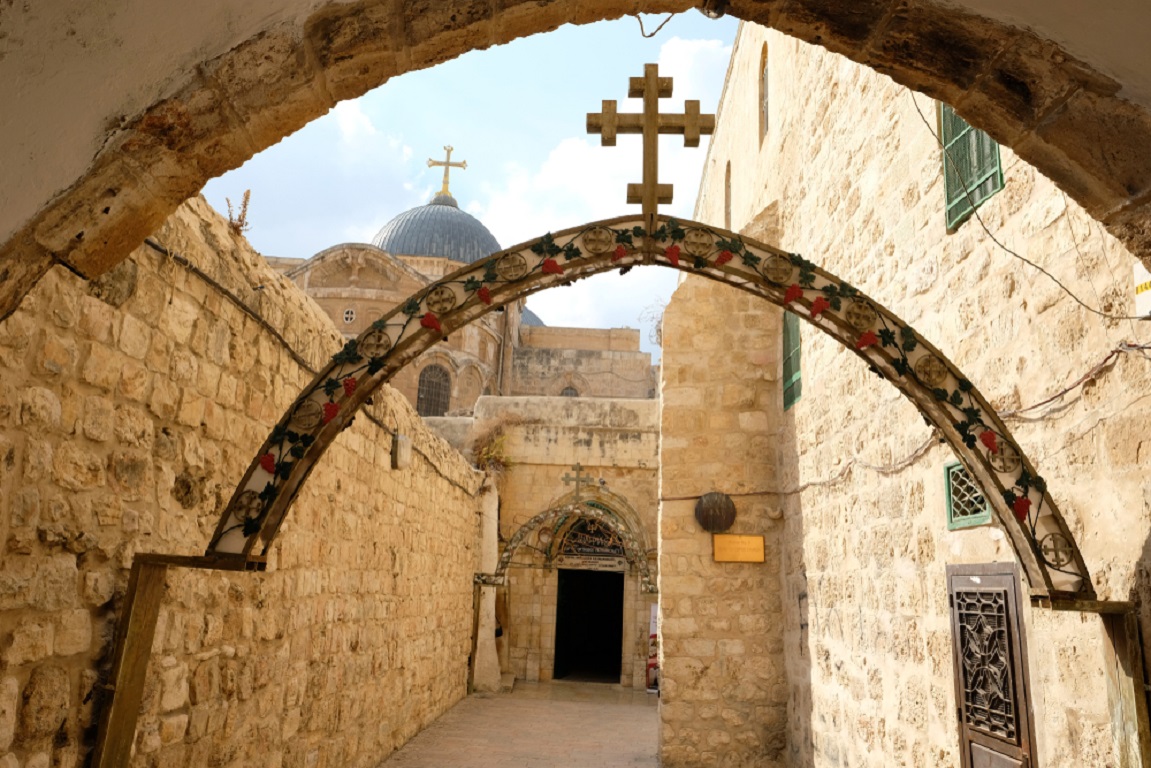
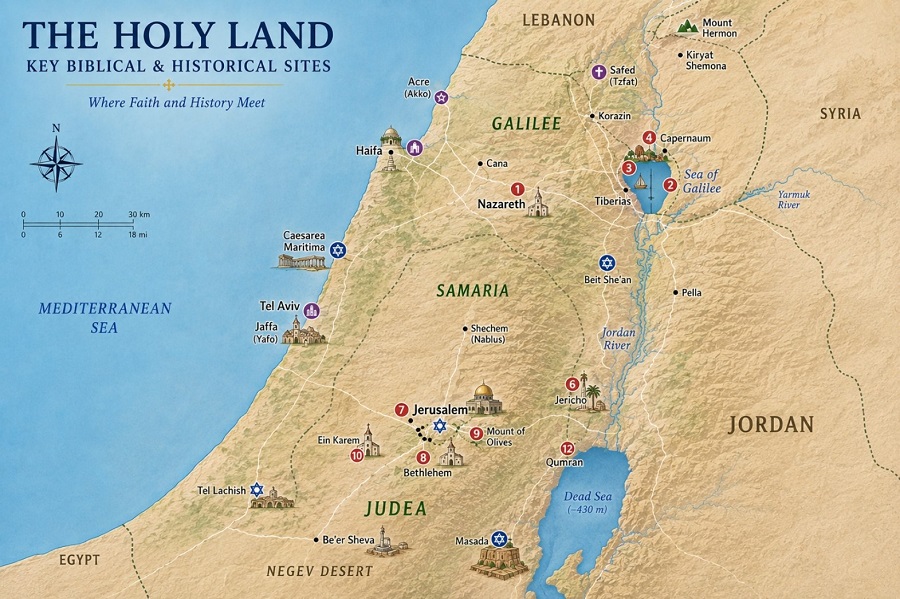
Christians are historically and religiously connected to Israel. And so, a visit to the Holy Land is often a once-in-a-lifetime experience, filled with emotion, and an opportunity to see where the events of the Bible unfolded. Christians in Israel will find that Jerusalem holds the highest concentration of biblical sites. On a Christian Day Tour of Jerusalem, you can walk in the footsteps of Christ along the Via Dolorosa, visit churches on the Mount of Olives, and see the Room of the Last Supper on Mount Zion.

The highlight of any Christian tour to Israel is the Church of the Holy Sepulchre in Jerusalem’s Old City, which marks the site where Christ was crucified and buried. See where John the Baptist baptized Jesus in the Jordan River, visit Jericho and the Sea of Galilee where Christ spent time during his ministry. On the edge of the Sea of Galilee stop at Capernaum, Cana, and the Mount of Beatitudes. Don’t miss the Church of the Annunciation in Nazareth and make an emotional journey to Bethlehem, and the Church of the Nativity. Christians in Israel should also include some of the must-see secular sites in their itinerary including the Dead Sea, Acre, and Tel Aviv.  In this section you will discover Israel from the Christian perspective. 


Christmas in Nazareth

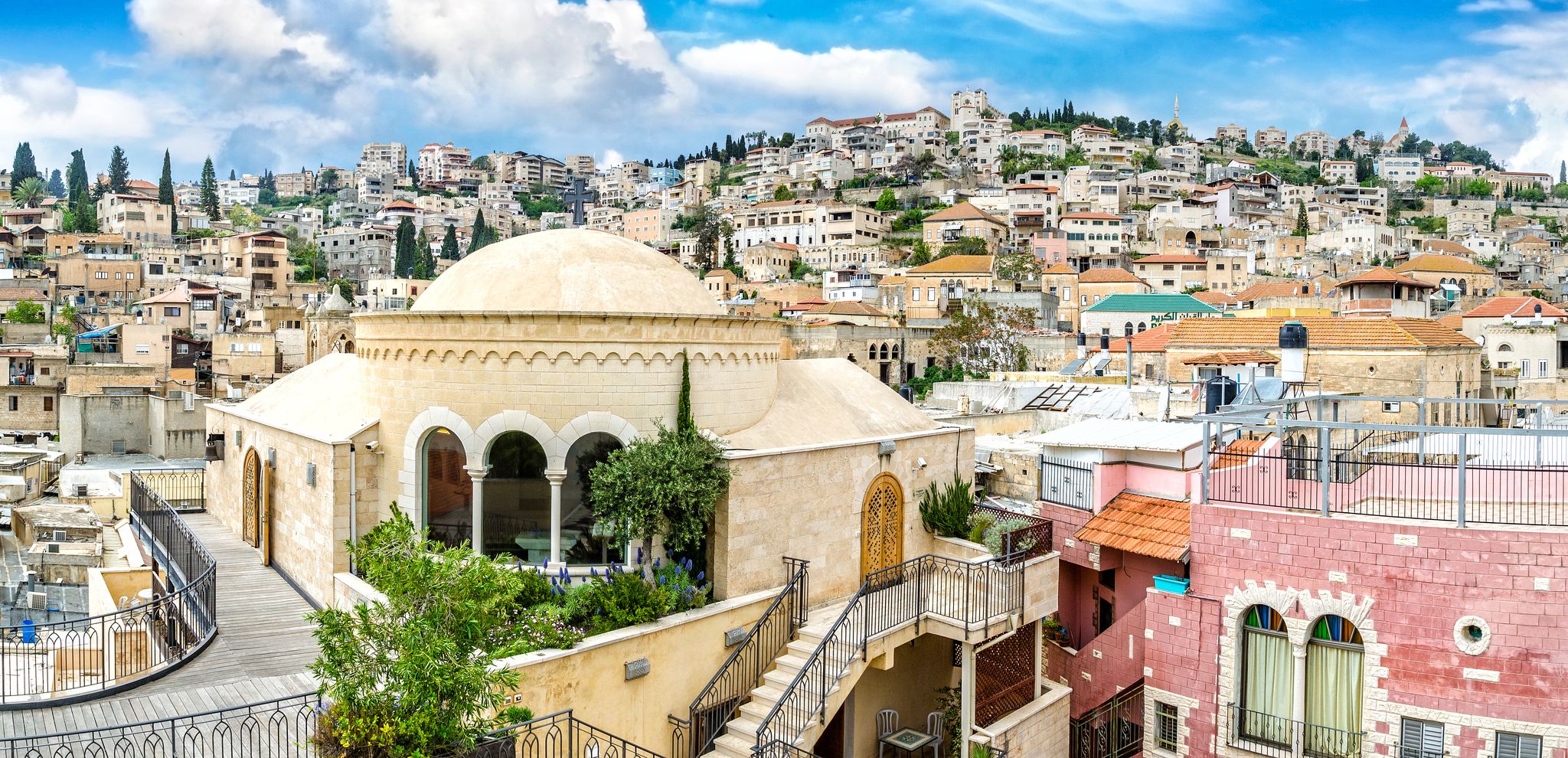
Tucked away up in Galilee, less than an hour’s drive from the Mediterranean city of Haifa, lies Nazareth. Charming, beautiful, and fascinating, it’s a wonderful place to visit, whether you’re a Christian pilgrim, someone fascinated with ancient places, or just a curious tourist.The sky over Nazareth, Israel. Photo byYousef EspaniolyonUnsplashAnd the best time to go? Well, spring and fall have the optimum climate, summer in Israel is glorious but hot and then there’s the winter and, of course, the Christmas period. Yes, Christmas in Israel is really something worth experiencing, especially in Nazareth, since this is the city where Jesus spent some of his early years, and where his parents were also raised. Indeed, on any day tour of Nazareth and Galilee, visitors will explore the Church of the Annunciation (where the Angel Gabriel appeared before the Virgin Mary, announcing that she was with child) and the Church of St. Joseph, built over what was once the carpentry workshop of Mary’s husband, Joseph. Let’s take a closer look at Nazareth and what you can expect to see if you’re traveling to Israel this December and hoping to experience some of the Christmas festivities there.Christmas Festivities in IsraelIsrael’s largest Arab city, with a sizable Christian population, Nazareth really comes to life at this time of the year. Here are some of the dates you might want to put in your diary if you’re planning a trip. December 6th, 2022 - This is the day that the city’s famous Christmas tree will be lit. Located by the Greek Orthodox Church of the Annunciation, it really doesn’t matter whether you’re a Christian or not when watching the lights being switched on - trust us, the crowd is going to be packed with a mixture of locals, tourists and Israelis from all over the country who’ve come to enjoy the experience. Here’s a really nice video by ‘@Relaxing Walker’ of the Night Illuminations in Nazareth in 2021 to give you an idea of how fun it is.Annunciation Church, Nazareth, Israel.Photo credit: © ShutterstockDecember 11th, 2022 - in the heart of the city, at Mary’s Well Square, there will be the annual Nazareth Christmas market. As always, it’s going to be a jolly affair, with arts and crafts, food stalls, entertainment, and market stalls selling all kinds of local produce, including hot chestnuts. sweet treats and artisan foods from farms in the area, including spices, coffee, cheeses, and olive oils. And if you’re looking to pick up some souvenirs from Israel to take home, the stalls will also be selling traditional Arab jewelry, fabrics, and clothing, all of which make a perfect gift for someone close to you. There will also be singers, bands (on a stage specially erected) and - of course! - Santa Claus will be making an appearance. With lights twinkling and carols being sung, it really will be a lovely day.December 24th, 2022 - The festivities kick off at 3 pm, when the Christmas Parade takes off, beginning at Mary’s Well and proceeding down Paulo VI street. There will be scouts, musicians, and dancers, all in brightly-colored costumes. At 5.30 pm (at which time it will already be pitch black) there’ll be a fantastic firework display, free of charge, which will thrill both kids and adults. Dress up warmly and don’t forget your gloves and hat either! At 7 pm Midnight Mass will take place in the Basilica of the Annunciation. This is an ancient tradition that sees Christians across the globe (including in Nazareth) come together for a jubilant celebration of the Nativity of Jesus who, as told by the Bible, was born in a manger, in a stable in Bethlehem. It is held at midnight since the tradition has it that this was the exact moment Jesus arrived in the world. St. Joseph's Church, Nazareth, Israel.Photo credit: © ShutterstockDecember 25th, 2022 - On Christmas Day itself, all over the city festive services and masses will be held. They will be incredibly joyful, with candles lit and carols and hymns sung. For Christian pilgrims, this really is one of the most special days of the year and, along with Jerusalem and Bethlehem, one of the most popular places in Israel to celebrate the birth of Jesus.Nazareth is also just a short drive away from the Sea of Galilee (in Hebrew ‘the Kinneret’) which makes for a fine day out, whether you want to explore the many churches of Jesus' Ministry in Galilee, including the Church of the Apostles at Capernaum, the church on theMount of Beatitudes (where Jesus gave his famous ‘Sermon on the Mount’) or the Church of the Multiplication (where Jesus performed the miracle of transforming two fishes and five loaves of bread into sufficient food to feed a crowd of five thousand). And for anyone wanting to undergo the experience of baptism, close to the city of Tiberias lies Yardenit, where Christian pilgrims can immerse themselves in the Jordan River, much the way John the Baptist immersed Jesus, thousands of years ago, we offer both organized tours and day trips all across Israel.And because we’ve been in business for over 25 years, we have a wealth of experience. Our guides are top-notch, friendly, informative, and professional, and speak many languages. Finally, we use comfortable transport, with air-conditioning for hot summer days. Contact us by email or phone to find out more about our tours or have a read of our blog to find out more about the amazing country of Israel. You can also join ourChristmas Eve in Bethlehem Tourwith pickups from Jerusalem and Tel Aviv!Rooftop view of Nazareth, Israel. Photo byJonny GiosonUnsplash
By Sarah Mann

Pentecost: The Descent of the Holy Spirit & Christian Pilgrimage

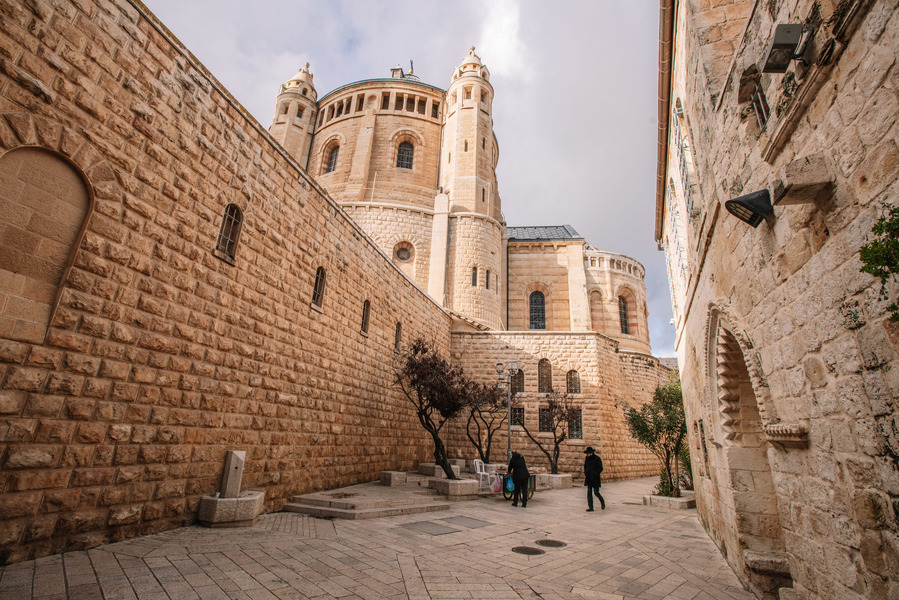
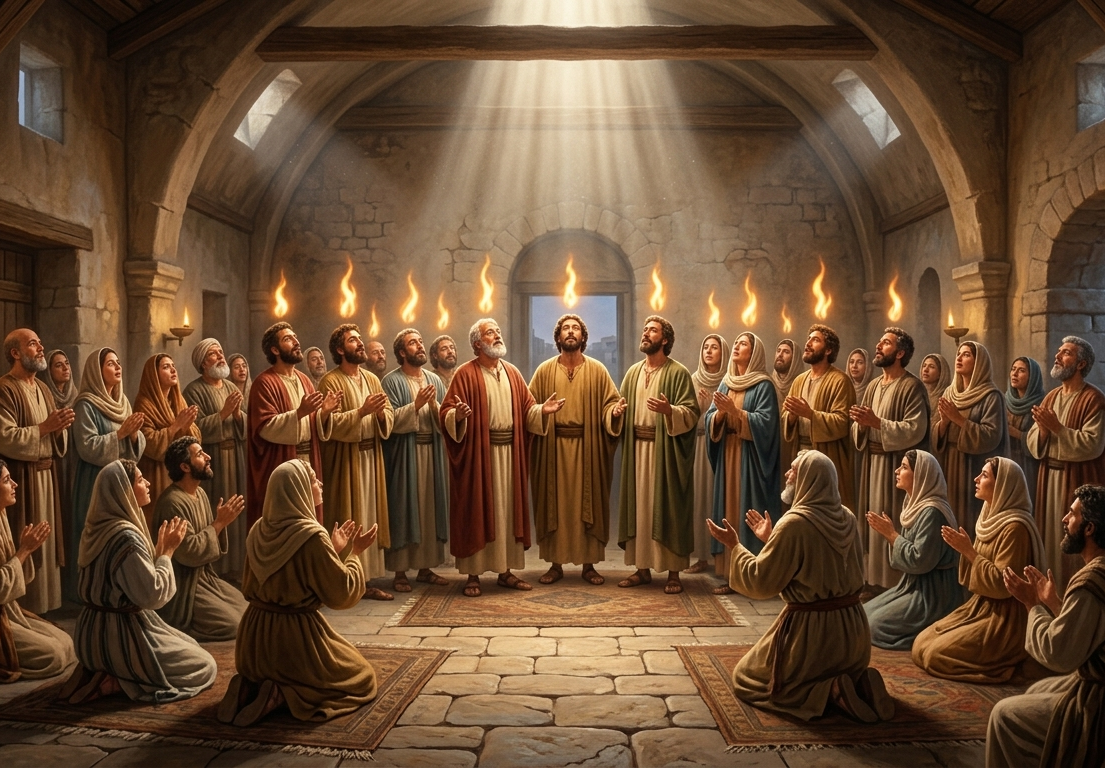
Pentecost is one of the most important celebrations in the Christian calendar. Observed fifty days after Easter, it commemorates the descent of the Holy Spirit upon Jesus’ disciples in Jerusalem, as described in the Acts of the Apostles.“And they were all filled with the Holy Ghost, and began to speak with other tongues, as the Spirit gave them utterance.”- Acts 2:4, King James VersionAccording to the New Testament, the disciples were gathered together during the Jewish Feast of Weeks, known as Shavuot, when they heard a sound like a powerful rushing wind. Tongues resembling flames of fire appeared above them, and they began speaking in different languages.Jerusalem was filled with Jewish pilgrims from many regions at the time. Although they came from different linguistic and cultural backgrounds, they were able to understand the disciples’ message. For Christians, this moment represents the beginning of the Church’s mission to share the Gospel with people of every nation. Pentecost is therefore often described as the “birthday of the Church.”Pentecost sceneThe Connection Between Pentecost and ShavuotThe events of Pentecost took place during Shavuot, one of the biblical pilgrimage festivals when Jews traveled to Jerusalem. This historical setting helps explain why people from many different places were present in the city. For Christian visitors, understanding this Jewish context adds an important dimension to the biblical account. It also demonstrates how closely the story of early Christianity is connected to Jerusalem’s religious traditions and pilgrimage history.Where Did Pentecost Take Place?The Book of Acts records that the disciples were gathered together in Jerusalem, but it does not identify the exact building in which the event occurred.According to longstanding Christian tradition, Pentecost is associated with the Upper Room on Mount Zion. This site is also traditionally connected with the Last Supper. The identification is based on Christian tradition rather than definitive archaeological evidence, so it is important to distinguish the traditional location from what is stated directly in Scripture.Today, the Upper Room is one of the most meaningful stops for Christian pilgrims visiting Jerusalem. Its simple interior allows groups and independent travelers to reflect on the Last Supper, the gathering of the disciples, and the beginnings of the early Church.The Upper Room on Mount ZionVisiting Mount ZionMount Zion is located just outside the walls of Jerusalem’s Old City, close to the Zion Gate. Several important Christian sites can be visited within a relatively compact area, including:The Upper Room, traditionally associated with the Last Supper and PentecostDormition Abbey, connected by Christian tradition with the Virgin MaryThe traditional Tomb of King DavidThe Church of Saint Peter in Gallicantu, located farther down the slope of Mount ZionVisitors should wear modest clothing and remember that some of these locations remain active places of worship. The area includes stone paving, steps, and uneven surfaces, so comfortable walking shoes are recommended. Travelers with limited mobility may benefit from arranging transportation and a carefully planned route.Experiencing Pentecost in the Holy LandVisiting Jerusalem provides an opportunity to place the Pentecost story within its geographical and historical setting. Standing on Mount Zion and exploring the Old City can help travelers understand the close relationship between the biblical narrative, Jewish pilgrimage festivals, Christian tradition, and the development of the early Church.A licensed Israeli tour guide can also explain how the sites are connected while clearly distinguishing between the New Testament account, later Christian traditions, and historical evidence.Bein Harim offers guided Jerusalem tours, private tours, and customized Christian pilgrimage itineraries that can include Mount Zion, the Upper Room, the Mount of Olives, the Church of the Holy Sepulchre, and other sites associated with the life of Jesus and the early Christian community.Explore our Christian tours or contact our Israel travel specialists to plan a pilgrimage itinerary adapted to your denomination, interests, travel pace, group size, and mobility requirements.
By Admin

The Crucifixion of Jesus: Its Biblical Significance and Where It Took Place

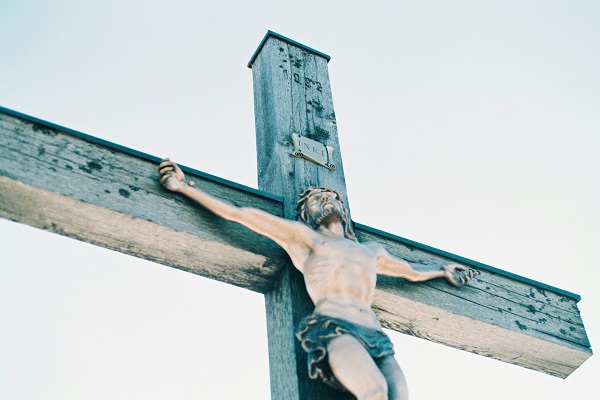
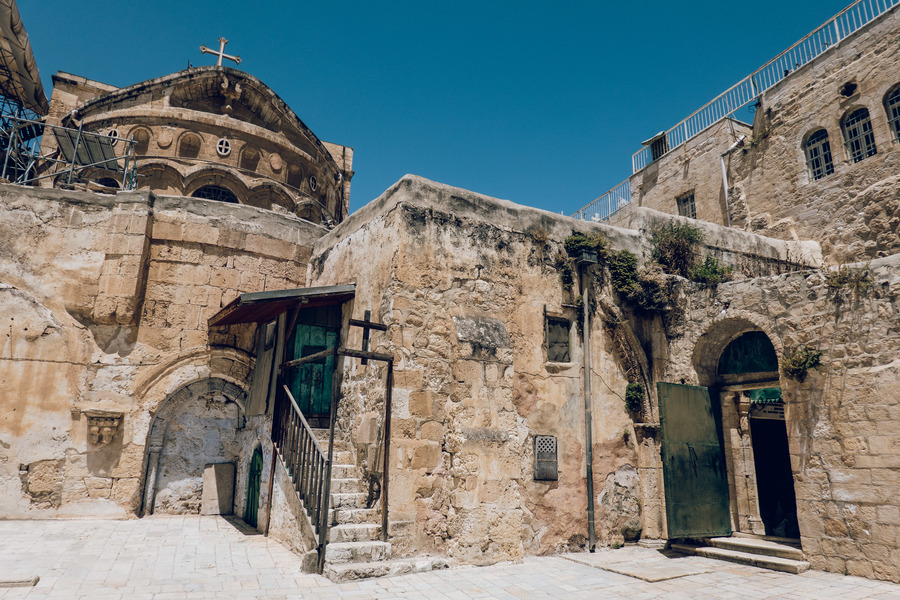
The crucifixion of Jesus is the central event of the Christian faith. According to the New Testament, Jesus was crucified in Jerusalem under the authority of the Roman governor Pontius Pilate. Christians believe that through His death on the cross, Jesus fulfilled God's plan of salvation, making the crucifixion one of the defining moments in Christian history."And when they were come unto a place called Golgotha, that is to say, a place of a skull, They gave him vinegar to drink mingled with gall: and when he had tasted thereof, he would not drink... And they crucified him."- Matthew 27:33–35 (King James Version)Why Was Jesus Crucified?According to the Gospels, Jesus was arrested following the Last Supper, questioned by the Jewish religious authorities, and then brought before Pontius Pilate, the Roman prefect of Judea. Although the Gospel accounts emphasize different aspects of the trial, they agree that Pilate ultimately authorized the crucifixion.Crucifixion was a common Roman method of execution, typically reserved for criminals, rebels, and those considered a threat to Roman authority. Jesus was led outside the city walls to the place known as Golgotha, where He was crucified alongside two others.Did you know?The story of the Crucifixion of Jesus is a central highlight in the itinerary of Christian pilgrimage groups visiting Israel.The Crucifixion of JesusWhere Did the Crucifixion Take Place?The New Testament identifies the location as Golgotha, meaning "Place of the Skull" (Matthew 27:33; Mark 15:22; John 19:17).According to longstanding Christian tradition, Golgotha is located within the Church of the Holy Sepulchre in Jerusalem's Old City. The church also contains the traditional site of Jesus' tomb and has been one of Christianity's most important pilgrimage destinations since the fourth century.While the exact location of Golgotha cannot be established with complete archaeological certainty, many historians consider the Church of the Holy Sepulchre to be the strongest historical candidate. It is important to distinguish between the biblical account, the Christian tradition associated with the site, and the available archaeological evidence.The Significance of the CrucifixionFor Christians, the crucifixion represents far more than a historical execution. It is understood as the ultimate expression of God's love and the fulfillment of biblical prophecy. The New Testament teaches that Jesus willingly gave His life for the forgiveness of sins, and His crucifixion is inseparable from the hope of the Resurrection celebrated on Easter Sunday.Because of its profound spiritual significance, the Church of the Holy Sepulchre remains one of the holiest sites in Christianity, attracting millions of pilgrims each year.Visiting the Church of the Holy SepulchreLocated in Jerusalem's Christian Quarter, the Church of the Holy Sepulchre is one of the city's most visited Christian landmarks. Visitors can explore the traditional site of Golgotha, the Stone of Anointing, and the Tomb of Christ, all within the church complex.The church is shared by several Christian denominations, including the Greek Orthodox, Roman Catholic, Armenian Apostolic, Coptic Orthodox, Syriac Orthodox, and Ethiopian Orthodox Churches. Visitors should dress modestly, expect crowds throughout the year, and allow sufficient time to appreciate the site's historical and spiritual significance.Experience the Story of the Passion in JerusalemWalking through Jerusalem allows visitors to experience the setting of the Passion narratives described in the Gospels. Many Christian pilgrims combine the Church of the Holy Sepulchre with the Via Dolorosa, Mount Zion, the Mount of Olives, the Garden of Gethsemane, and other locations connected with the final days of Jesus' earthly ministry.
By Admin

12 Roman Catholic Churches in Israel Every Pilgrim Should Visit

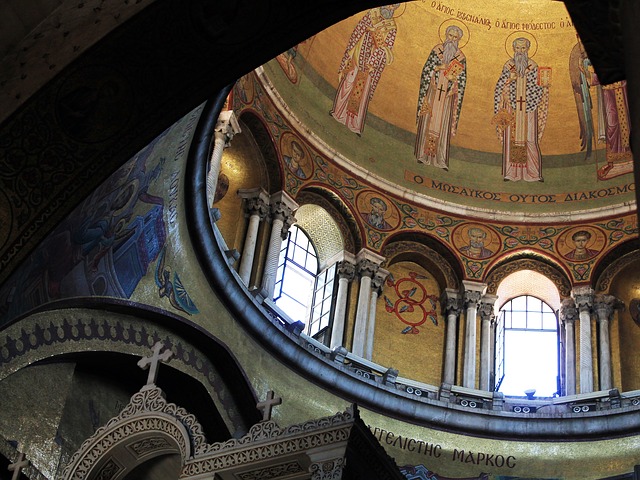
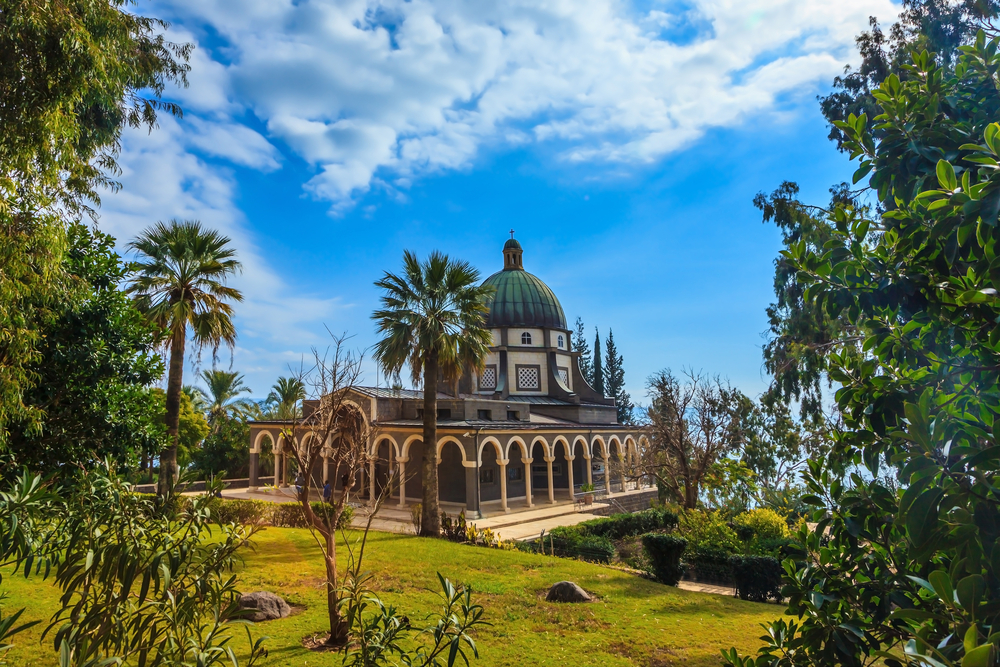
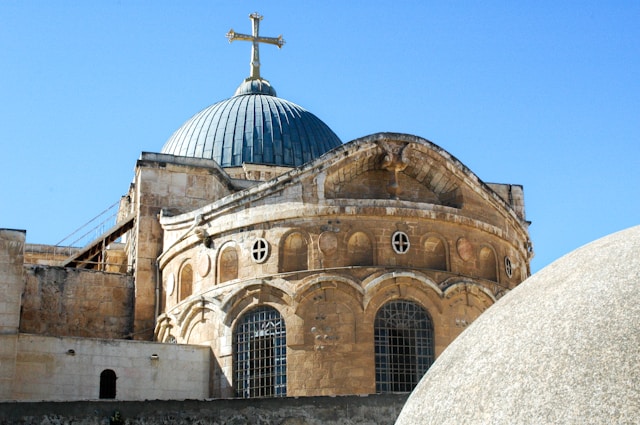
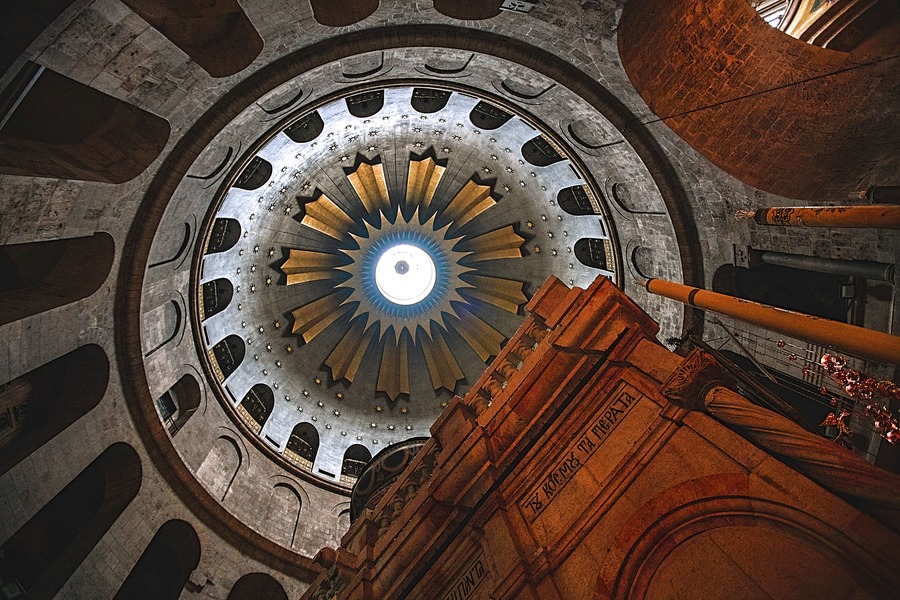
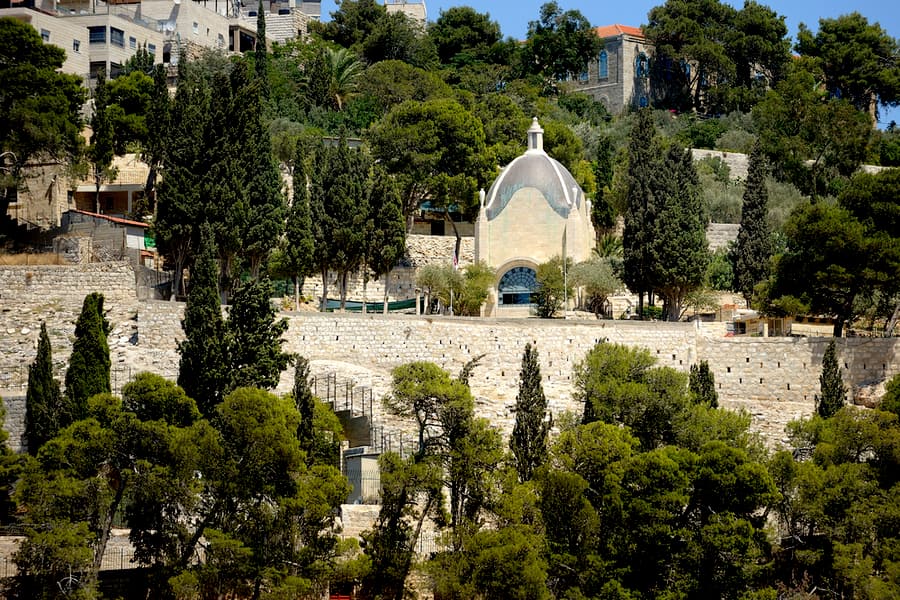
For Roman Catholics, visiting the Holy Land is far more than a sightseeing trip. It is an opportunity to encounter the places where the story of salvation unfolded, from the Annunciation in Nazareth to Christ's Passion, Death, and Resurrection in Jerusalem. Every church tells part of that story, preserving centuries of faith, prayer, and Christian tradition.Israel is home to dozens of Catholic churches, chapels, and shrines. Some stand above locations described in the New Testament, while others commemorate places identified through centuries of Christian tradition. Throughout this guide, we distinguish between biblical accounts, historical evidence, and long-held tradition so you can better understand why each site holds such importance for Catholic pilgrims.Many of these churches are entrusted to the Franciscan Custody of the Holy Land, which has cared for Christian holy places since the thirteenth century. Others belong to religious communities such as the Benedictines or are shared with other Christian denominations. Together, they form the spiritual heart of every Catholic pilgrimage to Israel.Whether you are planning your first pilgrimage, organizing a parish group, or creating a customized Holy Land itinerary, these twelve churches represent the most significant Roman Catholic sites to include in your journey.The Church of the BeatitudesWhy Visit Roman Catholic Churches in Israel?Every Catholic church in Israel offers something unique. Some preserve places associated with the life of Jesus, while others commemorate moments that shaped the early Church. Beyond their spiritual significance, these churches also showcase remarkable architecture, ancient mosaics, archaeological discoveries, and centuries of Christian devotion.A pilgrimage through Israel allows visitors to:Walk in the footsteps of JesusDeepen their understanding of ScriptureExperience places where Christian tradition has been preserved for nearly two thousand yearsCelebrate Mass at some of Christianity's holiest sitesDiscover the rich history of the Catholic Church in the Holy LandMany churches are located close to one another, making it possible to combine several important sites in a single day. Jerusalem alone contains some of Christianity's most sacred destinations, while Nazareth, the Sea of Galilee, and Mount Tabor together tell the story of Jesus' public ministry.1. Church of the Holy Sepulchre, JerusalemChurch of the Holy Sepulchre, JerusalemWhy It Matters to CatholicsFor Catholics, no church in the world holds greater spiritual importance than the Church of the Holy Sepulchre. According to ancient Christian tradition dating to the fourth century, this is the place where Jesus was crucified, buried, and rose from the dead. While historians continue to study the site's earliest history, this location has been revered by Christians for nearly seventeen centuries and remains Christianity's holiest sanctuary.Rather than marking a single event, the church encompasses several of the most significant moments of Christ's Passion within one remarkable complex. Pilgrims can pray at Golgotha, visit the Stone of Anointing, and enter the traditional Tomb of Christ, all under one roof.Biblical SignificanceThe Gospels describe Jesus' crucifixion outside the city walls at Golgotha and His burial in a nearby tomb belonging to Joseph of Arimathea.As the Gospel of Matthew records:"He is not here; for He is risen, as He said." (Matthew 28:6)For Catholics, these words lie at the very heart of the Christian faith, making this church the destination that defines every pilgrimage to Jerusalem.HistoryThe first church was commissioned by Emperor Constantine in the fourth century after his mother, Saint Helena, identified the site during her pilgrimage to Jerusalem.Over the centuries, the church has experienced destruction, rebuilding, earthquakes, fires, and extensive restoration. The Crusaders reshaped much of the structure seen today, while ongoing conservation efforts continue to preserve one of the world's most visited Christian monuments.Today the church is shared by several Christian communities under the historic Status Quo agreement. The Roman Catholic Church, represented primarily by the Franciscan Custody of the Holy Land, celebrates daily liturgies alongside the Greek Orthodox and Armenian Apostolic Churches.What to See InsideHighlights include:The Stone of AnointingCalvary (Golgotha)The Chapel of AdamThe Rotunda.The Edicule housing the traditional Tomb of ChristThe Chapel of Saint HelenaThe ancient Crusader architectureEach chapel reflects centuries of Christian devotion and artistic heritage.Visitor InformationRecommended visit: 1 to 2 hoursBest time: Early morning before tour groups arrive.Dress code: Modest clothing covering shoulders and knees.Accessibility: Some areas, including Golgotha, require climbing stairs.Nearby Attractions:Via DolorosaChristian QuarterWestern WallTower of David MuseumMount ZionBein Harim Travel Tip: Many visitors arrive only to see the Tomb of Christ and leave after a short visit. We recommend allowing enough time to explore the church's many chapels with a licensed guide. Understanding the symbolism, history, and traditions behind each section transforms what might seem like a crowded building into one of Christianity's most profound spiritual experiences.2. Basilica of the Annunciation, NazarethBasilica of the Annunciation, NazarethWhy It Matters to CatholicsThe Basilica of the Annunciation marks the traditional site where the Angel Gabriel announced to the Virgin Mary that she would conceive Jesus through the Holy Spirit. For Catholics, this moment represents the beginning of the Incarnation, when God became man through Christ.As one of the largest churches in the Middle East, the basilica welcomes millions of pilgrims each year and serves as the spiritual center of Nazareth.Biblical SignificanceThe Gospel of Luke recounts Gabriel's visit to Mary with remarkable detail.Mary answered:"Behold the maidservant of the Lord! Let it be to me according to your word." (Luke 1:38)This verse reflects Mary's complete trust in God's will and has become one of the defining passages of Catholic spirituality.HistoryChristian tradition has associated this location with Mary's home since the earliest centuries of Christianity.Archaeological excavations beneath the modern basilica uncovered remains of earlier Byzantine and Crusader churches, along with ancient dwellings that date back to the time of Jesus.The current basilica was completed in 1969 and designed by the Italian architect Giovanni Muzio. Its distinctive dome symbolizes an inverted lily, representing Mary's purity.ArchitectureThe basilica combines contemporary design with ancient remains preserved beneath the church.The lower level centers around the Grotto of the Annunciation, the traditional place where Gabriel appeared to Mary. The upper church is filled with natural light, colorful mosaics, and Marian artwork donated by Catholic communities from around the world.One of the most fascinating features is the international collection of mosaics depicting the Virgin Mary through different cultural traditions.What Not to MissThe Grotto of the AnnunciationThe international Marian mosaicsArchaeological remains beneath the churchThe magnificent central domeThe peaceful courtyardVisitor InformationRecommended visit: 60 to 90 minutesBest time: Morning, before large pilgrimage groups arrive.Photography: Allowed in most areas while respecting worshippers.Nearby AttractionsSt. Joseph's ChurchNazareth VillageMary's WellNazareth Old MarketGreek Orthodox Church of the AnnunciationBein Harim Travel Tip:Many pilgrims combine Nazareth with Mount Tabor and Cana in a single day. While this itinerary works well, spending extra time inside the Basilica of the Annunciation allows visitors to appreciate its remarkable artwork and archaeological discoveries instead of simply taking photographs before moving on.3. Church of the Nativity, BethlehemChurch of the Nativity, BethlehemWhy It Matters to CatholicsAlthough located in Bethlehem, just south of Jerusalem, the Church of the Nativity forms an essential part of nearly every Catholic pilgrimage to the Holy Land.According to Christian tradition, this church marks the birthplace of Jesus Christ. For Catholics around the world, visiting the Grotto of the Nativity is a deeply moving experience that connects believers with the mystery of Christ's birth.Biblical SignificanceThe Gospel of Luke tells the story of Jesus' birth in Bethlehem.As Scripture says:"She gave birth to her firstborn Son, wrapped Him in swaddling cloths, and laid Him in a manger." (Luke 2:7)While the Bible does not describe the exact cave now venerated beneath the church, Christian tradition has identified this location since the second century.HistoryThe original church was commissioned by Emperor Constantine in the fourth century and later rebuilt by Emperor Justinian in the sixth century.Remarkably, much of Justinian's structure still survives today, making it one of the oldest continuously functioning churches in the world.The basilica is shared by several Christian communities, while Roman Catholics celebrate Mass in the adjacent Church of Saint Catherine.ArchitectureThe church combines Byzantine simplicity with Crusader artwork, medieval mosaics, and beautiful carved columns.Descending into the Grotto of the Nativity, pilgrims encounter the famous silver star marking the traditional birthplace of Jesus.For many visitors, this quiet underground chapel becomes the emotional highlight of their entire pilgrimage.Visitor InformationRecommended visit: 90 minutesBest time: Early morning.Dress code: Modest attire is required.Nearby AttractionsChurch of Saint CatherineShepherds' FieldMilk Grotto ChurchManger SquareBein Harim Travel Tip:Bethlehem becomes exceptionally busy during Christmas and Easter. Visiting outside these peak seasons often allows pilgrims to spend more time in prayer at the Grotto while enjoying a more relaxed atmosphere.4. Church of All Nations, JerusalemChurch of All Nations, JerusalemWhy It Matters to CatholicsLocated at the foot of the Mount of Olives beside the Garden of Gethsemane, the Church of All Nations commemorates one of the most emotional moments in the life of Jesus. According to the Gospels, this is where He prayed on the night before His crucifixion, accepting the Father's will before His arrest.For Catholics, Gethsemane represents Christ's complete obedience and willingness to embrace His Passion for the salvation of humanity. Many pilgrims describe this church as one of the most moving places they visit in Jerusalem because it invites quiet prayer and reflection rather than celebration.The basilica received its popular name because donations from twelve different countries helped finance its construction during the early twentieth century. Their coats of arms are incorporated into the church's design, symbolizing the universal nature of the Catholic Church.Biblical SignificanceBefore His arrest, Jesus withdrew to Gethsemane to pray.As the Gospel of Matthew records:"My Father, if it is possible, let this cup pass from Me; nevertheless, not as I will, but as You will." (Matthew 26:39)This prayer has become one of the defining expressions of trust and surrender in Christian spirituality.HistoryThe current basilica was completed in 1924 and designed by the renowned Italian architect Antonio Barluzzi, whose work shaped many of the Holy Land's most recognizable Catholic churches.The church was built over the remains of Byzantine and Crusader sanctuaries, preserving a tradition that stretches back to the earliest centuries of Christianity.Immediately outside the church stand ancient olive trees, some believed to be several hundred years old. While they do not date to the time of Jesus, they create an atmosphere that helps pilgrims imagine the appearance of the garden throughout history.ArchitectureBarluzzi intentionally designed the interior to reflect the solemnity of Christ's agony.Purple stained-glass windows soften the daylight, filling the church with subdued light. Above the altar rests a large section of exposed bedrock traditionally identified as the place where Jesus prayed before His arrest.Magnificent mosaics portray Christ praying alone, His betrayal by Judas, and His arrest by Roman soldiers.What Not to MissThe Rock of Agony in front of the altar.The colorful ceiling decorated with symbols of the twelve contributing nations.The ancient olive grove outside the church.The impressive façade depicting Christ as mediator between God and humanity.Visitor InformationRecommended visit: 45 to 60 minutes Best time: Early morning or late afternoon. Dress code: Modest clothing is expected.Accessibility: The main church is wheelchair accessible, while the surrounding garden paths are mostly level.Nearby AttractionsGarden of GethsemaneTomb of the Virgin MaryMount of OlivesDominus Flevit ChurchKidron ValleyBein Harim Travel Tip: Plan enough time to sit quietly inside the basilica after your visit. Many pilgrims rush through Gethsemane, but spending even fifteen minutes in silent reflection often becomes one of the most memorable moments of the entire pilgrimage.5. Church of the Beatitudes, Sea of GalileeChurch of the Beatitudes, Sea of GalileeWhy It Matters to CatholicsPerched on a peaceful hillside overlooking the Sea of Galilee, the Church of the Beatitudes commemorates the traditional location where Jesus delivered the Sermon on the Mount. Although Scripture does not identify the exact hill, Christian tradition has associated this area with Christ's teachings since at least the Byzantine period.For Catholics, the Beatitudes form the foundation of Christian discipleship. They summarize the values of the Kingdom of God and continue to shape Catholic teaching on holiness, mercy, humility, justice, and peace.Unlike many churches in Jerusalem that focus on Christ's Passion, this sanctuary celebrates His public ministry and His call to live according to God's will.Biblical SignificanceThe Gospel of Matthew opens the Sermon on the Mount with these words:"Blessed are the poor in spirit, for theirs is the kingdom of heaven." (Matthew 5:3)The Beatitudes remain among the best-known teachings of Jesus and are central to Catholic spirituality.HistoryThe present church was completed in 1938 and, like the Church of All Nations, was designed by Antonio Barluzzi.Earlier Christian pilgrims identified this hillside as the traditional setting of the Sermon on the Mount, and archaeological discoveries confirm that Christian communities worshipped in this area during the Byzantine period.Today the property is maintained by the Franciscan Custody of the Holy Land and remains one of Galilee's most peaceful pilgrimage destinations.ArchitectureThe octagonal design represents the eight Beatitudes described in Matthew's Gospel.Large arched windows frame breathtaking views across the Sea of Galilee, while beautifully maintained gardens encourage visitors to pray and meditate.The simplicity of the church reflects the humility of Christ's teaching.What Not to MissThe panoramic terrace overlooking the Sea of GalileeThe octagonal sanctuaryThe peaceful gardensQuiet walking paths leading toward the lakeshoreVisitor InformationRecommended visit: 45 minutes. Best time: Morning or late afternoon, especially during spring and autumn. Photography: Outdoor photography is particularly rewarding because of the panoramic views.Nearby AttractionsCapernaumChurch of the MultiplicationChurch of the Primacy of Saint PeterSea of Galilee shorelineBein Harim Travel Tip: Many visitors focus on the church itself, but the surrounding gardens deserve just as much attention. Walking quietly through the grounds while reading the Beatitudes creates a meaningful connection between Scripture and the landscape where Jesus taught.6. Church of Saint Peter in Gallicantu, JerusalemChurch of Saint Peter in Gallicantu, JerusalemWhy It Matters to CatholicsThe Church of Saint Peter in Gallicantu commemorates Peter's threefold denial of Jesus before the crucifixion. The name "Gallicantu" comes from the Latin phrase meaning "the rooster crowed," recalling Christ's prediction that Peter would deny Him before dawn.For Catholics, this church is a powerful reminder of repentance, forgiveness, and God's mercy. Peter's failure did not define his future. Instead, he became the leader of the Apostles and the first Pope, making this site especially meaningful for Catholic pilgrims.Biblical SignificanceJesus foretold Peter's denial during the Last Supper.After Peter denied knowing Him three times, the Gospel records:"The Lord turned and looked at Peter... and Peter went out and wept bitterly." (Luke 22:61-62)The passage reminds believers that sincere repentance opens the door to forgiveness. HistoryThe present church was completed in 1938 and, like the Church of All Nations, was designed by Antonio Barluzzi.Earlier Christian pilgrims identified this hillside as the traditional setting of the Sermon on the Mount, and archaeological discoveries confirm that Christian communities worshipped in this area during the Byzantine period.Today the property is maintained by the Franciscan Custody of the Holy Land and remains one of Galilee's most peaceful pilgrimage destinations.ArchitectureThe church's striking modern mosaics illustrate Peter's denial, Jesus before Caiaphas, and the events leading to the Crucifixion.Below the church, visitors descend into ancient underground chambers traditionally associated with Jesus' imprisonment before His trial.The sweeping terrace outside offers spectacular views over the Old City of Jerusalem.What Not to MissThe underground chambersAncient stone steps leading toward the Kidron ValleyPanoramic observation terraceThe colorful sanctuary mosaicsVisitor InformationRecommended visit: 60 minutesBest time: MorningNearby AttractionsMount ZionDormition AbbeyRoom of the Last SupperChurch of the Holy SepulchreBein Harim Travel Tip: Take time to walk the ancient stone staircase below the church. While scholars cannot prove Jesus used these exact steps, they date to the Second Temple period and help pilgrims visualize Jerusalem during the final hours before the Crucifixion.7. Church of the Visitation, Ein KaremChurch of the Visitation, Ein Karem (by Nettadi CC BY-SA 4.0)Why It Matters to CatholicsHidden among the picturesque hills of Ein Karem, the Church of the Visitation commemorates Mary's visit to her cousin Elizabeth shortly after the Annunciation. According to Christian tradition, this joyful meeting took place at or near this location.For Catholics, the Visitation celebrates Mary's faith, humility, and willingness to serve others. It also marks the first meeting between Jesus and John the Baptist while both were still in their mothers' wombs.The peaceful atmosphere of Ein Karem offers a welcome contrast to the busy streets of Jerusalem and allows pilgrims to reflect on one of the New Testament's most joyful encounters.Biblical SignificanceLuke's Gospel describes Elizabeth's greeting to Mary.Elizabeth proclaimed:"Blessed are you among women, and blessed is the fruit of your womb!" (Luke 1:42)Mary responded with the Magnificat, one of Christianity's most beloved hymns of praise.HistoryChristian tradition has associated Ein Karem with the birthplace of John the Baptist since at least the Byzantine period.The present Franciscan church was completed in 1955, replacing earlier Crusader and Byzantine structures.Although archaeology cannot confirm the exact location of the biblical event, the village has remained an important Christian pilgrimage destination for many centuries.ArchitectureThe church consists of two beautifully decorated levels connected by gardens and terraces overlooking the Judean Hills.Its courtyard walls display the Magnificat in dozens of languages, symbolizing the universal message of Mary's song of praise.Inside, colorful frescoes depict scenes from Mary's life and the infancy narratives found in the Gospel of Luke.What Not to MissThe multilingual Magnificat wallThe upper sanctuaryPeaceful hillside gardensScenic views across Ein KaremVisitor InformationRecommended visit: 45 to 60 minutes.Best time: Spring and autumn, when the surrounding hills are especially beautiful.Nearby AttractionsChurch of Saint John the BaptistEin Karem village centerLocal cafés and artisan shopsBein Harim Travel Tip: Ein Karem deserves more than a quick stop. Allow time to stroll through the village between the Church of the Visitation and the Church of Saint John the Baptist. The relaxed atmosphere makes it one of Jerusalem's most enjoyable neighborhoods for pilgrims and photographers alike.8. Church of the Primacy of Saint Peter, TabghaChurch of the Primacy of Saint Peter, Tabgha (By Berthold Werner)Why It Matters to CatholicsOn the northwestern shore of the Sea of Galilee stands one of the most meaningful churches for Catholics. The Church of the Primacy of Saint Peter commemorates the traditional location where the risen Jesus appeared to seven of His disciples, shared breakfast with them, and entrusted Peter with the pastoral leadership of His followers.This encounter is central to Catholic tradition because it highlights Peter's restoration after denying Jesus three times and his mission as shepherd of the Church. Catholics recognize Peter as the first Pope, making this church a powerful symbol of reconciliation, forgiveness, and apostolic leadership.Its peaceful lakeside setting also reminds pilgrims that many of Jesus' appearances after the Resurrection took place in Galilee, where His public ministry had begun.Biblical SignificanceAfter the Resurrection, Jesus asked Peter three times whether he loved Him.The Gospel of John records:"Feed My sheep." (John 21:17)These simple words have profound significance for Catholics because they reflect Christ's commission to Peter to care for His Church.HistoryChristian tradition has associated this shoreline with Jesus' appearance since at least the fourth century. The current Franciscan church, completed in 1933, stands on the foundations of earlier Byzantine sanctuaries.Just outside the church lies the limestone rock known as the Mensa Christi, or "Table of Christ." According to tradition, this is where Jesus shared breakfast with His disciples after the miraculous catch of fish.Although this tradition cannot be verified archaeologically, it has inspired Christian pilgrims for centuries.ArchitectureThe church is intentionally modest in appearance. Rather than impressive decoration, its design encourages visitors to focus on prayer and the natural beauty of the Sea of Galilee.The simple sanctuary opens toward the lakeshore, creating a peaceful atmosphere unlike almost any other church in Israel.What Not to MissThe Mensa ChristiThe lakeside shorelineQuiet gardens surrounding the churchThe beautiful view across the Sea of Galilee.Visitor InformationRecommended visit: 30 to 45 minutes.Best time: Early morning or shortly before sunset.Nearby AttractionsChurch of the MultiplicationChurch of the BeatitudesCapernaumMount of Beatitudes National ParkBein Harim Travel Tip: Spend a few minutes by the water after visiting the church. The peaceful shoreline offers one of the best opportunities in Galilee to reflect on the Resurrection narratives while enjoying the same landscape that Jesus and His disciples would have known.9. Basilica of the Transfiguration, Mount TaborBasilica of the Transfiguration, Mount TaborWhy It Matters to CatholicsRising nearly 600 meters above the Jezreel Valley, Mount Tabor has long been identified by Christian tradition as the place where Jesus was transfigured before Peter, James, and John.Although the New Testament does not name the mountain, Christian pilgrims have associated Mount Tabor with this event since the fourth century.For Catholics, the Transfiguration reveals Christ's divine glory before His Passion and offers a glimpse of the Resurrection to come.Biblical SignificanceThe Gospel of Matthew describes this extraordinary moment."His face shone like the sun, and His clothes became as white as the light." (Matthew 17:2)The appearance of Moses and Elijah affirmed Jesus as the fulfillment of the Law and the Prophets.HistorySeveral churches have stood on Mount Tabor throughout history.The present basilica was completed in 1924 by Antonio Barluzzi, who designed many of the Holy Land's most important Catholic sanctuaries.The Franciscans continue to care for the church today.ArchitectureThe Basilica of the Transfiguration incorporates Crusader ruins into its design.Two impressive towers represent Moses and Elijah, while the bright sanctuary symbolizes the divine light witnessed by the Apostles during the Transfiguration.The mountain itself offers spectacular panoramic views across Lower Galilee.What Not to MissThe upper sanctuaryThe panoramic terracesAncient monastery remainsThe mountain viewpointsVisitor InformationRecommended visit: 60 to 90 minutes. *Access to the summit is usually by local shuttle because the mountain road is steep and narrow.Nearby AttractionsNazarethCanaMegiddo National ParkLower GalileeBein Harim Travel Tip: Morning visits often provide the clearest views before afternoon haze develops across the valley. On exceptionally clear days, visitors can see as far as Mount Carmel.10. Church of Saint Joseph, NazarethChurch of Saint Joseph, NazarethWhy It Matters to CatholicsStanding beside the Basilica of the Annunciation, Saint Joseph's Church honors the earthly father of Jesus and the husband of the Virgin Mary.While it receives fewer visitors than the neighboring basilica, many Catholic pilgrims appreciate its peaceful atmosphere and its connection to the Holy Family's daily life in Nazareth.Biblical SignificanceMatthew describes Joseph's obedience after receiving God's message in a dream."Joseph did as the angel of the Lord commanded him." (Matthew 1:24)Joseph's faithful response has made him a model of humility, obedience, and trust throughout Catholic tradition.HistoryChristian tradition associates this location with Joseph's workshop.Archaeological excavations beneath the church have uncovered ancient storage caves, cisterns, and remains from earlier Christian churches.Although historians cannot confirm this was Joseph's actual home or workshop, the discoveries illustrate life in first-century Nazareth.ArchitectureThe present church combines Crusader-inspired architecture with modern design.Visitors descend beneath the sanctuary to view archaeological remains preserved below the floor.What Not to MissUnderground archaeological remainsQuiet prayer chapelViews toward the Basilica of the AnnunciationVisitor InformationRecommended visit: 30 minutes.Nearby AttractionsBasilica of the AnnunciationNazareth MarketMary's WellNazareth VillageBein Harim Travel Tip: Most organized groups spend only a few minutes here. Adding just twenty extra minutes provides valuable insight into everyday family life during the time of Jesus.11.Church of the Multiplication of the Loaves and Fishes, TabghaChurch of the Multiplication of the Loaves and Fishes, TabghaWhy It Matters to CatholicsLocated a short walk from the Church of the Primacy of Saint Peter, this beautiful church commemorates the traditional site where Jesus fed five thousand people with five loaves and two fish.The miracle demonstrates Christ's compassion and generosity while foreshadowing the Eucharist, giving the church particular significance within Catholic theology.Biblical SignificanceMatthew records the miracle with these words:"They all ate and were satisfied." (Matthew 14:20)The feeding of the multitude remains one of the few miracles recorded in all four Gospels.HistoryThe modern church belongs to the Benedictine Order and preserves one of Israel's finest Byzantine mosaics.Although the present building dates to the twentieth century, it stands above the remains of a fifth-century Byzantine basilica.ArchitectureThe famous mosaic depicting two fish beside a basket of bread has become one of Christianity's most recognizable artistic images.Beautiful gardens surround the church and create a peaceful setting overlooking the Sea of Galilee.What Not to MissThe fifth-century mosaicAncient church foundationsThe peaceful gardensVisitor InformationRecommended visit: 45 minutes.Nearby AttractionsChurch of the Primacy of Saint PeterChurch of the BeatitudesCapernaumBein Harim Travel Tip: Visit both Tabgha churches together. Their close proximity allows pilgrims to reflect on Christ's miracles and His post-Resurrection appearances in one memorable stop.12. Dormition Abbey, JerusalemDormition Abbey, JerusalemWhy It Matters to CatholicsAlthough not directly connected to an event recorded in Scripture, Dormition Abbey occupies an important place in Catholic tradition. It stands on Mount Zion near the traditional location of the Last Supper and commemorates the Dormition, or "falling asleep," of the Virgin Mary before her Assumption into Heaven.For Catholics, the abbey reflects centuries of Marian devotion and remains an active Benedictine monastery welcoming pilgrims from around the world.Biblical ContextThe New Testament does not describe Mary's final earthly years.Instead, the significance of this church comes from long-standing Christian tradition rather than a specific biblical account.For this reason, it is important to distinguish between Catholic tradition and the biblical record.HistoryThe present abbey was completed in 1910 on the site of earlier Byzantine churches.Its Benedictine monks continue to maintain daily worship and hospitality for visitors.ArchitectureDormition Abbey is one of Jerusalem's architectural landmarks.Its circular sanctuary, tall bell tower, and richly decorated crypt combine Romanesque and Byzantine influences.The crypt contains a beautiful sculpture representing Mary's Dormition, surrounded by mosaics honoring women from the Old Testament.What Not to MissThe circular sanctuaryThe cryptPanoramic views from Mount ZionThe peaceful monastery groundsVisitor InformationRecommended visit: 45 minutes.Nearby AttractionsRoom of the Last SupperChurch of Saint Peter in GallicantuChurch of the Holy SepulchreMount ZionBein Harim Travel Tip: Because many groups focus only on the Upper Room, Dormition Abbey often feels surprisingly peaceful. It is an excellent place to conclude a day exploring Mount Zion.Frequently Asked QuestionsQ: What is the most important Roman Catholic church in Israel?A: The Church of the Holy Sepulchre is regarded as Christianity's holiest church because it is traditionally associated with Jesus' crucifixion, burial, and Resurrection.Q: Are all of these churches mentioned in the Bible?A: No. Some churches commemorate locations directly connected with biblical events, while others preserve traditions that have been honored by Christians for centuries. Throughout this guide, we have distinguished between Scripture, historical evidence, and Christian tradition whenever appropriate.Q: How long should a Catholic pilgrimage to Israel last?A: A six to eight day itinerary allows enough time to visit Jerusalem, Bethlehem, Nazareth, the Sea of Galilee, Mount Tabor, and several additional biblical sites at a comfortable pace.Q: Can visitors attend Mass at these churches?A: Many Roman Catholic churches in Israel celebrate daily Mass, although schedules vary by season and religious feast days. It is always advisable to check the official church or Franciscan schedule before your visit.Q: Do I need to dress modestly?A: Yes. Visitors should wear clothing that covers the shoulders and knees when entering churches and other Christian holy sites.
By Admin

Day Trip to Nazareth and Galilee

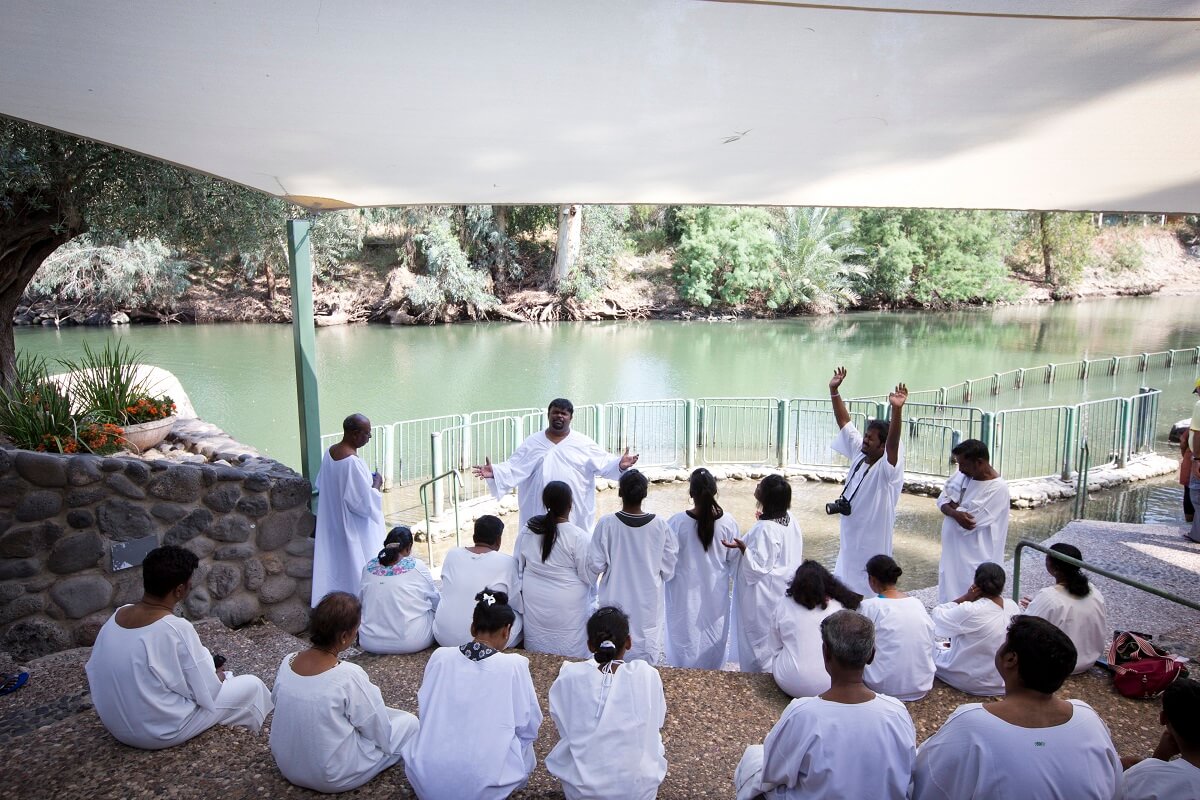
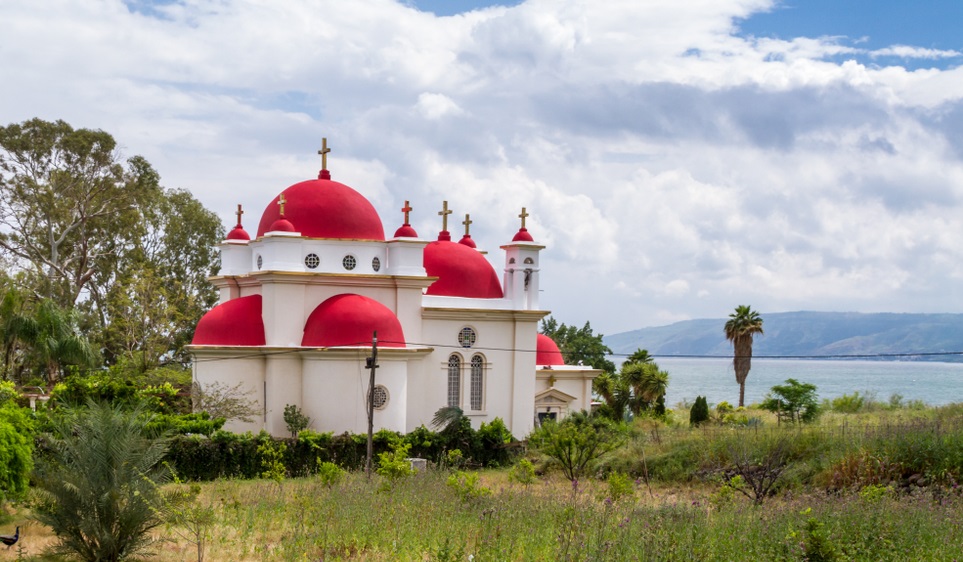
Greetings readers! I’m Sarah Mann, writer, editor, and travel blogger and today I’m on the road, once more, with Bein Harim Tourism. They’re a family-owned and family-run travel company that organizes all kinds of tour packages in Israel, not to mention plenty of day trips around the country too.Capernaum, aerial view.Photo credit: © ShutterstockWhilst I write often on their blog (which is a great read, by the way, and you can find it here) I’m a bit of a novice when it comes to group travel since I’m usually on the road solo. But there’s nothing wrong with taking a day trip and - actually - if you don’t have a driver’s license, feel nervous about renting a car in Israel, want to learn more with a professional guide, or simply want to meet new people, this is the chance to do it.Today, I’m giving you the rundown on Bein Harim’s day trip to Nazareth and Galilee, which is the perfect way to get a taste of Israel’s north, not to mention the opportunity to see extraordinary historical sites. People often ask us what to expect on our day trips and it’s a good question. Since I’ve never been on this particular tour before, I arrived at the pick-up point with an open mind…and here’s what I discovered…Tel Aviv Pick-Up for Nazareth and Galilee Tour - 7 amIt’s an early start for us since it’s a reasonably long drive north but everyone seems in good spirits. We climb into our minibus (we’re a group of 12) and all start chatting to each other - it’s a mixed group, with half the participants from the USA (including two kids) and the other half from Latin America.Luckily, our guide Yuval (“Call me Yuvvi”) is a whizz kid with languages - he’s trilingual (Hebrew, English, and Spanish) which means everyone’s happy (and also gets the chance to brush up on their second languages). He tells us to get comfortable and promises us a coffee stop before we reach Nazareth, so we can dose up on caffeine for the trip that lies before us.Nazareth is approximately 105 km north of Tel Aviv, and with the coffee stop, it takes around two hours. We watch urban landscapes give way to fields of spring flowers and, luckily for us, it’s a glorious day, with almost no clouds in the sky. By the time we arrive at our destination, the sun is out!The Church of the Multiplication of the Loaves and Fish, Tabgha, Israel. Photo credit: © ShutterstockExploring NazarethNazareth, as is well-known, is famous for being the city where Jesus spent his early years. Although he was born in Bethlehem, this is where his parents, Mary and Joseph, were from and it is where Jesus was raised, studied, and began attending Temple, astounding the Priests there with his knowledge. The central point of interest is, of course, the Church of Annunciation, the Catholic basilica where the Angel Gabriel appeared to Mary, telling her that she would conceive and bear the Son of God.Tourism is picking up again in Israel but we’re in luck - there’s only one other group with us. We enter the courtyard and gaze at the beautiful artwork outside - there are many mosaics of the Madonna, all donated by Catholic communities from around the world (including one, poignantly, from Ukraine) and also a statue commemorating a Papal visit.Inside, we see that the church is on two levels - the lower part is the holiest, being the cave where Mary was visited by an Angel. Inside there is an altar, on which is inscribed, in Latin, ‘Here the Word was made Flesh’. The first church here was built on the site in 427 CE and others have been built and destroyed since. This building, which is designed in a modern style, is one of the largest and most impressive churches in the Middle East.The basilica takes our breath away. Almost 60 meters high, it is shaped like an inverted lily. Designed by the Italian architect Giovanni Muzio, it is decorated with indented dots, and, staring up at it, we realize why it dominates the Nazareth skyline. Glance down at the marble floor to read the names of Popes over the centuries and don’t miss the large mosaic portraying Jesus, the Virgin Mary, and St. Peter.We then make the short walk to the Church of St. Joseph, where Joseph had his carpentry workshop - in contrast to our first stop, it’s a modest, humble building, run by the Franciscans and was erected in 1914, over the remains of a Crusader church. Walking back to the bus, we stop at a fruit stand nearby, for some pomegranate juice (it’s freshly squeezed and delicious) then it’s onwards and upwards, to our next destination - the Sea of Galilee.Inside the Annunciation Church, Nazareth.Photo credit: © Oksana MatsOnwards to GalileeIt’s a beautiful drive, with all the flowers in bloom - particularly the cyclamen - and as we continue we pass Cana, where Jesus performed the miracle of turning water into wine. Before we know it, we have a fantastic view not just over the Sea of Galilee (or ‘Kinneret’ as it’s known in Hebrew) but also ofMount Hermon in the Golan Heights. We’ve really hit the jackpot in terms of weather…and it’s a stunning sight.The next stop is Yardenit, Israel’s official baptismal site, where Christian pilgrims come from around the globe to be immersed and ‘born again’ in the waters of the River Jordan. This isn’t actually the spot Jesus was baptized by John the Baptist - that is down near Jericho in Qasr al Yahud - but it’s set up nicely with a lovely entrance, where the Lord’s Prayer is written in an array of languages.Inside, it’s incredibly tranquil, with Jordan’s waters clear and green. Normally, Yardenit welcomes around 400,000 visitors each year and - at peak time - can be packed but because of Corona, it’s a lot quieter. However, we’re in luck - a group of pilgrims from Brazil is down at the water’s edge, dancing, singing, and being immersed, one by one, by their Priest, and it’s a moving sight, watching it all. For any Christian, being able to partake in a baptism ceremony here is the opportunity of a lifetime and Yardenit obliges, offering white garments for rent and plenty of space for people to stand, sit or wade into the water. Whilst it’s definitely more commercial than the site down by Jericho, it’s well-organized, with clean facilities, a gift store, and even a restaurant. It really is a beautiful spot and we’re all happy to spend 45 minutes there.And now it’s lunchtime - and we head off to a local restaurant, offering classic Middle Eastern fare - either fish, chicken, or a kebab, with plenty of mezze (salads and dips) to enjoy too. We all chat about our reasons for visiting (or in my case living in) Israel and it seems everyone’s having a wonderful vacation in the Holy Land, even the kids (who got a week off school in the US to come here but are learning plenty!). It’s not a long, leisurely affair though because there’s much more to see…after all, this is where much of Jesus’ ministry took place.St. Joseph's Church Franciscan Roman Catholic church in the Old City of Nazareth.Photo credit: © Oksana MatsTabgha and CapernaumWe drive through the regional capital, Tiberias (located on the water’s edge) but don’t stop - we’re heading to the Church of the Multiplication, in Tabgha, on the northwestern shore of the Galilee, the spot where Jesus performed another of his miracles, turning two fishes and five loaves of bread into enough food to feed a crowd of 5,000.The church is maintained by a Benedictine order and rests on the sight where a Byzantine church was erected in the 4th century. It’s a simple and modest structure, constructed out of limestone with black basalt walls. Inside, we’re all captivated by intricate floor mosaics, actually the earliest examples of Christian art in the region. All of them relate to plants and animals found in Galilee, save for a lotus flower. At the altar, there is one more, showing two fish and a basket of bread. Yuval, our ever-knowledgeable guide, fills us in on the history of the area and points out a large stone structure in the courtyard, asking us what we think it is. My guess is closest - I think it’s a wine press. In fact, it’s an olive oil press. Olive oil is what made this community wealthy - used for lighting, soap-making, anointing, cooking and as a medical remedy, you can’t underestimate the importance of the olive trees in this area…Our last stop of the day is to another church, close by in what was once the ancient village of Capernaum. Rediscovered in 1838, it was restored by Franciscan monks, and today it’s known as the ‘House of Peter’. According to Christian tradition, this is where Jesus appeared to his disciples, after being resurrected, as well as appointing Peter as head of this new movement.In fact, it is a compound of three different churches - the Insula Sacra (circa the time of Jesus), Domus Ecclesia (4th century), and the Octagonal Church (5th century). Its location is beautiful - adjacent to the shores of the Sea of Galilee it affords us perfect views across the water. At its entrance, Yuval points out the statue of St. Peter, holding keys (symbolizing the keys to the Kingdom of Heaven) and as we walk inside the building, we notice the stand-architectural feat.Yardenit baptismal site, Israel.Photo credit: © ShutterstockThe church has been built above the ruins of what is thought to be the centuries-old home of St. Peter. Yes, this is truly a futuristic design - as you look down, you see what was his dwelling, through a glass floor! Now, this really is walking in the footsteps of Jesus and his disciples!Peter’s house, moreover, pre-dates the Constantine era and is the earliest known example of a house/church in the area. Beneath the large glass windows are sculpted icons with scenes from Christian history - including a tabernacle, wooden panels depicting the Virgin and Peter on a boat, and an altar mosaic showing the miracle of the loaves and fishes and the manna was sent by God to the Israelites, whilst they wandered in the desert.Adjacent to the house under the glass floor are the ruins of the synagogue that Jesus himself attended. It was clearly an impressive structure in its day, built of white limestone blocks hewn from the surrounding Galilee. Built on a platform above the houses in the town of its time, its southern facade was decorated, and - of course - it faced Jerusalem since this was (and remains) the direction in which all Jews pray.As I wander around, listening to Yuval captivating me and the rest of the group with all kinds of interesting stories, I try to imagine the courtyard, entrance porch, and staircase that led to the synagogue itself. The prayer area was divided by a row of columns, creating three aisles, and the columns were on high pedestals, with Corinthian capitals. As I shut my eyes, the years fall away…I am transported back to the time of the Bible.Yuval points out engraved motifs - animals (eagles and lions) as well as Jewish motifs such as a seven-branched menorah (today one of the national symbols of Israel and found on every citizen’s passport), bunches of grapes, pomegranates, and what is thought to be the Ark of the Covenant.Sea of Galilee (Kinneret), Israel.Photo credit: © ShutterstockThere are also geometric motifs - stars, pentagons, hexagons, and even tiny rosettes! Finally, he takes us to an area where archaeologists made a fine discovery - evidence that children played games when they were tired of the rabbi’s sermons in the form of ‘tic-tac-toe' engravings in the stone! This is the kind of thing that makes you glad you’re with a guide - their knowledge and passion for the job can really bring this kind of site to life.There’s also time just to sit by the water, in quiet contemplation, looking out over the Sea of Galilee, and hearing the waves lap against the shore. It’s incredibly peaceful and light-years away from the hustle and bustle of Tel Aviv. I think some of us would truly like to stay longer, up here in the north, but time is marching on, the sun is fading and our day is drawing to a close. It’s been another great day out with Bein Harim - my first ‘day tour’ experience was down in Masada and the Dead Sea, last November. This time, I’ve swapped the desert for green hills and floating in the Dead Sea for views of the Golan Heights, but the fact is that this tour held its own, and everyone’s talking about how much they’ve enjoyed themselves. We drive back to Tel Aviv, talking amongst ourselves, swapping phone numbers, and I can’t help thinking to myself that we’ve packed an awful lot into today’s trip. We’re all tired, and our feet ache (I’ve just checked my fitness app, and I’ve clocked up over 13,400 steps today) but no one’s complaining. This is one day out no one will forget in a while.If you are interested in Christian day tours or Christian Tour Packages in Israel, feel free to contact Bein Harim's office.Entrance to Capernaum biblical site, Israel. Photo credit: © Shutterstock
By Sarah Mann

Why Is Jerusalem Important to Christians?

For Christians around the world, Jerusalem is far more than an ancient city. It is the setting for many of the most significant events recorded in the New Testament, including Jesus' crucifixion, burial, resurrection, and the birth of the early Church. It is also deeply connected to the Old Testament, providing the historical and spiritual foundation on which Christianity was built.Whether you are preparing for a pilgrimage, studying the Bible, or simply seeking to understand Christianity better, Jerusalem occupies a unique place in the Christian faith. Here, biblical history, centuries of Christian tradition, and living communities of faith come together in one remarkable city.JerusalemUnderstanding why Jerusalem is important to Christians requires looking beyond a single event. Its significance unfolds throughout Scripture, beginning with Israel's history, reaching its climax during the final days of Jesus' earthly ministry, continuing through the Book of Acts, and extending to the New Jerusalem described in the Book of Revelation.Quick Fact: Jerusalem, alongside the Galilee, is perhaps the most central destination in Christianpilgrimage group trips to Israel.Today, millions of Christians visit Jerusalem each year to walk where Jesus walked, pray at sites connected with His Passion and Resurrection, and deepen their understanding of the Bible. While different Christian traditions sometimes identify specific locations differently, they share a profound conviction that Jerusalem remains central to the story of salvation.The Old Testament Foundations of Jerusalem's ImportanceAlthough Christianity centers on the life, death, and resurrection of Jesus Christ, Jerusalem's importance begins long before the New Testament.The city first appears in the Hebrew Bible as a place closely associated with God's covenant with His people. According to Genesis, Abraham traveled to the region of Mount Moriah, traditionally identified with Jerusalem, where God tested his faith by asking him to offer Isaac as a sacrifice (Genesis 22). For Christians, this event foreshadows God's offering of His own Son centuries later.Jerusalem later became the political and spiritual heart of ancient Israel when King David established it as his capital (2 Samuel 5). His son Solomon built the First Temple there, making the city the center of Jewish worship and pilgrimage.These events form an essential background to Christian belief because Jesus was born into the Jewish people, observed Jewish festivals, worshipped at the Temple, and fulfilled promises that Christians understand to have been foretold by the prophets.As the Gospel of Matthew records, Jesus declared:"Do not think that I have come to abolish the Law or the Prophets; I have not come to abolish them but to fulfill them." (Matthew 5:17, NIV)For Christians, Jerusalem represents continuity between God's covenant with Israel and the message of the Gospel.Why Is Jerusalem Important to Christians?The simplest answer is that Jerusalem witnessed the defining events of Christianity.Within the city and its surrounding hills, Christians believe Jesus:Entered Jerusalem before PassoverShared the Last Supper with His disciplesPrayed in the Garden of GethsemaneWas arrested, tried, and sentencedWas crucifiedWas buriedRose from the deadAppeared to His followers after the ResurrectionCommissioned His disciples before His Ascension nearby on the Mount of OlivesSent the Holy Spirit upon the disciples during Pentecost, leading to the birth of the Christian ChurchGarden of Gethsemane, Mount of OlivesNo other city is connected with so many pivotal moments in the Christian faith.Jerusalem is therefore not only historically important. It also symbolizes sacrifice, redemption, hope, and the fulfillment of God's promises.Jerusalem During the Life and Ministry of JesusJesus visited Jerusalem several times during His ministry, particularly during the major Jewish pilgrimage festivals. The Gospels describe Him teaching in the Temple courts, healing the sick, debating religious leaders, and revealing His mission more openly as His final Passover approached.The Temple held profound significance. It was the spiritual center of Jewish worship and represented God's dwelling among His people. Jesus' actions there, including driving out the money changers (Matthew 21:12-13), demonstrated both His reverence for the Temple and His authority to call Israel back to genuine worship.These visits also illustrate that Christianity emerged within first-century Judaism rather than apart from it. Understanding Jerusalem's role in Jewish history helps explain why the city became equally important to Christianity.Jesus' Triumphal Entry into JerusalemOne of the most celebrated events in the Christian calendar is Jesus' entry into Jerusalem, commemorated on Palm Sunday.According to the Gospels, Jesus entered the city riding on a donkey while crowds spread palm branches and cloaks along the road, shouting:"Hosanna to the Son of David! Blessed is he who comes in the name of the Lord!" (Matthew 21:9, NIV)Christians understand this event as the fulfillment of the prophecy found in Zechariah 9:9, which describes Israel's king arriving humbly on a donkey.Today, many pilgrims retrace this route from the Mount of Olives toward the Old City during Palm Sunday celebrations. The walk offers sweeping views of Jerusalem before descending toward the Kidron Valley and the historic city walls, helping visitors appreciate the geographical setting described in the Gospels.The Last Supper and the Upper RoomThe evening before His crucifixion, Jesus gathered with His disciples to celebrate the Passover meal.According to the New Testament, this meal took place in an upper room in Jerusalem, traditionally associated with the Cenacle, also known as the Upper Room, located on Mount Zion.During the meal, Jesus instituted what Christians now celebrate as Holy Communion, saying:"Do this in remembrance of me." (Luke 22:19, NIV)The Gospels also record Jesus washing His disciples' feet, teaching about servant leadership, and preparing them for the events that would soon unfold.While the exact location of the Upper Room cannot be confirmed archaeologically, the Cenacle has been revered by Christians for centuries and remains an important stop on many pilgrimage itineraries.The Upper Room on Mount ZionThe Garden of Gethsemane: A Place of Prayer and SurrenderAfter the Last Supper, Jesus crossed the Kidron Valley to the Garden of Gethsemane on the lower slopes of the Mount of Olives.Here, according to the Gospels, He prayed in deep anguish while His disciples struggled to remain awake.Jesus prayed:"Yet not as I will, but as you will." (Matthew 26:39, NIV)For Christians, Gethsemane represents complete obedience to God's will, even in the face of suffering.Today, pilgrims visit the peaceful olive grove beside the Church of All Nations, where ancient olive trees help create an atmosphere of reflection. Although the current trees are not old enough to date to the time of Jesus, scientific studies suggest some may descend from much older root systems, preserving the character of this sacred place.The adjacent Church of All Nations marks the traditional site where Jesus prayed before His arrest. Its subdued interior is intentionally designed to encourage quiet meditation, making it one of Jerusalem's most meaningful places for Christian visitors.The Arrest, Trial, and Crucifixion of JesusFollowing His prayer in Gethsemane, Jesus was arrested and brought before Jewish and Roman authorities.According to the New Testament, He was eventually sentenced to death by crucifixion under the Roman governor Pontius Pilate.Christians believe that Jesus willingly accepted death to reconcile humanity with God.As John writes:"For God so loved the world that he gave his one and only Son..." (John 3:16, NIV)The traditional route Jesus walked carrying the cross is remembered today as the Via Dolorosa, or "Way of Suffering." Marked by fourteen Stations of the Cross, it has become one of Jerusalem's best-known pilgrimage routes.It is important to distinguish between Scripture and later Christian tradition. The Gospels describe Jesus' journey to the place of crucifixion but do not specify every station commemorated along today's Via Dolorosa. Many stations developed through centuries of Christian devotion, helping pilgrims meditate on the events of Good Friday even where historical certainty is limited.The journey ends at the Church of the Holy Sepulchre, revered by many Christians as the site of both Jesus' crucifixion at Golgotha and His burial.The Church of the Holy Sepulchre: Christianity's Holiest ShrineFor many Christians, no place in Jerusalem is more significant than the Church of the Holy Sepulchre in the Christian Quarter of the Old City. Since the fourth century, it has been venerated by most Catholic, Orthodox, Oriental Orthodox, and many Protestant Christians as the traditional site of Jesus' crucifixion, burial, and resurrection.The Church of the Holy SepulchreAccording to Christian tradition, the church encompasses two of the most sacred locations in the New Testament:Golgotha (Calvary), where Jesus was crucified.The Tomb of Christ, where He was buried and from which Christians believe He rose on the third day.The first church was commissioned by Emperor Constantine after his mother, Helena, visited the Holy Land in the fourth century. Although the building has been destroyed, rebuilt, and renovated several times over the centuries, it remains one of Christianity's most important pilgrimage destinations.From a historical perspective, many scholars note that the area lay outside Jerusalem's city walls during the time of Jesus, consistent with the Gospel accounts (Hebrews 13:12). While archaeology cannot prove that this is the exact location of Jesus' crucifixion and burial, it supports the possibility that the site fits the biblical setting.Today, the church is shared by several Christian communities under the long-standing Status Quo agreement, including the Greek Orthodox, Roman Catholic, Armenian Apostolic, Coptic Orthodox, Syriac Orthodox, and Ethiopian Orthodox churches. Visitors often witness different liturgies taking place throughout the day, reflecting Jerusalem's rich and diverse Christian heritage.The Resurrection: The Foundation of Christian FaithThe importance of Jerusalem to Christianity ultimately rests on one event above all others: the Resurrection of Jesus.All four Gospels record that on the third day after His crucifixion, women who came to Jesus' tomb found it empty. According to the Gospel of Matthew, the angel announced:"He is not here; he has risen, just as he said." (Matthew 28:6, NIV)For Christians, the Resurrection is not simply another biblical event. It is the cornerstone of the Christian faith, affirming Jesus' victory over sin and death and offering the promise of eternal life.The Apostle Paul later wrote:"And if Christ has not been raised, our preaching is useless and so is your faith." (1 Corinthians 15:14, NIV)Because Christians believe the Resurrection took place in Jerusalem, the city has become a place of hope as much as remembrance. Pilgrims do not come only to reflect on Jesus' suffering but also to celebrate His triumph over death.The Garden Tomb: An Alternative TraditionNot all Christians identify the Church of the Holy Sepulchre as the location of Jesus' burial.Many Protestant and Evangelical pilgrims also visit the Garden Tomb, located just north of the Old City. Since the nineteenth century, it has been regarded by some Christians as a possible site of Jesus' crucifixion and resurrection because of its peaceful setting and its resemblance to descriptions found in the Gospels.Most archaeologists, however, date the tomb itself to several centuries before the time of Jesus, making it unlikely to be His actual burial place.For this reason, many scholars continue to consider the Church of the Holy Sepulchre the more historically probable location. Nevertheless, the Garden Tomb remains a meaningful place for prayer and worship, particularly for visitors who appreciate its quiet atmosphere.Rather than viewing these traditions as competing claims, many pilgrims choose to visit both sites. Doing so offers an opportunity to appreciate the historical evidence while recognizing the diversity of Christian devotion.Pentecost and the Birth of the ChurchJerusalem's role in Christianity did not end with the Resurrection.Fifty days later, during the Jewish Feast of Weeks, the followers of Jesus gathered in Jerusalem when the Holy Spirit descended upon them.The Book of Acts records:"All of them were filled with the Holy Spirit and began to speak in other tongues as the Spirit enabled them." (Acts 2:4, NIV)Christians recognize this event as Pentecost, marking the birth of the Christian Church.Peter's sermon that day led thousands of people to embrace the Gospel, and the message of Jesus began spreading far beyond Jerusalem.For this reason, Christians often describe Jerusalem not only as the place where Jesus completed His earthly mission but also as the city where Christianity first began to grow as a worldwide faith.Jerusalem in the Book of ActsThe Book of Acts portrays Jerusalem as the center of the earliest Christian community.The apostles gathered there for prayer, teaching, and fellowship. Miracles were performed, new believers were baptized, and the first Christian leaders organized the growing Church.Jerusalem also became the setting for the Council of Jerusalem (Acts 15), where the apostles discussed whether Gentile converts were required to observe all aspects of Jewish law.This meeting proved pivotal in the history of Christianity. By affirming that salvation was available to all people through faith in Christ, the early Church opened the way for Christianity to spread throughout the Roman Empire and eventually around the world.Although the faith expanded into many nations, Jerusalem retained its unique spiritual significance as the city where the Gospel first took root.The Mount of Olives: Looking Across Biblical HistoryFew places offer a clearer perspective on the story of Jesus than the Mount of Olives, located just east of Jerusalem's Old City.From its slopes, visitors enjoy one of the city's most recognizable views, overlooking the Temple Mount, the Kidron Valley, and the ancient walls.Gethsemane and the Church of all Nations on the Mount of olives in JerusalemThe Mount of Olives is associated with several important events recorded in the New Testament:Jesus frequently taught His disciples there.It was the location of the Garden of Gethsemane.Jesus delivered the Olivet Discourse concerning future events (Matthew 24).According to Acts 1:9-12, Jesus ascended into heaven from the Mount of Olives after His Resurrection.Several important churches are located along its slopes.Church of All NationsBuilt beside the Garden of Gethsemane, this church commemorates Jesus' prayer before His arrest. Its striking mosaic façade and subdued interior encourage visitors to reflect on Christ's final hours before the Passion.Dominus FlevitThe name Dominus Flevit means "The Lord Wept."According to Christian tradition, this church marks the place where Jesus wept over Jerusalem, foreseeing the city's future destruction.As Luke records:"If you, even you, had only known on this day what would bring you peace..." (Luke 19:42, NIV)The church's large window frames one of the most memorable views of the Old City, allowing visitors to contemplate the same landscape Jesus is believed to have seen.Church of St. Peter in GallicantuOn the eastern slope of Mount Zion stands the Church of St. Peter in Gallicantu, traditionally associated with the house of the High Priest Caiaphas.According to Christian tradition, this is where Peter denied knowing Jesus three times before the rooster crowed, fulfilling Jesus' prediction (Luke 22:54-62).Excavations beneath the church have uncovered ancient structures dating to the Second Temple period. While archaeologists cannot confirm that these remains belonged to Caiaphas' residence, they provide valuable insight into Jerusalem during the time of Jesus.Why Do Christians Continue to Visit Jerusalem Today?For many believers, visiting Jerusalem is an opportunity to connect more deeply with the biblical narrative.Reading the Gospels and standing in the places where those events unfolded are very different experiences. Walking through the narrow streets of the Old City, overlooking Jerusalem from the Mount of Olives, or praying in the Garden of Gethsemane helps many pilgrims understand the geographical and historical context of Scripture in a way that cannot be gained from books alone.A pilgrimage is also an opportunity for worship, reflection, and spiritual renewal. While the experience differs from person to person, many visitors describe returning home with a richer appreciation of the Bible and the life of Jesus.At the same time, Jerusalem is a living city rather than an open-air museum. Ancient churches stand alongside vibrant neighborhoods, markets, and communities representing many Christian traditions. Visiting with respect for local worshippers and residents helps preserve the city's unique spiritual atmosphere.The Spiritual Meaning of Jerusalem in Christianity TodayJerusalem is important to Christians not only because of its history but also because of what it represents. For believers around the world, the city serves as a reminder of God's faithfulness, the fulfillment of biblical promises, and the hope found through Jesus Christ.Unlike a historical monument preserved in the past, Jerusalem remains a living city where worship, prayer, and pilgrimage continue every day. Its churches welcome visitors from every continent, while Christian communities of many traditions continue centuries-old practices alongside local residents.For many pilgrims, visiting Jerusalem is not considered a requirement of the Christian faith. The New Testament does not teach that believers must make a pilgrimage to the Holy Land. Nevertheless, countless Christians find that experiencing the places described in Scripture strengthens their understanding of the Bible and deepens their personal faith.Walking through the streets of Jerusalem often transforms familiar Bible passages into real places. Distances become tangible, the landscape gains context, and events that may have seemed abstract suddenly feel much more immediate.The New Jerusalem: A Promise of HopeJerusalem's significance in Christianity extends beyond the events of the New Testament. The final book of the Bible presents a vision of the New Jerusalem, symbolizing God's eternal presence with His people.In Revelation, the Apostle John writes:"I saw the Holy City, the new Jerusalem, coming down out of heaven from God, prepared as a bride beautifully dressed for her husband." (Revelation 21:2, NIV)For Christians, the New Jerusalem represents the fulfillment of God's plan for creation. Rather than describing the earthly city alone, it points toward the future hope of restored fellowship between God and humanity.Different Christian traditions interpret these passages in various ways. Some understand the New Jerusalem primarily as a future physical reality, while others emphasize its symbolic meaning as the completion of God's kingdom. Despite these differences, Christians broadly agree that Jerusalem remains a powerful symbol of redemption, restoration, and eternal hope.This biblical vision adds another dimension to the city's importance. Jerusalem is remembered not only for what happened there in the past but also for what it represents in the Christian hope for the future.What to Expect When Visiting Jerusalem as a Christian PilgrimFor first-time visitors, Jerusalem can be both inspiring and overwhelming. The Old City is compact, yet its narrow streets contain some of Christianity's most significant holy sites, often alongside places sacred to Judaism and Islam.Pilgrims should expect:Busy streets, especially during religious holidays.Uneven stone pathways and frequent walking.Security screening at some religious sites.Active places of worship rather than museums.A respectful atmosphere where services and private prayer may be taking place.Many churches have limited seating, and some become particularly crowded during Easter, Christmas, and other major Christian celebrations. Arriving early in the morning often provides a quieter experience and better opportunities for reflection.Because many biblical sites are close together, Jerusalem is well suited to exploring on foot. However, the city's hills and cobblestone streets can be physically demanding, particularly for older travelers or those with limited mobility. Comfortable walking shoes are highly recommended.Dress Code and Respectful Behavior at Holy SitesJerusalem welcomes visitors of every faith, but modest dress and respectful behavior are expected in churches and other religious locations.As a general guideline:Shoulders and knees should be covered when entering churches.Hats should usually be removed inside Christian holy sites, unless worn for religious reasons.Speak quietly, especially where worship services are taking place.Avoid blocking entrances or interrupting religious ceremonies while taking photographs.Follow any instructions provided by church staff or local guides.Photography is permitted in many churches, but flash photography or photography during services may be restricted. It is always courteous to ask before photographing clergy or worshippers.Respecting local customs helps ensure that these sacred places remain welcoming for pilgrims from around the world.Why Visit Jerusalem with a Licensed Local Guide?Jerusalem is layered with more than three thousand years of history, making it one of the world's most rewarding and complex destinations to explore.While independent travel is certainly possible, many visitors find that a licensed Israeli tour guide provides valuable context that is difficult to gain from guidebooks or mobile apps alone.An experienced guide can help explain:The historical background of biblical events.The difference between Scripture, Christian tradition, archaeology, and later historical developments.The significance of different churches and denominations.How Jerusalem has changed from the time of Jesus to the present day.Practical details that make visiting busy sites smoother and more enjoyable.Local expertise also helps visitors understand the relationships between sites that might otherwise seem unrelated. For example, seeing the Mount of Olives before entering the Old City offers a much clearer picture of Jesus' final days than visiting each location separately without historical context.For church groups and pilgrimage leaders, a knowledgeable guide can tailor explanations to the interests and traditions of the group while presenting the city's rich Christian heritage in a balanced and respectful way.Christian Pilgrimage or General Sightseeing?Although many of Jerusalem's landmarks appear on standard sightseeing itineraries, a Christian pilgrimage offers a different experience.A general city tour often emphasizes Jerusalem's broad history, archaeology, architecture, and multicultural character. A Christian pilgrimage, by contrast, follows the biblical narrative and allows more time for reflection at sites connected with the life of Jesus and the early Church.Many pilgrims choose to include opportunities for Scripture reading, prayer, or worship at significant locations. Others prefer a stronger focus on historical and archaeological context. There is no single "right" approach, which is why many travelers appreciate itineraries that can be adapted to their interests, denomination, available time, and pace.Combining Jerusalem with Other Biblical DestinationsJerusalem is often the centerpiece of a Christian pilgrimage, but it is only one part of the biblical story. Many visitors choose to combine it with other significant destinations in Israel and the surrounding region to gain a more complete understanding of Scripture.Popular combinations include:Bethlehem, where Christians commemorate the birth of Jesus at the Church of the Nativity.The Mount of Olives, often explored together with the Old City and the Garden of Gethsemane.Jericho, associated with both the Old Testament and the ministry of Jesus.The Jordan River, where Christian tradition identifies the area of Jesus' baptism.The Sea of Galilee, where much of Jesus' public ministry took place, including Capernaum, the Mount of Beatitudes, and Tabgha.Nazareth, the town where Jesus spent His childhood and where the Angel Gabriel announced the birth of Christ to Mary according to the Gospel of Luke.For travelers with additional time, a multi-day itinerary allows these destinations to be experienced in their biblical and geographical context rather than as isolated stops.Private and tailor-made tours also provide flexibility for different types of travelers. Church groups may wish to include time for worship and fellowship, while families often prefer a slower pace with opportunities to explore at their own rhythm. Independent travelers may benefit from combining guided touring with free time in Jerusalem's historic neighborhoods.Jerusalem occupies a unique place in Christianity because it is where the central events of the Christian faith unfolded. From Jesus' triumphal entry and the Last Supper to His crucifixion, resurrection, and the coming of the Holy Spirit at Pentecost, the city stands at the heart of the Gospel story.Its importance, however, extends beyond history. Jerusalem connects the promises of the Old Testament with the message of the New Testament, links the beginnings of the early Church with Christianity's global growth, and points believers toward the hope of the New Jerusalem described in Revelation.Whether you visit as a pilgrim, a student of biblical history, or a curious traveler, Jerusalem offers an opportunity to experience Scripture within its original landscape. Understanding the city's geography, history, and living Christian traditions can bring new depth to familiar Bible passages and enrich your appreciation of the Christian faith.At Bein Harim Tours, we have been helping travelers discover Israel since 1993 through professionally planned tours led by licensed Israeli guides. Whether you are planning your first pilgrimage, organizing a church group, or looking for a customized itinerary, our team can help you explore Jerusalem and the Holy Land with historical insight, practical local knowledge, and respect for the diverse traditions that make these places so meaningful.Explore our Christian tours, private Israel tours, or contact our travel specialists to begin planning a journey that reflects your interests, schedule, and spiritual goals.FAQQ: Why is Jerusalem important to Christians?A: Jerusalem is where Jesus' crucifixion, burial, resurrection, and the coming of the Holy Spirit at Pentecost took place. It is also the birthplace of the early Christian Church and one of Christianity's holiest cities.Q: Is Jerusalem a holy city for Christians?A: Yes. Christians regard Jerusalem as a holy city because of its central role in the life of Jesus and the events that form the foundation of the Christian faith.Q: Why do Christians go on pilgrimage to Jerusalem?A: Many Christians visit Jerusalem to deepen their understanding of the Bible, pray at important holy sites, and experience the places connected with Jesus' ministry, death, and resurrection.Q: What is the most important Christian site in Jerusalem?A: For most Christian denominations, the Church of the Holy Sepulchre is considered the holiest site because it is traditionally associated with both Golgotha and the Tomb of Jesus.Q: Can Christians visit all the holy sites in Jerusalem?A: Yes. Most Christian holy sites are open to visitors throughout the year, although opening hours, security procedures, and religious services may affect access.Q: Why do some Christians visit the Garden Tomb instead of the Church of the Holy Sepulchre?A: Some Protestant and Evangelical Christians prefer the Garden Tomb because of its peaceful setting and devotional atmosphere. However, most historians and archaeologists consider the Church of the Holy Sepulchre the more likely historical location of Jesus' crucifixion and burial.
By Admin

Christian Holy Sites in Israel

Whether you’re Christian, Jewish, Muslim, or any other faith, Israel’s holy sites should be part of your itinerary. There are sacred places spread across Israel, from Galilee in the north to Jericho in the south. This is where biblical events unfolded and where every place has some mystical, religious, or historical significance. So, plan your pilgrimage to the Promised Land today, and prepare to be awe-struck.The Sacred City of JerusalemThe best Christian tours in Israel always include Jerusalem, where Jesus spent the last week of his life and was crucified. If you have to pick just one destination in Israel, it should be Jerusalem. This incredible city is steeped in religious significance and thousands of years of history. When you tour Israel with a top-rated guide, you can see places you might not have found by yourselfThe Wailing Wall. Photo credit: © ShutterstockChurch of the Holy Sepulchre - Without a doubt, this is the top Christian attraction in Israel. This impressive 4th-century church holds the last Stations of the Cross, including Golgotha and Christ’s tomb.Via Dolorosa - Walking along the same route Jesus took, bearing his cross to Calvary, is a once-in-a-lifetime experience. Follow the stone-paved lanes through Jerusalem’s Old City, pausing at the Stations of the Cross.Church of All Nations - You can’t miss the stunning golden mosaic on the facade of this church. Also known as the Basilica of Agony, this holy site is on the Mount of Olives, alongside the Garden of Gethsemane.Dormition Abbey - This impressive abbey and church, stands on Mount Zion, just outside the Old City walls. It is one of the largest and most beautiful Christian sites in Jerusalem.Garden Tomb - Protestant tradition holds that the rock-cut tomb in this serene garden is Christ’s burial site. Join a Jerusalem tour to visit the sacred tomb.Dominus Flevit - This is one of the most important Christian landmarks on the Mount of Olives. From here there are stunning views of the Old City, and it’s easy to imagine Jesus looking out over the city as he wept.Mount of Olives - The Mt. of Olives is a highlight for all visitors to Jerusalem, and it is home to several sacred sites. Tour the churches on the Mount of Olives, including the Pater Noster Church and the Chapel of the Ascension.The Lush Green Galilee’s Must-See Christian SitesTake a trip through the picturesque scenery of northern Israel, to the Sea of Galilee. This is where Jesus spent his ministry, going from village to village, teaching the word of God. It is also where he recruited his apostles and where Jesus performed unforgettable miracles like walking on water.Aerial view of Capernaum. Photo credit: © ShutterstockCapernaum -This ancient fishing village on the northern shore of the Sea of Galilee is where Jesus based himself during his ministry. Discover the religious and historical treasures of Capernaum, starting with an ancient synagogue where Christ may have preached.Church of Annunciation - One of the most sacred Israel holy sites is the Church of Annunciation. It marks the spot where the Angel Gabriel told Mary of her future son, the Messiah. The church is in Nazareth, a popular stop on Christian Galilee tours.Jordan River Baptismal Site (Yardenit) - Christian pilgrims often stop at Yardenit, to be baptized in the Jordan River. Grab the opportunity to be baptized in the same river where John baptized Jesus.Church of the Multiplication - When you visit Tabgha, you can stand where Jesus shared the loaves and fish among the multitudes. It is easy to picture the Biblical scene that took place at this sacred site by the Sea of Galilee.Mount of Beatitudes - From here there are breathtaking views across the Sea of Galilee. The magnificent Church of the Beatitudes is rivaled only by the views from the mount.The Wedding Church - Learn how Jesus attended a wedding in Cana and turned water into wine. Israel Christian tours of the Galilee stop at the Wedding Church, which was built to commemorate the miracle that took place here.Magdala - Walk among the remains of this ancient city on the shore of the Sea of Galilee and be transported back in time to when Magdala was a Biblical fishing town and home to Mary Magdalene.Visit Bethlehem, Where Christianity Was BornKids all over the world learn about the night before Christmas and the birth of Jesus in Bethlehem. Join a guided tour of this iconic city, and see for yourself where Christ was born. With a Bethlehem tour, you can sit back and relax while your guide takes care of all the details and gets you safely, and conveniently to the most sacred places in Bethlehem.Basilica of theNativity.Photo credit: © ShutterstockNativity Church - Standing in front of the Holy Grotto where Christ was born, is an emotional moment for Christians. Travelers on to Israel say that the Nativity Church is one of their most memorable experiences.Shepherds’ Fields - Imagine those shepherds, 2,000 years ago, watching their sheep at night, on the first Christmas Eve in Israel. Christian tours pass by Shepherds’ Fields en route to Bethlehem.Milk Grotto -This unforgettable Israel holy site is where Mary nursed baby Jesus. The small, peaceful grotto, hollowed out from white stone, is the perfect place for a moment’s reflection.Church of St. Catherine - Discover the underground crypts beneath the church and see where Midnight Mass is celebrated on Christmas Eve.The church stands where Jesus had his apparition of St. Catherine and foresaw her future martyrdom.Manger Square - Close your eyes for a moment and be transported back 2,000 years to when the Holy family arrived at the Bethlehem inn in the middle of the night. Surrounding Manger Square are ancient churches.Jericho - A Hidden GemCheck out one of the oldest cities in Israel. In the well-known biblical story, Joshua marches his troops around the walls of Jericho until they fall. And Jesus passed through Jericho performing several miracles on the way. Jericho is a Palestinian city in the West Bank, near the Dead Sea. The quickest, safest, and easiest way to visit Jericho, is with a guided tour. Sign-up today for a tour of Jericho to make your trip stress-free.Qasr Al-Yehud.Photo credit: © ShutterstockQasr Al-Yehud - Not far from Jericho is the Jordan River and the site of Christ’s baptism by John. Take advantage of the opportunity to be baptized at this sacred location.If you’ve dreamed of seeing where Jesus lived, or if you’re just curious, now is the time to book an Israel Christian tour. Come and explore the biblical sites of the Promised Land.
By Petal Mashraki

Experiencing Israel's biblical wonders

Every year, milions of people come on trips to Israel. Their reasons are varied - pristine beaches on Mediterranean coastlines, endless sunny days with beautiful blue skies, museums and art galleries, hiking trails, boutique vineyards and a foodie scene that’s taken the world by storm.Dome of the Church of the Holy Sepulchre, Jerusalem. Photo byAdam KringonUnsplashIsrael - Land of the BibleBut, for many visitors, the most important reason to visit is to take a biblical tour of the Holy Land - to see the many beautiful and extraordinary sights connected with the history of the country. Israel is a melting pot, and home to people of many faiths - Jews, Christians, Muslims…and for each, there are places that are incredibly important.Walk in the Footsteps of JesusFor Christians, a tour of biblical Israel is often the trip of a lifetime, giving them a chance, literally, to walk in the footsteps of Jesus and visit many of the places mentioned in their holy book. Whether it’s Bethlehem, where Jesus was born, Nazareth, where he spent his early years, Galilee, where he ministered and recruited his twelve disciples, or Jerusalem, where he was arrested, crucified, buried and then resurrected, taking a biblical tour in Israel will not disappoint.Even better, for anyone curious about archaeology, the land of Israel is literally bursting at the seams with fascinating sites, dating back hundreds, if not thousands of years. Places of worship, fortresses and ancient cities that were built in different eras (Roman and Herodian, Byzantine, Crusader, Arab, Mamluk and Ottoman) are easily accessible and can really bring history to life before your very eyes.The Church of the Transfiguration, Mount Tabor, Israel. Photo byJoshua LanzarinionUnsplashThe History of Christians in IsraelThe history of Christian communities in the Holy Land dates back to the life and times of Jesus. After his death, the Apostolic church - particularly around Jerusalem - remained Judeo-Christian but after 130 CE, when Emperor Hadrian established Jerusalem as the Roman city of Aelia Capitolina, the church changed its composition.Today, when exploring Israel, in particular Jerusalem, it really is possible to see a chain of continuity and survival of the Christian community in the country, despite the war, natural disasters and endless conquests. Many of the churches, convents, shrines and monasteries that pilgrims visit are sites associated with the earliest times of Christianity, back in Herodian and Roman times, and really give the visitor a sense of how Jesus lived.In this article, we’ll be looking at the biblical side of Israel - places of worship dating back thousands of years, their architectural styles, and what their particular traditions were. This will help you understand what different Christian communities exist in Israel today, and how they have not just survived the centuries, but are thriving. We’ll also give you an idea of the ‘must sees’ on your visit, as well as famous archaeological sites in Israel. Direction sign showing the way to the Garden Tomb, Jerusalem. Photo byJonny GiosonUnsplashHow Many Christians Live in Israel today?In 2022, Israel’s population stood at just under 9.5 million people. The majority of these are Jews, with a sizeable Muslim community, and then smaller communities, including Christians and Druze. Today, Christians account for about 2% of the country - about 182,000 people.Approximately 76.7% of Christians in Israel are Arab and Christians make up 7% of Israel’s Arab population. Most of these people live in areas such as Haifa, Nazarethand Jerusalem, so for anyone coming on a biblical tour of Israel, these cities will surely be visited.The Christian community in Israel can be broken down into four basic groups - Orthodox, Catholic (Latin and Uniate), Protestant and Non-Chalcedonian (Monophysite). Apart from the Armenian church, most of these communities use Arabic as their lingua franca and many of them may well be the earliest descendants of Christians born in the Byzantine period.What Places Should I Visit on a Biblical Tour in Israel?Israel is a small country, with very many sites of interest for Christians. However, if you really want to get the most out of your visit, taking an organised day tour or private tour is a good way of seeing a great deal in the shortest time. You’ll also have the services of a professional guide, whose job it is to answer every last question you have. The good news is that it’s easy to take an organised tour of biblical sites in Israel, as well as specific Christian tour packages. They run regularly and in many languages and set off both from Tel Aviv and Jerusalem, so all you need to do is find one that suits you. Here are a few of the top holy sites in Israel we’d recommend, with links to specific tours you can take…Pilgrims lighting candles in the church of the Holy Sepulchre in Jerusalem. Photo byPeter AschoffonUnsplashThe Biblical Sites of JerusalemArguably the holiest city in the world, there is no shortage of sites to see in Jerusalem - in fact, you could spend weeks, if not months, exploring the churches and Christian sites of the Old City of Jerusalem. Divided into quarters (Muslim, Christian, Jewish and Armenian), the Christian quarter is the second-largest and most marvellous place to explore, wandering through its narrow alleyways. The Christian quarter of the Old City is most easily entered through the Jaffa Gate and is a huge draw for most visitors, with a wealth of attractions which include: The Church of the Holy Sepulchre - the most sacred site in the world for Christians, it is filled with magnificent artwork, shrines and altars and can hold up to 8,000 people. The original structure was built by the mother of Constantine the Great, on what she considered to be the hill of Golgotha and the tomb in which he was subsequently placed.Inside, pilgrims can walk up a small staircase to the Place of the Crucifixion, and also see the Stone of the Unction, where tradition holds that Jesus’ body was prepared for burial here. All year round, pilgrims flock here, and in the week between Palm Sunday and Easter Sunday the Christian quarter of the Old City takes on a more serious (and subsequently joyful) tone. Jerusalem Biblical garden, Israel.Photo credit: © Dmitry MishinFun fact: as you explore the church, pay attention to its stone walls, in which you will see inscribed thousands of tiny crosses. These were made by the Crusaders, who took shelter here after making their holy pilgrimage from Europe. Via Dolorosa - in Latin meaning ‘the Path of Sorrow’ in Latin is the traditional path Jesus took en route to his crucifixion, stopping at points along the way which are now known as ‘Stations of the Cross.’ Established in the 18th century, it runs through the Old City, beginning close to the Lions' Gate and ending at the Church of the Holy Sepulchre. It is a place of contemplation and prayer, and comes alive particularly on Good Friday, at the annual procession. Temple Mount - this walled compound within the Old City, houses the famous ‘Dome of the Rock’. Whilst the debate usually focuses on Jews versus Muslims, it certainly has religious significance for Christians too, since it was here that Jesus came, studied, learned and argued with the leaders of the Temple at that time (an act which, it is argued, led to his eventual arrest and killing).Temple Mount, Jerusalem, Israel. Photo by Jorge Fernández Salas on UnsplashMount of Olives, JerusalemEast of the Old City, Mount of Olives is the place where Christians believe Jesus ascended into heaven. It is a very special place for believers and home to many interesting sights, including the Church of All Nations - also known as the Basilica of the Agony, and built on the ruins of a 4th-century basilica and a 12th century Crusader chapel. The beautiful interior is built on Corinthian columns and a mosaic, portraying Jesus as a mediator between God and man.Dominus Flevit - this Roman Catholic church offers splendid views of the Temple Mount and is the spot at which Jesus stood and foresaw the destruction of Jerusalem by the Romans, before weeping (the church’s name actually means ‘the Lord Wept’). Designed in the shape of a teardrop (representing Jesus’ tears) its impressive western window (which looks out on the Old City) makes for marvellous photographic opportunities.Garden of Gethsemane - at the foot of the Mount of Olives, this is the spot at which Jesus prayed and was later arrested, the night before his crucifixion. Church of the Pater Noster - meaning ‘Our Father’ in Latin, the importance of this church is bound up with Jesus’ teaching of the Lord’s Prayer here, to his disciples. Indeed, throughout the cloister and church, you can see beautiful ceramic plaques on which this prayer is translated into no fewer than 140 languages. Mount of Olives, Jerusalem.Photo credit: © ShutterstockThe Biblical Sites of BethlehemChurch of the Nativity - one of the oldest working churches in the world today, was first built by Emperor Constantine in 4 CE over the grotto where, according to Christian tradition, Mary gave birth to Jesus. Walking down two flights of stairs, a fourteen-point silver star marks the exact spot where the Son of God came into the world.Today, custody of the Nativity Church is shared by three denominations - Roman Catholic, Greek Orthodox and Armenian and - of course, it is a focal point of any tour, Each year, on Christmas Eve, there are celebrations in Bethlehem as well as a public mass, attended by thousands, which is held in Manger Square.Shepherds' Fields- situated in Beit Sahour, about 1km east of Bethlehem, this is the spot where - according to Catholic tradition - angels announced the birth of Christ. Nearby is the Shepherd’s Field Chapel (adorned, inside, with beautiful frescoes depicting the nativity scene) and also the Greek Orthodox chapel of Dar El Rawat.Mar Saba Monastery - dating back to the 5th century, this Greek Orthodox monastery overlooks the Kidron Valley and, to this day, maintains many of its traditions (including forbidden entrance to women, past the main entrance). Its thick walls and small windows are reminiscent of a fortress, and its remote location, around 15 km from Bethlehem, and down a steep road, means it is difficult to reach independently, thus best seen as part of a private tour.The interior of Nativity Church, Bethlehem.Photo credit: ©Dmitry MishinThe Biblical Sites of Jericho, the Dead Sea and MasadaIn biblical times, it was the city of Jericho where Joshua fought his famous battle and, in the words of the song, ‘the walls came tumbling down.” Here also lies the Mount of Temptation which is where Jesus was tempted by the devil. Not too far away lies the ancient fortress of Masada, one of Israel’s top attractions and full of astonishing Herodian excavations. Built as a palace for the King, it stands atop a mountain, overlooking the wilderness of the Judean desert and really takes one’s breath away. From there, it’s an easy journey - by car - to the Dead Sea, where you can float in the salty waters and slather yourself in black mud (which is excellent for the skin!). Because public transport is rather limited in these areas, by far and away the most convenient way to see these places is with a Masada group tour or a private tour. The Biblical Sites ofNazarethChurch of the Annunciation - this is where the Angel Gabriel appeared to the Virgin Mary and announced to her that she would conceive and bear Jesus, the Son of God. It was founded around the same time as the Church of the Holy Sepulchre and the Church of the Nativity and has a splendid basilica, designed by Italian architect, Giovanni Muzio. Outside the courtyard is decorated with beautiful mosaics, donated by communities from across the globe. Church of St. Joseph - close to the Basilica, this Franciscan Roman-Catholic church was built over the remains of much older churches. According to tradition, it stands above what was once the carpentry workshop of Joseph, the husband of Mary.Donkey in Nazareth, Israel. Photo byJonny GiosonUnsplashThe Biblical Sites of GalileeAny highlight of an Israeli biblical tour has got to be a trip to the Galilee, in northern Israel. This is where Jesus spent much of his time ministering and performing miracles - turning water into wine, raising the dead, walking on water and transforming two fishes and five loaves of bread into sufficient food to feed a crowd of 500 people.Church of the Beatitudes-- this is the spot at which Jesus gave his famous ‘Sermon on the Mount‘. Built on the site of a 4th century Byzantine church, its octagonal design represents the eight beatitudes (‘blessings’) and, inside, seven virtues - charity, faithy, hope, justice, prudence, temperance and fortitude) are symbolised on the mosaic floor. Yardenit - located at the southern tip of the Sea of Galilee, on the banks of the River Jordan, this is where Christian pilgrims from around the globe come to be baptised, replicating the baptism that Jesus undertook by John the Baptist, thousands of years earlier. Capernaum, a biblical village in Galilee, Israel. Photo byJoshua LanzarinionUnsplashChurch of Multiplication - located in Tabgha, a church and monastery were built here in the 5th century to commemorate the miracle of the feeding of the five thousand. Parts of the exquisite mosaic floors (which are rare in Byzantine churches) were unearthed in archaeological excavations, and depict the flora and fauna of Galilee.Megiddo - In the New Testament, Megiddo is referred to as Armageddon and, according to prophecy, it is the spot where a great battle will take place at the ‘end of days’ i.e. before the Second Coming of Jesus. Today it is a splendid national park, full of archaeological finds including an 80- metre long aqueduct that supplied this ancient Canaanite city with spring water. An excellent way to see it is on a private tour of Megiddo and Nazareth.If you are interested in biblical sites in Israel, feel free to join one of our Day Christian Tours or a Christian Israel Package.Mount Precipice, Nazareth, Israel.Photo byShalev CohenonUnsplash
By Sarah Mann

Catholics in Israel

Tourists who decide to journey to Israel come for all different reasons - sunshine, beaches, hiking trails, archaeological sites, food workshops, and adrenaline-charged activities such as sailing, rafting, and off-road jeep tours in the Judean desert. But one of the biggest attractions of a trip to the Holy Land - whether you’re a believer or not - is the fact that it’s home to three of the world’s major religions - Judaism, Islam, and, of course, Christianity.The dome over the Rotunda (Jesus's Tomb),Church of the Holy Sepulchre, Jerusalem.Photo credit: © Dmitry MishinFor Christians, visiting Israel is often the pilgrimage of a lifetime. Every year, tens of thousands of Christians - both Protestants and Catholics - arrive in Israel, intent on exploring the life of Jesus. They will journey from his birthplace in Bethlehem, onto Nazareth, where he spent some of his early years, then continue to Galilee, where he spent a considerable period of time ministering, before traveling to Jerusalem, where Jesus spent the last week of his life. There, they can retrace his footsteps, from the Last Supper with his disciples, to betrayal and arrest, in the Garden of Gethsemane, then his journey along the Via Dolorosa, to the cross, and finally to the Church of the Holy Sepulchre, where he was buried and rose again. At any time of the year, but particularly Easter or Christmas, this pilgrimage can be a very moving experience for Christian tourists.View of the Dormition Abbey on Mount Zion, Jerusalem, Israel.Photo credit: ©Dmitry MishinChristian Population, Dioceses, Parishes, and Communities in IsraelSo how many Christians live in Israel? The number is approximately 200,000, which amounts to 1.5% of the population. The largest Christian community in Israel is the Greek Catholics (Melkite), who make up 40% of the total. Then you have the Greek Orthodox at 32%, Roman Catholics in Israel at 20%, and the Maronites at 7%. The remaining Christian groups amount to around 1% of the total.Seven of the jurisdictions of the Catholic Churches in Israel overlap with each other - Armenian, Chaldean, Greek Melkite, Armenian Latin (Roman), Chaldean Maronite, and Syriac. At present, there are 103 Catholic parishes in Israel and the Palestinian Territories.Garden of Gethsemane, Jerusalem, Israel. Photo byStacey FrancoonUnsplashRepresentatives of the Holy See in IsraelThe diplomatic relations between The Holy See and the State of Israel were first established on 30th December 1993. Three weeks later, after the two states adopted a ‘Fundamental Agreement’ a Vatican Nunciature in Israel and an Israeli embassy in Rome were opened. As the Vatican sees it, this ‘normalization’ is, to some degree, a way of promoting better Christian-Jewish relations which, historically, could be described as poor.Israel Catholic Travel GuideToday we’re looking at Catholic influences in Israel - because, for sure, the land of Israel is inextricably bound up with central events in Christian history, particularly the life and times of Jesus. It’s no surprise then that so many Catholics find the idea of a trip to the Holy Landand of visiting the Catholic holy sites in Jerusalem, Bethlehem, and Galilee completely compelling.Inside the Dormition Abbey on Mount Zion, Jerusalem, Israel.Photo credit: ©Dmitry MishinCatholic Churches in JerusalemLet’s start with Jerusalem, which has a considerable number of Catholic churches and holy sites, including: 1. Church of the Holy Sepulchre - also known as the Church of the Resurrection, this is probably the most famous church in the Old City and presumed to be the site where Jesus was both crucified and then rose from the dead. Custody of the site is shared between the Roman Catholic (also known as ‘Latins’), Greek Orthodox, Armenian Apostolic, Coptic Orthodox, Ethiopian Orthodox, and Syriac Orthodox Churches.2. Bethphage - situated on the Mount of Olives, east of the Old City, Bethpage is mentioned in the Christian Bible as the place where Jesus sent his disciples to look for a donkey. This donkey (ass) he would later use to ride into Jerusalem in what Christians now celebrate as Palm Sunday. Meaning ‘House of the Early Figs’ Bethphage was built in 1883 and today it is run by the Franciscans.Candles lit in the Church of the Holy Sepulcher, Jerusalem.Photo credit: ©Dmitry Mishin3. Room of the Last Supper - located on the top floor of King David’s Tomb, the Cenacle is extremely holy for Catholics, since it is considered to be the place where Jesus held the Last Supper. ‘Cenacle’ in Latin means ‘dining room’ but Catholics also refer to the word as ‘retreat’. Today the building is controlled by the state of Israel although the Vatican contests this and says it belongs to the church.4. Dominus Flevit - this Roman Catholic church sits on the Mount of Olives, opposite the walls of the Old City of Jerusalem. Although only built in 1955, it occupies an ancient site, standing on the ruins of a Byzantine church that dates back to the 5th century. Designed by the Italian architect, Antonio Barluzzi, its famous window depicts a chalice and cross, within an arch-shaped design. Today, the administration of the church is carried out by the Franciscans.5. Dormition Abbey - on Mount Zion, close to the Zion Gate, this Catholic Abbey belongs to the Benedictine monks and is said to be the spot at which Jesus’ mother, Mary, died. Completed in 1910 by the Latin Patriarch of Jerusalem, the site dates back to the 5th century.Dominus Flevit ?hurch, Jerusalem.Photo credit: © Shutterstock6. Flagellation Church - found in the Muslim Quarter of the Old City, near to the Lions' Gate, this Roman Catholic church is part of the Franciscan Monastery of the Flagellation. According to tradition, it is the spot at which Jesus was flogged by Roman soldiers before he walked along the Via Dolorosa, en route to his crucifixion. 7. Garden of Gethsemane - located at the foot of the Mount of Olives, this is an incredibly holy site for Catholics, as it is where Jesus prayed before his betrayal by Judas Iscariot and his subsequent arrest. Next to it is the Basilica of the Agony (also known as the Church of All Nations), built on the foundation of a Byzantine church that dates back to the 4th century.8. Church of the Pater Noster - part of a Carmelite Monastery, this church also sits on the Mount of Olives. On its walls are a series of ceramic tiles, all bordered with colorful flowers, inside which the Lord’s Prayer is written in a wide variety of languages. Entrance to the Church of Pater Naster. Jerusalem, Israel. Photo credit: © Shutterstock9. Church of St. Anne- built in the 12th century, and situated just at the beginning of the Via Dolorosa. St. Anne’s is considered to be one of the most beautiful Crusader Churches in Israel. Today, it is owned and managed by the White Fathers, an Order of the Catholic Church so named because of the color of their robes. 10. St. Peter in Gallicantu - Built on the slopes of Mount Zion, this church is named after the disciple Peter’s denial of Jesus 'Gallicantu’ in Latin, which means ‘cocks crow’ and refers to Peter refusing to acknowledge his relationship with Jesus three times. The church today belongs to the Assumptionist Fathers, a French Order established in 1887 and so named for Mary’s assumption into heaven.11. St. Stephen Church - located on the ancient road to Damascus, just outside the walls of the Old City, this Dominican monastery and French school for Biblical Archaeology, lie on the slope of the hill close to the Garden Tomb. Church of St. Anne, Jerusalem.Photo credit: © Shutterstock12. 3rd Stationof the Cross- this is the point where Jesus fell for the first time, on his walk to Calvary. It is also the place where you will find a Polish catholic church, purchased by Armenian Catholics based in Poland. 13.4th Station of the Cross - according to tradition, this is where the Virgin Mary stood and watched her son Jesus suffer, as he walked with this cross to his death. This is also the location of the Armenian Catholic Church of Our Lady of the Spasm, built in 1881. 14. 5th Station of the Cross - the fifth Station of the Cross is outside the Franciscan Chapel of Simon of Cyrene, and at this popular pilgrimage stop, it is traditional to place your hand inside the imprint where Jesus is thought to have leaned against the wall. 5th Station of the Cross, Jerusalem.Photo credit: ©Dmitry Mishin15.6th Station of the Cross - here sits the Greek Catholic Church of St. Veronica, built in 1866, and today run by the Little Sisters of Jesus. It is believed to be the place where a woman named Veronica wiped Jesus’s face of blood, with a cloth. 16. Church of the Visitation - formerly known as the Abbey Church of St. John in the Woods, this catholic church in Ein Kerem, a hillside village in south-west Jerusalem, is run by Franciscans and honors the visit paid by the Virgin Mary (the mother of Jesus) to Elizabeth (the mother of John the Baptist). 17. Monastery of St. John in the Desert - built next to a spring on a wooded slope, this monastery is also run by Franciscans and is a short distance from Ein Kerem (considered to be the birthplace of John the Baptist).Church of the Visitation, Ein Kerem, Jerusalem. Photo credit:©Dan PorgesCatholic Churches in Central Israel and the West Bank1. Emmaus Church of the Crusaders - also known as the Church of the Resurrection and the Abbey of St. Mary this Benedictine monastery sits in Abu Gosh, a village close to Jerusalem. Traditionally, it is known as the place where Christ first appeared after his resurrection.2. Shepherds' Field - southeast of Bethlehem, in Beit Sahour, this Roman Catholic church is run by the Franciscans. It marks the place, according to Catholic tradition, where Christ’s birth was first announced by the angels.3. St. Lazarus - situated in the town of al-Eizariya (identified with biblical Bethany), this West Bank church is close to what Christian tradition says is the tomb of Lazarus and also the site of the house where Mary, Martha, and Lazarus once lived. 4. Church of the Nativity, Bethlehem - one of the oldest working churches in existence, this is a very holy site for all Christians, who believe its grotto to be the spot at which Mary gave birth to Jesus. Its actual guardianship is shared by three Church denominations - Armenian, Roman Catholic, and Greek Orthodox.Church of the Nativity, Bethlehem.Photo credit: ©Dmitry Mishin5. Milk Grotto, Bethlehem - also known as the Grotto of our Lady, Christian tradition says is the place where the Holy Family found refuge during the Massacre of the Innocents before they could flee to Egypt. The name comes from the story that the Virgin Mary spilt a ‘drop of milk’ on the cave’s floor.6. Emmaus Qubeibeh, Qubeibeh - this catholic church, owned by Franciscans, is about 10 km (7 miles from Jerusalem). Its sanctuary is where, according to tradition, a resurrected Jesus appeared on the road to Emmaus before two of his disciples, Simeon and Cleopas. 7. House of Parables, Taybeh - this is situated in the Palestinian Christian village of Taybeh, about 30 km northwest of Jerusalem. The ‘Parable House’ lies within the Roman Catholic church courtyard and its wooden door is estimated to be 2,000 years old.8. Church of Nicodemus, Ramla - Managed by the Franciscans, since the 16th century the site of this monastery is considered to have been the home of Joseph of Arimathea, who was one of Jesus’ disciples and asked for permission to take him down from the cross and bury him. The Milk Grotto, Bethlehem.Photo credit: © ShutterstockCatholic Churches in Galilee1. Stella Maris, Haifa - this 19th-century Carmelite monastery was built on the orders of Brother Cassini and opened in 1836, ‘Stella Maris’ meaning ‘Star of the Sea.’2. Wedding Church, Cana - also known as the ‘First Miracle Church’ and today operated by Franciscans, it is considered to be the place where Jesus performed his first miracle, turning water into wine at a poor couple’s wedding feast.3. House of Peter, Capernaum - this modern catholic pilgrimage church is part of a Franciscan monastery. Presumed to be the spot at which the disciple Peter once lived, it sits on the shores of the Sea of Galilee.4.Church of Beatitudes - situated on a small hill, overlooking the Sea of Galilee, this church sits close to the ruins of a small Byzantine-era church, dating back to the 4th century. The spot is considered to be where Jesus delivered his Sermon on the Mount.Church of Beatitudes, Israel.Photo credit: © Shutterstock5. Muhraqa Monastery - this Carmelite Monastery is situated at the spot where the Prophet Elijah is supposed to have confronted the false prophets of Baal. Situated in the village of Daliat-el-Carmel, it affords spectacular views of the Jezreel Valley.6. Church of the Annunciation, Nazareth - also referred to as the ‘Basilica of the Annunciation’ this church is managed by Franciscans and stands over the cave which Catholics believe was once the home of the Virgin Mary. Its cupola dominates modern Nazareth and today it is the largest church in the Middle East.7. Church of St. Joseph, Nazareth - this Franciscan church was built in 1914 over the remains of much older churches. According to tradition, this is where the carpentry workshop of Joseph, Jesus’s father, stood.8. Synagogue Church, Nazareth - this Greek Melkite Catholic church lies in the heart of Nazareth and is so named because of a claim that it is the same building that was once the village synagogue in the time of Jesus. Church of the Annunciation, Nazareth, Israel. Photo credit: © Shutterstock9. Church of Multiplication, Tabgha - this Benedictine church is located in Tabgha, on the northwest shores of the Sea of Galilee. It is built on the site of two former churches, dating back to Byzantine times.10. Church of the Primacy of St. Peter, Tabgha - this Franciscan church in Tabgha, also close to the shores of the Galilee, commemorates and is supposed to mark the spot where Jesus reinstated Peter as leader of the Disciples. 11. ?hurch of Transfiguration, Mount Tabor - this church is part of a Franciscan monastery built in 1922 by the Italian architect Antonio Barluzzi. It is considered by Catholics to be the site at which the transfiguration of Jesus occurred when Jesus met with Elijah and Moses. 12. Church of St. Peter, Tiberias - next to a monastery in Tiberias, on the shores of the Sea of Galilee, this unusual Crusader church is administered by Koinonia Giovanni Battista, a Catholic community in Italy. Its roof is shaped like a boat that has been upturned, which references St. Peter, a fisherman on the Galilee who Jesus eventually chose as his lead disciple.Church of Multiplication, Tabgha, Israel.Photo credit: © ShutterstockIf you are interested in visiting Catholic churches in Israel, feel free to check out our Christian Israel Tour Packages and Christian day tours.
By Sarah Mann

Greek Orthodox Church in Israel: History, Faith, and Christian Traditions

The Greek Orthodox Church is one of the oldest Christian communities in the world and has maintained a continuous presence in the Holy Land since the earliest centuries of Christianity. Today, the Church serves local Christian communities while caring for many of the most significant sites connected to the life of Jesus Christ and the history of the early Church.For travelers visiting Israel, learning about the Greek Orthodox tradition provides a deeper understanding of the country's religious heritage. Whether exploring Jerusalem, Nazareth, Bethlehem, or the Galilee, visitors will encounter churches, monasteries, and centuries-old traditions that continue to shape Christian life in the Holy Land.What Is the Greek Orthodox Church?The Greek Orthodox Church is part of the Eastern Orthodox communion, a family of self-governing churches that share the same faith, sacraments, and liturgical traditions. It traces its roots directly to the early Christian Church established by the Apostles.The Greek Orthodox monastery of the Twelve Apostles in CapernaumThe term "Greek" refers primarily to the Church's Byzantine heritage and historical use of Greek in its liturgy and administration rather than the nationality of its members. Today, Greek Orthodox Christians can be found across the Middle East, Europe, Africa, and North America.The Orthodox Church emphasizes Scripture, Sacred Tradition, the teachings of the early Church Fathers, and the celebration of the Divine Liturgy, which remains central to Orthodox worship.Pro Tip: If you plan to visit, consider joining dedicated Orthodox Pilgrimage Tours to the Holy Land. Unlike general sightseeing trips, these guided pilgrimages focus on Orthodox Christian heritage, giving you unique access to active Greek Orthodox monasteries, sacred shrines, and traditional celebrations at key holy places like Jerusalem and Bethlehem.A Brief History of the Greek Orthodox ChurchDuring the first centuries of Christianity, churches across the Roman Empire remained united despite cultural and linguistic differences. Over time, theological, political, and administrative disagreements developed between the Eastern and Western churches.In 1054, these divisions culminated in what historians call the Great Schism, separating the Eastern Orthodox Church from the Roman Catholic Church. Since then, the Orthodox Church has continued as a communion of independent churches that share the same faith while being governed individually.Among the most important of these is the Greek Orthodox Church of Jerusalem, whose roots extend back to the earliest Christian community in the Holy City.The Greek Orthodox Church of JerusalemThe Greek Orthodox Church Jerusalem is represented by the Greek Orthodox Patriarchate of Jerusalem, one of Christianity's oldest patriarchates.The Patriarchate is responsible for preserving and administering many of the Holy Land's most important Christian sites. These include churches associated with the life, crucifixion, burial, and resurrection of Jesus, as well as monasteries and shrines throughout Israel and the Palestinian territories.Because of its long history, the Greek Orthodox Church of Jerusalem plays an important role in Christian pilgrimage. Together with other Christian denominations, it shares responsibility for several sacred sites under long-standing historical agreements.For many pilgrims, visiting the churches maintained by the Greek Orthodox Patriarchate offers a unique opportunity to experience traditions that have been preserved for centuries.Greek Orthodox Christians in IsraelAlthough Christians make up a small percentage of Israel's overall population, the Greek Orthodox community remains one of the country's largest Christian denominations.Greek Orthodox Christians live in several cities and regions, including:JerusalemNazarethHaifaJaffaThe GalileeAcre and other historic communitiesMany members of these communities are Arabic-speaking Christians, while Greek continues to play an important role in religious ceremonies and official church traditions.Throughout the year, local congregations gather for worship, religious festivals, baptisms, weddings, and community celebrations, preserving traditions that have been passed down through generations.Greek Orthodox Faith and BeliefsThe Greek Orthodox faith is centered on the belief in the Holy Trinity, the divinity of Jesus Christ, His death and resurrection, and the authority of both Scripture and Sacred Tradition.Several characteristics distinguish Orthodox worship:The Divine Liturgy forms the heart of every service.Icons are honored as sacred windows into the Christian faith.Incense symbolizes prayer rising to God.Chanting plays a central role throughout worship.Ancient liturgical traditions remain largely unchanged after many centuries.Rather than focusing solely on individual belief, Orthodox Christianity emphasizes participation in the life of the Church through prayer, worship, and the sacraments.Understanding the Greek Orthodox ReligionThe Greek Orthodox religion shares many beliefs with other Christian traditions while preserving distinctive theological and liturgical practices developed in the early centuries of Christianity.Among the seven sacraments recognized by the Orthodox Church are Baptism, Chrismation (Confirmation), the Eucharist, Confession, Marriage, Holy Orders, and Anointing of the Sick.Monasticism also occupies an important place within Orthodox spirituality, and monasteries continue to serve as centers of prayer, learning, and hospitality throughout the Holy Land.The Greek Orthodox Religious CalendarOne of the most distinctive features of Orthodox Christianity is its religious calendar.Many Greek Orthodox churches continue to follow the Julian calendar for certain feast days, while others use the Revised Julian Calendar for fixed celebrations. As a result, some important religious holidays are celebrated on different dates than in Western churches.Visitors planning a pilgrimage to Israel may notice differences in the timing of major Christian celebrations depending on the denomination.Major Greek Orthodox HolidaysSome of the most important feasts include:Orthodox ChristmasTheophany (Epiphany)Palm SundayHoly WeekPascha (Orthodox Easter)AscensionPentecostDormition of the TheotokosOrthodox Easter is the most significant celebration of the liturgical year and is often observed on a different date from Western Easter because of differences in calculating the feast.During Holy Week and Easter, Jerusalem hosts some of the world's most important Orthodox celebrations, attracting pilgrims from across the globe.Visiting Greek Orthodox Churches in IsraelVisitors are welcome at many Greek Orthodox churches throughout Israel, although these remain active places of worship rather than tourist attractions.When visiting, it is advisable to:Dress modestly by covering shoulders and knees.Keep voices low during services.Ask permission before photographing worshippers.Respect areas reserved for prayer.Be aware that opening hours may vary during religious holidays.Attending a liturgy or witnessing an Orthodox procession can offer visitors a meaningful insight into traditions that have been preserved in the Holy Land for centuries.Why the Greek Orthodox Church Matters for PilgrimsFor Christians visiting Israel, the Greek Orthodox Church provides an important connection to the history of the early Church and the development of Christian worship.Its churches, monasteries, and religious communities continue to safeguard many of Christianity's most significant holy places while preserving liturgical traditions that have remained remarkably consistent through the centuries.Whether your interest is historical, spiritual, or cultural, learning about the Greek Orthodox tradition adds valuable context to any journey through the Holy Land.Plan Your Greek Orthodox PilgrimageMany of Israel's most important Greek Orthodox sites are included in Christian pilgrimage itineraries alongside Jerusalem, Nazareth, Bethlehem, the Sea of Galilee, and the Jordan River.For travelers interested in exploring the Orthodox Christian heritage of Israel in greater depth, a private or customized itinerary offers the flexibility to visit historic churches, attend religious services, and discover communities that have preserved their faith for generations.Our travel specialists can help design an itinerary that reflects your interests while providing expert local guidance throughout your journey.Frequently Asked QuestionsWhat is the Greek Orthodox Church?The Greek Orthodox Church is one of the oldest Christian traditions, tracing its origins to the early Christian Church established by the Apostles. Today, it is part of the Eastern Orthodox communion and maintains a significant presence in Israel and throughout the world.What is the Greek Orthodox Church of Jerusalem?The Greek Orthodox Church of Jerusalem is led by the Greek Orthodox Patriarchate of Jerusalem. It oversees many of Christianity's holiest sites, including churches and monasteries associated with the life of Jesus Christ, and plays an important role in preserving Christian heritage in the Holy Land.Where do Greek Orthodox Christians live in Israel?Greek Orthodox Christians live in several parts of Israel, with large communities in Jerusalem, Nazareth, Haifa, Jaffa, Acre, and towns throughout the Galilee. These communities have maintained their traditions for centuries and continue to play an active role in Christian life in the Holy Land.What is the difference between the Greek Orthodox Church and the Roman Catholic Church?The Greek Orthodox Church and the Roman Catholic Church share many core Christian beliefs but became separate following the Great Schism of 1054. They differ in church governance, certain theological traditions, and some liturgical practices, while both continue to honor many of the same biblical events and holy sites.What language is used in Greek Orthodox churches in Israel?Services in Greek Orthodox churches in Israel may include Greek, Arabic, and sometimes other languages depending on the local congregation and the occasion. Greek remains the traditional liturgical language of the Patriarchate, while Arabic is widely used by local Orthodox communities.When do Greek Orthodox Christians celebrate Christmas and Easter?Many Greek Orthodox churches celebrate Christmas on January 7, following the Julian calendar, although practices vary between Orthodox churches. Orthodox Easter (Pascha) is often celebrated on a different date from Western Easter because it is calculated using a different ecclesiastical calendar.Can visitors attend services at Greek Orthodox churches in Israel?Yes. Visitors are generally welcome to attend services at many Greek Orthodox churches in Israel. Since these are active places of worship, guests should dress modestly, remain respectful during services, and follow any photography or visitor guidelines provided by the church.Why is the Greek Orthodox Church important for Christian pilgrims?The Greek Orthodox Church preserves many of Christianity's oldest traditions and cares for numerous holy sites connected with the life of Jesus Christ and the early Church. For many pilgrims, visiting these churches offers a deeper understanding of Christian history, worship, and the enduring presence of Christianity in the Holy Land.
By Admin

The Life and Times of Jesus in Israel

If you are visiting Israel as a Christian pilgrim, it is no doubt going to be one of the great experiences of your life. Literally, you will be walking in the footsteps of Jesus, treading on the same ground he did, two thousand years ago. This is the part of the globe where he was born and raised, where he recruited his disciples and preached the word of God, where he performed miracles, gained thousands of followers, was arrested and crucified, then rose from the dead and ascended to heaven. Mount of Olives with the Church of all Nations, Jerusalem.Photo credit: © ShutterstockIn this respect, Israel is truly a Holy Land - for it is the land he lived in quite ‘normally’ (for the most part, anyway), amongst the Jews of the day, for his entire life. No wonder, then, it can feel quite surreal, making a trip (as a pilgrim) to this part of the world. This article is here to help you plan your trip to Israel and to answer some of the many questions you might have. These include “What was Israel like in Jesus’ days?” and “Where was Jesus crucified and buried?” It will also give you an idea of the ‘Holy Land map’ of that time, look at Jesus’s life in Galilee and delve into his final journey to Jerusalem.Plan a Trip to Israel in Jesus’ FootstepsThe Gospels of Matthew, Mark, Luke, and John give us a fair idea of where Jesus spent his days and this has also been confirmed by the excavation of archaeological sites mentioned in the Bible. To help you plan your next trip to Israel, here we want to focus on two specific geographical regions where Jesus lived and preached - the Galilee and the Jerusalem area. Of course, these are just two of the many regions Jesus spent time in Israel but...Of course, there are more than 10 places where Jesus walked in Israel, but we wanted to highlight these two because - in theological terms - they really clarify the message he was preaching at that time. Let’s try and do this by providing you with a chronological timeline of Jesus’ life (including his early and formative years, before he became famous for his teachings).The ancient tombs in the Kidron Valley.Photo credit: © ShutterstockTimeline of Jesus' life.Birth in BethlehemIt is estimated that Jesus Christ was born between 4-6 BC in Bethlehem, which is located just six miles from Jerusalem. The Gospels refer to his birth as occurring at the time of King Herod and this is substantiated by non-Christian accounts by Tacitus and Josephus. Today, Bethlehem is a major pilgrimage center, where it is possible to visit a number of sites connected with this monumental event. The most important of these is the Church of the Nativity, the oldest church in daily use, and an incredibly sacred site for Christians. A visit to the Milk Grotto and Shepherds' Field is also recommended, either independently or as part of a visit with a tour of Bethlehem.Early Years in NazarethJesus spent the first months/years of his life, after his parents Joseph and Mary, fled with him to Egypt, to spare him from certain death warned off by an Angel that appeared to Joseph in a dream - King Herod’s decree had been to slay all baby boys born under the age of 2 in Bethlehem. Historians and theologians are unclear as to how long the family spent in exile; it could have been somewhere between a few months and several years. The family returned home to Nazareth (in northern Israel) after Herod’s death. We do not know too much about Jesus’ childhood and early adolescence there although, since his father was a carpenter, it is possible that he was involved in construction projects (he learned skill and hard work from his father). It is believed he lived there until he was around 30 years old, when he then began traveling around the wider area, including the Galilee, preaching the word of God to locals and urging them to change their ways. Today, Nazareth is a popular place for Christian pilgrims, the most popular site of which is the Basilica of the Annunciation (believed to be the home of Mary and where the Angel Gabriel appeared to her, announcing that she would give birth to the Messiah). On the grounds of the Basilica is the Church of St. Joseph, marking the site thought to be Jesus’ childhood home. Walking the streets of this ancient city and exploring Nazareth churches and other sites, as part of a tour of Nazareth, is a wonderful way to get a sense of all this.Interior of the Church of the Annunciation, Nazareth.Photo credit: © ShutterstockJesus’s Ministry in Galilee and the Miracles he Performed ThereThe years Jesus spent around the shores of the Sea of Galilee (today around 30 minutes drive today from Nazareth) are well known for many reasons. It was here that Jesus preached about God’s love and the Kingdom of Heaven. It was also where he recruited his twelve disciples - fishermen - urging them to put down their nets and follow him. And it was here that he performed a series of miracles which remain famous to this day - walking on water, raising a man from the dead, and multiplying two fishes and five loaves of bread into food sufficient for a crowd of five thousand.Galilee is home to a number of beautiful churches of Jesus' Ministry which no pilgrim should miss seeing. These include the Church of the Multiplication in Tabgha, the Church of the Transfiguration on Mount Tabor, and the Church of Beatitudes - where Jesus gave his famous Sermon on the Mount. It is also home to Yardenit - the famous Baptismal site where it is believed Jesus was baptized by John - and Cana, the village where Jesus notoriously performed the miracle of turning water into wine at the wedding of a poor couple. Taking a Christian Galilee touris an ideal way to see the Christian sites in Galilee, and to get a real feel for the places he preached.Sea of Galilee.Photo credit: © ShutterstockJesus in Jerusalem - From Arrival and Arrest to Crucifixion and ResurrectionJerusalem, arguably, is the most sacred of all cities in Israel for Christians for this is where Jesus was not just killed but buried and then resurrected. Here we look at Jesus’s road to Jerusalem, and the events that took place there, on the Mount of Olives, before his arrest and death, and his walk to Calvary, the point at which he was nailed to a cross and died, several hours later. Palm Sunday - it was on this day that Jesus triumphantly entered the city of Jerusalem, riding on a donkey, as his supporters cheered him, waving palm branches and shouting ‘Hosanna’ to their King. There is a Palm Sunday Procession Tour which one can join each year.Holy Thursday - this day commemorates the Last Supper when Jesus broke bread with his disciples and washed their feet, as a gesture of humility. This is also the occasion on which Jesus was betrayed by his disciple Judas, in the Garden of Gethsemane.Good Friday - this is by far and away the most solemn day of the year for Christians since this is when Jesus took his final walk, along the Via Dolorosa (‘the Way of Sorrows’) before arriving at the site where he would suffer an agonizing death at the hands of the Romans. Church of Multiplication, Tabgha, Israel.Photo credit: © ShutterstockEach Easter in Jerusalem, thousands of pilgrims recreate this solemn procession, following in the footsteps of Jesus, stopping along the way at the various Stations of the Cross (where Jesus paused, to rest briefly). The procession culminates at the Church of the Holy Sepulchre, inside which are further stations of the cross. Masses are held at churches across Jerusalem.Easter Sunday - this joyous occasion celebrates the resurrection of Christ and all across Jerusalem, and the Holy Land, sunrise services are held (often after all night Vigils). According to the Gospels, Mary Magdalene, along with some of Jesus' disciples, discovered that the tomb in which his body had been placed was now empty.For Christians, this death followed by resurrection is indicative of new birth and salvation. The Paschal greeting is recited by Priests and Ministers - ‘Christ is Risen” - to which the congregation responds “He is risen indeed, hallelujah.” Visiting Israel during Easteris an unforgettable memory in the life of every Christian.Yardenit baptismal site.Photo credit: © ShutterstockPlaces of Historical and Religious Interest in JerusalemCan you visit the place where Jesus was buried? Unequivocally, the answer is yes. There is more than one site associated with his burial - the first, of course, is the Church of the Holy Sepulchre, located in the Christian Quarter of the Old City This has been a major pilgrimage site since the 4th century, and inside its enormous, grandiose interior are several chapels, the Anointing Stone and Calvary, the very spot where Jesus is believed to have been crucified. The church has withstood Byzantines, Crusaders, and Ottomans, and the enormous wooden arched doors are opened each day by a key made of iron, by a family that Saladin entrusted with it after he reclaimed this church from the Crusaders.The second is the Garden Tomb, just outside the City Walls of Jerusalem. It is a rock-cut tomb that was discovered in 1867 and is considered, by some Protestants, to be the spot at which Jesus was buried. The entrance is free but reservations should be made in advance.Many Christians, when visiting Jerusalem, also spend time at the Mount of Olives. Home to several churches, including Pater Noster,Dominus Flevit, the Church of All Nations (Basilica of the Agony), and the Chapel of Ascension - the spot where Jesus ascended into heaven.Pater Noster Church, Jerusalem. Photo credit: © ShutterstockThe Message of JesusFor sure, Jesus’ teachings were extraordinary - by any standards, but particularly by the times of the day - what he preached was radical and counter-cultural. Thousands of people flocked to Galilee and Jerusalem to hear him preach. There, he inspired them and challenged them to shake off old habits and start living different kinds of lives.Unfortunately, Jesus’ message was sufficiently radical to infuriate and antagonize many of the religious leaders of the day. They conspired with some of Jesus’s closest followers (including his disciple Judas) to have him arrested for blasphemy, knowing all too well that the price he would pay would be death. Ultimately, this was the case - Jesus was put on trial, condemned by Pontius Pilate, and executed by crucifixion in around 30 AD. However, his resurrection proved to his supporters that Jesus and his message could not be silenced. According to the Gospels, he rose from the dead and appeared to more than 500 people in the weeks following his resurrection. As is written in the Gospel of St. Luke, he was then carried up into heaven, hidden from view by a cloud. His disciples understood then that he was to be exalted and sit at the right hand of God. Today, the resurrection is a cornerstone of Christian teaching.Garden of the Church Of The Beatitudes, near Sea of Galilee, Israel. Photo credit: © Shutterstock
By Sarah Mann

Christian Holidays in Israel

As with other Christian communities across the globe Israeli Christians celebrate the traditional religious holidays although as a Jewish country the Christian holidays are not national holidays. If you want to enjoy Christian holidays in Israel you should head for the largest Christian communities which congregate in Nazareth, Jerusalem and Bethlehem. Israel is home to a number of Christian denominations including Greek Orthodox, Roman Catholic, Armenian Orthodox, Syrian Orthodox, Ethiopians and Copts as well as other smaller denominations. Sometimes the denominations celebrate the Christian holidays on different days and have additional holy days unique to their faith.Lighting candles in the Church of the Holy Sepulchre. Photo credit: © Dmitry MishinChristmas in IsraelChristmas in Israel is observed by most Christians on December 25th. Orthodox Christians celebrate Christmas on January 6th– 7th 2014 with a procession from Jerusalem’s Old City to the Monastery of Mar Elias and on to the Church of the Nativity in Bethlehem where midnight services are held. Armenians celebrate Christmas on January 19th.Holy Week in IsraelHoly Week begins with the celebration of Christ's triumphal entry into Jerusalem on Palm Sunday, culminating in the commemoration of the Mystical or Last Supper on Holy or Maundy Thursday and the Passion of Jesus on Holy or Good Friday. Holy Week concludes with Christ's repose in death and descent into Hades on Good or Holy Saturday.Palm Sunday in IsraelPalm Sunday in Israel is celebrated by Catholics and Protestant Christians who walk from the Mount of Olives down into the Old City as they sing and hold palm fronds. The Orthodox and Armenian communities together with other Christian denominations enjoy a Palm Sunday procession through the Church of the Holy Sepulchre with palm fronds. A priest taking part in the Palm Sunday Procession. Photo byGrant WhittyonUnsplashGood Friday in IsraelGood Friday in Israel sees Christians following the Via Dolorosa through Jerusalem’s Old City. Other ceremonies are held at the Garden Tomb.Holy Saturday in IsraelHoly Saturday sees the Patriarch perform the Ceremony of the Holy Fire as he lights a candle in the tomb and soon the church is full of Christians holding lit candles.Easter in IsraelEaster Sunday the Orthodox Armenian and Catholic communities attend mass in churches across the country including the Holy Sepulchre. Protestants attend the Sunrise Service at the Garden Tomb in Jerusalem. Easter Monday at Emmaus is marked by masses in various Catholic churches and some pilgrims make the 30km walk from Jerusalem to Emmaus-Latrun for mass. More information on Easter celebrations in Israel can be found in the articles Easter in Jerusalem and Easter in Israel.Ascension Day in IsraelAscension Day is celebrated by Catholics at the Chapel of the Ascension, a midnight mass continues until morning followed by a procession to ViriGalilaei Church and back. Pentecost is celebrated 50 days after Easter when the Holy Spirit descended upon the Apostles.Exaltation of the Holy Cross is celebrated by Catholics with mass at Calvary in the Holy Sepulchre; an Orthodox evening procession goes from the Chapel of St. Helena in Deir el-Sultan to the Holy Sepulchre and the Armenians celebrate with morning Divine Liturgy in St. James Cathedral, Jerusalem.Garden Tomb, Jerusalem.Photo byJonny GiosonUnsplashOther Christian Holidays in IsraelIn addition to the above Christian holidays in Israel, Catholics celebrate many additional feast days and events including the Eve of Epiphany; the Feast of the Annunciation is celebrated with a procession through Nazareth to the Church of the Annunciation where vespers are held and mass the following day. The Visitation of the Virgin Mary is celebrated in Ein Kerem and Jerusalem culminating with a procession through the Christian Quarter; Nativity of St. John the Baptist; on Assumption Day Catholics gather at the Abbey of Dormitionon Mt. Zion; Nativity of Mary is celebrated with a mass at St. Anne’s Church in Jerusalem and the celebration of the Immaculate Conception.Additional Orthodox Christian holy days include the Feast of St. Basil; the Feast of St. Simeon is celebrated in the house of St. Simeon in Katamon, Jerusalem; the Dormition of Theotokos and the Nativity of Mary are celebrated in Jerusalem’s St. Anne’s Church. The Russian Orthodox Church celebrates the finding of the head of St. John the Baptist at the monastery on the Mount of Olives with morning services.The Ethiopian Orthodox Christian community celebrates Timkat in Jerusalem Old City’s Ethiopian Church. Many of the events mentioned for Orthodox Christians are observed by the Ethiopian community.In addition to the other Christian holidays, the Armenian community celebrates the Feast of St. James the Minor with a service in St. James Cathedral in Jerusalem; the Feast of St. Vartan the Warrior is celebrated with morning services in St. James Cathedral and the Feast of the Holy Cross of Varak is celebrated in the Holy Sepulchre.If you wish to bookChristian day tours in Israel or to join a Christian tour package, feel free to visitour websiteArmenian Catholic Patriarchate, Jerusalem.Photo credit: © Shutterstock
By Petal Mashraki

Walking in the Footsteps of History: The Churches of the Old City of Jerusalem

The Old City of Jerusalem is home to some of the most beautiful and unique churches in Israel and certainly the most important church of all, the Church of the Holy Sepulchre. This is, according to the Orthodox and Catholic church, the place where Jesus Christ was crucifed, burried and resurrected. In 1982, the Old City was put on the List of Worldheritages in Danger by UNESCO. The site is at risk due to urbanization of its surroundings, mass tourism, and geopolitical issues.Church of the Holy Sepulchre.Photo credit: © Dmitry MishinChurch of the Holy SepulchreThe largest and most important church in Jerusalem’s Old City is the Church of the Holy Sepulchre. It holds the 10th to 14th Stations of Cross along the Via Dolorosa which Jesus took on his route to his crucifixion. On this site Jesus was stripped (10th Station); nailed to the cross (11th Station); died on the cross on the Rock of Golgotha or Hill of Calvary (12th Station); taken down off the cross (13th Station ) and Jesus was laid to rest in his tomb or Sepulchre at the 14th Station. An early church on this site dates back to 333 AD but it was destroyed by the Persians about 300 years later and a new structure was constructed. This too was leveled in 1010 AD and under the Crusaders the church was rebuilt and inaugurated in 1149 AD. The church is shared by the Catholic, Greek Orthodox, Ethiopian, Coptic, Armenian, and Syriac Orthodox churches. The vast church is adorned with many stunning works of liturgical art, there are many small altars and individual chapels within the church but the focus of the structure is the large Rotunda where Jesus’ tomb is located. At the entrance to the church is the Stone of Anointing where Jesus’ body was laid after being removed from the cross. All major Christian events and festivals are celebrated in the church.Church of the Holy Sepulchre.Photo credit: © ShutterstockLutheran Church of the RedeemerThis German Lutheran Church of the Redeemer is in the Christian Quarter and was constructed in the 19th century on the site of a Crusader church; the Crusader gate was incorporated in the side of the present church. At one point the church functioned as a hostel and hospital for Crusaders. The first Chapel of St. John was constructed here in 1871 and in 1898 the Church of the Redeemer was built by Friedrich Adler. Above the entrance is the sign of the lamb of God and on one side is an eagle, the symbol of Imperial Germany while on the other side is the Maltese Cross, a symbol of the Crusader order of St. John. The church’s white square bell tower is 48 meters high making it the tallest tower within the Old City walls. It is possible to climb a spiral staircase within the tower for views across the city.German Lutheran Church of the Redeemer, Jerusalem.Photo credit: © ShutterstockChurch of St. John the BaptistThis Greek Orthodox Church and monastery of St. John the Baptist in the Christian Quarter consists of a 5th-century Byzantine church on a lower level and an upper dome and a double bell tower from the 11th century Crusader era. The lower church holds relics of John the Baptist and was destroyed in the 7th century. The Knights Hospitallers took over the site in the 11th century and used the space as a hostel and hospital. The Hospitallers were a military group of Christians charged with protecting the Holy Land. They saw the renovation of the church site. Again in 1839 the church and monastery were renovated.St. Anne’s ChurchSt Anne's Church, Jerusalem - believed to be the birthplace of Mary. This is a large building close to the Lions’ Gate adjacent to the Pools of Bethesda. The church was built during the Crusader era over the ruins of a 5th century Byzantine church. It is dedicated to the Virgin Mary’s mother Anne and father Joachim; Mary is believed to have been born in a cave-dwelling now located beneath the church in the church crypt. An inscription above the entrance dated 1192 tells of how Saladin converted the church to a school. The interior is divided into three halls by thick pillars supporting a vaulted ceiling.St Anne's Church, Jerusalem.Photo credit: © ShutterstockChapel of the FlagellationThis Catholic Franciscan church complex is situated at the 2nd Station along the Via Dolorosa where Roman soldiers flogged Jesus. The first chapel on this site was constructed in 1832 on land given to the Franciscans by the conquering Egyptians. It was rebuilt in the 1920s and designed by well-known Italian architect Antonio Barluzzi. A sealed gate entrance on the outer wall of the monastery is topped with a metal seal bearing the 5 cross symbol of the Franciscans and the arms of Jesus and St. Francis crossed over a crucifix. The church’s best features are the large stained glass windows on three sides of the church. The church of Condemnation is also accessed from the inner courtyard, it commemorates where Jesus was condemned and where he took up his cross. This church has 5 white domed roofs and large stained glass windows. The church interior is predominantly white with a colorful mural behind the altar and pink marble columns supporting the ceiling. Archaeological findings are displayed on the western wall outside the chapel and in the garden courtyard.Church of the Holy Sepulchre. Photo credit: © Dmitry MishinChurch of Our Lady of the SunLocated at the 4th Station along the Via Dolorosa this Armenian Church marks the place where Mary saw her son pass by carrying the cross. Within the church is a beautiful 5th-century mosaic floor, imprinted in the floor is the outline of two sandals said to be the footprints of Mary.Church of the Holy FaceChurch of the Holy Face - JerusalemThis small church is run by the Little Sisters, a Greek Catholic order, inside you can see restored Crusader arches.Monastery of St. CharalambosThis is a Greek Orthodox monastery located at the 8th Station along the Via Dolorosa.; it marks the place where Jesus comforted the lamenting women.Near the Church of the Holy Sepulchre, Jerusalem. Photo credit: © ShutterstockSt. James CathedralLocated in the Armenian Quarter,St. James Cathedral is dedicated to James the Great, one of the apostles, and James the Less, Jesus’ brother who was also the first bishop of Jerusalem. It is thought to have been built on the site where Herod killed James the Great. An inscription above the main entrance features the date 1488 but earlier churches on this site date back to the 6th century. The Armenians are famous for their intricate artwork, ceramics mixed with metals and stone and the church displays many stunning examples of their talents. This is also the site of the Armenian library where there are more than 4,000 illuminated manuscripts and the Church of St. Toros which is covered with brightly colored glazed tiles. The cathedral complex has several inner courtyards.Dei res-Sultan Ethiopian ChurchThe Ethiopian Christians have been a part of Jerusalem since the 4th century, this church which is situated on the roof of the Church of the Holy Sepulchre was the only Ethiopian church in the city until 1888 when the land was acquired outside the Old City walls and the Debra Gannet Monastery was built. The chapel is dedicated to St. Michael and the walls are adorned with brightly colored exotic pictures of the saint which date back 100 years. One of the paintings is of King Solomon meeting the Queen of Sheba who is believed to have come from Ethiopia. The ceiling of the church is covered with a starry night in blue, silver, and gold.Dei res-Sultan Ethiopian Church.Photo credit: © Dmitry MishinChurch of Saint Alexander NevskyThis Russian Orthodox Church is located near to the Church of the Holy Sepulchre, the church is built over the remains of what is thought to have been the Judgment Gate where Jesus passed on his way to Golgotha. The church structure incorporates a section of the ancient Herodian city wall and a pagan temple constructed after 70AD. The plain stone structure is decorated with pictures of saints and icons, it is possible o see the remains of the Judgment Gate at the church.St. Mark’s Syriac Church and MonasteryLocated in the Armenian Quarter this church belongs to one of the oldest Christian denominations in the world. The Syriac Church practices the earliest known form of Christian liturgy and uses the Syriac language, which is a dialect of Aramaic, the language spoken by Christ. They believe that the church is located on the site of Mary of Jerusalem’s house, she was St. Mark’s mother, and the house features in the New Testament. The church is associated with the Last Supper, an appearance by Jesus following his resurrection and the coming of the Holy Spirit at Pentecost. Here you can see a Byzantine painting on the leather of Mary and Jesus; inscriptions on the walls and the rich embellishments of the church decoration. The 12th-century church was constructed on the site of a 4th-century place of worship which is located in the church crypt.To see the churches of the Old City of Jerusalem join one of multiple Jerusalem tours.Church of Saint Alexander Nevsky. Photo credit: © Dan Porges
By Petal Mashraki

Baptismal Sites in Israel

Baptism is a Christian ritual practice that is imbued with religious meaning and emotional significance. Essentially, for many Christians, it is about making a public profession of faith in Jesus and a testament to being born again. It is also about the individual’s willingness to identify with Jesus’s life, death, burial, and resurrection and a way of strengthening their belief system. Some see it as real spiritual salvation.Many non-Christians assume that baptism is a ceremony carried out only on infants, in a church, with a minister/priest, godparents, and close family and friends in attendance. But baptism can be carried out on an individual of any age. This kind of baptism consists of full body immersion in water, after salvation, which also testifies to obedience to God. For many believers, it is not just an act of redemption but also spiritual growth.Baptism Procedures and Opportunities in IsraelAs well as strengthening faith, baptism is a way of joining an individual to his or her wider community - and being baptized is a constant reminder to Christians that they are not alone but part of a wider family - a family of God. Furthermore, the last command that Jesus gave to his disciples was “make disciples of all nations, baptizing them in the name of the Father and of the Son and the Holy Spirit” (Matthew 28:19).Baptism group at the Yardenit Baptismal SiteToday, Christians from all over the world who are looking to be baptised, or rebaptised, journey to Israel to do so. Baptism in Israel - in the Jordan River - is a once-in-a-lifetime experience they can enjoy, following in the footsteps of Jesus who, himself, was baptised in the Jordan River by John, in ancient Israel.In this article, we are going to look at the two major baptismal sites in Israel where Christian pilgrims can journey, to undergo this sacred ritual, whether as individuals or within the framework of an organised tour. Whether you choose to be baptised at Yardenit, next to the Sea of Galilee and close to Nazareth, or in Qasr al-Yahud, nearer to Jericho and Jerusalem, let’s take a look at some of the practical information needed to make the day go as easily and happily as possible for you.Baptism at Yardenit1. Yardenit Baptismal Site in the GalileeSituated on the southern shore of the Sea of Galilee, close to Tiberias, and directly on the Jordan River, Yardenit is the official site for baptism in Israel and is famous for being the site at which Jesus was baptised by John. Each year, it receives over half a million visitors, some of whom choose to undergo a bapt where, literally, they believe their sins will be ‘washed away.’The Jordan River, of course, is a religious site mentioned on many occasions, both in the Hebrew and Christian Bibles - Genesis, Joshua, Kings and all four Gospels. Most Christians who visit here, whether to enjoy the views or to undertake the ritual, regard it as a spiritual highlight of their trip to the Holy Land.The site itself is beautiful - surrounded by Eucalyptus trees and lovely flora and fauna. If you are lucky, you may get a glimpse of egrets and spur-winged plover birds or even an otter swimming in the water. The lovely views of the Yardenit Baptismal SiteYardenit has modern and well-maintained facilities, including toilets and dressing rooms, which lead directly to the stairwell running down to the river. Visitors can also enjoy meals at the restaurant and buy keepsakes from their visit at the well-stocked gift shop, including bottles of holy water, olive wood crucifixes and mineral mud products.If you wish to organise your baptism within the framework of theNazareth and Galilee tourwe will be delighted to help, although please note that our company does not participate directly. If you wish to be baptised using a priest, then please contact Yardenit directly (see below) to make the necessary preparations.The Wall sign at the Yardenit Baptismal SiteOnce you have been given a date by Yardenit, they will send you the priest's contact details and you can call him directly. Please notify your guide of the arrangements you have made with the Priest. Please note that there is a fee for buying or renting the white baptismal clothes. As a rule of thumb, you will need 60-90 minutes for the entire procedure, and this means you will have no problem catching up with your tour group.Yardenit Practical InformationYardenit is open seven days a week, except for the Jewish holiday of Yom Kippur (the Day of Atonement). From Saturday to Thursday, the site is open from 08.00 - 18.00. On Fridays and on the eve of Jewish holidays, the site is open from 08.00 - 13.00. Baptisms can take place only up to an hour before closing time. General enquiries can be made by emailing info@yardenit.com or telephoning (972) 4 675-9111 (Yardenit is two hours ahead of GMT and 7 hours ahead of East Coast Time in the USA)How to reach the Yardenit Baptismal Site?Driving from Nazareth (approx. 42 km or 26 miles) will take about one hour. Many visitors enjoy stopping in Kfar Cana, which is directly en route, and the place at which Jesus performed his miracle of turning water into wine.Driving from Jerusalem (approx. 188 km or 116 miles) will take about 2 hours, using the Yitzhak Rabin Highway (Route 6). There is a large parking lot outside the site, in which you can leave your car, free of charge, for as long as you desire.Yardenit, the Jordan River Baptism Site2. Qasr al-Yahud Baptisamal SiteQasr al-Yahud is located about 20 minutes drive (10 km or 6 miles) from Jericho and about 45 minutes drive (49 km or 30 miles) from Jerusalem. It lies within the West Bank area and the area is home to a significant number of now-abandoned churches, monasteries and chapels. The River Jordan here is much smaller than many visitors imagine - at some point, it is more like a stream.Historically, pilgrims would travel here from Jerusalem by camels, which were hardy enough to withstand the desert conditions. The journey would take days, of course. When they arrived, they would set up camp, close by, sometimes staying for days or weeks. The site is also important in Jewish theology, insofar as it is considered to be the place where the children of Israel ended their 40-year sojourn in the wilderness and crossed back into the ‘Promised Land’.In Hebrew, Qasr al-Yahud means ‘Tower of the Jews’. In Arabic, ‘Qasr’ means ‘break’ which might signify the place where the Jews ‘broke’(crossed) the water of the land they were entering. According to tradition, this is also the place where approx. 200 years later, the Prophet Elijah crossed the Jordan (but in the opposite direction) and was then taken up into heaven by ‘fiery chariots’. For many, after the Church of the Nativity and the Church of the Holy Sepulchre, this is the third most holy site for Christians in the Holy Land.Qasr al-Yahud Baptismal SiteRecent History ofQasr al-YahudAs a result of conflict between Israel and its neighbours - and a number of landmines in the area - the site was closed for many years. After the Six-Day War, in 1967, when Israel captured the territory, Qasr al-Yahud was put under the control of a National Parks group. The site is far less equipped than its ‘rival’ in Galilee although it does have some facilities.There is no fee for entrance and also dressing rooms and toilets. However, there are no officials there and nor are there refreshment facilities. There are some benches where you can eat the food you have brought and a little shade. Sometimes, you will see priests and pastors giving lectures to their groups here. We would advise you to bring your own water (bottled) since, for much of the year, it can be very hot and if you do not consume sufficient fluids, you run the risk of heatstroke. The water is a little muddier (and even murky) at this site, but it is possible to wade here. Just a few metres away is the Jordanian side, and the ‘border’ between the two countries is marked with nothing more than yellow ‘floater’ ribbons. For those who are looking for a less commercial (and perhaps more unspoilt) experience of baptism, it offers an ideal Rivertunity to contemplate the Jordan River or, indeed, immerse oneself.Church at Qasr al-Yahud Baptismal SiteOrganising a Baptism at Qasr al-YahudJust as with Yardenist (see above) we will be more than happy to help you organize your baptism at this site with the framework of our Jericho, Dead Sea and the Jordan River Tour. Again, as with Yardenit, Bein Harim does not participate directly in the baptism ceremony and if you wish to be baptised with a priest to hand, you will need to contact the office at Qasr el Yahud directly. There is no priest on site here.If you do wish to be baptised as part of an organised day trip, arrangements can be made to ensure the experience is incorporated into your visit to the area - you should allow between 60-90 minutes in entirety. This baptismal site is also relatively close to Jerusalem, which means it is possible to rent a car privately and drive to the area independently. From here, you can explore the wider area - either sites of religious interest or perhaps make a trip to Masada and Ein Gedi, which are not too far away. Public transport in this area is extremely limited and we would not recommend using it, especially if you have a fixed appointment with a priest.Ein Gedi is a highly recommended gem you shouldn't miss!Practical Information onQasr al-YahudOpening Hours: Sunday–Thursday and Saturday: 08.00 - 16.00. Friday and Jewish holidays: 08.00 - 15.00. Tel: (972) 2 650-4844. In winter hours, between November and March, the site closes one hour earlier. Please note that there is no official office at Qasr al-Yahud, and from what we understand it is easier to coordinate a baptism online. If you are staying in Jerusalem, it may also be possible to talk directly with ministers and priests there.Please note that Catholics regard “Bethany Beyond Jordan” as the baptism site of Jesus. It is located in Jordan, not in Israel and has been identified recently as the place where Christ was baptized by John.Click here if you'd like to learn more aboutChristian day toursin Israel and Christian tour packages.
By Sarah Mann
  • Showing Results 1 - 14 of 30
  • 1
  • 2
  • 3