 Login / Register
 Contact
Greek Orthodox Church in Israel: History, Faith, and Christian Traditions
The Greek Orthodox Church is one of the oldest Christian communities in the world and has maintained a continuous presence in the Holy Land since the earliest centuries of Christianity. Today, the Church serves local Christian communities while caring for many of the most significant sites connected to the life of Jesus Christ and the history of the early Church.
For travelers visiting Israel, learning about the Greek Orthodox tradition provides a deeper understanding of the country's religious heritage. Whether exploring Jerusalem, Nazareth, Bethlehem, or the Galilee, visitors will encounter churches, monasteries, and centuries-old traditions that continue to shape Christian life in the Holy Land.
What Is the Greek Orthodox Church?
The Greek Orthodox Church is part of the Eastern Orthodox communion, a family of self-governing churches that share the same faith, sacraments, and liturgical traditions. It traces its roots directly to the early Christian Church established by the Apostles.
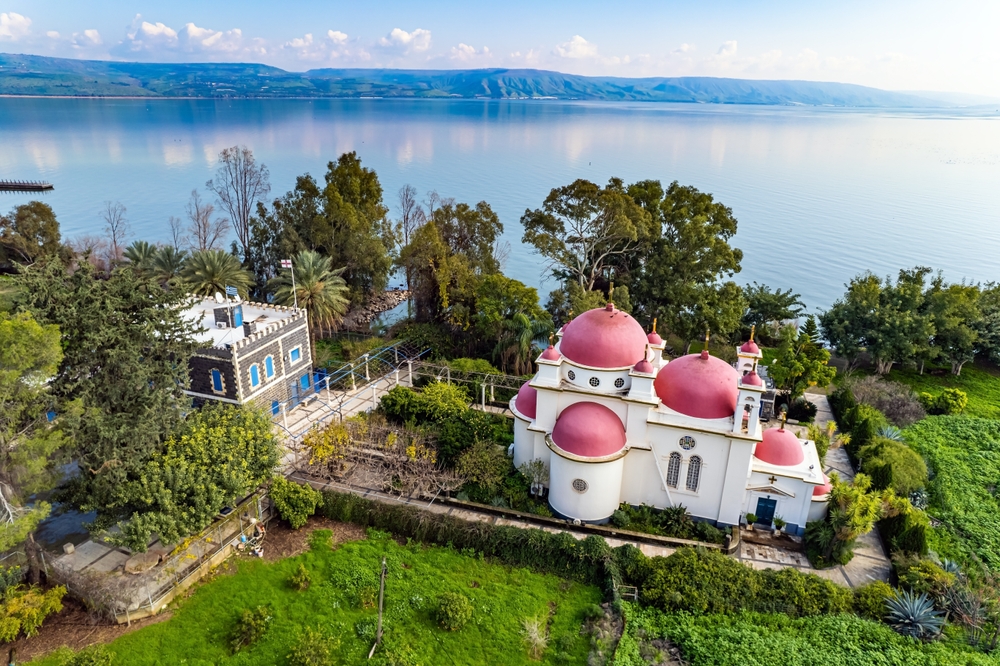
The Greek Orthodox monastery of the Twelve Apostles in Capernaum
The term "Greek" refers primarily to the Church's Byzantine heritage and historical use of Greek in its liturgy and administration rather than the nationality of its members. Today, Greek Orthodox Christians can be found across the Middle East, Europe, Africa, and North America.
The Orthodox Church emphasizes Scripture, Sacred Tradition, the teachings of the early Church Fathers, and the celebration of the Divine Liturgy, which remains central to Orthodox worship.
Pro Tip: If you plan to visit, consider joining dedicated Orthodox Pilgrimage Tours to the Holy Land. Unlike general sightseeing trips, these guided pilgrimages focus on Orthodox Christian heritage, giving you unique access to active Greek Orthodox monasteries, sacred shrines, and traditional celebrations at key holy places like Jerusalem and Bethlehem.
A Brief History of the Greek Orthodox Church
During the first centuries of Christianity, churches across the Roman Empire remained united despite cultural and linguistic differences. Over time, theological, political, and administrative disagreements developed between the Eastern and Western churches.
In 1054, these divisions culminated in what historians call the Great Schism, separating the Eastern Orthodox Church from the Roman Catholic Church. Since then, the Orthodox Church has continued as a communion of independent churches that share the same faith while being governed individually.
Among the most important of these is the Greek Orthodox Church of Jerusalem, whose roots extend back to the earliest Christian community in the Holy City.
The Greek Orthodox Church of Jerusalem
The Greek Orthodox Church Jerusalem is represented by the Greek Orthodox Patriarchate of Jerusalem, one of Christianity's oldest patriarchates.
The Patriarchate is responsible for preserving and administering many of the Holy Land's most important Christian sites. These include churches associated with the life, crucifixion, burial, and resurrection of Jesus, as well as monasteries and shrines throughout Israel and the Palestinian territories.
Because of its long history, the Greek Orthodox Church of Jerusalem plays an important role in Christian pilgrimage. Together with other Christian denominations, it shares responsibility for several sacred sites under long-standing historical agreements.
For many pilgrims, visiting the churches maintained by the Greek Orthodox Patriarchate offers a unique opportunity to experience traditions that have been preserved for centuries.
Greek Orthodox Christians in Israel
Although Christians make up a small percentage of Israel's overall population, the Greek Orthodox community remains one of the country's largest Christian denominations.
Greek Orthodox Christians live in several cities and regions, including:
- Jerusalem
- Nazareth
- Haifa
- Jaffa
- The Galilee
- Acre and other historic communities
Many members of these communities are Arabic-speaking Christians, while Greek continues to play an important role in religious ceremonies and official church traditions.
Throughout the year, local congregations gather for worship, religious festivals, baptisms, weddings, and community celebrations, preserving traditions that have been passed down through generations.
Greek Orthodox Faith and Beliefs
The Greek Orthodox faith is centered on the belief in the Holy Trinity, the divinity of Jesus Christ, His death and resurrection, and the authority of both Scripture and Sacred Tradition.
Several characteristics distinguish Orthodox worship:
- The Divine Liturgy forms the heart of every service.
- Icons are honored as sacred windows into the Christian faith.
- Incense symbolizes prayer rising to God.
- Chanting plays a central role throughout worship.
- Ancient liturgical traditions remain largely unchanged after many centuries.
Rather than focusing solely on individual belief, Orthodox Christianity emphasizes participation in the life of the Church through prayer, worship, and the sacraments.
Understanding the Greek Orthodox Religion
The Greek Orthodox religion shares many beliefs with other Christian traditions while preserving distinctive theological and liturgical practices developed in the early centuries of Christianity.
Among the seven sacraments recognized by the Orthodox Church are Baptism, Chrismation (Confirmation), the Eucharist, Confession, Marriage, Holy Orders, and Anointing of the Sick.
Monasticism also occupies an important place within Orthodox spirituality, and monasteries continue to serve as centers of prayer, learning, and hospitality throughout the Holy Land.
The Greek Orthodox Religious Calendar
One of the most distinctive features of Orthodox Christianity is its religious calendar.
Many Greek Orthodox churches continue to follow the Julian calendar for certain feast days, while others use the Revised Julian Calendar for fixed celebrations. As a result, some important religious holidays are celebrated on different dates than in Western churches.
Visitors planning a pilgrimage to Israel may notice differences in the timing of major Christian celebrations depending on the denomination.
Major Greek Orthodox Holidays
Some of the most important feasts include:
- Orthodox Christmas
- Theophany (Epiphany)
- Palm Sunday
- Holy Week
- Pascha (Orthodox Easter)
- Ascension
- Pentecost
- Dormition of the Theotokos
Orthodox Easter is the most significant celebration of the liturgical year and is often observed on a different date from Western Easter because of differences in calculating the feast.
During Holy Week and Easter, Jerusalem hosts some of the world's most important Orthodox celebrations, attracting pilgrims from across the globe.
Visiting Greek Orthodox Churches in Israel
Visitors are welcome at many Greek Orthodox churches throughout Israel, although these remain active places of worship rather than tourist attractions.
Notable Greek Orthodox Churches to Visit:
- Church of the Holy Sepulchre (Jerusalem): The most sacred site in Christianity, housing the site of the Crucifixion and the Tomb of Jesus. It also serves as the headquarters of the Greek Orthodox Patriarchate of Jerusalem.
- Church of St. Gabriel / The Spring Church (Nazareth): According to Orthodox tradition, this is where the Archangel Gabriel first appeared to Mary at the spring. The interior features beautiful historic frescoes and an underground spring.
- Church of St. George (Lod): A major pilgrimage destination for Orthodox believers, housing the tomb of St. George, one of the most venerated saints and martyrs in the Eastern Orthodox tradition.
- Emmaus (Nicopolis / Al-Qubeibah): Associated with the biblical account of Jesus appearing to his disciples after the Resurrection, featuring remnants of ancient Byzantine and modern Orthodox sites of worship.
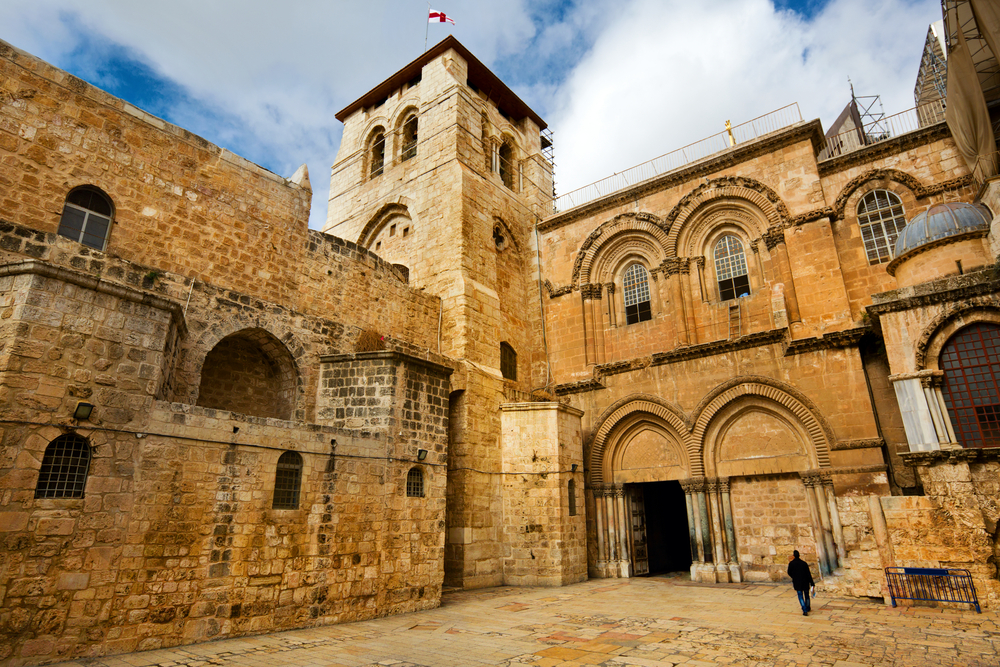
View on main entrance in at the Church of the Holy Sepulchre
When visiting, it is advisable to:
- Dress modestly by covering shoulders and knees.
- Keep voices low during services.
- Ask permission before photographing worshippers.
- Respect areas reserved for prayer.
- Be aware that opening hours may vary during religious holidays.
Attending a liturgy or witnessing an Orthodox procession can offer visitors a meaningful insight into traditions that have been preserved in the Holy Land for centuries.
Why the Greek Orthodox Church Matters for Pilgrims
For Christians visiting Israel, the Greek Orthodox Church provides an important connection to the history of the early Church and the development of Christian worship.
Its churches, monasteries, and religious communities continue to safeguard many of Christianity's most significant holy places while preserving liturgical traditions that have remained remarkably consistent through the centuries.
Whether your interest is historical, spiritual, or cultural, learning about the Greek Orthodox tradition adds valuable context to any journey through the Holy Land.
Plan Your Greek Orthodox Pilgrimage
Many of Israel's most important Greek Orthodox sites are included in Christian pilgrimage itineraries alongside Jerusalem, Nazareth, Bethlehem, the Sea of Galilee, and the Jordan River.
For travelers interested in exploring the Orthodox Christian heritage of Israel in greater depth, a private or customized itinerary offers the flexibility to visit historic churches, attend religious services, and discover communities that have preserved their faith for generations.
Our travel specialists can help design an itinerary that reflects your interests while providing expert local guidance throughout your journey.
Frequently Asked Questions
What is the Greek Orthodox Church?
The Greek Orthodox Church is one of the oldest Christian traditions, tracing its origins to the early Christian Church established by the Apostles. Today, it is part of the Eastern Orthodox communion and maintains a significant presence in Israel and throughout the world.
What is the Greek Orthodox Church of Jerusalem?
The Greek Orthodox Church of Jerusalem is led by the Greek Orthodox Patriarchate of Jerusalem. It oversees many of Christianity's holiest sites, including churches and monasteries associated with the life of Jesus Christ, and plays an important role in preserving Christian heritage in the Holy Land.
Where do Greek Orthodox Christians live in Israel?
Greek Orthodox Christians live in several parts of Israel, with large communities in Jerusalem, Nazareth, Haifa, Jaffa, Acre, and towns throughout the Galilee. These communities have maintained their traditions for centuries and continue to play an active role in Christian life in the Holy Land.
What is the difference between the Greek Orthodox Church and the Roman Catholic Church?
The Greek Orthodox Church and the Roman Catholic Church share many core Christian beliefs but became separate following the Great Schism of 1054. They differ in church governance, certain theological traditions, and some liturgical practices, while both continue to honor many of the same biblical events and holy sites.
What language is used in Greek Orthodox churches in Israel?
Services in Greek Orthodox churches in Israel may include Greek, Arabic, and sometimes other languages depending on the local congregation and the occasion. Greek remains the traditional liturgical language of the Patriarchate, while Arabic is widely used by local Orthodox communities.
When do Greek Orthodox Christians celebrate Christmas and Easter?
Many Greek Orthodox churches celebrate Christmas on January 7, following the Julian calendar, although practices vary between Orthodox churches. Orthodox Easter (Pascha) is often celebrated on a different date from Western Easter because it is calculated using a different ecclesiastical calendar.
Can visitors attend services at Greek Orthodox churches in Israel?
Yes. Visitors are generally welcome to attend services at many Greek Orthodox churches in Israel. Since these are active places of worship, guests should dress modestly, remain respectful during services, and follow any photography or visitor guidelines provided by the church.
Why is the Greek Orthodox Church important for Christian pilgrims?
The Greek Orthodox Church preserves many of Christianity's oldest traditions and cares for numerous holy sites connected with the life of Jesus Christ and the early Church. For many pilgrims, visiting these churches offers a deeper understanding of Christian history, worship, and the enduring presence of Christianity in the Holy Land.
 Certificate of Excellence
 Guaranteed Departure
 Low Prices Guaranteed
 24/7 Support


