 Login / Register
 Contact
Pentecost: The Descent of the Holy Spirit & Christian Pilgrimage
Pentecost is one of the most important celebrations in the Christian calendar. Observed fifty days after Easter, it commemorates the descent of the Holy Spirit upon Jesus’ disciples in Jerusalem, as described in the Acts of the Apostles.
“And they were all filled with the Holy Ghost, and began to speak with other tongues, as the Spirit gave them utterance.”
- Acts 2:4, King James Version
According to the New Testament, the disciples were gathered together during the Jewish Feast of Weeks, known as Shavuot, when they heard a sound like a powerful rushing wind. Tongues resembling flames of fire appeared above them, and they began speaking in different languages.
Jerusalem was filled with Jewish pilgrims from many regions at the time. Although they came from different linguistic and cultural backgrounds, they were able to understand the disciples’ message. For Christians, this moment represents the beginning of the Church’s mission to share the Gospel with people of every nation. Pentecost is therefore often described as the “birthday of the Church.”
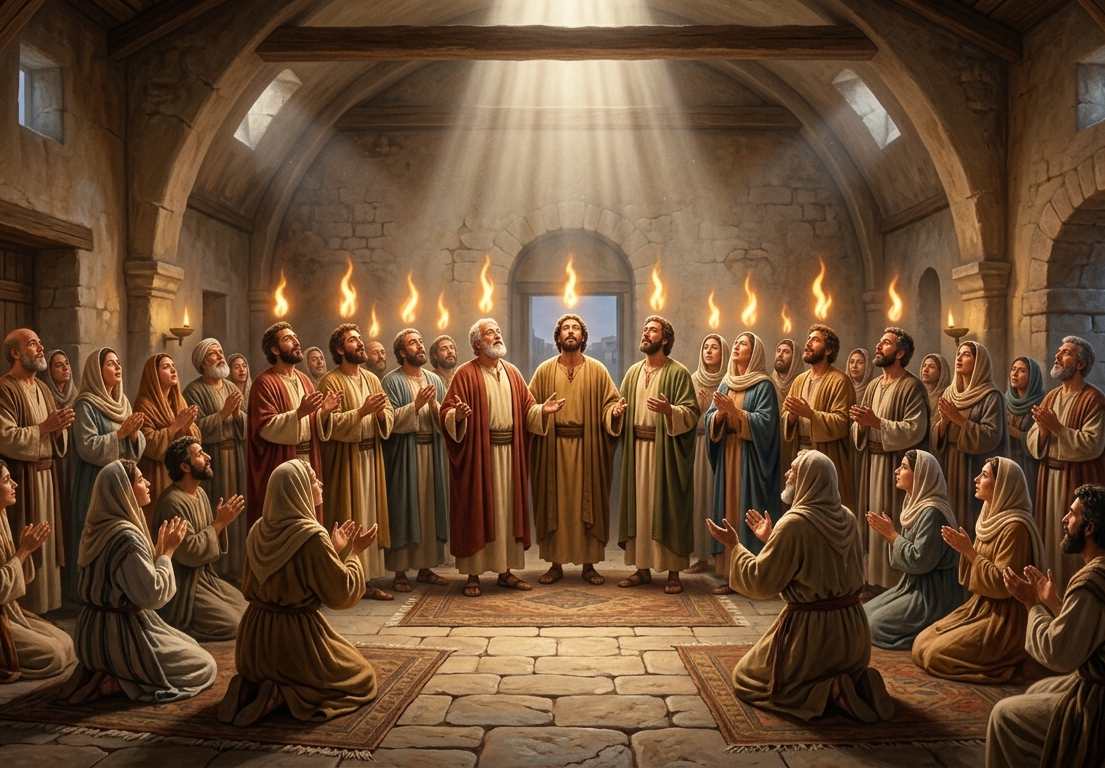
Pentecost scene
The Connection Between Pentecost and Shavuot
The events of Pentecost took place during Shavuot, one of the biblical pilgrimage festivals when Jews traveled to Jerusalem. This historical setting helps explain why people from many different places were present in the city. For Christian visitors, understanding this Jewish context adds an important dimension to the biblical account. It also demonstrates how closely the story of early Christianity is connected to Jerusalem’s religious traditions and pilgrimage history.
Where Did Pentecost Take Place?
The Book of Acts records that the disciples were gathered together in Jerusalem, but it does not identify the exact building in which the event occurred.
According to longstanding Christian tradition, Pentecost is associated with the Upper Room on Mount Zion. This site is also traditionally connected with the Last Supper. The identification is based on Christian tradition rather than definitive archaeological evidence, so it is important to distinguish the traditional location from what is stated directly in Scripture.
Today, the Upper Room is one of the most meaningful stops for Christian pilgrims visiting Jerusalem. Its simple interior allows groups and independent travelers to reflect on the Last Supper, the gathering of the disciples, and the beginnings of the early Church.
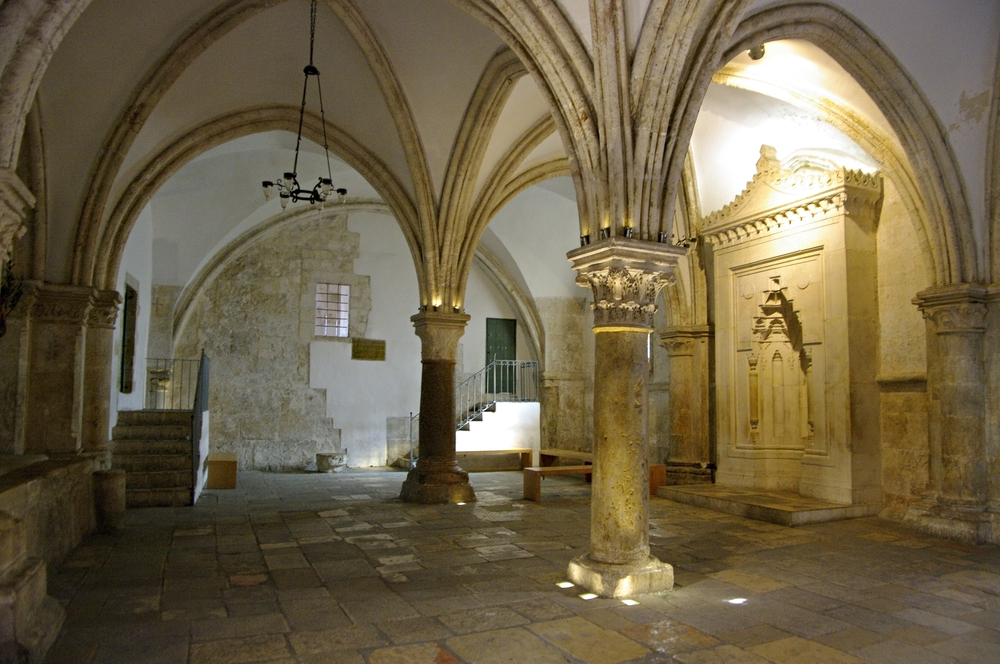
The Upper Room on Mount Zion
Visiting Mount Zion
Mount Zion is located just outside the walls of Jerusalem’s Old City, close to the Zion Gate. Several important Christian sites can be visited within a relatively compact area, including:
- The Upper Room, traditionally associated with the Last Supper and Pentecost
- Dormition Abbey, connected by Christian tradition with the Virgin Mary
- The traditional Tomb of King David
- The Church of Saint Peter in Gallicantu, located farther down the slope of Mount Zion
Visitors should wear modest clothing and remember that some of these locations remain active places of worship. The area includes stone paving, steps, and uneven surfaces, so comfortable walking shoes are recommended. Travelers with limited mobility may benefit from arranging transportation and a carefully planned route.
Experiencing Pentecost in the Holy Land
Visiting Jerusalem provides an opportunity to place the Pentecost story within its geographical and historical setting. Standing on Mount Zion and exploring the Old City can help travelers understand the close relationship between the biblical narrative, Jewish pilgrimage festivals, Christian tradition, and the development of the early Church.
A licensed Israeli tour guide can also explain how the sites are connected while clearly distinguishing between the New Testament account, later Christian traditions, and historical evidence.
Bein Harim offers guided Jerusalem tours, private tours, and customized Christian pilgrimage itineraries that can include Mount Zion, the Upper Room, the Mount of Olives, the Church of the Holy Sepulchre, and other sites associated with the life of Jesus and the early Christian community.
Explore our Christian tours or contact our Israel travel specialists to plan a pilgrimage itinerary adapted to your denomination, interests, travel pace, group size, and mobility requirements.
 Certificate of Excellence
 Guaranteed Departure
 Low Prices Guaranteed
 24/7 Support


