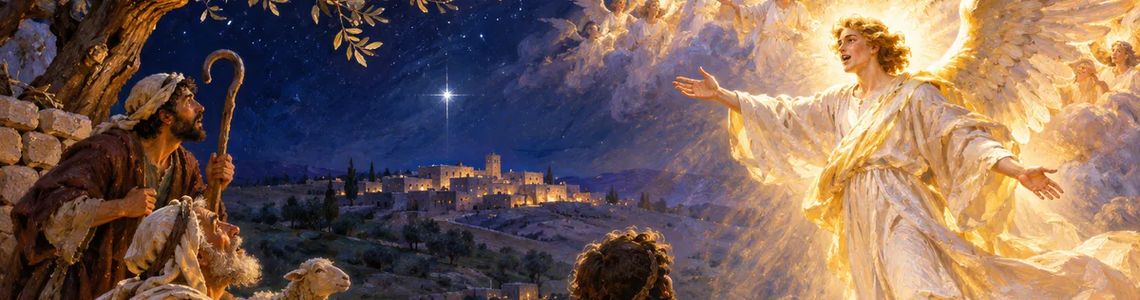
Night has fallen over the hills east of Bethlehem. A few shepherds keep watch beside their flock, as they have on countless nights before. Then the darkness breaks open with light, and a messenger brings news that will send them running into town. Luke's Gospel gives this moment only a few verses, yet it has shaped Christmas carols, nativity scenes and centuries of pilgrimage to the fields of Beit Sahour.
The Annunciation to the Shepherds is the account in Luke 2:8–20 in which an angel tells shepherds near Bethlehem that the Messiah has been born. A heavenly host joins in praise, and the shepherds hurry to find the baby lying in a manger. Christian tradition remembers the event at Shepherds' Field in Beit Sahour, just east of Bethlehem.
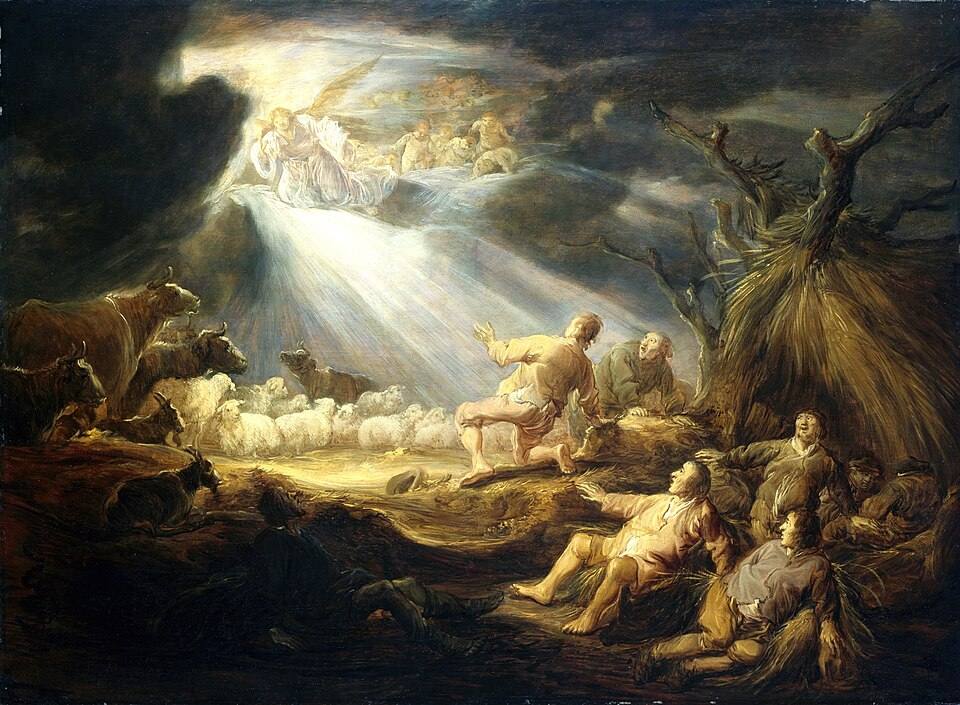
Luke sets the scene simply. Mary and Joseph have traveled to Bethlehem, and Jesus has been born and laid in a manger because there was no room for them in the guest lodging. Nearby, ordinary working men are spending the night outdoors.
“And there were in the same country shepherds abiding in the field, keeping watch over their flock by night.” (Luke 2:8, KJV)
An angel of the Lord appears, and the glory of the Lord shines around them. Their first reaction is fear. The angel's first words address it directly:
“Fear not: for, behold, I bring you good tidings of great joy, which shall be to all people. For unto you is born this day in the city of David a Saviour, which is Christ the Lord.” (Luke 2:10–11, KJV)
The announcement comes with a sign that is surprisingly humble. The shepherds will not find a palace or a royal procession. They will find a newborn wrapped in swaddling clothes, lying in a feeding trough. The Messiah's birth is revealed to people who work with animals, and the sign points them to a place where animals eat.
Suddenly the single angel is joined by a multitude of the heavenly host, praising God:
“Glory to God in the highest, and on earth peace, good will toward men.” (Luke 2:14, KJV)
In Latin, the opening words became Gloria in excelsis Deo, “Glory to God in the highest.” They give their name to the Gloria, an ancient hymn of praise that is still sung in Catholic and many other Christian liturgies. Many people know the phrase best from the refrain of the carol “Angels We Have Heard on High.” Its meaning is twofold: praise directed to God in heaven, and a promise of peace for people on earth.
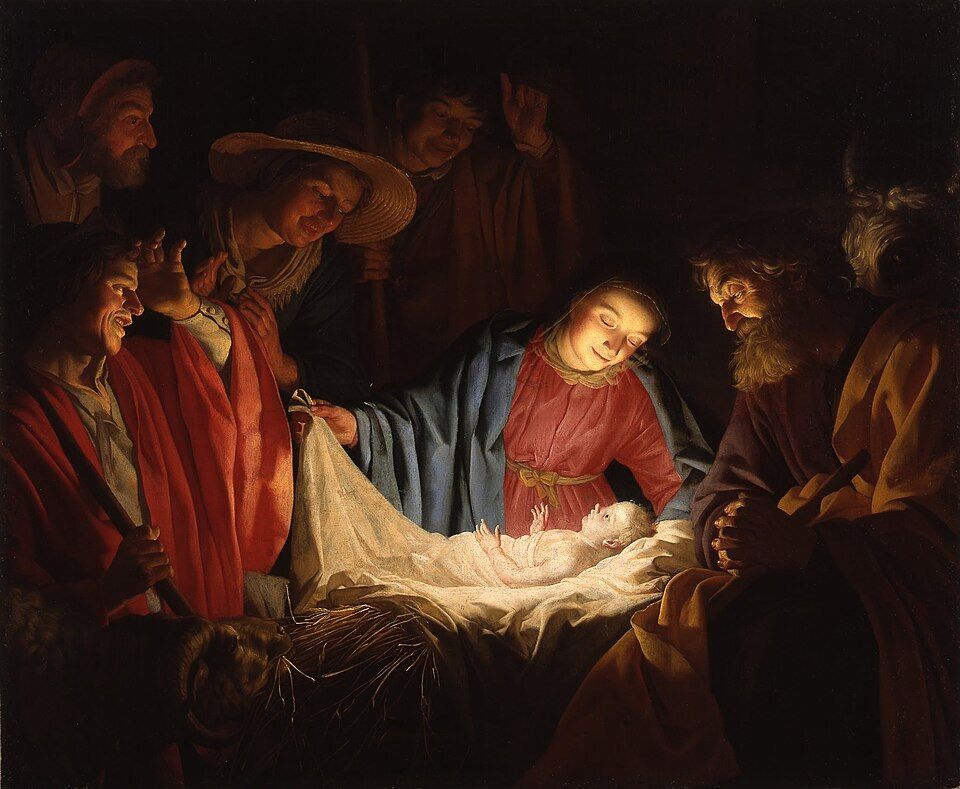
When the angels leave, the shepherds do not debate what they have seen. They decide to go and find out for themselves.
“Let us now go even unto Bethlehem, and see this thing which is come to pass, which the Lord hath made known unto us.” (Luke 2:15, KJV)
They come with haste and find Mary, Joseph and the baby, exactly as they were told. They then share what the angel said about the child, and everyone who hears it is amazed. Luke adds a quiet detail: Mary keeps all these things and ponders them in her heart. The episode closes with the shepherds returning to their fields, glorifying and praising God for everything they had heard and seen.
For the broader account of the nativity, including the journey to Bethlehem and the visit of the wise men, read our guide to the birth of Jesus.
Luke never names the shepherds or says how many there were. They were local herders working in the countryside around Bethlehem, where sheep and goats had been raised since biblical times. Shepherding was demanding work: protecting the flock from predators and thieves, finding water and pasture, and staying out in the fields through the night when needed.
Shepherds appear throughout the Bible. Abraham, Jacob and Moses tended flocks, and Bethlehem's most famous son, David, was keeping his father's sheep when the prophet Samuel came to anoint him (1 Samuel 16:11). That background gives the angel's phrase “the city of David” added weight. A new king from David's line is announced to shepherds in the same hills where David once watched sheep.
How shepherds were regarded in the first century is debated. Some later rabbinic texts speak about herders with suspicion, and many preachers describe them as people on the margins of society. Other scholars caution that these sources are later and that attitudes varied. What Luke makes clear is that they were ordinary people, not priests, rulers or scholars.
A further interpretation connects the shepherds with flocks raised for Temple sacrifices in Jerusalem, only a few miles away. Writers such as the 19th-century scholar Alfred Edersheim drew this link from Jewish sources about where flocks could graze. It remains an interpretation rather than something the Gospel states.
Luke does not explain why shepherds were chosen, but Christian readers have long seen meaning in it. The most common reading is that the good news reaches humble people first. The same Gospel later shows Jesus welcoming the poor, the overlooked and the outsider, and the shepherds are an early sign of that pattern.
Many readers also see a link with the image of God as shepherd in the Hebrew Bible, as in Psalm 23, and with Jesus' words “I am the good shepherd” (John 10:11). The Gospels describe Jesus as a carpenter's son rather than a shepherd by trade, but the shepherd image became central to how Christians understood his care for his followers.
There is also a practical element in the story. The shepherds become the first witnesses who spread the news. They hear, they go, they see, and they tell others. Their response is the movement Luke invites every reader to make.
The Bible does not say. Luke refers only to “shepherds” in the plural. Nativity scenes often show two or three, but that is an artistic choice, not a detail from the text.
No. In Luke's account the shepherds are guided by the angel's message and the sign of the manger. The star and the gifts of gold, frankincense and myrrh belong to the visit of the wise men in Matthew 2, a separate episode. Carols and nativity plays often combine the two stories, which explains the common confusion.
Luke calls him “the angel of the Lord” and does not give a name. Earlier in the same Gospel the angel Gabriel is named in the announcements to Zechariah and to Mary, so some readers assume Gabriel appeared to the shepherds too, but the text does not say so.
According to Luke, on the night of his birth. The angel says the Savior is born “this day,” and the shepherds go to Bethlehem with haste. This is different from the wise men, whose visit may have come some time later.
Luke gives no date for the birth of Jesus, so the Gospel itself does not settle the question. Some readers note that winter nights in the Judean hills are cold and rainy, while others point out that flocks near Bethlehem could be kept outdoors in different seasons. For Christians, the celebration on December 25, or in January in several Eastern churches, is a way of honoring the meaning of the birth. The value of the story does not depend on fixing the exact day.
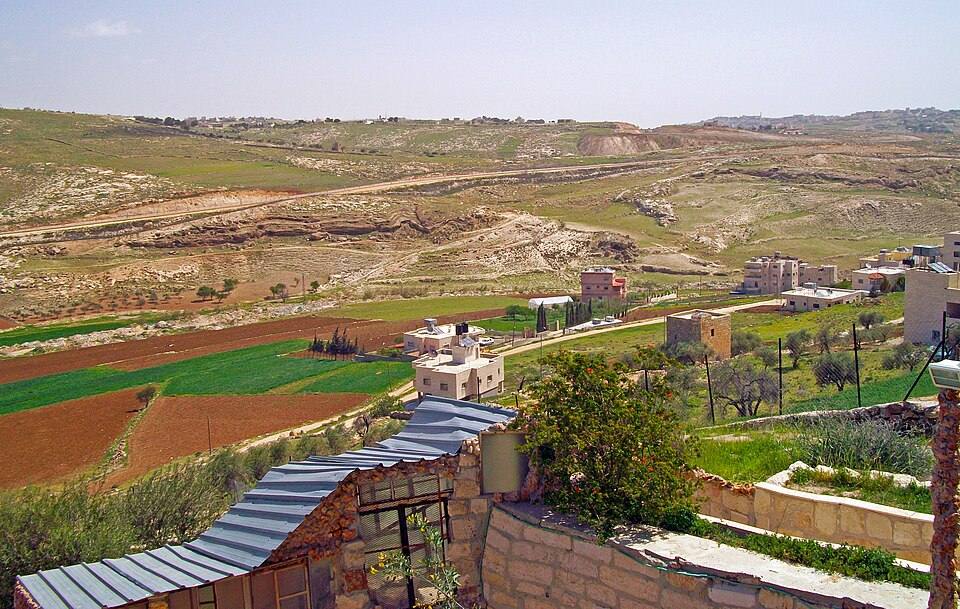
Luke places the shepherds “in the same country,” meaning the countryside near Bethlehem. He does not identify a specific field. Christian tradition associates the event with the area of Beit Sahour, a town just east of Bethlehem whose fields slope toward the Judean Desert. Three sites there commemorate the story, each cared for by a different Christian community.
The Catholic site, administered by the Franciscans, is the most visited. Its Chapel of the Angels was designed by Antonio Barluzzi in the shape of a shepherds' tent, with paintings of the angel's announcement and the shepherds' visit inside. Beside it are remains of a 4th-century church and a later monastery, along with caves of the kind shepherds used for shelter. Nearby, the Greek Orthodox Church of the Shepherds stands above the remains of an early subterranean church, and the Orthodox tradition links the area with the biblical Tower of the Flock (Genesis 35:21). A third, Protestant site is set in a pine-covered meadow with natural caves.
These are traditional places of remembrance, not proven locations. Their value lies in the setting they provide: open fields, rocky caves and the view toward Bethlehem make it easy to picture a night watch on the hillside. You can learn more about the sites in our guide to Shepherds' Field in Bethlehem.
Shepherds' Field fits naturally into a visit to Bethlehem, together with Manger Square and the Church of the Nativity. Bethlehem is in the West Bank, and access arrangements can change, so it is best to confirm the details when you plan. During the Christmas season the town is especially busy; our guide to Christmas in Bethlehem describes the celebrations.
Reading Luke 2 in the fields outside Bethlehem gives the story a new depth. Standing by the caves of Beit Sahour, then walking into the town where the shepherds found the child, turns a familiar Christmas reading into a place you can see and remember.
Explore our Bethlehem tours to find the right way to visit, from a half-day tour to full-day combinations with Jerusalem or Jericho. Itineraries differ, so choose a tour that includes Shepherds' Field if it is a priority for you.
For a broader journey through the places of Jesus' life, from Nazareth to the Sea of Galilee and Jerusalem, browse our Christian tours of Israel.
Tours You May Like
Join Us
Keep in Touch


 Login / Register
 Contact


 Certificate of Excellence
 Guaranteed Departure
 Low Prices Guaranteed
 24/7 Support