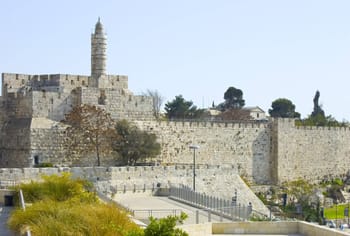
Before he became a king, David was a shepherd. Before Jerusalem became the heart of his kingdom, it was a city he had yet to conquer. His biblical story moves from a confrontation with Goliath to royal ambition, poetry, betrayal and grief. Following it through the Holy Land reveals a figure far more complicated than the young hero with a sling.
According to the Hebrew Bible, David was the second king of Israel, succeeding Saul and establishing a dynasty centered on Jerusalem. The books of Samuel tell most of his story, while the opening chapters of Kings describe the succession to his son Solomon.
David holds a central place in Jewish tradition as a king, a figure associated with the Psalms and the ancestor of a royal line linked with messianic hope. He is also important to Christianity, whose New Testament connects Jesus with the house of David.
His biblical reign is conventionally placed around the tenth century BCE. Reconstructing its historical details is more difficult than retelling the narrative: the scale of his kingdom and the interpretation of archaeological remains remain subjects of scholarly debate.
The biblical account introduces David as a son of Jesse of Bethlehem. When the prophet Samuel comes to anoint a future king, David is initially away tending the sheep. He is brought in and chosen after his older brothers have passed before Samuel (1 Samuel 16).
The scene establishes one of the story’s enduring themes: the unexpected person is selected for an extraordinary role. David’s beginnings are pastoral, but the narrative soon places him close to power. The same chapter describes him playing a stringed instrument to bring Saul relief.
Bethlehem therefore belongs to David’s story long before its place in the Gospel birth narratives. For travelers familiar mainly with its Christian churches, remembering David adds another layer to the town’s biblical significance.
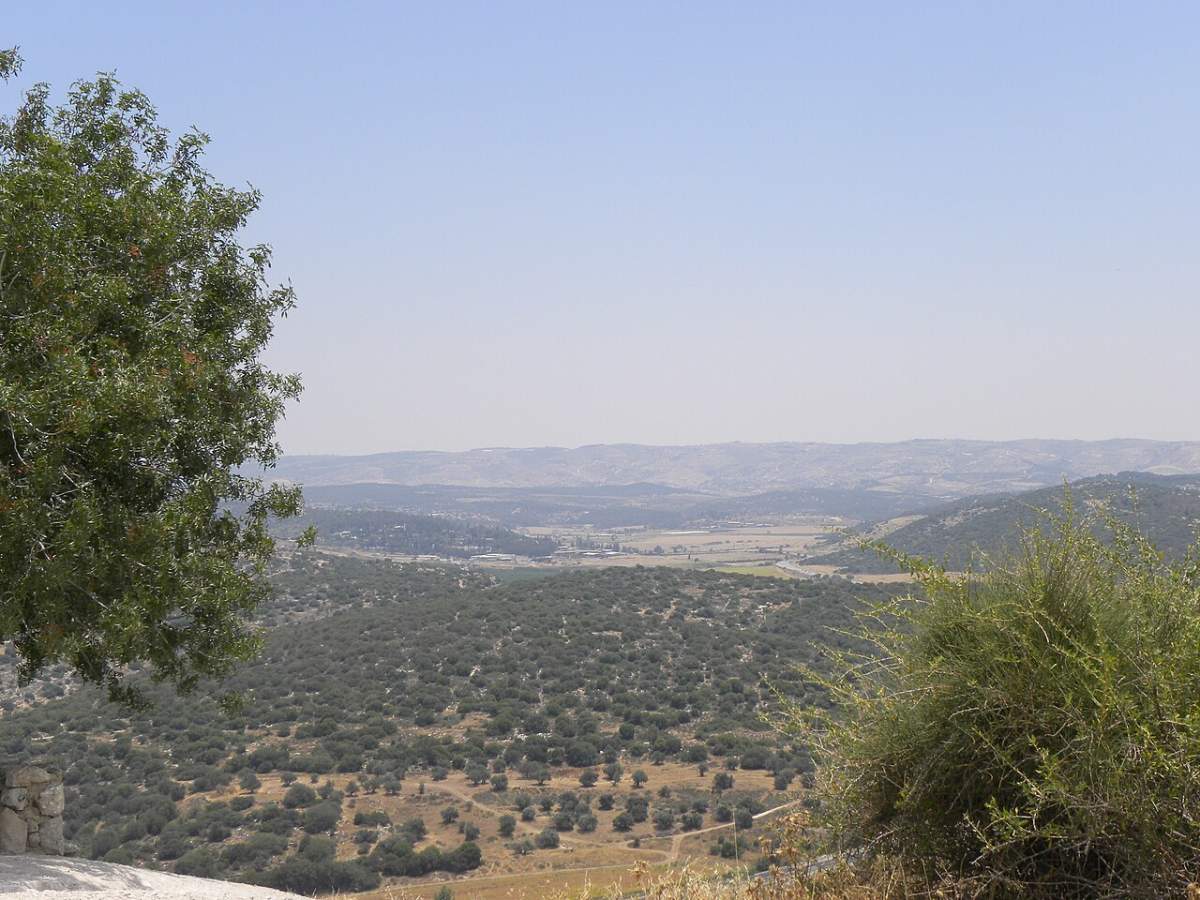
In 1 Samuel 17, the Philistines and Israelites face one another across the Valley of Elah. Goliath, the Philistine champion, challenges Israel’s army. David arrives with provisions for his brothers and offers to confront him.
David rejects Saul’s unfamiliar armor and approaches with a sling and stones. His victory becomes a defining account of faith and courage overcoming an apparently stronger opponent. The familiar phrase “David and Goliath” still describes contests between unequal rivals.
The setting gives the story a geographical anchor. Our guide to the Valley of Elah and Tel Azekah introduces the landscape associated with the confrontation. Standing above the valley helps readers picture the narrative, while the landscape itself should not be presented as archaeological proof that the duel occurred.
David’s rise does not lead directly from victory to a throne. The biblical narrative describes service at Saul’s court, military success, friendship with Saul’s son Jonathan and growing conflict with the king. David eventually lives as a fugitive, moving through wilderness strongholds and surviving outside royal protection.
These episodes make the transition to kingship a story of loyalty and rivalry as well as courage. Saul remains the reigning king during David’s years of waiting; Samuel’s earlier anointing is not the same event as David beginning to rule.
Second Samuel 5:4 states that David was thirty when he became king and that he reigned for forty years. The following verse distinguishes two phases: seven years and six months ruling Judah from Hebron, followed by thirty-three years in Jerusalem over Israel and Judah.
That distinction matters. David did not begin ruling all the tribes from Jerusalem at thirty. The biblical account describes a gradual consolidation of power, with Hebron preceding Jerusalem as his royal center.
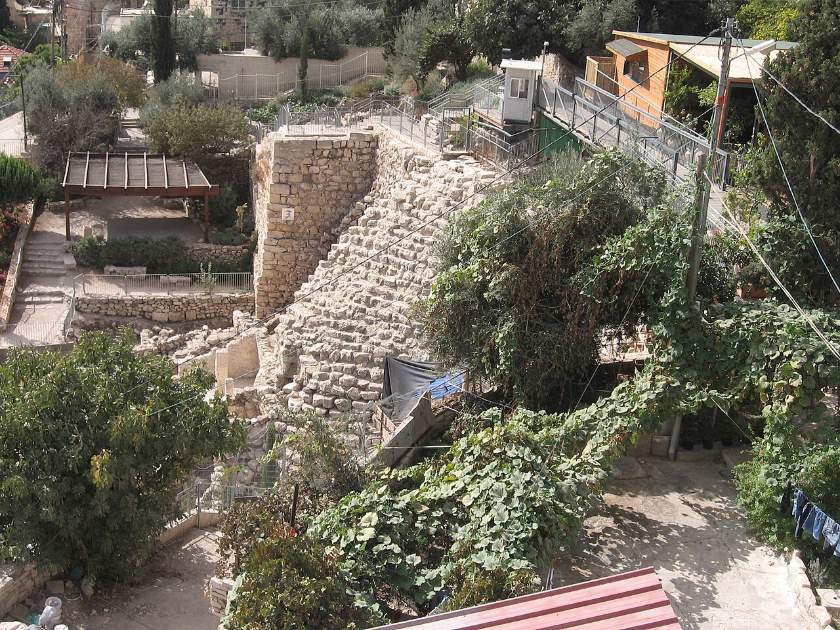
Second Samuel 5 recounts David’s capture of the Jebusite stronghold in Jerusalem and his residence in the fortress, which becomes known as the City of David. Jerusalem then takes a central place in the story of his kingship.
The narrative also describes David bringing the Ark of the Covenant into the city (2 Samuel 6). Royal authority and religious significance become closely connected with Jerusalem. The building of the Temple, however, belongs to Solomon’s reign rather than David’s.
Today, the City of David archaeological site helps visitors explore early Jerusalem and the layers of settlement that followed. Those layers span different periods. A tunnel, wall or building encountered on a visit does not automatically date to David’s lifetime, and the identification of particular remains as his palace is disputed.
The Bible does not present David as a flawless ruler. His treatment of Bathsheba and her husband Uriah is among the darkest episodes in his story. Second Samuel 11 describes David taking Bathsheba and later arranging for Uriah to be placed in deadly fighting.
The prophet Nathan confronts him through a story about a rich man taking a poor man’s only lamb (2 Samuel 12). David condemns the injustice before recognizing that the accusation is directed at him. The episode exposes the abuse of royal power and gives the narrative a moral force beyond military achievement.
Conflict also comes from within his family. His son Absalom rebels against him, and the resulting struggle becomes a story of political danger and personal grief. David’s later years lead to another contested question: who will inherit the throne?
Solomon ultimately succeeds him. First Kings 2 records David’s death and burial in the City of David, followed by Solomon’s establishment as king. The biblical dynasty continues, while the consequences of David’s choices remain part of the family’s story.
David is traditionally associated with many of the Psalms, but the book is not simply a collection written by one person. Its headings connect individual poems with David and other figures or groups, while some psalms have no named association.
Religious traditions and modern scholarship approach these headings differently. Many believers understand them as identifying authorship; scholars also examine whether they indicate dedication, association or a place within a collection. Historical authorship cannot be established simply by repeating the heading.
For a traveler, the enduring connection is David’s place in the tradition of sacred song. The musician described at Saul’s court becomes, in Jewish and Christian memory, a voice associated with prayer, lament, gratitude and repentance. That legacy explains why depictions of David so often show him with a musical instrument rather than a crown alone.
The Tel Dan Stele is central to this question. This ninth-century BCE Aramaic inscription, discovered in northern Israel in the early 1990s, contains a reference generally read as the “House of David.” It is important evidence outside the Bible for a royal dynasty bearing David’s name.
The distinction is crucial: the inscription is later than David’s conventional lifetime. It is not his own monument, a biography or evidence for every episode described in Samuel. It supports the historical discussion of a Davidic dynasty without settling the extent of his territory or the details of his reign.
Archaeology and the biblical narrative can therefore be read alongside one another, while answering different kinds of questions. The finds illuminate the ancient world; the texts preserve the story through which David became such an influential figure.
A visit can bring together several parts of the story: Bethlehem for his beginnings, the Valley of Elah for the Goliath narrative and Jerusalem for his kingship. Each has its own relationship to biblical memory, archaeology and later tradition.
The archaeological City of David and the traditional King David’s Tomb on Mount Zion are separate places. The tomb is a site of religious tradition, not an archaeologically confirmed burial. Visitors should not assume it is the location identified in the biblical burial account.
The Tower of David is different again: its name should not be taken to mean the standing citadel was David’s residence. These distinctions make Jerusalem’s layers more interesting and easier to understand.
To explore the ancient city with its wider historical setting, discover Bein Harim’s City of David Tour Jerusalem. Read the current itinerary when planning your visit. Understanding the person behind the name gives the ruins and landscapes a story to follow.
Tours You May Like
Join Us
Keep in Touch


 Login / Register
 Contact


 Certificate of Excellence
 Guaranteed Departure
 Low Prices Guaranteed
 24/7 Support