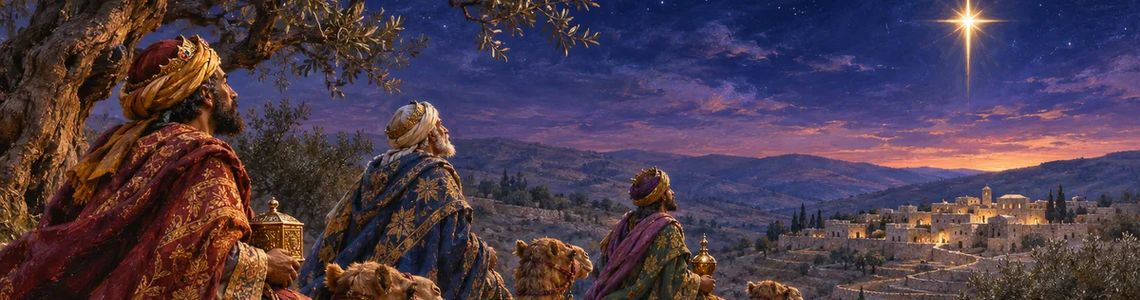
A star in the sky. Strangers asking a dangerous question. Treasures opened before a child. The visit of the Magi is one of the most familiar scenes in the Christmas story, yet Matthew’s account leaves room for wonder. Follow their journey from Jerusalem to Bethlehem and discover what the Gospel tells us about the wise men, their gifts, and the places that still draw pilgrims today.
The story appears in Matthew 2:1–12. Jesus has been born in Bethlehem of Judea during the reign of Herod when visitors from the east arrive in Jerusalem. They are looking for someone whose birth, they believe, has been announced by a star.
“Where is he that is born King of the Jews? for we have seen his star in the east, and are come to worship him.” (Matthew 2:2, KJV)
For Herod, a question about a newborn king is deeply unsettling. He gathers the chief priests and scribes and asks where the Messiah is to be born. Their answer points to Bethlehem, drawing on the prophetic passage quoted in Matthew 2:5–6.
Herod then meets the wise men privately to learn when the star appeared. He sends them to Bethlehem and asks them to report back, claiming that he, too, wants to worship the child. The visitors continue their search, and Matthew describes the star going before them until it stands over the place where Jesus is.
“When they saw the star, they rejoiced with exceeding great joy.” (Matthew 2:10, KJV)
Inside a house, they find the child with Mary, bow down, and offer gold, frankincense, and myrrh. Their journey ends with a change of course: warned in a dream not to return to Herod, they leave for their own country by another way. Matthew’s narrative then turns to Joseph’s warning and the family’s escape to Egypt.
The Magi are the visitors often called the wise men or the Three Kings. The Greek word magoi had associations with learned religious figures and specialists in interpreting celestial signs. In Matthew’s story, their observation of a star brings them into the search for Jesus.
That background helps explain the word’s meaning, but it does not give us biographies. Matthew supplies no names, professions, or detailed account of their religious beliefs. We meet them through their actions: they watch, travel, ask questions, rejoice, and worship.
Matthew says that they came “from the east.” Persia and Babylonia are often discussed as possible backgrounds, but the Gospel does not identify a particular country. Nor does it describe their full route, the length of their journey, or the animals they traveled with.
For visitors imagining the journey today, Jerusalem and Bethlehem are the firm geographical points in the account. A precise trail across the desert would go beyond what the text provides.
Matthew does not state how many wise men visited Jesus. The familiar number three is associated with the three gifts, but three kinds of treasure do not establish the number of people carrying them.
The Gospel also does not call them kings. The Three Kings belong to a cherished Christian tradition developed around the story. Names such as Caspar, Melchior, and Balthasar come from later traditions rather than Matthew’s account. These traditions have shaped paintings, carols, and Nativity scenes for generations, adding a rich artistic life to the brief Gospel narrative.
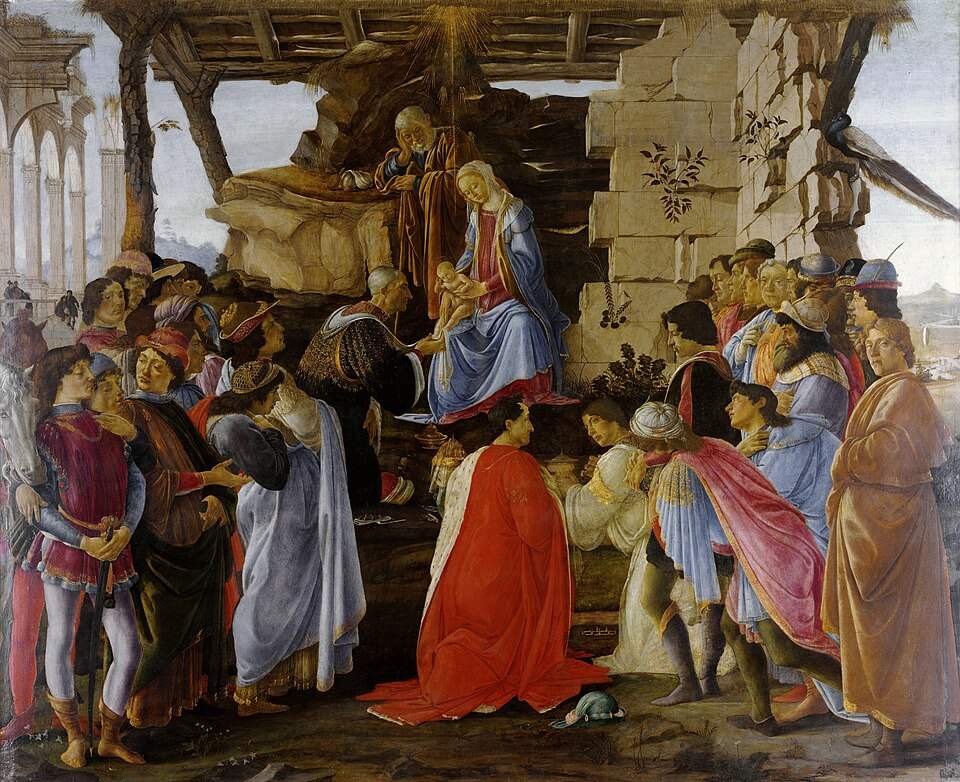
Matthew places the visit after Jesus’ birth but gives no exact interval. He describes the Magi entering a house and finding the child with Mary. Luke’s account of the birth, meanwhile, describes a baby lying in a manger and shepherds visiting after an angel’s announcement.
Christmas scenes often bring the shepherds and wise men together as a beautiful expression of the wider Nativity story. The Gospels, however, do not explicitly place both groups there on the same night. Reading the accounts separately allows each to keep its particular emphasis.
Herod’s later order against boys aged two and under is sometimes used to suggest that Jesus was exactly two when the Magi arrived. Matthew does not establish that age. The order reflects the period Herod calculated from his questioning about the star, leaving the precise timing uncertain.
For the broader account of Mary, Joseph, the manger, and the shepherds, explore the birth of Jesus in Bethlehem.
The gifts of the Magi are among the story’s most memorable details. Matthew names all three but does not explain their symbolism. The meanings familiar to many Christians come from the Church’s interpretation of the gifts in light of Jesus’ identity and life.
Gold is traditionally associated with kingship. As a precious material suitable for a royal offering, it echoes the visitors’ search for the King of the Jews.
Frankincense is an aromatic resin used as incense. Its connection with worship has led Christians to understand it as a sign of Jesus’ divine identity.
Myrrh, another aromatic resin, had uses that included perfume and burial preparations. Christian interpretation often connects it with Jesus’ humanity, suffering, and death. The gift gives the joyful scene a deeper resonance for readers who know how the Gospel story will unfold.
Presented together, the gifts express honor and devotion. Their importance lies as much in the act of offering as in the treasures themselves: the visitors kneel before a child whose significance they have crossed a great distance to acknowledge.
The visit brings people from beyond Jesus’ immediate community into the Gospel story. In Christian understanding, their arrival points toward the significance of Christ for the nations. They come as outsiders, yet recognize someone worthy of worship.
Matthew also places two responses to Jesus beside one another. The Magi seek him with joy; Herod sees a threat to his authority. Their meeting with the child offers a striking contrast to their earlier audience with the king.
Many Western Christian traditions celebrate the visit at Epiphany on January 6. The feast gives the journey a special place in the Christian year, while customs and liturgical observance vary among churches.
The Star of Bethlehem remains central to the story’s imagery. Matthew presents it as the sign that guides the visitors. Proposed astronomical explanations should be distinguished from the Gospel account: the text does not identify a specific astronomical event that settles the question.
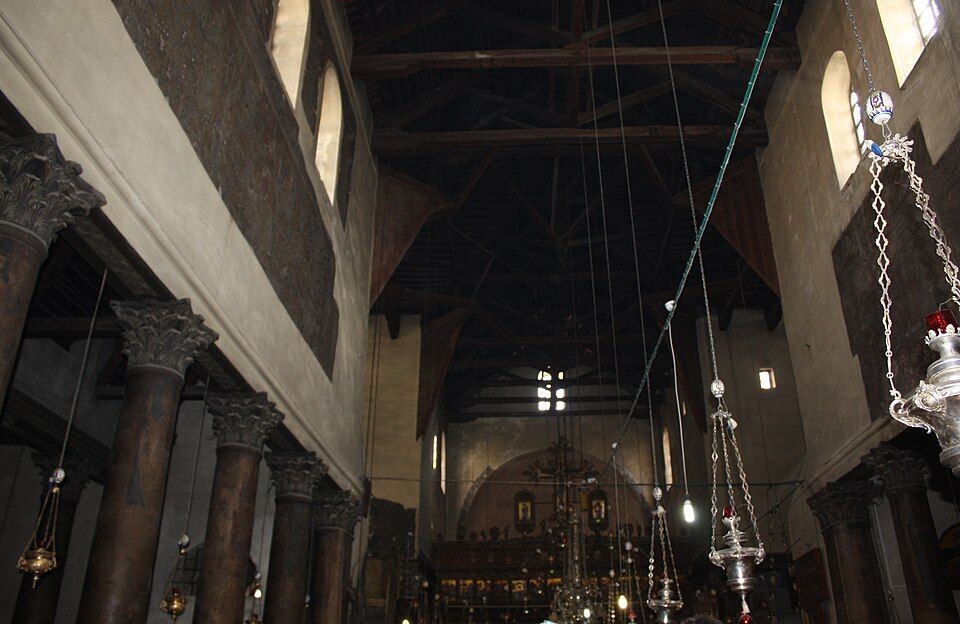
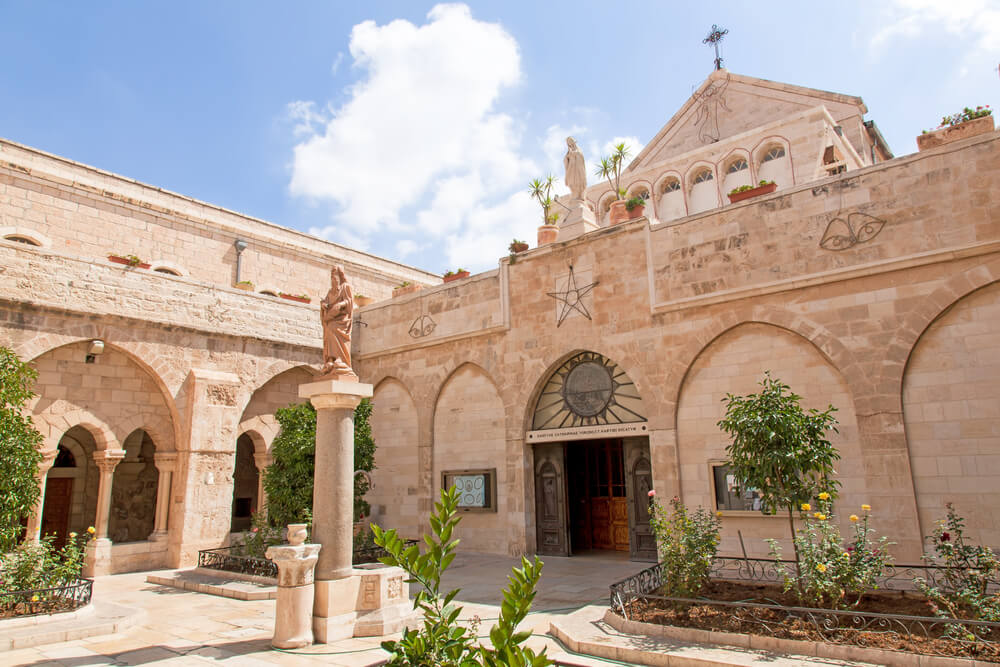
Bethlehem gives this story a setting beyond the familiar Christmas scene. In the southern West Bank, near Jerusalem, the city remains a major destination for Christians reflecting on Jesus’ birth and the visitors who came to honor him.
The Church of the Nativity is the central pilgrimage site associated with his birthplace. Beneath the church, the Grotto of the Nativity preserves a tradition with ancient roots. The church commemorates the birth of Jesus; it should not be understood as archaeological proof of the house where the Magi visited.
Before stepping inside, reread Matthew’s short account. The contrast between Herod’s court and the child in Bethlehem can feel especially vivid when the places are no longer simply names on a page. Allow time for reflection, dress modestly for religious sites, and expect shared spaces where worship and sightseeing meet.
Our Bethlehem tours offer ways to explore this biblical setting, including itineraries that combine Bethlehem with Jerusalem or Jericho. A guided visit can help connect the Gospel narrative with the churches and traditions remembered here today. Check the selected itinerary and current availability when planning your visit.
Tours You May Like
Join Us
Keep in Touch


 Login / Register
 Contact


 Certificate of Excellence
 Guaranteed Departure
 Low Prices Guaranteed
 24/7 Support