A palace clinging to a desert cliff. A harbor city facing the Mediterranean. A vast Temple complex at the heart of Jerusalem. Herod the Great built on a scale that still surprises visitors, yet his name also recalls suspicion, violence and the darkest episode of Matthew’s Christmas story. Understanding the man behind those monuments makes a journey through the Holy Land far more revealing.
Herod the Great was a king of Judea who ruled with Roman backing. His effective reign is usually dated from 37 to 4 BCE. He belonged to the political world of Rome’s expanding power, governing a kingdom whose local traditions and imperial connections did not always fit comfortably together.
He is remembered both for ambitious construction and for a ruthless defense of his position. His surviving buildings provide unusually tangible evidence of his reign, while the historian Josephus supplies much of the written narrative about his career and family. The Gospel of Matthew gives him a separate, influential place in the story of Jesus’ birth.
The title “the Great” should not be read as a simple judgment of his character. His achievements and the violence associated with his rule belong together in any account of his life.
Herod came from an Idumaean family that had adopted Judaism. His father, Antipater, helped build the family’s political influence. Herod’s Jewish identity therefore belongs within a wider story of ancestry, religious affiliation and the changing boundaries of Judean society.
Calling him simply a Roman king misses that complexity. He ruled under Rome’s protection, but his kingdom, religious building projects and conflicts over legitimacy were deeply rooted in Judea.
Herod’s path to kingship ran through both local warfare and Roman politics. His father placed him in authority in Galilee, and he later gained powerful supporters in Rome. The Roman Senate recognized him as king in 40 BCE, but recognition did not immediately give him control of Jerusalem.
He secured the city in 37 BCE with Roman military assistance, defeating the Hasmonean ruler Antigonus. That difference between appointment and effective rule explains why accounts give two dates for the beginning of his kingship.
Holding power required continuing political judgment. Herod’s career crossed the struggle between Mark Antony and Octavian, the future Augustus. Survival depended on maintaining imperial support while managing rivals at home. His buildings rose within that world of calculated alliances and insecurity.
Herod’s construction program changed the appearance of his kingdom. Palaces, fortresses, public buildings and entire urban projects made royal power visible. For travelers, three settings reveal different sides of that ambition: Jerusalem, the desert and the Mediterranean coast.
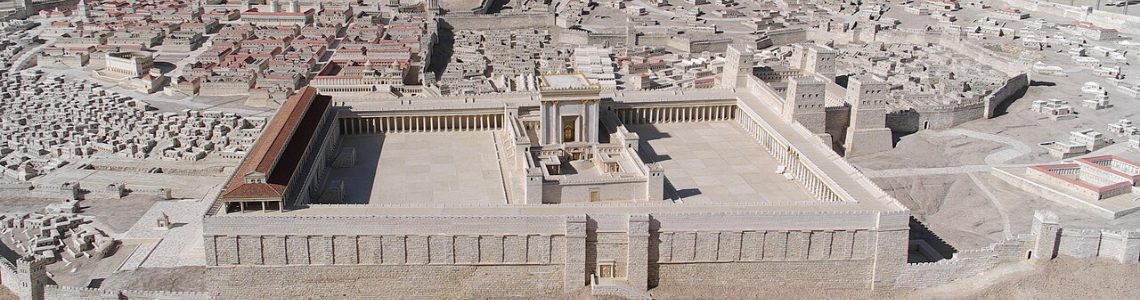
Herod undertook a monumental rebuilding of the Second Temple and enlargement of its surrounding platform. He did not establish the Second Temple: it already existed centuries before his reign. “Herod’s Temple” refers to the transformed sanctuary and complex associated with his project.
The Western Wall is part of the retaining system supporting the Temple Mount platform, rather than a surviving wall of the sanctuary itself. Construction associated with the enlarged complex continued beyond Herod’s lifetime, another reason to avoid treating every feature as the work of one moment.
Our guide to Jerusalem in Jesus’ time helps place this monumental setting within the city of the Gospels. Understanding the platform, sanctuary and surrounding streets makes the surviving remains easier to interpret.
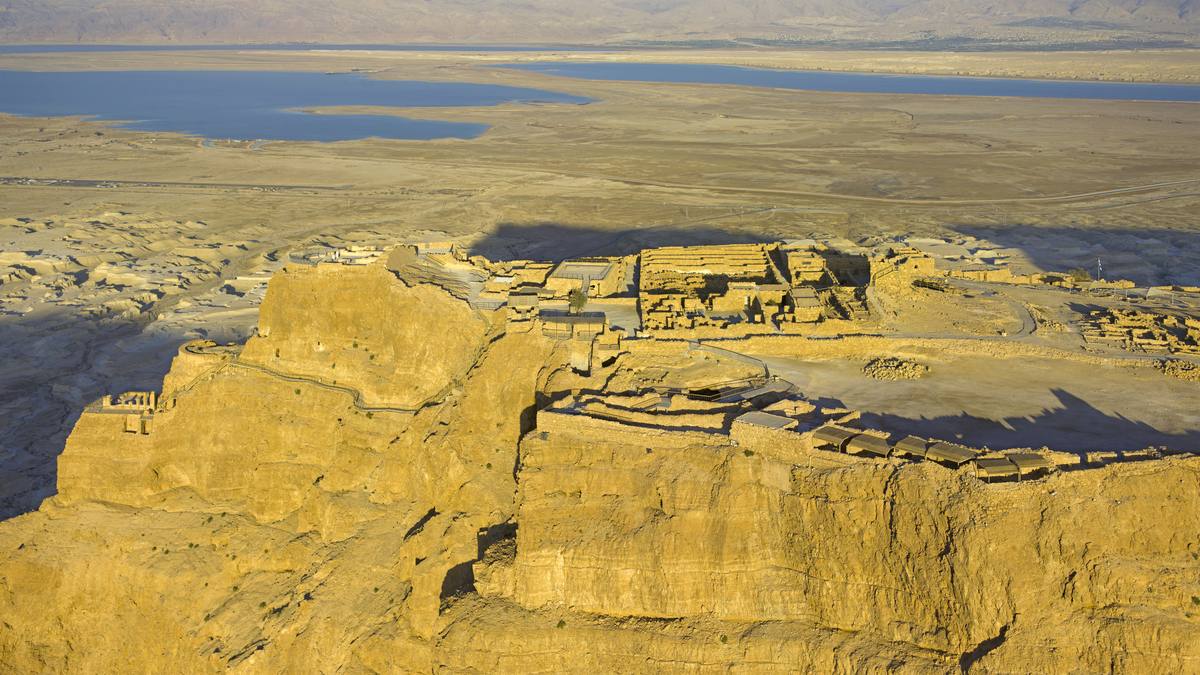
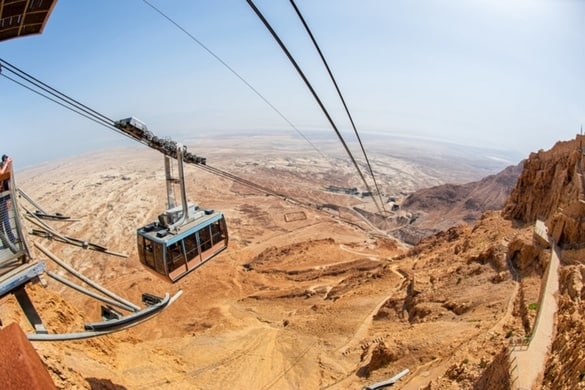
At Masada, Herod developed a palace and fortress complex with elaborate living spaces, storerooms, baths and water infrastructure. Its dramatic location communicates both luxury and the desire for refuge. The Roman siege that later made Masada famous belongs to a different chapter, long after his death.
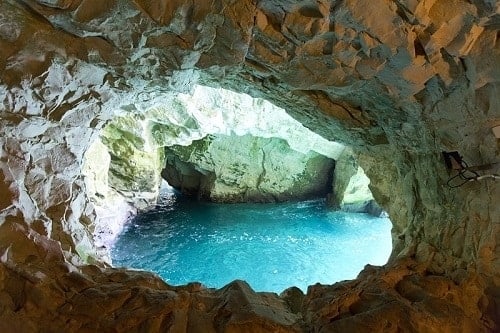
Caesarea expressed ambition in another form: a major coastal city with an artificial harbor and buildings associated with Roman public life. The city’s name honored Augustus. Its ruins also include later periods, so a visit reveals the history of Herod’s foundation and the generations that reshaped it.
Herodium, also called Herodion, combined a palace and fortress with a striking hilltop setting. It is also associated with Herod’s burial and the mausoleum excavated there. Together, these sites show how closely comfort, prestige, security and royal memory were connected in his building program.
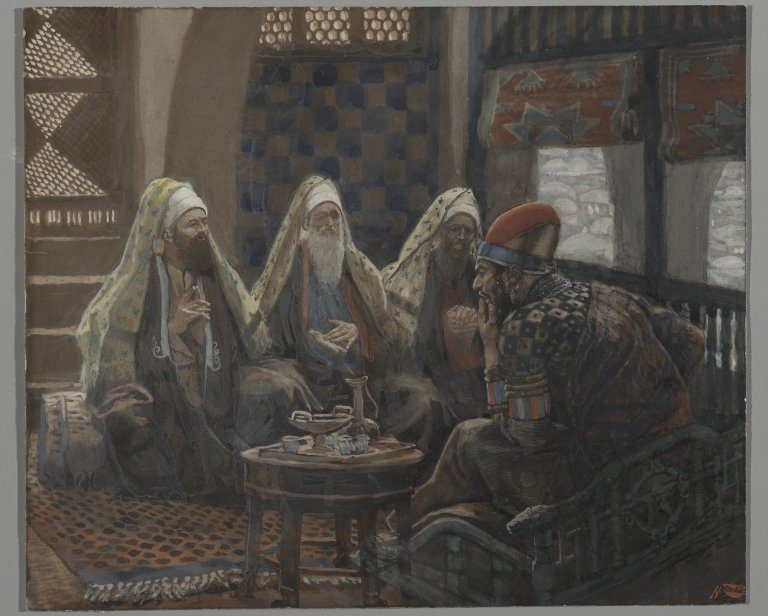
Matthew places Jesus’ birth during Herod’s reign. Wise men arrive asking about a newborn king, and their question immediately introduces a threat to the ruler already occupying the throne.
“When Herod the king had heard these things, he was troubled, and all Jerusalem with him.” (Matthew 2:3, KJV)
Matthew goes on to describe Herod seeking the child, Joseph being warned in a dream, and the family fleeing to Egypt. The chapter also recounts the killing of young boys in Bethlehem and its surrounding area, remembered in Christian tradition as the Massacre of the Innocents.
This episode must be attributed to Matthew’s account. It is not independently corroborated in the surviving account of Josephus, despite his extensive treatment of Herod. The absence of corroboration does not by itself settle what happened, but it limits what a historical article can claim. We should not add an unsupported death toll.
The Herod associated with Jesus’ birth is not the ruler associated with John the Baptist’s execution. That later figure is Herod Antipas, a son of Herod the Great, who ruled Galilee and Perea.
Other members of the dynasty also appear in the New Testament. Recognizing that “Herod” can refer to different people prevents the childhood narratives, Jesus’ ministry and later events from becoming one confused biography.
Josephus describes a royal household marked by accusations, rivalry and executions. Herod’s marriage to the Hasmonean princess Mariamne linked him with the dynasty he had displaced, but family connections did not produce lasting security.
Mariamne was executed, as were several of Herod’s sons during later struggles over loyalty and succession. These deaths give substance to his reputation for cruelty. They also reveal a monarchy in which political danger could come from the people closest to the ruler.
Josephus wrote after Herod’s lifetime, so his narrative should be approached as an ancient historical source with its own perspective. It remains essential, while archaeology provides a different kind of evidence for the world Herod created.
Herod’s death is conventionally dated to 4 BCE. Josephus describes a severe final illness and the succession arrangements surrounding his last days. Modern attempts to identify a precise medical diagnosis remain retrospective interpretations, not established clinical facts.
His kingdom did not simply pass intact to a single successor. Different territories came under members of his family, subject to Roman decisions. The resulting political landscape forms part of the background to the later Gospel narratives.
His buildings outlasted that settlement. For visitors, the most powerful encounter with his legacy often comes through scale: standing beside a retaining wall, looking down from a palace terrace or walking through a city designed to impress.
Turn the story into a day of discovery with Bein Harim. Choose the desert fortress, the Mediterranean city or Jerusalem’s ancient heart, and explore the setting with a guide who can connect the remains to the ruler behind them.
See the scale of Herod’s ambition on our Masada and Dead Sea Day Tour. Ascend by cable car and explore the palace and fortress remains before continuing to a Dead Sea beach. It is a compelling choice if you want ancient architecture, dramatic scenery and time by the water in one day. View the itinerary and book your Masada tour.
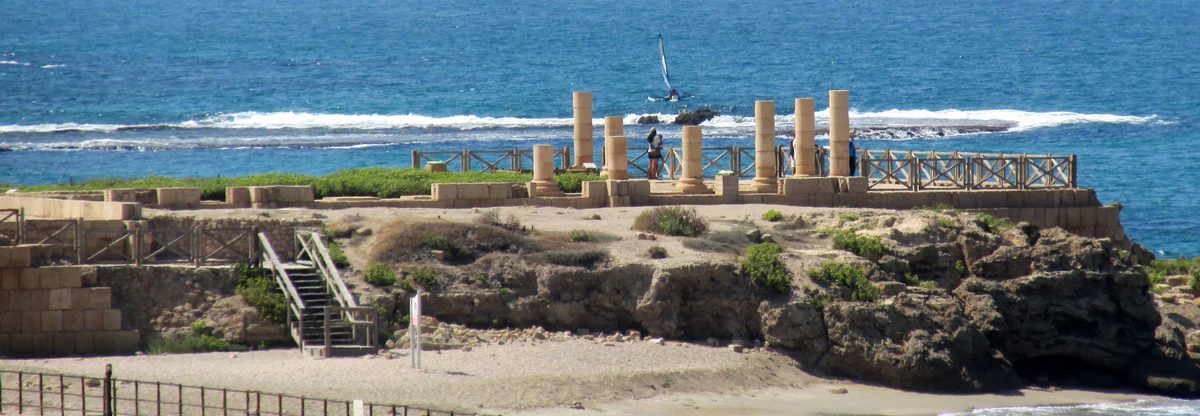
Walk through the setting of Herod’s coastal capital on our Caesarea, Haifa and Acre Private Tour. Caesarea’s theater and palace remains offer a vivid introduction to his building ambitions, while the wider route explores more of the Mediterranean coast. Choose a private tour for a more personal experience with your own guide. Explore the private tour and request your preferred date.
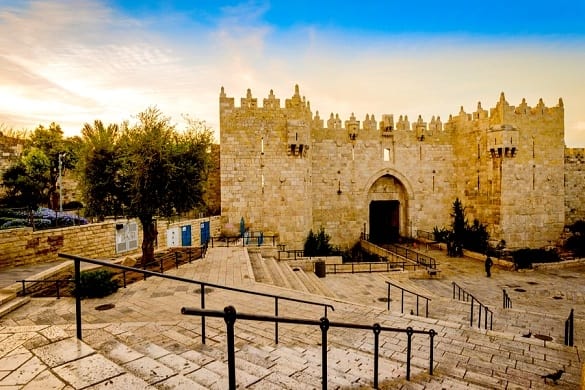
Join our Jerusalem Full Day Tour to visit the Western Wall and explore the Old City’s Jewish and Christian heritage. The stop at the Wall connects the city you see today with the monumental Temple platform associated with Herod’s building program. See the Jerusalem itinerary and book your place.
Join Us
Keep in Touch


 Login / Register
 Contact


 Certificate of Excellence
 Guaranteed Departure
 Low Prices Guaranteed
 24/7 Support