He fought Rome, survived its armies, and spent his later years writing under the protection of its emperors. Flavius Josephus lived through the destruction of the world he knew and left an extraordinary account of it. From the hills of Galilee to Jerusalem and Masada, his words still shape how travelers understand the Holy Land.
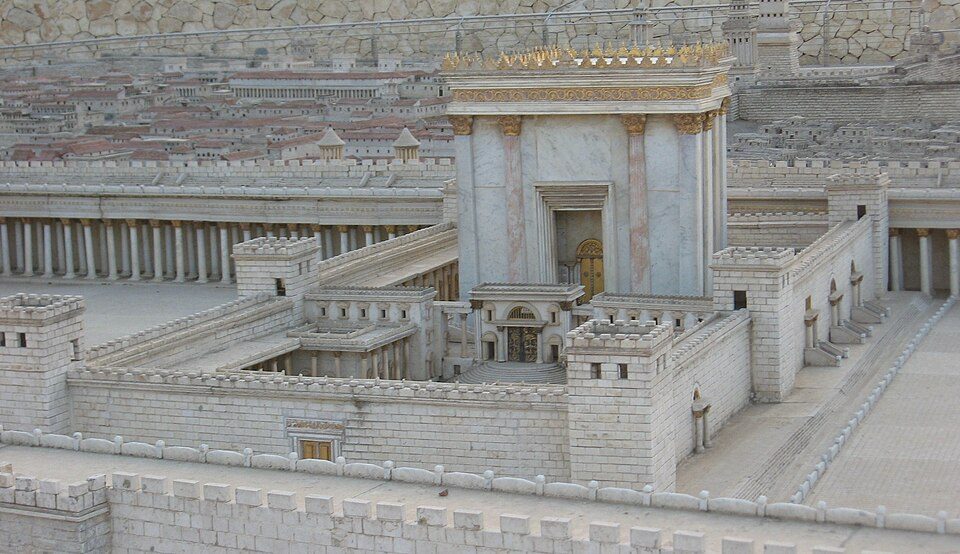
Flavius Josephus was a Jewish historian, priest, and former military commander born in Jerusalem in AD 37 or 38. His Hebrew name was Yosef ben Matityahu, commonly rendered Joseph son of Matthias. He grew up in a prominent priestly family during the final decades of the Second Temple.
Writing about the war with Rome, he introduced himself as:
“Joseph, the son of Matthias, by birth a Hebrew, a priest also, and one who at first fought against the Romans myself” (The Jewish War, Preface, section 1; William Whiston translation)
Those overlapping identities explain much of his importance. He knew Jewish religious life from within, experienced the revolt as a participant, and later addressed readers in the Roman world. His surviving books preserve descriptions of people, buildings, customs, and conflicts that would otherwise be far less familiar.
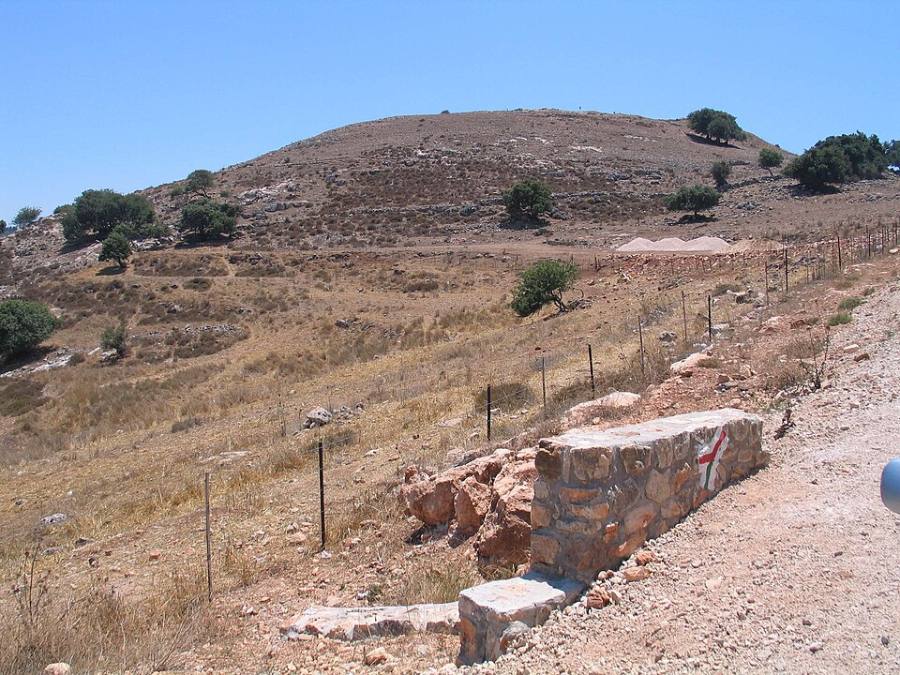
When the First Jewish Revolt broke out in AD 66, Josephus took command in Galilee. The following year, Roman forces under Vespasian besieged Jotapata, known today as Yodfat. Its fall became the decisive turning point in his life.
In his own account, Josephus survived a desperate final episode with fellow defenders hiding in a cave and surrendered to the Romans. He also claimed to have predicted that Vespasian would become emperor. That prediction is part of Josephus's presentation of his survival and should be read with his personal interests in mind.
After Vespasian's rise to power, Josephus gained his freedom and eventually Roman citizenship. During the siege of Jerusalem in AD 70, he was with the Roman forces and appealed to the defenders to surrender. He later settled in Rome, receiving imperial support and adopting the family name Flavius.
“He also honoured me with the privilege of a Roman citizen” (Life, chapter 76; William Whiston translation, referring to Vespasian)
His choices made him a controversial figure. Some have judged his change of allegiance as betrayal; others emphasize survival and the value of the history he preserved. His writings offer his own defense, giving readers both information and a reason to examine his perspective carefully.
Josephus's four surviving major works approach Jewish history from different angles. Two are especially useful for travelers exploring the ancient sites of Israel.
Alongside the two histories discussed below, he wrote two shorter works:
The Jewish War, also published in English as The Wars of the Jews, recounts the background to the revolt, the conflict with Rome, and its devastating aftermath. Its seven books include the Galilean campaign, the siege of Jerusalem, the destruction of the Temple, and the fall of Masada.
For visitors, its descriptions give human context to ruins. A defensive wall becomes part of a siege; a storage room belongs to a fortress preparing for uncertainty; Jerusalem's streets become the setting of a city struggling to survive.
Completed around AD 93 or 94, Antiquities of the Jews, also called Jewish Antiquities, presents Jewish history in twenty books, beginning with creation and continuing toward Josephus's own lifetime. It retells biblical narratives and describes later rulers, religious groups, and Roman administration.
This is the work containing his well known references to Jesus and John the Baptist.
Josephus is important to the study of early Christianity because his writings contain references to Jesus outside the New Testament. He was born after Jesus' crucifixion, so these passages are later historical references rather than memories of having met him.
The longer passage, in Antiquities 18.3.3, is commonly called the Testimonium Flavianum. The transmitted text describes Jesus, his followers, and his execution under Pontius Pilate. Its wording has received close scholarly attention because parts express Christian beliefs in language that raises questions about the text's transmission.
Many scholars think Josephus wrote a reference to Jesus that later Christian copyists expanded. Other scholars argue for different degrees of authenticity. The precise original wording remains debated. Explaining that manuscript history allows readers to appreciate the passage's importance while distinguishing historical analysis from the faith Christians bring to the Gospel story.
A second, shorter reference appears in Antiquities 20.9.1, where Josephus identifies James through his relationship to Jesus, who was called Christ. This passage is generally regarded as more secure. Josephus himself was a Jewish author, and his works do not establish that he became a Christian.
In Antiquities 18.5.2, Josephus also describes John the Baptist as a teacher who urged righteousness and devotion to God. He explains Herod Antipas's concern about John's influence and records his imprisonment and execution at Machaerus.
This account offers another perspective on a figure familiar from the Gospels. Josephus emphasizes the ruler's political fears; reading the accounts alongside one another helps visitors understand the religious and political tensions of the period.
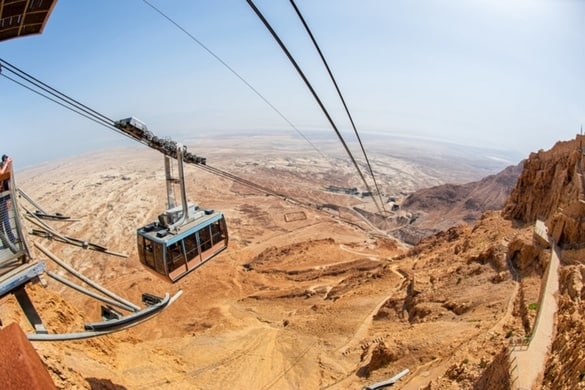
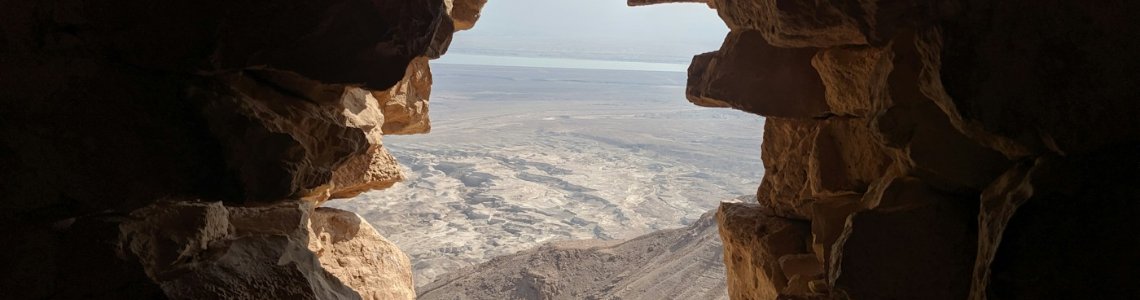
For many travelers, Josephus's name first becomes familiar at Masada. His account in Book 7 of The Jewish War describes Herod's fortress, its occupation by the Sicarii, the Roman siege, and the deaths of its defenders.
Josephus was not present at the siege. He reports that two women and five children survived the final killings, providing a route by which the story could have become known. The speeches he places in the narrative belong to ancient historical writing and cannot be treated as recorded transcripts.
Archaeology reveals the Roman siege works and the fortress's buildings, helping visitors place his account within a physical landscape. Scholars continue to discuss how the material evidence relates to his description of the defenders' final hours. Reading a short passage before visiting makes the contrast between the palace above and the Roman camps below especially compelling.
Josephus is an essential source whose testimony benefits from comparison with other evidence. He witnessed some events, relied on reports for others, and wrote with loyalties, arguments, and a reputation to defend. His relationship with the Flavian emperors is particularly important when considering his portrayal of the war.
Excavations at Yodfat have uncovered fortifications, battle debris, and evidence of violent destruction relevant to his account. In Jerusalem, places such as the Pilgrimage Road and its surrounding archaeological remains help visitors explore the urban world he describes. These discoveries enrich the discussion without verifying every number, speech, or motive in his books.
His enduring value lies in the detail he preserved and the questions it allows us to ask about a society transformed by war.
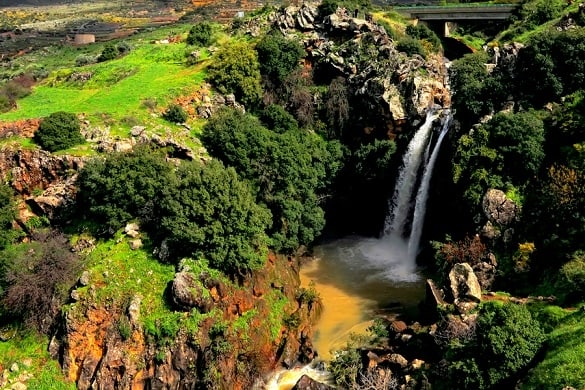
Josephus's writings can become a rewarding companion to a journey through Israel. Yodfat connects with his military career, Jerusalem with the city and Temple he knew, and Masada with one of his most influential accounts. Gamla in the Golan Heights adds another connection: he describes its siege and fall to the Romans in Book 4 of The Jewish War. Each place offers a different way to connect his words with the landscape.
Explore the fortress at the heart of his famous account on our Masada and Dead Sea Day Tour. Ascend by cable car, discover the remains of Herod's complex with a guide, and continue to the Dead Sea. Seeing the site helps place the written story within its dramatic desert setting.
For a more personal exploration, choose our Masada, Qumran, and Dead Sea Private Tour. Discuss your interest in Josephus, Roman siege warfare, or life during the Second Temple period with our team when planning the day.
Discover the wider region of ancient Gamla on our Golan Heights Tour, whose published route includes Katzrin, Shalom Observatory, and Mount Bental. Gamla's own archaeological remains have a particularly close connection to Josephus's account of the revolt. Visiting Gamla Nature Reserve requires a separately arranged itinerary; it is not listed as a stop on the standard Golan tour.
View the itineraries and check availability for your travel dates. Tell our team which places connected with Josephus you want to explore so we can advise on the appropriate route.
Join Us
Keep in Touch


 Login / Register
 Contact


 Certificate of Excellence
 Guaranteed Departure
 Low Prices Guaranteed
 24/7 Support