Before the manger in Bethlehem, there was a conversation in Nazareth. An angel brought Mary news that would change her life, and her reply became one of Christianity's most cherished expressions of faith. The Annunciation invites us into that encounter, from Gabriel's greeting to the sacred places where pilgrims remember it today.
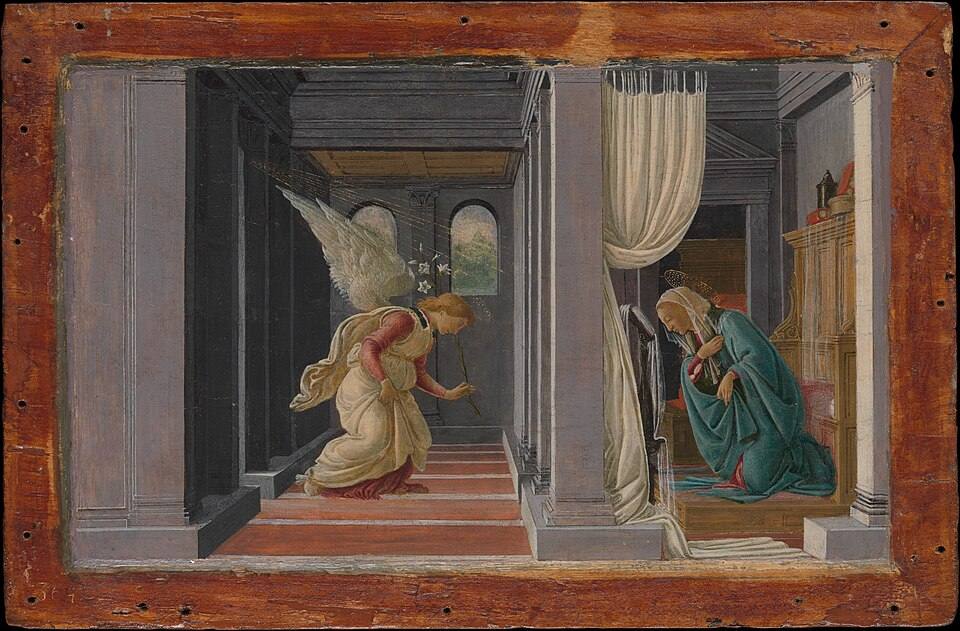
The Annunciation is the announcement by the angel Gabriel to the Virgin Mary that she would conceive and bear Jesus, the Son of God. The story appears in Luke 1:26–38 and takes place in Nazareth in Galilee.
The word annunciation means an announcement. In Christian tradition, it names this particular moment of revelation and Mary's acceptance of her calling. It is closely connected with belief in the Incarnation: the Son of God taking on human nature.
For travelers, the story gives Nazareth a special place on a Holy Land journey. Long before Jesus began his public ministry, this Galilean town was the setting for a message of promise, a question, and a response of trust.
Luke introduces the encounter during the sixth month of Elizabeth's pregnancy. Elizabeth, Mary's relative, is expecting the child who will become John the Baptist. Against that background, God sends Gabriel to Mary, a virgin betrothed to Joseph, a man of the house of David.
The angel greets Mary as favored by God and assures her of the Lord's presence. She is troubled by the greeting and considers what it might mean. Gabriel responds with reassurance:
“Fear not, Mary: for thou hast found favour with God.” (Luke 1:30, KJV)
Luke records Mary's question as well as her answer. She listens, asks how the promise will be fulfilled, and hears Gabriel's explanation before responding. The exchange gives this moment of Christian faith a deeply personal quality.
Gabriel's message begins with the promise of a son and the name Mary is to give him:
“And, behold, thou shalt conceive in thy womb, and bring forth a son, and shalt call his name Jesus.” (Luke 1:31, KJV)
The angel goes on to describe the child as the Son of the Highest. He will receive the throne of David, reign over the house of Jacob, and have a kingdom without end. These words connect the announcement with the hopes and promises found in Israel's Scriptures.
Mary asks how this will happen, since she is a virgin. Gabriel answers that the Holy Spirit will come upon her and the power of the Highest will overshadow her. The child will be called the Son of God. He also tells her about Elizabeth's pregnancy, ending with the assurance that nothing is impossible with God (Luke 1:34–37).
Mary answers with words that have echoed through centuries of prayer and worship:
“Behold the handmaid of the Lord; be it unto me according to thy word.” (Luke 1:38, KJV)
Her response is often called her fiat, a Latin word meaning "let it be done." In Christian reflection, it expresses her willing acceptance of God's call. Catholic teaching gives particular attention to this consent, and the scene holds deep meaning across Christian traditions.
Luke then says that the angel departed. The passage closes without describing what Mary did immediately afterward or every thought she carried. That spare ending leaves her answer at the center of the encounter. The next episode in Luke follows her journey to visit Elizabeth.
The Annunciation brings together two central themes of Christian belief: God's initiative in the Incarnation and Mary's faithful response. Gabriel announces who Jesus will be, while Mary accepts a calling whose full course still lies ahead.
Her question makes the passage especially memorable. Faith appears here alongside a desire to understand. For many believers, her response offers a model of openness, courage, and trust when life takes an unexpected direction.
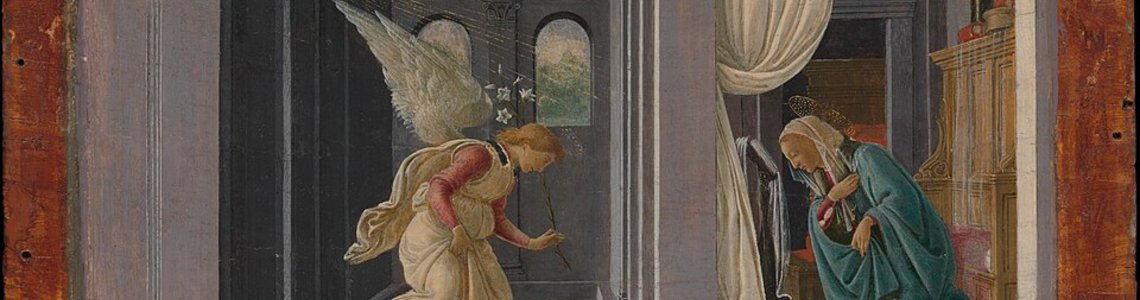
The story has inspired centuries of religious art, music, and devotion. Artists often depict Mary with a book or place lilies beside her, sometimes within an elaborate architectural setting. These details belong to artistic interpretation; Luke's account concentrates on the message and the exchange between Mary and Gabriel.
Luke identifies the setting as Nazareth. Within the city, different Christian traditions preserve places associated with the encounter. The Catholic basilica and the Greek Orthodox church express these traditions through distinct sacred spaces. The Gospel itself does not name a particular house, cave, or spring.
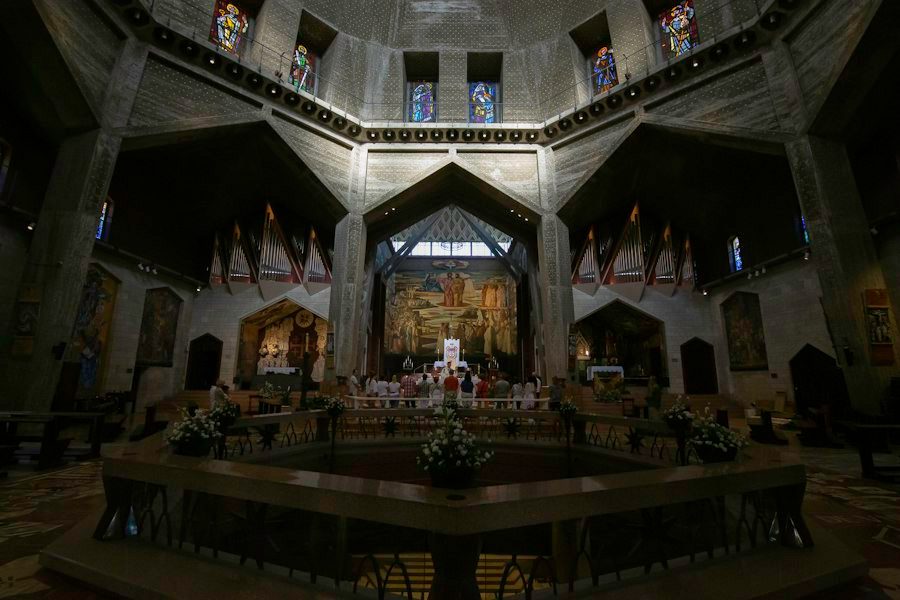
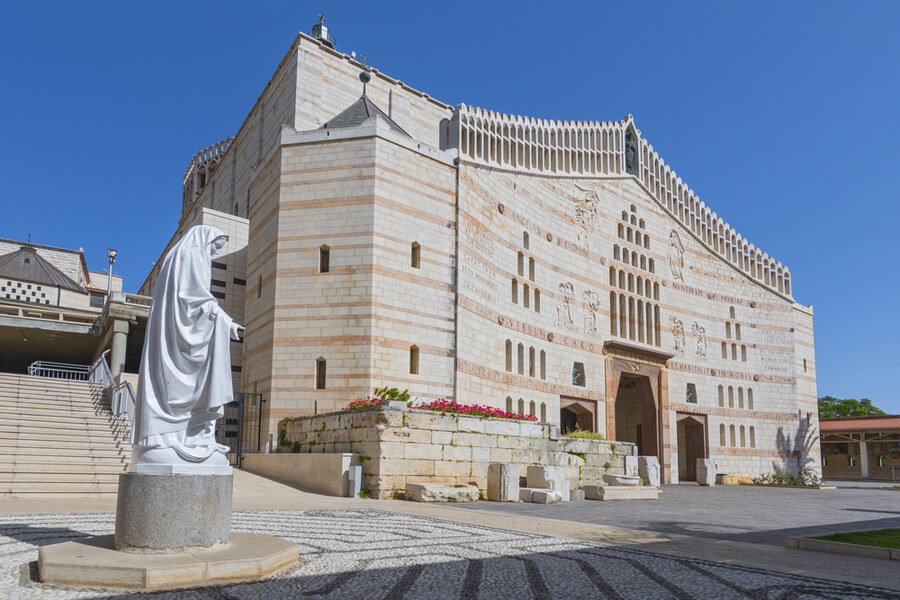
The Catholic Basilica of the Annunciation stands over the grotto venerated as part of Mary's home and the place of Gabriel's announcement. The present basilica was completed in 1969 and incorporates remains of earlier churches.
The lower church centers on the Grotto of the Annunciation. The upper church and the surrounding Marian artwork reveal how communities across the world have expressed their devotion to Mary. For pilgrims, the basilica connects a brief Gospel passage with a long history of prayer in Nazareth.
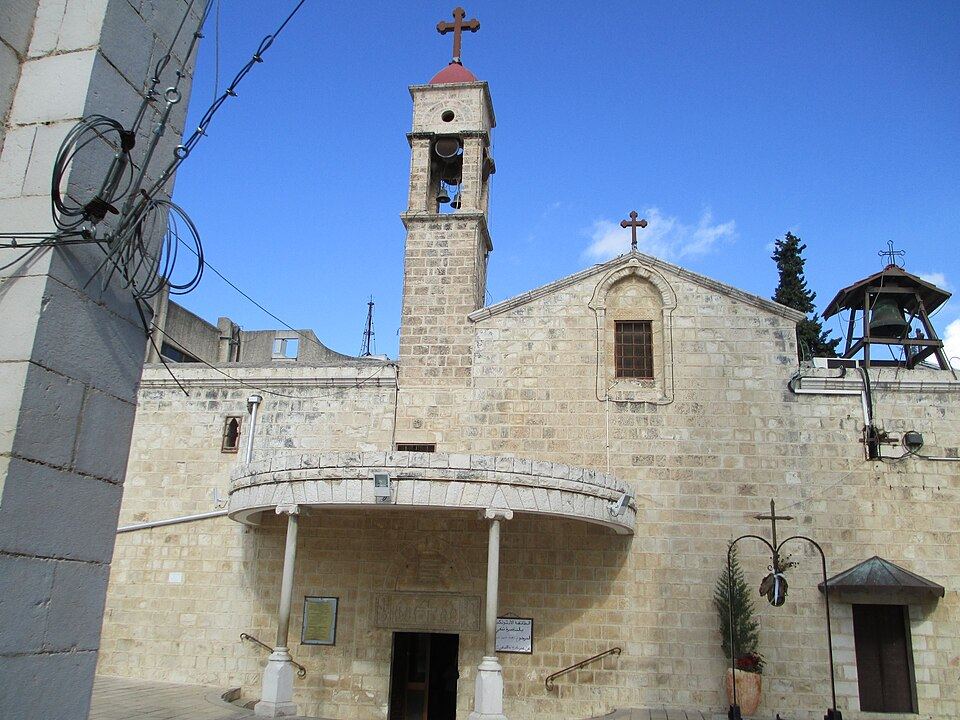
The Greek Orthodox Church of the Annunciation, also known as St. Gabriel's Church, preserves a tradition associated with a spring. The Jerusalem Patriarchate celebrates the Annunciation at this shrine, where the water source forms part of the sacred setting.
Understanding the two churches helps visitors appreciate Nazareth's different Christian communities. Each maintains a living tradition of remembrance and worship. If you hope to visit both, confirm the planned route and current access when arranging your day.
March 25 is a cherished date in the Christian calendar, celebrating the Annunciation nine months before Christmas on December 25. In Nazareth, the feast gives the Gospel story a special place in the prayer and worship of local communities.
The date visitors see on a civil calendar depends on the church calendar being followed. For communities that observe the feast on March 25 according to the Julian calendar, that date currently falls on April 7 on the Gregorian calendar. In the Roman Catholic calendar, the observance may be transferred to another day when it falls during Holy Week or the week following Easter Sunday.
If attending a service is part of your pilgrimage, check the relevant church's calendar for your travel year. Confirm service times and visitor arrangements directly rather than assuming that all churches in Nazareth celebrate on the same civil date.
A visit to Nazareth brings the Annunciation into the landscape of Galilee. Reading Luke 1:26–38 before entering the basilica gives the experience a clear focus: Gabriel's message, Mary's question, and her answer. From there, the wider region connects the beginning of the story with places associated with Jesus' ministry.
Visit the Church of the Annunciation on our Nazareth and Sea of Galilee Tour. The itinerary combines the Church of the Annunciation and St. Joseph's Church in Nazareth with sites around the Sea of Galilee, including Capernaum and Tabgha. Follow Mary's story in Nazareth, then explore places associated with Jesus' ministry in Galilee.
For a day shaped around your interests, explore our Nazareth and Sea of Galilee Private Tour. Tell our team if you would like to give particular attention to Mary's story, time for prayer, or the different traditions in Nazareth. Additional stops, including St. Gabriel's Church, should be discussed and confirmed in advance.
View the itineraries and check availability for your travel dates. Our team can help you choose the route that fits your pilgrimage and confirm the arrangements for the places you most want to see.
Join Us
Keep in Touch


 Login / Register
 Contact


 Certificate of Excellence
 Guaranteed Departure
 Low Prices Guaranteed
 24/7 Support