Israel Travel Blog


Things to do in Eilat

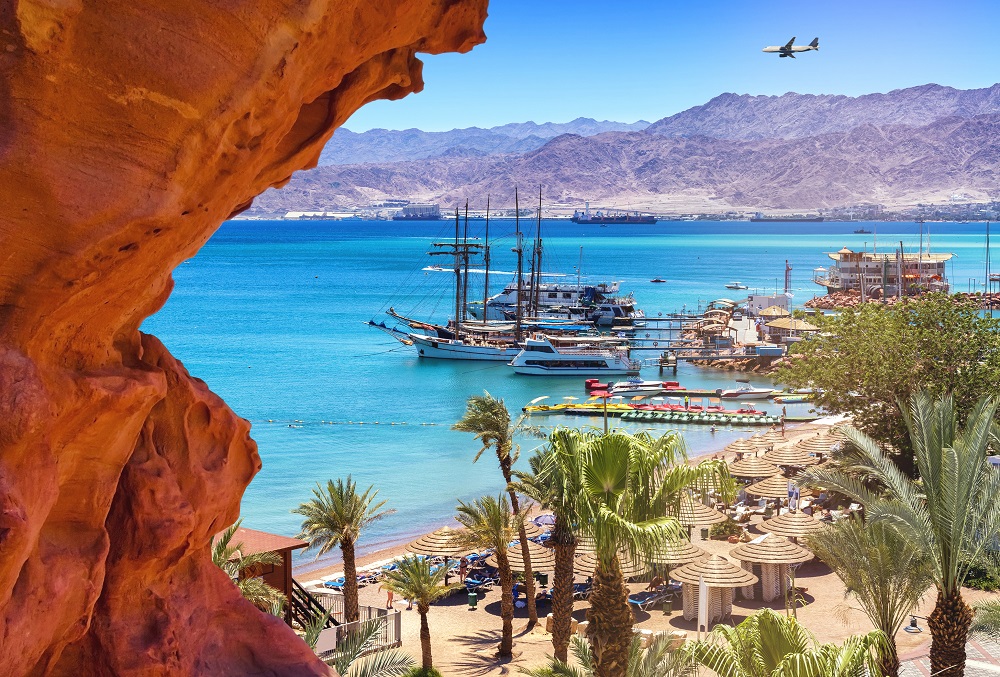
Eilat is Israel’s southernmost city on the edge of the Red Sea. It is a beach resort packed with attractions, idyllic beaches and perfect holiday weather most of the year. Now there is even a new international airport on the outskirts of the city so that visitors can arrive in Eilat directly from overseas. To make Eilat even more appealing it is a tax-free port which means it is the only city in Israel where you don’t pay tax on your purchases! Here is a breakdown of the top Eilat attractions and things to do when you visit Eilat.Eilat BeachesEilat’s Red Sea coastline offers a range of beaches from small, intimate sandy coves to wide popular beaches with all amenities. Many beaches are walking distance from the city center and most hotels while others are further west towards the border with Egypt. Choose your favorite beach from the hip, laid-back Mosh Beach; North Beach, best for swimming, water sports and accessibility from the city center; Princess Beach or Coral Beach Nature Reserve for snorkeling; Dolphin Reef Beach where you swim alongside dolphins or the small Harush Beach where there is a restaurant/bar on the sand and a diving school. At Harush and several other beaches you can rent a snorkel and mask to explore the coral reefs. Some of the beaches are devoted completely to water sports like Hanania Beach.Eilat Water AttractionsWithout a doubt the top attraction in Eilat is the sea whether it is relaxing on the beach, taking a boat excursion or doing water sports. Water sports in Eilat include parasailing, water skiing, jet skis, banana boats, tubing, kayaking, sup, canoeing and wind surfing. These activities are offered at many of the Eilat beaches for a reasonable price and with no need to pre-book. You can even rent a speed-boat and go out on the water by yourself. Another popular water attraction is diving and snorkeling. Even if you’ve never dived before you can take a short introductory course at one of Eilat’s dive schools. If you’d prefer to snorkel then rent a snorkel and mask from one of the beach stalls and explore the Eilat coral reefs that lie beneath the water just meters from the shore. You can literally walk into the water and find yourself facing stunning coral reefs teaming with colorful tropical fish. For a relaxing excursion on the water there are regular cruises that take visitors out in glass-bottom boats or on the water for lunch, a sundown dinner or a party where the cruise boat stops at sea and passengers can jump into the water.Dolphin ReefAt Dolphin Reef you can watch dolphins in their natural habitat; you can swim with the dolphins and watch them eat and play within an ecological site which is open to the sea so that dolphins can choose to come and go. The dolphins return to the site where they are fed and treated well yet they can go back out into the sea whenever they choose. The grounds of Dolphin Reef have lush vegetation, ponds, restaurant, a small cinema where films about the dolphins are shown, a souvenir store and a diving center. You can relax on Dolphin Reef beach, swim, see the dolphins being fed or go diving or snorkeling with the dolphins. Dolphin Reef is a private business and requires an entrance fee.Petra Tours from EilatWhy stay just in Eilat when it is so easy to make a day trip to Petra in Jordan. Petra is a UNESCO-listed archaeological site where a powerful Nabataeanian city once stood. This unique city was created in the Jordanian desert by carving structures out of rose-colored rock. Thanks to the climate and its remote location Petra has been well-preserved, surviving about 2,300 years. Visitors to Petra can see temples, tombs, cavernous chambers and structures from other eras including a Roman amphitheatre and Byzantine church. Day tours to Petra leave daily and include pick-up and drop-off from your Eilat hotel.Underwater Observatory ParkThis marine park displays sea creatures in a number of tanks including sharks and rare fish. There is a glass-bottomed boat that takes visitors out on the water to see the coral reefs up-close and a 4D movie about marine life in the Red Sea. The highlight of a visit to this site is the underwater observatory built off-shore where you can descend beneath sea-level and get a 360° view of the coral reefs and marine life. The marine park also has restaurants (including one in the observatory) and attractions for the whole family.Ice MallEilat has several excellent malls but the most interesting is the Ice Mall. Here a large ice rink lies in the middle of the mall with stores arranged on two levels looking onto the rink. Visitors can rent skates by the hour and enjoy a break from shopping. During the summer there are regular skating performances throughout the day. The mall has several other attractions for kids as well as restaurants and cafes.Desert AttractionsJust a few minutes inland from Eilat are the Red Mountains and the desert. You can take a desert excursion riding a camel, donkey or horse. There are also jeep safaris into the desert; ATV and RZR excursions; hike trails and eco-tours to the most scenic areas of the Negev Desert. If you go further inland you will reach Timna Park, a valley with awesome scenery and geological and archaeological wonders. Take a tour from Eilat to Masada and the Dead Sea located about 2.5hrs north.Other Eilat AttractionsAs if that’s not enough Eilat also offers an adventure rope park; Escape Rooms; IMAX 4D cinema; a skate park; musical fountain; climbing walls; bowling; karaoke; an amusement park and botanical garden.
By Petal Mashraki

The Most Recommended Trips to Israel

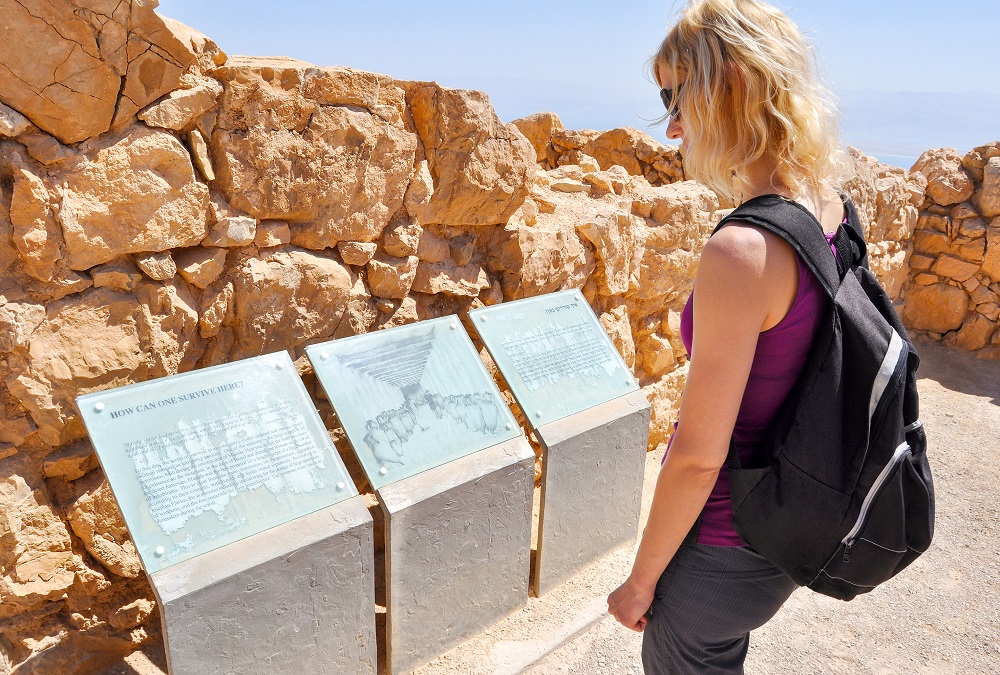
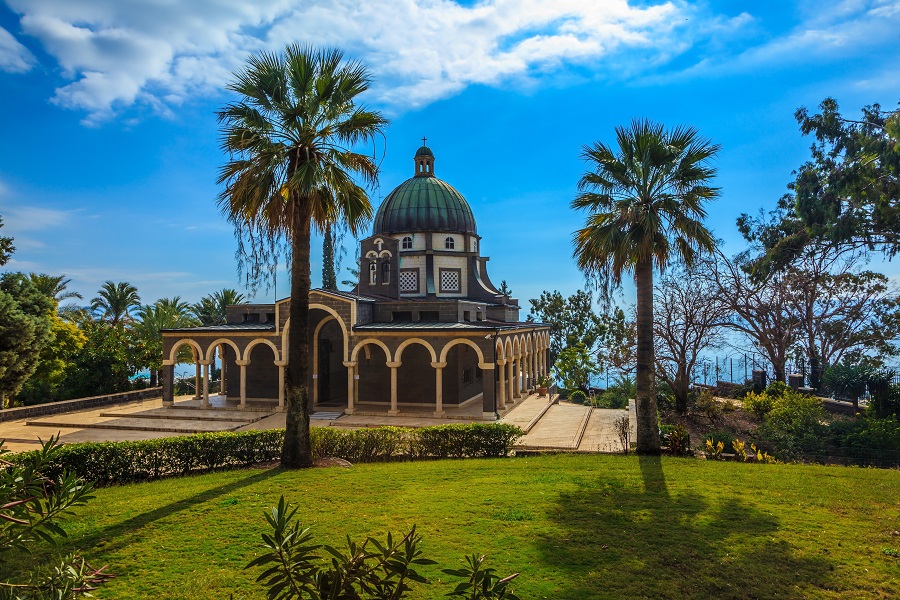
Israel may be a small country but it is packed with some of the most fascinating historical landmarks, natural wonders, holy sites and vibrant modern cities. There is so much to see; delicious foods to try and unique people to meet that you could stay in Israel for years and still not cover it all! To help you plan your time in Israel here are some of the most recommended trips for travelers that want to discover the magic of this magnificent country.The terraces of Bahai Gardens in Haifa, Israel.Photo credit: © ShutterstockMost Recommended Israel Trips for ChristiansWhether you visit Israel as a Christian, Jew, or Muslim; whether you have come to explore the culture, history, or natural wonders there are a few must-see sites that every visitor to Israel should include. Must-see Israel destinations are Jerusalem, Tel Aviv, the Dead Sea, and the Sea of Galilee. If you have more time, then include Bethlehem, Masada, Jericho, and Eilat in the south plus Caesarea, Haifa, Acre, Rosh Hanikra, and the Golan Heights in the north. Trips to Jerusalem for Christians - Christians traveling to Israel should make a beeline for Jerusalem, a city packed with biblical landmarks. One of the most popular trips in Israel follows in the footsteps of Jesus. On the Mount of Olives see the Garden of Gethsemane, the Church of All Nations, the Pater Noster, where Jesus taught his followers the Lord's Prayer, and Dominus Flevit, where Jesus looked out across Jerusalem.In the Old City of Jerusalem, you can explore the Armenian Quarter; walk through the Jewish Quarter, home to the Byzantine Cardo and stop at the Western Wall, the most sacred Jewish site in the world. Walk along the Via Dolorosa, a route that Jesus walked with 14 Stations of the Cross as he carried his cross towards his crucifixion at Calvary.Church of the Holy Sepulchre, the Aedicule.Photo credit: © ShutterstockToday Calvary, as well as Christ's tomb is within the massive 4th century Church of the Holy Sepulchre. Just outside the walls of the Old City is Mount Zion, the site of the Room of the Last Supper. If you have more time you could visit the modern city of Jerusalem, the Holocaust Museum, the Israel Museum; Mahane Yehuda Market, and Jerusalem's archaeological sites.Trips to Bethlehem for ChristiansOn your trip to Israel, you could consider combining a half-day trip to Jerusalem with a visit to either Bethlehem, Jericho or the Dead Sea. Bethlehem is a town in the West Bank Palestinian Authority Area and so most travelers choose guided tours to Bethlehem for safety and convenience.In Bethlehem, you can stop in Manger Square and spend time in the Church of Nativity, which was built around the Holy Grotto where Jesus was born. In the adjacent St. Catherine's Church, there are underground chambers holding shrines and memorials. While in Bethlehem stop at the Milk Grotto where it is said that Mary nursed baby Jesus.The Church of Saint Catherine, Bethlehem.Photo credit: © ShutterstockTrips to Galilee for ChristiansGalilee is second only to Jerusalem for its concentration of biblical sites. Travel through the verdant countryside of rolling hills, farmlands, and forests to the Sea of Galilee. You can travel around the shores of the sea stopping to see where Jesus gave the Sermon on the Mount on the Mounts of Beatitudes,Capernaum, where Jesus lived during his ministry, Cana, where Jesus turned water into wine and Tabgha, the site of the Multiplication of Loaves and Fish.All of these Christian sites are marked by beautiful churches. Nazareth, the town of Christ's childhood is also in Galilee and today is home to the Church of Annunciation where an angel Gabriel told Mary of her future child. While in Nazareth visit the Church of St. Joseph, built on the site where the Holy family once had their home and Joseph's carpentry. Your Israeltripcould include being baptized in the Jordan River at Yardenit at the foot of the Golan.Most Recommended Trips for Jewish Travelers in IsraelLike Christian travelers, Jews visiting Israel will want to spend time in Jerusalem where so much Jewish history unfolded.A tourist in Masada looking at the Dead Sea, Israel. Photo credit: © ShutterstockTrips to Jerusalem for Jewish TravelersHighlights for Jewish visitors to Jerusalem include the Western Wall and the Tomb of King David on Mount Zion. While in the Jewish Quarter of the Old City you can visit four 17th-18th century Sephardi synagogues. Delve deep into the history of Jerusalem and go underground to the excavated City of David, the original Jerusalem settlement dating back to the Bronze Age and Iron Age.Some trips to Israel combine a day in the Old City with a visit to Yad Vashem Holocaust Museum. The museum holds an overwhelming amount of authentic documents, historic photographs, artifacts, and video testimonials from Holocaust survivors.Jewish travelers will no doubt be interested in seeing the Knesset, Israel's parliament building, and the Mount of Olives where there is a 4,000-year-old Jewish cemetery facing the Old City.From the Mount of Olives, you can look out across the Old City to Temple Mount where the holy Jewish Temple once stood, and also see three monolithic ancient Jewish burial tombs in Kidron Valley.The Jewish Quarter in the Old City of Jerusalem. Photo credit: © ShutterstockTrips to Southern Israel for Jewish TravelersJews have an intrinsic connection with Israel; almost every landmark in Israel has some significance for Jews – be it biblical, historical, or modern. Jewish travelers should make a trip to Masada, a rock outcrop rising out of the Judean Desert and overlooking the Dead Sea. Visitors can take a cable car to the summit of Masada where King Herod built a massive palace-fortress in 31-37BC. Much of the complex has survived thanks to the dry climate and remote location. Masada was also the site of a significant event in Jewish history during the First Jewish-Roman War (73-74AD) when Sicarii Jews took refuge on the mount. They remained on Masada, under siege by Roman troops until the standoff ended in a mass suicide as the Jews chose to die rather than submit to the Romans. Visitors can combine a trip to Masada with time at the Dead Sea; a visit to Qumran where the Dead Sea Scrolls were discovered and perhaps also visit Ein Gedi, a modern kibbutz, a nature reserve, and desert oasis.Ein Gedi Nature Reserve, Israel. Photo credit: © Oksana MatsTrips to Northern Israel for Jewish TravelersA top recommended trip to the Galilee and Golan for Jewish travelers focuses on attractions like the Shalom Observatory; Katzrin, where there is an excavated Talmudic-era Jewish village; the Golan Antiquities Museum where you can learn about the ancient Jewish city of Gamla and Mt. Bental, site of abandoned Syrian bunkers and trenches.A Classic Trip Along Israel's Mediterranean CoastA classic trip to Northern Israel includes a drive up the coastal road stretching along the Mediterranean Sea, stopping briefly in Caesarea to see where Herod built his port city 2,000 years ago and a stop in Haifa to marvel at the breathtaking Bahai Gardens which cascade down Mount Carmel on 18 perfectly symmetrical terraces. A little further up the coast is Acre, one of the most interesting and beautiful old cities in the country. The Old City has been built and rebuilt over the years with the Crusaders and Turks leaving a lasting impression. On your trip to Israel be sure to visit the Old City Market and the underground Crusader city in Acre. Continuing up the coast to the most northerly point on the border with Lebanon you can visit Rosh Hanikra, a complex of white limestone sea caves.The Aqueduct Beach, Caesarea.Photo credit: © ShutterstockTrips for Fun and Sun in IsraelIf you're not coming to Israel for the culture, history, or religious sites then you should head for Tel Aviv, a vibrant modern city with a dynamic nightlife and parties that end as the sun comes up. In Tel Aviv, you can party all night and spend the days on the beach, in local sidewalk cafes, bars, art galleries, and markets. Tel Aviv has a thriving LGBT community and the city is extremely inclusive and cosmopolitan. When you've had enough of the "Big Orange" head south to Eilat, Israel's ultimate beach resort city on the edge of the Red Sea. Here there are endless beach attractions, watersports, resort hotels; a Dolphin Reef, and even a mall built around an ice rink. Eilat is also a tax-free port so it's perfect for shopaholics.Recommended Trips for a Pampering Tour of IsraelIf you'd rather not negotiate the public transport system or battle on the highways with Israeli drivers, then spoil yourself with a private guided tour on your trip to Israel. If you take a private tour of Israel, you can pick and choose the destinations that interest you most; you can determine how much time you spend in each place and you will have a driver at your disposal to get you to and from each attraction. Private tours offer a recommended itinerary which you can then adapt to suit your interests and schedule. The same goes for cruise travelers arriving in Haifa or Ashdod where you can take a private guided tour straight from the port to your chosen destination and be back in time to join your ship for departure. If you are interested in Israel Shore Excursions, make sure you choose a trustworthy Israeli tour operator.Tel Aviv coastline and Marina.Photo credit: © Shutterstock
By Petal Mashraki

Explore Israel in 7 Days

Israel is a small country that is packed with attractions and points of interest but with careful planning it is possible to see Israel in 7 Days. You can cover the highlights of Israel either by traveling independently or by joining an organized tour. If you choose to travel independently the best way to see as much as possible is to rent a car. This way you can reach the more remote locations without having to rely on slow or irregular public transport. However if you would rather sit back and relax then join a 7-days Israel tour that takes care of all logistics, accommodation, guide services and all other aspects of your sightseeing. Here is a brief summary of the essential sites to see during a week in Israel. These are also the places you would visit on an organized one week Israel tour.7-Day Israel Tour ItineraryOn an organized week-long tour of Israel you have free time in Tel Aviv at the beginning of the tour and in Jerusalem at the end of the tour. If you are planning your time in Israel independently it is a good idea to also give yourself free time in these stunning cities. In Tel Aviv you can enjoy the beaches, museums, markets and great shopping. In Jerusalem there is the dynamic new city and the magical Old City.Travel north through the Galilee and visit Nazareth, Jesus’ childhood home and site of the annunciation. Continue to the Sea of Galilee and stop in Capernaum, where Jesus based himself during his ministry; Tiberias and at churches on the water’s edge. Here you can see the Mount of Beatitudes and take a boat excursion out onto the beautiful inland sea. Tour the coastal cities of Caesarea where you can tour the remains of an ancient Roman port city; Acre, site of an underground Crusader city and Haifa, home to the Baha’i Gardens that cascade down 18 terraces on Mt. Carmel. Also travel to the northernmost point of the coast and walk through the Rosh HaNikra sea caves.7-day Israel tour packages take you to the Golan Heights, a range of mountains covered with lush forests, farmlands and vineyards. Here you can visit ancient remains of a Jewish Talmudic-era village and synagogue in Katzrin; the remains of Syrian fortifications and bunkers as well as the Shalom Observatory where you can look down on the Sea of Galilee. No week in Israel would be complete without time in Jerusalem. On a tour (or independently) visit the Mount of Olives for Christian sites or Mt. Scopus for a panoramic view of the city. Take a walk through the Old City stopping at the Western Wall, the most sacred Jewish site in the world; walk the Via Dolorosa, retracing Jesus’ footsteps on his way to Calvary and spend time in the Church of the Holy Sepulchre which encompasses Jesus’ tomb and Calvary. There are many interesting excavation sites in and around the Old City as well as ancient churches and synagogues. Some tours include a visit to King David’s Tomb and the Room of the Last Supper on Mt. Zion while others take you to Yad VaShem Holocaust Museum.Spend a day traveling south to Masada, an incredible mesa, with a plateau summit. You can take a cable car to the summit and tour a fortress complex built on the mount almost 2,000 years ago. Not far from Masada is the Dead Sea, one of Israel’s top attractions and the lowest point on the planet. Here you can relax on the shore of the sea; enjoy the natural health and beauty benefits of the mineral-rich water and even indulge in spa treatments at Dead Sea hotels. Masada and the Dead Sea are not easy to reach by public transport and the drive through the desert can be daunting; for this reason, many travelers prefer to take a guided day tour or package tour that includes a visit to the Dead Sea and Masada.Other 7-Day Israel Tour OptionsIf you are visiting Israel specifically to see Christian Biblical landmarks or Jewish heritage sites you can plan your week in the Holy Land to focus on those destinations. There are also organized 7-day Israel tours that are tailor-made for Christians or Jewish travelers. Israel package tours for Christians include highlights like Jerusalem; Bethlehem; Nazareth and the Sea of Galilee. Many include an opportunity to get baptized in the River Jordan. Jewish package tours in Israel visit sites in Jerusalem and across the country. Most week-long tours of Israel include must-see places like the Dead Sea, Sea of Galilee and Jerusalem.
By Petal Mashraki

The Amazing Landscapes of the Judean Desert

The Judean Desert lies in between the Judean Mountains and the Dead Seain Southeastern Israel and is sometimes referred to as the Judean Wilderness. The desert is about 85km long and 25km wide stretching from just below Jerusalem at about 1,000m above sea level past the Dead Sea at about 421m below sea level. The desert holds a wealth of incredible natural wonders; diverse, dramatic landscapes, a rich history and ancient landmarks.The Judean Desert, Israel.Photo credit: © Dmitry MishinThe Judean Desert landscape has dry river beds (wadis), canyons, rocky mountains, and barren plains as well as many waterfalls and streams that create a stunning green oasis. Much of the Judean Desert is in the Palestinian territories of Judea and along the western shore of the Dead Sea.Judean Desert Jeep SafarisAs driving off-road into the desert by yourself is not advisable the best way to discover the Judean Desert is to take a desert jeep safari. You can join a Judean Desert Jeep Tour from Tel Aviv and Jerusalem so that you don’t even have to find your own way to the desert. The tour starts when you are picked up in Jerusalem or Tel Aviv and drive south descending below sea level to the Dead Sea region. At this point, you change to an off-road vehicle and enter the desert. The safari takes you by jeep across rocky hills, through dry river beds (wadis), and stops at various points of interest like the Murbaat Caves and Cliffs of Dragot. Jeep safari tours into the Judean Desertare led by experts who can tell you all about the desert flora and fauna. Tours return to the Dead Sea where you can cool off before making the return journey to Tel Aviv or Jerusalem.Camel near the Dead Sea, Judean Desert, Israel. Photo byAmit LahavonUnsplashHiking, Sports, and Activities in the Judean DesertThe Judean Desert is a popular destination for hiking, extreme sports, and bird watching. All these activities should only be undertaken with a guide. Popular activities in the Judean Desert include snapping, climbing, off-road jeeping, and bird watching. The weather has a huge impact on visitors to the Judean Desert – both the extreme heat of summer and flash floods in the winter.Highlights of the Judean DesertSt. George’s Monastery – This beautiful Greek Orthodox monastery in Wadi Qelt clings to vertical cliffs and is reached by a pedestrian bridge across the valley. Originally built in the Byzantine era and rebuilt in the 12th century the site is associated with Elijah and other biblical protagonists.Wadi Qelt – Kelt Oasis or Nahal Prat lies between Jerichoand Mitzpe Jericho. Here you can see unique flora and fauna, the stunning St. George’s Monastery, and the ancient Wadi Qelt Synagogue.Qumran – Qumran lies on the shore of the Dead Sea and is the closest community to the caves where the Dead Sea Scrolls were found in 1947. Visitors can see the caves and also the excavation site of ancient remains dating back to the Hellenistic Period (134-104BC) when a community of Essenes Jews lived here isolated from the rest of society and devoted themselves to biblical study.Qumran caves, Israel. Photo credit: © ShutterstockCaves of Murbaat – These historic caves have interesting square entrances and once held ancient treasures left by Jews who hid here during the Bar Kochba Revolt against the Romans in 132AD. Today the caves are still of interest but the findings are now on display in the Israel Museum.Metsuke Dragot– Situated on the northern shore of the Dead Sea, Metsuke Dragot or the Dragot Cliffs offer a breathtaking view across Murabat Wadi and the Dead Sea. An eco-friendly community is located on the cliffs and offers accommodation and hospitality for visitors.Ein Gedi – Ein Gedi is a kibbutz (with a hotel) as well as a natural desert oasis on the edge of the Dead Sea. Here you can follow paths to picturesque waterfalls and alongside streams flanked by lush vegetation. Arad – Arad is a modern city lying between the Negev and Judean Deserts. Arad attractions include a market and Tel Arad, an archaeological site where ancient Arad once stood.Bird's eye view of the Dead Sea, Israel.Photo byDave HerringonUnsplashJericho – A biblical city considered to be one of the oldest in the world. Tours to Jericho stop at biblical sites like the Zacchaeus sycamore tree and at the archeological site of Tel Jericho.Ma’ale Adumim – This quiet Israeli West Bank city is home to hidden lush natural springs and the ruins of the Byzantine Monastery of Martyrius.Masada – This massive mesa, or rock outcrop has a flat plateau summit where you can tour the remains of Herod’s ancient fortress. There is a cable car that takes visitors to the top and the ruins are well preserved. There is also a visitor’s center and food court at the base of Masada. As this is a hard location to reach many travelers opt to take an organized tour to Masada that includes a stop at the Dead Sea.The Dead Sea – The number one attraction in the region is the sea at the lowest point on Earth. There are beaches along the shore of the hyper-saline Dead Sea (some free and others with an entrance fee) where you can soak up the sun and float in the mineral-rich water which has proven health and beauty benefits.Winding road in the Judean Desert.Photo byRobert ByeonUnsplash
By Petal Mashraki

Get to Know Jerusalem

The best way to get to know Jerusalem is to spend several days exploring both independently and with an organized Jerusalem tour. Some of the sites and attractions you can discover for yourself while others are better seen with a knowledgeable guide on one of the many Jerusalem day tours. Here are a few ideas on how you can get to Jerusalem.Statue of King David at the entrance to King David's Tomb, Jerusalem. Photo credit: © ShutterstockSee the Highlights of JerusalemBefore you start delving into the unusual and unique attractions of Jerusalem it is worth seeing the top 10 Jerusalem attractions that all visitors to the city should see. Among the top 10, there are the Western Wall, the Church of the Holy Sepulchre, the Mount of Olives, and the Yad Vashem Holocaust Museum. Although there are some Jerusalem attractions that all travelers will want to see, your personal top 10 will depend on your interests. If you are a Christian traveler you will probably be drawn towards the churches on the Mount of Olives; the Room of the Last Supper and Via Dolorosa among other biblical sites. Jewish travelers will want to include other landmarks in their top 10 Jerusalem attractions, for example, the City of David; Knesset, and theSephardi synagogues of the Old City.Mount of Olives with ancient tombs. Photo credit: © ShutterstockJerusalem Old City GuideIf your time is short and you can only go to one place in Jerusalem then it has to be the Old City. Within the 16th century stone walls, the 1km² city holds Jerusalem’s top attractions. The Old City is also home to the most important Christian, Jewish and Muslim landmarks – the Church of the Holy Sepulchre; the Western Wall and Temple Mount, home to the Al-Aqsa Mosque and Dome of the Rock. Spend your time exploring the narrow lanes of the Old City. In the Armenian Quarter see the exquisitely painted ceramics; in the Christian Quarter follow the Via Dolorosa and see where Jesus was crucified; in the Muslim Quarter shop in the traditional market and in the Jewish Quarter see ancient synagogues, museums and beneath the Temple Mount walls.Temple Mount, Jerusalem. Photo credit: © ShutterstockAttractions in New Jerusalem Don’t miss out on the attractions in New Jerusalem. Many tourists, especially those short on time concentrate all their sightseeing in the Old City but New Jerusalem has much to offer. Visit the ultra-religious neighborhood of Mea Shearim; the colorful Mahane Yehuda Market; the Knesset; the Chagall windows; the Bridge of Strings; the Israel Supreme Court and the Jerusalem Israel Museum. New Jerusalem has some incredible malls and the lively Ben Yehuda pedestrian street with outdoor cafes. There are plenty of art galleries, parks like the Wohl Rose Park and the Haas Promenade where you can get an overview of the city. Visit the 130-year restored First Jerusalem Train Station that is now a hip cultural and culinary hub and spend some time in a local café people-watching.Church of all Nations, Jerusalem.Photo credit: © ShutterstockJerusalem Machane Yehuda MarketIf you really want to experience the lively atmosphere of local Jerusalemites then head for the Mahane Yehuda Market. You’ll find stalls selling fresh produce, baked goods, pickles, spices, fish, meat, eggs, and about every other type of food you can imagine. Not only that but the market, which has both outdoor and covered sections is home to excellent restaurants. Some of the market eateries are run by top Israeli chefs and others serve up traditional dishes from around the world. Try Ethiopian pita bread; a Georgian pastry; British fish and chips or Spanish tapas. In addition to food, the market sells household goods, fashion items, and more. Be sure to visit the “doctor” who serves up freshly squeezed fruit drinks made with unusual ingredients that are said to have therapeutic properties whether you want to treat a sore back or a broken heart!Gethsemane Garden, Jerusalem.Photo credit: © ShutterstockGet to Know Jerusalem NeighborhoodsAlthough most travelers limit themselves to the Old City there are several wonderful Jerusalem neighborhoods worth visiting. Stop in downtown West Jerusalem for excellent food and a vibrant nightlife scene. Near Mahane Yehuda Market see interesting street art and one-off bars and restaurants. In the Nachlaot neighborhood see where a former ultra-orthodox traditional neighborhood has transformed into a hip, cosmopolitan hang-out for artists and musicians. The neighborhood has narrow lanes, historic homes with hidden courtyards, and a bohemian atmosphere.Musrara is a picturesque neighborhood with many art galleries and museums including Museum on the Seam that focuses on socio-politically inspired contemporary art. The German Colony is where you’ll find up-market boutiques, charming cafes, and restaurants housed in historic buildings with Bauhaus, Ottoman, and Templar-style architecture. The Germany Colony’s Emek Refaim Street is the place to people-watch and visit the neighborhood’s best stores and restaurants. Ein Kerem is arguably the most beautiful of the Jerusalem neighborhoods. Ein Kerem has a village-feel with charming stone houses, window boxes, craft stores, excellent restaurants, and several attractions including Mary’s Well and John the Baptist Church.Dominus Flevit Church, Jerusalem.Photo credit: © Shutterstock
By Petal Mashraki

5 Ways to Visit the Dead Sea

The Dead Sea is a must-see attraction for any trip to Israel. This natural wonder is a salt lake at the lowest point on Earth 418m below sea level in southern Israel’s Negev Desert. The Dead Sea is not centrally located; it is 170km from Tel Aviv and 100km from Jerusalem. Once there you can enjoy one of the many Dead Sea beaches, the Dead Sea spas and hotels. The high concentration of minerals in the saline water and Dead Sea mud has health and beauty benefits. Even the sunshine and air in the Dead Sea region are known to have properties beneficial to our health.View of the Dead Sea from the top of Masada Fortress.Photo credit: © ShutterstockPublic Transport to the Dead SeaThere are no trains that reach the Dead Seaalthough you could catch a train to Be’er Sheva and from there a bus to the Dead Sea. Alternatively, take the bus from Tel Aviv or Jerusalem to the Dead Sea. The buses stop at Ein Gedi and Ein Bokek, both places where there are things to do near the Dead Sea. The journey takes about 1.5hr-2hrs. Buses leave from the Jerusalem Central Bus Station and from Tel Aviv’s Arlozorov Bus Station. It is advisable to leave early so that you can maximize your time at the Dead Sea. The last bus from the Dead Sea back to central Israel leaves in the late afternoon so be careful not to miss the bus! There are no buses to the Dead Sea on Shabbat or public holidays.Road Sign on the way to the Dead Sea, Israel. Photo by Amit Lahav on UnsplashDead Sea ToursThe easiest way to visit the Dead Sea is to join a Dead Sea day tour. There are several to choose from including tours that include stops at other popular sites like Masada, Jerusalem, Jericho, Ein Gedi, or Qumran, where the Dead Sea Scrolls were discovered. Some day tours stop at several sites while others give you a full day at the Dead Sea and can offer the option of Dead Sea spa visits or lunch at one of the Dead Sea spa hotels. The Dead Sea is usually included in multi-day package tours that cover attractions across the country.Renting a Car to Drive to the Dead SeaYou could rent a car from anywhere in the country and make the trip south independently. Use a navigation app or GPS device to help you reach the Dead Sea. The steep winding roads through the desert hills are notoriously dangerous and you will need to drive very carefully.The Dead Sea Shore from above. Photo by Artem Belinski on UnsplashVisit the Dead Sea by TaxiIf you are nervous about traveling alone by car to the Dead Sea then it is possible to go by taxi although this is quite an expensive option. Taxis to the Dead Sea should be arranged in advance and can include hotel pick-up. A slightly cheaper option is a shared taxi (mini-bus) run by a private taxi company which departs from major cities. You will then have to find an available taxi to make the return journey or preferably arrange it ahead of time.Take a Private Tour to the Dead SeaOn a private tour to the Dead Sea, you can tailor-make your trip by including other sites along the way. Popular destinations often included on a private day tour to the Dead Sea are Jerusalem, Jericho, Qumran, or Masada. On a private tour, you will have the driver, an air-conditioned vehicle, and a guide who will devote all of his time to you.A man reading a book in the Dead Sea, Israel.Photo by Toa Heftiba on Unsplash
By Petal Mashraki

How to Spend a Leisure Day in Tel Aviv

Many Israel package tours include some free time in Tel Aviv, a magical city with a unique blend of attractions both historic and ultra-modern. You’ll have no problem finding things to do if you have a day at leisure in Tel Aviv.Explore Tel Aviv NeighborhoodsTel Aviv has some diverse neighborhoods each with their own unique character. Among the most interesting Tel Aviv neighborhoods there is Florentin, a hipster hangout with a bo-ho feel in Southern Tel Aviv. The former commercial area has transformed into a trendy destination with quirky bars and ethnic restaurants. The place has a shabby-chic feel with many independent small stores selling everything from art and tie-dye clothing to designer sweets and hand-made jewelry. This is the neighborhood where you can sit for hours in a café people-watching. Another top Tel Aviv neighborhood is Neve Tzedek, originally the first Jewish neighborhood built outside of Jaffa. Today the small homes, courtyards and narrow lanes have been restored and converted into boutique stores, art galleries, chic cafes, eateries and one-off stores. The neighborhood has a small village feel and most buildings are dripping with gorgeous bougainvillea or flower boxes.Visit Old Jaffa and Jaffa PortJaffa is now a part of the city of Tel Aviv-Jaffa; it is the oldest part of the city at the southern end of Tel Aviv’s beachfront promenade. The ancient city of Jaffa is built on a cliff overlooking the Old Port of Jaffa and the sea beyond. Jaffa is associated with the Biblical characters of Jonah and St. Peter. As you enter Jaffa the first sight that meets you is the Jaffa Clock Tower that dates back to the early 20th-century Ottoman era. On the inland side of the main road, you’ll find a labyrinth of market lanes and trendy restaurants and bars. On the right-hand side is the Old Port. Narrow lanes, each named after the signs of the zodiac lead down to the water. The lanes of Old Jaffa are lined with art galleries, small stores, and eateries. You can visit the Jaffa Museum to learn more about the city’s history.Tel Aviv MuseumsYou could spend several days visiting the wonderful museums of Tel Aviv. If you are an art-lover then your best choice would be the Tel Aviv Museum of Art where contemporary and modern art is displayed in a spectacular venue that includes a unique modern building, the main building and the Helena Rubinstein Pavilion. Here you can see works by some of the greatest artists of all time including Chagall, Reuven Rubin, Klimt, Kandinsky, Van Gogh, Miro, Roy Lichtenstein and work by Israeli artists such as Nahum Gutman. Other Tel Aviv museums worth checking out include the Eretz Israel Museum focused on Israel’s heritage, land and culture and the Museum of Jewish People focused on Jewish communities around the world and their traditions.Tel Aviv Free AttractionsYou won’t have to spend much money on your free day in Tel Aviv; just wandering the streets can be enough to keep you busy for hours. On a walk, through Tel Aviv you can enjoy the Bauhaus architecture which has earned Tel Aviv UNESCO statue as the “White City.” You can easily walk to the best Tel Aviv beaches which are located minutes from the city center. The wide sandy beaches line the beachfront promenade the length of Tel Aviv. Another great way to spend your time is at the Tel Aviv Port. This former port has been gentrified and converted to a wonderful outdoor attraction for the whole family. The many markets in the city include Carmen Market and the markets of Jaffa where you could wend away hours taking in the sights and sounds. Take a walk through any of Tel Aviv’s neighborhoods to see Tel Aviv street art by local and international artists. Many of the street artists in Tel Aviv use their art to bring attention to social issues or the human condition.
By Petal Mashraki

Jerusalem Southern Wall Excavation

Since the 1960s excavations in the area of the south-west side of Temple Mount in Jerusalem have uncovered remarkable remains from the Second Temple (516 BC-70 AD) which stood on Temple Mount. Part of these excavations included what would have been the southern retaining wall of Temple Mount. The Southern Wall Excavation Site is accessed from the Dung Gate in Jerusalem’s Old City. Just past the gate is an archaeological park which includes the Southern Wall, the Southern Wall Museum and a Visitors Center.The Second Temple was originally built in 516 BC but was drastically altered and expanded under Herod the Great from 37 BC to 4 BC. It was during this reconstruction that the southern side of Temple Mount was fortified. The southern retaining wall of Temple Mount would have risen 32 meters above street level and run for a length of 281 m. The Temple and almost all of the Temple Mount structures were destroyed by the Romans during the Jewish Revolt of 66 AD-70 AD.Herodian StreetRunning the length of the wall would have been a paved street lined with stores. Along the wall remains were uncovered of an 8 meter wide street now known as the Herodian Street. When the Herodian Street was discovered it was cleared of a mountain of rubble that had accumulated over the almost 2,000 years since the temple’s destruction. On one side of the ancient Herodian Street the massive Temple Mount Southern Wall rises 32 meters and on the other side of the street a wall was uncovered with openings where there would have been stores. Here pilgrims could buy offerings to sacrifice in the temple and also visit the money changes. It may have been here in these stores that Jesus “cleared the temple courts of people selling cattle, sheep, doves and people sitting at tables exchanging money” (John 2:1322). As the Roman’s set about destroying the temple in 70 AD they would have toppled down massive stones onto this street. Above the stores we can see the remains of the base of a staircase.Robinson ArchHalfway up the side of the Southern Wall are the remains of the Robinson Arch (named after the researcher who discovered the arch in 1838). The arch was part of a large bridge structure which allowed access from the lower city to the Temple Mount. The arch was part of a 13 m wide and 19 m high walkway giving pilgrims access from the Herodian Street up a wide flight of stairs to the south-western Temple Mount entrance. This would have been one of three such bridge walkways into the temple. Only the small section of the arch attached to the Southern Wall and the base of the staircase have survived.Trumpeting PlaceOn the southwest corner of the Southern Wall a large slab of stone was found inscribed with the Hebrew words meaning: to the trumpeting place to proclaim. This could refer to the place where a priest would stand on the walls and blow a trumpet to announce the approaching Shabbat. The stone may have been thrown down from the temple walls during the destruction.Ritual BathsWhile excavating the Southern Wall many ritual baths (mikvah) were found. The baths are located close to the walls and were built according to Jewish laws. The baths would have been used by thousands of pilgrims to purify themselves before they entered the temple.Later Structures at the Southern WallThe Al-Aqsa Mosque was built in 705 AD and stands along the inside of the Southern Wall; you can see the mosque’s distinctive silver dome above the wall. Along the Southern Wall it is possible to see the remains of several structures from the later Arab Period including a number of Umayyad Palaces.
By Petal Mashraki

Israel Day Tours from Herzliya

Herzliya is a coastal city about 30 minutes north of Tel Aviv. It is a popular beach destination as well as having several excellent shopping malls, a large marina and beautiful parks. Many travelers to Israel base themselves in Herzliya at one of the beachfront hotels so that they can get maximum use of Israel’s stunning beaches. From Herzliya it is possible to take excursions across the country, returning to your Herzliya hotel in the evening. In fact you don’t even have to travel into Tel Aviv to join Israel day tours as there are pick-up points at Herzliya hotels. You can go straight from your hotel to the tour bus and have a day of guided sightseeing then be returned to your Herzliya hotel doorstep in the evening.Israel Tours from Herzliya HotelsIsrael is a small country and you can take day tours from Herzliya to almost all destinations across the country. Among top destinations for day tours from Herzliya, there is the Dead Sea, Jerusalem and the Galilee. The tours to various locations leave daily and are offered in several languages (depending on the tour).Jerusalem Tours from Herzliya HotelsAfter your Herzliya pick-up travel to the City of Gold and tour the new and Old City. See where Jesus walked the Via Dolorosa and place a prayer note between the huge stones of the Western Wall. Some Jerusalem tours also include a stop at the Yad VaShem Holocaust Museum; some take you to the places where Jesus once stood and other tours explore the underground City of David. There are half-day Jerusalem tours and tours that combine Jerusalem and other destinations in one day. Visit Jerusalem and the Dead Sea in one day or Jerusalem and Bethlehem in one day from Herzliya.Masada and Dead Sea Tours from Herzliya HotelsThe most southerly point day tours from Herzliya reach is Masada and the Dead Sea. On these tours, you will get to travel through the Judean Desert descending below sea level. Take a cable car to the flat summit of Masada and have a guided tour of the remains of Herod’s ancient fortress. The afternoon is spent on one of the top Dead Sea beaches before returning to Herzliya. Some of the tours south stop at the ancient Biblical city of Jericho and at a baptismal site on the Jordan River. For something really special take a Judean Desert jeep tour from Herzliya.Nazareth and Sea of Galilee Tours from Herzliya HotelsThe most northerly point day tours from Herzliya reach is Nazareth and the Sea of Galilee. These tours are perfect for Christians who can see numerous Biblical sites but the tour also suits non-Christians that just want to see the northern landscape. Visit the Church of the Annunciation and St. Joseph’s Church in Nazareth and see Biblical locations along the edge of the Sea of Galilee.Caesarea, Acre and Rosh HaNikra Tours from HerzliyaTravel up the Mediterranean coast from Herzliya and stop in several remarkable locations. Tour the excavated Roman port city of Caesarea; drive through Haifa to see the Baha’i Gardens; see the Crusader’s underground city in Acre and enter the sea caves at Rosh HaNikra.Bethlehem Tours from Herzliya HotelsChristian travelers staying in Herzliya can get a day tour from their Herzliya hotel to Bethlehem. This tour stops at several fascinating Biblical locations and ancient churches including the Church of the Nativity which encompasses the Holy Grotto where Jesus was born. There are also tours from Herzliya that combine a visit to Jerusalem and Bethlehem in one day.
By Petal Mashraki

Guide to the Jerusalem Old City

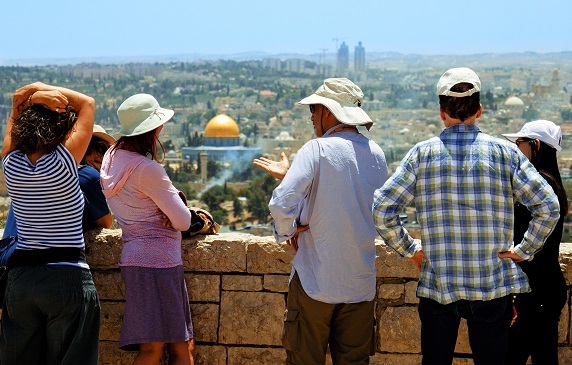
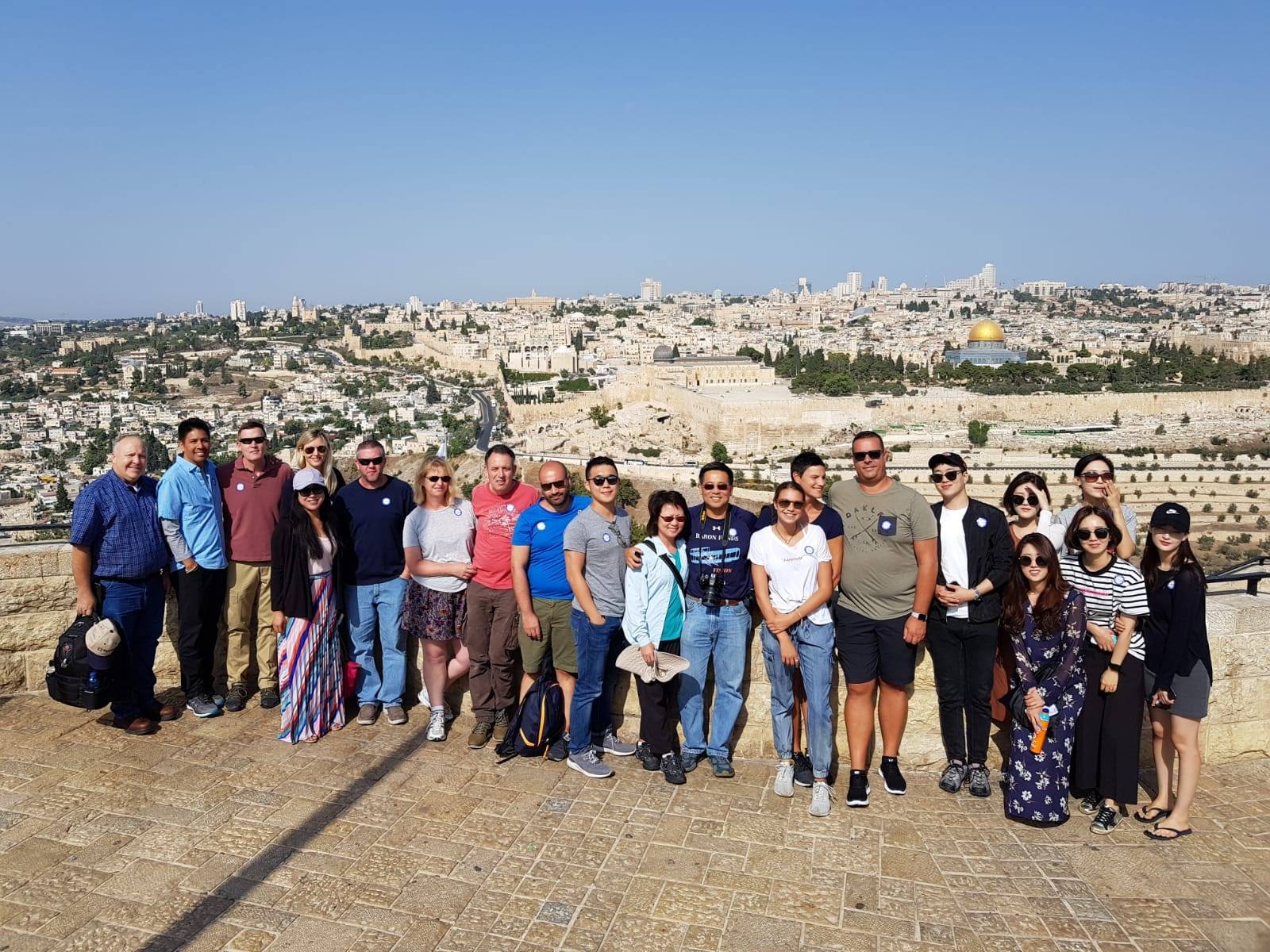
If you were to choose just one place to visit while in Israel it should be the Old City of Jerusalem. Packed within the 450 year old city walls is 1km² holding some of the country’s top attractions.The Old City is an exciting, exotic, spiritual and fascinating world of narrow cobbled alleys, mosques, churches, eateries, markets and more. The Old City remains as it was thousands of years ago and people still live and work here in the ancient buildings. Among the wonders of the Old City are the most important Jewish, Muslim and Christian religious sites in the country.Brief History of JerusalemJerusalem is one of the oldest cities in the world and getting an overall understanding of the history is extremely useful for anyone visiting the City of Gold. As you tour the various sites you’ll hear names of historic periods, leaders, and events so this brief history of Jerusalem will help you get some perspective. It was here in Jerusalem that the ancient Jewish temples were built and where Jesus often visited and eventually was crucified. Golgotha, the site of Jesus's crucifixion is within the Old City marked by the Church of the Holy Sepulchre. King David conquered Jerusalem from the Jebusites in the 11th century BC and established his kingdom. Muslims took the city in 637AD and in 1099AD the first Christian Crusaders arrived. The city changed hands several times and saw pilgrims arriving to various religious sites. The Old City walls we see today were built under Ottoman leader Suleiman the Magnificent in the 1500s. Up until 1860 all of Jerusalem was within the Old City walls, then the first neighborhood beyond the walls was established and the new city grew into the modern metropolis we see today. But within the Old City walls, time seemed to stand still. From 1848 to 1867 the Old City was ruled by Jordan and no Jews were allowed to visit or live in the Old City until it was retaken by Israel in the Six-Day War. Jews returned to the city and it was repopulated with people in all four of the Old City’s quarters. The city has remained a tourist attraction and a pilgrimage site for Muslims visiting Temple Mount, Christians visiting the Church of the Holy Sepulchre, and Jews visiting the Western Wall.Jerusalem.Photo credit: © Dmitry MishinThe Timeline of Major Events in the History of Jerusalem3500 BC – First signs of human settlers.c.1800 BC – Jerusalem mentioned in Egyptian texts.1010-970 BC – Reign of King David, during this time he declares Jerusalem Capital of United Israel.970-931 BC – Reign of King Solomon, during this time the First Temple was constructed in Jerusalem (957BC) on Temple Mount, and the county was divided into Israel and Judah.837-800 BC – Reign of Hezekiah, King of Judah, during this time the underground waterways from Gihon Spring to the Pool of Siloam were dug to bring water to the city.597 BC – Babylonians, led by Nebuchadnezzar II captured Jerusalem.586 BC – Due to rebellion Nebuchadnezzar II destroyed the city, including the First Temple, and exiled many inhabitants including Jews who were sent to Babylon.537 BC-332 BC – The Persian Period. Persians ruled under Cyrus who encouraged Jews to return to Israel and begin work on rebuilding the Temple. 521 BC-516 BC – The Second Temple was completed. 445 BC – City walls are rebuilt. 332 BC-167 BC – Hellenistic Period. Alexander the Great conquers Palestine, taking it from the Persians.167 BC-63 BC – Hasmonean Period. With the Maccabean Revolt led by Mattathias, the Maccabean War is started and Jewish Priest Judah Maccabee takes over Jerusalem and restores the Temple which had been profaned under the earlier non-Jewish leaders. 63 BC -324 AD – Roman Period. Romans capture Jerusalem but the Hasmoneans continue to rule under Roman protection. 40 BC – Herod is appointed King of Judea and reigns as Herod the Great. Under Herod, they began rebuilding the Temple.Sculpture of King David playing the harp, Jerusalem.Photo credit: © Shutterstock1 AD – Jesus of Nazareth born in Bethlehem.26 AD – Pontius Pilate appointed as Roman procurator of Judea.c.33 AD – Jesus is tried and crucified in Jerusalem.41 AD-44 AD – Agrippa King of Judea rebuilds the city walls. 63 AD – The Second Temple is completed. 66 AD-73 AD – Jewish Revolt against the Romans, during this time the Temple was destroyed (70 AD) by Titus. 132 AD-135 AD – Following the Bar Kochba War Jerusalem became the Jewish capital once again. 135 AD – Roman Emperor Hadrian captured and destroyed the city, built new city walls, and expelled Jews from the capital.324 AD-638 AD – Queen Helena, mother of Roman Emperor Constantine comes to Jerusalem and sets about identifying the locations of famous biblical events. She initiated the construction of several churches on holy sites including the Church of the Holy Sepulchre, constructed in 335 AD. The Jews are permitted to return to Jerusalem (438); the city is captured by the Persians and the Jews are expelled (614) and then the Byzantines recapture the capital (629).638 AD-1099 AD – Muslim Period. During this time the Caliph Omar comes to the city and the Jews are allowed to return. The Dome of the Rock is completed (691) and the al-Aqsa Mosque is completed (701). Under Caliph al-Hakim many synagogues and churches were destroyed.1099 AD-1244 AD – Crusader Period. Godfrey de Bouillon captures Jerusalem, and Baldwin I is declared King of Jerusalem. 1187AD – Saladin, a Kurdish General, takes Jerusalem from the Crusaders and allows Jews and Muslims to return to the city. 1192 AD – Richard the Lion Heart attempts to capture Jerusalem but having failed makes a treaty with Saladin allowing Christians to pray at the holy sites.Dome of the Church of the Holy Sepulchre, Jerusalem.Photo credit: © Shutterstock1219 AD – Sultan Malik-al-Muattam has the city walls destroyed.1244 AD – The Turks capture Jerusalem from the Crusaders once and for all.1260 AD-1517 AD – Mamluk Period. During this period the Mamluks capture Jerusalem; Nahmanides the great Jewish thinker arrives from Spain and established Jewish learning centers (1267AD); Marco Polo passes through and the Black Death plagues the city.1517 AD-1917 AD – Ottoman Period. The Turkish Ottomans peacefully take over the city and Sultan Suleiman the Magnificent rebuilds the city walls which have not stood for over 300 years. The walls include the city gates and Tower of David which remains today.1700 AD – Under Rabbi Yehuda HaHassid the Hurva Synagogue was built. 1860 AD – First Jewish settlements outside the city walls to escape overcrowding and disease. 1917-1948 British Mandate Period. The British led by General Allenby enter the city and lay their claim to the land. The construction of the Hebrew University on Mt. Scopus begins.1947 –1949 – With the announcement of the UN resolution to partition Israel into an Arab State, Jewish State and Special International Regime for the City of Jerusalem civil war breaks out. This resulted at the end of the British Mandate and the Israeli War of Independence. Egypt, Syria, and Jordan fight against the Jewish State which is just coming into shape. The Israel-Transjordan Armistice Agreement (April 1949) gives Transjordan control of East Jerusalem. 1949 – Establishment of the State of Israel. 1967 – Six-Day War between Israel and Jordan, Israel captures the Old City which had been under Jordanian rule since 1949, and the Old City is united.Old City market, Jerusalem. Photo credit: © Dmitry MishinOverview of the Old CityThe Old City is surrounded by fortified walls and it is possible to walk along the ramparts. Visitors enter the Old City through the wall’s seven gates (there are actually eight gates but one is closed). The Old City is divided into four uneven quarters – the Muslim, Christian, Jewish and Armenian quarters. The division is not with walls but rather the quarters flow one onto the other.In each quarter there is a distinct character; you’ll see people in traditional dress in each of the quarters – Hasidic Jews in their black coats and black hats in the Jewish Quarter, nuns, monks, and friars in their habits in the Armenian and Christian Quarters and in the Muslim Quarter the traditional keffiyeh headdress and long kaftan-type jellabiyah. In each of the quarters, you can buy souvenirs, taste ethnic food and see art and architecture unique to that quarter’s culture, religion, and history.Christian QuarterThe Christian Quarter in the northwestern of the Old City has the New Gate, Jaffa Gate, Damascus Gate, and the junction of David Street and Souk Khan el-Zeit at its corners. This quarter is home to approximately 40 holy sites but the star of the quarter is without question the Church of the Holy Sepulchre. The church is a beautifully ornate and cavernous structure with many small chapels and intricate artwork. Muristan fountain in the Christian Quarter; Old City of Jerusalem.Photo credit: © ShutterstockThe church dates back to at least the 4th century and houses the site where Jesus was crucified at Calvary, the tomb where he was buried and resurrected, and the last four Stations of the Cross. The church is shared by the Greek Orthodox, Roman Catholic, and Armenian Orthodox churches as well as the Syriacs, Ethiopians, and Egyptian Copts to a lesser extent.Jewish QuarterJews have inhabited the Jewish Quarter almost continuously since the 8th century BC. Parts of the Jewish Quarter have been excavated to reveal ancient Roman remains including the Cardo, which would have been the colonnaded main street during Jesus’ lifetime. The star of this quarter is the Western Wall; the last remaining part of the Second Temple which was destroyed in 70AD.The Western Wall (Kotel) opens up to a large plaza and Jews come from across the globe to worship here. Local Jews worship at the Western Wall as they would at a synagogue. You can place a prayer note with your personal message to God between the large stones of the Western Wall.Jewish Quarter, Jerusalem. Photo credit:Photo credit: © ShutterstockMuslim QuarterThe largest quarter of the Old City is home to the Muslim population (and a few Jewish families). It has narrow cobbled lanes that are a bustle of activity. Within this quarter there is the Temple Mount, this is where the ancient 1st century Jewish Temple stood, and today it is the site of the beautiful Dome of the Rock which covers the Foundation Stone from where Muhammad is believed to have ascended to Heaven.The Dome of the Rock has a distinctive golden dome which is a symbol of the city. Also on Temple Mount is the al-Aqsa Mosque, Muhammad’s destination in the Night Journey, and the Dome of the Chain a free-standing dome and the oldest structure on Temple Mount. The Western Wall Tunnels run beneath the Muslim Quarters and the Muslim Quarter has several Roman and Crusader remains. The Muslim Quarter has a lively market or “shuk” where you can find a huge range of goods. The Via Dolorosa runs through the Muslim Quarter and is home to the first seven Stations of the Cross.Armenian QuarterThis is the smallest quarter of the Old City. It is home to Christian Armenians who arrived in Jerusalem in the 4th century AD when Armenia adopted Christianity and Armenian pilgrims came to visit the holy sites and settled here. The Armenian Quarter centers on St. James Monastery and the 4th-century Cathedral of St. James which houses the Jerusalem Patriarchate of the Armenian Apostolic Church. Armenian Quarter, Jerusalem.Photo credit: © Dmitry Mishin(Pop trivia: This is where Kanye West and Kim Kardashian held their daughter, North’s christening in 2015). The Armenians have their own distinct culture, religious traditions, and language. The Jerusalem Armenians are famed for their distinctive hand-painted tiles, tile murals, and handmade ceramics. You can buy ceramics in several stores in the Armenian Quarter and see street signs made from the brightly painted Armenian tiles.And Now for Something Special in the Old City….Dei res-Sultan Ethiopian Monastery accessed via the 9th Station of the Cross on the roof of a medieval annex in the Christian Quarter.Shopping in the Old City Market.Walking the Ramparts of the Old City walls.The Tower of David (Jerusalem Citadel) at Jaffa Gate, a museum, archaeological site, and sound and light show.Mamilla luxury shopping street – Northwest of Jaffa Gate.Follow the Via Dolorosa retracing Jesus’ route as he carried his cross towards Calvary.Join today our wonderfulJerusalem Old City TourСapers growing on the wall of a house in Jerusalem. Photo credit: © Dmitry Mishin
By Petal Mashraki

5 Day Trips from Tel Aviv

Tel Aviv is located in the center of Israel and has highway and public transportation links to cities across the country. Luckily Israel is not that big so you can easily base yourself in Tel Aviv and make day trips to other destinations. Take a look at these day trips from Tel Avivand Israel day tourswhich give you a good variety of top tourist destinations and less obvious day trip choices.Jerusalem Trip from Tel AvivJerusalem is one of the must-see destinations in Israel and is only an hour away (depending on traffic) from Tel Aviv. If you are taking a day trip from Tel Aviv then don’t waste any time and start your trip with a walking tour of the Old City. Most of Jerusalem’s top attractions are in the Old City; here you can see the Church of the Holy Sepulchre, the Western Wall, and Temple Mount where the Dome of the Rock stands. In the Old City, there are many exquisite stores, eateries, museums, and other places of interest.You can go into the “new” city and enjoy the hustle and bustle of the capital or alternatively visit the churches on the Mount of Olives. The Mount of Olives is home to the beautiful Church of All Nations, the Russian Orthodox Church, Pater Noster Church, the Chapel of the Ascension, and Dominus Flevit Church. Families might like to visit the Biblical Zoo and others might be interested in visiting Yad Vashem Holocaust Museum or the Israel Museum.The Dead Sea and Masada Day Trip from Tel AvivNo trip to Israel is complete without a trip to the Dead Sea which lies 87 km south of Tel Aviv. This unique body of water is the lowest point on Earth. The Dead Sea water is three times as salty as the ocean. The mud that lines the banks and floor of the Dead Sea is rich in minerals that can benefit your general health and specifically your skin. Being the lowest point on Earth it is also the furthest point from the sun and so you can avoid the dangerous sun rays and just get the benefits of the sun. The Dead Sea air is also good for your health as it hashigh levels of oxygen and is pollen-free.While you are in the Dead Sea region you can tour Masada which is only a short drive away. Masada is a “mesa” or flat-topped rock outcrop which rises majestically out of the desert. Masada’s summit was the site of an ancient Roman palace complex and many of the structures have survived. Masada was also the site of a significant event in Jewish history and is a symbol of Jewish devotion to national freedom and faith. Visitors to Masada can take a cable car (or walk up the Snake Path) to the summit and tour the remains of the palace complex.Galilee or Golan Heights Day Tripfrom Tel AvivIf you fancy a day trip to a place with amazing sites to see and unbelievably beautiful views then tours to Galilee or the Golan Heights are a good choice. The North of Israel overflows with natural wonders and biblical sites. It is also the most recommended destination if you want to reconnect with nature and are looking for gorgeous countryside landscapes. Galilee (meaning 'district' in Hebrew) was the source of the English name for the "Sea of Galilee". In Hebrew, the lake is called Kinneret (from kinor - 'harp', describing its shape). The attractions on the way, like Megiddo, Sea of Galilee, Katzrin, or Mount Bentalcombine remarkable scenery with the fascinating historical human story. You can cover many Christian landmarks of Galilee (Nazarethwith itsChurch of Annunciation,Tabgha, Capernaum, etc) in aone day trip to the Sea of Galilee.Petra Day Trip from Tel AvivBelieve it or not, you can even take a day trip from Tel Aviv to Petra in Jordan and be back in Tel Aviv the same evening! There are organized tours that start in Tel Aviv with a short flight down to Eilat Israeli’s southernmost city.From there tours continue across the Israel/Jordan border and on to Petra.Petra is a UNESCO site and one of the Seven Wonders of the World. The city was created about 2300 years ago when the Nabataean people carved Petra’s buildings out of the red-hued desert cliffs. The ancient structures have survived and include temples, tombs, and homes each with intricately carved facades and cavernous interiors.On a tour to Petra, you can learn about the ingenious water gathering system the Nabataeans used to keep Petra’s 20,000 residents supplied with water. Also, learn of the trade routes which passed through Petra and the civilizations which inhabited Petra after the Nabataeans left. At the end of the day, visitors are taken back across the border to Eilat for the return flight to Tel Aviv.The West Bank Day Trip from Tel AvivBethlehem and Jericho are not only the ultimate destination for Christians exploring the Holy Land but also a must-see for the fans of biblical archeology.Regardless of your faith, there are some iconic Christian sites in the West Bank and they are all well worth visiting, especially with a guided Bethlehem tour.Bethlehem, the birthplace of Jesus, has several significant attractions including the top of the to-do list Nativity Church and Shepherds' Field, where angels first announced the birth of Christ. Jericho, the most ancient city on earth, mentioned in the Bible, has lasted through the ages to this day. See the famed sycamore tree that Zacchaeus, the tax collector, climbed to see Jesus entering Jericho, the excavations at Tell es-Sultan, and Mount Temptation where Jesus spent 40 days in the wilderness.
By Bein Harim Team

Christmas in Bethlehem

Christmas in Israel can be magical and a truly spiritual experience. There are services in local churches (mainly in Jerusalem, Nazareth and Bethlehem) as well as services held at the locations where Christmas events took place. Many tour buses leave Jerusalem on Christmas Eve to services in Shepherds' Field where an angel appeared to the shepherds on Christmas Eve. The tours continue to the Lutheran Church in Bethlehem and end off at the Church of the Nativity in Bethlehem for the Midnight Mass.Christmas tree in Bethlehem.Photo credit: © ShutterstockOf all the Christmas celebrations in Israel, perhaps the largest and most moving is at the Church of the Nativity in Bethlehem on Christmas Eve, where gather in Manger Square to be a part of the celebration of Jesus’ birth on the spot where the events unfolded.Christmas in Bethlehem includes processions through the streets, carol singing, and religious services which can all be an extremely spiritual experience.Roman Catholics celebrate on the 24th of December at Saint Catherine’s Church in Bethlehem, as well as on the 5th and 6th of January when the Epiphany is commemorated. Greek, Coptic, Romanian, and Syriac Orthodox Christians celebrate Christmas on the 6th of January in Bethlehem. For those belonging to Orthodox denominations, it is customary to join into one of the many religious processions that are held in Bethlehem. Armenians tend to hold their services at the Basilica of the Nativity, although this falls a few weeks later than Protestant/Catholic times (usually the third week of January). These processions always pass through Manger Square, close to the site where it is believed that Jesus was born. For Protestants, it is a different matter.Some of them, of course, will attend evening services in their local churches whilst others will make the trip to the Church of the Nativity or Shepherd’s Field. For Protestants who want to travel to Bethlehem from Jerusalem, the YMCA organizes an evening trip. In Jerusalem, popular Protestant and Anglican churches include the Lutheran Church of the Redeemer and St. George’s.Nativity scene, stained glass, Church of St. Catherine, Bethlehem.Photo credit: © ShutterstockChristmas traditions in Bethlehem tend to be in the same vein as those in Europe and North America. A week or two before 25th December lights will be put up, as well as other decorations, and flags will fly. Christians often paint crosses on the doors of their home and traditional Christmas markets are held, selling all kinds of fare associated with the holiday. If you look in the windows of peoples’ houses, you may also see miniature Nativity scenes on display.On 24th December - Christmas Eve - an afternoon parade is held in the center of the town and all of the residents, not to mention pilgrims and tourists, crowd the streets in an attempt to get a bird’s eye view of the celebrations. At the head of the Parade are officers on horses and behind them a man - also on a black horse - carrying a cross. Following him are government and church officials. Once the parade has arrived at the Church of Nativity followed by a man riding over a black steed and carrying a cross. After him comes the churchmen and government officials. After the parade has entered the Church of the Nativity, a statue of the ‘Holy Child’ is placed inside. The honored guests then descend down a long flight of stairs which leads them into a grotto. There can be seen a silver star - this is the place that marks Christ’s birth.In Nazareth, there are Christmas Eve parades and firework displays as well as church services. In all over 90,000 foreign visitors arrive in Israel annually to celebrate Christmas. Christmas is celebrated also in Haifa and in Jaffa. It is important to remember that throughout the rest of Israel you could probably not even notice that it is Christmas in Israel as unlike America and Europe the streets and stores are not decorated, there is no Santa ringing a bell outside shops, and Christmas music cannot be heard in the streets. Book a tour to the Christmas Eve in Jerusalem & midnight mass in BethlehemInside the Church of St. Catherine, Bethlehem.Photo credit: © Shutterstock
By Petal Mashraki

How to Save Money on a Trip to Israel

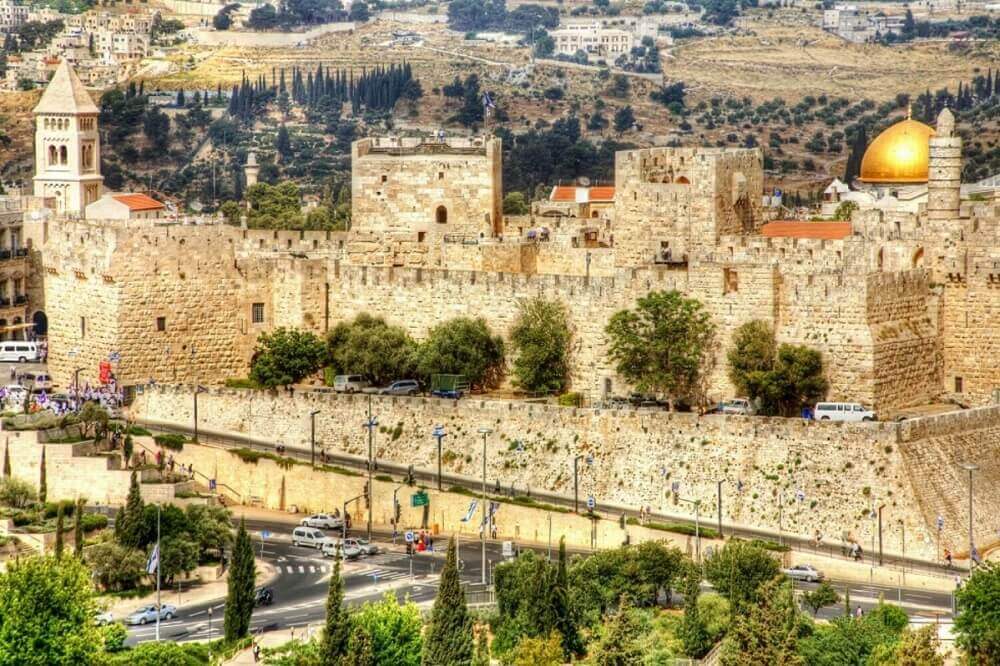
Here are some top tips for saving money if you are visiting Israel on a budget. You can save money in many small ways when you travel to Israel. Make your trip to Israel low-cost using these budget travel tips.The Old City of JerusalemVisit Israel in the Off-Season but not During HolidaysIf you travel to Israel in the off-season you will get cheaper airfares and cheaper hotels. Unlike some countries Israeli attractions do not close down in the winter. You’ll find it is business as usual throughout the country no matter what time of year you visit. Not only that but the weather is hot most of the year so traveling off-season will not mean missing out on outdoor activities. Be careful not to book during one of the Israeli national holidays when prices soar, hotels are booked up and attractions are crowded.Free Attractions in Israel One of the best ways to discover Israel is simply to take a walk through the streets or countryside. You can enjoy many sites for free in Israel like the Old City in Jerusalem where you can see the Wailing Wall, Dome of the Rock and the Church of the Holy Sepulchre all for free. In Tel Aviv you can enjoy Jaffa and the Bauhaus architecture of Tel Aviv just by going for a walk. The same goes for rural areas where there are well signposted hike trails to follow for free. Israeli beaches are free and there are many beautiful parks to enjoy for free.There are almost no free museums in Israel although some museums are free for those under 18 years. Visitors can tour the Baha’i Gardens in Haifa for free and in Tel Aviv and Jerusalem there are a few free guided walking tours. Some tickets to attractions in Jerusalem can be bought as “bundle tickets” giving you entrance to several places with the same ticket.National Parks CardIf you enjoy the outdoors and if you will be visiting several national parks it could be worthwhile buying a National Park membership. You will need to work out if this is cheaper than paying individual entrance fees depending on the places you want to visit. For example Masada (cable car not included), Bet Guvrin, Caesarea and Ein Gedi are national parks. You can buy the tickets from the entrance of any national park. Available tickets include the Blue Card which allows you entrance to three sites within two weeks for 78 ILS; the Green Card which gives you entrance to six sites within two weeks for 110 ILS and the Orange Card which gives you unlimited visits within two weeks for 150 ILS.Israeli Public TransportIsrael has an excellent public bus system which can get you to most parts of the country. The train system is rather limited yet reasonably priced. You can save money by avoiding taxis and sticking to public transport. There are “sherut” buses, which are shared minibus taxis that travel a set route but will pick up and drop off travelers anywhere along the way. Sherut buses can be useful especially on Shabbat when bus services are limited. If you have chosen to rent a car then shop around for the best gas prices. You’ll find different prices depending on the gas company and depending on whether you fill-up your gas tank by yourself or have the petrol attendant do it for you.Budget Accommodation in IsraelLike other top travel destinations Israel offers a wide range of accommodation options from luxury hotels to hostels and even Airbnb. Try the Airbnb options as well as IYHA hostels which are of a high standard and well located for tourists. You can get cheaper hotel accommodation in Israel by traveling in the off-season and shopping around for the lowest price online.Eating in Israel on a BudgetIsrael has some amazing street food; you’ll find humus, shawama and falafel available at very reasonable prices. If you eat mainly from Israeli falafel and shawama “fast food” outlets instead of sit-down restaurants you’ll save a lot of money. For a snack or coffee try Cofix, a chain of coffee shops where all the prices are kept at about 5 ILS. You can also buy your meals at a local market. In Tel Aviv visit Carmel Market and in Jerusalem try Machane Yehuda Market. At Israeli markets you can find low-cost fresh produce, cheese, baked goods and more.Guided Group ToursTo get to some attractions it can be more convenient (and even cheaper) to join a group day tour. Day tours include pick-up and drop-off from a central location, transportation, entrance fees and the services of a knowledgeable guide
By Petal Mashraki