On a rooftop overlooking the Mediterranean, Peter saw something he could not explain. Farther up the coast, a Roman centurion was waiting for a visitor he had never met. Acts 10 brings their stories together through a vision, an unexpected invitation, and a meeting that helped reshape the early Christian community. Today, Jaffa and Caesarea give travelers a setting in which to explore this turning point.
Peter’s vision in Joppa and his encounter with Cornelius are two parts of the same biblical story. The vision prepares Peter for the invitation; the meeting helps him understand its meaning. Reading them together reveals why an ordinary act of hospitality became such an important moment in the Book of Acts.
Cornelius was a Roman centurion living in Caesarea, attached to a military unit that Acts calls the Italian band or cohort. The account introduces him as a devout man who prayed regularly and gave generously to people in need. He was a Gentile, meaning a non-Jew, yet his household shared his reverence for God.
One afternoon, an angel appeared to Cornelius in a vision. The message was specific: send men to Joppa to find Simon Peter, who was staying with Simon the tanner in a house beside the sea. Cornelius responded by sending two servants and a devout soldier.
He did not yet know what Peter would say. Nor did Peter know that messengers were already on their way. Acts develops the story through these two parallel experiences, bringing together people whose lives might otherwise have remained separate.
The following day, as the men approached Joppa, Peter went up to the roof to pray around noon. He became hungry while food was being prepared. In the biblical account, he then fell into a trance and saw heaven open.
Peter was a guest in the home of Simon, a tanner whose trade involved preparing animal hides. Despite sharing a name, Simon the host and Simon Peter were different people. The detail that the house stood by the sea helps locate the scene within the port town.
Joppa is the ancient name of modern Jaffa, now part of Tel Aviv–Yafo. The seaside setting remains central to its character. For readers following Saint Peter’s wider story, this episode moves the narrative away from Galilee and Jerusalem to the Mediterranean coast.
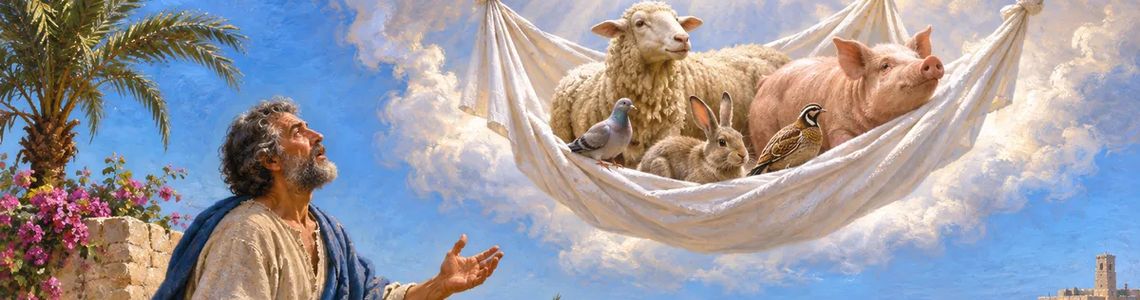
Peter saw something like a great sheet descending toward the earth, held at its four corners. It contained animals, reptiles, and birds. A voice instructed him to rise, kill, and eat, but Peter objected that he had never eaten anything common or unclean.
“What God hath cleansed, that call not thou common.” (Acts 10:15, KJV)
The exchange occurred three times before the sheet was taken back into heaven. Peter remained puzzled. The narrative does not present him as immediately understanding everything he had seen. Instead, the answer begins to emerge through the people arriving at the door.
The Spirit told Peter that three men were looking for him and directed him to go with them. After hearing their explanation, Peter welcomed them as guests. The next day, he left for Caesarea with the messengers and believers from Joppa.
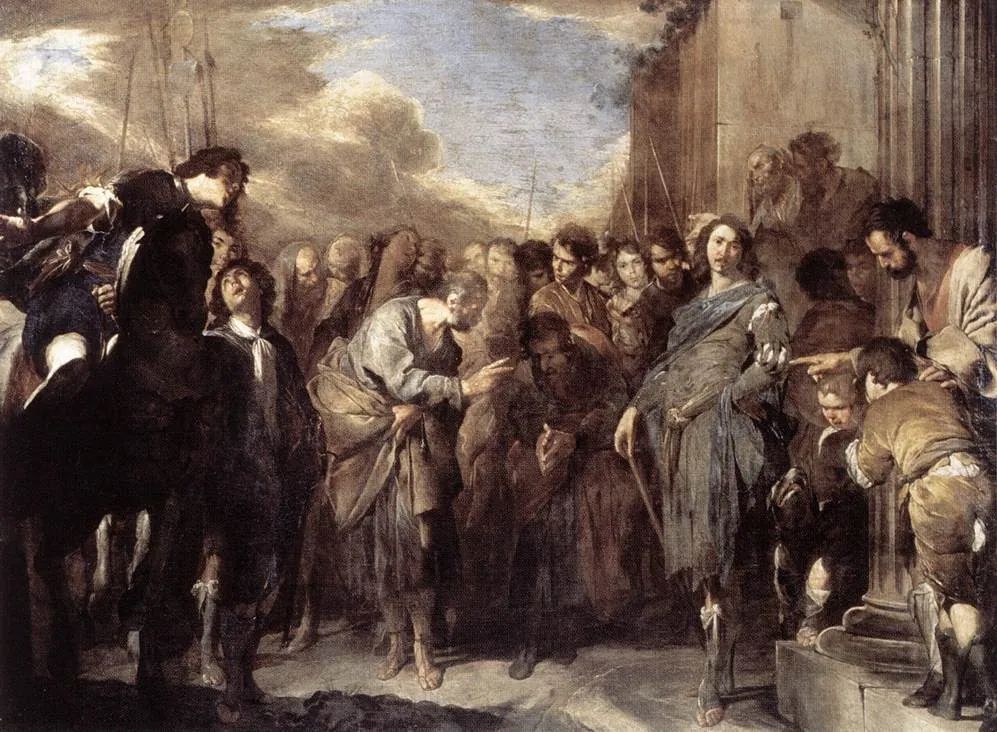
Cornelius had gathered relatives and close friends to hear Peter. When the apostle arrived, Cornelius fell at his feet, but Peter raised him, reminding him that he too was a human being. The encounter began with humility rather than a display of rank.
Inside the house, Peter explained what he had come to understand. His words connect the vision directly with the people before him:
“God hath shewed me that I should not call any man common or unclean.” (Acts 10:28, KJV)
Cornelius then described his own vision and explained why he had sent for Peter. The household was ready to listen. Peter spoke about Jesus’ ministry, death, and resurrection, and about forgiveness through faith in him.
While Peter was still speaking, Acts describes the Holy Spirit coming upon those who heard his message. The Jewish believers accompanying him were astonished that Gentiles had received the same gift. Peter then called for their baptism.
The chapter ends with another invitation: the household asked Peter to remain for several days. What began with a strange vision on a rooftop had become a shared welcome within a home.
The clearest guide to the meaning of Peter’s vision is Peter’s own explanation in Acts 10. The imagery involves animals and distinctions between clean and unclean, but his encounter with Cornelius brings the question of human belonging into focus.
“Of a truth I perceive that God is no respecter of persons:” (Acts 10:34, KJV)
In modern terms, Peter recognizes that God does not show favoritism based on a person’s background. Cornelius and his household are welcomed without first becoming Jewish. Within Acts, this is a major development in the growing community’s understanding of its mission to the Gentiles.
Christian traditions have also discussed the vision in connection with dietary laws. Those interpretations deserve careful treatment, but reducing the episode to a rule about food misses the encounter at its center. Peter crosses a social and religious boundary, listens to another person’s experience, and recognizes God at work beyond his expectations.
Acts 11 shows why the event needed explanation. Back in Jerusalem, Peter faced questions about entering the home of uncircumcised men and eating with them. He retold the sequence of events, including the vision and the coming of the Spirit. His listeners responded by acknowledging that God had granted repentance leading to life to the Gentiles as well.
This is a story about a particular moment in the early Christian movement. It should not be used to suggest that all Jewish communities held identical attitudes toward non-Jews. The narrative follows Peter’s understanding as it develops through prayer, hospitality, and the meeting in Caesarea.
The two principal settings lie along the Mediterranean coast: Joppa, today’s Jaffa, and Caesarea Maritima. They belong to the same coastal journey, but they offer different experiences for visitors. Jaffa is a living town of lanes and homes around an old port; Caesarea preserves extensive remains of an ancient city.
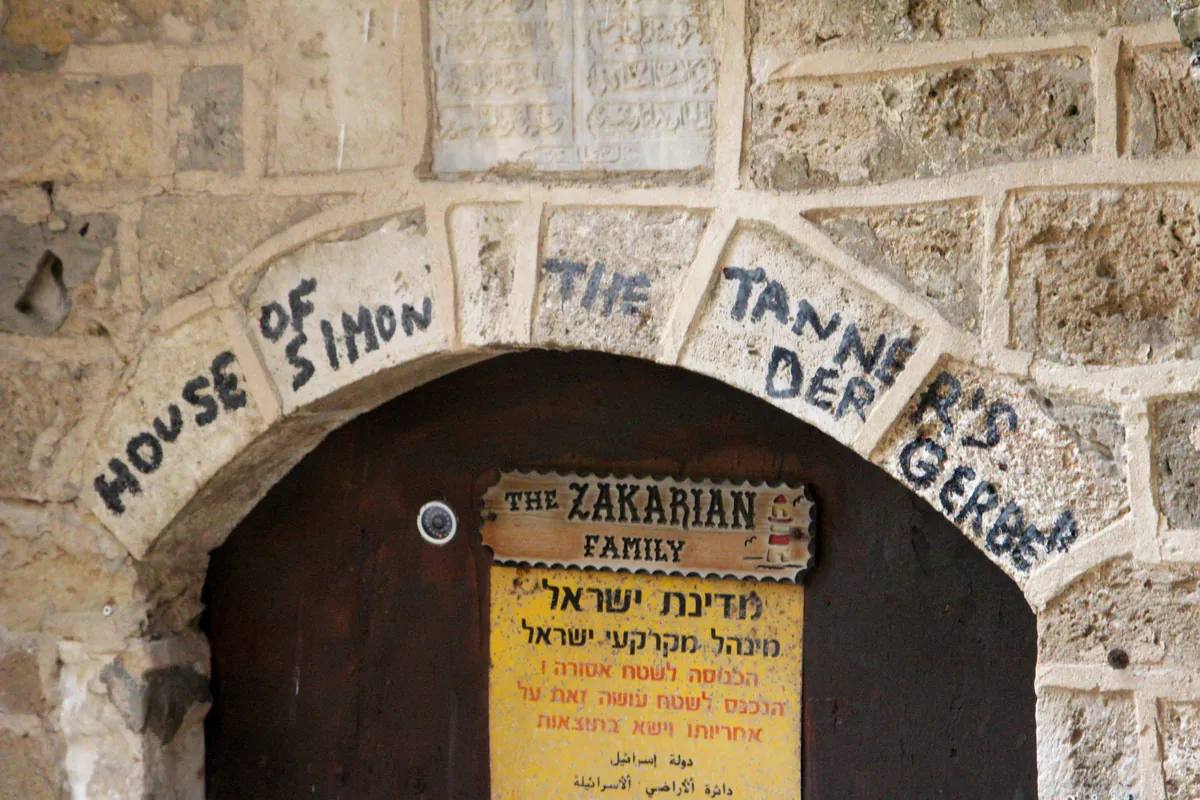
In Old Jaffa, a building near the lighthouse is traditionally identified as the House of Simon the Tanner. The association belongs to Christian tradition; it does not establish that the present structure is the house described in Acts. Plan to appreciate the traditional location from outside rather than expect an interior visit.
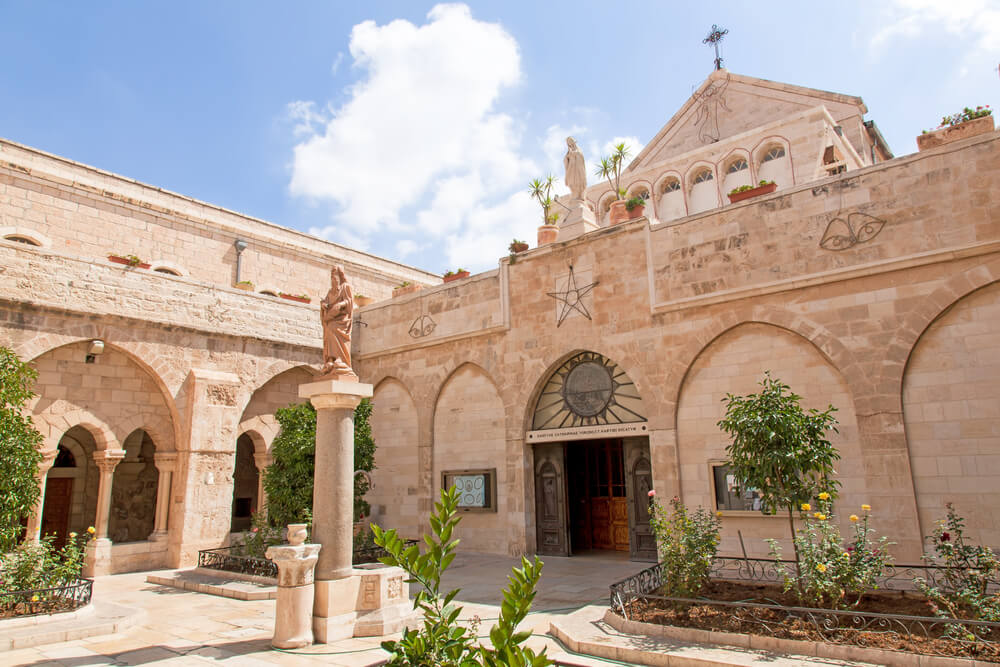
The nearby St. Peter’s Church in Jaffa commemorates the apostle’s connection with the town. Its presence helps visitors connect the port with Peter’s story, although the church itself is much later than the biblical events.
A thoughtful visit can combine the church area, the old lanes, and the waterfront. Bring the passage with you and pause over the details that give it a setting: a house by the sea, a roof used for prayer, and travelers arriving from another coastal city.
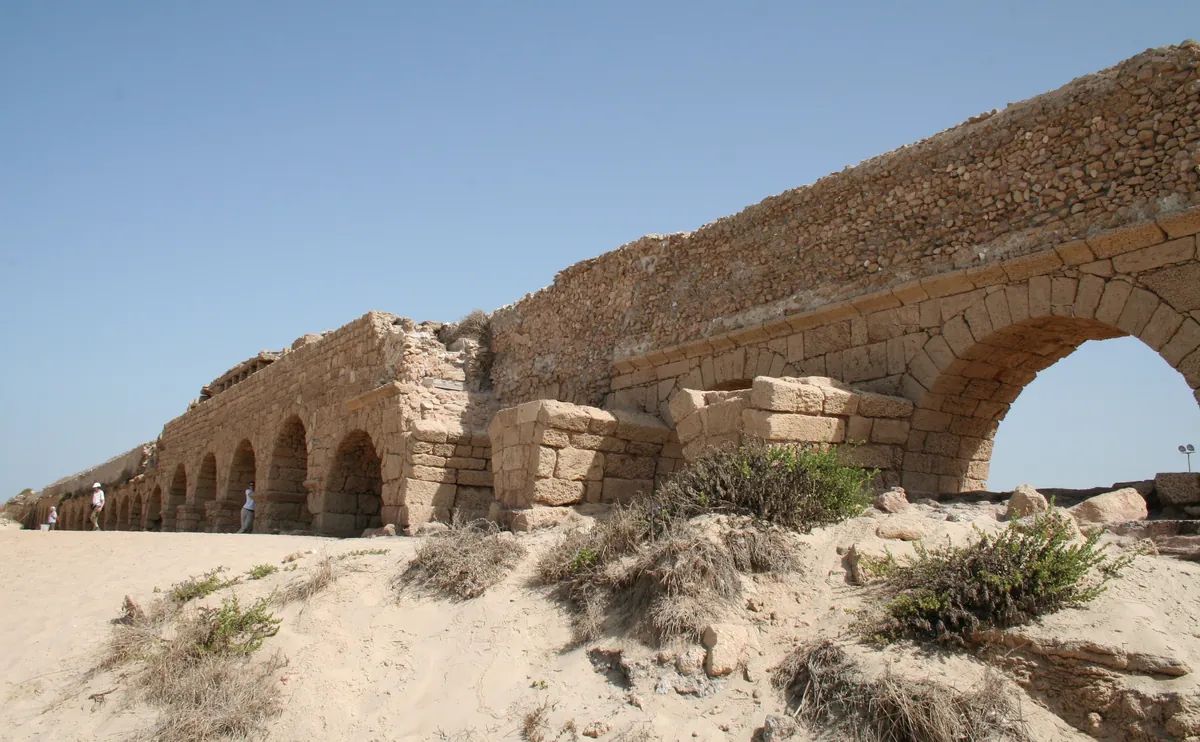
The Caesarea of Acts 10 is Caesarea Maritima on the coast, not Caesarea Philippi near Banias in northern Israel. Keeping the two places separate is essential when tracing New Testament journeys.
At Caesarea National Park, the theater, palace remains, and harbor setting help convey the scale and character of the Roman city. They provide context for the world in which Acts places Cornelius. They are not, however, an identified setting for the meeting inside his house.
Rather than search for a confirmed doorway or baptism spot, approach Caesarea as the broader historical setting of the account. Allow time for walking through exposed areas, bring sun protection and water, and consider how much archaeology you want to include alongside the biblical narrative.
From Jaffa’s waterfront to Caesarea’s Roman remains, this story offers a different way to experience Israel’s Mediterranean coast. The places help anchor the reading, while the reading gives the places another layer of meaning.
Explore our private tours in Israel and ask us about planning a journey around Peter and Cornelius. A private itinerary allows time for the biblical account, Jaffa’s Christian heritage, and the archaeological setting of Caesarea, with the route and stops agreed in advance.
For a broader pilgrimage, browse our Christian tours of Israel to explore other places connected with the New Testament.
Tours You May Like
Join Us
Keep in Touch


 Login / Register
 Contact


 Certificate of Excellence
 Guaranteed Departure
 Low Prices Guaranteed
 24/7 Support