Israel Travel Blog


​​First Time in Israel: The Ultimate Guide

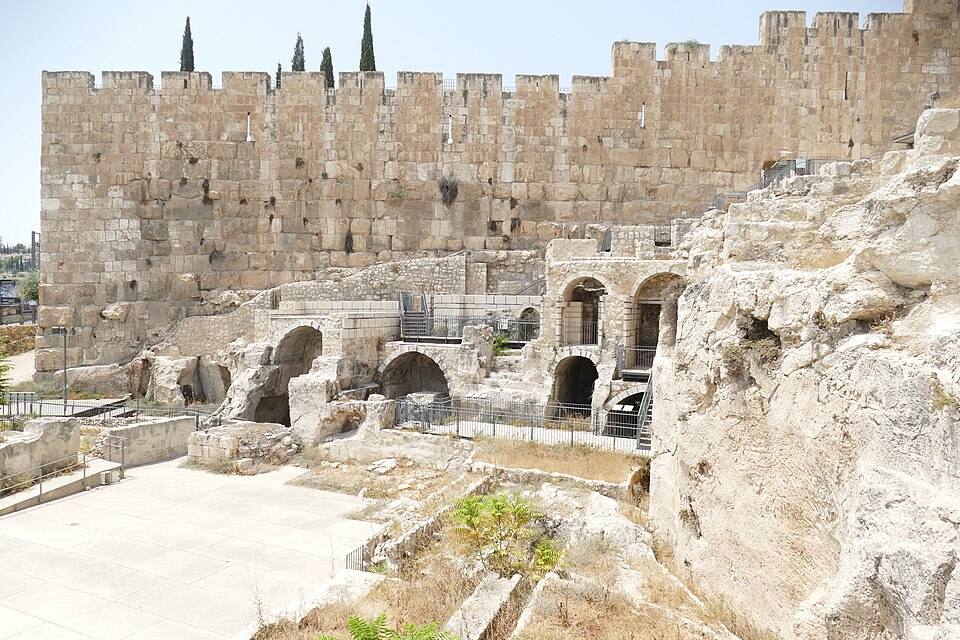
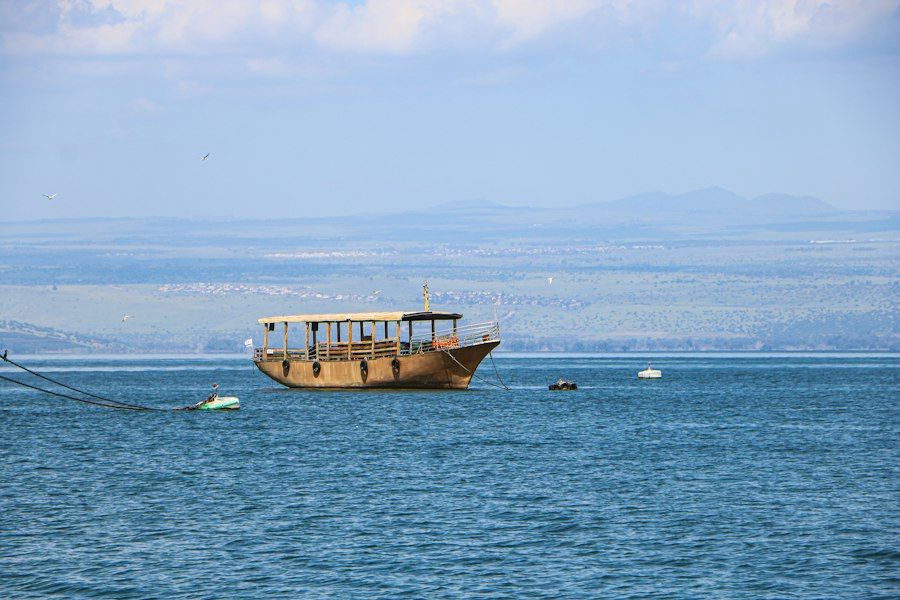
Whether you're traveling on a spiritual tripin the footsteps of Jesus, or just want to have some Middle-Eastern fun - your first time in Israel will be a trip you’ll never forget! This is a land that might be small, but it really packs a punch in terms of history, nature, art and culture, cuisine, and nightlife; few go away disappointed after a holiday here.The best sandy shores in the Middle East await you!Still, if it’s your first trip to Israel, you’re bound to have a few questions, not to mention be looking for tips and hacks to make sure you get the most out of your vacation. Here’s a few things we think you might want to know before you arrive. Shalom and welcome!The Best Time to Visit IsraelIsrael’s a great year-round destination but for the best weather conditions, we’d have to recommend spring and late fall. From March to mid-June, there will be plenty of sun, warm days with cool evenings and it’s perfect for sunbathing in Tel Aviv, hiking both in the Galilee, trekking in the Negev desert, and eating al fresco in the evenings.Ever seen the sunset from the top of a 2,000-year-old legendary Fortress?After the long summer months, October is a wonderful time to travel, when the heat is abating but you can still swim in the Mediterranean, and enjoy the blue skies. November is also pleasant and - with fewer tourists around - the top sites will be less crowded and accommodation will be cheaper to book.The Worst Time to Visit IsraelThere’s no real ‘worst’ time to visit Israel (honestly!) but there are certain times of the year that it’s worth avoiding, on a pragmatic level.Yom Kippur (falling sometime between Sept-Oct) is Israel’s ‘Day of Atonement’ where at least half of the Jewish population fast for 25 hours and attend services around the clock, in synagogues. It is the holiest day of the Jewish calendar and throughout the country, everything is shut.Yom Kippur In Israel - people just walking on the empty roads (Photo by Ron Almog, CC BY 2.0)By this, we mean everything! You cannot drive on the roads, shop, visit restaurants, tour historic sites and museums and even Ben Gurion International Airport shuts down. Essentially, the country comes to a standstill - so be prepared for ‘quiet time’ if you’re visiting.In terms of weather, July and August can be blisteringly hot, and January and February cold and rainy (especially in Jerusalem and the Golan Heights). And two of the major Jewish holidays - Passover (which lasts for 8 days and falls in the spring) and Sukkot (a seven-day festival in the Fall) are when Jews from around the world visit Israel, so the country is very crowded.Must-See Historic & Religious Sites in IsraelIsrael is home to hundreds of religious and historic sites, but some are so incredible that they have to be on your ‘Milk & Honey bucket list‘. They include:The Old City of Jerusalem:the Old City is small (less than one square kilometer) but walking through its ancient gates and wandering inside its walls is truly an unforgettable experience. Sacred to three major world religions (Christianity, Judaism, and Islam) the Old City is crammed with religious sites, includingVia DolorosaandChurch of the Holy Sepulchre,the Dome of the RockandTemple Mount,the Western Wallandthe ancient underground tunnelsof the City of David.The Church of the Holy Sepulchre in Old JerusalemYou could spend days, if not weeks, exploring Jerusalem but if you really want to get the most out of it we recommend taking awalking tour of the Old City- guides in Israel are licensed by the Ministry of Tourism and you’ll be blown away at how much history they really can share with you.Also, try to find time to visitthe Mount of Olives. Just outside the Old City, it’s home tothe Garden of Gethsemaneand several beautiful churches, includingDominus Flevit,Pater Noster, and theRussian Church.Masada Fortress:the ancient fortress of Masada, set on a plateau in the Judean desert, is one of Israel’s most visited archaeological sites. At its top is a Herodian palace, which you can reach and explore by taking a cable car up and witnessing dramatic views.The Masada national parkis also close tothe Dead Sea, so you can easilycombine the two attractionsin an organized day trip - there's plenty ofMasada Toursto choose from. Masada Fortress from aboveBethlehem:The famous birthplace of Jesus is just a short trip from Jerusalem. You can visitManger Square, continue to theChurch of Nativity, see enjoy great street food along the way.The city is under the control of the Palestinian Authority so the easiest way to explore it is with anorganized tour to Bethlehem; you will have the services of guides on both sides of the checkpoint and a comfortable and safe trip.Bethlehem Christmas TreeNazareth and the Sea of Galilee:The north of Israel isn’t just stunningly pastoral; it’s also home to Nazareth - where Jesus lived as a child - and the Sea of Galilee - where he spent most of his adult life, ministering, recruiting his disciples and performing miracles. Churches, synagogues, and glorious views of mountains and hills at every turn mean these spots should definitely make the ‘must-visit’ list.The Sea of GalileeWhat about nature and outdoor activities in Israel?You’re truly spoilt for choice in Israel when it comes to the great outdoors and with plenty of spots to ski, dive, hike, trek, rappel, and jeep ride - adrenalin junkies will be in paradise.Israel’s home to some stunning national parks, within which you can hike or bike along trails, swim in streams and stand under waterfalls, and picnic under eucalyptus groves. In the Golan Heights, you can take jeep tours along the border with Syria, affording you not just magnificent views but a chance to see old fortifications from wars fought long ago.The Banias WaterfallDown in the Negev and Arava desert, you can hike and trek through wadis (valleys), camp under the stars, spend a night with Bedouins, and explore one of the largest craters in the world - the Mahktesh Ramon in the tiny town of Mitzpe Ramon. Walk around its edges, hike inside it (it’s home to wonderful flora and fauna), or - for an experience, you’ll never forget - rappel down its side!Finally, for those who love the water, head to Eilat for snorkeling and diving in coral reefs, jet skiing and paddleboarding on the Red Sea, swimming with dolphins on a reef, camel riding in the nearby mountains, and a trip to Timna Park, home to incredible rock formations and an ancient copper mine!Israeli food: what should I expect?It’s impossible not to eat well in Israel. Trust us, this country is heaven for foodies, not to mention vegetarians and vegans, lovers of baked goods, cheese aficionados, those who keep kosher, and even gluten-intolerant folks.The Holy Land has some awesome gourmet foodBecause Israeli society is such a melting pot (Jews from every corner of the globe live here) that’s reflected in its food. There’s fantastic fish (straight from the Mediterranean), all kinds of white and yellow cheeses, an astonishing variety of fresh fruits and vegetables, and boutique bakeries at every turn.“Classic” Israeli street food includes falafel in pita (deep-fried chickpea balls, served up with salad, pickles, and tahini), sabich (an Iraqi sandwich), and - of course - hummus (if you’re adventurous, order a plate of it with an egg, mushrooms or ful (Egyptian fava beans). Meat lovers can go with shawarma or chicken soup (also known as ‘Jewish penicillin’).Israeli Street food is almost addictive!For those who are really curious, we’d recommend a Carmel Market food tour in Tel Aviv or perhaps splashing out on a gourmet meal at one of Jerusalem’s top restaurants.What’s the daily atmosphere like in Israel? Is it safe?Israelis are an interesting bunch - they’re curious about the world, love talking to tourists, are warm and friendly, and sadly often so direct that visitors mistake this for rudeness! Something else you’ll notice is that contrary to everything you read in the news, daily life in Israel is quite ‘normal’ (save for occasional flare-ups, most of which tend to happen in the West Bank).Israelis will just smile at you; it's in their natureIsrael’s remarkably safe on a personal level - you can walk around at 3 am and no harm will come to you - and is, therefore, a good place for solo and female travelers. Nearly everyone speaks some English and many people are fluent (Israelis are great travelers themselves) and are anxious for visitors to see how wonderful their country is.Eilat, Israel's best resort cityMost of all, Israelis love to help. If you trip over in the street, 20 people will run to lend you a hand. If you’re lost, you’ll not only be given directions but often offered a ride. And if you’re visiting over the Jewish holidays, don’t be surprised to receive an invite to someone’s home - hospitality here is legendary.What does a 10-day trip to Israel cost?We won’t sugarcoat it - this country can be expensive; Tourists arriving here are often astounded by the high cost of food, alcohol, and accommodation - of course, there are ways to travel Israel on a budget and make your trip more affordable - but you do need to prepare yourself.Whilst it’s possible to travel independently (public transport is cheap and efficient, most locals speak good English, infrastructure is developed) but you’re still going to spend a fair bit. That’s why many people choose, on their first trip, to opt for a package tour around Israel. The Bahai Gardens in HaifaWhether you’re looking for a ‘classic trip’ or something oriented towards Christian pilgrims, booking a package means you’ll have the services of a guide, an air-conditioned bus, the cost of entrance to many sites paid in advance, and all accommodation organized for you. Basically, it’s a stress-free and time-efficient way to see the country and, when you’ve crunched the numbers, it may not be that much more expensive than going it alone.Tour groups can save more, and do more in IsraelThat being said, it’s also possible to travel the country independently and, whenever you feel like it, book an Israel day trip. Places like Masada and the Dead Sea, Nazareth, and the Galilee, are a bit tricky to travel around without a car rental, and if you don’t want to drive or - of course - want to know more about the history of these areas, then a day tour with a guide is the way to go.If you’re interested in learning more about our taking a vacation in Israel or Organized Tours in Israel, feel free to reach out by email, Whatsapp, or phone - we’re happy to answer all your questions and help you make your trip a very memorable one.
By Sarah Mann

Petra with Children: A Complete Guide (2026 UPDATE)

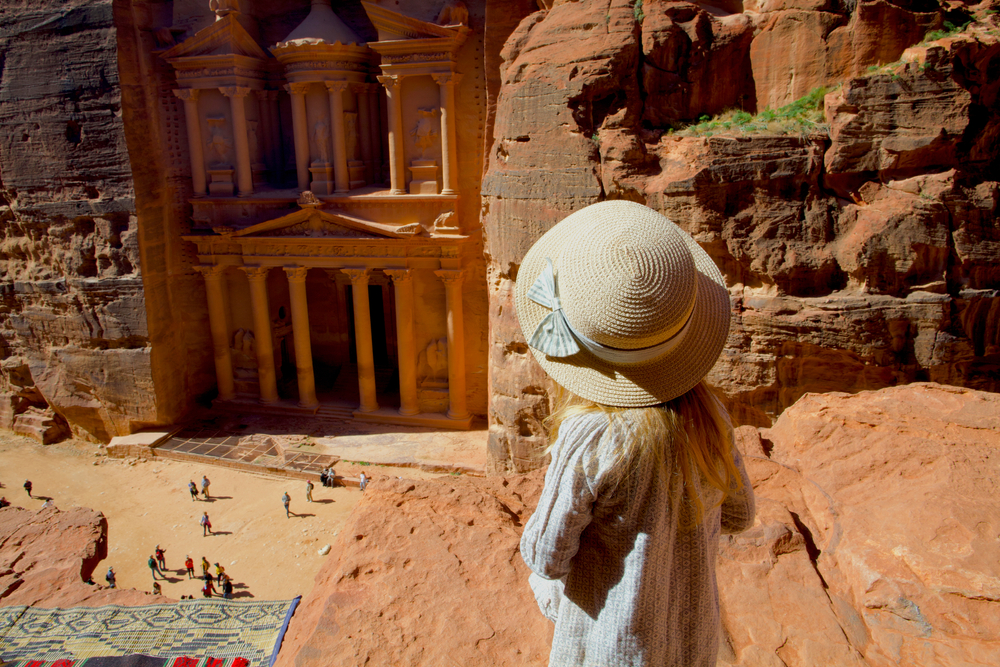
Why Visit Petra with Children?Out of all the reasons, we decided to focus on three.Children will be mesmerized by Petra's beauty. Carved out of rose pink rock, with narrow passageways, stunning facades, colonnaded streets, and magnificent views of the surrounding desert, it really is a one-of-a-kind place.It’s a great way to get your kids off their phones and iPads - once they’ve started exploring the site, they’ll probably be so fascinated with it that you’ll have to drag them away. Exploring Petra is a great way to teach them about history and the Visitor’s Centre offers a free audio guide for children that’s engaging and also educational, letting them explore the site and learn about the people that lived there.Kids at the Petra Archeological Park Jordan is a very child-friendly country. Like everywhere in the Middle East, children rule the roost - everyone loves them, makes a fuss of them, and spoils them. So on a visit to Petra, they definitely won’t need to be seen and not heard.Is it Safe to Take Children to Petra?Jordan is a pretty safe country to visit, in any event, but Petra - in particular - is highly recommended because it’s not just set up for tourism but the government and local security staff there take safety very seriously.There are few incidents of crime (e.g. petty theft) and almost no incidents of violence, making the area very safe for families. You can walk the streets easily, day or night, there are local police on hand both in Wadi Musa and the site of Petra itself. If you decide to visit, you will see many groups of people, consisting both of adults and younger family members, roaming around.The Tourism Police in Wadi Musa (Image by Dickelbers CC BY-SA 3.0)Petra is a popular tourist attraction (which brings in a lot of revenue) and the Jordanian government wants to keep it that way - as a result, they go to great efforts to make sure the area is kept safe - after all, happy tourists will spread the word, or even return!Exploring Petra with ChildrenPetra is enormous and there’s lots to see. But there are some places and things that really must be experienced, including:The Siq and Treasury - walking through the Siq passageway is an incredible feeling and at a certain point it’s so narrow that you can’t see far ahead, so have no idea when the Treasury will come into view. When it does, your children will be overwhelmed. As will you. Then spend time in front of the Treasury itself…it’s simply awe-inspiring.The Indiana Jones trail - older kids will find hiking this trail - in the footsteps of Indiana Jones - completely thrilling. Rather than walking through the Siq, take the trail that heads southwest across a desert plain…eventually you’ll arrive at an amazing lookout high above the Treasury. Think about taking a local guide so you don’t get lost!The view is Amazing!Horse and Carriage/Donkey Riding - some people like to use animals to travel the Siq and your kids might enjoy it - just make sure that you agree on the price beforehand to avoid any possible quarrels and that the animals look well-cared for.Petra by Night - taking children to Petra at night can be a lot of fun - the entire area around the Treasury is lit with thousands of candles and you’ll also be treated to a traditional Arabic musical performance. Just remember that you need to buy a separate ticket for this activity.The Petra Monastery - this medium to hard walk, involving 850 uneven stairs, is a bit steep and not suitable for youngsters but is a well-worn trail. Moreover, you’ll be rewarded with spectacular views of this site and there are far fewer crowds there than at the Treasury.Little Petra - a fifteen-minute drive from Wadi Musa and boasting free entrance, this site is smaller and more compact but with the same facades and gorges. Children will love the caves and rock formations there and there are easy hikes for all the family.What Kind of Places can I Stay with Children in Petra?Petra has accommodations to suit all budgets and tastes. Something kids will really enjoy is sleeping at a Bedouin camp - they are well set up and, in many respects, it’s more like ‘glamping’ - comfy beds, private toilets, and even mink throws for when it gets cold at night.Great hotels await you in and around the Petra Archeological Park There are plenty of mid-range and upscale resorts around, with family rooms, play areas, and even kids' clubs. You and your children will love eating traditional Jordanian food around a campfire at night or in one ofPetra's great restaurants. And if you decide that you need a quiet night out with your partner, you can book babysitters in some of the top resorts.Tips for Traveling to Petra with ChildrenAs we’ve said, your children are bound to love visiting this Lost City but there are still a few things you should bear in mind, and here are some tips to make the trip as enjoyable as possible.Try to avoid traveling there in the summer - it can be scorching hot. Consider March to May and September to November as optimal dates - temperatures are pleasant and skies clear, but there will be little rain.Keep an eye on your children - certain parts of Petra can get very crowded at certain times of the day, particularly the Siq passageway and the Treasury area.Make sure you're all dressed for exploration - you’ll need comfy shoes, breathable clothing, hats and sunscreen - the sun can be a beast if you aren’t careful.Carry water and snacks with you - it’s easy to get dehydrated if you aren’t careful and this can really ruin your trip, so pack plenty of water (everyone can carry a backpack with a couple of bottles, large or small). Also take some energy bars or dried fruits and nuts, to keep everyone’s strength up.Take the crowds into consideration - exploring Petra early in the morning and later in the afternoon with a rest in the middle of the day - not only will it be less crowded between 7am-10am and from 3pm to closing time, but you’ll all appreciate the lie-down! Your ticket is valid for the entire day so there’s no problem having a break, then returning once the crowds thin out.Book a guided tour of Petra- this means that everything is arranged for you in advance - visas, travel to Wadi Musa, accommodation and the entrance ticket Even better, you’ll have the services of a local guide, who can teach your children all about the special history of the area and make sure they have a holiday that they’ll never forget.
By Sarah Mann

How to Beat the Heat: Weather Guide to Petra, Jordan

Petra’s reputation as one of the modern wonders of the world is well-deserved: it’s not just a site of huge historic importance, it’s also extraordinarily beautiful - and no wonder so many people who take Israel and Jordan toursdedicate a day or two to see its timeless splendor.And let me tell you: the Petra Archeological Park can be visited year-round. Located in the Jordanian desert, on the outskirts of a small village named Wadi Musa, it actually experiences all four seasons!The Siq in Petra, JordanSo what kind of weather can you expect when visiting Petra? Let’s take a look at the average temperature across the calendar and what to expect when taking tours to Jordan at different times of the year.Summer in PetraThere’s no denying it - Petra can be exceedingly hot in the summer. With temperatures soaring, the mercury can end up above 37°C (100°F) at the day’s peak and when the sun is blazing (and the humidity is rising), walking around can be quite arduous.However, this doesn’t mean you can’t visit - it just means you need to be smart and plan ahead.How to deal with the weather at Petra, Jordan1. First of all, set off early. The gates to Petra open at 6 am in the summer which means that if you rise with the dawn, you can walk down the Siq passageway when it’s still quiet and be in front of the Treasury by 7 am. Not only will it be cooler, but you’ll also have incredible photographic opportunities.And if you’re not an early riser, set off later in the afternoon - after 3.30 pm. By then, the majority of visitors will be leaving and not only will the sun’s rays be less intense, but you’ll be able to take advantage of the ‘golden hour’ when the colors of the rocks around you are constantly changing.The Sunrise over the Jordanian desert2. Dress appropriately. We can’t emphasize this enough. Invest in a wide-brimmed hat, good sunglasses (the glare of the sun in the desert is notorious), and wear breathable fabrics. Comfortable footwear is essential (it’s a long walk to the Siq unless you want to travel there by donkey) and before you set off, apply plenty of sunscreen.3. Drink water constantly. This is paramount. In the desert heat, you need to be drinking at least 3 liters of water per day. This may sound like a great deal but it isn’t. Carry water bottles and keep sipping, even when you don’t feel thirsty. Dehydration sneaks up on you and if you don’t take in enough fluids, you’re going to feel awful by the evening and - worst case scenario - end up with heatstroke.Drink as much as possible!4. Take cooldown breaks.If you’re spending the entire day at Petra (rather than going early in the morning, then returning later in the afternoon), try and stay out of the sun between 11 am to 3 pm. This is when it is at its most intense. Inside the site is a restaurant called The Basin, which offers shaded, indoor dining with air-con. This is a good option for breaking up your day and taking some rest.5. Visit Petra in the evening. Not that we don't think Petra is worth seeing in the day, but if you want to avoid the sun, go at night! Several times a week, the area in front of the Treasury is lit up by thousands of candles and it’s a truly incredible sight. Even though this is an additional cost to the ticket price, many find it to be a unique experience.Fall in PetraBy the time summer has passed, the temperatures will be dropping again: Fall is a wonderful time to visit Petra. In September it will still be hot in the day (around 30°C/85°F) but pleasant in the evening. Moving into October, temperatures will still be moderate but will start to dip as the month progresses.Get some shade, and grab a drink - the Coffee is better than you've ever imaginedBy the end of the month, the skies may be a little bit more overcast but you still shouldn’t have to deal with rain. Nevertheless, you should definitely pack a warm jacket because by the evening it will be cold!Still, with median temperatures of 27°C (81°F), this is a very popular time for visitors. And even in November, although you might encounter some light rain, it’s still possible to hike and cycle around the site! Petra isn't too crowded during this season, so people who favor a relaxed atmosphere tend to bookPetra toursfrom October to November.Winter in PetraPetra boasts a cold but reasonably dry winter climate. And even whilst there will be fewer hours of daylight than at any other time of the year, on a good day there might easily be 7 hours of sunshine! The average temperature throughout December - January will be around 14°C (57°F) but drop substantially at night - sometimes to between 0-2°C (32-34°F)Just remember that however much the sun shines in the day, when night falls it’s going to be bitterly cold. You are, remember, in the desert! You’ll need a warm coat, gloves, hat, scarf, and even thermal underwear if you suffer from winter chills!The Petra Monastery in winterTwice, since the 1960’s, Petra has flooded, which means the chances of having to deal with heavy downpours are unlikely but still possibleRain is most likely in December but there won’t be enormous amounts - you’re far more likely to see frost on the ground. And the good news about traveling to Petra at this time of the year means there will definitely be fewer tourists.Just remember that while the gates still open at 6 am in the winter, they close at 4 pm so plan ahead accordingly.Spring in PetraThe beginning of spring - March - is a wonderful time to visit Petra. The sun will be shining brightly, wildflowers out everywhere you look and temperatures will be hovering between 18 to 24°C (64-75°F).By April, spring will have arrived in earnest, and by May it will already be heating up. Still, this is a very popular time of the year to make a visit - the climate is almost perfect, being neither too cold nor too hot.The Petra Monastery during spring, with blooming Oleander bushesIn terms of exploring the lost city, the climate is perfect - not too hot and not too cold. The only possible drawback is being caught up in a ‘hamseen’ - a desert wind that blows across the Arabian peninsula at this time of the year. With it comes dust and sometimes dark skies, not to mention raised temperatures and sand flying everywhere. Luckily it tends to last just a few days, but it’s good to be preparedWeather at Petra, Jordan: When should I come?In conclusion, there’s no ‘one time’ of the year to visit Petra (or Wadi Rum, if you like camping, stargazing, and jeep trips) but the spring and the fall are undoubtedly the best months to make a trip. Because the weather is cooler but not too chur blog.
By Sarah Mann

Is it Safe to Drink the Water in Israel?

As a general rule, wherever you are in the world you should be drinking at least two liters of water today but when it comes to visiting Israel in the summer, you need to be consuming water all the time, even when you don’t think you need it!We’re here to answer all your questions about the water supply in Israel - where does it come from, what’s in it, is it safe to drink, and plenty more besides. The good news is that being a modern country with an excellent healthcare system, we don’t think you’re going to have too many problems staying healthy as long as you just keep sipping!Is the water in Israel safe to drink?One of the first things we’re usually asked by people who book tours to Israel with us is “Is the tap water safe to drink?” and we’re pleased to announce the answer is a resounding “yes.”Israel's water is superb, even tap water.Wherever you go in the country, you can be assured that tap water in a restaurant, and water from public fountains found in big cities is perfectly safe. You can alsototally truston-site water coolerswhether you're taking a day trip in Jerusalem, visiting northern Israel,touring Masada and the Dead Sea, or any other tourist favorite spots.And one tip we always give our clients is to keep filling up your bottle, whenever you have the opportunity. Whether you’ve brought your own thermos flask from home or are just refilling from a plastic bottle you purchased here, it’s completely free.How much is a bottle of water in Israel?If you’re popping into a corner store or kiosk for a small bottle of water (500 ml), expect to pay around 6-8 NIS. A larger bottle may cost around 8-10 NIS, but if you go to supermarkets and buy in bulk (i.e. a pack of six, containing 1.5 liters) the cost is much more reasonable - between 10-12 NIS. This works out at less than 2 NIS a bottle.The bottle with you, fill it up laterOf course, lugging around large bottles is a bit inconvenient but it’s certainly cost-effective. Also, bear in mind that locally-produced water is cheaper than anything imported, and mineral water will set you back a little more than still water. Still, heading to one of Israel’s supermarkets is probably your best bet if you don’t want to spend a fortune.What’s the Israeli water supply like?Israel has its share of world-famous scientists and has developed an extremely advanced water filtration system in the last sixty years.In 1962, Amiad Filtration Systems was established and from then until now has created all kinds of water solutions (many that other countries across the world have adopted), ranging from filters for the home to huge projects for city authorities and industry.You can trust local water quality, for yourself and your familyThis, to some degree, accounts for Israel’s success in agricultural endeavors (think of the cherry tomato, the Galila melon, and Angello, the seedless bell pepper. In fact, Israel’s government is so committed to agriculture development, that whether you’re traveling up in the Jordan Valley or down in the Negev desert (both particularly hot regions) you’ll see farms and greenhousesWhere does Israel get its water?There are three sources in Israel from which water can be drawn - groundwater pumping (from the mountains and coastal regions). surface water (from the Sea of Galilee, and streams and springs in national parks in northern Israel) and from desalination projects in the Mediterranean Sea and Red Sea.Today, about 75% of Israel’s drinking water is drawn and then desalinated from the Mediterranean Sea. There is also a project in place (which should be up and running this year) where Israel will begin channeling desalinated water into the Sea of Galilee (the country’s largest freshwater lake and home to an emergency water store). The Jordan River has great water as well!Not only will this not damage the current ecosystem, it will even aid it by keeping water levels stable!And if you want an example of how advanced Israel is in terms of transforming water for economic gain, just look at the figures - in the USA, only 4% of wastewater is reused for agricultural purposes but in Israel, it is almost 90%.How strict are the water quality regulations?More good news - the Ministry of Health has responsibility for ensuring the water in Israel is of good quality so that the public can drink it safely, all year round and they take this matter seriously!Israel’s regulations about water are extremely advanced, with regulations updated every few years - they deal with treatment facilities, quality tests at the water source, and how the supply systems are working. So fear not, for you are in good hands.What is the Drinking Age in Israel?Israel has great water, but also wonderful local Beer. The minimum drinking age in Israel is 18, although some bars and nightclubs may not allow entrance to those under the age of 21-25 (always bring ID with you, if you’re going out for a night on the town).Wine, beer, and hard liquor are available freely in Israel although there are laws about where and when you can consume it (for instance, you cannot drink alcohol in public between 11 pm and 7 am). Technically, this means that if you’re sitting on one of Israel’s best beaches with a bottle of beer or wine, after midnight, the police could ask you to pour it away - in practice, this is not common though.Moreover, Israel is very Mediterranean in its drinking culture i.e. people will drink moderately throughout the evening, and avoid getting hopelessly drunk. This moderation is also aided by the fact that alcohol is quite expensive to purchase, both over the counter and in fashionable bars in Tel Aviv!Try the local Beers when you get the chanceEstablished in the 1990s, Bein Harim has been offering organized packages, day trips, and privately-guided tours all over Israel (and, more recently, to Petra and Wadi Rum in Jordan) for over 25 years and with our experienced and qualified guides and professional team, promise to make your visit here one you’ll never forget.For more information about the tours we offer, feel free to contact us by email or phone and if you’re curious about our country, take a look at our blog, where we talk about all aspects of life in Israel.
By Sarah Mann

The Ark of the Covenant: What It Was and Where It Is Today

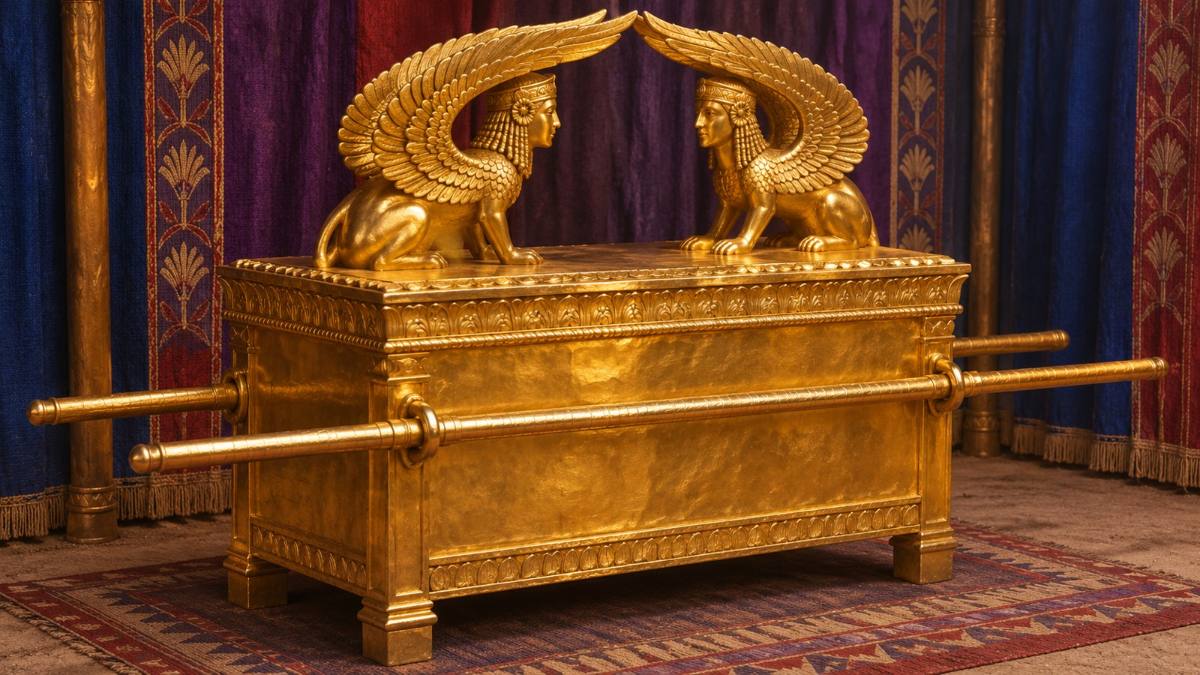
A gold-covered chest crosses a river ahead of a nation, falls into enemy hands, and enters Jerusalem amid music and dancing. Then, somewhere between the world of the biblical kings and the destruction of their Temple, its trail becomes uncertain. The Ark of the Covenant has inspired faith and speculation for centuries. Its story also follows a landscape you can still explore today. In the Bible, the Ark of the Covenant is a sacred chest associated with God’s covenant with Israel and the tablets of the Ten Commandments. Its present location is unknown: no object has been independently authenticated as the biblical Ark. Yet the places connected with its journey, from the Jordan Valley to the hills around Jerusalem, offer a way to understand the story beyond the mystery of its disappearance. What Was the Ark of the Covenant? The Ark of the Covenant in the Tabernacle (AI illustration) The Ark was the most sacred furnishing of the Tabernacle, the portable sanctuary described in Exodus. It belonged to the inner sanctuary, screened from the rest of the tent by a veil. Later, according to 1 Kings, Solomon placed it in the Holy of Holies of the Temple in Jerusalem. Its name points to the covenant, the relationship between God and Israel expressed through the commandments. The Ark held the stone tablets and was associated with divine presence and communication. Exodus describes God speaking to Moses from above its cover, between two golden cherubim. This explains why the biblical accounts treat carrying, approaching, and housing the Ark as matters of profound consequence. The stories also resist treating it as a guarantee of success. In 1 Samuel, bringing the Ark onto a battlefield does not prevent defeat. Its significance rests in the covenant and the holiness it represents, rather than in the idea of a portable weapon. It is also different from Noah’s ark. Noah’s ark is the vessel in the Flood narrative; the Ark of the Covenant is a chest carried on poles. The English word “ark” can obscure that distinction, but the objects have separate stories and purposes. Who Built the Ark of the Covenant? Exodus 25 gives Moses instructions for making the Ark. Exodus 31 identifies Bezalel, assisted by Oholiab and other skilled workers, as an artisan chosen for the sanctuary’s construction. Exodus 37 specifically credits Bezalel with making the Ark. So Moses and Bezalel have different roles in the account: Moses receives and communicates the instructions, while Bezalel makes the chest. The surrounding chapters describe craftsmanship in wood, metal, textiles, and precious materials. The Ark belongs within that larger account of a community building its sanctuary. What Did the Ark Look Like? The Ark of the Covenant by James Tissot (Photo: J. James Tissot, Public domain, via Wikimedia Commons) According to Exodus 25 and 37, the Ark was made from acacia wood, overlaid inside and outside with gold. Gold-covered wooden poles passed through rings at its sides so it could be carried. The poles were to remain in the rings. The stated dimensions are two and a half cubits long, one and a half cubits wide, and one and a half cubits high. Using an approximate cubit of 18 inches gives a chest about 45 inches long and 27 inches wide and high, or roughly 114 by 69 by 69 centimeters. Ancient cubits varied, so these are illustrative conversions, not exact measurements. Its gold cover is called the kapporet, often translated as the “mercy seat” in English Bibles. This was not a chair in the ordinary sense. Two golden cherubim faced one another above it, their wings spread over the cover. The term connects the Ark with atonement and divine presence. “And there I will meet with thee, and I will commune with thee from above the mercy seat.” (Exodus 25:22, KJV) Illustrations inevitably add choices about details the text does not fully specify, including the appearance of the cherubim. Any modern reconstruction should therefore be understood as an interpretation of the description. What Was Inside the Ark of the Covenant? The stone tablets are central to the biblical descriptions. Deuteronomy 10 connects their placement in the Ark with Moses’ return from the mountain. When the Ark enters Solomon’s Temple, 1 Kings makes a particularly specific statement: “There was nothing in the ark save the two tables of stone.” (1 Kings 8:9, KJV) Hebrews 9:4, in the New Testament, describes the Ark in connection with a golden jar of manna, Aaron’s staff that budded, and the tablets of the covenant. These objects recall different experiences of Israel in the wilderness: food provided during the journey, priestly authority, and the covenant itself. The earlier passages about preserving manna and Aaron’s staff describe them being kept before the Lord or before the testimony (Exodus 16:32–34; Numbers 17:10 in many English editions). The descriptions should not be flattened into one inventory that was necessarily unchanged throughout the Ark’s history. First Kings describes its contents at the Temple dedication; Hebrews presents the sanctuary and its sacred furnishings in a later theological discussion. One further distinction matters: Deuteronomy 31:26 says the book of the law is to be placed beside the Ark. It should not simply be added to the list of things inside it. The Ark’s Journey Through the Holy Land The Ark’s biblical journey connects wilderness worship, the entry into Canaan, the era of Samuel, and the reigns of David and Solomon. Following these episodes gives the story a geographical shape. It is a journey through the biblical narrative, rather than an archaeologically verified itinerary for a surviving object. Crossing the Jordan and the Fall of Jericho Joshua crossing the Jordan with the Ark (Photo: Benjamin West, Public domain, via Wikimedia Commons) Joshua 3 describes priests carrying the Ark into the Jordan ahead of the people. When their feet enter the water, the river stops flowing and the Israelites cross on dry ground. The Ark remains in the riverbed while the people pass, making it central to the account of entering the land. At Jericho, the Ark appears in another carefully ordered procession. In Joshua 6, priests with trumpets accompany it as the Israelites circle the city. On the final day, the people shout and the walls fall. The narrative presents the victory as an act of God rather than a conventional siege. A visit to the Jordan Valley helps readers picture the river, the plain, and the approach to Jericho. It does not establish the precise crossing point, nor does the archaeology of ancient Jericho independently confirm every detail of Joshua’s account. Shiloh, the Philistines, and the Return to Beth Shemesh Shiloh becomes an important sanctuary in the biblical account. It is where Samuel serves under Eli, and where 1 Samuel 3 places the Ark. In the next chapter, Israelite forces bring it from Shiloh to their camp after suffering a defeat. They hope its presence will save them. Instead, the Philistines win the battle and capture it. In Ashdod, the captured Ark is placed in the temple of Dagon. The story describes Dagon’s image falling before it and afflictions striking the population. The Ark is moved to Gath and then Ekron, where its arrival causes alarm. These episodes turn an apparent military trophy into something its captors desperately want to return. After seven months in Philistine territory, according to 1 Samuel 6, the Ark is sent away on a cart drawn by two cows, accompanied by offerings. The animals take the road to Beth Shemesh, where people harvesting wheat see it approaching. The return is not an uncomplicated happy ending. The chapter also describes judgment at Beth Shemesh, after which its inhabitants ask the people of Kiriath Jearim to take the Ark. The narrative repeatedly emphasizes that proximity to the sacred calls for reverence, whether among Israelites or Philistines. Kiriath Jearim, King David, and Jerusalem David brings the Ark to Jerusalem (Photo: Domenico Gargiulo, Public domain, via Wikimedia Commons) At Kiriath Jearim, the Ark is taken into the house of Abinadab, and his son Eleazar is consecrated to guard it (1 Samuel 7:1). The location is generally associated with the hill above Abu Ghosh, west of Jerusalem. Excavations there contribute to discussion of the site’s history, although they have not produced the Ark itself. Second Samuel 6 describes David’s attempt to bring it to Jerusalem. During the journey, Uzzah reaches toward it when the oxen stumble and is struck dead. David, frightened by what has happened, leaves the Ark at the house of Obed-edom for three months. Later, David brings it into the city with celebration, dancing before the Lord. It is placed in a tent he has prepared. The story also includes Michal’s criticism of David’s behavior, making the procession a revealing episode about kingship, public devotion, and family tensions. Solomon later transfers the Ark into the Temple’s inner sanctuary, beneath the wings of the great cherubim (1 Kings 8). These Temple cherubim belong to the surrounding sanctuary; they should not be confused with the smaller figures described on the Ark’s cover. For travelers interested in this transition from David’s city to Solomon’s Temple, our Jerusalem tours offer different ways to explore the city’s history and sacred landscape. Compare the itineraries to choose the places and depth of explanation that suit your interests. What Happened to the Ark of the Covenant? The short answer is that its final fate is unknown. The Bible describes the Ark in the Temple, but does not give an unambiguous account of its destruction, removal, or permanent hiding place. Second Chronicles 35:3 refers to the holy Ark during the reign of Josiah. The biblical accounts of the Babylonian destruction of Jerusalem and the First Temple, conventionally dated to 586 BCE, list Temple furnishings taken or destroyed without clearly explaining what happened to the Ark. That gap has generated centuries of interpretation. Several possibilities are proposed: it may have been destroyed, taken away, or concealed before the Temple fell. None has been established conclusively. It is tempting to choose the most dramatic theory, but the surviving evidence does not permit a confident answer. Jewish traditions include accounts of the Ark being hidden. Second Maccabees 2 describes Jeremiah concealing the tent, Ark, and incense altar in a cave on the mountain associated with Moses’ view of the land. Second Maccabees belongs to the biblical canon of some Christian traditions, but not to the Jewish Tanakh or most Protestant Bibles. Naming the source helps readers understand the status of this account. The Ark is also distinct from the later Torah ark found in synagogues, the cabinet that houses Torah scrolls. Nor does visiting the Western Wall mean seeing a surviving wall of the First Temple’s inner sanctuary. The visible wall belongs to the retaining structure of the later Temple Mount complex. Is the Ark of the Covenant in Ethiopia? Ethiopian Orthodox tradition holds that the Ark is preserved in Aksum, in a chapel associated with the Church of Our Lady Mary of Zion. The wider tradition connects its arrival with Menelik, the son of Solomon and the Queen of Sheba in the Ethiopian royal narrative. This belief has deep significance in Ethiopian Christianity. It should be described respectfully as a living religious tradition. The object is not available for independent scholarly examination, however, so the claim has not been established through publicly verifiable archaeological evidence. Respecting the tradition does not require presenting it as a confirmed answer to the historical question. A careful account can explain both its religious importance and the limits of what has been verified. Has the Ark of the Covenant Been Found? No discovery has been independently authenticated as the biblical Ark of the Covenant. Headlines sometimes describe a temple, stone, platform, or chamber as a possible clue to its whereabouts. Such finds can be worth studying without constituting the discovery of the Ark. At sites such as Shiloh, Beth Shemesh, and Kiriath Jearim, archaeologists investigate settlement history, architecture, and religious activity. Connecting an ancient structure with a named biblical event requires additional interpretation. Excavators may also disagree about the date or function of a building. For a visitor, this does not make the sites less interesting. They allow us to ask how ancient communities lived and worshipped, and how their landscapes relate to the texts. The strongest archaeological visit leaves room for questions rather than turning every suggestive discovery into proof. Discover the Holy Land Places Connected with the Ark of the Covenant You cannot visit an authenticated original Ark, but you can explore places connected with its biblical journey. Each contributes something different: a landscape, an archaeological site, or a later place of commemoration. Jericho and the Jordan Valley provide the setting for the opening episodes in Joshua. Ancient Shiloh, in the West Bank, connects the story with the sanctuary of Eli and Samuel. Tel Beth Shemesh brings the return from Philistine territory into geographical focus. At each site, separate what the text describes from what the visible remains can demonstrate. Kiriath Jearim, near Abu Ghosh, recalls the Ark’s stay at Abinadab’s house. The hill’s Church of Our Lady of the Ark of the Covenant is a later Christian commemoration, not a building from the Ark’s biblical period. Jerusalem connects David’s procession with the Temple tradition and offers the clearest place to bring the wider story together. If you would like to follow several of these locations, explore our private tours in Israel and discuss a route with us. These stops are spread across different areas and should not be assumed to fit into one day. Visits to Shiloh and other locations require confirmation of current access and arrangements; they are not automatically included in a standard Jerusalem itinerary. Tell us which parts of the story interest you most, whether biblical history, archaeology, or religious tradition. Ask about walking surfaces, steps, and the pace of the proposed day if mobility is a consideration. A well-planned visit gives you time to understand the places, rather than simply collect their names.
By Asaf Ben Ari

Israeli Currency: A Traveler’s Guide to Shekels, Cash and Cards

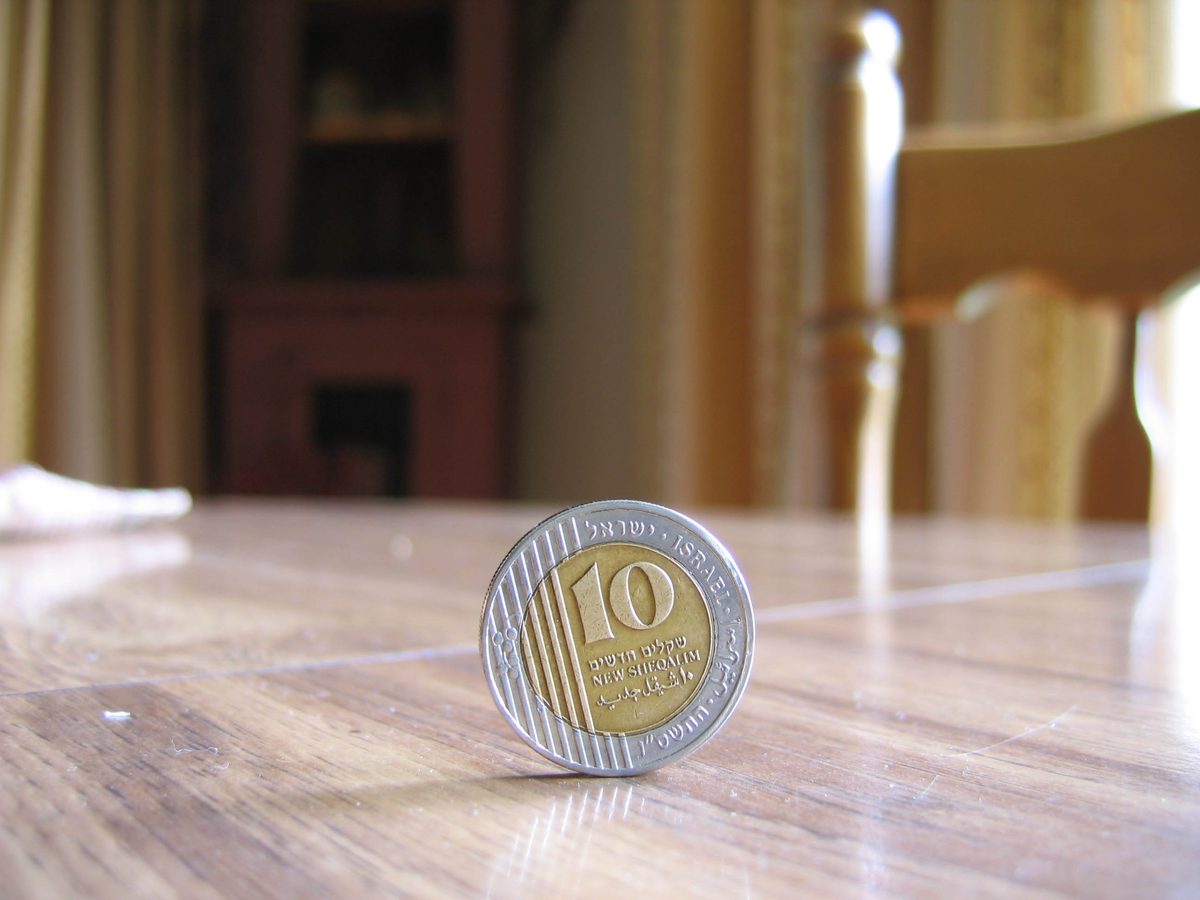
A coffee in Tel Aviv, a bag of spices in Jerusalem, a fresh pomegranate juice at the market. Your first purchases in Israel will introduce you to the shekel, and perhaps leave you wondering why the same currency has several different names. Here’s how to recognize Israeli money and feel comfortable using it throughout your trip. What Currency Does Israel Use? Israel’s currency is the Israeli new shekel, usually called the shekel. Its international currency code is ILS, its symbol is ₪, and the abbreviation NIS stands for New Israeli Shekel. All three refer to the same money. A price of ₪50 means 50 shekels, whether a menu writes it as ILS 50 or NIS 50. One shekel is divided into 100 agorot, the equivalent of cents. You may also see the Hebrew abbreviation ש״ח on signs and receipts. Knowing these few labels makes shopping much easier, especially when you move between tourist attractions and neighborhood businesses. If you’re still getting your bearings, our guide to visiting Israel for the first time is a useful place to start planning the rest of your trip. Israeli Banknotes and Coins: What to Look For The current banknote series has four denominations. Each features a Hebrew poet, with a different dominant color to help distinguish the notes. Israeli banknotes at a glance BanknoteMain colorPortrait₪20RedRachel Bluwstein₪50GreenShaul Tchernichovsky₪100OrangeLeah Goldberg₪200BlueNathan Alterman Check the printed denomination rather than relying on color alone. The Bank of Israel’s banknote guide also explains the security features you can look for. Which Coins Are Used in Israel? A 10-shekel coin (Photo: Soap, Public domain, via Wikimedia Commons; coin design © Bank of Israel) The everyday coin denominations are 10 agorot, half a shekel, and 1, 2, 5 and 10 shekels. The half shekel is worth 50 agorot, so a coin marked ½ is worth ₪0.50. A 10 agorot coin is worth ₪0.10, not 10 shekels. That is the distinction most worth remembering when sorting your change. Keep some smaller notes handy. Paying for a modest purchase with ₪20 or ₪50 is more convenient than asking a stallholder to break a ₪200 note. Should You Use Cash or Credit Cards in Israel? Shekel prices at a spice shop in Mahane Yehuda Market, 2019 (Photo: Bahnfrend, CC BY-SA 4.0, via Wikimedia Commons) Credit cards are widely accepted in Israel, making them convenient for many hotel, restaurant and shop payments. Still, acceptance is not universal. Ask before ordering or buying if you are relying on a particular card, especially for a small purchase. A combination of a card and some shekels gives you more flexibility. Cash is useful for tips, small transactions and businesses that do not accept your card. At a market such as Mahane Yehuda, check how a vendor takes payment before you start choosing your purchases. For a day exploring Jerusalem, think about the expenses outside your main booking: lunch, a drink, a souvenir or an optional tip. Our Jerusalem Full Day Tour page recommends bringing some local cash for lunch and purchases. Check your own tour’s inclusions before deciding how much to bring. How Much Cash Should You Carry? There is no single amount that suits every traveler. A person with accommodation and tours already paid for has different needs from someone paying for most of the trip on arrival. As a practical starting point, set aside enough shekels for your first day’s expected small purchases and a backup payment. Add more if you plan to shop at markets or pay for meals in cash. This is a planning approach, not an estimate of daily travel costs. Carry a manageable amount and keep a second payment method available separately. Where Can You Exchange Money in Israel? You can exchange foreign currency at banks, post offices and licensed currency exchange businesses. Before handing over your money, ask a straightforward question: “How many shekels will I receive in total?” Compare that final amount for the same sum of foreign currency. A sign advertising no commission does not tell you everything, because the exchange rate itself also affects what you receive. Keep the receipt and count the money before leaving. It can be convenient to arrange a small amount of local cash for arrival, then compare options once you have settled in. Avoid changing your entire travel budget at the first counter simply because it is available. Israeli Currency to USD: Checking the Exchange Rate For a current reference, consult the Bank of Israel’s exchange rates. Its representative rate is a reference point, rather than a guaranteed rate for your transaction. The rate and fees offered by a bank, card issuer or exchange business may differ. When comparing shekels with dollars, check which way the rate is displayed. “Shekels per dollar” tells you how many shekels one dollar buys before applicable charges. Your final card charge can also depend on the issuer’s conversion and fees. Using ATMs in Israel Bank ATMs in Tel Aviv (Photo: Rakoon, CC0, via Wikimedia Commons) ATMs are available around Israel, including at Ben Gurion Airport. Before traveling, check that your card supports overseas cash withdrawals, confirm your PIN and ask your issuer about withdrawal limits and fees. Bank ATMs and independently operated machines may charge differently. Review the fee shown before confirming, and remember that your own bank may add a separate charge. A withdrawal that looks inexpensive on the screen can still have costs at the issuer’s end. Should You Choose Shekels or Your Home Currency? A payment terminal or ATM may offer to convert the transaction into your home currency. This service is called dynamic currency conversion, or DCC. The familiar currency can make the amount easier to understand, but the conversion may include a markup. Look at the offered rate and charges before accepting. Choosing ILS and declining the terminal’s conversion generally leaves conversion to your card issuer. Whether that costs less depends on the respective rates and fees, so check your card’s terms before your trip. The ATM’s withdrawal fee and any issuer charges are separate considerations. Can You Use US Dollars or Euros in Israel? Some businesses serving tourists may accept dollars or euros, but you should plan to use shekels for everyday cash purchases. Foreign currency acceptance is a business decision, not something to assume at every shop or restaurant. If a seller accepts foreign cash, confirm the exchange rate and the currency of your change before paying. You may receive change in shekels. Also check the currency shown on booking confirmations: an online price quoted in dollars does not mean that dollars are the everyday currency at your destination. A Little History Behind the Shekel The new shekel replaced the previous shekel in September 1985, at a rate of one new shekel to 1,000 old shekels. Today’s coins carry small glimpses of Israel’s history: the one shekel coin features a lily, while the half shekel features a lyre. The banknotes turn the spotlight toward poetry. Take a moment to look at the money in your hand before spending it. Between a market visit, a museum and a walk through Jerusalem, it offers another small connection to the country you are exploring. Ready to Explore Israel? A little preparation makes paying your way straightforward: recognize the shekel, carry a useful mix of notes and coins, and understand your card’s overseas fees. Then you can give your attention to the places, flavors and people that brought you here. Explore Jerusalem with Bein Harim’s guided Jerusalem tour, and check the booking details for the expenses you will need to cover along the way.
By Admin

Israel Flag Meaning: Colors, Symbols, and History

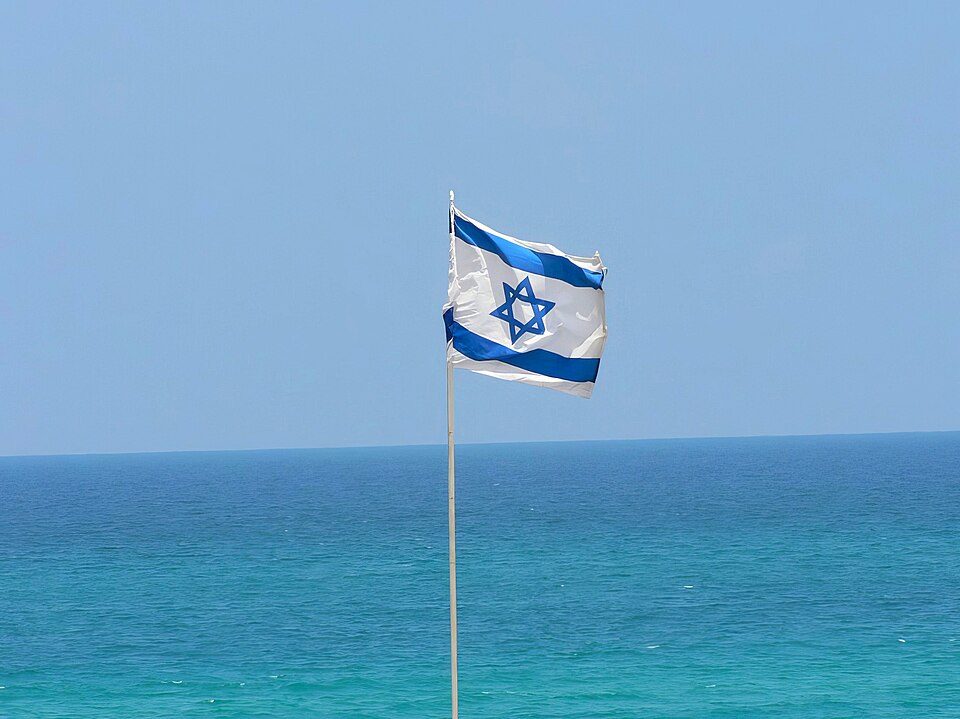
Look up while walking through Jerusalem or Tel Aviv, and you will soon spot blue and white against the sky. Israel’s flag is instantly recognizable, but its familiar design carries a story that began before the country itself. A prayer shawl, a six-pointed star, and the search for a shared national symbol all helped shape the flag travelers see today. What does the Israeli flag mean? Its two blue stripes were inspired by the Jewish prayer shawl, or tallit, while the central Star of David represents Jewish identity and peoplehood. The design developed as a Zionist symbol before being officially adopted as Israel’s national flag on October 28, 1948. Why Is the Israeli Flag Blue and White?The flag of Israel (Photo: MathKnight and Zachi Evenor, CC BY-SA 4.0, via Wikimedia Commons) The blue and white colors of Israel’s flag come from Jewish religious and cultural traditions, especially the tallit. This prayer shawl provided the inspiration for the white field and horizontal blue stripes. Taking a garment associated with prayer and turning it into a public banner connected a familiar expression of Jewish life with a modern national movement. A tallit, the Jewish prayer shawl The relationship is easiest to see when a tallit is unfolded. Stripes frame a broad area of white fabric, much as they do on the flag. Prayer shawls vary in appearance, and many have black rather than blue stripes. The flag draws on the blue and white tradition rather than reproducing every kind of tallit. Blue also has a biblical connection through tekhelet, the blue thread prescribed for the fringes of a garment. In the King James Version, Numbers 15:38 instructs the Israelites: “that they put upon the fringe of the borders a ribband of blue” Numbers 15:38, KJV The passage concerns fringes, not a national flag. Its relevance is the religious tradition behind the prayer shawl that later inspired the design. This distinction matters: the modern flag has biblical associations, but the Bible does not describe its layout. White is often associated with purity, and blue can evoke the sky or spiritual aspiration. Such interpretations add meaning for many people, but the clearest historical explanation for the colors and stripes remains the tallit. The design is also based on a recognizable piece of Jewish material culture, something you can explore further through the Jewish Art and Life collections at the Israel Museum in Jerusalem. What Does the Star on Israel’s Flag Mean?The flag’s design: tallit stripes and a Star of David The six-pointed star at the center of the flag is the Star of David, called Magen David in Hebrew, meaning “Shield of David.” Formed from two overlapping triangles, it became a widely recognized symbol of the Jewish people before appearing on the national flag. Its history is more complicated than its name might suggest. The six-pointed shape has appeared in different cultures and religious settings. Over time, it gained a particular role in Jewish communal life, appearing on flags, synagogue decoration, books, and ceremonial objects. Jewish communities in Prague were important in that development. Legends associate the emblem with King David’s shield, but the name should not be treated as archaeological evidence that the biblical king carried this design. Its use as a broadly recognized Jewish emblem developed much later than David’s lifetime. On the Israeli flag, it represents Jewish identity and collective belonging. Travelers will encounter the motif beyond the flag, including on synagogue buildings and jewelry. Even Magen David Square in Tel Aviv takes its name from the six streets meeting there in a star-like arrangement. Recognizing the symbol makes details of the country’s streets and buildings easier to read. The star should also be distinguished from Israel’s state emblem. The flag features a Star of David; the state emblem features a menorah flanked by olive branches. They are separate national symbols with different histories. The History of the Israeli Flag The Israeli flag did not emerge in a single moment. Its story moves from early expressions of Jewish national identity to the Zionist movement and, eventually, the establishment of the state. YearMilestone1885A blue and white flag resembling the later national design is raised in Rishon LeZion.1891A blue and white flag with a Star of David is raised in Ness Ziona.1897The familiar design is used at the First Zionist Congress in Basel.May 14, 1948The blue and white flag appears at Israel’s declaration of independence.October 28, 1948The Provisional Council of State formally adopts Israel’s national flag. Blue and White Flags Before 1897 One important early example appeared in Rishon LeZion in 1885. Israel Belkind and Fanny Meirovitch prepared a flag for celebrations marking the community’s third anniversary. It used white fabric, blue stripes, and a central Star of David, drawing on the appearance of a prayer shawl. Another milestone came in Ness Ziona in 1891, when Michael Halperin raised a blue and white flag bearing a Star of David. These examples show that the visual language was already developing before the First Zionist Congress. The design had roots in the communities and aspirations of the period. David Wolffsohn and the First Zionist Congress David Wolffsohn is closely associated with the flag used at the First Zionist Congress in Basel, Switzerland, in 1897. In his later account of preparing for the congress, he described turning to the tallit for inspiration and ordering a blue and white flag with a Star of David. Theodor Herzl had proposed a different design: a white flag with seven gold stars, representing a seven-hour working day. The familiar blue and white banner connected more directly with existing Jewish symbols. Wolffsohn’s role was significant, but the earlier flags help explain why calling him the design’s sole inventor would oversimplify its history. The Official Adoption of the Flag in 1948 When Israel declared independence in Tel Aviv on May 14, 1948, blue and white flags framed the ceremony. They were already familiar as symbols of the Zionist movement, but their formal adoption as the state flag came several months later. On October 28, 1948, the Provisional Council of State officially adopted the design. The proclamation specified a white background, two blue stripes, and a central Star of David. It also defined the flag’s proportions and the placement of its elements. The distinction between May and October answers a common point of confusion. The flag was present at the founding ceremony before it received its formal status as the national flag. Its adoption joined a new state with a symbol that many Jews already knew. Explore Israel’s History with Bein Harim Once you know its story, the blue and white flag becomes more than a familiar shape in a photograph. It connects the prayer shawl and Jewish communal traditions with the national movement and events that shaped modern Israel. Discover more of that history through our day tours in Israel, exploring ancient places, sacred landmarks, and the stories behind them with a guide. If Jewish heritage or modern Israeli history is a particular interest, contact us to discuss a private itinerary that brings those interests into your visit.
By Asaf Ben Ari

The Jerusalem Cross: Meaning, History and Its Connection to the Holy Land

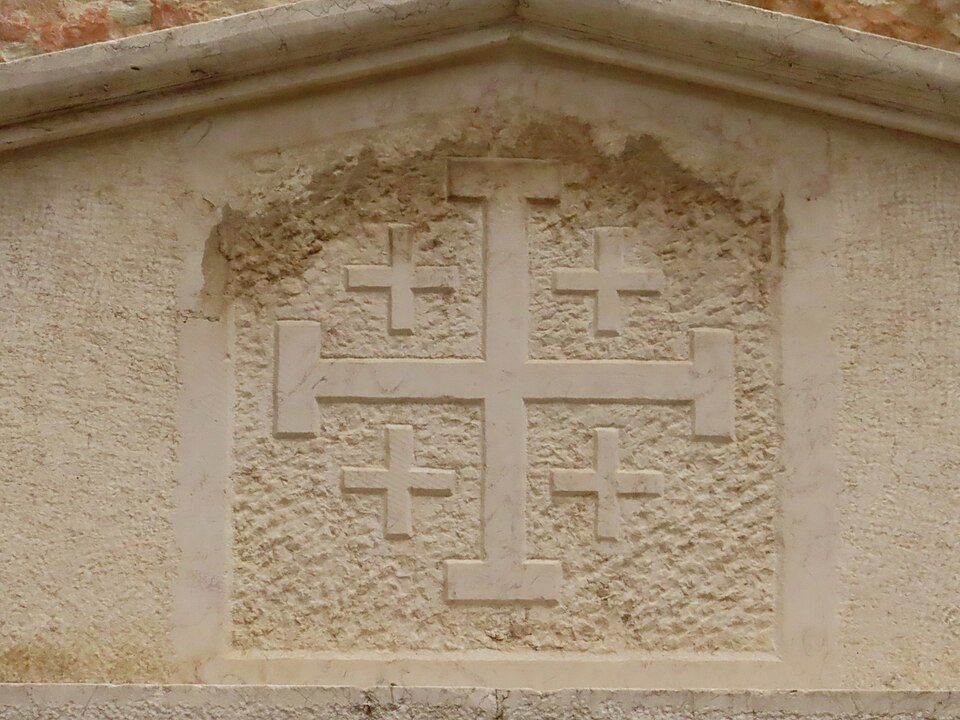
Look closely as you walk through Jerusalem, and you may notice a cross unlike any other: one large cross surrounded by four smaller ones. It appears on churches, pendants, carved wooden keepsakes, and even on the skin of pilgrims. Known as the Jerusalem Cross, this simple design carries centuries of history and, for many Christians, a deeply personal connection to the Holy Land. What Is the Jerusalem Cross?A Jerusalem Cross on St. Francis Street (Photo: Fallaner, CC BY-SA 4.0, via Wikimedia Commons) The Jerusalem Cross is a Christian symbol made up of one large central cross with four smaller crosses in the spaces around it. The central cross often has short bars at the ends of its arms, a design known in heraldry as a cross potent. The smaller crosses usually have four arms of equal length. You may also hear it called the Five-Fold Cross or the Crusader’s Cross. Its connection to Jerusalem runs through medieval history, Christian pilgrimage, and the churches that continue to care for holy places in the city today. What Does the Jerusalem Cross Mean?The five-cross design (Photo: Nafsadh, Public domain, via Wikimedia Commons) For many Christians, the Jerusalem Cross is a reminder of Jesus, His Passion, and the faith that spread from Jerusalem to the world. The following interpretations are traditions associated with the symbol. They help explain what it means to believers, although they do not establish a single, certain explanation for how the design first arose. The Five Wounds of Christ One of the best-known interpretations connects the five crosses with the wounds Jesus received during the Crucifixion: those associated with His hands, feet, and side. For pilgrims, the symbol can bring to mind both His suffering and the hope of the Resurrection. In the Gospel of John, the risen Jesus invites Thomas to look at His wounds: “Reach hither thy finger, and behold my hands” (John 20:27, KJV). The verse itself does not describe the Jerusalem Cross. Rather, the connection between the wounds and the five crosses developed through Christian tradition. In Jerusalem, that association can feel especially close when visiting the Church of the Holy Sepulchre, revered by many Christians as the place of the Crucifixion, burial, and Resurrection. Jesus and the Four Evangelists Another interpretation sees the large central cross as a symbol of Jesus and the four smaller crosses as Matthew, Mark, Luke, and John, the authors traditionally associated with the four Gospels. Each Gospel offers a distinctive account of Jesus’ life and ministry, while together they carry His story to readers around the world. The Gospel Reaching the Four Corners of the World A third interpretation links the central cross with Christ and Jerusalem, while the four smaller crosses represent the spread of the Gospel in all directions. It is an image of faith traveling outward from the Holy City to communities across the world. Christians may associate this interpretation with Jesus’ instruction to His disciples: “Go ye therefore, and teach all nations” (Matthew 28:19, KJV). The History of the Jerusalem Cross The Jerusalem Cross is closely associated with the medieval Kingdom of Jerusalem, established after the First Crusade captured the city in 1099. Its familiar form became part of the kingdom’s heraldic tradition, and the emblem continued to develop and spread in the centuries that followed. Its precise origins, however, are not known with certainty. Cross designs with smaller marks or crosses appeared in different places and periods, and historians do not all agree on how they relate to the Jerusalem Cross known today. The recognizable five-cross emblem is documented in association with claims to the Kingdom of Jerusalem by the late 13th century. It is therefore difficult to say that one person invented the design or that every crusader carried this exact symbol. For generations of pilgrims, the cross became a sign of devotion and a reminder of their journey to the Holy Land. Why Is It Also Called the Crusader’s Cross? The name reflects the cross’s association with the Kingdom of Jerusalem and the Crusader period. On historical coats of arms, a gold version of the central cross and four smaller crosses appeared against a silver or white background. Red versions are also familiar today. The term “Crusader cross” can be used for different cross designs, so a cross associated with the Crusades is not always the same as the Jerusalem Cross. Today, the five-cross symbol holds spiritual meaning for many Christians who connect it with Jerusalem, the Passion of Jesus, and pilgrimage. Is the Jerusalem Cross Catholic? The Jerusalem Cross has a strong association with Catholic communities, especially the Franciscans and the Order of the Holy Sepulchre. It is also worn and appreciated by Christians from other traditions as an expression of faith and a connection to the Holy Land. The Jerusalem Cross and the Custody of the Holy LandCustody of the Holy Land emblem, Christian Quarter (Photo: Deror avi, CC BY-SA 3.0, via Wikimedia Commons) The Custody of the Holy Land, the Franciscan community entrusted with caring for many Christian holy places, uses a red Jerusalem Cross as one of its symbols. In its broader emblem, the cross can appear alongside other Franciscan imagery. The Jerusalem Cross itself and the complete Franciscan emblem are therefore related, but they are not identical. Franciscan history is woven into many of the churches of Jerusalem’s Old City. As you explore, looking for the symbol can offer a new way to notice the communities and traditions connected to these places. Where Can You See the Jerusalem Cross in Jerusalem? In Jerusalem, the cross is not confined to museums or history books. Look for it on religious objects, church-related buildings, and items displayed in shops around the Old City. One documented example forms part of a Franciscan emblem at St. Saviour Monastery, near the New Gate in the Christian Quarter. The monastery is associated with the Custody of the Holy Land. Access to religious buildings and the visibility of individual details can change, so ask a local guide what can be seen during your visit. The cross also connects pilgrims with the Church of the Holy Sepulchre, where communities gather for prayer at a site central to the story of Jesus’ Passion and Resurrection. Walking the Stations of the Cross through the Old City offers another opportunity to reflect on that story. The Jerusalem Cross as a Pilgrimage Tattoo For some pilgrims, a Jerusalem Cross is more than something to take home. It becomes a permanent reminder of the journey itself. Christian pilgrimage tattoos have a long history in Jerusalem. Crosses and other religious designs have been used to commemorate a visit to the Holy Land, sometimes with the year of the journey included. Today, the Jerusalem Cross remains one of the designs chosen by visitors who want a lasting expression of faith or a reminder of their time in the Holy City. Some Jerusalem tattoo artists preserve designs on carved wooden blocks, connecting present-day visitors with an older craft. Where Can You Buy a Jerusalem Cross in the Holy Land?A Jerusalem Cross pendant, Auckland Museum (Photo: Auckland Museum, CC BY 4.0, via Wikimedia Commons) You can find Jerusalem Cross necklaces, pendants, wall crosses, and other keepsakes in religious gift shops in Jerusalem’s Old City and in Bethlehem. Some are carved from olive wood; others are made from silver, metal, or mother-of-pearl. Each material gives the familiar design a different appearance, from a simple wooden cross to a detailed piece of jewelry. If buying a locally made item matters to you, ask the seller where it was made, what material it contains, and whether it was carved or assembled by hand. It is a good opportunity to learn about the craft behind the keepsake as well as the symbol itself. Many pilgrims like to choose a Jerusalem Cross during their visit and carry it with them to the Church of the Holy Sepulchre and other sacred places in Jerusalem. For some, praying with the cross at these sites gives their keepsake a deeper spiritual meaning and creates a lasting connection to their journey. On a Bein Harim Jerusalem tour, you are welcome to ask your guide whether there will be an opportunity to purchase a cross during the day. Shopping time depends on the itinerary and the time available. Our Jerusalem Day Tour includes the Church of the Holy Sepulchre in its listed itinerary, although access and the order of visits can vary. Discover Jerusalem with Bein Harim A Jerusalem Cross can be a small reminder of an extraordinary journey. In Jerusalem, the meaning behind it comes into focus as you walk the Old City, visit places connected with the Gospels, and hear the stories of the communities that have welcomed pilgrims for generations. Explore the Old City and the Church of the Holy Sepulchre on our Jerusalem Day Tour, or follow more sites associated with Jesus’ ministry on our Christian Jerusalem Jesus Tour. Each itinerary is different, so check its details when choosing your visit. Planning your journey to the Holy Land? Contact us and we’ll help you find the Jerusalem tour that suits your interests.
By Asaf Ben Ari

Olive Wood Carvings from the Holy Land: A Traveler’s Guide

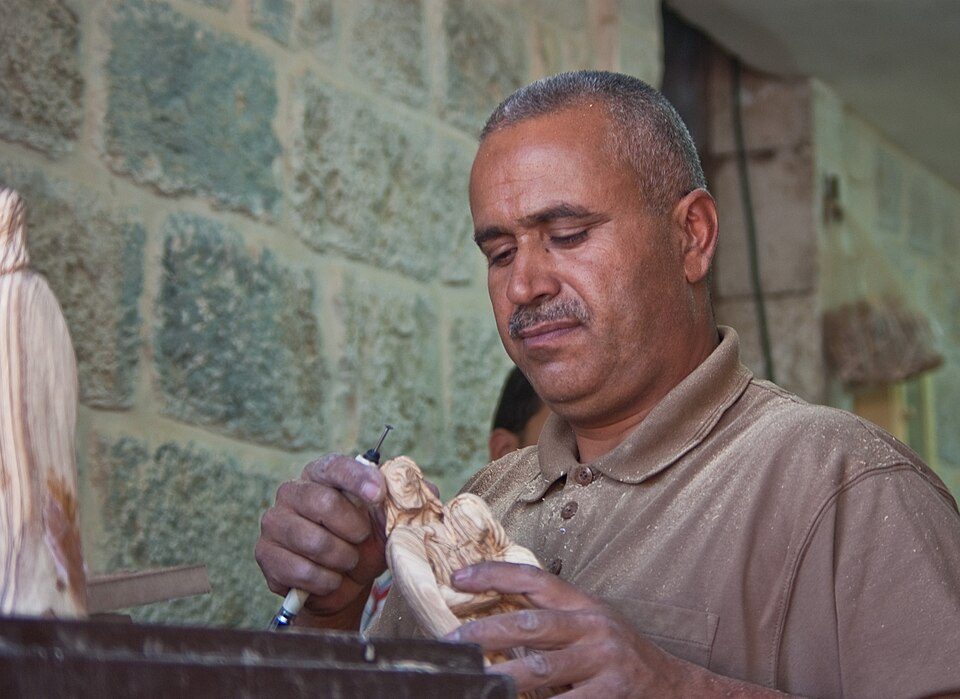
A small wooden cross can carry the memory of an entire journey. A nativity set can bring Bethlehem into a family’s Christmas traditions for years to come. Olive wood carvings from the Holy Land connect faith, craftsmanship, and place. Knowing a little about the people who make them, and what to look for, helps you choose something worth bringing home. What Makes Holy Land Olive Wood Carvings Special?An olive wood carver in Bethlehem (Photo: Antoine Taveneaux, CC BY-SA 3.0, via Wikimedia Commons) Olive wood has a warm color and flowing grain, so even two carvings of the same design can look different. Turn a piece slowly in your hands and notice how the darker lines follow its shape. Sometimes that natural pattern is as striking as the carving itself. For Christian travelers, the material also carries biblical associations. In Genesis, the dove returns to Noah with an olive leaf, a sign that the floodwaters are receding: “and, lo, in her mouth was an olive leaf pluckt off:” (Genesis 8:11, KJV) Those associations help explain the appeal of olive wood crosses, rosaries, and nativity scenes. Their meaning comes from faith, personal memory, and the craft behind them. A carving’s place of purchase does not, by itself, establish where its wood grew or who made it. Bethlehem’s Olive Wood Carving TraditionOlive groves near Bethlehem, around 1900 (Photo: Matson Collection, Public domain, via Wikimedia Commons) Bethlehem and neighboring communities in the West Bank, including Beit Sahour, are home to a living tradition of olive wood craftsmanship. Palestinian Christian artisans produce religious figures, Christmas ornaments, crosses, and other objects, often through family workshops where skills pass between generations. Much happens before the finishing touches appear. Wood must be selected and dried, a design shaped, and surfaces refined. Bethlehem Fair Trade Artisans describes using local olive tree trimmings that are stored to dry before its producers work with them. Individual workshops have their own sourcing and production practices, so ask about the particular piece you are considering. The label “handmade” can cover different processes. Ask which stages were carved by hand and whether machinery helped shape the initial form. An honest explanation is more useful than a sweeping claim. Buying a locally made piece can support the people who continue this craft, especially when the seller can identify the workshop behind it. Which Olive Wood Gifts Should You Choose?Hand-carved wooden Nativity figures Think about the recipient before the size of your suitcase. Would they use the object in prayer, display it at Christmas, or simply appreciate its craftsmanship? A smaller piece chosen with care can be more meaningful than an elaborate carving that does not suit their home or religious tradition. GiftWho might appreciate it?What to checkCross or crucifixSomeone choosing a personal prayer object or home displayPreferred design, smooth edges, and hanging hardwareNativity setA family building a Christmas traditionIncluded figures, display space, and protective packingRosarySomeone who prays the Catholic rosaryComfortable beads, secure links, and a protective pouchSmall ornament or figureA friend with limited space or a traveler packing lightDelicate details and how safely it can travel Olive Wood Crosses and Crucifixes A plain cross and a crucifix are different designs: a crucifix includes a figure of Christ. Preferences vary between individuals and Christian traditions, so choose with the recipient in mind. Options include wall crosses, standing pieces, pendants, and rounded comfort crosses designed to rest in the hand. With an olive wood cross, examine the edges and finish as well as the front. A handheld piece should feel comfortable. A wall cross needs a secure hanging point, while a standing crucifix should sit steadily on a level surface. Olive Wood Nativity Sets An olive wood nativity set has an especially strong connection with Bethlehem. Designs range from a compact Holy Family group to larger scenes with shepherds, animals, and the Magi. Some emphasize detailed faces and clothing; others use simple, flowing shapes. Before choosing a hand carved olive wood nativity set, confirm exactly which figures and structures are included. Check whether the figures are fixed or removable, and measure the space needed for display. Examine slender staffs, animal legs, and projecting details that will need protection during travel. Olive Wood Rosaries An olive wood rosary combines wooden beads with a devotional practice rooted in Catholic prayer and reflection on the life of Christ. It can be a thoughtful gift for someone who already prays the rosary or is preparing for an important milestone in their faith. Run the beads gently through your fingers. Check for rough spots, loose connections, and a firmly attached crucifix. Ask for a pouch or box to keep the rosary from catching on other belongings. How to Choose a Well-Made Olive Wood Carving Start by looking beyond the most visible surface. Check the underside, joints, and thin sections. Natural grain variation is part of wood’s character; an unstable base, a loose attachment, or a split through a fragile detail deserves a closer look. Useful questions to ask the seller include: Who made this piece, and where is the workshop? Where was the wood sourced? Which stages were completed by hand? What finish was used, and how should I care for it? Can the receipt identify the item and its maker? Grain, color, and scent alone cannot prove that an object was made in Bethlehem. Clear information about the maker is more helpful. Price also reflects size, detail, finish, and production method, so compare similar pieces rather than assuming the largest or most expensive is the most authentic. Buying Olive Wood Carvings in Bethlehem and JerusalemA souvenir shop in Jerusalem’s Old City In Bethlehem, look for sellers who can explain their connection to local makers. Ask whether the shop produces its own pieces or stocks work from several workshops. A visible carving demonstration can be interesting, but still ask who made the specific object you plan to buy. Jerusalem’s Old City market also offers religious gifts. Shopping there may fit naturally into a day exploring the Christian Quarter. Wherever you buy, allow time to compare workmanship, ask questions, and arrange suitable packaging. Some pilgrims choose to buy an olive wood cross, rosary, or other religious keepsake before visiting the Church of the Nativity in Bethlehem or the Church of the Holy Sepulchre in Jerusalem. They bring it with them to pray, believing that sharing this moment in a holy place gives the object a special sense of sacredness and a lasting connection to their pilgrimage. Once home, it becomes a reminder of that prayer as well as the journey. Those seeking a church blessing for their purchase can ask a priest or church staff about the appropriate arrangements. If buying a particular carving or meeting an artisan matters to you, discuss it before booking your itinerary. A sightseeing tour may have limited flexibility, and a workshop visit should be arranged and confirmed separately. For other gift ideas, see our guide to souvenirs in Israel. Packing and Caring for Your Olive Wood Souvenir Ask the seller to wrap separate nativity figures individually and protect projecting details. Keep small parts together, photograph the complete purchase, and retain the receipt. For a large piece, confirm shipping costs, insurance, and responsibility for damage before paying. At home, dust gently with a soft cloth and keep the carving away from direct heat and prolonged strong sunlight. Follow the maker’s instructions for its particular finish. Avoid applying household oils or cleaners without checking first, especially on painted, varnished, or inlaid pieces. Discover Bethlehem Beyond the Souvenir ShopsChurch of the Nativity, Bethlehem A nativity set takes on a different meaning after a visit to Bethlehem. The carved figures recall a story you have encountered in the city itself, while the object also connects you with the people who live and work there today. Make Bethlehem part of your Holy Land journey with our Bethlehem and Jericho Tour. The tour combines Manger Square and the Church of the Nativity with Jericho and Qasr al-Yahud on the Jordan River, linking several important biblical places in one day. Prefer to combine Bethlehem with Jerusalem’s Old City? Explore our Jerusalem and Bethlehem Tour, which includes the Western Wall, Via Dolorosa, Church of the Holy Sepulchre, and Bethlehem’s Church of the Nativity. Choose your route and check availability for your travel dates. Access and itineraries are subject to current conditions. If an olive wood workshop visit is a priority, contact us before booking to discuss your interests. Workshop visits require advance coordination and confirmation.
By Asaf Ben Ari

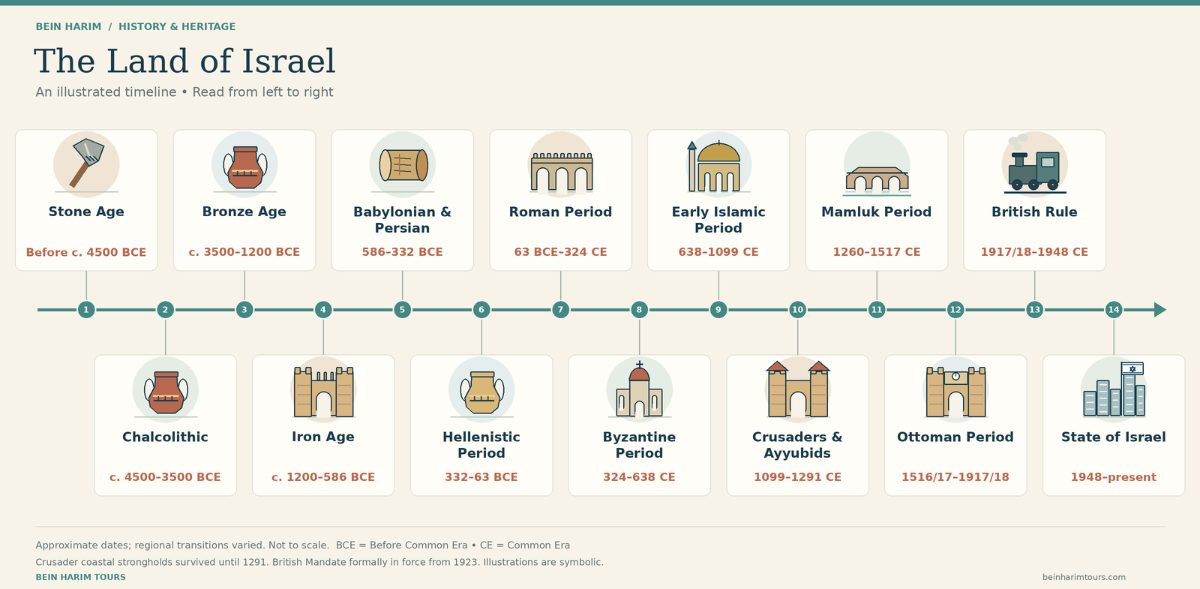
History of Israel: From the Stone Age to the Modern State

In Jerusalem, a short walk can take you past Roman remains, a medieval church, and Ottoman walls. Along the coast, Crusader halls lie beneath a living city. This Israel history timeline follows the land from its earliest communities to the modern state, connecting each era with something you can recognize on your journey. Here, “the Land of Israel” describes a historical landscape, not one country with fixed borders throughout time. Its boundaries, populations, and names changed repeatedly. Archaeological periods describe material culture, while other period names refer to governments or religious history. That is why some dates overlap. Israel History Timeline at a GlanceIsrael history timeline at a glanceDownload the full-size timeline Dates are approximate, especially in prehistory. Political transitions also occurred at different times in different cities. BCE and CE mean Before the Common Era and Common Era. PeriodApproximate DatesWhat ChangedPlaces to ExploreStone AgeBefore c. 4500 BCEHunting, gathering, then farmingNahal Me'arot; museum collectionsChalcolithicc. 4500–3500 BCECopper working alongside stone toolsIsrael MuseumBronze Agec. 3500–1200 BCECanaanite cities and international tradeMegiddo, HazorIron Agec. 1200–586 BCEIsrael, Judah, and neighboring peoplesJerusalem, Lachish, Tel DanBabylonian and Persian586–332 BCEExile, return, and rebuildingJerusalem; museum collectionsHellenistic and Hasmonean332–63 BCEGreek influence and Jewish independenceBeit Guvrin; museum collectionsRoman63 BCE–c. 324 CEHerodian building, Christianity, revoltsCaesarea, Masada, JerusalemByzantinec. 324–638 CEPilgrimage churches and mosaic artJerusalem, Tzipori, Beit AlphaEarly Islamicc. 638–1099Caliphates and new religious landmarksJerusalem, RamlaCrusader and Ayyubid1099–1291, with regional changesCompeting kingdoms and fortificationsAcre, BelvoirMamlukc. 1260–1517New rulers, trade routes, institutionsJerusalemOttoman1516/17–1917/18Imperial administration and urban growthJerusalem, Acre, JaffaBritish administration and Mandate1917/18–1948New institutions and national movementsTel Aviv, JerusalemModern State of Israel1948–presentStatehood and a changing societyTel Aviv, Jerusalem, museums The Stone Age: The First People and Farming Communities (Before c. 4500 BCE)Stone Age life, as imagined in the 1880s (Photo: Viktor Vasnetsov, Public domain, via Wikimedia Commons) The Stone Age takes its name from the stone tools used by early humans, long before recorded history. Israel's human story begins long before kings, writing, or the biblical kingdoms. During the Paleolithic, or Old Stone Age, people hunted, gathered plants, and made tools from stone. Caves and open settlements preserve evidence of lives stretching back hundreds of thousands of years. The later Natufian culture helps explain the transition toward more settled communities. During the Neolithic, or New Stone Age, farming and animal domestication gradually transformed daily life. Growing food encouraged villages, storage, and new relationships with the landscape. At Nahal Me'arot on Mount Carmel, visitors can explore prehistoric caves and see displays explaining the people who once lived there. The site includes evidence of Natufian life, bringing the long transition toward settled communities into focus. The Chalcolithic Period: Stone Meets Copper (c. 4500–3500 BCE) The Chalcolithic is identified by gradual changes in material culture, including early copperworking. Often called the Copper Age, it brought metalworking into societies that continued using stone tools. Agricultural villages supported craftspeople, exchange networks, and increasingly elaborate ritual objects. At the Israel Museum in Jerusalem, the archaeology collection includes objects from the Nahal Mishmar hoard, discovered in a Judean Desert cave. Its elaborate copper pieces reveal the skill of Chalcolithic craftspeople. Exhibits can change, so check the museum before visiting. The Bronze Age: Canaanite Cities and Egyptian Influence (c. 3500–1200 BCE)Syrian traders in an Egyptian tomb painting (Photo: Nina M. Davies, CC0, via Wikimedia Commons) Changes in settlement and material culture mark the beginning of the Bronze Age. Bronze metallurgy developed gradually, rather than appearing everywhere at once. During this period, the landscape developed networks of towns and fortified cities. Canaan was not one unified kingdom. Its city rulers negotiated, traded, and fought, while larger powers influenced the region. Egyptian domination became particularly important during the Late Bronze Age. Tel Megiddo preserves Canaanite remains, including the foundations of a palace and ancient gates. Hazor is another major site with Bronze Age layers. An archaeological mound, or tel, formed as people repeatedly rebuilt in the same place. Its layers reveal successive cities. A gate, palace, and water system at one site may belong to different periods. Look for their dates as you explore. The Iron Age: Ancient Israel and Judah (c. 1200–586 BCE) The Iron Age begins around the end of the Bronze Age, amid regional upheaval and changing settlements. Iron tools became widespread gradually, not all at once. New communities and political structures emerged. The Iron Age includes the development of ancient Israel and Judah, alongside Philistine, Phoenician, and other neighboring societies. The Bible places Saul, David, and Solomon within this world. Archaeologists study settlements, inscriptions, pottery, and fortifications to understand it; the extent and development of the earliest monarchy remain debated. Biblical narrative and archaeological interpretation should be distinguished, even when they illuminate the same landscape. Assyria conquered the northern kingdom in the eighth century BCE. Babylon destroyed Jerusalem and the First Temple in 586 BCE. At Tel Lachish, visitors can see the Judahite city gate and the Assyrian siege ramp, physical reminders of the campaigns against Judah. Jerusalem and Tel Dan offer other perspectives on the period. For related background, read our guide to biblical Israel and modern Israel. Babylonian and Persian Rule: Exile and Return (586–332 BCE)The Cyrus Cylinder, British Museum (Photo: Mike Peel, CC BY-SA 4.0, via Wikimedia Commons) Babylon's destruction of Jerusalem in 586 BCE marks the start of the Babylonian phase. The conquest ended the kingdom of Judah and brought deportation and major changes to Jerusalem. It did not remove every inhabitant from the land. Rural communities and local life continued amid the upheaval. Persian rule began after Cyrus conquered Babylon in 539 BCE. Returning Judean communities rebuilt religious and civic institutions, including the Second Temple, traditionally dated to 516/515 BCE. Ezra presents the invitation to return with the words “let him go up to Jerusalem” (Ezra 1:3, KJV). The Second Temple period spans Persian, Hellenistic, Hasmonean, and Roman rule until the Temple's destruction in 70 CE. The Israel Museum's collection includes Persian-period finds, including a pottery figurine from Tel Dor. Its model of Jerusalem depicts the city centuries later, around 66 CE. It is a reconstruction, not surviving Temple remains. The Hellenistic Period and the Hasmonean Dynasty (332–63 BCE)Alexander enters Babylon, a 1665 painting (Photo: Charles Le Brun, Public domain, via Wikimedia Commons) Alexander the Great's conquest in 332 BCE marks the beginning of the Hellenistic period. It brought the region into a Greek political and cultural sphere. After his death, rival successor kingdoms competed for control. Greek language, urban institutions, and artistic styles influenced local communities without making their identities uniform. The Hasmonean Dynasty and the Story of Hanukkah (Revolt from 167 BCE; rule until 63 BCE) The Maccabean revolt began in 167 BCE against Seleucid policies and religious persecution. The Temple's rededication became central to Hanukkah. Hasmonean rulers gradually established an independent Jewish state and expanded its territory. The Hasmonean kingdom developed over decades. At Beit Guvrin-Maresha National Park, the painted Sidonian burial caves and underground spaces at Maresha offer a glimpse of life in the Hellenistic period. The Roman Period: Herod, Jesus, and the Jewish Revolts (63 BCE–c. 324 CE)The Roman siege of Jerusalem, 70 CE (Photo: David Roberts, Public domain, via Wikimedia Commons) Roman dominance began with Pompey's capture of Jerusalem in 63 BCE. Rome exercised its power through local rulers and, later, direct administration. Herod the Great, a king supported by Rome, transformed the landscape with ambitious projects, including Caesarea, Masada, and the enlargement of Jerusalem's Temple complex. This is also the world of Jesus and the New Testament. Galilee and Judea formed the setting for his ministry, while Jerusalem became central to the Christian account of his death and resurrection. Identifying a biblical setting does not mean that every church now standing there dates to his lifetime. The Jewish revolt beginning in 66 CE ended with devastating losses, including the destruction of the Second Temple in 70. The later Bar Kokhba revolt began in 132. At Caesarea, the Roman theater and harbor remains reveal another side of this era. In Jerusalem, the lower stones of the Western Wall are part of the retaining wall of Herod's expanded Temple platform, not the Temple building itself. The Byzantine Period: Churches, Synagogues, and Mosaics (c. 324–638 CE)Beit Alpha synagogue mosaic (Photo: Stav Konchtyk, PikiWiki Israel, CC BY 2.5, via Wikimedia Commons) The Byzantine period is commonly dated from 324 CE, when Constantine became sole Roman emperor. The Byzantine Empire was the eastern continuation of the Roman Empire. In the Holy Land, the fourth century marks a major shift as imperial support helped Christianity reshape the religious landscape. Pilgrims traveled to sacred places, and churches developed around traditions associated with Jesus and the Bible. Jewish and Samaritan communities also continued, although their circumstances changed under different rulers. At Beit Alpha in the Jezreel Valley, visitors can see the sixth-century synagogue's mosaic floor, including the Binding of Isaac and a zodiac wheel. Tzipori preserves another remarkable synagogue mosaic. In Jerusalem, the Church of the Holy Sepulchre began as a fourth-century imperial foundation. The building visible today incorporates later rebuilding. Mosaics adorned churches, synagogues, and homes. The Early Islamic Period: A New Religious and Political Landscape (c. 638–1099 CE)The Temple Mount in a 19th-century lithograph (Photo: Louis Haghe after David Roberts, CC BY 4.0, via Wikimedia Commons) Muslim conquests during the 630s marked the beginning of the Early Islamic period. Jerusalem surrendered around 638. Successive caliphates governed a land where Muslim, Christian, Jewish, and Samaritan communities lived through changing conditions. The Umayyad caliph Abd al-Malik commissioned the Dome of the Rock, completed in 691/692 and still visible in Jerusalem today. Its exterior has been altered in later periods. The gold-domed shrine and the neighboring Al-Aqsa Mosque are distinct buildings within the same sacred compound, known to Muslims as al-Haram al-Sharif and to Jews as the Temple Mount. In Jerusalem's Ophel archaeological area, remains of Umayyad buildings south of the Temple Mount reveal another aspect of early Islamic rule. Ramla, founded as a provincial capital in the early eighth century, offers a different urban perspective. Crusaders and Ayyubids: Castles and Changing Kingdoms (1099–1291 CE, with overlapping rule)The Crusader Knights’ Halls in Acre (Photo: Heritage Conservation Accre and Surrounding, PikiWiki Israel, CC BY 2.5, via Wikimedia Commons) The First Crusade's capture of Jerusalem in 1099 began Crusader rule in the city. The Crusaders established a Latin Christian kingdom. Churches, castles, hospitals, and ports served rulers, pilgrims, merchants, and military orders. Saladin's capture of Jerusalem in 1187 brought Ayyubid rule to the city. Crusader rule did not disappear everywhere at once. Acre became the principal center of the later coastal kingdom, surviving until its capture by the Mamluks in 1291. In Acre, the medieval halls beneath the later city make these layers unusually clear. Do not assume every wall is Crusader: the living town above contains substantial Ottoman architecture. The Mamluk Period: Trade Routes and Urban Architecture (c. 1260–1517 CE) The Mamluks' victory over the Mongols at the Battle of Ain Jalut in 1260 marked a turning point in regional rule. Based in Egypt, the Mamluks established control over much of the region and eliminated the remaining major Crusader coastal strongholds by 1291. Their rule lasted until the Ottoman conquest in 1516/17. Jerusalem preserves Mamluk religious schools, gateways, and fountains. The late-fifteenth-century Fountain of Qayt Bay and Madrasa al-Ashrafiyya stand within the Temple Mount compound. Access arrangements can change; ask your guide about the current visiting conditions. The Ottoman Period: Walls, Towns, and New Neighborhoods (1516/17–1917/18 CE)Damascus Gate in Jerusalem’s Ottoman walls The Ottoman conquest of the Mamluk realm in 1516–1517 began roughly four centuries of Ottoman rule. One of its most recognizable legacies is Jerusalem's present Old City wall circuit, rebuilt under Sultan Suleiman the Magnificent in the sixteenth century. These are not the city walls Jesus would have known. In Acre, the Al-Jazzar Mosque, completed in the eighteenth century, and the city's khans and fortifications reveal its Ottoman character. In Jaffa, urban growth and maritime connections shaped a port serving pilgrims, merchants, and local communities. During the nineteenth and early twentieth centuries, new neighborhoods, institutions, and transport links changed the landscape. Jewish immigration and Zionism developed alongside existing Arab communities and other local populations. Tel Aviv began in 1909, before Ottoman rule ended, rather than with Israel's independence. British Rule and the Mandate for Palestine (1917/18–1948 CE)King David Hotel, Jerusalem, 1930s (Photo: American Colony Photo Dept., Public domain, via Wikimedia Commons) British military victories over the Ottomans in 1917–1918 began British administration. Military administration was followed by civilian administration in 1920; the League of Nations Mandate formally entered into force in 1923. “British Mandate, 1917–1948” is therefore convenient shorthand, not a precise description of every year. Government institutions, roads, and cities developed amid intensifying Jewish and Arab national aspirations. Jewish immigration, especially as persecution increased in Europe, and disputes over land, political authority, and immigration helped shape the conflict. In 1947, the United Nations recommended partition into Jewish and Arab states, with a special international arrangement for Jerusalem. Fighting preceded the end of British rule in May 1948. In Tel Aviv, the 1936 Liebling Haus and neighboring International Style buildings offer a visible connection to the Mandate years. Modern Israel: From 1948 to Today (1948–Present)Tel Aviv’s seafront promenade (Photo: Simon Cobb, CC0, via Wikimedia Commons) The modern period in this guide begins with the declaration of the State of Israel on May 14, 1948. David Ben-Gurion proclaimed the state in Tel Aviv. The war surrounding its establishment shaped the new state's institutions and borders and brought mass Palestinian displacement, remembered by Palestinians as the Nakba. Subsequent decades brought major Jewish immigration from Europe, the Middle East, North Africa, the former Soviet Union, and Ethiopia. Towns, universities, and industry grew amid continuing conflict. The 1967 war transformed territorial control; peace treaties with Egypt in 1979 and Jordan in 1994 marked major diplomatic changes. Israel today is a society of Jewish, Muslim, Christian, Druze, and other communities. On Rothschild Boulevard in Tel Aviv, the building known as Independence Hall marks the place where statehood was proclaimed. Check current access before visiting. Nearby streets, Jerusalem's neighborhoods, and museums show how recent history continues to shape everyday life. The Israeli-Palestinian conflict remains unresolved. The October 7, 2023 attacks and ensuing war are also part of this modern chapter, whose consequences continue to unfold. Explore Israel's History with Bein Harim From the ancient streets of Jerusalem to the ruins of Masada, Israel’s historical sites bring the stories of this timeline to life. Explore our Israel day tours to find a journey that matches your interests and discover the people, places, and events that shaped the land. For prehistoric sites, biblical kingdoms, museum collections, or a slower walking pace, consider a custom Israel tour. Tell us your interests, available time, and accessibility needs. Contact us to turn this timeline into a journey through the places themselves.
By Asaf Ben Ari

Is It Safe to Travel to Israel Right Now? (Updated October 2026)

Last updated: October 27, 2026 Morning coffee on a Tel Aviv sidewalk, families heading to the beach, an evening out after a day exploring Jerusalem. Everyday life in Israel offers a perspective that headlines alone can miss. If you are wondering whether it is safe to travel to Israel right now, here is a local look at the visitor experience, alongside the current information you need to plan.Jaffa’s historic port with Tel Aviv in the background, 2013.Photo: Noam.armonn / Wikimedia Commons · Source · CC BY-SA 3.0. Resized; no crop. Can You Travel to Israel Right Now? Yes, you can travel to Israel, and visitors are enjoying Jerusalem, Tel Aviv, the Dead Sea, and other popular destinations. Restaurants are open, people spend time at the beach, and cultural events and domestic soccer matches draw audiences. At Bein Harim, we welcome guests who want to experience the country for themselves, from its holy places to its everyday pleasures. Tourism is already happening on a meaningful scale. September 2026 figures reported by Trading Economics, citing Israel’s Central Bureau of Statistics, show 135,500 tourist arrivals. That works out to approximately 4,500 arrivals a day on average for the month. Our guests are part of that return, exploring Jerusalem, relaxing at the Dead Sea, and discovering Tel Aviv. What Is Everyday Life in Israel Like Now? From our perspective as a local tour operator, daily life in the places where we live and work feels familiar: people meet friends for dinner, walk along the seafront, take their children out, and make plans for the weekend. Beaches, restaurants, and cultural outings are part of that routine. There are concrete examples of that routine. A Walla Sport report published October 20 describes around 30,000 spectators at Jerusalem’s Teddy Stadium for Beitar Jerusalem against Maccabi Tel Aviv. The Israel Philharmonic’s October calendar lists concerts in Tel Aviv, Jerusalem, and Haifa. A trip can include a performance or an evening out alongside the historical sights. For visitors, the daily rhythm matters: a morning walk, lunch at a cafe, an afternoon exploring, and dinner with friends. This is the local experience we want travelers to understand when considering a visit. Are International Airlines Flying to Israel? Yes. Delta and United have resumed flights to Israel. Delta's daily New York JFK service returned on September 7, 2026, and United's Newark service returned on September 9. These were actual flight resumptions, with aircraft arriving at Ben Gurion Airport. United returned with two daily Newark round trips. It has also announced more capacity: a third Newark flight on four days a week is scheduled from November 4. Lufthansa also lists Frankfurt to Tel Aviv flights. That gives travelers more ways to reach Israel and connect onward. Check your airline's current schedule and flight status when planning your dates. Is Israel Under Attack Right Now? It helps to distinguish the earlier period of direct missile exchanges from more recent conditions. The UK Foreign Office records an Israel and Iran ceasefire on April 8, 2026. In a later report dated October 14, Reuters stated that Israel and Iran had not exchanged fire since June. That is a dated account of the direct conflict with Iran, rather than a statement that there have been no security incidents anywhere in the country. Check official updates for conditions on your travel date. What Do Current Israel Travel Advisories Say? Daily life and tourism continue, while some governments maintain significant travel warnings. As of October 27, the U.S. advisory issued October 23 remains Level 3: Reconsider Travel. It identifies areas in the north and near the Gaza and Egyptian borders where it advises against travel. The UK Foreign Office uses different regional boundaries. Gaza and the West Bank have separate guidance. Read your government's full advice for the destinations on your itinerary. Ordinary city life and official risk assessments describe different aspects of the travel picture. Is Tel Aviv Safe? Tel Aviv brings together beach time, neighborhood cafes, food, architecture, and Jaffa's old streets. Walking the promenade or stopping for lunch can feel as much a part of your trip as a planned attraction. An October 2026 review of our Jaffa and Carmel Market tours offers a recent guest's perspective on that experience.Tel Aviv’s beachfront promenade, 2018.Photo: Simon Cobb / Wikimedia Commons · Source · CC0 1.0. Resized; no crop. Enjoy the city with the usual practical habits: keep valuables secure, avoid demonstrations, and ask your hotel for local advice. Do not leave bags unattended while swimming. For an evening out, plan your return journey in advance. Is Jerusalem Safe? For many visitors, Jerusalem is the heart of the journey. Walking toward the Western Wall or entering the Church of the Holy Sepulchre can be the moment they have waited years to experience. Tourists can walk freely through the usual visitor neighborhoods and public streets without a special neighborhood entry permit. Individual holy sites have their own opening hours, admission rules, and security checks.A panorama of Jerusalem’s Old City, 2018.Photo: Beko / Wikimedia Commons · Source · CC BY-SA 4.0. Resized; no crop. A local guide can help with the practical details: choosing a route, understanding access arrangements, and making the most of your time. Our guide to Jerusalem's Old City is a useful starting point for deciding what you would like to see. A guided tour is a choice for insight and convenience, not a requirement for walking around the city. Temporary police closures can still affect a street or site. Visits to Bethlehem, in the West Bank, involve separate access considerations. Is It Safe to Walk Around Israel, Including for Women Traveling Alone? Walking independently is an ordinary part of city life, including for women going to work, meeting friends, or heading out for a meal. A visitor does not need to assume that every outing requires an escort. Choose routes suited to the neighborhood and time of day, use busy, well lit streets after dark, and ask your hotel about unfamiliar areas. At religious sites and in conservative neighborhoods, check the local dress expectations in advance. These customs vary considerably from Tel Aviv's beachfront. For solo travelers who would like company and help navigating, a guided day tour can be a comfortable way to explore. How to Plan Your Israel Trip with Confidence Know Where to Get Local Instructions Before settling into your hotel, ask staff to show you the protected space and explain how to reach it. Familiarize yourself with Home Front Command guidance and follow the latest official instructions if an alert occurs. Keep your phone charged and carry essential medication with you. Build Some Flexibility into Your Itinerary Choose your essential experiences first, then leave space around them. Check booking conditions before paying, and ask your operator how an unavailable stop would affect the day. If you are traveling with children or someone with limited mobility, discuss walking distances and access needs in advance. Our Israel day tours can help you explore the options. For a trip built around your interests and pace, consider a custom Israel tour. Confirm availability and the proposed route with our team. Local knowledge and practical support can make the planning easier. What Recent Travelers Say About Touring Israel Sometimes a few words from someone who has just been here make the experience easier to picture. These selected positive excerpts describe recent guests' experiences with our guides and tours. First NameReview DateReview Excerpt C.Y. Yu*October 2026“Avi provided detailed, expert commentary throughout the trip, making it a very enriching experience.”Google reviews NeilOctober 2026“Great tour .. Avi was the perfect guide”Google reviews Lee AnnOctober 11, 2026“I will be booking more tours soon”Read the Tripadvisor review Thinking About Visiting Israel? Let's Plan Your Trip Perhaps your trip begins with Jerusalem, a family pilgrimage, or simply the wish to see Israel for yourself. Contact us with your travel dates and the places you would love to explore. Our local team can help you check current tour availability and shape an itinerary around your interests, pace, and the conditions for your visit.
By Asaf Ben Ari

Christmas in Israel 2026: Your Complete Travel Guide

Church bells drift over stone rooftops, shop windows fill with Nativity scenes, and a Christmas concert turns a winter evening into something worth traveling for. Christmas in Israel 2026 brings together living traditions, festive outings and places where the story of the Nativity matters all year. Here is where to find that spirit, from Jerusalem and Nazareth to Haifa, Jaffa and nearby Bethlehem. For many visitors, December 24 and 25 are the main dates to plan around. Yet Christmas here is more local than nationwide: the atmosphere changes from one neighborhood to the next, and worship remains at the heart of the season. Choose a few places that match your interests rather than expecting every city center to become a Christmas market. When Is Christmas Celebrated in Israel? Different Christian communities follow different calendars, so the Holy Land's Christmas season extends into January. For a trip beginning in December 2026, these are the principal dates: CelebrationDateWho observes it locally? Christmas EveThursday, December 24, 2026Western-calendar celebrations Christmas DayFriday, December 25, 2026Roman Catholics and many Protestant communities Orthodox ChristmasJanuary 7, 2027Greek Orthodox and other communities using the Julian calendar for Christmas Armenian Christmas in the Holy LandJanuary 19, 2027The Armenian Patriarchate of Jerusalem These dates identify the celebrations, not the service times at individual churches. Confirm the parish, language and admission arrangements for any service you hope to attend. Hanukkah runs from the evening of December 4 through December 12 in 2026, so it does not overlap December 24 and 25. An earlier December visit can take in a different holiday atmosphere. Christmas in Jerusalem: Bells, Stone Streets and Santa's House Jerusalem's Christian Quarter (Photo: Roundish, CC BY-SA 4.0, via Wikimedia Commons) Start with a walk through the Christian Quarter, where religious shops, church courtyards and the sounds of worship give Christmas a setting quite different from a department-store holiday. Stop for coffee, browse handmade souvenirs and leave time to follow a lane that catches your eye. For a playful change of mood, look into Santa's House at 2 Saint Peter Street. Issa Kassissieh, known as Jerusalem Santa, has created a Christmas world inside an old stone house, with decorations tucked beneath its arches. Check the project's current visiting arrangements before going; a meeting with Santa is not guaranteed on every visit. Jerusalem's Christian heritage continues beyond December. The Church of the Holy Sepulchre commemorates Jesus' crucifixion and Resurrection, giving context to a Christmas pilgrimage. For a closer look at the city, see our Christmas in Jerusalem guide and check current local listings. Christmas in Nazareth: The Story Before Bethlehem Basilica of the Annunciation, Nazareth (Photo: Dobroš, CC BY-SA 4.0, via Wikimedia Commons) Nazareth connects Christmas with the Annunciation and Jesus' childhood. For Christian visitors, its appeal lies in that connection as much as in any seasonal decorations or entertainment. Make the Basilica of the Annunciation a priority. According to Catholic tradition, it marks the place where Gabriel announced to Mary that she would bear Jesus. The Greek Orthodox Church of the Annunciation preserves a different local tradition associated with the spring, offering another perspective on the city's Christian heritage. Make the old town part of the experience: pause over Arabic coffee, share something sweet and browse the shops between church visits. The anticipation of Christmas belongs as much to these everyday encounters as to a large public celebration. Exact 2026 dates for markets, tree lightings and processions still need confirmation from the municipality or churches. Read more about visiting Nazareth to decide how much time to give the city alongside any Galilee plans. Christmas in Haifa and Jaffa Haifa and the Holiday of Holidays Holiday of Holidays in Haifa's German Colony (Photo: Israel Preker, PikiWiki Israel, CC BY 2.5, via Wikimedia Commons) Haifa's Holiday of Holidays is a cultural celebration associated with the city's diverse communities. It gives travelers another reason to explore Haifa in December, beyond a conventional sightseeing stop. The official festival website announces a return in December 2026. Explore the German Colony and Wadi Nisnas for a day of neighborhood wandering and local flavors. The detailed 2026 festival program is still to be confirmed; some information online relates to 2025. Jaffa for Travelers Staying in Tel Aviv Jaffa offers a way to include Christian heritage without leaving the Tel Aviv area. Combine the old city and waterfront with its churches, including Saint Peter's Church, subject to visiting and worship arrangements. Pair a walk through Jaffa's lanes with a waterfront pause and dinner nearby. Look for Christmas touches around the city's Christian communities, while checking local announcements for special celebrations. Our Tel Aviv and Jaffa walking tour provides a broader introduction to the area; Christmas services and seasonal events are separate arrangements. Visiting Bethlehem for Christmas Eve Bethlehem is in the West Bank, outside Israel, but it is an important part of many Holy Land Christmas itineraries. The Church of the Nativity preserves the traditional site of Jesus' birth, while the adjacent Church of Saint Catherine is associated with the Latin Catholic Christmas liturgy. Distinguish between visiting the Nativity complex, attending an indoor service and participating in any public celebration in Manger Square. These are different experiences. A sightseeing reservation does not automatically grant admission to Midnight Mass. If attending a service is essential, ask the relevant church authority about 2026 admission or ticket requirements. Do not rely on previous years' screening arrangements, procession routes or service times. Confirm what your booking actually includes. Bein Harim has a Christmas Eve tour covering Jerusalem and Bethlehem. Contact us to confirm operation for December 24, 2026, current inclusions and the planned Mass experience. Access to Bethlehem depends on current conditions and applicable entry rules; carry your passport and check arrangements for your nationality and status before traveling. Christmas Events and Winter Experiences Listed for 2026 Two Christmas concerts have dated 2026 listings on Eventim: "Mizmorim Shel Or," a program of Christmas prayers and songs, at Beit Ha'am in Beit Yitzhak on December 22 at 8:00 p.m., and at the Magdala Hotel by the Sea of Galilee on December 24 at 6:00 p.m. These offer a musical addition to a holiday trip. A related seller also displays a general cancellation notice, so confirm operation directly with the producer before booking either concert. Check the language of any spoken introductions as well. The Jerusalem Baroque Orchestra's Christmas Concert also has dated listings: December 19 at 8:00 p.m. at Hecht Auditorium, University of Haifa; December 20 at 8:00 p.m. at Jerusalem International YMCA; December 22 at 8:00 p.m. at Zucker Hall, Charles Bronfman Auditorium, Tel Aviv; and December 23 at 8:00 p.m. at the performance hall in Givat Brenner. The program includes music by Corelli, Graun and Bach. Select the correct city when booking. Winter Dreams at the Jerusalem Botanical Gardens is scheduled for November 17, 2026, through January 31, 2027. Its illuminated outdoor trail makes a colorful evening outing during Christmas week. This is a seasonal light attraction, not a religious Christmas event. Fridays are excluded from the published schedule, and advance booking and arrival coordination are required. Haifa's Holiday of Holidays has also announced December 2026. Detailed market and ceremony schedules elsewhere were not verified as of October 20, so reserve around dated announcements rather than recycled event pages. Christmas Spirit Beyond December 24 Missed Christmas Eve? You have not missed the places that give the season its meaning. In Bethlehem, the Nativity tradition is part of worship and pilgrimage throughout the year. Nazareth's churches likewise connect visitors with the Christmas story long after the decorations come down. Our Jerusalem and Bethlehem tour combines two central destinations of a Christian visit. Alternatively, the Bethlehem and Jericho tour connects the Nativity story with another biblical city. Both are relevant options around the Christmas season, subject to departure availability and current access conditions. They are sightseeing tours rather than replacements for a Christmas Eve service. Practical Tips for Christmas Travel in 2026 Plan transport: Christmas Day falls on Friday in 2026. Many regular buses and trains stop for Shabbat, so arrange your return journey. Individual Christian venues may also close for the holiday. Pack layers: Bring a warm jacket, rain protection and shoes with good grip. Check the forecast before an outdoor evening. Respect worship: Follow church dress codes, ask before photographing and discuss stairs or mobility needs in advance. Check official travel advisories, local instructions and your operator's updates before departure. Plan Your Christmas Visit with Bein Harim Tell us your dates, group size and the experiences that matter most to you, from church visits and biblical history to local food and a Christmas service. We can help you choose suitable sightseeing options and discuss a private itinerary, with holiday activities and admission arrangements confirmed separately.
By Admin

5 Biblical Archaeological Digs to Follow in 2026

A fishing weight near the Sea of Galilee. A ritual bath beneath Jerusalem. A roof beam charred in the destruction of an ancient building. Finds like these can change the questions archaeologists ask about the world of the Bible.Some discoveries help locate a town. Others illuminate worship, urban life, or the aftermath of war. Their significance lies in how they fit together: where they were found, how they are dated, and what they reveal about the people who left them behind.These five excavation projects have reported fieldwork or discoveries in 2026 and address questions relevant to the Hebrew Bible and the New Testament. They are ongoing research stories, rather than a list of ancient monuments to visit. Several seasonal campaigns have already ended; their analysis continues, while further digging depends on each project’s schedule.The Five Projects at a GlanceExcavationBiblical connectionResearch questionEvidence of recent workEl-ArajBethsaida and the apostlesDoes the settlement evidence support the proposed identification?2026 field reports; autumn continuation announcedJerusalem’s OphelTemple pilgrimage in the world of the GospelsHow did pilgrims prepare to enter the Temple complex?2026 field updates and an October research announcementShilohThe sanctuary traditions in Joshua and 1 SamuelWhat do the buildings and deposits reveal about the settlement?A participant’s report on the 2026 seasonGivati Parking Lot, City of DavidJerusalem’s Babylonian destructionCan preserved wood refine the chronology?Discovery and research reported in July 2026Tel AshdodThe Philistine city named in biblical narrativesHow did its Iron Age gate develop and change?Completed 2026 season and laboratory work described in August1. El-Araj: Searching for the Bethsaida of the New TestamentBethsaida appears in the Gospels as a place associated with Jesus’ ministry and the hometown of Philip, Andrew, and Peter (John 1:44). At El-Araj, researchers are examining a proposed location for the ancient settlement.The project is led by archaeologist Mordechai Aviam and academic director R. Steven Notley. Its 2026 updates document the tenth excavation season, with work reaching Roman-period levels across several areas.What the Latest Excavation RevealedIn his August 8 report, Notley describes fishing weights, stone-vessel fragments, lamps, coins, and building remains. Together, these finds help the team investigate the settlement’s economy, Jewish character, and development under Roman rule.The interesting question is cumulative: do the buildings, objects, dates, and landscape fit the town known from ancient texts? The excavation team argues that they support identification with Bethsaida-Julias. That remains an archaeological interpretation, not a reason to label an excavated house as an apostle’s home.The same report announced further work in October. It establishes the project’s intention to continue, not independent confirmation that digging is taking place on a particular day. Read the excavation director’s 2026 summary for the evidence behind the discussion.2. The Ophel: Uncovering the Infrastructure of Temple PilgrimageWhat happened before a pilgrim reached the Temple? Excavations at Jerusalem’s Ophel, immediately south of the Temple Mount, are bringing that practical question into focus.Ophel Archaeological Park, south of the Temple Mount (Photo: Bukvoed, CC BY 4.0, via Wikimedia Commons)The Hebrew University project directed by Uzi Leibner and Orit Peleg-Barkat, in cooperation with the Armstrong Institute of Biblical Archaeology, investigated a monumental purification complex. An October 2, 2026 announcement describes a large stepped pool, rooms containing ritual baths, a paved forecourt, and substantial drainage channels.Why the Ritual Baths MatterThe researchers date the monumental complex to the early first century AD. One bath survives unusually well, including its vaulted roof. Their interpretation links the facilities to the preparation of Jewish pilgrims visiting the Temple.This gives physical depth to the setting of Gospel passages about festival travel and Temple life, including Luke 2:41 and John 7. It does not identify a bath used by Jesus or establish a particular Gospel event.The project’s 2026 field updates document the season’s work; the announcement brings together results from five seasons. Read the university-affiliated research announcement. For broader context, our guides to the Second Temple and the Southern Steps and Davidson Center introduce the surrounding landscape.3. Shiloh: Investigating a Biblical Sanctuary LandscapeJoshua 18:1 places Israel’s tent of meeting at Shiloh. The opening chapters of 1 Samuel connect the place with Hannah, Eli, and Samuel. Those traditions make its settlement history particularly compelling.Excavated remains at ancient Shiloh (Photo: Zeev Stein, PikiWiki Israel, CC BY 2.5, via Wikimedia Commons)Associates for Biblical Research, directed at the excavation by Scott Stripling, continued work at the northern end of the tell in 2026. Shiloh is in the West Bank. The project’s recent fieldwork should be discussed separately from questions of travel access.What Changed in the 2026 Season?Square supervisor Bryan Windle’s June 24 report describes three storage jars from a Middle Bronze Age context, additional gate-complex walls, and the identification of a monumental building’s southern wall.The building is important because better-defined dimensions allow its function to be assessed more closely. The excavators discuss possible relationships to sanctuary traditions, but the discovery does not establish that the biblical Tabernacle has been found.The earlier jars also show why layers matter: an object excavated at a biblical place can belong to a period before the narrative being discussed. Read the firsthand 2026 field report as the excavator’s account, rather than a statement of scholarly consensus.4. Givati Parking Lot: Studying Jerusalem’s Destruction through Burned WoodAt the Givati Parking Lot excavation in the City of David, the research story reaches beyond stone architecture. In July 2026, researchers announced the discovery of substantial charred wooden beams in a collapsed building.Givati Parking Lot excavation in the City of David, Jerusalem (Photo: Hanay, CC BY-SA 3.0, via Wikimedia Commons)The Israel Antiquities Authority and Tel Aviv University project connects the destruction context with Jerusalem’s fall to the Babylonians in 586 BC. The excavation leadership includes Yiftah Shalev and Yuval Gadot; excavation director Efrat Bocher describes the beams as likely roofing for an inner courtyard.Why Wood Can Be More Valuable than a Spectacular ObjectThick pieces with many growth rings provide material for refining dates. The team’s announcement describes their unusual preservation and the potential for much more precise chronological work.That is the central research opportunity. A destroyed building can be studied as evidence for the timing and impact of an urban catastrophe. The biblical account of Jerusalem’s destruction in 2 Kings 25 provides the historical narrative readers will recognize.These are beams from an excavated building in the city, not identified timbers from the Temple itself. The July announcement also describes research potential, not a completed new dating result. The Tel Aviv University Canada report explains the find and its scientific significance.5. Tel Ashdod: Reexamining a Gate in a Philistine CityAshdod is prominent in biblical accounts of the Philistines, including the Ark narrative in 1 Samuel 5. At Tel Ashdod, renewed excavation is testing how an important part of that city developed.The project’s August 12, 2026 season report describes work on a monumental Iron Age gate previously investigated by Moshe Dothan. Newly exposed walls, surfaces, and construction phases are prompting the team to reassess its earlier reconstruction.What the Gate Can RevealThe report notes a fragment of a ritual vessel on a gate surface and production debris west of the complex, associated with later metalworking. Such evidence helps researchers ask how the area’s uses changed over time.This is relevant to the urban and cultural world behind biblical references to Ashdod. It does not identify the gate of the Ark story or demonstrate that the narrative’s events occurred there.The team explicitly describes the transition from fieldwork to laboratory analysis. Its 2026 season summary is therefore evidence for a continuing research program, even though the summer excavation has ended.What These Digs Can Tell Us about the BibleThe strongest connection between archaeology and the Bible is often a well-framed question. What kind of settlement stood here? How did worship shape the surrounding buildings? What changed after destruction? How securely can a layer be dated?Objects and architecture can help answer these questions without resolving every historical or theological debate. A preliminary field report, a university announcement, and a peer-reviewed study also represent different stages of interpretation. New evidence may strengthen a proposal, refine it, or require it to change.That is what makes these projects worth following. Their stories are still developing, and the next important result may come from the laboratory as readily as from a trench.Connecting the Research with a VisitReading a dig report can transform how you experience a biblical landscape. It gives you better questions to ask and helps separate original remains, later construction, and modern interpretation.If you want to add that context to a Jerusalem visit, discuss your interests with our team through a private Jerusalem tour. Visiting a surrounding archaeological area is different from entering a working excavation; any special access requires confirmation with the relevant project. This article does not advertise participation or access to the five digs.
By Admin

Sea of Galilee Boat Ride: What to Expect and How to Plan

A boat ride on the Sea of Galilee adds a different perspective to a day spent visiting the churches and ancient communities along its shores. From the water, you can step back from the individual sites and take in the landscape that connects them.For Christian travelers, the setting has particular meaning. The Gospels describe Jesus teaching beside the lake, calling fishermen to follow him and crossing its waters with his disciples. A sailing gives you time to reflect on those accounts between visits on land.Plan on roughly 45 minutes to an hour on the water for a shorter excursion, depending on the sailing you book. Departure points, onboard activities and prices vary. The most useful decisions are whether to join a shared cruise or arrange a private boat, where to board and how the ride fits into the rest of your Galilee itinerary.What Is a Sea of Galilee Boat Ride Like?A sightseeing cruise is a chance to experience the lake itself, rather than simply look at it from the shore. The route and atmosphere depend on the operator, the vessel and your group’s plans. Some sailings focus on Christian pilgrimage, while others are a more general outing on the water.Wooden passenger boat on the Sea of Galilee near TiberiasBefore booking, ask what the experience actually includes. A description such as “Christian boat tour” can cover different programs, from a quiet pause for prayer to music, commentary and a fishing demonstration. The boats used for these excursions are modern passenger vessels, even when their appearance recalls traditional fishing boats.Prayer, Music and Time for ReflectionIf you are traveling with a church group, discuss your preferences in advance. You may want space for a Scripture reading, familiar worship music or several minutes of silence. Ask whether sound equipment is available and who will lead any commentary or service.The biblical accounts most closely associated with a crossing include the calming of the storm in Mark 4:35–41 and Jesus walking on the water in Matthew 14:22–33. These passages give context to the experience without requiring a particular program on board.How Long Does a Sea of Galilee Boat Ride Take?For planning purposes, allow approximately 45 minutes to an hour for a shorter boat ride, then confirm the exact duration when you reserve. Private sailings may be arranged for a different length of time.The sailing time is only part of the stop. Your day also needs room for getting to the pier, meeting the crew, boarding and returning to your vehicle. If you plan to visit the ancient boat exhibition at Ginosar, schedule it as a separate visit rather than assuming it fits inside the cruise time.How Much Does a Sea of Galilee Boat Ride Cost?There is no single price for a Sea of Galilee boat tour. The date, departure time, sailing duration, boat capacity and number of passengers can all affect the quote. A private charter is usually best compared by the total group cost and what it includes.Request a quote for your actual date and group size. Confirm the departure point, the time on the water, any minimum charge and whether requested activities or equipment are included. If you are combining the ride with a guided tour, check how the sailing is priced within the overall itinerary.Shared Cruises or a Private Boat?A shared cruise can suit solo travelers, couples and smaller parties willing to join an existing departure. Availability matters: a pier is not necessarily a place where you can arrive at any time and immediately board a sightseeing boat.A sightseeing boat sailing on the Sea of GalileeA private boat gives your group more control over the atmosphere and requested program. It can be particularly useful for a church group, an extended family or travelers who want time for their own readings and music. Departure times and routes still need to be agreed with the operator.Where Do Sea of Galilee Boat Trips Depart From?Ginosar and Tiberias are departure options offered by operators on the lake. Choose the pier as part of your day’s route, and confirm the exact boarding location before traveling. Also check whether the boat returns to the same pier or finishes elsewhere.Departing from GinosarGinosar is worth considering if you want to combine a sailing with the ancient boat exhibition at the Yigal Allon Center. Visiting the exhibition and then taking a modern boat onto the lake creates a useful connection between archaeological evidence and the present landscape.Departing from TiberiasA Tiberias departure may be convenient if you are staying in the city or beginning your day there. Confirm which pier your operator uses and allow for the journey from your hotel or previous stop. Do not assume that every boat advertised on the lake operates from both Tiberias and Ginosar.The Jesus Boat Museum and the Boat Ride Are Different ExperiencesThe name “Jesus Boat” can cause confusion when planning a visit. It may appear in advertising for a modern cruise, but it also refers to the ancient wooden boat displayed at the Yigal Allon Center in Kibbutz Ginosar.The ancient boat on display at the Yigal Allon Center, Ginosar (Photo: Berthold Werner, Public domain, via Wikimedia Commons)Discovered in 1986 and dated to around 2,000 years ago, the preserved boat offers a rare view of boating in the period associated with Jesus’ ministry. There is no evidence that Jesus or his disciples used this particular vessel. It is an archaeological object on display, not a boat visitors sail in.Read more about the ancient boat at Ginosar if you would like to include the exhibition. Confirm museum admission and visiting arrangements separately from your sailing reservation.How to Fit a Boat Ride into Your Galilee ItineraryGive the sailing a clear place in the day before adding more stops. A boat ride, a museum visit, lunch and several church visits can fill a schedule quickly, especially when your group needs a comfortable walking pace.One approach is to pair a Ginosar sailing with the ancient boat exhibition and a focused selection of Christian sites nearby. Another is to make the cruise the central experience, leaving more time for reflection and fewer visits on land. The right balance depends on your interests and where your day begins and ends.If you are also including Nazareth, discuss priorities with your guide before confirming the route. A meaningful day does not require stopping at every site around the lake.Bein Harim’s private Nazareth and Sea of Galilee tour can be customized to consider a boat trip, subject to timing, availability and agreed arrangements. Ask for it while planning your itinerary so that the sailing can be coordinated with your other visits.What to Check Before You BookYour confirmed departure: Get the pier location, meeting time and contact details in writing.The onboard program: Agree on music, commentary, prayer time or any other requested activity.Boarding and accessibility: Ask about the specific vessel, steps, gangway, wheelchair arrangements, seating and restrooms. A general description of the experience cannot answer these questions for every boat.Changes and cancellations: Check the policy for weather disruptions, operator cancellations and changes to your plans.Bring water, sun protection and footwear suitable for boarding. Choose clothing for the forecast and carry an extra layer when conditions call for it. If your day includes churches, also bring the clothing needed for those visits. Follow the crew’s instructions on board.Frequently Asked QuestionsCan I book a Sea of Galilee boat ride without a tour group?Some operators accept individual travelers on shared sailings, subject to an available departure. Confirm a place before arranging the rest of your day around it.Does every boat ride include Christian worship?No.Check the particular sailing you are considering. If worship or quiet reflection is important to your group, discuss the program before booking.Is a boat ride included in a Galilee day tour?Check the itinerary and inclusions for your chosen tour. A visit to the Sea of Galilee does not by itself mean a cruise is included. With a private itinerary, request the sailing in advance and confirm any additional cost.Can we visit the Jesus Boat Museum and go sailing on the same day?They can be planned together, particularly with a Ginosar departure, provided museum access, sailing availability and your wider itinerary align. Allow time for each experience separately.Plan Your Time on the Sea of GalileeTell us your travel date, group size and the experiences that matter most to you. We can help plan a private Galilee itinerary that considers a boat ride alongside your chosen sites, with time to enjoy each stop.
By Admin