 Login / Register
 Contact
Israel Flag Meaning: Colors, Symbols, and History
Look up while walking through Jerusalem or Tel Aviv, and you will soon spot blue and white against the sky. Israel’s flag is instantly recognizable, but its familiar design carries a story that began before the country itself. A prayer shawl, a six-pointed star, and the search for a shared national symbol all helped shape the flag travelers see today.
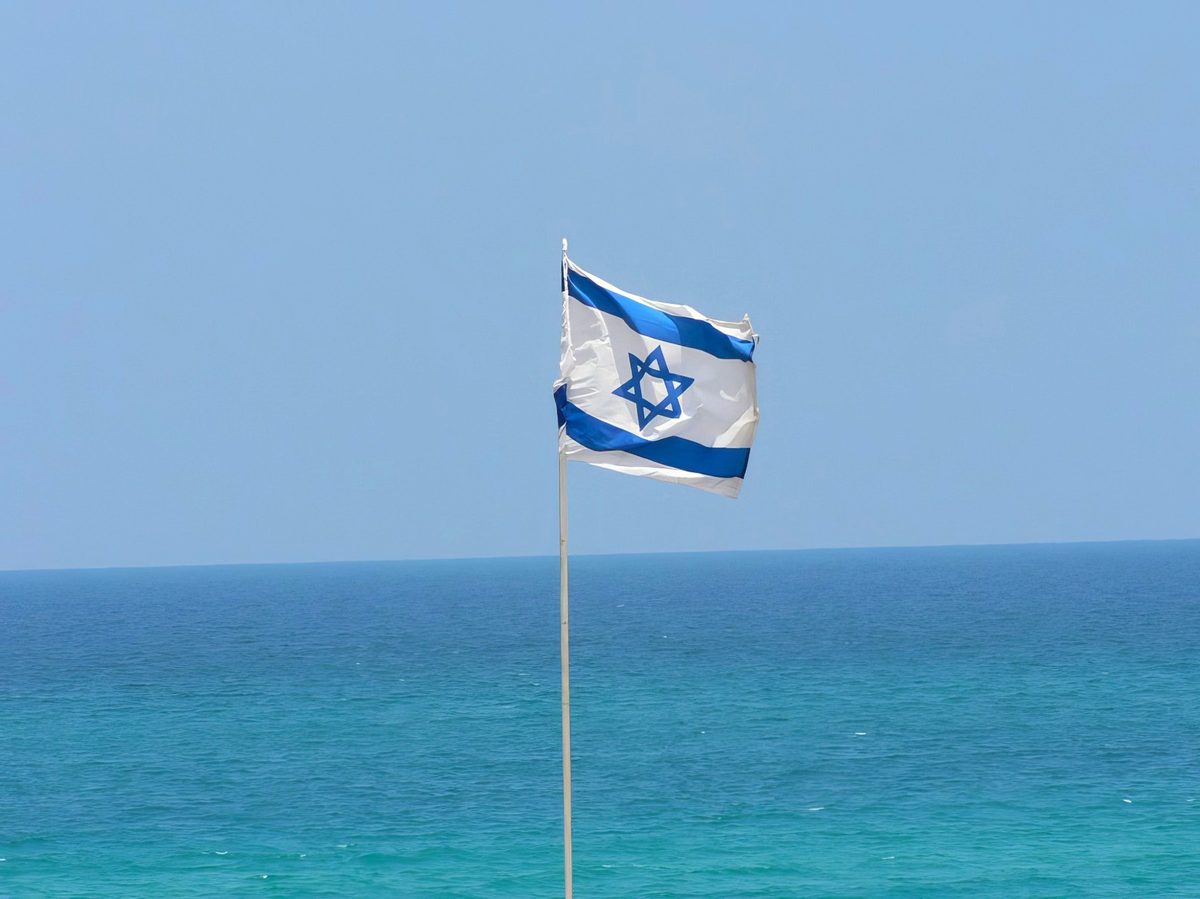
Photo: Zachi Evenor (צחי אבנור) · Source · CC BY-SA 4.0.
What does the Israeli flag mean? Its two blue stripes were inspired by the Jewish prayer shawl, or tallit, while the central Star of David represents Jewish identity and peoplehood. The design developed as a Zionist symbol before being officially adopted as Israel’s national flag on October 28, 1948.
Why Is the Israeli Flag Blue and White?
The blue and white colors of Israel’s flag come from Jewish religious and cultural traditions, especially the tallit. This prayer shawl provided the inspiration for the white field and horizontal blue stripes. Taking a garment associated with prayer and turning it into a public banner connected a familiar expression of Jewish life with a modern national movement.
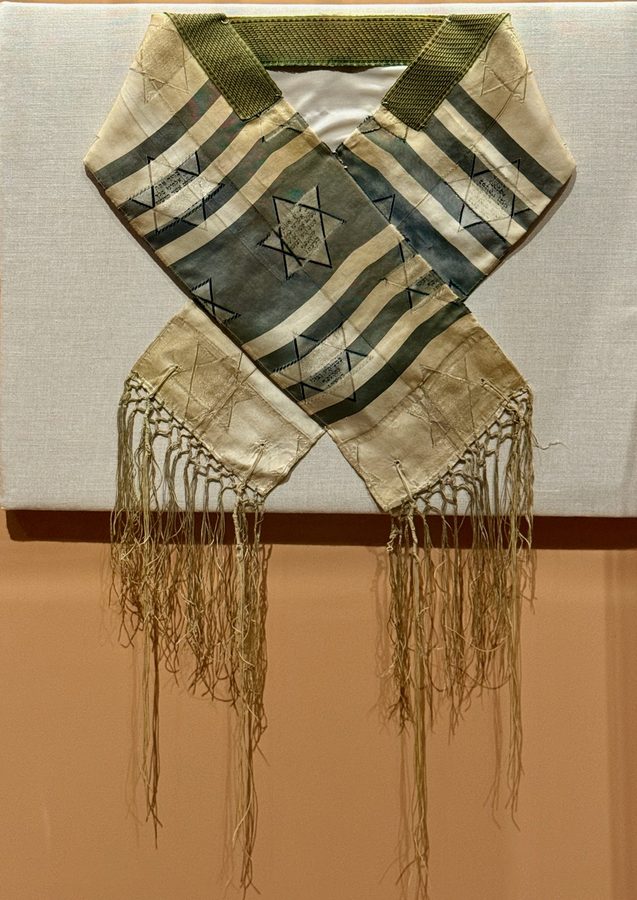
Photo: Oleg Yunakov · Source · CC BY-SA 4.0.
The relationship is easiest to see when a tallit is unfolded. Stripes frame a broad area of white fabric, much as they do on the flag. Prayer shawls vary in appearance, and many have black rather than blue stripes. The flag draws on the blue and white tradition rather than reproducing every kind of tallit.
Blue also has a biblical connection through tekhelet, the blue thread prescribed for the fringes of a garment. In the King James Version, Numbers 15:38 instructs the Israelites:
“that they put upon the fringe of the borders a ribband of blue”
Numbers 15:38, KJV
The passage concerns fringes, not a national flag. Its relevance is the religious tradition behind the prayer shawl that later inspired the design. This distinction matters: the modern flag has biblical associations, but the Bible does not describe its layout.
White is often associated with purity, and blue can evoke the sky or spiritual aspiration. Such interpretations add meaning for many people, but the clearest historical explanation for the colors and stripes remains the tallit. The design is also based on a recognizable piece of Jewish material culture, something you can explore further through the Jewish Art and Life collections at the Israel Museum in Jerusalem.
What Does the Star on Israel’s Flag Mean?
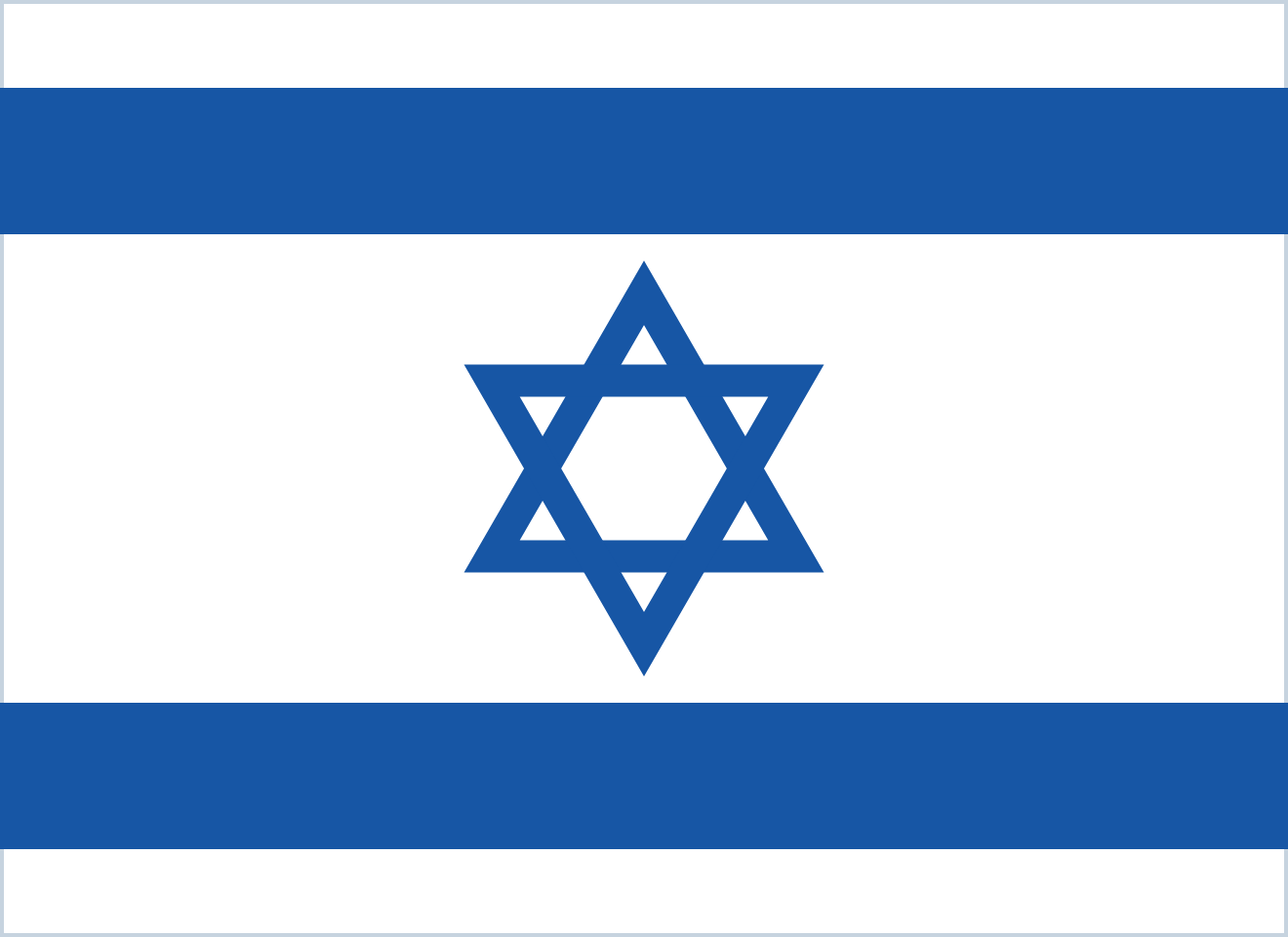
The six-pointed star at the center of the flag is the Star of David, called Magen David in Hebrew, meaning “Shield of David.” Formed from two overlapping triangles, it became a widely recognized symbol of the Jewish people before appearing on the national flag.
Its history is more complicated than its name might suggest. The six-pointed shape has appeared in different cultures and religious settings. Over time, it gained a particular role in Jewish communal life, appearing on flags, synagogue decoration, books, and ceremonial objects. Jewish communities in Prague were important in that development.
Legends associate the emblem with King David’s shield, but the name should not be treated as archaeological evidence that the biblical king carried this design. Its use as a broadly recognized Jewish emblem developed much later than David’s lifetime. On the Israeli flag, it represents Jewish identity and collective belonging.
Travelers will encounter the motif beyond the flag, including on synagogue buildings and jewelry. Even Magen David Square in Tel Aviv takes its name from the six streets meeting there in a star-like arrangement. Recognizing the symbol makes details of the country’s streets and buildings easier to read.
The star should also be distinguished from Israel’s state emblem. The flag features a Star of David; the state emblem features a menorah flanked by olive branches. They are separate national symbols with different histories.
The History of the Israeli Flag
The Israeli flag did not emerge in a single moment. Its story moves from early expressions of Jewish national identity to the Zionist movement and, eventually, the establishment of the state.
| Year | Milestone |
|---|---|
| 1885 | A blue and white flag resembling the later national design is raised in Rishon LeZion. |
| 1891 | A blue and white flag with a Star of David is raised in Ness Ziona. |
| 1897 | The familiar design is used at the First Zionist Congress in Basel. |
| May 14, 1948 | The blue and white flag appears at Israel’s declaration of independence. |
| October 28, 1948 | The Provisional Council of State formally adopts Israel’s national flag. |
Blue and White Flags Before 1897
One important early example appeared in Rishon LeZion in 1885. Israel Belkind and Fanny Meirovitch prepared a flag for celebrations marking the community’s third anniversary. It used white fabric, blue stripes, and a central Star of David, drawing on the appearance of a prayer shawl.
Another milestone came in Ness Ziona in 1891, when Michael Halperin raised a blue and white flag bearing a Star of David. These examples show that the visual language was already developing before the First Zionist Congress. The design had roots in the communities and aspirations of the period.
David Wolffsohn and the First Zionist Congress
David Wolffsohn is closely associated with the flag used at the First Zionist Congress in Basel, Switzerland, in 1897. In his later account of preparing for the congress, he described turning to the tallit for inspiration and ordering a blue and white flag with a Star of David.

Austrian National Library, Bildarchiv Austria / Wikimedia Commons · Source · Public domain.
Theodor Herzl had proposed a different design: a white flag with seven gold stars, representing a seven-hour working day. The familiar blue and white banner connected more directly with existing Jewish symbols. Wolffsohn’s role was significant, but the earlier flags help explain why calling him the design’s sole inventor would oversimplify its history.
The Official Adoption of the Flag in 1948
When Israel declared independence in Tel Aviv on May 14, 1948, blue and white flags framed the ceremony. They were already familiar as symbols of the Zionist movement, but their formal adoption as the state flag came several months later.
On October 28, 1948, the Provisional Council of State officially adopted the design. The proclamation specified a white background, two blue stripes, and a central Star of David. It also defined the flag’s proportions and the placement of its elements.
The distinction between May and October answers a common point of confusion. The flag was present at the founding ceremony before it received its formal status as the national flag. Its adoption joined a new state with a symbol that many Jews already knew.
Explore Israel’s History with Bein Harim
Once you know its story, the blue and white flag becomes more than a familiar shape in a photograph. It connects the prayer shawl and Jewish communal traditions with the national movement and events that shaped modern Israel.
Discover more of that history through our day tours in Israel, exploring ancient places, sacred landmarks, and the stories behind them with a guide. If Jewish heritage or modern Israeli history is a particular interest, contact us to discuss a private itinerary that brings those interests into your visit.
 Certificate of Excellence
 Guaranteed Departure
 Low Prices Guaranteed
 24/7 Support


