 Login / Register
 Contact
5 Biblical Archaeological Digs to Follow in 2026
A fishing weight near the Sea of Galilee. A ritual bath beneath Jerusalem. A roof beam charred in the destruction of an ancient building. Finds like these can change the questions archaeologists ask about the world of the Bible.
Some discoveries help locate a town. Others illuminate worship, urban life, or the aftermath of war. Their significance lies in how they fit together: where they were found, how they are dated, and what they reveal about the people who left them behind.
These five excavation projects have reported fieldwork or discoveries in 2026 and address questions relevant to the Hebrew Bible and the New Testament. They are ongoing research stories, rather than a list of ancient monuments to visit. Several seasonal campaigns have already ended; their analysis continues, while further digging depends on each project’s schedule.
The Five Projects at a Glance
| Excavation | Biblical connection | Research question | Evidence of recent work |
|---|---|---|---|
| El-Araj | Bethsaida and the apostles | Does the settlement evidence support the proposed identification? | 2026 field reports; autumn continuation announced |
| Jerusalem’s Ophel | Temple pilgrimage in the world of the Gospels | How did pilgrims prepare to enter the Temple complex? | 2026 field updates and an October research announcement |
| Shiloh | The sanctuary traditions in Joshua and 1 Samuel | What do the buildings and deposits reveal about the settlement? | A participant’s report on the 2026 season |
| Givati Parking Lot, City of David | Jerusalem’s Babylonian destruction | Can preserved wood refine the chronology? | Discovery and research reported in July 2026 |
| Tel Ashdod | The Philistine city named in biblical narratives | How did its Iron Age gate develop and change? | Completed 2026 season and laboratory work described in August |
1. El-Araj: Searching for the Bethsaida of the New Testament
Bethsaida appears in the Gospels as a place associated with Jesus’ ministry and the hometown of Philip, Andrew, and Peter (John 1:44). At El-Araj, researchers are examining a proposed location for the ancient settlement.
The project is led by archaeologist Mordechai Aviam and academic director R. Steven Notley. Its 2026 updates document the tenth excavation season, with work reaching Roman-period levels across several areas.
What the Latest Excavation Revealed
In his August 8 report, Notley describes fishing weights, stone-vessel fragments, lamps, coins, and building remains. Together, these finds help the team investigate the settlement’s economy, Jewish character, and development under Roman rule.
The interesting question is cumulative: do the buildings, objects, dates, and landscape fit the town known from ancient texts? The excavation team argues that they support identification with Bethsaida-Julias. That remains an archaeological interpretation, not a reason to label an excavated house as an apostle’s home.
The same report announced further work in October. It establishes the project’s intention to continue, not independent confirmation that digging is taking place on a particular day. Read the excavation director’s 2026 summary for the evidence behind the discussion.
2. The Ophel: Uncovering the Infrastructure of Temple Pilgrimage
What happened before a pilgrim reached the Temple? Excavations at Jerusalem’s Ophel, immediately south of the Temple Mount, are bringing that practical question into focus.
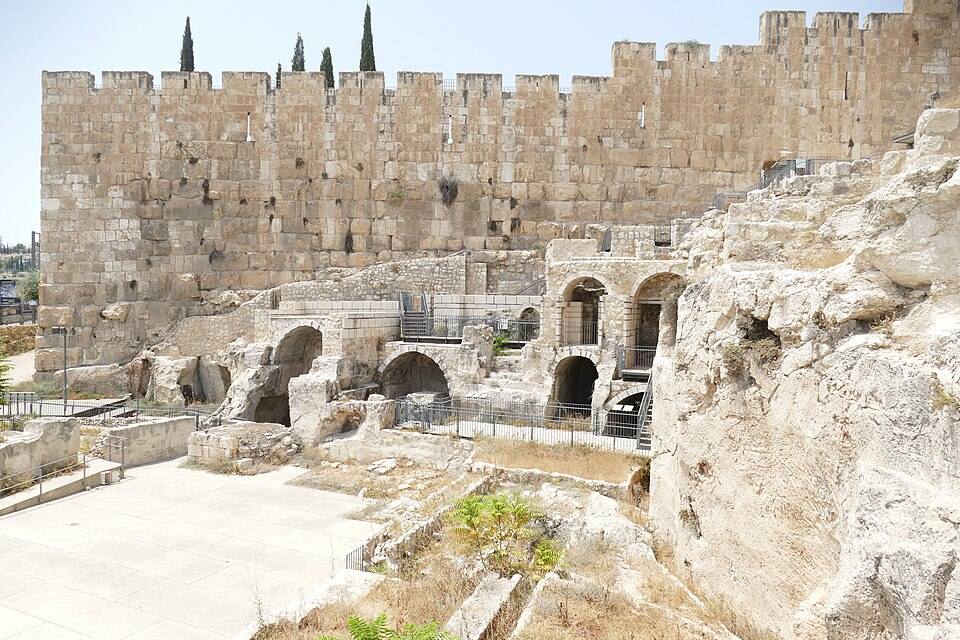
Ophel Archaeological Park, south of the Temple Mount (Photo: Bukvoed, CC BY 4.0, via Wikimedia Commons)
The Hebrew University project directed by Uzi Leibner and Orit Peleg-Barkat, in cooperation with the Armstrong Institute of Biblical Archaeology, investigated a monumental purification complex. An October 2, 2026 announcement describes a large stepped pool, rooms containing ritual baths, a paved forecourt, and substantial drainage channels.
Why the Ritual Baths Matter
The researchers date the monumental complex to the early first century AD. One bath survives unusually well, including its vaulted roof. Their interpretation links the facilities to the preparation of Jewish pilgrims visiting the Temple.
This gives physical depth to the setting of Gospel passages about festival travel and Temple life, including Luke 2:41 and John 7. It does not identify a bath used by Jesus or establish a particular Gospel event.
The project’s 2026 field updates document the season’s work; the announcement brings together results from five seasons. Read the university-affiliated research announcement. For broader context, our guides to the Second Temple and the Southern Steps and Davidson Center introduce the surrounding landscape.
3. Shiloh: Investigating a Biblical Sanctuary Landscape
Joshua 18:1 places Israel’s tent of meeting at Shiloh. The opening chapters of 1 Samuel connect the place with Hannah, Eli, and Samuel. Those traditions make its settlement history particularly compelling.
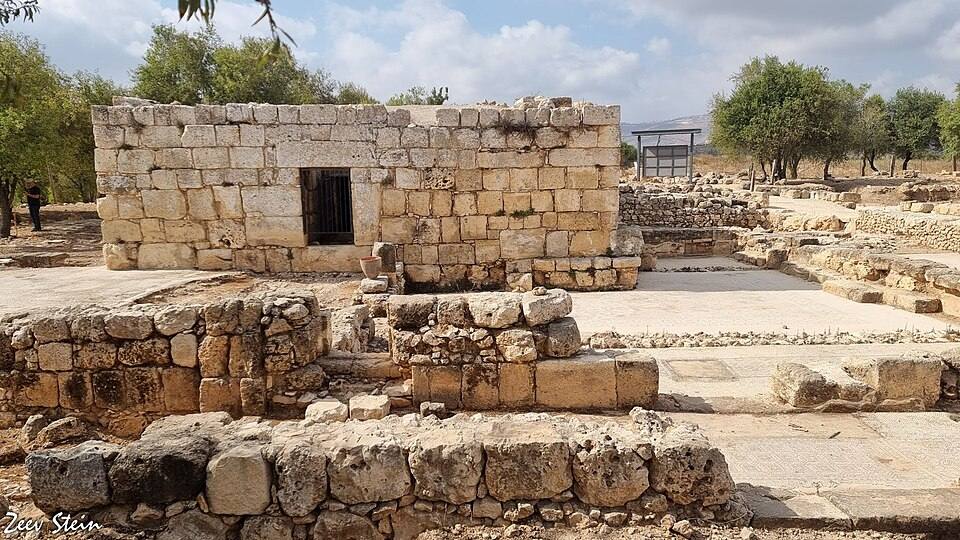
Excavated remains at ancient Shiloh (Photo: Zeev Stein, CC BY 2.5, via Wikimedia Commons)
Associates for Biblical Research, directed at the excavation by Scott Stripling, continued work at the northern end of the tell in 2026. Shiloh is in the West Bank. The project’s recent fieldwork should be discussed separately from questions of travel access.
What Changed in the 2026 Season?
Square supervisor Bryan Windle’s June 24 report describes three storage jars from a Middle Bronze Age context, additional gate-complex walls, and the identification of a monumental building’s southern wall.
The building is important because better-defined dimensions allow its function to be assessed more closely. The excavators discuss possible relationships to sanctuary traditions, but the discovery does not establish that the biblical Tabernacle has been found.
The earlier jars also show why layers matter: an object excavated at a biblical place can belong to a period before the narrative being discussed. Read the firsthand 2026 field report as the excavator’s account, rather than a statement of scholarly consensus.
4. Givati Parking Lot: Studying Jerusalem’s Destruction through Burned Wood
At the Givati Parking Lot excavation in the City of David, the research story reaches beyond stone architecture. In July 2026, researchers announced the discovery of substantial charred wooden beams in a collapsed building.
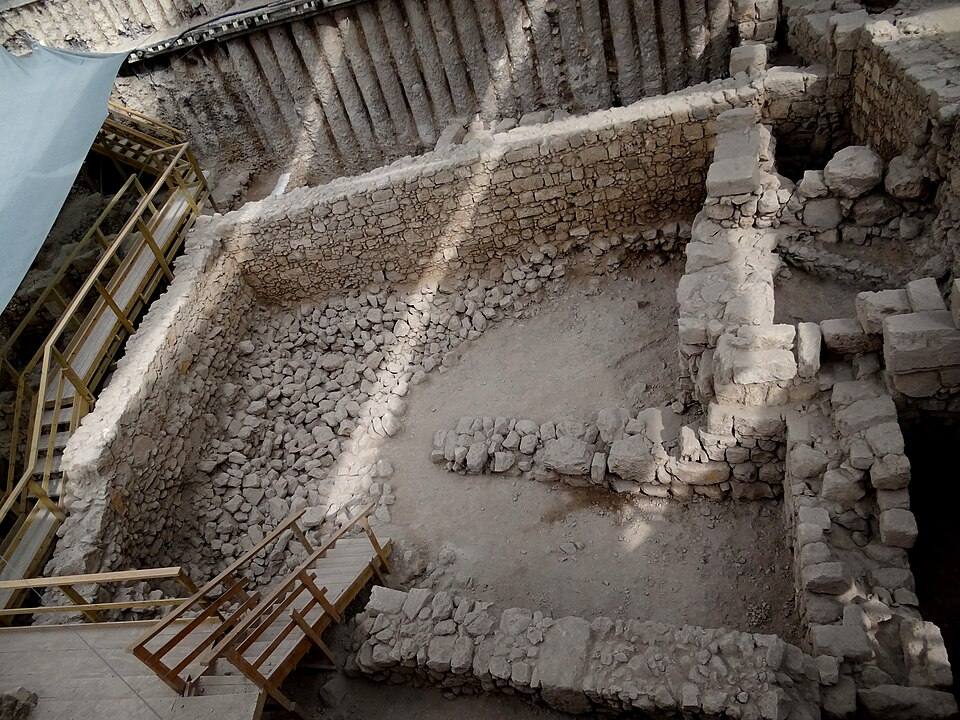
Givati Parking Lot excavation in the City of David, Jerusalem (Photo: Hanay, CC BY-SA 3.0, via Wikimedia Commons)
The Israel Antiquities Authority and Tel Aviv University project connects the destruction context with Jerusalem’s fall to the Babylonians in 586 BC. The excavation leadership includes Yiftah Shalev and Yuval Gadot; excavation director Efrat Bocher describes the beams as likely roofing for an inner courtyard.
Why Wood Can Be More Valuable than a Spectacular Object
Thick pieces with many growth rings provide material for refining dates. The team’s announcement describes their unusual preservation and the potential for much more precise chronological work.
That is the central research opportunity. A destroyed building can be studied as evidence for the timing and impact of an urban catastrophe. The biblical account of Jerusalem’s destruction in 2 Kings 25 provides the historical narrative readers will recognize.
These are beams from an excavated building in the city, not identified timbers from the Temple itself. The July announcement also describes research potential, not a completed new dating result. The Tel Aviv University Canada report explains the find and its scientific significance.
5. Tel Ashdod: Reexamining a Gate in a Philistine City
Ashdod is prominent in biblical accounts of the Philistines, including the Ark narrative in 1 Samuel 5. At Tel Ashdod, renewed excavation is testing how an important part of that city developed.
The project’s August 12, 2026 season report describes work on a monumental Iron Age gate previously investigated by Moshe Dothan. Newly exposed walls, surfaces, and construction phases are prompting the team to reassess its earlier reconstruction.
What the Gate Can Reveal
The report notes a fragment of a ritual vessel on a gate surface and production debris west of the complex, associated with later metalworking. Such evidence helps researchers ask how the area’s uses changed over time.
This is relevant to the urban and cultural world behind biblical references to Ashdod. It does not identify the gate of the Ark story or demonstrate that the narrative’s events occurred there.
The team explicitly describes the transition from fieldwork to laboratory analysis. Its 2026 season summary is therefore evidence for a continuing research program, even though the summer excavation has ended.
What These Digs Can Tell Us about the Bible
The strongest connection between archaeology and the Bible is often a well-framed question. What kind of settlement stood here? How did worship shape the surrounding buildings? What changed after destruction? How securely can a layer be dated?
Objects and architecture can help answer these questions without resolving every historical or theological debate. A preliminary field report, a university announcement, and a peer-reviewed study also represent different stages of interpretation. New evidence may strengthen a proposal, refine it, or require it to change.
That is what makes these projects worth following. Their stories are still developing, and the next important result may come from the laboratory as readily as from a trench.
Connecting the Research with a Visit
Reading a dig report can transform how you experience a biblical landscape. It gives you better questions to ask and helps separate original remains, later construction, and modern interpretation.
If you want to add that context to a Jerusalem visit, discuss your interests with our team through a private Jerusalem tour. Visiting a surrounding archaeological area is different from entering a working excavation; any special access requires confirmation with the relevant project. This article does not advertise participation or access to the five digs.
 Certificate of Excellence
 Guaranteed Departure
 Low Prices Guaranteed
 24/7 Support


