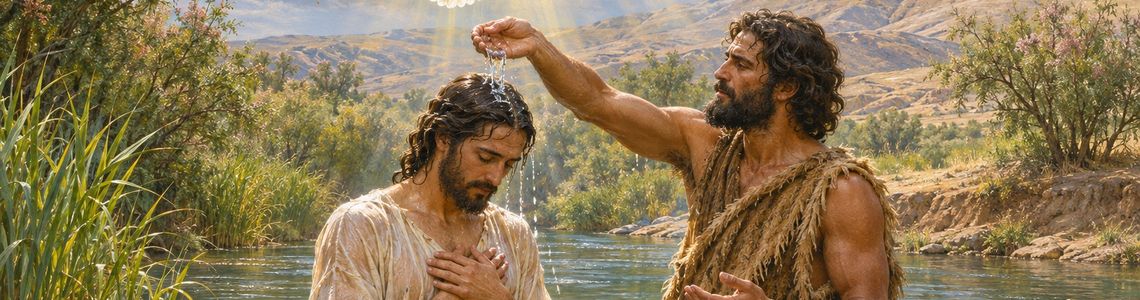
John has been calling people to change their lives and enter the waters of the Jordan. Then Jesus arrives, and the man who has baptized so many others hesitates. What follows is a brief encounter with lasting significance: water, a descending Spirit, and a voice from heaven. For Christians visiting the Holy Land, the story gives the Jordan River a meaning that reaches far beyond its banks.
The baptism of Jesus marks an important beginning in the Gospel story. Before the journeys through Galilee, the calling of disciples, and the teaching and healing that draw crowds, Jesus comes to the Jordan to be baptized by John.
Matthew 3:13–17 describes Jesus arriving from Galilee. John initially resists, saying that he needs to be baptized by Jesus, rather than the other way around. Jesus asks him to allow it, explaining that this is fitting to fulfill all righteousness. John agrees.
When Jesus comes up from the water, the heavens open, the Spirit of God descends like a dove, and a voice declares him the beloved Son. In only a few verses, the narrative moves from John’s hesitation to an extraordinary revelation of Jesus’ identity.
The event is described in Matthew 3:13–17, Mark 1:9–11, and Luke 3:21–22. John 1:29–34 approaches it through the Baptist’s testimony about seeing the Spirit descend and remain on Jesus, rather than retelling the act of baptism directly. These different emphases enrich the story: Matthew records the exchange between Jesus and John, while Luke draws attention to Jesus praying.
John the Baptist baptized Jesus in the Jordan River. A Jewish preacher and prophet, John called people to repentance and prepared the way for the one who would come after him.
His baptism was connected with a change of heart and conduct. In the Gospel accounts, people came to him confessing their sins. Yet John did not present himself as the ultimate focus of their hope. He pointed beyond his own ministry, distinguishing his baptism with water from the work of the one who would baptize with the Holy Spirit.
That background makes his response to Jesus especially striking. John recognizes that this encounter is different from the baptisms he has been performing for the crowds.
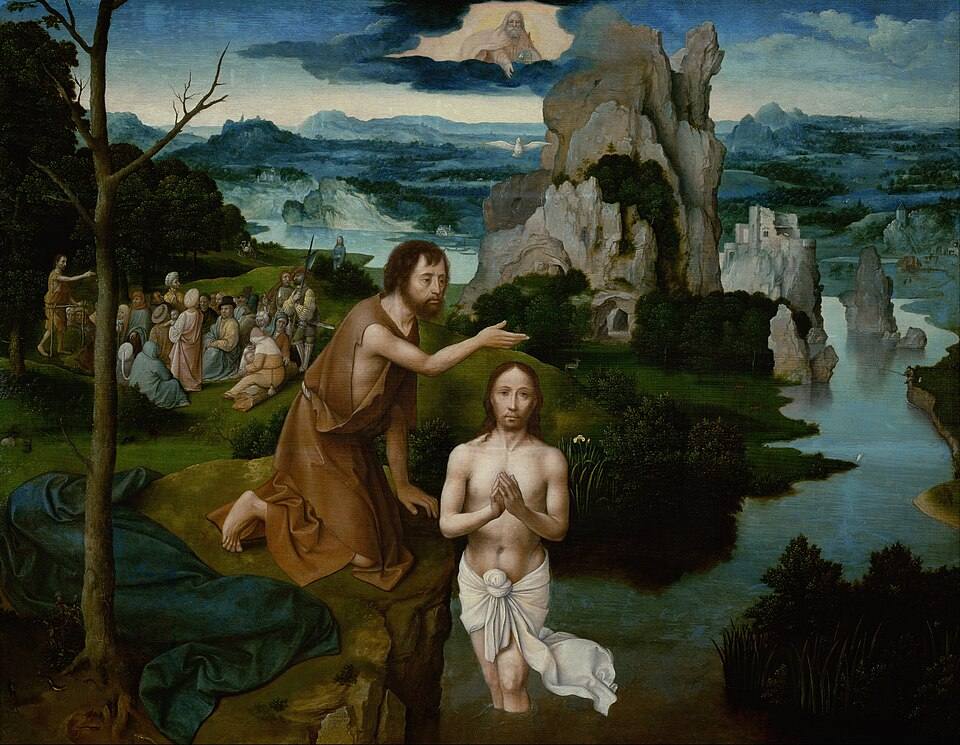
John’s hesitation raises the question many readers still ask: if Christians understand Jesus to be without sin, why does he receive a baptism associated with repentance?
Matthew gives Jesus’ answer:
“for thus it becometh us to fulfil all righteousness.” (Matthew 3:15, KJV)
In Christian interpretation, Jesus’ baptism expresses obedience to God’s purpose and solidarity with the people he has come to serve. It is not understood as a confession that Jesus has committed sins. He willingly enters the waters where others have come seeking renewal.
The scene also introduces his public mission. The heavenly voice identifies him as the beloved Son, and the Spirit descends upon him. Christian readers therefore see the baptism as both an act of humility and a revelation of who Jesus is.
The Gospels then move toward the wilderness and the testing that precedes his ministry. The baptism is a beginning, but it does not lead straight into an easy journey. It stands at the threshold of the teaching, service, and suffering that follow.
The accounts describe more than Jesus entering and leaving the river. The heavens open, the Holy Spirit descends like a dove, and a voice speaks from heaven. Matthew records the declaration:
“This is my beloved Son, in whom I am well pleased.” (Matthew 3:17, KJV)
Mark and Luke address Jesus directly as the beloved Son, while Matthew gives the declaration in the third person. The central affirmation is shared, even though the wording differs.
For Christians, the scene has particular significance for understanding the Trinity: the Son is baptized, the Spirit descends, and the Father’s voice is heard. It is an important revelation of Father, Son, and Holy Spirit, rather than a moment when Jesus becomes divine.
The event is commemorated in Christian worship as the Baptism of the Lord and, in Eastern Christian traditions, prominently through Theophany. Church calendars and customs differ, but the Gospel scene remains at the heart of the observance.
The dove is one of the most recognizable details in images of Jesus’ baptism. Matthew and Mark describe the Spirit descending like a dove; Luke speaks of a bodily form like a dove. In John’s Gospel, the Baptist testifies that the Spirit descended and remained on Jesus.
This language explains the white bird so often shown above Jesus in Christian paintings, mosaics, and illustrations. The image represents the Holy Spirit. It does not mean that the Spirit’s nature is that of an ordinary bird.
For readers, the detail brings together movement and recognition: the Spirit descends, and John bears witness to Jesus’ identity. For pilgrims, it is often the image that comes to mind first when they stand beside the Jordan.
Jesus is commonly understood to have been about thirty years old at his baptism. The basis is Luke 3:23, which places him at about thirty when he begins his ministry, immediately after the baptism account.
The word “about” matters. Luke offers an approximate age, not a birthday or an exact calculation of the day Jesus entered the river. The Gospels do not provide a precise calendar date for the baptism.
It belongs near the beginning of his public ministry, before the main Galilean teaching and healing narratives. Annual celebrations of the baptism commemorate the event; they do not establish its exact historical anniversary.
Jesus was baptized in the Jordan River. Mark names the river explicitly, while Matthew describes him coming from Galilee to the Jordan to meet John. Locating the precise spot along the river is a separate question from identifying the river itself.
The principal pilgrimage tradition centers on the lower Jordan near Jericho, north of the Dead Sea. Here, visitors encounter sites on both banks associated with the baptism. The landscape and the history of pilgrimage help explain their importance, although neither supplies a surviving marker that proves exactly where Jesus stood.
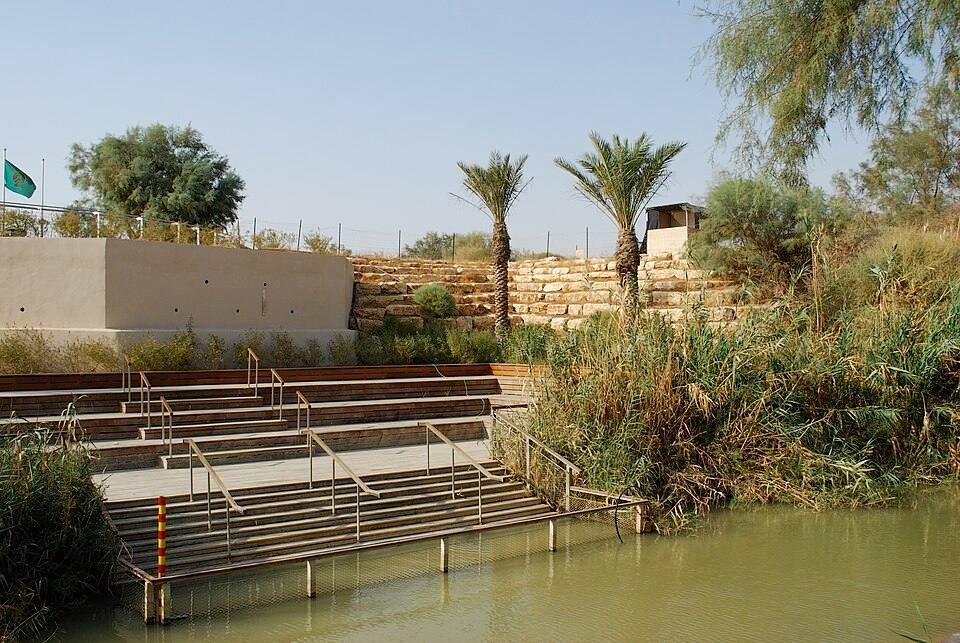
Qasr al-Yahud is the baptismal site on the western bank near Jericho in the West Bank. It provides access to the stretch of the Jordan traditionally associated with Jesus’ baptism and is a place of prayer, pilgrimage, and baptism today.
Across the river, in the Kingdom of Jordan, Bethany Beyond the Jordan, also known as Al-Maghtas, is a UNESCO World Heritage Site. Its churches, baptismal pools, and other remains bear witness to the area’s long religious history and its association with the baptism of Jesus.
These are distinct visitor sites in different jurisdictions. Visiting Qasr al-Yahud does not include entry to Al-Maghtas, and a journey to the Jordanian site requires separate travel arrangements. The name Bethany Beyond the Jordan also distinguishes this tradition from Bethany near Jerusalem, associated with Mary, Martha, and Lazarus.
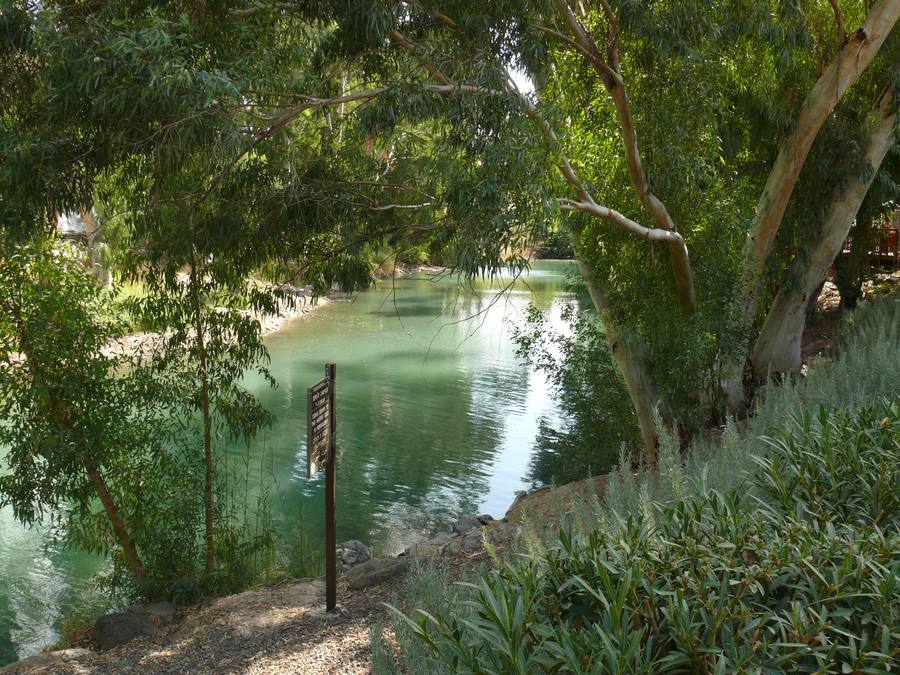
Yardenit is a baptismal site at the southern end of the Sea of Galilee, considerably farther north. It offers pilgrims an opportunity to be baptized in the Jordan River in a setting connected with the wider landscape of Jesus’ Galilean ministry.
Its spiritual significance for visitors does not make it the established historical location of Jesus’ baptism. When planning a trip, the distinction is straightforward: Qasr al-Yahud connects visitors with the lower Jordan baptism tradition, while Yardenit offers a Galilee baptismal experience on the same river.
A visit to the Jordan can turn a familiar passage into a more personal encounter with the landscape of the Gospels. At Qasr al-Yahud, the setting near Jericho places the story within the lower Jordan region. At Yardenit, the river can become part of a wider journey through Galilee.
If a baptism ceremony is important to your visit, discuss it when planning your itinerary. A sightseeing stop does not automatically include a ceremony or a priest or pastor. Allowing time for the arrangements helps you choose an experience that reflects your own church tradition and wishes.
Explore our Christian tours in Israel to connect the Jordan River with other places from Jesus’ life, from Nazareth and the Sea of Galilee to Jerusalem. Each itinerary offers a different combination of sites, so choose one that includes the places that matter most to you.
Tours You May Like
Join Us
Keep in Touch


 Login / Register
 Contact


 Certificate of Excellence
 Guaranteed Departure
 Low Prices Guaranteed
 24/7 Support