When Jesus came to the Jordan River to be baptized, John hesitated. He thought their roles ought to be reversed. That brief exchange raises a question worth following from the hills of Jerusalem to the banks of the Jordan: Who was the man Jesus came to see?
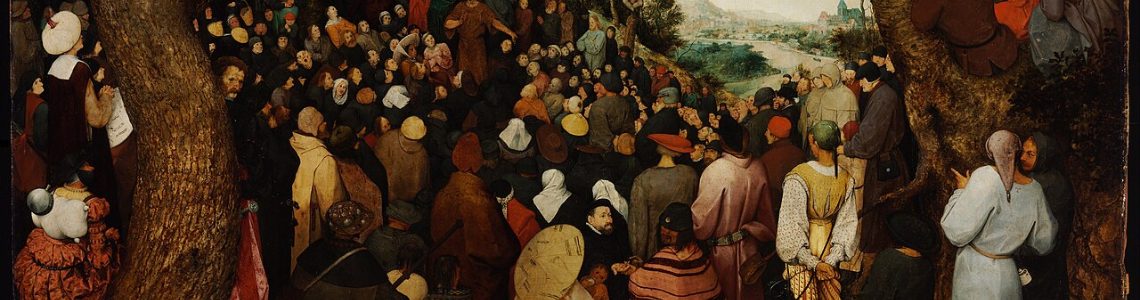
John the Baptist was a Jewish preacher and prophet who called people to repent and baptized them in the Jordan River. In the Gospels, he prepares the way for Jesus. But before Jesus came to the river, crowds were already going out to hear John for themselves.
Mark pictures him in the wilderness, dressed in camel’s hair and eating locusts and wild honey. His message was more practical than that portrait might suggest. In Luke’s Gospel, when the crowds ask what they should do, he tells those with extra clothing or food to share. He tells tax collectors to collect no more than they are owed. Going into the water was part of a call to change how people lived when they went home.
“The voice of one crying in the wilderness, Prepare ye the way of the Lord, make his paths straight.” (Mark 1:3, KJV, drawing on Isaiah 40:3)
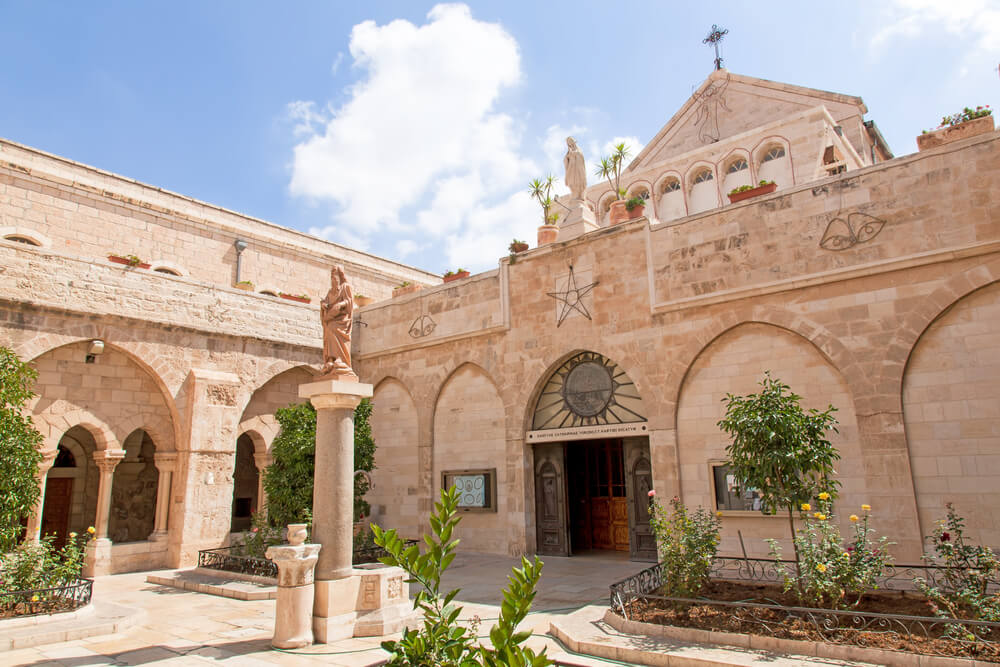
Christian tradition places John’s birth in Ein Karem, a village in the hills of what is now western Jerusalem. Luke describes Mary traveling to a town in the hill country of Judah to visit John’s mother, Elizabeth. The Gospel does not name the town. At the Church of St. John the Baptist in Ein Karem, visitors can see the grotto that tradition identifies as his birthplace.
Luke begins the story with John’s father, Zechariah, a priest serving in the Temple. The angel Gabriel tells him that Elizabeth will have a son and that they are to name him John. Zechariah doubts the announcement and loses his speech. After the birth, relatives expect the child to be named after his father. Elizabeth insists on John, and Zechariah confirms it in writing. Only then does he speak again (Luke 1:5–25, 57–66).
Luke describes Mary and Elizabeth as relatives, but he does not specify exactly how they were related. That is why you may hear John called Jesus’ cousin, even though the precise relationship is unknown. In Luke’s account of the Visitation, Elizabeth feels her unborn child leap when Mary greets her. The story links John and Jesus before either has been born (Luke 1:36–45).
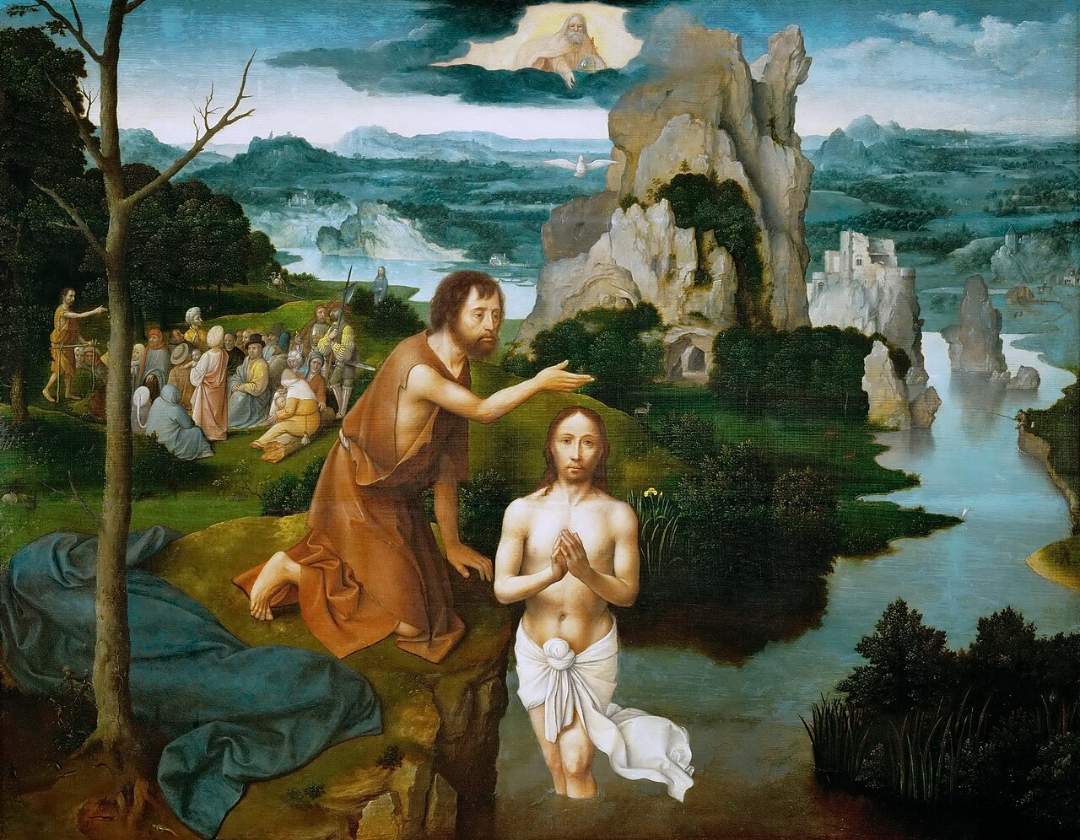
In Matthew’s account, Jesus comes from Galilee to the Jordan to be baptized by John. John objects: he believes he is the one who should be baptized by Jesus. Jesus asks him to go ahead, saying it is fitting for them “to fulfil all righteousness” (Matthew 3:15, KJV). Matthew gives that as Jesus’ reason for asking John to baptize him.
John agrees. When Jesus comes up from the water, Matthew describes the Spirit of God descending like a dove and a voice from heaven declaring Jesus his beloved Son (Matthew 3:16–17). The scene begins with John questioning why Jesus has come to him. It ends with the focus firmly on Jesus.
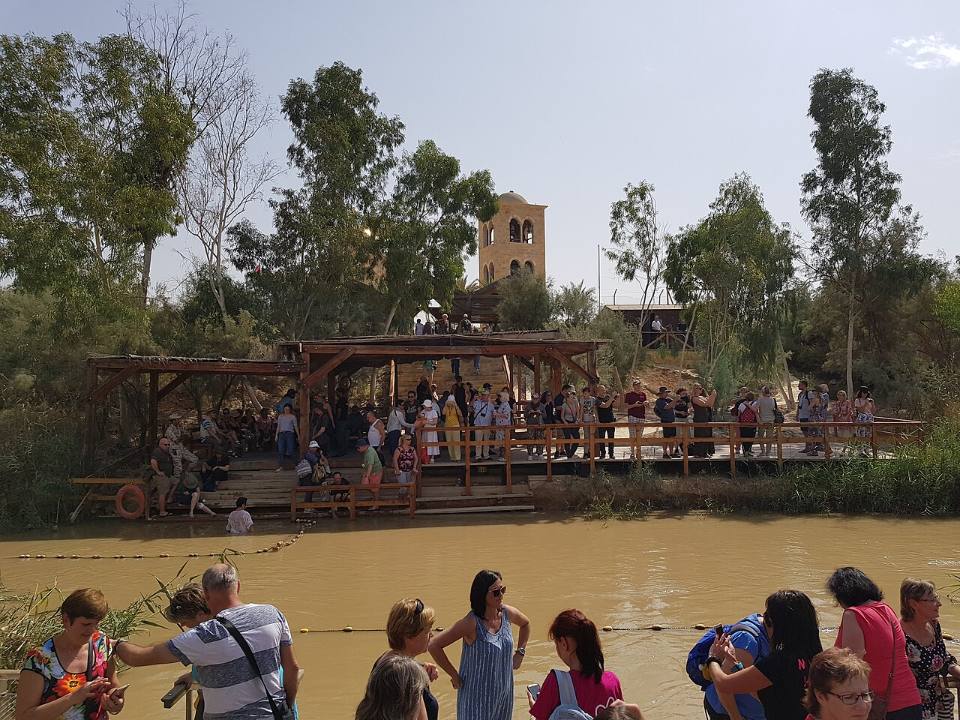
Matthew and Mark place the baptism in the Jordan River. Today, pilgrims encounter the tradition on both banks of the lower Jordan near Jericho. On the west bank is Qasr al-Yahud. On the east bank in Jordan is Al-Maghtas, also known as Bethany Beyond the Jordan, a UNESCO World Heritage Site. The remains of churches and baptism pools on the east bank show how earlier generations commemorated the event. They do not establish the precise spot in the river where the baptism took place.
John was beheaded on the orders of Herod Antipas, a son of Herod the Great. In Mark’s account, John had publicly challenged Antipas over his marriage to Herodias. Antipas imprisoned him. Later, at a birthday banquet, Herodias’s daughter danced for the guests and Antipas promised her a reward. At her mother’s prompting, she asked for John’s head. Mark says Antipas was distressed, but gave the order rather than break his promise in front of his guests (Mark 6:17–29).
The Jewish historian Flavius Josephus gives another account. In Jewish Antiquities 18.116–119, he says Antipas feared that John’s influence over the crowds could lead to an uprising. He identifies Machaerus, a fortress in present-day Jordan, as the place where John was imprisoned and put to death. Mark explains John’s death through the conflict within Antipas’s household; Josephus emphasizes the ruler’s fear of John’s public influence.
To follow the opening chapters of John’s story, ask to include Ein Karem on our Jerusalem Private Tour. The Church of St. John the Baptist commemorates his birth. The Church of the Visitation, elsewhere in the village, commemorates Mary’s visit to Elizabeth. They are two separate stops, each tied to a different part of Luke’s account.
At Qasr al-Yahud, you can stand on the riverbank and look across to Jordan. Our Bethlehem and Jericho Tour includes a stop here, alongside visits to Bethlehem and Jericho. If you want to include Jerusalem’s Old City as well, our Jerusalem, Bethlehem and Jericho Tour visits Qasr al-Yahud as part of its two-day itinerary.
Planning a Holy Land visit? Contact us to find a tour that fits your plans or to ask about including Ein Karem in a private itinerary.
Tours You May Like
Join Us
Keep in Touch


 Login / Register
 Contact


 Certificate of Excellence
 Guaranteed Departure
 Low Prices Guaranteed
 24/7 Support