The wedding was underway when the wine ran out. A few words from Mary, six stone jars and instructions to the servants turned an awkward moment into one of the best-known stories in the New Testament. The Wedding at Cana begins with a family celebration and ends with the disciples seeing Jesus differently. In Galilee, pilgrims still visit the church that commemorates it.
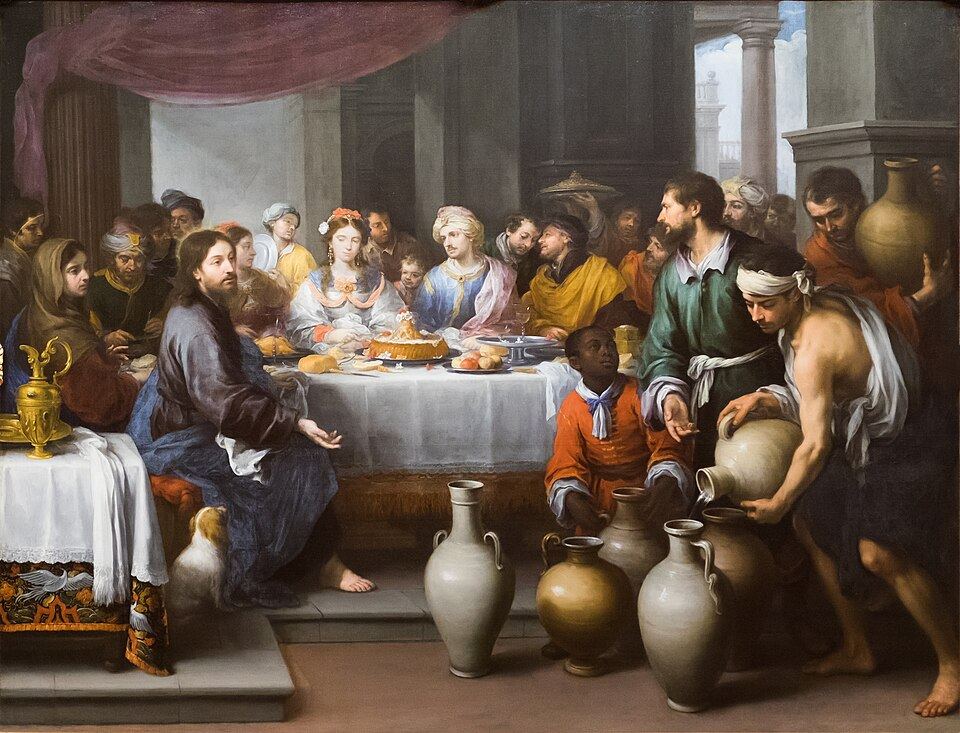
The Wedding at Cana appears in John 2:1–11. Jesus’ mother was attending a wedding in Cana of Galilee, and Jesus and his disciples had also been invited. John leaves the couple unnamed. We hear about the bridegroom later, but the Gospel gives us no names or family relationship connecting the couple to Jesus.
Then the wine ran out. For hosts welcoming guests to a wedding feast, this was a difficult moment. Mary noticed the shortage and brought it to Jesus’ attention. The story turns on this ordinary need in the middle of an important celebration.
Mary’s approach is brief: she tells Jesus that the hosts have no wine. His response introduces a theme that will return throughout John’s Gospel, saying that his hour has not yet come.
Mary then addresses the servants:
“Whatsoever he saith unto you, do it.” (John 2:5, KJV)
Her words move the narrative toward action. Christian readers, particularly within Catholic tradition, often see in this moment an expression of Mary’s trust and intercession. John himself gives us a compact exchange, without describing her thoughts or explaining her connection to the wedding household.
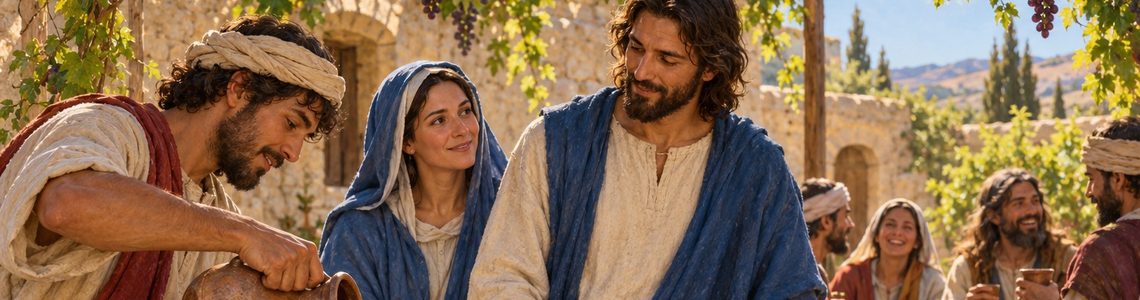
Nearby stood six stone water jars used for Jewish purification practices. Jesus instructed the servants:
“Fill the waterpots with water.” (John 2:7, KJV)
They filled the jars to the brim. Jesus then told them to draw some out and take it to the person overseeing the feast. The servants followed his instructions.
When the steward tasted what had been drawn, the water had become wine. He did not know its source, although the servants did. Calling the bridegroom over, he remarked that hosts generally served their good wine first and brought out the inferior wine later. This wedding had surprised him:
“thou hast kept the good wine until now.” (John 2:10, KJV)
John closes the episode by explaining its significance: Jesus revealed his glory, and his disciples believed in him. The steward’s surprise and the disciples’ response give the event two perspectives, one focused on the wine and the other on the person responsible for it.
The immediate need was clear: the wedding hosts had run out of wine. John also gives the event a larger purpose. By the end of the account, the disciples’ faith has become central to the story.
In John’s Gospel, a sign points beyond the remarkable event to reveal something about Jesus. Christian interpretations of Cana often emphasize divine generosity, the abundance of grace and the joy of God’s presence in human life. The choice of a wedding setting has also made the passage important in Christian reflection on marriage.
These are theological readings of the episode. They help explain why a story about hospitality has remained meaningful to generations of readers and why married couples continue to make Cana part of their pilgrimage.
Cana is traditionally known as the setting of Jesus’ first public miracle. More precisely, John 2:11 identifies it as the beginning of his miracles, commonly translated as the first of his signs.
That wording matters. The Gospel presents the transformation as a revelation of Jesus’ glory at the outset of his ministry. Readers looking for Jesus’ first miracle in the Bible are usually thinking of this wedding and the water turned into wine.
The traditional pilgrimage destination is Kfar Kana, also written Kafr Kanna, in the Lower Galilee near Nazareth. This is where most visitors come to remember the wedding and see its Franciscan shrine.
The identification of biblical Cana has been debated, and Christian tradition has associated the story with different places over the centuries. The Custody of the Holy Land records Kafr Kanna’s prominence as a pilgrimage destination from the seventeenth century onward.
A visit offers a connection with that living tradition. The church commemorates the Gospel event; its presence does not establish the precise location of the original wedding house.
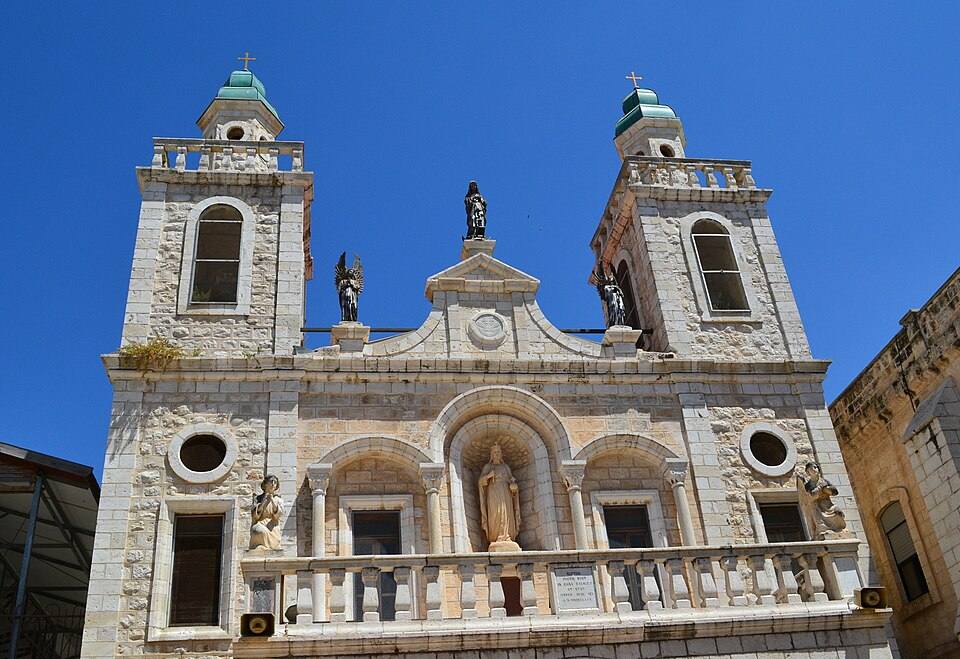
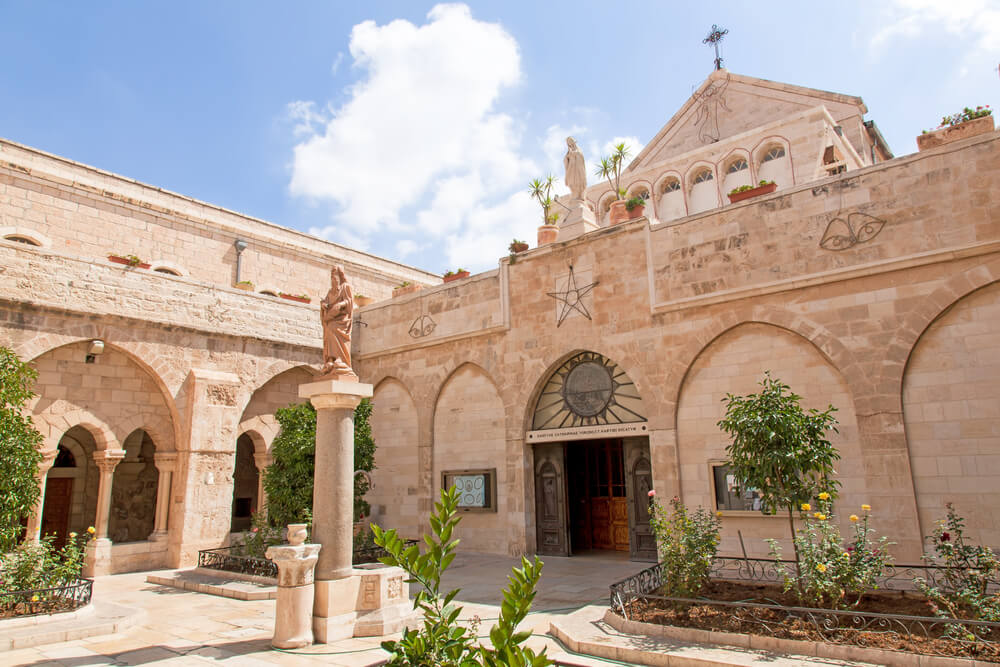
The Wedding Church in Cana is a Franciscan sanctuary dedicated to Jesus’ first miracle. Its courtyard, twin bell towers and church interior provide a setting for reading the passage and reflecting on the celebration it describes.
The present church developed in stages during the late nineteenth and early twentieth centuries. Earlier remains beneath it add another layer to the visit, linking today’s shrine with the area’s longer history. Ancient vessels associated with the site should be understood within that history and its devotional traditions, rather than presented as conclusively identified objects from the miracle.
Some couples visit Cana to renew their marriage vows. If that is part of your plans, arrange it in advance with the relevant church or clergy. A sightseeing stop does not automatically include a ceremony.
For a church visit, wear clothing that covers shoulders and knees and allow for services taking place. If steps or walking are a concern, discuss your needs when planning the itinerary. Cana fits naturally into a Galilee journey that also explores Nazareth or the Sea of Galilee.
Bring the story into your Holy Land itinerary with a visit to Cana. Bein Harim offers both a Christian Galilee route that includes the Wedding Church and private touring that can give this stop more attention.
Our Christian Galilee Tour includes the Wedding Church in Kafr Kanna, alongside Magdala, the Jesus Boat at Ginosar and the Mount of Beatitudes. It is a rewarding way to connect the Cana story with other places associated with the world of Jesus and his ministry. Explore the itinerary and check availability for your travel date.
Choose our Nazareth and Sea of Galilee Private Tour if you would like to shape the day around your interests. The Wedding Church is one of the sites that can be included when customizing the route. Tell us that Cana is a priority so we can confirm the stop and plan time for the visit, discussion or personal reflection.
Plan your visit with Bein Harim and make the Wedding at Cana part of your journey through Galilee.
Tours You May Like
Join Us
Keep in Touch


 Login / Register
 Contact


 Certificate of Excellence
 Guaranteed Departure
 Low Prices Guaranteed
 24/7 Support