Showing search results for ''

Top 10 Sites to Visit in Nablus

Nablus (‘Shekhem’ in Hebrew) is a city in the West Bank. The city, and the surrounding area, has an overwhelmingly Arab population. Nablus was occupied by Israel after the Six-Day War in 1967 but, since 1995, as a result of the Oslo Accords, it has been controlled by the Palestinian Authority. With a population of 135,000, it is one of the largest urban areas in the West Bank. It is a major commercial centre, well-known for its production of wood, pottery, soap and olive oil, famed for its delicious ‘knafeh’ dessert and home to a respected university, Al Najah.Nablus street, West Bank.Photo by nour tayeh on UnsplashThe Geography and History of NablusGeographically, it is around 60 km (45 miles) north of Jerusalem, between Mount Ebal and Mount Gerizim. It sits in the middle of a fertile valley and is at the centre of a natural oasis, which is fed by a number of springs. Historically, the city of Nablus occupied a strategic position since it lay at a junction between two ancient commercial roads, the first linking the Sharon coastal plain to the Jordan Valley and the second linking it to Judea in the south and the Galilee in the north. It was founded by the Roman Emperor Vespasian in 72 CE and named ‘Flavia Neapolis’. Today, it is a bustling commercial centre with plenty to offer the visitor. Yes, it is in the West Bank, which means visitors should exercise a certain degree of vigilance. However, it is definitely safe to visit, although we would recommend travelling there with a private tour, since being accompanied by someone who speaks Arabic and knows the area is invaluable.Since it is only about an hour’s drive from Jerusalem, it makes for an ideal day trip so let’s take a closer look at this ancient city’s attractions and what you should do there, to get the most out of your time.Nablus Governorate. Photo by nour tayeh on Unsplash1. The Old CityThe Old City lies in the heart of Nablus and is densely populated, with many prominent local families living there. It is made up of six quarters: Habala, Qaysariyya, Aqaba, Yasmina, Gharb and Qaryun. There is plenty for the visitor to see including:Mosques - there are many mosques in the Old City, including the Great Mosque, the Al-Khadra, the Al-Abnia and Ajaj. The Great Mosque is the oldest and largest of these buildings and was originally built as a Byzantine church by the Crusaders. After the conquest of Saladin, it was converted into a mosque in the Islamic period. It has a long, rectangular floor and a silver dome.The Abd al-Haid Palace - built in the 19th century as a residence for the Abd al-Haid family, this white limestone building has many hidden treasures including winding staircases, unobtrusive courtyards, balconies and gardens.Al Nimr Palace - this huge 17th-century palace is situated in the Habala neighbourhood and was built by Abdullah Pasha, a leader of the Ottomans. Tuqan Palace - considered to be one of the most important historical buildings in the city, this palace has more than 100 rooms and was built by Pasha Tuqan in the 18th century.Hammams - these Turkish baths were built between the 16th and 19th centuries. One that is still used today is Al-Shifa - estimated to have been built around 400 years ago, look out for the engraved plaque above the door. Manara Clock Tower - built in 1906 on the orders of Sultan Abdul Hamid, to celebrate his 30-year reign, its style is similar to those found today in Tripoli and Jaffa. Visitors with a keen eye will notice the Arabic calligraphy, praising the Sultan. One of the palaces in Nablus. Photo by nour tayeh on Unsplash2. Mount GerizimOne of two mountains ringing Nablus, Mount Gerizim sits on the southern side of the city’s valley. The Samaritan population (the majority of whom live nearby) regard it as the oldest, highest and most central mountain in the world. For them, it is the centre of their civilization. They consider it to be more sacred than the Temple Mount - for them, God intended it to be a holy temple.In the Bible, it is said that when the Israelites entered the Promised Land, Moses instructed them to celebrate by making blessings on Mount Gerizim. Specifically, In the book of Joshua, it is also said that an altar of stones was built there. Today, it is still possible to see ruins at the top of Gerizim, including the remains of a fortified church and an old Samaritan temple. A large stone structure, named ‘Structure B’ is thought by archaeologists to have once been an altar built by the Samaritans in the 5th or 6th century.3. Beit FalasteenInfluenced by the great Italian Renaissance artist Andrea Palladio's "La Rotonda", Beit Falasteen is an extraordinary replica of a 16th-century Villa, transplanted to a Nablus hilltop built by the Palestinian millionaire and philanthropist Munib Al-Masri. You could be forgiven for thinking you were in Italy when you see the stone steps, porticos, grand salons, huge library and even a greenhouse! This classical villa is full of priceless objects, including statues, rare manuscripts, tapestries and even a gold-plated throne. Sitting on Mount Gerizim, in south Nablus, the house is steeped in biblical history. Mount Gerizim is the place where, supposedly, Adam and Eve met, Noah built his boat to avoid the Flood and Abraham almost sacrificed his son, Isaac, on the orders of God.Look out for the mosaic floor (unearthed during excavations, when the foundations were being built) and the educational displays - rooms put aside for geology, archaeology and the history of the Palestinians, with interesting information about Masri’s life and how he came to build the villa.Villa Rotunda in Vicenza, Italy built by Andrea Palladio.Photo by Gunnar Ridderström on Unsplash4. Nablus Market -Olive Oil and KnafehThis traditional bustling market (or ‘shuk’ in Arabic) is a great place to wander, with its narrow alleyways and exotic smells and sights. Called the ‘Khan al Tujjar’ (‘the Sultan’s Market') it’s said to have been constructed in 1569. With its narrow street (no more than three metres wide at any point), the walls are designed in traditional Islamic style - with high arches - and if you look carefully you’ll see Ottoman inscriptions on them.Here you’ll find endless stores selling everything from clothes and shoes to houseware and hardware. Fishmongers, restaurants and trinket stores line the streets and it’s also a wonderful place to pick up sweet treats (including baklava) and spices. Look out for the traditional olive oil soap that’s sold everywhere - it’s wonderful for the complexion. Moreover, prices are competitive and it’s quite acceptable to haggle!Furthermore, Nablus is a green and lush part of the West Bank, which means that there’s a varied choice of fruits and vegetables and many good places to eat. One thing that must be tried is the local olives (either as a snack or buying locally-produced olive oil). There’s also sheep’s cheese, preserved in brine, that tastes a little like halloumi and goes well with bread and other ‘mezze.’ And then, as we mentioned before, there’s knafeh, probably the most well-known food item in Nablus. Basically, this is the aforementioned cheese, stuck between layers of crispy pastry, and then cooked in butter, before the final ingredient - sugar syrup - is poured over it. Neither your dentist nor your waist will thank you for indulging but it’s quite delicious and very ‘more-ish!’ The best place to sample it, we think, is the Al-Aqsa bakery - an institution renowned across the West Bank - where it’s made in huge trays in their open-air factory. Yum!Knafeh dessert.Photo by Mehrshad Rajabi on Unsplash5. Jacob's Well, BalataSituated in the complex of a church, within the grounds of an old Eastern Orthodox monastery, this is a deep well, constructed out of rock, which has been associated with Jacob, in the Bible, for around two thousand years. It is possible to access the well by entering the church and going down the stairs into a crypt. With a narrow opening and made partly of limestone, this is where it can be found, along with a bucket, a tiny winch and some icons and candles. Manuscripts written by Pilgrims show that Jacob’s Well has been within the site of different churches on the same site, at different times. It is alleged to be the place where baptisms took place and also where Jesus had a conversation with a Samaritan woman.6. Tel BalataThe site of Tel Balata is where you will find the remains of an ancient Israelite/Canaanite city. About 2.5 km from the centre of Nablus, it was an important cultural and historical centre in ancient times. The location has many water sources in addition to fertile land and lots of rainfall in the winter.There are several ruins that can still be seen, including the ‘fortress’ (once a temple) on the hill, two large gates, huge city walls and a governor’s palace (which boasted guardrooms, living quarters, a kitchen and even a small private shrine). Olives. Photo by John Cameron on Unsplash7. Joseph's Tomb, BalataJoseph's Tomb is located close to Tel Balata and just north of Jacob's Well, this is believed by some to be the burial place of Joseph, although there is no concrete archaeological evidence to substantiate this. Thousands of years ago it may have been a Samaritan site but after Israel captured the West Bank in 1967, Jews began praying there again. It is housed within an Ottoman-era building marked by a white dome.8. Remains of Sebastiya (Ancient Samaria)Located about 12 kilometres northwest of Nablus, this Palestinian village is home to around 4,500 inhabitants. According to the Hebrew Bible, it was once home to a number of Israelite tribes and today boasts some archaeological sites. Visitors will see a sarcophagus next to the road and there is also a large cemetery of rock-cut tombs in the north of the area. The neighbourhood has small springs and a tiny ruined mill. Most of the villagers are Muslims, with a minority being Greek Christians.A courtyard in Nablus.Photo by nour tayeh on Unsplash9. Mount SartabaThis ancient hilltop fortress was built by the Hasmoneans and from its top, there are stunning views of the Jordan Valley. It is not the easiest site to reach since there is no paved road so it is recommended only for the more experienced hiker. Alternatively, it can be accessed with a four-wheel-drive jeep.10. ShilohAccording to the Hebrew Bible, it was to Shiloh that worshippers flocked before the First Temple was constructed. However, it has a history that predates that - long before the Israelites arrived, dating back to the Middle or Late Bronze Age, it was a walled city complete with a religious shrine. Excavations from the 1920s onwards have unearthed impressive remains, showing that there were inhabitants in Shiloh until at least the 8th century. In the 21st century, the remains of Byzantine churches with lovely mosaic floors were unearthed. The designs are geometric, as well as portraying flora, a cross and three inscriptions.To see the list of Dos and Don’ts when making a visit to the West Bank feel free to read this article.Mount Sabih, Nablus Governorate.Photo by nour tayeh on Unsplash
By Sarah Mann
0 views

The Life and Times of Jesus in Israel

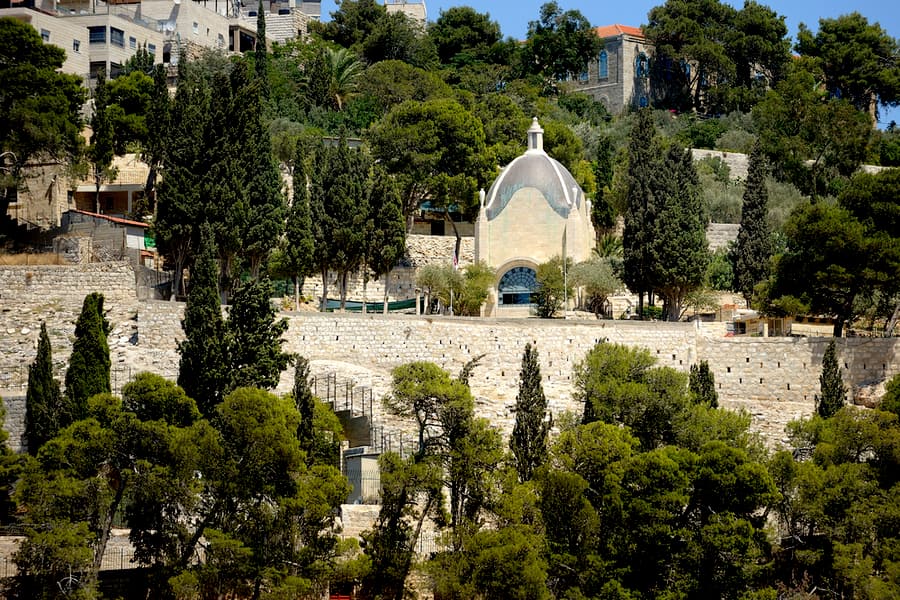
If you are visiting Israel as a Christian pilgrim, it is no doubt going to be one of the great experiences of your life. Literally, you will be walking in the footsteps of Jesus, treading on the same ground he did, two thousand years ago. This is the part of the globe where he was born and raised, where he recruited his disciples and preached the word of God, where he performed miracles, gained thousands of followers, was arrested and crucified, then rose from the dead and ascended to heaven. Mount of Olives with the Church of all Nations, Jerusalem.Photo credit: © ShutterstockIn this respect, Israel is truly a Holy Land - for it is the land he lived in quite ‘normally’ (for the most part, anyway), amongst the Jews of the day, for his entire life. No wonder, then, it can feel quite surreal, making a trip (as a pilgrim) to this part of the world. This article is here to help you plan your trip to Israel and to answer some of the many questions you might have. These include “What was Israel like in Jesus’ days?” and “Where was Jesus crucified and buried?” It will also give you an idea of the ‘Holy Land map’ of that time, look at Jesus’s life in Galilee and delve into his final journey to Jerusalem.Plan a Trip to Israel in Jesus’ FootstepsThe Gospels of Matthew, Mark, Luke, and John give us a fair idea of where Jesus spent his days and this has also been confirmed by the excavation of archaeological sites mentioned in the Bible. To help you plan your next trip to Israel, here we want to focus on two specific geographical regions where Jesus lived and preached - the Galilee and the Jerusalem area. Of course, these are just two of the many regions Jesus spent time in Israel but...Of course, there are more than 10 places where Jesus walked in Israel, but we wanted to highlight these two because - in theological terms - they really clarify the message he was preaching at that time. Let’s try and do this by providing you with a chronological timeline of Jesus’ life (including his early and formative years, before he became famous for his teachings).The ancient tombs in the Kidron Valley.Photo credit: © ShutterstockTimeline of Jesus' life.Birth in BethlehemIt is estimated that Jesus Christ was born between 4-6 BC in Bethlehem, which is located just six miles from Jerusalem. The Gospels refer to his birth as occurring at the time of King Herod and this is substantiated by non-Christian accounts by Tacitus and Josephus. Today, Bethlehem is a major pilgrimage center, where it is possible to visit a number of sites connected with this monumental event. The most important of these is the Church of the Nativity, the oldest church in daily use, and an incredibly sacred site for Christians. A visit to the Milk Grotto and Shepherds' Field is also recommended, either independently or as part of a visit with a tour of Bethlehem.Early Years in NazarethJesus spent the first months/years of his life, after his parents Joseph and Mary, fled with him to Egypt, to spare him from certain death warned off by an Angel that appeared to Joseph in a dream - King Herod’s decree had been to slay all baby boys born under the age of 2 in Bethlehem. Historians and theologians are unclear as to how long the family spent in exile; it could have been somewhere between a few months and several years. The family returned home to Nazareth (in northern Israel) after Herod’s death. We do not know too much about Jesus’ childhood and early adolescence there although, since his father was a carpenter, it is possible that he was involved in construction projects (he learned skill and hard work from his father). It is believed he lived there until he was around 30 years old, when he then began traveling around the wider area, including the Galilee, preaching the word of God to locals and urging them to change their ways. Today, Nazareth is a popular place for Christian pilgrims, the most popular site of which is the Basilica of the Annunciation (believed to be the home of Mary and where the Angel Gabriel appeared to her, announcing that she would give birth to the Messiah). On the grounds of the Basilica is the Church of St. Joseph, marking the site thought to be Jesus’ childhood home. Walking the streets of this ancient city and exploring Nazareth churches and other sites, as part of a tour of Nazareth, is a wonderful way to get a sense of all this.Interior of the Church of the Annunciation, Nazareth.Photo credit: © ShutterstockJesus’s Ministry in Galilee and the Miracles he Performed ThereThe years Jesus spent around the shores of the Sea of Galilee (today around 30 minutes drive today from Nazareth) are well known for many reasons. It was here that Jesus preached about God’s love and the Kingdom of Heaven. It was also where he recruited his twelve disciples - fishermen - urging them to put down their nets and follow him. And it was here that he performed a series of miracles which remain famous to this day - walking on water, raising a man from the dead, and multiplying two fishes and five loaves of bread into food sufficient for a crowd of five thousand.Galilee is home to a number of beautiful churches of Jesus' Ministry which no pilgrim should miss seeing. These include the Church of the Multiplication in Tabgha, the Church of the Transfiguration on Mount Tabor, and the Church of Beatitudes - where Jesus gave his famous Sermon on the Mount. It is also home to Yardenit - the famous Baptismal site where it is believed Jesus was baptized by John - and Cana, the village where Jesus notoriously performed the miracle of turning water into wine at the wedding of a poor couple. Taking a Christian Galilee touris an ideal way to see the Christian sites in Galilee, and to get a real feel for the places he preached.Sea of Galilee.Photo credit: © ShutterstockJesus in Jerusalem - From Arrival and Arrest to Crucifixion and ResurrectionJerusalem, arguably, is the most sacred of all cities in Israel for Christians for this is where Jesus was not just killed but buried and then resurrected. Here we look at Jesus’s road to Jerusalem, and the events that took place there, on the Mount of Olives, before his arrest and death, and his walk to Calvary, the point at which he was nailed to a cross and died, several hours later. Palm Sunday - it was on this day that Jesus triumphantly entered the city of Jerusalem, riding on a donkey, as his supporters cheered him, waving palm branches and shouting ‘Hosanna’ to their King. There is a Palm Sunday Procession Tour which one can join each year.Holy Thursday - this day commemorates the Last Supper when Jesus broke bread with his disciples and washed their feet, as a gesture of humility. This is also the occasion on which Jesus was betrayed by his disciple Judas, in the Garden of Gethsemane.Good Friday - this is by far and away the most solemn day of the year for Christians since this is when Jesus took his final walk, along the Via Dolorosa (‘the Way of Sorrows’) before arriving at the site where he would suffer an agonizing death at the hands of the Romans. Church of Multiplication, Tabgha, Israel.Photo credit: © ShutterstockEach Easter in Jerusalem, thousands of pilgrims recreate this solemn procession, following in the footsteps of Jesus, stopping along the way at the various Stations of the Cross (where Jesus paused, to rest briefly). The procession culminates at the Church of the Holy Sepulchre, inside which are further stations of the cross. Masses are held at churches across Jerusalem.Easter Sunday - this joyous occasion celebrates the resurrection of Christ and all across Jerusalem, and the Holy Land, sunrise services are held (often after all night Vigils). According to the Gospels, Mary Magdalene, along with some of Jesus' disciples, discovered that the tomb in which his body had been placed was now empty.For Christians, this death followed by resurrection is indicative of new birth and salvation. The Paschal greeting is recited by Priests and Ministers - ‘Christ is Risen” - to which the congregation responds “He is risen indeed, hallelujah.” Visiting Israel during Easteris an unforgettable memory in the life of every Christian.Yardenit baptismal site.Photo credit: © ShutterstockPlaces of Historical and Religious Interest in JerusalemCan you visit the place where Jesus was buried? Unequivocally, the answer is yes. There is more than one site associated with his burial - the first, of course, is the Church of the Holy Sepulchre, located in the Christian Quarter of the Old City This has been a major pilgrimage site since the 4th century, and inside its enormous, grandiose interior are several chapels, the Anointing Stone and Calvary, the very spot where Jesus is believed to have been crucified. The church has withstood Byzantines, Crusaders, and Ottomans, and the enormous wooden arched doors are opened each day by a key made of iron, by a family that Saladin entrusted with it after he reclaimed this church from the Crusaders.The second is the Garden Tomb, just outside the City Walls of Jerusalem. It is a rock-cut tomb that was discovered in 1867 and is considered, by some Protestants, to be the spot at which Jesus was buried. The entrance is free but reservations should be made in advance.Many Christians, when visiting Jerusalem, also spend time at the Mount of Olives. Home to several churches, including Pater Noster,Dominus Flevit, the Church of All Nations (Basilica of the Agony), and the Chapel of Ascension - the spot where Jesus ascended into heaven.Pater Noster Church, Jerusalem. Photo credit: © ShutterstockThe Message of JesusFor sure, Jesus’ teachings were extraordinary - by any standards, but particularly by the times of the day - what he preached was radical and counter-cultural. Thousands of people flocked to Galilee and Jerusalem to hear him preach. There, he inspired them and challenged them to shake off old habits and start living different kinds of lives.Unfortunately, Jesus’ message was sufficiently radical to infuriate and antagonize many of the religious leaders of the day. They conspired with some of Jesus’s closest followers (including his disciple Judas) to have him arrested for blasphemy, knowing all too well that the price he would pay would be death. Ultimately, this was the case - Jesus was put on trial, condemned by Pontius Pilate, and executed by crucifixion in around 30 AD. However, his resurrection proved to his supporters that Jesus and his message could not be silenced. According to the Gospels, he rose from the dead and appeared to more than 500 people in the weeks following his resurrection. As is written in the Gospel of St. Luke, he was then carried up into heaven, hidden from view by a cloud. His disciples understood then that he was to be exalted and sit at the right hand of God. Today, the resurrection is a cornerstone of Christian teaching.Garden of the Church Of The Beatitudes, near Sea of Galilee, Israel. Photo credit: © Shutterstock
By Sarah Mann
0 views

Traveling to Hebron

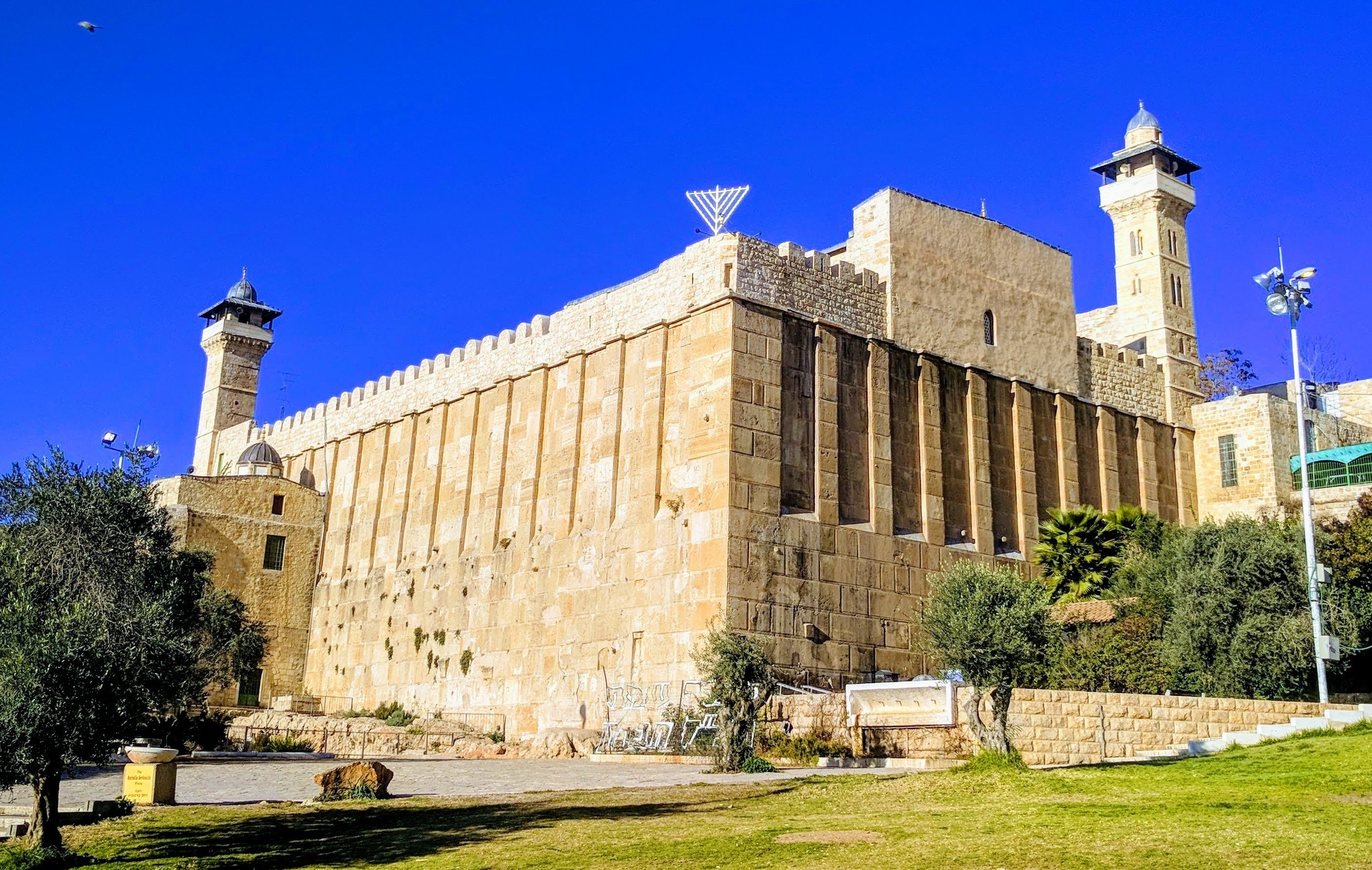
Hebron is a city in the south of the West Bank, 30 kilometres from Jerusalem. Located in the Judean Hills, it lies 930 metres above sea level. Hebron, in Hebrew, means ‘friend’ or colleague’ (although the original sense of it may have alluded to an alliance) and in Arabic it is called ‘Khalil al-Rahman’ (the name for Abraham, in the Quran, meaning ‘‘beloved of the Merciful’ or ‘Friend of God’. Hebron has enormous significance in the Hebrew Bible, since it was near this city that God entered into a covenantal relationship with Abraham telling him that he would be the ancestor of a multitude of nations.Cave of the Patriarchs, Hebron.Photo by Dan Rosenstein on UnsplashThe History of HebronArchaeologists are of the opinion that Hebron existed as long ago as the Bronze Age and was flourishing in 8 BCE. Excavations at Lachish (the second most important city in Judean times, after Jerusalem) show that Hebron was an important economic center. Under the British Mandate, most of the land around Hebron was owned by waqfs (Islamic charitable trusts) but by the 1920s, around 265 Jews had moved there. In 1929, tensions boiled over and the Jewish quarter was destroyed, and 67 people were murdered. This set the scene for many more years of conflict which, unfortunately, continue until today. In 1994, a Jewish settled by the name of Baruch Goldstein entered one of the city’s most holy sites - the Cave of the Patriarchs / Ibrahim Mosque - during Muslim dawn prayers and shot and killed 29 worshippers. As a result, Jews and Muslims are now restricted to certain areas for prayer, save for 10 days a year in which adherents can enter all parts of this building.Hebron Today - Sites of InterestHebron is timeless and as the holiest ancient city in the West Bank has numerous holy sites which are rich in Jewish heritage and history but also important to Muslims. Today, Hebron is a UNESCO World Heritage, meaning it is an area guaranteed special protection by international convention.Public transport in the area is available but quite limited and due to the ever-changing political situation, the best way to visit this area is definitely with theprivate tours of the West Bank. Let’s look at some of the sites in this area that you might consider visiting, on a trip to this unusual city:British loyalty meeting in Hebron, 3 July 1940. Photo credit:J Matson, Matson Photo ServiceTomb of the Patriarchs (Ma’arat Machpelah) / Ibrahimi MosqueThis is probably the most famous site in Hebron since it is not just sacred both for Jews and Muslims but, in the last century, has been a flashpoint for political controversy and violence. Historically, it was first a church, in Byzantine times, but then turned into a mosque by the conquering Arabs. After the Crusaders arrived, it was turned back into a church and then once the Mamelukes appeared on the scene, it was once more turned back into a mosque.Sacred to Two Peoples -Layout and Design of the Cave / MosqueFor Jews, after Temple Mount in Jerusalem, this is their second most sacred site. It is where the first commercial transaction in the Bible was recorded - that is when Abraham purchased a plot of land, around 3700 years ago, to bury his wife, Sarah. Genesis actually records the price paid to Ephron the Hittite - 400 shekels of silver (which, incidentally, was the full market price). Jews believe that Abraham, Sarah, Isaac, Jacob, Rebecca, and Leah all have their final resting place here, which is why they refer to it as the Cave of the Patriarchs and Matriarchs.For Muslims, it is the Ibrahimi Mosque. Muslims, just like Jews, revere Abraham and his descendants and regard it of great importance to their faith. Muslims also believe that Abraham, along with his son Ishmael, built the Kaaba in Mecca. It goes without saying then that, after the Temple Mount, the Machpelah Cave / Ibrahimi Mosque is the most contentious‎religious site in the Middle East, with both faiths laying claim to it. The building itself is quite magnificent. Around the Herodian structure are huge stone walls and its corners point to the four points of the compass. Inside the Cave of the Patriarchs, Hebron. Photo by Dan Rosenstein on Unsplash Inside, the design is extraordinarily eclectic (probably because the building changed hands so often!) A visitor will see domes, minarets, columns, arches, and corridors from all different periods. The Cave/Mosque contains several cenotaphs (burial tombs and those of Abraham and Sarah are covered with beautiful embroidered green cloth. Nearby is the Shrine of Abraham, where it is said that Abraham left a footprint when he went out of the Garden of Eden.Through a wide door, you enter into the mosque - the stained glass windows, pillars, and vaulted ceiling indicate this was once a Crusader church. The mosaic and marble mihrab (a niche in the wall of the prayer room marking the direction facing Mecca), and the pulpit are carved out of wood walnut wood, brought to Hebron by Saladin.Next to the pulpit is a flight of stone stairs, leading down to the actual Cave of Machpelah. The caves are not normally accessible (due to political tensions and also out of respect for the dead). The other entrance to the actual cave, however, is sealed by a large stone and covered by a prayer mat. This is close to the ‘Seventh Step’ on the outside of the enclosure and is famous for being the spot from beyond which the Mamluks forbade the Jews to venture.The building’s ceiling is decorated with murals dating back to Ottoman, Mamluk, and Crusader times. Today, the Cave/Mosque is strictly divided into Jewish and Muslim areas. Muslims enter close to the northwestern wall and Jews enter via the southwestern wall.Quran, the holy book for Muslims.Photo by Syed Aoun Abbas on UnsplashThe Cave of Othniel Ben KnazOthniel was an ancient Jewish leader and the first Judge of Israel. The cave lies around 200 meters to the west of Beit Hadassah, at the top of a rocky area. The Mishnah (the earliest authoritative body of oral Jewish law) describes the traditional burial practices of the Jews at that time. The cave is today under the control of the Palestinian Authority, but despite this religious Jews come occasionally to worship here. Popular times to make a pilgrimage to this cave include the holidays of Tisha B’av and Lag B’Omer.The Tomb of Abner Ben NerAbner Ben-Ner was the greatest fighter in King Saul’s army and, according to Jewish tradition from the Middle Ages, was buried close to the Cave of Machpelah, which corresponds to the current location of the site. In Samuel II, in the Bible, it says: “And they buried Abner in Hebron and the king raised his voice and wept on Abner’s grave, and all the people wept”. The tomb itself is a stone structure with several rooms all arranged around a courtyard. The gate is designed in Mamluk style.The Tombs of Ruth and JesseRuth and Jesse were the great-grandmother and great-grandfather of King David. This tomb is situated within the ruins of Deir Al Arab’een in the Tel Rumeida section of Hebron. Early references to it come from a student of the Rambam in the 12th century, who records a visit there. In the 1970s the site was excavated by Profession Ben Tzvi Tavger and subsequently re-opened to the public. Next door to the tomb is a small synagogue where visitors come throughout the year. A particularly important festival for them is the festival of Shavuot (in the spring), when it is traditional to read from the Book of Ruth.Ruth 2:1-20 NIV.Photo by Brett Jordan on UnsplashBeit HaShisha and ‘The Six’In May 1980, outside the historic Beit Hadassah building in the Old City of Hebron, six young men were ambushed and killed. Beit Hadassah was founded in 1893, as a result of the work of Rabbi Franco. It was the country’s first Hadassah hospital (the same is now situated in Jerusalem and is world-famous). Twenty years after the murders, a new building was erected in memory of the six men killed and named ‘Beit HaShisha’ which, in Hebrew, means ‘House of the Six.’Tel Hebron and the Admot Ishai-Tel Rumeida NeighborhoodTel Hebron is an ancient archaeological park in Hebron, within a residential neighborhood called Admot Ishai. Archaeologists believe that the Patriarchs Abraham, Isaac and Jacob, and the Matriarchs Sarah, Rebecca, and Leah (all who are buried in the nearby Machpelah Cave) lived here around 4,000 years ago.Between two ancient walls, visitors can see stone stairs dating back thousands of years. Excavations have led archaeologists to speculate that ancient Hebron’s original gate might even be underneath them. This gate is actually mentioned in the Bible’s book of Genesis, when Abraham purchased the area as a burial place for his wife, Sarah. Avraham Avinu SynagogueBuilt in 150 by Hakham Ashkenazi, this structure became the hub of the Jewish community at that time, as well as a center for the learning of Kabbalah (a mystical and esoteric Jewish school of thought). This domed synagogue fell into disuse after the 1929 Hebron Massacre and was destroyed after 1948. After Israel conquered the area in the Six-Day War in 1967, permission was granted for it to be rebuilt, the architect of the project being Rabbi Ben Zion Tavger, and today prayer services are held there every Friday night.Torah Scroll.Photo by Taylor Wilcox on UnsplashBeit HadassahBeit Hadassah was erected in 1893 as a clinic and charitable institute. Thanks to the contributions of North African, Indian, and Iraqui Jews, it flourished and by 1911 it was offering free medical care to local Jews and Arabs alike. In 1929, as a result of the riots in the city, the building was destroyed.The building remained vacant until Passover 1979 when a group of Jews occupied the building and refused to leave until they were granted permission by the State of Israel to make it their permanent home. A year later, after an ambush that left six young men dead, the old Beit Hadassah building was repaired and extended and today it is home to some Jewish families.Beit RomanoBeit Romano was constructed in 1879 by Chaim Romano, a prosperous Turk. It was a symbol of centers outside the ‘ghetto’ of Hebron and served as a guest house. The ‘Istanbul Synagogue’ was subsequently established here. Under the British Mandate, the building was turned into a police station and used to shelter the injured during the Hebron Riots of 1929. Under Jordanian control from 1948-1967, it was used as a school and only in 1980 reclaimed by the Jews. Between 1996-2000, renovations were carried out and another floor was discovered underneath the building. Today it is home to a yeshiva (Jewish study area) and an Israeli Army military camp.The Oak of Sibta (Oak of Abraham,The Oak of Mamre)This ancient tree, according to non-Jewish tradition, is supposed to mark the place where, as recorded in the book of Genesis, Abraham pitched his tent. The Oak of Mamre can be found in the Russian Orthodox Church of the Holy Trinity, which owns the land. The oak fell down in 2019 but plans to preserve its trunk and endeavor to encourage a new shoot to grow are underway.Mamluk ArchitectureAll around Hebron are buildings that were constructed during the Mamluk period, between 1250 and 1517 CE. Some of these include the Fountain of Qayt Bay, the Gold Market, and the Bab Al-Asbat Minaret. Mosques of this period include Al-Jawali, Mahkamah, Katib Al-Wilaya, Ibn Marwan, Aybaki and Al-Shamah.The Oak of Mamre in 2008, before collapsing in 2019. Photo credit:Copper Kettle - originally posted to Flickr
By Sarah Mann
0 views

Easter in Jerusalem

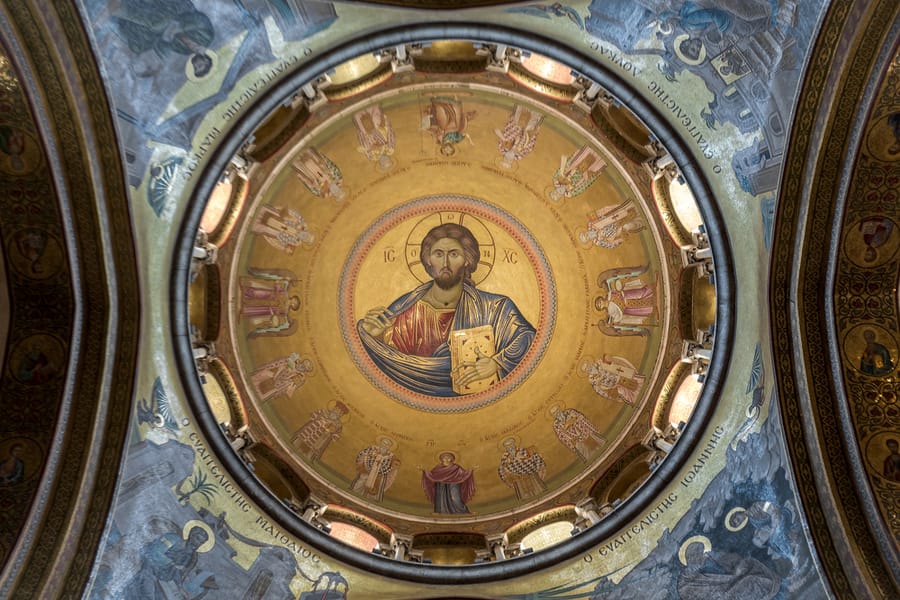
For Christians, there is no doubt that Easter is the most spiritual holiday in their religious calendar - yes, it even trumps Christmas in the sacred stakes! Why? Because this is the time of the year that the crucifixion, burial and resurrection of Jesus, the son of God, is commemorated and celebrated. They last for a period of time known as ‘Holy Week’ commemorating the events before and after the crucifixion.Easter celebration.Photo by freestocks on UnsplashIn late March or early April each year (depending on the calendar), thousands of pilgrims from all denominations descend upon Jerusalem for a period like no other. Taking place within the walls of the Old City, and at the Garden Tomb (which is open for visits throughout Holy Week (8:30 am to 12 noon and 2 pm to 5:30 pm) they recreate scenes from the last week of Jesus’s life, culminating in a solemn procession on Good Friday and a great celebration on Easter Sunday. Let’s take a look at how the week unfolds and some of the rituals the make Easter in Jerusalem so special and moving for Christians…Palm SundayPalm Sunday always falls one week before Easter. It is the first day of’ ‘Holy Week’ and is a festival that commemorates Jesus’ triumphant entrance into Jerusalem. According to all of the Gospels, Jesus rode into Jerusalem on a donkey and was greeted by his followers who all waved palm branches to celebrate. Historically, the palm branch may have been a symbol of victory and triumph and the donkey seen as an animal of peace (not war, as would have been a horse).Today, in the Old City, pilgrims recreate this scene as part of the Jerusalem Palm Sunday Procession Tour Beginning at the Mount of Olives, descending into the Kidron Valley and Gethsemane Garden, pilgrims walk solemnly through the Lions' gate and into the Old City. They proceed along the Via Dolorosa where Jesus walked his last steps before arriving at the cross. All along you hear cries of ‘Hosanna’ from the crowds. The procession is led by leaders of the Catholic Patriarchate (in brown robes), the Latin Patriarch (in purple robes) and the Greek Archbishop (in black robes). All along the way, the route is lined with Christian pilgrims (both local and those who have travelled from across the world) reciting blessings and singing songs. It is a very colourful and interesting ceremony, which culminates at St. Anne’s Church.Palm Sunday Procession. Photo by Brady Leavell on UnsplashMaundy ThursdayMaundy Thursday is also known as Holy Thursday and its name derives from the Latin ‘mandatum’ which means ‘command’. This ties up with Jesus’ commandment to his disciples “Love one another, as I have loved you.” This day, in essence, commemorates three major events:It is the day Jesus and his disciples sat down to eat the Last Supper. During this meal, Jesus took bread and wine and shared them with everyone at the table. Today, Christians around the world of all denominations continue to use bread and wine in their services of worship (such as the Eucharist and Mass).Furthermore, on Holy Thursday, according to the Gospel of John, Jesus washed the feet of his apostles. This act has different meanings - to show that as an important person, Jesus practised humility and love to others. Some Christians also regard it as a way of seeking reconciliation with someone before taking communion. Today, there is a traditional Washing of the Feet ceremony carried out in the Church of the Holy Sepulchre.Finally, this is the day in which Jesus was betrayed in the Garden of Gethsemane, after being betrayed by Judas. This was, for sure, a pivotal moment in Christianity.Today. In Jerusalem, pilgrims celebrate Maundy Thursday at the Room of the Last Supper (the Upper Room), located on Mount Zion. Some even hold an all-night vigil there, remembering Jesus’ hours in Gethsemane. In terms of the churches themselves, a Pontifical Mass (Supper of the Lord and Mass of the Chrism) is held at the Church of the Holy Sepulchre early in the morning. In the afternoon, in and around the Old City, there are pilgrimages from one church to another followed by services of the Washing of the Feet. Typically, the route of procession passes by the Church of All Nations, through the Lions' Gate, into the Old City and along the Via Dolorosa. All along the way, pilgrims sing songs in a number of languages and pray. Room of the Last Supper. Photo credit: © ShutterstockGood FridayGood Friday (also known as Holy Friday and Great Friday) is a very solemn - and incredibly important - day in the Christian calendar, marking the death of Jesus by crucifixion at Calvary (Golgotha). Many members of the various Christian denominations attend church services, abstain from eating meat and even fast. In the Roman Catholic, Lutheran and Anglican tradition, there is a service held between 12 and 3 pm, called ‘The Three Hour’s Agony’ (alluding to the hours Jesus was on the cross).In Jerusalem, each year, thousands of pilgrims descend on the Old City early in the morning, either to be part of the procession itself (tickets are numbered, limited and much sought after) or to pack the streets for a view. The procession itself is a recreation of the route Christ took, retracing his final steps on his way to the cross.The procession begins at the Mount of Olives, entering through the city walls and tracing its way along what is known as the Via Dolorosa (in Latin, ‘The Path of Sorrows’). Known as ‘the Way of the Cross’ it begins at 11.30 am at Station.1. The Stations of the Cross (14 in all, 8 en route and 6 in the Church of the Holy Sepulchre) refer to various images relating to Christ’s journey and his suffering as he walked this path.Mount of Olives. Photo credit: © ShutterstockIn the Old City, many pilgrims carry wooden crosses, sing hymns as they walk and often stop to recite prayers at each station. This is to symbolically offer ‘reparations’ for the insults and suffering that Jesus had to endure on his last journey which is estimated to have lasted 1.5 km (from Gethsemane to Calvary). The atmosphere is solemn and charged - many Christians, afterwards, describe it as one of the most moving moments of their lives. At the Church of the Holy Sepulchre, the service is broken down into several parts: the Liturgy of the Word (carried out in silence). The Great Intercessions, the Adoration of the Cross, Communion (or Mass). Within this time, the liturgy will also include readings of the Gospel Passion narrative. After the ‘Three Hour’s Agony’ service - between 12 midday and 3 pm - vespers are read, to commemorate the time Christ’s body was taken down from the cross.Traditionally, on Good Friday, many Christians in Jerusalem will not eat meat or even fast entirely (to show their sorrow), will not perform any work, including washing clothes, breaking ground or playing with children. Since ?hurches of the Old City of Jerusalem are open for the entire day, some pilgrims will spend much of the evening or night in contemplative prayer.A pilgrim in Via Dolorosa. Photo credit: © ShutterstockHoly SaturdayFor Orthodox communities, this day is known as Holy Saturday (‘Saturday of Light’) and each year in Jerusalem, it is commemorated with a ceremony named the Holy Fire Ceremony. This is held in the Church of the Holy Sepulchre - it is a popular ritual that is well attended by Christians from across the denominations.According to Orthodox tradition, at this time a blue light emanates from the tomb of Jesus and rises up from the marble slab (upon which his body was placed for burial). It is believed that the light forms a column of fire and, as a result, candles can be lit from it, both for the clergy and pilgrims in attendance. It is also thought that this ‘Holy Fire’ will not burn them and can be used to spontaneously light other candles and lamps in the church.In the darkness, the Patriarch kneels in front of the stone, and the crowd waits anxiously. When he emerges, with two candles lit, his audience breaks into applause and cheers with joy. The dome of the Church of the Holy Sepulchre.Photo credit: © ShutterstockEaster SundayThe final day of the Holy Week culminates in enormous celebrations - commemorating the day that Christ rose from the dead. In Jerusalem, celebrations begin early - at 7 am - with the entry of the Latin Patriarch into the Church of the Holy Sepulchre. An hour later, the Mass of Resurrection is held and this includes a procession around the Rotunda. The service begins in darkness and one by one candles are lit. The Priest will state ‘ Christ is risen’ and the congregation will respond "He is risen indeed". All heads of the various Churches in Jerusalem will wear their brightest robes, in celebration, and bells will peal out. People pray individually and collectively. Protestants celebrate with an Easter sunrise service at the Garden Tomb.The week following Holy Week the Orthodox Christians (including Armenian, Coptic, Ethiopian, Syrian and Russian Orthodox) celebrate Easter with similar ceremonies and services. Without a doubt, if you are thinking of making a trip to Israel, a visit at this time of the year is highly encouraged. Springtime is beautiful in the Mediterranean and, combined with the rituals enacted in this special week, you will have the opportunity to witness something quite unique in Jerusalem - something that is sure to stay with you for the rest of your life.The best wat to visitholy Christian sites in Jerusalemis to join one ofChristian Day Tours.Inside the Church of Holy Sepulchre.Photo credit: © Shutterstock
By Sarah Mann
0 views

A Visit to the Jezreel Valley

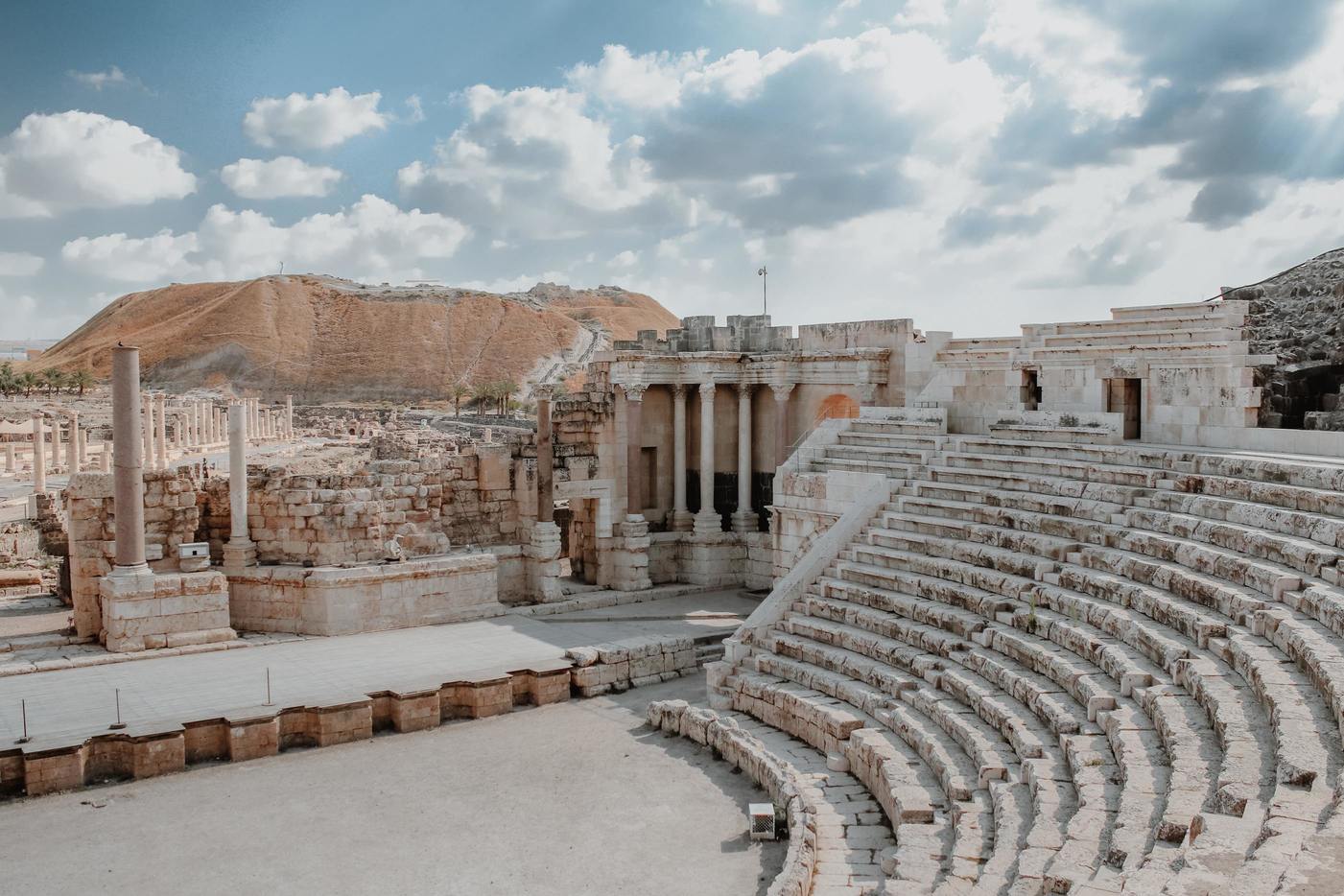
Israel’s Jezreel Valley (also known as the Megiddo Valley) is located in the upper part of the country, bordered on its north by the Lower Galilee, to the south by Mount Gilboa, to the west by the Mount Carmel Range, and to the east by the Jordan Valley.It is a large, fertile plane, dotted with natural springs, and affords the visitor all kinds of wonderful views. As the agricultural heartland of the country, it is famous for its astonishing flatness, as well as its beauty. Although there are many valleys in Israel, it is particularly well-known and loved and usually referred to by Israelis simply as ‘ha Emek’ which, in Hebrew, means ‘ the Valley.’Jezreel Valley from the top of Mount Tabor.Photo credit: © Jenny EhrlichWith its fertile soil and endless farms, it is a beautiful spot for hiking, picnics, and general enthusiasts of the outdoors. Often overlooked by tourists on a tour to Israel, it is not just a wonderful place for nature lovers but also boasts sites of great religious and historical significance. Jezreel, in Hebrew, means ‘ God sows’, and because of its strategic location (as a stopover for armies en route to Egypt, Turkey, or the Arabian Peninsula) the valley is not just rich in soil but also in archaeological artifacts. History of the ValleyThe history of the Jezreel Valley dates back thousands of years (circa 7000 BCE) and is mentioned in the Hebrew Bible as the home of Gideon (a military leader of the Israelites as well as a prophet and Judge). The valley is also home to one of the area’s most famous battles - the Battle of Megiddo. This is mentioned in the Book of Revelations as the place at which the last battle before the Apocalypse will be fought, between the forces of good and evil. (Fun fact: the ancient fortress city of Megiddo has seen more battles than any other spot on the earth. Join the Megiddo and the Jezreel Valley Private Tour to check that).Megiddo National Park.Photo credit: © ShutterstockGeography of the AreaThe Jezreel Valley, as mentioned before, is extremely fertile and by far and away the agricultural heartland of the north of Israel. It is the veritable ‘ breadbasket’ of the country, with its wheat crops. Driving through the area, you are also bound to see cotton fields, fish ponds, grazing cattle, sunflowers, and age-old silver-green olive trees on terraced hillsides. Farmers here (often working in collectives) grow white beans, chickpeas, cheeses, watermelons, lemons, limes, and cherries. Today, most of the population can be found in Afula or large villages, and small-scale family orchards are mainly a thing of the past although some families hold true to their heritage and continue to market crops that their forefathers did. Whether exploring the Jezreel Valley independently or by taking a private tour, traveling the area will give you the opportunity to visit not just historical and religious sites but also local kibbutzim (on our private tours, we can arrange such visits with ease).Let’s now take a look at some of the most important sites in the region, which include mountains, national parks, and even a Crusader castle. All are based in this beautiful, and often under-explored part of the country. Intrigued? Read on ...Megiddo National Park.Photo credit: © Jenny Ehrlich1. MegiddoMegiddo refers to a "tel" or hill, and ancient Megiddo overlooked the Via Maris trade route where caravans traveled (the Bible refers to it as ‘the way of the sea’). Today it is home to a well-known archaeological park where visitors can see the remains of several gates that date back to King Solomon’s reign. On the west side of the mound is a water supply and storage system dating back to the 10th century BC, with almost 200 stairs that connect to a long tunnel and underground spring. This system could not be seen by invaders and it was, therefore, a safe space for residents to hide, and survive, when under siege. Also on display is the remains of a Canaanite Palace with 2 meter thick walls and an open courtyard.2. Mount TaborFound east of the Jezreel Valley, in the Lower Galilee, Mount Tabor stands at 570 meters and is easily recognized, due to its unique shape (half hump-backed, half breast-shaped). Mount Tabor is a very important Christian site within Galilee, as it is believed to be the spot at which the transfiguration (the becoming radiant with glory) of Jesus and where he spoke to Moses and Elijah the Prophet. Mount Tabor is a perfect hiking spot since it is green annually, and also offers fantastic panoramic views of the area. Visitors should not miss a visit to the Church of the Transfiguration (built upon the ruins of an ancient Byzantine church), designed by the Italian architect Antonio Barluzzi.Transfiguration Church, Mount Tabor. Photo credit:© Natalia Brizeli3. Mount GilboaSituated in the Lower (south) Galilee, Mount Gilboa is an ever-popular spot both for locals and tourists, particularly in the spring when masses of flowers resemble a carpet beneath the visitor’s feet. It sits 650 meters above sea level, with some rather steep ledges, but still a fine spot for hiking, picnics, and a paradise for those who love flora - in particular the lily, iris, crocus, narcissus, and anemone. A settlement in Roman times (archaeologists later found burial caves found in nearby villages) the area was historically home to vineyards but after the Arab conquest in 636 CE, Gilboa was abandoned until about 250 years ago.Sights in the area include Tel Jezreel, the Hidden Valley (an excellent hiking path for experienced walkers), and the Maale Gilboa observation point, affording spectacular views to the south.4. Gan HaShlosha National ParkGan HaShlosha National Park is arguably in one of the most lovely spots in Israel and boasts far more than just a park, Located at the bottom of Mount Gilboa in the Beit Shean Valley, everywhere you look is water, splashing over into a number of waterfalls and natural pools where you can swim.The pools are also surrounded by tall trees, providing wonderful shade on hot summer days. Moreover, Gan HaShlosha boasts an archaeological museum, divided into two parts – firstly, the Museum of Regional and Mediterranean Archaeology and secondly a rebuilt Tower & Stockade pioneer settlement. This tower was one of the first ‘yishuvs’ (pre-state settlements) and dates back to 1936. 5. Beit Shean National ParkOne of Israel’s oldest cities, Beit Shean (which in Hebrew means ‘the House of Tranquility) can be found 27 km south of the Sea of Galilee. Sandwiched between the Jezreel and Jordan Valleys, it is an extremely fertile area. It is also very hot, with temperatures reaching 50 degrees in the summer. Beit Shean houses the ruins of an ancient Roman city, destroyed in the 8th century by a huge earthquake that struck the area. In 748 CE. Excavated by archaeologists and painstakingly restored, it gives you an excellent sense of how Romans and Byzantine citizens once lived.Not only does it boast an amphitheater, roads and impressive stone columns, mosaics, and a bathhouse, but it is also a national park. Visitors, after exploring the ruins, can walk in green spaces and quickly find themselves next to springs and valley trails. At present, these are the largest excavations within Israel and visitors can easily spend several hours here. Look out for the model at the entrance, giving you an excellent overview, and consider attending a Sound and Light performance, after night falls. Truly a trip back in time.Beit Shean National Park. Photo credit: © Jenny Ehrlich6. Belvoir Castle (Kokhav HaYarden)Located 20 km south of the Sea of Galilee, this fantastic Crusader-era castle (with a history stretching back to the 12th century) is easily one of the area’s hidden gems. Designed to deter Muslim invaders, it sits high above the Jordan Valley, affording spectacular views of the surrounding area.Belvoir (or ‘Kokhav ha Yarden’ which means ‘Star of the Jordan’ in Hebrew) was originally owned by a French nobleman named Velos. After he sold the land to Crusaders, they built the fortress and several battles took place there before it fell to Saladin in 1189. Until the 1960s, it sat in ruins but extensive renovations mean it is now open to the public.Architecturally, the castle is concentric (a popular design originating in Europe at that time), meaning that it was built with two defensive walls, one inside the other. Made of materials such as black basalt and limestone, the main route into the fortress was from an outer age at the foot of a south-eastern tower, ascending a ramp and then doubling back and up again to reach the inner gate in the same corner tower. 7. Beit Alpha SynagogueThe Beit Alpha Synagogue is located in the Beit Shean Valley and dates back to the 6th century. It was discovered accidentally in 1928 by members of a local kibbutz, who were digging in the area as part of an irrigation project. Excavations showed that the building that once stood there was of two floors and constrained not just a courtyard, vestibule, and prayer hall but the bimah (raised platform in which the Torah scroll was kept) faced in the direction of Jerusalem.In the entryway are inscriptions both in Greek and Aramaic and three extraordinary floor mosaics, The first depicts the famous ‘Akedah’ (‘Binding”) scene from the Bible, between Abraham, commanded by God to sacrifice his son Isaac; the second is a Zodiac wheel (depicting 12 different animal signs); the third depicts a synagogue scene, complete with a hanging lamp and a Torah shrine flanked by two lions, with Jewish ritual objects surrounding the animals. Beit Alpha is managed by the Israel Parks and Natura Authority.8. Ma'ayan Harod National ParkMa’ayan (meaning ‘Herod’s Spring’ in Hebrew) is a beautiful national park located at the foot of Mount Gilboa. It offers panoramic views of the Jezreel Valley, a large swimming pool (which is fed by water from the nearby spring), and a great deal of greenery, making it an ideal attraction for both older and younger visitors.The area dates back to the 12th century, where it is thought to have been the place that Sultan Saladin pitched his tent, en route to Jerusalem. In the 1920s the area was purchased from Palestinians by a Zionist Jew named Yehoshua Hankin, and settled by Jewish pioneers who eventually established two kibbutzes.Visitors can also explore the house and tomb of Hankin - the entrance to the tomb of Hankin (and his wife Olga) was designed by David Palombo, the architect who designed the gates of the Israeli Knesset (Parliament). Inside the house are historical artifacts relating to the Hankin era and next door is a war memorial honoring residents of the Jezreel Valley who died in many of Israel’s battles since 1948.Tsipori National Park.Photo credit: © ShutterstockDirectionsThe Jezreel Valley is not easily accessible by public transport, but the biggest city in the region is Afula, which can be reached by bus no. 825 from Tel Aviv (approx. 1 hour 30 minutes) or by train from Haifa (approx. 32 minutes). To see as much of the area as possible, in a short period of time, it is advisable to hire a car. Alternatively, if you are not keen on driving, and would appreciate the knowledge and insight a guide can give you then why not take a Galilee tour? We would recommend the Mount Tabor, Tsipori, Beit Shearim private tour, in which you can visit the famous Church of the Transfiguration, enjoy Tsipori’s ancient Roman amphitheater and also make a visit the burial caves of Rabbi Yehuda HaNassi. Since all of these private tours can be customized, it is entirely up to you to decide what to visit and how long to spend there.
By Sarah Mann
0 views

Is It Safe To Travel In Israel?

After a surreal year, with all of us dealing with the effects of a global pandemic, our urge to travel has never been stronger for many. Summer is here and looking for a place to travel that’s beautiful, safe, family-friendly and offers cultural and historical landmarks too is top of everyone’s list. Israel, a very popular tourist destination for quite a few years now, fits all the above criteria so why do some people still feel a certain reluctance in visiting this country?Acre beachfront.Photo credit: © Dmitry MishinSome of it, of course, comes from fear of the political situation in the region and, for sure, one can’t deny that Israel is located in the Middle East. However, Israel is also a highly developed country, with outstanding infrastructure, healthcare, and tourist facilities, and nearly everyone here speaks good (if not fluent) English. Not to mention the thousands of citizens who also manage well in Russian, French, and Spanish. Throw in the wonderful Mediterranean sea, fantastic Israeli beaches, fabulous food, and friendly locals, and what’s not to like?Personal Safety vs. Fear of ConflictThe fact is that, for tourists, Israel is an incredibly safe country to visit. You can easily walk the streets of Tel Aviv or Jerusalem at 2 am with complete confidence (in Tel Aviv, there’ll be a fair few cafes still open) and incidents of petty theft and harm to the person are rare. So where does the fear of visiting Israel come from? To an extent, the international media, which from time to time creates an image of the country that is quite incongruous with the situation on the ground. There’s also groups such as BDS (‘Boycott, Divestment, Sanctions’) and other organizations that seek to portray Israel as an apartheid state, with oppression and violence at every turn.The reality, however, is quite different, as many tourists see within days, if not hours, of flying in. As we have said before, Israel is extremely modern, not just by Middle East standards, but by world standards. It uses cutting-edge technology in everyday life, has English and French signs in every major tourist hotspot, and its locals, as a rule, are extremely friendly and hospitable (Israelis love to find out what people think of their country). It’s not uncommon for taxi drivers and barmen to ask if you have someone to eat Friday night dinner, or try and introduce your daughter to their eligible son! Welcome to the Levant…!Nevertheless, putting aside all the above, let’s look at the two major reasons behind the fears some people have when considering traveling to Israel for the first time. Rather than downplaying them, let’s explore the facts on the ground and see if the perception matches reality. If you haven’t guessed, the two major fears people currently have concern COVID-19 and the political situation with the Palestinians in the West Bank and Gaza.Old Jaffa seafront, Israel.Photo credit: © Dmitry Mishin1. COVID-19It is completely understandable to be fearful of Covid-19; after all, this is a virus that has brought the world to its knees and many countries are still suffering terribly. However, Israel is not one of them. On the contrary - Israel is the world leader when it comes to vaccinations - as early as January 2021, it had opened inoculation centers all over the country and was vaccinating thousands of people a day. Now, with summer here, Israel is the envy of the world - it is the first country to have achieved herd immunity, masks are no longer mandatory, either in public or private, cafes, restaurants, and museums are once busier and Tel Aviv's beaches are full. Israel is most definitely a ‘green’ country and can’t wait to welcome you. Even better, because of its low infection rates, you will not generally be subject to quarantine in your home country, when you return from your holiday. Obviously, this is a fluid situation but, as of late June, the timeline for Israel’s reopening to tourists looks like this: at the current moment (i.e. mid-June) most hotels in Israel have reopened and a small number of tourists (who have first-degree relatives in the country) are permitted to enter. From July 1st, 2021, individual tourists will be able to enter Israel, subject to certain provisions. This includes visitors who are fully vaccinated - you will need to show a negative PCR test, a vaccination certificate, and undertake a PCR test on arrival at Ben Gurion airport.Israel will open initially to tourists from countries where governments have signed reciprocal agreements. The list is constantly being updated but is expected to include the USA, UK, and all EU countries. Other states will soon be applying for reciprocity. At the same time, day trips across the country will resume. If for any reason, a member of the group needs medical attention, the hospitals in Israel are some of the best in the world, so you need not fear. To check the latest COVID-19 restrictions in Israel read this article.Caesarea Aqueduct Beach.Photo credit: © Dmitry Mishin2. The Arab-Israeli ConflictNo one would deny that the political situation in this region is rather complicated and, unfortunately, will probably not be solved any time soon. However, as with many ‘troubled’ regions of the world, that does not mean that it is unsafe to visit as a tourist - rather it means simply using your common sense and exercising a little more caution than you normally would.At this point, most foreign embassies advise that their citizens do not travel to the West Bank. However, as tensions flare up and then abate, the situation can change and in more ‘peaceful’ moments tour companies like ours do offer guided trips to the West Bank to some interesting and important sites there (Bethlehem and Jericho tours). Once in Israel, check with your guide who can give you the lie of the land and advise you as to your safety. The political situation is explained in greater detail in this link. Why It’s Secure to Travel in IsraelNow for the good news - it is safe to travel in Israel. The upshot of having to spend over seventy years dealing with terror means that there is a lot of security in public places. Let’s start with Ben Gurion Airport - it’s easily the most well-guarded airport in the world, with (strict protocols in place that most tourists don’t even notice) to ensure your safety.The same goes for bus and train stations, shopping malls, museums, and top tourist sites in Israel such as the Old City of Jerusalem - you may sometimes be asked to open your bag - so a guard can inspect its contents - before going inside, but this is the extent of the inconvenience you will suffer. In daily life, you’ll be surprised at just how ‘normal’ things are - Israelis love their free time and enjoy nothing more than a swim at the beach or a cup of coffee with friends in their local cafe.Sunset in Tel Aviv, Old Port area.Photo credit: © Dmitry MishinSomething else you will notice is young soldiers - of both sexes! That’s because Israel has compulsory national service which begins at the age of 18. Men have to serve three years and women two and their jobs are varied - from combat units and cyber security to clerks in offices, platoon cooks, and paramedics.On Sunday mornings, the buses can be really full - that’s because soldiers who’ve had weekend leave will be returning to their bases. Most of them speak excellent English and if you do end up sitting next to one in a cafe or on public transport, don’t be surprised if you end up chatting to them.Take Responsibility for Your Own SafetyFor the most part, as we’ve said, Israel is extremely safe but we can’t emphasize enough that you should take responsibility for your own safety - by using basic common sense and occasionally exercising a little causation in what you think could end up becoming a tense situation. As with anywhere in the world, you travel, there’s no guarantee that nothing bad will ever happen but there are always steps you can take to minimize danger and unnecessary risks.Here are a few dos and don'ts we recommend following in Israel, to make things as easy as possible for you:Montefiore Windmill in Mishkenot Sha’ananim neighborhood, Jerusalem. Photo credit: © Dmitry MishinList of Dos:1. Listen to your tour guide - they’re knowledgeable and experienced and, as locals, will have their finger on the pulse at all times. It’s also their job to keep you informed, so don’t feel embarrassed to ask as many questions as you want!2. Stay up to date with the news - situations unfold rapidly in this part of the world and if you’re ‘in the know’ that can be very helpful. There are also Israeli radio and TV stations that broadcast in English (i24 and YNet), as well as favorites like CNN and the BBC.3. Distance yourself from provocative or violent demonstrations, should you run into them. Don’t stop for a photo-op to show to friends back home - you might find yourself in the thick of a crowd you then can’t extricate yourself from.List of Don’ts:1. Never try to cross a border where it is not allowed. There will usually be signs to warn you and guards in the area but, if in doubt, err on the side of caution. Whilst it might seem fun to break the rules for a Facebook or Instagram post, you could really end up in a lot of trouble with the Jordanian or Palestinian authorities. Remember you are a guest in another country and aim to be responsible for your own safety.2. Don’t travel to the West Bank alone. If things are quiet, you can take a day tour to Bethlehem and Jericho with a tour company that has years of experience and local connections, which always helps. There are day tours and excursions operating both to Bethlehem and Jericho and they ensure you’ll have a seamless transition from Israel to the area controlled by the Palestinian Authority.Bethlehem rooftop view.Photo credit: © ShutterstockIf you travel alone, not only will you have to deal with checkpoints (where, as an individual, you may have to queue for a long time) but, if worse comes to worst, and trouble breaks out, you may find yourself unable to return to Israel, especially if it's over a religious holiday (when the border between Israel and the West Bank sometimes shut for security reasons). 3. Choose a trusty Israeli tour operator.This is imperative. Do plenty of research, find out how long they’ve been in business, and read their reviews. Check their credentials and reviews on TripAdvisor and don’t be afraid to call them and ask questions before you book - a good tour operator won’t have anything to hide.Beaches, Mountains, Deserts and History - Israel Has It AllTo sum up, then, we can say in no uncertain terms that first-time visitors who join tours in Israel might have a few nerves beforehand but in no time (and we’re talking hours, not days) come to realize that Israel isn’t just a safe destination but an amazing one too. With beaches, mountains, deserts, religious sites, places of archaeological and historical significance, and endless family-friendly attractions, there’s not much to complain about. Add to that the growing ‘food’ culture, the easy beat of Tel Aviv, the gravitas of holy Jerusalem, diving in Eilat, skiing in the Golan Heights, kayaking down the Jordan River, or drinking wine in some very fine Galilee vineyards, trust us when we tell you you’re going to have a holiday you’ll never forget. So now you know, what are you waiting for? Get planning your vacation in Israel and packing because it is open for business - and ready to greet you with open arms.Camel riding at the sign indicating sea level near the Dead Sea, Israel.Photo credit: © Shutterstock
By Sarah Mann
0 views

48 Hours in Jerusalem: Recommended 2-Day Itinerary

Home to three of the great world faiths - Christianity, Judaism and Islam - Jerusalem is arguably one of the holiest cities on the planet. No surprise then that millions of visitors flock to it, to worship inJerusalem churches, synagogues and mosques, explore its endless historical sites, learn more about its conquests and ancestors or just to soak in the atmosphere of this extraordinary place. To do justice to Jerusalem, you’d need many days if not weeks, to wander the city but if you’re short of time, and want to see as much as you can, then - providing you rise early (to avoid the long queues) and put on some sturdy footwear - you can pack in a lot in a couple of days. Catholic Cemetery, Mount Zion, Jerusalem.Photo credit: © Sofia EmeliyanovaGetting Around JerusalemIn terms of getting around, the new and modern light railway is a joy to use and, of course, within the Old City, you’re confined to walking anyway. Consider taking part in the best-reviewed Jerusalem tours if you need some fellow travelers. On a practical level, we’d advise dressing modestly (long trousers for men and skirts or dresses below the knee/tops with sleeves for women) to show respect for many of the holy places. Finally, if possible, try and plan your trip between Monday-Thursday, since Friday-Sunday are days of rest for Muslims, Jews, and Christians respectively. Here, then, is our guide to Jerusalem in 48 hours...good luck and enjoy!Day 1. The Old City and Temple MountThe Old City has an atmosphere and energy that’s hard to describe - full of winding alleyways, exotic smells, places of worship on every corner, and 16th-century Ottoman walls, the city has immense religious and cultural symbolism. Its actual size is not large - it measures less than a square kilometer - but boasting thousands of years of history, and drought over tooth and nail by invaders, it really does pack a holy punch! The Old City itself is divided into four quarters - Christian, Jewish, Muslim, and Armenian - with many buildings laying underneath the streets themselves. The present street plan dates back more or less to Byzantine times and is bisected by an east-west road (thus the four quarters). Bethesda Pools, Jerusalem. Photo credit: © ShutterstockChristian Sites in the Old City of JerusalemArriving through the Jaffa Gate, every visitor, whatever their faith, should walk the Via Dolorosa, which leads to the Church of the Holy Sepulchre. Treading the path Jesus walked, on his journey to the cross, is an extraordinary experience - stop at the different stations (marked on the ancient stone walls) and if you want to really soak up the atmosphere, go on Fridays at 3 pm, when the Franciscan Custodians of Holy Places lead a procession. The Church of the Holy Sepulchre is the holiest site for Christians in the entire world - this is where Christ was crucified, buried, and resurrected and the atmosphere inside is extraordinary. (Fun fact: the walls of the church are inscribed with thousands of crosses, inscribed by Crusaders who traveled across Europe hundreds of years ago and slept in the church).The Convent of the Sisters of Zion (a Catholic nunnery), the Garden Tomb (around the City Walls), the Coptic Orthodox Patriarchate, and St. Anne’s Church are also popular Christian sites within the Old City. For history buffs, consider taking a Jerusalem Half Day Tour and, at its conclusions, continuing on to explore alone.Church of the Holy Sepulchre. Photo credit: © ShutterstockJewish Sites in the Old City of JerusalemWithout a doubt, a visit to the Western Wall (or “‘Kotel’ in Hebrew) is an experience no tourist ever forgets. Jews from across the globe come to pray here since it is their most holy site (the last retaining wall of the Second Temple built by Herod in Roman times). It is open to all, free and both Jews and non-Jews are permitted to walk close to the wall, pray there and place notes in the crevices of its walls.As well as the Kotel, there is much to see in the Jewish quarter. Walk along the Cardo - the remains of a street that existed back in Roman-Byzantine times, where merchants sold their wares - and look out for the Madaba Map (an astonishing mosaic that depicts ancient Jerusalem). A hidden gem often overlooked is the Hurva Synagogue. Built in 1700, burnt down in 1720 then re-inaugurated in 1864, this was one of the most impressive synagogues that stood in the Old City before 1948. Badly damaged by shelling in the War of Independence, it was subsequently demolished but in 2010 underwent major renovations to restore its beautiful exterior. Today it is possible to take a guided tour around it - look out for the tallest Ark of the Covenant in the world! David Playing the Harp before Saul, Jerusalem.Photo credit: © ShutterstockFor archaeology lovers, the Burnt House is a must-visit. After the Six-Day War in 1967, Israeli archaeologists began digging in the Jewish Quarter of the Old City and found something quite astonishing - a house six meters below street level, concealed by a layer of ash. This ‘Burnt House’ dates back to the time of the Second Temple and is believed to have been the home of upper-class Jews. They were the Katros family and we know this because archaeologists found a stone weight, inscribed with their name on it.Not exactly in the Old City but not far away it is the City of David – and this can easily be joined on a City of David and Underground Jerusalem Tour.Muslim Sites in the Old City of JerusalemA visit to the Temple Mount and the Dome of the Rock will be of particular interest to any Muslim since, after Mecca and Medina, the Dome of the Rock is Islam’s third most holy site. Constructed in 691-692 CE, it is instantly recognizable shimmering gold roof and blue-tiled exterior houses a sanctuary in which lies the Foundation Stone - where Mohammed (according to legend) ascended to heaven. Since non-Muslims are not allowed to enter the Dome of the Rock itself, we would recommend joining a tour of the area.The Western Wall, Jerusalem. Photo credit: © Dmitry MishinThe entire Muslim quarter is a fascinating place to explore, with tiny stores selling spices, sweet delights, vegetables, and household goods. The bazaar-like atmosphere is very Levantine - don’t be afraid to bargain either, as it’s expected! The area around the Damascus Gate is particularly lively, and a good place to grab a Turkish coffee (strong and black, with a hint of cardamom), a piece of baklava, and watch the world go by. If you have the energy, walk outside the City Walls and up to the Mount of Olives, to see a spectacular sunset.After a power nap, spend the evening at one of Jerusalem’s excellent restaurants or bars in the New City, visit the Light and Sound Show at the Tower of David, or simply stroll through the fancy Mamilla Mall. Jerusalem is also home to the Cinematheque on Hebron Road, which hosts many documentary film festivals and boasts a lovely cafe, with light bites and fabulous views. Day 2. The New CityJerusalem is home to a number of excellent museums, two of which you could easily spend the entire day at. We would highly recommend both of them, the first being Yad Vashem - the national monument to the Holocaust - and the second the Israel Museum, which houses a spectacular collection of art, Judaica, sculptures, and the astonishing Dead Sea Scrolls. At a pinch, you could visit one in the morning and another in the afternoon... although that might be a little overwhelming.Shrine of the Book, Israel Museum, Jerusalem. Photo credit: © ShutterstockYad Vashem - The World Holocaust Remembrance CenterA visit to Yad Vashem is an extraordinary experience, leaving many moved to tears and all walking away with an indelible memory of their trip. Presenting the experience of the Holocaust (‘Shoah’ in Hebrew) from a uniquely Jewish experience, it takes the visitor on a remarkable journey, emphasizing the experiences of individuals through personal possessions, testimonies, and surviving artifacts. The museum actually contains over 27,000 items that were donated by survivors over the years, including chess sets and the distinctive yellow stars that Jews were forced to pin to their clothes.Visitors walk through a large museum, at first being confronted by the Nazi rise to power, then exploring the ghettos in which Jews were forced to live and finally coming face to face with the grim reality of life in concentration camps, for the few deported who were not immediately murdered. The space visitors walk through is 180 meters long and formed like a spike with its top edge (a skylight) protruding. Deliberately designed with varying heights and differing degrees of light permeating the rooms, the idea is for it to symbolize the complexity of the Jews’ predicament as well as the idea of rebirth after destruction. The Museum also holds a Hall of Names (remembering the six million murdered) and a space to honor Righteous Gentiles, who risked their lives to save Jews.A visit to Yad Vashem is by no means a ‘fun’ way to spend a few hours. It is difficult and sometimes overwhelming to make this journey, but incredibly worthwhile and something that is recommended for every visitor to Israel, as a way to understand the collective trauma of the Holocaust that still reverberates throughout Israeli society today.Yad Vashem Holocaust Museum, Jerusalem.Photo credit: © ShutterstockThe Israel MuseumRegarded as one of the world’s leading museums, the Israel Museum offers visitors a slice of fine art, archaeology, ceramics, Jewish culture, a variety of exhibitions. as well as a beautiful Sculpture Garden, guided tours, workshops, a miniature model of the Second Temple and the opportunity of a lifetime - walking through the ‘Shrine of the Book’ building which houses the Dead Sea Scrolls.Visitors can enjoy art by European and Israeli artists alike, wander through the independent photography department, ponder over drawings and works in the design and architecture section, and take an unparalleled journey into the history and archaeology of the land of Israel.The Shrine of the Book, housing the scrolls discovered at Qumran (in the Dead Sea region) in 1947 is a highlight for all visitors. The white dome symbolizes the lids of the jars in which the scrolls were discovered and the corridor inside representing the cave itself. The building itself is astonishingly beautiful and considered a triumph by many modern architects. Fun for the Kids in JerusalemIf you’re not traveling alone, and need family-friend activities to amuse the kids fear not - there’s the Jerusalem Time Elevator, the Bloomfield Science Museum, the Biblical Zoo, or Aquarium, which youngsters will love. Located in the southwest of the city, the Zoo has all kinds of activities for children including workshops, night tours, and a petting zoo. From elephants and tigers to Ibex and Black Howler Monkeys, it’s got plenty to amuse you for several hours! The Aquarium, next door, is also an ideal place to visit on sweltering summer and rainy winter days since it’s all enclosed.Traveling around Jerusalem with kids.Photo credit: © Dmitry MishinBiblical Archaeology in JerusalemFor anyone interested in biblical archaeology, Jerusalem is a paradise. To get the most out of your time in the city, however, we would recommend joining a tour such as In the Footsteps of Jesus - which includes a visit to the Pools of Bethesda, Church of St. Anne, and the Pater Noster, and a chance to see both the Garden of Gethsemane and the Mount. of Olives.An Evening at “The Shuk”After another quick rest, head off for an evening at the lively Mahane Yehuda market, directly off Jaffa Street in the heart of the city. In the last ten years, this has become the hottest spot in town for eating and drinking at night, with all kinds of food (Persian meets tapas meets Italian meets fish and chips), craft beers, and live music. If you’re lucky enough to be there on Thursdays, you’re in for a treat - it’s packed out but completely atmospheric and provides every visitor to Jerusalem with a snapshot of its inhabitants - old and young, religious and secular, foodie-lover or flaneur! After a fun evening out, go home and sleep. You deserve it, after your action-packed 2-day itinerary in Jerusalem.Mahane Yehuda Market. Photo credit: © Dan Porges
By Sarah Mann
0 views

How to Get from Tel Aviv to Jerusalem

Tel Aviv and Jerusalem are Israel’s two largest cities, as well as being huge tourist centres, meaning that the majority of visitors want to see both. Luckily, the two cities aren’t far apart - in fact, by European or North American standards, travelling between them is easy and cheap. Making a day trip takes minimal effort (indeed, some Israelis commute between the two cities five days a week) and whether you want to plan ahead or just wake up and decide to head off, it’s your choice. Here, we look at some of the different ways you can make the 54 km (33 mile) journey.A statue of King David playing harp, Jerusalem.Photo credit: © Shutterstock1.How to Travel Between Tel Aviv and Jerusalem byBusThe Tel Aviv to Jerusalem bus service is highly recommended since it’s inexpensive and efficient, with buses leaving every 15 minutes from early morning to late at night. The Egged company runs this very popular service and if there is no traffic your journey should take between 45-55 minutes. If you want to know if it’s safe to travel from Tel Aviv to Jerusalem, then the answer is a resounding yes. Bus drivers are trained to high standards and, moreover, if any kind of problem arises, someone will inevitably offer you assistance - Israelis are very hospitable people and love to help! There are two central bus stations in Tel Aviv that operate this service:- The Central Bus Station (Tachana Merkazit) located on Levinsky Street in the south of Tel Aviv, close to HaHagana train station. This operates bus line 405- The Terminal 2000 station, on Namir Road/Arlozorov Street, in the north of Tel Aviv, which operates line 480.Either you can pay the driver when you board the bus (cash is fine) or use a Rav Kav card. These cards can be purchased at many points in the city and loaded up with credit which can be used on buses within the city as well as longer journeys around the country. You can also buy a ticket beforehand from a machine (most machines have an ‘English’ option) or a staff member at one of the counters. The cost of a one-way ticket is 19 NIS and there is a discount if you buy a return-trip ticket.All buses arrive at the Central Bus Station in Jerusalem, which is very close to the main highway and the Bridge of Chords. From here, it is very easy to navigate your way around Jerusalem - either by bus, the light railway (which runs all the way down to the Old City), or a taxi. The Jerusalem bus station also has an array of shops selling clothes, electronic goods, and food/beverages, so if you're desperate for a coffee or you’ve forgotten your phone charger, never fear.As with all cities in Israel, there is no public bus service on Shabbat i.e. from Friday afternoon until Saturday evening, after dark.Old City market, Jerusalem. Photo credit: © Shutterstock2.How to Travel Between Tel Aviv and Jerusalem by TrainAfter decades of talks that came to nothing and plans that regularly collapsed, the high-speed rail link connecting Israel’s two largest cities opened in 2019. The Tel Aviv to Jerusalem train is, without a doubt, a fantastic way to travel between the cities - it’s a direct service, using a spacious two-level train and it takes between 36 and 43 minutes, depending on which of the three Tel Aviv stations you depart from. These stations are:- Savidor Center - like the Terminal 200 bus station (see above), Savidor is on the corner of Namir Road and Arlozorov Street.- Shalom train station - close to the famous Azrieli Towers, this station is located on the HaShalom Interchange on the Ayalon Highway - HaHagana railway station- the most southern of the three stations is also located on the Ayalon Highway, north of Highway 1 and 200 meters easy of the Tel Aviv Central Bus Station.A one-way ride costs 23.50 NIS and for much of the day, the train runs every 15-20 minutes. As with the Egged buses (see above) you can use your Rav Kav card or buy tickets from cashiers or machines in the station. You will arrive at the state-of-the-art, Yitzhak Navon station in Jerusalem, complete with modern design, vaulted ceilings, and beautiful wall mosaics. It’s also one of the world’s deepest stations (80 meters deep) and conveniently located on Jaffa Street, with access to city buses, taxis, and the famed light railway, which will transport you to downtown Jerusalem and the Old City in just a few minutes. Jerusalem light railway, Israel. Photo credit: © Dmitry Mishin3. Taxi - Shared or PrivateIn all of the major cities in Israel, you will see small yellow vans standing at their main bus stations. These are called ‘sheruts’ and basically, they are ‘shared taxis.’ They take 10 passengers and are not owned by the government, which means that they run on Shabbat (unlike Egged buses and trains, which stop between Friday afternoon and Saturday evening). All you need to do is climb in and pay the driver in cash (22 NIS). Once the seats are all filled, off you go! (Bear in mind that you might have to wait a few minutes for the sheruts to fill up). Sheruts leave from the Tel Aviv Central Bus Station on the ground floor, just outside the main entrance, and can drop you either close to the Jerusalem bus station or downtown, close to Tzion Square and a short walk from the Old City.For more comfort (and if you’re willing to pay a premium) then it’s possible to take a private taxi from Tel Aviv to Jerusalem. Either ask your concierge to arrange this service for you or download the Gett Taxi app (as yet, there is no Uber in Israel). Expect to pay around 350 NIS door to door (and more at night or on Shabbat). Buses on Mount of Olives, Jerusalem.Photo credit: © Shutterstock4. Private TransferA Tel Aviv to Jerusalem private transferis a comfortable and convenient way to travel and is easily organized through a trusted tour operator. You will be driven in a vehicle that is comfortable and air-conditioned and, of course, if you wish to make a detour along the way (to visit the village of Abu Gosh, for example, or grab a cup of coffee at the ‘Elvis Diner’ then that’s your prerogative). You should expect to pay around 700 NIS for this service.5. Organized Trips to JerusalemIf you’re based in Tel Aviv, but want to visit Jerusalem and see as much as you can in a set period of time, it’s really worthwhile considering one of the many Jerusalem tours on offer. Taking a guided trip in Israel really takes the hassle out of everything - you’ll have a driver, a guide and - whether it’s one, two, or three days - the chances are you’ll get to see quite a bit more than if you’re traveling under your own steam. There are all kinds of Israel day tours and Jerusalem tour packages available - whether you want to explore the Old City, visit ancient churches, wander the world-class Israel Museum or take a stroll in the vibrant, bustling Mahane Yehuda market, there’s something that will suit you. Jerusalem is a city that offers a taste of everything - culture, history, architecture, food, and scenery. It’s probably one of the most extraordinary cities you’ll ever visit so soak it up.The Wailing Wall, Jerusalem.Photo credit: © Dmitry Mishin6. Rent a CarRenting a car in Israel is not difficult - there are plenty of companies around and prices are reasonable. GalCal, Hertz, Shlomo Sixt, and Hagar are some of the most reputable names, and booking via their websites (all in English) is easy. All you need is your international driver’s license, your passport, and a credit card. Allow about half an hour to sort out the paperwork and then you’ll be good to go.There are two major routes that you can take - either Road 1 or Road 443, via Modiin. Traffic is notoriously bad on these roads early in the morning and later, after the workday ends, so try and plan your journey in quieter hours, otherwise, your journey could double in time. Also, bear in mind that parking is limited and expensive in Jerusalem itself, so if you’re visiting just the Old City itself (rather than combining your city trip with a tour of Masada and the Dead Sea for example), you’ll be better off using public transport or taking an organized Jerusalem tourfrom Tel Aviv.Montefiore Windmill, Jerusalem. Photo credit: © Dmitry Mishin
By Sarah Mann
0 views

Must-See UNESCO Sites on a Visit to Israel: A Treasure Trove Waiting to be Explored

Did you know that there’s nowhere else in the world offering such a dense concentration of UNESCO World Heritage Sites than the small country of Israel? Israel may be tiny (it’s about the size of the state of New Jersey) but it’s a treasure trove of astonishing and unique locations. Both in its cities and the countryside, natural and manmade wonders dot the landscape, from north to south, showcasing over 3,000 years of religious, historical, and cultural diversity.Cable car to Masada Fortress.Photo credit: © ShutterstockWhat are World Heritage Sites?The ‘World Heritage’ status assigned to these locations designated for places on earth that are considered to be of outstanding universal humanity. As a result, they have been placed on a Heritage list, with the aim of them being protected for future generations to enjoy and appreciate. And what makes the concept of ‘World Heritage’ truly exceptional is that it is applied universally.World Heritage sites belong to and can be visited by people from every corner of the globe, regardless of the territory they call home. From the moment a place is declared a World Heritage Site, the country and the organization that owns it are obligated to protect it and its surroundings from any development that does not adhere to the character and spirit of the site. Once a site is on this list, not only will it benefit from such prestige, but it’s likely that more of an awareness of and pride in the site will develop, from the people who live in its locality. And of course, there’s the knock-on effect of increased tourism....peoples’ curiosity is piqued and they’re ready to find out for themselves what all the fuss is about.Today, we’re looking at some of these extraordinary places in Israel, and not just those currently on the list but others on a tentative list i.e. places that Israel wants to nominate for future inclusion. Judge for yourself - and then start planning your trip!Ein Kerem, Jerusalem.Photo credit: © Shutterstock1. The Bahai Gardens, HaifaThese beautifully styled and manicured gardens, sloping down in 19 separate terraces for almost one kilometer, and are one of Israel’s most famous and most-visited sites. The Bahai - a relatively modern religion - was founded by a Persian who named himself ‘ Bab’ and Haifa is considered to be one of his adherents' most holy sites. Divided into three parts, the bottom sits next to the German Colony, the middle houses the ‘Shrine of the Bab’ (with its distinctive gold top) and the upper sits next to the Louis Promenade. Against the backdrop ofMount Carmel, the array of fountains, ponds, masses of flowers, and sculptures are a sheer delight. A visit to the Bahai Gardens is a must when in Israel, a highlight of a private tour of Caesarea, Haifa, and Acre. Bahai Gardens, Haifa.Photo credit: © Shutterstock2. The Biblical Tels of Megiddo, Hazor, Beer ShevaOf around 200 tels (prehistoric settlement mounds) in Israel, these three are the most important, all containing substantial remains of cities with biblical connections and the first two afford astonishing views of the Jezreel Valley. At the end of the trail, descend into the underground water system, built around 8 BCE, and marvel at its engineering, which gave residents access to freshwater without having to leave the city walls. Why not visit them as part of a customized private tour of Megiddo and Nazareth?3. The Caves of Maresha and Beit GuvrinDating back over 2,000 years, and comprising over 250 underground chambers, Beit Guvrin once was a First Temple-era settlement and today you can still see the remains of a Roman amphitheater. Its quarried limestone rock caves were once used as cisterns, baths, places of worship, and even oil presses. Combining Maresha and the nearby Soreq Stalactite Cave on a private tour is a fine way to spend a few hours.Beit Guvrin National Park. Photo credit: © Shutterstock4. The Incense RouteThe ancient Incense Route once ran from Yemen, Oman, and Arabia through to Jordan and Palestine, with traders carrying spices and perfumes to barter and sell. The 100 km stretch passing through Israel includes desert cities in the Negev - Mamshit, Haluza, Shivta, Avdat...all four boast archaeological remains including a bathhouse, burial caves, and water systems.5. MasadaThe ancient Roman fortress of Masada, built by Herod the Great, and nestled in the Judean Desert, is a truly magnificent structure, which can be ascended either on foot or by cable car. Untouched for more than 13 centuries, it's hard not to stand open-mouthed, as you look out over the Dead Sea and take in the magnificence of the views and the fortification in which you stand. For the best experience, it's recommended to join one of the organizedMasada tours.Masada fortress, Israel.Photo credit: © Shutterstock6. Necropolis of Bet ShearimThis impressive archaeological site, located in the foothills of the Lower Galilee contains an astonishing necropolis - a largely designed cemetery with elaborate tomb monuments. Carved out of soft limestone and boasts more than 30 burial caves, many of the caves were pillaged by robbers in the 8th century. Although only a part of it has been excavated, the necropolis has been compared to a stone-inscribed book - its sarcophagi, mausoleums, and catacombs have elaborate symbols and figures carved into them, as well as inscriptions in Hebrew, Aramaic, and Greek. The Necropolis is easily visited as part of a customized private tour to Mount Tabor, Tsipori, and Beit Shearim.7.AcreThe Underground Crusader City of Acre was built during the 12th century and destroyed in 1291 when the Mamluks conquered it and built their own city on the ruins. After painstaking excavation and restoration, visitors can now visit this ancient site and see the massive Crusader halls, passages, the Templars' tunnel, and chambers.The Templars' Tunnel, Acre. Photo credit: © Shutterstock8.Sites of Human Evolution at Mount Carmel: Nahal Me’arot / Wadi el-Mughara CavesLocated on the western slopes of Mount Carmel, this site includes the caves of Tabun, Jamal, el-Wad, and Sikhul, representing about 500,000 years of human evolution. The Natufian burial sites and early stone architecture show the transition from a hunter-gatherer to an agricultural lifestyle. Not surprisingly, the caves today are a key site for historians and archaeologists, because they yield so much information about the prehistory of the Levant.9. White City of Tel Aviv – the Modern MovementBased on urban planning by Patrick Geddes, the White City was constructed throughout the 1930s and reflects modern, organic planning concepts. The buildings were all designed by European architects who had learned their craft before immigrating. The result? A thriving urban center. The White City has been well preserved in all kinds of city design (profiles of streets, proportions of open and closed spaces, green areas). In many of the beautiful Bauhaus buildings, which can best be seen on a Tel Aviv Bauhaus tour, details of staircases, railings, front doors and curved balconies are much the same as they were 90 years ago. Museum of the History of Tel Aviv-Yafo (Beit Ha'ir), The White City of Tel Aviv.Photo credit: © Dmitry MishinNow Let’s Take a Look at the 18 Sites on the Tentative ListTriple-Arch Gate at Dan & sources of the Jordan - this ancient structure dating back from the Canaanite period of the Bronze Age was built around 1750, out of the mud. Composed of three arches, it once stood 7 meters tall and today features two towers. The arches are the oldest ever found in Israel.Early synagogues in the Galilee - these include Meron, Gush Halav, Navorin, Bar-Am, and Beit Alpha and Korazim, and Capernaum by the Sea of Galilee. These were the first buildings representing monotheistic space, where people worshipped without idols. You can visit Beit Alpha with a Megiddo and the Jezreel Valley Private Tour.The Galilee Journeys of Jesus & the Apostles - this route begins in thecity of Nazareth, winding through Tsipori, Kfar Kana, and Magdala, around the Sea of Galilee and ending at Tiberias. The route is like a thread connecting the pilgrim sites in Galilee most sacred to Christianity (easily covered withGalilee Tours), combined with cultural and natural sites, beautiful scenery, and local communities.The Sea of Galilee and its ancient sites - many of these are mentioned above and can be visited with group tours such as Nazareth and Sea of Galilee tour and Sea of Galilee Tour.The Church at Mount of Beatitudes, near the Sea of Galilee, Israel.Photo credit: © ShutterstockHorvat Minnim (Khirbat al-Minya) - an Umayyad-built palace in eastern Galilee, on the northern end of the Sea of Galilee.It is home to one of the earliest mosques in Palestine.Arbel - Mount Arbel in the Lower Galilee, on the way to Tiberias, features 4 villages - Arbel, Neve, Shueb, and Horns of Hittin - all with stunning views of Mount Hermon in the Golan Heights.Degania - arguably the “mother of all kibbutzes” this Jewish settlement was established in 1910, making it the earliest socialist Zionist farming community in the land of Israel.Beit Shean - the ruins of this ancient city are now protected within the grounds of a National Park and date back to the Late Neolithic period. It is mentioned in the Bible in connection with the battle of the Israelites against the Philistines on Mount Gilboa: the bodies of King Saul and three of his sons were hung on the walls of Beit Shean.Caesarea – contains magnificent remains including a large Roman amphitheater and a historic port. With its impressive ruins and beautiful Mediterranean backdrop, this ancient Herodian city is easily visited on any number of Caesarea tours.Caesarea National Park from above.Photo credit: © ShutterstockMount Zion in Jerusalem - located just outside of the Old City, this Jerusalem hill has been called Mount Zion since the Middle Ages, even though Jewish scripture refers to the Temple Mount by the same name. Holy to Jews, Muslims, and Christians, it is home to a number of important sites and landmarks including King David’s Tomb, the Chamber of the Holocaust, the Room of the Last Supper, and the Protestant Cemetery. Visit Mount Zion with one of the Jerusalem tours.The White Mosque in Ramle - located in the heart of ancient Ramle, the White Mosque was first built in 8 CE, when the town first proposed. The ruins today date from the end of the 12th century, when it was renovated upon the orders of Saladin. The tower is 30 meters high and between it and the mosque ruins are three subterranean water reservoirs.Makhteshim Country - the Negev desert, in Israel’s south, is a colorful and rocky terrain and is dominated by a number of ridges and deep, breathtaking valleys. Makhtesh, in Hebrew, means crater and the valleys have common features: they are surrounded by steep limestone walls. The Ramon crater is the most impressive of them, at 38 km long and 450 meters deep.Dome of the Rock and Mount Zion at sunrise, Jerusalem, Israel.Photo credit: © ShutterstockMount Karkom - located in the southern Negev desert at the northern edge of Nahal Paran, this is one of the world's best examples of rock engravings.Timna - situated in the Arava desert, close to Eilat on the Red Sea, Timna is rich in copper ore and historians believe that there have been mines in existence there since 5 or 6 BCE. Set in around 15,000 acres, with steep cliffs and red-pink mountains surrounding it, Timna is a spectacular natural attraction.The Crusader Fortresses - Montfort, Belvoir and Atlit, and Arsuf are four remarkable fortresses built between the 12th and 15th centuries and their attention to detail and size are astonishing. Each fortress represents a different Crusader Order - Teutonic, Hospitaliers, and Templars. As the decades passed, the balance of power shifted constantly between Crusading Fortresses and regional Muslim armies - today they offer a fascinating glimpse into this ancient world.Apollonia (Arsuf) Crusader Fortress.Photo credit: © Dmitry MishinThe Great Rift Valley - the Hula Valley is a small part of the Great Rift Valley and a bird lover’s paradise. The main migrating season is in the fall, when pelicans, herons, storks, and cranes arrive in huge flocks, along with birds of prey and other winged species.Liftah (Mye Naftoah) - this abandoned Palestinian village contains numerous original dwellings, a spring, agricultural terraces, and partly preserved landscapes. It includes unexcavated archaeological remains of earlier periods.Ein Kerem - this charming village on the edge of Jerusalem, with lush greenery, contains remains from the Iron Age. Christians believe that Ein Kerem is the birthplace of Saint John the Baptist. Other holy sites in Jerusalem are, as yet, unlisted since ownership is contested and therefore there is no settled status. However, the West Bank does have some inscribed World Heritage sites of its own including Bethlehem (the birthplace of Jesus) and the archaeological site Tel es-Sultan, both of which can be visited on a group tour of Bethlehem and Jerichoor with private tours.The Church of St. Catherine, Bethlehem.Photo credit: © Shutterstock
By Sarah Mann
0 views

How to Get from Tel Aviv to Eilat: From Culture to Chillout

A great many of Israel’s visitors want to see as much of the country as they can on their trip, and two of the spots they prioritize are Tel Aviv and Eilat. Tel Aviv, the beating heart of the country’s centre, is close to Ben Gurion airport and an ideal place to spend a first night after arrival and even a few more days afterwards, enjoying cafe life, cultural pursuits and some fine dining. Eilat, nestled on the Red Sea, is a popular destination too, especially in the winter when temperatures are warm and swimming and sunbathing are a top pastime. With its breathtaking views (look one way you can see Jordan, look the other there is Egypt, and look behind you for pinkish, orange-red hued mountains) it’s perfect for chilling out, snorkelling and a little hiking in the nearby Timna Park. If you’re feeling adventurous you can also join aPetra tour from Eilat.Eilat beach.Photo credit: © ShutterstockFrom Tel Aviv to Eilat - Four Ways to Do ItThe distance from Tel Aviv to Eilat is 281 kilometers. There are 4 ways to travel from Tel Aviv to Israel's southernmost resort: bus to Eilat, rental car, plane, and private transfer. Below, we’re going to give you some helpful pointers to make sure everything goes as smoothly and easily as possible along the way. Luckily, Israel is a small country, so no journey ever takes that long (even when on desert roads!) but having the ‘lie of the land before you set off is always a good idea.Unfortunately, Israel does not yet have a direct train running between the two cities. The proposed high-speed rail link has been talked about for years but, unfortunately, the project is currently at a standstill. To date, the furthest you can travel by train is to Beer Sheva and Dimona (a tiny town a little way on). There is a small stretch of railway that passes beyond Dimona, running out to some phosphate mines in the Tzin Valley, but the train that heads there is for cargo only and functions on an 'as and when' basis.Red Sea, Eilat, Israel. Photo by Vitaliy Paykov on UnsplashInsider TipsOf course, you could take the train as far as Beer Sheva and then catch a bus onto Eilat, but this would mean making a change and, if you have a lot of luggage or small children, it could be inconvenient and tiresome. Still, it’s possible - and let’s give you some insider tips. Firstly, reserve a seat on the Beer Sheva - Eilat bus three days in advance. Try and book one in the middle (not over the wheels) - number 18 is ideal! Look for a seat on the shady side (no. 17 if you’re traveling in the morning and no. 19 if in the afternoon).Book a train to Beer Sheva and make sure you leave plenty of time for your connection. After arriving (the journey is approx. 1 hour 10 minutes), exit the train station and turn left. You will see the bus station right in front of you. If you need to use the bathrooms, it’s better to do so in the train station - they tend to be cleaner than the ones in the bus station!Grab a snack or a light bite in the bus station, which has all kinds of eateries, plus coffee shops. We recommend the shawarma and also the bourekas (pastry filled with salty cheese or potatoes). Pick up some water too - the driver will probably stop for a coffee break at Yotvata Inn, but that won’t be for another two hours or so, and if you’re traveling in the summer, it’s essential not to let yourself become hydrated. Egged intercity buses in Israel. Image: via Egged Facebook pageA tip: when you arrive at Yotvata, you’ll have time to stretch your legs but also to pop inside and treat yourself to one of their famous Italian-style ice creams, which come in a marvelous range of flavors (we recommend the mascarpone and figs). There’s also a fantastic date-flavored frozen yogurt and mango sorbet for those who prefer to avoid dairy. Yotvata also has a gift store where they sell boxes of juicyMedjool dates, all grown on their own kibbutz. Now onto the direct options.Getting from Tel Aviv to Eilat by BusThe bus is a pretty good option and, as buses go, it’s a comfortable journey with varied and beautiful landscapes. At around 70 NIS one-way, it’s also rather cheap (public transport is heavily subsidized in Israel). The national bus service is called Egged and their green and white logo is easily recognized. We’d recommend booking a seat in advance, just to guarantee that you won’t be turned away, but if you want to take a chance, just show up with cash (or a loaded Rav Kav card) and if there’s a spare seat, the driver will welcome you aboard. Tickets can be ordered online via Egged’s website (in Hebrew) or by phone at 03 694-8888 or *2800 (many of the operators speak English as well) using a credit card. Vintage Egged bus from the Egged Bus Museum in Holon.Photo credit: © Dmitry MishinEgged ScheduleSunday-Thursday: This is the Israeli work week and buses leave regularly, with line 394. This is located at Platform 601, on level 6 of the Central Bus Station on Levinsky Street. Buses leave regularly i.e. every 90 minutes, with the first one departing at 06.30. On Friday, the last bus usually leaves around 14.00. This is because the Jewish Shabbat begins when dusk falls on Friday and public transport in Israel generally stops running a couple of hours before. On Saturdays (i.e. the Jewish Shabbat) buses depart a little before the end of the day (i.e. before night falls) - sometimes as early as 14.00 from Tel Aviv. Always check the timetable carefully and, if possible, call up in advance to confirm your departure, as all times are subject to change, depending on adverse weather conditions (e.g. flash floods in the Negev).Self-Service Tickets with EilatomatAnother thing to bear in mind is that if you decide to book tickets in advance (through the website or the Customer Service Center) you will need to collect them from a self-service ticket machine named Eilatomat. These machines can be found in the central bus stations of Tel Aviv, Jerusalem, Tel Aviv, Rishon le Zion, Haifa Hof ha-Carmel, Haifa Central, Hadera, Rehovot, Beer Sheva, and Netanya. A ticket can be collected from an Eilatomat ticket machine up to 2 hours before boarding and then shown to the driver when you enter through the front door. We recommend arriving 20 minutes in advance, as the lines can be long! Antique Egged buses from the Egged Bus Museum in Holon. Photo credit: © Dmitry MishinGetting from Tel Aviv to Eilat with a Rental CarIt’s relatively simple and not particularly expensive to rent a car in Israel if you want to drive. Both Ben Gurion airport and Tel Aviv have a number of car rental businesses, including Eldan, Hertz, Tamar, and Shlomo Sixt. Just bring your passport and driver’s license and you should be issued with a vehicle within 30-45 minutes. The journey from the country’s center to the far south will take between four to five hours (depending on your speed and if you stop for a coffee break in Mitzpe Ramon, where you can admire the views of the crater and even pop in on the Artist’s Quarter or if you’re with young kids, the Alpaca Farm). From Mitzpe to Eilat, the road is winding and narrow (and it’s where accidents often happen) so please take particular care, especially at night, when there will be long stretches of road with no light. If you are easily car sick, we would advise taking this journey in the day, when it’s easier to stop and take a breath! The scenery is also beautiful - the desert landscapes are arid and rugged, and as you drive through the Arava, the rocks will turn pink, orange, and red in color.Sunset inEilat area. Photo credit:© Oksana MatsGetting from Tel Aviv to Eilatby PlaneThis is a fast option and an excellent idea if you need to travel straight to Eilat, after arrival in Israel at Ben Gurion Airport. The internal flight will take just under an hour and Arkia, Israel’s domestic carrier operates a service every couple of hours. After a long, international flight, taking trains, buses, or renting a car could quickly turn into an ordeal, particularly if you’re very jetlagged. Flights cost around $100, so save yourself time and energy - with Arkia, you’ll be in Ramon airport in no time. From there, it’s a 15-minute journey to Eilat, either by taxi or local bus. Of course, if you want to see desert scenery, you can always catch the bus back to Tel Aviv, on your return leg, or rent a car.Musical fountain in Eilat.Photo credit: © Oksana MatsGetting from Tel Aviv to Eilat with a Private TransferIf you are based in Tel Aviv, the quickest and most convenient way of all would be to book a private transfer to Eilat. This ‘door-to-door’ service means you’ll be picked up and dropped off exactly where you choose - and you can also break the journey if you choose (a pit stop at Beer Sheva, Mitzpe Ramon, or the famous dairy store at Yotvata Kibbutz - see above). Make sure to choose a trusted tour operator, who will answer all your questions in advance and tailor the experience to your specific needs.Now you’re ready. Don’t forget your COVID-19 Vaccination Certificate, sunglasses, sunscreen, and a snazzy bathing suit. Everything else is optional! Trust us, you’re going to have a fine time. Shalom and enjoy!Getting to Eilat by camel is not an option anymore.Photo credit:Muhammad Abo Omar
By Sarah Mann
0 views

5 of the Dead Sea’s Top Hotels and Spas

Situated 1,400 feet below sea level, which makes it the lowest point on earth you can travel to whilst remaining out in the open, the Dead Sea (or the ‘Salt Sea’) as it's often known is a truly magical destination. Set a short drive from Jerusalem, in the Judean desert and surrounded by breathtaking scenery, this is not just a place of enormous tranquility but one that ‘feels’ different. That’s because it actually is - the saline in the sea means that visitors are actually breathing in healthy mineral-rich air.Breathe in the Mineral-Rich AirTruly, spending time at the Dead Sea lets you experience a whole new atmosphere. With a unique body of water in which you can float, to your heart’s content, proven healing qualities that reside in the air, and the attractions of the ancient fortress of Masada and lush oasis of Ein Gedi on your doorstep, it’s no wonder this is perhaps Israel’s top tourist attraction. It’s also a mecca for those with skin complaints (eczema, psoriasis) looking for a relaxation tour and it's often commented that the sulfur baths work magic on anyone feeling run-down.Luxurious, Elegant, and Designed for PamperingSo where to stay? Well, the area has all kinds of accommodation but in this article, we’ll be focusing on the higher end of the market - five of the top hotels (each with their own spa) that offer you comfort, style, and sophistication, with all the amenities you’d expect, and a few extra touches too. The Dead Sea’s perfect for a spa break, a romantic getaway, or just a couple of days away from the daily grind. All of these hotels are located in the Ein Bokekpart of the Dead Sea, and all very close to the shore. Attractions such as Masada and Ein Gedi are close by, for anyone who wants to join one of numerous Dead Sea tours. And because the Dead Sea is just 45 minutes drive from Jerusalem and 2 hours from Tel Aviv, you don’t have to think twice before heading down there.Ein Gedi Nature Reserve.Photo credit: © ShutterstockHere are some of our recommendations, for a break that will exceed your expectations, in terms of accommodation, cuisine, spa facilities, and breathtaking scenery.1.Milos Hotel Dead Sea - Ein BokekThis luxury hotel, owned by the Herbert Samuel group, offers five-star private beachfront accommodation all the while drawing on the colors and textures of Greece. All rooms have rainfall showers and Nespresso machines and the deluxe offering comes with your own private pool.Milos has a pool with a gazebo (perfect for afternoon cocktails), a gym, a gaming room for younger guests, and a spa that offers a Turkish hammam, dry sauna, dead seawater pool, and sulfur bath.The main restaurant is built in stone in the style of a Greek taverna, the stone having been shipped in from Saloniki. It boasts an excellent chef who, according to reviews, visits each table at dinner. Guests have rated Milos highly on Tripadvisor, and commented on the professional, courteous staff. Guests on Booking.com have rated it at 9.2 for a couples getaway. Milos also offers occasional special offers which are published each afternoon, at 2 pm, for same-day check-in, so for a last-minute break, you can’t do better.Details: Milos Hotel, Ein Bokek, tel: 08 668 8100Milos Hotel Dead Sea, Ein Bokek. Photo: Herbert Samuel Hotels2.Herods Dead Sea – The Premium Collection by FattalHerods is an award-winning hotel that offers guests a rejuvenating and luxurious experience at the shores of the Dead Sea. With its own private beach, luxury rooms and suites, royal spa facilities, and innovative cuisine, it is the perfect place for anyone looking to be pampered. Herods ‘Vitalis’ spa is considered to be the jewel in the crown of this hotel, boasting a variety of heated and health-centered pools (seawater, sweet water, and sulfur), a Turkish bathhouse, solarium, and an array of mud pack, facial and cosmetic treatments. Extra touches include magic shows, free bicycle hire, a ‘fun area’ for kids, and a ‘Welcome Baby’ service. The hotel offers two restaurants, the ‘Rothschild’ bar (with excellent homemade desserts) and a Health Bar which serves natural and fresh shakes. Rooms are tastefully designed and the Executive range comes with a sunbathing balcony and free international calls. Reviews on Booking.com rate Herods as ‘Exceptional’ and ‘Superb’ and comment that breakfast and dinner went beyond expectations. Details: Hamei Zohar, Neve Zohar Tel: 03 511-0000Herods Dead Sea Hotel. Photo: Herods Hotels3.Daniel Dead Sea HotelSet in the heart of the Dead Sea’s Ein Bokek area, The Daniel hotel boasts 320 luxury rooms, 12 of which are lavishly decorated suites. Wifi is free throughout and all rooms come with LCD TVs and black-out curtains. Some offer sea views whilst others overlook the Edom Mountains. As you would expect from a luxury hotel, The Daniel has its own private beach and indoor and outdoor pools, as well as a fitness center with a gym and workout rooms. There are children’s activities available and entertainment in the lobby most evenings. Guests arriving by car have access to free parking.The Daniel offers a range of spa treatments, including massages, a steam room, and wellness treatments, There is a tennis court available for those who wish to practice their strokes! Guests reviewing the hotel on Booking.com are particularly happy with the buffet breakfast, which they say has an excellent variety of items. For special prices at the Daniel, take a look at the Trivago website which offers excellent prices.Details: Ein Bokek, Dead Sea Tel: 08 668-9999Daniel Dead Sea Hotel. Photo via ichotels.co.il4. Leonardo Club Hotel Dead Sea - All InclusiveThe Leonardo Club hotel is located on a private beach in Ein Bokek and offers guests a wonderful location with breathtaking views of both the Dead Sea and the surrounding mountains. It boasts 368 beautiful designed rooms, set in two wings, with the deluxe option offering guests a balcony with sea views. There is miniature golf on site, a games room and also free bicycle rental. The Leonardo is the only hotel in the Dead Sea which boasts its own water park, with three amazing slides, ideal for family fun. The fact that it is all inclusive means delicious cuisine and drinks (soft and certain alcoholic) are available 24/7. Guests on Tripadvisor rate the food as tasty and plentiful, with one commenting “GREAT food; hats off to the cook.” Le Spa at the Leonardo offers guests facilities including a heated seawater pool, a sulfur pool, and a modern sauna, as well as a wide variety of high-quality health and rejuvenation treatments.Detials: Ein Bokek, Hamei Zohar 08 668-9444Leonardo Club Hotel Dead Sea. Photo vialeonardo-hotels.com5.Isrotel Dead Sea Resort & SpaNestled at the foot of the mountains that surround it and just moments from the shore of the Dead Sea, the Isrotel offers its guests an experience of complete tranquility where, as they put it, ‘pampering and relaxation always come first.” Given a rating of five stars by the Ministry of Tourism, each newly-renovated room (which is bigger than your average hotel room) has a balcony and is stylishly designed.Isrotel’s spa, ‘Esprit’ offers a wide range of rejuvenation treatments including massages, mud packs, and seaweed masks. Also on offer are a sulfur pool, massage rooms, sauna, steam bath, and a private sun deck. The hotel’s ‘Ranch’ restaurant is an American-style affair, with a wide range of meats on offer - a carnivorous paradise. Guests can also ‘chill out’ at the poolside, where kids light bites are served, as well as shakes and cocktails. Reviews on Booking.com describe the hotel as ‘Superb’ and ‘Excellent’ and comment on how efficient the booking and check-in process is. One noted that on a particularly hot day, staff was handing out free ice cream and cold drinks to guests.Details: Ein Bokek, Dead Sea Tel: 08 688-966Isrotel Dead Sea Resort & Spa. Image: Isrotel hotelsPractical Travel InformationThere are several ways to reach the Dead Sea: rental car, bus, taxi, and private transfer.Rental car: Renting a car in Israel is pretty simple and not incredibly expensive. Try Hertz, Eldan, or Avis, who are all located at Ben Gurion Airport, as well as in the major cities. Don’t forget to bring your driver’s permit!Bus: Buses run regularly to the Dead Sea from all parts of the country - Tel Aviv, Jerusalem, and the south (Eilat, indirectly. There is no direct route from Eilat to the Dead Sea - you will have to change buses in Beer Sheva)From Jerusalem: The number 486 travels from the Jerusalem Central Bus Station (platform 5) direct to the Dead Sea.From Tel Aviv: the 421 travels from the Central Bus Station direct to the Dead Sea. It is advisable, and more often than not, necessary to book a ticket for these buses in advance. This can be done by calling Egged on *2800 or 03-694 8888. It is also possible to book tickets directly through their website. Please note: there is no public transport in Israel over Shabbat which means that from Friday afternoon to Saturday night, it is not possible to travel by Egged.Taxi: A taxi from Jerusalem to the Dead Sea should take about 45 minutes and cost in the region of 350-400 NIS. A taxi from Tel Aviv will take between 90 minutes to 2 hours and cost around 700 NIS.Private transfer: A private transfer from the airport or your hotel to the Dead Sea is another option, and is quick and convenient. Your Israeli tour operator will be glad to advise you in this regard. Get packing!Rejuvenating Dead Sea mud. Photo credit: © Shutterstock
By Sarah Mann
0 views

Honeymooning in Israel - Where Romance and Adventure Make for the Perfect ‘Marriage’

We all know that planning a wedding takes effort which is understandable since for many people it’s the most important day of their life. But what about what comes afterwards? How do you want to begin your married life and what factors do you take into consideration when it comes to planning the first trip you’ll take together? Choosing a destination that ticks the right boxes is incredibly important because this isn’t just a holiday, it’s your honeymoon!Just married. Photo by Derek Thomson on UnsplashWhere Modernity and History Come TogetherWe might be a bit biased, but we think Israel is the place of honeymoon dreams. It’s a modern, developed country with every amenity you could wish for, combined with oodles of history and culture. It’s small enough to travel around easily but incredibly diverse in terms of landscapes and climates. There’s extraordinary nature, astonishing archaeological sites, history at your fingertips and miles and miles of pristine white sandy beaches and aquamarine Mediterranean waters to enjoy.Yes, whether you’re a sun worshipper, a culture buff, an avid nature lover or a city slicker, Israel has it all. With four climate zones, you can ski in the Golan Heights in the morning and dive in the Red Sea at night...or hike in a crater at sunrise and be overlooking a Crusader castle by sunset. With its blue flag beaches, hip hotels, fabulous cuisine and breathtaking scenery, Israel is one of the best honeymoon destinations, and here are a few of the ideas we have in mind, to help convince you...View of Safed against the backdrop of the Sea of Galilee.Photo credit: © Shutterstock1. All Coupled UpThere’s nothing more appealing for many Israelis than the prospect of heading off to a ‘zimmer’ for a romantic weekend in one of the country‘s most beautiful areas - the Galilee - and for honeymooners, we think this is a perfect idea. The word Zimmer comes from the German ‘room’ but this unique accommodation goes way beyond that. Zimmers are self-contained units that often take the form of cabins and are rustic yet luxurious, with hot tubs, stylish furnishings and extravagant breakfasts. Pastoral and private, there’s no better place to begin your married life than in these rural retreats, with no one but you and your beloved - oh, and the birds, of course!A house in Safed,the highest city in Galilee and in Israel.Photo credit: © Shutterstock2. Urban LivingFor city lovers who yearn for an ‘urban’ holiday, then Tel Aviv fits the bill nicely. With its hip boutique hotels, stylish fine dining scene combined with the romantic backstreets ofJaffa and the smart boutiques of the Neve Tzedek neighbourhood, it’s a great choice for a honeymoon in Israel.The city has all kinds of stylish hotels, many with rooftops that offer stunning views of the skyline and bars where you can enjoy a coffee by day and an aperitif before dinner. By day, stroll the Rothschild Boulevardand tiny streets,soak up the atmosphere; by night, lounge at a cocktail bar, before eating al fresco at some modern Mediterranean spot then dance until the wee hours at one of the city’s hottest clubs.Neve Tzedek.Photo credit: © Dmitry Mishin3. Sunrises and SunsetsHolding hands and watching the sunrise over Masada, in the magnificent Judean desert has got to rank as a seriously romantic activity. On any Israel tour, a trip to the ancient fortress of Masada is a must, but climbing it early in the morning really is a wonderful idea. Sitting atop the ruins, as the sun hits your face, before taking a cable car back to the bottom and heading off to the Dead Sea for a float in the world’s lowest body of water adds a touch of fun to the activity too. Slather yourself in mud, or even take a spa treatment at one of the hotels on the promenade. You can also combine all three, by taking an organised Masada Sunrise and Dead Sea Tour,which includes time at Ein Gedi - hiking, animal spotting and a refreshing dip in David’s Waterfall. Similarly, why not enjoy a sunset in the beautiful north of the country, in the Golans (nature, history and a foodie’s delight), or on a boat trip around the Sea of Galilee? Or atop an abandoned fortification at Mount Bental, on a private tour of the Golan Heights? This part of the country is renowned for its spectacular landscapes and beautiful wildlife (eagles, deer and jackals). You can climb the Nimrod Fortress (the largest Crusader-era castle in Israel) or take a detour to the Hamat Gaderhot springs. The area is a paradise for foodies too, with its locally sourced cheeses and olive oils as well as several chocolatiers providing sweet treats for locals and visitors! Wine lovers are advised to visit one of the boutique wineries and indulge in some tastings. All of these private tours are custom-made too, so it’s entirely up to you where you travel...Sunset in Tel Aviv.Photo credit: © Dmitry Mishin4. Out of the Comfort ZoneIf you’re in Israel to relax but want a few activities thrown in, save for the classical day tours or private excursions, why not step out of your comfort zone and try something you’ve never tried before? Head south to the Negev desert, to stargaze and look for meteors at the amazing Mitzpe Ramon crater, before experiencing some local hospitality in the form of a night in a Bedouin tent. Or take a hike around Timna national park before heading to Eilat for some diving or snorkelling in the Red Sea.There’s also plenty of hiking in the Negev desert, and a trip to the spectacular Ein Avdat canyon, near Kibbutz Sde Boker (home to Israel’s first Prime Minister, David Ben Gurion and his burial place) is well worth it. If you’re looking for more ideas, take a look at our Israel tour packages page, to inspire you.Traditional Bedouin flatbread getting baked on a tabun in the Negev desert.Photo credit: © Oksana Mats5. A Little Bit of LuxuryEveryone loves pampering and what better time for it than on an Israel honeymoon? The country has some incredibly luxurious hotels, and we’d recommend indulging in at least one or two nights in them! Jerusalem boasts the Waldorf Astoria, the pinnacle of style with its eclectic and elegant architecture and furnishings. Try their afternoon tea - it’s to die for. Or head to King David, with its stunning views over the Old City and palatial limestone walls. In Tel Aviv, we’d recommend the Norman - luxurious bedrooms, fine dining and the famous ‘Library Bar’ - perfect for an evening aperitif. We’d also be remiss if we didn’t mention ‘the Jaffa’ too - a modern luxury set in 19th-century grandeur. With its minimalist style, sumptuous bedrooms, lavish bathrooms and all kinds of luxury amenities, this is - by and standards - a ‘lifestyle’ hotel, and perfect for newlyweds.Rosh Hanikra Grottoes, Israel.Photo credit: © Shutterstock6. Roots SchmootsIf you are Jewish, it might be a dream of yours to hold your wedding in Israel but if that’s not possible, then come here afterwards - as part of the Honeymoon Israel.This unique project offers young couples, just married or in the early years of their union, a nine-day subsidized honeymoon in Israel program. The idea is to give them an immersive travel experience and - whatever their personal backgrounds - make them feel at home both in the country and in the Jewish community.The trip around the country involves outings to the top tourist spots in the country as well as unusual experiences i.e. eating dinner with locals that you wouldn't get on a classical Israel tour package. There will also be time to explore alone, with your partner and, of course, at the end of the nine days you are free to stay on longer if you want to see more of the country.Banias National Reserve.Photo credit: © Shutterstock7. Adrenaline RushIf you’re a couple that craves excitement, then an Israeli honeymoon won’t disappoint. With miles and miles of coastline and rivers too, there are all kinds of water sports - sailing, surfing, kayaking on the Jordan river and jeep safari tours through rugged desert terrain. Explore the tunnels on a tour of the City of David and Underground Jerusalem, or head off to Acre, another Crusader City, with its stone walls and winding streets.For the truly adventurous, explore some of the country’s caves - Sorek (the Stalactite Cave) in the Judean Mountains has wooden walkways which make it easy to explore. Malcham, close to the Dead Sea, has huge spaces and vertical shafts over 400 feet deep! Or what about the Maresha Caves in Beit Guvrin National Park, in which you can find cisterns, olive presses and burial caves of the Phoenicians.Beit Guvrin National Park. Photo credit: © Shutterstock8. Small PleasuresTake pleasure in the small things! If you’re in Tel Aviv, eat ice cream on a hot day (the city has some fabulous artisan gelaterias) take a stroll on the beach promenade (‘Tayelet’), hunt for vintage items in Jaffa’s flea market then have lunch at Jaffa port, watching fisherman pull in their catch. Hire a bike and explore the city by cycling the boulevards or head to Yarkon Park and rent a paddleboat, which you can take all the way down to Luna Park (what’s more romantic than a ride on a Ferris wheel at night?). Also, consider a Jerusalem tour package - have a guide walk you through the Old City, from one ancient spot to the next, soaking up an atmosphere that’s 2,000 years old. Jerusalem might not have beaches and 24/7 activity, but it has a charm all of its own.City of David Archaeological site.Photo credit: © Shutterstock9. Getting LostFor those who like to live on the wild side, head to the central railway station of the city you’re staying in, buy a ticket to a place with the most exotic or unusual sounding name you can find and take a day trip there. Wander the streets, grab some street food and get lost. Just remember not to miss the last train home! Here are a few of our recommendations, on the ‘unusual’ front:Ein Hod - a charming artist’s village on the foot of a hill in the Carmel, between the mountain and the sea! It doesn’t just offer accommodation either - there are workshops for those with a creative inner spirit!Ein Kerem - this tranquil village in the west of Jerusalem will delight every honeymooner - full of history, its lush vegetation is downright gorgeous (and if you’re there in February, look out for the almond blossom).Caesarea - famous for its Herodian architecture, the city also boasts the Ralli modern art museum - filled with Spanish and Latin American art, its Moorish courtyard is the perfect place for honeymooners to sit and swoon over each other.Safed- magical and holy, wander through the ancient streets and let yourself be enveloped by its mysterious and intoxicating atmosphere. Don’t forget to visit the Artist’s Quarter while you’re there.Safed street.Photo credit: © Shutterstock10. Do as the Locals DoThis one sounds rather odd, but why not just ask a local? Israelis are notoriously friendly and apart from loving to help, they love to give advice! They also have opinions on everything - particularly the best places to see in what they consider to be the greatest country in the world.They won’t name the tourist spots either - they’ll tell you about the places they grew up in, went to as teenagers, or travelled en route to their army base! Places like the underground water cisterns in Ramle, the Druze village of Daliat-el-Carmel, and the Latrun monastery. They are all hidden tourist gems and most visitors to Israel never make it to them. To sum up, then, we think that you’ll love taking a honeymoon in Israel. The adventures the two of you will have in this exciting, beautiful and unusual country are ones you are guaranteed to love and the memories you’ll make we think will stay with you for years to come. Congratulations on tying the knot and see you soon!The Wedding Church at Cana, where Jesus performed the miracle of turning water into wine.Photo credit: © Shutterstock
By Sarah Mann
0 views

A Little History About the Dead Sea

Less than an hour’s drive from Jerusalem and surrounded by the breathtaking scenery of the Judean desert, lies the Dead Sea (‘Yam ha Melach’ in Hebrew). Landlocked between Israel and Jordan, it has the lowest elevation (423 metres below seal level) on earth and is an extraordinary natural wonder due to the high saline (salt) levels it contains. The result of this salty water? Not only is it impossible to dive there (and it’s deep), it’s impossible even to swim! However, with its warm, arid temperatures and endless blue skies, it's also one of Israels’ most popular attractions, not just for tourists but for its citizens, who flock there to relax, hike, or indulge in ‘therapeutic treatments’ such as sulphur baths and mud packs, or simply soak up the sun’s rays, which are excellent for skin ailments such as eczema and psoriasis.The Dead Sea.Photo credit: © ShutterstockWhy is the Dead Sea Unique?Apart from the fact that its salt content is so high, and that it’s situated at the lowest point on earth, the Dead Sea is unique because it’s actually full of life. Not life as we’d consider it - no fish or animal can survive there - but life in the form of minerals that aid and heal the body. The evidence is indisputable - in fact, both King Herod and Cleopatra visited the area to indulge in its healing properties. Today, it is still recommended by doctors worldwide as an excellent destination for the treatment of skin ailments, arthritis, and high blood pressure. And because of its desert location, there is very little rainfall, making it a popular year-round attraction. Whether you’re looking for a stone massage, an aromatic salt exfoliation body scrub, or a rejuvenating mud scalp treatment, you’ll be able to find it here.Mineral-rich Dead Seamud mask. Photo credit: © ShutterstockGeology of the Dead SeaAbout 2 million years ago, the land between the Sedom Lagoon (which connected to the Mediterranean through the Jezreel Valley) rose incredibly high, leading to the creation of this landlocked lake. As tectonic plates shifted, the floor of the valley shifted accordingly; at the same time, the arid desert climate led to the lake evaporating. As the years passed, the lake shrank and about 7,000 years ago, this resulted in what we know today.More recently, water from the Jordan River flowed into the Dead Sea but today, with water diverted from the Galilee, its only source of water is from flash floods and sulfur springs. Since water is continually evaporating (due to the desert climate) this means that the Dead Sea is actually shrinking, leaving behind crusty salt crystals which end up ‘snowing down’ up to 10cm worth on the seafloor each year. No wonder it’s impossible to swim here - the water concentration is so dense that your body automatically becomes lighter, leaving you floating to the surface!Amazingly though, at the same time, the Dead Sea still helps support a complex ecosystem. How? Freshwater springs and oases along the shore are home to many indigenous species of fish, plants, and mammals - including ibex and leopards. There are also over 300 species of birds in the area, including eagles, kestrels, and honey buzzards (all of which pass over, on their migration from Europe to Africa).A salt flat on the shores of the Dead Sea.Photo credit: © ShutterstockThe Dead Sea in Ancient TimesThere are many references in the Bible to the Dead Sea, with it called by other names, including the ‘Salt Sea’, the ‘Stinking Sea’, and the ‘Eastern Sea’. Historically, it has been regarded as more of a territorial boundary than a ‘destination’ - nevertheless, many important biblical settlements, including Ein Gedi, Qumran, and the ancient fortress of Masada were positioned there.Archaeologists also believe that the destruction of Sodom and Gomorrah (referred to in Genesis as two notoriously sinful cities, and subsequently destroyed by God) happened in this area. The famous Old Testament story of Lot’s wife - who disobeyed God’s command not to look back and was then turned into a pillar of salt - is also believed to have taken place here. Fun fact: strange formations of salt, which resemble pillars, can be seen in the south-eastern corner of the sea, and have been nicknamed ‘Lot’s Wife’ by tour guides!TheQumran Caves near the Dead Sea.Photo credit: © ShutterstockThe Qumran Caves and the Dead Sea ScrollsQumran, nearby, is also home to the spot at which an astonishing discovery was made in 1949, when a shepherd boy (looking for a lost member of his flock) wandered into a cave and stumbled upon what, today, is named the Dead Sea Scrolls. Approximately 2,000 years old, and dating back to 3 BCE, these documents (made of animal skin, papyrus, and even forged copper) give us extraordinary and valuable insights into the Essenes, a community who had fled Jerusalem for this remote area, so as to continue with its unique way of life.Today, the Dead Sea Scrolls are a highlight of any visit to the Israel Museum in Jerusalem. Housed in an astonishing building named ‘The Shrine of the Book’ visitors enter this stunning white dome (an architectural masterpiece, designed to represent the lid of the jars in which the scrolls were found) to view these ancient Biblical manuscripts (also known as the Aleppo Codex). For any history lover, a private tour of the museum is highly recommended.The Shrine of the Book, which houses the Dead Sea Scrolls, Jerusalem. Photo credit: © ShutterstockThe Dead Sea Today - Shrinkage and SinkholesToday, there’s no point in pretending that isn’t a crisis on the horizon - the Dead Sea has a fraction of what it used to gain from its original water flow from the Jordan River. On top of that, the tiny amounts that remain are being diverted for other purposes - industry, irrigation, and hydroelectric power. To maintain its current size, it would need an infusion of 150 billion gallons of water annually and it receives about 10% of that. Time-lapse photography by Noam Bedein shows the alarming and dramatic changes that have occurred even in the last few years, as this landlocked lake literally dries up.And as if this were not problematic enough, there’s another problem with which to contend - sinkholes. As the Dead Sea shrinks, the freshwater aquifers along its perimeter recede; the water diffuses into salt deposits beneath the surface then slowly dissolves until the earth suddenly collapses (usually with no advance warning). In the last 15 years, over 1,000 sinkholes have arisen, swallowing up date palms, parts of the road, and even some buildings. More than one beach has even had to close, as a result. Scientists even fear that if things continue, the nearby springs that feed oases in the Judean desert will die too, leaving a vibrant ecosystem at great risk.A gazebo on the Dead seashore.Photo credit: © ShutterstockSocial Activism and Environmental ProjectsLuckily, it’s not all bad news. As more and more scientists and environmentalists speak out, highlighting the threat posed to the area, an increasing number of social activism projects are being set up, to counter this dangerous trend, Friends of the Earth Middle East, for instance, is part of a coalition of 21 environmental groups which have developed proposals to encourage individuals to conserve household water use. Moreover, the Dead Sea-Red Sea project is planning on opening a desalination facility in the area and, using advanced technology, aims to provide clean drinking water for millions of people in the region. Scientists are also trying to persuade local farmers in the area to plant different kinds of crops from those that exist now - olives, dates, and certain flowers, for instance, don’t require fresh water. And perhaps the most well-known venture is the Dead Sea Revival Project, which aims to become a leading NGO for environmental education and activism. Producing films, multimedia presentations, and photographic exhibitions, they aim to raise awareness not just amongst tourists and Israeli citizens but on a global level. Their fascinating ‘Virtual Museum’ allows you to tour the Dead Sea from your electronic device, and see for yourself the beauty of the place, as well as get involved in projects and enter competitions, all designed to highlight awareness of the challenges faced in preserving the area. Ibexes in Ein Gedi Nature Reserve.Photo credit: © ShutterstockSites and Activities in the Surrounding AreaFor any visitor to Israel, a day trip to the Dead Sea may well be one of the great highlights. But it’s not just the salty water itself that will leave people speechless, but also a large number of additional sites to explore and activities to join, all in the immediate area. For those, not a fan floating in salty water, or slathering themselves in black mud, a simple stroll along the promenade (from which Jordan is clearly visible) is highly recommended. All along are different beaches, with kiosks, cafes, showers, and sun loungers for rent. At some, it’s also possible to pop into hotels and enjoy their spa treatments. For the more adventurous, why not join a jeep safari? These four-hour adventures will take you inland, across rugged terrain, and let you see the beauty of the Judean desert up close and personal. These tours usually pass Qumran, where the Dead Sea Scrolls were found, and also the ancient Murbaat caves. You’ll have the chance to experience some local Bedouin hospitality along the way, in the form of hot tea inside a large tent.A jeep safari in the Judean desert.Photo credit: © ShutterstockFor those who crave an adrenaline rush, there’s the possibility of rappelling down cliff faces in Wadi Qumran or skydiving off the face of the magnificent Masada fortress. If you’re looking for outdoor activity, but something not too extreme, then the hiking opportunities in the area are endless - Metsuke Dragot, David’s Waterfall, Einot Tzukim, Dodim’s Cave, and the Ein Gedi hot springs are all incredibly beautiful. The trails range in difficulty but there are 10 classed as ‘moderate’ which most people can manage. (Look out for the picnic areas, if you need a rest, and stop to look at the mountain goats on the slopes!)Another possibility, especially if you want someone else to do the hard work, is to take an organized Masada and Dead Sea tour, or combineMasada at sunrise, Ein Gedi, and the Dead Sea? Or, if you want a little culture thrown in, mix Jerusalem with a trip to the Dead Sea? For nature and history lovers, it might be worth taking a private guide to explore Qumran and Ein Gedi, who will know the best spots for you to spy ibex, eagles, and rock badgers. Or if you’re simply in the mood to kick back, then book the Dead Sea Relaxation Tour - it will revive every pore in your body!Qasr al Yahud, the baptismal site on the Jordan River.Photo credit: © ShutterstockThe Dead Sea is also very close to Jericho and the Jordan River, which give you the opportunity of visiting not just this small but ancient town but also the ancient baptismal site of Qasr al Yahud, where John baptized Jesus and where pilgrims still visit today, to dip themselves in the water. Sitting there, in the desert, by the Jordan, you truly feel you are in the wilderness. (Fun fact: historically, Christian pilgrims who traveled here from Jerusalem would be transported on camels - the journey took some days!)The fact is that the Dead Sea and its surrounding environment have something for everyone - and especially with a guided group touror a private excursion, with all the logistics dealt with for you, you’ll have time to take it all in. With its breathtaking hilltop fortress of Masada, a must-see for any tourist in the region, delicate ecosystem, and unique history, it’s the perfect destination for first-time and returning visitors. All you need to do is pack a broad-brimmed hat, comfortable shoes, sunglasses, and sunscreen and arm yourself with a bottle of water. Then start exploring - we don’t think you’ll ever forget what you see!Camel riding near the Dead Sea.Photo credit: © Shutterstock
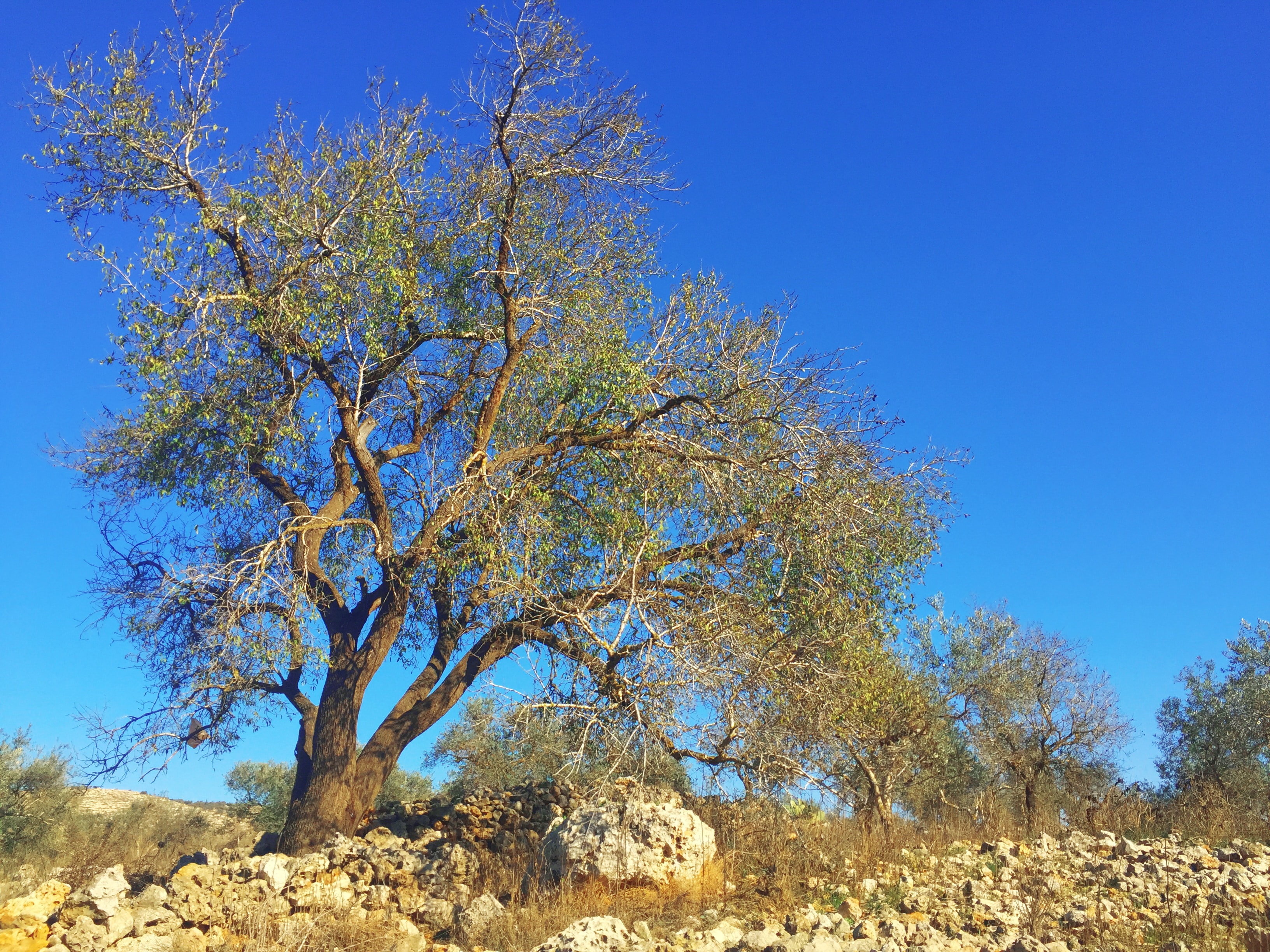
By Sarah Mann
0 views

How to Choose a Great Tour Operator in Israel - 11 Tips

So you’ve decided to visit Israel. Well, first of all, congratulations - you’ve made a fine choice. This is a country that has something for everyone - historical and religious sites, culture galore in the form of museums, are galleries, high-quality guided tours, theatre and live music, not to mention mountains, deserts and miles and miles of beautiful coastline. Finding ways to spend your days here is no problem.Tourists on a Bahai Gardens tour, Haifa. Photo credit: © Dmitry MishinThe big question is, if you’re coming in a group, then how do you go about choosing a good tour operator? Google a search and you’ll be confronted with a wealth of information that can, all too quickly, become overwhelming. As tour operators ourselves, we know how important it is to make a good choice of the company because, let’s face it, from the moment you land, you’re going to be in the hands of these people. Here are a few things we think are worth taking into consideration before you press the ‘book now’ button…1. Check if the Tour Operator is Registered with the ITOAMembership of the Israel Incoming Tours Operators Association means that the tour operator is both professional and reliable, using qualified and only licensed tour guides. IOTA membership means you can have peace of mind, knowing that the organization you’re booking with has passed a credibility test.Jerusalem courtyard, Old City.Photo credit: © Dmitry Mishin2. Don’t Necessarily Go with the Lowest PriceWhen a price looks too good to be true, that means it probably is. Sure, grabbing a bargain is a great thing, but if you aren’t careful, you could end up spending more in the long run because you haven’t read the fine print. In some cases, cheap prices mean that you’ll be paying your own entrance fees, be limited in terms of pick up and drop off points, and may even end up compromising on the quality of your accommodation and guides.Another thing is that higher prices don’t always mean you’re being fleeced. Reputable tour operators work with fleets of buses and a maintenance supervisor (rather than cheaper operators, that may be leasing smaller vehicles). And, of course, licensed, accredited tour guides are going to have higher fees - but you’re paying for their knowledge and experience. Our advice? Check carefully as to what is and isn’t included in the price, before you make your decision because cheap in the short term could be costly in the long term.Byzantine Cardo, Jerusalem.Photo credit: © Dmitry Mishin3. Do Your Research. Check the Reviews on Trip AdvisorIf 90% of the reviews you read are positive, then it’s pretty safe to say that the tour operator is trustworthy. Ask around too - maybe you have friends or colleagues who’ve been in Israel and they can recommend someone? Hearing first hand about someone’s trip, or reading a well-written review, will give you crucial insights into the company you are looking at. So take your time when looking around - because carrying out some homework will always pay dividends.4. Define Your Specific NeedsThere are so many different kinds of Israel tourson the market - and one size never fits all. Some people don’t mind being in a large group….other travelers seek something smaller and more intimate. Certain travelers want a trip that’s packed full of historical sites and places of worship; others want more ‘fun’ attractions such as wine-tasting and a chance to shop. Entrance to the Tower of David, Jerusalem.Photo credit: © Dmitry MishinAsk yourself what you really want. Are you looking for a tour that takes you to museums and galleries, with group dinner each night? Or are you looking for something with a bit of free time included, letting you spend occasional afternoons or evenings alone? Also, check with the tour operator if there’s flexibility in the schedule, or whether you’re committed to the entire itinerary. Equally importantly, ask if it’s possible to be collected or dropped off in another city, if you’re arriving before the group, or departing after them.5. What’s Their Customer Service Like?Customer service is probably one of the most important things you’re going to be looking for when making a decision about a tour operator. First and foremost, make sure that there will always be a direct phone number you can call, 24/7 if any problems arise. It’s essential to be able to speak to a real live human too, rather than an automated service that some companies use out of hours. Also, find out what the tour operator’s policy is if an outing can’t take place, because someone in the group is late for morning pick-up, or the tour bus breaks down? Check reviews too - when people feel let down, they will often write about it publicly. The Western Wall, Jerusalem. Photo credit: © Shutterstock6. Are They Tech-Savvy?Not all tour operators in Israel have an online booking system that is constantly being updated, in real-time. When you use a reputable company, they have access to very smart, unique software, which ensures that the moment you book, you're confirmed, which means you know you’re on the list. This gives you real peace of mind.7. Are All the Major Attractions You Want to See Included in the Tour? Whether you’ve been to Israel before or it’s a ‘once in a lifetime trip for you, you’ll want to know that a fair few of the attractions you want to see are included in the trip. This is where choosing the ‘right’ Israel tour package comes in - for pilgrimstours to Jerusalem, Nazareth and the Galilee are all key.Multiplication Church, Tabgha.Photo credit: © ShutterstockFor history lovers, visits to Roman and Crusader sites like Caesarea and Acre are a must. For culture vultures, a visit to Jerusalem’s Israel Museum will be imperative. And for many, no trip to Israel would be complete without a day in Tel Aviv, the Non-Stop City, with its Bauhaus architecture, thriving food scene, and lively nightlife. Choose carefully - because even in two weeks you won’t be able to see everything! 8. Take a Look at the About Us Pageon the Website. This will give you in-depth information on how long they’ve been in business, what services they offer, and if they collaborate with other travel companies around the world (always a good sign). A reputable Israeli tour operator won’t have anything to hide - after building up their business over the years, and learning from their mistakes, they will not fear transparency!Gamla, an ancient Jewish city, Golan Heights. Photo credit: © Shutterstock9. Don’t Be Afraid to Ask Lots of Questions. A good tour operator will be happy to answer all of your questions. After all, you’re the customer and you’re paying for this experience, so it should measure up to your expectations. Check to make sure that all of the main attractions you want to see are included. Ask what happens on free days and if you’ll need to budget for your own lunches and dinners. Double-check on what’s included and what is not. And feel free to ask away about who is leading your trip - a tour guide can really make or break your trip! What’s the conclusion then? Well, we might be biased but we think you could do far worse than to consider Bein Harim Tourism Services for your tour operator. We are, indeed, a member of IOTA, and with our own fleet of minibusses and supervisors (under the eagle eye of a maintenance officer) you’ll travel in comfort. The vast majority of reviews about us on Tripadvisor are positive, so you can book with confidence. And we offer a round-the-clock service, for any problems or mishaps that may arise, which means you have complete peace of mind, should anything go awry.Tour of Masada.Photo credit: © Shutterstock10. Test of TimeSomething else about us that’s important for you to know is that we’ve been in business a long time. Bein Harim was established in 1993, which lets you know we’re not a ‘fly-by-night’ company. We’re well known for our high-quality tours, all offered at affordable prices, and our years of hard work and listening to the customer mean we’ve built a well-deserved reputation. We work with small and large groups, classical Israel tour packages, Christian, Jewish and Muslim trips, Petra and Jordan tours,airport transfers,and ship to shore excursions. We can pick you up and drop you in a number of cities, including Jerusalem, Tel Aviv, Herzliya, and Netanya, as well as Ben Gurion airport.And for those interested in traveling privately, if you book a private tour with us, we can customize it according to your exact requirements. If you want to visit a boutique vineyard in the Golan Heights, visit a chocolate-making workshop in Jerusalem or abseil down the side of the crater at Mitzpe Ramon, we can make it happen. We want to make sure our customers don’t just have a wonderful trip but go home telling other people about it. Brochures and websites are important but we think you can’t beat word of mouth. Dome of the Rock, Temple Mount, Jerusalem.Photo credit: © Shutterstock11. Don't Compromise on the Quality.To sum up, whether you’re a Christian pilgrim, a history buff, or a culture lover, we’ve got a tour that’s right for you. From theDead Sea and Masada Day Toursto ‘Petra from Eilat’ we can make sure you have a holiday you’ll remember for years to come. We operate a highly sophisticated booking system too, allowing you to book tours that are 100% guaranteed to depart, the moment you receive confirmation. And, as we’ve mentioned before, should any problems arise, we’re here for you night and day.So if you’re looking for a tour operator that has the passion, dedication, and experience you expect, why not take a look at some of our Israel and Jordan tour packages on offer? We’ll be happy to talk to you, either on the phone or by email, and answer all of your questions.Blooming almond in Israel.Photo credit: © Dmitry Mishin
By Sarah Mann
0 views

Bethsaida

Bethsaida (House of Hunting in Hebrew) is an archaeological site at the northern end of the Sea of Galilee where the Jordan River pours into the lake. The site dates back thousands of years to when it held a strategic location at the crossroad of several ancient trade routes. Bethsaida has been identified as the Iron Age (10th-century) city of Geshur and with the Roman city of Julias. It was also one of the places where Jesus spent time during his ministry (Matthew 11:20-24) and the village is mentioned many times in the New Testament.History of BethsaidaDuring excavations, archaeologists uncovered the remains of a 10th-century BC settlement including a gatehouse, bricks, spearheads, and arrowheads. Experts believe the 10th-century remains may be the ancient capital of the Kingdom of Geshur, a city mentioned in the Old Testament (Joshua 13).It was here that David fled from Saul and where David’s son Absalom fled after killing his brother. The village was probably destroyed by the Assyrians in the 8th century BC. Archaeological findings included two Hellenistic-Roman homes from 332 BC when the Greeks established a city here. In the houses were fishing nets, anchors, fishing hooks, and Roman coins. One of the houses had a wine cellar, where archaeologists found vineyard pruning tools and a gold earring.In 30 AD, the Romans declared the village of Bethsaida to be a city and renamed it Bethsaida Julias. The city continued to be inhabited by both gentiles and Jews until the 3rd-century. In 363 AD the region was hit by an earthquake that destroyed the village. It was rebuilt but eventually abandoned. Experts are still unsure whether there may have been two historic villages called Bethsaida. The two possible sites are et-Tell on the eastern side and el-Araj on the northeastern side of the delta where the River Jordan enters the Kinneret (Sea of Galilee).Bethsaida in the BibleAccording to Mark 6:33-51, 8:1-26, and Luke 10:13-15, the villagers of Bethsaida witnessed Jesus’ miracles but were not believers, and Jesus criticized them for their lack of faith. It was here that Jesus performed the miracle of feeding the 5,000 followers (Luke 9:10-17). And just outside the village, Jesus restored the sight of a blind man (Mark 8:22-26). The apostles Peter, Philip, and Andrew were fishermen in Bethsaida, but they left the village to dedicate themselves to Jesus. They traveled with Him to Tabgha, Korazim, and Capernaum during His ministry.Visiting Bethsaida TodayBethsaida is a unique archaeological site in Northern Israel that will take you back in time. Visitors to Bethsaida can see the excavated remains dating back thousands of years including the 10th-century BC gate, paved roads, and ruins of a palace. Also see the excavated Winemaker’s House, Fisherman’s House, Temple, and Roman city wall.

Madaba Map

The Madaba Map is part of an ancient floor mosaic from the Byzantine Church of St. George in Madaba, Jordan. The map depicts the Middle East including the oldest surviving map of the Holy Land and Jerusalem. It dates back to the 6th-century AD and gives us an extremely valuable glimpse into the way Jerusalem looked over 1600 years ago.History of the Madaba MapExperts have managed to date the mosaic because it features the New Church of the Theotokos in Jerusalem which was dedicated in 542AD. And it does not depict any Jerusalem structures built after 570 AD. This gives experts a clear idea of the age of the map (542-570) and the appearance of Jerusalem at the time. When the Church of St. George was constructed, Madaba was the seat of the bishop and the mosaic work would have been done by anonymous Christian artists. In 614, the Sasanian Empire (Persian) conquered Madaba. In the 8th-century motifs depicting living creatures were removed from the mosaic according to Muslim custom not to depict living creatures. The city was almost completely destroyed by an earthquake in 746, and the mosaic remained hidden until 1884 when it was rediscovered during the construction of a new church on the same site. The church was completed but for almost a hundred years the mosaic was not protected or preserved. In 1964, restoration and conservation of the Madaba Map began thanks to the German Association for the Exploration of Palestine.What’s on the Madaba Map?The mosaic shows the Middle East from Lebanon in the north to the Nile in the south, and from the Eastern Desert to the Mediterranean Sea in the west. Among the landmarks on the map are the Dead Sea, the Jordan River, Jericho, and Bethlehem. There are also images of fishing boats, fish, palm trees, a gazelle, and a lion. The landscape is labeled in Greek and the map uses biblical passages. In total there are 150 towns and villages on the map, all labeled with their names. The map is presented from an aerial and folding perspective. The most impressive, and detailed portion of the map is Jerusalem which is placed in the center. The cityscape shows the Old City, Damascus Gate, Lion’s Gate, Zion Gate, Golden Gate, the Tower of David, Church of the Holy Sepulchre, and the Cardo, which was the ancient main route through the city. If you visit Jerusalem today you can still see the excavated Cardo in the Old City. The Madaba Map TodayThe map might have once been a guide to Christian pilgrims heading for the Holy Land, and Jerusalem. Today, the map mosaic remains on the apse floor in the Church of St. George at Madaba in the Kingdom of Jordan. With the passing of time, the mosaic has deteriorated from 21m by 7m to 16m by 5m. It is still one of the most illuminating artifacts used for studying geography, history, and for verifying biblical locations. It is the oldest known geographic floor mosaic in the world. If you are not planning to visit Madaba, you can see a replica of the mosaic map in the lobby of Jerusalem’s YMCA building.If you would like to visit Madaba, consider joining one of our Jordan 3-4 days tours.

Bialik House, Tel Aviv

Bialik House stands at 27 Bialik Street, in Tel Aviv. It is the former home of Israel’s national poet, Haim Nachman Bialik (1873-1934), and houses a museum dedicated to the poet and his work. Bialik House was designed by Yosef Minor and built in 1924 on the arrival of Bialik in Israel. The house offers a glimpse into the aesthetics of early 20th-century Israel, and the exhibition gives visitors a comprehensive understanding of Bialik’s work, achievements, and role as a social activist.Who Was Haim Nachman Bialik?Haim Nachman Bialik was born in Russia in 1873 and from the age of seven, he was raised by his Orthodox Jewish grandfather. When he was 15 years old Bialik moved to Lithuania to study at the Volozhin Yeshiva. He gradually drifted away from the strict life of Talmudic study and was eventually expelled. Some of his early writings reflect his disillusionment with the narrow-minded world of Yeshiva life. He moved to Odessa at age 18, where he mingled with the elite of Jewish culture including Ahad Ha’amBialik died and joined the Hovevei Zion movement. His first poem “To the Bird” was published in 1892. Returning to his hometown he married Manya Averbuch in 1893. After moving around the county for several years, Bialik returned to Odessa in 1900 and continued his involvement in Jewish literary circles and the Zionist movement for the next two decades. His first collection of poetry was published in Warsaw in 1901 to great critical acclaim and his poem “In the City of Slaughter” highlights the horrors of Russian pogroms. Bialik translated several great European works into Hebrew including Shakespeare’s Julius Caesar and Don Quixote. He published poetry in Yiddish newspapers in the Russian Empire. Among his works was The Book of Legends, a compilation of folk tales and proverbs extracted from the Talmud. Bialik remained in Odessa until 1921 when he traveled to Berlin. There he established his publishing house, Dvir, and joined other Jewish authors, and published developing modern Hebrew literature. In 1924, Bialik moved to Palestine where he reestablished his publishing house, Dvir, and devoted himself to cultural and social activities. He was already recognized as one of the greatest Hebrew literary figures, and in 1927 became head of the Hebrew Writers Union. He died in Vienna, Austria in 1934 from a heart attack following a prostate operation and is buried in Tel Aviv. Bialik’s LegacyBialik wrote mostly in Hebrew and pioneered modern Hebrew poetry. His work gave voice to life in what would become the new Jewish homeland. He is best known for his long nationalistic poems, love poems, nature poems, and prose. Some of his children’s songs have become traditional Hebrew nursery rhymes, such as NadNed, a song about a seesaw. Bialik wrote it to popularise modern spoken Hebrew but also to illustrate the balance between Zionism and traditional Judaism. Bialik was one of the forces influential in turning Hebrew from an ancient Biblical language to a contemporary spoken vernacular. Many places and streets in Israel are named after the national poet, and each year the city of Tel Aviv awards the Bialik Literary Prize. His works have been translated into more than 30 languages and set to music. The Bialik House BuildingThe house was built in 1924 by the Solei Boneh Construction Company under the supervision of the future minister of finance, Eliezer Kaplan. The house was designed by Russian-born architect Joseph Minor (1885-1966). He was one of the architects who tried to develop a unique architectural style for Palestine, combining Western building forms with traditional Middle Eastern styles that suited the climate and lifestyle. Features of this unique style included outdoor terraces, pointed arch windows, towers, tile work, and domes. Much of the thought behind this style was to keep the house cool in the hot Middle Eastern climate. The interior of Bialik House is in the Arts and Crafts Movement style. In the first-floor reception room, are tiles produced by the Bezalel School with designs by Ze’ev Raban. The tiles feature images from Jewish history. History of Bialik HouseAfter Bialik died in 1934, the house was used by the Hebrew Writers’ Association and later as a children’s library. The Bialik House Society took on the task of preserving the property for posterity. Bialik House was renovated in 1980 and lost much of its original interior. A new renovation took place in the following years, this time remaining true to the original architectural features, and restoring the property to resemble the home Bialki would have known. The original colors were used and historic architectural features which had been covered up were revealed. The house was furnished with original historic furniture. Today the house has a blend of rooms restored to their original appearance and a permanent exhibition focused on the life and work of the poet. On the lower level of the house is the Beit Bialik Archive, which reserves the valuable documents of Bialik’s national and cultural work. Among the documents are poems, speeches, stories, and articles. Bialik House is open to the public Monday to Thursday from 9 am to 5 pm, and Fridays and Saturdays from 10 am to 2 pm.

Ben Gurion House, Tel Aviv

Ben Gurion House is the former home of David Ben Gurion who served as Israel’s first Prime Minister from 1948 to 1954 and again from 1955 to 1964. It is located in Tel Aviv at 17 Ben Gurion Boulevard. Today the historic house is a museum displaying the home as Ben Gurion would have known it together with valuable artifacts related to his life and work.WhoWas Ben Gurion?David Ben Gurion was born David Grun in 1886 in Plonsk, Poland, and immigrated to Ottoman-ruled Palestine in 1906. Eight years later he was expelled from the country for Zionist activity. He spent three years in the USA where he helped the Hehalutz Movement recruit Jews to form a Jewish militia and fight for the Ottoman army in Palestine.While in the US, David Ben Gurion met and married Paula Munweiss. Towards the end of WWI, the Balfour Declaration was published, making British support of a Jewish State official. Together with other Zionists, Ben Gurion switched sides and joined the British Army’s Jewish Legion fighting alongside the British, against Ottoman rule in Palestine. At the end of WWI Britain received a mandate to rule Palestine, and Ben Gurion began working towards a Jewish homeland.He founded the Jewish Battalion and the Ahdut HaAvoda. In 1921 he was appointed the first Secretary of the Histadrut and in 1933 became the Chairman of the Jewish Agency. Together with other dedicated Zionists, Ben Gurion actively campaigned for a Jewish state. He appeared before the Peel Commission which recommended a division of Palestine into Jewish and Arab areas. In 1948 Ben Gurion announced Israel’s Declaration of Independence. In the same year, the War of Independence broke out as Israel was attacked on all sides by its Arab neighbors.During the war, Ben Gurion was the Prime Minister and Minister of Defence. In 1953 he resigned from political life but returned to the government as Minister of Defence in 1955. He won a second term in the Prime Minister’s office and was in power during the Sinai Campaign of 1955. In 1968 his beloved Paula passed away, and in 1971 he resigned from the Knesset and retired to his desert home in Sde Boker.History of Ben Gurion HouseThe house was built in 1930-31 as part of a workers’ housing project paid for by the Jewish National Fund. The new neighborhood was called Shechunat HaPo’alim Aleph (Workers’ Neighborhood A). Originally the house had only one room but was later expanded in 1946 to include a second floor.Paula and David Ben Gurion lived in the house with their three children from 1931 to 1953. Until his death in 1973 the house remained one of the family’s three residences together with their home on Kibbutz Sde Boker in the Negev, and the official residence of the Prime Minister in Jerusalem. The house served as a residence and as the hub for Ben Gurion’s political and social activities.Visiting Ben Gurion HouseThe house has been restored to look as it did when the Ben Gurion family resided here. All of their personal belongings have remained in the house in their original condition. On the first floor, you can see the room of Ben Gurion’s daughter Renana which served as the War Room during the Suez Crisis (Operation Kadesh). It was here that Ben Gurion communicated to his Chief of Staff Moshe Dayan, and received updates on the progress on the ground.The second floor of the house was used only by Ben Gurion. It holds a bathroom, bedroom, and a four-room library. Today the library displays Ben Gurion’s personal collection of books and newspapers in more than seven languages. The books give a glimpse into Ben Gurion’s life and interests. Most of the books focus on Zionism, culture, and Judaism. One of the library rooms was Ben Gurion’s study, and here you can see his desk with the red phone that connected him directly to the Defense Ministry. Here Ben Gurion met with Moshe Sharett, Aharon Zisling, and Yehuda Leib Maimin to draft the Israeli Declaration of Independence.Visitors can also see Paula’s Room, where Ben Gurion spent the last days of his life before being hospitalized. In the Ben Gurion kitchen, you can see where the former Prime Minister ate Paula’s “kooch-mooch”, a dish of yogurt, apple sauce, and raspberry sauce. The Ben Gurion House Museum offers guided tours, symposiums, and exhibits memorabilia, and historic documents associated with David Ben Gurion.

Reuven Rubin House Museum

The Reuven Rubin House Museum stands at 14 Bialik Street, in Tel Aviv. It is the former home of renowned artist Reuven Rubin and displays a selection of his works as well as the restored interior of this magnificent historic building including the artist’s studio.Who Was Rueven Rubin?Reuven Rubin was born Rubin Zelicovici in Romania in 1893, to a poor Hasidic family. At age 19 he left for Ottoman-ruled Palestine where he studied at the renowned Bezalel Art and Design Academy in Jerusalem. Not long after arrival in Palestine, he left for Paris where he studied at the Ecole Nationale Superieure des Beaux-Arts. He spent World War I in Romania, then traveled to the USA in 1921 where he held his first exhibition together with fellow artist Alfred Stieglitz. In 1922 Rubin returned to Europe, and a year later emigrated to British Mandate Palestine. In 1928 he met and married Esther. His early work depicts the Romanian landscape in a modern and naive style. His paintings of Israel seem to radiate light, representative of spirituality. Many depict landscapes of Galilee and Jerusalem. He was one of the founders of the Eretz-Yisrael style of painting, which used recurring biblical themes, naive depiction of Israel’s landscapes, and images of Jewish ethnic groups including Yemenites, and Hasidic Jews. He became the chairman of the Association of Painters and Sculptures of Palestine, and from the 1930s Rubin designed scenery for Israel’s national theater, Habima. In 1948 Rubin became Israel’s first diplomatic envoy to Romania. Reuven Rubin died in Tel Aviv in 1974 and bequeathed his home and core collection to Tel Aviv.History of the Reuven Rubin HouseThe house was built in 1930 and was originally owned by the Toeplitz family. From 1946 until he died in 1974, Reuven Rubin lived in this house with his family and worked in his art studio on the third floor. The Reuven Rubin House was opened to the public in 1983. The museum is currently being redeveloped and enlarged. The plans include an underground three-floor annex beneath the front courtyard where more of Rubin’s work will be displayed alongside guest exhibitions.Visiting Reuven Rubin HouseOn a visit to the house museum, you can see a permanent collection of Rubin’s paintings, and occasionally the permanent collection is replaced by exhibitions by Israeli artists. The house has four floors, with a gallery on the first and second floors. The second floor also holds a library and reading room. Children’s workshops are held in the basement and adjoining garden. Rubin’s studio on the third floor has been preserved in its original condition. Here you can also see a photographic exhibition covering Rubin’s life in chronological order. The scenes in the photos illustrate the local culture and artistic atmosphere in Tel Aviv at the time.If you would like to visit Reuven Rubin House, consider booking a private Tel Aviv Tour.

Muristan

The Muristan area in the Christian Quarter of Jerusalem’s Old City dates back thousands of years. It gets its name from the Persian word for “hospital” as the area was built over the ruins of the Crusader headquarters and hospital. The area covers 4 acres between the Church of the Holy Sepulchre, the German Church of the Redeemer, and the Hospitallers’ Church of St. John the Baptist. The main attraction for visitors is the Muristan Aftimos Market and the area’s incredible history.History of Jerusalem’s Muristan AreaDuring the Roman Period and Jesus’ lifetime, the Muristan area was outside the city walls near Golgotha, the site of Christ’s crucifixion. In the 2nd century AD, Jerusalem became the Roman city of Aelia Capitolina, and the Roman Forum was built on this site. In the Byzantine Era, St. John the Baptist Church was built on the edge of the Muristan area. According to Orthodox Christian tradition, St. John’s head was buried in this church.In the 11th century, Italian merchants arrived from Amalfi and built a hospital and the Santa Maria Latina Church, and later they added the Santa Maria Maggiore Church near the Holy Sepulchre. The hospital and church served Crusaders and Christian pilgrims. Benedictine monks caring for the sick and wounded officially became the Knights Hospitallers of St. John in 1113 AD. They bought and renovated nearby structures in Muristan which became the Crusader headquarters. The sturdy buildings did not survive the earthquake of 1457 and the hospital was abandoned. The Crusaders moved on, and the Mamluks conquered Jerusalem in 1267. A few of the monks remained, living in the Muristan ruins, and locals used the remains as stables and a marketplace. The Ottoman Sultan Suleiman the Magnificent built new city walls in 1535 bringing the Muristan area within the walls. The Ottoman Sultan gifted the eastern part of Muristan to the Prussian Crown Prince Friedrich Wilhelm I in 1869 and where the Church of the Redeemer was built and dedicated in 1898 in the presence of Kaiser Wilhelm II. In 1903, the ruins of Santa Maria Maggiore Church were removed, and the Greek-Orthodox Patriarchate of Jerusalem had the Greek Aftimos market built in its place. In 2013 excavations uncovered parts of the large Crusader hospital with impressive ribbed vaulted ceilings supported by massive six meters high pillars. Visiting Muristan TodayMuristan is a quaint, well-maintained area of Jerusalem’s Old City with Muristan Road running through it. An archway leads from Muristan Road to David Street and the El-Bazar Market. Just above the archway entrance, you can still see the stone carving of the Prussian eagle from Prince Friedrich Wilhelm’s visit. A memorial monument and garden commemorate the site of the 12th-13th century Crusader hospital. Visitors can enjoy the 70+ stores in the old Aftimos market where bright-colored garments, brass utensils, and local crafts are displayed on the sidewalk. At the heart of Muristan, and the market is a beautiful fountain built in 1903 to honor Ottoman Sultan Abdulhamid (1876-1909) who reigned for 25 years. Behind the fountain, you can see the bell tower of the Church of the Redeemer, and south of the market is the St. John the Baptist Church with its silver dome.

Trumpeldor Cemetery

The historic Trumpeldor Cemetery or Old Cemetery is located on Trumpeldor Street in Tel Aviv. Among those buried here are Zionist leader Haim Arlosoroff (1899-1933); Israeli parliamentarian Gideon Ben-Ysrael (1923-2014); Israel’s national poet Hayim Nahman Bialik (1873-1934); Max Simon Nordau (1849-1923) co-founder of the World Zionist Organization (WIZO); Ahad Ha’am (1856-1927) a foremost pre-state Zionist; Moshe Sharett (1894-1965) second Prime Minister of Israel; Meir Dizengoff (1861-1936) Tel Aviv’s first mayor and many other renowned cultural and political figures. History of Trumpeldor Cemetery, Tel AvivThe cemetery was established in 1902 on a plot of unoccupied land near Jaffa. There had been an epidemic within the walls of Jaffa, and the Ottoman rulers would not allow Jewish dead to be buried in the existing burial grounds within the city. So Jewish community leader Shimon Rokach bought 10 acres of land along the desolate sandy shore north of Jaffa. At the time of establishment, the cemetery was in a remote location. Six years later in 1909, a group of Jewish pioneers founded the modern housing estate of Ahuzat Bayit which merged with other Jewish communities on the outskirts of Jaffa to form Tel Aviv. The city grew around the cemetery, and today it is in the downtown area surrounded by busy streets, and tall buildings. After the death of Joseph Trumpeldor(1880-1920), the cemetery was named in his honor. Joseph Trumpeldor was an early Zionist activist and national hero who was instrumental in organizing Jewish immigration to Palestine and died defending the Jewish settlement of Tel Hai from an Arab attack. Trumpeldor is buried in Kfar Giladi in Galilee, near the site of the Tel Hai battle.Visiting Trumpeldor CemeteryThe cemetery is still in use, although only those willing to pay a fortune, or those who purchased burial plots many years ago can be buried here today. There are three entrance gates to the cemetery from Hovevei Zion and Zion Pinsker Streets. The cemetery contains approximately 5,000 graves but the highlights include the eastern gate which is the oldest and the easter section where famous leaders and founders of Israel are buried. In the southwest section, you can find the gravestones of well-known cultural personalities. There is one Commonwealth service war grave of a Jewish soldier who served in the British Royal Fusiliers Jewish Legion. Take a wander among the graves of Israel’s founding fathers in Trumpeldor Cemetery.Want to visit Trumpeldor's Cemetery? Join Tel Aviv Private tourand explore the city.

Mamilla

One of the most interesting things about Israel is seeing the juxtaposition of old and new standing side by side. Mamilla is the perfect example. This modern upscale neighborhood and mall stand adjacent to the ancient Old City walls of Jerusalem, outside the Jaffa Gate. History of MamillaInteresting remnants of ancient history can be found in the area called Mamilla. There is the now dry Mamilla Pool which was probably built by Herod the Great. Here Christians were massacred by invading Persians in 614 and an ancient chapel was found containing hundreds of human skeletons. Today the chapel is covered by the Mamilla Mall. Mamilla is also home to a historic cemetery and alongside it are stone-carved Crusader sarcophagi. During the 400 years of Ottoman rule, the area around the city walls stood barren. When conditions became overcrowded within the walls, some structures were built outside in the Mamilla area. Makeshift stalls set up shop along the walls. These were removed by the British when they took control following World War I, but vendors soon reestablished themselves. Until 1948 Mamilla was a mixed Jewish and Arab commercial district. When the 1947 UN Partition Plan was announced riots broke out and the area was ransacked. Following the War of Independence, the city was split between Israel and Jordan from 1948 to 1967 and Mamilla ended up along the armistice line between the Israelis and Jordanians. The area was dangerous and vulnerable to Jordanian sniper fire. It became a poverty-stricken neighborhood, and home to new immigrants (many Kurdish Jews). Since 1967 there has been a government renewal program that allocated land for commercial use, residential housing, and hotels. It took 16 years for authorities to agree on the plans but finally, construction began.Mamilla TodayMamilla consists of terraced residential housing, luxury hotels, an exclusive gated community, and the open-air Mamilla shopping mall, built on top of an underground parking lot. It is also home to the expansive Simon Wiesenthal Center Museum of Tolerance Jerusalem, scheduled to open in 2021/2022. The most interesting part of Mamilla for visitors is the pedestrian open-air mall which takes you all the way to the Jaffa Gate entrance of the Old City. The $150 million mall is home to luxury brand stores like Polo Ralph Lauren, Tommy Hilfiger, Rolex, and Nike. Other stores include local brands such as Castro and Steimantzky. The single-lane mall has art galleries, Judaica stores, Dead Sea stores, and several excellent eateries. For a truly magical experience, enjoy dinner on the Mamilla Hotel rooftop terrace overlooking the Old City.To explore Mamilla, join one of our Jerusalem Private tours.

Kerem HaTeimanim (Yemenite Quarter), Tel Aviv

The Yemenite Quarter in Tel Aviv gets its name from the Jewish Yemenite immigrants who settled here in the early 1900s. Locals call this area alongside the Carmel Market, the “Kerem” or “Kerem HaTemanim”, which literally means the “Vineyards” because in the 1800s the area was covered in vineyards. Over the years the Kerem has changed in many ways.Today it is home to Jews of all ethnicities, not just Yemenites. But it has retained a unique, village-within-a-city feel with narrow streets lined by small houses draped in vines and bougainvillea. The Kerem has retained its intimate neighborhood feel, and the streets are filled with chatter, music, and spicy aromas. It is a quiet oasis in the busy city covering the cobbled back streets hidden behind noisy Carmel Market. Visit the Yemenite Quarter to soak up the atmosphere and linger at one of the many bars or eateries that spill out onto the streets.History of the Yemenite QuarterJewish immigrants from Yemen settled here in 1904 when Palestine was ruled by the Ottomans. The land they settled was owned by Yosef Moyal, Haim Amzaleg, and Aharon Chelouche, a Jewish Algerian landowner. The Yemenite neighborhood was poor, and rundown with single-story homes built of cheap materials. More recently Keren HaTeimanim has been cleaned up but thankfully it has retained its original charm.The land in the heart of Tel Aviv now sells for high prices and is a sought-after location. Some of the savvy homeowners rent out their property as B&Bs with views over the vibrant Yemenite Quarter streets. The neighborhood’s Yemenite culture has not been forgotten and it is still associated with the food, music, and cultural figures of Yemenite Jewry.Eating Out in the Yemenite QuarterYou’ll find cuisine from across the globe sold in the Yemenite Quarter but while here try some of the traditional Yemenite dishes. Start with mouthwatering Yemenite pita bread, or the sourdough flatbread, Lachuch. Try Hilbe, made with fenugreek seeds, and dig into a bowl of uniquely spiced Yemenite soup.You’ll find some of Tel Aviv’s best hummus sold in the no-frills eateries of the Yemenite Quarter. For a hipster atmosphere, there are cafes with rich coffee aromas that wash over passersby. In other eateries, you’ll find large pots of rich stew and comfort food served by loving mammas. For something different try Ethiopian cuisine or an Iraqi sandwich. The neighborhood bars are as varied as the eateries.Don’t Miss Tel Aviv’s Colorful Yemenite QuarterExperience the charm of the Yemenite Quarter just a few steps away from Carmel Market. Don’t miss a chance to relax and watch the many colorful local characters go by. Life moves at a slower pace in the Yemenite Quarter, and it is the perfect haven after a morning of sightseeing and shopping in the Big Orange, Tel Aviv.If you would like to visit Yemenite Quarter, consider booking a Private Tel Aviv Tour.

Mount Betarim

Mount Betarm is located in northern Israel, close to the Lebanese border, it is one of the peaks of Mt. Dov near Mount Hermon. The mountain has an elevation of 1296 meters above sea level and is the site of archaeological remains which include an ancient settlement from the Hellenistic Period and Byzantine Period.The archaeological findings include ancient pottery and agricultural terraces where crops would have been grown on the mountain slopes. Mount Betarim is also home to two water reservoirs created to collect floodwater that flows into the Betarim Stream. Visitors can hike through the untamed countryside on Mt. Betarim and see the remains of ancient structures. However, part of the mount is military property, and not accessible to the public.Covenant Between the Pieces (Covenant of the Parts or Brit Bein ha-Betarim)In the Old Testament (Genesis 12-17), we read about covenants made between God and Abraham. When Abraham voices concern about his future and being childless, God tells Abraham he will have a son and that his descendants will be as plentiful as the stars in the night sky. He tells Abraham to make an animal sacrifice, and instructs him to slaughter certain animals, and arrange the carcasses into two rows. Smoke and fire rose from between the pieces (giving the covenant its name).Abraham falls asleep and God makes several promises to him including that Abraham’s people will be strangers in a land not their own for hundreds of years and they will return to Canaan. Both Abraham’s naturally born, and adopted descendants will inherit the Promised Land from Egypt to the Euphrates. “To your seed will I give this land.” Another important covenant made between Abraham and God on Mount Betarim, is that circumcision will be a sign of the everlasting bond between God and the descendants of Abraham.One Jewish tradition holds that God made this covenant with Abraham on Mount Betarim. It was the first of several covenants made between God and the Jewish People. Mt. Betarim is also held sacred by Muslims. The Quran tells of Makam Ibrahim Al-Khalil or the Sacred Site of Abraham’s Birds, where God tells Abraham to sacrifice birds from four different species, before bringing them back to life. Both the Jewish and Muslim traditions associated with Mount Betarim center on a sacrifice made by Abraham, to God.

Deir Es-Sultan

On the rooftop courtyard of the Church of the Holy Sepulchre in Jerusalem’s Old City is one of the most fascinating religious complexes in the Holy Land. The rooftop is where you’ll find the Deir Es-Sultan or, the Sultan’s Monastery along with the Chapel of the Archangel Michael and the Chapel of the Four Incorporeal Creatures. A passageway leads down to the Holy Sepulchre and a small dome in the rooftop courtyard is directly above St. Helena’s Chapel.Ownership of Deir el-Sultan has been in dispute for centuries. Both the Coptic Orthodox Church and the Ethiopian Orthodox Church claim ownership, but today the complex is occupied by the Ethiopian Christians. For the Copts, this site is an important connection between St. Anthony’s Monastery, where the Coptic Patriarchate is located, and the Holy Sepulchre, via a passageway.Coptic Origins of Deir Es-SultanThe Coptic Orthodox Church of Alexandria, which is based in Egypt, holds that the site was gifted to the Copts by the Umayyad Caliph Abd al-Malik ibn Marwan (684 AD - 705 AD). The Copts named Deir el-Malak or Angel Monastery after the Caliph.In the 11th-century Egyptian officials transporting taxes collected from Copts in Egypt to the Caliphate in Baghdad would stop in Jerusalem and, fearing thieves, hide the funds in the Coptic compound. In thanks, Sultan Al Mo-ez gifted the monastery to the Egyptian Coptic community in Jerusalem. Later Coptic ownership of the site was confirmed by the powerful Muslim leader Saladin (1137-1193). Under Saladin, the monastery was renamed Deir el-Sultan or the Sultan’s Monastery.The Ethiopian Monks Move InIn 1654 the Copts took in a group of Ethiopian monks after they had lost their Jerusalem church to the Greek and Armenian Churches for not paying their taxes. The Ethiopians were allowed to set up a temporary shelter on the roof of the Holy Sepulchre and overstayed their welcome. In 1820 when the monastery was being restored, the Ethiopians had to vacate. Resenting this, they began looking into ways to claim the complex for themselves.In 1850 the Ethiopian monks stole the monastery keys, locking the Copts out. But in 1851, the Ottoman rulers of Palestine officially confirmed that the monastery belonged to the Copts, and ratified this decision in 1863 when the Ethiopian monks made another attempt to take the monastery. Several further attempts were made by the Ethiopians to regain the monastery, and both communities continued to use the site. Over the last 250 years, a “Status Quo” agreement between the different Christian denominations in Jerusalem has allowed the Ethiopian Church to remain in possession of this important location.Israel Steps InIn 1948 Israel became a state, and new considerations determined the monastery ownership. Following the Six-Day War in 1967, Israel’s bad relations with Egypt influenced the government’s view of the Egyptian Coptic Church. Israel grew stronger ties with the Jewish Ethiopian community and felt less threatened by the Ethiopian Christians in Jerusalem than by the Egyptian Copts.On 25, April 1970, while Coptic priests were at Easter Mass in the Holy Sepulchre, Israeli forces had the locks changed on the monastery, enabling the Ethiopians to take permanent possession of the church. Less than a year later the Coptic Bishop appealed to the Israeli Supreme Court that declared the Coptic Church to be the owner of the monastery.However, the Israeli government did not enforce the Supreme Court decision and the Ethiopian monks remained in possession of the monastery. The Ethiopians removed Coptic icons and Arabic inscriptions from the two chapels and limited Coptic access to the Passage Way that connects the Coptic Patriarch to the Holy Sepulchre.Deir Es-Sultan TodayToday the Ethiopian Church has full possession of the monastery, with the exception of the room of the Coptic Superior of the Monastery and the keys to the northwestern gate. Tension remains between the Egyptian Copic priests and the Ethiopian monks whose village-like enclosure can be seen in the rooftop courtyard.As recently as 2018, tension arose between the Copt priests and Ethiopian monks when the Israeli government authorized restorations by the Ethiopians without Coptic approval. In 2021 there were clashes between the two denominations when the Ethiopian monks raised their national flag over the monastery. It is possible to visit the roof of the Holy Sepulchre, and with an organized tour, you can walk through the Ethiopian chapels. Visiting Deir Es-Sultan is one of the most unique experiences tourists can have in the breathtaking city of Jerusalem.To visit Deir Es-Sultan, join one ofJerusalem Private Tours.

Augusta Victoria Hospital

The German Hospital and Evangelical Lutheran Church of the Ascension form the Augusta Victoria Compound on the northern side of Mount of Olives in East Jerusalem. It was opened in 1910 and named after the wife of German Kaiser Wilhelm II.Today it is a center for tourists and pilgrims and the church-hospital complex serves the community in East Jerusalem, the West Bank, and Gaza Strip. In addition to the church and hospital, there is a kindergarten, café, and a branch of the German Protestant Institute of Archaeology. The complex was founded to serve the German Protestant community of Ottoman Palestine.History of the Church of the Ascension Compound, JerusalemIn 1898 the German Kaiser and his wife visited Jerusalem, while there the ruling Ottomans gifted the Kaiser with 8 hectares on the Mount of Olives. The Kaiser commissioned the construction of a hostel for German pilgrims. The royal couple returned for the officially inaugurated in 1910, although construction was only completed in 1914.During WWI, from 1915 to 1917 the hospital compound became the headquarters of the German-Turkish General Staff, and the hospital treated German soldiers. Following the British victory, the complex became headquarters to General Allenby’s Egyptian Expeditionary Force and from 1917 to 1927, it was the British Mandate headquarters and offices of the High Commissioner.An earthquake in 1927 left the 60m-high church tower damaged, and it was rebuilt, 10-meters shorter than its original height. In 1928, the compound was returned to the original German owners, the Kaiserin Augusta Victoria Foundation. In the 1930s the Nazi Party held meetings in the compound and the pilgrim guesthouse reopened to Christian visitors but Jewish guests were not welcome.During World War II the British used the complex as a military hospital. Later, under Jordanian rule, it became a military hospital for the Arab Legion. Throughout 1948-1967 the compound was in the UN-controlled buffer zone of Mount Scopus. In 1948 the compound was placed in the care of the Lutheran World Federation and the hospital was dedicated to treating refugees.In 1950 the Lutheran World Federation began operating the hospital with the UN Relief and Works Agency. During the 1967 Six-Day War, the compound suffered heavy damage as fighting took place in the compound between the Israelis and Jordanian soldiers. The Six-Day War ended with an Israeli victory and the compound became part of unified Jerusalem.The Church of the AscensionThe church stands at the highest point in Jerusalem and was built in the Wilhelminian-Byzantine style. The church was the first building in Jerusalem to have electricity which was provided by a diesel generator. Inside the church is a pneumatic organ built by the Sauer Company in 1910. The highlight of the interior is the painted ceiling adorned with mosaics, and frescoes. In the apse is a mosaic representing Christ ascending to heaven.Every surface in the church appears to be painted or glowing with mosaics depicting biblical scenes as well as images of Emperor Wilhelm II and Empress Auguste Victoria. There is interesting stonework including striped pillars with stones of two different colors and Byzantine designs in the floor masonry. In the church entrance hall, you can see a display of historical items tracing the history of this fascinating compound.Want to visit the Augusta Victoria Compound? Join one of our great Jerusalem Private Tours.

Tel Balata

Tel Balata is an archaeological site on the outskirts of Nablus, in the Palestinian West Bank (Samaria). The site covers a tell or mound about 4.5km from the village of Salim which has been identified as the Biblical village of Salem. Tel Balata has been designated as a UNESCO site for its 5,000-year-old remains including ruins of towers and buildings. The archaeological site is identified with the Biblical city of Shechem based on its location and age, dating back to the late Bronze and early Iron Ages. However other sites have also been proposed as possible locations for Shechem. One of the most famous finds from Tel Balata was a 2,500-year-old electrum Greek Macedonian coin. Further archaeological findings show that the site was inhabited during the Hellenistic Period and up until the 2nd-century BC. In 72AD, Balata was abandoned and the Romans established a new town further west called Flavia Neapolis, which became Nablus in 636 AD. Today the site is open to visitors as an archaeological park created to preserve this important cultural heritage location.

Mosque of Omar

The Mosque of Omar stands in a courtyard close to the Church of the Holy Sepulchre in Jerusalem. It is in an area called Muristan, the ancient market area of the Old City’s Christian Quarter. The mosque is named after a great Caliph, Omar Ibn al-Khattab (579-644) who conquered Jerusalem in 638 AD. According to tradition, after the Caliph took Jerusalem, the Christian Patriarch invited him to pray in the Holy Sepulchre Church. Instead, Caliph Omar chose to pray in the adjacent courtyard. A mosque was built on the site where the Caliph prayed, east of the Holy Sepulchre. Subsequently, the present mosque (the second Mosque of Omar or the southern Mosque of Omar) was constructed by Ayyubid Sultan al-Afdal bin Saladin in 1193, south of the Holy Sepulchre. The reason for the relocation of the mosque was probably due to the fact that the Holy Sepulchre entrance had been moved. The current Mosque of Omar features a 15m-high minaret that dates back to the Mamluk Period in the 15th-century. Today visitors to the Holy Sepulchre Church can see two mosques flanking the church. The Mosque of Omar on one side and the 15th-century Al-Khanqah al-Salahiyya Mosque on the northern side. The mosques have similar minarets and were probably designed as a pair. The mosque is open exclusively for Muslims.To visit the Mosque of Omar, join one of Jerusalem Private Tours.