Bread is broken, a cup is shared, and a familiar gathering takes an unsettling turn. One of the disciples will betray Jesus. Before the night is over, the group will leave the table for the Mount of Olives, and the events leading to the Crucifixion will unfold. The Last Supper brings together friendship, service, sacrifice, and words that Christians continue to remember around the world.
The Last Supper was the final meal Jesus shared with his disciples before his arrest and Crucifixion. Held in Jerusalem, it is remembered especially for his words over the bread and wine, his announcement of betrayal, and his teachings about love and service.
Matthew 26:17–30, Mark 14:12–26, and Luke 22:7–23 describe the meal and its preparations. John’s account of Jesus’ final supper emphasizes the washing of the disciples’ feet, Judas’ departure, and Jesus’ farewell teachings. Reading these accounts together reveals the evening’s importance while allowing each Gospel to retain its own emphasis.
For Christians, the meal is the foundation of the Eucharist, also called Holy Communion or the Lord’s Supper. For travelers exploring Jerusalem, it is also the story behind one of Mount Zion’s most meaningful pilgrimage sites: the traditional Upper Room.
Christian tradition commemorates the Last Supper on Holy Thursday, also known as Maundy Thursday, during Holy Week. It is remembered on the evening before Good Friday, when Christians commemorate Jesus’ Crucifixion.
The meal belongs to the final days of Jesus’ ministry, generally placed around 30 or 33 CE. Those years are common reconstructions of the chronology, rather than dates explicitly given in the Gospels. An exact modern calendar date for the meal cannot be stated with certainty.
Passover is essential to its setting. Matthew, Mark, and Luke describe preparations for a Passover meal. John frames the final supper and the events that follow differently in relation to the festival, creating a chronological question that Christians and scholars have long discussed. Their different emphases are part of the long discussion about the meal’s timing.
The Jewish festival recalls deliverance from slavery in Egypt. That background gives depth to the meal’s themes of freedom, covenant, and remembrance. The meal belongs to the Jewish world of the first century, when Passover observance differed in some respects from the seder traditions familiar today.
The Gospel accounts describe Jesus gathered with the Twelve. They were Peter, Andrew, James the son of Zebedee, John, Philip, Bartholomew, Thomas, Matthew, James the son of Alphaeus, Thaddaeus, Simon the Zealot, and Judas Iscariot. Luke’s apostolic list names Judas the son of James where Matthew and Mark name Thaddaeus; Christian tradition commonly identifies them as the same apostle (Matthew 10:2–4; Mark 3:16–19; Luke 6:13–16).
These were people who had traveled with Jesus and heard his teaching. Yet the supper reveals their uncertainty as well as their closeness to him. They question what he means, struggle with the announcement of betrayal, and do not fully understand what lies ahead.
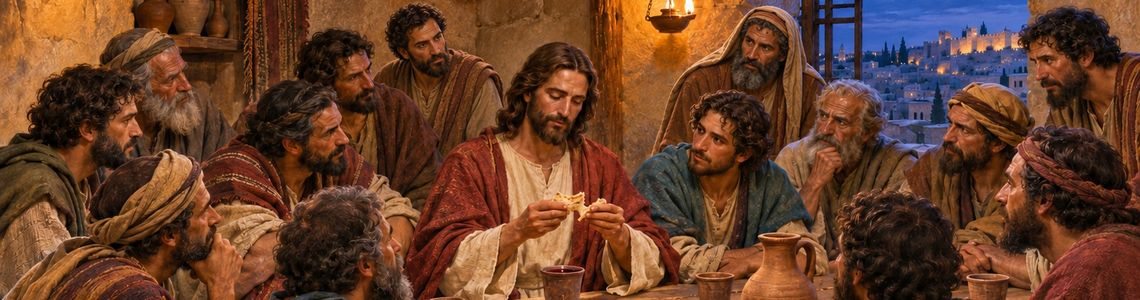
Judas Iscariot is present at the gathering. In John’s account, he leaves during the evening after receiving a piece of bread from Jesus. The Gospels do not provide a complete seating plan. Familiar arrangements in paintings belong to the history of Christian art, rather than a precise biblical diagram of the table.
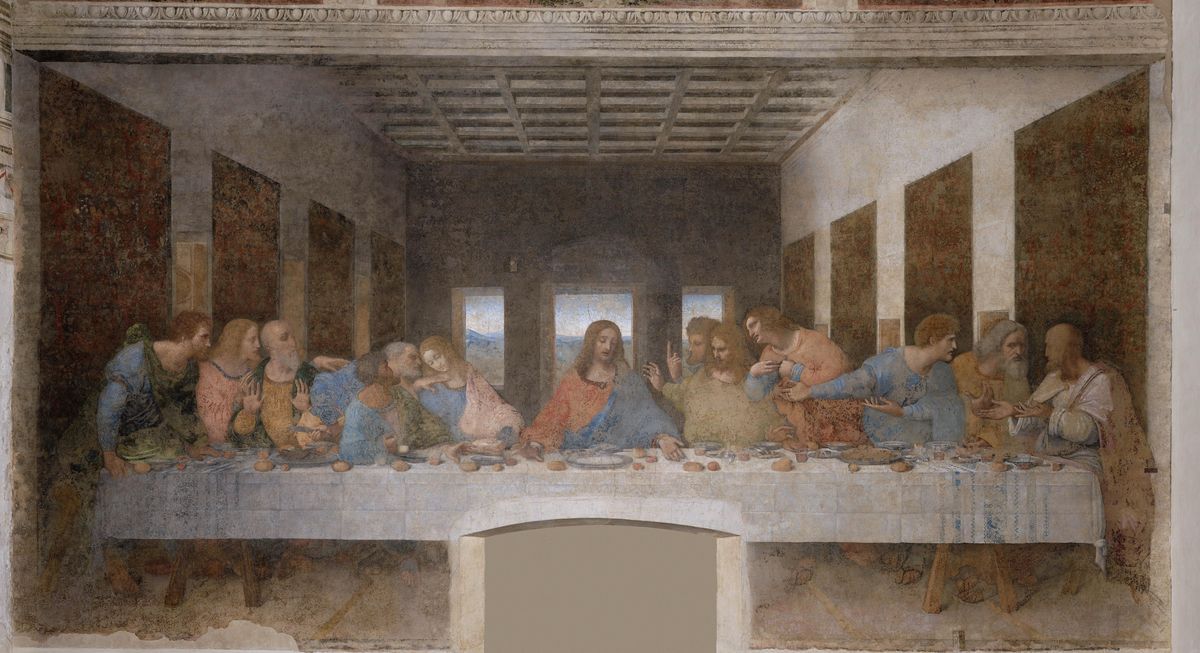
Luke begins the preparations with Peter and John. Jesus sends them into the city and tells them to follow a man carrying a pitcher of water. They are to speak to the householder, who will show them a furnished upper room. They find the setting as Jesus described and prepare the meal.
When the gathering begins, Jesus speaks of his desire to share this Passover with them before his suffering. The occasion carries the familiarity of a shared meal, but his words make clear that it is also a farewell.
He takes bread, gives thanks, breaks it, and gives it to the disciples. He also speaks over the cup, connecting it with his blood and the covenant. Alongside these actions comes the disturbing announcement that someone at the table will betray him.
The accounts bring moments of tenderness and unease into the same room. In Luke, a dispute about greatness leads Jesus to teach about serving others. He also warns Peter of the denial to come. The disciples’ loyalty is sincere, but the night will test it.
John 13 describes Jesus rising from supper, taking a towel, pouring water into a basin, and washing the disciples’ feet. The teacher takes the position of one who serves.
Peter initially objects to Jesus washing his feet. When Jesus explains that accepting this washing matters to their relationship, Peter responds with characteristic enthusiasm, asking for his hands and head to be washed too.
“For I have given you an example, that ye should do as I have done to you.” (John 13:15, KJV)
The action gives visible form to Jesus’ teaching about humility and care. It remains part of Holy Thursday worship in many Christian communities, where foot washing recalls the example he gave his disciples.
In Matthew’s account, the announcement leaves the disciples deeply distressed. Each begins to ask whether he could be the one Jesus means. Betrayal is no longer a distant threat; it has entered the circle of those sharing the meal.
John describes the disciple whom Jesus loved asking who the betrayer is, prompted by Peter. Jesus gives a dipped piece of bread to Judas Iscariot. When Judas leaves, some at the table assume he has gone to buy something for the festival or give money to the poor. They do not understand the purpose of his departure.
The supper also contains a command that looks beyond the coming separation:
“That ye love one another; as I have loved you” (John 13:34, KJV)
Love and betrayal sit close together in the narrative. That contrast helps explain why the Last Supper continues to speak so powerfully to Christian readers.
At the heart of the Last Supper are Jesus’ words over the bread and the cup. In Luke, he identifies the bread with his body, given for the disciples, and asks them to remember him.
“This is my body which is given for you: this do in remembrance of me.” (Luke 22:19, KJV)
His words over the cup connect it with the new covenant in his blood. Within Christian faith, these actions point toward his approaching death and give the disciples a way to remember and participate in the meaning of his sacrifice.
Christian traditions understand and celebrate the Eucharist in different ways. Catholic and Orthodox churches affirm Christ’s real presence, while Protestant traditions include a range of understandings, from sacramental participation to a particular emphasis on remembrance. The shared starting point is the meal Jesus gave his disciples, even where theological explanations differ.
This is why the Last Supper matters beyond the events of one evening. Its words and actions remain central to Christian worship, linking the Gospel narrative with the life of congregations today.
Bread and the cup are explicit in the Gospel accounts, as are references to dipping food. Jesus’ words about the fruit of the vine provide the setting for the wine associated with the meal.
The Passover context in Matthew, Mark, and Luke explains the association with unleavened bread and the paschal meal. However, the narratives do not give a complete menu. Detailed lists of meats, vegetables, sauces, or spices are reconstructions, not a recorded inventory of everything served.
The bread and wine receive particular attention because of what Jesus says and does with them. Their importance in the story comes from their meaning, rather than an elaborate description of the food.
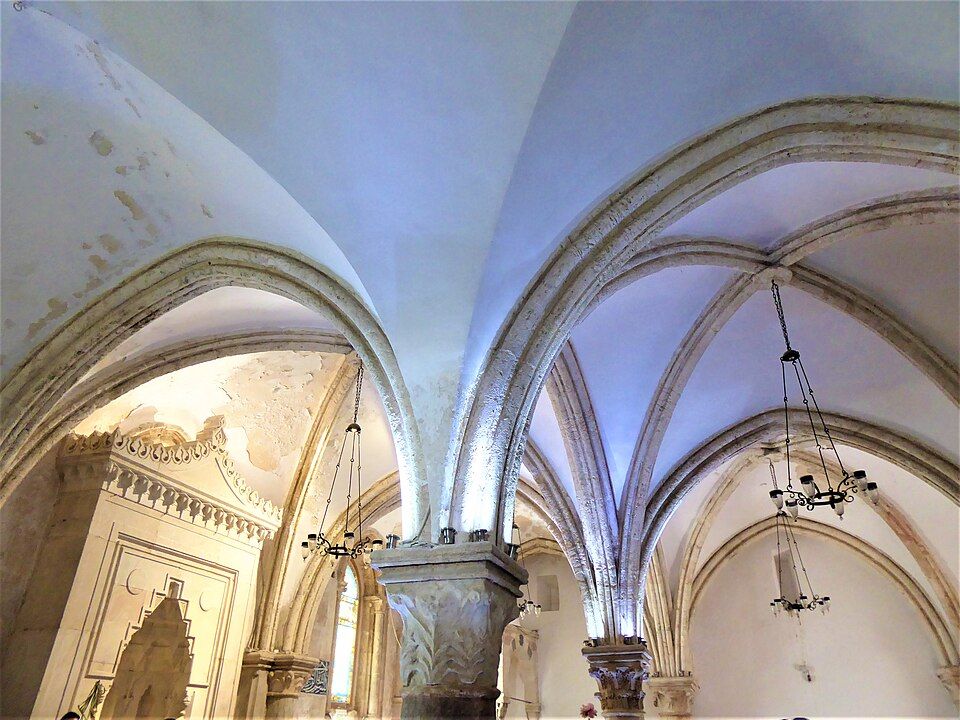
The Gospels place the supper in Jerusalem. Mark and Luke describe a large furnished upper room, but they do not name a street or identify its owner. The familiar connection with Mount Zion comes through Christian tradition.
Today, pilgrims visit the Room of the Last Supper, also known as the Cenacle, on Mount Zion, just outside the present Old City walls. The hall’s pointed arches and ribbed vaulting reflect its medieval history. The hall visitors enter today is a later building that preserves the memory of the biblical event.
Its significance lies in the tradition it carries and the generations of Christians who have remembered the meal here. The site is also associated in Christian tradition with other events of the early Church. Visiting with that distinction in mind allows the biblical story and the building’s later history to enrich one another.
After the supper, the Gospel story moves toward the Mount of Olives and Jesus’ arrest. Matthew records the group singing a hymn before going out. The Garden of Gethsemane provides another important place to explore that night’s events, recalling Jesus’ prayer before his arrest.
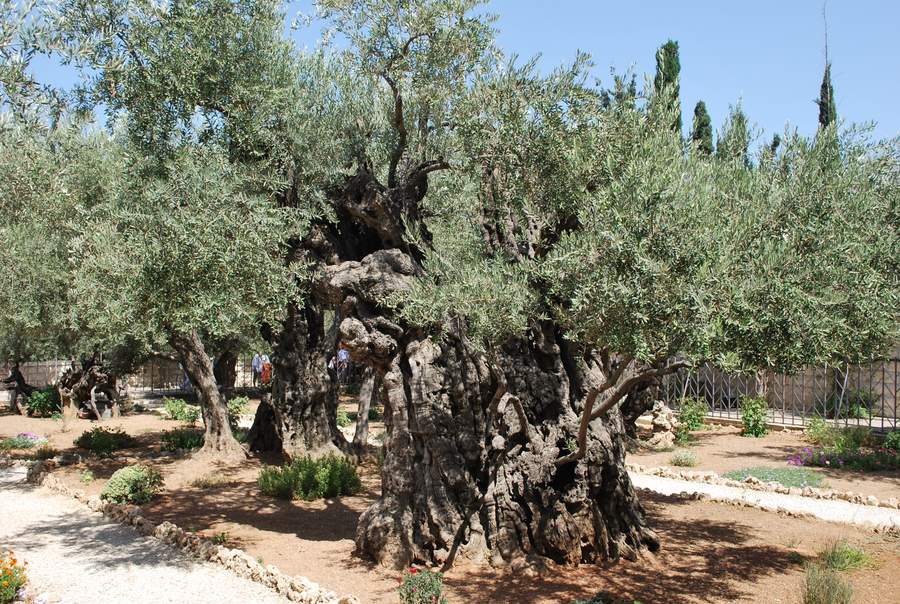
In Jerusalem, the Last Supper becomes part of a landscape you can explore. Mount Zion offers a place to reflect on the meal and its teachings, while Gethsemane connects the farewell at the table with the difficult hours that followed.
These sites are in different parts of the city. Planning transportation, walking time, and the order of visits helps make the day more rewarding, especially if you also want to explore the Old City. Comfortable shoes and modest clothing are sensible choices for a day visiting Jerusalem’s sacred places.
Browse our Jerusalem tours to find an itinerary that brings the city’s biblical stories and Christian heritage into focus. Review the listed stops when choosing your tour, since routes differ. Exploring with a knowledgeable guide adds context to the places, the traditions, and the events remembered there.
Tours You May Like
Join Us
Keep in Touch


 Login / Register
 Contact


 Certificate of Excellence
 Guaranteed Departure
 Low Prices Guaranteed
 24/7 Support