Israel Travel Blog


5 Ways to Get from Tel Aviv to Petra

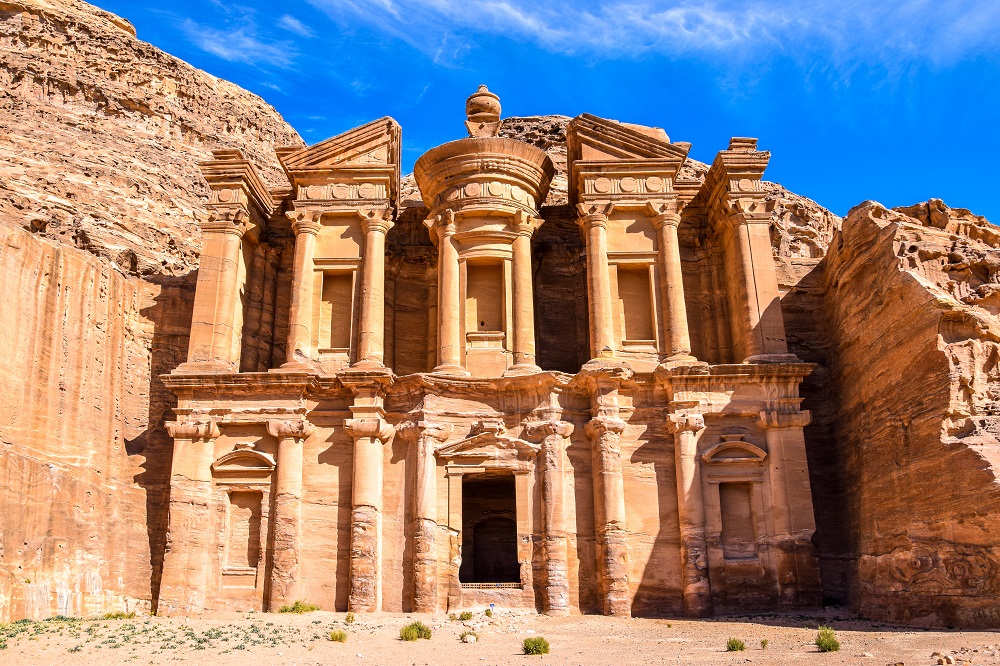
If you want to make the most of your trip to Israel then one of the great options is to include a side trip from Tel Aviv to Petra, Jordan. This UNESCO site and “World Wonder” is close enough to visit on a day trip from Tel Aviv. There are a number of ways to reach Petra, Jordan from Tel Aviv.By Guided Tour1-Day Petra Tour from Tel Aviv: You can easily find a great day trip from Tel Aviv to Petra which includes flights between Tel Aviv Ben Gurion Airport to the newRamon Airportnear Eilat. Sometours from Tel Aviv to Petrado not include the half-hour flight which can be purchased separately. If you take a tour with a flight, you'll be picked up from the Ramon Airport to the border, then across the beautiful Jordanian desert to Petra. After touring thePetra Archeological Park, you'll be taken back to Israel’s Ramon Airport and take the flight back to Tel Aviv. This is the best option if you don’t have a lot of time but still want to see Petra.Petra Tour and Eilat from Tel Aviv:If you have a little more time to spare then instead of taking just a 1-day Petra Tour from Tel Aviv,choose a tour that includes time in Eilat. You fly from Tel Aviv to Eilat as with a one day tour but instead of continuing straight to Petra you get a day of leisure in Eilat and overnight accommodation in an Eilat hotel. The trip to Petra starts the following day when you are taken from your Eilat hotel across the Arava border and to Petra. At the end of a full-day tour to Petra, you return to Eilat’s Ramon Airport for your flight to Tel Aviv. This is an excellent option if you haven’t included Eilat in your itinerary and want to see this stunning Red Sea resort city as well as Petra.Multi-Day Tours to Jordan from Tel Aviv: For those who have even more time in Israel, you could take a longer tour of Jordan and see more of the country in addition to Petra. A range of Israeli tours includes either a combination of sites in Israel and Jordan or just several days in Jordan. On an extended tour to Jordan from Tel Aviv, you would see places like Amman, Jerash, Madaba, Mount Nebo and of course Petra. Some of the multi-day tours from Jerusalem and Tel Aviv to Jordan cross into Jordan via the Sheikh Hussein border crossing rather than the Arava crossing. All of the tours to Petra and Jordan from Israel include assistance at the border crossing, air-conditioned transportation, an awesome tour guide, and accommodation included on multi-day tours. The tours leave on most days of the week and are conducted in several languages.Petra from Tel Aviv by Bus TourThe cheapest Tel Aviv to Petra tour option is by bus. Petra tours from Jerusalem and Tel Aviv by busoffer pick-up in Tel Aviv or Jerusalem; a drive past the Dead Sea, through the Aravah Valley, and across the Aravah border from Eilat to Jordan. From there you continue to Petra for your sightseeing before making the return journey by bus to Tel Aviv or Jerusalem. The downside of this option is a very early morning start and a long bus trip as compared to the other Petra tours from Tel Aviv that include a short flight. However, for those on a budget, it is an ideal alternative.Independent Travel from Tel Aviv to PetraIt is possible to travel from Tel Aviv to Petra independently. First, you will need to get yourself to the Arava border in Eilat. You can do this by taking a bus or flight to Eilat and from there a taxi to the border crossing. Remember to organize your Jordanian visa before traveling. If you are traveling without a tour group you cannot get a visa at the border. On arrival at the border, you will need to present your passport and visa. Once you have crossed into Jordan you will find taxis and self-proclaimed tour guides waiting on the Jordanian side ready to take you to Petra.The cost of traveling to Petra from Tel Aviv independently will include getting to Eilat from Tel Aviv; getting from Eilat to the Arava border; your visa fee(102-177ILS); exit tax from Israel (about 100ILS); transportation to Petra; entrance fee to the Petra Archeological Park(50JD-90JD); transportation back to the Jordan/Israel border; an exit tax from Jordan (about 10JD); transportation from the border to the Eilat bus station or airport and the price of your flight or bus back to Tel Aviv. If traveling from Tel Aviv to Petra independently we strongly recommend you visit your local Jordanian Embassy beforehand to find out about visa requirements.
By Petal Mashraki

From Lawrence to Skywalker: 10 Movies Filmed in Wadi Rum

For movie producers and directors, there’s so much to take into account when filming - not just the cast and the script itself, but the location. To make it successful, they know the right backdrop is crucial - not just to lend it authenticity but to wow the audience with wonderful cinematography.And Wadi Rum, in Jordan, is a place that many of them have traveled to, in order to film, because of its extraordinary desert landscapes, astonishing rock formations, and beautiful red dunes.Today, we’re looking at movies that have been filmed in this part of the world, from historical classics to epic sci-fi creations, and if you’ve seen any of them, you’ll know just how breathtaking the scenery really was and why this location was so popular with so many filmmakers…Take a look at our list…and if this doesn’t make you want to travel to Jordan, then we’re not sure anything will!1. Star Wars: The Rise of SkywalkerStar Wars fans across the world flocked to cinemas around the world in 2019 to enjoy ‘The Rise of Skywalker’ (also known as ‘Episode IX), the ninth (and final) film in the Star Wars series. With the final battle for freedom yet to be fought, Rey is finalizing her training as a Jedi but who knows if balance will be restored?Since Wadi Rum is also known as the ‘Valley of the Moon’, the crew decided that this Jordanian landscape could ‘stand in’ for the Planet Pasaana in the film. And since Pasaana is known for its granite, sandstone formations, and stretching dunes, it was a fine choice.Wadi Rum's mountain range2. Rogue One: a Star Wars StoryThis 2016 movie tells the story of a group of unlikely heroes, living in a time of conflict. Their mission? To steal the plans for the Death Star - the Empire’s great weapon of destruction. Rogue One was shot in several stunning areas, including Iceland, the Maldives, and Wadi Rum.The Jordanian desert was used to depict Jedha, the desert moon that orbits the planet of NaJedha. Two iconic locations were used - Sunset Point (a few kilometers north of the Wadi Rum Road) and the rock bridge at Kharez.The rock bridges were just what the production needed3. Lawrence of ArabiaIn 1962, a British historical drama starring actors Peter O’Toole, Alec Guiness, and Omar Sharif hit the big screen. Telling the story of Thomas Lawrence who was, amongst other things, a diplomat, archaeologist, army officer, and writer of ‘The Seven Pillars of wisdom'. It won seven Oscars, catapulted Sharif to fame, and is regarded today as one of the greatest films ever made. It was, of course, Lawrence of Arabia.During the Arab Revolt (1917-1918), when he fought against the Ottomans, Lawrence reportedly made his base at Wadi Rum, so it was no surprise that the director hoped to film here. In the end, most of the first half of the movie was set here and the scenes of blue sky, red sand, and empty spaces are quite astonishing.The views add to the movie'sgrandeur. Wadi Rum4. The MartianReleased in 2015, the Martian is a science fiction film based on the 2011 novel (of the same name) that tells the tale of a lone astronaut - Mark Watney - who is stranded on Mars after being left behind by his team, who have assumed he is dead.Using all of his resourcefulness and imagination, Watney (played by Matt Damon) has to find a way to signal to Earth that he is still alive, so a team of extraordinary scientists at NASA can hatch a plan to rescue him. Since Wadi Rum is notorious for its red sand and mountains that resemble the surface of Mars, what better place to shoot the film? The red sands of Wadi Rum5. DuneReleased in 2021, Dune received an 84% thumbs up on the ‘Rotten Tomatoes’ film critic site and if you watch it you will know why. With its A-list cast, moving soundtrack, and spectacular scenery, it tells the tale of Paul Atreides (a member of the nobility) who becomes involved in a war to decide the fate of a desert planet named Arrakis.The red hues of the Jordanian desert were the perfect backdrop for the film…and with its jaw-dropping action scenes and stunning scenery (provided courtesy of Wadi Rum) no wonder it grossed more than $400 million at the box office.No huge sandworms here. We chechked6. PrometheusReleased in 2012, Prometheus tells the story of an accomplished archaeologist, Elizabeth Shaw, and her partner Charlie Holloway, who set off on an ambitious expedition in space, along with a 17-man crew. The year is 2093 and the name of their spaceship is Prometheus. On it, they will travel to the distant moon of LV-223 (just under 35 light years from earth) in an attempt to learn more about the origins of mankind.With a great score and fantastic cinematography, many sci-fi buffs feel that Prometheus - the prequel to Alien - was somewhat underrated and did not get the accolades it deserved. The dramatic scenery of the mountains in Wadi Rum may make you want to view it for yourself and then judge!The night sky really looks alien. Wadi Rum7. AladdinDisney remade this famous animated film in 2019, and Wadi Rum was the perfect place to film parts of it.The distinctive rock formations in the area were perfect for the scenes in which the genie and Aladdin concoct a plot to win over Jasmine, not to mention the moment Aladdin is tricked by Jafar into entering the Cave of Wonders (filmed at the Seven Pillars of Wisdom).When you look at the arch in the movie (which is actually a rock bridge at Jabel Khazali) you’ll understand why the area is a UNESCO World Heritage site!Jeep Safari in Wadi Rumum8. Mission to MarsDirected by Brian de Palma and released in 2000, this sci-fi adventure tells the story of a mission to Mars that ends catastrophically, after a storm. As a result, a rescue mission is undertaken, to find out how the tragedy occurred, and try to find survivors to bring back. When they arrive on the Red Planet, they find one man standing - and he tells them the storm that killed his colleagues was far more than bad weather.As well as shoots in Canada and the Canary Island, scenes were shot in Wadi Rum. Unfortunately, save for acclaim from the critics in France, the film was a big flop and even nominated for a ‘Golden Raspberry’ in the ‘Worst Director’ category.Camping resort in Wadi Rum9. Red PlanetAnother sci-fi movie that bombed at the box office was Red Planet, released in 2000, telling the tale of Commander Kate Bowman who is on a mission to save the human race. The year is 2050, Earth is on its last legs (pollution and overpopulation) and the only way to stay alive is to make it to Mars and colonize it!Filmed between Wadi Rum and the Australian Outback, the critics panned the acting. The only saving grace to the film, apparently, was its special effects, but we’re sure the desert scenery was impressive!As Martian as it gets. Wadi Rum10. TheebThis adventure drama (with a thrilling edge to it) was released in 2014 and tells the coming-of-age story of a young Bedouin boy. Set in World War I, in the wake of the Great Arab Revolt, before the collapse of the Ottoman Empire, Theeb (‘Wolf’ in Arabic) needs to guide a British officer to a secret destination and survive the journey through the Wadi Rum desert.Theeb won a BAFTA award in the UK and its director, Abu Nowar, won the title of Best Director at the Venice Film Festival. The filming was not without issues - besides the heat and wind that blew sand everywhere, crew vehicles often became stuck in off-road areas!Still, all of this mattered not when the prizes started to roll in, not to mention a nomination for Best Foreign Language Film at the 88th Academy Awards in 2016.A Bedouin making morning coffee in Wadi RumMake Your Own Adventure in Wadi RumWe hope you’ve enjoyed this piece and that it piqued your interest in the enchanting Wadi Rum. If so, feel free to contact us or take a look at the trips we offer. There are lovely Israel and Jordan tours, that aren't expensive but will give you a rich, unforgettable experience.And since Jordan is just a hop, skip and a jump from Israel, also feel free to learn more about life in the Holy Land by taking a look at our blog.
By Sarah Mann

The Jerusalem Film Festival 2023: Cinema, Attractions and Magic

The International Jerusalem Film Festival is back for its 40th year, promising locals and tourists alike the chance to see some truly astonishing films in one of the world’s most marvelous cities - Jerusalem, the capital of Israel.Running from 13th to 23rd July, the festival will be showcasing more than 200 films from 50 countries around the world, and awards will be handed out by an international panel of film critics. Filmmakers will be there to discuss their work, and it is going to be an incredible ten days.The Jerusalem Film Festival’s PremiereEven more exciting, the opening night will be particularly special. Why? Because it’s being held at the Sultan’s Pool, just west of Mount Zion (home to King David’s tomb, the room of the Last Supper, and Dormition Abbey).Sunrise at Mount ZionThis ancient pool was once part of Jerusalem’s water supply from Roman times up until the Ottoman era - and today is a popular venue for live music festivals. On July 13th, however, it’s going to be hosting an audience of 5,000 attendees at the glittering premiere of a much-anticipated film that’s hitting the big screen - ‘Golda’.‘Golda’ - The Life of Golda MeirGolda, of course, refers to ‘Golda Meir’ - one of modern Israel’s most famous Prime Ministers and often regarded as the ‘mother’ of the nation at that time.If this isn’t intriguing enough, the actress playing her - Helen Mirren - will be attending the premiere. Mirren, of course, is world-famous, perhaps one of the greatest actresses of her time.'Golda' (Israel, 2023)Known particularly for her stellar performances as Detective Jane Tennison in the smash-hit British drama “Prime Suspect’ and the late Queen Elizabeth in ‘The Queen’, we can’t imagine what she’s going to bring to the role of Israel’s only female head of state, whose long and controversial political career was brought down by the events of the Yom Kippur War in 1973.Jerusalem’s Cinematheque - A Venue with a ViewAfter the opening night at the Sultan’s Pool, the festival will move back to its usual location, which is at the Cinematheque on Hebron Road, a venue that offers breathtaking views over the Old City of Jerusalem.An official ad for the 2023 Jerusalem Film FestivalEstablished in 1973, by the philanthropist George Ostrovsky, who wanted to make it a cultural landmark and a meeting place for film lovers, it holds a huge film archive and hosts events all year round. It’s also just a five-minute walk from the beautiful Jerusalem neighborhood of Yemin Moshe and also the vibrant First Station complex (the location of the first station that ran trains between Jerusalem, and Jaffa).The Movie of the Jerusalem Film Festival 2023An awful lot is being shown at this year’s festival, and for a complete rundown of the films being screened, take a look at the Cinematheque website. In the meantime, here are a few films we’d highly recommend:The Siren (Iran). In 1980, Abadan, a city in Iran, is hit by a missile, and teenager Omid - a food delivery worker - begins the search for his missing brother and then looks for a way to escape the city.'The Siren' (Iran, 2023)The Taste of Apples is Red (Israel). In a Druze village in the Golan Heights, Kamel, a respected Sheik, must make an impossible decision between family and duty when his estranged brother returns home after 47 years in exile.Delegation (Israel).Three childhood friends set off on a school trip to Poland, to visit places associated with the Holocaust Between death camps and memorial sites, all three make personal journeys, celebrating their youth and facing their respective fears.Only the River Flows (China). In a rural part of China, in the 1990s, a woman’s body is discovered floating in the river. In the murder investigation that follows, the Chief of Police finds several troubling clues in the search for a suspect.Past Lives (USA). Two childhood friends in Korea lose each other when one’s family emigrates. Twenty years later, they meet in NYC for a week to talk about the choices they’ve made in this modern romance.'Past Lives' (USA, 2023)Safe Place (Croatia). After a suicide attempt, a family is torn apart and the bonds of brothers are highlighted in this debut feature by a director who plays himself!Free Screenings Around the CityFinally, don’t despair if you can’t pick up a ticket to the films in which you’re most interested because this year, some of the films are going to be screened free (yes; free of charge). Large trucks will show up, bearing movie projectors and screens, in neighborhoods all around the city, giving you the perfect opportunity to enjoy a bit of culture whilst enjoying the atmosphere of Jerusalem by Night (here are some great night-time spots for you).Enjoying Jerusalem in the summerJerusalem’s a fantastic city to visit any time of the year but in the summer it comes to life. With hot days but cool, breezy evenings, it’s the perfect place to take a vacation.Jerusalem has a world-class culture - you shouldn’t miss a trip to the Israel Museum (home to the Dead Sea Scrolls, a miniature model of the Second Temple, lots of fine art, and a beautiful Sculpture Garden) and the moving and emotional Yad Vashem, Israel’s National Monument to the Holocaust.The Tower of David in JerusalemJerusalem also has plenty for kids, including the Biblical Zoo (which is perfect for a day outing) and the aquarium next door, and the Bloomfield Science Center (ideal on a scorching hot day, since it’s air-conditioned).Unmissable - a Walk through the Old CityAnd for anyone interested in history, theology, or architecture, there’s no better place to spend time than inside the Old City Walls. Wandering through the ancient quarters, walking narrow cobblestone paths that are 2,000 years old, you can visit Temple Mount and the Dome of the Rock (sacred to Muslims, as the spot that Mohammed flew over on his night journey to Mecca), the Church of the Holy Sepulchre (where Christ was both crucified and resurrected) and the Western Wall, the last remaining part of the Herodian Second Temple, and a focal point for Jews.Day Trips from JerusalemJerusalem is also an excellent base for day trips if you feel the need to get out of the city and see a little more of Israel. Christian pilgrims shouldn’t miss the opportunity to see holy sites in the area - it’s possible to explore them, independently but because they are located in the West Bank, it’s more advisable to travel with a guide.This isn’t difficult however - an organized day trip to Bethlehem, Jericho and the Jordan River means you’ll save yourself time, and hassle and give yourself some peace of mind - all of our guides are knowledgeable and friendly and will make sure you have a wonderful day.Sunset in BethlehemLikewise, the Dead Sea and Masada - which are two of Israel’s top attractions - are both quite close to Jerusalem but can be a bit tricky to reach by public transport. Taking an organized day trip means you’ll be driven around in an air-conditioned minivan or coach, you won’t have to deal with entrance fees or cable car tickets, and as you walk around Masada, an ancient Herodian fortress built in the heart of the Judean desert, you’ll learn about its history from your guide.We offer a wide range of organized package tours, privately-guided excursions, and day trips all over Israel, and with almost 40 years of experience, promise you an unforgettable experience. If you’d like further information, feel free to contact us by email or phone, and also check us out on Facebook and Instagram.
By Sarah Mann

24 Hours in Tel Aviv - the Perfect Itinerary for 2023

Anyone who chose tovisit Tel Aviv will tell you it’s a hard city not to fall in love with. Young, vibrant, and fun, there’s so much to do that you could spend more than a few days here, exploring its museums, galleries, beaches, coffee shops, and cocktail bars.And that’s before you’ve even sampled the amazing nightlife, taken a Bauhaus architecture tour, or headed to Old Jaffa, one of the oldest cities in the world.Get ready for the Non-Stop City!So what’s the best way to get the most out of 24 hours in Tel Aviv? OK, here you go. Set your alarm and be prepared to put in some steps because it will be a long day - but one you’ll enjoy no end!1. Breakfast in styleThe great Israeli breakfast is much talked about and when you try it, it’s bound to live up to your expectations. Tel Aviv is known for its amazing cafe scene - whether you want eggs, cheeses and salads, waffles, wraps and paninis, muffins, and croissants, or even a tofu scramble, you’ll find it here.Don't forget to order Shakshuka. You won't be sorrySo start your morning with a good spread. Locals are loyal to their neighborhood joints and they’ve all got a great charm, but breakfast places in Tel Aviv we’d highly recommend include Cafe Xoho - between Gordon and Frishman beaches - which services health-conscious fare, Benedicts (an American haunt, with fantastic homemade bread, eggs served in all kinds of ways and wonderful stacks of pancakes) or Dallal (famous for its pastries).2. The Tel Aviv promenadeOnce you’re fuelled up, head off to the beachfront. Tel Aviv’s a compact city, so you can easily walk all the way from the ‘Old North’ (home to ‘Metzitzim’ and ‘Hilton’ beaches) all the way to Jaffa, in an hour. The best beaches in Tel Aviv are legendary, and very beautiful - white sand, blue sea, and beautiful views.Green grass, golden sand, blue sea: Tel Aviv's beaches are wonderful!Stroll along the promenade, take a Tel Aviv Bike Tour, hop on an electric scooter, or kick off your sandals and walk along the sand, next to the Mediterranean. If you need a coffee or juice, there are cafes everywhere, not to mention workout stations, and built-in seating areas along the promenade. Once you get down to Jerusalem Beach. head through the backstreets of the Yemenites Quarter towards the Carmel Market.3. Take a tour of the Carmel MarketThe Carmel Market is one of Tel Aviv’s most famous and exciting attractions - it’s full of stalls selling everything from fruit and vegetables to clothes, souvenirs, and sunhats, and there’s a buzzing, fun atmosphere every day, but particularly on Fridays when everyone is doing their shopping in anticipation of Shabbat.Art, food, and fun at the marketThere’s plenty of street food to grab, as well as fresh juices. You can stop in Cafe Yom Tov for a coffee or the Beer Bazaar for a craft ale and if you love to cook, consider taking a Carmel Market food tour.4. Walk the Magical Backstreets of Neve TzedekContinue by foot just a few minutes to Neve Tzedek, one of Tel Aviv’s most charming and picturesque neighborhoods. The first Jewish city built outside Old Jaffa, it was neglected and left in disrepair for years. Today, however, it’s totally gentrified and the beautifully renovated buildings and charming side streets are an Instagrammers delight.Blue buildings, tiny streets - Neve Tzedek is a true gemShabazi, the main street, has lots of small stores, boutiques, restaurants, and cafes, as well as an excellent local gelateria called Anita, should you need a sugar fix. Meaning ‘Oasis of Justice’ in Hebrew, it’s peaceful and tranquil and utterly charming to spend an hour or so in, before heading south to Jaffa.5. Explore JaffaOld Jaffa is a must-stop on any trip to Tel Aviv - it’s one of the oldest cities in the world and with its vibrant port, picturesque Artist’s Quarter (complete with tiny streets and narrow alleyways), and vibrant Flea Market, it’s hard not to fall in love with this city. The old Jaffa PortBegin in the port (where you’ll see musicians playing and fishermen throwing their rods in the sea) before heading up to the Franciscan church and then continue onto the Artist’s Quarter. After admiring the beautiful buildings and stopping into some of the small galleries, head across Yefet Street, towards the Jaffa flea market, or the Shuk haPishpeshim’ as the locals call it.The Jaffa Flea Market is the best in IsraelA veritable treasure trove, full of second-hand clothes, Israeli memorabilia, jewelry, and vintage items, pick yourself up a bargain before stopping for a late lunch in one of the many bars and cafes around. If you want to make sure you won't miss any of this spot's special magic, just take a Jaffa Flea Market Tour.6. Cocktails and Dinner on Dizengoff StreetIf you need a quick rest, head back to your accommodation for a power nap; otherwise take a bus or taxi back to King George Street and walk up towards Dizengoff, the city’s most famous street.Before dinner, stop for a drink in one of Tel Aviv's world-class cocktail bars - Spicehaus serves themed creations in thermos beakers and the wait staff wear white lab coats for good measure. There’s also Concierge, which has a very hip vibe, and Double Standards, where the Bloody Mary you order will actually come in an IV bag!Great drinks, great atmosphere. Cocktails in IsraelThere are so many top restaurants in Tel Aviv that you will be spoilt for choice and the only thing we’d advise is making a reservation beforehand. La Shuk serves modern Israeli fare, Goocha is famous for its fish and Cafe Popular is a chef-restaurant that serves creative dishes in trendy surroundings, but one thing is for sure - the dining scene here is so good, few leave Tel Aviv unhappy.7. End your day in the White City on Rothschild BoulevardRothschild Boulevard is one of the most beautiful streets in the city - it’s located in the historic old quarter, with many beautifully restored Bauhaus buildings at which to gaze. There are bars and cafes at which you can stop, or you can just stroll around, drinking in the charm of the area.By now you’ll probably be exhausted but with luck, you'll have a ‘flavor’ of this wonderful city and be dying to come back and explore it a little more.A lovely spot to think about the great day you just had!Of course, Israel’s more than just Tel Aviv and so if you do have a bit more time, consider making a day trip to Jerusalem, a city that’s ancient, beautiful, evocative, and - home to three major world religions - a huge pilgrimage site.There’s also the Galilee and the Golan Heights, in the north, which are perfect for those seeking nature and hiking trails, as well as the Negev desert, for anyone who wants some solitude.Feel free to contact us by email or phone, if you’d like further information about any of the package tours, day trips, or privately-guided trips we offer around this incredible country.
By Sarah Mann

Celebrating Tel Aviv Pride 2023: The Complete guide

Tel Aviv’s reputation for being a Non-Stop City is well-deserved - anyone visiting here will be struck by just how exciting, vibrant, and dynamic it is. With a young and liberal population, it’s an increasingly popular place for digital nomads to stay and, with its lazy beat and Mediterranean vibe, there’s no better place to have fun.And if you don’t believe us, visit the city during Pride - when it really comes alive with tens of thousands of visitors descending upon it for a week of celebrations - from dawn to dusk.Tel Aviv Pride Parade Marches in the city for gay rights actually began, 25 years ago, in a small way but today Tel Aviv is world-famous for its Parade, which is held at the beginning of June each year and attracts 250,000 plus revelers!What makes Tel Aviv Pride so unique?We’re often asked what makes Tel Aviv Pride so special there’s no one answer to this question. It’s partly because it was the first city in Israel to ever hold a Pride celebration. And also because it’s the largest LGBTQ festival of its kind in the Middle East (in fact, all of Asia).Tel Aviv Pride is full of floats, their participants in colorful outfits, plenty of Drag Queens, and a heady mix of locals and international visitors both in the Parade and cheering on participants. The warm temperatures and blue skies add to the fun!Everybody loves Tel Aviv Pride!Because Tel Aviv is such a liberal city, there’s a great atmosphere at Pride. The local authority supports many of the events that run throughout the week (including a Pride picnic for young families), the Mayor - Ron Huldai - often speaks at events, and City Hall is lit up all week in rainbow colors. Everywhere you walk - both on the streets and at the beaches - you’ll see rainbow flags fluttering, Embassies with banners on their walls stating ‘Love is Love’, and - of course - the obligatory rainbow cupcakes in the many outstanding bakeries in the city.Trust us, Tel Aviv Pride is really on the global calendar.When is Tel Aviv Pride this year?Pride week in Tel Aviv this year begins on Sunday 4th June and runs until Saturday 10th June. And there’s really something for everyone - whether you’re looking to meet new friends whilst sunning yourself at the Hilton Beach (the unofficial ‘gay beach’ in Tel Aviv), dance the night away at nightclubs, or simply join/watch the Pride Parade celebrations themselves.Where in Tel Aviv does the Pride Parade take place?The Pride parade this year is actually divided into two parts - one that starts in the evening and goes into the night and the other that is held in the afternoon, which makes it very family-friendly.Thursday night is when the celebrations kick-off, at the Herbert Samuel Promenade, overlooking Tel Aviv’s beautiful beaches and the sparkling blue Mediterranean sea. As the sun goes down, the dancing will begin and it’s sure to go on way into the night.Don't have a flag? no worries, just pick one on the wayThen on Friday, at lunchtime, the action moves to Ganei Yehoshua, a huge park in north Tel Aviv, which is hosting the celebrations. From noon onwards, expect enormous crowds and not only will there be a large stage and dancing area, but also bars, food stands and even water sprinklers (it can get very hot at this time of the year!)Over the Pride week, what kind of events are being held?There's plenty of nightlife to choose from in Tel Aviv over Pride Week and some of the places we’d recommend trying out include:Shapagat - this is one of the most well-known and lively gay bars in the city and is hosting a series of special Pride events all month. Over Pride week, it’s going to be incredibly busy so show up early if you want to get in the door…‘Forever Tel Aviv’ - this huge social event will be featuring enormous parties at the world-famous Haoman 17 nightclub including the infamous ‘Tel a Beef’ party (a must for anyone who’s a bit ‘out there…!’)Saraya - Between the 8th and 12th of June, this huge complex (spread over three floors) boasts a wet and dry sauna, luxurious jacuzzi, bar, and dance floor complete with DJ. Book your ticket now!Crush Pride - this three-day festival will include pop music, gorgeous Drag Queens, and a hip crowd. Expect mega events with special local and international acts, as well as a rooftop party overlooking the beach.Waterpark Party - On Thursday 8th June, from 12 noon to 12 midnight, the Shefayim Water Park is hosting the only all-day party of Pride. Expect fun in the sun, with special DJs playing sets created especially for the day. What other activities are there to do in Tel Aviv?Tel Aviv is really a great city to explore, since it's not just home to sandy white beaches but also boasts endless Bauhaus buildings, tiny independent coffee shops, and boutique stores. charming neighborhoods with narrow streets and the old city of Jaffa.It’s easy to get around - you can walk, rent a bike, jump on an electric scooter, take local buses, or grab a cab. Unlike Jerusalem, it’s flat (which is a godsend in hot weather). And if you have some free time after Pride, there are all kinds of ways to enjoy yourself.,Top of your list should be a visit to Jaffa, which is home to the ancient Jaffa harbor, a charming Artist’s Quarter (full of cobbled streets and beautiful old houses), and the famous Flea Market. The ‘From Shuk to Chic’ tour takes you all around the area, and with any luck, you’ll grab a bargain before sitting down in one of the tiny cafes nearby, for a cold lemonade and some local food.Bauhaus tours are also popular - walk the streets of Rothschild and Ahad Ha’am in the old historic part of the city and learn why Tel Aviv is known as the ‘White City’. And no one should miss a visit to the Carmel Market - a place known for its lively atmosphere. Whether you want to browse for spices, halva, dates, and Judaica souvenirs, grab some street food, or chill out with a coffee or beer, this is the place to do it.And, finally - however you celebrate Pride this week in Tel Aviv, have a great time in our fantastic country!
By Sarah Mann

How to Travel Israel on a Budget

We won’t lie to you: Israel isn’t exactly a cheap tourist destination and, for this reason, some people might leave it out of their travel bucket list. But that's just because they don't know how wonderful this destination is, and that the tips we're about to show you will significantly drop travel expenses when taking a vacation in Israel.A tourist looking at the Wailing WallTravel to Israel Off-SeasonMany destinations are cheaper off-season, but also dull and dormant. Not Israel: this small country is open and lively year-round. Making a visit here in the height of the summer (July-August) means expensive airfares and more costly accommodation. The religious holidays of Passover (in the spring) and the Jewish New Year also have a reputation for being busy times and at Christmas and Easter, Jerusalem is chock-a-block with Christian pilgrims (many visitors see the city with aChristian Tour Package)The good thing about Israel, however, is that the weather is dry and sunny for much of the year, which means if you arrive in March or November you’re likely to encounter lots of sunny days with warm days and cool evenings. And if you’re looking for a low-cost flight, check out airlines going to Eilat -Israel's resort city- In the south of the country. It is a good place to soak up the winter sun and if you're up for an adventure - make a quick trip across the border with Jordan; many visitors like to take Petra tours from Eilat.Factor in some Beach TimeThe beaches in Israel are truly fantastic, and we are not exaggerating: Clear blue waters and white sand mean that you can spend days just lazing around - and at a cost of zero. Whether you want to enjoy the endless spots in Tel Aviv, take a trip to Caesarea and Acre(where you’ll find Roman aqueducts and much more), or head far north to peaceful, serene, and often empty stretches of beach, it’s a great way to enjoy yourself.Jump in, the water's great!Feel like renting an umbrella and chair or lying on a towel by the water? Well, all you need to do is pack a picnic and plenty of sun cream, and you’re good to go. Many of the beaches even have free workout stations, and there are always family-friendly activities and parks with swings and slides around.Finally, if you really want to have fun, pick up a matkot set - it’s Israel’s national game, played with two small paddles and a ball, and everyone should try it at least once!Budget Transportation in IsraelYou absolutely don’t need to rent a car to visit many parts of Israel - the country has a very well-developed infrastructure and public transport is reliable, efficient, and pretty cheap. In Jerusalem, you can use the light railway and Tel Aviv is flat, so ideal for walking, taking a bike or an electric scooter. Whether you want to buy a Rav Kav card (and load up credit) or pay with your smartphone or credit card, buying a ticket is hassle-free.Rush hour in Tel Aviv, IsraelEgged buses run all over the country, and you can book tickets online or just show up at the station and pay the driver when you board the bus. Traveling from Tel Aviv to Eilat, for instance, is a breeze - buses leave every 2 hours and cost around 80 NIS ($22) for the five-hour journey.On the Jewish Shabbat (late Friday afternoon to Saturday evening) there’s no public transport so plan ahead - although you can use private yellow sheruts to travel between some of the major cities.Shop at Supermarkets and Local Food MarketsEating out in Israel can be a costly business - restaurants can come with a hefty price tag and alcohol is taxed highly. So visit some local Israeli supermarkets and pick a few things up - not only is it much cheaper than going out to eat, this lets you make breakfast, lunch, and dinners when you feel like it, as well as being able to pack snacks and bottled water for when you’re out and about.Street food in JerusalemYou can also do what locals do and head to the city markets - we’d recommend the Carmel Market in Tel Aviv and Jerusalem’s Mahane Yehuda Market. Here, you can pick up amazing fruits, vegetables, cheeses, hummus, olive oils, nuts, and spices and get creative - the Mediterranean diet is famed for being healthy and delicious so here’s your chance to improve your culinary skills.Hike In National ParksTaking a trip to one of Israel’s amazing national parks is a great way to enjoy yourself and is relatively cheap. There’s a flat fee at the entrance which is around 30 NIS ($8) but then you have access for the entire day. Some of them even have camping sites, complete with good facilities, where you can spend a night for not too many shekels!The Banias Waterfall up north is just gorgeous!From the lush Banias waterfalls and the picturesque Hula Valley (perfect for bird lovers) to the Herodian fortress of Masada and the magnificent archaeological park at Beit Shean, you can enjoy glorious treks, wonderful views and spot all kinds of flora and fauna - and it’s a super-cheap day out.Free Attractions in IsraelFood lovers are in for a treat: the quality of produce in Israel is fantastic. Even better, Israelis love their street food - and for not too much money, you can try some of it - whether you want to ‘grab and go’ or sit outside some of these places on benches whilst you devour your lunch.Israeli street food is delicious, often very healthy, and a great way to see how locals live. Falafel (the country’s favorite snack) and hummus bars are always popular but you can also be adventurous and try things like sabich (an Iraqi-styled pita, with all vegetarian fillings), shawarma (always adored by carnivores) and malabi, a delicate milk pudding flavored with rose water. Great food on the cheap.Explore Free Attractions In IsraelThere are endless attractions in Israel that won’t cost you a red cent to visit including, of course, the most famous holy sites in Jerusalem such as the Church of the Holy Sepulchre, the Western (Wailing) Wall, and the Dome of the Rock. Jerusalem’s Old City is a place you can wander for days, just getting lost in narrow alleyways and sitting with a black coffee in the famous Bazaar, watching the world go by.Church of the Holy SepulchreJaffa, one of the world’s oldest ports, is another fine place to spend time - begin at the port and watch fishermen reel in their catches before wandering past the Franciscan Church and the ‘Gates of Faith’ statue. Then head to the famous Shuk haPishpeshim - the Jaffa Flea Market - where all kinds of antiques, vintage and second-hand clothes, and jewelry are on offer.And if you’re in the north of Israel, don’t miss the mystical city of Safed, full of charming cobbled streets and art galleries, as well as time at the Sea of Galilee, where you can explore historic sites, sit at the shore and gaze at the water, or even visit the baptismal site of Yardenit, to watch pilgrims from around the world be baptized in the Jordan River.View of Haifa from Carmel MountainFinally, if you feel like taking an organized day trip in Israel, where everything is arranged for you, don’t think it will break the bank - it’s not much more expensive than doing it on your own steam. Take a look at the tours we offer and feel free to reach out to us by email or phone and read more about us on our blog.
By Petal Mashraki

How to get to and From Ben Gurion Airport

One of the first questions we’re often asked by people who travel to Israel is ‘How do I get to and from the airport?” and today we’ll be answering this in detail. Israel has two airports (one in the center of the country and the other - Ilan Ramon - in Eilat) but it’s the main one - Ben Gurion - that we’re focusing on today.Is tel aviv yafo airport the same as Ben Gurion?Yes. Ben Gurion Airport lies just 20 km from Tel Aviv, so it’s a quick journey to the country’s busiest city. And the good news is that getting to and from there is pretty easy, with several options to choose from. The only critical thing to remember is that from Friday afternoon to Saturday evening - the Jewish sabbath - there is no public transport operating but, other than that, it’s all quite straightforward.Let’s look at your alternatives:By TrainTrains in Israel are a great way to travel - they’re reliable, fast, and reasonably priced. Trains to and from Tel Aviv run every half an hour and cost 14 NIS one way (less than $5). They also run through the night - once an hour - and with the journey taking only 15 minutes, it’s a comfortable and convenient way to travel.The Ben Gurion Airport Train StationOnce you’ve walked out of the arrivals gate at Terminal 3, you’ll see signs directing you to the train in Hebrew, English, and Arabic - the entrance is a minute’s walk away. There, you can buy tickets from a cashier (who will speak English) or machines (which give instructions in a number of languages). You can pay with cash or credit card and once you have your ticket, just put it in the electronic machine and head to your platform.There are three main stations in Tel Aviv - Ha Haganah, Ha Shalom, and Savidor - from which you can take taxis or buses to your final destination.The Hagana Station in Tel AvivTrains also run from the airport to many other parts of the country including Jerusalem, Haifa, and Be’er Sheva.how much is the train from Ben Gurion to Jerusalem? 13 to 18 NIS, and the Airport train will take you to Izhak Navon station in the heart of the city - where there is plenty to see and do.By TaxiIf you’re not watching your money, or it’s Shabbat (in which case you’ll have fewer choices) then taxis are easy to pick up - there’s a stand directly outside arrivals. Walk past the men asking you if you want a taxi (they are not allowed to be there and may well overcharge you) and join the rank for official government-licensed cabs.An Israeli Taxi stands at a gate in JerusalemThis way, you’ll know exactly what you’re going to pay (the tariffs are fixed for each city, though the price will increase on Shabbat and late at night). The following day, if you don’t want to hail down taxis on the street, then you also have the option of downloading the Gett Taxi App (unfortunately they do not pick up from Ben Gurion).By BusBus number 445 leaves once an hour from outside the Arrivals at Terminal 3. This is a cheap and convenient way to travel to Tel Aviv and see what makes this city so great. It runs from the airport all through the city, dropping passengers off (not picking them up) all along the main streets of Allenby and HaYarkon, and its final stop is the Namal Port in north Tel Aviv.Number 18 Bus in JaffaMany of the bus stops are just a stone's throw from the big beach hotels, and also to Dizengoff Street, which is a popular area to stay.The bus costs 10 NIS one way (less than $3) and you can pay with cash or card. If you want to reach Jerusalem, take bus number 485.By Private TransferPrivate Transfer is also a highly recommended way of traveling to and from Ben Gurion Airport because once you’ve paid upfront, there’s nothing further to worry about. If you’re arriving, a driver will be waiting for you with a sign at the Arrivals Gate. If you’re departing, you will be picked up directly at your hotel/accommodation and driven directly to your terminal.Tourists get on a Private TransportMoreover, a private transfer means everything is included - you won’t have to pay for extra passengers or luggage and there will be no late-night tariff. It’s a seamless and stress-free experience from start to finish. Here you can find a greatAirport Transfer from Ben Gurion to Tel Aviv, and also anAirport Transfer from Ben Gurion to Jerusalem, to Haifa, Netania, the Dead Sea, and many other places popular among tourists.By Car RentalIf you’re going to be traveling around the country, renting a car is a good way to go - it will give you freedom and independence and you’ll also be able to visit off-the-beaten-track attractions.Take a drive, Israel's roads are great!The good news is that car rental in Israel can be quite economical. There are several companies you can talk to at Ben Gurion Airport, including Budget, Avis, Alamo, and Hertz (although you’ll probably get a better deal booking online, in advance). From compact vehicles to luxury SUVs, all you need is a credit card and a driver’s license and you’re good to go.By SherutSheruts, in Israel, are yellow minivans that usually accommodate 10 people. They’re basically shared taxis that run specific routes, either within cities or between cities and because they’re privately run, they operate on Shabbat.There is a sherut service both to Jerusalem and Haifa that runs 24/7 from the ground floor arrivals area at the airport. Basically, you get in, pay your money (a fixed fare) then wait for the van to fill up. Sheruts waiting for passengersOnce it’s full, off you go. The driver will drop off passengers along the way, so just cross your fingers that you aren’t the last on the route. However, they’re usually quite canny and it’s unlikely you will be taken too far out of your way.If you’re interested in taking an organized tour or day trip in Israel, whilst you’re on holiday, we offer tours all over the country, where you can visit holy sites, national parks, ancient fortresses, and beautiful pastoral areas in the Galilee and Golan Heights.And for more about life in Israel - the people, the culture, the food, the attractions - take a look at our blog.
By Sarah Mann

7 Restaurants with the Best Views in Israel

What kind of landscapes can you expect on a first-time visit to Israel? The answer is many. Israel is incredibly diverse in so many ways - after all, this is a country where people arrived from the four corners of the globe. And, of course, this will extend to what you see when you travel the Holy Land.From snow-capped mountains in the Golan Heights to rolling green hills in the Galilee; from arid desert landscapes to the rooftops of Jerusalem’s Old City and from urban skylines in Tel Aviv to the Mediterranean coastline, Israel has it all.And what better way to enjoy these views than over a good meal? Our country is famed for its cuisine - from typical Israeli street food to gourmet kosher offerings and celebrity chef restaurants, there’s something to suit every taste and budget.So, why not combine the two: astonishing landscapes with fantastic food? Here’s a rundown of what we think are some of the best restaurants in Israel with a view:1. Manta Ray, Tel AvivThis trendy Tel Aviv restaurant, situated on the beachfront, a stone’s throw from the port of Old Jaffa, is well-known for its wonderful views - look out of the window and you’ll see a sandy beach and then the Mediterranean right in front of you. And whether it’s a hot summer’s evening, and the waves are lapping gently, or a winter’s night and the waves are crashing down, you can’t beat this kind of setting.The Jaffa sunset is almost MysticManta Ray is known for its fish - especially its fresh seafood - patrons rave about the oysters, jumbo shrimp, toasted calamari, and caramelized mussels. The sea bass with gnocchi, eggplant, and cashews is delicious, and meat eaters can tuck into the osso buco (lamb shank) with mashed potato or beef filet with artichoke hearts, served in a red wine sauce.Vegetarians should order the mushroom risotto with Manchego cheese and vegans will lick their lips at the thought of their ‘sweet and veggie’ dish (with a pineapple theme). Manta Ray also has an extensive drinks list, including some killer cocktails.Don't skip Manta Ray if you love Seafood RisottoProTip: Don’t miss this place, if you’re having a vacation in Tel Aviv. Order the ‘Bourbon Street Blues’ cocktail (made of bourbon, Cinzano, and pineapple cassis) as you listen to the sounds of the sea.2.Notre Dame Rooftop Restaurant, JerusalemLooking for a spectacular view of Jerusalem, combined with some top-quality cheeses and wines? Then look no further than the Notre Dame Rooftop Restaurant, which offers both indoor and outdoor dining at the top of the building, directly overlooking the Old City.Notre Dame of Jerusalem has a lovely, romantic atmosphereNotre Dame is just a moment from the New Gate and a few minutes walk from the Church of the Holy Sepulchre and offers hospitality to Christian pilgrimstraveling to Israel from all over the world. However, they know that pilgrims need sustenance too! Cheese platters, fondues, imported gourmet cheeses and an extensive wine list await their visitors (the Pontifical Institute also has its own private wine label) along with stunning views of the Dome of the Rock and the two-thousand-year-old walled city, at sunset.Wine, Cheese - and loveAnd if you’re ravenous and want to order a three-course meal, that’s ok too - they serve classical European cuisine. With a professional staff, exquisite food, and a view of your dreams, book a table well in advance.ProTip: the orange creme brulee is divine.3. MoshButz, RamotTouring northern Israel is a good idea; do you want to upgrade your trip with a fine dining experience and eat amazing food whilst enjoying wonderful views overlooking the Sea of Galilee? Then head to Moshbutz, in the town of Ramot located in the eastern Golan heights - where gastronomic delights in the form of all kinds of meat await you.The Sea of GalileeMoshbutz crafts its menu around local produce - everything (including the soft drinks and wines) is from nearby - which means you really are having a ‘farm to table’ experience. We have to say that this is a restaurant that carnivores will delight in - the owners know their meat, and whether you order the steaks, hamburgers, kebabs, sausages, or carpaccio, you’ll be left grinning.Veggies are well-catered for too - there are marvelous salads (apple-cranberry, eggplant, cauliflower) and a wonderful French onion soup.The steaks are just amazing For fish lovers, there’s nothing for it but to order the grilled trout. With attentive staff and astonishing views, booking in advance is essential to secure a table, so plan ahead if you’re traveling to northern Israel.ProTip: their craft beers are excellent, and the knafeh dessert is top-notch.4. Dag al ha Dan, Upper GalileeNestled in the Upper Galilee lies ‘Dag al ha Dan’ which, translated from the Hebrew, means ‘Fish on the Dan River.’ That’s because this beautiful, rustic restaurant is located next to the Hatzbani stream, which is an extraordinarily scenic spot in Israel’s north.The restaurant is located right next to a beautiful stream, shaded by dense vegetationSituated right on top of a confluence of water, you’ll see ducks and swans swimming past and if you’re up for it, you can even dip your toes in the water!As you'd expect from the name, the restaurant’s specialty is fish - locally farmed, it’s utterly delicious (the grilled trout comes highly recommended).The River Trout is as fresh as can beThey also serve plenty of good salads and as you sit under willow trees, on wooden benches, listening to dragonflies buzzing and birds flying above you and tucking into the good fare, you’ll feel you’re in heaven.Dag al haDan is, in essence, a must-visit for nature lovers!ProTip: try the salmon and the pomegranate juice.5.Rosemarine in Beresheet, Mizpe RamonBeresheet is a luxury hotel in the small desert town of Mitzpe Ramon, in the Negev desert, and within its walls is the wonderful Rosemarine restaurant which is surrounded by the most spectacular vistas, cashing in on its extraordinary setting.Clear, uninterrupted view of the Ramonerosion cirque craterAs you stare out of the floor-to-ceiling windows, bear in mind that this setting is 220 million years old and the geological formations you see make it the largest erosion crater in the world. You may even see people hiking inside, or rappelling down its side and, of course, the habitat is full of small creatures including scorpions, snakes, and lizards.Rosemarine uses local produce (from nearby farms) in its dishes, which include mushroom burgers with black lentils and potato wedges, peppers stuffed with bulgur in tomato sauce, and tofu schnitzel with french fries.Arich vegetarian Burger As well as being a vegetarian paradise, they also cater to gluten-free and vegan diners. It’s arguably one of the best dining experiences you will find in a desert!ProTip: order a pre-dinner frozen margarita and just sit, sip, and stare.6. Kofi Anan, Golan HeightsKofi Anan, which sits atop Mount Bental, has the honor of being the highest spot in Israel - 1,165 meters above sea level - and if you come here during your Golan Heights Trip to grab a bite, you’ll be rewarded with spectacular views, not just of Israel but also Syria and Lebanon.The views from Mount BentalThe name ‘Kofi Anan’ has an interesting story behind it too - Kofi Anan was once the Secretary General of the United Nations, but ‘Anan’ in the Hebrew language means ‘cloud’. And in the clouds, you’ll be (just remember to bring a sweater, particularly in the winter, since it can get cold).This is a place that serves simple fare - soups, sandwiches, pizza slices, cakes/cookies, and great coffee; it offers vegetarian/dairy food but it is open on Shabbat. This is Shakshuka, a local favorite you just have to tryOutside you’ll find art sculptures lining the walkway and next door there are some well-preserved fortifications and an old underground bunker (dating back to the time of the Yom Kippur War in 1973).ProTip: order the shakshuka and then the crepe suzette.7. Fish Market, EilatThis great little fish and seafood restaurant sits right on the Red Sea in Eilat and is just a short distance from the main city area, so isn’t even always crowded. They often play Greek music inside, for some unknown reason, but don’t let this throw you - it’s really Israel!)The views of EilatA bread basket and complimentary appetizers will arrive at your table whilst you’re choosing your main dish - and whether it’s fried calamari, crab casserole, or grilled shrimp skewers, it’s going to be tasty and fresh. The fact that everything’s included in one price also makes it a good deal. The salmon is perfectly cooked and veggies can order the cheese ravioli in a cream-rose sauce or just feast on all of the salad appetizers.A local fish dishEating good food as you stare out onto views of the Red Sea is a fine way to spend an evening, and if you have a late lunch there when you depart you’ll have a view of the mountains behind you. This is nature in overload!ProTip: the Barramundi fish is excellent and, for dessert, you simply must try the chocolate souffle served with vanilla ice cream.
By Sarah Mann

Easter, Passover and Ramadan in Israel in April 2023

April’s always a popular month if you’re thinking about a visit to Israel - spring is here in earnest and everywhere you walk you’ll see pink blossoms, violet jacaranda and brightly coloured Israeli flowers in bloom.Temperatures are up, so hitting the beach is a great way to spend your days, and for those who love hiking, head north for a Tour in the Galilee and the Golan Heights or take Dead Sea Trip.April in Israel: Three celebrations in one monthBut April 2023 is also particularly special this year because it’s the month when holy festivals from three major world religions coincide. Israel is home to almost nine million citizens - the majority are Jewish, but many are Muslims and 2% of the population is Christian.Much of this month, therefore, will be dominated by events relating to Passover, Easter and Ramadan and today, we’re taking a look at how they are celebrated in Israel and what special rites, prayers and events they involve.Passover 2023 in IsraelIf you ask one hundred Israelis what their favourite Jewish festival is, we would bet at least 70% would say Passover! This is partly because it’s a joyous holiday but also because every Jew in Israel has memories of going to this famous holiday meal as a child - the songs, the rituals, the glasses of wine and the search for an ‘afikomen’. So what is Passover exactly?Happy Passover!Passover (or ‘Pesach’ in Hebrew) commemorates the ancient Biblical story of the Israelites fleeing the wicked Pharaoh of Egypt, who had kept them in bondage and misery and only agreed to free them after God sent ten plagues to the land. Led by Moses, the Jews arrived at the Red Sea and, with the help of a miracle, the waves parted and their release was secured, after which the waters came together once more and drowned the Egyptian armies pursuing them.When is Passover 2023?Passover is celebrated in 2023 from the evening of Wednesday, April 5th until the evening of Wednesday, April 12th.Why is it called Passover?The tenth of the plagues God sent to Egypt involved the killing of the firstborn son in every home - including the Pharoah’s own child. How did God know to omit the Jews from this plague? Because he told them to each family to sacrifice a lamb and with its blood, mark their front door with its blood. As a result, God ‘passed over’ the homes of the Jews and they were spared.Seder Night 2023The most famous tradition at Passover is not to eat leavened bread (‘chametz’) for eight days, commemorating the fact that the Israelites left Egypt in such haste that their bread had no time to rise. Orthodox Jews will clean their homes thoroughly before the holiday, removing all bread, flour, cookies, etc. and using separate plates and cutlery for the duration.Seder ceremonial plate Throughout the country, bakers take a well-deserved holiday so if you’re visiting Israel at this time and hankering for carbs, you might want to make a trip to the Old City of Jerusalem or Jaffa!On the eve of Passover, millions of Israelis (and Jews across the world) gather together for a seder meal. ‘Seder’ in Hebrew means ‘order’ and this represents a ritual and an ‘order’ to the evening that stretches back thousands of years. Families read from a special book called the ‘Haggadah’, sing ancient songs, drink four glasses of wine as they read and then sit down to a festive meal with matzah (unleavened bread).Israeli Seder dinnerIt’s one of the most beloved holidays and one in which almost all Israeli Jews partake in, however religious or secular they are. If you want to take part in one, contact a local synagogue may be able to put you in touch with a host or look on social media - there are always families who will open their doors to you - in fact, is it a commandment to ‘welcome the stranger’ on Passover.Passover in Israel: Kids’ Activities and Free MuseumsBecause of the school holidays, there will be endless children-friendly activities all across the country, from theatre shows and dance performances to arts and crafts and puppet shows. Of course, many families who are not travelling abroad choose to head out of the cities, and Israel's top nature reserves and national parks will be busy.Even better, throughout Passover week, over 40 museums in Israel will open their doors to the public for free. These include the Bible Lands museum in Jerusalem, the Tel Aviv Museum of Art in the Non-Stop City, the National Maritime Museum in Haifa, the Science Museum in Beersheva and the Design Museum in Holon. A great way to keep your kids busy and improve their minds at the same time! Another local favourite is the Latrun Tank Museum outside Jerusalem, but this one isn't free. Interested in visiting the country on Passover? click here for a recommended Jewish Tour in Israel.The Latrun Tank Museum, one of the largest of its kind in the worldEaster Week (Holy Week) 2023 in IsraelEaster is a much beloved time for Christian pilgrims and, arguably, there’s no better place to be than in the Holy Land for Holy Week…Good Friday to Easter Sunday this year falls between the 7th and 9th of April but Christian tourists will be arriving earlier, since there’s an entire week of events, commemorating the period between Jesus arriving in Jerusalem, then being arrested, tried and crucified then finally resurrected.The empty tomb and miracle of resurrectionPalm Sunday 2023Commemorating the day that Jesus arrived in Jerusalem, riding on a donkey, surrounded by supporters waving palms and shouting ‘Hosanna’ (a term used to express adoration), Jerusalem will see a colourful procession with pilgrims waving fronds and walking from the Mount of Olives to St. Ann’s Church in the Christian Quarter.Holy Thursday 2023Remembering the moment that Jesus washed the feet of his disciples, there will be masses across the city as well as services with the Washing of the Feet.At the Garden of Gethsemane on the Mount of Olives (the spot at which Jesus prayed before his arrest) there will be a ‘Holy Hour’ in different languages, followed by private prayer.Sunset view, from the Mount of OlivesGood Friday 2023The most solemn day in the Christian calendar, the Old City of Jerusalem will be packed to capacity, with thousands of pilgrims (who have tickets to join the procession) reenacting Jesus’ route along the Via Dolorosa (‘the Way of Sorrows’) to Calgary (Golgotha).Pilgrims will carry crosses, and chant prayers and songs, beginning at 11.30 am from the First Station of the Cross and culminating at the Church of the Holy Sepulchre. For Protestants, there will also be a meditative service held at the Garden Tomb.The 9th station of Via Dolorosa: the Coptic Orthodox Patriarchate, St. Anthony Coptic MonasteryHoly Saturday 2023Once again, there will be thousands of people in the Old City, as thousands head to the Church of the Holy Sepulchre to witness the ceremony of the Holy Fire. According to orthodox tradition, it was on this day that a blue light rose up from Jesus’ tomb, from the marble slab on which his body was apparently placed for burial.The Greek Orthodox Patriarch of Jerusalem will enter the tomb, knee, in darkness, then light two candles and spread the light around the church and afterwards to the waiting crowds outside. The chanting and jubilation will be something akin to fans at a football match! Be careful if you attend, since it’s always very crowded. Interested? click here to find a recommendedChristian Tour in Israel.Church of the Holy SepulchreEaster Sunday 2023As dawn breaks, services of great rejoicing will be held all over the Eternal City. Commemorating the resurrection of Christ, head to the Church of the Holy Sepulchre, St. Ann’s Church, Pater Noster, Mary Magdalene and Dominus Flevit (all on the Mount of Olives) or the Garden Tomb to participate.There will also be processions, singing and the ringing of bells all across Jerusalem - it is a day of tremendous celebration in the Christian calendar. Similar services will be held all across the Holy Land, in Bethlehem, Nazareth and all over the Galilee.Happy Easter!Ramadan 2023 in IsraelRamadan is the ninth month in the Muslim calendar, and although its literal meaning in Arabic is ‘hot month’ it never falls in a particular season. Ramadan lasts for 30 days and in 2023, it falls between 22nd/23rd March and April 21st/22nd (depending on the sighting of the moon).Ramadan is believed to be the month that the Holy Qur’an was revealed to the Prophet Mohammed and, as such, it is a sacred time. During this time, observant Muslims will abstain from eating, drinking, smoking and sexual relations from sunrise to sunset. It really is a period of great introspection, spiritual discipline and communal prayer.Laylat al Qadar 2023One of the most important nights is ‘Laylat al Qadar’ which, in Arabic, means ‘Night of Power’ - when Muslims believe the Angel Gabriel was sent by God to stand before the Prophet Mohammed and recite holy verses from the Quran. Traditionally, it has always been regarded as an opportunity to ask God to give blessings and forgive sins.In practical terms, two main meals are eaten per day - one before dawn and one as dusk turns to night. The evening meal breaks the fast and is known as an Ifthar. It’s customary to break it with dates (which are easy to digest and cut into hunger, curbing the urge to eat excessively).In recent years, in Israel, there have been more and more Muslim communities reaching out to non-muslims with invitations to join these communal meals and if you’re lucky, you could well end up at one!What to Expect if You’re Invited to an Iftar?Iftars are always upbeat - everyone is relieved to eat and drink after a long day of fasting and after the dates have been passed around, people will sit down to all kinds of delicious dishes. Typical dishes include halal meats (chicken and mutton are always popular), fresh fruits and vegetables. Deserts are always fun - expect to find milk puddings (flavoured with saffron and pistachio), baklava and halva on the table, all to be washed down with Arabic coffee and mint tea.In terms of dress, err on the modest side - you don’t want to offend your hosts so dresses below the knee, shirts that don’t show too much cleavage and nothing too tight-fitting. Women can bring a scarf to use as a head covering and men should avoid shorts. Finally, if you’re bringing a gift, go for flowers or chocolate - many observant Muslims do not consume alcohol at any time of the year.If you’re interested in travelling in Israel and looking for a travel company to help you, look no further: we offer every kind of Organised Tour Package, day trips in Israel, countlessprivate tours in Jerusalemand even Israel ship-to-shore excursions for every budget.
By Sarah Mann

The Complete Guide for Camel-Riding

Camel rides are a kind of activity everybody does when they visit the Middle East, especially if they take Israel and Jordan tours. The ride is a great way to experience the traditional, easy way to explore desert landscapes and feel a bit like Lawrence of Arabia. But camels are not horses, and a tourist who doesn't know how to approach them is in for a nasty surprise. This professional guide, written with help from our field experts in Jordan and Israel, will make sure you'll have a great time on your camel ride. let’s take a look at the history of this splendid beast, what it’s like to ride one, and how to prepare yourself before you hop between its hump.Oh, hi there! are we going for a ride?Camels in Arabic CultureThe word ‘camel’ in Arabic actually means ‘beautiful’ and whilst this is not perhaps the first word that comes to mind when describing these animals, it’s true to say they do have a certain charm.Native to the Middle East (and also North Africa/Asia) in Arabic culture, camels are a symbol of strength and hardship. After all, for thousands of years they were the primary means of moving across desolate and inhospitable terrain. They were (and still are) prized as resilient beasts of burden who provide tasty meat (the hump being the most prized part).As for their distinctive features, the Dromedary has one hump and the Bactrian two. Dromedaries make up 90% of the world’s population and they are the ones you’ll see if you‘re traveling in the Middle East.A Camel next to the Petra Treasury, JordanHardy Beasts of BurdenA common myth is that their humps are filled with water but that’s not true! In actual fact, the hump is a place to store fat, which can be transformed at short notice into an instant energy source - this means camels can actually go up to six months without food!Other features that make camels hardy for desert life include double rows of long eyelashes and nostrils that can shut easily - this helps them when sandstorms hit. They can also survive on seeds, dried leaves, and thorny plants when food cannot be found in the desert - and because they have thick lips and a large number of teeth (34), the thorns won’t even injure them!King of the Desert. A Camel and its driverIs it fun to ride a Camel?Yes, it really can be. After all, what better way to see the hot, shimmering desert than from high up, trekking silently in formation across sand dunes, leaving nothing in your wake but footprints?Many adults, and almost all kids, love the experience. Sure, you’ll be bobbing up and down a bit, and you might disembark with sore legs, but as long as you have a positive approach, chances are you’re going to have fun.The other thing to remember is you won’t be alone - you’ll be in a group, led by experienced Bedouins, who have an intimate relationship with the animals and know exactly how they need to be treated. And because they were born and raised in the desert, they know the terrain incredibly well, which means you’re in safe hands.Sit back and enjoy the ride!What to wear when riding a Camel?When riding a camel, it is important to wear clothing that is comfortable, loose-fitting and provides protection from the sun and the elements. Here are some things to keep in mind:Clothing: Prefer lightweight, breathable clothing that covers your arms and legs to protect you from the sun and from any brush or thorns that you may encounter. Loose-fitting clothing is ideal as it allows for ease of movement. Cotton or other natural fibers are good choices. Oh, and don't forget to wear a hat!Footwear: Closed-toe shoes or boots with a sturdy soles are recommended. This will protect your feet from the stirrups.Layering: If you are riding in the early morning or evening when temperatures can be cooler, consider wearing layers that can be removed as the day warms up.Camels resting in Wadi Rum, JordanWhat to expect when Camel RidingSo what does it actually feel like to go camel riding? Well, whilst it’s certainly fun, as we’ve said above, the truth is that it’s not always entirely comfortable or easy! Here are a few things to expect before you get going:Camels grunt, gurgle, and huff; they also moan and bellow loudly. This is their way of communicating with each other. Occasionally, they may even grind their teeth! Don’t be scared - it’s all part of the experience!Camels move slowly - be aware that you won’t be racing across the desert, rather plodding along at a slow and steady pace.Camels are stubborn - if they don’t want to do something, you’ll have a fight on your hands. If things get tricky, however, the Bedouin guides will step in to help you.Camel Riding in Wadi Rum, JordanTips for Riding a CamelAvoid being bitten or kicked: if you’re going horse riding, it’s likely that if you pet your horse, or give them some straw beforehand, they will reach out and smell your hand. Unfortunately, this is not the case for camels - in fact, if you reach out to stroke one, you might end up bitten or kicked.Fun fact: whilst horses only kick forward and backward, camels can kick in all four directions. Having said this, camels can also be very friendly and gentle, so please don’t worry too much - just go with your instincts.Mounting and dismounting your camel: First of all, make sure the camel is kneeling down (ask a Bedouin guide for help, to hold the animal still, if necessary). Then put your left foot in the stirrup and swing your right leg over. Once you’re on, grab onto your saddle firmly with both hands. Lean back as your camel stands up - you’re then good to go.Controlling your camel: This is where your reins come in. On the right side of the camel’s head, the rein will control its direction. On the left side is the rein you’ll use to deal with speed. When you want your camel to move forward, pull on both reins together - but to make it stop, give just the left rein a tug. Oh - and if you want your camel to turn around, loosen one rein and pull the other tight!Camels could be super-nice!Do Camels Spit?Camels spit a lot although, technically, it’s not spitting - they’re actually bringing up the contents of their stomach, and mixing them with saliva. This ‘regurgitation’ can seem alarming but it only really happens when they feel threatened.A Jordanian Camel in front of the famous Petra TreasuryAre Camels faster than Horses?No, horses are generally faster. Camels are known for their ability to travel long distances in hot and dry environments, but they are not typically used for speed. The average speed of a camel is around 20-25 miles per hour (32-40 km/h), whereas horses can reach speeds of up to 40-45 miles per hour (64-72 km/h). Having said that, Camels are better adapted to travel over sand and rough terrain than horses, which can make them faster in certain situations. Camels have large, padded feet that are well-suited for walking on sand and their wide-spaced legs provide stability in uneven terrain. In addition, camels have a unique gait that minimizes the amount of energy they use and reduces the impact on their joints, which can help them move more efficiently over rough ground.Horses can still be faster than camels over short distances because they are able to reach higher speeds. Overall, the relative speed of camels and horses will depend on the specific conditions of the terrain and the distance being covered.You won't go fast, but you'll have a great time!What do you call a Camel with three Humps?"Pregnant"; there are no camels with three humps on their backs. The single-humped camels are known as Dromedary Camels, the double-humped are called Bactrian Camels, and the three-hump thing is just an old joke.The Bactrian Camel is not amusedCamel Riding in JordanJordan is the perfect place for camel rides; the combination of ancient cities carved into red cliffs in Petra, otherworldly sceneries inWadi Rum, and a mystic atmosphere just loops in every adventurous soul - and well, the scene won't be complete without a traditional camel ride.You can get a camel ride at every glamping site in Wadi Rum, and all around Petra. Camel rides can be booked also from the Visitor’s Centre in Wadi Musa, the city right outside the Petra Archeological Park.Finally, if you’re interested in taking Petra and Wadi Rum tours, feel free to click or just contact us; our field experts in Jordan are the best and will make sure you'll have a great vacation.
By Sarah Mann

Arab Street Food, with a twist: Culinary in Jordan

Like all countries in the Middle East, locals in Jordan place a great emphasis on food - particularly traditional dishes. However, whilst most of the international current culinary scene puts the emphasis on gourmet fare, cutting-edge creations or local food (influenced by Arabic culture) Jordan doesn’t conform to this idea.That’s why, whether you’re visiting Amman, Petra, Wadi Rum or Aqaba, you will find traditional food that is gourmet-inspired, as well as local versions of common Middle Eastern dishes. And that’s before you even get started on the unique creations of Jordan itself.Today, we’re looking at cuisine in Jordan - what meat-eaters, fish-lovers and vegetarians can expect to enjoy when making a trip to this part of the world. And, don’t worry, there will be plenty of tips for those who have a sweet tooth!A Jordanian meal: celebration for every palateWhat Food do they eat in Jordan?Mansaf: one of the most beloved dishes in Jordanian cuisine, mansaf is the country’s national dish. Commonly eaten at family celebrations and festivals, it has deep roots in Bedouin culture and, historically, was made with camel meat.Today, you’ll find it to be a dish of tender lamb with ‘jameed’ (fermented sheep’s milk) then seasoned with a spice mix (which includes cumin, cardamon, paprika, and cloves) then finally decorated with pine nuts and almonds.Jordanian MansafMaqluba: you’ll understand why this dish means ‘upside down’ in Arabic when you see it - it’s a combination of meat, fried rice and vegetables which are cooked and then flipped over, to form a very impressive shape!Maqluba plateKofta Kebab: this is a popular Middle Eastern street food, made with ground beef, spices and green herbs usually served with a yoghurt-garlic sauce and flatbread. Many people who tried kebab in other countries say the Jordanian version is among the best: not too spicy, not too salty, and always juicy enough; arab grill at its finest.Kofta KebabHummus: This quintessential Levantine dip is perfect ‘on the go’ food, as well as at a sit-down meal. Made of garbanzo beans, lemon juice, garlic, olive oil and tahini, it’s incredibly delicious and, even better, full of protein. It’s also a firm favourite with vegetarians and vegans - and you’ll find it on every street corner across Jordan.The best Hummus is in JordanFalafel: Just like hummus, these crunchy, flavorful fried chick-pea balls are mouthfuls of heaven - every chef has their own blend of spices when making them and, served on a plate or in pita bread, they make for a great lunch.Fresh Falafel balls in pita bread with chopped salad, hot peppers, lemon, and tahini sauceFuul: This fantastic fava bean stew, cooked with olive oil and cumin is eaten at home and on the street, and is a delicious and healthy option for when you’ve had enough of hummus and falafel! It’s often served with a side of radishes, tahini, mint or hard-boiled eggs.Hummus, Fuul and EggsTabbouleh: A wonderful Levantine salad, made up of bulgar (a whole grain) cucumber, tomatoes, mint and chopped parsley. It’s then seasoned with olive oil and lemon - and it’s very refreshing, especially on hot summer days.Tabbouleh SaladKnafeh: This Middle Eastern dessert is perfect for anyone that loves sweet treats - made with spun pastry (‘knafeh’), drenched in a sweet syrup and layered with cheese, nuts and pistachio, this is a must-order whilst you’re travelling in Jordan.JordanianKnafehBasbousa: also known as harissa or namoura, this rich, dense cake is made of semolina, yoghurt, rose blossom and coconut and is perfectly served with a cup of tea or Arabic coffee.Great candy. Arab BasbousaCan I drink alcohol in Jordan?It’s certainly possible to drink alcohol in Jordan, and even though it’s a Muslim country you’ll be able to purchase beer, wine and spirits at bars in hotels and sometimes in restaurants.However, public drunkenness is considered a serious ‘no no’ in this country and if you are with locals, or invited to a family home, expect to be offered a range of soft drinks, including:Limonana: this really is the ‘national drink’ of Jordan - and it’s fantastic, particularly in the summer. Peeled lemons, sugar, mint and ice are all crushed together, before being drunk as a ‘slushy’.Limonana - the local freshenerArabic coffee: you can’t travel to Jordan without indulging in Arabic coffee. What makes it so different is the spices that are added to the lightly-roasted coffee beans - cardamom, cloves and saffron. It’s a very complex and fragrant flavour, and rather less bitter than ‘western’ coffee.Traditional Arab Tea: both black tea and mint tea are drinks that are served on all kinds of occasions in Jordan. Mint tea is often paired with sweet treats and black tea usually comes heavily sweetened (ask if you want it ‘just black’).South Jordan RestaurantsPetra and Wadi MusaReem Baladi: if you’re looking for a varied menu and generous portions of food, come to Reem Baladi. The lamb stew and camel meat are both very popular, and there are lots of vegetarian options (including an eggplant dip, which comes highly recommended). Don’t forget to order some baklava and hot mint tea for dessert. The inside is large and there’s also a small terrace, which is lovely in the warmer months.The amazing Petra Treasury; seeing it would build up your appetite!My Mom’s Recipe: traditional Jordanian flavours are on the menu here and you can eat Bedouin-style food outside, with a fine view of the mountains. They also have a buffet option, for those who are looking for a bang for their buck.Al Qantarah: this is an excellent choice if you’re looking for a buffet lunch - there’s a wide range of salads, main courses and desserts, and plenty of fresh fruit too. The staff here are helpful and they are quite child-friendly. Drinks (soft) cost extra but it’s still good value for money.Yummy Bites: a great place to grab sandwiches, wraps and pizza. The staff are very helpful and the place - located on the main street in Wadi Musa - is extremely clean. A good option when you’re visiting Petra.AqabaShinawi: on Al Nahda street, close to the beach, this restaurant offers a wide variety of dishes with a great atmosphere, efficient service and friendly staff. Mixed grills and chicken liver dishes are popular and the hummus and bread (which is very fluffy) go down a treat. Big portions and fair prices,Captains: if you’re a fan of seafood, then head to this high-end restaurant, where you can pick out your own fish and then have the staff cook it for you. The main plates are plentiful, with salads and appetisers and diners rave - in particular - about the shrimp and seafood mixed grill. Please note, however, that alcohol is not served here.Julias: serves good Italian food - think plates of pasta and pizzas - and there are plenty of vegetarian options. Yummy desserts and free coffee at the conclusion of your meal are just more reasons why it’s so popular.Aqaba, by the way, is just across the border from Eilat, in Israel, and easy to get to overland, from one of the three border crossings the two countries share.West Jordan RestaurantsAmmanGhaith: this unassuming local spot serves up good quality food at a cheap price. For anyone who’s interested in Jordanian cuisine, Ghaith offers a fantastic mansaf as well as a tasty shawarma on the menu. Vegetarians will enjoy the hummus and falafel.The citadel of AmmaThe citadel of Amman. Visit the site, then have a great meal!Sufra: serving good-quality, traditional Jordanian food, in beautiful villa-like surroundings, this upscale restaurant can be relied on to serve good quality food. The lentil soup, hummus with walnut and mansaf are all excellent, and if you want to be daring, order the lamb spleen. With its cosy atmosphere and beautiful outdoor area (perfect for warmer days), Sufra is a hidden gem of a restaurant in Amman.Al Quds: extremely popular with locals, Al Quds serves up traditional, affordable Arabic food in clean surroundings. Kebabs, fried fish and the mansaf are continually popular and it’s all very authentic. However, it is not always possible to pay by credit card so make sure you take cash.The Dead SeaBurj al Hamam: located inside the Crowne Plaza Hotel, with astonishing panoramic views of the Dead Sea, enjoy authentic Arabic dishes at Burj al Hamam. With hot and cold mezze, mixed grills, delectable desserts and local wine, as well as gluten-free dishes on offer, you won’t be disappointed.Enjoy the water, then treat yourself to a local, authentic fish dish!Ashur: with lobster, shrimp and salmon for fish lovers and pizzas and pasta for vegetarians, Ashur is a fine restaurant to visit (though not super cheap). Situated inside the Kempinski hotel, popular dishes include the veal milanese, ravioli with pecorino and spinach and panna cotta with a berry coulis.Panorama: offering Jordanian, Arabic and international cuisine, Panorama is perfect for those who like a view - the sun setting over the Dead Sea at dusk is marvellous and on a clear night you can even see the lights of Jerusalem twinkling. They’re also happy to make vegetarian plates for those requesting them.Plan Your VisitIf you're thinking about seeing the Kingdom of Jordan, know this:Many tourists prefer taking organized Israel and Jordan tours, to see both countries on the same vacation while knowing everything will be arranged to make sure their experience will be perfect - and they won't miss any must-see. The most popular kinds are the Tel Aviv to Petra tourcategory, and the Jerusalem to Petra tourcategory - both include day trips to Petra from Israeland tours that include the otherworldly Wadi Rum. Feel free to contact us for details.
By Sarah Mann

Petra by Night: A Dance of Fire and Magic

Petra, Jordan is an ancient lost city, a remarkable site you really have to put on your bucket list if you’re visiting the Middle East. Ancient, impressive, and incredibly beautiful, hued out of rock that changes color according to the position of the sun, it’s the kind of place people visit and never forget. But this place also holds hidden splendor, revealed only after the sun sets - a dance of light and darkness, known by locals as Petra By Night.The famous Petra Treasury, Jordan at nightInside Petra, Jordan: Why is it so special?The name ‘Petra’ can be traced back to the Greek ‘Petros’ - rocks. Historically, it was a very important center for trade, since it was situated at a crossroads between the Orient/Far East and the West.No wonder then that trade flourished here, making Petra a place where great wealth was concentrated. In fact, not just luxury goods but even medicine was traded here. Historians and archaeologists think it was established around 312 so by any standards it is one of the world’s oldest cities.The Petra Monastery (By David Roberts, the Cleaveland Museum of Art)Around 2,300 years ago, the Nabtateans (a tribe who came from the southeast of the Arabian peninsula) built this famous ‘Rose City’ (so named because of the color of the rocks from which it was carved).They were master builders and engineers and, as a result, the city had temples, halls, caves, tombs, and marketplaces. These were beautifully carved and sculpted. The city prospered until 363 CE when an earthquake destroyed much of the area. Consequently, Petra was abandoned and traders began looking for other routes. The city, which even had its artificial oasis (also thought up by the Nabtaeans, to ensure that Petra prospered) was soon abandoned.The Petra Treasury by dayFor centuries afterward, the only people who lived there were Bedouins (nomadic tribes, who can actually trace their heritage back to the Spice Route). It was not until 1812, that an explorer named Johann Burkhardt, born in Switzerland, rediscovered it. His journals, which are housed at Cambridge University, describe in detail what he found.Needless to say, the world was stunned.Visiting Petra, Jordan TodayPetra is one of the Seven New Wonders of the World (chosen for this honor in 2007 by a vote of 100 million people). Half-built and half-carved into the rock, it is an extraordinary archaeological site and, even today, only about 20% of it has been excavated.From the Siq, a long narrow passageway, with towering rocks lining both sides of it, to the magnificent Treasury (an elaborate temple carved out of a sandstone rock face) and from the Royal Tombs (a very elaborate burial place) to the Monastery (a legendary monument but with over 800 steps to climb!) Petra is truly a place you have to see before you die.Even better, unlike many other attractions around the world which shut at dusk, it is a site that offers special nighttime admission in the form of a Petra by Night event.What is Petra by Night?Petra by Night is a light show that is held several times a week in the lost city, beginning at 20:30 (occasionally an hour earlier in the winter) and lasting for two hours.You'll start from the main path, all the way to the narrow SiqIt allows a limited number of visitors to walk the fabled Siq passageway, all the way to the Treasury, with candles lit along the pathway to guide them.Once visitors arrive at the Treasury, the entire area in front of the entrance is also lit with candles - more than one thousand! The evening continues with a short cultural show, and musicians playing traditional instruments.Because of the extraordinary topography (enormous cliffs on both sides, wonderful sculptures, a narrow passageway through which you have to walk), the feeling of being here at night is very different from coming in the day.The Siq gorge is glowing in the light of candles and starsIn the day, there’s a great deal of hustle and bustle, not to mention the clip-clop of horses transporting people back and forth along the Siq.At night, it’s a far quieter experience and many people say that walking along this passageway, silently, with the vast rock formations and emptiness of the desert surrounding them gives them goosebumps.It’s also an excellent opportunity for anyone who loves taking photographs to come here - you really will get some remarkable shots.The lights near the treasury in PetraDo I need a ticket for Petra by Night?Yes, it is not free to visit Petra at night. Regular tickets for entrance from 07:00 to dusk range in price, depending on whether you want a one/two/three-day pass. These tickets will set you back 50/55/60 JOD respectively (between $70 and $85).Nor is a visit to Petra by night including in the Jordan Pass. Entrance to the night shows is 17 JOD (about $24) and has to be purchased separately from a day ticket. If you have a child that is aged ten or below, they can enter for free.The easiest way to buy a ticket is either with the help of your guide if you are on an organized trip to Petra, or from the Visitors Centre, which is located at the entrance to the site.ProTip: These 5 simple hacks will help you save money in Jordan.The photos you'll take will be unmatched. Petra by NightWhen can I visit Petra at night?Petra by Night is open to the public three days a week - on Mondays, Wednesdays, and Thursdays. You can enter the site from 20:00 onwards and stay until 22.30.The only thing to bear in mind is that you cannot take transportation from the Visitors Centre to the Treasury - you will need to walk 1.2km there and back, so be sure to wear comfortable and sturdy shoes and stay on the path.Hot tea is served at the Treasury but you may want to bring a bottle of water for yourself too. And remember, whether it’s winter or summer, the desert can be pretty chilly at night so don’t forget to bring a sweater!ProTip: If you're visiting Jordan, make sure not to make these 7 common mistakes!Is it Safe to travel to Petra in Jordan?Yes, it Is. The Kingdom of Jordan makes great efforts to expand inbound tourism: There's a notable police presence in most areas of Jordan; Citizens feel safe, and you should as well. Jordanian policemen are very competent and happy to serve and protect. Check out this recent analysis of tourist public safety in Jordan, made by our field operatives.The Obelisk Tomb, PetraWhat else can I do in Petra?The Petra Archeological Park is filled with ancient shrines, sacred sacrificial grounds, huge temples - and the Petra Royal Tombs will make youfeel like Indiana Johns (minus the snakes). Some attractions, such as the enchanting Petra Monastery, require hiking and the views are worth each and every step.The photos you'll take will make everybody jealous, and the sights will leave you with amazing stories to tell.If you’re interested in taking a worry-free trip to this lost city, there are many organized tours on offer, giving you the chance to see this magnificent site. Moreover, you can also combine Petra with a trip to Wadi Rum - a desert oasis made famous by the movie, ‘Lawrence of Arabia.’Jeep Safari in Wadi Rum, JordanAnd because Jordan shares a border with Israel, it’s also very easy to visit Petra from Eilat, traveling overland, or taking a day trip to Petra from Tel Aviv (flying down to Eilat early in the morning and then continuing with a minibus and a guide).If you're interested, check out these Israel and Jordan Tours; We’re one of Israel’s oldest and most well-established travel companies and offer organized packages, day trips, and privately-guided tours all around Israel, as well as to Jordan.Don’t hesitate to contact us and see how we can help you with your travel needs. And if you’re curious about life in Israel, and traveling to Jordan from Israel, take a look at our blog.
By Sarah Mann

Petra, Jordan on a Budget: 5 Money-Saving Tips [2023 UPDATE]

It's no wonder the Kingdom of Jordan is becoming so popular among tourists nowadays: With the fabled lost city of Petra, Jeep safaris at the otherworldly scenery of Wadi Rum, and relaxing in the legendary Dead Sea, it seems Jordan has something for every taste. However, Jordan is not the cheapest place to take a break. But don't worry: there are ways to make your buck go further in Jordan, taking advantage of a few of our tips right here.The Petra Treasury - the gem of the lost city, all carved into the red cliff1. Get the Jordan PassIf you want to save time, hassle and money, you absolutely must buy the Jordan Pass. There are three categories (Wanderer, Explorer and Expert) which cost between 70-80 Jordanian dinars.All of them give you free entry to over 40 different attractions (including Wadi Rum, Jerrash and various museums and archaeological sites), the ability to download digital guides and the cost of your entry ticket to Petra (for one, two or three days).The Martian landscape of Wadi RumEven better, if you buy the pass before you arrive, and stay more than three nights in the country, the cost of your Jordanian visa will be waived.You can buy the Jordan Pass online, and then just show it at any attraction, on your smartphone. It’s a no-brainer!2. Buy Food at Street Markets to eat on the goJordan isn't an expensive destination, but eating at restaurants in Jordan can actually be quite costly; be smart and head towards local markets, where there are all kinds of street food to be purchased for a song.Whether you’re in the mood for falafel, hummus, pita with meat or fresh vegetables, if you have a backpack (or cooler) you can treat your tastebuds without burning a hole in your pocket. And since alcohol is not always cheap in Jordan (and occasionally - for instance Ramadan - impossible to buy), swap beer for water or juices (you’ll cut down on calories too).If you’re desperate, you’ll certainly be able to find imported snacks but they are costly - so why not just eat the way locals do? Fruit, for instance, makes for a great dessert and whatever you do, don’t forget to try some Medjool dates - they’re a local speciality and with their sweet and caramel-like taste, they’re not known as the ‘King of Fruits’ for nothing.The food is just great and the portions are huge3. Don't skip Public TransportToo bad so many tourists prefer taxis or hire a private driver which can really be quite costly; public transportation in Jordan is pretty great. It’s easy and economical to travel to Jordan from Israel (particularly via the southern border crossing on the Red Sea) and once you’ve arrived in Aqaba or Amman you’ll find it easy to take advantage of buses and sheruts (yellow vans, which accommodate 10 people and leave for the destination only once they are full). If you want to learn more about transportation, check out our full guide -how to get from Petra to Wadi Rum.A shuttle in the Petra Archeological Park4. Take a Day Trip to the Dead Sea rather than Staying OvernightHotels on the Jordanian side of the Dead Sea are expensive - there is no getting around this difficult fact - so rather than break the bank, why not take a day trip to the Dead Sea from Amman, using public transport?It’s less than 60km (40 miles) and recently a JETT bus service has started up, which leaves the capital at 08:30. The most inexpensive of the public beaches is ‘Amman’ and costs 12 dinars to enter, but once inside you’ll have not just the use of the beach but also a pool, changing rooms and showers.The Dead Sea5. Book a tour to Petra and Wadi RumFinally, Petra and Wadi Rum are arguably the country’s two most stunning attractions. If you’ve bought the Jordan pass before arriving, then your entry fee will be waived but you’ll still have to find accommodation and restaurants in Petra can be a bit pricey (after all, it’s in the desert, so you’re a captive audience).To be honest, whilst it’s definitely possible to travel to Petra and Wadi Rum on a budget, it’s still going to be a bit of a splurge because they are both in-demand attractions. The alternative, which isn’t a bad idea, is to take a Petra Tour.The Petra Treasury at nightBy the time you’ve crunched numbers, you may well find that it won’t be that much more expensive than traveling independently. You will save time and hassle when crossing the border if you’re with a group, and tour companies always make good deals with local guides, hotels/glamping sites, and even restaurants.You’ll also have the services of a guide at all times, and not only are they knowledgeable but they’re always informed about local events, not to mention being on hand if something goes wrong. This kind of help - from advising you on restaurants to helping you file a report if you’ve lost your passport - can be truly priceless. And this way you'll travel worry-free, knowing you won't miss one bit of this awesome destination. Here you'll find affordable Petra and Wadi Rum Tours, proven to cover any taste and avoid every possible hassle.
By Sarah Mann

Wadi Rum Camping: The Complete Guide [2023 UPDATE]

If you’ve decided to visit Wadi Rum, in Jordan, you’re in for a treat: otherworldly views, Bedouin hospitality, and loads of activities will make sure you'll return with a huge smile and plenty of stories to tell.And where you'll lay your head at night is an experience in itself: you see, this beautiful part of Jordan is situated in the heart of the desert, which means that the accommodation on offer is a little bit different to what you might be used to. Fear not though - what awaits you isn’t just different from your average night away, but incredibly special:Wadi Rum Glamping!Wadi Rum Campsite. Check out the Martian landscapeWhere to Stay in Wadi Rum?The first thing that we should say is that there are plenty of options from which to choose if you’re looking for an overnight stay. These range from basic, budget affairs to high-end luxury tents with all mod cons, including WiFi, private terraces and en-suite bathrooms with western-style toilets and plenty of hot water.If you’re travelling in Jordan on a budget, it’s quite possible to find a campsite where for just a few dollars a night you can enjoy a night out in the middle of nowhere. But for those who prefer more comfort, there are some very fancy options.Martian scenery? Martian tentsFrom beds that are like army cots to beds that wouldn’t look out of place in five-star hotels, all you need to do is figure out your budget beforehand. Campsites have easy access to bottled water and breakfast is almost always included (and often a buffet dinner too).One thing you can be sure of, however, is that whichever camp you choose to stay at, you won’t have to put the tent up yourself!The Basic Option: Budget Campsites in Wadi RumIf you’re watching your money, the good news is that there are quite a few campsites out there that won’t break the bank. Whilst you might have to share a bathroom, and you won’t be treated to ‘extras’ like toiletries, hairdryers and air-con, many of these Bedouin camps have all the essentials - and, of course, the view at night is free!The standard tents in a Wadi Rum CampIf you’re not travelling on an organised tour to Wadi Rum, then expect to pay around $20-30 for basic accommodation (as well as entry to the site at a cost of 5 Jordanian dinars, unless you have the Jordan Pass, in which case it is free).The Better Choice: Wadi Rum Luxury CampIf you really want to push the boat out, then there’s nothing better than staying in a ‘Martian Dome’ (also known as ‘Bubble Tent’ or ‘Star Pod’) at an upscale camp.Arguably, this is the ultimate way of spending the night since, not only are they extremely comfortable, they actually give you the opportunity of having an ‘outer-space experience’ in private. The view from a Bubble TentHow? Because parts of the tent (be they a panel or sometimes the entire roof) are transparent, which means you can lie in bed and gaze up at thousands of twinkling stars in the clear desert sky.Even better, because the tents are well spaced-out, you’ll have plenty of privacy and won’t hear a peep from your neighbours!This kind of accommodation is a lot more costly - you could pay close to $250 per night - but it really is an extraordinary and quite magical experience.Bubble Tents at nightDesert Attractions: What to Do in Wadi RumOne of the reasons some of the camps are so reasonably priced is that visitors to Wadi Rum are often looking for day-time activities to enjoy in the area, and many of the camps offer ‘add-ons’ for which you have to pay an additional charge.Some are more costly than others but all are great fun in their own way and, depending on your stamina level, and how much you want to shell out, there are few people who leave the area feeling that they’ve missed out.1. Sunrise Camel RidingSince the dawn of time in the Arabian peninsula, camels were the primary means of transport between Europe and Asia (passing through the Middle East) so what better way to start your trip in Wadi Rum than with a journey on one of these graceful animals?Camel Ride at sunriseSetting off before dawn breaks, then watching the sunrise whilst you’re atop a camel, really will make you feel like a real nomad. And trekking across a sandy wilderness, just like Lawrence of Arabia did, isn’t only a wonderful way to see the desert, but it also gives you a window into Bedouin life.2. StargazingIf the best things in life are free, then this has to be one of them. Since Wadi Rum is in the midst of the desert, there’s little pollution so you’ll be able to stare up at the night sky and lose yourself amidst thousands of twinkling lights. And, yes, it’s definitely possible to see the Milky Way!Wadi Rum Stargazing3. Taking a Jeep TourYou can’t visit Wadi Rum and not enjoy a jeep tour of the desert - at least that’s what many visitors say. And, with an experienced Bedouin driver behind the wheel, you’re free to enjoy the spectacular scenery and really explore the area.Whether you book a two, four or six-hour jeep tour, make sure to take plenty of water, a hat and sunscreen (in the warmer months, these things are imperative!) And whilst the roads are quite bumpy, this gives you the opportunity to visit a lot of the above activities - just tell your driver what you want to see most!Jeep Tour in Wadi Rum4. Trekking in the Khazali CanyonThis narrow canyon (with two fig trees marking its entrance) might appear quite nondescript from the outside but once you’ve squeezed through the narrow passageway, which is less than 100 metres long, you’ll be rewarded by the sight of some extremely well-preserved petroglyphs. These impressive rock carvings date back to the Stone Age and, made using stone chisels and hammerstones, depict animals, humans and Islamic inscriptions.Wadi Rum Rock Carvings5. Hiking around the Rock Bridges and Sandstone ArchesThe Rock Bridges and sandstone arches in Wadi Rum are wow-factor geological formations - and whether you take a tour here at sunrise or sunset, you’ll be bowled over by them.If you are reasonably fit and don’t suffer from vertigo, you are going to be able to climb up one of them and enjoy magnificent views.The three most popular to visit are Burdah, Um Fruth and Little Bridge. Burdah is one of the largest of its kind in the world and provides particularly good photographic opportunities.Wadi Rum Rock Arch6. Visiting the Lawrence Springs and Lawrence HouseGiven its name by Lawrence of Arabia, who purportedly rested there during the Arab Revolt, this is a spring that Bedouins have visited for generations, to stop and sip clear water whilst they heard their goats.The view from the spring is beautiful, overlooking the valley. All around you, you’ll see red, ochre and white rocks, and the bright green moss around the spring itself contrasts magnificently with the desert hues.Nearby is the Lawrence House, where the man himself is supposed to have slept, and whilst it is nothing particularly special, it was built on an original Nabatean structure and exudes mystery!Marvel at the view!7. Sandboarding on the DunesGreat for those seeking a thrill, Wadi Rum is home to quite a few sand dunes - small and large. And it’s not just incredibly fun to slip down these slopes, whilst attached to a board - it’s also a fine opportunity to take photographs.Whether you’re a beginner - in which case the smaller ones will be your friends - or more experienced and looking to pick up your speed on a bigger dune - this might be one of the most adventurous activities you’ve undertaken in a while!The Red Dune of Wadi Rum8. Enjoying a Ride in a Hot Air BalloonIf you really want a bird’s eye view of Wadi Rum, then why not splash some cash (around $200) and jump into a hot air balloon that, as it rises slowly above the ground, treats you to breathtaking views of the desert?Stunning landscapes, combined with desert serenity, make for a spectacular two-hour trip and although it’s a bit of a splurge, this is a popular activity and you’ll have to book it in advance if you want to be sure of securing a spot.Hot Air Balloon in the desertIf you’re thinking about visiting Wadi Rum, then probably the most convenient way to do it is with an organised tour. This means that everything’s taken care of from start to finish - transport there, accommodation and food. The various camps all offer an array of activities (some of which we’ve mentioned above) and you can also book trips via the Wadi Rum Visitors Centre.Bein Harim offers you the opportunity of seeing both desert landscapes and the ‘Rose City’ on a two-day Petra and Wadi Rum tour, which departs from Eilat in Israel, just across the border from Jordan. Feel free to contact us; tours depart daily and include an overnight stay in a Bedouin camp
By Sarah Mann