Tkuma (Hebrew: Resurrection) is a religious moshav in southern Israel, located northwest of Netivot under the jurisdiction of the Sdot Negev Regional Council.
Tkuma was originally established as a kibbutz on the night of October 5–6, 1946, as one of the 11 points in the Negev. The first settlers were Jewish immigrants from Eastern Europe who had survived the Holocaust, and the village's name symbolizes the resurrection of Israel.
In 1949, the village relocated to its current site near the former Arab village of al-Muharraqa. Scholar Benny Morris notes that Tkuma is near the site of al-Muharraqa, while writer Walid Khalidi states that Tkuma, though only 2 km west of al-Muharraqa, is on land historically associated with Gaza.
During the 1950s, additional immigrants from Eastern Europe and Tunisia joined the moshav.
Located just five kilometers from the Gaza Strip, Tkuma has sustained damage from rocket attacks by Hamas militants during the 2000s and 2010s. The moshav is protected by the Color Red alert system.
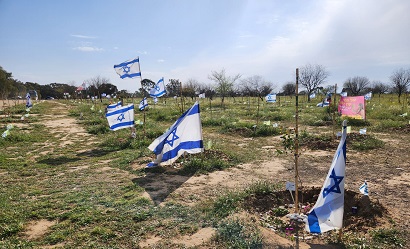
On October 7, 2023, during the Hamas-led attack on Israel, terrorists arrived at Tkuma but did not enter the moshav because its gates were closed. However, the nearby Re’im music festival was one of the attack’s primary targets. In response to the massacre, the Car Wall, also known as the Car Graveyard, was erected just west of Tkuma. This memorial consists of burnt and destroyed vehicles belonging to victims who were attacked while trying to escape. The site stands as a powerful tribute to those who lost their lives and a stark reminder of the attack’s brutality.
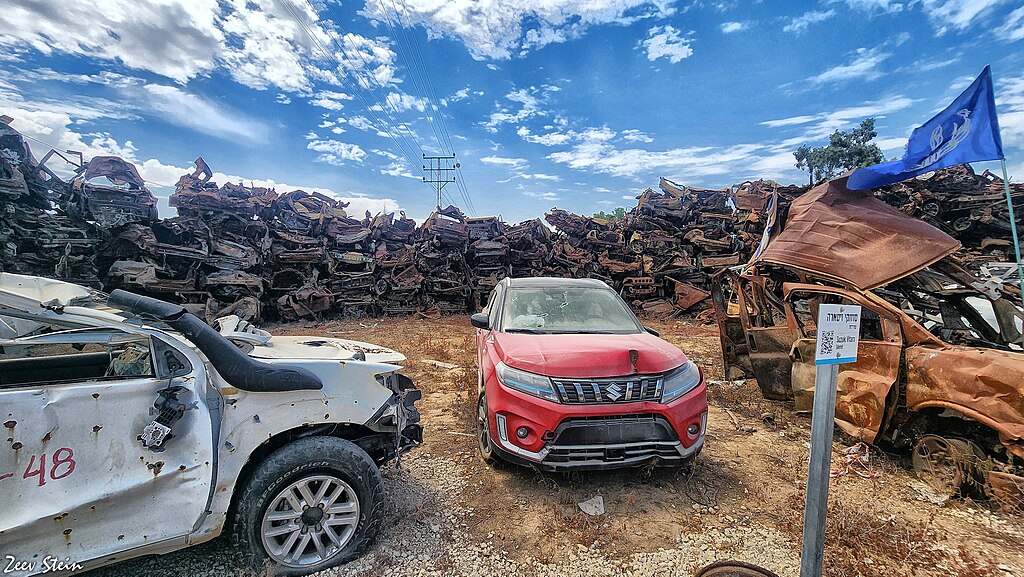
Moshav Tkuma Car Graveyard (Image source: Zeev Stein CC BY 2.5)
Since the 1990s, fish farming has become a key economic sector. The sale of fresh fish to banquet halls and restaurants in the northern Negev provides income for several families.
In 1964, at Yizre'am, about one kilometer southwest of Tkuma, archaeologists discovered a clay stamp bearing a Greek inscription, identifying it as belonging to "Silvanus."
Join Us
Keep in Touch


 Login / Register
 Contact


 Show On Map


 Certificate of Excellence
 Guaranteed Departure
 Low Prices Guaranteed
 24/7 Support