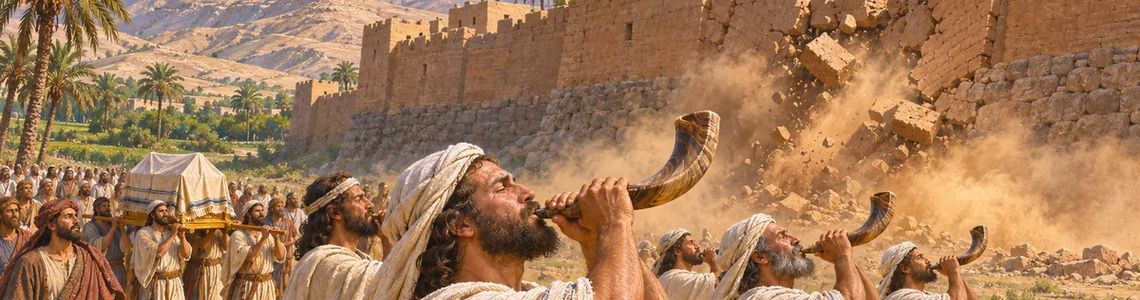
For six days, the Israelites circled Jericho and returned to camp. On the seventh, the pattern changed. Seven circuits, a long trumpet blast, and a great shout brought the story to its unforgettable climax: the walls fell. Behind this famous moment lies a story of faith, a promise to a woman inside the city, and an ancient landscape travelers can still explore today.
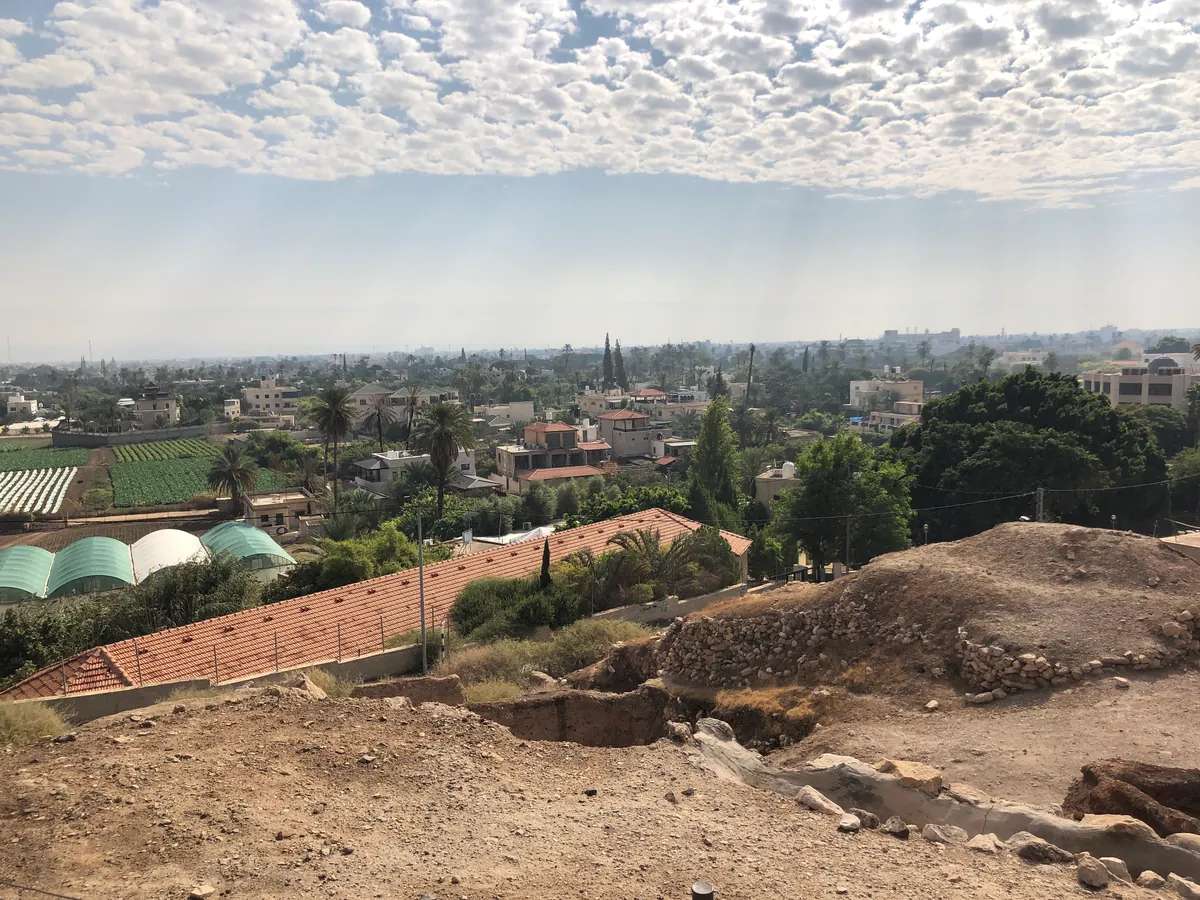
Jericho stands in the Jordan Valley, near the northern end of the Dead Sea. Its springs supported settlement in an otherwise dry landscape, helping make the oasis one of the region’s most remarkable places. Ancient Jericho is associated with Tell es-Sultan, an archaeological mound beside the modern city in the West Bank.
In the Book of Joshua, the Israelites approach Jericho after crossing the Jordan River. Moses has died, and Joshua now leads the people into Canaan. The crossing in Joshua 3 and 4 sets the scene for the confrontation that follows: the river is behind them, and a fortified city stands ahead.
The fall of Jericho is told in Joshua 6, while Rahab’s earlier encounter with the Israelite spies appears in Joshua 2. Reading the two chapters together gives the familiar story a more personal dimension. Before the walls fall, a promise has already been made to someone living within them.
The battle of Jericho begins with a closed city. Joshua 6 describes its gates as firmly shut because of the Israelites. Yet the instructions Joshua receives do not call for battering rams or an assault on the gates. Instead, the people are told to circle the city, accompanied by priests, trumpets, and the Ark of the Covenant.
The unusual procession is central to the account. The story presents the coming victory as a gift from God, rather than the result of Joshua finding a weakness in the defenses.
Before the siege, Joshua sends two spies to investigate Jericho. Rahab, a woman whom the biblical text identifies as a prostitute, shelters them in her home. When the king’s men come looking, she hides the visitors beneath flax on her roof and helps them escape.
Rahab tells the spies that news of Israel’s God has reached the city. She asks them to spare her family in return for the protection she has given them. They agree, with conditions: she must gather her relatives inside her house and display a scarlet cord in the window through which she helped them leave.
Joshua 2 describes her house as part of the city wall. That detail makes her place in the story especially striking. The structure associated with Jericho’s security will fall, while the family sheltered in her home will be saved. No excavated house has been securely identified as Rahab’s.
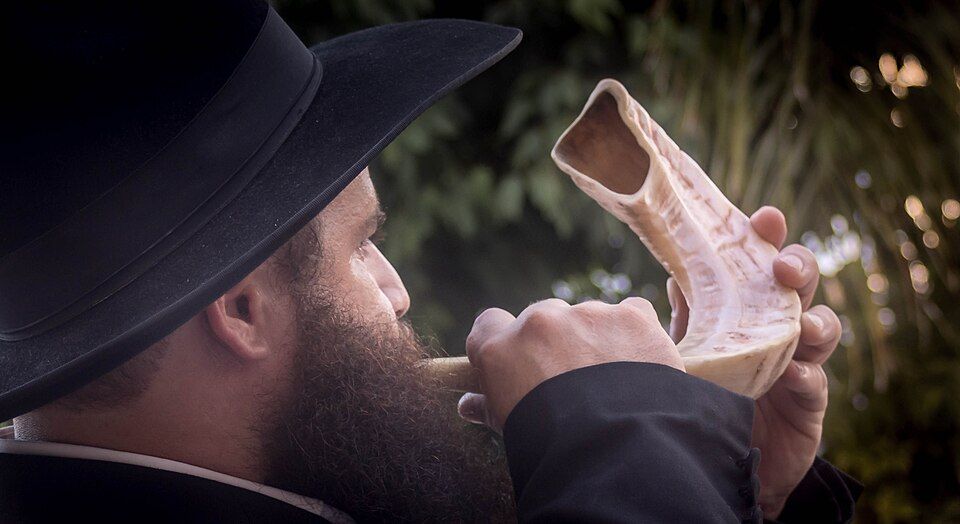
Joshua organizes the procession as instructed. An armed guard goes ahead, seven priests carry trumpets made from rams’ horns, the Ark follows, and a rear guard completes the procession. The people are told not to raise their voices until Joshua gives the command.
The Ark of the Covenant is much more than an object carried into battle. In the biblical narrative, it is associated with God’s covenant and presence among the Israelites. Its position in the procession helps explain why the march has a religious character.
How many times did Joshua march around Jericho? The account describes one circuit on each of the first six days, followed by seven circuits on the seventh day. That makes 13 circuits over seven days, rather than seven circuits altogether.
For six days, the procession ends with a return to camp. On the seventh, the people rise early and circle the city seven times. Only after the final circuit does Joshua give the command to shout.
“Shout; for the LORD hath given you the city.” (Joshua 6:16, KJV)
The trumpets sound, the people shout, and the walls collapse. The Israelites advance into Jericho and capture it. Joshua sends the two spies to bring Rahab and her relatives out, fulfilling the promise made before the siege.
The chapter also describes the killing of the city’s inhabitants and the burning of Jericho. This is a difficult part of the account, and it belongs in an honest retelling. Within the biblical narrative, the destruction is presented as an act of divine judgment. Readers and religious traditions have long wrestled with its meaning and its violence.
Rahab’s rescue remains an important counterpoint. The story ends her part of the episode with survival and a place among the Israelites, rather than with the destruction surrounding her.
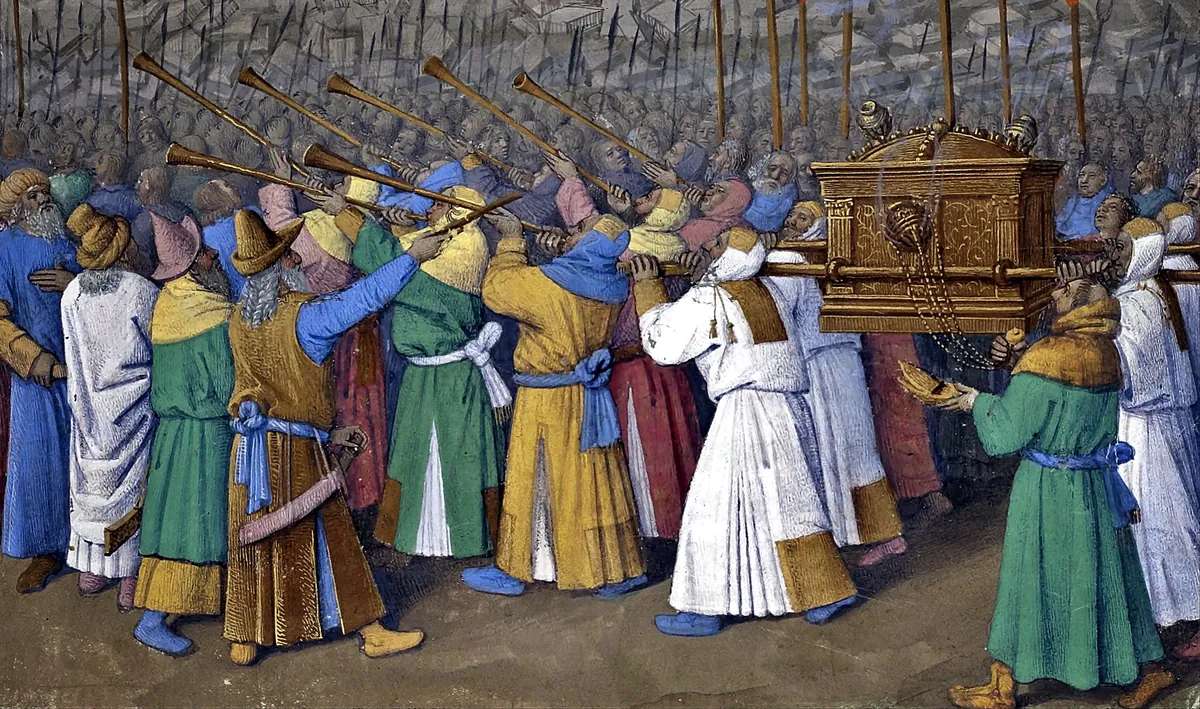
According to Joshua 6, the walls of Jericho fell after the Israelites completed the commanded procession, the priests sounded their trumpets, and the people shouted. The biblical account attributes the victory to God.
The sequence is clear, but the chapter does not explain a physical mechanism. It does not say that sound waves weakened the masonry or describe the engineering of the collapse. Presenting either explanation as something the Bible establishes would add a claim the text does not make.
For the same reason, an earthquake can be discussed as a proposed historical explanation, but it should not be confused with the wording of Joshua 6. The religious meaning of the account and attempts to reconstruct an ancient event ask different questions.
Faith and obedience run through the story. Joshua follows instructions that do not resemble a conventional siege, and the people continue a repeated task without seeing an immediate result. The narrative places the decisive power with God.
The repeated number seven also gives the account its rhythm: seven priests, seven trumpets, seven days, and seven circuits on the final day. Seven often carries associations of completeness in biblical interpretation. Here, its repetition emphasizes the ordered nature of the instructions.
For Christian readers, the New Testament makes the connection with faith explicit:
“By faith the walls of Jericho fell down, after they were compassed about seven days.” (Hebrews 11:30, KJV)
Rahab adds another dimension. Someone living inside the opposing city recognizes Israel’s God, protects the spies, and receives mercy. Her story brings a human relationship into an account of armies and walls: help is given, an oath is sworn, and that oath is honored.
These themes explain why the fall of Jericho remains meaningful in Jewish and Christian readings of Scripture. Its message should not be reduced to a promise that every personal obstacle will disappear if a particular action is repeated.
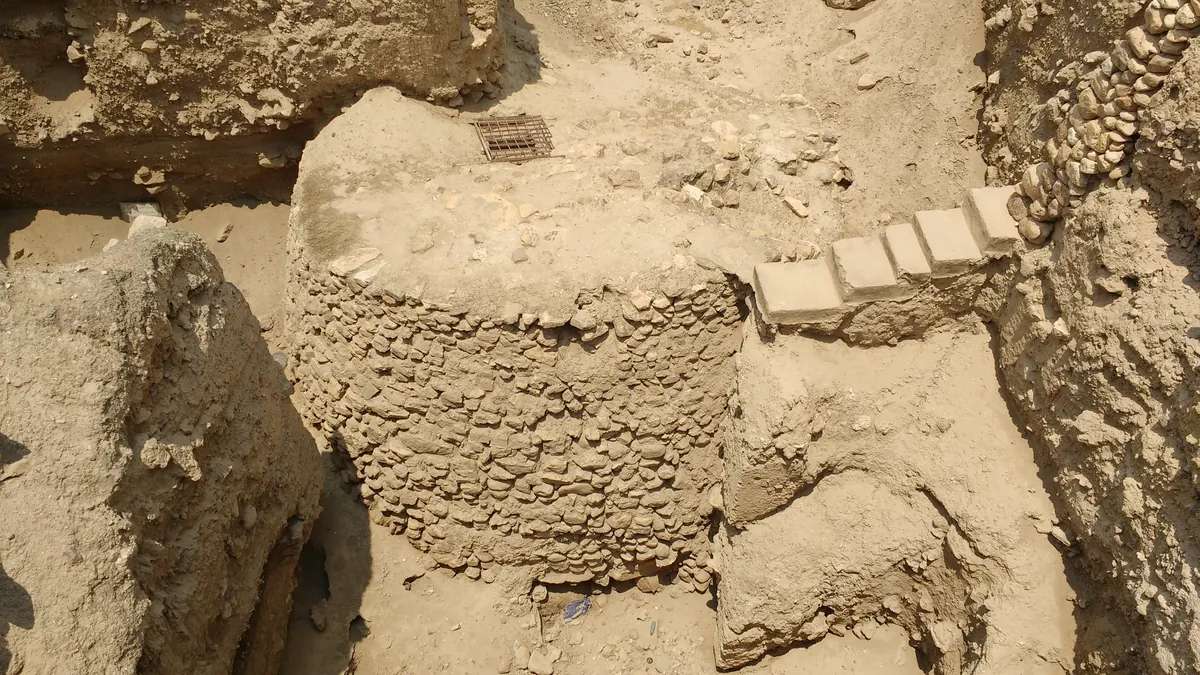
Tell es-Sultan, ancient Jericho, contains remains from many periods of settlement. UNESCO recognizes the site for its prehistoric settlement and Bronze Age urban development. Excavations have revealed fortifications, buildings, and evidence of destruction across its long history.
The famous Neolithic stone tower belongs to a much earlier world than the setting traditionally associated with Joshua. It should not be presented as a tower from the battle of Jericho or as Rahab’s home. The mound preserves thousands of years of activity, so features visible near one another may be separated by enormous stretches of time.
The relationship between the Bronze Age remains and Joshua’s account is debated. Kathleen Kenyon dated a major destruction of the fortified city to around 1550 BC. A published radiocarbon study of grain from that destruction supported an earlier date than the approximately 1400 BC identification proposed by some interpreters.
Researchers and biblical interpreters disagree over chronology and how particular remains relate to the text. Archaeology therefore does not provide a universally accepted identification of the walls that fell in Joshua 6. Finding ancient fortifications or fallen bricks is not, by itself, enough to establish who destroyed them or connect them to a specific biblical episode.
For visitors, this distinction enriches the experience. Tell es-Sultan offers a chance to encounter the physical depth of Jericho’s past while considering the biblical story associated with the city. A guide can help distinguish the settlement layers and explain what different discoveries do, and do not, tell us.
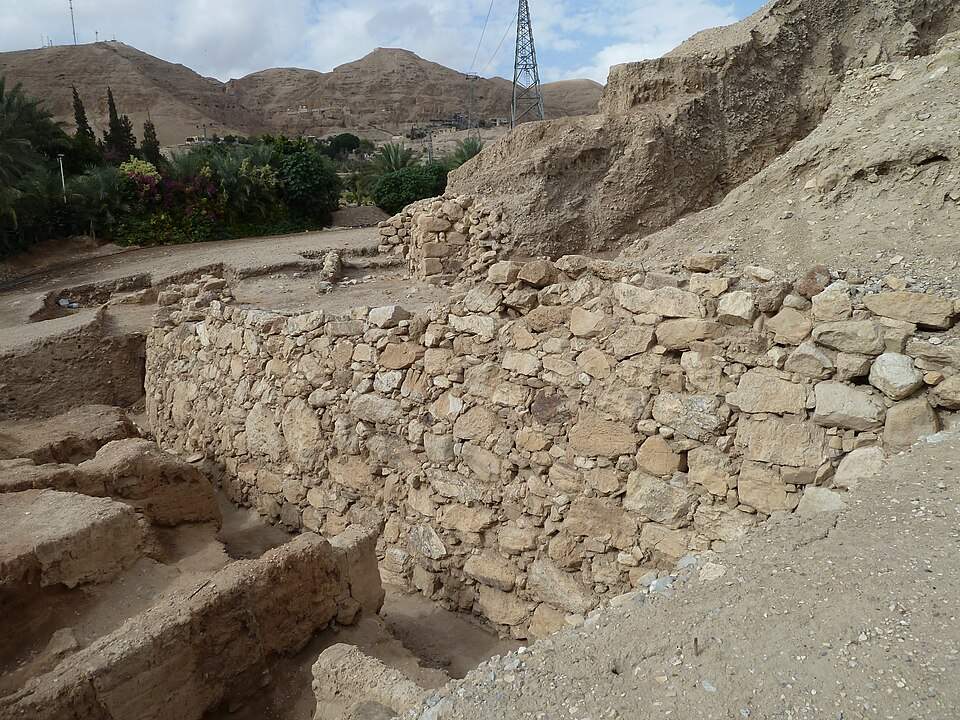
Reading the story beside the landscape gives it a different sense of scale. The Jordan Valley, the oasis, and the mound of ancient Jericho help place Joshua’s journey within a real geographical setting. They also reveal how much more there is to the city than its most famous biblical moment.
Our Jericho tours offer different ways to explore the city and surrounding region, with itineraries that may combine Jericho with Bethlehem, the Jordan River, or the Dead Sea. Choose a route that matches your interests, and check the itinerary for the specific sites included. If seeing Tell es-Sultan is a priority, let us know when planning your visit.
Tours You May Like
Join Us
Keep in Touch


 Login / Register
 Contact


 Certificate of Excellence
 Guaranteed Departure
 Low Prices Guaranteed
 24/7 Support