Moses had led the Israelites out of Egypt. Now Joshua stood before a different challenge: guiding them across the Jordan and into the land they had long awaited. His story moves from wilderness uncertainty to Jericho's walls, and from extraordinary battles to a final, deeply personal declaration of faith. Its places still draw travelers to the Holy Land today.
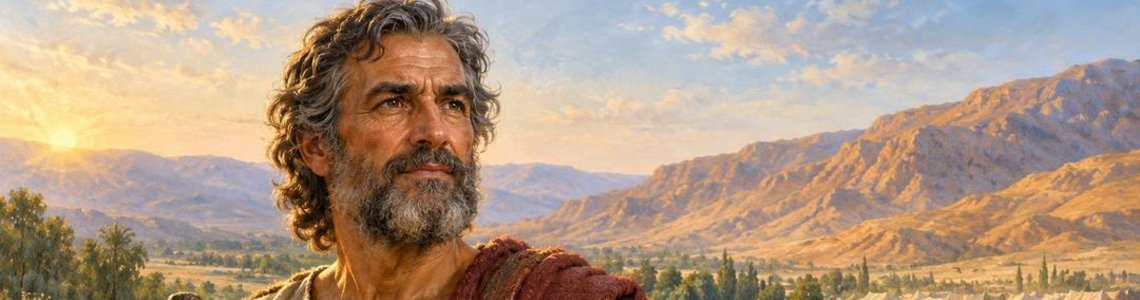
Joshua son of Nun was the Israelite leader who succeeded Moses and led the people into Canaan, the Promised Land of the biblical narrative. A member of the tribe of Ephraim, he appears in Exodus and Numbers before becoming the central figure of the Book of Joshua.
Numbers 13:16 records that Moses changed his name from Hoshea to Joshua. The Hebrew name Yehoshua is commonly understood as "the LORD saves" or "the LORD is salvation." It expresses a theme that runs through his life: leadership rooted in trust in God.
Joshua first appears as a military leader fighting the Amalekites while Moses watches from a hill, supported by Aaron and Hur (Exodus 17:8–13). He later serves as Moses' assistant and accompanies him toward Mount Sinai (Exodus 24:13).
His preparation for leadership unfolds over years of service. When Moses is instructed to appoint a successor, he publicly commissions Joshua before the priest Eleazar and the congregation (Numbers 27:18–23). By the opening of the Book of Joshua, Moses has died, and his former assistant must lead the people forward.
Before that transition, Joshua and Caleb were among the twelve men sent to explore Canaan. The returning scouts described a fertile land with powerful inhabitants and fortified cities. Fear spread through the camp.
Joshua and Caleb urged the people to trust God's promise and enter the land. Their appeal met fierce resistance. Numbers 14 presents them as faithful witnesses amid a generation's refusal, and names them as the exceptions among the counted adults who would die during the wilderness years. Their partnership helps explain the courage Joshua later brings to his own leadership.
Fun Fact: A Biblical Story Behind Israel's Tourism Emblem
Israel's Ministry of Tourism adopted the image of two biblical scouts carrying a large cluster of grapes on a pole. The pair is often identified in popular depictions as Joshua and Caleb, although Numbers 13:23 does not name the grape carriers. The emblem connects the scouts' discovery of the land's bounty with the curiosity of travelers exploring it today.
At the beginning of his mission, Joshua receives words that remain among the Bible's best known encouragements:
“Have not I commanded thee? Be strong and of a good courage; be not afraid, neither be thou dismayed: for the LORD thy God is with thee whithersoever thou goest.” (Joshua 1:9, KJV)
The setting gives the verse its weight. Joshua faces a river to cross, fortified cities ahead, and responsibility for an entire people. God's encouragement comes alongside instructions to keep and meditate on the law given through Moses (Joshua 1:7–8). Courage, in this passage, grows through faithfulness and the assurance of God's presence.
Joshua 3 describes the Israelites approaching the Jordan during its flood season. The priests carrying the Ark of the Covenant go ahead of the people. When their feet enter the water, the flow from upstream stops, allowing the Israelites to cross on dry ground opposite Jericho.
The priests remain in the riverbed until the crossing is complete. Twelve men, one from each tribe, take stones from the river and carry them to the camp at Gilgal. These become a memorial, prompting future generations to ask what happened there (Joshua 4).
The crossing marks a turning point: the wilderness journey gives way to life in the land. Today, the lower Jordan near Qasr al-Yahud preserves a pilgrimage tradition associated with Joshua's crossing. The precise crossing point cannot be established from the modern visitor site alone.
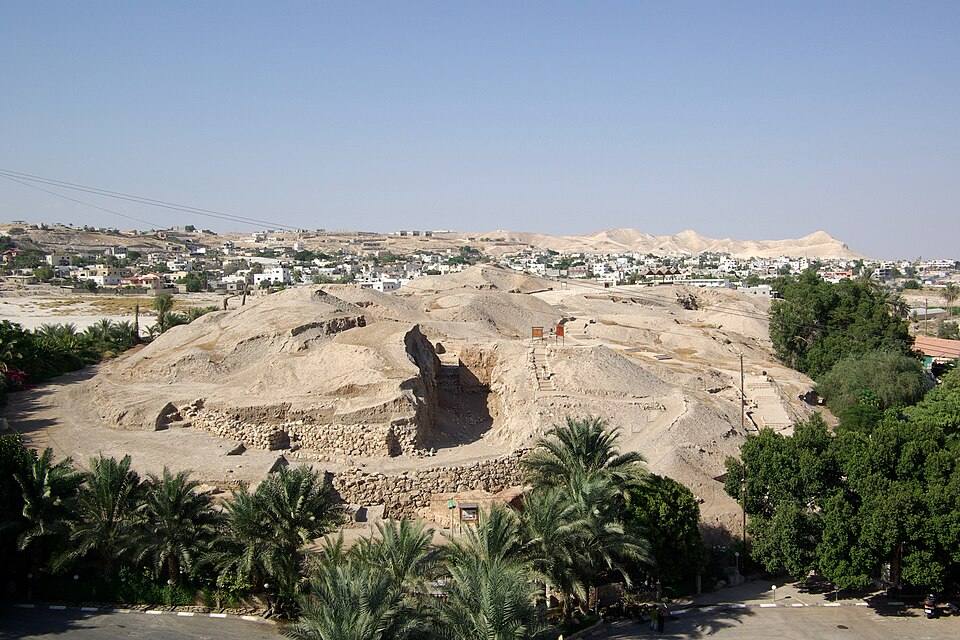
With Jericho before them, the Israelites receive an unusual instruction. For six days, the fighting men march around the city once a day, accompanied by priests carrying the ark and blowing ram's horns. On the seventh day, they circle it seven times (Joshua 6).
“Shout; for the LORD hath given you the city.” (Joshua 6:16, KJV)
The people shout, the wall falls, and the Israelites enter. The account portrays the victory as God's gift, fulfilled through obedience. It also describes the city's destruction and the killing of its inhabitants, a solemn part of the conquest narrative that carries difficult questions for readers.
Ancient Jericho's archaeological mound, Tell es-Sultan, contains settlements from many different periods. Its famous Neolithic tower predates the biblical conquest setting by thousands of years. Reading Joshua alongside the landscape can enrich a visit, while the dating and interpretation of particular remains require care.
Rahab's story begins before the battle, when Joshua sends two spies into Jericho. She shelters them and asks that her household be spared. Their agreement involves a scarlet cord tied in her window and her family gathering inside her house (Joshua 2).
When Jericho falls, Joshua orders the men to bring Rahab and her relatives to safety, honoring the promise (Joshua 6:22–25). Her part in the story brings an individual household into focus amid the destruction of a city, emphasizing the seriousness of an oath and her trust in Israel's God.
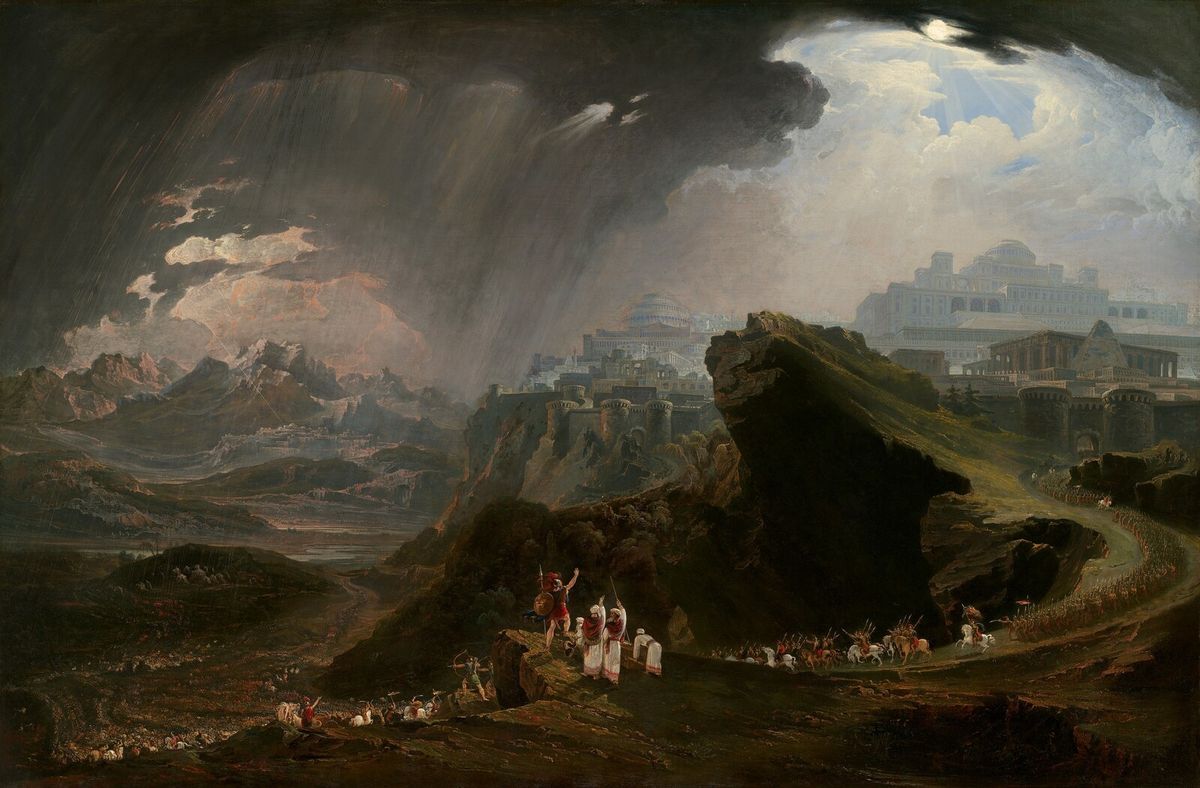
Joshua's campaigns continue beyond Jericho. In Joshua 10, he comes to the aid of Gibeon after its alliance with Israel brings an attack by five Amorite kings. During the battle, he calls for the sun to stand still over Gibeon and the moon over the Valley of Aijalon.
The biblical account describes an extraordinary extension of daylight and presents the event as divine help for Israel. For generations of believers, this passage has expressed God's power and response to prayer. Its geographical names also root the story in the hill country and valleys west of Jerusalem.
The later chapters describe the distribution of land among the tribes, with Joshua helping oversee the people's settlement. His final concern is their continued faithfulness. At Shechem, he gathers the tribes, recalls God's dealings with their ancestors, and calls them to renew their commitment.
“but as for me and my house, we will serve the LORD.” (Joshua 24:15, KJV)
This declaration belongs to Joshua's appeal to choose whom they will serve. After a lifetime of leading others, he speaks for his own household. It gives his story an enduring personal ending: the leader who crossed rivers and faced armies returns to the question of faith lived at home.
According to Joshua 24:29, Joshua died at 110. The following verse places his burial at Timnath-serah, in his inheritance in the hill country of Ephraim. Later traditions identify particular shrines with his tomb; those identifications should be distinguished from the biblical description. The book remembers a people who continued serving the Lord throughout his lifetime and that of the elders who outlived him.
Jericho and the Jordan Valley bring two central chapters of Joshua's story into the same landscape. Seeing the river and the ancient city's surroundings gives familiar passages a geographical setting, whether you are visiting for pilgrimage, biblical study, or an interest in the region's past.
Explore the Region on Our Bethlehem and Jericho Tour
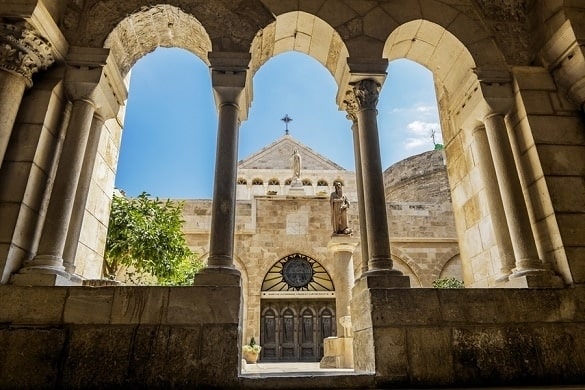
Our Bethlehem and Jericho Tour connects Jericho with Qasr al-Yahud on the Jordan River and Bethlehem's Church of the Nativity. It offers a way to explore the region associated with Joshua while also visiting places linked with Jesus' birth and baptism.
View the itinerary and check availability for your travel dates. Confirm current access and the planned stops with our team before booking, including whether a visit inside Tell es-Sultan is included. Routes may change according to local conditions.
Join Us
Keep in Touch


 Login / Register
 Contact


 Certificate of Excellence
 Guaranteed Departure
 Low Prices Guaranteed
 24/7 Support