 Login / Register
 Contact
Christian Pilgrimage to the Holy Land: Meaning, History and Places to Visit
A Christian pilgrimage to the Holy Land is an opportunity to encounter the landscapes of the Bible and visit places associated with the life, ministry, Crucifixion, and Resurrection of Jesus.
Jerusalem, Bethlehem, Nazareth, and the Sea of Galilee form the heart of most Christian pilgrimages. Visiting these places can help travelers better understand the geography of the Gospels while connecting biblical accounts with centuries of Christian tradition.
Whether you are traveling independently, with your family, or as part of a church group, understanding the meaning and history of pilgrimage can help you plan a more meaningful journey.
What Is a Christian Pilgrimage?
A Christian pilgrimage is a journey to places connected with the Bible, the life of Jesus, the early Church, or Christian tradition.
Unlike conventional sightseeing, pilgrimage usually includes a spiritual dimension. Travelers may spend time praying, reading Scripture, attending worship, or reflecting at places associated with biblical events.
The Holy Land is particularly significant because many locations mentioned in the New Testament can still be visited today. Nazareth recalls the Annunciation and Jesus' early life, Galilee provides the setting for much of his ministry, Bethlehem is associated with his birth, and Jerusalem stands at the center of the Passion and Resurrection narratives.
For many pilgrims, seeing the physical relationship between these places brings a new perspective to familiar biblical passages.
Quick Fact: Holy Land pilgrims typically travel in one of two ways: independently as solo explorers, or in organized pilgrimage groups, often alongside members of their local church community.
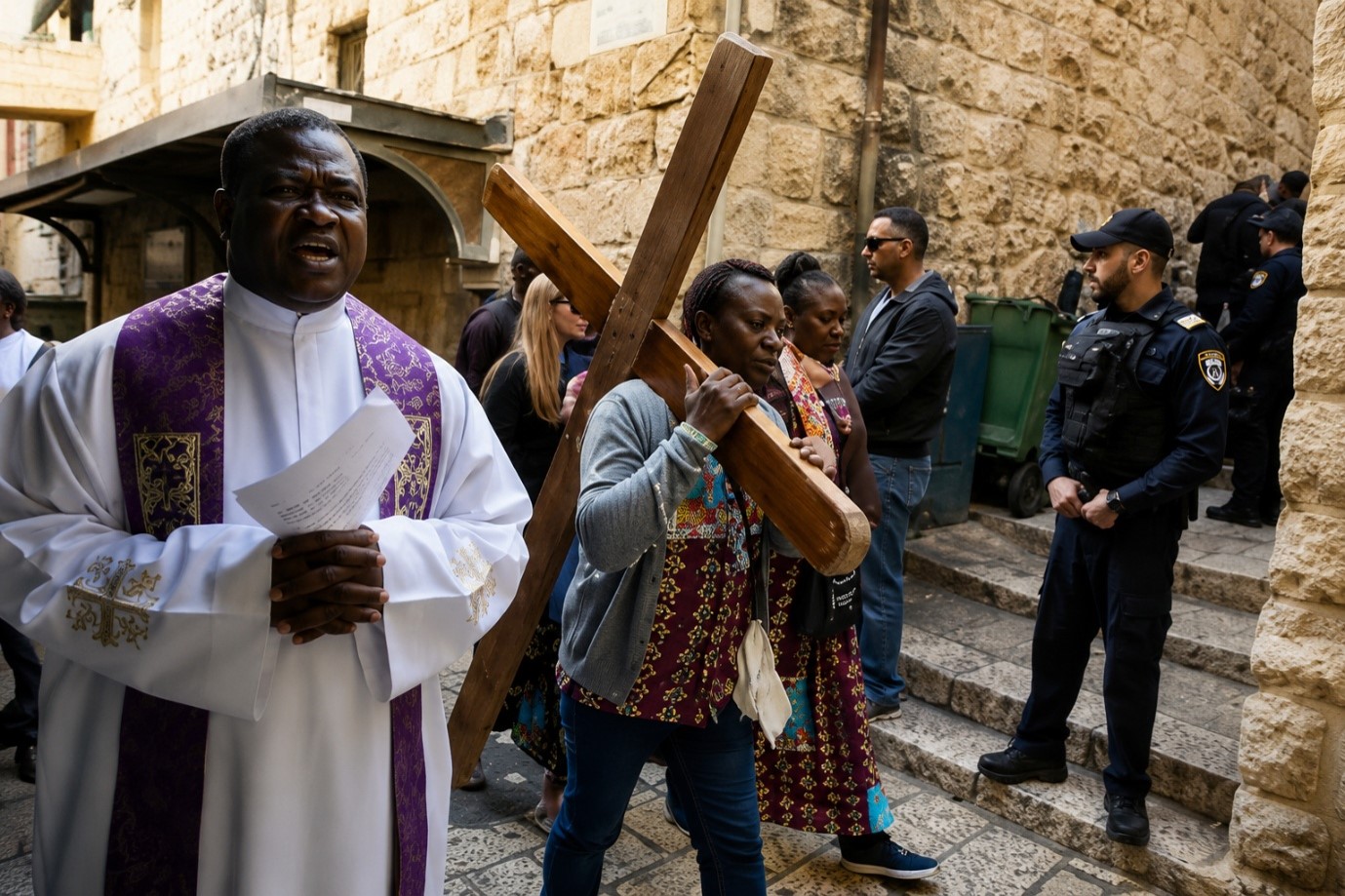
Christian pilgrims carry a wooden cross along the Via Dolorosa in the Old City of Jerusalem, retracing the final steps of Jesus
How to Visit the Holy Land?
Planning a meaningful Christian pilgrimage requires professional knowledge. A well-designed itinerary should make sense geographically, minimizing unnecessary travel, but it should also tell the biblical story in a logical way - where possible, moving from the earlier events of the Gospels toward the ministry, Passion, and Resurrection of Jesus.
This requires more than booking hotels and transportation. It takes experienced travel professionals who understand biblical geography, Christian traditions, the significance of each site, and the practical realities of traveling in the Holy Land.
The History of Christian Pilgrimage to the Holy Land
Christians have traveled to the Holy Land since the early centuries of Christianity.
Pilgrimage became especially important during the Byzantine period, when churches and shrines were established at locations associated with biblical events. Jerusalem, Bethlehem, and Galilee became major centers of Christian worship and pilgrimage.
Over the centuries, churches were built, destroyed, rebuilt, and restored. Catholic, Orthodox, Armenian, and other Christian communities became custodians of different holy places, creating the rich Christian heritage visitors encounter today.
It is important, however, to distinguish between Scripture, Christian tradition, and historical evidence.
Some locations are explicitly mentioned in the Bible, while the identification of an exact church, cave, hill, or building with a biblical event may come from later Christian tradition. Archaeology can sometimes provide important historical context, but it does not necessarily prove that a specific biblical event occurred at an exact location.
Understanding these distinctions does not diminish the significance of pilgrimage. It can actually help visitors appreciate the history of Christian worship in the Holy Land more deeply.
Important Christian Pilgrimage Sites in the Holy Land
Jerusalem
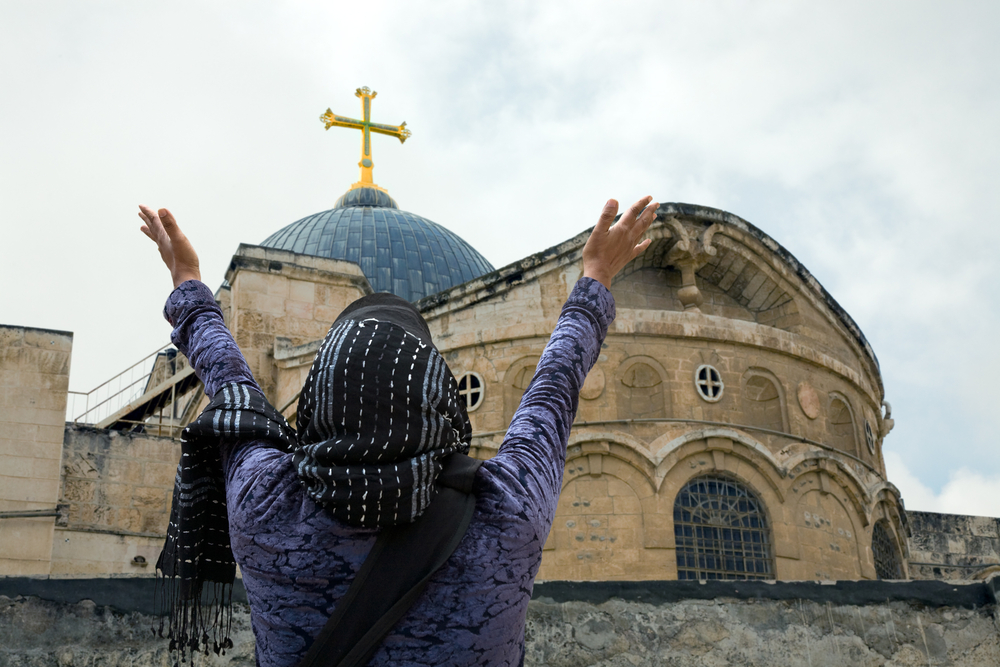
Church of the Holy Sepulchre, Jerusalem
Jerusalem is the spiritual center of most Christian pilgrimages.
The New Testament places the final days of Jesus' earthly ministry here, making the city particularly important for understanding the Passion and Resurrection.
On the Mount of Olives, pilgrims can visit sites associated with Jesus' teaching, prayer, and Ascension. Walking toward the Old City brings visitors to Gethsemane, traditionally associated with Jesus' prayer before his arrest (Matthew 26:36–46).
Inside the Old City, pilgrims can follow the Via Dolorosa, the traditional route commemorating Jesus' journey toward the Crucifixion.
The route concludes at the Church of the Holy Sepulchre, which Christian tradition identifies with Golgotha and the tomb associated with Jesus' burial and Resurrection.
Because Jerusalem contains many layers of biblical history, archaeology, and Christian tradition, allowing more than one day for its principal Christian sites can make the experience considerably more meaningful.
Bethlehem
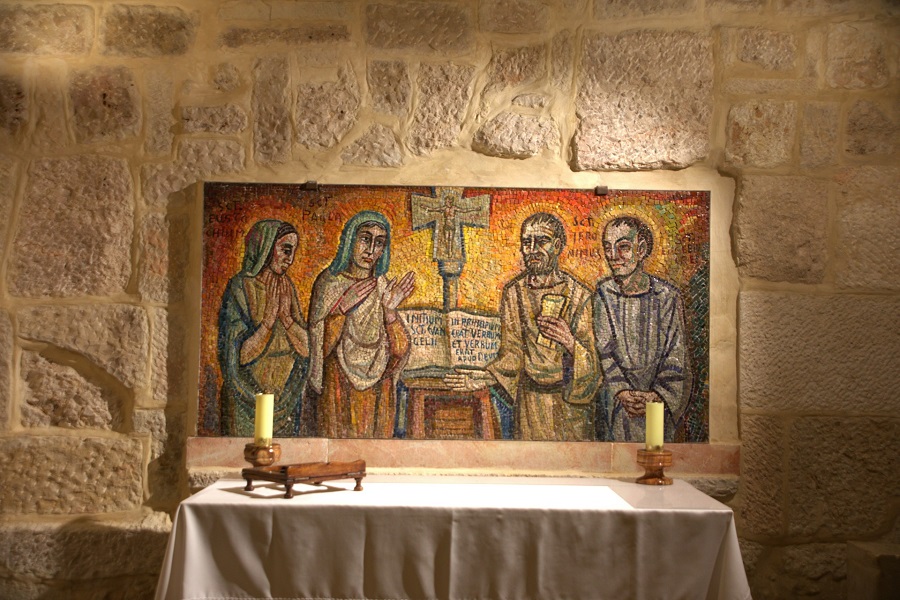
The Mosaic in the underground grottoes of the Church of the Nativity, Bethlehem
According to the Gospels of Matthew and Luke, Jesus was born in Bethlehem (Matthew 2:1; Luke 2:1–7).
The Church of the Nativity stands over the traditional site of the Nativity and has been a major destination for Christian pilgrims for centuries. Beneath the church is the Grotto of the Nativity, traditionally venerated as the place of Jesus' birth.
Nearby Shepherds' Field commemorates the shepherds who received the announcement of the birth of Jesus, described in Luke 2:8–20.
Bethlehem is located in the West Bank, so current access and transportation arrangements should always be checked when planning a visit.
Nazareth
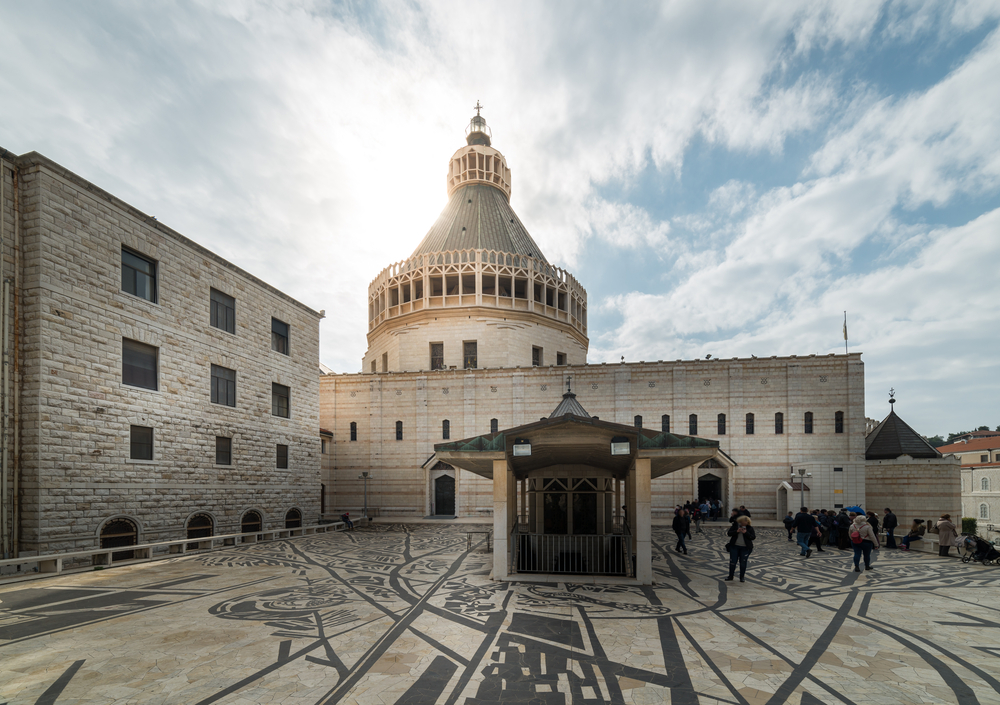
Basilica of the Annunciation in Nazareth
Nazareth is closely connected with the beginning of the Gospel story.
According to Luke 1:26–38, the angel Gabriel was sent to Nazareth to announce to Mary that she would give birth to Jesus. Jesus also grew up in Nazareth and is repeatedly referred to in the New Testament as Jesus of Nazareth.
The city's principal Christian landmark is the Basilica of the Annunciation, built over a grotto traditionally associated in Catholic Christianity with Mary's home and the Annunciation.
Pilgrims may also visit St. Joseph's Church and other Christian sites reflecting different traditions associated with Nazareth.
Sea of Galilee
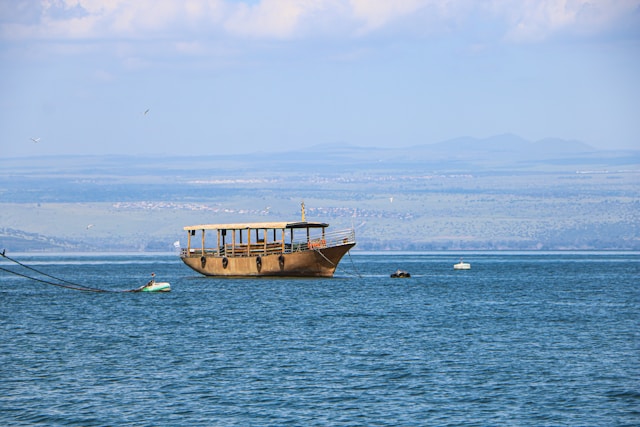
The Sea of Galilee
Much of Jesus' public ministry described in the Gospels took place around the Sea of Galilee.
Rather than representing a single holy site, Galilee is a biblical landscape containing several important pilgrimage destinations.
At Capernaum, the Gospels describe Jesus teaching, healing, and spending considerable time during his Galilean ministry. The archaeological site contains remains of an ancient settlement and synagogue, while Christian tradition associates one area with the house of Peter.
Nearby Tabgha is traditionally associated with the multiplication of the loaves and fishes and, at another site nearby, with the risen Jesus' appearance to his disciples described in John 21.
The Mount of Beatitudes is traditionally associated with the Sermon on the Mount (Matthew 5–7). The Gospel does not identify the exact hill, so the modern location should be understood as a traditional pilgrimage site rather than a historically proven spot.
Visiting these places together helps travelers understand the geography of Jesus' ministry around the Sea of Galilee.
Jordan River and Judean Desert

Qasr al-Yahud Baptismal Site
The baptism of Jesus by John the Baptist in the Jordan is described in all four canonical Gospels and marks an important moment at the beginning of his public ministry.
Christian pilgrimage itineraries often include a baptismal site along the Jordan River, where some groups hold prayers or renew baptismal promises.
The nearby Judean Desert provides another important biblical landscape. According to the Gospels, Jesus spent forty days in the wilderness following his baptism (Matthew 4:1–11; Luke 4:1–13).
The desert later became an important center of Christian monasticism, adding another layer of Christian history to the region.
Catholic, Protestant, and Other Christian Pilgrimages
There is no single Holy Land pilgrimage itinerary that suits every Christian traveler.
Catholic pilgrims may place greater emphasis on Marian shrines, Mass, and churches connected with Catholic devotional traditions. Orthodox pilgrims may prioritize Eastern Christian churches, monasteries, and liturgical traditions.
Protestant and Evangelical groups often devote more time to Scripture readings, biblical landscapes, archaeological sites, and places directly connected with Gospel narratives.
These are broad tendencies rather than fixed rules. A pilgrimage can be adapted according to denomination, biblical interests, worship requirements, travel pace, mobility, group size, and available time.
Practical Tips for a Holy Land Pilgrimage
Wear comfortable walking shoes, particularly in Jerusalem's Old City, where stone streets, slopes, and steps are common.
Modest clothing is expected at many churches and religious sites. Shoulders and knees should generally be covered, and carrying a light layer can be useful.
Weather also affects the touring experience. Summer can be hot, particularly in the Jordan Valley and Judean Desert, while winter may bring cool temperatures and rain in Jerusalem and northern Israel.
Pilgrims with limited mobility should discuss accessibility while planning the itinerary. Some ancient sites have unavoidable stairs, uneven surfaces, or steep approaches, but the order and pace of touring can often be adjusted.
Opening arrangements, access conditions, religious services, and security circumstances can change, so always check current official information before traveling.
Frequently Asked Questions
What are the most important Christian pilgrimage sites in the Holy Land?
Jerusalem, Bethlehem, Nazareth, and the Sea of Galilee are the principal destinations. Important individual sites include the Church of the Holy Sepulchre, Church of the Nativity, Basilica of the Annunciation, Gethsemane, Capernaum, Tabgha, and the Mount of Beatitudes.
How many days do you need for a Holy Land pilgrimage?
There is no ideal duration for every traveler. The itinerary should allow sufficient time for Jerusalem and Galilee while considering the group's pace, religious interests, worship plans, and additional destinations.
Is every Christian holy site historically proven?
No. Some places are identified directly in biblical texts, while the exact locations commemorated today may depend on longstanding Christian tradition. Archaeology can provide valuable historical evidence but does not always establish the precise location of a biblical event.
Can a Christian pilgrimage be customized?
Yes. Pilgrimage itineraries can be adapted around denomination, specific biblical interests, available time, group size, mobility requirements, preferred pace, and other travel needs.
Planning Your Christian Pilgrimage
A pilgrimage to the Holy Land connects biblical narratives with real landscapes.
From Nazareth and the shores of the Sea of Galilee to Bethlehem, Gethsemane, and Jerusalem, travelers can explore places associated with some of the central events of the Christian faith while gaining a deeper understanding of their historical and geographical context.
The most meaningful itinerary is not necessarily the one with the most stops. It is one that gives you enough time to understand the places you visit and experience them according to the purpose of your pilgrimage.
Bein Harim Tourism has been operating tours in Israel since 1993 and specializes in Christian travel, private tours, and customized itineraries. Our team can help individuals, families, churches, and organized groups plan a Holy Land pilgrimage according to their interests, denomination, pace, and practical needs.
 Certificate of Excellence
 Guaranteed Departure
 Low Prices Guaranteed
 24/7 Support


