 Login / Register
 Contact
Can You Swim in the Dead Sea? A Practical Guide for Visitors
The first time you lean back in the Dead Sea, the feeling can be wonderfully unfamiliar. Instead of working to stay on the surface, you find yourself supported by the water, looking across a desert landscape that makes the whole experience feel a little unreal.
But can you swim in the Dead Sea? You can enter designated bathing areas and float, but a Dead Sea visit is not a normal swimming session. Plan for a gentle back float, keep your face above the surface, and follow the lifeguard's instructions. Understanding that difference will help you arrive prepared and enjoy the visit with more confidence.
Whether you are visiting independently or adding the experience to a Masada and Dead Sea day tour, here is what to know before you pack your swimsuit.
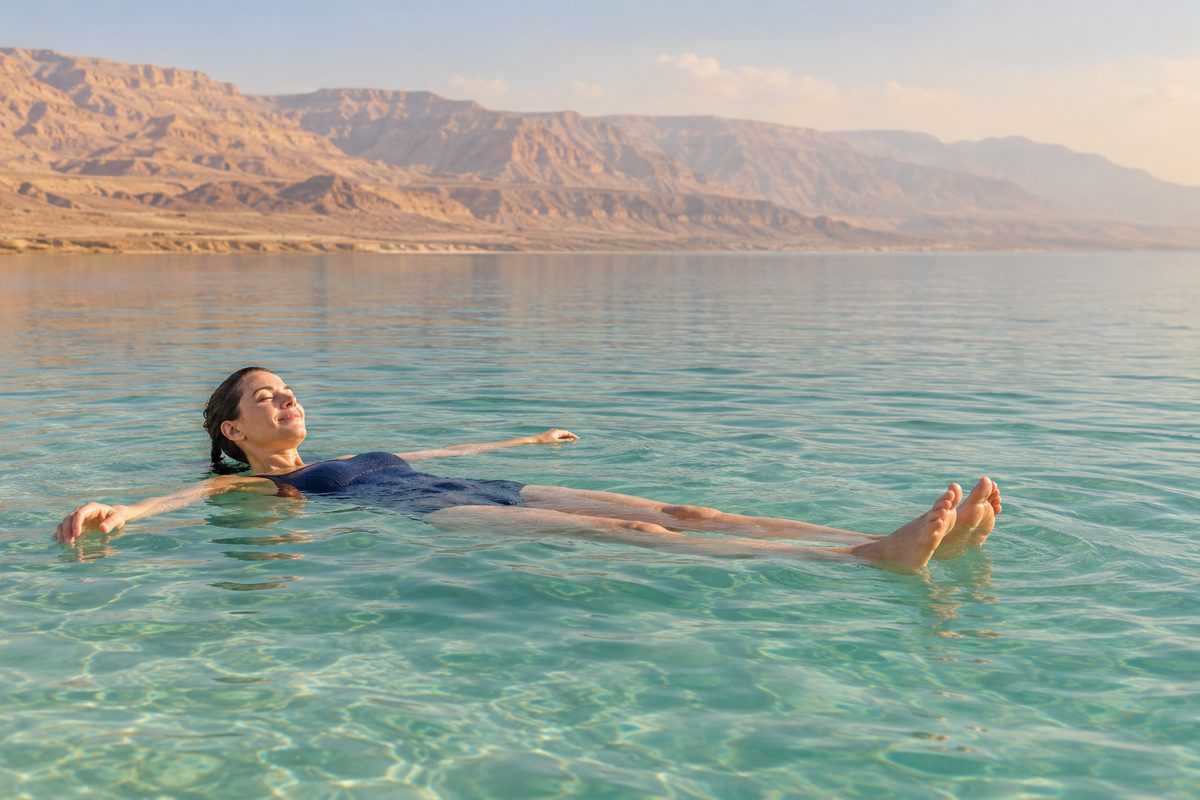
A calm back float in a Dead Sea-inspired setting. AI-generated illustration; not a photograph of a specific beach or tour.
Can You Swim in the Dead Sea, or Do You Float?
People often describe the experience as "swimming in the Dead Sea," but floating is a better description of the activity. This is a place to slow down, rather than practice your strokes or cover a distance.
Think of the visit as a beach experience with an unusual float at its center. The water is only one part of your day: changing, reaching the bathing area, rinsing afterward, and relaxing on shore all take time. Allow room for those moments instead of treating the stop as a quick dip.
For first-time visitors, a useful question is not just whether you can swim, but which managed beach fits your itinerary and what facilities it offers. Confirm the bathing area, supervision, entry arrangements, and changing facilities before you travel.
Why Do You Float in the Dead Sea?
The explanation is water density. The Dead Sea contains much more dissolved salt than ordinary seawater, making its water denser and increasing the buoyant force on your body. That is why floating in the Dead Sea feels so different from floating in a pool.
NASA's explanation of the Dead Sea's salinity describes the exceptionally dense water that produces this familiar floating effect. You do not need to understand the chemistry to appreciate the sensation, but knowing the reason makes the experience even more memorable.
Floating in the Dead Sea: What to Expect
Before heading to the water, organize your towel, dry clothes, and belongings so that returning from the beach is straightforward. Locate the freshwater showers and ask staff about the entry route, especially if you are uncertain on uneven ground.
The local authority's entry guidance is simple: use the designated access, sit in the water first, and then recline onto your back. Avoid diving, jumping, putting your head underwater, or splashing yourself and others. Follow the lifeguard's direction throughout the visit.
If you hope to take a photograph, discuss it before entering. A companion can handle the camera from an appropriate place while you concentrate on following the beach instructions. Enjoying the moment is more important than recreating a particular pose you have seen online.
Is the Dead Sea Safe to Swim In?
Choose a declared beach and enter only while lifeguard services are operating. Tamar Regional Council specifically warns against bathing without lifeguard supervision and directs visitors to observe the current beach signage.
Do not swallow the water. If you do, seek help immediately from the lifeguard or medic. Carry drinking water for the visit. Read the council's official Dead Sea bathing instructions before you arrive, and follow any additional rules at your chosen venue.
Can You Drown in the Dead Sea?
Yes. Floating easily does not make drowning impossible. Buoyancy does not protect you from swallowing or inhaling water, and it is not a substitute for supervision. The Dead Sea visitor safety guide addresses the difference between buoyancy and safe bathing. Treat the experience with the same care you would bring to any unfamiliar water environment.
What About Children or Visitors Who Need Assistance?
Check the exact venue's admission rules and access arrangements beforehand. Do not assume that every beach has the same equipment or that a general accessibility description guarantees an easy route into the water. If a traveler needs assistance, tell the operator in advance and ask specific questions about the approach, changing facilities, and support available.
How Long Can You Stay in the Dead Sea?
There is no single immersion time that is suitable for every visitor in every condition. Follow the venue's rules and the lifeguard's advice rather than treating a number from a travel blog as a personal safety limit. Leave sooner if you feel uncomfortable or unwell.
It also helps to distinguish your time in the water from your time at the beach. A tour may allow a beach stop that includes changing, rinsing, and relaxing, rather than continuous bathing. If this detail matters to your plans, ask about the itinerary before booking.
What to Wear in the Dead Sea
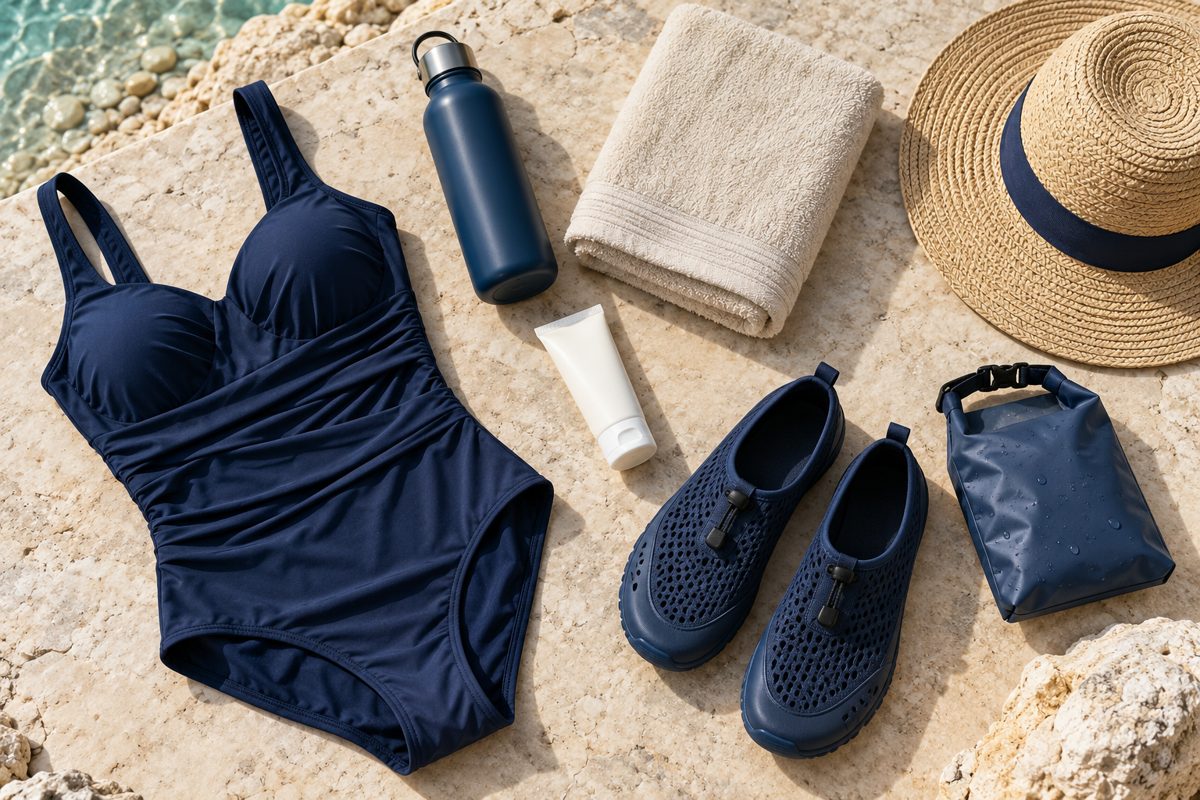
Packing inspiration for a Dead Sea visit. AI-generated illustration.
Start with a comfortable swimsuit and an easy change of clothes. For the rest of the visit, choose an outfit that works for your whole day, including any sightseeing before the beach.
Water shoes can be helpful on rough approaches, but the surface and venue rules should guide your choice. Ask the beach operator what footwear is suitable instead of assuming the route will be sandy or smooth.
A practical packing checklist includes:
- A swimsuit and dry underwear or a complete change of clothes.
- A towel, unless your booking explicitly includes one.
- A bag for wet items, kept separate from your dry belongings.
- Suitable footwear for both the beach and any sightseeing stops.
- Drinking water, sun protection, and a hat for time outdoors.
- A secure place for your phone and valuables while you enter the water.
Do not assume that towels, lockers, or rentals are included simply because a beach has those facilities. Checking in advance can save you from an awkward surprise after you arrive.
Planning a Dead Sea Visit from Jerusalem or Tel Aviv
For travelers based in Jerusalem or Tel Aviv, a day trip can make the Dead Sea part of a wider Israel itinerary. Decide whether you want your day to focus on beach time or combine it with a historical visit.
Bein Harim's Masada and Dead Sea Day Tour combines a cable-car ascent and guided visit to Masada with time at a Dead Sea beach. It offers a way to connect the desert's history with one of the region's most distinctive visitor experiences.
If you are exploring a different combination of destinations, our Dead Sea tours page is a useful starting point. You can also read about things to do around the Dead Sea when deciding how it fits into your trip.
 Certificate of Excellence
 Guaranteed Departure
 Low Prices Guaranteed
 24/7 Support


