 Login / Register
 Contact
The Ideal 10-Day Protestant Holy Land Itinerary
A well-planned 10-day Protestant Holy Land itinerary should do more than move from one famous site to another. It should help travelers understand the Bible through the landscapes where its stories unfolded. For Protestant and Evangelical pilgrims, that usually means combining the ministry of Jesus in Galilee, Old Testament history, Second Temple archaeology, Jerusalem, and the events surrounding the crucifixion and resurrection. This itinerary follows a natural route from the Mediterranean coast to Galilee, through the Judean Desert, and finally to Jerusalem, allowing the journey to build in meaning as it progresses.
Day 1 - Jaffa: Begin Your Protestant Holy Land Journey
After arriving in Israel, begin in Jaffa, the ancient port known in the New Testament as Joppa. This is an ideal first stop because it connects the pilgrimage immediately with the Book of Acts. Peter stayed here after raising Tabitha from the dead, and it was in Joppa that he received the vision that prepared him for his meeting with Cornelius (Acts 9–10). Standing above the Mediterranean and looking toward the old harbor gives these familiar passages a physical setting and offers a calm, meaningful beginning before traveling north the following day.
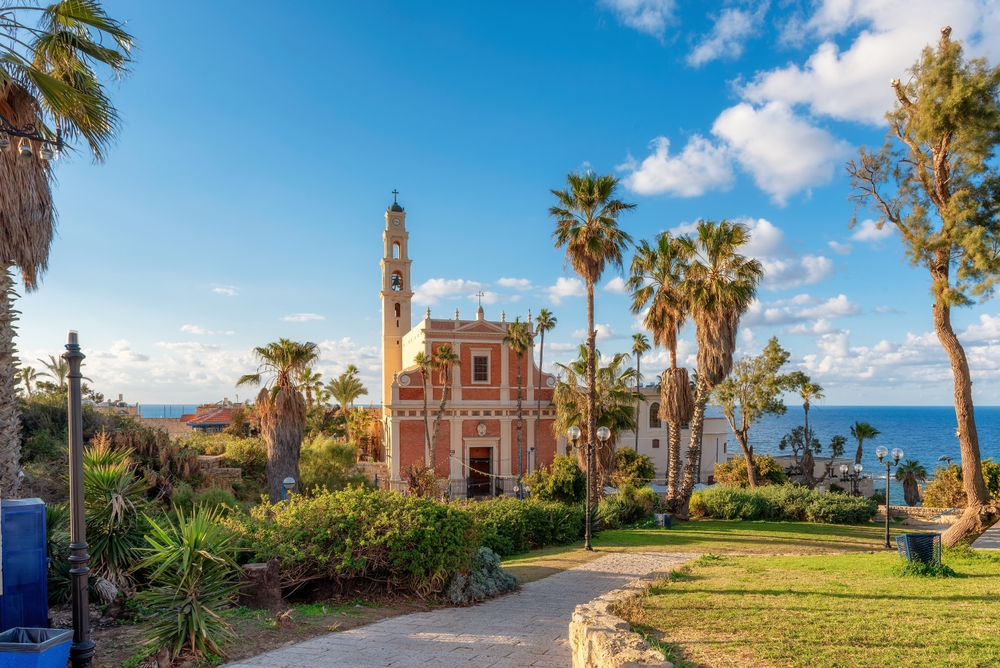
St. Peter's Church in Jaffa
Pro Tip: To make the journey deeply meaningful, pre-arrange quiet time for group devotions and Communion at major sites. Customizing Evangelical Israel Tours for Church Communities allows pastors to align the daily pace and teaching focus directly with their congregation's spiritual goals.
Day 2 - Caesarea, Mount Carmel and Megiddo: Early Christianity and the Prophets
Travel north along the Mediterranean coast to Caesarea Maritima, where the story of the early Church becomes part of the landscape. Caesarea is closely connected with Cornelius, Peter, and Paul, and its Roman ruins help travelers understand the political world in which the Book of Acts unfolded. Continue to Mount Carmel, where 1 Kings 18 places Elijah’s confrontation with the prophets of Baal, before reaching Megiddo, a strategic biblical city whose Hebrew name, Har Megiddo, is associated with Armageddon in Revelation 16:16. The day ends in Nazareth, where you stay overnight before exploring the city itself the next morning.
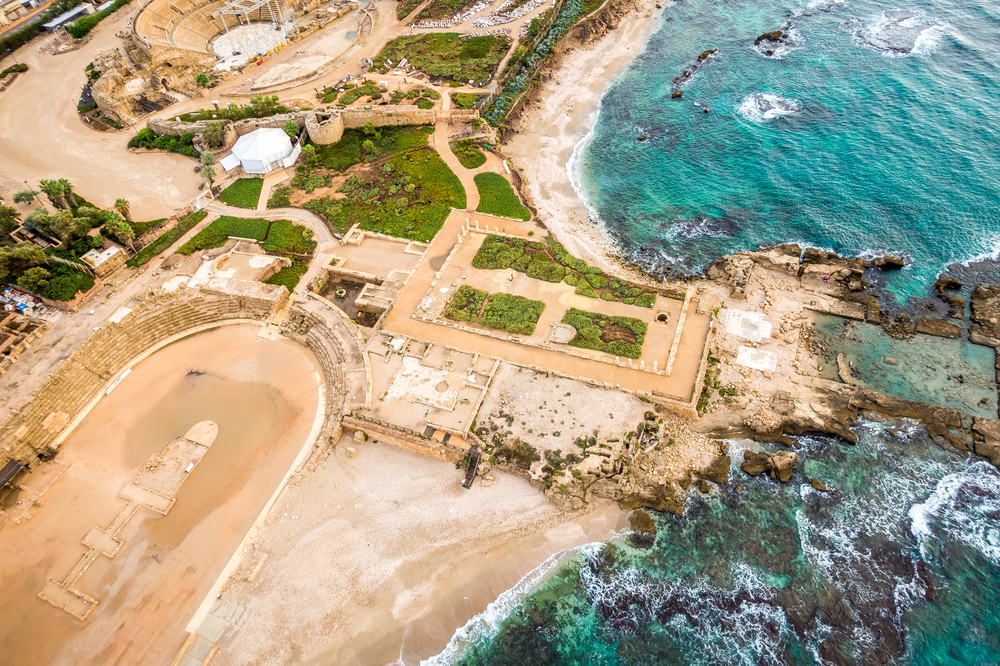
Caesarea National Park
Day 3 - Nazareth, Cana and Gideon’s Spring: From Jesus’ Childhood to the Book of Judges
Begin in Nazareth, the town where Jesus grew up and where Luke records His later appearance in the synagogue. More than any single church, Nazareth helps pilgrims picture the Galilean environment that shaped Jesus’ early life. Continue to Cana, traditionally associated with the wedding described in John 2 and Jesus’ first recorded sign, before traveling to Ein Harod, traditionally identified with Gideon’s Spring. Judges 7 describes how Gideon’s army was reduced to 300 men before the battle against the Midianites. Here, the open landscape of the Jezreel Valley helps connect the Old and New Testaments within a single day of travel.
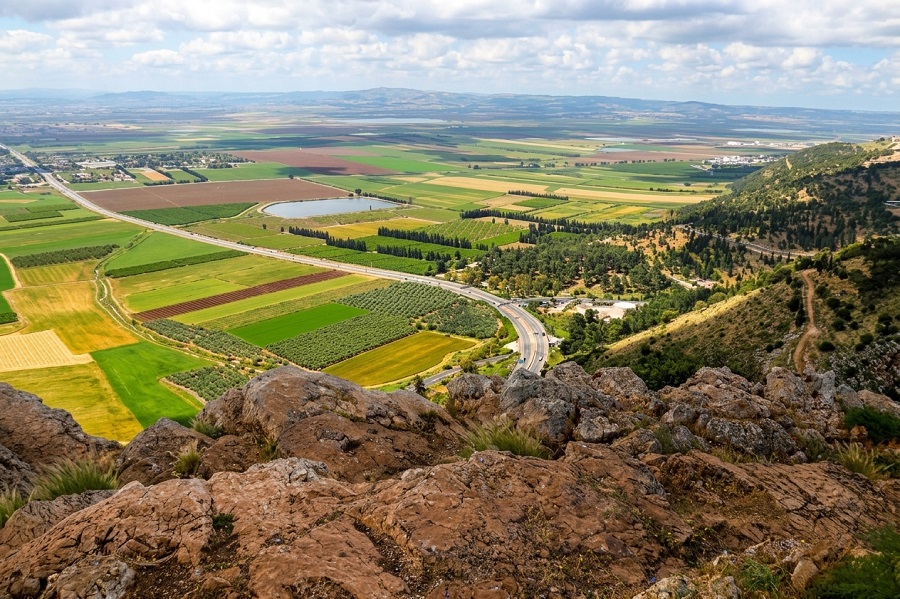
A panoramic view of the Jezreel Valley from Mount Precipice
Day 4 - Sea of Galilee Tour: Following the Ministry of Jesus
The Sea of Galilee is one of the most important parts of any Protestant pilgrimage because so much of Jesus’ public ministry took place around its shores. Visit Capernaum, where the Gospels describe Jesus teaching and performing healings; the Mount of Beatitudes, traditionally associated with the Sermon on the Mount; and Tabgha, connected by Christian tradition with the feeding of the five thousand. Continue to the shoreline associated with Jesus’ post-resurrection appearance to Peter in John 21, then see the Ancient Galilee Boat, a first-century vessel that offers a vivid glimpse into everyday life on the lake. A boat ride on the Sea of Galilee is often one of the most memorable moments of the journey, because the hills, water, and shoreline give the Gospel narratives a geography that can finally be seen.
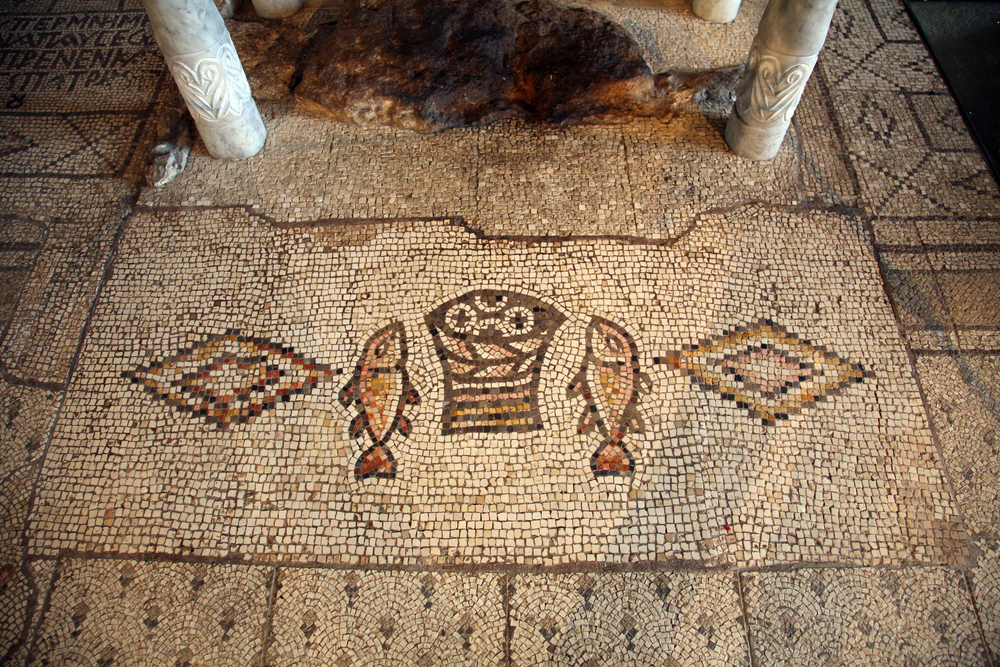
The Church of the Multiplication of the Loaves and the Fishes, Tabgha, Israel
Day 5 - Qumran, Ein Gedi and the Dead Sea: Through the Judean Desert to Jerusalem
Leave Galilee and travel south into the Judean Desert, where the landscape changes dramatically. At Qumran, the discovery of the Dead Sea Scrolls opens a window into Jewish life and religious thought during the Second Temple period, providing important historical context for the world of the New Testament. At Ein Gedi, the desert cliffs and springs bring to life the story of David fleeing from King Saul in 1 Samuel 24. Continue to the Dead Sea for time to experience this extraordinary desert environment before ascending through the Judean hills toward Jerusalem. For many pilgrims, seeing Jerusalem for the first time marks the moment when the journey begins to feel different: the focus now turns toward the final days of Jesus’ life.
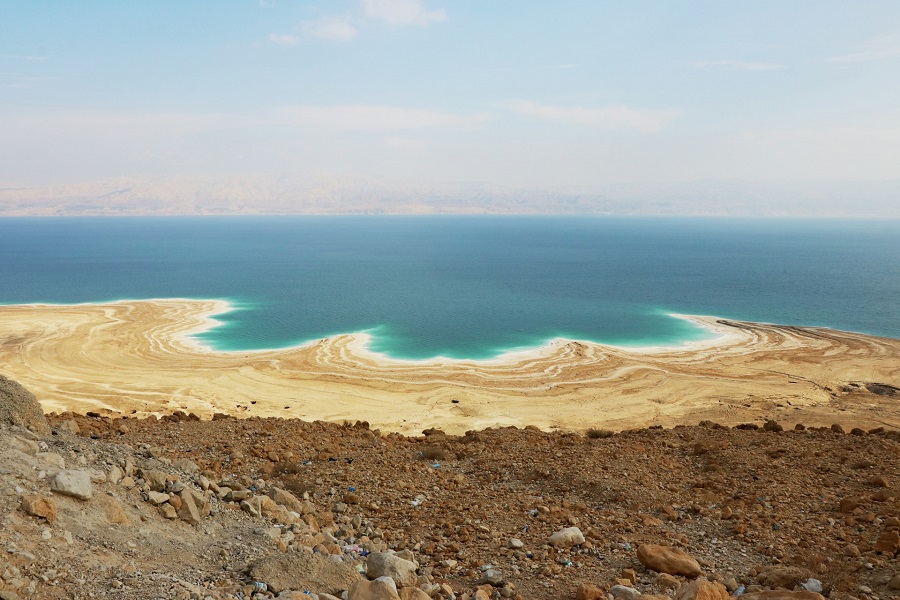
Desert landscape and turquoise shoreline of the Dead Sea
Day 6 - Biblical Shephelah: Lachish, Azekah, the Valley of Elah and Herodium
Today explores the landscapes of the Old Testament. At Tel Lachish, archaeological remains illuminate the Assyrian campaign against Judah during the reign of Hezekiah. Continue to Tel Azekah and the Valley of Elah, where 1 Samuel 17 places the confrontation between David and Goliath. Looking across the valley makes one of the Bible’s most familiar stories feel less like a distant tale and more like an event rooted in a real landscape. Finish at Herodium, the palace-fortress built by Herod the Great. Although it is not itself the setting of a Gospel event, it helps travelers understand the power and ambition of the ruler who forms part of the political background to the birth narratives of Jesus.
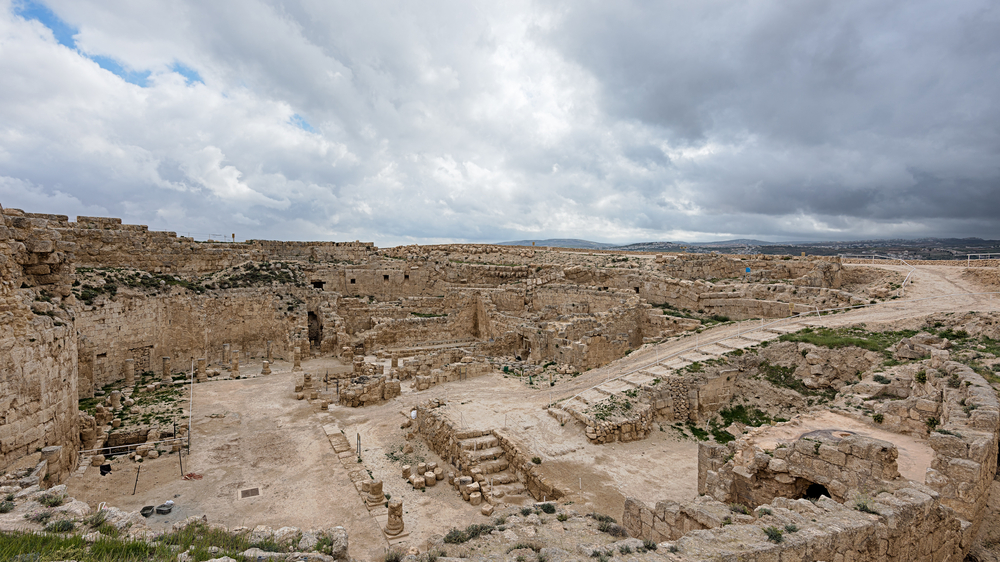
Mountain Palace-Fortress at Herodium (a.k.a. Herodion) National Park
Day 7 - Mount of Olives, Bethlehem and the Israel Museum
Begin on the Mount of Olives, looking across the Kidron Valley toward Jerusalem. This is one of the best places to understand the geography of the city before entering it, especially the relationship between the Mount of Olives, the Temple Mount, and the route associated with the final week of Jesus’ life. Continue to Bethlehem, identified in Matthew and Luke with the birth of Jesus, and visit the Church of the Nativity, which preserves an ancient Christian tradition connected with the Nativity. Return to Jerusalem for the Israel Museum, where the Second Temple Jerusalem Model helps visitors visualize the city Jesus knew, while the Shrine of the Book provides deeper context for the Dead Sea Scrolls first encountered at Qumran.
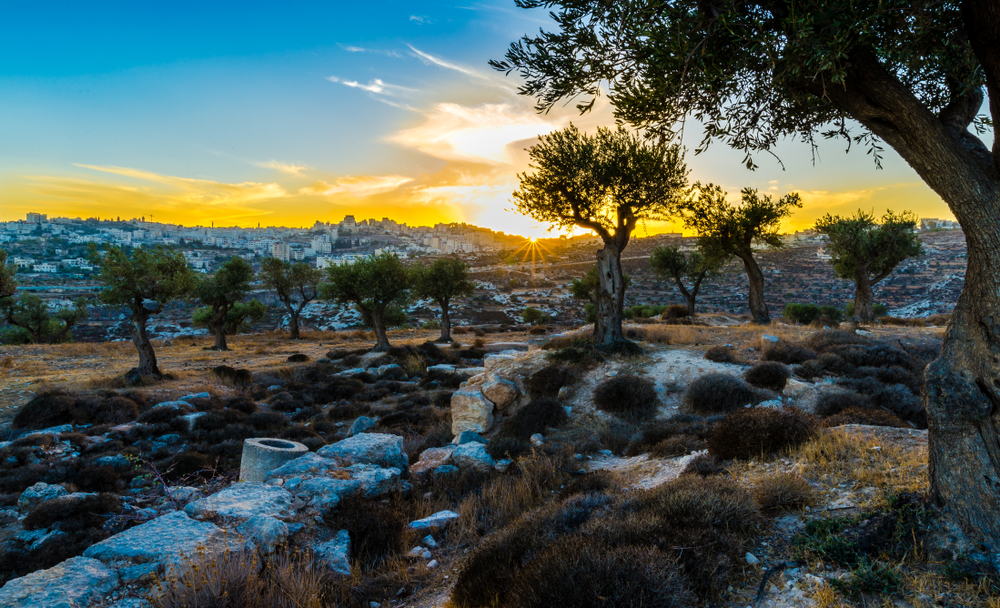
A beautiful sunset view of Bethlehem from the olive grove in Shepherds' Field
Day 8 - Biblical Jerusalem: City of David, Pool of Siloam and the Southern Steps
Today Jerusalem begins to reveal itself not only as a holy city, but as a place whose biblical layers can still be traced beneath the modern streets. In the City of David, explore the ridge where ancient Jerusalem developed and learn how its water systems, defenses, and geography shaped the city of the Old Testament. Continue toward the Pool of Siloam, associated in John 9 with Jesus healing the man born blind, and then to the Southern Steps and archaeological area near the Temple Mount. These monumental approaches help visitors imagine the crowds of pilgrims who came to Jerusalem during the Second Temple period. By the end of the day, the Bible feels less like a collection of separate episodes: the valleys, streets, walls, and Temple approaches begin to connect into one living landscape.
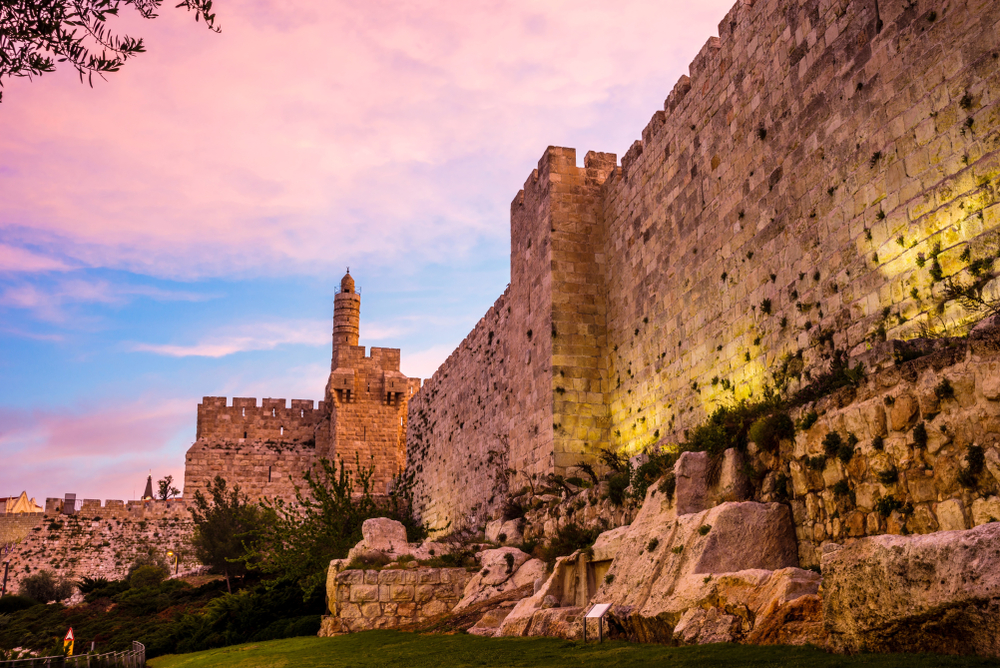
the historic Tower of David and the surrounding Old City walls in Jerusalem
Day 9 - Jerusalem and the Crucifixion: Gethsemane, Via Dolorosa and the Holy Sepulchre
This is the emotional heart of the pilgrimage. Begin at Gethsemane, where the Gospels describe Jesus praying before His arrest, then look across the Kidron Valley, which John 18 says Jesus crossed with His disciples. Enter the Old City and follow the Via Dolorosa, the traditional route commemorating Jesus’ journey toward crucifixion. The present route is based on Christian tradition rather than a proven reconstruction of the exact first-century path, but walking through Jerusalem while reflecting on the Passion gives the Gospel account a physical closeness that is difficult to experience elsewhere. The day culminates at the Church of the Holy Sepulchre, traditionally identified with the location of the crucifixion and burial. For Protestant travelers, the church may feel unfamiliar at first, but its ancient tradition and historical significance make it an essential place for understanding how Christians have remembered these events for centuries.
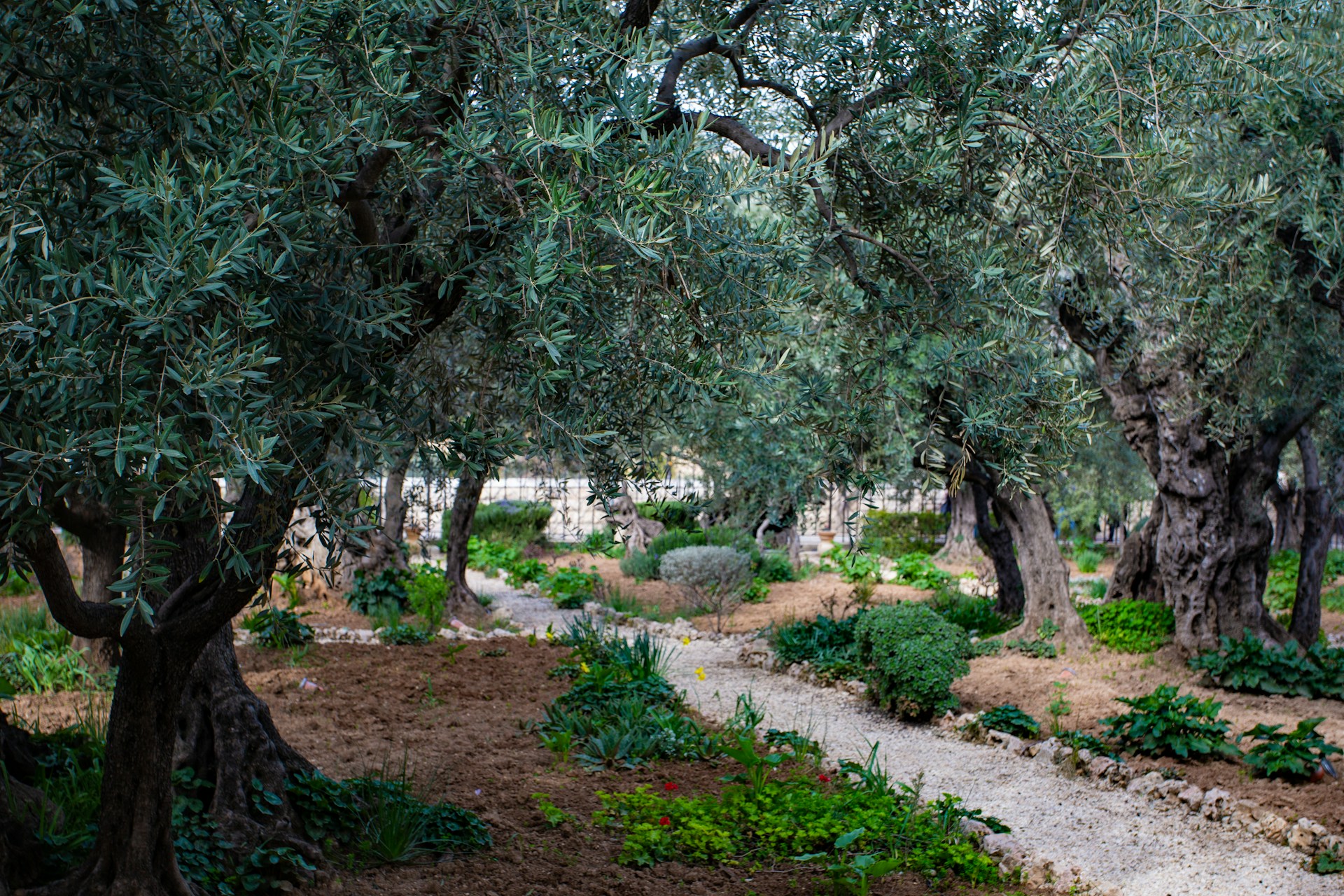
Garden of Gethsemane, Jerusalem
Day 10 - Garden Tomb and Time for Reflection Before Departure
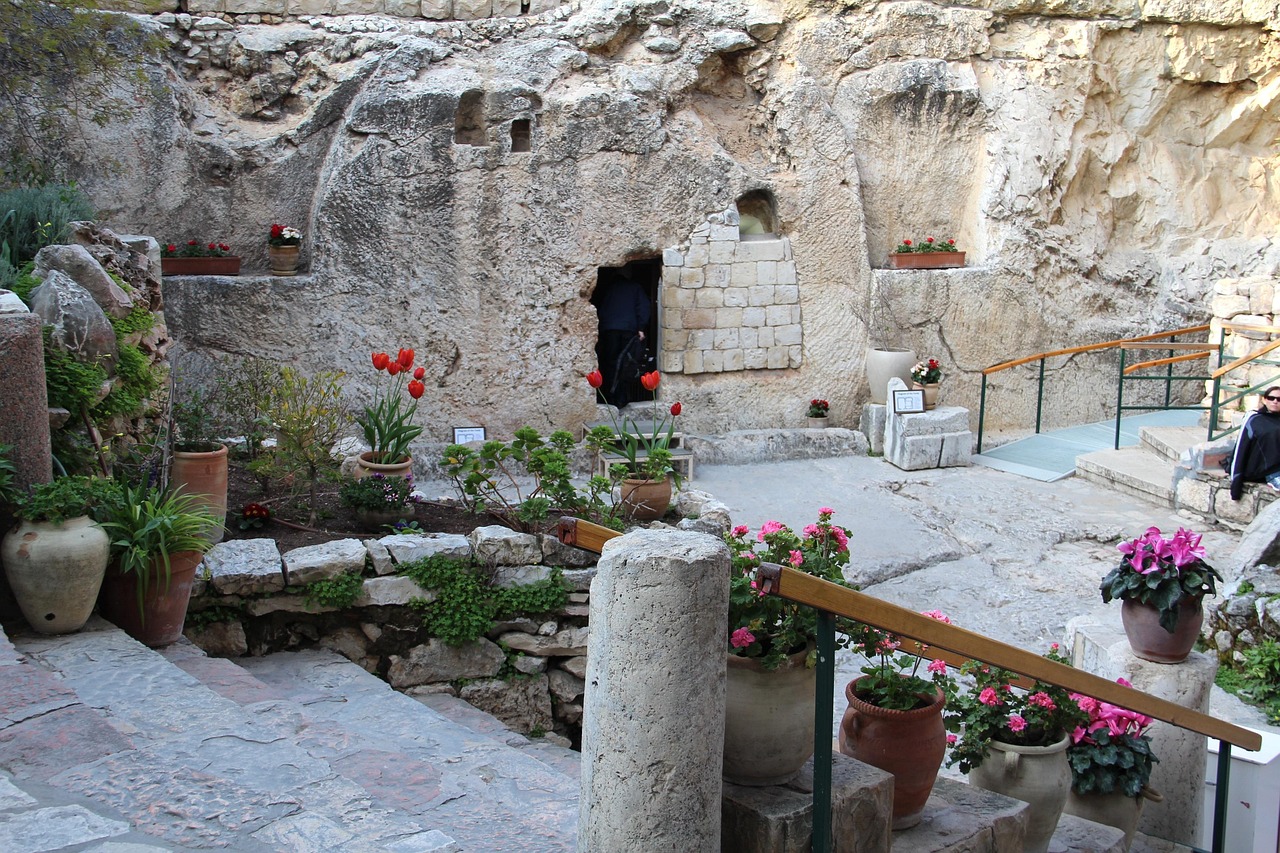
End the pilgrimage at the Garden Tomb, a place especially meaningful to many Protestant and Evangelical Christians. The site should not be presented as the proven tomb of Jesus, and many scholars consider the area of the Holy Sepulchre a stronger historical candidate. Yet the Garden Tomb offers something different: a quiet setting where groups can read the resurrection accounts, pray, sing, celebrate Communion when arranged, or simply sit in silence after ten days of travel. After so much archaeology, history, and movement, the simplicity of the garden gives the journey space to settle. The pilgrimage ends not with another checklist of sites, but with the message at the center of Christian faith: the tomb is not the end of the story. Depending on the flight schedule, the remaining hours can be left free for a final walk through Jerusalem before the transfer to the airport.
Why This 10-Day Protestant Holy Land Itinerary Works
A meaningful Protestant pilgrimage does not need to visit every church or every biblical site in Israel. What matters is creating connections between Scripture, geography, history, and personal experience. This 10-day route combines the ministry of Jesus, Old Testament landscapes, Second Temple history, archaeology, Jerusalem, and the Passion in a sequence that allows the journey to deepen naturally.
For churches, pastors, families, and private groups, the itinerary can also be adapted according to biblical interests, denomination, mobility, travel pace, hotel preferences, and flight times.
 Certificate of Excellence
 Guaranteed Departure
 Low Prices Guaranteed
 24/7 Support


