Israel for Christian Travelers


Nazareth the City

The modern-day city of Nazareth is the largest and capital city of Northern Israel. It is known as the Arab capital of Israel as the population is predominantly Muslim and Christian Arabs. Alongside Nazareth is Nazareth Illit with a predominantly Jewish population. However it is not modern-day Nazareth that attractions tourists to the city but the ancient biblical history. Nazareth is named in the New Testament as the hometown of Mary and Joseph and later as the town where Jesus spent his childhood. For this reason Nazareth has been a major Christian pilgrimage destination since the 6th century Byzantine era.Annunciation Church, Nazareth.Photo credit: © ShutterstockNazareth in the New TestamentThe Gospel of Luke tells us that Nazareth was the hometown of Mary and the site of the Annunciation where the Angel Gabriel appeared before her and told Mary of her future son (Luke 1:26). After Jesus was born in Bethlehem and a short sojourn in Egypt the Gospel of Matthew tells us that Joseph, Mary, and Jesus settled in Nazareth. It was here that Jesus spent his childhood.Top Nazareth AttractionsEver since the biblical sites of Nazareth were identified in the 4th century Christians have built churches to mark these locations. The most important biblical locations in Nazareth are the sites of the Annunciation and the place believed to be where the Holy family lived.Basilica of the AnnunciationNazareth’s top attraction is this magnificent church built on the site of Mary’s childhood homewhere Roman Catholics believe the Annunciation took place. A Christian altar was built on this site as early as the 4th century and since then a Byzantine and Crusader church has stood here. The church had a rough history as it was destroyed several times and Christian access was routinely denied or they were charged a fee to visit the holy site. Basilica of Annunciation in Nazareth, Israel.Photo credit: © ShutterstockFinally, in 1730 ruling sheik Zahir al-Umar allowed the Franciscans to build a church on the site of Mary’s childhood home, the site of the Annunciation. This church survived until 1955 when it was taken down to make way for a new, larger church constructed in 1967. Visitors to the Church of the Annunciation can see the remains of earlier Byzantine and Crusader churches as well as the excavated 1st-century dwelling believed to have been Mary’s childhood home and the site of the Annunciation.TheChurch of the Annunciationhas two levels; the lower level holds the excavated 1st century remains while the upper level is used as a parish church. The Basilica is topped by an unusual cement dome. One of the features of the church is a collection of mosaics from Christian communities around the world depicting Mary and baby Jesus. The church is the largest in the Middle East.The interior of Annunciation Church, Nazareth. Photo credit: © ShutterstockChurch of St. Gabriel (Greek Orthodox Church of the Annunciation)In the 6th century, the Greek Orthodox Church of the Annunciation was built near Mary’s Well over Mary’s Spring that feeds the Well. Greek Orthodox believe that the Annunciation took place here as Mary was fetching water. This is the Greek Orthodox alternative to the Catholic Church of the Annunciation. The present church was built in 1750. Visitors can still see Mary’s Spring running beneath the church altar. In the upper part of the church, there is a magnificent carved and painted wooden iconostasis from 1767. The Chapel of the Spring dates back to 1750 and features a barrel-vaulted roof and colorful marble and glazed ceramics.St Joseph's ChurchThe Church of St Joseph is perhaps Nazareth’s second most popular attraction. It stands alongside the Catholic Church of the Annunciation and commemorates the site of the Holy family’s home and Joseph’s workshop. Beneath the church are the excavated remains of a 1st-century dwelling thought to have been Joseph’s workshop and the Holy family home. the present church was built in 1914 on the site of an earlier Crusader church.St. Joseph's Church, Nazareth.Photo credit: © ShutterstockMary’s WellThe natural spring that feeds Mary’s Well is believed to have been where Mary would have gone to collect water for her family. Today the Well is a public fountain covered by a reconstruction of a 19th-century structure.Synagogue ChurchJesus returned to Nazareth twice during his ministry in Galilee. He taught in the Nazareth synagogue and it was here that he outraged worshipers by announcing his ministry and declaring himself the Messiah. The crowd chased Jesus to the top of a hill where they intended to throw him off a cliff but he miraculously disappeared. This hill is known today as Mount Precipice, or the “Hill of the Leap” located about 3km south of Nazareth. (Luke 4:16-30). The Church of Our Lady of the Fright marks the site where Mary stood as she watched Jesus attacked by the crowd. The synagogue where Jesus prayed is now marked by a Crusader-era Melkite Greek Catholic Church (Synagogue Church). Other Nazarethsites include the Coptic Church of the Annunciation; the Mensa Christi Church (1781); Basilica of Jesus the Adolescent, a large church overlooking the city from a hilltop; Nazareth Village, a recreated 1st-century village as Nazareth would have been in Jesus’ lifetime; the Anglican Christ Church; the White Mosque, the oldest mosque in the city; the gold-domes Maqam al-Nabi Saeen Mosque and the excavated Ancient bath House.To see the biblical sites of Nazareth join theNazareth and Sea of Galilee tour.Tower of the St. Joseph's Church in the Old City of Nazareth. Photo credit: © Shutterstock
Par Petal Mashraki

Tabgha

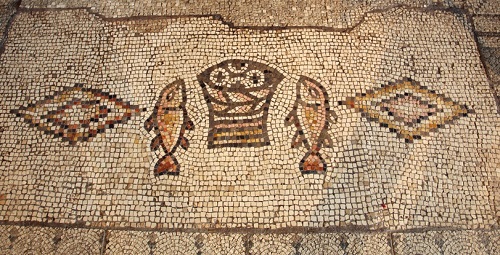
Tabgha is a small area right on the edge of the Sea of Galilee, on the western shore between Capernaum and Ginosar and just below the Mount of Beatitudes. The name Tabgha comes from the Greek – Heptapegon, meaning place of the seven springs. Tabgha has been identified as the site of the miracle of the loaves and fish (Mark 6:30-46) and the place where resurrected Christ came to meet his disciples (John 21:1-24). The seven springs of Tabgha bring warm water into the Sea of Galilee attracting fish which has made it a popular fishing area for centuries. The area has lush green vegetation, trees offering shade and the cool water just a few steps away.Church of the Multiplication of the Loaves and Fish, Tabgha. Photo credit: © ShutterstockBiblical TabghaThe Gospel of Matthew tells us that after Jesus heard that John the Baptist had been beheaded by the Romans he withdrew in a boat to a secluded area. Crowds of followers went after Jesus and by nightfall, there were 5,000 people gathered on the hillside. Jesus took five loaves of bread and two fish and gave them the traditional blessing. Then he divided the food among the gathered crowd. The loaves and fish miraculously fed all of the 5,000 people and there were even leftovers.After Jesus was resurrected he appeared several times to the disciples; one of these appearances took place in Tabgha. Peter, Andrew, Simon, and four other disciples were at Tabgha where they had been fishing through the night but had failed to catch anything. They came ashore and as the sun rose they saw Jesus standing in front of them on the beach of Tabgha. The disciples did not recognize Jesus but he called out to them. He told them to throw their fishing nets back into the water. When the disciples brought their nets in they found them full of fish. Jesus prepared food for the disciples over a fire and lay out the food on a rock. This rock became known as the Mensa Christi and can be seen today in the Church of the Primacy of St. Peter at Tabgha.Jesus challenged Peter’s faith three times symbolically canceling out the three times that Peter denied Christ on the night before the crucifixion. Then Jesus commissioned Peter to lead the church. He asked Peter to feed his lambs, tend his sheep and feed his sheep. Jesus also told Peter that he would die a martyr. From this point onwards Peter was recognized as the head of the church and the apostles.History of TabghaFloor mosaics in theChurch of the Multiplication of the Loaves and Fish, Tabgha.Photo credit: © Dmitry MishinIn the Byzantine era, the spring water of Tabgha was channeled into three water towers and taken via aqueducts to nearby Ginosar to be used for irrigation. During the 4th century, a small chapel was built by Joseph of Tiberias. It was replaced with a chapel in 480 by Martyrius of Jerusalem, the Patriarch of Jerusalem. Martyrius was originally from Egypt and he had the floor mosaics of the chapel created in the Egyptian style. The mosaic we see today of the fish and loaves has survived from this original chapel.The chapel was destroyed in 614 and remained in ruins until excavation in the 20th century. Under the Crusaders the Church of St Peter’s Primacy was constructed in Tabgha and the city was known as Mensa Christi (table of Christ) or Mensa Domini (work of the table). During the Ottoman era in 1595, a village existed on the site of Tabgha with a few houses and mills. Under the British Mandate, a community of Muslim and Christian Arabs lived here and farmed the land. During the 1948 Israeli War of Independence, Tabgha was cleared of residents and structures destroyed. Since then Tabgha’s lands and historic structures have been restored.Tabgha AttractionsChurch of the Primacy of St. PeterAfter Jesus’ resurrection, he appeared to his disciples at Tabgha where they sat down together to eat. It was at this time that Jesus chose Peter to lead the Christian church. This site is commemorated on the beach of Tabgha by the Church of the Primacy of St Peter. It is a small structure built in 1934 of black basalt rock. In the surrounding gardens, you can see a bronze sculpture depicting Jesus giving Peter his blessing. The church is literally on the water’s edge and you can take just a few steps down to the shore and even touch the water. This is a quaint and peaceful church with idyllic gardens and ample shade all around.Church of the Multiplication of the Loaves and FishThe 20th centuryChurch of the Multiplication of the Loaves and Fish that we see today stands on the site of the original 4th-century church and the Byzantine floor mosaic has survived. The mosaic features images of birds, snakes, vines, fish, and flowers. There are peacocks, a flamingo, swan, ducks, herons, geese, cranes, geese, and cormorants. The most significant mosaic is the one closest to the altar that depicts a basket of bread flanked by two fish. Rock in its natural state lies beneath the altar and is believed to be where Jesus placed the bread and fish as he made the blessing.To visit Tabgha, join ourNazareth and Galilee Tour.
Par Petal Mashraki

Christmas in Israel 2026: Your Complete Travel Guide

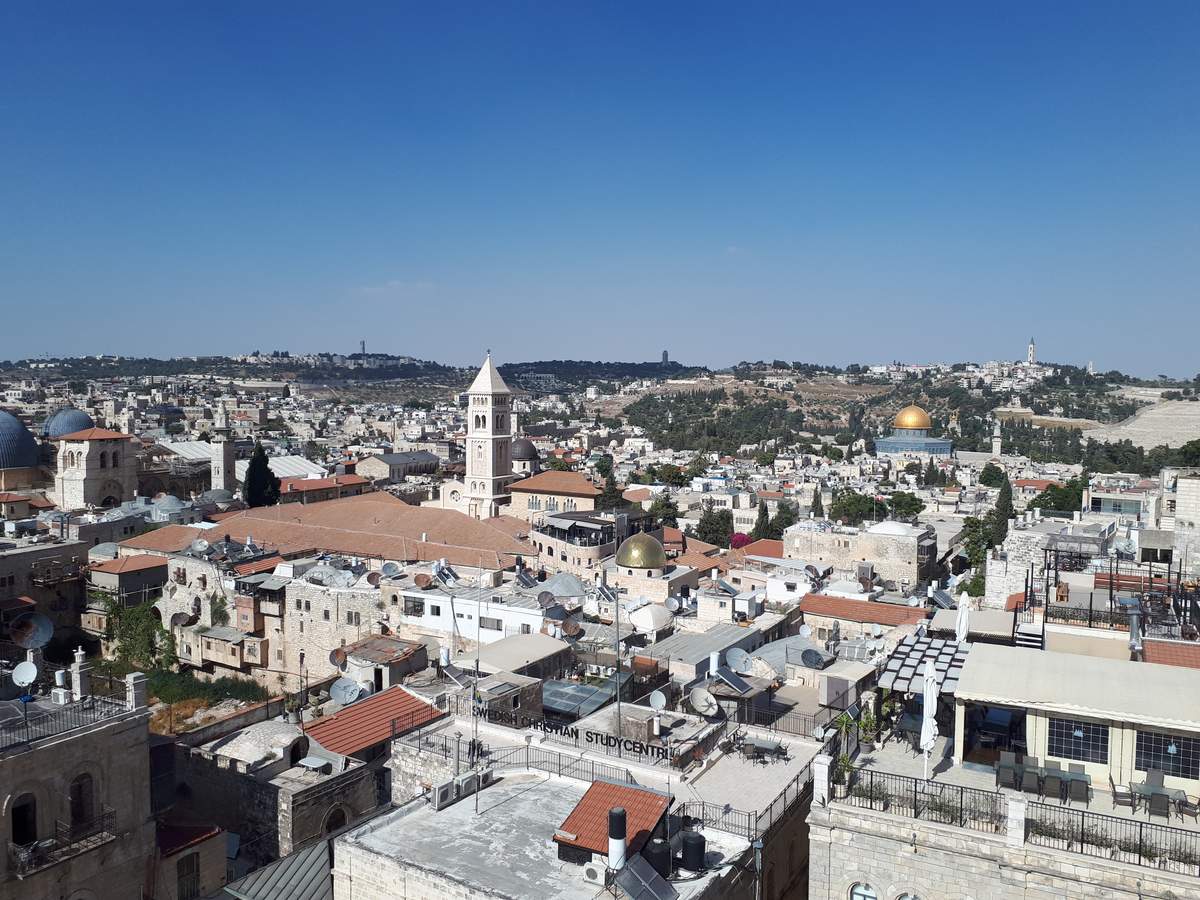
Church bells drift over stone rooftops, shop windows fill with Nativity scenes, and a Christmas concert turns a winter evening into something worth traveling for. Christmas in Israel 2026 brings together living traditions, festive outings and places where the story of the Nativity matters all year. Here is where to find that spirit, from Jerusalem and Nazareth to Haifa, Jaffa and nearby Bethlehem. For many visitors, December 24 and 25 are the main dates to plan around. Yet Christmas here is more local than nationwide: the atmosphere changes from one neighborhood to the next, and worship remains at the heart of the season. Choose a few places that match your interests rather than expecting every city center to become a Christmas market. When Is Christmas Celebrated in Israel? Different Christian communities follow different calendars, so the Holy Land's Christmas season extends into January. For a trip beginning in December 2026, these are the principal dates: CelebrationDateWho observes it locally? Christmas EveThursday, December 24, 2026Western-calendar celebrations Christmas DayFriday, December 25, 2026Roman Catholics and many Protestant communities Orthodox ChristmasJanuary 7, 2027Greek Orthodox and other communities using the Julian calendar for Christmas Armenian Christmas in the Holy LandJanuary 19, 2027The Armenian Patriarchate of Jerusalem These dates identify the celebrations, not the service times at individual churches. Confirm the parish, language and admission arrangements for any service you hope to attend. Hanukkah runs from the evening of December 4 through December 12 in 2026, so it does not overlap December 24 and 25. An earlier December visit can take in a different holiday atmosphere. Christmas in Jerusalem: Bells, Stone Streets and Santa's House Jerusalem's Christian Quarter (Photo: Roundish, CC BY-SA 4.0, via Wikimedia Commons) Start with a walk through the Christian Quarter, where religious shops, church courtyards and the sounds of worship give Christmas a setting quite different from a department-store holiday. Stop for coffee, browse handmade souvenirs and leave time to follow a lane that catches your eye. For a playful change of mood, look into Santa's House at 2 Saint Peter Street. Issa Kassissieh, known as Jerusalem Santa, has created a Christmas world inside an old stone house, with decorations tucked beneath its arches. Check the project's current visiting arrangements before going; a meeting with Santa is not guaranteed on every visit. Jerusalem's Christian heritage continues beyond December. The Church of the Holy Sepulchre commemorates Jesus' crucifixion and Resurrection, giving context to a Christmas pilgrimage. For a closer look at the city, see our Christmas in Jerusalem guide and check current local listings. Christmas in Nazareth: The Story Before Bethlehem Basilica of the Annunciation, Nazareth (Photo: Dobroš, CC BY-SA 4.0, via Wikimedia Commons) Nazareth connects Christmas with the Annunciation and Jesus' childhood. For Christian visitors, its appeal lies in that connection as much as in any seasonal decorations or entertainment. Make the Basilica of the Annunciation a priority. According to Catholic tradition, it marks the place where Gabriel announced to Mary that she would bear Jesus. The Greek Orthodox Church of the Annunciation preserves a different local tradition associated with the spring, offering another perspective on the city's Christian heritage. Make the old town part of the experience: pause over Arabic coffee, share something sweet and browse the shops between church visits. The anticipation of Christmas belongs as much to these everyday encounters as to a large public celebration. Exact 2026 dates for markets, tree lightings and processions still need confirmation from the municipality or churches. Read more about visiting Nazareth to decide how much time to give the city alongside any Galilee plans. Christmas in Haifa and Jaffa Haifa and the Holiday of Holidays Holiday of Holidays in Haifa's German Colony (Photo: Israel Preker, PikiWiki Israel, CC BY 2.5, via Wikimedia Commons) Haifa's Holiday of Holidays is a cultural celebration associated with the city's diverse communities. It gives travelers another reason to explore Haifa in December, beyond a conventional sightseeing stop. The official festival website announces a return in December 2026. Explore the German Colony and Wadi Nisnas for a day of neighborhood wandering and local flavors. The detailed 2026 festival program is still to be confirmed; some information online relates to 2025. Jaffa for Travelers Staying in Tel Aviv Jaffa offers a way to include Christian heritage without leaving the Tel Aviv area. Combine the old city and waterfront with its churches, including Saint Peter's Church, subject to visiting and worship arrangements. Pair a walk through Jaffa's lanes with a waterfront pause and dinner nearby. Look for Christmas touches around the city's Christian communities, while checking local announcements for special celebrations. Our Tel Aviv and Jaffa walking tour provides a broader introduction to the area; Christmas services and seasonal events are separate arrangements. Visiting Bethlehem for Christmas Eve Bethlehem is in the West Bank, outside Israel, but it is an important part of many Holy Land Christmas itineraries. The Church of the Nativity preserves the traditional site of Jesus' birth, while the adjacent Church of Saint Catherine is associated with the Latin Catholic Christmas liturgy. Distinguish between visiting the Nativity complex, attending an indoor service and participating in any public celebration in Manger Square. These are different experiences. A sightseeing reservation does not automatically grant admission to Midnight Mass. If attending a service is essential, ask the relevant church authority about 2026 admission or ticket requirements. Do not rely on previous years' screening arrangements, procession routes or service times. Confirm what your booking actually includes. Bein Harim has a Christmas Eve tour covering Jerusalem and Bethlehem. Contact us to confirm operation for December 24, 2026, current inclusions and the planned Mass experience. Access to Bethlehem depends on current conditions and applicable entry rules; carry your passport and check arrangements for your nationality and status before traveling. Christmas Events and Winter Experiences Listed for 2026 Two Christmas concerts have dated 2026 listings on Eventim: "Mizmorim Shel Or," a program of Christmas prayers and songs, at Beit Ha'am in Beit Yitzhak on December 22 at 8:00 p.m., and at the Magdala Hotel by the Sea of Galilee on December 24 at 6:00 p.m. These offer a musical addition to a holiday trip. A related seller also displays a general cancellation notice, so confirm operation directly with the producer before booking either concert. Check the language of any spoken introductions as well. The Jerusalem Baroque Orchestra's Christmas Concert also has dated listings: December 19 at 8:00 p.m. at Hecht Auditorium, University of Haifa; December 20 at 8:00 p.m. at Jerusalem International YMCA; December 22 at 8:00 p.m. at Zucker Hall, Charles Bronfman Auditorium, Tel Aviv; and December 23 at 8:00 p.m. at the performance hall in Givat Brenner. The program includes music by Corelli, Graun and Bach. Select the correct city when booking. Winter Dreams at the Jerusalem Botanical Gardens is scheduled for November 17, 2026, through January 31, 2027. Its illuminated outdoor trail makes a colorful evening outing during Christmas week. This is a seasonal light attraction, not a religious Christmas event. Fridays are excluded from the published schedule, and advance booking and arrival coordination are required. Haifa's Holiday of Holidays has also announced December 2026. Detailed market and ceremony schedules elsewhere were not verified as of October 20, so reserve around dated announcements rather than recycled event pages. Christmas Spirit Beyond December 24 Missed Christmas Eve? You have not missed the places that give the season its meaning. In Bethlehem, the Nativity tradition is part of worship and pilgrimage throughout the year. Nazareth's churches likewise connect visitors with the Christmas story long after the decorations come down. Our Jerusalem and Bethlehem tour combines two central destinations of a Christian visit. Alternatively, the Bethlehem and Jericho tour connects the Nativity story with another biblical city. Both are relevant options around the Christmas season, subject to departure availability and current access conditions. They are sightseeing tours rather than replacements for a Christmas Eve service. Practical Tips for Christmas Travel in 2026 Plan transport: Christmas Day falls on Friday in 2026. Many regular buses and trains stop for Shabbat, so arrange your return journey. Individual Christian venues may also close for the holiday. Pack layers: Bring a warm jacket, rain protection and shoes with good grip. Check the forecast before an outdoor evening. Respect worship: Follow church dress codes, ask before photographing and discuss stairs or mobility needs in advance. Check official travel advisories, local instructions and your operator's updates before departure. Plan Your Christmas Visit with Bein Harim Tell us your dates, group size and the experiences that matter most to you, from church visits and biblical history to local food and a Christmas service. We can help you choose suitable sightseeing options and discuss a private itinerary, with holiday activities and admission arrangements confirmed separately.
Par Admin

Christmas in Bethlehem

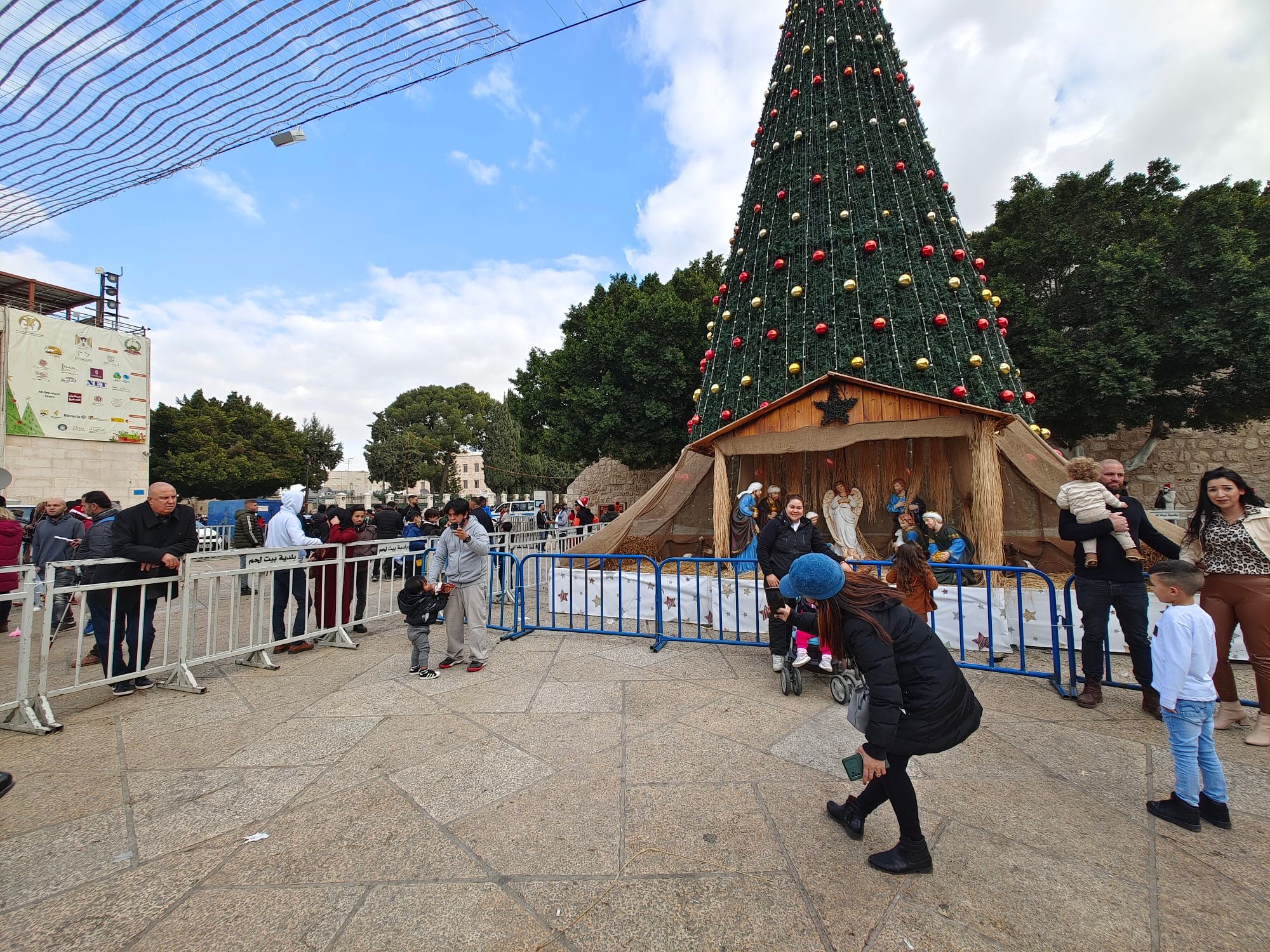
Christmas in Israel can be magical and a truly spiritual experience. There are services in local churches (mainly in Jerusalem, Nazareth and Bethlehem) as well as services held at the locations where Christmas events took place. Many tour buses leave Jerusalem on Christmas Eve to services in Shepherds' Field where an angel appeared to the shepherds on Christmas Eve. The tours continue to the Lutheran Church in Bethlehem and end off at the Church of the Nativity in Bethlehem for the Midnight Mass.Christmas tree in Bethlehem.Photo credit: © ShutterstockOf all the Christmas celebrations in Israel, perhaps the largest and most moving is at the Church of the Nativity in Bethlehem on Christmas Eve, where gather in Manger Square to be a part of the celebration of Jesus’ birth on the spot where the events unfolded.Christmas in Bethlehem includes processions through the streets, carol singing, and religious services which can all be an extremely spiritual experience.Roman Catholics celebrate on the 24th of December at Saint Catherine’s Church in Bethlehem, as well as on the 5th and 6th of January when the Epiphany is commemorated. Greek, Coptic, Romanian, and Syriac Orthodox Christians celebrate Christmas on the 6th of January in Bethlehem. For those belonging to Orthodox denominations, it is customary to join into one of the many religious processions that are held in Bethlehem. Armenians tend to hold their services at the Basilica of the Nativity, although this falls a few weeks later than Protestant/Catholic times (usually the third week of January). These processions always pass through Manger Square, close to the site where it is believed that Jesus was born. For Protestants, it is a different matter.Some of them, of course, will attend evening services in their local churches whilst others will make the trip to the Church of the Nativity or Shepherd’s Field. For Protestants who want to travel to Bethlehem from Jerusalem, the YMCA organizes an evening trip. In Jerusalem, popular Protestant and Anglican churches include the Lutheran Church of the Redeemer and St. George’s.Nativity scene, stained glass, Church of St. Catherine, Bethlehem.Photo credit: © ShutterstockChristmas traditions in Bethlehem tend to be in the same vein as those in Europe and North America. A week or two before 25th December lights will be put up, as well as other decorations, and flags will fly. Christians often paint crosses on the doors of their home and traditional Christmas markets are held, selling all kinds of fare associated with the holiday. If you look in the windows of peoples’ houses, you may also see miniature Nativity scenes on display.On 24th December - Christmas Eve - an afternoon parade is held in the center of the town and all of the residents, not to mention pilgrims and tourists, crowd the streets in an attempt to get a bird’s eye view of the celebrations. At the head of the Parade are officers on horses and behind them a man - also on a black horse - carrying a cross. Following him are government and church officials. Once the parade has arrived at the Church of Nativity followed by a man riding over a black steed and carrying a cross. After him comes the churchmen and government officials. After the parade has entered the Church of the Nativity, a statue of the ‘Holy Child’ is placed inside. The honored guests then descend down a long flight of stairs which leads them into a grotto. There can be seen a silver star - this is the place that marks Christ’s birth.In Nazareth, there are Christmas Eve parades and firework displays as well as church services. In all over 90,000 foreign visitors arrive in Israel annually to celebrate Christmas. Christmas is celebrated also in Haifa and in Jaffa. It is important to remember that throughout the rest of Israel you could probably not even notice that it is Christmas in Israel as unlike America and Europe the streets and stores are not decorated, there is no Santa ringing a bell outside shops, and Christmas music cannot be heard in the streets. Book a tour to the Christmas Eve in Jerusalem & midnight mass in BethlehemInside the Church of St. Catherine, Bethlehem.Photo credit: © Shutterstock
Par Petal Mashraki

Special Events in Jerusalem on Good Friday

Good Friday is commemorated on the Friday before Easter Sunday each year and marks the day that Christ was crucified. The Crucifixion of Jesus took place in Jerusalem (on a site now within the Church of the Holy Sepulchre in the Old City) so if you are lucky enough to be in Jerusalem on Good Friday you will have the unique experience of being exactly where these Biblical events took place. Good Friday is marked in Jerusalem by religious services in the many churches and by other unique events. Thousands of Christians come to Jerusalem for Good Friday to take part in the moving events of that day.Via Dolorosa ProcessionThe most major event in Jerusalem on Good Friday is a procession by Roman Catholics and Protestants which retraces the route Jesus took from his sentencing in front of Pontius Pilot to Golgotha where he was crucified. He carried his heavy cross along this route, known as the Via Dolorosa (Way of Suffering or Way of Sorrows)) and paused at 14 points along the way. The places where Jesus stopped along the Via Dolorosa are called the Stations of the Cross. Each year thousands of pilgrims carrying crosses, chanting, praying and singing hymns proceed through the streets of the Old City along the Via Dolorosa led by Christian religious leaders of Jerusalem. At each of the Stations of the Cross they stop to pray. The brown robed Franciscan friars pause at each of the stations to explain their religious significance and chant prayers in Latin. Some years there is someone dressed as Jesus bearing a heavy wooden cross that walks just behind the priests leading the procession. The person taking the role of Jesus wears a crown of thorns and has fake blood dripping from his wounds. “Jesus” is flanked by people dressed as Roman soldiers. The procession ends at the Church of the Holy Sepulchre where Jesus is believed to have been crucified, laid to rest in a tomb and later resurrected on Easter Sunday. Once the procession reaches the Holy Sepulchre where the final four Stations of the Cross are located the pilgrims pause to pray and later that day there are more special ceremonies within the church.Practical InformationEaster is celebrated on different days by the Orthodox denominations which follow the Julian calendar and by the Catholics and Protestants who follow the Gregorian calendar. Throughout the entire week of Easter there are special events in Jerusalem so if you cannot make it for Good Friday then try to be in the Holy City at some other time during the Holy Week.Special events on Good Friday in Jerusalem:7:15am – Passion of Christ on Calvary in the Church of the Holy Sepulchre.11:30am – Procession of the Way of the Cross (Via Dolorosa) led by Franciscan monks from the Lion’s Gate to the Church of the Holy Sepulchre.4pm – Liturgy of the Hours in the Church of the Holy Sepulchre.8:10am – “Funeral Procession” in the Church of the Holy Sepulchre.At the Garden Tomb there is an English Good Friday meditative service for Protestants.Roman Catholic and Protestant Good Friday Dates: 2017 – April 14; 2018 – March 30; 2019 – April 19 and 2020 – April 10.Orthodox Good Friday Dates: 2017 – April 14; 2018 – April 6; 2019 – April 26 and 2020 – April 17. In 2017 Good Friday dates for Orthodox, Roman Catholic and Protestants will coincide, this means that the Good Friday events in Jerusalem in 2017 will be even more memorable than other years. This happened in 2010, 2011 and 2014 but after 2017 it will not happen again until 2034.
Par Petal Mashraki

Jerusalem in the Time of Jesus: Understanding the City Behind the Gospels

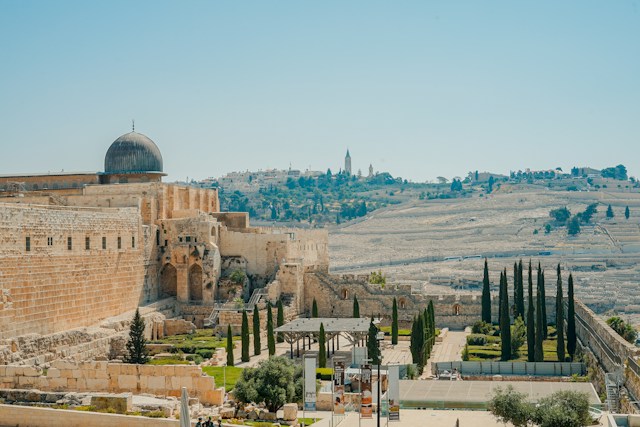
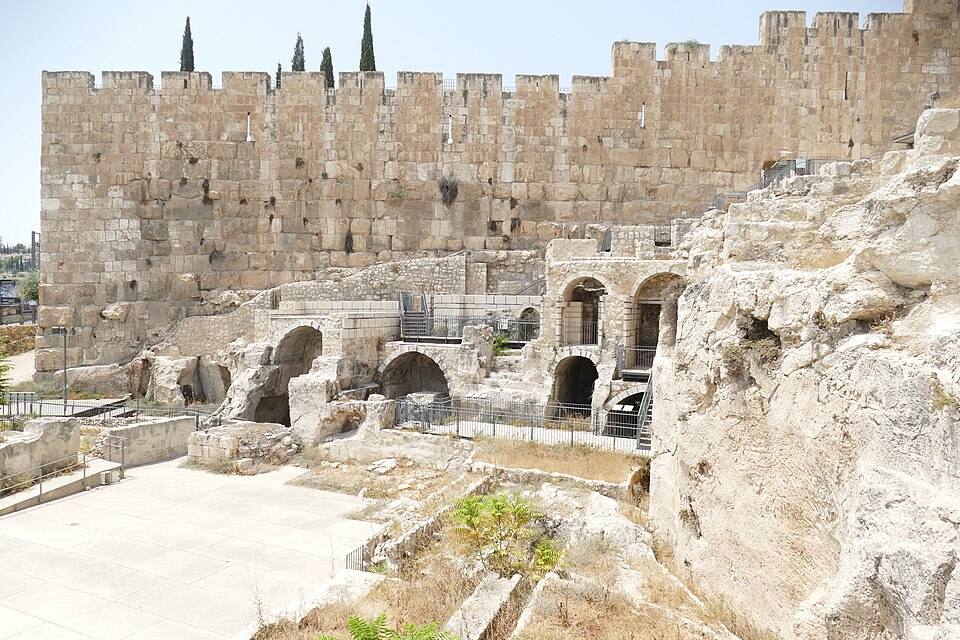
Jerusalem in the time of Jesus was a Jewish city centered on the Second Temple, living under Roman rule. Pilgrims came to worship, residents moved between hillside neighborhoods, and monumental stone buildings stood alongside the ordinary places where people worked, traded, and gathered. Its landscape survives more clearly than its skyline. The Temple Mount, the Mount of Olives, and the valleys still help you understand the Gospel narratives. But the domes, churches, city walls, and many streets that visitors see today belong to later chapters of Jerusalem’s history. If you are planning a Christian pilgrimage or simply enjoy archaeology, start with the city’s geography. Understanding what stood where makes a visit more meaningful and helps you recognize the difference between an ancient structure, a later memorial, and a traditional identification. What Did Jerusalem Look Like in Jesus’ Time? Picture a city of hills and valleys rather than a flat grid of streets. The Temple complex occupied the eastern side, while the higher western hill supported the Upper City. The Lower City extended along the southeastern ridge, in the area associated today with the City of David. A central valley, often called the Tyropoeon Valley, separated parts of the urban landscape. East of the city, the Kidron Valley lay between the Temple Mount and the Mount of Olives. That relationship helps explain why the Gospels connect Jerusalem with the hillside beyond it. Mark 13:3 places Jesus on the Mount of Olives opposite the Temple; John 18:1 describes Jesus and his disciples crossing the Kidron toward a garden. The city was also a place of pilgrimage. Its Temple setting is essential to understanding the Gospel accounts, from Jesus’ childhood visit in Luke 2:41–50 to his teaching in the Temple in Mark 11. Christianity’s Jerusalem story begins within this Jewish religious world. Do not imagine today’s four Old City quarters as a street map of the first century. Modern neighborhood boundaries and the familiar enclosure of the Old City reflect centuries of change. A Map of First-Century Jerusalem A useful map of Jerusalem in the time of Jesus should show how the Temple Mount, the city’s neighborhoods, and the surrounding valleys fit together. Check which date the map represents and whether its boundaries or proposed routes are certain or reconstructed.Jerusalem in the first century The Temple Mount, Upper City, and Lower City Use three reference points when reading a historical map: the Temple platform, the western hill, and the southeastern ridge. Then find the valleys between and beside them. This is more useful than trying to match every modern lane to an ancient street. Always check the date of a reconstruction. A map of Jerusalem shortly before the Roman destruction in AD 70 can include developments later than Jesus’ ministry. “First-century Jerusalem” covers a changing city, not a single frozen moment. The Second Temple and the World of the Gospels The Temple standing during Jesus’ lifetime was the Second Temple, which Herod the Great had substantially rebuilt and expanded. “Herod’s Temple” describes that transformed sanctuary and its setting; it does not mean that the Second Temple period began with Herod. The distinction between the sanctuary and the surrounding platform matters. The Western Wall is a retaining wall of the Temple Mount complex, not a surviving wall of the sanctuary itself. Its masonry also includes work from different periods. The large ancient stones help visitors appreciate the scale of the complex, while later courses reveal its continued history. For a wider introduction to its development, see our guide to the Second Temple in Jerusalem. Here, the key is how the complex shaped the city: worship, movement, public gathering, and pilgrimage all connected to it. The Romans destroyed the Temple in AD 70. That event came decades after Jesus’ ministry and changed the urban landscape. When a guide points out destruction layers, ask whether the evidence relates to this later event rather than to a Gospel episode. What Archaeology Reveals and What Remains Uncertain Archaeology can uncover streets, stairs, baths, buildings, and objects. These discoveries help explain how people lived and moved through Jerusalem. A structure that belongs to the right period, however, does not by itself establish that Jesus stood at a particular spot. Near the southern entrances of the Temple Mount, excavations have documented ritual bathing facilities, monumental staircase remains, and architectural fragments associated with Herodian construction. Such evidence gives physical context to the city’s pilgrimage life. It does not record the footsteps of an individual visitor. Keep three kinds of information separate as you explore: Biblical narrative: what a Gospel describes, with the passage identified.Archaeological evidence: what was excavated and how it is dated or interpreted.Christian tradition: how later communities identified, remembered, and venerated a place. These can inform one another without being interchangeable. A church may preserve a longstanding tradition while its visible walls are much later than the event it commemorates. Connecting Ancient Jerusalem with Today’s Sites Use this comparison to decide what you want to see. Some stops emphasize surviving material evidence; others are central to Christian devotion and the history of pilgrimage. Ancient place or settingEvidence or associationWhat to look for todayTemple Mount complexAncient masonry from the retaining walls and evidence of successive building phasesThe Western Wall and the scale of the platform; distinguish ancient stonework from later additionsSouthern approaches to the TempleStairways, entrance remains, ritual baths, and architectural fragmentsThe Southern Steps and archaeological setting at the Davidson Center; ask which features are original and which are restoredSoutheastern city and Siloam areaExcavated pool and street from the Second Temple period; Siloam appears in John 9The Pool of Siloam and Pilgrimage Road visitor experience; the excavation does not independently prove the Gospel eventMount of Olives and Kidron ValleyLandscape named in the Gospel narrativesThe relationship between hillside, valley, and city; churches commemorate traditions rather than preserve the first-century skylineGolgotha and burial traditionThe Church of the Holy Sepulchre preserves Christian identification of the crucifixion and tomb sitesA church complex shaped by many later building phases, rather than a first-century churchJerusalem at the end of the Second Temple periodA modern scholarly reconstruction of the city in AD 66The outdoor Jerusalem model at the Israel Museum, offering a view of the Temple complex and surrounding neighborhoods The Southern Steps and Davidson Center The southern side of the Temple Mount is especially helpful if you want to understand how people approached the complex. Rather than beginning with a famous photograph, look at the relationship between stairs, gateways, and the platform above. Our guide to the Southern Steps and Davidson Center introduces the setting. During your visit, ask your guide to distinguish excavated remains from reconstructions and from later structures in the same archaeological area. The Pool of Siloam and Pilgrimage Road The Gospel of John associates the Pool of Siloam with the healing of a man born blind (John 9:1–7). The excavated pool and nearby street add context to the city described in the text without demonstrating the miracle itself. The City of David currently offers guided and independent visits to the Pilgrimage Road. Its route for independent visitors includes steps, an uphill walk, and an underground section; the operator lists it as inaccessible for strollers and visitors requiring an accessible route. Check the official Pilgrimage Road visitor information for current arrangements before planning around it. Later Churches and the Ancient Landscape At the Church of the Holy Sepulchre, the focus is the Christian tradition of Jesus’ crucifixion, burial, and resurrection. Its architectural history begins centuries after Jesus and includes major rebuilding. A meaningful pilgrimage visit can acknowledge both the sacred tradition and the age of the building you enter. The same care applies to walking through the Old City. A later street or devotional route can matter deeply to Christian pilgrims without being an archaeologically established record of every step Jesus took. See Second Temple Jerusalem at the Israel Museum To picture the city as a whole, include a visit to the Israel Museum in Jerusalem. Its outdoor Model of Jerusalem in the Second Temple Period brings the ancient city into three dimensions, making it easier to understand the scale of the Temple complex and its relationship to the surrounding neighborhoods. Walk around the model and look at the city from different angles. Start with the Temple platform, then find the Upper City and the lower areas to the south. Seeing these places together helps connect the separate stops of a Jerusalem tour and gives Christian travelers a clearer sense of the urban world behind the Gospel accounts. The model represents Jerusalem in AD 66, several decades after Jesus’ ministry and four years before the Temple’s destruction. It offers a vivid introduction to the city of the same broad period, while including developments that came later than Jesus’ lifetime. It is a scholarly reconstruction, so individual details should be understood as interpretations of the evidence. Consider visiting the model before exploring the archaeological sites, then comparing what you saw with the surviving remains near the Temple Mount. The museum is outside the Old City, so plan it as a separate stop and check the Israel Museum’s official website for current opening hours and visitor arrangements. Planning a Visit with Historical Context Build your visit around a question, rather than a long checklist. Do you want to understand the Temple’s scale, see excavated approaches and streets, or spend time at places important to Christian worship? Choose a few stops that answer that question. For a visit centered on archaeology, discuss the Davidson Center, the Siloam area, and the Israel Museum model with your guide. For a pilgrimage, balance historical explanation with time for churches and reflection. Plan for the terrain. Jerusalem’s slopes, stone paving, and archaeological stairs can affect your pace. Wear supportive shoes and bring water.Discuss access needs in advance. Tell your planner about wheelchair use, limited mobility, or discomfort with enclosed spaces so the route can be assessed before booking.Dress for religious sites. Carry clothing that covers shoulders and knees, and follow the instructions at each entrance.Confirm the details for your date. Site access, reservations, opening hours, and available routes can change. Confirm them directly rather than assuming all nearby attractions share one ticket. Make the history part of your itinerary. Explore a private Jerusalem tour with Bein Harim and tell our team which parts of first-century Jerusalem interest you most. We can discuss a route around Christian heritage, archaeology, and your walking pace. Specific stops depend on access, timing, and the itinerary agreed for your visit.
Par Admin

5 Biblical Archaeological Digs to Follow in 2026

A fishing weight near the Sea of Galilee. A ritual bath beneath Jerusalem. A roof beam charred in the destruction of an ancient building. Finds like these can change the questions archaeologists ask about the world of the Bible.Some discoveries help locate a town. Others illuminate worship, urban life, or the aftermath of war. Their significance lies in how they fit together: where they were found, how they are dated, and what they reveal about the people who left them behind.These five excavation projects have reported fieldwork or discoveries in 2026 and address questions relevant to the Hebrew Bible and the New Testament. They are ongoing research stories, rather than a list of ancient monuments to visit. Several seasonal campaigns have already ended; their analysis continues, while further digging depends on each project’s schedule.The Five Projects at a GlanceExcavationBiblical connectionResearch questionEvidence of recent workEl-ArajBethsaida and the apostlesDoes the settlement evidence support the proposed identification?2026 field reports; autumn continuation announcedJerusalem’s OphelTemple pilgrimage in the world of the GospelsHow did pilgrims prepare to enter the Temple complex?2026 field updates and an October research announcementShilohThe sanctuary traditions in Joshua and 1 SamuelWhat do the buildings and deposits reveal about the settlement?A participant’s report on the 2026 seasonGivati Parking Lot, City of DavidJerusalem’s Babylonian destructionCan preserved wood refine the chronology?Discovery and research reported in July 2026Tel AshdodThe Philistine city named in biblical narrativesHow did its Iron Age gate develop and change?Completed 2026 season and laboratory work described in August1. El-Araj: Searching for the Bethsaida of the New TestamentBethsaida appears in the Gospels as a place associated with Jesus’ ministry and the hometown of Philip, Andrew, and Peter (John 1:44). At El-Araj, researchers are examining a proposed location for the ancient settlement.The project is led by archaeologist Mordechai Aviam and academic director R. Steven Notley. Its 2026 updates document the tenth excavation season, with work reaching Roman-period levels across several areas.What the Latest Excavation RevealedIn his August 8 report, Notley describes fishing weights, stone-vessel fragments, lamps, coins, and building remains. Together, these finds help the team investigate the settlement’s economy, Jewish character, and development under Roman rule.The interesting question is cumulative: do the buildings, objects, dates, and landscape fit the town known from ancient texts? The excavation team argues that they support identification with Bethsaida-Julias. That remains an archaeological interpretation, not a reason to label an excavated house as an apostle’s home.The same report announced further work in October. It establishes the project’s intention to continue, not independent confirmation that digging is taking place on a particular day. Read the excavation director’s 2026 summary for the evidence behind the discussion.2. The Ophel: Uncovering the Infrastructure of Temple PilgrimageWhat happened before a pilgrim reached the Temple? Excavations at Jerusalem’s Ophel, immediately south of the Temple Mount, are bringing that practical question into focus.Ophel Archaeological Park, south of the Temple Mount (Photo: Bukvoed, CC BY 4.0, via Wikimedia Commons)The Hebrew University project directed by Uzi Leibner and Orit Peleg-Barkat, in cooperation with the Armstrong Institute of Biblical Archaeology, investigated a monumental purification complex. An October 2, 2026 announcement describes a large stepped pool, rooms containing ritual baths, a paved forecourt, and substantial drainage channels.Why the Ritual Baths MatterThe researchers date the monumental complex to the early first century AD. One bath survives unusually well, including its vaulted roof. Their interpretation links the facilities to the preparation of Jewish pilgrims visiting the Temple.This gives physical depth to the setting of Gospel passages about festival travel and Temple life, including Luke 2:41 and John 7. It does not identify a bath used by Jesus or establish a particular Gospel event.The project’s 2026 field updates document the season’s work; the announcement brings together results from five seasons. Read the university-affiliated research announcement. For broader context, our guides to the Second Temple and the Southern Steps and Davidson Center introduce the surrounding landscape.3. Shiloh: Investigating a Biblical Sanctuary LandscapeJoshua 18:1 places Israel’s tent of meeting at Shiloh. The opening chapters of 1 Samuel connect the place with Hannah, Eli, and Samuel. Those traditions make its settlement history particularly compelling.Excavated remains at ancient Shiloh (Photo: Zeev Stein, PikiWiki Israel, CC BY 2.5, via Wikimedia Commons)Associates for Biblical Research, directed at the excavation by Scott Stripling, continued work at the northern end of the tell in 2026. Shiloh is in the West Bank. The project’s recent fieldwork should be discussed separately from questions of travel access.What Changed in the 2026 Season?Square supervisor Bryan Windle’s June 24 report describes three storage jars from a Middle Bronze Age context, additional gate-complex walls, and the identification of a monumental building’s southern wall.The building is important because better-defined dimensions allow its function to be assessed more closely. The excavators discuss possible relationships to sanctuary traditions, but the discovery does not establish that the biblical Tabernacle has been found.The earlier jars also show why layers matter: an object excavated at a biblical place can belong to a period before the narrative being discussed. Read the firsthand 2026 field report as the excavator’s account, rather than a statement of scholarly consensus.4. Givati Parking Lot: Studying Jerusalem’s Destruction through Burned WoodAt the Givati Parking Lot excavation in the City of David, the research story reaches beyond stone architecture. In July 2026, researchers announced the discovery of substantial charred wooden beams in a collapsed building.Givati Parking Lot excavation in the City of David, Jerusalem (Photo: Hanay, CC BY-SA 3.0, via Wikimedia Commons)The Israel Antiquities Authority and Tel Aviv University project connects the destruction context with Jerusalem’s fall to the Babylonians in 586 BC. The excavation leadership includes Yiftah Shalev and Yuval Gadot; excavation director Efrat Bocher describes the beams as likely roofing for an inner courtyard.Why Wood Can Be More Valuable than a Spectacular ObjectThick pieces with many growth rings provide material for refining dates. The team’s announcement describes their unusual preservation and the potential for much more precise chronological work.That is the central research opportunity. A destroyed building can be studied as evidence for the timing and impact of an urban catastrophe. The biblical account of Jerusalem’s destruction in 2 Kings 25 provides the historical narrative readers will recognize.These are beams from an excavated building in the city, not identified timbers from the Temple itself. The July announcement also describes research potential, not a completed new dating result. The Tel Aviv University Canada report explains the find and its scientific significance.5. Tel Ashdod: Reexamining a Gate in a Philistine CityAshdod is prominent in biblical accounts of the Philistines, including the Ark narrative in 1 Samuel 5. At Tel Ashdod, renewed excavation is testing how an important part of that city developed.The project’s August 12, 2026 season report describes work on a monumental Iron Age gate previously investigated by Moshe Dothan. Newly exposed walls, surfaces, and construction phases are prompting the team to reassess its earlier reconstruction.What the Gate Can RevealThe report notes a fragment of a ritual vessel on a gate surface and production debris west of the complex, associated with later metalworking. Such evidence helps researchers ask how the area’s uses changed over time.This is relevant to the urban and cultural world behind biblical references to Ashdod. It does not identify the gate of the Ark story or demonstrate that the narrative’s events occurred there.The team explicitly describes the transition from fieldwork to laboratory analysis. Its 2026 season summary is therefore evidence for a continuing research program, even though the summer excavation has ended.What These Digs Can Tell Us about the BibleThe strongest connection between archaeology and the Bible is often a well-framed question. What kind of settlement stood here? How did worship shape the surrounding buildings? What changed after destruction? How securely can a layer be dated?Objects and architecture can help answer these questions without resolving every historical or theological debate. A preliminary field report, a university announcement, and a peer-reviewed study also represent different stages of interpretation. New evidence may strengthen a proposal, refine it, or require it to change.That is what makes these projects worth following. Their stories are still developing, and the next important result may come from the laboratory as readily as from a trench.Connecting the Research with a VisitReading a dig report can transform how you experience a biblical landscape. It gives you better questions to ask and helps separate original remains, later construction, and modern interpretation.If you want to add that context to a Jerusalem visit, discuss your interests with our team through a private Jerusalem tour. Visiting a surrounding archaeological area is different from entering a working excavation; any special access requires confirmation with the relevant project. This article does not advertise participation or access to the five digs.
Par Admin

Sea of Galilee Boat Ride: What to Expect and How to Plan

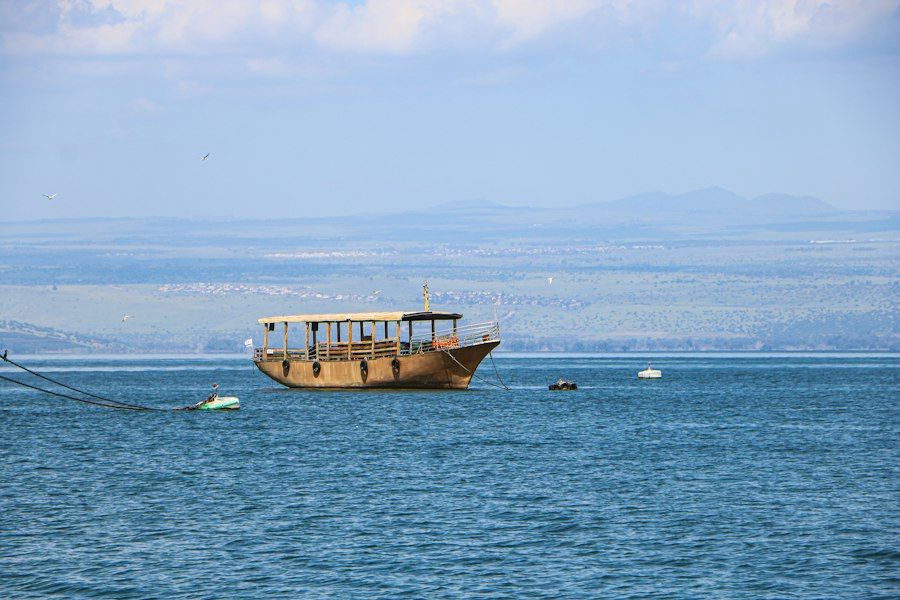
A boat ride on the Sea of Galilee adds a different perspective to a day spent visiting the churches and ancient communities along its shores. From the water, you can step back from the individual sites and take in the landscape that connects them.For Christian travelers, the setting has particular meaning. The Gospels describe Jesus teaching beside the lake, calling fishermen to follow him and crossing its waters with his disciples. A sailing gives you time to reflect on those accounts between visits on land.Plan on roughly 45 minutes to an hour on the water for a shorter excursion, depending on the sailing you book. Departure points, onboard activities and prices vary. The most useful decisions are whether to join a shared cruise or arrange a private boat, where to board and how the ride fits into the rest of your Galilee itinerary.What Is a Sea of Galilee Boat Ride Like?A sightseeing cruise is a chance to experience the lake itself, rather than simply look at it from the shore. The route and atmosphere depend on the operator, the vessel and your group’s plans. Some sailings focus on Christian pilgrimage, while others are a more general outing on the water.Wooden passenger boat on the Sea of Galilee near TiberiasBefore booking, ask what the experience actually includes. A description such as “Christian boat tour” can cover different programs, from a quiet pause for prayer to music, commentary and a fishing demonstration. The boats used for these excursions are modern passenger vessels, even when their appearance recalls traditional fishing boats.Prayer, Music and Time for ReflectionIf you are traveling with a church group, discuss your preferences in advance. You may want space for a Scripture reading, familiar worship music or several minutes of silence. Ask whether sound equipment is available and who will lead any commentary or service.The biblical accounts most closely associated with a crossing include the calming of the storm in Mark 4:35–41 and Jesus walking on the water in Matthew 14:22–33. These passages give context to the experience without requiring a particular program on board.How Long Does a Sea of Galilee Boat Ride Take?For planning purposes, allow approximately 45 minutes to an hour for a shorter boat ride, then confirm the exact duration when you reserve. Private sailings may be arranged for a different length of time.The sailing time is only part of the stop. Your day also needs room for getting to the pier, meeting the crew, boarding and returning to your vehicle. If you plan to visit the ancient boat exhibition at Ginosar, schedule it as a separate visit rather than assuming it fits inside the cruise time.How Much Does a Sea of Galilee Boat Ride Cost?There is no single price for a Sea of Galilee boat tour. The date, departure time, sailing duration, boat capacity and number of passengers can all affect the quote. A private charter is usually best compared by the total group cost and what it includes.Request a quote for your actual date and group size. Confirm the departure point, the time on the water, any minimum charge and whether requested activities or equipment are included. If you are combining the ride with a guided tour, check how the sailing is priced within the overall itinerary.Shared Cruises or a Private Boat?A shared cruise can suit solo travelers, couples and smaller parties willing to join an existing departure. Availability matters: a pier is not necessarily a place where you can arrive at any time and immediately board a sightseeing boat.A sightseeing boat sailing on the Sea of GalileeA private boat gives your group more control over the atmosphere and requested program. It can be particularly useful for a church group, an extended family or travelers who want time for their own readings and music. Departure times and routes still need to be agreed with the operator.Where Do Sea of Galilee Boat Trips Depart From?Ginosar and Tiberias are departure options offered by operators on the lake. Choose the pier as part of your day’s route, and confirm the exact boarding location before traveling. Also check whether the boat returns to the same pier or finishes elsewhere.Departing from GinosarGinosar is worth considering if you want to combine a sailing with the ancient boat exhibition at the Yigal Allon Center. Visiting the exhibition and then taking a modern boat onto the lake creates a useful connection between archaeological evidence and the present landscape.Departing from TiberiasA Tiberias departure may be convenient if you are staying in the city or beginning your day there. Confirm which pier your operator uses and allow for the journey from your hotel or previous stop. Do not assume that every boat advertised on the lake operates from both Tiberias and Ginosar.The Jesus Boat Museum and the Boat Ride Are Different ExperiencesThe name “Jesus Boat” can cause confusion when planning a visit. It may appear in advertising for a modern cruise, but it also refers to the ancient wooden boat displayed at the Yigal Allon Center in Kibbutz Ginosar.The ancient boat on display at the Yigal Allon Center, Ginosar (Photo: Berthold Werner, Public domain, via Wikimedia Commons)Discovered in 1986 and dated to around 2,000 years ago, the preserved boat offers a rare view of boating in the period associated with Jesus’ ministry. There is no evidence that Jesus or his disciples used this particular vessel. It is an archaeological object on display, not a boat visitors sail in.Read more about the ancient boat at Ginosar if you would like to include the exhibition. Confirm museum admission and visiting arrangements separately from your sailing reservation.How to Fit a Boat Ride into Your Galilee ItineraryGive the sailing a clear place in the day before adding more stops. A boat ride, a museum visit, lunch and several church visits can fill a schedule quickly, especially when your group needs a comfortable walking pace.One approach is to pair a Ginosar sailing with the ancient boat exhibition and a focused selection of Christian sites nearby. Another is to make the cruise the central experience, leaving more time for reflection and fewer visits on land. The right balance depends on your interests and where your day begins and ends.If you are also including Nazareth, discuss priorities with your guide before confirming the route. A meaningful day does not require stopping at every site around the lake.Bein Harim’s private Nazareth and Sea of Galilee tour can be customized to consider a boat trip, subject to timing, availability and agreed arrangements. Ask for it while planning your itinerary so that the sailing can be coordinated with your other visits.What to Check Before You BookYour confirmed departure: Get the pier location, meeting time and contact details in writing.The onboard program: Agree on music, commentary, prayer time or any other requested activity.Boarding and accessibility: Ask about the specific vessel, steps, gangway, wheelchair arrangements, seating and restrooms. A general description of the experience cannot answer these questions for every boat.Changes and cancellations: Check the policy for weather disruptions, operator cancellations and changes to your plans.Bring water, sun protection and footwear suitable for boarding. Choose clothing for the forecast and carry an extra layer when conditions call for it. If your day includes churches, also bring the clothing needed for those visits. Follow the crew’s instructions on board.Frequently Asked QuestionsCan I book a Sea of Galilee boat ride without a tour group?Some operators accept individual travelers on shared sailings, subject to an available departure. Confirm a place before arranging the rest of your day around it.Does every boat ride include Christian worship?No.Check the particular sailing you are considering. If worship or quiet reflection is important to your group, discuss the program before booking.Is a boat ride included in a Galilee day tour?Check the itinerary and inclusions for your chosen tour. A visit to the Sea of Galilee does not by itself mean a cruise is included. With a private itinerary, request the sailing in advance and confirm any additional cost.Can we visit the Jesus Boat Museum and go sailing on the same day?They can be planned together, particularly with a Ginosar departure, provided museum access, sailing availability and your wider itinerary align. Allow time for each experience separately.Plan Your Time on the Sea of GalileeTell us your travel date, group size and the experiences that matter most to you. We can help plan a private Galilee itinerary that considers a boat ride alongside your chosen sites, with time to enjoy each stop.
Par Admin

The Jerusalem Cross: Meaning, History and Its Connection to the Holy Land

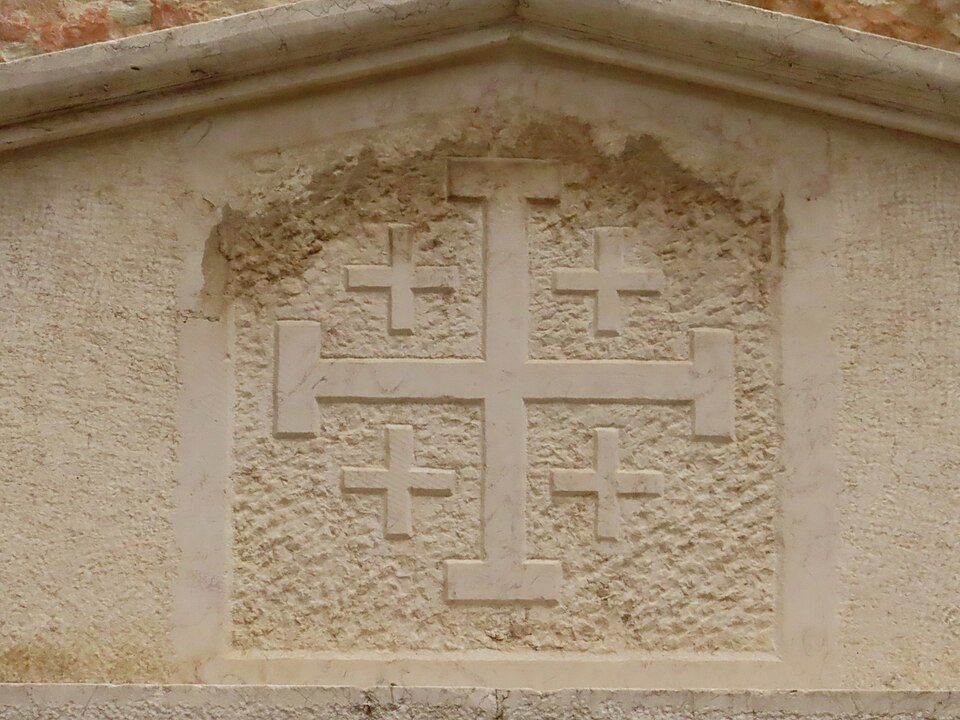
Look closely as you walk through Jerusalem, and you may notice a cross unlike any other: one large cross surrounded by four smaller ones. It appears on churches, pendants, carved wooden keepsakes, and even on the skin of pilgrims. Known as the Jerusalem Cross, this simple design carries centuries of history and, for many Christians, a deeply personal connection to the Holy Land. What Is the Jerusalem Cross?A Jerusalem Cross on St. Francis Street (Photo: Fallaner, CC BY-SA 4.0, via Wikimedia Commons) The Jerusalem Cross is a Christian symbol made up of one large central cross with four smaller crosses in the spaces around it. The central cross often has short bars at the ends of its arms, a design known in heraldry as a cross potent. The smaller crosses usually have four arms of equal length. You may also hear it called the Five-Fold Cross or the Crusader’s Cross. Its connection to Jerusalem runs through medieval history, Christian pilgrimage, and the churches that continue to care for holy places in the city today. What Does the Jerusalem Cross Mean?The five-cross design (Photo: Nafsadh, Public domain, via Wikimedia Commons) For many Christians, the Jerusalem Cross is a reminder of Jesus, His Passion, and the faith that spread from Jerusalem to the world. The following interpretations are traditions associated with the symbol. They help explain what it means to believers, although they do not establish a single, certain explanation for how the design first arose. The Five Wounds of Christ One of the best-known interpretations connects the five crosses with the wounds Jesus received during the Crucifixion: those associated with His hands, feet, and side. For pilgrims, the symbol can bring to mind both His suffering and the hope of the Resurrection. In the Gospel of John, the risen Jesus invites Thomas to look at His wounds: “Reach hither thy finger, and behold my hands” (John 20:27, KJV). The verse itself does not describe the Jerusalem Cross. Rather, the connection between the wounds and the five crosses developed through Christian tradition. In Jerusalem, that association can feel especially close when visiting the Church of the Holy Sepulchre, revered by many Christians as the place of the Crucifixion, burial, and Resurrection. Jesus and the Four Evangelists Another interpretation sees the large central cross as a symbol of Jesus and the four smaller crosses as Matthew, Mark, Luke, and John, the authors traditionally associated with the four Gospels. Each Gospel offers a distinctive account of Jesus’ life and ministry, while together they carry His story to readers around the world. The Gospel Reaching the Four Corners of the World A third interpretation links the central cross with Christ and Jerusalem, while the four smaller crosses represent the spread of the Gospel in all directions. It is an image of faith traveling outward from the Holy City to communities across the world. Christians may associate this interpretation with Jesus’ instruction to His disciples: “Go ye therefore, and teach all nations” (Matthew 28:19, KJV). The History of the Jerusalem Cross The Jerusalem Cross is closely associated with the medieval Kingdom of Jerusalem, established after the First Crusade captured the city in 1099. Its familiar form became part of the kingdom’s heraldic tradition, and the emblem continued to develop and spread in the centuries that followed. Its precise origins, however, are not known with certainty. Cross designs with smaller marks or crosses appeared in different places and periods, and historians do not all agree on how they relate to the Jerusalem Cross known today. The recognizable five-cross emblem is documented in association with claims to the Kingdom of Jerusalem by the late 13th century. It is therefore difficult to say that one person invented the design or that every crusader carried this exact symbol. For generations of pilgrims, the cross became a sign of devotion and a reminder of their journey to the Holy Land. Why Is It Also Called the Crusader’s Cross? The name reflects the cross’s association with the Kingdom of Jerusalem and the Crusader period. On historical coats of arms, a gold version of the central cross and four smaller crosses appeared against a silver or white background. Red versions are also familiar today. The term “Crusader cross” can be used for different cross designs, so a cross associated with the Crusades is not always the same as the Jerusalem Cross. Today, the five-cross symbol holds spiritual meaning for many Christians who connect it with Jerusalem, the Passion of Jesus, and pilgrimage. Is the Jerusalem Cross Catholic? The Jerusalem Cross has a strong association with Catholic communities, especially the Franciscans and the Order of the Holy Sepulchre. It is also worn and appreciated by Christians from other traditions as an expression of faith and a connection to the Holy Land. The Jerusalem Cross and the Custody of the Holy LandCustody of the Holy Land emblem, Christian Quarter (Photo: Deror avi, CC BY-SA 3.0, via Wikimedia Commons) The Custody of the Holy Land, the Franciscan community entrusted with caring for many Christian holy places, uses a red Jerusalem Cross as one of its symbols. In its broader emblem, the cross can appear alongside other Franciscan imagery. The Jerusalem Cross itself and the complete Franciscan emblem are therefore related, but they are not identical. Franciscan history is woven into many of the churches of Jerusalem’s Old City. As you explore, looking for the symbol can offer a new way to notice the communities and traditions connected to these places. Where Can You See the Jerusalem Cross in Jerusalem? In Jerusalem, the cross is not confined to museums or history books. Look for it on religious objects, church-related buildings, and items displayed in shops around the Old City. One documented example forms part of a Franciscan emblem at St. Saviour Monastery, near the New Gate in the Christian Quarter. The monastery is associated with the Custody of the Holy Land. Access to religious buildings and the visibility of individual details can change, so ask a local guide what can be seen during your visit. The cross also connects pilgrims with the Church of the Holy Sepulchre, where communities gather for prayer at a site central to the story of Jesus’ Passion and Resurrection. Walking the Stations of the Cross through the Old City offers another opportunity to reflect on that story. The Jerusalem Cross as a Pilgrimage Tattoo For some pilgrims, a Jerusalem Cross is more than something to take home. It becomes a permanent reminder of the journey itself. Christian pilgrimage tattoos have a long history in Jerusalem. Crosses and other religious designs have been used to commemorate a visit to the Holy Land, sometimes with the year of the journey included. Today, the Jerusalem Cross remains one of the designs chosen by visitors who want a lasting expression of faith or a reminder of their time in the Holy City. Some Jerusalem tattoo artists preserve designs on carved wooden blocks, connecting present-day visitors with an older craft. Where Can You Buy a Jerusalem Cross in the Holy Land?A Jerusalem Cross pendant, Auckland Museum (Photo: Auckland Museum, CC BY 4.0, via Wikimedia Commons) You can find Jerusalem Cross necklaces, pendants, wall crosses, and other keepsakes in religious gift shops in Jerusalem’s Old City and in Bethlehem. Some are carved from olive wood; others are made from silver, metal, or mother-of-pearl. Each material gives the familiar design a different appearance, from a simple wooden cross to a detailed piece of jewelry. If buying a locally made item matters to you, ask the seller where it was made, what material it contains, and whether it was carved or assembled by hand. It is a good opportunity to learn about the craft behind the keepsake as well as the symbol itself. Many pilgrims like to choose a Jerusalem Cross during their visit and carry it with them to the Church of the Holy Sepulchre and other sacred places in Jerusalem. For some, praying with the cross at these sites gives their keepsake a deeper spiritual meaning and creates a lasting connection to their journey. On a Bein Harim Jerusalem tour, you are welcome to ask your guide whether there will be an opportunity to purchase a cross during the day. Shopping time depends on the itinerary and the time available. Our Jerusalem Day Tour includes the Church of the Holy Sepulchre in its listed itinerary, although access and the order of visits can vary. Discover Jerusalem with Bein Harim A Jerusalem Cross can be a small reminder of an extraordinary journey. In Jerusalem, the meaning behind it comes into focus as you walk the Old City, visit places connected with the Gospels, and hear the stories of the communities that have welcomed pilgrims for generations. Explore the Old City and the Church of the Holy Sepulchre on our Jerusalem Day Tour, or follow more sites associated with Jesus’ ministry on our Christian Jerusalem Jesus Tour. Each itinerary is different, so check its details when choosing your visit. Planning your journey to the Holy Land? Contact us and we’ll help you find the Jerusalem tour that suits your interests.
Par Asaf Ben Ari

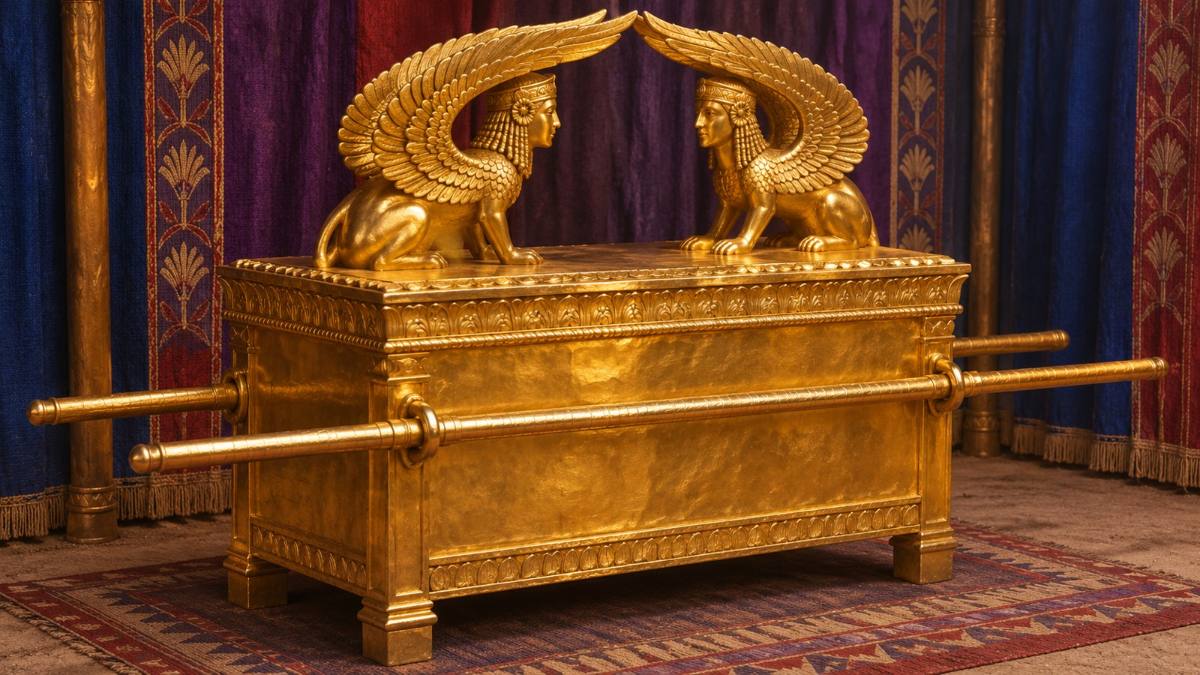
The Ark of the Covenant: What It Was and Where It Is Today

A gold-covered chest crosses a river ahead of a nation, falls into enemy hands, and enters Jerusalem amid music and dancing. Then, somewhere between the world of the biblical kings and the destruction of their Temple, its trail becomes uncertain. The Ark of the Covenant has inspired faith and speculation for centuries. Its story also follows a landscape you can still explore today. In the Bible, the Ark of the Covenant is a sacred chest associated with God’s covenant with Israel and the tablets of the Ten Commandments. Its present location is unknown: no object has been independently authenticated as the biblical Ark. Yet the places connected with its journey, from the Jordan Valley to the hills around Jerusalem, offer a way to understand the story beyond the mystery of its disappearance. What Was the Ark of the Covenant? The Ark of the Covenant in the Tabernacle (AI illustration) The Ark was the most sacred furnishing of the Tabernacle, the portable sanctuary described in Exodus. It belonged to the inner sanctuary, screened from the rest of the tent by a veil. Later, according to 1 Kings, Solomon placed it in the Holy of Holies of the Temple in Jerusalem. Its name points to the covenant, the relationship between God and Israel expressed through the commandments. The Ark held the stone tablets and was associated with divine presence and communication. Exodus describes God speaking to Moses from above its cover, between two golden cherubim. This explains why the biblical accounts treat carrying, approaching, and housing the Ark as matters of profound consequence. The stories also resist treating it as a guarantee of success. In 1 Samuel, bringing the Ark onto a battlefield does not prevent defeat. Its significance rests in the covenant and the holiness it represents, rather than in the idea of a portable weapon. It is also different from Noah’s ark. Noah’s ark is the vessel in the Flood narrative; the Ark of the Covenant is a chest carried on poles. The English word “ark” can obscure that distinction, but the objects have separate stories and purposes. Who Built the Ark of the Covenant? Exodus 25 gives Moses instructions for making the Ark. Exodus 31 identifies Bezalel, assisted by Oholiab and other skilled workers, as an artisan chosen for the sanctuary’s construction. Exodus 37 specifically credits Bezalel with making the Ark. So Moses and Bezalel have different roles in the account: Moses receives and communicates the instructions, while Bezalel makes the chest. The surrounding chapters describe craftsmanship in wood, metal, textiles, and precious materials. The Ark belongs within that larger account of a community building its sanctuary. What Did the Ark Look Like? The Ark of the Covenant by James Tissot (Photo: J. James Tissot, Public domain, via Wikimedia Commons) According to Exodus 25 and 37, the Ark was made from acacia wood, overlaid inside and outside with gold. Gold-covered wooden poles passed through rings at its sides so it could be carried. The poles were to remain in the rings. The stated dimensions are two and a half cubits long, one and a half cubits wide, and one and a half cubits high. Using an approximate cubit of 18 inches gives a chest about 45 inches long and 27 inches wide and high, or roughly 114 by 69 by 69 centimeters. Ancient cubits varied, so these are illustrative conversions, not exact measurements. Its gold cover is called the kapporet, often translated as the “mercy seat” in English Bibles. This was not a chair in the ordinary sense. Two golden cherubim faced one another above it, their wings spread over the cover. The term connects the Ark with atonement and divine presence. “And there I will meet with thee, and I will commune with thee from above the mercy seat.” (Exodus 25:22, KJV) Illustrations inevitably add choices about details the text does not fully specify, including the appearance of the cherubim. Any modern reconstruction should therefore be understood as an interpretation of the description. What Was Inside the Ark of the Covenant? The stone tablets are central to the biblical descriptions. Deuteronomy 10 connects their placement in the Ark with Moses’ return from the mountain. When the Ark enters Solomon’s Temple, 1 Kings makes a particularly specific statement: “There was nothing in the ark save the two tables of stone.” (1 Kings 8:9, KJV) Hebrews 9:4, in the New Testament, describes the Ark in connection with a golden jar of manna, Aaron’s staff that budded, and the tablets of the covenant. These objects recall different experiences of Israel in the wilderness: food provided during the journey, priestly authority, and the covenant itself. The earlier passages about preserving manna and Aaron’s staff describe them being kept before the Lord or before the testimony (Exodus 16:32–34; Numbers 17:10 in many English editions). The descriptions should not be flattened into one inventory that was necessarily unchanged throughout the Ark’s history. First Kings describes its contents at the Temple dedication; Hebrews presents the sanctuary and its sacred furnishings in a later theological discussion. One further distinction matters: Deuteronomy 31:26 says the book of the law is to be placed beside the Ark. It should not simply be added to the list of things inside it. The Ark’s Journey Through the Holy Land The Ark’s biblical journey connects wilderness worship, the entry into Canaan, the era of Samuel, and the reigns of David and Solomon. Following these episodes gives the story a geographical shape. It is a journey through the biblical narrative, rather than an archaeologically verified itinerary for a surviving object. Crossing the Jordan and the Fall of Jericho Joshua crossing the Jordan with the Ark (Photo: Benjamin West, Public domain, via Wikimedia Commons) Joshua 3 describes priests carrying the Ark into the Jordan ahead of the people. When their feet enter the water, the river stops flowing and the Israelites cross on dry ground. The Ark remains in the riverbed while the people pass, making it central to the account of entering the land. At Jericho, the Ark appears in another carefully ordered procession. In Joshua 6, priests with trumpets accompany it as the Israelites circle the city. On the final day, the people shout and the walls fall. The narrative presents the victory as an act of God rather than a conventional siege. A visit to the Jordan Valley helps readers picture the river, the plain, and the approach to Jericho. It does not establish the precise crossing point, nor does the archaeology of ancient Jericho independently confirm every detail of Joshua’s account. Shiloh, the Philistines, and the Return to Beth Shemesh Shiloh becomes an important sanctuary in the biblical account. It is where Samuel serves under Eli, and where 1 Samuel 3 places the Ark. In the next chapter, Israelite forces bring it from Shiloh to their camp after suffering a defeat. They hope its presence will save them. Instead, the Philistines win the battle and capture it. In Ashdod, the captured Ark is placed in the temple of Dagon. The story describes Dagon’s image falling before it and afflictions striking the population. The Ark is moved to Gath and then Ekron, where its arrival causes alarm. These episodes turn an apparent military trophy into something its captors desperately want to return. After seven months in Philistine territory, according to 1 Samuel 6, the Ark is sent away on a cart drawn by two cows, accompanied by offerings. The animals take the road to Beth Shemesh, where people harvesting wheat see it approaching. The return is not an uncomplicated happy ending. The chapter also describes judgment at Beth Shemesh, after which its inhabitants ask the people of Kiriath Jearim to take the Ark. The narrative repeatedly emphasizes that proximity to the sacred calls for reverence, whether among Israelites or Philistines. Kiriath Jearim, King David, and Jerusalem David brings the Ark to Jerusalem (Photo: Domenico Gargiulo, Public domain, via Wikimedia Commons) At Kiriath Jearim, the Ark is taken into the house of Abinadab, and his son Eleazar is consecrated to guard it (1 Samuel 7:1). The location is generally associated with the hill above Abu Ghosh, west of Jerusalem. Excavations there contribute to discussion of the site’s history, although they have not produced the Ark itself. Second Samuel 6 describes David’s attempt to bring it to Jerusalem. During the journey, Uzzah reaches toward it when the oxen stumble and is struck dead. David, frightened by what has happened, leaves the Ark at the house of Obed-edom for three months. Later, David brings it into the city with celebration, dancing before the Lord. It is placed in a tent he has prepared. The story also includes Michal’s criticism of David’s behavior, making the procession a revealing episode about kingship, public devotion, and family tensions. Solomon later transfers the Ark into the Temple’s inner sanctuary, beneath the wings of the great cherubim (1 Kings 8). These Temple cherubim belong to the surrounding sanctuary; they should not be confused with the smaller figures described on the Ark’s cover. For travelers interested in this transition from David’s city to Solomon’s Temple, our Jerusalem tours offer different ways to explore the city’s history and sacred landscape. Compare the itineraries to choose the places and depth of explanation that suit your interests. What Happened to the Ark of the Covenant? The short answer is that its final fate is unknown. The Bible describes the Ark in the Temple, but does not give an unambiguous account of its destruction, removal, or permanent hiding place. Second Chronicles 35:3 refers to the holy Ark during the reign of Josiah. The biblical accounts of the Babylonian destruction of Jerusalem and the First Temple, conventionally dated to 586 BCE, list Temple furnishings taken or destroyed without clearly explaining what happened to the Ark. That gap has generated centuries of interpretation. Several possibilities are proposed: it may have been destroyed, taken away, or concealed before the Temple fell. None has been established conclusively. It is tempting to choose the most dramatic theory, but the surviving evidence does not permit a confident answer. Jewish traditions include accounts of the Ark being hidden. Second Maccabees 2 describes Jeremiah concealing the tent, Ark, and incense altar in a cave on the mountain associated with Moses’ view of the land. Second Maccabees belongs to the biblical canon of some Christian traditions, but not to the Jewish Tanakh or most Protestant Bibles. Naming the source helps readers understand the status of this account. The Ark is also distinct from the later Torah ark found in synagogues, the cabinet that houses Torah scrolls. Nor does visiting the Western Wall mean seeing a surviving wall of the First Temple’s inner sanctuary. The visible wall belongs to the retaining structure of the later Temple Mount complex. Is the Ark of the Covenant in Ethiopia? Ethiopian Orthodox tradition holds that the Ark is preserved in Aksum, in a chapel associated with the Church of Our Lady Mary of Zion. The wider tradition connects its arrival with Menelik, the son of Solomon and the Queen of Sheba in the Ethiopian royal narrative. This belief has deep significance in Ethiopian Christianity. It should be described respectfully as a living religious tradition. The object is not available for independent scholarly examination, however, so the claim has not been established through publicly verifiable archaeological evidence. Respecting the tradition does not require presenting it as a confirmed answer to the historical question. A careful account can explain both its religious importance and the limits of what has been verified. Has the Ark of the Covenant Been Found? No discovery has been independently authenticated as the biblical Ark of the Covenant. Headlines sometimes describe a temple, stone, platform, or chamber as a possible clue to its whereabouts. Such finds can be worth studying without constituting the discovery of the Ark. At sites such as Shiloh, Beth Shemesh, and Kiriath Jearim, archaeologists investigate settlement history, architecture, and religious activity. Connecting an ancient structure with a named biblical event requires additional interpretation. Excavators may also disagree about the date or function of a building. For a visitor, this does not make the sites less interesting. They allow us to ask how ancient communities lived and worshipped, and how their landscapes relate to the texts. The strongest archaeological visit leaves room for questions rather than turning every suggestive discovery into proof. Discover the Holy Land Places Connected with the Ark of the Covenant You cannot visit an authenticated original Ark, but you can explore places connected with its biblical journey. Each contributes something different: a landscape, an archaeological site, or a later place of commemoration. Jericho and the Jordan Valley provide the setting for the opening episodes in Joshua. Ancient Shiloh, in the West Bank, connects the story with the sanctuary of Eli and Samuel. Tel Beth Shemesh brings the return from Philistine territory into geographical focus. At each site, separate what the text describes from what the visible remains can demonstrate. Kiriath Jearim, near Abu Ghosh, recalls the Ark’s stay at Abinadab’s house. The hill’s Church of Our Lady of the Ark of the Covenant is a later Christian commemoration, not a building from the Ark’s biblical period. Jerusalem connects David’s procession with the Temple tradition and offers the clearest place to bring the wider story together. If you would like to follow several of these locations, explore our private tours in Israel and discuss a route with us. These stops are spread across different areas and should not be assumed to fit into one day. Visits to Shiloh and other locations require confirmation of current access and arrangements; they are not automatically included in a standard Jerusalem itinerary. Tell us which parts of the story interest you most, whether biblical history, archaeology, or religious tradition. Ask about walking surfaces, steps, and the pace of the proposed day if mobility is a consideration. A well-planned visit gives you time to understand the places, rather than simply collect their names.
Par Asaf Ben Ari
  • Affichage de 29 - 38 résultats sur 38
  • 1
  • 2
  • 3