Historical Sites in Israel


Jerusalem Southern Wall Excavation

Since the 1960s excavations in the area of the south-west side of Temple Mount in Jerusalem have uncovered remarkable remains from the Second Temple (516 BC-70 AD) which stood on Temple Mount. Part of these excavations included what would have been the southern retaining wall of Temple Mount. The Southern Wall Excavation Site is accessed from the Dung Gate in Jerusalem’s Old City. Just past the gate is an archaeological park which includes the Southern Wall, the Southern Wall Museum and a Visitors Center.The Second Temple was originally built in 516 BC but was drastically altered and expanded under Herod the Great from 37 BC to 4 BC. It was during this reconstruction that the southern side of Temple Mount was fortified. The southern retaining wall of Temple Mount would have risen 32 meters above street level and run for a length of 281 m. The Temple and almost all of the Temple Mount structures were destroyed by the Romans during the Jewish Revolt of 66 AD-70 AD.Herodian StreetRunning the length of the wall would have been a paved street lined with stores. Along the wall remains were uncovered of an 8 meter wide street now known as the Herodian Street. When the Herodian Street was discovered it was cleared of a mountain of rubble that had accumulated over the almost 2,000 years since the temple’s destruction. On one side of the ancient Herodian Street the massive Temple Mount Southern Wall rises 32 meters and on the other side of the street a wall was uncovered with openings where there would have been stores. Here pilgrims could buy offerings to sacrifice in the temple and also visit the money changes. It may have been here in these stores that Jesus “cleared the temple courts of people selling cattle, sheep, doves and people sitting at tables exchanging money” (John 2:1322). As the Roman’s set about destroying the temple in 70 AD they would have toppled down massive stones onto this street. Above the stores we can see the remains of the base of a staircase.Robinson ArchHalfway up the side of the Southern Wall are the remains of the Robinson Arch (named after the researcher who discovered the arch in 1838). The arch was part of a large bridge structure which allowed access from the lower city to the Temple Mount. The arch was part of a 13 m wide and 19 m high walkway giving pilgrims access from the Herodian Street up a wide flight of stairs to the south-western Temple Mount entrance. This would have been one of three such bridge walkways into the temple. Only the small section of the arch attached to the Southern Wall and the base of the staircase have survived.Trumpeting PlaceOn the southwest corner of the Southern Wall a large slab of stone was found inscribed with the Hebrew words meaning: to the trumpeting place to proclaim. This could refer to the place where a priest would stand on the walls and blow a trumpet to announce the approaching Shabbat. The stone may have been thrown down from the temple walls during the destruction.Ritual BathsWhile excavating the Southern Wall many ritual baths (mikvah) were found. The baths are located close to the walls and were built according to Jewish laws. The baths would have been used by thousands of pilgrims to purify themselves before they entered the temple.Later Structures at the Southern WallThe Al-Aqsa Mosque was built in 705 AD and stands along the inside of the Southern Wall; you can see the mosque’s distinctive silver dome above the wall. Along the Southern Wall it is possible to see the remains of several structures from the later Arab Period including a number of Umayyad Palaces.
Por Petal Mashraki

Historical Events in Israel - Modern Times

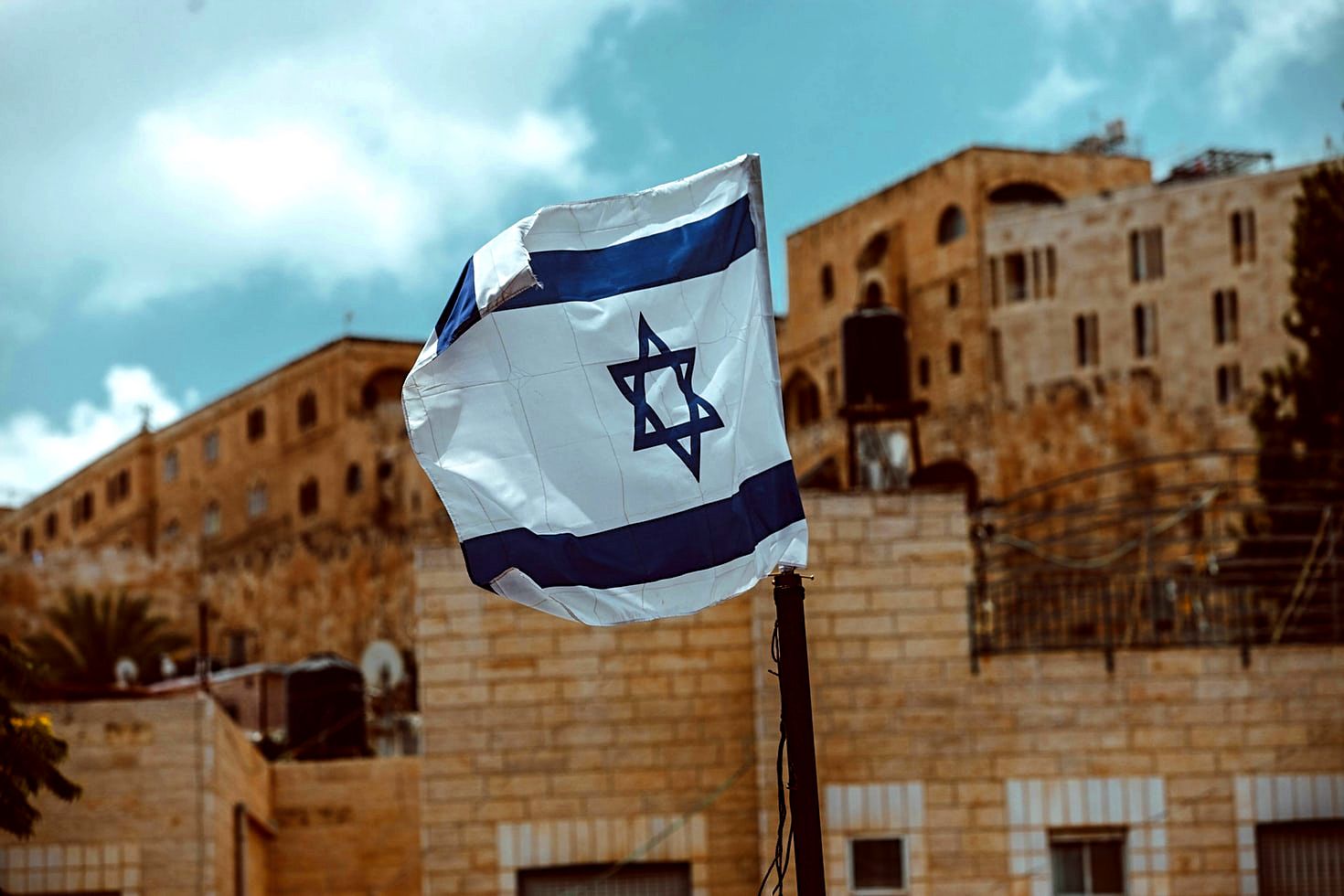
We’re back today, continuing our series of major historical events in Israel. In part one, we looked at major turning points in biblical times - from Abraham’s arrival in the Promised Land, King David and Solomon’s reigns, the capture of Jerusalem by the Romans and the life and times of Jesus. In part two, we explored other important historical events in Israel, ranging from Byzantine and Arab rule, the Crusades, the Ottoman Empire and the British Mandate.Israeli flag on a pole, Jerusalem, Israel. Photo byTaylor BrandononUnsplashWe left things at the moment the State of Israel was proclaimed in Tel Aviv by Prime Minister David Ben Gurion, in the Hall of Independenceon 14th May 1948. A few hours later, the state officially came into being, when the British ended their rule. The stage would soon be set for the bloody War of Independence, between Israel and its Arab neighbours, and this - unfortunately - would be the first of many.When it comes to historical events in Israel in the modern era, it’s a tall order to know where to begin. After all, let’s face it, this is the Middle East, and when it comes to politics you could discuss this region for years and still be confused. For sure, Israel has been embroiled in a number of conflicts with its neighbours since the establishment of the state, and whilst it would be convenient to gloss over them, the reality is that these conflicts have shaped and formed the country - and continue to do so, even today. Here are ten of the most important events that we think deserve a mention, in the last 73 years…Independence Hall, Tel Aviv.Photo credit: © Shutterstock1. 1947–1949 Palestine War (aka in Israel as the War of Independence)After the United Nations voted in favour of the partition of Palestine into two states - one Jewish and the other Arab - conflict between the two peoples intensified. The day after Israel declared independence, Arab forces from Transjordan, Egypt, Iraq, Lebanon and Syria attacked. The ensuing war was fought on different fronts - in the north, south and east - and was extremely bloody for both sides.The war took its toll, no more so than in Jerusalem, where a huge battle raged for control of the road (‘corridor’) leading into the city. Other enormous battles took place at Latrun, and in the Sinai. At the outset, Arab forces had the upper hand; by ‘phase two’ the Israelis had recaptured ground and at the end of the war, the Arab armies had been driven out and Israel secured its borders.In the midst of this, hundreds of thousands of Palestinians fled, or were told to leave by their leaders (depending on whom you choose to believe). It was a terrible war for Israel - 6,373 were killed in action, which amounted to almost 1% of the population. Huge numbers of Palestinians and Arab forces also lost their lives. But the fact is that the State of Israel had survived its birth.The Wailing Wall at night, Jerusalem. Photo bySander CrombachonUnsplash2. The Eichmann Trial - 1961-1962Adolf Eichmann was one of the chief architects of the Holocaust but, for many years, evaded justice, disappearing from Europe after the Second World War. In 1959, news reached Israel that he was still alive and living in Argentina, as ‘Richard Klement.’ Mossad (Israel’s security service) enacted a daring plan, kidnapped Eichmann and brought him to Jerusalem, where he was put on trial for his crimes.The Eichmann trial left the public spellbound as, day after day, survivors stood up in court and told their stories (many for the first time). It marked a turning point in society - up until then, the Holocaust had not been greatly discussed - and the trial bought the horrors to public consciousness. Eichmann was found guilty of crimes against humanity and the Jewish nation and war crimes and hanged in the spring of 1962. His ashes were scattered at sea.Yad Vashem Holocaust Museum.Photo credit: © Shutterstock3. The Six-Day War - 1967This war between Israel and the Arabs took place between 5th and 10th June 1967. After Israel understood that Arab armies were mobilising against her, she carried out a devastating pre-emptive strike on Egypt’s air force (at that time, on the tarmac), and within three days had won the ground war. After Jordan entered the war and began shelling Jerusalem, Israel responded with a devastating counter-attack, Israel recaptured the capital and its paratroopers entered the gates of the Old City and continued onto the Western Wall - the photographs captured are utterly iconic. Simultaneously, in the north, Israel captured the Golan Heights from the Syrians.The outcome was a tremendous victory for Israel and a terrible loss for the Arab nations. Public reaction in Israel was nothing short of euphoric - however, it also marked a new aspect to the ongoing conflict, since more than one million Palestinians in Jordan had been captured and were now under Israeli rule. In the meantime, Yitzhak Rabin was lauded as a hero for his efforts as Defence Minister and Gamal Nassar, Egypt’s President, handed in his resignation. The power balance had indeed shifted.Syrian Fortification, Mt. Bental. Photo credit: © Oksana Mats4. The Yom Kippur War - 1973After their loss of territory (and public face) to Israel in 1967, the Arab armies set about planning a ‘rematch.’ On Yom Kippur - Israel’s most holy day - when millions of citizens were praying in synagogues, they launched a surprise attack on two fronts - the Egyptians in the Sinai peninsula and the Syrians up in the Golan Heights.Israel was caught entirely off guard (it later transpired that they had shrugged off intelligence warnings). For his part, Sadat, the Egyptian Prime Minister, took the view that if Israel was defeated, they would be forced to negotiate for peace (after 1967, they had won a great deal of territory and, thus, held a strong hand). Initially, the Arab armies made impressive gains - after all, it would take Israel several days to become fully mobilised. The fighting lasted from 6th to 25th October, when a ceasefire brokered by the UN came into being. But the cost for the Jewish nation was high - heavy casualties and fury at the government for being caught off-guard. Eventually, Golda Meir, the Prime Minister, was forced to tender her resignation.Remnants of the Valley of Tears Battle, Golan Heights.Photo credit: © Dmitry Mishin5. War in Lebanon - 1982Tensions on Israel’s border ran high all through 1981, with katyusha rockets being fired into small communities in northern Israel by south Lebanon PLO (Palestinian Liberation Organisation) guerillas. In June 1982, Israel’s Prime Minister Ariel Sharon launched ‘Operation Peace for Galilee’ in an attempt to force the Lebanese government to take action against the PLO. Israeli forces went overland, all the way to Beirut, even though Israel’s Prime Minister, Menachem Begin, had ordered the army not to move more than 25 km into Lebanese territory. The Israeli army then besieged Arafat (the PLO leader) and his guerillas, as well as destroyed over 100 Syrian anti-aircraft missiles. The fighting lasted about three months.In the chaos that followed, Israel miscalculated and turned a blind eye when Christian ‘Phalangist’ militia forces entered two Palestinian refugee camps. Hundreds of men, women and children were murdered at Sabra and Shatila and in Israel tens of thousands of people took to the streets, outraged by the massacre. Later, an Israeli enquiry would find Arik Sharon guilty of negligence and he was forced to resign. After the horrors of the Lebanon war, when a new government replaced Begin, they began enacting a ‘phased withdrawal’, though keeping control of a 19 km security buffer zone.Rosh Hanikra sea grottoes on the border with Lebanon, Israel.Photo credit: ©Dmitry Mishin6. The Gulf War - 1991After Saddam Hussein invaded Kuwait, in the summer of 1990, coalition forces (led by the USA) began an aerial and naval bombardment of Iraq in January 1991. Iraq had made no secret of the fact that it would attack if invaded and promptly responded by firing Scud missiles at Israel. Millions of citizens had to hide in bomb shelters and sealed rooms and donned gas masks, terrified of a chemical attack using nerve agents such as sarin. All in all, 74 Israelis were killed - two directly and the rest dying of heart attacks and suffocation. There was a great deal of damage to property and although Israel never entered the war directly, it came close (at one point, Israeli commandos were about to board helicopters but were persuaded by Dick Cheney, the US Foreign Minister, to lay low).7. The First and Second Intifadas - 1987-1993 and 2000-2005In Arabic, ‘intifada’ means ‘uprising’ or ‘shaking off’ and the two intifadas that took place in Israel between 1987-1993 and 2000-2005 can best be described as organised, grassroots protests by Palestinians in the West Bank and Gaza against Israel. Broadly speaking, their aim was to end Israel’s occupation of these territories and to create an independent Palestinian state.The First Intifada began at the end of 1987, in the form of throwing rocks and Molotov cocktails by young Palestinians at Israeli troops…military reprisals by Israel were sometimes severe and this led to an escalation of violence, in the form of rifles, explosives and hand grenades. Over 2.000 people died in the First Intifada, at a ratio of 3 Palestinians to every Israeli.Gaza Strip on the map. Photo byCHUTTERSNAPonUnsplashThe First Intifada came to an end after Labour were elected and, under Rabin, the Oslo Accords were signed - the Palestinian Authority was created with the objective of a two-state solution coming into being in the following five years. For a number of reasons (especially the one below), this never came to pass.The Second Intifada was sparked off after the failure of the Camp David Accords (between Bill Clinton, Ehud Barak and Yasser Arafat) combined with an ill-timed visit by Ariel Sharon’s to the Temple Mount in Jerusalem. The Second Intifada was drawn out and particularly bloody - many civilians died as well as the military forces. Palestinians took to suicide bombings, which proved to be an effective means of bringing terror into public spaces. The Israeli army responded with tank and air attacks, targeted killings and gunfire. In the five years that it lasted, there were endless bombings of popular spots such as a disco in Tel Aviv, a hotel in Haifa over Passover and a pizzeria in Jerusalem. Crowded buses were also targeted and this ‘cult of martyrdom’ shook the Israeli public substantially.The death toll, all in all, came to around 1,000 Israelis and 3,000 Palestinians, as well as 64 foreigners. Amnesty International condemned the killings on both sides. Dome of the Rock, the Muslim shrine on the Temple Mount in the Old City of Jerusalem, Israel.Photo credit: © Shutterstock8. The Assassination of Yitzhak Rabin - 1995Yitzhak Rabin, a decorated military leader and Israel’s Prime Minister, was re-elected in 1992, running on a platform of making peace with the Palestinians. Under his rule, the Oslo Accords were signed, which split the Israeli public into two camps - those who supported peace efforts and those who believed it could only lead to more terror. Many protests were held against Rabin, particularly in Jerusalem and outside his private home in the Tel Aviv suburbs, and the general political climate became tense and even hostile. This culminated in the events of 4th November 1995, when Rabin was assassinated at the end of a huge Peace Rally, supporting the Oslo Accords, in central Tel Aviv.The gunman, Yigal Amir, a far-right religious student shot Rabin three times as he walked down the stairs of the square at which he had been the key speaker. He was rushed to nearby Ichilov Hospital but died soon after arrival. The Israeli public was left in a state of shock and disbelief and Rabin’s funeral was attended by dignitaries from across the world. Famously, Bill Clinton stood up and gave his eulogy, ending it with the now immortalised Hebrew words ‘ Shalom, haver’ (“‘Goodbye, friend’). Amir was put on trial and found guilty. He remains in prison until this day but has still not expressed remorse for his actions. A library and research centre devoted to Rabin was built in Tel Aviv and is open to the public.Rabin Square, Tel Aviv, Israel. Photo byYoav AzizonUnsplash9. The Gaza Disengagement - 2005It was Prime Minister Arik Sharon who put forward (and carried through) the plan of unilateral disengagement from the Gaza Strip, in 2005. Close to 9,000 Israeli settlers were living in 21 settlements throughout the strip, and in the absence of a peace plan, Sharon decided it was necessary to evacuate the area to improve Israel’s security and status on the international playing field. After the plan was approved by his Likud party, Sharon pushed through the plan, leading to criticism from individuals in his own camp and support from more left-wing elements of Israeli society. Operation Yad L’Achim (‘Giving Brothers a Hand’) gave settlers the opportunity to leave voluntarily, with soldiers offering to help them pack. Most, however, refused.On August 15th, compulsory evacuation began. Some settlers left peacefully but others had to be removed forcibly. Many barricaded themselves into their homes (some threatened to set themselves alight) and had to be dragged, kicking and screaming, out their front doors. After seven days, the evacuation was complete and this brought to an end 38 years of a Jewish presence in Gaza. The territory was handed over to the Palestinian Authority but two years later the secular ruling party, Fatah, was defeated by Hamas (a militant Islamic organisation).An old pier in Gaza.Photo byEmad El ByedonUnsplash10. War with Hamas - 2014 and 2021After Hamas was elected, on a platform that supported the destruction of Israel, Israel responded by declaring it a ‘hostile entity’. Sanctions followed and in the following years, there were a series of rockets fired by militants to which Israel responded with airstrikes, as well as the capture of Israeli soldier Gilad Shalit, after a border ambush.In the summer of 2014, Israel launched a military operation named ‘Protective Edge’, following the kidnap and murder of three Israeli teenagers. It was a particularly awful conflict, lasting seven weeks with many deaths, both of Palestinian militants and civilians and Israeli soldiers. After a large-scale ground invasion, to destroy a network of underground tunnels built by Hamas, an open-ended ceasefire was announced.In May 2021, after several more years of tensions, another crisis was triggered in Jerusalem, with violence breaking out at Temple Mount. Shortly afterwards, Hamas issued an ultimatum to Israel and when it was refused, launched a barrage of rockets into Israel at 9 pm. An eleven-day conflict continued, which culminated in airstrikes, as part of Operation ‘Guardian of the Walls’. Over 3,500 rockets were fired into Israel in the next eleven days, although 90% of them were intercepted and destroyed by the Iron Dome (an air defence system). By the end of this latest round of conflict, 260 Palestinians (many of them militants), 12 Israeli civilians and one Israeli soldier were dead. Since then, Egypt has attempted to broker a long-term deal between Israel and Hamas but this has not been successful and most believe it is just a matter of time before the next war breaks out.If you are interested in the modern history of Israel, feel free to read our article on historical figures in Israel as well as to join our Golan Heights tours and Tel Aviv tours.Tel Aviv after a rocket attack, 2021.Photo credit: ©Dmitry Mishin
Por Sarah Mann

The Ark of the Covenant: What It Was and Where It Is Today

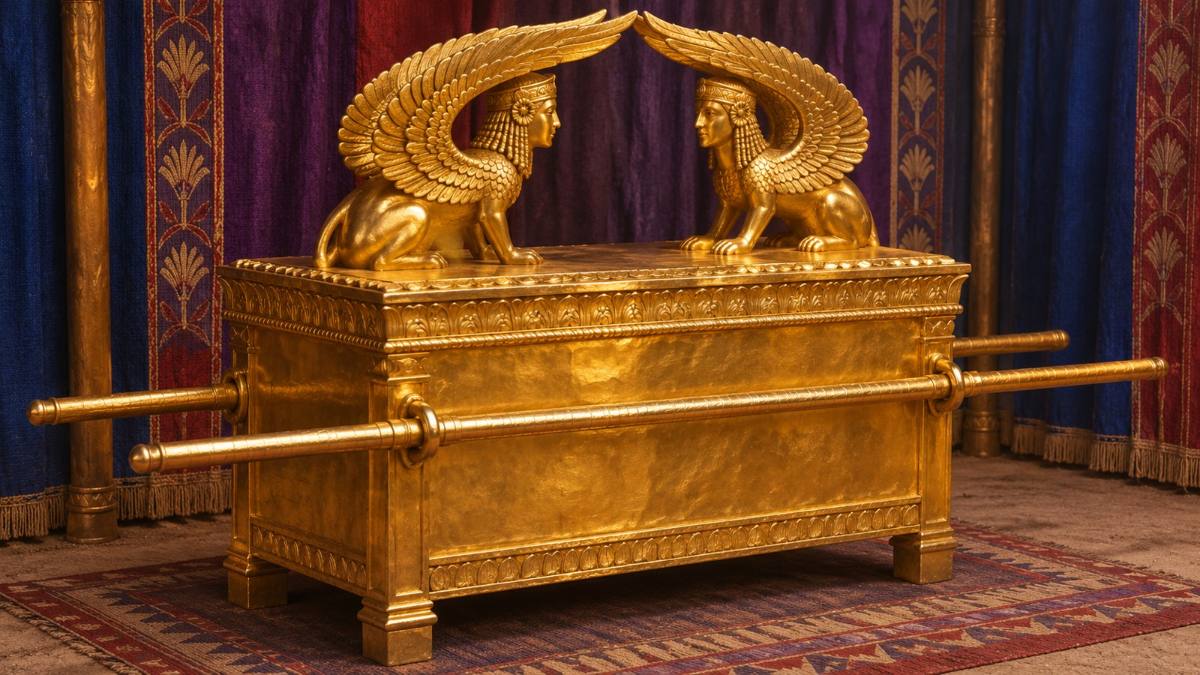
A gold-covered chest crosses a river ahead of a nation, falls into enemy hands, and enters Jerusalem amid music and dancing. Then, somewhere between the world of the biblical kings and the destruction of their Temple, its trail becomes uncertain. The Ark of the Covenant has inspired faith and speculation for centuries. Its story also follows a landscape you can still explore today. In the Bible, the Ark of the Covenant is a sacred chest associated with God’s covenant with Israel and the tablets of the Ten Commandments. Its present location is unknown: no object has been independently authenticated as the biblical Ark. Yet the places connected with its journey, from the Jordan Valley to the hills around Jerusalem, offer a way to understand the story beyond the mystery of its disappearance. What Was the Ark of the Covenant? The Ark of the Covenant in the Tabernacle (AI illustration) The Ark was the most sacred furnishing of the Tabernacle, the portable sanctuary described in Exodus. It belonged to the inner sanctuary, screened from the rest of the tent by a veil. Later, according to 1 Kings, Solomon placed it in the Holy of Holies of the Temple in Jerusalem. Its name points to the covenant, the relationship between God and Israel expressed through the commandments. The Ark held the stone tablets and was associated with divine presence and communication. Exodus describes God speaking to Moses from above its cover, between two golden cherubim. This explains why the biblical accounts treat carrying, approaching, and housing the Ark as matters of profound consequence. The stories also resist treating it as a guarantee of success. In 1 Samuel, bringing the Ark onto a battlefield does not prevent defeat. Its significance rests in the covenant and the holiness it represents, rather than in the idea of a portable weapon. It is also different from Noah’s ark. Noah’s ark is the vessel in the Flood narrative; the Ark of the Covenant is a chest carried on poles. The English word “ark” can obscure that distinction, but the objects have separate stories and purposes. Who Built the Ark of the Covenant? Exodus 25 gives Moses instructions for making the Ark. Exodus 31 identifies Bezalel, assisted by Oholiab and other skilled workers, as an artisan chosen for the sanctuary’s construction. Exodus 37 specifically credits Bezalel with making the Ark. So Moses and Bezalel have different roles in the account: Moses receives and communicates the instructions, while Bezalel makes the chest. The surrounding chapters describe craftsmanship in wood, metal, textiles, and precious materials. The Ark belongs within that larger account of a community building its sanctuary. What Did the Ark Look Like? The Ark of the Covenant by James Tissot (Photo: J. James Tissot, Public domain, via Wikimedia Commons) According to Exodus 25 and 37, the Ark was made from acacia wood, overlaid inside and outside with gold. Gold-covered wooden poles passed through rings at its sides so it could be carried. The poles were to remain in the rings. The stated dimensions are two and a half cubits long, one and a half cubits wide, and one and a half cubits high. Using an approximate cubit of 18 inches gives a chest about 45 inches long and 27 inches wide and high, or roughly 114 by 69 by 69 centimeters. Ancient cubits varied, so these are illustrative conversions, not exact measurements. Its gold cover is called the kapporet, often translated as the “mercy seat” in English Bibles. This was not a chair in the ordinary sense. Two golden cherubim faced one another above it, their wings spread over the cover. The term connects the Ark with atonement and divine presence. “And there I will meet with thee, and I will commune with thee from above the mercy seat.” (Exodus 25:22, KJV) Illustrations inevitably add choices about details the text does not fully specify, including the appearance of the cherubim. Any modern reconstruction should therefore be understood as an interpretation of the description. What Was Inside the Ark of the Covenant? The stone tablets are central to the biblical descriptions. Deuteronomy 10 connects their placement in the Ark with Moses’ return from the mountain. When the Ark enters Solomon’s Temple, 1 Kings makes a particularly specific statement: “There was nothing in the ark save the two tables of stone.” (1 Kings 8:9, KJV) Hebrews 9:4, in the New Testament, describes the Ark in connection with a golden jar of manna, Aaron’s staff that budded, and the tablets of the covenant. These objects recall different experiences of Israel in the wilderness: food provided during the journey, priestly authority, and the covenant itself. The earlier passages about preserving manna and Aaron’s staff describe them being kept before the Lord or before the testimony (Exodus 16:32–34; Numbers 17:10 in many English editions). The descriptions should not be flattened into one inventory that was necessarily unchanged throughout the Ark’s history. First Kings describes its contents at the Temple dedication; Hebrews presents the sanctuary and its sacred furnishings in a later theological discussion. One further distinction matters: Deuteronomy 31:26 says the book of the law is to be placed beside the Ark. It should not simply be added to the list of things inside it. The Ark’s Journey Through the Holy Land The Ark’s biblical journey connects wilderness worship, the entry into Canaan, the era of Samuel, and the reigns of David and Solomon. Following these episodes gives the story a geographical shape. It is a journey through the biblical narrative, rather than an archaeologically verified itinerary for a surviving object. Crossing the Jordan and the Fall of Jericho Joshua crossing the Jordan with the Ark (Photo: Benjamin West, Public domain, via Wikimedia Commons) Joshua 3 describes priests carrying the Ark into the Jordan ahead of the people. When their feet enter the water, the river stops flowing and the Israelites cross on dry ground. The Ark remains in the riverbed while the people pass, making it central to the account of entering the land. At Jericho, the Ark appears in another carefully ordered procession. In Joshua 6, priests with trumpets accompany it as the Israelites circle the city. On the final day, the people shout and the walls fall. The narrative presents the victory as an act of God rather than a conventional siege. A visit to the Jordan Valley helps readers picture the river, the plain, and the approach to Jericho. It does not establish the precise crossing point, nor does the archaeology of ancient Jericho independently confirm every detail of Joshua’s account. Shiloh, the Philistines, and the Return to Beth Shemesh Shiloh becomes an important sanctuary in the biblical account. It is where Samuel serves under Eli, and where 1 Samuel 3 places the Ark. In the next chapter, Israelite forces bring it from Shiloh to their camp after suffering a defeat. They hope its presence will save them. Instead, the Philistines win the battle and capture it. In Ashdod, the captured Ark is placed in the temple of Dagon. The story describes Dagon’s image falling before it and afflictions striking the population. The Ark is moved to Gath and then Ekron, where its arrival causes alarm. These episodes turn an apparent military trophy into something its captors desperately want to return. After seven months in Philistine territory, according to 1 Samuel 6, the Ark is sent away on a cart drawn by two cows, accompanied by offerings. The animals take the road to Beth Shemesh, where people harvesting wheat see it approaching. The return is not an uncomplicated happy ending. The chapter also describes judgment at Beth Shemesh, after which its inhabitants ask the people of Kiriath Jearim to take the Ark. The narrative repeatedly emphasizes that proximity to the sacred calls for reverence, whether among Israelites or Philistines. Kiriath Jearim, King David, and Jerusalem David brings the Ark to Jerusalem (Photo: Domenico Gargiulo, Public domain, via Wikimedia Commons) At Kiriath Jearim, the Ark is taken into the house of Abinadab, and his son Eleazar is consecrated to guard it (1 Samuel 7:1). The location is generally associated with the hill above Abu Ghosh, west of Jerusalem. Excavations there contribute to discussion of the site’s history, although they have not produced the Ark itself. Second Samuel 6 describes David’s attempt to bring it to Jerusalem. During the journey, Uzzah reaches toward it when the oxen stumble and is struck dead. David, frightened by what has happened, leaves the Ark at the house of Obed-edom for three months. Later, David brings it into the city with celebration, dancing before the Lord. It is placed in a tent he has prepared. The story also includes Michal’s criticism of David’s behavior, making the procession a revealing episode about kingship, public devotion, and family tensions. Solomon later transfers the Ark into the Temple’s inner sanctuary, beneath the wings of the great cherubim (1 Kings 8). These Temple cherubim belong to the surrounding sanctuary; they should not be confused with the smaller figures described on the Ark’s cover. For travelers interested in this transition from David’s city to Solomon’s Temple, our Jerusalem tours offer different ways to explore the city’s history and sacred landscape. Compare the itineraries to choose the places and depth of explanation that suit your interests. What Happened to the Ark of the Covenant? The short answer is that its final fate is unknown. The Bible describes the Ark in the Temple, but does not give an unambiguous account of its destruction, removal, or permanent hiding place. Second Chronicles 35:3 refers to the holy Ark during the reign of Josiah. The biblical accounts of the Babylonian destruction of Jerusalem and the First Temple, conventionally dated to 586 BCE, list Temple furnishings taken or destroyed without clearly explaining what happened to the Ark. That gap has generated centuries of interpretation. Several possibilities are proposed: it may have been destroyed, taken away, or concealed before the Temple fell. None has been established conclusively. It is tempting to choose the most dramatic theory, but the surviving evidence does not permit a confident answer. Jewish traditions include accounts of the Ark being hidden. Second Maccabees 2 describes Jeremiah concealing the tent, Ark, and incense altar in a cave on the mountain associated with Moses’ view of the land. Second Maccabees belongs to the biblical canon of some Christian traditions, but not to the Jewish Tanakh or most Protestant Bibles. Naming the source helps readers understand the status of this account. The Ark is also distinct from the later Torah ark found in synagogues, the cabinet that houses Torah scrolls. Nor does visiting the Western Wall mean seeing a surviving wall of the First Temple’s inner sanctuary. The visible wall belongs to the retaining structure of the later Temple Mount complex. Is the Ark of the Covenant in Ethiopia? Ethiopian Orthodox tradition holds that the Ark is preserved in Aksum, in a chapel associated with the Church of Our Lady Mary of Zion. The wider tradition connects its arrival with Menelik, the son of Solomon and the Queen of Sheba in the Ethiopian royal narrative. This belief has deep significance in Ethiopian Christianity. It should be described respectfully as a living religious tradition. The object is not available for independent scholarly examination, however, so the claim has not been established through publicly verifiable archaeological evidence. Respecting the tradition does not require presenting it as a confirmed answer to the historical question. A careful account can explain both its religious importance and the limits of what has been verified. Has the Ark of the Covenant Been Found? No discovery has been independently authenticated as the biblical Ark of the Covenant. Headlines sometimes describe a temple, stone, platform, or chamber as a possible clue to its whereabouts. Such finds can be worth studying without constituting the discovery of the Ark. At sites such as Shiloh, Beth Shemesh, and Kiriath Jearim, archaeologists investigate settlement history, architecture, and religious activity. Connecting an ancient structure with a named biblical event requires additional interpretation. Excavators may also disagree about the date or function of a building. For a visitor, this does not make the sites less interesting. They allow us to ask how ancient communities lived and worshipped, and how their landscapes relate to the texts. The strongest archaeological visit leaves room for questions rather than turning every suggestive discovery into proof. Discover the Holy Land Places Connected with the Ark of the Covenant You cannot visit an authenticated original Ark, but you can explore places connected with its biblical journey. Each contributes something different: a landscape, an archaeological site, or a later place of commemoration. Jericho and the Jordan Valley provide the setting for the opening episodes in Joshua. Ancient Shiloh, in the West Bank, connects the story with the sanctuary of Eli and Samuel. Tel Beth Shemesh brings the return from Philistine territory into geographical focus. At each site, separate what the text describes from what the visible remains can demonstrate. Kiriath Jearim, near Abu Ghosh, recalls the Ark’s stay at Abinadab’s house. The hill’s Church of Our Lady of the Ark of the Covenant is a later Christian commemoration, not a building from the Ark’s biblical period. Jerusalem connects David’s procession with the Temple tradition and offers the clearest place to bring the wider story together. If you would like to follow several of these locations, explore our private tours in Israel and discuss a route with us. These stops are spread across different areas and should not be assumed to fit into one day. Visits to Shiloh and other locations require confirmation of current access and arrangements; they are not automatically included in a standard Jerusalem itinerary. Tell us which parts of the story interest you most, whether biblical history, archaeology, or religious tradition. Ask about walking surfaces, steps, and the pace of the proposed day if mobility is a consideration. A well-planned visit gives you time to understand the places, rather than simply collect their names.
Por Asaf Ben Ari
  • Mostrando resultados 15 - 17 de 17
  • 1
  • 2